EP2661122A2 - Procédé d'émission-réception de données ip en effectuant un transfert intercellulaire entre des réseaux hétérogènes, et appareil pour ce procédé - Google Patents
Procédé d'émission-réception de données ip en effectuant un transfert intercellulaire entre des réseaux hétérogènes, et appareil pour ce procédé Download PDFInfo
- Publication number
- EP2661122A2 EP2661122A2 EP11853337.1A EP11853337A EP2661122A2 EP 2661122 A2 EP2661122 A2 EP 2661122A2 EP 11853337 A EP11853337 A EP 11853337A EP 2661122 A2 EP2661122 A2 EP 2661122A2
- Authority
- EP
- European Patent Office
- Prior art keywords
- network
- pdn
- data
- address
- lte
- Prior art date
- Legal status (The legal status is an assumption and is not a legal conclusion. Google has not performed a legal analysis and makes no representation as to the accuracy of the status listed.)
- Granted
Links
Images



Classifications
-
- H—ELECTRICITY
- H04—ELECTRIC COMMUNICATION TECHNIQUE
- H04L—TRANSMISSION OF DIGITAL INFORMATION, e.g. TELEGRAPHIC COMMUNICATION
- H04L61/00—Network arrangements, protocols or services for addressing or naming
- H04L61/50—Address allocation
- H04L61/5007—Internet protocol [IP] addresses
- H04L61/5014—Internet protocol [IP] addresses using dynamic host configuration protocol [DHCP] or bootstrap protocol [BOOTP]
-
- H—ELECTRICITY
- H04—ELECTRIC COMMUNICATION TECHNIQUE
- H04L—TRANSMISSION OF DIGITAL INFORMATION, e.g. TELEGRAPHIC COMMUNICATION
- H04L61/00—Network arrangements, protocols or services for addressing or naming
- H04L61/50—Address allocation
- H04L61/5092—Address allocation by self-assignment, e.g. picking addresses at random and testing if they are already in use
-
- H—ELECTRICITY
- H04—ELECTRIC COMMUNICATION TECHNIQUE
- H04W—WIRELESS COMMUNICATION NETWORKS
- H04W36/00—Hand-off or reselection arrangements
- H04W36/0005—Control or signalling for completing the hand-off
- H04W36/0011—Control or signalling for completing the hand-off for data sessions of end-to-end connection
- H04W36/0019—Control or signalling for completing the hand-off for data sessions of end-to-end connection adapted for mobile IP [MIP]
-
- H—ELECTRICITY
- H04—ELECTRIC COMMUNICATION TECHNIQUE
- H04W—WIRELESS COMMUNICATION NETWORKS
- H04W36/00—Hand-off or reselection arrangements
- H04W36/14—Reselecting a network or an air interface
- H04W36/144—Reselecting a network or an air interface over a different radio air interface technology
- H04W36/1443—Reselecting a network or an air interface over a different radio air interface technology between licensed networks
-
- H—ELECTRICITY
- H04—ELECTRIC COMMUNICATION TECHNIQUE
- H04W—WIRELESS COMMUNICATION NETWORKS
- H04W80/00—Wireless network protocols or protocol adaptations to wireless operation
- H04W80/04—Network layer protocols, e.g. mobile IP [Internet Protocol]
-
- H—ELECTRICITY
- H04—ELECTRIC COMMUNICATION TECHNIQUE
- H04L—TRANSMISSION OF DIGITAL INFORMATION, e.g. TELEGRAPHIC COMMUNICATION
- H04L2101/00—Indexing scheme associated with group H04L61/00
- H04L2101/60—Types of network addresses
- H04L2101/618—Details of network addresses
- H04L2101/659—Internet protocol version 6 [IPv6] addresses
-
- H—ELECTRICITY
- H04—ELECTRIC COMMUNICATION TECHNIQUE
- H04L—TRANSMISSION OF DIGITAL INFORMATION, e.g. TELEGRAPHIC COMMUNICATION
- H04L2101/00—Indexing scheme associated with group H04L61/00
- H04L2101/60—Types of network addresses
- H04L2101/686—Types of network addresses using dual-stack hosts, e.g. in Internet protocol version 4 [IPv4]/Internet protocol version 6 [IPv6] networks
Definitions
- the present invention relates to a method for transceiving IP data, and more specifically, to a method for transceiving IP data by performing handover between heterogeneous networks and an apparatus therefor.
- FIG. 1 illustrates a network structure of an E-UMTS (Evolved-Universal Mobile Telecommunications System) which is a mobile communication system.
- E-UMTS Evolved-Universal Mobile Telecommunications System
- E-UMTS is a system evolved from the conventional universal mobile telecommunication system (UMTS) and standardization thereof is currently handled by the 3GPP (3 rd Generation Partnership Project).
- the E-UMTS may be called a long term evolution (LTE) system.
- the E-UMTS network may largely be classified into an E-UTRAN (Evolved-UMTS Terrestrial Radio Access Network) and a core network (CN).
- the E-UTRAN includes a user equipment (UE), an eNB 104, and an access gateway (AG), which is located at an end of the network and is connected to an external network.
- the AG may be divided into a part for handling user traffic and a part for handling control traffic.
- An AG for handling new user traffic may communicate with another AG for handling control traffic via a new interface. At least one cell exists per eNB.
- An interface for transmitting user traffic or control traffic may be located between eNBs.
- the core network (CN) can include a node for user registration of other UEs and the AG.
- An interface for discriminating between the E-UTRAN and the CN may also be used.
- One or more E-UTRAN mobility management entities (MMEs)/serving gateways (S-GWs) may be located at an end of the network and connected to an
- Layers of a radio interface protocol between a UE and a network can be classified into a first layer L1, a second layer L2 and a third layer L3 based on three lower layers of an OSI (open system interconnection) standard model widely known in communication systems.
- a physical layer belonging to the first layer L1 provides an information transfer service using a physical channel.
- a radio resource control (hereinafter, abbreviated as 'RRC') layer located at the third layer plays a role in controlling radio resources between the UE and the network.
- the RRC layer enables RRC messages to be exchanged between the UE and the network.
- the RRC layer may distributively be located at network nodes including the eNode B, AG and the like, or may independently be located at either the eNode B or the AG.
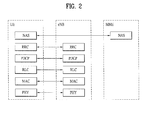
- FIG. 2 illustrates a structure of a control plane in the structure of a radio interface protocol between a UE and E-UTRAN based on the 3GPP radio access network standard.
- the radio interface protocol of FIG. 2 is horizontally divided into a physical layer PHY, a data link layer and a network layer, and is vertically divided into a user plane for transmitting data information and a control plane for transmitting control signaling.
- the protocol layers of FIG. 2 may be divided into a first layer (L1), a second layer (L2) and a third layer (L3) based on the three lower layers of the open system interconnection (OSI) standard model which is well-known in the art of communication systems.
- OSI open system interconnection
- the physical layer PHY which is the first layer, provides an information transfer service to an upper layer by using a physical channel.
- the physical layer is connected with a medium access control (MAC) layer located at a higher level through a transport channel, and data between the MAC layer and the physical layer is transferred via the transport channel.
- MAC medium access control
- a medium access control (MAC) layer of the second layer provides a service to a radio link control (RLC) layer corresponding to an upper layer through a logical channel.
- the RLC layer of the second layer supports reliable data transmission. Functions of the RLC layer may be implemented as functional blocks in the MAC layer. In this case, the RLC layer may not be present.
- a packet data convergence protocol (PDCP) layer of the second layer performs header compression to reduce the size of an IP packet header having relatively large size and containing unnecessary control information in order to effectively transmit IP packets such as IPv4 (Internet Protocol version 4) or IPv6 (Internet Protocol version 6) packets in a radio-communication interval having a narrow bandwidth.
- the PDCP layer can perform integrity protection and ciphering upon a control signal such as an RRC signal and/or user data.
- a radio resource control (hereinafter, abbreviated as 'RRC') layer located on the uppermost of the third layer is defined in the control plane only and is associated with configuration, re-configuration and release of radio bearers to be in charge of controlling the logical, transport and physical channels.
- the radio bearers mean a service provided by the second layer for data transfer between the UE and the UTRAN.
- the UE is in an RRC-connected mode when the RRC layer of the UE is connected to the RRC layer of the radio network and in an idle mode if not.
- a non-access stratum (NAS) layer higher than the RRC layer performs session management and mobility management.
- An evolved session management (eSM) part belonging to the NAS layer performs default bearer management and dedicated bearer management to control the UE to use a packet service (PS) from the network.
- PS packet service
- a default bearer resource is allocated by the network when a specific packet data network (PDN) is initially accessed.
- PDN packet data network
- the network allocates an IP address to the UE such that the UE can use data service and assigns QoS of a default bearer.
- LTE supports two types of bearers, that is, a bearer having guaranteed bit rate (GBR) QoS that secures a specific bandwidth for data transmission and reception and a non-GBR bearer having best effort QoS.
- the non-GBR bearer is allocated as a default bearer. In the case of a dedicated bearer, a bearer having GBR or non-GBR QoS can be allocated.
- An object of the present invention devised to solve the problem lies in a method of transceiving IP (Internet Protocol) data at a UE that has performed handover between heterogeneous networks.
- IP Internet Protocol
- Another object of the present invention is to provide a UE for transceiving IP data by performing handover between heterogeneous networks.
- the object of the present invention can be achieved by providing a method for transceiving IP data at a UE performing handover between heterogeneous networks, the method including: the UE transceiving data to/from a first network node of a first network using IP addresses corresponding to first and second IP versions; the UE handing over from the first network node of the first network to a second network; the UE transmitting a message containing information on an IP version supported by the UE between the first and second IP versions, to a second network node of the second network; and the UE transceiving data to/from the second network node of the second network using the IP address corresponding to the IP version supported by the UE, wherein the IP address corresponding to the IP version supported by the UE is an IP address allocated in the first network prior to handover, and the second network is heterogeneous with respect to the first network.
- the information on the IP version supported by the UE may be transmitted as a PDN-ID (Packet Data Network-Identification).
- the message may further include at least one of attach type information and PDN type information.
- the UE may support one IP version and the PDN type may include the first and second IP versions.
- the first network may be an LTE (Long Term Evolution) network and the second network may be an eHRPD (evolved High Rate Packet Data) network.
- the second network node of the second network may be an HSGW (eHRPD Serving Gateway).
- the message may be of a VSNCP (Vendor Specific Network Control Protocol) control signaling type.
- the PDN-ID may be a value determined in consideration of an APN (Access Point Name) corresponding to an AP requested by the UE to be connected thereto in addition to the information on the IP version supported by the UE.
- APN Access Point Name
- a UE transceiving IP data including: a first modem chip configured to transmit/receive data to/from a first network node of a first network using IP addresses corresponding to first and second IP versions and to control the UE to perform handover from the first network node of the first network to a second network; an IP stack module configured to transmit a message containing information on an IP version supported by the UE between the first and second IP versions to a second network node of the second network; and a second modem chip configured to transmit/receive data to/from the second network node of the second network using the IP address corresponding to the IP version supported by the UE, wherein the IP address corresponding to the IP version supported by the UE is an IP address allocated in the first network prior to handover, and the second network is heterogeneous with respect to the first network.
- the information on the IP version supported by the UE may be transmitted as a PDN-ID.
- the first modem chip may be is an LTE modem
- the eHRPD network since the eHRPD network is informed of IPv4 as IP version capability of the UE, the eHRPD network need not perform an unnecessary IPv6 stateless address auto-configuration (SLAAC) process, preventing radio resource waste. Furthermore, a user can be allocated and use a wider bandwidth and thus user's satisfaction of a service provided by the network can be improved.
- the UE when the UE is multi-PDN-connected to the network, the UE indicates ID of a specific PDN from among multiple PDNs through the IP header so as to reduce a load of operation of identifying the specific PDN and to remarkably increase the processing speed of the UE.
- FIG. 1 illustrates a structure of an evolved universal mobile telecommunications system (E-UMTS) that is a mobile communication system;
- E-UMTS evolved universal mobile telecommunications system
- FIG. 2 illustrates a control plane structure in a structure of a radio interface protocol between a UE and E-UTRAN based on the 3GPP radio access network standard
- FIG. 3 illustrates an exemplary method of globally allocating a unique IPv6 address through an IPv6 stateless address auto-configuration (SLAAC) process in LTE;
- SLAAC IPv6 stateless address auto-configuration
- FIG. 4 illustrates an exemplary system structure for operating an LTE system and an eHRPD system
- FIG. 5 illustrates an exemplary process of handover of a UE between heterogeneous networks (e.g. between an LTE network and an eHRPD network);
- heterogeneous networks e.g. between an LTE network and an eHRPD network
- FIG. 6 is a block diagram illustrating a configuration of a UE supporting handover between heterogeneous networks.
- FIG. 7 illustrates another exemplary process of handover of a UE between heterogeneous networks (e.g. between an LTE network and an eHRPD network).
- heterogeneous networks e.g. between an LTE network and an eHRPD network.
- the term 'terminal' may be replaced with the term 'user equipment (UE)', 'Mobile Station (MS)', 'advanced MS (AMS)', etc.
- the term 'base station (BS)' may be replaced with the term 'Node B', 'evolved Node B (eNode B or eNB)', 'Access Point (AP)', etc. While the following description focuses on 3GPP LTE and LTE-A, this is purely exemplary and thus should not be construed as limiting the present invention. Preferred embodiments of the present invention will be described with reference to the attached drawings.
- the term 'terminal' may be replaced with the term 'user equipment (UE)', 'Mobile Station (MS)', 'advanced MS (AMS)', etc.
- the term 'base station (BS)' may be replaced with the term 'Node B', 'evolved Node B (eNode B or eNB)', 'Access Point (AP)', etc.
- a UE can receive information via downlink and transmit information via uplink.
- Information transmitted or received by the UE includes data and control information and various physical channels are present according to type and purpose of information transmitted or received by the UE.
- the present invention proposes a method for securing IP address continuity while improving radio resource utilization in E-UMTS evolving from UMTS. Specifically, when a UE supports a dual mode using two modem chips (e.g. an LTE modem chip and a CDMA modem chip), if one of the modem chips (e.g. LTE modem chip) simultaneously supports data paths with respect to IPv4 and IPv6 for a PDN whereas the other (e.g. CDMA modem chip) supports only a data path for IPv4 or IPv6 for a PDN, unnecessary overhead may be generated during handover between heterogeneous networks (e.g. an LTE network and a CDMA network). The present invention proposes a method for solving this problem.
- two modem chips e.g. an LTE modem chip and a CDMA modem chip
- PDN types are briefly described. There are three types of PDNs: IPv4, IPv6 and IPv4v6. An address allocation method according to each PDN type will now be described.
- a UE In an LTE system (or LTE network) providing an IP based packet service (or IP data service), a UE generates default bearer activation through a PDN connectivity procedure during an attach procedure and can be allocated an IP address from the network through this process.
- the IPv4 PDN type can specify the following two methods such that the UE can be allocated an IP address through one of the methods.
- the network allocates an IP address to the UE through a NAS signal (e.g. activate default bearer context activation).
- an IP address can be allocated to the UE through a dynamic host configuration protocol (DHCP) procedure after the attach procedure of the UE.
- DHCP dynamic host configuration protocol
- an arbitrary value such as '0.0.0.0' is designated as an IP address of a NAS signal and allocated to the UE.
- the UE is allocated the IP address according to the DHCP procedure (RFC 1541) after the attach procedure is ended.
- the network performs an IPv6 SLAAC procedure for global IPv6 address allocation.
- the UE is assigned a 128-bit global IPv6 address by being allocated a 64-bit interface identifier (IID) through a NAS signal during default bearer activation in the attach procedure or PDN connectivity procedure and then being allocated a 64-bit prefix through IPv6 SLAAC procedure.
- IID interface identifier
- IPv4V6 PDN type In the case of IPv4V6 PDN type, the above-mentioned address allocation methods with respect to the IPv4 PDN type and IPv6 PDN type are simultaneously applied.
- an IPv4 address has a size of 16 bits and is represented as four place values discriminated by a dot '.', such as 2341.128.2.1, and one place value is a decimal in the range of 0 to 255.
- An IPv6 address has a size of 128 bits and is represented as eight place values discriminated by a colon ':', such as 2001:a121:e43:f2e4:2e0:91ff:fe10:4f5b and one place value is a hexadecimal.
- double colon '::' is used for consecutive 0s, such as 2001:0:0:0:2e0:91ff:fe10:4f5b. That is, 2001::2e0:91ff:fe10:4f5b corresponds to 2001:0:0:0:2e0:91ff:fe10:4f5b.
- LTE uses IPv6 SLAAC that defines RFC (e.g. RFC4862) and provides a method of allocating an IPv6 address to a UE by applying constrains to IPv6 SLAAC.
- RFC e.g. RFC4862
- the IPv6 address allocation method is described through an attach procedure including default bearer activation defined in 3GPP TS23.401 and TS24.301.
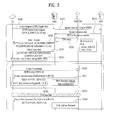
- FIG. 3 illustrates an exemplary method of globally allocating a unique IPv6 address through an IPv6 SLAAC procedure in an LTE system.
- a UE transmits identification information thereof (e.g. international mobile station identity (IMSI)) to a network node (e.g. MME) to be provided with IP data service from an LTE network.
- IMSI international mobile station identity
- the UE can be provided with a service from the network by registering the identification information thereof (e.g. IMSI) in the network through an attach procedure.
- the UE can deliver an attach request including the identification information and capability information thereof to the MME via an eNB during an attach request procedure (S305).
- the UE can deliver a PDN connectivity request including PDN type information (i.e. information on an IP version requested by the UE to use (e.g. IPV6)) and access point name (APN) information (e.g.
- PDN type information i.e. information on an IP version requested by the UE to use (e.g. IPV6)
- APN access point name
- APN 'X') to the network node (e.g. MME) through a PDN connectivity procedure (S305).
- APN is a character string designating a target that is necessary when the UE accesses a mobile network to perform data communication and can indicate IP domain information through which the UE receives IP based data services.
- the network node Upon reception of the network attach request from the UE, the network node (e.g. MME) can deliver an update location request message including the identification information (e.g. IMSI) of the UE to another network node (e.g. home subscriber server (HSS)) in order to register the current location of the UE (S310).
- the HSS can register the identification information of the UE and deliver subscription information of the UE to the MME through an update location acknowledgement message based on the identification information of the UE (S315).
- the subscription information of the UE may include an IP address, PDN type, etc. which can be used by the UE. Steps S310 and S315 may be omitted if the MME has not been changed when the UE accesses the LTE network.
- the MME enables a serving gateway (S-GW) (not shown in FIG. 3 ), located between the UE and a PDN GW, and the PDN GW to generate default bearers on the basis of the subscription information (e.g. PDN type) received from the HSS and the attach request (e.g. PDN type) received from the UE.
- the MME acquires information such as the IP address of the UE (S320).
- IPv6 corresponds to the PDN type requested by and allocated to the UE and the PDN GW allocates an IPv6 address to the UE (S320).
- the UE can signal the end of the attach procedure to the MME by sending an activate default EPS bearer context accept message to the MME as a response to the activate default EPS bearer context request message (S330).
- the UE communicates with another UE (or router) belonging to the same subnet (or the same network link) using the LLA. For example, if IID allocated from the PDN GW is 1:2:3:4, the LLA generated by the UE will be fe80::1:2:3:4.
- the UE may receive a router advertisement (RA) message corresponding to an ICMPv6 message from a network node (e.g. PDN GW) (S345).
- Methods of receiving the RA message include a method in which the UE receives an RA message periodically transmitted from the eNB and a method in which the UE sends router solicitation (RS) that requests RA to the PDN GW (S340) and receiving an RA message as a response to the RS.
- the 64-bit prefix allocated to the UE when the PDN GW assigns the IID to the UE during the attach procedure may be transmitted to the UE using an option field of the RA (S345).
- the UE and the PDN GW may belong to the same subnetwork (or the same link) at a distance of 1 hop from each other and messages such as RS and RA use LLAs as a source address and a destination address.
- a destination address (e.g. ff02::2) of the RS message sent from the UE in step S340 can indicate all routers in the same link-local (link-local scope all-router multicast address).
- the UE sends the RS message to the PDN GW
- the UE does not know the destination address of the PDN GW and thus the UE can use the destination address of the RS message, ff02:2, to acquire the RA message.
- the PDN GW since the PDN GW receives the RS message from the UE and the source address of the received RS message corresponds to the IID allocated from the PDN GW, the PDN GW embeds a prefix value corresponding to the received IID in the RA message and transmits the RA message to the UE. Since the UE knows the presence of a router through this process in RFC, the process is called a router discovery process.
- the UE is allocated the 128-bit global IPv6 address using the 64-bit prefix value included in the RA message acquired from the PDN GW and the 64-bit IID allocated through the access procedure (S350). That is, the UE is assigned the global address by performing IPv6 SLAAC using the IID allocated thereto (S350).
- a global unique prefix is allocated to the UE in the LTE system.
- the LLA uses the IID allocated by the network node (e.g. PDN GW)
- the lower 64-bit value (i.e. IID) of the global IPv6 address may use an arbitrary value that is not allocated from the network node (e.g. PDN GW).
- the UE may transmit/receive data through an IPv6 data path using the IP address allocated from the PDN GW (S355).
- the PDN GW may periodically transmit the RA message to the UE at specific intervals (S360).
- the UE may be provided with a data transmission/reception service from a plurality of PDN GWs by connecting with the plurality of PDN GWs through an additional PDN connectivity procedure.
- the UE may be additionally allocated an IP address and can transmit/receive data to/from the plurality of PDN GWs using multiple PDN connections.
- FIG. 3 illustrates connection to a single PDN GW through a PDN connectivity procedure to transmit/receive data
- the UE may be connected to a plurality of PDN GWs through an additional PDN connectivity procedure to transmit/receive to/from the plurality of PDN GWs.
- the UE may be additionally allocated an IP address.
- the UE can transmit/receive data to/from multiple PDN GWs using multiple PDN connections by performing the process of FIG. 3 for each of the multiple PDN GWs.
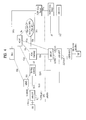
- FIG. 4 illustrates a system architecture for mutual operation of an LTE system and an eHRPD system.
- an eHRPD serving gateway provides a data path between a UE connected to the eHRPD system (or eHRPD network) and a PDN GW of the LTE network and charges for user data.
- the HSGW maintains IP service continuity for the UE using proxy mobile IPv6 (PMIPv6).
- PMIPv6 proxy mobile IPv6
- the HSGW acquires the IP address of the UE, used in the LTE network, through the PDN GW using PMIP and then re-allocates the IP address to the UE. This enables the UE to perform communication in the eHRPD network using the IP address used in the LTE network and thus user data can be transmitted/received seamlessly.
- an evolved access network provides radio resource allocation and control of the eHRPD network and an evolved packet control function (ePCF) transmits data of the UE to the HSGW and controls transmission of data of the UE.
- eAN evolved access network
- ePCF evolved packet control function
- FIG. 5 illustrates an exemplary process of handover of a UE between heterogeneous networks (e.g. handover from an LTE network to an eHRPD network).
- heterogeneous networks e.g. handover from an LTE network to an eHRPD network.
- the UE finds an LTE cell and transmits identification information (e.g. an international mobile station identify (IMSI)) thereof to a network node (e.g. MME).
- the UE registers the identification information thereof (e.g. IMSI) in the network through an attach procedure in order to receive the service from the network.
- the UE can deliver an attach request including the identification information and capability information thereof to the network node (e.g. MME) via an eNB (S505).
- IMSI international mobile station identify
- the MME can deliver an update location request message including the identification information (e.g. IMSI) of the UE to another network node (e.g. AAA/HSS) to perform a location update procedure in order to register the current location of the UE (S510).
- An S-GW performs a PDN setup procedure (e.g. IP address allocation) with a P-GW (PDN-GW) and the MME performs a PDN setup procedure with the S-GW (S515).
- the P-GW can allocate an IPv4 address and an IPv6 address with respect to the IP version (e.g. IPv4v6) requested and to be used by the UE to the UE (S515).
- the P-GW allocates a 128-bit IPv6 address (i.e. 64-bit prefix plus 64-bit IID) to the UE.
- the UE can send an activate default EPS bearer context accept message to the MME as a response to the activate default EPS bearer context request message to inform the MME that the attach procedure has been ended (S525).
- the UE can transmit/receive data to/from the P-GW through an IPv4 data path using the IPv4 address (e.g. A.A.A.A) allocated thereto (S530). Then, the UE performs IPv6 SLAAC using the IID allocated thereto to be allocated the IPv6 address (S35). The UE transmits/receives data to/from the P-GW through an IPv6 data path using the IPv6 address allocated thereto (S540).
- IPv4 address e.g. A.A.A.A
- the UE may decide to hand over from the network from which the UE currently receives the data service using the IPv4 address and the IPv6 address to a heterogeneous network (S545).
- the following description is based on the assumption that the UE decides to hand over from the LTE network from which the UE currently receives the data service to an eHRPD network.
- This handover between heterogeneous networks can be performed by instructions of a serving eNB or according to decision of the UE.
- the UE can decide to perform handover by explicitly receiving an RRC message directing handover or movement to a CDMA network, such as 'MobilityFromEUTRACommand' or 'RRCConnectionRelease' message, from the LTE network.
- the UE may decide to hand over to a heterogeneous network (e.g. eHRPD network) in order to continue data communication when the cell of the network from which the UE has received the service is not available any more (e.g. when the cell is considered to be lost due to received signal strength being considerably lower than a specific threshold value).
- a heterogeneous network e.g. eHRPD network
- the UE can acquire and camp on a cell corresponding to a heterogeneous network (e.g. eHRPD network) (S550).
- a heterogeneous network e.g. eHRPD network
- the UE can be attached to the eHRPD network through a specific message (e.g. vendor specific network control protocol (VSNCP) control signaling).
- VSNCP vendor specific network control protocol
- APN APN
- the UE can deliver a 'VSNCP-Config-Req' message including the PDN type, APN and attach type to a network node (e.g. HSGW) (S555).
- a network node e.g. HSGW
- the UE may also transmit information on the IP address previously allocated thereto in the LTE network (S555).
- the UE can assign a PDN identifier (PDN-ID) to the PDN to which the UE is connected.
- PDN-ID PDN identifier
- the UE can discriminate between network connections using PDN-ID.
- PDN-ID is attached to every generated data such that the PDN through which the corresponding data is transmitted/received is identified.
- the UE may further include the PDN-ID in the 'VSNCP-Config-Req' message and deliver the 'VSNCP-Config-Req' message to the network node (e.g. HSGW) (S555).
- the network node e.g. HSGW
- the HSGW Upon reception of the attach request (i.e. 'VSNCP-Config-Req' message), the HSGW informs the P-GW that the UE continuously uses the service allocated thereto through a proxy binding update procedure (S560). The P-GW sends a proxy binding acknowledgement as a response to the HSGW (S565). Then, the HSGW can allocate the same IP address (i.e. IPv4 address and IPv6 address) used in the LTE network to the UE. That is, the HSGW can transmit a 'VSNCP-Config-Ack' message including the PDN type, IPv4 address and IPv6 address allocated to the UE, and APN to the UE (S570).
- IPv4 address and IPv6 address i.e. IPv4 address and IPv6 address
- the HSGW can embed PDN-ID in a 'VSNCP-Config-Ack' message and transmit the same to the UE (S575) and the UE can send a 'VSNCP-Config-Ack' message including PDN-ID to the HSGW as an acknowledgement response (S580).
- the UE can transmit/receive data to/from the eHRPD network through an IPv4 data path using the same IPv4 address as used in the LTE network (S585).
- the UE can be allocated the same IID as that used in the LTE network.
- the UE is allocated the IPv6 address through IPv6 SLAAC using the IID allocated thereto (S590).
- the UE can transmit/receive data to/from the HRPD network through an IPv6 data path using the same IPv6 address as that used in the LTE network.
- the UE Even if the UE hands over back to the LTE network from the eHRPD network, the UE can be allocated the same IP address through a method similar to the above-described procedure and thus service connectivity can be maintained.
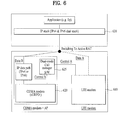
- FIG. 6 is a block diagram illustrating a configuration of a UE supporting handover between heterogeneous networks according to the present invention.
- the UE may include an LTE modem chip 610, a CDMA modem chip 620 and an IP stack module 630.
- the LTE modem chip 610 transmits and processes signals using LTE and supports dual IP.
- the LTE modem chip 610 having LTE modem functions can support the IPv4 or IPv6 version or simultaneously support two IP versions such as IPv4v6 for one PDN connection. Since the LTE modem chip 610 can support dual IP, the UE can provide services to the user using both the IPv4 and IPv6 for one PDN connection when receiving services from an LTE network.
- the CDMA modem chip 620 transmits and processes signals using CDMA and supports single IP. Accordingly, when the UE receives services from an eHRPD network, the CDMA modem chip 620 can provide data service to the user using only one of the IPv4 and IPv6 versions.
- the CDMA modem chip 620 provides an eHRPD modem function and an application processor (AP) function.
- the CDMA modem chip 620 supports only a data path for one IP version (i.e. IPv4 or IPv6) for one PDN.
- the CDMA modem chip 620 includes MSM 6800.
- FIG. 6 shows that the CDMA modem chip 620 includes a dual mode controller 625 performing dual mode control
- the present invention is not limited thereto and the dual mode controller 625 may be located inside the LTE modem chip 610 or outside the LTE and CDMA modem chips 610 and 620.
- the IP stack module 630 supports IP service of the UE.
- the IP stack module 630 may be a Windows operating system and may be implemented as an application processor (AP) in a smartphone. While the IP stack module 630 may be disposed in each of the LTE and CDMA modem chips 610 and 620, IP service may be provided using an AP located outside each of the LTE and CDMA modem chips 610 and 620, as shown in FIG. 6 .
- AP application processor
- a UE initially accessing the LTE network can simultaneously support IPv4 and IPv6 and thus the UE designates IPv4v6 as a PDN type to be allocated an IPv4 address and an IPv6 address from the LTE network and performs data transmission/reception. If the UE hands over to the eHRPD network, the UE attempts to transmit the PDN type in the LTE network, IPv4v6, to the eHRPD network to achieve service connectivity.
- IPv4 IP version
- the IPv6 SLAAC procedure S350 of FIG. 3 and S590 of FIG. 5
- the network unnecessarily performs a process of sending an RA advertisement (S345 and S350 of FIG. 3 ) to the UE though the UE cannot use the IPv6 address, radio resources are remarkably wasted.
- a description will be given of a method of preventing radio resource waste that may occur when the UE simultaneously supports data paths with respect to two IP versions of IPv4 and IPv6 for a PDN connection through one of two radio access technologies, for example, LTE, and supports only a data path with respect to only one IP version for a PDN connection according to the other (e.g. radio access technology used in an eHRPD network) during handover between heterogeneous networks (e.g. LTE network and eHRPD network).
- LTE radio access technology used in an eHRPD network
- the UE when the UE hands over from the LTE network to the eHRPD network and is attached to the eHRPD network, the UE requests the eHRPD network to establish PDN connection using PDN-ID indicating the IP version of a data path that can be supported by the UE because the LTE network supports both data paths with respect to IPv4 and IPv6 for one PDN connection whereas the eHRPD network supports only one data path with respect to IPv4 or IPv6.
- the UE uses different PDN-IDs depending on capabilities of data paths of IP versions supported by the UE when attached to the eHRPD network.
- the network node does not perform the IPv6 address allocation procedure (IPv6 SLAAC) and IPv6 address update operation when a PDN-ID used by the UE for a PDN connectivity request corresponds to PDN-ID that does not support IPv6. That is, the UE informs the network node (e.g. HSGW) whether the UE simultaneously supports the IPv4 and IPv6 versions or of an IP version corresponding to a data path supported by the UE after handover from the LTE network to the eHRPD network such that the network node (e.g. HSGW) does not unnecessarily waste radio resources.
- IPv6 SLAAC IPv6 address allocation procedure
- IPv6 SLAAC IPv6 SLAAC
- Table 1 shows capability of a data path according to IP version of the UE using PDN-ID proposed by the present invention.
- PDN-ID has values in the range of 0 to 14 according to 3GPP2. It is assumed that PDN-ID values and data path capabilities according to IP version, which correspond to the PDN-ID values, are previously shared by a UE and a network.
- the UE accesses the LTE network using the PDN type of IPv4v6 since data paths with respect to IPv4 and IPv6 are simultaneously supported (it is assumed that the UE is attached to the LTE network using an APN of 'APN_A').
- the UE can inform the eHRPD network that only data transmission with respect to IPv4 is supported using '1' as a PDN-ID value, as shown in Table 1, when accessing the eHRPD network.
- IP addresses corresponding to IPv4 and IPv6 are allocated to the UE and IPv6 SLAAC for the IPv6 address is performed.
- IPv4 address is allocated to the UE and IPv6 SLAAC that is an additional IPv6 address allocation procedure is omitted since the eHRPD network has no IPv6 capabilities.
- IPv6 SLAAC that is an additional IPv6 address allocation procedure is omitted since the eHRPD network has no IPv6 capabilities.
- APN_A, APN_B, etc. represent specific APNs.
- PDN-IDs are used according to connected PDNs (i.e. APN). Specifically, if only a data path corresponding to IPv4 can be used as a data path using APN_A for handover to the eHRPD network, PDN-ID corresponding to the data path, '1' is used for connection, as shown in Table 1. If a data path available for APN_B corresponds to IPv6, '5' can be used for additional connection.
- FIG. 7 illustrates another exemplary process of handover of a UE between heterogeneous networks (e.g. from an LTE network to an eHRPD network).
- heterogeneous networks e.g. from an LTE network to an eHRPD network.
- steps S705 and S750 correspond to S505 and S550 of FIG. 5 .
- the APN is assumed to be APN_A.
- the UE can be attached to the eHRPD network through VSNCP control signaling.
- the UE designates the attach type as 'handover' and designates the APN (here, APN_A) corresponding to the AP to which the UE has been connected in the LTE network and PDN type allocated thereto as IPv4v6 in order to maintain services used in the LTE network.
- the UE uses '1' as a PDN-ID value according to Table 1 since the UE supports only the IPv4 data path (S755).
- the UE may also transmit information on the IP address previously allocated thereto in the LTE network (S755).
- the HSGW Upon reception of an attach request (i.e. 'VSNCP-Config-Req' message), the HSGW informs a PDN GW that the UE continuously uses the service allocated thereto through a proxy binding update procedure and allocates the same IP address used in the LTE network to the UE. During this process, the UE can communicate with the eHRPD network using the same IPv4 address used in the LTE network.
- the HSGW Since the UE designates '1' as the PDN-ID value (that is, data path capability for IPv6 is not supported), the HSGW does not unnecessarily transmit a message for IPv6 SLAA, such as 'Router Advertisement', to the UE. In this manner, the UE informs the eHRPD network of IP version capabilities corresponding to IPv4 that can be supported by the UE, and thus the eHRPD network does not perform an unnecessary operation such as IPv6 SLAAC, preventing radio resource waste. This enables allocation of a wider bandwidth to the user to improve user satisfaction in using the service received from the network.
- the UE When the UE is multi-PDN-connected to the network, the UE indicates ID of a specific PDN from among multiple PDNs through the IP header so as to reduce a load of operation of identifying the specific PDN and to remarkably increase the processing speed of the UE.
- the UE reduces transfer delay due to data processing, improving user satisfaction in using the service received from the network.
- the UE can perform data transmission/reception in the LTE network through a method similar to the above-mentioned process using the IP address used in the eHRPD network.
- FIG. 7 illustrates handover of the UE from the LTE network to the eHRPD network
- the process of FIG. 7 can also be applied to a case in which the UE hands over from the eHRPD network to the LTE network.
- FIGS. 5 and 7 illustrate processes of connecting the UE to a single PDN
- the UE may access a plurality of PDN GWs (P-GWs) through an additional PDN connection procedure to transmit/receive data to/from the plurality of PDN GWs.
- P-GWs PDN GWs
- the UE can be additionally allocated an IP address and can transmit/receive data to/from multiple PDN GWs using multiple PDN connections.
- IP data transceiving method and apparatus therefor can be industrially used in various manners.
Landscapes
- Engineering & Computer Science (AREA)
- Computer Networks & Wireless Communication (AREA)
- Signal Processing (AREA)
- Mobile Radio Communication Systems (AREA)
Applications Claiming Priority (3)
| Application Number | Priority Date | Filing Date | Title |
|---|---|---|---|
| US201061427480P | 2010-12-28 | 2010-12-28 | |
| PCT/KR2011/010174 WO2012091421A2 (fr) | 2010-12-28 | 2011-12-27 | Procédé d'émission-réception de données ip en effectuant un transfert intercellulaire entre des réseaux hétérogènes, et appareil pour ce procédé |
| KR1020110143180A KR20120075406A (ko) | 2010-12-28 | 2011-12-27 | 이종 네트워크 간 핸드오버를 수행하여 ip 데이터를 송수신하는 방법 및 이를 위한 장치 |
Publications (3)
| Publication Number | Publication Date |
|---|---|
| EP2661122A2 true EP2661122A2 (fr) | 2013-11-06 |
| EP2661122A4 EP2661122A4 (fr) | 2016-03-16 |
| EP2661122B1 EP2661122B1 (fr) | 2017-06-07 |
Family
ID=46709354
Family Applications (1)
| Application Number | Title | Priority Date | Filing Date |
|---|---|---|---|
| EP11853337.1A Not-in-force EP2661122B1 (fr) | 2010-12-28 | 2011-12-27 | Procédé d'émission-réception de données ip en effectuant un transfert intercellulaire entre des réseaux hétérogènes, et appareil pour ce procédé |
Country Status (4)
| Country | Link |
|---|---|
| EP (1) | EP2661122B1 (fr) |
| KR (1) | KR20120075406A (fr) |
| CN (1) | CN103348734B (fr) |
| WO (1) | WO2012091421A2 (fr) |
Cited By (7)
| Publication number | Priority date | Publication date | Assignee | Title |
|---|---|---|---|---|
| EP3001729A1 (fr) * | 2014-09-23 | 2016-03-30 | BlackBerry Limited | Procédé et appareil pour sélectionner un type ip pendant une itinérance |
| WO2018204885A1 (fr) * | 2017-05-04 | 2018-11-08 | Deepak Das | Fonctionnalité de mobilité pour un système d'accès en nuage |
| EP3496435A1 (fr) * | 2012-07-12 | 2019-06-12 | BlackBerry Limited | Attribution d'adresse pour authentification initiale |
| US10349321B2 (en) | 2012-05-11 | 2019-07-09 | Blackberry Limited | Extended service set transitions in wireless networks |
| US10356662B2 (en) | 2010-03-15 | 2019-07-16 | Blackberry Limited | Negotiation of quality of service (QoS) information for network management traffic in a wireless local area network (WLAN) |
| US10736020B2 (en) | 2012-07-13 | 2020-08-04 | Blackberry Limited | Wireless network service transaction protocol |
| US11166226B2 (en) | 2011-09-16 | 2021-11-02 | Blackberry Limited | Discovering network information available via wireless networks |
Families Citing this family (5)
| Publication number | Priority date | Publication date | Assignee | Title |
|---|---|---|---|---|
| CN105848249A (zh) * | 2015-01-15 | 2016-08-10 | 中兴通讯股份有限公司 | 接入点名称apn的处理方法、装置及系统 |
| CN108141743B (zh) * | 2015-09-25 | 2021-07-27 | 德国电信股份有限公司 | 处置通信交换的方法、网络、装备、系统、介质和装置 |
| KR102164823B1 (ko) * | 2016-02-18 | 2020-10-13 | 한국전자통신연구원 | 통합 코어 망 서비스 이용방법과 이를 위한 통합 제어장치 및 그 시스템 |
| CN112788675B (zh) * | 2019-11-07 | 2023-03-31 | 中国移动通信有限公司研究院 | 一种切换方法及设备 |
| KR102548172B1 (ko) * | 2021-06-25 | 2023-06-27 | 주식회사 엘지유플러스 | IPv6/IPv4 듀얼망에서 단말의 서비스 망 선택 방법 및 그를 위한 장치 및 시스템 |
Family Cites Families (6)
| Publication number | Priority date | Publication date | Assignee | Title |
|---|---|---|---|---|
| KR101216081B1 (ko) * | 2005-04-14 | 2012-12-26 | 엘지전자 주식회사 | 이종망 간 핸드오버 시의 ip 주소 재설정 방법 |
| KR20080008935A (ko) * | 2006-07-18 | 2008-01-24 | 엘지전자 주식회사 | 이동 통신 시스템에서 ip 주소 선 설정 방법 |
| CN101150838B (zh) * | 2006-09-18 | 2010-06-23 | 大唐移动通信设备有限公司 | 一种在系统间切换的方法及系统 |
| US8644247B2 (en) * | 2006-10-12 | 2014-02-04 | Telefonaktiebolaget L M Ericsson (Publ) | Inter-system handoffs in multi-access environments |
| CN101202768A (zh) * | 2006-12-14 | 2008-06-18 | 昂达博思公司 | 允许移动设备ip地址的越区切换的系统和方法 |
| CN100596106C (zh) * | 2007-04-05 | 2010-03-24 | 中山大学 | 一种实现移动节点从IPv4网络切换到IPv6网络的通信方法 |
-
2011
- 2011-12-27 CN CN201180066657.2A patent/CN103348734B/zh not_active Expired - Fee Related
- 2011-12-27 WO PCT/KR2011/010174 patent/WO2012091421A2/fr not_active Ceased
- 2011-12-27 EP EP11853337.1A patent/EP2661122B1/fr not_active Not-in-force
- 2011-12-27 KR KR1020110143180A patent/KR20120075406A/ko not_active Withdrawn
Cited By (21)
| Publication number | Priority date | Publication date | Assignee | Title |
|---|---|---|---|---|
| US10893442B2 (en) | 2010-03-15 | 2021-01-12 | Blackberry Limited | Negotiation of quality of service (QoS) information for network management traffic in a wireless local area network (WLAN) |
| US12395899B2 (en) | 2010-03-15 | 2025-08-19 | Malikie Innovations Limited | Negotiation of quality of service (QoS) information for network management traffic in a wireless local area network (WLAN) |
| US11956678B2 (en) | 2010-03-15 | 2024-04-09 | Malikie Innovations Limited | Negotiation of quality of service (QoS) information for network management traffic in a wireless local area network (WLAN) |
| US11368880B2 (en) | 2010-03-15 | 2022-06-21 | Blackberry Limited | Negotiation of quality of service (QoS) information for network management traffic in a wireless local area network (WLAN) |
| US10356662B2 (en) | 2010-03-15 | 2019-07-16 | Blackberry Limited | Negotiation of quality of service (QoS) information for network management traffic in a wireless local area network (WLAN) |
| US12294939B2 (en) | 2011-09-16 | 2025-05-06 | Malikie Innovations Limited | Discovering network information available via wireless networks |
| US12047871B2 (en) | 2011-09-16 | 2024-07-23 | Malikie Innovations Limited | Discovering network information available via wireless networks |
| US11166226B2 (en) | 2011-09-16 | 2021-11-02 | Blackberry Limited | Discovering network information available via wireless networks |
| US10349321B2 (en) | 2012-05-11 | 2019-07-09 | Blackberry Limited | Extended service set transitions in wireless networks |
| US10812964B2 (en) | 2012-07-12 | 2020-10-20 | Blackberry Limited | Address assignment for initial authentication |
| US11240655B2 (en) | 2012-07-12 | 2022-02-01 | Blackberry Limited | Address assignment for initial authentication |
| EP3496435A1 (fr) * | 2012-07-12 | 2019-06-12 | BlackBerry Limited | Attribution d'adresse pour authentification initiale |
| US10736020B2 (en) | 2012-07-13 | 2020-08-04 | Blackberry Limited | Wireless network service transaction protocol |
| US11405857B2 (en) | 2012-07-13 | 2022-08-02 | Blackberry Limited | Wireless network service transaction protocol |
| US11895575B2 (en) | 2012-07-13 | 2024-02-06 | Malikie Innovations Limited | Wireless network service transaction protocol |
| US12284599B2 (en) | 2012-07-13 | 2025-04-22 | Malikie Innovations Limited | Wireless network service transaction protocol |
| EP3001729A1 (fr) * | 2014-09-23 | 2016-03-30 | BlackBerry Limited | Procédé et appareil pour sélectionner un type ip pendant une itinérance |
| US9872319B2 (en) | 2014-09-23 | 2018-01-16 | Blackberry Limited | Method and apparatus for selecting an IP type during roaming |
| US11228560B2 (en) | 2017-05-04 | 2022-01-18 | Federated Wireless, Inc. | Mobility functionality for a cloud-based access system |
| US20180324138A1 (en) * | 2017-05-04 | 2018-11-08 | Federated Wireless, Inc. | Mobility functionality for a cloud-based access system |
| WO2018204885A1 (fr) * | 2017-05-04 | 2018-11-08 | Deepak Das | Fonctionnalité de mobilité pour un système d'accès en nuage |
Also Published As
| Publication number | Publication date |
|---|---|
| CN103348734B (zh) | 2016-12-28 |
| KR20120075406A (ko) | 2012-07-06 |
| WO2012091421A2 (fr) | 2012-07-05 |
| WO2012091421A3 (fr) | 2012-11-08 |
| EP2661122A4 (fr) | 2016-03-16 |
| CN103348734A (zh) | 2013-10-09 |
| EP2661122B1 (fr) | 2017-06-07 |
Similar Documents
| Publication | Publication Date | Title |
|---|---|---|
| EP2661122B1 (fr) | Procédé d'émission-réception de données ip en effectuant un transfert intercellulaire entre des réseaux hétérogènes, et appareil pour ce procédé | |
| JP6177959B2 (ja) | アップリンク・データ・パケットに含まれるトンネル識別子および基地局識別子を使用するベアラ・アクティブ化 | |
| US9743437B2 (en) | Mobile communication system | |
| KR101719983B1 (ko) | 이동통신 단말에 ip 주소를 할당하는 방법 | |
| US9241255B2 (en) | Local breakout with optimized interface | |
| US9668247B2 (en) | Method and apparatus for setting up uplink common bearer in wireless communication network | |
| US10484903B2 (en) | Bearer service in communications | |
| US20190230061A1 (en) | Ip address assignment method and apparatus | |
| CN103796281A (zh) | 分组数据网络类型的管理方法、装置及系统 | |
| JP2018512788A (ja) | トラフィックフロー分割方法およびトラフィックフロー分割装置 | |
| US10187914B2 (en) | Establishment of a wireless backhaul connection from a small cell RBS | |
| CN104349507B (zh) | 一种切换方法和装置 | |
| KR20120114963A (ko) | 무선 통신 시스템에서 다중 패킷 데이터 네트워크와 통신 방법 및 이를 위한 장치 | |
| KR20140067699A (ko) | 무선 통신 시스템에서 데이터 전송 방법 및 이를 위한 단말 장치 |
Legal Events
| Date | Code | Title | Description |
|---|---|---|---|
| PUAI | Public reference made under article 153(3) epc to a published international application that has entered the european phase |
Free format text: ORIGINAL CODE: 0009012 |
|
| 17P | Request for examination filed |
Effective date: 20130719 |
|
| AK | Designated contracting states |
Kind code of ref document: A2 Designated state(s): AL AT BE BG CH CY CZ DE DK EE ES FI FR GB GR HR HU IE IS IT LI LT LU LV MC MK MT NL NO PL PT RO RS SE SI SK SM TR |
|
| DAX | Request for extension of the european patent (deleted) | ||
| A4 | Supplementary search report drawn up and despatched |
Effective date: 20160217 |
|
| RIC1 | Information provided on ipc code assigned before grant |
Ipc: H04L 29/12 20060101ALN20160211BHEP Ipc: H04W 36/14 20090101AFI20160211BHEP |
|
| GRAP | Despatch of communication of intention to grant a patent |
Free format text: ORIGINAL CODE: EPIDOSNIGR1 |
|
| STAA | Information on the status of an ep patent application or granted ep patent |
Free format text: STATUS: GRANT OF PATENT IS INTENDED |
|
| RIC1 | Information provided on ipc code assigned before grant |
Ipc: H04W 36/14 20090101AFI20161130BHEP Ipc: H04L 29/12 20060101ALN20161130BHEP |
|
| RIC1 | Information provided on ipc code assigned before grant |
Ipc: H04L 29/12 20060101ALN20161206BHEP Ipc: H04W 36/14 20090101AFI20161206BHEP |
|
| INTG | Intention to grant announced |
Effective date: 20161223 |
|
| GRAS | Grant fee paid |
Free format text: ORIGINAL CODE: EPIDOSNIGR3 |
|
| GRAA | (expected) grant |
Free format text: ORIGINAL CODE: 0009210 |
|
| STAA | Information on the status of an ep patent application or granted ep patent |
Free format text: STATUS: THE PATENT HAS BEEN GRANTED |
|
| AK | Designated contracting states |
Kind code of ref document: B1 Designated state(s): AL AT BE BG CH CY CZ DE DK EE ES FI FR GB GR HR HU IE IS IT LI LT LU LV MC MK MT NL NO PL PT RO RS SE SI SK SM TR |
|
| REG | Reference to a national code |
Ref country code: GB Ref legal event code: FG4D |
|
| GRAA | (expected) grant |
Free format text: ORIGINAL CODE: 0009210 |
|
| REG | Reference to a national code |
Ref country code: CH Ref legal event code: EP Ref country code: AT Ref legal event code: REF Ref document number: 900040 Country of ref document: AT Kind code of ref document: T Effective date: 20170615 |
|
| REG | Reference to a national code |
Ref country code: IE Ref legal event code: FG4D |
|
| REG | Reference to a national code |
Ref country code: DE Ref legal event code: R096 Ref document number: 602011038601 Country of ref document: DE |
|
| REG | Reference to a national code |
Ref country code: NL Ref legal event code: MP Effective date: 20170607 |
|
| REG | Reference to a national code |
Ref country code: LT Ref legal event code: MG4D |
|
| PG25 | Lapsed in a contracting state [announced via postgrant information from national office to epo] |
Ref country code: NO Free format text: LAPSE BECAUSE OF FAILURE TO SUBMIT A TRANSLATION OF THE DESCRIPTION OR TO PAY THE FEE WITHIN THE PRESCRIBED TIME-LIMIT Effective date: 20170907 Ref country code: ES Free format text: LAPSE BECAUSE OF FAILURE TO SUBMIT A TRANSLATION OF THE DESCRIPTION OR TO PAY THE FEE WITHIN THE PRESCRIBED TIME-LIMIT Effective date: 20170607 Ref country code: FI Free format text: LAPSE BECAUSE OF FAILURE TO SUBMIT A TRANSLATION OF THE DESCRIPTION OR TO PAY THE FEE WITHIN THE PRESCRIBED TIME-LIMIT Effective date: 20170607 Ref country code: HR Free format text: LAPSE BECAUSE OF FAILURE TO SUBMIT A TRANSLATION OF THE DESCRIPTION OR TO PAY THE FEE WITHIN THE PRESCRIBED TIME-LIMIT Effective date: 20170607 Ref country code: GR Free format text: LAPSE BECAUSE OF FAILURE TO SUBMIT A TRANSLATION OF THE DESCRIPTION OR TO PAY THE FEE WITHIN THE PRESCRIBED TIME-LIMIT Effective date: 20170908 Ref country code: LT Free format text: LAPSE BECAUSE OF FAILURE TO SUBMIT A TRANSLATION OF THE DESCRIPTION OR TO PAY THE FEE WITHIN THE PRESCRIBED TIME-LIMIT Effective date: 20170607 |
|
| REG | Reference to a national code |
Ref country code: FR Ref legal event code: PLFP Year of fee payment: 7 |
|
| REG | Reference to a national code |
Ref country code: AT Ref legal event code: MK05 Ref document number: 900040 Country of ref document: AT Kind code of ref document: T Effective date: 20170607 |
|
| PG25 | Lapsed in a contracting state [announced via postgrant information from national office to epo] |
Ref country code: LV Free format text: LAPSE BECAUSE OF FAILURE TO SUBMIT A TRANSLATION OF THE DESCRIPTION OR TO PAY THE FEE WITHIN THE PRESCRIBED TIME-LIMIT Effective date: 20170607 Ref country code: RS Free format text: LAPSE BECAUSE OF FAILURE TO SUBMIT A TRANSLATION OF THE DESCRIPTION OR TO PAY THE FEE WITHIN THE PRESCRIBED TIME-LIMIT Effective date: 20170607 Ref country code: NL Free format text: LAPSE BECAUSE OF FAILURE TO SUBMIT A TRANSLATION OF THE DESCRIPTION OR TO PAY THE FEE WITHIN THE PRESCRIBED TIME-LIMIT Effective date: 20170607 Ref country code: BG Free format text: LAPSE BECAUSE OF FAILURE TO SUBMIT A TRANSLATION OF THE DESCRIPTION OR TO PAY THE FEE WITHIN THE PRESCRIBED TIME-LIMIT Effective date: 20170907 Ref country code: SE Free format text: LAPSE BECAUSE OF FAILURE TO SUBMIT A TRANSLATION OF THE DESCRIPTION OR TO PAY THE FEE WITHIN THE PRESCRIBED TIME-LIMIT Effective date: 20170607 |
|
| PG25 | Lapsed in a contracting state [announced via postgrant information from national office to epo] |
Ref country code: CZ Free format text: LAPSE BECAUSE OF FAILURE TO SUBMIT A TRANSLATION OF THE DESCRIPTION OR TO PAY THE FEE WITHIN THE PRESCRIBED TIME-LIMIT Effective date: 20170607 Ref country code: SK Free format text: LAPSE BECAUSE OF FAILURE TO SUBMIT A TRANSLATION OF THE DESCRIPTION OR TO PAY THE FEE WITHIN THE PRESCRIBED TIME-LIMIT Effective date: 20170607 Ref country code: RO Free format text: LAPSE BECAUSE OF FAILURE TO SUBMIT A TRANSLATION OF THE DESCRIPTION OR TO PAY THE FEE WITHIN THE PRESCRIBED TIME-LIMIT Effective date: 20170607 Ref country code: AT Free format text: LAPSE BECAUSE OF FAILURE TO SUBMIT A TRANSLATION OF THE DESCRIPTION OR TO PAY THE FEE WITHIN THE PRESCRIBED TIME-LIMIT Effective date: 20170607 Ref country code: EE Free format text: LAPSE BECAUSE OF FAILURE TO SUBMIT A TRANSLATION OF THE DESCRIPTION OR TO PAY THE FEE WITHIN THE PRESCRIBED TIME-LIMIT Effective date: 20170607 |
|
| PG25 | Lapsed in a contracting state [announced via postgrant information from national office to epo] |
Ref country code: PL Free format text: LAPSE BECAUSE OF FAILURE TO SUBMIT A TRANSLATION OF THE DESCRIPTION OR TO PAY THE FEE WITHIN THE PRESCRIBED TIME-LIMIT Effective date: 20170607 Ref country code: IT Free format text: LAPSE BECAUSE OF FAILURE TO SUBMIT A TRANSLATION OF THE DESCRIPTION OR TO PAY THE FEE WITHIN THE PRESCRIBED TIME-LIMIT Effective date: 20170607 Ref country code: IS Free format text: LAPSE BECAUSE OF FAILURE TO SUBMIT A TRANSLATION OF THE DESCRIPTION OR TO PAY THE FEE WITHIN THE PRESCRIBED TIME-LIMIT Effective date: 20171007 Ref country code: SM Free format text: LAPSE BECAUSE OF FAILURE TO SUBMIT A TRANSLATION OF THE DESCRIPTION OR TO PAY THE FEE WITHIN THE PRESCRIBED TIME-LIMIT Effective date: 20170607 |
|
| REG | Reference to a national code |
Ref country code: DE Ref legal event code: R097 Ref document number: 602011038601 Country of ref document: DE |
|
| PLBE | No opposition filed within time limit |
Free format text: ORIGINAL CODE: 0009261 |
|
| STAA | Information on the status of an ep patent application or granted ep patent |
Free format text: STATUS: NO OPPOSITION FILED WITHIN TIME LIMIT |
|
| PG25 | Lapsed in a contracting state [announced via postgrant information from national office to epo] |
Ref country code: DK Free format text: LAPSE BECAUSE OF FAILURE TO SUBMIT A TRANSLATION OF THE DESCRIPTION OR TO PAY THE FEE WITHIN THE PRESCRIBED TIME-LIMIT Effective date: 20170607 |
|
| 26N | No opposition filed |
Effective date: 20180308 |
|
| PG25 | Lapsed in a contracting state [announced via postgrant information from national office to epo] |
Ref country code: SI Free format text: LAPSE BECAUSE OF FAILURE TO SUBMIT A TRANSLATION OF THE DESCRIPTION OR TO PAY THE FEE WITHIN THE PRESCRIBED TIME-LIMIT Effective date: 20170607 |
|
| REG | Reference to a national code |
Ref country code: CH Ref legal event code: PL |
|
| REG | Reference to a national code |
Ref country code: IE Ref legal event code: MM4A |
|
| PG25 | Lapsed in a contracting state [announced via postgrant information from national office to epo] |
Ref country code: LU Free format text: LAPSE BECAUSE OF NON-PAYMENT OF DUE FEES Effective date: 20171227 Ref country code: MT Free format text: LAPSE BECAUSE OF NON-PAYMENT OF DUE FEES Effective date: 20171227 |
|
| REG | Reference to a national code |
Ref country code: BE Ref legal event code: MM Effective date: 20171231 |
|
| PG25 | Lapsed in a contracting state [announced via postgrant information from national office to epo] |
Ref country code: IE Free format text: LAPSE BECAUSE OF NON-PAYMENT OF DUE FEES Effective date: 20171227 |
|
| REG | Reference to a national code |
Ref country code: FR Ref legal event code: PLFP Year of fee payment: 8 |
|
| PG25 | Lapsed in a contracting state [announced via postgrant information from national office to epo] |
Ref country code: CH Free format text: LAPSE BECAUSE OF NON-PAYMENT OF DUE FEES Effective date: 20171231 Ref country code: BE Free format text: LAPSE BECAUSE OF NON-PAYMENT OF DUE FEES Effective date: 20171231 Ref country code: LI Free format text: LAPSE BECAUSE OF NON-PAYMENT OF DUE FEES Effective date: 20171231 |
|
| PGFP | Annual fee paid to national office [announced via postgrant information from national office to epo] |
Ref country code: DE Payment date: 20181105 Year of fee payment: 8 |
|
| PGFP | Annual fee paid to national office [announced via postgrant information from national office to epo] |
Ref country code: GB Payment date: 20181106 Year of fee payment: 8 Ref country code: FR Payment date: 20181108 Year of fee payment: 8 |
|
| PG25 | Lapsed in a contracting state [announced via postgrant information from national office to epo] |
Ref country code: MC Free format text: LAPSE BECAUSE OF FAILURE TO SUBMIT A TRANSLATION OF THE DESCRIPTION OR TO PAY THE FEE WITHIN THE PRESCRIBED TIME-LIMIT Effective date: 20170607 Ref country code: HU Free format text: LAPSE BECAUSE OF FAILURE TO SUBMIT A TRANSLATION OF THE DESCRIPTION OR TO PAY THE FEE WITHIN THE PRESCRIBED TIME-LIMIT; INVALID AB INITIO Effective date: 20111227 |
|
| PG25 | Lapsed in a contracting state [announced via postgrant information from national office to epo] |
Ref country code: CY Free format text: LAPSE BECAUSE OF NON-PAYMENT OF DUE FEES Effective date: 20170607 |
|
| PG25 | Lapsed in a contracting state [announced via postgrant information from national office to epo] |
Ref country code: MK Free format text: LAPSE BECAUSE OF FAILURE TO SUBMIT A TRANSLATION OF THE DESCRIPTION OR TO PAY THE FEE WITHIN THE PRESCRIBED TIME-LIMIT Effective date: 20170607 |
|
| PG25 | Lapsed in a contracting state [announced via postgrant information from national office to epo] |
Ref country code: TR Free format text: LAPSE BECAUSE OF FAILURE TO SUBMIT A TRANSLATION OF THE DESCRIPTION OR TO PAY THE FEE WITHIN THE PRESCRIBED TIME-LIMIT Effective date: 20170607 |
|
| PG25 | Lapsed in a contracting state [announced via postgrant information from national office to epo] |
Ref country code: PT Free format text: LAPSE BECAUSE OF FAILURE TO SUBMIT A TRANSLATION OF THE DESCRIPTION OR TO PAY THE FEE WITHIN THE PRESCRIBED TIME-LIMIT Effective date: 20170607 |
|
| REG | Reference to a national code |
Ref country code: DE Ref legal event code: R119 Ref document number: 602011038601 Country of ref document: DE |
|
| PG25 | Lapsed in a contracting state [announced via postgrant information from national office to epo] |
Ref country code: AL Free format text: LAPSE BECAUSE OF FAILURE TO SUBMIT A TRANSLATION OF THE DESCRIPTION OR TO PAY THE FEE WITHIN THE PRESCRIBED TIME-LIMIT Effective date: 20170607 |
|
| GBPC | Gb: european patent ceased through non-payment of renewal fee |
Effective date: 20191227 |
|
| PG25 | Lapsed in a contracting state [announced via postgrant information from national office to epo] |
Ref country code: DE Free format text: LAPSE BECAUSE OF NON-PAYMENT OF DUE FEES Effective date: 20200701 Ref country code: GB Free format text: LAPSE BECAUSE OF NON-PAYMENT OF DUE FEES Effective date: 20191227 Ref country code: FR Free format text: LAPSE BECAUSE OF NON-PAYMENT OF DUE FEES Effective date: 20191231 |