EP2663054A2 - Procédés et systèmes de communication IP en temps réel avancée dans un terminal mobile - Google Patents
Procédés et systèmes de communication IP en temps réel avancée dans un terminal mobile Download PDFInfo
- Publication number
- EP2663054A2 EP2663054A2 EP13167465.7A EP13167465A EP2663054A2 EP 2663054 A2 EP2663054 A2 EP 2663054A2 EP 13167465 A EP13167465 A EP 13167465A EP 2663054 A2 EP2663054 A2 EP 2663054A2
- Authority
- EP
- European Patent Office
- Prior art keywords
- module
- session initiation
- processor
- initiation protocol
- protocol
- Prior art date
- Legal status (The legal status is an assumption and is not a legal conclusion. Google has not performed a legal analysis and makes no representation as to the accuracy of the status listed.)
- Granted
Links
- 238000000034 method Methods 0.000 title claims abstract description 58
- 238000004891 communication Methods 0.000 title claims abstract description 51
- 230000000977 initiatory effect Effects 0.000 claims abstract description 68
- 230000006870 function Effects 0.000 claims abstract description 66
- 230000007774 longterm Effects 0.000 claims abstract description 47
- 230000009977 dual effect Effects 0.000 claims abstract description 10
- 230000007246 mechanism Effects 0.000 claims description 18
- 238000012545 processing Methods 0.000 claims description 10
- 230000005540 biological transmission Effects 0.000 claims description 9
- 230000001360 synchronised effect Effects 0.000 claims description 4
- 238000004519 manufacturing process Methods 0.000 abstract description 2
- 238000005516 engineering process Methods 0.000 description 21
- 238000013459 approach Methods 0.000 description 13
- 238000012546 transfer Methods 0.000 description 10
- 230000008569 process Effects 0.000 description 8
- 230000004044 response Effects 0.000 description 8
- 238000013461 design Methods 0.000 description 5
- 238000010586 diagram Methods 0.000 description 5
- 238000010295 mobile communication Methods 0.000 description 5
- 230000008901 benefit Effects 0.000 description 2
- 230000001133 acceleration Effects 0.000 description 1
- 230000006978 adaptation Effects 0.000 description 1
- 230000008859 change Effects 0.000 description 1
- 239000003795 chemical substances by application Substances 0.000 description 1
- 230000000694 effects Effects 0.000 description 1
- 238000012986 modification Methods 0.000 description 1
- 230000004048 modification Effects 0.000 description 1
- 230000006855 networking Effects 0.000 description 1
- 238000005457 optimization Methods 0.000 description 1
- 230000001960 triggered effect Effects 0.000 description 1
Images




Classifications
-
- H—ELECTRICITY
- H04—ELECTRIC COMMUNICATION TECHNIQUE
- H04N—PICTORIAL COMMUNICATION, e.g. TELEVISION
- H04N7/00—Television systems
- H04N7/14—Systems for two-way working
- H04N7/141—Systems for two-way working between two video terminals, e.g. videophone
- H04N7/148—Interfacing a video terminal to a particular transmission medium, e.g. ISDN
-
- H—ELECTRICITY
- H04—ELECTRIC COMMUNICATION TECHNIQUE
- H04W—WIRELESS COMMUNICATION NETWORKS
- H04W4/00—Services specially adapted for wireless communication networks; Facilities therefor
- H04W4/12—Messaging; Mailboxes; Announcements
-
- H—ELECTRICITY
- H04—ELECTRIC COMMUNICATION TECHNIQUE
- H04L—TRANSMISSION OF DIGITAL INFORMATION, e.g. TELEGRAPHIC COMMUNICATION
- H04L61/00—Network arrangements, protocols or services for addressing or naming
- H04L61/45—Network directories; Name-to-address mapping
- H04L61/4535—Network directories; Name-to-address mapping using an address exchange platform which sets up a session between two nodes, e.g. rendezvous servers, session initiation protocols [SIP] registrars or H.323 gatekeepers
-
- H—ELECTRICITY
- H04—ELECTRIC COMMUNICATION TECHNIQUE
- H04N—PICTORIAL COMMUNICATION, e.g. TELEVISION
- H04N7/00—Television systems
- H04N7/14—Systems for two-way working
- H04N7/141—Systems for two-way working between two video terminals, e.g. videophone
- H04N7/147—Communication arrangements, e.g. identifying the communication as a video-communication, intermediate storage of the signals
-
- H—ELECTRICITY
- H04—ELECTRIC COMMUNICATION TECHNIQUE
- H04W—WIRELESS COMMUNICATION NETWORKS
- H04W4/00—Services specially adapted for wireless communication networks; Facilities therefor
- H04W4/60—Subscription-based services using application servers or record carriers, e.g. SIM application toolkits
-
- H—ELECTRICITY
- H04—ELECTRIC COMMUNICATION TECHNIQUE
- H04W—WIRELESS COMMUNICATION NETWORKS
- H04W4/00—Services specially adapted for wireless communication networks; Facilities therefor
- H04W4/12—Messaging; Mailboxes; Announcements
- H04W4/14—Short messaging services, e.g. short message services [SMS] or unstructured supplementary service data [USSD]
-
- H—ELECTRICITY
- H04—ELECTRIC COMMUNICATION TECHNIQUE
- H04W—WIRELESS COMMUNICATION NETWORKS
- H04W84/00—Network topologies
- H04W84/02—Hierarchically pre-organised networks, e.g. paging networks, cellular networks, WLAN [Wireless Local Area Network] or WLL [Wireless Local Loop]
- H04W84/10—Small scale networks; Flat hierarchical networks
- H04W84/12—WLAN [Wireless Local Area Networks]
Definitions
- This invention relates to a framework and architecture for integrating Rich Communications Services (RCS) functionalities into client devices, such as, inter alia, smart phones and tablet computers, leveraging the standards RCS, IR.92, IR.94, and Internet Protocol Multimedia Subsystem (IMS).
- RCS Rich Communications Services
- IMS Internet Protocol Multimedia Subsystem
- RCS Global System for Mobile Communications
- GSMTM Global System for Mobile Communications
- GSMA Global System for Mobile Communications
- SMS Short Message Service
- IP Multimedia Subsystem or IMS is a standardized Next Generation Networking (NGN) architecture for telecom operators that want to provide mobile and fixed multimedia services. It uses Voice-over-IP (VoIP) implementation based on a 3rd Generation Partnership Project (3GPP) standardized implementation of Session Initiation Protocol (SIP), and runs over the standard Internet Protocol (IP).
- VoIP Voice-over-IP
- 3GPP 3rd Generation Partnership Project
- IP Internet Protocol
- the GSM Association has defined the industrial standard, IR.92, "IMS Profile for Voice and SMS", and IR.94 to add video, both of which are incorporated herein by reference and apply to this disclosure.
- the core of a typical mobile terminal includes a modem (Long Term Evolution (LTE), Third Generation (3G), or a combination of both LTE and 3G and an application processor.
- a 3G modem includes Global System for Mobile Communications (GSMTM) modem or Code Division Multiple Access (CDMA) modem.
- GSMTM Global System for Mobile Communications
- CDMA Code Division Multiple Access
- User control of the mobile terminal is provided by software running on the application processor. Control of the modem by the software on the application processor is traditionally carried out through the "AT" command strings. For example, to dial the phone number: 1-805-555-1212, an application sends the modem the string; "ATD 18055551212;", which instructs the modem to initiate a circuit switched call (Global System for Mobile Communications (GSMTM) or Code Division Multiple Access (CDMA)).
- GSMTM Global System for Mobile Communications
- CDMA Code Division Multiple Access
- FIG.1 illustrates typical software architecture on the application processor 110 inside a mobile terminal 100.
- the software architecture executed by the application processor 110 may include a Phone Dialer 120, a Short Message Service (SMS) Application 115, a Telephony Manager 130, an SMS Manager 125, a Radio Interface Layer (RIL) 101, and a Modem Driver 104 to operate the Modem 160.
- SMS Short Message Service
- RIL Radio Interface Layer
- the Telephony Manager 130 issues a command to the Radio Interface Layer 101.
- the Radio Interface Layer 101 turns the command into an AT command.
- the RIL 101 may pass that message directly to the modem driver 104, or it may process the string and provide a different message to the modem driver 104, which will affect the required modem 160 functions.
- VoIP Voice over Internet Protocol
- SMS Short Message Service
- LTE Long Term Evolution
- SMS Short Message Service
- LTE Long Term Evolution
- a Session Initiation Protocol module (SIP) and Control/Status Module (CSM) subsystem make VoIP calls and send/receive SMS over Internet Protocol (SMSoIP) using the LTE modem.
- SIP Session Initiation Protocol module
- CSM Control/Status Module
- a Command Handler module directs voice and SMS messages from a modem driver to the SIP/CSM, and passes all other messages to the legacy modem directly.
- the CSM module determines whether the call or SMS will be processed by the SIP module and a Voice Engine as required or be passed to the legacy modem.
- the Command Handler module directs voice and SMS messages from the legacy modem to the SIP/CSM, and all other messages are passed through to the modem driver.
- a method for dynamic selection of radio in a mobile terminal capable of Rich Communications Services (RCS), Long Term Evolution (LTE), legacy modem, and an alternate network interface is also disclosed.
- RPM Radio Policy Manager
- LTE Long Term Evolution
- legacy modem legacy modem
- RPM Radio Policy Manager
- a method for Session Initiation Protocol module (SIP) stack functions on a mobile terminal to be directed to different network interfaces using a single authenticated SIP connection is disclosed.
- a vPort Redirector (VPR) module between the SIP stack and a Long Term Evolution (LTE) network interface or any other alternate network interface, provides a virtual network interface, which redirects all SIP packets according to a radio policy selected either by the mobile terminal or an operator of the corresponding radio network.
- LTE Long Term Evolution
- IP Internet Protocol
- VoIP Voice-over-Long-Term Evolution
- SIP Session Initiation Protocol module
- VPR vPort Redirector
- the alternate network interface Daemon interfaces with a sub-system to maintain a network connection established by the alternate network interface Daemon, and transmits/receives the IP packet traffic over the network connection established by the alternate network interface Daemon. All the SIP packet traffic goes through an authenticated SIP connection substantially the same as that used for VoLTE transmission.
- a method of redirecting video packets that are produced and/or consumed by an application processor that performs video codec functions to a Long Term Evolution (LTE) LTE processor of a mobile terminal when video packets are to be transported over the LTE modem is disclosed.
- a video engine running on the application processor sends and receives video packets to/from the LTE modem.
- a vPort Redirector (VPR) module on the LTE processor requests access to a LTE video bearer channel.
- the video packets are exchanged between the video engine and the VPR using an inter-processor communication (IPC) mechanism.
- IPC inter-processor communication
- a method of synchronizing video data on an application processor of a mobile terminal with voice data on a Long Term Evolution (LTE) processor enabled for Voice-over-Internet-Protocol (VoIP) or Voice over Long Term Evolution (VoLTE) is disclosed. Synchronization information is exchanged between a voice engine of the LTE processor and a video engine of the application processor using an inter-processor communication (IPC) mechanism between the video engine and the voice engine, allowing the video engine and voice engine to manage their respective decode rates so that voice and video are synchronized.
- IPC inter-processor communication
- a method of distributing Session Initiation Protocol (SIP) functions across different processors while maintaining a single authenticated SIP connection for a mobile terminal is disclosed.
- a vPort Redirector module (VPR) is provided on a LTE processor of the mobile terminal.
- a SIP module on the LTE processor requests the VPR module to open a SIP connection to an Internet Protocol Multimedia Subsystem (IMS) core.
- IMS Internet Protocol Multimedia Subsystem
- the SIP module registers to the IMS core using the VPR module connection.
- the VPR module allows other SIP modules in the mobile terminal to use the VPR module connection to the IMS core.
- a method for implementing Rich Communications Services (RCS) functions on a mobile terminal with a Long Term Evolution (LTE) processor using an Internet Protocol (IP) connection established by a Session Initiation Protocol (SIP) module in the LTE processor is disclosed.
- a protocol accelerator is implemented on an application processor of the mobile terminal providing SIP functions.
- a Control/Status Module (CSM) determines which SIP function is to be performed by the SIP module in the LTE processor and which SIP function is to implemented on the protocol accelerator, and routes RCS data via a vPort Redirector module in the LTE processor to the protocol accelerator or to the SIP module in the LTE processor according to the determination. All SIP data is transmitted over a single authenticated connection established by the SIP module in the LTE processor for Voice-over-Internet-Protocol (VoIP) and Short Message Service (SMS).
- VoIP Voice-over-Internet-Protocol
- SMS Short Message Service
- a method of avoiding dual registration problems when Rich Communication Services (RCS) functions on a mobile terminal having a Long Term Evolution (LTE) processor require Session Initiation Protocol (SIP) protocol functions to be performed outside of a SIP stack embedded in the LTE processor is disclosed.
- the SIP stack in the LTE processor registers with a network and establishes an authenticated SIP connection to an Internet Protocol Multimedia Subsystem (IMS) core for Voice-over-Internet-Protocol (VoIP) and Short Message Service over Internet Protocol (SMSoIP).
- IMS Internet Protocol Multimedia Subsystem
- VoIP Voice-over-Internet-Protocol
- SMSoIP Short Message Service over Internet Protocol
- IP Internet Protocol
- VPR vPort Redirector
- leg modem is defined as technologies such as, inter alia, Second Generation (2G) technologies, Third Generation (3G) technologies, Global System for Mobile Communications (GSMTM) technologies, Code division Multiple Access (CDMA) technologies, and Wideband Code Division Multiple Access (W-CDMA) technologies.
- 2G Second Generation
- 3G Third Generation
- GSM Global System for Mobile Communications
- CDMA Code division Multiple Access
- W-CDMA Wideband Code Division Multiple Access
- LTE modem Long-Term Evolution modem
- LTE modem Long-Term Evolution
- LTE processor and/or “LTE processor” are defined as a computation unit that can be configured as an LTE modem and may further be configured to include Voice-over-Long-Term Evolution (VoLTE) software, and may further be configured to include all versions of legacy modem technologies such as, inter alia, Second Generation (2G) technologies, Third Generation (3G) technologies, Global System for Mobile Communications (GSMTM) technologies, Code division Multiple Access (CDMA) technologies, and Wideband Code Division Multiple Access (W-CDMA) technologies and may be embedded within the LTE processor.
- legacy modem technologies such as, inter alia, Second Generation (2G) technologies, Third Generation (3G) technologies, Global System for Mobile Communications (GSMTM) technologies, Code division Multiple Access (CDMA) technologies, and Wideband Code Division Multiple Access (W-CDMA) technologies and may be embedded within the LTE processor.
- GSMTM Global System for Mobile Communications
- CDMA Code division Multiple Access
- W-CDMA Wideband Code Division Multiple Access
- Network Interface is defined as a point of interconnection between the mobile terminal and
- Alternate Network Interface is defined as a Network Interface capable of all versions of transmission and/or reception technologies such as, inter alia, Wi-FiTM echnologies, DPRS (DECT Packet Radio Services) and Ethernet technologies, and run on the application processor.
- Alternate Network Interface Daemon is a process that runs on the application processor used to manage connection to Alternate Network Interfaces.
- Wi-FiTM Daemon should be considered a discussion of any and/or all versions of an Alternate Network Interface Daemon as defined above, and a discussion of 3G modem technologies should be considered a discussion of any and/or all versions of a legacy modem also as defined above.
- This document describes an operational software system for adding Short Message Service (SMS) and Voice over Long Term Evolution (VoLTE), video, Rich Communication Suite (RCS) support, and Wi-FiTM offload to a mobile terminal. It starts by with adding VoLTE functions to an LTE processor.
- the final section ( FIG. 6 ) describes a full featured system that includes voice and video calling, SMS over Internet Protocol (SMSoIP), RCS features ( inter alia, instant messaging (IM), file transfer and content share) and Wi-FiTM offload.
- SMS over Internet Protocol SMS over Internet Protocol
- RCS features inter alia, instant messaging (IM), file transfer and content share
- Wi-FiTM offload Wi-FiTM offload.
- FIG.2 is a product for just VoLTE, SMSoIP, and Single Radio Voice Call Continuity (SRVCC)
- FIG.3 adds Wi-FiTM offload
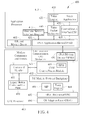
- FIG.4 adds Video call, etc.
- VoIP Voice over IP
- VoIP applications There have been different approaches to adding VoIP applications to mobile terminals.
- One approach is to create a completely separate application, alongside the current Android telephony stack (see Telephony Manager 130 and SMS Manager 125, RIL 101 in FIG.1 .)
- Another approach is to make changes to the telephony stack to allow the existing Telephony Manager 130 to determine whether the call is to be a VoIP call (or a legacy circuit call), and send instructions to a VoIP protocol stack (or legacy voice stack) to process the call.
- a technique to enable making VoIP calls, legacy circuit calls and send/receive SMS over LTE modem or legacy modem (2G, 3G), and to switch between them (as required by IR.92 specification) on a mobile terminal with both LTE and legacy modem, and provide all legacy modem functions (such as SIM registration, SIM address etc.) using existing applications on the mobile terminal for voice and SMS, and retains all legacy modem functions is disclosed.
- a software module Command Handler directs voice and SMS messages from the modem driver to the SIP/CSM subsystem, and passes all other messages to the legacy modem directly.
- the CSM module will determine, based on the radio policy set by the network or the mobile terminal, whether the call or SMS will be processed by the SIP stack and Voice Engine (if required) or be passed through to the legacy modem.
- the Command Handler module also directs voice and SMS messages from the legacy modem to a SIP/CSM subsystem, and all other messages are passed through to the modem driver
- Allowing radio policy for voice, SMS and other communications functions such as IM, video call, etc. (generally known as RCS functions) to be selected on a per functions basis either by the mobile terminal, or the mobile network operator is disclosed.
- a software module is accessible to either the network or mobile terminal to set parameters or rules which determine which network interface to use for a voice call or SMS message or other RCS functions.
- a technique for a mobile terminal that has a multitude of communication functions, including voice, SMS, IM, video call, file sharing, content sharing, location, address book sync etc. generally known as RCS) to selectively conduct each of these functions on a network interface of choice (such as LTE, 3G, Wi-FiTM etc.), and for the selection of the network interface to be dynamically controlled by either the mobile network operator, or the mobile terminal to make this selection
- a network interface of choice such as LTE, 3G, Wi-FiTM etc.
- a module of software to provide network interface selection and which will be examined by ALL communication applications running on the mobile terminal to determine which network interface (e.g. LTE, 3G, Wi-FiTM) to use for each communication function (such as voice, or IM, or video, etc), and is accessible to the mobile network operator or mobile terminal to modify the selection of radio for different communication functions can be used.
- the LTE processor 260 of the mobile terminal 200 comprises a Legacy Modem Control and User Plane module 270, and the added VoLTE blocks including a Command Handler 265, an Internet Service Interface (ISI) module 282, a Voice Engine module 284, a Session Initiation Protocol (SIP) module 288, an Operating System Abstraction Layer (OSAL) 286, and a Control/Status Module (CSM) 275.
- the CSM 275 includes a Radio Policy Manager (RPM) 280.
- the command from the RIL shown in FIG.2 as 205) to the added VoLTE blocks 265, 282, 284, 288, 286, 270 and 275 may be standard AT commands or a proprietary interface specified by the modem chip vendor.
- the RPM module 280 will follow the radio policy set by the mobile network operator and information from the LTE modem control plane.
- the mobile terminal 200 After the mobile terminal 200 has registered with the service provider, it is available to receive voice calls. Once a call is initiated or received, the RIL module 205 polls the modem driver at fixed intervals for all call status from the network. The SIP module 288 listens for new commands from the network via the OSAL module 286.
- the mobile terminal 200 After the mobile terminal 200 has registered with the service provider, it is available to initiate voice calls. Listed below is the sequence of actions that occur for an outgoing VoIP call.
- the service provider may route incoming calls via the legacy CS network.
- CS circuit switched
- the outgoing call is routed to the legacy modem module 270.
- the legacy modem module 270 Listed below is a sequence of actions for making an outgoing CS call.
- GSMTM service providers utilize a protocol called Unstructured Supplementary Service Data (USSD) to provide some simple non-voice services.
- USSD Unstructured Supplementary Service Data
- LTE modems provide similar services.
- Wi-FiTM Voice over IP
- VoIP and SMSoIP be off-loaded via Wi-FiTM. This reduces wireless network traffic on the LTE network.
- a preferred approach to providing this feature to the mobile terminal is to add a message redirector and other software modules to the LTE processor as shown in FIG.3 .
- Wi-FiTM is intended to mean a wireless radio system certified as Wi-FiTM compliant by the Wi-FiTMAlliance rather than to mean the source of the technology or certification.
- a technique for redirecting real time IP communication such as VoIP or SMSoIP or Video over IP
- IP packet traffic on a mobile terminal which normally goes through the LTE modem to the Wi-FiTM radio without duplicating another SIP stack and related software outside of the LTE processor (on the application processor of the mobile terminal)
- a software module (or software function) is inserted between the SIP stack and the LTE modem, which redirects all IP packets that are normally transmitted over the LTE modem, to the Wi-FiTM Daemon using an inter-processor communication (IPC) mechanism.
- the Wi-FiTM Daemon will interface to the Wi-FiTM sub-system to maintain connection to the Wi-FiTM network and transmit said IP traffic over Wi-FiTM radio network.
- the IP packets are transmitted using Wi-FiTM, by using the embedded SIP stack in the LTE processor, all such SIP traffic will go through an authenticated SIP network connection similar to that for LTE transmission.
- the LTE processor 360 of the mobile terminal 300 comprises a Legacy Modem Control and User Plane module 370, a Command Handler 365, an Internet Service Interface (ISI) module 382, a Voice Engine module 384, a Session Initiation Protocol (SIP) module 388, an Operating System Abstraction Layer (OSAL) 386, and a Control/Status Module (CSM) 375.
- the CSM 375 includes a Radio Policy Manager (RPM) 380.
- RPM Radio Policy Manager
- the LTE processor 360 differs from the LTE processor 260 in that the LTE processor 360 further comprises a vPort Redirector (VPR) 395, and a vPort Modem Device (VPMD) 390.
- VPR vPort Redirector
- VPMD vPort Modem Device
- the mobile terminal 300 further includes the RIL and Modem Driver 305, and introduces an Alternate Network Interface Daemon 315 and a vPort Application Device (VPAD) 320 running on the application processor.
- the vPort Modem Device (VPMD) 390 and the vPort Application Device (VPAD) 320 may be functionally considered together as an Inter-processor Communication (IPC) mechanism 350.
- IPC Inter-processor Communication
- the new LTE processor software modules 390, 395, 315, and 320 added to provide Wi-FiTM offload shown in FIG.3 are:
- the new modules on the application processor 310 are:
- the Wi-FiTM Daemon manages W-FiTM network connection on behalf of the modules running on the LTE processor 360.
- the SIP module 388 requests a Wi-FiTM connection from the VPR module 395.
- the VPR module 395 contacts the Wi-FiTM Daemon 315 (via the VPMD 390 and VPAD 320 IPC mechanism) to open a network connection.
- the SIP module 388 uses the VPR module 395 connection to register with the IP Multimedia Subsystem (IMS) core. After the registration is completed successfully, the SIP module 388 can use the Wi-FiTM interface to initiate or receive VoIP calls and SMSoIP messages.
- the Voice Engine 384 needs to use the Wi-FiTM interface (e.g. for RTP or RTCP packets)
- the Voice Engine 384 requests a Wi-FiTM connection from the VPR module 395.
- the Wi-FiTM radio Prior to initiating a Wi-FiTM call, the Wi-FiTM radio must become the radio used for voice calling.
- the CSM module 375 is told to register with the Wi-FiTM radio by an RPM event. After the event, the CSM module 375 registers with the service provider over Wi-FiTM.
- the RPM event is triggered when a Wi-FiTM access point is available, and there are no active calls. After the mobile terminal 300 is registered with the service provider, it is available to initiate voice calls over Wi-FiTM. Listed below is the sequence of actions for an outgoing VoIP call.
- the device Prior to receiving a Wi-FiTM call, the device must be registered with the service provider over the Wi-FiTM radio.
- the previous use case provides a scenario of how that may occur.
- Video Engine To add video calling to the mobile terminal, a Video Engine must first be added. Hardware acceleration for video codec is typically provided as a hardware subsystem that is controlled by the application processor. Although video calling can also be implemented in software running on the application processor CPU, power savings and memory efficiencies demand using a separate hardware accelerator for video processing. Video codecs are not included in the LTE processor because of limited memory and CPU on the LTE processor hardware. Such processors are highly optimized for cost because they can be used in a variety of applications, such as dongles or low cost phones, which do not require video processing.
- the first challenge in providing video calling capability is to come up with an approach for a video application (such as a video dialer) to initiate and manage a video call.
- Standard AT commands do not provide capabilities such as creating a video call, adding video to an active voice call, terminating the video portion of the call, and reporting status of the video call.
- the AT command set can be extended to provide these capabilities under the disclosed software architecture. However, this approach is not preferred because the industry is moving away from the AT Command set.
- Many modem chip providers are now proposing proprietary interfaces under the RIL interface.
- the approach taken in the disclosed design is to leverage the Wi-FiTM offload architecture to provide a method for controlling, managing, and passing the necessary data for video calling.
- the second challenge in adding video calling to the mobile terminal is to minimize the overhead and restrictions in adding the Voice Engine.
- a technique to redirect video packets that are produced and consumed by a processor that perform video codec functions to the LTE processor so that video packets can be transported over the LTE modem (to take advantage of the bearer channel supported by the modem) is disclosed.
- a typical LTE processor has limited CPU and memory hardware and cannot perform video codec functions, so video codec functions have to be implemented on an attached application processor.
- the video engine that is running on the application processor sends and receives video packets to/from the LTE modem.
- Video data flow between the video engine (on the application processor) and the LTE processor is handled by an inter-processor communication (IPC) mechanism.
- IPC inter-processor communication
- a network packet redirector module on the LTE processor opens access to the bearer channel using LTE modem control functions, and data is exchanged between the Video Engine and video redirector module using the IPC mechanism. If there are other alternate network interface options, then a video packet redirector module on the application processor is needed to redirect the video data to said alternate network interface, such as Wi-FiTM, instead of the LTE modem.
- a control module in the LTE processor is responsible for selecting the network interface to be used by video data and control packets. By routing all video packets through the video packet redirector module, the proper network interface for video traffic can be controlled. Video packets that are to be transmitted over the Wi-FiTM channel are redirected to the Wi-FiTM Daemon by the video packet redirector module.
- a technique to synchronize video data on an application processor on a mobile terminal with the voice data on the LTE processor (which is enabled for VoIP or VoLTE) is also disclosed.
- the voice and video engines exchange information (for example the absolution time of the packet currently being heard or displayed) using an inter-processor communication (IPC) mechanism logically situated between the Video Engine and the Voice Engine.
- IPC inter-processor communication
- the LTE processor 460 of the mobile terminal 400 comprises a Legacy Modem Control and User Plane module 470, a Command Handler 465, an Internet Service Interface (ISI) module 482, a Voice Engine module 484, a Session Initiation Protocol (SIP) module 488, an Operating System Abstraction Layer (OSAL) 486, a vPort Redirector (VPR) 495, a vPort Modem Device (VPMD) 490, and a Control/Status Module (CSM) 475.
- the CSM module 475 includes a Radio Policy Manager (RPM) 480.
- RPM Radio Policy Manager
- the mobile terminal 400 differs from the mobile terminal 300 in that the application processor 410 of the mobile terminal 400 further comprises a Video Application 425 which includes a Video Engine 430, a Video Packet Redirector 440, and a Control/Status Interface (CSI) 435.
- the mobile terminal 400 further includes the RIL and Modem Driver 405, the Wi-FiTM Daemon 415, and the vPort Application Device (VPAD) 420 run by the application processor 410.
- the vPort Modem Device (VPMD) 490 and the vPort Application Device (VPAD) 420 may be functionally considered together as an Inter-processor Communication (IPC) mechanism 450.
- IPC Inter-processor Communication
- the new application processor 410 software modules 425, 430, and 440 added to add video calling support shown in FIG.3 are:
- the audio function of a video call over Wi-FiTM behaves much like a VoIP call over Wi-FiTM as described above.
- the video data received by the Wi-FiTM Daemon 415 would have to be passed down to the VPR module 495 in the LTE processor, and then re-routed back from the VPR module 495 to the Video Engine 430 (via VPMD 490/VPAD 420.)
- all outgoing video packets would have to be sent from the Video Engine 430 down to the VPR module 495 in the LTE processor 460 and then back up to the Wi-FiTM Daemon via VPMD 490/VPAD 420.
- This process of routing the video data through the LTE processor 460 is very inefficient.
- the Voice Packet Redirector 440 is introduced to alleviate this inefficiency.
- Video Packet Redirector 440 the transport of audio and video data can also be split over different network (radio) interfaces. For example, it is possible to send audio data over the LTE audio bearer channel while offloading video to the Wi-FiTM network.
- the mobile terminal 400 After the mobile terminal 400 is registered with the service provider over Wi-FiTM, the mobile terminal 400 is ready to send and receive calls over Wi-FiTM. Listed below is a sequence of actions necessary to establish a video call over Wi-FiTM.
- RCS Rich Communications Services
- IMS IP Multimedia Subsystem
- the LTE processor will try to register with the service provider (and its IMS core) at power up. This will occur before any other application gets a chance to register. Since a typical LTE processor does not provide full RCS functionality, additional applications are necessary required to access the missing RCS features, and these applications will not be able to register with the IMS core.
- Another factor that causes the dual registration problem is the limited memory and CPU resources available on a typical LTE processor.
- the lack of memory space limits the number of SIP sessions that can be implemented on the LTE processor at the same time.
- SIP sessions that use Message Session Relay Protocol (MSRP) are particularly memory intensive. Such memory intensive functions need to be implemented on the application processor which has much larger memory space available. Examples of such sessions are RCS functions like IM and File Transfer.
- MSRP Message Session Relay Protocol
- RCS functions like IM and File Transfer.
- a technique to avoid dual registration problems when RCS functions on a mobile device requires SIP protocol functions to be performed outside of the SIP stack embedded in the LTE processor is disclosed.
- all SIP protocol operations e.g. voice, SMS, IM etc.
- the network packet redirector also properly routes the incoming packets from the IMS core to the intended SIP stack in the mobile device as required.
- RCS packets may need to be offloaded to the Wi-FiTM network in a mobile device that has RCS functions and an LTE processor with an embedded SIP sub-system (viz. VoLTE ready LTE processor).
- the network packet redirector module re-routes the data to the Wi-FiTM Daemon on the application processor (via the inter-processor communication (IPC) mechanism so that they can be transmitted over Wi-FiTM, while maintaining the same authenticated SIP connection.
- IPC inter-processor communication
- all SIP messages can be processed on the application processor using the protocol accelerator as shown in Figure 6 . All RCS packets thus processed are transmitted over the Wi-FiTM via the Wi-FiTM Daemon, avoiding extra data to be exchanged with the LTE processor.
- FIG.5 To enable RCS applications on the mobile device and to address the problems above, the following architecture is used as shown in FIG.5 .
- the LTE processor 560 of the mobile terminal 500 comprises a Legacy Modem Control and User Plane module 570, a Command Handler 565, an Internet Service Interface (ISI) module 582, a Voice Engine module 584, a Session Initiation Protocol (SIP) module 588, an Operating System Abstraction Layer (OSAL) 586, a modified vPort Redirector (VPR) 595, a vPort Modem Device (VPMD) 590, and a Control/Status Module (CSM) 575.
- the CSM module 575 includes a Radio Policy Manager (RPM) 580.
- RPM Radio Policy Manager
- the application processor 510 of the mobile terminal 500 comprises a Video Application 525 which includes a Video Engine 530, a Video Packet Redirector 540, the RIL and Modem Driver 505, the Wi-FiTM Daemon 515, and the vPort Application Device (VPAD) 520.
- the mobile terminal 500 differs from the mobile terminal 400 in that the mobile terminal 500 also includes a modified Control/Status Interface (CSI) 535, a Protocol Accelerator module 542, and RCS Applications including video calling 527, and a modified VPR module 595.
- CSI Control/Status Interface
- CSI Control/Status Interface
- VPMD vPort Modem Device
- VPAD vPort Application Device
- 520 may be functionally considered together as an Inter-processor Communication (IPC) mechanism 550.
- IPC Inter-processor Communication
- the SIP user agent on a mobile terminal 500 must register with the IMS core. Instead of the SIP module 588 directly opening a connection to the network, the SIP module 588 opens the connection by asking the VPR module 595 to open the connection to the network. The SIP module 588 registers to the IMS core using this VPR module 595 connection. Once this VPR module 595 connection has been registered with the IMS core, the VPR module 595 allows other SIP modules in the system (like the one in the Protocol Accelerator 542) to use this connection to the IMS core.
- the VPR module 595 In addition to allowing multiple SIP modules to send messages to the IMS core, the VPR module 595 needs to route packets from the IMS core to the proper SIP stack. The VPR module 595 does this by inspecting the incoming packets. The VPR module 595 can be written to support different policies to handle the incoming packets. A typical policy for the architecture described in FIG.5 is for the VPR module 595 to route SIP packets associated with voice and video call sessions to the SIP module 588 and all other packets to the protocol accelerator module 542.
- Using this policy means that an incoming IM packet would be routed to the protocol accelerator module 542, while and incoming video calls would be routed to the SIP module 588.
- the VPR module 595 allows a mobile terminal with an LTE processor that only has memory and CPU resources to support voice and video calls to support other RCS features using a second SIP stack (like the one in the protocol accelerator 542) without running into the dual-registration problem.
- RCS IM instant messaging
- Video content sharing requires exactly the same actions as a video call over LTE use case described above without a voice stream.
- Wi-FiTM offload for voice, SMS, video and RCS functions can be further optimized by adding a Protocol Redirector software block as shown in FIG 6 .
- the LTE processor 660 of the mobile terminal 600 comprises a Legacy Modem Control and User Plane module 670, a Command Handler 665, an Internet Service Interface (ISI) module 682, a Voice Engine module 684, a Session Initiation Protocol (SIP) module 688, an Operating System Abstraction Layer (OSAL) 686, a the modified vPort Redirector (VPR) 695, a vPort Modem Device (VPMD) 690, and a Control/Status Module (CSM) 675.
- the CSM module 675 includes a Radio Policy Manager (RPM) 680.
- RPM Radio Policy Manager
- the application processor 610 of the mobile terminal 600 comprises a Video Application 625 which includes a Video Engine 630, RCS Applications including video calling 627, a Video Packet Redirector 640, the RIL and Modem Driver 605, the Wi-FiTM Daemon 615, the vPort Application Device (VPAD) 620, the modified Control/Status Interface (CSI) 635, and a Protocol Accelerator module 642.
- the mobile terminal 600 differs from the mobile terminal 500 in that the mobile terminal 600 also includes a Protocol Redirector module 645.
- the vPort Modem Device (VPMD) 690 and the vPort Application Device (VPAD) 620 may be functionally considered together as an Inter-processor Communication (IPC) mechanism 650.
- IPC Inter-processor Communication
- FIG.6 shows an operational system that can redirect protocol traffic to the Wi-FiTM Daemon.
- a voice call is initiated the normal way (via AT command or CSI 635 command).
- the call is established using the SIP stack in the Protocol Accelerator module 642 instead of the SIP stack in the LTE processor 660.
- voice RTP traffic still originates and terminates in the LTE processor, using the Voice Engine 684.
- the RTP packet for voice is redirected to the Wi-FiTM interface via the VPR module 695.
- the video packets are redirected to the Wi-FiTM Daemon 615 via the Video Packet Redirector module 640.
- FIG. 2 This document describes an operational software system for adding VoLTE, video, RCS support, and Wi-FiTM offload to a mobile terminal.
- Each of the embodiments builds on the physical and functional components shown in FIG. 2 . They start by adding VoLTE to a LTE processor.
- the final section ( FIG.6 ) describes a full featured system that includes voice and video calling, SMS over IP, RCS features (IM, file transfer, content share etc.) and Wi-FiTM offload.
- FIG.2 is a basic product for just VoLTE and SMSoIP and SRVCC
- FIG.3 adds Wi-FiTM offload
- FIG.4 adds Video call, etc.
Landscapes
- Engineering & Computer Science (AREA)
- Signal Processing (AREA)
- Computer Networks & Wireless Communication (AREA)
- Multimedia (AREA)
- Telephonic Communication Services (AREA)
- Mobile Radio Communication Systems (AREA)
- Telephone Function (AREA)
Applications Claiming Priority (2)
| Application Number | Priority Date | Filing Date | Title |
|---|---|---|---|
| US201261645635P | 2012-05-11 | 2012-05-11 | |
| US13/891,197 US9107049B2 (en) | 2012-05-11 | 2013-05-10 | Advanced real-time IP communication in a mobile terminal |
Publications (3)
| Publication Number | Publication Date |
|---|---|
| EP2663054A2 true EP2663054A2 (fr) | 2013-11-13 |
| EP2663054A3 EP2663054A3 (fr) | 2014-05-21 |
| EP2663054B1 EP2663054B1 (fr) | 2016-09-14 |
Family
ID=48430496
Family Applications (1)
| Application Number | Title | Priority Date | Filing Date |
|---|---|---|---|
| EP13167465.7A Not-in-force EP2663054B1 (fr) | 2012-05-11 | 2013-05-13 | Procédés et systèmes de communication IP en temps réel avancée dans un terminal mobile |
Country Status (4)
| Country | Link |
|---|---|
| US (2) | US9107049B2 (fr) |
| EP (1) | EP2663054B1 (fr) |
| JP (3) | JP2013240053A (fr) |
| ES (1) | ES2597178T3 (fr) |
Cited By (6)
| Publication number | Priority date | Publication date | Assignee | Title |
|---|---|---|---|---|
| US9107049B2 (en) | 2012-05-11 | 2015-08-11 | D2 Technologies, Inc. | Advanced real-time IP communication in a mobile terminal |
| EP3020165A4 (fr) * | 2013-07-08 | 2016-12-21 | Samsung Electronics Co Ltd | Procédé d'utilisation de fonction de communication et dispositif électronique permettant d'utiliser ledit procédé |
| WO2019076439A1 (fr) * | 2017-10-17 | 2019-04-25 | Motorola Mobility Llc | Suspension de services dans un réseau central |
| CN110611892A (zh) * | 2019-11-04 | 2019-12-24 | 福州汇思博信息技术有限公司 | 一种Modem短信上报的方法、装置、系统、设备和介质 |
| CN112689298A (zh) * | 2020-12-29 | 2021-04-20 | 上海旷通科技有限公司 | 一种适用于idu设备的lte模块拉远控制通信方法和系统 |
| WO2021133358A1 (fr) * | 2019-12-28 | 2021-07-01 | Turkcell Teknoloji Arastirma Ve Gelistirme Anonim Sirketi | Système utilisé pendant la récupération ou la transmission d'un message court |
Families Citing this family (20)
| Publication number | Priority date | Publication date | Assignee | Title |
|---|---|---|---|---|
| US9565615B2 (en) | 2012-05-16 | 2017-02-07 | Qualcomm Incorporated | Evolved hybrid internet protocol (IP) multimedia subsystem (IMS) architecture |
| US9014091B2 (en) * | 2012-09-24 | 2015-04-21 | Intel Corporation | Network architecture for dual active personae cellular mobile devices |
| US20140348044A1 (en) * | 2013-05-21 | 2014-11-27 | Ecrio, Inc. | Real-Time Rich Communications Client Architecture |
| US9642109B2 (en) * | 2013-08-21 | 2017-05-02 | Qualcomm Incorporated | Single network registration where multiple applications access the network using separate processors |
| US10097977B2 (en) * | 2013-10-18 | 2018-10-09 | Samsung Electronics Co., Ltd. | Communication method for electronic device in wireless communication network and system therefor |
| KR102087404B1 (ko) * | 2013-11-12 | 2020-03-11 | 삼성전자주식회사 | 전자 장치에서 보안 패킷을 처리하기 위한 장치 및 방법 |
| US9408067B1 (en) * | 2013-12-02 | 2016-08-02 | Taqua, Llc | Selectively disallowing use of media over data calling in a segment based on segment characteristics |
| US10200951B2 (en) * | 2014-02-20 | 2019-02-05 | Qualcomm Incorporated | Low power low latency protocol for data exchange |
| WO2015131922A1 (fr) * | 2014-03-03 | 2015-09-11 | Telefonaktiebolaget L M Ericsson (Publ) | Transmission en continu d'un contenu multimédia à un équipement d'utilisateur dans un sous-système multimédia à protocole internet |
| FR3023117A1 (fr) * | 2014-06-30 | 2016-01-01 | Orange | Procede et dispositif d' etablissement d' une communication |
| US20160072959A1 (en) * | 2014-09-10 | 2016-03-10 | Vonage Network Llc | Method and system for ip communication completion via a wireless network |
| US20160149836A1 (en) * | 2014-11-26 | 2016-05-26 | Ecrio, Inc. | Communication and Messaging Architecture for Affiliated Real-Time Rich Communications Client Devices |
| KR102267802B1 (ko) | 2015-01-30 | 2021-06-23 | 삼성전자주식회사 | 이동 단말에서 RCS(Rich Communication Suite) 및 VoLTE(Voice over LTE) 서비스를 지원하는 방법 및 장치 |
| KR102311613B1 (ko) * | 2015-03-23 | 2021-10-13 | 삼성전자주식회사 | 통합 메시지 발신 방법 및 그 장치 |
| BR112017020439A2 (pt) * | 2015-03-23 | 2018-06-26 | Markport Ltd | melhorias relativas a mensagens de grupo |
| KR101853232B1 (ko) | 2017-05-29 | 2018-04-27 | 주식회사 엘지유플러스 | 안심 문자 수신을 위한 장치 및 방법 |
| US11109339B2 (en) * | 2019-02-21 | 2021-08-31 | At&T Intellectual Property I, L.P. | Pre-provisioned access management containers for wireless services |
| KR102657395B1 (ko) * | 2019-03-11 | 2024-04-12 | 스프레드트럼 커뮤니케이션즈 (상하이) 컴퍼니 리미티드 | 데이터 발송 방법, 단말기와 저장매체 |
| US12348573B2 (en) | 2021-04-16 | 2025-07-01 | Samsung Electronics Co., Ltd. | Wireless communication apparatus supporting rich communication suite (RCS) and wireless communication method thereof |
| CN113473069B (zh) * | 2021-07-29 | 2023-09-08 | 京东方科技集团股份有限公司 | 一种服务器、会议终端、远程会议系统及控制方法 |
Family Cites Families (54)
| Publication number | Priority date | Publication date | Assignee | Title |
|---|---|---|---|---|
| EP1243141B1 (fr) * | 1999-12-14 | 2011-10-19 | Scientific-Atlanta, LLC | Systeme et procede de decodage adaptatif d'un signal video avec coordination de l'attribution des ressources |
| US20020039149A1 (en) | 2000-10-02 | 2002-04-04 | Eduardo Perez | System and method for streaming video over a network |
| JP2003101464A (ja) * | 2001-09-21 | 2003-04-04 | Hitachi Ltd | 移動体通信装置 |
| JP2003125074A (ja) * | 2001-10-15 | 2003-04-25 | Canon Inc | 通信装置 |
| US20030095567A1 (en) | 2001-11-20 | 2003-05-22 | Lo Man Kuk | Real time protocol packet handler |
| US7315613B2 (en) | 2002-03-11 | 2008-01-01 | International Business Machines Corporation | Multi-modal messaging |
| US8150922B2 (en) | 2002-07-17 | 2012-04-03 | Research In Motion Limited | Voice and text group chat display management techniques for wireless mobile terminals |
| US6976092B1 (en) | 2002-09-17 | 2005-12-13 | Bellsouth Intellectual Property Corp. | System that using transport protocol objects located at agent location to generate session ID and to provide translation between different instant messaging protocols |
| US7185059B2 (en) | 2002-09-17 | 2007-02-27 | Bellsouth Intellectual Property Corp | Multi-system instant messaging (IM) |
| US7039710B2 (en) | 2003-03-20 | 2006-05-02 | Nokia Corporation | Method and apparatus for providing multi-client support in a SIP-enabled terminal |
| JP2004297632A (ja) * | 2003-03-28 | 2004-10-21 | Renesas Technology Corp | マイクロプロセッサ及び携帯通信端末 |
| US7433455B1 (en) | 2003-05-05 | 2008-10-07 | Cisco Technology, Inc. | Processing a communication session using a rules engine |
| US7277697B2 (en) | 2003-05-23 | 2007-10-02 | Adesh Desai | Method and system for establishing a teleconference over a telephony network |
| US7881444B2 (en) | 2004-05-26 | 2011-02-01 | Qualcomm Incorporated | Apparatus, system, and method for providing voicemail service using presence status in packet data messaging system |
| WO2005121981A1 (fr) * | 2004-06-10 | 2005-12-22 | Nec Corporation | Terminal d’information, serveur de repartition d’informations d'etablissement de connexion, serveur de repartition d’informations vraies, programme et procede d'etablissement de connexion de reseau |
| US20060045124A1 (en) | 2004-08-31 | 2006-03-02 | Kidsnet, Inc. | Method and apparatus for providing access controls to communication services |
| JP2006148749A (ja) * | 2004-11-24 | 2006-06-08 | Japan Telecom Co Ltd | データ通信システム、端末装置、および、通信制御装置 |
| US20060156251A1 (en) | 2004-12-20 | 2006-07-13 | Atiya Suhail | System and method for providing feature customization for a communications device based on an active communications session |
| US20060227950A1 (en) | 2005-02-28 | 2006-10-12 | Eicon Networks Corporation | Apparatus and method for distributing and abstracting communication protocols |
| WO2007078663A2 (fr) | 2005-12-16 | 2007-07-12 | Interdigital Technology Corporation | Architecture d'intergiciel de mobilité pour appareil de technologie d'accès radio multiple |
| JP4654300B2 (ja) * | 2005-12-16 | 2011-03-16 | インターデイジタル テクノロジー コーポレーション | マルチ無線アクセス技術機器用のモビリティミドルウェアアーキテクチャ |
| US7587450B2 (en) | 2006-02-01 | 2009-09-08 | Swift Creek Systems, Llc | HTTP publish/subscribe communication protocol |
| US20070223462A1 (en) | 2006-03-27 | 2007-09-27 | Steven Hite | Enhanced service delivery platform that provides a common framework for use by IMS and Web applications in delivering services |
| EP2090129A2 (fr) * | 2006-10-30 | 2009-08-19 | Interdigital Technology Corporation | Procédé et appareil pour implémenter une mise à jour d'une zone de suivi et resélection dans un système d'évolution à long terme |
| JP4848939B2 (ja) * | 2006-11-27 | 2011-12-28 | 沖電気工業株式会社 | 端末切替システム、端末切替方法及び端末切替プログラム |
| US8249647B2 (en) * | 2007-01-22 | 2012-08-21 | Broadcom Corporation | Mobile communication device having multiple independent optimized physical layers |
| US20080261569A1 (en) | 2007-04-23 | 2008-10-23 | Helio, Llc | Integrated messaging, contacts, and mail interface, systems and methods |
| US20090113460A1 (en) | 2007-10-25 | 2009-04-30 | D2 Technologies, Inc. | Systems and methods for providing a generic interface in a communications environment |
| US8199719B2 (en) * | 2008-03-13 | 2012-06-12 | Apple Inc. | Methods and apparatus for performing handover between a long term evolution (LTE) network and another type of radio access network |
| ATE539547T1 (de) * | 2008-07-09 | 2012-01-15 | Ericsson Telefon Ab L M | Modemvorrichtung für ein modulares drahtloses kommunikationssystem |
| JP2010028680A (ja) | 2008-07-23 | 2010-02-04 | Ntt Docomo Inc | 移動端末及び通信方法 |
| JP5173742B2 (ja) * | 2008-10-29 | 2013-04-03 | 京セラ株式会社 | 無線通信端末 |
| US8676251B2 (en) * | 2009-03-04 | 2014-03-18 | Lg Electronics Inc. | Dual modem device |
| CN102461224A (zh) * | 2009-06-09 | 2012-05-16 | 瑞典爱立信有限公司 | 基于3gpp长期演进的短消息服务 |
| KR101657121B1 (ko) * | 2009-07-02 | 2016-09-13 | 엘지전자 주식회사 | 위치 기반 서비스를 지원하는 듀얼 모드 단말기 및 이를 위한 제어 방법 |
| ES2627733T3 (es) * | 2009-08-14 | 2017-07-31 | Hilco Patent Acquisition 55, Llc | Métodos y aparato para soportar soluciones de voz para terminales centrados en los datos |
| US8483242B2 (en) * | 2009-11-11 | 2013-07-09 | Lg Electronics Inc. | Method and apparatus for processing inter-rat measurement in dual modem device |
| US8547933B2 (en) * | 2009-11-11 | 2013-10-01 | Lg Electronics Inc. | Method and apparatus for performing handover in multi-mode terminal |
| US8320272B2 (en) * | 2010-02-12 | 2012-11-27 | Alcatel Lucent | Method and apparatus for controlling access technology selection |
| US8655156B2 (en) * | 2010-03-02 | 2014-02-18 | Cisco Technology, Inc. | Auxiliary audio transmission for preserving synchronized playout with paced-down video |
| US8848607B2 (en) * | 2010-03-30 | 2014-09-30 | Qualcomm Incorporated | Method and apparatus to facilitate support for multi-radio coexistence |
| JP5527814B2 (ja) * | 2010-04-28 | 2014-06-25 | Necカシオモバイルコミュニケーションズ株式会社 | 通信端末装置、通信システム、通信制御方法、ならびに、プログラム |
| US8817856B2 (en) * | 2010-05-27 | 2014-08-26 | Lg Electronics Inc. | Method and apparatus for controlling suspend mode in dual modem device |
| JP2011259368A (ja) * | 2010-06-11 | 2011-12-22 | Panasonic Corp | 端末装置及び通信システム接続切替制御方法 |
| JP5656479B2 (ja) * | 2010-06-30 | 2015-01-21 | Kddi株式会社 | 無線送信装置および送信方法 |
| US9125120B2 (en) * | 2010-09-21 | 2015-09-01 | Via Telecom Co., Ltd. | Apparatus and method for internetworking interface in multimode wireless communication |
| GB2489917A (en) * | 2011-04-04 | 2012-10-17 | Samsung Electronics Co Ltd | Short message over an Internet Protocol network |
| KR101731356B1 (ko) * | 2011-06-23 | 2017-04-28 | 엘지전자 주식회사 | 다중 안테나 무선 통신 시스템에서 듀얼 모드 이동 단말기 및 이를 위한 제어 방법 |
| US9131476B2 (en) * | 2011-08-16 | 2015-09-08 | Amazon Technologies, Inc. | Optimizing voice calls on packet switched networks |
| US20130195113A1 (en) * | 2012-01-30 | 2013-08-01 | Dell Products, Lp | System and Method for Network Switch Data Plane Virtualization |
| JP5541300B2 (ja) * | 2012-02-07 | 2014-07-09 | 日本電気株式会社 | 無線通信端末、通信システム、制御装置、通信方法およびプログラム |
| US8774718B2 (en) * | 2012-03-30 | 2014-07-08 | Texas Instruments Incorporated | Method and device to synchronize bluetooth and LTE/WiMax transmissions for achieving coexistence |
| US9107049B2 (en) | 2012-05-11 | 2015-08-11 | D2 Technologies, Inc. | Advanced real-time IP communication in a mobile terminal |
| CN104219736A (zh) | 2013-06-05 | 2014-12-17 | 美商迪尔亚科技股份有限公司 | 行动终端机的进阶实时互联网通讯的方法与系统 |
-
2013
- 2013-05-10 US US13/891,197 patent/US9107049B2/en not_active Expired - Fee Related
- 2013-05-13 ES ES13167465.7T patent/ES2597178T3/es active Active
- 2013-05-13 EP EP13167465.7A patent/EP2663054B1/fr not_active Not-in-force
- 2013-05-13 JP JP2013100922A patent/JP2013240053A/ja active Pending
-
2014
- 2014-07-07 JP JP2014139601A patent/JP2014241593A/ja active Pending
-
2015
- 2015-06-03 US US14/729,350 patent/US20150271445A1/en not_active Abandoned
- 2015-10-02 JP JP2015197024A patent/JP2016028509A/ja active Pending
Non-Patent Citations (1)
| Title |
|---|
| None |
Cited By (11)
| Publication number | Priority date | Publication date | Assignee | Title |
|---|---|---|---|---|
| US9107049B2 (en) | 2012-05-11 | 2015-08-11 | D2 Technologies, Inc. | Advanced real-time IP communication in a mobile terminal |
| EP3020165A4 (fr) * | 2013-07-08 | 2016-12-21 | Samsung Electronics Co Ltd | Procédé d'utilisation de fonction de communication et dispositif électronique permettant d'utiliser ledit procédé |
| US10064118B2 (en) | 2013-07-08 | 2018-08-28 | Samsung Electronics Co., Ltd. | Method for operating communication function and electronic device supporting the same |
| WO2019076439A1 (fr) * | 2017-10-17 | 2019-04-25 | Motorola Mobility Llc | Suspension de services dans un réseau central |
| US11356840B2 (en) | 2017-10-17 | 2022-06-07 | Lenovo (Singapore) Pte. Ltd. | Suspending services in a core network |
| US12052796B2 (en) | 2017-10-17 | 2024-07-30 | Lenovo (Singapore) Pte. Ltd. | Suspending services in a core network |
| CN110611892A (zh) * | 2019-11-04 | 2019-12-24 | 福州汇思博信息技术有限公司 | 一种Modem短信上报的方法、装置、系统、设备和介质 |
| CN110611892B (zh) * | 2019-11-04 | 2021-09-10 | 福州汇思博信息技术有限公司 | 一种Modem短信上报的方法、装置、系统、设备和介质 |
| WO2021133358A1 (fr) * | 2019-12-28 | 2021-07-01 | Turkcell Teknoloji Arastirma Ve Gelistirme Anonim Sirketi | Système utilisé pendant la récupération ou la transmission d'un message court |
| CN112689298A (zh) * | 2020-12-29 | 2021-04-20 | 上海旷通科技有限公司 | 一种适用于idu设备的lte模块拉远控制通信方法和系统 |
| CN112689298B (zh) * | 2020-12-29 | 2024-04-16 | 上海旷通科技有限公司 | 一种适用于idu设备的lte模块拉远控制通信方法和系统 |
Also Published As
| Publication number | Publication date |
|---|---|
| US9107049B2 (en) | 2015-08-11 |
| JP2014241593A (ja) | 2014-12-25 |
| US20150271445A1 (en) | 2015-09-24 |
| EP2663054A3 (fr) | 2014-05-21 |
| JP2016028509A (ja) | 2016-02-25 |
| JP2013240053A (ja) | 2013-11-28 |
| EP2663054B1 (fr) | 2016-09-14 |
| ES2597178T3 (es) | 2017-01-16 |
| US20130301529A1 (en) | 2013-11-14 |
Similar Documents
| Publication | Publication Date | Title |
|---|---|---|
| US9107049B2 (en) | Advanced real-time IP communication in a mobile terminal | |
| US7986665B2 (en) | Conferencing PSTN gateway methods and apparatus to facilitate heterogeneous wireless network handovers for mobile communication devices | |
| US7978216B2 (en) | Versatile conference adapter and method employing same | |
| US10104235B2 (en) | Forwarding roaming call to VoIP system | |
| KR100755199B1 (ko) | 핸드오프를 갖는 통신 유닛 | |
| US9602553B2 (en) | Method, apparatus, and system for implementing VOIP call in cloud computing environment | |
| US12041119B2 (en) | Providing communication services using sets of I/O user devices | |
| KR102556286B1 (ko) | 인터넷 환경에서의 WebRTC 기반 통화 연결 방법 및 그 장치 | |
| CN101938467B (zh) | 一种支持跨网络的实现多媒体会话拆分的通信系统和方法 | |
| US20130142085A1 (en) | Call transfer processing in sip mode | |
| JPWO2008123509A1 (ja) | 通信システム、ハンドオーバ方法、通信装置、通信プログラム | |
| US11863598B2 (en) | Network-based communication techniques using enhanced communication protocol | |
| CN106921625B (zh) | 多媒体业务处理系统、数据发送和接收方法以及终端 | |
| KR101080383B1 (ko) | 브이오아이피 호설정 방법 및 이를 수행하는 브이오아이피 통신 시스템 | |
| EP3817330B1 (fr) | Procédé d'interaction de média dans un groupe de réseau dect | |
| CN104219736A (zh) | 行动终端机的进阶实时互联网通讯的方法与系统 | |
| JP2006180372A (ja) | 常時ip網に接続していない通信端末へのip電話発信システム及び呼制御サーバ | |
| US20070121605A1 (en) | Telephone line switching apparatus, telephone line switching system, telphone relay system, telephone relay method, telephone relay program |
Legal Events
| Date | Code | Title | Description |
|---|---|---|---|
| PUAI | Public reference made under article 153(3) epc to a published international application that has entered the european phase |
Free format text: ORIGINAL CODE: 0009012 |
|
| AK | Designated contracting states |
Kind code of ref document: A2 Designated state(s): AL AT BE BG CH CY CZ DE DK EE ES FI FR GB GR HR HU IE IS IT LI LT LU LV MC MK MT NL NO PL PT RO RS SE SI SK SM TR |
|
| AX | Request for extension of the european patent |
Extension state: BA ME |
|
| PUAL | Search report despatched |
Free format text: ORIGINAL CODE: 0009013 |
|
| AK | Designated contracting states |
Kind code of ref document: A3 Designated state(s): AL AT BE BG CH CY CZ DE DK EE ES FI FR GB GR HR HU IE IS IT LI LT LU LV MC MK MT NL NO PL PT RO RS SE SI SK SM TR |
|
| AX | Request for extension of the european patent |
Extension state: BA ME |
|
| RIC1 | Information provided on ipc code assigned before grant |
Ipc: H04L 29/06 20060101AFI20140414BHEP |
|
| 17P | Request for examination filed |
Effective date: 20141113 |
|
| RBV | Designated contracting states (corrected) |
Designated state(s): AL AT BE BG CH CY CZ DE DK EE ES FI FR GB GR HR HU IE IS IT LI LT LU LV MC MK MT NL NO PL PT RO RS SE SI SK SM TR |
|
| GRAP | Despatch of communication of intention to grant a patent |
Free format text: ORIGINAL CODE: EPIDOSNIGR1 |
|
| INTG | Intention to grant announced |
Effective date: 20160226 |
|
| GRAS | Grant fee paid |
Free format text: ORIGINAL CODE: EPIDOSNIGR3 |
|
| GRAJ | Information related to disapproval of communication of intention to grant by the applicant or resumption of examination proceedings by the epo deleted |
Free format text: ORIGINAL CODE: EPIDOSDIGR1 |
|
| GRAL | Information related to payment of fee for publishing/printing deleted |
Free format text: ORIGINAL CODE: EPIDOSDIGR3 |
|
| GRAR | Information related to intention to grant a patent recorded |
Free format text: ORIGINAL CODE: EPIDOSNIGR71 |
|
| INTC | Intention to grant announced (deleted) | ||
| GRAA | (expected) grant |
Free format text: ORIGINAL CODE: 0009210 |
|
| AK | Designated contracting states |
Kind code of ref document: B1 Designated state(s): AL AT BE BG CH CY CZ DE DK EE ES FI FR GB GR HR HU IE IS IT LI LT LU LV MC MK MT NL NO PL PT RO RS SE SI SK SM TR |
|
| INTG | Intention to grant announced |
Effective date: 20160809 |
|
| REG | Reference to a national code |
Ref country code: GB Ref legal event code: FG4D |
|
| REG | Reference to a national code |
Ref country code: CH Ref legal event code: EP |
|
| REG | Reference to a national code |
Ref country code: IE Ref legal event code: FG4D |
|
| REG | Reference to a national code |
Ref country code: AT Ref legal event code: REF Ref document number: 830073 Country of ref document: AT Kind code of ref document: T Effective date: 20161015 |
|
| REG | Reference to a national code |
Ref country code: DE Ref legal event code: R096 Ref document number: 602013011349 Country of ref document: DE |
|
| REG | Reference to a national code |
Ref country code: LT Ref legal event code: MG4D |
|
| REG | Reference to a national code |
Ref country code: ES Ref legal event code: FG2A Ref document number: 2597178 Country of ref document: ES Kind code of ref document: T3 Effective date: 20170116 |
|
| REG | Reference to a national code |
Ref country code: NL Ref legal event code: MP Effective date: 20160914 |
|
| PG25 | Lapsed in a contracting state [announced via postgrant information from national office to epo] |
Ref country code: RS Free format text: LAPSE BECAUSE OF FAILURE TO SUBMIT A TRANSLATION OF THE DESCRIPTION OR TO PAY THE FEE WITHIN THE PRESCRIBED TIME-LIMIT Effective date: 20160914 Ref country code: HR Free format text: LAPSE BECAUSE OF FAILURE TO SUBMIT A TRANSLATION OF THE DESCRIPTION OR TO PAY THE FEE WITHIN THE PRESCRIBED TIME-LIMIT Effective date: 20160914 Ref country code: LT Free format text: LAPSE BECAUSE OF FAILURE TO SUBMIT A TRANSLATION OF THE DESCRIPTION OR TO PAY THE FEE WITHIN THE PRESCRIBED TIME-LIMIT Effective date: 20160914 Ref country code: FI Free format text: LAPSE BECAUSE OF FAILURE TO SUBMIT A TRANSLATION OF THE DESCRIPTION OR TO PAY THE FEE WITHIN THE PRESCRIBED TIME-LIMIT Effective date: 20160914 Ref country code: NO Free format text: LAPSE BECAUSE OF FAILURE TO SUBMIT A TRANSLATION OF THE DESCRIPTION OR TO PAY THE FEE WITHIN THE PRESCRIBED TIME-LIMIT Effective date: 20161214 |
|
| REG | Reference to a national code |
Ref country code: AT Ref legal event code: MK05 Ref document number: 830073 Country of ref document: AT Kind code of ref document: T Effective date: 20160914 |
|
| PG25 | Lapsed in a contracting state [announced via postgrant information from national office to epo] |
Ref country code: NL Free format text: LAPSE BECAUSE OF FAILURE TO SUBMIT A TRANSLATION OF THE DESCRIPTION OR TO PAY THE FEE WITHIN THE PRESCRIBED TIME-LIMIT Effective date: 20160914 Ref country code: SE Free format text: LAPSE BECAUSE OF FAILURE TO SUBMIT A TRANSLATION OF THE DESCRIPTION OR TO PAY THE FEE WITHIN THE PRESCRIBED TIME-LIMIT Effective date: 20160914 Ref country code: LV Free format text: LAPSE BECAUSE OF FAILURE TO SUBMIT A TRANSLATION OF THE DESCRIPTION OR TO PAY THE FEE WITHIN THE PRESCRIBED TIME-LIMIT Effective date: 20160914 Ref country code: GR Free format text: LAPSE BECAUSE OF FAILURE TO SUBMIT A TRANSLATION OF THE DESCRIPTION OR TO PAY THE FEE WITHIN THE PRESCRIBED TIME-LIMIT Effective date: 20161215 |
|
| REG | Reference to a national code |
Ref country code: FR Ref legal event code: PLFP Year of fee payment: 5 |
|
| PG25 | Lapsed in a contracting state [announced via postgrant information from national office to epo] |
Ref country code: RO Free format text: LAPSE BECAUSE OF FAILURE TO SUBMIT A TRANSLATION OF THE DESCRIPTION OR TO PAY THE FEE WITHIN THE PRESCRIBED TIME-LIMIT Effective date: 20160914 Ref country code: EE Free format text: LAPSE BECAUSE OF FAILURE TO SUBMIT A TRANSLATION OF THE DESCRIPTION OR TO PAY THE FEE WITHIN THE PRESCRIBED TIME-LIMIT Effective date: 20160914 |
|
| PG25 | Lapsed in a contracting state [announced via postgrant information from national office to epo] |
Ref country code: IS Free format text: LAPSE BECAUSE OF FAILURE TO SUBMIT A TRANSLATION OF THE DESCRIPTION OR TO PAY THE FEE WITHIN THE PRESCRIBED TIME-LIMIT Effective date: 20170114 Ref country code: AT Free format text: LAPSE BECAUSE OF FAILURE TO SUBMIT A TRANSLATION OF THE DESCRIPTION OR TO PAY THE FEE WITHIN THE PRESCRIBED TIME-LIMIT Effective date: 20160914 Ref country code: SK Free format text: LAPSE BECAUSE OF FAILURE TO SUBMIT A TRANSLATION OF THE DESCRIPTION OR TO PAY THE FEE WITHIN THE PRESCRIBED TIME-LIMIT Effective date: 20160914 Ref country code: SM Free format text: LAPSE BECAUSE OF FAILURE TO SUBMIT A TRANSLATION OF THE DESCRIPTION OR TO PAY THE FEE WITHIN THE PRESCRIBED TIME-LIMIT Effective date: 20160914 Ref country code: PL Free format text: LAPSE BECAUSE OF FAILURE TO SUBMIT A TRANSLATION OF THE DESCRIPTION OR TO PAY THE FEE WITHIN THE PRESCRIBED TIME-LIMIT Effective date: 20160914 Ref country code: CZ Free format text: LAPSE BECAUSE OF FAILURE TO SUBMIT A TRANSLATION OF THE DESCRIPTION OR TO PAY THE FEE WITHIN THE PRESCRIBED TIME-LIMIT Effective date: 20160914 Ref country code: PT Free format text: LAPSE BECAUSE OF FAILURE TO SUBMIT A TRANSLATION OF THE DESCRIPTION OR TO PAY THE FEE WITHIN THE PRESCRIBED TIME-LIMIT Effective date: 20170116 Ref country code: BE Free format text: LAPSE BECAUSE OF FAILURE TO SUBMIT A TRANSLATION OF THE DESCRIPTION OR TO PAY THE FEE WITHIN THE PRESCRIBED TIME-LIMIT Effective date: 20160914 Ref country code: BG Free format text: LAPSE BECAUSE OF FAILURE TO SUBMIT A TRANSLATION OF THE DESCRIPTION OR TO PAY THE FEE WITHIN THE PRESCRIBED TIME-LIMIT Effective date: 20161214 |
|
| REG | Reference to a national code |
Ref country code: DE Ref legal event code: R097 Ref document number: 602013011349 Country of ref document: DE |
|
| PG25 | Lapsed in a contracting state [announced via postgrant information from national office to epo] |
Ref country code: IT Free format text: LAPSE BECAUSE OF FAILURE TO SUBMIT A TRANSLATION OF THE DESCRIPTION OR TO PAY THE FEE WITHIN THE PRESCRIBED TIME-LIMIT Effective date: 20160914 |
|
| PLBE | No opposition filed within time limit |
Free format text: ORIGINAL CODE: 0009261 |
|
| STAA | Information on the status of an ep patent application or granted ep patent |
Free format text: STATUS: NO OPPOSITION FILED WITHIN TIME LIMIT |
|
| PG25 | Lapsed in a contracting state [announced via postgrant information from national office to epo] |
Ref country code: DK Free format text: LAPSE BECAUSE OF FAILURE TO SUBMIT A TRANSLATION OF THE DESCRIPTION OR TO PAY THE FEE WITHIN THE PRESCRIBED TIME-LIMIT Effective date: 20160914 |
|
| 26N | No opposition filed |
Effective date: 20170615 |
|
| PG25 | Lapsed in a contracting state [announced via postgrant information from national office to epo] |
Ref country code: LU Free format text: LAPSE BECAUSE OF NON-PAYMENT OF DUE FEES Effective date: 20170531 |
|
| PG25 | Lapsed in a contracting state [announced via postgrant information from national office to epo] |
Ref country code: SI Free format text: LAPSE BECAUSE OF FAILURE TO SUBMIT A TRANSLATION OF THE DESCRIPTION OR TO PAY THE FEE WITHIN THE PRESCRIBED TIME-LIMIT Effective date: 20160914 |
|
| REG | Reference to a national code |
Ref country code: CH Ref legal event code: PL |
|
| REG | Reference to a national code |
Ref country code: FR Ref legal event code: PLFP Year of fee payment: 6 |
|
| PG25 | Lapsed in a contracting state [announced via postgrant information from national office to epo] |
Ref country code: MC Free format text: LAPSE BECAUSE OF FAILURE TO SUBMIT A TRANSLATION OF THE DESCRIPTION OR TO PAY THE FEE WITHIN THE PRESCRIBED TIME-LIMIT Effective date: 20160914 |
|
| REG | Reference to a national code |
Ref country code: IE Ref legal event code: MM4A |
|
| PG25 | Lapsed in a contracting state [announced via postgrant information from national office to epo] |
Ref country code: LI Free format text: LAPSE BECAUSE OF NON-PAYMENT OF DUE FEES Effective date: 20170531 Ref country code: CH Free format text: LAPSE BECAUSE OF NON-PAYMENT OF DUE FEES Effective date: 20170531 |
|
| PG25 | Lapsed in a contracting state [announced via postgrant information from national office to epo] |
Ref country code: LU Free format text: LAPSE BECAUSE OF NON-PAYMENT OF DUE FEES Effective date: 20170513 |
|
| PG25 | Lapsed in a contracting state [announced via postgrant information from national office to epo] |
Ref country code: IE Free format text: LAPSE BECAUSE OF NON-PAYMENT OF DUE FEES Effective date: 20170513 |
|
| PG25 | Lapsed in a contracting state [announced via postgrant information from national office to epo] |
Ref country code: MT Free format text: LAPSE BECAUSE OF NON-PAYMENT OF DUE FEES Effective date: 20170513 |
|
| PG25 | Lapsed in a contracting state [announced via postgrant information from national office to epo] |
Ref country code: AL Free format text: LAPSE BECAUSE OF FAILURE TO SUBMIT A TRANSLATION OF THE DESCRIPTION OR TO PAY THE FEE WITHIN THE PRESCRIBED TIME-LIMIT Effective date: 20160914 |
|
| PG25 | Lapsed in a contracting state [announced via postgrant information from national office to epo] |
Ref country code: HU Free format text: LAPSE BECAUSE OF FAILURE TO SUBMIT A TRANSLATION OF THE DESCRIPTION OR TO PAY THE FEE WITHIN THE PRESCRIBED TIME-LIMIT; INVALID AB INITIO Effective date: 20130513 |
|
| PG25 | Lapsed in a contracting state [announced via postgrant information from national office to epo] |
Ref country code: CY Free format text: LAPSE BECAUSE OF NON-PAYMENT OF DUE FEES Effective date: 20160914 |
|
| PG25 | Lapsed in a contracting state [announced via postgrant information from national office to epo] |
Ref country code: MK Free format text: LAPSE BECAUSE OF FAILURE TO SUBMIT A TRANSLATION OF THE DESCRIPTION OR TO PAY THE FEE WITHIN THE PRESCRIBED TIME-LIMIT Effective date: 20160914 |
|
| PG25 | Lapsed in a contracting state [announced via postgrant information from national office to epo] |
Ref country code: TR Free format text: LAPSE BECAUSE OF FAILURE TO SUBMIT A TRANSLATION OF THE DESCRIPTION OR TO PAY THE FEE WITHIN THE PRESCRIBED TIME-LIMIT Effective date: 20160914 |
|
| REG | Reference to a national code |
Ref country code: DE Ref legal event code: R079 Ref document number: 602013011349 Country of ref document: DE Free format text: PREVIOUS MAIN CLASS: H04L0029060000 Ipc: H04L0065000000 |
|
| PGFP | Annual fee paid to national office [announced via postgrant information from national office to epo] |
Ref country code: GB Payment date: 20220301 Year of fee payment: 10 |
|
| PGFP | Annual fee paid to national office [announced via postgrant information from national office to epo] |
Ref country code: FR Payment date: 20220208 Year of fee payment: 10 |
|
| PGFP | Annual fee paid to national office [announced via postgrant information from national office to epo] |
Ref country code: ES Payment date: 20220628 Year of fee payment: 10 Ref country code: DE Payment date: 20220426 Year of fee payment: 10 |
|
| REG | Reference to a national code |
Ref country code: DE Ref legal event code: R119 Ref document number: 602013011349 Country of ref document: DE |
|
| GBPC | Gb: european patent ceased through non-payment of renewal fee |
Effective date: 20230513 |
|
| PG25 | Lapsed in a contracting state [announced via postgrant information from national office to epo] |
Ref country code: DE Free format text: LAPSE BECAUSE OF NON-PAYMENT OF DUE FEES Effective date: 20231201 Ref country code: GB Free format text: LAPSE BECAUSE OF NON-PAYMENT OF DUE FEES Effective date: 20230513 |
|
| PG25 | Lapsed in a contracting state [announced via postgrant information from national office to epo] |
Ref country code: FR Free format text: LAPSE BECAUSE OF NON-PAYMENT OF DUE FEES Effective date: 20230531 |
|
| REG | Reference to a national code |
Ref country code: ES Ref legal event code: FD2A Effective date: 20240628 |
|
| PG25 | Lapsed in a contracting state [announced via postgrant information from national office to epo] |
Ref country code: ES Free format text: LAPSE BECAUSE OF NON-PAYMENT OF DUE FEES Effective date: 20230514 |
|
| PG25 | Lapsed in a contracting state [announced via postgrant information from national office to epo] |
Ref country code: ES Free format text: LAPSE BECAUSE OF NON-PAYMENT OF DUE FEES Effective date: 20230514 |