EP2663122A2 - Procédé permettant de maîtriser la congestion dans un système de communication mobile - Google Patents
Procédé permettant de maîtriser la congestion dans un système de communication mobile Download PDFInfo
- Publication number
- EP2663122A2 EP2663122A2 EP12732474.7A EP12732474A EP2663122A2 EP 2663122 A2 EP2663122 A2 EP 2663122A2 EP 12732474 A EP12732474 A EP 12732474A EP 2663122 A2 EP2663122 A2 EP 2663122A2
- Authority
- EP
- European Patent Office
- Prior art keywords
- apn
- user equipment
- control method
- congestion control
- congested state
- Prior art date
- Legal status (The legal status is an assumption and is not a legal conclusion. Google has not performed a legal analysis and makes no representation as to the accuracy of the status listed.)
- Withdrawn
Links
Images




Classifications
-
- H—ELECTRICITY
- H04—ELECTRIC COMMUNICATION TECHNIQUE
- H04W—WIRELESS COMMUNICATION NETWORKS
- H04W28/00—Network traffic management; Network resource management
- H04W28/02—Traffic management, e.g. flow control or congestion control
-
- H—ELECTRICITY
- H04—ELECTRIC COMMUNICATION TECHNIQUE
- H04W—WIRELESS COMMUNICATION NETWORKS
- H04W28/00—Network traffic management; Network resource management
- H04W28/02—Traffic management, e.g. flow control or congestion control
- H04W28/0289—Congestion control
-
- H—ELECTRICITY
- H04—ELECTRIC COMMUNICATION TECHNIQUE
- H04W—WIRELESS COMMUNICATION NETWORKS
- H04W76/00—Connection management
- H04W76/10—Connection setup
- H04W76/18—Management of setup rejection or failure
-
- Y—GENERAL TAGGING OF NEW TECHNOLOGICAL DEVELOPMENTS; GENERAL TAGGING OF CROSS-SECTIONAL TECHNOLOGIES SPANNING OVER SEVERAL SECTIONS OF THE IPC; TECHNICAL SUBJECTS COVERED BY FORMER USPC CROSS-REFERENCE ART COLLECTIONS [XRACs] AND DIGESTS
- Y02—TECHNOLOGIES OR APPLICATIONS FOR MITIGATION OR ADAPTATION AGAINST CLIMATE CHANGE
- Y02D—CLIMATE CHANGE MITIGATION TECHNOLOGIES IN INFORMATION AND COMMUNICATION TECHNOLOGIES [ICT], I.E. INFORMATION AND COMMUNICATION TECHNOLOGIES AIMING AT THE REDUCTION OF THEIR OWN ENERGY USE
- Y02D30/00—Reducing energy consumption in communication networks
- Y02D30/70—Reducing energy consumption in communication networks in wireless communication networks
Definitions
- the present invention relates to congestion control in a mobile communication system and, more particularly, to a method for controlling network congestion on the basis of an Access Point Name (APN).
- API Access Point Name
- Typical mobile communication systems have been developed to provide voice services while guaranteeing user mobility. Such mobile communication systems have gradually expanded their coverage from voice services through data services up to high-speed data services. However, as current mobile communication systems suffer resource shortages and users demand even higher-speed services, development of more advanced mobile communication systems is needed.
- a congestion control method is needed that, upon congestion, sustains IMS-related flows for voice communication serving as a main revenue stream service and selectively blocks data communication-related flows failing to create revenue.
- the present invention has been made in view of the above problems and an object of the present invention is to provide a method for controlling network congestion on the basis of an Access Point Name (APN).
- API Access Point Name
- the present invention provides a congestion control method for a Mobility Management Entity (MME) in a mobile communication system, including: receiving a mobility management request signal from a user equipment (UE) having Packet Data Network (PDN) connections for at least one Access Point Name (APN); checking whether the APN is in a congested state; and rejecting, when a specific APN is in a congested state, the mobility management request.
- MME Mobility Management Entity
- the congestion control method sustains IMS-related flows for voice communication serving as a revenue stream service and selectively blocks data communication-related flows failing to create revenue.
- Congestion may indicate a situation where a heavy workload exceeding the work capacity processible per unit time is imposed on network nodes such as Mobility Management Entity, Serving Gateway and PDN Gateway, and may be used interchangeably with “overload”.
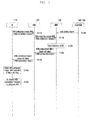
- FIG. 1 is a sequence diagram illustrating an APN-based procedure for handling a PDN connection request from a user equipment according to a related art technique.
- session control signals may include a PDN connection request, bearer resource allocation request and the like.
- a Mobility Management Entity (MME) 130 receives a load status report from a Serving Gateway (SGW) 140 and a PDN Gateway (PGW) 150 (S105).
- SGW Serving Gateway
- PGW PDN Gateway
- Auser equipment (UE) 110 sends a PDN connection request containing an APN to use through the eNB 120 to the MME 130 (S110).
- the MME 130 examines the load level in consideration of the requested APN (S120).
- the MME 130 may accept only an IMS related APN request for voice communication or a VPN related APN request for enterprise services.
- the MME 13 0 may reject a web browsing relatedAPN request with a back-off time.
- the MME 130 sends a PDN connection reject message through the eNB 120 to the UE 110 (S130).
- the PDN connection reject message contains a back-off time.
- the UE 110 resends a PDN connection request after expiration of the back-off time (S140).
- the UE 110 may resend a PDN connection request containing a different APN (S150).
- APN-based congestion control described in FIG. 1 may be applied to session control signals for a PDN connection pertaining to a specific APN.
- APN-based congestion control also to mobility management control signals such as service request messages and tracking area update (TAU) messages.
- TAU tracking area update
- a mobility management control signal may be not limited to a single PDN connection pertaining to a specific APN.
- a mobility management control signal is a UE-specific signal, it may be related to all sessions in the UE.
- a mobility management control signal may be simultaneously related to two or more APNs. This is described with reference to FIG. 2 .
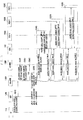
- FIG. 2 illustrates a problem occurring when a related art APN-based congestion control method is directly applied to handle a service request message or tracking area update message serving as a mobility management control signal.
- the UE 110 has transitioned to the idle state after establishing PDN connection for multiple APNs. Thereafter, to transition to the active state, the UE 110 sends a service request message through the eNB 120 to the MME 130 (S210).
- the service request message contains a request for multiple PDN connections with respect to one UE.
- the MME 130 examines load levels for currently active APNs (S220). In this example, it is assumed that APN A and APN C indicate overload and APN B indicates non-overload.
- APNs indicate overload (for example, the number of active bearers is greater than or equal to the maximum number of active bearers) and remaining APNs indicate non-overload as described above, a problem of how to handle a mobility management control signal for the corresponding UE may arise.
- a session control signal is processed by a control node currently serving the UE 110, i.e. the MME 130.
- a mobility management signal notifying UE movement may have to be processed by a new MME other than the MME 130 currently serving the UE 110. That is, when the UE sends TAU, the new MME other than the old MME has to receive TAU, but the new MME may already be overloaded.
- the new MME has to determine how to handle the mobility management signal from the UE 110.
- the new MME has to obtain information on the APN currently used by the UE 110 from the MME having served the UE 110, perform control plane switching from between the default MME and the SGW to between the new MME and the PGW, and determine whether to reject the mobility management signal (e.g. TAU) on the basis of the APN.
- the mobility management signal e.g. TAU
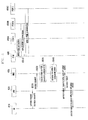
- FIG. 3 illustrates a problem that may occur when a related art APN-based congestion control method is applied to a mobility management control signal.
- the UE 110 sends a tracking area update (TAU) message through the eNB 120 to the new MME 130A (S310).
- TAU tracking area update
- the new MME 130A is assumed to be different from the old MME 130B having served the UE 110 and the new MME 130A is assumed to be in a congested state.
- the new MME 130A Although in a congested state, to process TAU from the UE 110, the new MME 130A sends a UE context request message to the old MME 130B (S320). Thereafter, the new MME 130A receives a UE context response message (S330) and sends a corresponding acknowledgement message (S340).
- the new MME 130A identifies currently active APNs for the UE 110 on the basis of UE context information and examines load levels as to the identifiedAPNs (S350). In this example, it is assumed that APN A and APN C indicate overload and APN B indicates non-overload.
- the new MME 130A performs a procedure to release the control plane between the old MME 1308 and the SGW 140 and to form a control plane between the new MME 130A and the SGW 140 (S360, S370 and S380).
- the present invention has been made to solve the above problem described in connection with FIGS. 1 to 3 and proposes an APN-based scheme for efficient congestion control.
- a first embodiment of the present invention describes a solution for a case where the core network node supporting mobility management (i.e. the MME) is not changed.
- a second embodiment of the present invention describes a solution for a case where the core network node supporting mobility management is changed.
- embodiments 1-A to 1-D are separately described according to MME schemes for handling mobility management control signals.
- the MME receiving a service request message or TAU does not change in the first embodiment, it may be assumed that the MME possesses UE context information including subscription information.
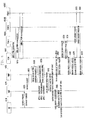
- FIG. 4 illustrates a congestion control method according to embodiment 1-A of the present invention.
- Subscription information of a UE includes default APN information, which is information regarding a PDN connection used by default by the UE in an active state.
- handling of a mobility management control signal is determined according to congestion state of the default APN. That is, the MME having received a mobility management control signal from the UE rejects the mobility management control signal when the default APN is in a congested state. Additionally, the MME provides a back-off time as an estimated time needed for congestion resolution through a corresponding reject message.
- PDN connections for multiple APNs are established for the UE 410 (S410).
- the UE 410 sends a service request message through the eNB 420 to the MME 430 (S420).
- the MME 430 identifies the default APN and a state thereof using subscription information of the UE 410 (S430).
- the MME 430 Upon determining that the default APN is in a congested state (S440), the MME 430 sends a service reject message to the UE 410 (S450).
- the service reject message contains the default APN and a back-off time. After expiration of the back-off time, the UE 410 resends a service request message.
- FIG. 5 illustrates a congestion control method according to embodiment 1-B of the present invention.
- the MME when at least one of PDN connections for active APNs is in a congested state, rejects a mobility management control signal received from the UE. Additionally, the MME sends the UE a reject message containing APNs in a congested state and individual back-off times therefor. Here, the MME may send a reject message containing APNs in a congested state and a representative back-off time (the maximum of back-off times for the APNs in a congested state).
- PDN connections for multiple APNs are established for the UE 410 (S510).
- the UE 410 sends a service request message through the eNB 420 to the MME 430 (S520).
- the MME 430 examines states of PDN connections activated for the UE 410 (S530).
- the MME 430 Upon determining that at least one of the activated PDN connections for the APNs is in a congested state (S540), the MME 430 sends a service reject message to the UE 410 (S550).
- the service reject message contains each APN for which rejection is made and a back-off time therefor. After expiration of the back-off time, the UE 410 resends a service request message.
- FIG. 6 illustrates a congestion control method according to embodiment 1-C of the present invention.
- a non-overloaded PDN connection for an APN is activated and an overloaded PDN connection for anAPN is deactivated.
- a partial service reject/accept message containing each APN whose PDN connection is deactivated and a back-off time therefor is sent to the UE through a NAS message.
- the partial service reject/accept message contains eachAPN for which rejection is made, a back-off time therefor and a cause indicating partial rejection owing to APN overload.
- the UE does not make a PDN connection request for the indicated APN until expiration of the back-off time.
- a back-off time is not provided by the MME, the UE uses a preset default back-off time and makes a PDN connection request after expiration of the default back-off time.
- PDN connections for multiple APNs are established for the UE 410 (S610).
- the UE 410 sends a service request message through the eNB 420 to the MME 430 (S620).
- the MME 430 examines states of PDN connections activated for the UE 410 (S630).
- the MME 430 separates overloaded PDN connections for APNs from non-overloaded PDN connections for APNs (S635). In this embodiment, it is assumed that PDN connections for APN A and APN C are in a congested state and a PDN connection for APN B is not in a congested state.
- the MME 430 sends an initial context setup request message to the eNB 420 (S640).
- the initial context setup request message contains a partial service reject message indicating activation of the PDN connection only for APN B and rejection of PDN connection requests for the remaining APNs.
- the partial service reject message may contain each APN for which rejection is made and a back-off time therefor.
- the radio bearer establishment message contains the partial service reject message indicating activation of the PDN connection only for APN B and rejection of PDN connection requests for the remaining APNs.
- the partial service reject message may contain each APN for which rejection is made and a back-off time therefor.
- the MME 430 performs a procedure to delete overloaded PDN connections for APN A and APN C. To this end, to delete the PDN connection for APN A, the MME 430 sends a delete session request message to the SGW 440 (S650). The SGW 440 forwards the delete session request message to PGW A 450A (S655) and receives a delete session response message from PGW A 450A (S660). After the corresponding session is deleted, the MME 430 receives a delete session response message from the SGW 440 (S665).
- the MME 430 sends a delete session request message to the SGW 440 (S670).
- the SGW 440 forwards the delete session request message to PGW C 450C (S675) and receives a delete session response message from PGW C 450C (S680).
- the MME 430 receives a delete session response message from the SGW 440 (S685).
- EPS bearer information of the UE 410 should be updated by deleting rejected bearers. Such update may be achieved in one of the following three ways.
- the UE may locally deactivate EPS bearers corresponding to a PDN connection for an APN for which rejection is made.
- the partial service reject/accept message further contains information on activated bearers or released bearers. Upon reception of such a partial service reject/accept message, the UE may update locally stored EPS bearer information. Third, the UE may locally deactivate bearers other than bearers activated through RRC reconfiguration.
- FIG. 7 illustrates a congestion control method according to embodiment 1-D of the present invention.
- the UE sends a service request message containing an APN related to data to be sent, and the MME determines whether to accept the service request according to congestion state of a PDN connection for the indicated APN.
- the UE When data to be sent is generated in an idle state, the UE may transition to an active state through a service request.
- the generated data may be sent through a congested PDN connection for an APN.
- bearers are created in part according to partial service rejection or acceptance; and if a bearer related to the data to be sent by the UE cannot be established, such partial service rejection or acceptance may become meaningless.
- the UE specifies at least one APN to be activated in a service request message.
- the MME rejects the service request when any one of the specified APNs is in a congested state.
- the service reject message may contain each APN for which rejection is made and a back-off time therefor or a longest representative back-off time.
- the MME When all APNs specified in a service request message are in a non-congested state and only non-specified APNs are in a congested state, the MME sends the UE a partial service reject/accept message indicating rejection of congested APNs only.
- the partial service reject/accept message contains each APN for which rejection is made and a back-off time therefor.
- the MME 430 deactivates a corresponding PDN connection through a delete session request message.
- the UE Upon reception of the partial service reject/accept message, the UE does not send a PDN connection request for the corresponding APN until expiration of the back-off time.
- PDN connections for multiple APNs are established for the UE 410 (S710).
- the UE 410 sends a service request message containing least one APN to be activated through the eNB 420 to the MME 430 (S720).
- the MME 430 examines states of PDN connections activated for the UE 410 (S730).
- the MME 430 determines whether any one of the APNs specified by the UE 410 is in a congested state (S740). When any one of the APNs specified by the UE 410 is in a congested state, the MME 430 sends a service reject message containing a back-off time to the UE 410 (S750).
- the MME 430 determines that a non-specified APN is in a congested state (S760).
- the MME 430 sends a partial service reject/accept message to the UE 410 (S770).
- the partial service reject/accept message contains each APN for which rejection is made and a back-off time therefor.
- the UE 410 may send a service request message containing EPS bearer IDs instead of APNs.
- the MME 430 identifies APNs corresponding to EPS bearers using stored UE context information and examines congestion states of the APNs to accept or reject the request.
- APNs contained in the service request message are not APNs for PDN connections to send buffered data but APNs configured in the UE as a criterion for rejection or acceptance.
- congestion state of an APN may be applied on a UE basis. That is, the same Internet APN may be determined as being congested for a first group of the UEs and be determined as not being congested for a second group of UEs according to subscribed calling plans.
- embodiments 2-A and 2-B are separately described according to MME schemes for handling mobility management control signals.
- the UE sends a tracking area update request message (a mobility management control signal) to the new MME.
- a tracking area update request message (a mobility management control signal)
- the new MME determines whether to accept or reject TAU according to APN congestion state.
- the new MME in a congested state cannot determine whether to accept or reject TAU until UE context information is obtained from the old MME.
- the control signal connection to the SGW is to be transferred to the new MME. Otherwise, the SGW having UE bearer information may be detached from any MME, disabling paging operation.
- embodiments 2-A and 2-B present a solution to the above problem.
- FIG. 8 illustrates a congestion control method according to embodiment 2-A of the present invention.
- the new MME having received TAU from the UE identifies the old MME using GUTI (globally unique temporary ID) contained in TAU.
- GUTI is assigned by the MME to the UE and includes GUMMEI (globally unique MME ID) and M-TMSI (MME-TMSI).
- GUMMEI is identification information for the MME
- M-TMSI is identification information for a UE within the MME.
- the new MME obtains UE context information from the old MME and performs congestion control according to the procedure of embodiment 1-A or 1-B. That is, when the default APN contained in UE context information is in a congested state (embodiment 1-A) or when any one of contained active APNs is in a congested state, the new MME rejects TAU from the UE.
- a TAU reject message contains each APN in a congested state and a back-off time therefor.
- the new MME After sending the TAU reject message, the new MME deactivates PDN connections for the corresponding APNs. To this end, the new MME sends a delete session request message to the SGW.
- the UE Upon reception of a TAU reject message, the UE attempts network access through an attach request message other than TAU after expiration of the back-off time.
- the UE attempts attachment after expiration of the back-off time for the default APN.
- the UE immediately attempts network access through an attach request message.
- the UE sends a PDN connection request message after expiration of the associated back-off time.
- the UE 410 sends a TAU to the new MME 430A (S805).
- the new MME 430A sends a UE context request message to the old MME 430B (S810).
- the oldMME 430B sends a UE context response message containing UE context information to the new MME 430A (S815), and receives a corresponding acknowledgement message (S820).
- the new MME 430A identifies PDN connections activated for the UE 410 and examines states of the PDN connections on the basis of UE context information (S825). The new MME 430A determines that a PDN connection for the default APN or any APN is in a congested state (S830).
- the new MME 430A sends a tracking area update (TAU) reject message through the eNB 420 to the UE 410 (S835).
- TAU reject message contains each APN in a congested state and a back-off time therefor.
- the new MME 430A sends a delete session request message to the SGW 440 (S840).
- the SGW 440 deletes PDN connections established for the UE 410 by sending a modify bearer request message to individual PGWs and receiving corresponding response messages (S845, S850 and S855).
- the UE 410 After expiration of the back-off time, the UE 410 attempts network access by sending an attach request message to the new MME 430A (S860).
- the new MME 430A may insert a back-off time or both an APN and back-off time in the TAU reject message. Thereafter, for control plane switching to the new MME 430A, the new MME 430A may send an update bearer request message to the SGW 440 instead of sending a delete session request message.
- FIG. 9 illustrates a congestion control method according to embodiment 2-B of the present invention.
- the new MME 430A may have to handle UE context information and a session with the SGW even in a congested state.
- the UE having received a rejection always performs an attach procedure.
- signaling for the attach procedure is much more complex and load-intensive in comparison to signaling for TAU handling.
- the new MME 430A having barely escaped from a congested state to reenter the congested state owing to processing of the attach procedure with the UE.
- a scheme is needed that enables the new MME 430A in a congested state to postpone UE-related processing until congestion is relieved.
- Embodiment 2-B of the present invention proposes a solution to the above problem. Specifically, to postpone UE-related processing until congestion is relieved, the new MME 430A sends a TAU reject message containing a back-off time to the UE, preventing the UE from sending an additional request. In addition, the new MME 430A requests the old MME 430B to suspend bearers for the UE so that downlink data packets are discarded, thereby preventing occurrence of paging overhead.
- the UE 410 sends TAU containing a default APN and GUTI information through the eNB 420 to the new MME 430A (S905).
- the new MME 430A examines congestion state of the default APN (S910). When the default APN is in a congested state, the new MME 430A sends a TAU reject message containing a back-off time through the eNB 420 to the UE 410 (S915).
- the new MME 430A sends a suspend request message to the old MME 430B having managed the UE 410 (S920).
- the old MME 430B sends a suspend notification message to the SGW 440 and remains in a suspended state, during which downlink data for the UE 410 is not processed (S925).
- the suspend request message sent by the new MME 430A to the old MME 430B may contain a default time serving as a back-off time.
- a default time serving as a back-off time.
- the old MME 430B deletes context information of the UE 410 and deactivates bearers for the UE 410 through the SGW, placing the UE 410 in a deregistered state.
- the UE In the event that a default time is not contained in the suspend request message, the UE is placed in a deregistered state after expiration of the unreachable timer according to a regular operational procedure.
Landscapes
- Engineering & Computer Science (AREA)
- Computer Networks & Wireless Communication (AREA)
- Signal Processing (AREA)
- Mobile Radio Communication Systems (AREA)
Applications Claiming Priority (2)
| Application Number | Priority Date | Filing Date | Title |
|---|---|---|---|
| KR1020110000103A KR101752707B1 (ko) | 2011-01-03 | 2011-01-03 | 이동통신 시스템에서 혼잡 제어 방법 |
| PCT/KR2012/000041 WO2012093832A2 (fr) | 2011-01-03 | 2012-01-03 | Procédé permettant de maîtriser la congestion dans un système de communication mobile |
Publications (2)
| Publication Number | Publication Date |
|---|---|
| EP2663122A2 true EP2663122A2 (fr) | 2013-11-13 |
| EP2663122A4 EP2663122A4 (fr) | 2017-10-04 |
Family
ID=46457829
Family Applications (1)
| Application Number | Title | Priority Date | Filing Date |
|---|---|---|---|
| EP12732474.7A Withdrawn EP2663122A4 (fr) | 2011-01-03 | 2012-01-03 | Procédé permettant de maîtriser la congestion dans un système de communication mobile |
Country Status (6)
| Country | Link |
|---|---|
| US (1) | US9749897B2 (fr) |
| EP (1) | EP2663122A4 (fr) |
| JP (1) | JP5968908B2 (fr) |
| KR (1) | KR101752707B1 (fr) |
| CN (1) | CN103404194B (fr) |
| WO (1) | WO2012093832A2 (fr) |
Cited By (6)
| Publication number | Priority date | Publication date | Assignee | Title |
|---|---|---|---|---|
| WO2014078604A3 (fr) * | 2012-11-15 | 2014-07-10 | Blackberry Limited | Système et procédé de gestion de ressources dans un réseau sans fil |
| EP2926590A4 (fr) * | 2013-07-08 | 2016-01-20 | Samsung Electronics Co Ltd | Appareil et procédé pour commander une surcharge de commande dans des systèmes wlan |
| CN105850176A (zh) * | 2013-12-20 | 2016-08-10 | 三星电子株式会社 | 在移动通信系统中用于控制拥塞的方法和设备 |
| WO2017081864A1 (fr) * | 2015-11-10 | 2017-05-18 | Nec Corporation | Système de communication |
| EP3379890A4 (fr) * | 2015-11-19 | 2019-07-10 | LG Electronics Inc. -1- | Procédé de fonctionnement pour un terminal fonctionnant en situation de congestion de réseau dans un système de communication sans fil et appareil pour celui-ci |
| US12267725B2 (en) | 2013-12-20 | 2025-04-01 | Samsung Electronics Co., Ltd. | Method and device for controlling congestion in mobile communication system |
Families Citing this family (28)
| Publication number | Priority date | Publication date | Assignee | Title |
|---|---|---|---|---|
| KR101594942B1 (ko) | 2012-02-06 | 2016-02-26 | 인텔 코포레이션 | 다운링크 협력 멀티포인트 통신의 구성을 위한 시그널링 |
| KR101964083B1 (ko) | 2012-10-31 | 2019-04-01 | 삼성전자 주식회사 | 무선 통신 시스템에서 기지국간 반송파 집적을 통한 데이터 전송 방법 및 장치 |
| WO2014158008A1 (fr) * | 2013-03-29 | 2014-10-02 | Samsung Electronics Co., Ltd. | Procédé et appareil de gestion de congestion dans un système de communication sans fil |
| KR102178540B1 (ko) * | 2013-04-01 | 2020-11-13 | 삼성전자주식회사 | 이동 통신 시스템의 유저 플레인 혼잡 제어 기법 |
| US9185544B2 (en) * | 2013-04-25 | 2015-11-10 | Telefonaktiebolaget L M Ericsson (Publ) | Apparatuses and methods for reducing location update signaling between network nodes of a mobile communication network |
| BR112015028451A2 (pt) | 2013-05-13 | 2017-07-25 | Huawei Tech Co Ltd | processo e dispositivo de controle de sobrecarga |
| WO2014198710A1 (fr) * | 2013-06-12 | 2014-12-18 | Telefonaktiebolaget L M Ericsson (Publ) | Nœud et procédé pour la gestion du statut de congestion d'un ran |
| KR102143446B1 (ko) * | 2013-09-27 | 2020-08-11 | 에스케이텔레콤 주식회사 | 무선 통신 시스템에서 인증 처리를 위한 장치, 이를 위한 방법 및 이 방법이 기록된 컴퓨터 판독 가능한 기록매체 |
| WO2015048992A1 (fr) * | 2013-10-02 | 2015-04-09 | Telefonaktiebolaget L M Ericsson (Publ) | Traitement de surcharge d'un nœud de réseau |
| CN104684020A (zh) * | 2013-11-28 | 2015-06-03 | 中兴通讯股份有限公司 | 一种信令拥塞的处理方法、装置、基站及系统 |
| US10440610B2 (en) | 2014-01-17 | 2019-10-08 | Lg Electronics Inc. | Method and apparatus for obtaining radio access network sharing information in wireless communication system |
| CN104956746A (zh) * | 2014-01-27 | 2015-09-30 | 华为技术有限公司 | 一种ue以及相关的呼叫响应方法 |
| CN105407539A (zh) * | 2014-09-12 | 2016-03-16 | 电信科学技术研究院 | 一种pdn连接建立的方法及装置 |
| EP3007488A1 (fr) * | 2014-10-08 | 2016-04-13 | Alcatel Lucent | Manipulation de connexions PDN pour un équipement utilisateur dans un réseau mobile à la resélection initiée d'une entité de réseau central de desserte |
| US9807669B1 (en) * | 2014-10-24 | 2017-10-31 | Sprint Communications Company L.P. | Identifying communication paths based on packet data network gateway status reports |
| US10034190B2 (en) * | 2015-02-12 | 2018-07-24 | Qualcomm Incorporated | Enhancing network operation with UE context awareness |
| WO2017015788A1 (fr) | 2015-07-24 | 2017-02-02 | Panasonic Intellectual Property Corporation Of America | Découverte améliorée d'ue relais pour services de proximité |
| WO2017043767A1 (fr) * | 2015-09-11 | 2017-03-16 | 엘지전자 주식회사 | Procédé de fonctionnement d'un mode de repos par application d'un mode drx étendu dans un système de communication sans fil, et appareil à cet effet |
| US9923821B2 (en) * | 2015-12-23 | 2018-03-20 | Intel Corporation | Managing communication congestion for internet of things devices |
| CA3011969A1 (fr) * | 2016-01-22 | 2017-07-27 | Blackberry Limited | Determination de nom de point d'acces pour des services essentiels a la mission |
| US10142923B2 (en) * | 2016-02-26 | 2018-11-27 | Microsoft Technology Licensing, Llc | Using a single packet data network for data transfers to manage network resources |
| WO2017149574A1 (fr) * | 2016-03-03 | 2017-09-08 | 日本電気株式会社 | Nœud central, terminal sans fil, procédé de communication et support lisible par ordinateur non temporaire |
| WO2017149575A1 (fr) * | 2016-03-03 | 2017-09-08 | 日本電気株式会社 | Noeud central, terminal sans fil, procédé de communication et support non temporaire lisible par ordinateur |
| CN107529194A (zh) * | 2016-06-22 | 2017-12-29 | 中兴通讯股份有限公司 | 业务恢复方法及系统、分组数据网关及移动性管理实体 |
| KR102325521B1 (ko) * | 2017-08-14 | 2021-11-12 | 삼성전자 주식회사 | 단말과 무선 접속 네트워크 간 Inactive 상태에서 핵심 망의 혼잡으로 인한 RRC-inactive 단말 처리 방법 및 장치 |
| EP3634031B1 (fr) * | 2018-05-14 | 2021-08-11 | Guangdong Oppo Mobile Telecommunications Corp., Ltd. | Procédé permettant de commander une congestion de réseau, dispositif terminal, et dispositif de réseau |
| US12464575B2 (en) | 2020-02-28 | 2025-11-04 | Qualcomm Incorporated | Apparatus and method of wireless communication based on a back-off timer |
| KR102927206B1 (ko) | 2020-04-14 | 2026-02-12 | 삼성전자주식회사 | 이동 통신 네트워크에서 동적이고 효율적인 로드 밸런싱을 위한 방법 및 장치 |
Family Cites Families (21)
| Publication number | Priority date | Publication date | Assignee | Title |
|---|---|---|---|---|
| CN100584093C (zh) * | 2006-08-15 | 2010-01-20 | 华为技术有限公司 | 一种在移动通信系统中转移用户设备的方法及系统 |
| ATE483341T1 (de) * | 2006-10-27 | 2010-10-15 | Mitsubishi Electric Corp | Verfahren und vorrichtung zur bestimmung eines nachführgebiets eines drahtlosen zellularen telekommunikationsnetzes mit einer mehrzahl von nachführgebieten |
| GB2447434A (en) * | 2007-02-09 | 2008-09-17 | Vodafone Plc | Restricting access to telecommunications networks based upon network conditions |
| CN101247634A (zh) * | 2007-02-15 | 2008-08-20 | 北京三星通信技术研究有限公司 | 移动通信系统选择服务节点的方法 |
| KR101002810B1 (ko) * | 2007-08-10 | 2010-12-21 | 삼성전자주식회사 | 패킷 스위칭 도메인에서 단말의 위치 등록 방법 및 장치 |
| KR20090045039A (ko) * | 2007-10-30 | 2009-05-07 | 엘지전자 주식회사 | 우선순위에 기반한 셀 재선택 방법 |
| US7940697B2 (en) * | 2008-03-17 | 2011-05-10 | Nokia Corporation | Transition between IP protocol versions |
| CN101472256B (zh) * | 2008-04-03 | 2011-04-20 | 华为技术有限公司 | 承载挂起的方法、承载恢复的方法、网关代理及通信系统 |
| US20090285179A1 (en) * | 2008-05-16 | 2009-11-19 | Bridgewater Systems Corp. | Long-Term Evolution (LTE) Packet Data Network Gateway (PDN-GW) Selection |
| US8543114B2 (en) * | 2008-10-15 | 2013-09-24 | Telefonaktiebolaget Lm Ericsson (Publ) | Voice over LTE via generic access handover (HO) apparatus and method |
| US20100272115A1 (en) * | 2009-04-22 | 2010-10-28 | Rajesh Ramankutty | Gateway-based management in a communication network |
| US20100279731A1 (en) * | 2009-05-01 | 2010-11-04 | Puneet Jain | Techniques for communications among access and core networks |
| KR20110020161A (ko) * | 2009-08-21 | 2011-03-02 | 엘지전자 주식회사 | 이동통신 네트워크 내에서 제어 평면(Control Plane)을 담당하는 서버 및 SIPTO 기반의 세션을 제어하는 방법 |
| US10334483B2 (en) * | 2009-11-11 | 2019-06-25 | Telefonaktiebolaget Lm Ericsson (Publ) | Serving GW triggered relocation |
| US20110199905A1 (en) * | 2010-02-12 | 2011-08-18 | Interdigital Patent Holdings, Inc. | Access control and congestion control in machine-to-machine communication |
| KR101489418B1 (ko) * | 2010-04-22 | 2015-02-03 | 후아웨이 테크놀러지 컴퍼니 리미티드 | 혼잡/과부하 제어 방법 및 장치 |
| US9179288B2 (en) * | 2010-04-29 | 2015-11-03 | Lg Electronics Inc. | Server in charge of control plane within mobile communication network and method for controlling service in server |
| CA2801918C (fr) * | 2010-06-07 | 2016-05-17 | Interdigital Patent Holdings, Inc. | Procede et appareil d'emission de messages de demande de services dans un reseau encombre |
| US8982694B2 (en) * | 2010-09-01 | 2015-03-17 | Telefonaktiebolaget L M Ericsson (Publ) | Localized congestion exposure |
| TWI504303B (zh) * | 2010-10-05 | 2015-10-11 | Htc Corp | 處理基於存取點名稱之擁塞控制的方法及其通訊裝置 |
| CN102469505B (zh) * | 2010-11-08 | 2015-11-25 | 宏达国际电子股份有限公司 | 无线通讯系统的处理询问超载的方法 |
-
2011
- 2011-01-03 KR KR1020110000103A patent/KR101752707B1/ko not_active Expired - Fee Related
-
2012
- 2012-01-03 CN CN201280011534.3A patent/CN103404194B/zh not_active Expired - Fee Related
- 2012-01-03 WO PCT/KR2012/000041 patent/WO2012093832A2/fr not_active Ceased
- 2012-01-03 EP EP12732474.7A patent/EP2663122A4/fr not_active Withdrawn
- 2012-01-03 JP JP2013548347A patent/JP5968908B2/ja not_active Expired - Fee Related
- 2012-01-03 US US13/978,063 patent/US9749897B2/en active Active
Non-Patent Citations (1)
| Title |
|---|
| See references of WO2012093832A2 * |
Cited By (18)
| Publication number | Priority date | Publication date | Assignee | Title |
|---|---|---|---|---|
| WO2014078604A3 (fr) * | 2012-11-15 | 2014-07-10 | Blackberry Limited | Système et procédé de gestion de ressources dans un réseau sans fil |
| EP3402243A1 (fr) * | 2013-07-08 | 2018-11-14 | Samsung Electronics Co., Ltd. | Appareil et procédé pour commander la commande de surcharge dans des systèmes de réseau local sans fil |
| US9497664B2 (en) | 2013-07-08 | 2016-11-15 | Samsung Electronics Co., Ltd. | Apparatus and method for controlling control overload in WLAN systems |
| EP2926590A4 (fr) * | 2013-07-08 | 2016-01-20 | Samsung Electronics Co Ltd | Appareil et procédé pour commander une surcharge de commande dans des systèmes wlan |
| US9888408B2 (en) | 2013-07-08 | 2018-02-06 | Samsung Electronics Co., Ltd. | Apparatus and method for controlling control overload in WLAN systems |
| US10448280B2 (en) | 2013-07-08 | 2019-10-15 | Samsung Electronics Co., Ltd. | Apparatus and method for controlling control overload in WLAN systems |
| US10924964B2 (en) | 2013-07-08 | 2021-02-16 | Samsung Electronics Co., Ltd. | Apparatus and method for controlling control overload in WLAN systems |
| CN105850176A (zh) * | 2013-12-20 | 2016-08-10 | 三星电子株式会社 | 在移动通信系统中用于控制拥塞的方法和设备 |
| US11051203B2 (en) | 2013-12-20 | 2021-06-29 | Samsung Electronics Co., Ltd. | Method and device for controlling congestion in mobile communication system |
| US10313921B2 (en) | 2013-12-20 | 2019-06-04 | Samsung Electronics Co., Ltd. | Method and device for controlling congestion in mobile communication system |
| US12267725B2 (en) | 2013-12-20 | 2025-04-01 | Samsung Electronics Co., Ltd. | Method and device for controlling congestion in mobile communication system |
| US11770736B2 (en) | 2013-12-20 | 2023-09-26 | Samsung Electronics Co., Ltd. | Method and device for controlling congestion in mobile communication system |
| US10659989B2 (en) | 2013-12-20 | 2020-05-19 | Samsung Electronics Co., Ltd. | Method and device for controlling congestion in mobile communication system |
| CN105850176B (zh) * | 2013-12-20 | 2020-08-28 | 三星电子株式会社 | 在移动通信系统中用于控制拥塞的方法和设备 |
| WO2017081864A1 (fr) * | 2015-11-10 | 2017-05-18 | Nec Corporation | Système de communication |
| US11202278B2 (en) | 2015-11-10 | 2021-12-14 | Nec Corporation | Communication method, mobile terminal, core network node, non-transitory computer readable recording medium storing program, and system for selecting network resource |
| US10506458B2 (en) | 2015-11-19 | 2019-12-10 | Lg Electronics Inc. | Operation method for terminal operating in congested network situation in wireless communication system and apparatus therefor |
| EP3379890A4 (fr) * | 2015-11-19 | 2019-07-10 | LG Electronics Inc. -1- | Procédé de fonctionnement pour un terminal fonctionnant en situation de congestion de réseau dans un système de communication sans fil et appareil pour celui-ci |
Also Published As
| Publication number | Publication date |
|---|---|
| CN103404194A (zh) | 2013-11-20 |
| WO2012093832A3 (fr) | 2012-11-08 |
| CN103404194B (zh) | 2016-12-28 |
| US20130286828A1 (en) | 2013-10-31 |
| KR101752707B1 (ko) | 2017-07-03 |
| JP5968908B2 (ja) | 2016-08-10 |
| JP2014505421A (ja) | 2014-02-27 |
| EP2663122A4 (fr) | 2017-10-04 |
| US9749897B2 (en) | 2017-08-29 |
| KR20120078833A (ko) | 2012-07-11 |
| WO2012093832A2 (fr) | 2012-07-12 |
Similar Documents
| Publication | Publication Date | Title |
|---|---|---|
| EP2663122A2 (fr) | Procédé permettant de maîtriser la congestion dans un système de communication mobile | |
| US12532372B2 (en) | Method for controlling service in radio communication system | |
| US9967819B2 (en) | Method for processing data associated with idle mode signaling reduction in a wireless communication system | |
| CN105850176B (zh) | 在移动通信系统中用于控制拥塞的方法和设备 | |
| KR101771260B1 (ko) | 이동 통신 시스템에서 사용자 단말의 접속 제어 방법 및 장치 | |
| KR102058954B1 (ko) | 무선 통신 시스템에서 small data를 효율적으로 전송하는 방법 및 장치 | |
| EP3462791B1 (fr) | Procédé et appareil de gestion d'une connexion pdn dans un système de communication sans fil | |
| CN108307443B (zh) | 一种轻连接用户设备的业务控制的方法 | |
| CN102857994A (zh) | 一种疏导终端接入网络的方法及系统 | |
| EP3346759B1 (fr) | Optimisation de la relocalisation de passerelle dans un système mobile | |
| CN102469503B (zh) | Mtc切换中的拥塞控制方法及装置、系统 | |
| CN102469503A (zh) | Mtc切换中的拥塞控制方法及装置、系统 |
Legal Events
| Date | Code | Title | Description |
|---|---|---|---|
| PUAI | Public reference made under article 153(3) epc to a published international application that has entered the european phase |
Free format text: ORIGINAL CODE: 0009012 |
|
| 17P | Request for examination filed |
Effective date: 20130701 |
|
| AK | Designated contracting states |
Kind code of ref document: A2 Designated state(s): AL AT BE BG CH CY CZ DE DK EE ES FI FR GB GR HR HU IE IS IT LI LT LU LV MC MK MT NL NO PL PT RO RS SE SI SK SM TR |
|
| DAX | Request for extension of the european patent (deleted) | ||
| A4 | Supplementary search report drawn up and despatched |
Effective date: 20170901 |
|
| RIC1 | Information provided on ipc code assigned before grant |
Ipc: H04W 28/02 20090101AFI20170828BHEP Ipc: H04W 76/02 20090101ALN20170828BHEP |
|
| STAA | Information on the status of an ep patent application or granted ep patent |
Free format text: STATUS: EXAMINATION IS IN PROGRESS |
|
| 17Q | First examination report despatched |
Effective date: 20180710 |
|
| STAA | Information on the status of an ep patent application or granted ep patent |
Free format text: STATUS: THE APPLICATION IS DEEMED TO BE WITHDRAWN |
|
| 18D | Application deemed to be withdrawn |
Effective date: 20201217 |