EP2667537A1 - Verfahren zur Codierung und Decodierung eines Datenstroms - Google Patents
Verfahren zur Codierung und Decodierung eines Datenstroms Download PDFInfo
- Publication number
- EP2667537A1 EP2667537A1 EP12382201.7A EP12382201A EP2667537A1 EP 2667537 A1 EP2667537 A1 EP 2667537A1 EP 12382201 A EP12382201 A EP 12382201A EP 2667537 A1 EP2667537 A1 EP 2667537A1
- Authority
- EP
- European Patent Office
- Prior art keywords
- sequence
- coding
- values
- decoding
- value
- Prior art date
- Legal status (The legal status is an assumption and is not a legal conclusion. Google has not performed a legal analysis and makes no representation as to the accuracy of the status listed.)
- Withdrawn
Links
- 238000000034 method Methods 0.000 title claims abstract description 72
- 239000013598 vector Substances 0.000 claims description 41
- 230000010354 integration Effects 0.000 claims description 32
- 239000011159 matrix material Substances 0.000 claims description 31
- 238000004891 communication Methods 0.000 claims description 22
- FGUUSXIOTUKUDN-IBGZPJMESA-N C1(=CC=CC=C1)N1C2=C(NC([C@H](C1)NC=1OC(=NN=1)C1=CC=CC=C1)=O)C=CC=C2 Chemical compound C1(=CC=CC=C1)N1C2=C(NC([C@H](C1)NC=1OC(=NN=1)C1=CC=CC=C1)=O)C=CC=C2 FGUUSXIOTUKUDN-IBGZPJMESA-N 0.000 claims description 7
- 108091026890 Coding region Proteins 0.000 claims description 7
- 230000005540 biological transmission Effects 0.000 claims description 7
- 230000008878 coupling Effects 0.000 claims description 7
- 238000010168 coupling process Methods 0.000 claims description 7
- 238000005859 coupling reaction Methods 0.000 claims description 7
- 238000005070 sampling Methods 0.000 claims description 3
- 230000008901 benefit Effects 0.000 description 12
- 238000005183 dynamical system Methods 0.000 description 9
- 230000006870 function Effects 0.000 description 7
- 230000008569 process Effects 0.000 description 6
- 230000001360 synchronised effect Effects 0.000 description 5
- 230000002087 whitening effect Effects 0.000 description 5
- 238000004590 computer program Methods 0.000 description 4
- 230000000875 corresponding effect Effects 0.000 description 4
- 230000002123 temporal effect Effects 0.000 description 4
- 230000006399 behavior Effects 0.000 description 3
- 230000000739 chaotic effect Effects 0.000 description 3
- OKUGPJPKMAEJOE-UHFFFAOYSA-N S-propyl dipropylcarbamothioate Chemical compound CCCSC(=O)N(CCC)CCC OKUGPJPKMAEJOE-UHFFFAOYSA-N 0.000 description 2
- 238000013459 approach Methods 0.000 description 2
- 238000004364 calculation method Methods 0.000 description 2
- 238000005291 chaos (dynamical) Methods 0.000 description 2
- 230000000737 periodic effect Effects 0.000 description 2
- 230000001131 transforming effect Effects 0.000 description 2
- 230000008859 change Effects 0.000 description 1
- 230000002596 correlated effect Effects 0.000 description 1
- 230000001419 dependent effect Effects 0.000 description 1
- 230000000694 effects Effects 0.000 description 1
- 230000008030 elimination Effects 0.000 description 1
- 238000003379 elimination reaction Methods 0.000 description 1
- 238000011156 evaluation Methods 0.000 description 1
- 238000005259 measurement Methods 0.000 description 1
- 238000010295 mobile communication Methods 0.000 description 1
- 230000009467 reduction Effects 0.000 description 1
- 230000004044 response Effects 0.000 description 1
- 230000035945 sensitivity Effects 0.000 description 1
- 238000004904 shortening Methods 0.000 description 1
Images


Classifications
-
- H—ELECTRICITY
- H04—ELECTRIC COMMUNICATION TECHNIQUE
- H04L—TRANSMISSION OF DIGITAL INFORMATION, e.g. TELEGRAPHIC COMMUNICATION
- H04L9/00—Cryptographic mechanisms or cryptographic arrangements for secret or secure communications; Network security protocols
- H04L9/08—Key distribution or management, e.g. generation, sharing or updating, of cryptographic keys or passwords
- H04L9/0861—Generation of secret information including derivation or calculation of cryptographic keys or passwords
- H04L9/0869—Generation of secret information including derivation or calculation of cryptographic keys or passwords involving random numbers or seeds
-
- H—ELECTRICITY
- H04—ELECTRIC COMMUNICATION TECHNIQUE
- H04L—TRANSMISSION OF DIGITAL INFORMATION, e.g. TELEGRAPHIC COMMUNICATION
- H04L9/00—Cryptographic mechanisms or cryptographic arrangements for secret or secure communications; Network security protocols
- H04L9/001—Cryptographic mechanisms or cryptographic arrangements for secret or secure communications; Network security protocols using chaotic signals
-
- H—ELECTRICITY
- H04—ELECTRIC COMMUNICATION TECHNIQUE
- H04L—TRANSMISSION OF DIGITAL INFORMATION, e.g. TELEGRAPHIC COMMUNICATION
- H04L9/00—Cryptographic mechanisms or cryptographic arrangements for secret or secure communications; Network security protocols
- H04L9/06—Cryptographic mechanisms or cryptographic arrangements for secret or secure communications; Network security protocols the encryption apparatus using shift registers or memories for block-wise or stream coding, e.g. DES systems or RC4; Hash functions; Pseudorandom sequence generators
- H04L9/065—Encryption by serially and continuously modifying data stream elements, e.g. stream cipher systems, RC4, SEAL or A5/3
- H04L9/0656—Pseudorandom key sequence combined element-for-element with data sequence, e.g. one-time-pad [OTP] or Vernam's cipher
- H04L9/0662—Pseudorandom key sequence combined element-for-element with data sequence, e.g. one-time-pad [OTP] or Vernam's cipher with particular pseudorandom sequence generator
- H04L9/0668—Pseudorandom key sequence combined element-for-element with data sequence, e.g. one-time-pad [OTP] or Vernam's cipher with particular pseudorandom sequence generator producing a non-linear pseudorandom sequence
Definitions
- the present invention relates to a method for coding a first data stream giving rise to a second coded data stream, and a method for decoding this second data stream wherein the coding is the result of comparing the first data stream with a third data stream formed by a pseudorandom sequence by means of an exclusive comparison operation (XOR).
- XOR exclusive comparison operation
- the invention relates to methods based on hyperchaotic coding methods for generating the pseudorandom sequences used in coding and decoding.
- the present invention is encompassed within the field of information stream coding in secure communications. Specifically, it is encompassed within the field of methods based on hyperchaotic systems some of which are known in the state of the art.
- the coded information is called a cipher or an encrypted message and is sent through the communication channel.
- the message is formed by a bitstream of any length, and A and B generate a binary sequence for coding and decoding, respectively. These binary sequences are the encryption sequences.
- the invention is based on the contributions published in the thesis by the same author " Vidal, G. Sincronizaconstru y control de istas dinámicos en prototypen de caos espacio-temporal (Synchronization and control of dynamical systems in space-time chaos) (PhD Thesis, University of Navarra, Spain, 2010 )" detailing the method for obtaining random sequences based on hyperchaotic systems and the sequences being generated from a dynamical system.
- a dynamical system is a system the state of which evolves over time.
- the behavior in said state can be modeled by determining the behavior equations of the system after identifying the elements involved and their relations.
- a dynamical system modeled by means of a differential equation or a system of differential equations allows describing it in terms of its behavior through solving said equation or system of equations.
- x is a vector variable belonging to the R n space, n being the dimension of the system of equations and wherein each component of the vector x is a variable as a function of time.
- Chaotic cryptography is based on the use of chaos theory on secure communications systems. Chaos theory studies deterministic systems with high response sensitivity to a small change in the initial conditions.
- Systems A and B are synchronized when the coding starts. This means that the same random sequence is being generated in both to enable coding and decoding the message using the XOR operator at both ends of the communication. If this synchronization does not occur, the decoded message will not be the originally coded message.
- the first property requires the key to be long enough. Theoretically when using a chaotic dynamical system, the trajectories can be as long as necessary without ever becoming periodic. It is not possible to have a sequence of infinite length in a computer, but it can be implemented with sufficient precision to integrate time periods without the rounding errors affecting the method and that these time periods are long enough as required by the cases to be dealt with.
- the second property can be easily achieved by software, prohibiting the repetition of values of initial conditions.
- the second property can also be achieved by software, prohibiting the repetition of coupling factors.
- the third property requires random signals; however, the starting point is a deterministic system.
- the dynamical properties of the system and a signal whitening process are used to perform this process.
- One of the main problems of continuous deterministic signals, even hyperchaotic signals, is how easy they can be tracked. This means that a spy could more or less correctly estimate the next values of the signal by knowing the previous instants. Therefore the possible spy could limit the possible initial conditions until finally discovering the key.
- a whitening process is used to prevent such attack.
- the thesis document describes a whitening process which allows transforming the continuous signal into a binary signal. To start, highly uncorrelated continuous signals are required, minimizing the statistical information of the encrypted message.
- the thesis document describes a method which is based on the fact that hyperchaotic systems have continuous signals the temporal autocorrelation of which is quickly lost.
- the sequence generating system is a high-dimensional system, therefore it is more difficult for periodic orbits to appear in the solution of the solved system of equations, a typical problem when working with computerized chaos. If there is periodicity in the solution to the system of equations, the work of the spy is being helped since he/she would have a temporal reference to measure the statistics of the system.
- Another requirement that the method for coding must comply with is to assure that there is no bijective function between the encrypted message and the original message, or what is known in cryptography as the inverse function problem. To that end the signal whitening method is used, eliminating most of the phase and amplitude information. Therefore the function linking the message and the cipher will no longer be bijective, and therefore one and the same encrypted bitstream can have different meanings. However, since the two systems are synchronized they will always have the same unencrypted message.
- the main technical problem of the signal whitening method proposed by the thesis document is the high computational cost involved in addition to the fact that a completely uncorrelated pseudorandom sequence is not generated.
- the present invention solves the problem described above by means of a method for coding a data stream according to claim 1, a method for decoding a coded data stream according to claim 2, a message coder according to claim 14, an encrypted message decoder according to claim 15 and a communication system according to claim 16.
- the dependent claims define preferred embodiments of the invention.
- a first inventive aspect of the invention is a method for coding a data stream for the transmission of said data by means of a coded stream wherein the coding is the result of comparing the data stream with a second data stream formed by a pseudorandom sequence by means of an exclusive comparison operation (XOR), characterized in that the generation of the pseudorandom sequence comprises the following steps:
- the first step to start the generation of the pseudorandom sequence is to establish the dynamical system which will be used to generate the pseudorandom sequence for encryption.
- the dynamical system is defined with a differential equation of solution x ( t ), abbreviated as x .
- the differential equation from the initial value is numerically integrated to calculate the solution x ( t ).
- the pseudorandom sequence with the digits d i ...d r is generated from a selection of the sequence of values x k wherein i is a predetermined integer value verifying 0 ⁇ i ⁇ r; i.e., digits of the actual number complying with the following are used:
- the last property of not being the most representative digits of the actual number x k provides the advantage of generating a sequence of values that uncorrelated with respect to one another in the shortest time possible. Upon eliminating the dependence between more representative digits a sequence the values of which are uncorrelated is obtained.
- the distance between the elements of the selection x k is widened.
- Distancing the elements of the section x k involves the evaluation of many intermediate points by means of numerical integration until obtaining a new sample x k .
- the integration of each of the steps involves a high computational cost due to the required number of intermediate functions and calculations.
- the invention reduces the number of digits used for generating the data stream for coding or decoding, it allows drastically reducing the distance in the time variable between the samples x k of the selection. In other words, for one and the same integration a greater number of samples is used, significantly increasing the volume of random uncorrelated digits generated for the same computational cost.
- a second inventive aspect of the invention is a method for decoding a coded data stream by means of the method according to the first inventive aspect wherein the decoding is the result of comparing the coded data stream with a second data stream formed by a pseudorandom sequence by means of an exclusive comparison operation (XOR), characterized in that the generation of the pseudorandom sequence comprises steps a)-f) of a method according to the first inventive aspect.
- XOR exclusive comparison operation
- a third inventive aspect is a message coder suitable for carrying out a method according to the first inventive aspect.
- a fourth inventive aspect is an encrypted message decoder suitable for carrying out a method according to the second inventive aspect.
- a fifth inventive aspect is a communication system including at least one coder according to the third inventive aspect and at least one decoder according to the fourth inventive aspect.
- the communication system is a mobile communications system.
- the initial value x 0 is provided to both systems from a communication center. If, for example, A and B are mobile terminals, this communication center can be the BTS-based (base transceiver station) station.
- this communication center can be the BTS-based (base transceiver station) station.
- the same random sequences are generated at both ends of the system to enable recovering the original message by applying the XOR operator. These sequences are the same because the same differential equation with the same initial value is solved.
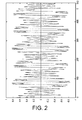
- the present invention is applied in processes for coding messages in the transmission between two ends in a communication system. Therefore, as illustrated in Figure 1 , a message (M) is coded at a first end of the communication (A) using the XOR operator with the encryption sequence (S). The encrypted message (M XOR S) is sent through the transmission channel. The encrypted message is decoded at the opposite end of the communication (B) by applying the XOR operator again.
- the invention focuses on the generation of coding sequences (S) which are identical at each end of the communication to enable obtaining the message (M) by applying the XOR operator in B.
- the coding sequence (S) is a pseudorandom sequence.
- the invention presents a method for coding a data stream for the transmission of said data by means of a coded stream wherein the coding is the result of comparing the data stream with a second data stream formed by a pseudorandom sequence by means of an exclusive comparison operation (XOR), characterized in that the generation of the pseudorandom sequence comprises the following steps:
- the invention also presents a method for decoding a coded data stream by means of the method according to the first inventive aspect wherein the decoding is the result of comparing the coded data stream with a second data stream formed by a pseudorandom sequence by means of an exclusive comparison operation (XOR) characterized in that the generation of the pseudorandom sequence comprises steps a)-f) of a method according to the first inventive aspect.
- XOR exclusive comparison operation
- a method that uses a set of digits discarding :
- the parentheses on the left and the parentheses on the right are in the position leaving therein the digits d i ...d r corresponding to step f) of the method according to claim 1.
- the positions of the parentheses therefore the range of digits d i ...d r , will be different and pre-established before applying the integration.
- the system of equations provides the advantage that the variable of interest depends on the variability of other variables and therefore it is less likely that a spy can successfully reproduce the same pseudorandom sequence to decrypt the coded message during transmission from A to B.
- the coupling terms which are expressed as ⁇ i A ⁇ x i B - x i A can be interpreted as feedback signals. When the systems are in a complete synchronization regime these terms cancel one another out. At that time, the two systems A and B reproduce the same trajectory.
- the measurement of the difference x i B - x i A compared with a small pre-established threshold value is an example of criterion to determine whether the systems are synchronized.
- This situation means that it is necessary for both systems to communicate their variables through a public channel so that it is known at both ends of the communication, A and B, when the synchronization has arrived, which is when the variables in both systems have the same value.
- This exchange of variables is performed in time intervals that do not necessarily need to coincide with the integration time, T.
- the exchange of the variables is performed over an exchange channel encrypted by means of public key.
- each digit d is depicted in binary with a word size D1, concatenating it to a binary sequence.
- the method according to the invention entails the selection of a set of digits for each sample and allows at the same time using more samples in one and the same integration period. It has been proven that the greater number of samples compensates for the digit reduction and the resulting method is more efficient than those described in the state of the art.
- each digit d is made to correspond to a binary expression with a word size D1, concatenating it to a binary sequence.
- a word size D2 is pre-established and integer digits are formed from the binary sequence taking words of D2 bits.
- the pseudorandom sequence is expanded into a sequence with a greater number of elements according to the following steps:
- the following is performed after generating the expansion matrix:
- This mode of operation wherein the K-module operation is applied for values of K in the range of [1,10], provides the advantage of being able to work with numbers with a single digit in the decimal system in the range of [0..9].
- This is advantageous when there are matrices the elements of which have very high values of the order of hundredths because M e is the result of a product, and it is therefore more expensive to work with them.
- the first has been rotated 2 times clockwise, the second row has been rotated one time and the third row has not been rotated.
- the advantage is that the degree of randomness and non-correlation increases, preventing a spy from being able to deduce the starting sequence and therefore the differential equations used for generating the random sequence.
- the following steps are further performed after generating the vector V 3
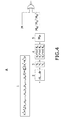
- the rows of the matrix are calculated and work is performed with them. It is not necessary to first construct the matrix and then extract the data stream. Therefore, as indicated in Figure 4 , the system works faster and it is not necessary to save the entire matrix in a memory, only the row to be extracted, working directly with it. This provides full system efficiency.
- the expansion matrix it is possible to lower the requirements for a system that implements the method both in a processor and in a memory, being able to be implemented in hardware that is not very powerful.
- Figure 4 shows the system with the functional elements generating the pseudorandom sequence (S) with which the message (m) is coded.
- S pseudorandom sequence
- m message
- Figure 4 shows the system with the different elements.
- a particular embodiment starts from a signal, x k , generated from a chaotic dynamical system. Specific values that are uncorrelated with respect to one another are taken from this signal:
- K 1 module 90107 is obtained from each element of the matrix.
- Each element of the matrix is then transformed into binary by means of transforming decimal elements into binary numbers.
- the pseudorandom sequence (of which only that corresponding to the first two numbers is shown) is obtained by concatenating the elements of the matrix into binary: 01001000111011000 34336 ⁇ 10010100100011000 76056 ⁇
- this sequence is the sequence which is mixed by means of the XOR operation with the message to reach the encrypted data stream.
Landscapes
- Engineering & Computer Science (AREA)
- Computer Security & Cryptography (AREA)
- Computer Networks & Wireless Communication (AREA)
- Signal Processing (AREA)
- Physics & Mathematics (AREA)
- Nonlinear Science (AREA)
- Compression, Expansion, Code Conversion, And Decoders (AREA)
- Error Detection And Correction (AREA)
Priority Applications (16)
| Application Number | Priority Date | Filing Date | Title |
|---|---|---|---|
| EP12382201.7A EP2667537A1 (de) | 2012-05-24 | 2012-05-24 | Verfahren zur Codierung und Decodierung eines Datenstroms |
| JP2015513191A JP6329534B2 (ja) | 2012-05-24 | 2013-05-23 | 疑似ランダム系列の生成方法およびデータストリームのコーディングまたはデコーディング方法 |
| PT137253506T PT2856693T (pt) | 2012-05-24 | 2013-05-23 | Método para criar uma sequência pseudoaleatória e método para codificar ou descodificar um fluxo de dados |
| RU2014152271A RU2609098C2 (ru) | 2012-05-24 | 2013-05-23 | Способ для генерирования псевдослучайной последовательности и способ для кодирования или декодирования потока данных |
| CN201380026419.8A CN104380651B (zh) | 2012-05-24 | 2013-05-23 | 生成伪随机序列的方法和对数据流进行编码或解码的方法 |
| KR1020147036306A KR102154164B1 (ko) | 2012-05-24 | 2013-05-23 | 의사 랜덤 시퀀스 생성 방법 및 데이터 스트림의 코딩 또는 디코딩 방법 |
| BR112014028894A BR112014028894A2 (pt) | 2012-05-24 | 2013-05-23 | método para gerar uma sequência pseudoaleatória, método para codificar um fluxo de dados, codificador de mensagem, decodificador de mensagem criptografada e sistema de comunicação. |
| AU2013265263A AU2013265263B2 (en) | 2012-05-24 | 2013-05-23 | Method for generating a pseudorandom sequence, and method for coding or decoding a data stream |
| US14/403,371 US9654289B2 (en) | 2012-05-24 | 2013-05-23 | Method for generating a pseudorandom sequence, and method for coding or decoding a data stream |
| CA2874612A CA2874612C (en) | 2012-05-24 | 2013-05-23 | Method for generating a pseudorandom sequence, and method for coding or decoding a data stream |
| MX2014014355A MX344649B (es) | 2012-05-24 | 2013-05-23 | Metodo para la generacion de una secuencia pseudoaleatoria y metodo para la codificacion o decodificacion de un flujo de datos. |
| EP13725350.6A EP2856693B1 (de) | 2012-05-24 | 2013-05-23 | Verfahren zur codierung und decodierung eines datenstroms |
| ES13725350.6T ES2595483T3 (es) | 2012-05-24 | 2013-05-23 | Procedimiento para generar una secuencia seudo-aleatoria, y procedimiento para codificar o decodificar un flujo de datos |
| PCT/EP2013/060662 WO2013174944A1 (en) | 2012-05-24 | 2013-05-23 | Method for generating a pseudorandom sequence, and method for coding or decoding a data stream |
| ZA2014/09065A ZA201409065B (en) | 2012-05-24 | 2014-12-10 | Method for generating a pseudorandom sequence, and method for coding or decoding a data stream |
| IN10940DEN2014 IN2014DN10940A (de) | 2012-05-24 | 2014-12-20 |
Applications Claiming Priority (1)
| Application Number | Priority Date | Filing Date | Title |
|---|---|---|---|
| EP12382201.7A EP2667537A1 (de) | 2012-05-24 | 2012-05-24 | Verfahren zur Codierung und Decodierung eines Datenstroms |
Publications (1)
| Publication Number | Publication Date |
|---|---|
| EP2667537A1 true EP2667537A1 (de) | 2013-11-27 |
Family
ID=46319085
Family Applications (2)
| Application Number | Title | Priority Date | Filing Date |
|---|---|---|---|
| EP12382201.7A Withdrawn EP2667537A1 (de) | 2012-05-24 | 2012-05-24 | Verfahren zur Codierung und Decodierung eines Datenstroms |
| EP13725350.6A Active EP2856693B1 (de) | 2012-05-24 | 2013-05-23 | Verfahren zur codierung und decodierung eines datenstroms |
Family Applications After (1)
| Application Number | Title | Priority Date | Filing Date |
|---|---|---|---|
| EP13725350.6A Active EP2856693B1 (de) | 2012-05-24 | 2013-05-23 | Verfahren zur codierung und decodierung eines datenstroms |
Country Status (15)
| Country | Link |
|---|---|
| US (1) | US9654289B2 (de) |
| EP (2) | EP2667537A1 (de) |
| JP (1) | JP6329534B2 (de) |
| KR (1) | KR102154164B1 (de) |
| CN (1) | CN104380651B (de) |
| AU (1) | AU2013265263B2 (de) |
| BR (1) | BR112014028894A2 (de) |
| CA (1) | CA2874612C (de) |
| ES (1) | ES2595483T3 (de) |
| IN (1) | IN2014DN10940A (de) |
| MX (1) | MX344649B (de) |
| PT (1) | PT2856693T (de) |
| RU (1) | RU2609098C2 (de) |
| WO (1) | WO2013174944A1 (de) |
| ZA (1) | ZA201409065B (de) |
Cited By (2)
| Publication number | Priority date | Publication date | Assignee | Title |
|---|---|---|---|---|
| CN104853339A (zh) * | 2014-02-19 | 2015-08-19 | 中兴通讯股份有限公司 | 一种信号处理的方法及装置 |
| JP2018501680A (ja) * | 2014-10-13 | 2018-01-18 | シークエント ソフトウェア、インコーポレイテッド | セキュアホストカードエミュレーションクレデンシャル |
Families Citing this family (7)
| Publication number | Priority date | Publication date | Assignee | Title |
|---|---|---|---|---|
| CN106452720A (zh) * | 2016-08-31 | 2017-02-22 | 王波 | 一种数字混沌保密通信系统 |
| DE102016120558A1 (de) * | 2016-10-27 | 2018-05-03 | Infineon Technologies Ag | Datenverarbeitungsvorrichtung und -verfahren für kryptographische verarbeitung von daten |
| CN108667788B (zh) * | 2017-04-02 | 2020-12-01 | 北京拓思德科技有限公司 | 数据流向控制方法及装置 |
| CN108984151B (zh) * | 2018-07-20 | 2023-09-12 | 黑龙江大学 | 一种混沌二值序列周期检测与定位方法 |
| CN110543292A (zh) * | 2019-07-26 | 2019-12-06 | 国电南京自动化股份有限公司 | 一种随机数序列产生方法 |
| RU2769539C1 (ru) * | 2021-04-13 | 2022-04-01 | Федеральное государственное бюджетное образовательное учреждение высшего образования "Казанский национальный исследовательский технический университет им. А.Н. Туполева - КАИ" | Способ формирования псевдослучайных сигналов и устройство для его осуществления |
| US11757616B2 (en) * | 2021-09-18 | 2023-09-12 | Dalian Unversity of Technology | Image encryption method based on improved class boosting scheme |
Citations (3)
| Publication number | Priority date | Publication date | Assignee | Title |
|---|---|---|---|---|
| EP0467239A2 (de) * | 1990-07-16 | 1992-01-22 | Hughes Aircraft Company | Verschlüsselungssystem auf Grundlage der Chaostheorie |
| JP2002252610A (ja) * | 2001-02-22 | 2002-09-06 | C4 Technology Inc | 暗号装置および復号装置並びに公開鍵暗号方式および公開鍵復号方式 |
| US20040086117A1 (en) * | 2002-06-06 | 2004-05-06 | Petersen Mette Vesterager | Methods for improving unpredictability of output of pseudo-random number generators |
Family Cites Families (9)
| Publication number | Priority date | Publication date | Assignee | Title |
|---|---|---|---|---|
| US4823306A (en) * | 1987-08-14 | 1989-04-18 | International Business Machines Corporation | Text search system |
| US6049608A (en) * | 1996-12-31 | 2000-04-11 | University Technology Corporation | Variable length nonlinear feedback shift registers with dynamically allocated taps |
| JP2003023421A (ja) * | 2001-07-09 | 2003-01-24 | C4 Technology Inc | 暗号方法、そのプログラム、そのプログラムを記録した記録媒体および暗号装置並びに復号方法および復号装置 |
| AU2003232162A1 (en) * | 2002-06-06 | 2003-12-22 | Cryptico A/S | Computations in a mathematical system |
| EP1800432B1 (de) * | 2004-10-13 | 2014-07-09 | The Regents of the University of California | Kryptographische stammfunktionen, fehlerkodierung und verfahren zur verbesserung von zufallszahlen unter verwendung von quasigruppen |
| US20070050614A1 (en) * | 2005-08-24 | 2007-03-01 | Wen-Wei Lin | Robust hyper-chaotic encryption-decryption system and method for digital secure-communication |
| US7526084B2 (en) * | 2005-09-02 | 2009-04-28 | Mitsubishi Electric Research Laboratories, Inc. | Secure classifying of data with Gaussian distributions |
| US8380647B2 (en) * | 2009-08-14 | 2013-02-19 | Xerox Corporation | Training a classifier by dimension-wise embedding of training data |
| TWI496075B (zh) * | 2010-06-03 | 2015-08-11 | Univ Michigan | 隨機化數值之產生 |
-
2012
- 2012-05-24 EP EP12382201.7A patent/EP2667537A1/de not_active Withdrawn
-
2013
- 2013-05-23 BR BR112014028894A patent/BR112014028894A2/pt not_active IP Right Cessation
- 2013-05-23 KR KR1020147036306A patent/KR102154164B1/ko active Active
- 2013-05-23 RU RU2014152271A patent/RU2609098C2/ru active
- 2013-05-23 WO PCT/EP2013/060662 patent/WO2013174944A1/en not_active Ceased
- 2013-05-23 ES ES13725350.6T patent/ES2595483T3/es active Active
- 2013-05-23 CN CN201380026419.8A patent/CN104380651B/zh active Active
- 2013-05-23 MX MX2014014355A patent/MX344649B/es active IP Right Grant
- 2013-05-23 PT PT137253506T patent/PT2856693T/pt unknown
- 2013-05-23 CA CA2874612A patent/CA2874612C/en active Active
- 2013-05-23 EP EP13725350.6A patent/EP2856693B1/de active Active
- 2013-05-23 JP JP2015513191A patent/JP6329534B2/ja active Active
- 2013-05-23 US US14/403,371 patent/US9654289B2/en active Active
- 2013-05-23 AU AU2013265263A patent/AU2013265263B2/en active Active
-
2014
- 2014-12-10 ZA ZA2014/09065A patent/ZA201409065B/en unknown
- 2014-12-20 IN IN10940DEN2014 patent/IN2014DN10940A/en unknown
Patent Citations (3)
| Publication number | Priority date | Publication date | Assignee | Title |
|---|---|---|---|---|
| EP0467239A2 (de) * | 1990-07-16 | 1992-01-22 | Hughes Aircraft Company | Verschlüsselungssystem auf Grundlage der Chaostheorie |
| JP2002252610A (ja) * | 2001-02-22 | 2002-09-06 | C4 Technology Inc | 暗号装置および復号装置並びに公開鍵暗号方式および公開鍵復号方式 |
| US20040086117A1 (en) * | 2002-06-06 | 2004-05-06 | Petersen Mette Vesterager | Methods for improving unpredictability of output of pseudo-random number generators |
Non-Patent Citations (3)
| Title |
|---|
| GERARD VIDAL CASSANYA: "Sincronizacion y control de sistemas dinamicos en regimen de caos espacio-tem pora I", THESIS UNIVERSIDACL DE NAVARRA FACULTAD DE CIENCIAS,, 26 November 2010 (2010-11-26), pages 1 - 140, XP007921191, ISBN: 84-8081-091-2 * |
| SHANNON, C. E.: "Communication Theory of Secrecy Systems", BELL SYSTEM TECHNICAL JOURNAL, vol. 28, 1949, pages 656 - 715 |
| VIDAL, G.: "PhD Thesis", 2010, UNIVERSITY OF NAVARRA, article "Sincronizacion y control de sistemas dinamicos en regimen de caos espacio-temporal (Synchronization and control of dynamical systems in space-time chaos" |
Cited By (2)
| Publication number | Priority date | Publication date | Assignee | Title |
|---|---|---|---|---|
| CN104853339A (zh) * | 2014-02-19 | 2015-08-19 | 中兴通讯股份有限公司 | 一种信号处理的方法及装置 |
| JP2018501680A (ja) * | 2014-10-13 | 2018-01-18 | シークエント ソフトウェア、インコーポレイテッド | セキュアホストカードエミュレーションクレデンシャル |
Also Published As
| Publication number | Publication date |
|---|---|
| AU2013265263B2 (en) | 2016-04-28 |
| EP2856693A1 (de) | 2015-04-08 |
| ZA201409065B (en) | 2016-08-31 |
| CA2874612C (en) | 2020-04-14 |
| IN2014DN10940A (de) | 2015-09-18 |
| JP6329534B2 (ja) | 2018-05-23 |
| JP2015519022A (ja) | 2015-07-06 |
| EP2856693B1 (de) | 2016-06-29 |
| KR20150003932A (ko) | 2015-01-09 |
| MX344649B (es) | 2017-01-04 |
| PT2856693T (pt) | 2016-09-20 |
| US20150098568A1 (en) | 2015-04-09 |
| WO2013174944A1 (en) | 2013-11-28 |
| CA2874612A1 (en) | 2013-11-28 |
| RU2609098C2 (ru) | 2017-01-30 |
| KR102154164B1 (ko) | 2020-09-10 |
| CN104380651B (zh) | 2018-02-09 |
| CN104380651A (zh) | 2015-02-25 |
| BR112014028894A2 (pt) | 2018-05-22 |
| US9654289B2 (en) | 2017-05-16 |
| ES2595483T3 (es) | 2016-12-30 |
| AU2013265263A1 (en) | 2014-12-18 |
| MX2014014355A (es) | 2015-02-05 |
| RU2014152271A (ru) | 2016-07-20 |
Similar Documents
| Publication | Publication Date | Title |
|---|---|---|
| EP2856693B1 (de) | Verfahren zur codierung und decodierung eines datenstroms | |
| Arroyo et al. | On the inadequacy of the logistic map for cryptographic applications | |
| US4351982A (en) | RSA Public-key data encryption system having large random prime number generating microprocessor or the like | |
| KR101809386B1 (ko) | 인증 암호 장치, 인증 암호 방법 및 컴퓨터 판독가능한 기록 매체 | |
| EP2279579B1 (de) | Kryptographiesystem mit geschlossenem galoisfeld | |
| Chatterjee et al. | Accelerating sorting of fully homomorphic encrypted data | |
| EP2742644B1 (de) | Verschlüsselungs- und entschlüsselungsverfahren | |
| Bogdanov | Linear slide attacks on the KeeLoq block cipher | |
| EP0907269B1 (de) | Verschlüsselungsvorrichtung für binärkodierte nachrichten | |
| Aqel et al. | Analysis of stream cipher security algorithm | |
| Charalampidis et al. | Text encryption based on a novel one dimensional piecewise chaotic map | |
| Moldovyan et al. | Stream Deniable-Encryption Algorithms. | |
| CN101997833A (zh) | 密钥存储方法与装置和数据加/解密方法与装置 | |
| Guglielmi et al. | Chaos-based cryptosystem on DSP | |
| RU2239290C2 (ru) | Способ поточного шифрования данных | |
| RU2291578C1 (ru) | Способ поточного шифрования данных | |
| Sekhar et al. | Data Encryption technique using Random number generator | |
| RU2359415C2 (ru) | Способ криптографического преобразования блоков цифровых данных | |
| KR100262384B1 (ko) | 암호화 방법 및 장치(Encryption Method and Apparatus) | |
| Grozov et al. | A method of cryptographically strong pseudorandom sequences generation based on the blender | |
| Hutto et al. | Late breaking results: Copper: Computation obfuscation by producing permutations for encoding randomly | |
| Saleh et al. | A New One-Dimensional Polynomial-Sinusoidal Chaotic Map for Image Cryptography | |
| Fernando et al. | Website Design for Solving and Securing Confidential Files with the Asmuth Bloom Secret Sharing Protocol | |
| Shivapriya et al. | Implementing Various Graph Labeling Techniques to Strengthen Cryptosystem Security | |
| RU2542929C1 (ru) | Способ шифрования блока данных, представленного в виде битовой строки |
Legal Events
| Date | Code | Title | Description |
|---|---|---|---|
| PUAI | Public reference made under article 153(3) epc to a published international application that has entered the european phase |
Free format text: ORIGINAL CODE: 0009012 |
|
| AK | Designated contracting states |
Kind code of ref document: A1 Designated state(s): AL AT BE BG CH CY CZ DE DK EE ES FI FR GB GR HR HU IE IS IT LI LT LU LV MC MK MT NL NO PL PT RO RS SE SI SK SM TR |
|
| AX | Request for extension of the european patent |
Extension state: BA ME |
|
| STAA | Information on the status of an ep patent application or granted ep patent |
Free format text: STATUS: THE APPLICATION IS DEEMED TO BE WITHDRAWN |
|
| 18D | Application deemed to be withdrawn |
Effective date: 20140528 |