EP2667978B1 - Verfahren zum aufbringen einer polymerbeschichtung auf korken - Google Patents
Verfahren zum aufbringen einer polymerbeschichtung auf korken Download PDFInfo
- Publication number
- EP2667978B1 EP2667978B1 EP12706342.8A EP12706342A EP2667978B1 EP 2667978 B1 EP2667978 B1 EP 2667978B1 EP 12706342 A EP12706342 A EP 12706342A EP 2667978 B1 EP2667978 B1 EP 2667978B1
- Authority
- EP
- European Patent Office
- Prior art keywords
- stoppers
- cork
- coating
- polymeric
- temperature
- Prior art date
- Legal status (The legal status is an assumption and is not a legal conclusion. Google has not performed a legal analysis and makes no representation as to the accuracy of the status listed.)
- Active
Links
- 239000007799 cork Substances 0.000 title claims description 89
- 238000000576 coating method Methods 0.000 title claims description 70
- 238000000034 method Methods 0.000 title claims description 64
- 239000011248 coating agent Substances 0.000 title claims description 60
- 230000008569 process Effects 0.000 title claims description 54
- 239000004205 dimethyl polysiloxane Substances 0.000 claims description 30
- 229920000435 poly(dimethylsiloxane) Polymers 0.000 claims description 30
- 239000000725 suspension Substances 0.000 claims description 13
- 239000011148 porous material Substances 0.000 claims description 10
- 238000000151 deposition Methods 0.000 claims description 9
- XLYOFNOQVPJJNP-UHFFFAOYSA-N water Substances O XLYOFNOQVPJJNP-UHFFFAOYSA-N 0.000 claims description 9
- 229920000642 polymer Polymers 0.000 claims description 4
- 238000009834 vaporization Methods 0.000 claims description 2
- 230000008016 vaporization Effects 0.000 claims description 2
- 235000013870 dimethyl polysiloxane Nutrition 0.000 claims 3
- CXQXSVUQTKDNFP-UHFFFAOYSA-N octamethyltrisiloxane Chemical compound C[Si](C)(C)O[Si](C)(C)O[Si](C)(C)C CXQXSVUQTKDNFP-UHFFFAOYSA-N 0.000 claims 3
- 238000004987 plasma desorption mass spectroscopy Methods 0.000 claims 3
- 235000013361 beverage Nutrition 0.000 description 23
- 150000001875 compounds Chemical class 0.000 description 23
- 230000005012 migration Effects 0.000 description 17
- 238000013508 migration Methods 0.000 description 17
- 235000013334 alcoholic beverage Nutrition 0.000 description 15
- 238000001723 curing Methods 0.000 description 13
- 150000008442 polyphenolic compounds Chemical class 0.000 description 12
- 150000002989 phenols Chemical class 0.000 description 11
- 238000002835 absorbance Methods 0.000 description 10
- 239000000203 mixture Substances 0.000 description 10
- 238000009472 formulation Methods 0.000 description 9
- 238000000605 extraction Methods 0.000 description 8
- 230000004888 barrier function Effects 0.000 description 7
- 239000003054 catalyst Substances 0.000 description 5
- 229920001296 polysiloxane Polymers 0.000 description 5
- 229920002050 silicone resin Polymers 0.000 description 5
- 239000000126 substance Substances 0.000 description 5
- 238000005406 washing Methods 0.000 description 5
- 229920001865 Castalagin Polymers 0.000 description 4
- UDYKDZHZAKSYCO-CIBWSTISSA-N castalagin Chemical compound C([C@H]1OC(=O)C2=CC(O)=C(O)C(O)=C2C=2C(O)=C(O)C(O)=C(C=2C(=O)O2)C3=C(O)C(O)=C4O)OC(=O)C5=CC(O)=C(O)C(O)=C5C5=C(O)C(O)=C(O)C=C5C(=O)O[C@H]1[C@H]2[C@@H]1[C@@H](O)C4=C3C(=O)O1 UDYKDZHZAKSYCO-CIBWSTISSA-N 0.000 description 4
- FTFKAWWJGCCSJT-UHFFFAOYSA-N castalagin Natural products OC1OC2C(O)c3c(O)c(O)c(O)c(c13)c4c(O)c(O)c(O)c5c4C(=O)OC2C6OC(=O)c7cc(O)c(O)c(O)c7c8c(O)c(O)c(O)cc8C(=O)OCC6OC(=O)c9cc(O)c(O)c(O)c59 FTFKAWWJGCCSJT-UHFFFAOYSA-N 0.000 description 4
- 239000003431 cross linking reagent Substances 0.000 description 4
- LNTHITQWFMADLM-UHFFFAOYSA-N gallic acid Chemical compound OC(=O)C1=CC(O)=C(O)C(O)=C1 LNTHITQWFMADLM-UHFFFAOYSA-N 0.000 description 4
- 238000004519 manufacturing process Methods 0.000 description 4
- 230000009467 reduction Effects 0.000 description 4
- 238000003556 assay Methods 0.000 description 3
- 230000000694 effects Effects 0.000 description 3
- 239000000796 flavoring agent Substances 0.000 description 3
- 235000019634 flavors Nutrition 0.000 description 3
- 238000007654 immersion Methods 0.000 description 3
- 239000000463 material Substances 0.000 description 3
- -1 polyethylene Polymers 0.000 description 3
- 229920005989 resin Polymers 0.000 description 3
- 239000011347 resin Substances 0.000 description 3
- 235000013529 tequila Nutrition 0.000 description 3
- 235000013522 vodka Nutrition 0.000 description 3
- OKTJSMMVPCPJKN-UHFFFAOYSA-N Carbon Chemical compound [C] OKTJSMMVPCPJKN-UHFFFAOYSA-N 0.000 description 2
- AFSDNFLWKVMVRB-UHFFFAOYSA-N Ellagic acid Chemical compound OC1=C(O)C(OC2=O)=C3C4=C2C=C(O)C(O)=C4OC(=O)C3=C1 AFSDNFLWKVMVRB-UHFFFAOYSA-N 0.000 description 2
- ATJXMQHAMYVHRX-CPCISQLKSA-N Ellagic acid Natural products OC1=C(O)[C@H]2OC(=O)c3cc(O)c(O)c4OC(=O)C(=C1)[C@H]2c34 ATJXMQHAMYVHRX-CPCISQLKSA-N 0.000 description 2
- 229920002079 Ellagic acid Polymers 0.000 description 2
- LFQSCWFLJHTTHZ-UHFFFAOYSA-N Ethanol Chemical compound CCO LFQSCWFLJHTTHZ-UHFFFAOYSA-N 0.000 description 2
- UDYKDZHZAKSYCO-WETOHNLWSA-N Vescalagin Natural products O=C1O[C@H]2[C@H](O)c3c(O)c(O)c(O)c(-c4c(O)c(O)c(O)c5-c6c(O)c(O)c(O)cc6C(=O)O[C@@H]6[C@H](OC(=O)c7c(c(O)c(O)c(O)c7)-c7c(O)c(O)c(O)cc7C(=O)OC6)[C@H]2OC(=O)c45)c13 UDYKDZHZAKSYCO-WETOHNLWSA-N 0.000 description 2
- 238000013019 agitation Methods 0.000 description 2
- 230000001476 alcoholic effect Effects 0.000 description 2
- 238000013459 approach Methods 0.000 description 2
- 230000001934 delay Effects 0.000 description 2
- 230000008021 deposition Effects 0.000 description 2
- 239000006185 dispersion Substances 0.000 description 2
- 238000001035 drying Methods 0.000 description 2
- 230000008030 elimination Effects 0.000 description 2
- 238000003379 elimination reaction Methods 0.000 description 2
- 235000004132 ellagic acid Nutrition 0.000 description 2
- 229960002852 ellagic acid Drugs 0.000 description 2
- 239000012530 fluid Substances 0.000 description 2
- 235000013305 food Nutrition 0.000 description 2
- 235000004515 gallic acid Nutrition 0.000 description 2
- 229940074391 gallic acid Drugs 0.000 description 2
- 235000013531 gin Nutrition 0.000 description 2
- 238000010438 heat treatment Methods 0.000 description 2
- 238000003780 insertion Methods 0.000 description 2
- 230000037431 insertion Effects 0.000 description 2
- 238000002803 maceration Methods 0.000 description 2
- FAARLWTXUUQFSN-UHFFFAOYSA-N methylellagic acid Natural products O1C(=O)C2=CC(O)=C(O)C3=C2C2=C1C(OC)=C(O)C=C2C(=O)O3 FAARLWTXUUQFSN-UHFFFAOYSA-N 0.000 description 2
- 230000035699 permeability Effects 0.000 description 2
- 238000002203 pretreatment Methods 0.000 description 2
- 238000007789 sealing Methods 0.000 description 2
- 229920002545 silicone oil Polymers 0.000 description 2
- 238000004381 surface treatment Methods 0.000 description 2
- 230000000007 visual effect Effects 0.000 description 2
- WCVOGSZTONGSQY-UHFFFAOYSA-N 2,4,6-trichloroanisole Chemical compound COC1=C(Cl)C=C(Cl)C=C1Cl WCVOGSZTONGSQY-UHFFFAOYSA-N 0.000 description 1
- 235000013162 Cocos nucifera Nutrition 0.000 description 1
- 244000060011 Cocos nucifera Species 0.000 description 1
- 239000004698 Polyethylene Substances 0.000 description 1
- 239000013543 active substance Substances 0.000 description 1
- 238000004458 analytical method Methods 0.000 description 1
- 239000007900 aqueous suspension Substances 0.000 description 1
- 230000015572 biosynthetic process Effects 0.000 description 1
- 229910052799 carbon Inorganic materials 0.000 description 1
- 239000001913 cellulose Substances 0.000 description 1
- 229920002678 cellulose Polymers 0.000 description 1
- 235000019993 champagne Nutrition 0.000 description 1
- 230000008859 change Effects 0.000 description 1
- 239000003795 chemical substances by application Substances 0.000 description 1
- 239000011247 coating layer Substances 0.000 description 1
- 238000012505 colouration Methods 0.000 description 1
- 238000004132 cross linking Methods 0.000 description 1
- 238000004332 deodorization Methods 0.000 description 1
- 238000001514 detection method Methods 0.000 description 1
- 239000005038 ethylene vinyl acetate Substances 0.000 description 1
- 239000000499 gel Substances 0.000 description 1
- 230000002209 hydrophobic effect Effects 0.000 description 1
- 239000012535 impurity Substances 0.000 description 1
- 238000010348 incorporation Methods 0.000 description 1
- 229910001867 inorganic solvent Inorganic materials 0.000 description 1
- 239000003049 inorganic solvent Substances 0.000 description 1
- 239000007788 liquid Substances 0.000 description 1
- 239000000314 lubricant Substances 0.000 description 1
- 238000005461 lubrication Methods 0.000 description 1
- 238000002156 mixing Methods 0.000 description 1
- 150000002894 organic compounds Chemical class 0.000 description 1
- 239000003960 organic solvent Substances 0.000 description 1
- 230000003647 oxidation Effects 0.000 description 1
- 238000007254 oxidation reaction Methods 0.000 description 1
- 239000012188 paraffin wax Substances 0.000 description 1
- 230000008447 perception Effects 0.000 description 1
- 229920000573 polyethylene Polymers 0.000 description 1
- 229920002635 polyurethane Polymers 0.000 description 1
- 239000004814 polyurethane Substances 0.000 description 1
- 239000011527 polyurethane coating Substances 0.000 description 1
- 239000004800 polyvinyl chloride Substances 0.000 description 1
- 239000005033 polyvinylidene chloride Substances 0.000 description 1
- 238000002360 preparation method Methods 0.000 description 1
- 230000005855 radiation Effects 0.000 description 1
- 239000002994 raw material Substances 0.000 description 1
- 229920006268 silicone film Polymers 0.000 description 1
- 229920002379 silicone rubber Polymers 0.000 description 1
- 239000002904 solvent Substances 0.000 description 1
- 238000001029 thermal curing Methods 0.000 description 1
- 238000011282 treatment Methods 0.000 description 1
- 238000009827 uniform distribution Methods 0.000 description 1
- 238000011144 upstream manufacturing Methods 0.000 description 1
- MWOOGOJBHIARFG-UHFFFAOYSA-N vanillin Chemical compound COC1=CC(C=O)=CC=C1O MWOOGOJBHIARFG-UHFFFAOYSA-N 0.000 description 1
- 235000012141 vanillin Nutrition 0.000 description 1
- FGQOOHJZONJGDT-UHFFFAOYSA-N vanillin Natural products COC1=CC(O)=CC(C=O)=C1 FGQOOHJZONJGDT-UHFFFAOYSA-N 0.000 description 1
- 229940117960 vanillin Drugs 0.000 description 1
- 125000000391 vinyl group Chemical group [H]C([*])=C([H])[H] 0.000 description 1
Images

Classifications
-
- B—PERFORMING OPERATIONS; TRANSPORTING
- B05—SPRAYING OR ATOMISING IN GENERAL; APPLYING FLUENT MATERIALS TO SURFACES, IN GENERAL
- B05D—PROCESSES FOR APPLYING FLUENT MATERIALS TO SURFACES, IN GENERAL
- B05D7/00—Processes, other than flocking, specially adapted for applying liquids or other fluent materials to particular surfaces or for applying particular liquids or other fluent materials
- B05D7/06—Processes, other than flocking, specially adapted for applying liquids or other fluent materials to particular surfaces or for applying particular liquids or other fluent materials to wood
-
- B—PERFORMING OPERATIONS; TRANSPORTING
- B05—SPRAYING OR ATOMISING IN GENERAL; APPLYING FLUENT MATERIALS TO SURFACES, IN GENERAL
- B05D—PROCESSES FOR APPLYING FLUENT MATERIALS TO SURFACES, IN GENERAL
- B05D3/00—Pretreatment of surfaces to which liquids or other fluent materials are to be applied; After-treatment of applied coatings, e.g. intermediate treating of an applied coating preparatory to subsequent applications of liquids or other fluent materials
- B05D3/02—Pretreatment of surfaces to which liquids or other fluent materials are to be applied; After-treatment of applied coatings, e.g. intermediate treating of an applied coating preparatory to subsequent applications of liquids or other fluent materials by baking
- B05D3/0254—After-treatment
-
- B—PERFORMING OPERATIONS; TRANSPORTING
- B65—CONVEYING; PACKING; STORING; HANDLING THIN OR FILAMENTARY MATERIAL
- B65D—CONTAINERS FOR STORAGE OR TRANSPORT OF ARTICLES OR MATERIALS, e.g. BAGS, BARRELS, BOTTLES, BOXES, CANS, CARTONS, CRATES, DRUMS, JARS, TANKS, HOPPERS, FORWARDING CONTAINERS; ACCESSORIES, CLOSURES, OR FITTINGS THEREFOR; PACKAGING ELEMENTS; PACKAGES
- B65D39/00—Closures arranged within necks or pouring openings or in discharge apertures, e.g. stoppers
- B65D39/0052—Closures arranged within necks or pouring openings or in discharge apertures, e.g. stoppers made in more than one piece
- B65D39/0058—Closures arranged within necks or pouring openings or in discharge apertures, e.g. stoppers made in more than one piece from natural or synthetic cork, e.g. for wine bottles or the like
-
- B—PERFORMING OPERATIONS; TRANSPORTING
- B05—SPRAYING OR ATOMISING IN GENERAL; APPLYING FLUENT MATERIALS TO SURFACES, IN GENERAL
- B05D—PROCESSES FOR APPLYING FLUENT MATERIALS TO SURFACES, IN GENERAL
- B05D3/00—Pretreatment of surfaces to which liquids or other fluent materials are to be applied; After-treatment of applied coatings, e.g. intermediate treating of an applied coating preparatory to subsequent applications of liquids or other fluent materials
- B05D3/02—Pretreatment of surfaces to which liquids or other fluent materials are to be applied; After-treatment of applied coatings, e.g. intermediate treating of an applied coating preparatory to subsequent applications of liquids or other fluent materials by baking
- B05D3/0209—Multistage baking
Definitions
- the present invention relates to a process for applying a polymeric coating on cork stoppers, which coating is based on cross-linked silicone (PDMS), in order to delay the migration of coloured compounds from stoppers into alcoholic beverages.
- PDMS cross-linked silicone
- the process of the present invention provides a polymeric coating that significantly delays the migration of phenolic/polyphenolic compounds from stoppers into white alcoholic beverages.
- cork stoppers One of the most important applications of cork is as a seal, namely as natural cork stoppers, agglomerated cork stoppers, technical stoppers, Champagne corks and cork stoppers with cap. These stoppers are widely used in sealing alcoholic beverages. However, cork stoppers did not yet succeeded entering the market of white beverages with high alcohol content due to the yellowish colour they confer to these beverages over time.
- Phenolic compounds such as ellagic acid, gallic acid and vanillin and polyphenolic compounds such as vescalagin and castalagin present in the cork migrate to white alcoholic beverage conferring it an undesirable yellowish coloration.
- Patent application US 5174956, published December 29, 1992 describes a method for deodorization of cork using steam to remove substances originating unpleasant flavour, namely 2,4,6-trichloroanisole (TCA).
- TCA 2,4,6-trichloroanisole
- European Patent EP 1444075 B1 published August 11, 2004 , discloses a process that makes use of hydroalcoholic mixtures in gaseous state, at temperatures up to 100 °C and pressures up to 2 bar, as means for extraction of phenolic compounds.
- US Patent 7192490 B1 published March 20, 2007 , discloses a process for extraction of organic compounds from cork by means of a dense fluid under pressure (10 bar to 600 bar), in particular a supercritical fluid, at a temperature in the range of 10 °C to 120 °C.
- the disclosed coatings are polyethylene dispersions, gels such as ethylene vinyl acetate (EVA), polyvinylidene chloride (PVDC) dispersions, among others.
- EVA ethylene vinyl acetate
- PVDC polyvinylidene chloride
- PVC polyurethane are the preferred coatings.
- the application of the coating on cork stoppers is carried out by heating (microwave or hot air) or by pre-treatment of cork with UV radiation and other oxidation treatments, in order to improve the coating adhesion and its incorporation. This process does not delay the migration of phenolic or polyphenolic compounds into white alcoholic beverages for an acceptable time period.
- European Patent EP 0773090 B1 published September 3, 2003 , discloses a coating method for stoppers with a silicone elastomer. This invention aims to improve the performance of treated cork in terms of sealing, which is useful for cork stoppers of lower quality, in view of the shortage of raw material and its increasing price.
- the application of the coating is made by immersion and under vacuum.
- European Patent EP 2001759 B1 published September 27, 2007 , relates to the application of a coating on cork which is made up of two films, the first being hydrophilic (such as for example cellulose) and the second hydrophobic (such as for example silicone).
- This document does not mention the use of the coating as in this invention, nor comments on the performance as a barrier to the migration of polyphenolic compounds and also the mechanical performance of said coatings.
- the last step of the production of cork stoppers consists of a stopper surface treatment with silicone and/or paraffin.
- the surface treatments commonly used are not intended for reduction of the amount of coloured substances that migrate from cork into the beverage, but only the lubrication of stoppers in order to get a better insertion/removal of the stopper into/from the bottle.
- cork stoppers treated with the above mentioned processes when inserted in bottles with white alcoholic beverages, produce an undesirable yellowish colour over time due to migration of said phenolic/polyphenolic compounds.
- the present invention solves the problem of migration of coloured substances from the cork stopper into beverages, by applying a coating on cork stoppers using a process that ensures that all surface of the stopper is coated, as well as the existing pores in the cork stopper. By preventing or significantly limiting the formation of pores in the coating during its application, the process of the present invention provides a high efficacy coating.
- the coating process of the present invention provides a coating on cork stoppers that achieve a significant reduction of migration of visually undesirable compounds from cork stoppers into beverages, enabling the successful marketing of these stoppers for white alcoholic beverages.
- a coating with pores has a lower barrier effect than a free-pore coating.
- the coating process for cork stoppers of the invention provides an impermeability of stoppers to those undesirable compounds which was never achieved with the related prior art processes and coatings.
- the present invention discloses a process for applying a polymeric coating on cork stoppers comprising the steps of:
- step 1 is made by bringing stoppers into contact with a polymeric suspension at a temperature in the range of 15 °C to 25 °C with a contact time between the stoppers and the polymeric suspension higher than 10 minutes.
- the cork stoppers in step 1 have a moisture content in the range of 8% to 25%.
- the polymer of step 1 is PDMS.
- step 1 is carried out in a non-perforated drum.
- steps 2 and 3 are carried out in a perforated drum.
- step 3 further includes water vaporization to ensure the control of the final moisture content of cork stoppers and the absence of pores in the coating.
- the process comprises the steps of:
- the present disclosure also relates to a cork stopper, coated according to the process above defined, having a moisture content in the range of 5% to 8% and having a coating with a thickness in the range of 5 ⁇ m to 100 ⁇ m.
- said cork stopper has a coating with a thickness in the range of 10 ⁇ m to 50 ⁇ m.
- the present invention discloses a coating process with polymeric film that efficiently delays the migration of coloured compounds from cork stoppers into hydroalcoholic beverages.
- this invention solves the problem of migration of phenolic and polyphenolic compounds from cork into alcoholic beverages in an economically and viable way, advantageously allowing the use of cork stoppers in, for example, white beverages.
- white alcoholic beverage or “white beverage” refer to a transparent beverage having an high alcoholic content (above 20% vol alcohol).
- phenolic compounds in the context of the present refers to compounds that give colour to white beverages, such as for example ellagic acid and gallic acid.
- polyphenolic compounds in the context of the present refers to more complex compounds which also give colour to white beverages, namely vescalagin and castalagin.
- coloured compounds in the context of the present refers to phenolic compounds and/or polyphenolic compounds.
- polymeric film refers to any food-grade, cross-linkable polymer based material, which is depositable in the form of a non-cured coating layer on the outer surface of cork stoppers. The curing process provides a polymeric coating film.
- the preferred coating of the present invention is made of cross-linkable silicone, named polydimethylsiloxane and herein referred to as PDMS.
- silicone resin PDMS is preferred, as this resin provides a low permeability to coloured polyphenolic compounds and also has a high adhesion to cork stoppers.
- PDMS can be produced in compatible way to human food and forms a transparent coating having good flexibility that follows the natural elasticity of cork stoppers.
- PDMS also acts as cork stopper auto-lubricant, thus facilitating the insertion/removal of the stopper into/from the bottle.
- the process for applying a polymeric coating on cork stoppers comprises the steps of:
- Step 1 of depositing a polymeric film preferably comprises the application of a polymeric suspension on cork stoppers.
- This coating step must be carried out in a non-perforated drum so as to avoid any losses of polymeric material.
- the drum should be a rotary drum so as to promote a better contact between stoppers and silicone resin.
- stoppers and silicone resin should preferably be done at room temperature (between 15 and 25 °C) so that the surface coating of stoppers is as much uniform as possible and also the resin curing process does not take place extemporaneously.
- the contact time between stoppers and silicone resin should be higher than 10 minutes, preferably between 10 and 30 minutes, more preferably between 10 and 20 minutes, to ensure a uniform distribution of the resin on the surface of stoppers.
- step 1 of the process of present invention must be carried out preferably on stoppers with moisture content in the range of 8% to 25%, more preferably in the range of 10% to 15%.
- step 1 of the present invention In order to ensure a suitable final moisture content (at the end of the process of the invention), the stoppers should start step 1 of the invention as soon as they finish said washing, so that the polymeric suspension is preferably applied on stoppers with a moisture content in the range of 10% to 15%, as above mentioned. This restriction helps to easily obtain said final moisture content of 5 to 8% which contributes to the good quality of the final stopper.
- stoppers are dried after the washing, and only after that drying step they start the coating procedure.
- These processes of the prior art yield quite dry stoppers (having moisture content below 5%) and therefore with a lower quality than those obtained by the process of the present invention.
- the thickness of the polymeric coating obtained in the process of the present invention is important.
- the thickness of the coating should not be visually perceived in the cork stopper but, on the other hand, should be sufficiently thick to ensure that the permeation characteristics to coloured compounds are not at risk, such as its delaying capacity to phenolic and polyphenolic compounds, as well as its mechanical strength. Accordingly, the thickness of the coating should be in the range of 5 ⁇ m to 100 ⁇ m, preferably in the range of 10 ⁇ m to 50 ⁇ m.
- a suitable amount of polymeric suspension should be used per total surface area of the stoppers to be coated, when carrying out step 1. Industrially, this is a fast method for obtaining the desired thicknesses.
- step 1 of the present invention it is possible to obtain thicknesses in the range of 10 ⁇ m to 50 ⁇ m in batches of stoppers containing 15000 stoppers with 26 x 19.5 mm or with 30 x 19.5 mm (length x diameter).
- the cork stoppers undergo a curing procedure usually between 90 °C and 100 °C.
- step 2 of the present invention wherein the coated stoppers of step 1 are submitted to a temperature variation rate in the range of 3 °C/min to 6 °C/min, preferably at about 4 °C/min, in order to gradually raise the temperature from about 40 °C to about 110 °C, preferably from about 60 °C to about 90 °C.
- step 3 of the invention is carried out by submitting the cork stoppers to a constant temperature in the range of about 70 °C to about 120 °C, for at least 5 minutes, preferably for about 5 to 10 minutes, more preferably more for about 10 minutes.
- Both step 2 and step 3 of the present invention can be carried out in a drum, preferably a perforated drum.
- Step 3 of thermal curing completion can be further carried out in the presence of water vapour by introduction of said water vapour inside the curing drum, in order to ensure the control of the final moisture content of the cork stoppers resulting from the process of the invention.
- the process comprises:
- the coated cork stoppers obtained by the process of the invention should have a moisture content in the range of 5% to 8% and the coating should have a thickness in the range of 5 ⁇ m to 100 ⁇ m.
- the subsequent application of said stoppers in bottles having white alcoholic beverages ensures a barrier effect to the migration of coloured compounds into the beverage, for time periods not previously observed with coated stoppers of the prior art.
- the polymeric formulation to apply on the cork stoppers is prepared.
- the preferred formulation is prepared with polydimethylsiloxane (PDMS) with vinyl groups, a cross-linking agent and a catalyst.
- PDMS polydimethylsiloxane
- the amount of catalyst to add to the formulation has to be appropriate (about 1%) to make the final PDMS formulation compatible with human food (food-grade).
- Table 1 Polymeric formulation Components Viscosity (mPa.s) density (25 °C) (g.cm -3 ) cure T (°C) PDMS 400-600 0.97 90 - 100 Cross-linking agent 22 1.0 Catalyst 850 0.98 Table 2 - Weight percentage of the formulation components Component % w/w PDMS 96.6 Cross-linking agent 2.4 Catalyst 1.0
- This example refers to the application on cork stoppers of a PDMS coating of the type defined in Example 1, by means of the process of the present invention.
- the PDMS polymeric suspension was prepared by adding cross-linking agent and catalyst to PDMS according to Example 1.
- Film deposition was done on 100 cork stoppers (by the process of the present invention) by immersion in a mixing rotary drum at room temperature of about 20 °C for about 15 minutes. The stoppers were previously washed and showed an approximate moisture content of 15% before were mixed in the drum.
- the cork stoppers were placed in a perforated rotary drum for curing the film.
- the rotary drum was at 60 °C and a temperature variation rate of 3 °C/min was set until reaching the temperature of 90 °C.
- the stoppers were kept at 90 °C for 10 minutes in the presence of water vapour in the cure drum.
- the stoppers were inserted in 60 mL flasks containing a 50% (v/v) hydroalcoholic solution. In 10 flasks, 5 random coated stoppers of the treated batch and 5 other non-coated stoppers were inserted. Next, the flasks were placed on a horizontal shaker at a temperature of 35 °C. These conditions established the accelerated regimen of colouration of the solution, in order to provide an accelerated assessment of the results.
- the extracted coloured compounds in contact with the hydroalcoholic solution show a colour with a maximum absorbance peak of about 420 nm.
- PDMS coated stoppers are indicated with “PDMS” and the stoppers without coating are indicated with “Ref”.
- This second group of stoppers is a control for the colour analysis.
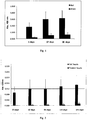
- Fig. 1 shows the increasing absorbance of the hydroalcoholic solutions in contact with treated and not treated cork stoppers. After 20 days, the relative difference of absorbance at 420 nm between the two types of stoppers is higher than 80%, showing very significant difference.
- Example 2 After application of the process as in Example 2, the resulting coated stoppers were placed so as to seal bottles containing different white alcoholic beverages.
- Bottles having Tequila, Vodka, Gin and a hydroalcoholic solution similar to Example 2 were used.
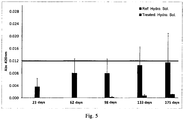
- the assessment was carried out at normal regimen, i. e., treated and not treated cork stoppers in bottles were assessed. In this way, non-accelerated conditions were used for the extraction of undesirable compounds for those beverages.
Landscapes
- Engineering & Computer Science (AREA)
- Life Sciences & Earth Sciences (AREA)
- Wood Science & Technology (AREA)
- Mechanical Engineering (AREA)
- Closures For Containers (AREA)
- Details Of Rigid Or Semi-Rigid Containers (AREA)
- Application Of Or Painting With Fluid Materials (AREA)
- Paints Or Removers (AREA)
Claims (8)
- Verfahren zum Aufbringen einer Polymerbeschichtung auf Korkstopfen, folgende Schritte umfassend:1. Abscheiden eines Polymerfilms auf Korkstopfen, wodurch eine ungehärtete Polymerbeschichtung auf den Stopfen bereitgestellt wird,2. schrittweises Härten der Polymerbeschichtung durch Anwenden einer Temperaturveränderungsrate im Bereich von etwa 3 °C/min bis etwa 6 °C/min, um die Temperatur schrittweise von etwa 40 °C auf etwa 110°C zu erhöhen,3. abschließendes Härten der Polymerbeschichtung bei konstanter Temperatur im Bereich von etwa 70 °C bis 120°C für mindestens 5 Minuten.
- Verfahren nach Anspruch 1, wobei Schritt 1 erfolgt, indem Stopfen in Kontakt mit einer Polymersuspension mit einer Temperatur im Bereich von 15 °C bis 25 °C gebracht werden, mit einer Kontaktzeit zwischen den Stopfen und der Polymersuspension von mehr als 10 Minuten.
- Verfahren nach Anspruch 1 oder 2, wobei in Schritt 1 die Korkstopfen einen Feuchtigkeitsgehalt im Bereich von 8 % bis 25 % aufweisen.
- Verfahren nach einem der Ansprüche 1 bis 3, wobei das Polymer von Schritt 1 PDMS ist.
- Verfahren nach einem der vorhergehenden Ansprüche, wobei Schritt 1 in einer nicht-perforierten Trommel ausgeführt wird.
- Verfahren nach einem der vorhergehenden Ansprüche, wobei die Schritte 2 und 3 in einer perforierten Trommel ausgeführt werden.
- Verfahren nach einem der vorhergehenden Ansprüche, wobei Schritt 3 ferner eine Wasserverdampfung beinhaltet, um die Steuerung des abschließenden Feuchtigkeitsgehalts der Korkstopfen und das Nicht-Vorhandensein von Poren in der Beschichtung zu gewährleisten.
- Verfahren nach einem der vorhergehenden Ansprüche, folgende Schritte umfassend:1. Abscheiden von PDMS auf Korkstopfen bei einer Temperatur von etwa 20 °C, indem die Stopfen für etwa 15 Minuten mit einer Polymersuspension von PDMS in Kontakt gebracht werden,2. Anwenden einer Temperaturveränderungsrate von etwa 4 °C/min, um eine Temperatur schrittweise von etwa 40 °C auf etwa 90 °C zu erhöhen,3. Anwenden einer Temperatur von etwa 90 °C für etwa 8 Minuten in Gegenwart von Wasserdampf,wobei Schritt 1 in einer nicht-perforierten Trommel ausgeführt wird, wobei die Stopfen einen Feuchtigkeitsgehalt im Bereich von 10 % bis 15 % aufweisen, und die Schritte 2 und 3 in einer perforierten Trommel ausgeführt werden.
Applications Claiming Priority (2)
| Application Number | Priority Date | Filing Date | Title |
|---|---|---|---|
| PT105500A PT105500A (pt) | 2011-01-24 | 2011-01-24 | Processo de aplicação de revestimento polimérico em rolhas de cortiça |
| PCT/PT2012/000004 WO2012102631A2 (en) | 2011-01-24 | 2012-01-23 | Process for applying polymeric coating on cork stoppers |
Publications (2)
| Publication Number | Publication Date |
|---|---|
| EP2667978A2 EP2667978A2 (de) | 2013-12-04 |
| EP2667978B1 true EP2667978B1 (de) | 2018-12-26 |
Family
ID=45771870
Family Applications (1)
| Application Number | Title | Priority Date | Filing Date |
|---|---|---|---|
| EP12706342.8A Active EP2667978B1 (de) | 2011-01-24 | 2012-01-23 | Verfahren zum aufbringen einer polymerbeschichtung auf korken |
Country Status (4)
| Country | Link |
|---|---|
| EP (1) | EP2667978B1 (de) |
| CN (1) | CN103534039B (de) |
| PT (2) | PT105500A (de) |
| WO (1) | WO2012102631A2 (de) |
Families Citing this family (4)
| Publication number | Priority date | Publication date | Assignee | Title |
|---|---|---|---|---|
| CN105944938B (zh) * | 2016-06-17 | 2019-05-17 | 河北百林软木制品有限公司 | 一种天然软木塞的塞表面的处理工艺 |
| CN105857879A (zh) * | 2016-06-17 | 2016-08-17 | 河北百林软木制品有限公司 | 一种降低瓶装葡萄酒漏酒率的软木塞处理工艺 |
| CN110696132B (zh) * | 2019-09-23 | 2022-03-29 | 河北百林软木制品有限公司 | 一种增强天然软木塞感官香气的方法及天然软木塞 |
| CN113103380B (zh) * | 2021-04-13 | 2022-07-26 | 桃江县福丰木业有限公司 | 一种不易剥裂的环保木胶板及其制备方法 |
Family Cites Families (12)
| Publication number | Priority date | Publication date | Assignee | Title |
|---|---|---|---|---|
| US5174956A (en) | 1989-04-26 | 1992-12-29 | Suntory Limited | Method for deodorization of cork |
| AUPN177495A0 (en) | 1995-03-16 | 1995-04-13 | Dewar, Diane | Improved closure |
| GB9519972D0 (en) | 1995-09-28 | 1995-11-29 | Ag Patents Ltd | Improved container stoppers |
| PT773090E (pt) | 1995-11-07 | 2004-01-30 | Portocork Internacional S A | Metodo para fabricar uma rolha de cortica |
| FR2798879B1 (fr) | 1999-09-27 | 2001-10-19 | Commissariat Energie Atomique | Procede de traitement, et d'extraction de composes organiques du liege, par un fluide dense sous pression |
| IT1313501B1 (it) | 1999-12-10 | 2002-07-24 | Giuseppe Antonio Cioni | Rimozione del t.c.a. e suoi isomeri. |
| DE60112479D1 (de) | 2001-11-12 | 2005-09-08 | Cork Supply Portugal S A | Neue verfahren zur behandlung von korkstopfen und platten zur verringerung der fremden aromen, nämlich 2,4,6-trichoroanisole |
| PT102829B (pt) | 2002-08-13 | 2005-06-30 | Amorim & Irmaos S A | Sistema e dispositivo para extrair compostos arratados pelo vapor de agua em produtos em cortica |
| DE102004047709A1 (de) * | 2004-09-30 | 2006-04-06 | Wacker Chemie Ag | Flaschenkorken mit reduzierter Trichloranisolfreisetzung und Verfahren zu seiner Herstellung |
| DE102006013102A1 (de) | 2006-03-20 | 2007-09-27 | Henkel Kgaa | Diffusionsreduzierende Korkbeschichtung |
| DE102006016054A1 (de) * | 2006-04-04 | 2007-10-11 | Henkel Kgaa | PU Korkbeschichtung |
| PT2185436E (pt) * | 2007-09-11 | 2012-09-10 | Nomacorc Llc | Tampão/rolha com filme em multicamadas fixo ao mesmo |
-
2011
- 2011-01-24 PT PT105500A patent/PT105500A/pt unknown
-
2012
- 2012-01-23 EP EP12706342.8A patent/EP2667978B1/de active Active
- 2012-01-23 PT PT12706342T patent/PT2667978T/pt unknown
- 2012-01-23 CN CN201280006354.6A patent/CN103534039B/zh not_active Expired - Fee Related
- 2012-01-23 WO PCT/PT2012/000004 patent/WO2012102631A2/en not_active Ceased
Non-Patent Citations (1)
| Title |
|---|
| None * |
Also Published As
| Publication number | Publication date |
|---|---|
| PT2667978T (pt) | 2019-04-02 |
| PT105500A (pt) | 2012-07-24 |
| CN103534039B (zh) | 2015-11-25 |
| WO2012102631A2 (en) | 2012-08-02 |
| CN103534039A (zh) | 2014-01-22 |
| WO2012102631A3 (en) | 2013-02-28 |
| EP2667978A2 (de) | 2013-12-04 |
Similar Documents
| Publication | Publication Date | Title |
|---|---|---|
| Suárez et al. | The production of ethylphenols in wine by yeasts of the genera Brettanomyces and Dekkera: A review | |
| CN113767050B (zh) | 特别用于制备冲泡咖啡的含有如饮料粉末材料的胶囊 | |
| CH641718A5 (fr) | Procede d'impermeabilisation aux gaz de corps creux en polyester. | |
| Guadalupe et al. | Determination of must and wine polysaccharides by gas chromatography-mass spectrometry (GC-MS) and size-exclusion chromatography (SEC) | |
| EP2667978A2 (de) | Verfahren zum aufbringen einer polymeren beschichtung auf korken | |
| US8871743B2 (en) | Bacterial cellulose composite with capsules embedded therein and preparation thereof | |
| JPS6410022B2 (de) | ||
| EP0865388B1 (de) | Verfahren zum behandeln eines korkstopfens | |
| Yang et al. | Amyloid-like protein coating as a barrier against plasticizer leaching | |
| AU752164B2 (en) | Method for treating cork material and cork stoppers | |
| WO1996028378A1 (en) | Cork closure having a durable liquid impermeable coat so to prevent tainting | |
| CN114307687B (zh) | 一种啤酒脱色膜及其制备方法 | |
| KR20010003727A (ko) | 항균성 대나무 가공방법 | |
| Rodrigues et al. | Influence of Fining and Tartaric Stabilisation Procedures on White Wine Mannoprotein Content. | |
| EP2001759B1 (de) | Diffusionsreduzierende korkbeschichtung | |
| EP2533957B1 (de) | Bearbeitung von verschlussstopfen aus natürlichem kork und durch diese bearbeitung gewonnene verschlussstopfen | |
| Jiménez-Moreno et al. | Sorption of volatile phenols by yeast cell walls | |
| Guzzon et al. | Silicification of wood adopted for barrel production using pure silicon alkoxides in gas phase to avoid microbial colonisation | |
| EP4574913A1 (de) | Zusammensetzung zur wasserdichten beschichtung von korksubstraten und entsprechendes anwendungsverfahren | |
| DE10231856B4 (de) | Beschichteter Hohlkörper, Verfahren zu seiner Herstellung und die Verwendung einer Nanopartikel enthaltenden Zusammensetzung | |
| CN106512733A (zh) | 一种抗污染反渗透膜的制备方法 | |
| WO2005021621A1 (de) | Beschichteter hohlkörper | |
| US20040166345A1 (en) | Processes and articles useful for preventing cork taint in beverages | |
| CN105944938A (zh) | 一种天然软木塞的塞表面的处理工艺 | |
| IT202000012112A1 (it) | Procedimento di produzione di vino a basso tenore di solfiti |
Legal Events
| Date | Code | Title | Description |
|---|---|---|---|
| PUAI | Public reference made under article 153(3) epc to a published international application that has entered the european phase |
Free format text: ORIGINAL CODE: 0009012 |
|
| 17P | Request for examination filed |
Effective date: 20130820 |
|
| AK | Designated contracting states |
Kind code of ref document: A2 Designated state(s): AL AT BE BG CH CY CZ DE DK EE ES FI FR GB GR HR HU IE IS IT LI LT LU LV MC MK MT NL NO PL PT RO RS SE SI SK SM TR |
|
| DAX | Request for extension of the european patent (deleted) | ||
| GRAP | Despatch of communication of intention to grant a patent |
Free format text: ORIGINAL CODE: EPIDOSNIGR1 |
|
| STAA | Information on the status of an ep patent application or granted ep patent |
Free format text: STATUS: GRANT OF PATENT IS INTENDED |
|
| INTG | Intention to grant announced |
Effective date: 20180608 |
|
| RIN1 | Information on inventor provided before grant (corrected) |
Inventor name: BASTOS OLIVEIRA, MARIA DE FATIMA Inventor name: RIBEIRO PONTES, SARAH LAGORSSE DE Inventor name: MAGALHAES MENDES, ADELIO MIGUEL |
|
| GRAJ | Information related to disapproval of communication of intention to grant by the applicant or resumption of examination proceedings by the epo deleted |
Free format text: ORIGINAL CODE: EPIDOSDIGR1 |
|
| STAA | Information on the status of an ep patent application or granted ep patent |
Free format text: STATUS: REQUEST FOR EXAMINATION WAS MADE |
|
| GRAP | Despatch of communication of intention to grant a patent |
Free format text: ORIGINAL CODE: EPIDOSNIGR1 |
|
| STAA | Information on the status of an ep patent application or granted ep patent |
Free format text: STATUS: GRANT OF PATENT IS INTENDED |
|
| INTG | Intention to grant announced |
Effective date: 20180727 |
|
| GRAS | Grant fee paid |
Free format text: ORIGINAL CODE: EPIDOSNIGR3 |
|
| GRAA | (expected) grant |
Free format text: ORIGINAL CODE: 0009210 |
|
| STAA | Information on the status of an ep patent application or granted ep patent |
Free format text: STATUS: THE PATENT HAS BEEN GRANTED |
|
| AK | Designated contracting states |
Kind code of ref document: B1 Designated state(s): AL AT BE BG CH CY CZ DE DK EE ES FI FR GB GR HR HU IE IS IT LI LT LU LV MC MK MT NL NO PL PT RO RS SE SI SK SM TR |
|
| REG | Reference to a national code |
Ref country code: GB Ref legal event code: FG4D |
|
| REG | Reference to a national code |
Ref country code: CH Ref legal event code: EP |
|
| REG | Reference to a national code |
Ref country code: DE Ref legal event code: R096 Ref document number: 602012055086 Country of ref document: DE |
|
| REG | Reference to a national code |
Ref country code: AT Ref legal event code: REF Ref document number: 1080699 Country of ref document: AT Kind code of ref document: T Effective date: 20190115 |
|
| REG | Reference to a national code |
Ref country code: IE Ref legal event code: FG4D |
|
| REG | Reference to a national code |
Ref country code: PT Ref legal event code: SC4A Ref document number: 2667978 Country of ref document: PT Date of ref document: 20190402 Kind code of ref document: T Free format text: AVAILABILITY OF NATIONAL TRANSLATION Effective date: 20190322 |
|
| PG25 | Lapsed in a contracting state [announced via postgrant information from national office to epo] |
Ref country code: LT Free format text: LAPSE BECAUSE OF FAILURE TO SUBMIT A TRANSLATION OF THE DESCRIPTION OR TO PAY THE FEE WITHIN THE PRESCRIBED TIME-LIMIT Effective date: 20181226 Ref country code: NO Free format text: LAPSE BECAUSE OF FAILURE TO SUBMIT A TRANSLATION OF THE DESCRIPTION OR TO PAY THE FEE WITHIN THE PRESCRIBED TIME-LIMIT Effective date: 20190326 Ref country code: BG Free format text: LAPSE BECAUSE OF FAILURE TO SUBMIT A TRANSLATION OF THE DESCRIPTION OR TO PAY THE FEE WITHIN THE PRESCRIBED TIME-LIMIT Effective date: 20190326 Ref country code: HR Free format text: LAPSE BECAUSE OF FAILURE TO SUBMIT A TRANSLATION OF THE DESCRIPTION OR TO PAY THE FEE WITHIN THE PRESCRIBED TIME-LIMIT Effective date: 20181226 Ref country code: LV Free format text: LAPSE BECAUSE OF FAILURE TO SUBMIT A TRANSLATION OF THE DESCRIPTION OR TO PAY THE FEE WITHIN THE PRESCRIBED TIME-LIMIT Effective date: 20181226 Ref country code: FI Free format text: LAPSE BECAUSE OF FAILURE TO SUBMIT A TRANSLATION OF THE DESCRIPTION OR TO PAY THE FEE WITHIN THE PRESCRIBED TIME-LIMIT Effective date: 20181226 |
|
| REG | Reference to a national code |
Ref country code: NL Ref legal event code: MP Effective date: 20181226 |
|
| REG | Reference to a national code |
Ref country code: LT Ref legal event code: MG4D |
|
| PG25 | Lapsed in a contracting state [announced via postgrant information from national office to epo] |
Ref country code: RS Free format text: LAPSE BECAUSE OF FAILURE TO SUBMIT A TRANSLATION OF THE DESCRIPTION OR TO PAY THE FEE WITHIN THE PRESCRIBED TIME-LIMIT Effective date: 20181226 Ref country code: SE Free format text: LAPSE BECAUSE OF FAILURE TO SUBMIT A TRANSLATION OF THE DESCRIPTION OR TO PAY THE FEE WITHIN THE PRESCRIBED TIME-LIMIT Effective date: 20181226 Ref country code: AL Free format text: LAPSE BECAUSE OF FAILURE TO SUBMIT A TRANSLATION OF THE DESCRIPTION OR TO PAY THE FEE WITHIN THE PRESCRIBED TIME-LIMIT Effective date: 20181226 Ref country code: GR Free format text: LAPSE BECAUSE OF FAILURE TO SUBMIT A TRANSLATION OF THE DESCRIPTION OR TO PAY THE FEE WITHIN THE PRESCRIBED TIME-LIMIT Effective date: 20190327 |
|
| REG | Reference to a national code |
Ref country code: AT Ref legal event code: MK05 Ref document number: 1080699 Country of ref document: AT Kind code of ref document: T Effective date: 20181226 |
|
| PG25 | Lapsed in a contracting state [announced via postgrant information from national office to epo] |
Ref country code: NL Free format text: LAPSE BECAUSE OF FAILURE TO SUBMIT A TRANSLATION OF THE DESCRIPTION OR TO PAY THE FEE WITHIN THE PRESCRIBED TIME-LIMIT Effective date: 20181226 |
|
| PG25 | Lapsed in a contracting state [announced via postgrant information from national office to epo] |
Ref country code: PL Free format text: LAPSE BECAUSE OF FAILURE TO SUBMIT A TRANSLATION OF THE DESCRIPTION OR TO PAY THE FEE WITHIN THE PRESCRIBED TIME-LIMIT Effective date: 20181226 Ref country code: ES Free format text: LAPSE BECAUSE OF FAILURE TO SUBMIT A TRANSLATION OF THE DESCRIPTION OR TO PAY THE FEE WITHIN THE PRESCRIBED TIME-LIMIT Effective date: 20181226 Ref country code: CZ Free format text: LAPSE BECAUSE OF FAILURE TO SUBMIT A TRANSLATION OF THE DESCRIPTION OR TO PAY THE FEE WITHIN THE PRESCRIBED TIME-LIMIT Effective date: 20181226 |
|
| REG | Reference to a national code |
Ref country code: DE Ref legal event code: R119 Ref document number: 602012055086 Country of ref document: DE |
|
| PG25 | Lapsed in a contracting state [announced via postgrant information from national office to epo] |
Ref country code: SM Free format text: LAPSE BECAUSE OF FAILURE TO SUBMIT A TRANSLATION OF THE DESCRIPTION OR TO PAY THE FEE WITHIN THE PRESCRIBED TIME-LIMIT Effective date: 20181226 Ref country code: EE Free format text: LAPSE BECAUSE OF FAILURE TO SUBMIT A TRANSLATION OF THE DESCRIPTION OR TO PAY THE FEE WITHIN THE PRESCRIBED TIME-LIMIT Effective date: 20181226 Ref country code: RO Free format text: LAPSE BECAUSE OF FAILURE TO SUBMIT A TRANSLATION OF THE DESCRIPTION OR TO PAY THE FEE WITHIN THE PRESCRIBED TIME-LIMIT Effective date: 20181226 Ref country code: IS Free format text: LAPSE BECAUSE OF FAILURE TO SUBMIT A TRANSLATION OF THE DESCRIPTION OR TO PAY THE FEE WITHIN THE PRESCRIBED TIME-LIMIT Effective date: 20190426 Ref country code: SK Free format text: LAPSE BECAUSE OF FAILURE TO SUBMIT A TRANSLATION OF THE DESCRIPTION OR TO PAY THE FEE WITHIN THE PRESCRIBED TIME-LIMIT Effective date: 20181226 |
|
| REG | Reference to a national code |
Ref country code: CH Ref legal event code: PL |
|
| PG25 | Lapsed in a contracting state [announced via postgrant information from national office to epo] |
Ref country code: LU Free format text: LAPSE BECAUSE OF NON-PAYMENT OF DUE FEES Effective date: 20190123 |
|
| REG | Reference to a national code |
Ref country code: BE Ref legal event code: MM Effective date: 20190131 |
|
| REG | Reference to a national code |
Ref country code: IE Ref legal event code: MM4A |
|
| PG25 | Lapsed in a contracting state [announced via postgrant information from national office to epo] |
Ref country code: DK Free format text: LAPSE BECAUSE OF FAILURE TO SUBMIT A TRANSLATION OF THE DESCRIPTION OR TO PAY THE FEE WITHIN THE PRESCRIBED TIME-LIMIT Effective date: 20181226 Ref country code: AT Free format text: LAPSE BECAUSE OF FAILURE TO SUBMIT A TRANSLATION OF THE DESCRIPTION OR TO PAY THE FEE WITHIN THE PRESCRIBED TIME-LIMIT Effective date: 20181226 Ref country code: MC Free format text: LAPSE BECAUSE OF FAILURE TO SUBMIT A TRANSLATION OF THE DESCRIPTION OR TO PAY THE FEE WITHIN THE PRESCRIBED TIME-LIMIT Effective date: 20181226 Ref country code: DE Free format text: LAPSE BECAUSE OF NON-PAYMENT OF DUE FEES Effective date: 20190801 |
|
| PLBE | No opposition filed within time limit |
Free format text: ORIGINAL CODE: 0009261 |
|
| STAA | Information on the status of an ep patent application or granted ep patent |
Free format text: STATUS: NO OPPOSITION FILED WITHIN TIME LIMIT |
|
| PG25 | Lapsed in a contracting state [announced via postgrant information from national office to epo] |
Ref country code: BE Free format text: LAPSE BECAUSE OF NON-PAYMENT OF DUE FEES Effective date: 20190131 |
|
| 26N | No opposition filed |
Effective date: 20190927 |
|
| PG25 | Lapsed in a contracting state [announced via postgrant information from national office to epo] |
Ref country code: LI Free format text: LAPSE BECAUSE OF NON-PAYMENT OF DUE FEES Effective date: 20190131 Ref country code: CH Free format text: LAPSE BECAUSE OF NON-PAYMENT OF DUE FEES Effective date: 20190131 |
|
| PG25 | Lapsed in a contracting state [announced via postgrant information from national office to epo] |
Ref country code: IE Free format text: LAPSE BECAUSE OF NON-PAYMENT OF DUE FEES Effective date: 20190123 |
|
| PG25 | Lapsed in a contracting state [announced via postgrant information from national office to epo] |
Ref country code: SI Free format text: LAPSE BECAUSE OF FAILURE TO SUBMIT A TRANSLATION OF THE DESCRIPTION OR TO PAY THE FEE WITHIN THE PRESCRIBED TIME-LIMIT Effective date: 20181226 |
|
| PG25 | Lapsed in a contracting state [announced via postgrant information from national office to epo] |
Ref country code: TR Free format text: LAPSE BECAUSE OF FAILURE TO SUBMIT A TRANSLATION OF THE DESCRIPTION OR TO PAY THE FEE WITHIN THE PRESCRIBED TIME-LIMIT Effective date: 20181226 |
|
| PG25 | Lapsed in a contracting state [announced via postgrant information from national office to epo] |
Ref country code: MT Free format text: LAPSE BECAUSE OF NON-PAYMENT OF DUE FEES Effective date: 20190123 |
|
| PG25 | Lapsed in a contracting state [announced via postgrant information from national office to epo] |
Ref country code: CY Free format text: LAPSE BECAUSE OF FAILURE TO SUBMIT A TRANSLATION OF THE DESCRIPTION OR TO PAY THE FEE WITHIN THE PRESCRIBED TIME-LIMIT Effective date: 20181226 |
|
| PG25 | Lapsed in a contracting state [announced via postgrant information from national office to epo] |
Ref country code: HU Free format text: LAPSE BECAUSE OF FAILURE TO SUBMIT A TRANSLATION OF THE DESCRIPTION OR TO PAY THE FEE WITHIN THE PRESCRIBED TIME-LIMIT; INVALID AB INITIO Effective date: 20120123 |
|
| PG25 | Lapsed in a contracting state [announced via postgrant information from national office to epo] |
Ref country code: MK Free format text: LAPSE BECAUSE OF FAILURE TO SUBMIT A TRANSLATION OF THE DESCRIPTION OR TO PAY THE FEE WITHIN THE PRESCRIBED TIME-LIMIT Effective date: 20181226 |
|
| PGFP | Annual fee paid to national office [announced via postgrant information from national office to epo] |
Ref country code: PT Payment date: 20250108 Year of fee payment: 14 |
|
| PGFP | Annual fee paid to national office [announced via postgrant information from national office to epo] |
Ref country code: FR Payment date: 20250127 Year of fee payment: 14 |
|
| PGFP | Annual fee paid to national office [announced via postgrant information from national office to epo] |
Ref country code: GB Payment date: 20250121 Year of fee payment: 14 Ref country code: IT Payment date: 20250122 Year of fee payment: 14 |