EP2668273B9 - Remplacement d'oligonucléotides pour bibliothèques marquées aux deux extrémités et directionnelles - Google Patents
Remplacement d'oligonucléotides pour bibliothèques marquées aux deux extrémités et directionnelles Download PDFInfo
- Publication number
- EP2668273B9 EP2668273B9 EP12707675.0A EP12707675A EP2668273B9 EP 2668273 B9 EP2668273 B9 EP 2668273B9 EP 12707675 A EP12707675 A EP 12707675A EP 2668273 B9 EP2668273 B9 EP 2668273B9
- Authority
- EP
- European Patent Office
- Prior art keywords
- seq
- strand
- transferred
- nucleic acid
- transferred strand
- Prior art date
- Legal status (The legal status is an assumption and is not a legal conclusion. Google has not performed a legal analysis and makes no representation as to the accuracy of the status listed.)
- Active
Links
Images



Classifications
-
- C—CHEMISTRY; METALLURGY
- C12—BIOCHEMISTRY; BEER; SPIRITS; WINE; VINEGAR; MICROBIOLOGY; ENZYMOLOGY; MUTATION OR GENETIC ENGINEERING
- C12N—MICROORGANISMS OR ENZYMES; COMPOSITIONS THEREOF; PROPAGATING, PRESERVING, OR MAINTAINING MICROORGANISMS; MUTATION OR GENETIC ENGINEERING; CULTURE MEDIA
- C12N15/00—Mutation or genetic engineering; DNA or RNA concerning genetic engineering, vectors, e.g. plasmids, or their isolation, preparation or purification; Use of hosts therefor
- C12N15/09—Recombinant DNA-technology
- C12N15/10—Processes for the isolation, preparation or purification of DNA or RNA
- C12N15/1034—Isolating an individual clone by screening libraries
- C12N15/1065—Preparation or screening of tagged libraries, e.g. tagged microorganisms by STM-mutagenesis, tagged polynucleotides, gene tags
-
- C—CHEMISTRY; METALLURGY
- C07—ORGANIC CHEMISTRY
- C07H—SUGARS; DERIVATIVES THEREOF; NUCLEOSIDES; NUCLEOTIDES; NUCLEIC ACIDS
- C07H21/00—Compounds containing two or more mononucleotide units having separate phosphate or polyphosphate groups linked by saccharide radicals of nucleoside groups, e.g. nucleic acids
-
- C—CHEMISTRY; METALLURGY
- C12—BIOCHEMISTRY; BEER; SPIRITS; WINE; VINEGAR; MICROBIOLOGY; ENZYMOLOGY; MUTATION OR GENETIC ENGINEERING
- C12N—MICROORGANISMS OR ENZYMES; COMPOSITIONS THEREOF; PROPAGATING, PRESERVING, OR MAINTAINING MICROORGANISMS; MUTATION OR GENETIC ENGINEERING; CULTURE MEDIA
- C12N15/00—Mutation or genetic engineering; DNA or RNA concerning genetic engineering, vectors, e.g. plasmids, or their isolation, preparation or purification; Use of hosts therefor
- C12N15/09—Recombinant DNA-technology
- C12N15/10—Processes for the isolation, preparation or purification of DNA or RNA
- C12N15/1034—Isolating an individual clone by screening libraries
- C12N15/1093—General methods of preparing gene libraries, not provided for in other subgroups
-
- C—CHEMISTRY; METALLURGY
- C12—BIOCHEMISTRY; BEER; SPIRITS; WINE; VINEGAR; MICROBIOLOGY; ENZYMOLOGY; MUTATION OR GENETIC ENGINEERING
- C12N—MICROORGANISMS OR ENZYMES; COMPOSITIONS THEREOF; PROPAGATING, PRESERVING, OR MAINTAINING MICROORGANISMS; MUTATION OR GENETIC ENGINEERING; CULTURE MEDIA
- C12N9/00—Enzymes; Proenzymes; Compositions thereof; Processes for preparing, activating, inhibiting, separating or purifying enzymes
- C12N9/10—Transferases (2.)
- C12N9/12—Transferases (2.) transferring phosphorus containing groups, e.g. kinases (2.7)
- C12N9/1241—Nucleotidyltransferases (2.7.7)
-
- C—CHEMISTRY; METALLURGY
- C12—BIOCHEMISTRY; BEER; SPIRITS; WINE; VINEGAR; MICROBIOLOGY; ENZYMOLOGY; MUTATION OR GENETIC ENGINEERING
- C12P—FERMENTATION OR ENZYME-USING PROCESSES TO SYNTHESISE A DESIRED CHEMICAL COMPOUND OR COMPOSITION OR TO SEPARATE OPTICAL ISOMERS FROM A RACEMIC MIXTURE
- C12P19/00—Preparation of compounds containing saccharide radicals
- C12P19/26—Preparation of nitrogen-containing carbohydrates
- C12P19/28—N-glycosides
- C12P19/30—Nucleotides
- C12P19/34—Polynucleotides, e.g. nucleic acids, oligoribonucleotides
-
- C—CHEMISTRY; METALLURGY
- C12—BIOCHEMISTRY; BEER; SPIRITS; WINE; VINEGAR; MICROBIOLOGY; ENZYMOLOGY; MUTATION OR GENETIC ENGINEERING
- C12Q—MEASURING OR TESTING PROCESSES INVOLVING ENZYMES, NUCLEIC ACIDS OR MICROORGANISMS; COMPOSITIONS OR TEST PAPERS THEREFOR; PROCESSES OF PREPARING SUCH COMPOSITIONS; CONDITION-RESPONSIVE CONTROL IN MICROBIOLOGICAL OR ENZYMOLOGICAL PROCESSES
- C12Q1/00—Measuring or testing processes involving enzymes, nucleic acids or microorganisms; Compositions therefor; Processes of preparing such compositions
- C12Q1/68—Measuring or testing processes involving enzymes, nucleic acids or microorganisms; Compositions therefor; Processes of preparing such compositions involving nucleic acids
- C12Q1/6844—Nucleic acid amplification reactions
- C12Q1/6853—Nucleic acid amplification reactions using modified primers or templates
- C12Q1/6855—Ligating adaptors
-
- C—CHEMISTRY; METALLURGY
- C40—COMBINATORIAL TECHNOLOGY
- C40B—COMBINATORIAL CHEMISTRY; LIBRARIES, e.g. CHEMICAL LIBRARIES
- C40B50/00—Methods of creating libraries, e.g. combinatorial synthesis
- C40B50/06—Biochemical methods, e.g. using enzymes or whole viable microorganisms
Definitions
- the present invention relates to molecular biology, and more specifically to methods of using transposases to fragment and tag nucleic acids, which can be useful as DNA libraries for sequencing.
- Sample preparation for next-generation sequencing can involve fragmentation of genomic DNA or double-stranded cDNA (prepared from RNA) into smaller fragments, followed by addition of functional tag sequences ("tags") to the strands of the fragments.
- tags include priming sites for DNA polymerases for sequencing reactions, restriction sites, and domains for capture, amplification, detection, address, and transcription promoters.
- Previous methods for generating DNA fragment libraries required fragmenting the target DNA mechanically using a sonicator, nebulizer, or by a nuclease, and then joining ( e.g., by ligation) the oligonucleotides containing the tags to the ends of the fragments.
- transposons A novel method for using transposons to rapidly achieve these steps was disclosed in US 2010/0120098 by Grunenwald , to generate fragments from any double-stranded DNA (e.g. genomic, amplicon, viral, phage, cDNA derived from RNA, etc.).
- Particularly useful transposon systems include the hyperactive Tn5 transposon system described in U.S. 5,965,443 and U.S. 6,437,109 by Reznikoff , and the Mu transposon system in U.S. 6,593,113 by Tenkanen .
- PCR polymerase chain reaction
- the present invention provides a method for adding one or more tags to the double-stranded product of a tagmentation reaction.
- the method involves providing a double-stranded target nucleic acid and a transposome having a transposase with two transposon end sequences: a "transferred strand” and a "non-transferred strand”.
- the transposome breaks the target nucleic acid into fragments while covalently transferring the transferred strand to a first strand of a first fragment; the non-transferred strand of the transposome remains hybridized to the transferred strand.
- the non-transferred strand has the general formulas BTGTYTCBTN 1-9 SEQ ID NO:20 NTGTMTCNTN 0-10 SEQ ID NO:21 where the IUPAC nomenclature for degenerate nucleotide positions is used, and N x-y indicates a sequence having a range of x to y nucleotides, inclusive.
- the non-transferred strand is removed from the transferred strand and replaced by an oligonucleotide that comprises a tag sequence.
- the replacement oligonucleotide is then joined to the second strand of the first fragment by ligation and optionally by an extension step.
- the result of the method is a fragment of the target nucleic acid that has been tagged with one or more tag sequences, which can be useful for subsequent analysis, such as sequencing.
- the invention also provides a method for generating directional libraries by providing the target nucleic acid where one strand is chemically modified. Selectively enriching one strand in the product of the tagementation reaction results in a fragment that has been tagged in a strand-specific manner, i.e. a 5'-end tag and a 3'-end tag.
- Novel transposase end sequences are also provided herein, having the general sequences MRWTGTGHWKAVGARACAV SEQ ID NO:1 and NSHB G HSHDDRN GA K ACA N SEQ ID NO:2.
- the present invention provides an improved method for preparing di-tagged dsDNA.
- the method involves (a) providing a double-stranded target nucleic acid and a transposome having a transposase with two transposon end sequences: a "transferred strand” and a "non-transferred strand”; (b) allowing the transposome to fragment the target nucleic acid, whereby the transferred strand is covalently transferred to a first strand of a first fragment, and the non-transferred strand remains hybridized to the transferred strand; (c) removing the non-transferred strand from the transferred strand; (d) providing a replacement oligonucleotide that comprises a tag sequence, to hybridize to the transferred strand; and (e) ligating the replacement oligonucleotide to the second strand of the first fragment.
- the method generates a tagmentation product having a transferred strand and a replacement oligonucleotide.
- the target DNA used in the method can be any nucleic acid of interest.
- Target nucleic acids can include DNA, peptide nucleic acid, morpholino nucleic acid, locked nucleic acid, glycol nucleic acid, threose nucleic acid, mixtures thereof, and hybrids thereof.
- genomic DNA fragments or amplified copies thereof are used as the target nucleic acid.
- mitochondrial or chloroplast DNA is used.
- a target nucleic acid can comprise any nucleotide sequence.
- the target nucleic acid comprises homopolymer sequences.
- a target nucleic acid can also include repeat sequences. Repeat sequences can be any of a variety of lengths including, for example, 2, 5, 10, 20, 30, 40, 50, 100, 250, 500, 1000 nucleotides or more. Repeat sequences can be repeated, either contiguously or non-contiguously, any of a variety of times including, for example, 2, 3, 4, 5, 6, 7, 8, 9, 10, 15, 20 times or more.
- Some embodiments described herein can utilize a single target nucleic acid.
- Other embodiments can utilize a plurality of target nucleic acids.
- a plurality of target nucleic acids can include a plurality of the same target nucleic acids, a plurality of different target nucleic acids where some target nucleic acids are the same, or a plurality of target nucleic acids where all target nucleic acids are different.
- Embodiments that utilize a plurality of target nucleic acids can be carried out in multiplex formats so that reagents are delivered simultaneously to the target nucleic acids, for example, in one or more chambers or on an array surface.
- the plurality of target nucleic acids can include substantially all of a particular organism's genome.
- the plurality of target nucleic acids can include at least a portion of a particular organism's genome including, for example, at least about 1%, 5%, 10%, 25%, 50%, 75%, 80%, 85%, 90%, 95%, or 99% of the genome.
- the portion can have an upper limit that is at most about 1%, 5%, 10%, 25%, 50%, 75%, 80%, 85%, 90%, 95%, or 99% of the genome
- Target nucleic acids can be obtained from any source.
- target nucleic acids may be prepared from nucleic acid molecules obtained from a single organism or from populations of nucleic acid molecules obtained from natural sources that include one or more organisms.
- Sources of nucleic acid molecules include, but are not limited to, organelles, cells, tissues, organs, or organisms.
- Cells that may be used as sources of target nucleic acid molecules may be prokaryotic (bacterial cells, for example, Escherichia, Bacillus, Serratia, Salmonella, Staphylococcus, Streptococcus, Clostridium, Chlamydia, Neisseria, Treponema, Mycoplasma, Borrelia, Legionella, Pseudomonas, Mycobacterium, Helicobacter, Erwinia, Agrobacterium, Rhizobium, and Streptomyces genera); archeaon, such as crenarchaeota, nanoarchaeota or euryarchaeotia; or eukaryotic such as fungi, (for example, yeasts), plants, protozoans and other parasites, and animals (including insects (for example, Drosophila spp.), nematodes ( e.g., Caenorhabditis elegans ), and mammals (for example, rat, mouse
- the target nucleic acid can be provided where one strand is chemically modified, such as with a fragmentation site.
- a fragmentation site can be used to cleave the physical, but not the informational association between a first barcode sequence and a second barcode sequence. Cleavage may be by biochemical, chemical or other means.
- a fragmentation site can include a nucleotide or nucleotide sequence that may be fragmented by various means.
- a fragmentation site may be a substrate for an enzyme, such as a nuclease, that will cleave the physical association between a first barcode sequence and a second barcode sequence.
- the fragmentation site comprises a restriction endonuclease site and may be cleaved with an appropriate restriction endonuclease.
- a fragmentation site can comprise at least one ribonucleotide in a nucleic acid that may otherwise comprise deoxyribonucleotides and may be cleaved with an RNAse.
- Chemical cleavage agents capable of selectively cleaving the phosphodiester bond between a deoxyribonucleotide and a ribonucleotide include metal ions, for example rare-earth metal ions (e.g., La 3+ , particularly Tm 3+ , Yb 3+ or Lu 3+ ( Chen .et al.
- selective cleavage of the phosphodiester bond between a deoxyribonucleotide and a ribonucleotide can refer to the chemical cleavage agent is not capable of cleaving the phosphodiester bond between two deoxyribonucleotides under the same conditions.
- the fragmentation site can comprise one or more recognition sequences for a nickase, that is, a nicking endonuclease that breaks one strand of a double-stranded nucleic acid.
- the fragmentation site can comprise a first nickase recognition sequence, a second nickase recognition sequence.
- the cut site for each recognition sequence can be the same site or different site.
- a fragmentation site can include one or more nucleotide analogues that comprise an abasic site and permits cleavage at the fragmentation site in the presence of certain chemical agents, such as polyamine, N,N'-dimethylethylene-diamine (DMED) ( U.S. Patent Publication No. 2010/0022403 ).
- the chemical modification can be a conversion of cytosines to uracils.
- an abasic site may be created within a fragmentation site by first providing a fragmentation site comprising a deoxyuridine (U) of a double stranded nucleic acid.
- the enzyme uracil DNA glycosylase may then be used to remove the uracil base, generating an abasic site on one strand.
- the polynucleotide strand including the abasic site may then be cleaved at the abasic site by treatment with endonuclease (e.g. Endo IV endonuclease, AP lyase, FPG glycosylase/AP lyase, Endo VIII glycosylase/AP lyase), heat or alkali.
- endonuclease e.g. Endo IV endonuclease, AP lyase, FPG glycosylase/AP lyase, Endo VIII glycosylase/AP lyase
- Abasic sites may also be generated at nucleotide analogues other than deoxyuridine and cleaved in an analogous manner by treatment with endonuclease, heat or alkali.
- endonuclease heat or alkali.
- 8-oxo-guanine can be converted to an abasic site by exposure to FPG glycosylase.
- Deoxyinosine can be converted to an abasic site by exposure to AlkA glycosylase.
- the abasic sites thus generated may then be cleaved, typically by treatment with a suitable endonuclease (e.g. Endo IV, AP lyase). ( U.S. Patent Publication No. 2011/0014657 ).
- a fragmentation site may include a diol linkage which permits cleavage by treatment with periodate (e.g ., sodium periodate).
- a fragmentation site may include a disulphide group which permits cleavage with a chemical reducing agent, e.g. Tris (2-carboxyethyl)-phosphate hydrochloride (TCEP).
- TCEP Tris (2-carboxyethyl)-phosphate hydrochloride
- a fragmentation site may include a cleavable moiety that may be subject to photochemical cleavage.
- Photochemical cleavage encompasses any method which utilizes light energy in order to achieve cleavage of nucleic acids, for example, one or both strands of a double-stranded nucleic acid molecule.
- a site for photochemical cleavage can be provided by a non-nucleotide chemical moiety in a nucleic acid, such as phosphoramidite [4-(4,4'-dimethoxytrityloxy)butyramidomethyl)-1-(2-nitrophenyl)-ethyl]-2-cyanoethyl-(N,N-diisopropyl)-phosphoramidite) (Glen Research, Sterling, Va., USA, Cat No. 10-4913-XX).
- phosphoramidite 4-(4,4'-dimethoxytrityloxy)butyramidomethyl)-1-(2-nitrophenyl)-ethyl]-2-cyanoethyl-(N,N-diisopropyl)-phosphoramidite
- a fragmentation site can include a peptide, for example, conjugate structure in which a peptide molecule is linked to a nucleic acid.
- the peptide molecule can subsequently be cleaved by a peptidase enzyme of the appropriate specificity, or any other suitable means of non-enzymatic chemical or photochemical cleavage.
- a conjugate between peptide and nucleic acid will be formed by covalently linking a peptide to a nucleic acid, e.g., a strand of a double-stranded nucleic acid. Conjugates between a peptide and nucleic acid can be prepared using techniques generally known in the art.
- the peptide and nucleic acid components of the desired amino acid and nucleotide sequence can be synthesized separately, e.g. by standard automated chemical synthesis techniques, and then conjugated in aqueous/organic solution.
- the OPeCTM system commercially available from Glen Research is based on the native ligation of an N-terminal thioester-functionalized peptide to a 5'-cysteinyl oligonucleotide.
- the method of the invention can use any transposase that can accept a transposase end sequence and fragment a target nucleic acid, attaching a transferred end, but not a non-transferred end.
- a "transposome” is comprised of at least a transposase enzyme and a transposase recognition site.
- the transposase can form a functional complex with a transposon recognition site that is capable of catalyzing a transposition reaction.
- the transposase or integrase may bind to the transposase recognition site and insert the transposase recognition site into a target nucleic acid in a process sometimes termed "tagmentation". In some such insertion events, one strand of the transposase recognition site may be transferred into the target nucleic acid.
- Some embodiments can include the use of a hyperactive Tn5 transposase and a Tn5-type transposase recognition site ( Goryshin and Reznikoff, J. Biol. Chem., 273:7367 (1998 )), or MuA transposase and a Mu transposase recognition site comprising R1 and R2 end sequences ( Mizuuchi, K., Cell, 35: 785, 1983 ; Savilahti, H, et al., EMBO J., 14: 4893, 1995 ).
- An exemplary transposase recognition site that forms a complex with a hyperactive Tn5 transposase e.g ., EZ-Tn5TM Transposase, Epicentre Biotechnologies, Madison, Wisconsin).
- transposition systems that can be used with certain embodiments provided herein include Staphylococcus aureus Tn552 (contento et al., J. Bacteriol., 183: 2384-8, 2001 ; Kirby C et al., Mol. Microbiol., 43: 173-86, 2002 ), Tyl ( Devine & Boeke, Nucleic Acids Res., 22: 3765-72, 1994 and International Publication WO 95/23875 ), Transposon Tn7 ( Craig, N L, Science.
- More examples include IS5, Tn10, Tn903, IS911, and engineered versions of transposase family enzymes ( Zhang et al., (2009) PLoS Genet. 5:e1000689. Epub 2009 Oct 16 ; Wilson C. et al (2007) J. Microbiol. Methods 71:332-5 ).
- the Tn5 system uses Tn5 transposases with the 19-base ME sequence (SEQ ID NO:3) as the transferred end. As discussed in Example 2, however, other transferred ends can be used, and can be described by the generic formulas MRWTGTGHWKAVGARACAV SEQ ID NO:1 and NSHBGHSHDDRNGAKACAN SEQ ID NO:2.
- the transferred ends can be CGTTGTGTGGACGAGACAC SEQ ID NO:4 11G:C (C1) CGTTGTGTGGACGAGACAG SEQ ID NO:5 11G:C(G1) AGATGTGCATATGATACAG SEQ ID NO:6 Diff1 (G1) AG.TGT....AAGAGACAT SEQ ID NO:7 Shorty TGACGCGGGTAAGAGACAA SEQ ID NO:22 Malt 1 GGATGCGATGAGGAGACAA SEQ ID NO:23 Malt 6 ACATGACCAAGAGAGACAG SEQ ID NO:24 Malt 8 AGCGGTGAATAAGAGACAA SEQ ID NO:25 Malt 10 AGCGGTGAATAAGAGACAG SEQ ID NO:26 Malt 11, or ACATGAGTATAAGAGACAA SEQ ID NO:27 Malt 12.
- the present invention also makes use of non-transferred strands having the general formula: BTGTYTCBTN 1-10 SEQ ID NO:20 NTGTMTCNTN 0-10 SEQ ID NO:21 where the N 0-10 indicates zero to ten nucleotides.
- the non-transferred strand can be selected from the group consisting of SEQ ID NO:9, SEQ ID NO:10, SEQ ID NO:11, SEQ ID NO:12, SEQ ID NO:13, SEQ ID NO:14, SEQ ID NO:15, SEQ ID NO:16, SEQ ID NO:17, and SEQ ID NO:18.
- the end sequences can further comprise a tag sequence, which can be added covalently to the fragments in the process of the tagmentation method.
- a tag sequence means a nucleotide sequence that is attached to another nucleic acid to provide the nucleic acid with some functionality. Examples of tags include barcodes, primer sites, affinity tags, and reporter moieties.
- a barcode can include one or more nucleotide sequences that can be used to identify one or more particular nucleic acids.
- the barcode can be an artificial sequence, or can be a naturally occurring sequence, such as a g-code, described herein.
- a barcode can comprise at least about 1, 2, 3, 4, 5, 6, 7, 8, 9, 10, 11, 12, 13, 14, 15, 16, 17, 18, 19, 20 or more consecutive nucleotides.
- a barcode comprises at least about 10, 20, 30, 40, 50, 60, 70 80, 90, 100 or more consecutive nucleotides.
- at least a portion of the barcodes in a population of nucleic acids comprising barcodes is different.
- At least about 10%, 20%, 30%, 40%, 50%, 60%, 70%, 80%, 90%, 95%, 99% of the barcodes are different. In more such embodiments, all of the barcodes are different.
- the diversity of different barcodes in a population of nucleic acids comprising barcodes can be randomly generated or non-randomly generated.
- a transposon sequence comprises at least one barcode.
- a transposon sequence comprises a barcode comprising a first barcode sequence and a second barcode sequence.
- the first barcode sequence can be identified or designated to be paired with the second barcode sequence.
- a known first barcode sequence can be known to be paired with a known second barcode sequence using a reference table comprising a plurality of first and second bar code sequences known to be paired to one another.
- the first barcode sequence can comprise the same sequence as the second barcode sequence.
- the first barcode sequence can comprise the reverse complement of the second barcode sequence.
- the first barcode sequence and the second barcode sequence are different ("bi-codes").It will be understood that in some embodiments, the vast number of available barcodes permits each template nucleic acid molecule to comprise a unique identification. Unique identification of each molecule in a mixture of template nucleic acids can be used in several applications to identify individual nucleic acid molecules, in samples having multiple chromosomes, genomes, cells, cell types, cell disease states, and species, for example in haplotype sequencing, parental allele discrimination, metagenomic sequencing, and sample sequencing of a genome.
- useful tag is a primer site that can hybridize to a primer.
- the orientation of the primer sites in such embodiments can be such that a primer hybridizing to the first primer site and a primer hybridizing to the second primer site are in the same orientation, or in different orientations.
- the primer sequence can be complementary to a primer used for amplification. In another embodiment, the primer sequence is complementary to a primer used for sequencing.
- a tag can include a first primer site, a second primer site having a non-amplifiable site disposed therebetween.
- the non-amplifiable site is useful to block extension of a polynucleotide strand between the first and second primer sites, wherein the polynucleotide strand hybridizes to one of the primer sites.
- the non-amplifiable site can also be useful to prevent concatamers. Examples of non-amplifiable sites include a nucleotide analogue, non-nucleotide chemical moiety, amino-acid, peptide, and polypeptide.
- a non-amplifiable site comprises a nucleotide analogue that does not significantly base-pair with A, C, G or T.
- a tag can be an affinity tag.
- Affinity tags can be useful for the bulk separation of target nucleic acids hybridized to hybridization tags.
- affinity tag and grammatical equivalents can refer to a component of a multi-component complex, wherein the components of the multi-component complex specifically interact with or bind to each other.
- an affinity tag can include biotin or His that can bind streptavidin or nickel, respectively.
- multiple-component affinity tag complexes include, ligands and their receptors, for example, avidin-biotin, streptavidin-biotin, and derivatives of biotin, streptavidin, or avidin, including, but not limited to, 2-iminobiotin, desthiobiotin, NeutrAvidin (Molecular Probes, Eugene, Oregon), CaptAvidin (Molecular Probes), and the like; binding proteins/peptides, including maltose-maltose binding protein (MBP), calcium-calcium binding protein/peptide (CBP); antigen-antibody, including epitope tags, and their corresponding anti-epitope antibodies; haptens, for example, dinitrophenyl and digoxigenin, and their corresponding antibodies; aptamers and their corresponding targets; poly-His tags (e.g., penta-His and hexa-His) and their binding partners including corresponding immobilized metal ion affinity chromatography (IMAC)
- a tag can comprise a reporter moiety.
- reporter moiety and grammatical equivalents can refer to any identifiable tag, label, or group. The skilled artisan will appreciate that many different species of reporter moieties can be used with the methods and compositions described herein, either individually or in combination with one or more different reporter moieties.
- a reporter moiety can emit a signal. Examples of signals fluorescent, a chemiluminescent, a bioluminescent, a phosphorescent, a radioactive, a calorimetric, or an electrochemiluminescent signals.
- Example reporter moieties include fluorophores, radioisotopes, chromogens, enzymes, antigens including epitope tags, semiconductor nanocrystals such as quantum dots, heavy metals, dyes, phosphorescence groups, chemiluminescent groups, electrochemical detection moieties, binding proteins, phosphors, rare earth chelates, transition metal chelates, near-infrared dyes, electrochemiluminescence labels, and mass spectrometer compatible reporter moieties, such as mass tags, charge tags, and isotopes.
- semiconductor nanocrystals such as quantum dots, heavy metals, dyes, phosphorescence groups, chemiluminescent groups, electrochemical detection moieties, binding proteins, phosphors, rare earth chelates, transition metal chelates, near-infrared dyes, electrochemiluminescence labels, and mass spectrometer compatible reporter moieties, such as mass tags, charge tags, and isotopes.
- More reporter moieties that may be used with the methods and compositions described herein include spectral labels such as fluorescent dyes (e.g ., fluorescein isothiocyanate, Texas red, rhodamine, and the like), radiolabels (e.g . , 3 H, 125 I, 35 S, 14 C, 32 P, 33 P, etc.), enzymes (e.g., horseradish peroxidase, alkaline phosphatase etc.) spectral calorimetric labels such as colloidal gold or colored glass or plastic (e.g. polystyrene, polypropylene, latex, etc.) beads; magnetic, electrical, thermal labels; and mass tags.
- fluorescent dyes e.g ., fluorescein isothiocyanate, Texas red, rhodamine, and the like
- radiolabels e.g . , 3 H, 125 I, 35 S, 14 C, 32 P, 33 P, etc.
- enzymes e
- Reporter moieties can also include enzymes (horseradish peroxidase, etc.) and magnetic particles. More reporter moieties include chromophores, phosphors and fluorescent moieties, for example, Texas red, dixogenin, biotin, 1- and 2-aminonaphthalene, p,p'-diaminostilbenes, pyrenes, quaternary phenanthridine salts, 9-aminoacridines, p,p'-diaminobenzophenone imines, anthracenes, oxacarbocyanine, merocyanine, 3-aminoequilenin, perylene, bis-benzoxazole, bis-p-oxazolyl benzene, 1,2-benzophenazin, retinol, bis-3-aminopyridinium salts, hellebrigenin, tetracycline, sterophenol, benzimidazolylphenylamine, 2-ox
- Individual fluorescent compounds which have functionalities for linking to an element desirably detected in an apparatus or assay provided herein, or which can be modified to incorporate such functionalities include, e.g ., dansyl chloride; fluoresceins such as 3,6-dihydroxy-9-phenylxanthydrol; rhodamineisothiocyanate; N-phenyl 1-amino-8-sulfonatonaphthalene; N-phenyl 2-amino-6-sulfonatonaphthalene; 4-acetamido-4-isothiocyanato-stilbene-2,2'-disulfonic acid; pyrene-3-sulfonic acid; 2-toluidinonaphthalene-6-sulfonate; N-phenyl-N-methyl-2-aminoaphthalene-6-sulfonate; ethidium bromide; stebrine; auromine-0,2-(9'-anthroyl)palmitate; dansyl
- the invention further provides a nucleic acid comprising one or two copies of the transposase end sequences, which can be generated by performing the method of the invention. When the method is performed on a target sequence and different fragments are generated, the invention provides a library of these different nucleic acids.
- the non-transferred strand with or without nuclease-protecting and/or chain-termination groups is then dissociated from the transferred strand and a replacement oligonucleotide (which may contain additional DNA tags, as discussed above, such as a sequencing tag) is annealed to the complementary transferred strand sequence with or without nuclease-protective groups (e.g. phosphorothioates).
- a replacement oligonucleotide which may contain additional DNA tags, as discussed above, such as a sequencing tag
- Non-displacing nucleic-acid-modifying enzymes can be used, consisting of a DNA polymerase and a DNA ligase.
- the DNA polymerases and ligase are utilized to fill-in and ligate the gap between the mono-tagged DNA and replacement oligonucleotide, resulting in a piece of dsDNA with a covalently bound 5' and a 3' tag.
- the method of the present invention provides a novel way to create di-tagged dsDNA fragments, wherein the polymerase chain reaction is optional.
- the present invention also provides an improved method for preparing a directionally tagged library.
- the method begins by providing DNA with a strand-specific modification, such as incorporation of a cleavable nucleotide on one particular strand, such as a chemically labile nucleotide or one containing uracil or 8-oxoguanine.
- each strand can contain a different modification, e.g. one strand can contain uracil modifications and the other strand can contain 8-oxo-guanine modifications.
- the DNA is then cleaved with a mono-tagged transposome consisting of one or more transposase molecules and two oligonucleotide sequences of DNA that are the annealed modified end (ME) DNA.
- the non-transferred strand (with or without nuclease protecting and/or chain termination groups, e.g.
- Non-displacing nucleic acid modifying enzymes consisting of a DNA polymerase (e.g. thermostable polymerases, or nonthermostable polymerases such as DNA polymerase I or Klenow fragment exo - ) and a DNA ligase.
- a DNA polymerase e.g. thermostable polymerases, or nonthermostable polymerases such as DNA polymerase I or Klenow fragment exo -
- a DNA ligase e.g. thermostable polymerases, or nonthermostable polymerases such as DNA polymerase I or Klenow fragment exo -
- the DNA polymerases and ligase are utilized to fill in and ligate the gap between the mono-tagged DNA and replacement oligonucleotide resulting in a piece of dsDNA with a covalently attached 5' and a 3' tag.
- an oligonucleotide can be provided to fill in the gap, followed by ligation.
- Either the modified or unmodified stranded can be specifically treated to enrich or suppress its functionality.
- the treatment can include using an enzyme, such as uracil DNA glycosylase (UDG) aka uracil N-Glycosylase (UNG), human apurinic/apyrimidinic endonuclease (APE I), formamidopyrimidine-DNA glycosylase (FPG) a.k.a 8-oxyguanine DNA glycosylase, Endonuclease IV and kinase, Endo III, Endo VIII, hOGG1, T7 Endo I, T4 PDG and afu UDG.
- UDG uracil DNA glycosylase
- UNG uracil N-Glycosylase
- APE I human apurinic/apyrimidinic endonuclease
- FPG formamidopyrimidine-DNA glycosylase
- one strand can be selectively enriched by extension using a polymerase that has a preference for naturally occurring nucleotides, rather than chemically modified nucleotides.
- a polymerase is a fusion of a Pyrococcus -like polymerase to a dsDNA-binding domain from Sulfolobus solfataricus (SSo7d).
- SSo7d Sulfolobus solfataricus
- the invention also makes use of a transposome comprising a transposase and a nucleic acid containing one or more end sequences.
- the invention further relates to a method for making a transposome with the end sequences by providing a transposase and providing the transferred end sequences, and then allowing the transposase to bind to the transferred end sequence. Exemplary reaction conditions are discussed in Example 1 below.
- a tagmentation method comprising the steps of (a) providing target nucleic acids (b) providing transposomes as disclosed herein, and (c) allowing the transposomes to fragment the target nucleic acids and tag at least transposase end sequences to the ends of the fragments.
- the term "at least a portion” and/or grammatical equivalents thereof can refer to any fraction of a whole amount.
- “at least a portion” can refer to at least about 1%, 2%, 3%, 4%, 5%, 6%, 7%, 8%, 9%, 10%, 15%, 20%, 25%, 30%, 35%, 40%, 45%, 50%, 55%, 60%, 65%, 70%, 75%, 80%, 85%, 90%, 95%, 99%, 99.9% or 100% of a whole amount.
- nucleic acid and/or “oligonucleotide” and/or grammatical equivalents thereof can refer to at least two nucleotide monomers linked together.
- a nucleic acid can generally contain phosphodiester bonds; however, in some embodiments, nucleic acid analogs may have other types of backbones, comprising, for example, phosphoramide ( Beaucage, et al., Tetrahedron, 49:1925 (1993 ); Letsinger, J. Org. Chem., 35:3800 (1970 ); Sblul, et al., Eur. J. Biochem., 81:579 (1977 ); Letsinger, et al., Nucl.
- nucleic acids include those with positive backbones ( Denpcy, et al., Proc. Natl. Acad. Sct. USA, 92:6097 (1995 )); non-ionic backbones ( U.S. Pat. Nos. 5,386,023 ; 5,637,684 ; 5,602,240 ; 5,216,141 ; and 4,469,863 ; Kiedrowshi, et al., Angew. Chem. Intl. Ed. English, 30:423 (1991 ); Letsinger, et al., J. Am. Chem.
- Nucleic acids may also contain one or more carbocyclic sugars (see Jenkins, et al., Chem. Soc. Rev., (1995) pp. 169 176 ).
- Modifications of the ribose-phosphate backbone may be done to facilitate the addition of additional moieties such as labels, or to increase the stability of such molecules under certain conditions.
- mixtures of naturally occurring nucleic acids and analogs can be made.
- mixtures of different nucleic acid analogs, and mixtures of naturally occurring nucleic acids and analogs may be made.
- the nucleic acids may be single stranded or double stranded, as specified, or contain portions of both double stranded or single stranded sequence.
- the nucleic acid may be DNA, for example, genomic or cDNA, RNA or a hybrid, from single cells, multiple cells, or from multiple species, as with metagenomic samples, such as from environmental samples.
- a nucleic acid can contain any combination of deoxyribo- and ribo-nucleotides, and any combination of bases, including uracil, adenine, thymine, cytosine, guanine, inosine, xanthanine, hypoxanthanine, isocytosine, isoguanine, and base analogs such as nitropyrrole (including 3-nitropyrrole) and nitroindole (including 5-nitroindole), etc.
- a nucleic acid can include at least one promiscuous base.
- Promiscuous bases can base-pair with more than one different type of base.
- a promiscuous base can base-pair with at least two different types of bases and no more than three different types of bases.
- An example of a promiscuous base includes inosine that may pair with adenine, thymine, or cytosine.
- Other examples include hypoxanthine, 5-nitroindole, acylic 5-nitroindole, 4-nitropyrazole, 4-nitroimidazole and 3-nitropyrrole ( Loakes et al., Nucleic Acid Res.
- nucleotide analog and/or grammatical equivalents thereof can refer to synthetic analogs having modified nucleotide base portions, modified pentose portions, and/or modified phosphate portions, and, in the case of polynucleotides, modified internucleotide linkages, as generally described elsewhere ( e.g ., Scheit, Nucleotide Analogs, John Wiley, New York, 1980 ; Englisch, Angew. Chem. Int. Ed. Engl. 30:613-29, 1991 ; Agarwal, Protocols for Polynucleotides and Analogs, Humana Press, 1994 ; and S. Verma and F. Eckstein, Ann. Rev. Biochem.
- modified phosphate portions comprise analogs of phosphate wherein the phosphorous atom is in the +5 oxidation state and one or more of the oxygen atoms is replaced with a non-oxygen moiety, e.g ., sulfur.
- exemplary phosphate analogs include but are not limited to phosphorothioate, phosphorodithioate, phosphoroselenoate, phosphorodiselenoate, phosphoroanilothioate, phosphoranilidate, phosphoramidate, boronophosphates, including associated counterions, e.g ., H + , NH 4 + , Na + , if such counterions are present.
- Example modified nucleotide base portions include but are not limited to 5-methylcytosine (5mC); C-5-propynyl analogs, including but not limited to, C-5 propynyl-C and C-5 propynyl-U; 2,6-diaminopurine, also known as 2-amino adenine or 2-amino-dA); hypoxanthine, pseudouridine, 2-thiopyrimidine, isocytosine (isoC), 5-methyl isoC, and isoguanine (isoG; see, e.g., U.S. Pat. No. 5,432,272 ).
- 5mC 5-methylcytosine
- C-5-propynyl analogs including but not limited to, C-5 propynyl-C and C-5 propynyl-U
- 2,6-diaminopurine also known as 2-amino adenine or 2-amino-dA
- hypoxanthine pseudouridine
- Exemplary modified pentose portions include but are not limited to, locked nucleic acid (LNA) analogs including without limitation Bz-A-LNA, 5-Me-Bz-C-LNA, dmf-G-LNA, and T-LNA ( see, e.g., The Glen Report, 16(2):5, 2003 ; Koshkin et al., Tetrahedron 54:3607-30, 1998 ), and 2'- or 3'-modifications where the 2'- or 3'-position is hydrogen, hydroxy, alkoxy ( e.g ., methoxy, ethoxy, allyloxy, isopropoxy, butoxy, isobutoxy and phenoxy), azido, amino, alkylamino, fluoro, chloro, or bromo.
- LNA locked nucleic acid
- Modified internucleotide linkages include phosphate analogs, analogs having achiral and uncharged intersubunit linkages (e.g., Sterchak, E. P. et al., Organic Chem., 52:4202, 1987 ), and uncharged morpholino-based polymers having achiral intersubunit linkages ( see, e.g., U.S. Pat. No. 5,034,506 ).
- Some internucleotide linkage analogs include morpholidate, acetal, and polyamide-linked heterocycles.
- nucleotide analogs known as peptide nucleic acids, including pseudocomplementary peptide nucleic acids ("PNA")
- PNA pseudocomplementary peptide nucleic acids
- a conventional sugar and internucleotide linkage has been replaced with a 2-aminoethylglycine amide backbone polymer (see, e.g., Nielsen et al., Science, 254:1497-1500, 1991 ; Egholm et al., J. Am. Chem. Soc., 114: 1895-1897 1992 ; Demidov et al., Proc. Natl. Acad. Sci. 99:5953-58, 2002 ; Peptide Nucleic Acids: Protocols and Applications, Nielsen, ed., Horizon Bioscience, 2004 ).
- Tn5 transposomes A series of hyperactive Tn5 transposomes was prepared, each with one 19-base transposon end sequence:
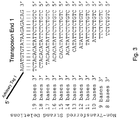
- Tagmentation reactions were performed with the transposomes to compare the ability of transposomes having truncated non-transferred end sequences compared to the 19-base non-transferred end, serving as a positive control and no non-transferred end as a negative control.
- the target DNA in a sample was efficiently fragmented by the transposomes having 18-base to 12-base end sequences, with less efficient fragmentation with 11-base to 9 base end sequences.
- the 8-base end sequence demonstrated some fragmentation, but not efficiently.
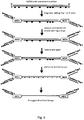
- the 14-base end sequence was selected for further experiments as illustrated in Fig. 4 .
- the product was mixed with replacement oligonucleotide (SEQ ID NO:19 with a sequencing tag as the "Arbitrary Tag 2") at 45°C for 1 minute and then 37°C for 30 minutes to remove the non-transferred and replace it with the replacement oligonucleotide.
- the remaining 9-base gaps were filled in using Tth polymerase, large fragment (without strand-displacement), followed by ligation using E. coli DNA ligase, according to manufacturer's recommended conditions.
- Transposase end sequences were prepared using a partially randomized library based on the 19-base ME sequence (SEQ ID NO:3). From this library, a number of active transposon ends were identified using E. coli MG1655 genomic DNA as the target nucleic acid and sequenced on a Genome Analyzer II sequencing instrument (Illumina, Inc.).
- One mutant designated 11G:C(G1) (SEQ ID NO:5) had a significantly high melting temperature (58°C compared to 44°C) and demonstrated comparable transposition activity in vitro as the ME sequence, as demonstrated by dilution in parallel with transposons with the ME sequence.
Landscapes
- Chemical & Material Sciences (AREA)
- Life Sciences & Earth Sciences (AREA)
- Health & Medical Sciences (AREA)
- Organic Chemistry (AREA)
- Genetics & Genomics (AREA)
- Engineering & Computer Science (AREA)
- Wood Science & Technology (AREA)
- Zoology (AREA)
- Biotechnology (AREA)
- Molecular Biology (AREA)
- Bioinformatics & Cheminformatics (AREA)
- Biochemistry (AREA)
- General Engineering & Computer Science (AREA)
- General Health & Medical Sciences (AREA)
- Biomedical Technology (AREA)
- Microbiology (AREA)
- Physics & Mathematics (AREA)
- Biophysics (AREA)
- Proteomics, Peptides & Aminoacids (AREA)
- Bioinformatics & Computational Biology (AREA)
- Crystallography & Structural Chemistry (AREA)
- Plant Pathology (AREA)
- Chemical Kinetics & Catalysis (AREA)
- Immunology (AREA)
- Analytical Chemistry (AREA)
- Medicinal Chemistry (AREA)
- General Chemical & Material Sciences (AREA)
- Measuring Or Testing Involving Enzymes Or Micro-Organisms (AREA)
Claims (12)
- Procédé pour l'ajout d'un marqueur au produit double brin d'une réaction de tagmentation, comprenant les étapes consistant à :(a) fournir un acide nucléique cible double brin et un transposome ayant une transposase avec deux séquences terminales de transposon : un brin transféré et un brin non transféré ;(b) laisser le transposome fragmenter l'acide nucléique cible, moyennant quoi le brin transféré est transféré de façon covalente à un premier brin d'un premier fragment et le brin non transféré reste hybridé au brin transféré ;(c) enlever le brin non transféré du brin transféré ;(d) fournir un oligonucléotide de remplacement qui comprend une séquence marqueur, pour s'hybrider au brin transféré ; et(e) ligaturer l'oligonucléotide de remplacement au second brin du premier fragment ;ce qui génère de cette manière un produit de tagmentation ayant un brin transféré et un oligonucléotide de remplacement.
- Procédé selon la revendication 1, dans lequel un brin de l'acide nucléique cible est chimiquement modifié.
- Procédé selon la revendication 2, dans lequel la modification chimique est la conversion de cytosines en uraciles.
- Procédé selon la revendication 1, dans lequel le transposome comprend une transposase Tn5 ou Mu.
- Procédé selon la revendication 1, dans lequel le brin transféré comprend l'extrémité mosaïque ME :MRWTGTGHWKAVGARACAV (SEQ ID n° : 1) ; ouNSHBGHSHDDRNGAKACAN (SEQ ID n° : 2) ;mais à l'exclusion de AGATGTGTATAAGAGACAG (SEQ ID n° : 3).
- Procédé selon la revendication 1 ou la revendication 5, dans lequel le brin transféré comprend en outre une séquence marqueur.
- Procédé selon la revendication 1, dans lequel le brin non transféré comprend :BTGTYTCBTN1-10 (SEQ ID n° : 20) ; ouNTGTMTCNTN0-10 (SEQ ID n° : 21).
- Procédé selon la revendication 1, dans lequel le brin non transféré est choisi dans le groupe constitué par : SEQ ID n° : 9, SEQ ID n° : 10, SEQ ID n° : 11, SEQ ID n° : 12, SEQ ID n° : 13, SEQ ID n° : 14, SEQ ID n° : 15, SEQ ID n° : 16, SEQ ID n° : 17 et SEQ ID n° : 18.
- Procédé selon la revendication 1, dans lequel l'étape (e) comprend en outre une étape d'extension.
- Procédé selon la revendication 2 ou la revendication 3, comprenant en outre l'étape consistant à :(f) enrichir en ce qui concerne un brin souhaité.
- Procédé selon la revendication 10, dans lequel l'étape (f) comprend le traitement du premier fragment avec une enzyme qui scinde préférentiellement un brin non souhaité du premier fragment.
- Procédé selon la revendication 10 ou la revendication 11, dans lequel l'étape (f) est effectuée à l'aide d'une polymérase matrice-dépendante qui est sensible à des modifications chimiques.
Priority Applications (2)
| Application Number | Priority Date | Filing Date | Title |
|---|---|---|---|
| DK16155567.7T DK3037536T3 (da) | 2011-01-28 | 2012-01-30 | Oligonukleotiderstatning for di-taggede og retnings biblioteker |
| EP16155567.7A EP3037536B1 (fr) | 2011-01-28 | 2012-01-30 | Remplacement d'oligonucléotidiques di-marqués et bibliothèques directionnelles |
Applications Claiming Priority (3)
| Application Number | Priority Date | Filing Date | Title |
|---|---|---|---|
| US201161437451P | 2011-01-28 | 2011-01-28 | |
| US201161506777P | 2011-07-12 | 2011-07-12 | |
| PCT/US2012/023139 WO2012103545A1 (fr) | 2011-01-28 | 2012-01-30 | Remplacement d'oligonucléotides pour bibliothèques marquées aux deux extrémités et directionnelles |
Related Child Applications (2)
| Application Number | Title | Priority Date | Filing Date |
|---|---|---|---|
| EP16155567.7A Division-Into EP3037536B1 (fr) | 2011-01-28 | 2012-01-30 | Remplacement d'oligonucléotidiques di-marqués et bibliothèques directionnelles |
| EP16155567.7A Division EP3037536B1 (fr) | 2011-01-28 | 2012-01-30 | Remplacement d'oligonucléotidiques di-marqués et bibliothèques directionnelles |
Publications (3)
| Publication Number | Publication Date |
|---|---|
| EP2668273A1 EP2668273A1 (fr) | 2013-12-04 |
| EP2668273B1 EP2668273B1 (fr) | 2016-04-06 |
| EP2668273B9 true EP2668273B9 (fr) | 2017-03-29 |
Family
ID=45809570
Family Applications (2)
| Application Number | Title | Priority Date | Filing Date |
|---|---|---|---|
| EP16155567.7A Active EP3037536B1 (fr) | 2011-01-28 | 2012-01-30 | Remplacement d'oligonucléotidiques di-marqués et bibliothèques directionnelles |
| EP12707675.0A Active EP2668273B9 (fr) | 2011-01-28 | 2012-01-30 | Remplacement d'oligonucléotides pour bibliothèques marquées aux deux extrémités et directionnelles |
Family Applications Before (1)
| Application Number | Title | Priority Date | Filing Date |
|---|---|---|---|
| EP16155567.7A Active EP3037536B1 (fr) | 2011-01-28 | 2012-01-30 | Remplacement d'oligonucléotidiques di-marqués et bibliothèques directionnelles |
Country Status (7)
| Country | Link |
|---|---|
| US (4) | US9238671B2 (fr) |
| EP (2) | EP3037536B1 (fr) |
| AU (1) | AU2012211081B2 (fr) |
| CA (1) | CA2821559C (fr) |
| DK (2) | DK2668273T3 (fr) |
| ES (2) | ES2568910T3 (fr) |
| WO (1) | WO2012103545A1 (fr) |
Families Citing this family (105)
| Publication number | Priority date | Publication date | Assignee | Title |
|---|---|---|---|---|
| ES2423930T3 (es) | 2007-02-09 | 2013-09-25 | Advanced Liquid Logic, Inc. | Dispositivos actuadores de gotitas y métodos que emplean perlas magnéticas |
| US8383345B2 (en) | 2008-09-12 | 2013-02-26 | University Of Washington | Sequence tag directed subassembly of short sequencing reads into long sequencing reads |
| EP2391732B1 (fr) | 2009-01-30 | 2015-05-27 | Oxford Nanopore Technologies Limited | Methodes qui utilisent des adaptateurs pour la construction d'acides nucleiques pour le sequençage transmembranaire |
| US9074251B2 (en) | 2011-02-10 | 2015-07-07 | Illumina, Inc. | Linking sequence reads using paired code tags |
| WO2012103545A1 (fr) * | 2011-01-28 | 2012-08-02 | Illumina, Inc. | Remplacement d'oligonucléotides pour bibliothèques marquées aux deux extrémités et directionnelles |
| CN103443338B (zh) | 2011-02-02 | 2017-09-22 | 华盛顿大学商业化中心 | 大规模平行邻接作图 |
| JP6298404B2 (ja) | 2011-07-25 | 2018-03-20 | オックスフォード ナノポール テクノロジーズ リミテッド | 膜貫通ポアを用いる二重鎖ポリヌクレオチド配列決定のためのヘアピンループ方法 |
| NO2694769T3 (fr) * | 2012-03-06 | 2018-03-03 | ||
| US11155860B2 (en) | 2012-07-19 | 2021-10-26 | Oxford Nanopore Technologies Ltd. | SSB method |
| US10221442B2 (en) | 2012-08-14 | 2019-03-05 | 10X Genomics, Inc. | Compositions and methods for sample processing |
| US10273541B2 (en) | 2012-08-14 | 2019-04-30 | 10X Genomics, Inc. | Methods and systems for processing polynucleotides |
| US9951386B2 (en) | 2014-06-26 | 2018-04-24 | 10X Genomics, Inc. | Methods and systems for processing polynucleotides |
| US9701998B2 (en) | 2012-12-14 | 2017-07-11 | 10X Genomics, Inc. | Methods and systems for processing polynucleotides |
| US10584381B2 (en) | 2012-08-14 | 2020-03-10 | 10X Genomics, Inc. | Methods and systems for processing polynucleotides |
| AU2013302756C1 (en) | 2012-08-14 | 2018-05-17 | 10X Genomics, Inc. | Microcapsule compositions and methods |
| US10752949B2 (en) | 2012-08-14 | 2020-08-25 | 10X Genomics, Inc. | Methods and systems for processing polynucleotides |
| US11591637B2 (en) | 2012-08-14 | 2023-02-28 | 10X Genomics, Inc. | Compositions and methods for sample processing |
| US10323279B2 (en) | 2012-08-14 | 2019-06-18 | 10X Genomics, Inc. | Methods and systems for processing polynucleotides |
| CA2894694C (fr) | 2012-12-14 | 2023-04-25 | 10X Genomics, Inc. | Procedes et systemes pour le traitement de polynucleotides |
| US10533221B2 (en) | 2012-12-14 | 2020-01-14 | 10X Genomics, Inc. | Methods and systems for processing polynucleotides |
| US9683230B2 (en) | 2013-01-09 | 2017-06-20 | Illumina Cambridge Limited | Sample preparation on a solid support |
| KR20200140929A (ko) | 2013-02-08 | 2020-12-16 | 10엑스 제노믹스, 인크. | 폴리뉴클레오티드 바코드 생성 |
| GB201314695D0 (en) | 2013-08-16 | 2013-10-02 | Oxford Nanopore Tech Ltd | Method |
| CA2901545C (fr) | 2013-03-08 | 2019-10-08 | Oxford Nanopore Technologies Limited | Utilisation d'elements espaceurs dans un acide nucleique pour controler le mouvement d'un helicase |
| DK2970951T3 (da) * | 2013-03-13 | 2019-05-13 | Illumina Inc | Fremgangsmåder til nukleinsyresekventering |
| SG11201508985VA (en) | 2013-05-23 | 2015-12-30 | Univ Leland Stanford Junior | Transposition into native chromatin for personal epigenomics |
| WO2015027135A1 (fr) * | 2013-08-23 | 2015-02-26 | Ludwig Institute For Cancer Research | Procédés et compositions pour la synthèse d'adn-c et le profilage de transcriptome d'une cellule unique au moyen de réaction par permutation de matrice |
| US10415083B2 (en) | 2013-10-28 | 2019-09-17 | The Translational Genomics Research Institute | Long insert-based whole genome sequencing |
| EP3066114B1 (fr) * | 2013-11-07 | 2019-11-13 | Agilent Technologies, Inc. | Pluralité d'adaptateurs de transposase destinés à des manipulations d'adn |
| EP3957750B1 (fr) | 2013-12-20 | 2025-01-29 | Illumina, Inc. | Conservation des informations de connectivité génomique dans des échantillons d'adn génomiques fragmentés |
| WO2015106890A1 (fr) * | 2014-01-14 | 2015-07-23 | Qiagen Gmbh | Génération de fragments d'adn étiqueté |
| CN106029962A (zh) | 2014-02-11 | 2016-10-12 | 豪夫迈·罗氏有限公司 | 靶向测序和uid过滤 |
| GB201403096D0 (en) | 2014-02-21 | 2014-04-09 | Oxford Nanopore Tech Ltd | Sample preparation method |
| BR112016023625A2 (pt) | 2014-04-10 | 2018-06-26 | 10X Genomics, Inc. | dispositivos fluídicos, sistemas e métodos para encapsular e particionar reagentes, e aplicações dos mesmos |
| WO2015200893A2 (fr) | 2014-06-26 | 2015-12-30 | 10X Genomics, Inc. | Procédés d'analyse d'acides nucléiques provenant de cellules individuelles ou de populations de cellules |
| US12312640B2 (en) | 2014-06-26 | 2025-05-27 | 10X Genomics, Inc. | Analysis of nucleic acid sequences |
| CA2953469A1 (fr) | 2014-06-26 | 2015-12-30 | 10X Genomics, Inc. | Analyse de sequences d'acides nucleiques |
| CN112430641A (zh) * | 2014-06-30 | 2021-03-02 | 亿明达股份有限公司 | 使用单侧转座的方法和组合物 |
| WO2016037361A1 (fr) * | 2014-09-12 | 2016-03-17 | 深圳华大基因科技有限公司 | Trousse et son utilisation dans le séquençage d'acides nucléiques |
| US10040048B1 (en) | 2014-09-25 | 2018-08-07 | Synthego Corporation | Automated modular system and method for production of biopolymers |
| US20170292153A1 (en) * | 2014-10-14 | 2017-10-12 | Bgi Shenzhen Co., Limited | Method for breaking nucleic acid and adding adaptor by means of transposase, and reagent |
| GB201418159D0 (en) | 2014-10-14 | 2014-11-26 | Oxford Nanopore Tech Ltd | Method |
| RU2736728C2 (ru) * | 2014-10-17 | 2020-11-19 | Иллумина Кембридж Лимитед | Транспозиция с сохранением сцепления генов |
| EP3207134B1 (fr) * | 2014-10-17 | 2019-07-03 | Illumina Cambridge Limited | Transposition conservant la contiguïté |
| WO2016064742A1 (fr) * | 2014-10-21 | 2016-04-28 | The Board Of Regents Of The Nevada System Of Higher Education On Behalf Of The University Of Nevada, Las Vegas | Procédés et compositions permettant le dépistage de fonction moléculaire comprenant des mini-motifs chimériques |
| BR112017008877A2 (pt) | 2014-10-29 | 2018-07-03 | 10X Genomics Inc | métodos e composições para sequenciamento de ácido nucleico-alvo |
| US9975122B2 (en) | 2014-11-05 | 2018-05-22 | 10X Genomics, Inc. | Instrument systems for integrated sample processing |
| US10900065B2 (en) | 2014-11-14 | 2021-01-26 | University Of Washington | Methods and kits for labeling cellular molecules |
| JP6769969B2 (ja) | 2015-01-12 | 2020-10-14 | 10エックス ジェノミクス, インコーポレイテッド | 核酸配列決定ライブラリーを作製するためのプロセス及びシステム、並びにこれらを使用して作製したライブラリー |
| MX2017010857A (es) | 2015-02-24 | 2017-12-11 | 10X Genomics Inc | Metodos para la cobertura de secuencia de acidos nucleicos seleccionados como diana. |
| EP3262407B1 (fr) | 2015-02-24 | 2023-08-30 | 10X Genomics, Inc. | Procédés et systèmes de traitement de cloisonnement |
| EP3307908B1 (fr) | 2015-06-09 | 2019-09-11 | Life Technologies Corporation | Procédés pour le marquage moléculaire |
| US9771575B2 (en) | 2015-06-19 | 2017-09-26 | Agilent Technologies, Inc. | Methods for on-array fragmentation and barcoding of DNA samples |
| WO2017004083A1 (fr) * | 2015-06-29 | 2017-01-05 | The Regents Of The University Of California | Procédés de production de bibliothèques d'acides nucléiques et compositions et kits pour la pratique de ceux-ci |
| LT3334841T (lt) | 2015-08-12 | 2020-02-10 | Cemm - Forschungszentrum Für Molekulare Medizin Gmbh | Nukleorūgščių tyrimo būdai |
| JP6954899B2 (ja) | 2015-12-04 | 2021-10-27 | 10エックス ゲノミクス,インコーポレイテッド | 核酸の解析のための方法及び組成物 |
| US10160987B2 (en) | 2016-04-07 | 2018-12-25 | Rebecca F. McClure | Composition and method for processing DNA |
| US11932847B2 (en) * | 2016-04-19 | 2024-03-19 | Kapa Biosystems, Inc. | Transposase competitor control system |
| WO2017197343A2 (fr) | 2016-05-12 | 2017-11-16 | 10X Genomics, Inc. | Filtres microfluidiques sur puce |
| WO2017197338A1 (fr) | 2016-05-13 | 2017-11-16 | 10X Genomics, Inc. | Systèmes microfluidiques et procédés d'utilisation |
| GB201609220D0 (en) * | 2016-05-25 | 2016-07-06 | Oxford Nanopore Tech Ltd | Method |
| EP3485034B1 (fr) * | 2016-07-12 | 2021-08-18 | Kapa Biosystems, Inc. | Système et procédé de séquençage d'amplicon médié par une transposase |
| US10907204B2 (en) | 2016-07-12 | 2021-02-02 | Roche Sequencing Solutions, Inc. | Primer extension target enrichment |
| US10676736B2 (en) | 2016-08-05 | 2020-06-09 | Bio-Rad Laboratories, Inc. | Second strand direct |
| IL266197B2 (en) | 2016-10-24 | 2024-03-01 | Geneinfosec Inc | Hiding information contained within nucleic acids |
| CN110139932B (zh) | 2016-12-19 | 2024-05-17 | 生物辐射实验室股份有限公司 | 液滴加标的相邻性保留的标签化dna |
| US10550429B2 (en) | 2016-12-22 | 2020-02-04 | 10X Genomics, Inc. | Methods and systems for processing polynucleotides |
| US10011872B1 (en) | 2016-12-22 | 2018-07-03 | 10X Genomics, Inc. | Methods and systems for processing polynucleotides |
| US10815525B2 (en) | 2016-12-22 | 2020-10-27 | 10X Genomics, Inc. | Methods and systems for processing polynucleotides |
| EP4029939B1 (fr) | 2017-01-30 | 2023-06-28 | 10X Genomics, Inc. | Procédés et systèmes de codage à barres de cellules individuelles sur la base de gouttelettes |
| US12264411B2 (en) | 2017-01-30 | 2025-04-01 | 10X Genomics, Inc. | Methods and systems for analysis |
| KR102866805B1 (ko) | 2017-02-21 | 2025-09-30 | 일루미나, 인코포레이티드 | 링커를 갖는 고정된 트랜스포좀을 사용한 태그먼트화 |
| JP7056012B2 (ja) * | 2017-05-19 | 2022-04-19 | トヨタ自動車株式会社 | ランダムプライマーセット、及びこれを用いたdnaライブラリーの作製方法 |
| US10400235B2 (en) | 2017-05-26 | 2019-09-03 | 10X Genomics, Inc. | Single cell analysis of transposase accessible chromatin |
| EP3445876B1 (fr) | 2017-05-26 | 2023-07-05 | 10X Genomics, Inc. | Analyse de la chromatine accessible par une transposase d'une cellule unique |
| US20190076814A1 (en) | 2017-09-11 | 2019-03-14 | Synthego Corporation | Biopolymer synthesis system and method |
| DK4060041T5 (en) | 2017-09-25 | 2024-07-22 | Fred Hutchinson Cancer Center | High efficiency targeted in situ genome-wide profiling |
| WO2019084043A1 (fr) | 2017-10-26 | 2019-05-02 | 10X Genomics, Inc. | Méthodes et systèmes de préparation d'acide nucléique et d'analyse de chromatine |
| WO2019089959A1 (fr) | 2017-11-02 | 2019-05-09 | Bio-Rad Laboratories, Inc. | Analyse génomique basée sur la transposase |
| SG11201913654QA (en) | 2017-11-15 | 2020-01-30 | 10X Genomics Inc | Functionalized gel beads |
| US10829815B2 (en) | 2017-11-17 | 2020-11-10 | 10X Genomics, Inc. | Methods and systems for associating physical and genetic properties of biological particles |
| US12377396B2 (en) | 2018-02-05 | 2025-08-05 | The Board Of Trustees Of The Leland Stanford Junior University | Systems and methods for multiplexed measurements in single and ensemble cells |
| SG11202007686VA (en) | 2018-02-12 | 2020-09-29 | 10X Genomics Inc | Methods characterizing multiple analytes from individual cells or cell populations |
| CN112262218B (zh) | 2018-04-06 | 2024-11-08 | 10X基因组学有限公司 | 用于单细胞处理中的质量控制的系统和方法 |
| GB201807793D0 (en) | 2018-05-14 | 2018-06-27 | Oxford Nanopore Tech Ltd | Method |
| US11932899B2 (en) | 2018-06-07 | 2024-03-19 | 10X Genomics, Inc. | Methods and systems for characterizing nucleic acid molecules |
| SG11202101164TA (en) | 2018-08-03 | 2021-03-30 | 10X Genomics Inc | Methods and systems to minimize barcode exchange |
| US12065688B2 (en) | 2018-08-20 | 2024-08-20 | 10X Genomics, Inc. | Compositions and methods for cellular processing |
| EP4249651B1 (fr) | 2018-08-20 | 2025-01-29 | Bio-Rad Laboratories, Inc. | Génération de séquences nucléotidiques par co-localisation de billes à code-barres dans des partitions |
| US11845983B1 (en) | 2019-01-09 | 2023-12-19 | 10X Genomics, Inc. | Methods and systems for multiplexing of droplet based assays |
| EP3924505B1 (fr) | 2019-02-12 | 2025-12-17 | 10X Genomics, Inc. | Procédés de traitement de molécules d'acides nucléiques |
| US11467153B2 (en) | 2019-02-12 | 2022-10-11 | 10X Genomics, Inc. | Methods for processing nucleic acid molecules |
| WO2020167866A1 (fr) | 2019-02-12 | 2020-08-20 | 10X Genomics, Inc. | Systèmes et procédés pour le chargement de transposons |
| BR112021006173A2 (pt) | 2019-04-29 | 2021-11-16 | Illumina Inc | Métodos para a identificação e análise de micro-organismos viáveis e/ou proliferativos e para determinação da eficácia de um agente antimicrobiano na modulação do crescimento e da proliferação de micro-organismos em uma amostra |
| KR20220080091A (ko) | 2019-09-06 | 2022-06-14 | 체엠엠 - 포르슝스첸트룸 퓨어 몰레쿨라레 메디친 게엠베하 | Rna 올리고뉴클레오티드를 시퀀싱하기 위한 방법 |
| US12359193B2 (en) | 2022-03-04 | 2025-07-15 | Element Biosciences, Inc. | Single-stranded splint strands and methods of use |
| US12469162B2 (en) | 2020-08-31 | 2025-11-11 | Element Biosciences, Inc. | Primary analysis in next generation sequencing |
| US12505571B2 (en) | 2020-08-31 | 2025-12-23 | Element Biosciences, Inc. | Primary analysis in next generation sequencing |
| US12371743B2 (en) | 2022-03-04 | 2025-07-29 | Element Biosciences, Inc. | Double-stranded splint adaptors and methods of use |
| CN115927244B (zh) * | 2022-05-26 | 2026-01-02 | 上海墨卓生物科技有限公司 | 一种基于微流控技术的单细胞ChIP-seq文库的构建方法 |
| US12606819B2 (en) | 2022-07-05 | 2026-04-21 | Element Biosciences, Inc. | PCR-free library preparation using double-stranded splint adaptors and methods of use |
| CN119654454A (zh) | 2022-07-25 | 2025-03-18 | 东洋纺株式会社 | 用于下一代测序分析等的片段化及标签片段化方法 |
| AU2023343187A1 (en) | 2022-09-12 | 2025-03-13 | Element Biosciences, Inc. | Double-stranded splint adaptors with universal long splint strands and methods of use |
| CN115537408B (zh) * | 2022-10-08 | 2025-04-18 | 厦门大学 | 一种单细胞多组学文库及其构建方法 |
| WO2025191535A1 (fr) | 2024-03-15 | 2025-09-18 | Element Biosciences, Inc. | Adaptateurs attelle partiellement double brin et procédés d'utilisation |
Family Cites Families (21)
| Publication number | Priority date | Publication date | Assignee | Title |
|---|---|---|---|---|
| US4469863A (en) | 1980-11-12 | 1984-09-04 | Ts O Paul O P | Nonionic nucleic acid alkyl and aryl phosphonates and processes for manufacture and use thereof |
| US5034506A (en) | 1985-03-15 | 1991-07-23 | Anti-Gene Development Group | Uncharged morpholino-based polymers having achiral intersubunit linkages |
| US5235033A (en) | 1985-03-15 | 1993-08-10 | Anti-Gene Development Group | Alpha-morpholino ribonucleoside derivatives and polymers thereof |
| US5216141A (en) | 1988-06-06 | 1993-06-01 | Benner Steven A | Oligonucleotide analogs containing sulfur linkages |
| US5386023A (en) | 1990-07-27 | 1995-01-31 | Isis Pharmaceuticals | Backbone modified oligonucleotide analogs and preparation thereof through reductive coupling |
| US5602240A (en) | 1990-07-27 | 1997-02-11 | Ciba Geigy Ag. | Backbone modified oligonucleotide analogs |
| US5432272A (en) | 1990-10-09 | 1995-07-11 | Benner; Steven A. | Method for incorporating into a DNA or RNA oligonucleotide using nucleotides bearing heterocyclic bases |
| US5644048A (en) | 1992-01-10 | 1997-07-01 | Isis Pharmaceuticals, Inc. | Process for preparing phosphorothioate oligonucleotides |
| US5637684A (en) | 1994-02-23 | 1997-06-10 | Isis Pharmaceuticals, Inc. | Phosphoramidate and phosphorothioamidate oligomeric compounds |
| US5677170A (en) | 1994-03-02 | 1997-10-14 | The Johns Hopkins University | In vitro transposition of artificial transposons |
| US6271205B1 (en) * | 1994-09-21 | 2001-08-07 | University Of Massachusetts Medical Center | Cancer treatment by expression of differentiation factor receptor |
| US5965443A (en) | 1996-09-09 | 1999-10-12 | Wisconsin Alumni Research Foundation | System for in vitro transposition |
| US5925545A (en) | 1996-09-09 | 1999-07-20 | Wisconsin Alumni Research Foundation | System for in vitro transposition |
| FI103809B1 (fi) | 1997-07-14 | 1999-09-30 | Finnzymes Oy | In vitro -menetelmä templaattien tuottamiseksi DNA-sekventointia varten |
| US6544732B1 (en) | 1999-05-20 | 2003-04-08 | Illumina, Inc. | Encoding and decoding of array sensors utilizing nanocrystals |
| GB0326073D0 (en) * | 2003-11-07 | 2003-12-10 | Solexa Ltd | Improvements in or relating to polynucleotide arrays |
| US20100022403A1 (en) | 2006-06-30 | 2010-01-28 | Nurith Kurn | Methods for fragmentation and labeling of nucleic acids |
| US7754429B2 (en) | 2006-10-06 | 2010-07-13 | Illumina Cambridge Limited | Method for pair-wise sequencing a plurity of target polynucleotides |
| US9080211B2 (en) | 2008-10-24 | 2015-07-14 | Epicentre Technologies Corporation | Transposon end compositions and methods for modifying nucleic acids |
| WO2012103545A1 (fr) * | 2011-01-28 | 2012-08-02 | Illumina, Inc. | Remplacement d'oligonucléotides pour bibliothèques marquées aux deux extrémités et directionnelles |
| US9683230B2 (en) * | 2013-01-09 | 2017-06-20 | Illumina Cambridge Limited | Sample preparation on a solid support |
-
2012
- 2012-01-30 WO PCT/US2012/023139 patent/WO2012103545A1/fr not_active Ceased
- 2012-01-30 ES ES12707675.0T patent/ES2568910T3/es active Active
- 2012-01-30 DK DK12707675.0T patent/DK2668273T3/en active
- 2012-01-30 EP EP16155567.7A patent/EP3037536B1/fr active Active
- 2012-01-30 ES ES16155567T patent/ES2762866T3/es active Active
- 2012-01-30 CA CA2821559A patent/CA2821559C/fr active Active
- 2012-01-30 US US13/979,346 patent/US9238671B2/en active Active
- 2012-01-30 DK DK16155567.7T patent/DK3037536T3/da active
- 2012-01-30 AU AU2012211081A patent/AU2012211081B2/en active Active
- 2012-01-30 EP EP12707675.0A patent/EP2668273B9/fr active Active
-
2015
- 2015-12-08 US US14/963,021 patent/US10287574B2/en active Active
-
2019
- 2019-04-01 US US16/372,207 patent/US11008567B2/en active Active
-
2021
- 2021-04-29 US US17/244,365 patent/US20210261951A1/en active Pending
Also Published As
| Publication number | Publication date |
|---|---|
| US20210261951A1 (en) | 2021-08-26 |
| US10287574B2 (en) | 2019-05-14 |
| US9238671B2 (en) | 2016-01-19 |
| EP3037536A1 (fr) | 2016-06-29 |
| EP2668273A1 (fr) | 2013-12-04 |
| US20140031261A1 (en) | 2014-01-30 |
| WO2012103545A1 (fr) | 2012-08-02 |
| US20190225960A1 (en) | 2019-07-25 |
| CA2821559A1 (fr) | 2012-08-02 |
| AU2012211081B2 (en) | 2016-02-04 |
| DK2668273T3 (en) | 2016-04-18 |
| CA2821559C (fr) | 2017-01-31 |
| US20160090591A1 (en) | 2016-03-31 |
| US11008567B2 (en) | 2021-05-18 |
| DK3037536T3 (da) | 2020-01-13 |
| EP2668273B1 (fr) | 2016-04-06 |
| ES2568910T3 (es) | 2016-05-05 |
| ES2762866T3 (es) | 2020-05-26 |
| EP3037536B1 (fr) | 2019-11-27 |
| AU2012211081A1 (en) | 2013-07-04 |
Similar Documents
| Publication | Publication Date | Title |
|---|---|---|
| US11008567B2 (en) | Oligonucleotide replacement for di-tagged and directional libraries | |
| US20240384262A1 (en) | Linking sequence reads using paired code tags | |
| EP2635679B1 (fr) | Liaison entre des lectures de séquences à l'aide de codes marqueurs appariés | |
| US8829171B2 (en) | Linking sequence reads using paired code tags | |
| US11274340B2 (en) | Methods, compositions and kits for small RNA capture, detection and quantification | |
| US8030478B2 (en) | Method for nucleic acid replication and novel artificial base pairs | |
| US12410426B2 (en) | Methods for generating, and sequencing from, asymmetric adaptors on the ends of polynucleotide templates comprising hairpin loops | |
| EP2658988B1 (fr) | Procédés et compositions pour préparer des échantillons d'acides nucléiques |
Legal Events
| Date | Code | Title | Description |
|---|---|---|---|
| PUAI | Public reference made under article 153(3) epc to a published international application that has entered the european phase |
Free format text: ORIGINAL CODE: 0009012 |
|
| 17P | Request for examination filed |
Effective date: 20130627 |
|
| AK | Designated contracting states |
Kind code of ref document: A1 Designated state(s): AL AT BE BG CH CY CZ DE DK EE ES FI FR GB GR HR HU IE IS IT LI LT LU LV MC MK MT NL NO PL PT RO RS SE SI SK SM TR |
|
| RIN1 | Information on inventor provided before grant (corrected) |
Inventor name: BAAS, BRADLEY Inventor name: GORYSHIN, IGOR Inventor name: MAFFITT, MARK Inventor name: VAIDYANATHAN, RAMESH |
|
| DAX | Request for extension of the european patent (deleted) | ||
| 17Q | First examination report despatched |
Effective date: 20150605 |
|
| GRAP | Despatch of communication of intention to grant a patent |
Free format text: ORIGINAL CODE: EPIDOSNIGR1 |
|
| INTG | Intention to grant announced |
Effective date: 20151130 |
|
| GRAS | Grant fee paid |
Free format text: ORIGINAL CODE: EPIDOSNIGR3 |
|
| GRAA | (expected) grant |
Free format text: ORIGINAL CODE: 0009210 |
|
| AK | Designated contracting states |
Kind code of ref document: B1 Designated state(s): AL AT BE BG CH CY CZ DE DK EE ES FI FR GB GR HR HU IE IS IT LI LT LU LV MC MK MT NL NO PL PT RO RS SE SI SK SM TR |
|
| REG | Reference to a national code |
Ref country code: GB Ref legal event code: FG4D |
|
| REG | Reference to a national code |
Ref country code: AT Ref legal event code: REF Ref document number: 787867 Country of ref document: AT Kind code of ref document: T Effective date: 20160415 Ref country code: CH Ref legal event code: EP |
|
| REG | Reference to a national code |
Ref country code: DK Ref legal event code: T3 Effective date: 20160414 |
|
| REG | Reference to a national code |
Ref country code: IE Ref legal event code: FG4D Ref country code: NL Ref legal event code: FP |
|
| REG | Reference to a national code |
Ref country code: ES Ref legal event code: FG2A Ref document number: 2568910 Country of ref document: ES Kind code of ref document: T3 Effective date: 20160505 |
|
| REG | Reference to a national code |
Ref country code: CH Ref legal event code: NV Representative=s name: MICHELI AND CIE SA, CH |
|
| REG | Reference to a national code |
Ref country code: DE Ref legal event code: R096 Ref document number: 602012016590 Country of ref document: DE |
|
| REG | Reference to a national code |
Ref country code: SE Ref legal event code: TRGR |
|
| REG | Reference to a national code |
Ref country code: LT Ref legal event code: MG4D |
|
| PG25 | Lapsed in a contracting state [announced via postgrant information from national office to epo] |
Ref country code: IS Free format text: LAPSE BECAUSE OF FAILURE TO SUBMIT A TRANSLATION OF THE DESCRIPTION OR TO PAY THE FEE WITHIN THE PRESCRIBED TIME-LIMIT Effective date: 20160806 Ref country code: FI Free format text: LAPSE BECAUSE OF FAILURE TO SUBMIT A TRANSLATION OF THE DESCRIPTION OR TO PAY THE FEE WITHIN THE PRESCRIBED TIME-LIMIT Effective date: 20160406 Ref country code: LT Free format text: LAPSE BECAUSE OF FAILURE TO SUBMIT A TRANSLATION OF THE DESCRIPTION OR TO PAY THE FEE WITHIN THE PRESCRIBED TIME-LIMIT Effective date: 20160406 Ref country code: PL Free format text: LAPSE BECAUSE OF FAILURE TO SUBMIT A TRANSLATION OF THE DESCRIPTION OR TO PAY THE FEE WITHIN THE PRESCRIBED TIME-LIMIT Effective date: 20160406 Ref country code: NO Free format text: LAPSE BECAUSE OF FAILURE TO SUBMIT A TRANSLATION OF THE DESCRIPTION OR TO PAY THE FEE WITHIN THE PRESCRIBED TIME-LIMIT Effective date: 20160706 |
|
| PG25 | Lapsed in a contracting state [announced via postgrant information from national office to epo] |
Ref country code: RS Free format text: LAPSE BECAUSE OF FAILURE TO SUBMIT A TRANSLATION OF THE DESCRIPTION OR TO PAY THE FEE WITHIN THE PRESCRIBED TIME-LIMIT Effective date: 20160406 Ref country code: PT Free format text: LAPSE BECAUSE OF FAILURE TO SUBMIT A TRANSLATION OF THE DESCRIPTION OR TO PAY THE FEE WITHIN THE PRESCRIBED TIME-LIMIT Effective date: 20160808 Ref country code: HR Free format text: LAPSE BECAUSE OF FAILURE TO SUBMIT A TRANSLATION OF THE DESCRIPTION OR TO PAY THE FEE WITHIN THE PRESCRIBED TIME-LIMIT Effective date: 20160406 Ref country code: LV Free format text: LAPSE BECAUSE OF FAILURE TO SUBMIT A TRANSLATION OF THE DESCRIPTION OR TO PAY THE FEE WITHIN THE PRESCRIBED TIME-LIMIT Effective date: 20160406 Ref country code: GR Free format text: LAPSE BECAUSE OF FAILURE TO SUBMIT A TRANSLATION OF THE DESCRIPTION OR TO PAY THE FEE WITHIN THE PRESCRIBED TIME-LIMIT Effective date: 20160707 |
|
| REG | Reference to a national code |
Ref country code: FR Ref legal event code: PLFP Year of fee payment: 6 |
|
| REG | Reference to a national code |
Ref country code: DE Ref legal event code: R097 Ref document number: 602012016590 Country of ref document: DE |
|
| PG25 | Lapsed in a contracting state [announced via postgrant information from national office to epo] |
Ref country code: EE Free format text: LAPSE BECAUSE OF FAILURE TO SUBMIT A TRANSLATION OF THE DESCRIPTION OR TO PAY THE FEE WITHIN THE PRESCRIBED TIME-LIMIT Effective date: 20160406 Ref country code: CZ Free format text: LAPSE BECAUSE OF FAILURE TO SUBMIT A TRANSLATION OF THE DESCRIPTION OR TO PAY THE FEE WITHIN THE PRESCRIBED TIME-LIMIT Effective date: 20160406 Ref country code: SK Free format text: LAPSE BECAUSE OF FAILURE TO SUBMIT A TRANSLATION OF THE DESCRIPTION OR TO PAY THE FEE WITHIN THE PRESCRIBED TIME-LIMIT Effective date: 20160406 Ref country code: RO Free format text: LAPSE BECAUSE OF FAILURE TO SUBMIT A TRANSLATION OF THE DESCRIPTION OR TO PAY THE FEE WITHIN THE PRESCRIBED TIME-LIMIT Effective date: 20160406 |
|
| PLBE | No opposition filed within time limit |
Free format text: ORIGINAL CODE: 0009261 |
|
| STAA | Information on the status of an ep patent application or granted ep patent |
Free format text: STATUS: NO OPPOSITION FILED WITHIN TIME LIMIT |
|
| PG25 | Lapsed in a contracting state [announced via postgrant information from national office to epo] |
Ref country code: SM Free format text: LAPSE BECAUSE OF FAILURE TO SUBMIT A TRANSLATION OF THE DESCRIPTION OR TO PAY THE FEE WITHIN THE PRESCRIBED TIME-LIMIT Effective date: 20160406 |
|
| 26N | No opposition filed |
Effective date: 20170110 |
|
| PG25 | Lapsed in a contracting state [announced via postgrant information from national office to epo] |
Ref country code: SI Free format text: LAPSE BECAUSE OF FAILURE TO SUBMIT A TRANSLATION OF THE DESCRIPTION OR TO PAY THE FEE WITHIN THE PRESCRIBED TIME-LIMIT Effective date: 20160406 |
|
| PG25 | Lapsed in a contracting state [announced via postgrant information from national office to epo] |
Ref country code: MC Free format text: LAPSE BECAUSE OF FAILURE TO SUBMIT A TRANSLATION OF THE DESCRIPTION OR TO PAY THE FEE WITHIN THE PRESCRIBED TIME-LIMIT Effective date: 20160406 |
|
| PG25 | Lapsed in a contracting state [announced via postgrant information from national office to epo] |
Ref country code: LU Free format text: LAPSE BECAUSE OF NON-PAYMENT OF DUE FEES Effective date: 20170130 |
|
| REG | Reference to a national code |
Ref country code: FR Ref legal event code: PLFP Year of fee payment: 7 |
|
| PG25 | Lapsed in a contracting state [announced via postgrant information from national office to epo] |
Ref country code: MT Free format text: LAPSE BECAUSE OF NON-PAYMENT OF DUE FEES Effective date: 20170130 |
|
| PG25 | Lapsed in a contracting state [announced via postgrant information from national office to epo] |
Ref country code: AL Free format text: LAPSE BECAUSE OF FAILURE TO SUBMIT A TRANSLATION OF THE DESCRIPTION OR TO PAY THE FEE WITHIN THE PRESCRIBED TIME-LIMIT Effective date: 20160406 |
|
| REG | Reference to a national code |
Ref country code: AT Ref legal event code: UEP Ref document number: 787867 Country of ref document: AT Kind code of ref document: T Effective date: 20160406 |
|
| PG25 | Lapsed in a contracting state [announced via postgrant information from national office to epo] |
Ref country code: HU Free format text: LAPSE BECAUSE OF FAILURE TO SUBMIT A TRANSLATION OF THE DESCRIPTION OR TO PAY THE FEE WITHIN THE PRESCRIBED TIME-LIMIT; INVALID AB INITIO Effective date: 20120130 |
|
| PG25 | Lapsed in a contracting state [announced via postgrant information from national office to epo] |
Ref country code: BG Free format text: LAPSE BECAUSE OF FAILURE TO SUBMIT A TRANSLATION OF THE DESCRIPTION OR TO PAY THE FEE WITHIN THE PRESCRIBED TIME-LIMIT Effective date: 20160406 |
|
| PG25 | Lapsed in a contracting state [announced via postgrant information from national office to epo] |
Ref country code: CY Free format text: LAPSE BECAUSE OF NON-PAYMENT OF DUE FEES Effective date: 20160406 |
|
| PG25 | Lapsed in a contracting state [announced via postgrant information from national office to epo] |
Ref country code: MK Free format text: LAPSE BECAUSE OF FAILURE TO SUBMIT A TRANSLATION OF THE DESCRIPTION OR TO PAY THE FEE WITHIN THE PRESCRIBED TIME-LIMIT Effective date: 20160406 |
|
| PG25 | Lapsed in a contracting state [announced via postgrant information from national office to epo] |
Ref country code: TR Free format text: LAPSE BECAUSE OF FAILURE TO SUBMIT A TRANSLATION OF THE DESCRIPTION OR TO PAY THE FEE WITHIN THE PRESCRIBED TIME-LIMIT Effective date: 20160406 |
|
| REG | Reference to a national code |
Ref country code: DE Ref legal event code: R082 Ref document number: 602012016590 Country of ref document: DE Representative=s name: VENNER SHIPLEY GERMANY LLP, DE Ref country code: DE Ref legal event code: R082 Ref document number: 602012016590 Country of ref document: DE Representative=s name: VENNER SHIPLEY LLP, DE |
|
| P01 | Opt-out of the competence of the unified patent court (upc) registered |
Effective date: 20230505 |
|
| PGFP | Annual fee paid to national office [announced via postgrant information from national office to epo] |
Ref country code: NL Payment date: 20240123 Year of fee payment: 13 |
|
| PGFP | Annual fee paid to national office [announced via postgrant information from national office to epo] |
Ref country code: IE Payment date: 20240118 Year of fee payment: 13 |
|
| PGFP | Annual fee paid to national office [announced via postgrant information from national office to epo] |
Ref country code: AT Payment date: 20240118 Year of fee payment: 13 |
|
| PGFP | Annual fee paid to national office [announced via postgrant information from national office to epo] |
Ref country code: CH Payment date: 20240202 Year of fee payment: 13 |
|
| PGFP | Annual fee paid to national office [announced via postgrant information from national office to epo] |
Ref country code: SE Payment date: 20240123 Year of fee payment: 13 Ref country code: DK Payment date: 20240123 Year of fee payment: 13 Ref country code: BE Payment date: 20240122 Year of fee payment: 13 |
|
| PGFP | Annual fee paid to national office [announced via postgrant information from national office to epo] |
Ref country code: ES Payment date: 20250214 Year of fee payment: 14 |
|
| PGFP | Annual fee paid to national office [announced via postgrant information from national office to epo] |
Ref country code: IT Payment date: 20250131 Year of fee payment: 14 |
|
| REG | Reference to a national code |
Ref country code: DK Ref legal event code: EBP Effective date: 20250131 |
|
| REG | Reference to a national code |
Ref country code: CH Ref legal event code: PL |
|
| REG | Reference to a national code |
Ref country code: SE Ref legal event code: EUG |
|
| REG | Reference to a national code |
Ref country code: NL Ref legal event code: MM Effective date: 20250201 |
|
| REG | Reference to a national code |
Ref country code: AT Ref legal event code: MM01 Ref document number: 787867 Country of ref document: AT Kind code of ref document: T Effective date: 20250130 |
|
| PG25 | Lapsed in a contracting state [announced via postgrant information from national office to epo] |
Ref country code: NL Free format text: LAPSE BECAUSE OF NON-PAYMENT OF DUE FEES Effective date: 20250201 |
|
| PG25 | Lapsed in a contracting state [announced via postgrant information from national office to epo] |
Ref country code: BE Free format text: LAPSE BECAUSE OF NON-PAYMENT OF DUE FEES Effective date: 20250131 |
|
| PG25 | Lapsed in a contracting state [announced via postgrant information from national office to epo] |
Ref country code: AT Free format text: LAPSE BECAUSE OF NON-PAYMENT OF DUE FEES Effective date: 20250130 |
|
| PG25 | Lapsed in a contracting state [announced via postgrant information from national office to epo] |
Ref country code: CH Free format text: LAPSE BECAUSE OF NON-PAYMENT OF DUE FEES Effective date: 20250131 |
|
| REG | Reference to a national code |
Ref country code: BE Ref legal event code: MM Effective date: 20250131 |
|
| PG25 | Lapsed in a contracting state [announced via postgrant information from national office to epo] |
Ref country code: DK Free format text: LAPSE BECAUSE OF NON-PAYMENT OF DUE FEES Effective date: 20250131 |
|
| PG25 | Lapsed in a contracting state [announced via postgrant information from national office to epo] |
Ref country code: IE Free format text: LAPSE BECAUSE OF NON-PAYMENT OF DUE FEES Effective date: 20250130 |
|
| PGFP | Annual fee paid to national office [announced via postgrant information from national office to epo] |
Ref country code: GB Payment date: 20260126 Year of fee payment: 15 |
|
| PGFP | Annual fee paid to national office [announced via postgrant information from national office to epo] |
Ref country code: DE Payment date: 20260127 Year of fee payment: 15 |
|
| PGFP | Annual fee paid to national office [announced via postgrant information from national office to epo] |
Ref country code: FR Payment date: 20260126 Year of fee payment: 15 |