EP2669800A2 - Procédés de gestion de la mémoire et systèmes pour dispositifs mobiles - Google Patents
Procédés de gestion de la mémoire et systèmes pour dispositifs mobiles Download PDFInfo
- Publication number
- EP2669800A2 EP2669800A2 EP13020026.4A EP13020026A EP2669800A2 EP 2669800 A2 EP2669800 A2 EP 2669800A2 EP 13020026 A EP13020026 A EP 13020026A EP 2669800 A2 EP2669800 A2 EP 2669800A2
- Authority
- EP
- European Patent Office
- Prior art keywords
- memory
- threshold
- level
- memory management
- loser
- Prior art date
- Legal status (The legal status is an assumption and is not a legal conclusion. Google has not performed a legal analysis and makes no representation as to the accuracy of the status listed.)
- Ceased
Links
Images




Classifications
-
- G—PHYSICS
- G06—COMPUTING OR CALCULATING; COUNTING
- G06F—ELECTRIC DIGITAL DATA PROCESSING
- G06F9/00—Arrangements for program control, e.g. control units
- G06F9/06—Arrangements for program control, e.g. control units using stored programs, i.e. using an internal store of processing equipment to receive or retain programs
- G06F9/46—Multiprogramming arrangements
- G06F9/48—Program initiating; Program switching, e.g. by interrupt
- G06F9/4806—Task transfer initiation or dispatching
- G06F9/4843—Task transfer initiation or dispatching by program, e.g. task dispatcher, supervisor, operating system
- G06F9/485—Task life-cycle, e.g. stopping, restarting, resuming execution
-
- G—PHYSICS
- G06—COMPUTING OR CALCULATING; COUNTING
- G06F—ELECTRIC DIGITAL DATA PROCESSING
- G06F12/00—Accessing, addressing or allocating within memory systems or architectures
- G06F12/02—Addressing or allocation; Relocation
- G06F12/0223—User address space allocation, e.g. contiguous or non contiguous base addressing
- G06F12/023—Free address space management
- G06F12/0253—Garbage collection, i.e. reclamation of unreferenced memory
-
- G—PHYSICS
- G06—COMPUTING OR CALCULATING; COUNTING
- G06F—ELECTRIC DIGITAL DATA PROCESSING
- G06F3/00—Input arrangements for transferring data to be processed into a form capable of being handled by the computer; Output arrangements for transferring data from processing unit to output unit, e.g. interface arrangements
- G06F3/06—Digital input from, or digital output to, record carriers, e.g. RAID, emulated record carriers or networked record carriers
- G06F3/0601—Interfaces specially adapted for storage systems
- G06F3/0602—Interfaces specially adapted for storage systems specifically adapted to achieve a particular effect
- G06F3/0604—Improving or facilitating administration, e.g. storage management
-
- G—PHYSICS
- G06—COMPUTING OR CALCULATING; COUNTING
- G06F—ELECTRIC DIGITAL DATA PROCESSING
- G06F3/00—Input arrangements for transferring data to be processed into a form capable of being handled by the computer; Output arrangements for transferring data from processing unit to output unit, e.g. interface arrangements
- G06F3/06—Digital input from, or digital output to, record carriers, e.g. RAID, emulated record carriers or networked record carriers
- G06F3/0601—Interfaces specially adapted for storage systems
- G06F3/0628—Interfaces specially adapted for storage systems making use of a particular technique
- G06F3/0638—Organizing or formatting or addressing of data
- G06F3/0643—Management of files
-
- G—PHYSICS
- G06—COMPUTING OR CALCULATING; COUNTING
- G06F—ELECTRIC DIGITAL DATA PROCESSING
- G06F3/00—Input arrangements for transferring data to be processed into a form capable of being handled by the computer; Output arrangements for transferring data from processing unit to output unit, e.g. interface arrangements
- G06F3/06—Digital input from, or digital output to, record carriers, e.g. RAID, emulated record carriers or networked record carriers
- G06F3/0601—Interfaces specially adapted for storage systems
- G06F3/0628—Interfaces specially adapted for storage systems making use of a particular technique
- G06F3/0646—Horizontal data movement in storage systems, i.e. moving data in between storage devices or systems
- G06F3/0652—Erasing, e.g. deleting, data cleaning, moving of data to a wastebasket
-
- G—PHYSICS
- G06—COMPUTING OR CALCULATING; COUNTING
- G06F—ELECTRIC DIGITAL DATA PROCESSING
- G06F3/00—Input arrangements for transferring data to be processed into a form capable of being handled by the computer; Output arrangements for transferring data from processing unit to output unit, e.g. interface arrangements
- G06F3/06—Digital input from, or digital output to, record carriers, e.g. RAID, emulated record carriers or networked record carriers
- G06F3/0601—Interfaces specially adapted for storage systems
- G06F3/0628—Interfaces specially adapted for storage systems making use of a particular technique
- G06F3/0653—Monitoring storage devices or systems
-
- G—PHYSICS
- G06—COMPUTING OR CALCULATING; COUNTING
- G06F—ELECTRIC DIGITAL DATA PROCESSING
- G06F9/00—Arrangements for program control, e.g. control units
- G06F9/06—Arrangements for program control, e.g. control units using stored programs, i.e. using an internal store of processing equipment to receive or retain programs
- G06F9/46—Multiprogramming arrangements
- G06F9/50—Allocation of resources, e.g. of the central processing unit [CPU]
- G06F9/5005—Allocation of resources, e.g. of the central processing unit [CPU] to service a request
- G06F9/5011—Allocation of resources, e.g. of the central processing unit [CPU] to service a request the resources being hardware resources other than CPUs, Servers and Terminals
- G06F9/5016—Allocation of resources, e.g. of the central processing unit [CPU] to service a request the resources being hardware resources other than CPUs, Servers and Terminals the resource being the memory
Definitions
- the disclosure relates generally to memory management methods and systems, and, more particularly to memory management methods and systems for mobile device that deal with the situation of low memory in accordance with taking good care of user experience.
- a handheld device may have telecommunications capabilities, e-mail message capabilities, an advanced address book management system, a media playback system, and various other functions. Due to increased convenience and functions of the devices, these devices have become necessities of life.
- OS Operating System
- U.S. Pat. No. 7,284,099 discloses there is provided a low memory manager allocating part of the memory for specialized applications to be held in reserve. Upon the situation of low memory comes out, reserved chunks of memory are provided to applications first for data backup and remedial steps to be carried out before the affected applications shut down.
- Multiple memory usage thresholds are presented in U.S. Pat. No. 6,938,254 , in which when the first threshold is met, at least one of applications is requested to limit its use of memory. When the second threshold that indicates memory usage is more critical than the first threshold is hit, at least one of applications is notified to close itself.
- U.S. Pat. No. 7,827,358 prioritizes all running applications statically or dynamically, and once memory usage level goes too high, one or more applications are selected by memory management module based on priorities and come out their memory reduction operations respectively. Then API (Application Programming Interface) is invoked to each selected application to carry out memory reduction operation which could be hide-to-background, freeze-dry, restart, exit gracefully, or else.
- API Application Programming Interface
- a memory usage of a memory is monitored by a built-in memory management component of an OS of the device and a user-oriented memory management component. It is determined whether the memory usage of the memory is greater than a first threshold or a second threshold, wherein the second threshold is greater than the first threshold.
- a multi-level memory management is performed by the user-oriented memory management component.
- a primitive memory management is performed by the built-in memory management component.
- a first level of a multi-level shutdown procedure is performed to notify a process to release memory resources. It is determined whether a memory usage of a memory is greater than a threshold. If the memory usage is greater than the threshold, a second level of the multi-level shutdown procedure is performed to dispose of codes or read-only data corresponding to the process. It is determined whether the memory usage is still greater than the threshold. If the memory usage is still greater than the threshold, a third level of the multi-level shutdown procedure is performed to notify the process to close itself within a limited time. It is determined whether the memory usage is still greater than the threshold. If the memory usage is still greater than the threshold, a fourth level of the multi-level shutdown procedure is performed to turn control to the process, and exiting self.
- An embodiment of a memory management system for mobile devices includes a memory and a processing unit.
- the processing unit executes a built-in memory management component of an OS of the electronic device and a user-oriented memory management component to monitor a memory usage of the memory.
- the processing unit determines whether the memory usage of the memory is greater than a first threshold or a second threshold, wherein the second threshold is greater than the first threshold.
- a multi-level memory management is performed by the user-oriented memory management component.
- a primitive memory management is performed by the built-in memory management component.
- An embodiment of a memory management system for mobile devices includes a memory and a processing unit.
- the processing unit performs a first level of a multi-level shutdown procedure for notifying a process to release memory resources, and determines whether a memory usage of a memory is greater than a threshold.
- the processing unit performs a second level of the multi-level shutdown procedure for disposing of codes or read-only data corresponding to the process if the memory usage is greater than the threshold, and determines whether the memory usage is still greater than the threshold.
- the processing unit performs a third level of the multi-level shutdown procedure for notifying the process to close itself within a limited time if the memory usage is still greater than the threshold, and determines whether the memory usage is still greater than the threshold.
- the processing unit performs a fourth level of the multi-level shutdown procedure for turning control to the process, and exiting self if the memory usage is still greater than the threshold.
- the multi-level memory management is performed by gathering information corresponding to processes running on the electronic device, selecting one of the processes as a loser based on the gathered information, and performing a multi-level shutdown procedure for the loser. In some embodiments, it is determined whether the memory usage of the memory is less than the first threshold after the multi-level shutdown procedure is performed. If the memory usage of the memory is not less than the first threshold, one of the processes is re-selected as a new loser based on the gathered information.
- the gathered information records a current foreground process, which is excluded from the processes to be selected as the loser.
- a white-list recording at least one specific process is further referred, wherein the specific process is excluded from the processes to be selected as the loser.
- Memory management methods for mobile devices may take the form of a program code embodied in a tangible media.
- the program code When the program code is loaded into and executed by a machine, the machine becomes an apparatus for practicing the disclosed method.
- Fig. 1 is a schematic diagram illustrating an embodiment of a memory management system for mobile devices of the invention
- Fig. 2 is a schematic diagram illustrating an embodiment of the system architecture of the invention
- Fig. 3 is a flowchart of an embodiment of a memory management method for mobile devices of the invention.
- Fig. 4 is a schematic diagram illustrating an embodiment of a user-oriented handler of the invention.
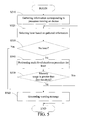
- Fig. 5 is a flowchart of an embodiment of a method of multi-level memory management of the invention.
- Fig. 6 is a flowchart of an embodiment of a method of loser selection of the invention.
- Fig. 7 is a flowchart of an embodiment of a multi-level shutdown procedure of the invention.
- Fig. 1 is a schematic diagram illustrating an embodiment of a memory management system for mobile devices of the invention.
- the memory management system for mobile devices 100 can be used in an electronic device, such as mobile devices such as a PDA (Personal Digital Assistant), a smart phone, a mobile phone, an MID (Mobile Internet Device, MID), a Netbook, a GPS (Global Positioning System), or other handheld devices.
- mobile devices such as a PDA (Personal Digital Assistant), a smart phone, a mobile phone, an MID (Mobile Internet Device, MID), a Netbook, a GPS (Global Positioning System), or other handheld devices.
- the memory management system for mobile devices 100 comprises a memory 110, and a processing unit 120.
- the memory 110 can record related codes and/or data corresponding to processes/applications running on a system of the electronic device. It is noted that, an OS may be installed on the electronic device, and a kernel of the OS is always recorded in the memory.
- the processing unit 120 can control related components of the memory management system for mobile devices 100, and perform the memory management methods for mobile devices of the invention, which will be discussed further in the following paragraphs. It is understood that, in some embodiments, the memory management system for mobile devices 100 can further comprise a display unit (not shown in Fig. 1 ). The display unit can display related figures and interfaces, and related data.
- the display unit may be a screen integrated with a touch-sensitive device (not shown).
- the touch-sensitive device has a touch-sensitive surface comprising sensors in at least one dimension to detect contact and movement of an input tool, such as a stylus or finger on the touch-sensitive surface. That is, users can directly input related data via the display unit.
- a built-in primitive memory management component of the system comprises an OS kernel 200 and a built-in primitive handler 210.
- the OS kernel 200 can monitor a memory usage of the memory.
- the OS kernel 200 can interpret all memory activities after which number of free physical memory pages is recorded. When the memory usage is greater than a first specific threshold (second threshold in claims), or the number of free memory pages drops below a predefined threshold, the OS kernel 200 signals the primitive handler 210 by events, messages, or else. In turn the primitive handler 210 carries out a primitive memory management.
- a user-oriented memory management component 220 comprises a user-oriented watchdog 221 installed on the OS kernel 200 and a user-oriented handler 222. It is noted that, the user-oriented memory management component 220 can coexist with the primitive memory management component of the OS, and would not interfere with the primitive handler 210 at all. The user-oriented watchdog 221 can also monitor the memory usage of the memory.
- the memory usage of the memory can be obtained from the OS kernel 200.
- the user-oriented watchdog 221 can determine whether the memory usage of the memory is greater than a first threshold.
- a multi-level memory management is performed by the user-oriented handler 222.
- the second threshold is greater than the first threshold. That is, the multi-level memory management can be performed prior to the primitive memory management. The details of the multi-level memory management will be discussed later.
- Fig. 3 is a flowchart of an embodiment of a memory management method for mobile devices of the invention.
- the memory management method for mobile devices can be used in an electronic device, such as mobile devices such as a PDA, a smart phone, a mobile phone, an MID, a Netbook, a GPS, or other handheld devices.
- step S310 a memory usage of a memory is monitored by a built-in primitive memory management component of an OS of the device and/or a user-oriented memory management component.
- step S320 it is determined whether the memory usage of the memory is greater than a first threshold. If the memory usage of the memory is not greater than the first threshold (No in step S320), the procedure returns to step S310. If the memory usage of the memory is greater than the first threshold (Yes in step S320), in step S330, a multi-level memory management is performed by the user-oriented memory management component.
- the user-oriented memory management component comprises a user-oriented watchdog installed on a kernel of the OS and a user-oriented handler.
- step S340 it is determined whether the memory usage of the memory is greater than a second threshold. It is noted that, the second threshold is greater than the first threshold. If the memory usage of the memory is not greater than the second threshold (No in step S340), the procedure returns to step S310. If the memory usage of the memory is greater than the second threshold (Yes in step S340), in step S350, a primitive memory management is performed by the built-in primitive memory management component.
- the second threshold is greater than the first threshold; therefore, the multi-level memory management can be performed prior to the primitive memory management.
- the primitive memory management depends on whatever it's designed to do, such as selecting process/application to terminate or notifying the selected process/application to release a portion of memory. It is understood that, the primitive memory management is limited thereto, and it entirely depends on the OS design.
- Fig. 4 is a schematic diagram illustrating an embodiment of a user-oriented handler of the invention.
- the user-oriented handler 400 comprises a core 410, an information collection module 420, a loser selection module 430, a white list 440, and a shutdown module 450.
- the core 410 is the brain controlling whole action logic upon low memory situation (the memory usage is greater than the first threshold).
- the core 410 initiates necessary data structures, installs the user-oriented watchdog on the OS kernel, setups information markers in the OS kernel via the information collection module 420, and then blocks itself to wait for notification from the user-oriented watchdog upon low memory situation (the memory usage is greater than the first threshold) is detected.
- the information collection module 420 can gather related information corresponding processes/applications from the OS kernel. It is understood that, in some embodiments, the gathered information comprises a number of committed pages represents usage of private data, a number of reserved pages tells current usage of virtual memory, a least recently used (LRU) time represents how long ago the process/application user was using, used frequency (Hotspot) tells how often the process/application user stops by in a sampled period, generally given couple minutes to hours, current foreground process/application user is interacting with, and/or others. It is understood that, above information is only example of the embodiment, and the invention is not limited thereto. It is noted that, generally, two types of information can be gathered, wherein one is sampled and the other is live.
- the sampled data such as LRU, Hotspot, and others can be computed periodically in a long timer-interrupt interval. It is noted that, simply couples of instructions can be added to record necessary information, such as current running process/application, and the overhead for sampling is rather small. Sampled data is considered and examined to represent how much user like the process/application particularly. Live data is collected right at the timeframe the low memory situation comes out. It is noted that, in some embodiments, processor interrupts must be masked prior to gather live data since preemptive execution always has a chance of causing unexpected exceptions due to invalid access to stale objects in memory.
- VM usage of a process/application could be simply calculated by walking through all memory pages in process space or query VM allocation marker indicating the current VM allocation baseline. With respect to physical memory usage, page tables could be gone through to sum up how many pages can be translated by Memory Management Unit (MMU).
- MMU Memory Management Unit
- the white list 440 defines which processes/applications should never be taken as losers. That is, the process/application recorded in the white list 440 is excluded from the processes/applications to be selected as the loser.
- the processes/applications can be added or deleted dynamically. It is understood that, in some embodiments, each process/application can be expressed in a simpler way such as hashed double word instead of long string-formatted name.
- the loser selection module 430 can weight all processes/applications running on the system based on gathered information and user experience, and select at least one loser among the processes/applications on place. It is understood that, in some embodiments, to weigh each factor regarding user experience, LRU and Hotspot are supposed to be taken heavier than the others.
- the shutdown module 450 can perform a multi-leveled shutdown procedure for a loser when the loser is selected from the processes/applications running on the system. The multi-leveled shutdown procedure will be discussed later.
- Fig. 5 is a flowchart of an embodiment of a method of multi-level memory management of the invention. It is noted that, the multi-level memory management can be performed upon the notification sent by the user-oriented watchdog when the memory usage is greater than the first threshold.
- step S510 related information corresponding to processes/applications running on the system is gathered.
- the gathered information can comprise a VM usage, a physical memory usage, a LRU time, and/or a Hotspot (used frequency) of the respective process/application.
- one of the processes can be selected as a loser based on the gathered information. It is understood that, in some embodiments, to keep the processes/applications users like and use most frequently alive will seal users' good feeling and attractiveness on system in terms of low memory condition.
- step S530 it is determined whether a loser can be selected. If loser cannot be selected due to, for example, all existing processes/applications are vital to users (Yes in step S530), in step S560, a warning message is generated, and/or popped up in a display unit. It is noted that, if loser cannot be selected, the built-in primitive memory management component of the OS can be counted on as final outpost to deal with such low memory situation (in step S350) even it would hurt user experience a lot.
- step S540 a multi-level shutdown procedure for the loser is performed.
- the multi-level shutdown procedure will be discussed in Fig. 7 .
- step S550 it is determined whether the memory usage of the memory is greater than the first threshold after the multi-level shutdown procedure is performed. If the memory usage of the memory is not greater than the first threshold (No in step S550), the procedure is complete. If the memory usage of the memory is still greater than the first threshold (Yes in step S550), the procedure returns to step S520, another process is re-selected as a new loser based on the gathered information, and a multi-level shutdown procedure for the new loser is performed. The loser selection and multi-level shutdown procedure for the selected loser are repeated until the memory usage is not greater than the first threshold or no loser can be selected.
- Fig. 6 is a flowchart of an embodiment of a method of loser selection of the invention. It is noted that, the selected loser is initiated to null at first.
- step S610 the respective gathered information corresponding to processes/applications is enumerated.
- step S620 it is determined whether all processes/applications are enumerated and inspected. If all processes/applications have been done of enumeration and inspection (Yes in step S620), the procedure is complete and the final best loser is given. If there is still process/application to be inspected (No in step S620), in step S630, the enumerated process/application is examined whether it is in the while list.
- step S630 If the enumerated process/application is in the white list (Yes in step S630), the procedure returns to step S610, and the gathered information corresponding to another process/application is enumerated. If the enumerated process/application is not in the white list (No in step S630), it is determined whether the enumerated process/application is the current foreground process/application that user is interacting with. If the enumerated process/application is the current foreground process/application (Yes in step S640), the procedure returns to step S610, and the gathered information corresponding to another process/application is enumerated.
- step S650 a weighted score of the enumerated process/application is evaluated, for example, according to a formula of w1X1+w2X2+ ⁇ +wnXn, wherein w1, w2,..., and wn represent the weights for respective factor (gathered information), and X1, X2,..., and Xn are the normalized factors(gathered information). It is noted that, the weights for respective factors can be various, and may be depended on different applications and requirements.
- step S660 the weighted score corresponding to the enumerated process/application is compared with that of the previous selected loser.
- higher score means the enumerated process/application is more valuable to user than the previous selected loser.
- lower score recommends the enumerated process/application should be taken as new selected loser who will be compared to next enumerated process/application. If the weighted score corresponding to the enumerated process/application is higher than that of the previous selected loser (Yes in step S660), the procedure returns to step S610, and the gathered information corresponding to another process/application is enumerated.
- step S670 the enumerated process/application is set as the new selected loser, and the procedure returns to step S610, until all processes/applications are enumerated. It is noted that, the best loser is pointed out and handed over to the shutdown module.
- Fig. 7 is a flowchart of an embodiment of a multi-level shutdown procedure of the invention.
- a process/application such as the loser selected by the loser selection module, is notified via an event or message to release memory resources. It is understood that, the notification can indicate low memory condition occurs, and it's supposed to commence memory reduction operations instantly like release unused memory, close resources as many as possible for UI representation, and others.
- step S720 it is determined whether the memory usage of the memory is greater than the first threshold. If the memory usage is not greater than the first threshold (No in step S720), the procedure is complete.
- step S730 a second level of the multi-level shutdown procedure is performed to dispose or page out of codes or read-only data/sections corresponding to the process/application as much as possible. It is understood that, to page out those data gives the pages hold in paging pool back to the OS kernel and could be re-allocated for other processes/applications needing it immediately.
- step S740 it is determined whether the memory usage of the memory is greater than the first threshold. If the memory usage is not greater than the first threshold (No in step S740), the procedure is complete.
- step S750 a third level of the multi-level shutdown procedure is performed to notify the process to close itself within a limited time, usually couple seconds. It is noted that, this step introduces graceful shutdown, so that other processes/applications rely on the loser would not act weirdly after the loser is closed.
- step S760 it is determined whether the memory usage of the memory is greater than the first threshold. If the memory usage is not greater than the first threshold (No in step S760), the procedure is complete. If the memory usage is still greater than the first threshold (Yes in step S760), in step S770, a fourth level of the multi-level shutdown procedure is performed to turn control to the process/application, and exit self.
- step S550 the core will repeat triggering the loser selection module to point out next loser (step S520), and the new loser is then passed to the shutdown module to enforce four levels of memory reduction and instance termination until no more losers can be aimed.
- the memory management methods and systems for mobile devices can deal with the situation of low memory in accordance with taking good care of user experience.
- the invention is functional independently without alteration in or interference with any of OS operations and decisions.
- a user-oriented memory management method is proposed to pick up a loser among running processes/applications, and then impose multi-leveled memory reduction operations and process/application termination on the selected loser instead of simply closing it.
- the disclosed principle is to keep of most importance processes/applications to users alive concerning about out-of-memory takes place, and instruct the selected losers to give back memory as much as possible to bring the system back to good memory usage state.
- Memory management methods for mobile devices may take the form of a program code (i.e., executable instructions) embodied in tangible media, such as floppy diskettes, CD-ROMS, hard drives, or any other machine-readable storage medium, wherein, when the program code is loaded into and executed by a machine, such as a computer, the machine thereby becomes an apparatus for practicing the methods.
- the methods may also be embodied in the form of a program code transmitted over some transmission medium, such as electrical wiring or cabling, through fiber optics, or via any other form of transmission, wherein, when the program code is received and loaded into and executed by a machine, such as a computer, the machine becomes an apparatus for practicing the disclosed methods.
- the program code When implemented on a general-purpose processor, the program code combines with the processor to provide a unique apparatus that operates analogously to application specific logic circuits.
Landscapes
- Engineering & Computer Science (AREA)
- Theoretical Computer Science (AREA)
- Physics & Mathematics (AREA)
- General Engineering & Computer Science (AREA)
- General Physics & Mathematics (AREA)
- Software Systems (AREA)
- Human Computer Interaction (AREA)
- Techniques For Improving Reliability Of Storages (AREA)
- Stored Programmes (AREA)
- Memory System (AREA)
Applications Claiming Priority (1)
| Application Number | Priority Date | Filing Date | Title |
|---|---|---|---|
| US13/484,917 US9032168B2 (en) | 2012-05-31 | 2012-05-31 | Memory management methods and systems for mobile devices |
Publications (2)
| Publication Number | Publication Date |
|---|---|
| EP2669800A2 true EP2669800A2 (fr) | 2013-12-04 |
| EP2669800A3 EP2669800A3 (fr) | 2014-01-08 |
Family
ID=48576708
Family Applications (1)
| Application Number | Title | Priority Date | Filing Date |
|---|---|---|---|
| EP13020026.4A Ceased EP2669800A3 (fr) | 2012-05-31 | 2013-05-31 | Procédés de gestion de la mémoire et systèmes pour dispositifs mobiles |
Country Status (4)
| Country | Link |
|---|---|
| US (1) | US9032168B2 (fr) |
| EP (1) | EP2669800A3 (fr) |
| CN (1) | CN103455431B (fr) |
| TW (1) | TWI503660B (fr) |
Cited By (1)
| Publication number | Priority date | Publication date | Assignee | Title |
|---|---|---|---|---|
| CN112269663A (zh) * | 2020-11-16 | 2021-01-26 | 深圳创维-Rgb电子有限公司 | 安卓系统资源管理方法、装置、终端设备和可读存储介质 |
Families Citing this family (17)
| Publication number | Priority date | Publication date | Assignee | Title |
|---|---|---|---|---|
| US9170859B2 (en) * | 2012-06-07 | 2015-10-27 | Apple Inc. | Targeted memory pressure event notifications |
| US20140031026A1 (en) * | 2012-07-30 | 2014-01-30 | Tencent Technology (Shenzhen) Company Limited | Method and device for performing a cleaning process on a portable electronic device |
| KR20140028454A (ko) * | 2012-08-29 | 2014-03-10 | 삼성전자주식회사 | 휴대 단말기의 데이터 저장 방법 및 시스템 |
| CN102946486A (zh) * | 2012-11-20 | 2013-02-27 | 惠州Tcl移动通信有限公司 | 一种基于手机的后台应用自动清理方法及手机 |
| CN103838630A (zh) * | 2014-03-03 | 2014-06-04 | 联想(北京)有限公司 | 信息处理方法、系统及电子设备 |
| TWI548989B (zh) * | 2014-03-19 | 2016-09-11 | 宏達國際電子股份有限公司 | 行動電子裝置與清理記憶區塊的方法 |
| US9395754B2 (en) | 2014-06-04 | 2016-07-19 | Grandios Technologies, Llc | Optimizing memory for a wearable device |
| US8965348B1 (en) | 2014-06-04 | 2015-02-24 | Grandios Technologies, Llc | Sharing mobile applications between callers |
| US9491562B2 (en) | 2014-06-04 | 2016-11-08 | Grandios Technologies, Llc | Sharing mobile applications between callers |
| US9983887B2 (en) | 2015-06-05 | 2018-05-29 | Apple Inc. | Memory management of data processing systems |
| CN109144708B (zh) | 2017-06-16 | 2021-07-09 | 宏达国际电子股份有限公司 | 电子计算装置及调整一内存回收函数的触发机制的方法 |
| CN107704314B (zh) * | 2017-11-09 | 2023-09-12 | 北京百度网讯科技有限公司 | 用于迁移虚拟机的方法和装置 |
| CN109992402B (zh) * | 2017-12-29 | 2021-07-09 | Oppo广东移动通信有限公司 | 内存处理方法和装置、电子设备、计算机可读存储介质 |
| CN109614282B (zh) * | 2018-09-28 | 2022-06-03 | 东软集团股份有限公司 | 确定应用的系统资源使用信息的方法和装置 |
| US11169713B2 (en) * | 2019-10-03 | 2021-11-09 | Landis+Gyr Innovations, Inc. | Restricting write cycles to extend the lifetime of nonvolatile memory |
| CN110879773B (zh) * | 2019-11-29 | 2023-01-06 | 苏州浪潮智能科技有限公司 | 一种基于CGroup的内存监控方法和装置 |
| CN112749411A (zh) * | 2021-01-14 | 2021-05-04 | 上海商米科技集团股份有限公司 | 安卓文件系统的分级管控方法和系统 |
Citations (3)
| Publication number | Priority date | Publication date | Assignee | Title |
|---|---|---|---|---|
| US6938254B1 (en) | 1997-05-06 | 2005-08-30 | Microsoft Corporation | Controlling memory usage in systems having limited physical memory |
| US7284099B2 (en) | 2003-06-24 | 2007-10-16 | Research In Motion Limited | Detection of out of memory and graceful shutdown |
| US7827358B2 (en) | 2007-01-07 | 2010-11-02 | Apple Inc. | Memory management methods and systems |
Family Cites Families (5)
| Publication number | Priority date | Publication date | Assignee | Title |
|---|---|---|---|---|
| US6877081B2 (en) | 2001-02-13 | 2005-04-05 | International Business Machines Corporation | System and method for managing memory compression transparent to an operating system |
| US6910106B2 (en) * | 2002-10-04 | 2005-06-21 | Microsoft Corporation | Methods and mechanisms for proactive memory management |
| TWI356301B (en) * | 2007-12-27 | 2012-01-11 | Ind Tech Res Inst | Memory management system and method for open platf |
| US20100153675A1 (en) | 2008-12-12 | 2010-06-17 | Microsoft Corporation | Management of Native Memory Usage |
| US8983536B2 (en) | 2010-10-22 | 2015-03-17 | Google Technology Holdings LLC | Resource management in a multi-operating environment |
-
2012
- 2012-05-31 US US13/484,917 patent/US9032168B2/en active Active
-
2013
- 2013-05-29 TW TW102118907A patent/TWI503660B/zh active
- 2013-05-31 CN CN201310213690.4A patent/CN103455431B/zh active Active
- 2013-05-31 EP EP13020026.4A patent/EP2669800A3/fr not_active Ceased
Patent Citations (3)
| Publication number | Priority date | Publication date | Assignee | Title |
|---|---|---|---|---|
| US6938254B1 (en) | 1997-05-06 | 2005-08-30 | Microsoft Corporation | Controlling memory usage in systems having limited physical memory |
| US7284099B2 (en) | 2003-06-24 | 2007-10-16 | Research In Motion Limited | Detection of out of memory and graceful shutdown |
| US7827358B2 (en) | 2007-01-07 | 2010-11-02 | Apple Inc. | Memory management methods and systems |
Cited By (1)
| Publication number | Priority date | Publication date | Assignee | Title |
|---|---|---|---|---|
| CN112269663A (zh) * | 2020-11-16 | 2021-01-26 | 深圳创维-Rgb电子有限公司 | 安卓系统资源管理方法、装置、终端设备和可读存储介质 |
Also Published As
| Publication number | Publication date |
|---|---|
| TWI503660B (zh) | 2015-10-11 |
| CN103455431B (zh) | 2016-08-10 |
| CN103455431A (zh) | 2013-12-18 |
| TW201348955A (zh) | 2013-12-01 |
| US9032168B2 (en) | 2015-05-12 |
| US20130326168A1 (en) | 2013-12-05 |
| EP2669800A3 (fr) | 2014-01-08 |
Similar Documents
| Publication | Publication Date | Title |
|---|---|---|
| US9032168B2 (en) | Memory management methods and systems for mobile devices | |
| US7962924B2 (en) | System and method for call stack sampling combined with node and instruction tracing | |
| KR101933735B1 (ko) | 배터리 최적화를 이용한 모바일 장치 동작 방법 | |
| JP6192660B2 (ja) | ステージング・エリアを管理するためのコンピュータ実施プロセス、コンピュータ・プログラム製品、装置 | |
| KR102507743B1 (ko) | 메모리 관리 방법 및 그 전자 장치 | |
| EP2626786B1 (fr) | Système de processeur multinoyau, procédé de commande de surveillance, et programme de commande de surveillance | |
| JP4724362B2 (ja) | プロアクティブなメモリ管理の方法および機構 | |
| US7836344B2 (en) | Method for automatic dump assurance | |
| US20090216707A1 (en) | File resource usage information in metadata of a file | |
| JP2014529142A (ja) | 循環グラフにおけるオブジェクト寿命の管理 | |
| WO2014183514A1 (fr) | Procédé, dispositif et support de stockage informatique pour un stockage hiérarchique | |
| US20150127985A1 (en) | Information processing apparatus and access control method | |
| CN116028452A (zh) | 应用程序的存储管理方法、设备、存储介质及产品 | |
| CN115390993A (zh) | 一种虚拟机内存处理方法、装置、电子设备和存储介质 | |
| JP2015095219A (ja) | 情報処理装置、情報処理方法および記憶媒体 | |
| JP2015114750A (ja) | 調査用プログラム,情報処理装置及び情報処理方法 | |
| WO2014086508A1 (fr) | Restauration d'une précédente version d'une image de machine virtuelle | |
| EP4632584A1 (fr) | Techniques pour des zones de récupération de déchets dans un système de fichiers | |
| US20160204999A1 (en) | Monitoring apparatus and information processing system | |
| US8255642B2 (en) | Automatic detection of stress condition | |
| CN112463374A (zh) | 一种内存管理方法、装置、设备及存储介质 | |
| US20160378589A1 (en) | Computer-readable recording medium, information processing apparatus, and control method | |
| US7900196B2 (en) | Method and apparatus for monitoring for conditions during execution of code | |
| US10013299B2 (en) | Handling crashes of a device's peripheral subsystems | |
| CN117806778B (zh) | 资源管理方法、系统、设备及介质 |
Legal Events
| Date | Code | Title | Description |
|---|---|---|---|
| PUAI | Public reference made under article 153(3) epc to a published international application that has entered the european phase |
Free format text: ORIGINAL CODE: 0009012 |
|
| 17P | Request for examination filed |
Effective date: 20130531 |
|
| AK | Designated contracting states |
Kind code of ref document: A2 Designated state(s): AL AT BE BG CH CY CZ DE DK EE ES FI FR GB GR HR HU IE IS IT LI LT LU LV MC MK MT NL NO PL PT RO RS SE SI SK SM TR |
|
| AX | Request for extension of the european patent |
Extension state: BA ME |
|
| PUAL | Search report despatched |
Free format text: ORIGINAL CODE: 0009013 |
|
| AK | Designated contracting states |
Kind code of ref document: A3 Designated state(s): AL AT BE BG CH CY CZ DE DK EE ES FI FR GB GR HR HU IE IS IT LI LT LU LV MC MK MT NL NO PL PT RO RS SE SI SK SM TR |
|
| AX | Request for extension of the european patent |
Extension state: BA ME |
|
| RIC1 | Information provided on ipc code assigned before grant |
Ipc: G06F 9/48 20060101ALN20131202BHEP Ipc: G06F 9/50 20060101AFI20131202BHEP |
|
| 17Q | First examination report despatched |
Effective date: 20131217 |
|
| RBV | Designated contracting states (corrected) |
Designated state(s): AL AT BE BG CH CY CZ DE DK EE ES FI FR GB GR HR HU IE IS IT LI LT LU LV MC MK MT NL NO PL PT RO RS SE SI SK SM TR |
|
| RAP1 | Party data changed (applicant data changed or rights of an application transferred) |
Owner name: HTC CORPORATION |
|
| STAA | Information on the status of an ep patent application or granted ep patent |
Free format text: STATUS: THE APPLICATION HAS BEEN REFUSED |
|
| 18R | Application refused |
Effective date: 20161110 |