EP2670178B1 - Procédé et système d'aide à la détection pour une radio cognitive - Google Patents
Procédé et système d'aide à la détection pour une radio cognitive Download PDFInfo
- Publication number
- EP2670178B1 EP2670178B1 EP11857370.8A EP11857370A EP2670178B1 EP 2670178 B1 EP2670178 B1 EP 2670178B1 EP 11857370 A EP11857370 A EP 11857370A EP 2670178 B1 EP2670178 B1 EP 2670178B1
- Authority
- EP
- European Patent Office
- Prior art keywords
- base station
- resources
- information
- high level
- level node
- Prior art date
- Legal status (The legal status is an assumption and is not a legal conclusion. Google has not performed a legal analysis and makes no representation as to the accuracy of the status listed.)
- Not-in-force
Links
Images




Classifications
-
- H—ELECTRICITY
- H04—ELECTRIC COMMUNICATION TECHNIQUE
- H04W—WIRELESS COMMUNICATION NETWORKS
- H04W72/00—Local resource management
- H04W72/04—Wireless resource allocation
- H04W72/044—Wireless resource allocation based on the type of the allocated resource
- H04W72/0453—Resources in frequency domain, e.g. a carrier in FDMA
-
- H—ELECTRICITY
- H04—ELECTRIC COMMUNICATION TECHNIQUE
- H04W—WIRELESS COMMUNICATION NETWORKS
- H04W16/00—Network planning, e.g. coverage or traffic planning tools; Network deployment, e.g. resource partitioning or cells structures
- H04W16/14—Spectrum sharing arrangements between different networks
-
- H—ELECTRICITY
- H04—ELECTRIC COMMUNICATION TECHNIQUE
- H04W—WIRELESS COMMUNICATION NETWORKS
- H04W24/00—Supervisory, monitoring or testing arrangements
- H04W24/10—Scheduling measurement reports ; Arrangements for measurement reports
Definitions
- the invention relates to the wireless communication field, in particular to spectrum sensing aiding methods for cognitive radio and a spectrum sensing aiding system consisting of a high level node and a base station for cognitive radio.
- the white spaces resource information can be acquired by the system through accessing a high level node containing the white spaces resource information, or can be acquired by cognitive radio equipment through spectrum sensing.
- a single mode has respective limitation:
- the high level node indicates that certain spectrum resources are available and allocates the spectrum resources to the cognitive radio equipment of the system which sends the application; but a sensing result shows that the spectrum resources are unavailable, that is very large interference may exist in the spectrum resources; and at this time, the cognitive radio equipment of the system which sends the application; but a sensing result shows that the spectrum resources are unavailable, that is very large interference may exist in the spectrum resources; and at this time, the cognitive radio equipment does not feed the sensing result back to the high level node or performs further sensing determination on an interference source; and therefore, the high level node cannot analyze the sensing result and performs relative interference adjustment, but performs resource acquisition and allocation process again to acquire new available white spaces resources.
- the high level node still can allocate the invalid spectrum resources as available resources, while the system which receives the allocated spectrum resources still cannot use the spectrum, so that unnecessary network overhead is increased.
- US 2010/330919 A1 discloses a method for database-driven channel quality estimation in a cognitive radio network.
- US 2010/081449 A1 discloses a method for optimizing spectrum utilization by a cognitive radio network.
- the invention provides a sensing aiding method based on cognitive radio, which reduces the probability of base station configuration failure and reduces the overhead caused by configuration failures.
- a sensing aiding method for cognitive radio includes: a high level node transmits configuration information to a base station; the base station combining with a subordinate node of the base station to perform frequency spectrum sensing measurement, wherein the subordinate node has sensing capability, and feeding back a result of the sensing measurement to the high level node; and the high level node formulating a corresponding WS allocation policy according to the received result of the sensing measurement.
- the configuration information includes information of WS resources of the base station, or the information of the WS resources of the base station and co-channel and adjacent-channel system information of WS.
- the WS resources refer to unoccupied frequency spectrum resources; the information of the WS resources includes a frequency point, bandwidth, transmitting parameter requirements and sensing measurement threshold information; and the co-channel or adjacent-channel system information of the WS includes pilot information of a system and modulating and coding mode information of the system, in which the system occupies co-channel and adjacent-channel resources of the WS.
- the frequency spectrum sensing measurement is that: the base station judging whether the WS resources meet a threshold value preset by the base station and determining whether the WS resources are available.
- the step of the high level node transmitting the configuration information to the base station, the base station combining with the subordinate node of the base station to perform frequency spectrum sensing measurement, wherein the subordinate node has sensing capability, and the base station feeding back the result of the sensing measurement to the high level node includes that: the high level node transmitting the configuration information to the base station, which contains the information of the WS resources of the base station, and the co-channel and adjacent-channel system information of the WS; and the base station combining with the subordinate node of the base station to perform the sensing measurement, in which the subordinate node has sensing capability, judging whether the WS resources are available, further judging an interference source when the WS resources are unavailable, and feeding the result of the sensing measurement back to the high level node; or the high level node transmitting the configuration information, which contains the information of the WS resources to the base station; the base station combining with the subordinate node of the base station to perform the sensing measurement, wherein the subordinate node
- the result of the sensing measurement includes: availability of the WS resources or unavailability of the WS resources, and the information of the interference source.
- the step of formulating the corresponding WS allocation policy includes when the WS resources which are allocated are unavailable, the high level node coordinating the interference source related by the frequency spectrum allocation policy formulated by the high level node according to the information of the interference source provided by the result of the sensing measurement; and the base station continuing using the WS resources which are allocated; or
- the high level node storing the information of the interference source and reducing a priority level for allocating the resources on the base station in subsequent resources allocation.
- the result of the sensing measurement includes unavailability of the WS resources and interference source information.
- the step of the high level node coordinating the interference source related by the frequency spectrum allocation policy formulated by the high level node according to the information of the interference source provided by the result of the sensing measurement; and the base station continuing using the WS resources which are allocated is embodied as: if the information of the interference source is indeed from a co-channel and adjacent-channel systems, the high level node transmitting a transmitting parameter changing command to an interference source base station which causes an WS interference; the interference source base station executing the command of the high level node and feeding back a transmitting parameter changing command response to the high level node; and the high level node retransmitting a command of allocating the original WS resources continuously to the base station which transmits a resource application, wherein the transmitting parameter changing command limits transmitting power of the transmitting parameter changing command or changes one or more antenna parameters.
- the new information of the WS resources includes one or more frequency points of the reallocated WS resources, one or more bandwidths of the reallocated WS resources, sensing measurement threshold information of the reallocated WS resources and one or more transmitting parameter requirements of the reallocated WS resources.
- the invention also provides a sensing aiding system for cognitive radio, comprising: a high level node and a base station, wherein the high level node, is configured to transmit configuration information to the base station, and formulate a corresponding WS allocation policy according to a result of frequency spectrum sensing measurement fed back by the base station; and the base station is configured to combine with a subordinate node of the base station to perform the frequency spectrum sensing measurement and feed back the result of the frequency spectrum sensing measurement to the high level node, wherein the subordinate node has sensing capability.
- the high level node further includes a configuration module and a allocation policy module, wherein the configuration module is configured to configure WS resources to the base station according to an application of the WS resources transmitted by the base station, the information of the WS resources stored by the base station, and the WS allocation policy, and feed back the WS resources to the base station, wherein the configuration information includes the information of the WS resources of the base station, or the information of the WS resources of the base station and co-channel or adjacent-channel system information of the WS; and the allocation policy module is configured to formulate the corresponding white spaces allocation policy according to the result of the frequency spectrum sensing measurement fed back by the base station.
- the allocation policy module transmitting the new WS resource information to the base station, and allocating the new white spaces resources to the base station; or when interference information is from a co-channel and adjacent-channel systems, the high level node transmitting a transmitting parameter changing command to an interference source base station which causes an WS interference; the interference source base station executing the command of the high level node and feeding back a transmitting parameter changing command response to the high level node; and the high level node retransmitting a command of allocating the original WS resources continuously to the base station which transmits a resource application, wherein the interference source information is included in the result of the sensing measurement; and the transmitting parameter changing command limits transmitting power of the transmitting parameter changing command or changes one or more antenna parameters; or when an interference on the WS is an unexpected interference and the information of the interference source cannot be distinguished, the high level node storing the information of the interference source and reducing a priority
- the base station also includes a sensing measurement module and a feedback module, wherein the sensing measurement module is configured to combine with the subordinate node of the base station to perform the sensing measurement, judge whether the WS resource meet a threshold value preset by the base station, and determine whether the WS resources are available, wherein the subordinate node has sensing capability; and the feedback module is configured to feed the result of the frequency spectrum sensing measurement to the high level node, wherein the frequency spectrum sensing measurement is performed by the base station combining with the subordinate node, having the sensing capacity, of the base station.
- the sensing measurement module is configured to combine with the subordinate node of the base station to perform the sensing measurement, judge whether the WS resource meet a threshold value preset by the base station, and determine whether the WS resources are available, wherein the subordinate node has sensing capability
- the feedback module is configured to feed the result of the frequency spectrum sensing measurement to the high level node, wherein the frequency spectrum sensing measurement is performed by the base station combining with the sub
- the result of the sensing measurement of the sensing measurement module includes: availability of the WS resources or unavailability of the WS resources, and the information of the interference sources.
- the high level node transmits the configuration information to the base station; the base station combines with a subordinate node of the base station to perform frequency spectrum sensing measurement, in which the subordinate node has sensing capability, and feeds back the result of the sensing measurement to the high level node; and the high level node formulates the corresponding WS allocation policy according to the received result of the sensing measurement. Available white spaces resources are acquired, the probability of base station configuration failure is reduced; and the overhead caused by configuration failures is reduced.
- the high level node transmits the configuration information to the base station; the base station combines with a subordinate node of the base station to perform the frequency spectrum sensing measurement, in which the subordinate node has sensing capability, and feeds back the result of the sensing measurement to the high level node; and the high level node formulates a corresponding WS allocation policy according to the received result of the sensing measurement.
- Fig. 1 shows a flow chart of a sensing aiding method for cognitive radio according to the invention. As shown in Fig. 1 , the method includes the following steps.
- Step 101 a high level node transmits configuration information to a base station, the base station combines with a subordinate node of the base station to perform frequency spectrum sensing measurement, wherein the subordinate node has sensing capability, and feeds back a result of the sensing measurement to the high level node.
- the configuration information includes information of WS resources of the base station, or the information of the WS resources of the base station and co-channel and adjacent-channel system information of the WS.
- the WS resources refer to the unoccupied spectrum resources;
- the information of the WS resources includes: a frequency point, bandwidth, transmitting parameter requirements and sensing measurement threshold information;
- the co-channel and adjacent-channel system information of the WS includes: pilot information of a system, and modulating and coding mode information of the system, in which the system occupies the co-channel and adjacent-channel resources of the WS.
- the frequency spectrum sensing measurement is that: the base station judging whether the WS resources meet a threshold value preset by the base station and determining whether the WS resources are available.
- the result of the sensing measurement includes: availability of the WS resources, or unavailability of the WS resources and the information of the interference source.
- the step, which is the high level node transmits the configuration information to the base station, the base station combines with a subordinate node of the base station to perform the frequency spectrum sensing measurement, wherein the subordinate node has sensing capability, and feeds back a result of the sensing measurement to the high level node includes that: the high level node transmits the configuration information to the base station, which contains the information of the WS resources of the base station and the co-channel and adjacent-channel system information of the WS, and the base station combines with a subordinate node of the base station to perform the sensing measurement, wherein the subordinate node has sensing capability, judges whether the WS resources are available, further judges an interference source when the WS resources are unavailable, and feeds the result of the sensing measurement back to the high level node; or the high level node transmits the configuration information, which contains the information of the WS resources to the base station, the base station combines with the subordinate node of the base station to perform the sensing measurement, wherein the subordinate node has
- Step 102 the high level formulates a corresponding WS allocation policy according to the received result of the sensing measurement.
- the step of formulating the corresponding WS allocation policy includes that: when the allocated WS resources are unavailable, the high level node coordinates the related interference source by the frequency spectrum allocation policy formulated by the high level node according to the information of the interference source provided by the result of the sensing measurement; and the base station continues using the allocated WS resources; or the new information of the WS resources is transmitted to the base station, and the new WS resources are allocated to the base station; or when an interference on the WS is an unexpected interference and the information of the interference source cannot be distinguished, the high level node stores the information of the interference source and reduces a priority level for allocating the resources on the base station in subsequent resources allocation; the step, which is the high level node coordinates the related interference source by the frequency spectrum allocation policy formulated by the high level node according to the information of the interference source provided by the result of the sensing measurement, and the base station continues using the allocated WS resources, is embodied as: if the information of the interference source is indeed from a co-channel and adjacent-channel system,
- Fig. 2 shows an application scene corresponding to the invention
- the application scene involves the followings network elements: a high level node and a base station, wherein the high level node includes a frequency spectrum service condition of an authorization system being local or of a plurality of regions including the local, wherein the service condition includes but is not limited to the information of the frequency point, working bandwidth, coverage, possible duration of the WS, and allowed maximum transmitting power and the like; meanwhile, the high level node also includes service condition of the secondary system on the WS of the authorization system spectrum, which includes but is not limited to the information of the frequency point, working bandwidth and the like; the high level node is a network node with a learning function and is responsible for providing WS information, such as a Geo-location Database in ETSI RRS or a Central Control Point (CCP).
- the high level node can coordinate the corresponding interference source according to the information of the interference source, which is in the result of the sensing measurement fed back by a low level node, and formulate
- the Base Station can be directly connected with the high level node.
- the functions of the BS includes but is not limited to the followings: 1, acquiring the information of the WS from the high level node and the co-channel or adjacent-channel system information; 2, performing the frequency spectrum sensing measurement, including determining whether the allocated frequency spectrum is available and distinguishing the interference source; 3, feeding back the result of the sensing measurement to the high level node; 4, allocating the acquired WS resources to each wireless link which is connected with the BS; and 5, changing or adjusting one or more parameters, such as a modulation type and the transmitting power, of the radio technology.
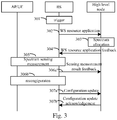
- Method embodiment 1 the signalling flow when the acquired WS resources are available is shown as Fig. 3 ; and the signalling flow is described below in detail.
- Step 301 a BS triggers to borrow WS resources.
- the reason for triggering can be that the communication quality of a downlink of the BS cannot meet the Quality of Service (QoS) or the overload is over heavy and the like.
- QoS Quality of Service
- Step 302 the BS transmits a WS resource application to the high level node.
- the WS resource application feedback includes the WS resources allocated to the BS, the transmitting parameter requirements on the spectrum, measurement configuration information, such as co-channel and adjacent-channel system information of the WS resources, and a sensing measurement threshold T 1 .
- the transmitting parameter requirements include but are not limited to the allowed maximum transmitting power and the like.
- the co-channel and adjacent-channel system information refers to the system information which in adjacent regions occupies the same spectrum as the WS, and the adjacent-channel resource system information of the WS occupied in the local region; the system information includes but is not limited to pilot information, modulating mode information, coding mode and the like.
- the measurement configuration information can be acquired as follows.
- a network node for example, the Geo-location in the ETSI RRS
- the CCP of the system for example, the CCP in the ETSI RRS
- the CCP transmits the measurement configuration information to the BS
- the measurement configuration information can be acquired by the interaction among CCPs and is transmitted to the BS.
- the sensing measurement threshold is used for judging whether the WS is available, namely when the interference is higher than the preset sensing measurement threshold T 1 , the WS is unavailable.
- Step 305 the BS and the subordinate node of the BS perform the frequency spectrum sensing measurement on the WS allocated by the high level node to determine whether the acquired spectrum is available, wherein the subordinate node has the sensing capability.
- the BS and its subordinate node having the sensing capability have the capacity of distinguishing the interference source; the BS and its subordinate node having the sensing capability can sense the interference power or energy of the acquired WS in advance; when the interference is over-large and does not meet a BS configuration requirement, namely the acquired WS is unavailable, the interference source distinguishing measurement is further performed, for example, characteristic detection is performed according to the co-channel and adjacent-channel system information acquired from the high level node so as to distinguish the source of the interference.
- the embodiment describes the signalling flow when the allocated WS resources are available.
- the situation that the allocated WS resources are unavailable is described in the embodiments below in detail.
- Step 306 if the result of the sensing measurement is that the spectrum is available, the BS initiates the reconfiguration of the radio link between the BS and the subordinate node of the BS according to the transmitting parameter requirement in the feedback message of the high level node in the Step 304, namely Step 306b in the diagram; and the BS feeds back the result of the frequency spectrum sensing measurement to the high level node, namely Step 306a in the diagram; and
- Step 307 after the completion of the configuration, the BS feeds back a configuration updating message to the high level node, namely Step 307a in the diagram; and the high level node feeds back a configuration update acknowledgement message, namely Step 307b in the diagram.
- Method embodiment 2 another signalling flow when the acquired spectrum resources meet the communication requirement of the BS is shown as Fig. 3 ; the signalling flow in the method embodiment is the same as that in the method embodiment 1; the difference is the contents of the feedback information transmitted by the high level node in Step 304 and the frequency spectrum sensing measurement performed in Step 305; the method embodiment 2 is described as below in detail:
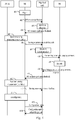
- Method embodiment 3 when the acquired WS resources are unavailable, the signalling flow chart of the high level node adjusting the base station is shown as Fig. 4 .
- the first five steps of the embodiment are the same as those of the embodiment 1, and no further description is needed.
- the embodiment 3 is described in detail from the sixth step: Step 406: the BS feeds back the result of the sensing measurement to the high level node.
- the result of the sensing measurement includes that the WS is available ort not; and when the WS is unavailable, the result of the sensing measurement further includes the interference source information of the spectrum.
- the result of the primary sensing measurement shows that the WS is unavailable
- the BS performs further sensing measurement in combination with the subordinate node having the sensing capacity of the BS according to the co-channel and adjacent-channel information contained in the WS resource application feedback message of the high level node so as to distinguish the interference source;
- Step 407 the high level node formulates a spectrum allocation policy according to the result of the sensing measurement.
- the high level node formulates the spectrum allocation policy according to the result of the sensing measurement (the interference source information) fed back by the BS;
- Step 408 the high level node transmits a transmitting parameter changing command to the interference source BS which causes the WS interference.
- the interference source can be the adjacent-channel interference in the same region, or the co-channel interference in adjacent regions; and the transmitting parameter changing command can be for limiting the transmitting power of the interference source and the like.
- Step 409 the interference source BS executes the command of the high level node and reduces the transmitting power on the WS;
- Step 410 after the completion of the execution, the transmitting parameter changing command response is fed back to the high level node;
- Step 411 the high level node retransmits the WS resource application feedback to the BS which transmits the resource application.
- the high level node continues allocating the original WS to the BS.
- Step 412 the BS performs the sensing measurement on the allocated WS resources again in combination with the subordinate node having a sensing measurement function of the BS;
- Step 413 because the transmitting power is reduced by the interference resource; the result of the sensing measurement shows that the WS is available, and the result of the sensing measurement is fed back to the high level node;
- Step 414 the BS initiates the reconfiguration of the radio link between the BS and the subordinate node of the BS according to the transmitting parameter requirements in the feedback message of the high level node in Step 404;
- Step 415 after the completion of the configuration, the configuration updating message is fed back to the high level node; and the high level node feeds back the configured updating acknowledgment message.
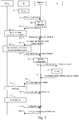
- Method embodiment 4 when the acquired WS is unavailable, the another signalling flow of the high level node adjusting the base station is shown as Fig. 5 ; the method embodiment is similar to the method embodiment 3; because the configuration information contained in the message transmitted to the BS which applies the resources by the high level node in the first four steps in the embodiment is different from the configuration information contained in the message transmitted to the BS which applies the resources by the high level node in the method embodiment 3, the flows for determining the interference source are different; and the embodiment is described below in detail.
- Step 504 the high level node transmits the WS resource application feedback to the BS, wherein the WS resource application feedback only includes the WS resource information allocated to the BS.
- the WS resource information includes but is not limited to the information of frequency point, bandwidth, transmitting parameter requirements, sensing measurement threshold T 1 and the like.
- Step 505 the BS performs the frequency spectrum sensing measurement on the WS allocated by the high level node in combination with the subordinate node having the sensing capability of the base station to determine whether the acquired WS is available.
- the interference source does not need to be distinguished in the frequency spectrum sensing measurement
- Step 506 if the result of the sensing measurement shows that the allocated WS resources are unavailable, the BS waits the co-channel and adjacent-channel system information from the high level node after feeding back the result of the sensing measure to the high level node so as to perform the sensing measurement for distinguishing the interference source.
- Step 507 the high level node transmits the co-channel and adjacent-channel system information of the WS resource to the BS;
- Step 508 the frequency spectrum sensing measurement is different from the previous frequency spectrum sensing measurement, and the interference source needs to be distinguished aiming at the characteristics of a co-channel and adjacent-channel system transmitted by the high level node;
- Step 509 the BS feeds back the interference information to the high level node. if the interference is indeed caused by the co-channel or adjacent-channel system, continue to execute the flows after Step 407 of the embodiment 3.
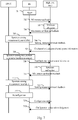
- Method embodiment 5 when the acquired WS resources are unavailable, the signalling flow corresponding to the reallocated frequency spectrum resources of the high level node is shown as Fig. 6 ; the first sixth steps are the same as those in the method embodiment 3, no further description is needed; and the following steps are described in detail.
- Step 607 the high level node formulates a spectrum allocation policy after receiving the result of sensing measurement, and reallocates the WS resources to the BS.
- the result of the sensing measurement includes the availability of the WS resources; and when the WS resources are unavailable, the result of the sensing measurement further includes the interference source information.
- the reason for making the decision of reallocating the spectrum resources by the high level node in the embodiment can be that the interference source cannot be determined, namely the reason can be caused by the unexpected interference (such as industrial interference and the like); or the subordinate BS has urgent requirements on the spectrum, the high level node allocates the new resources first and then processes the interference source so as to facilitate thereafter allocation. Aiming at the situation that the interference source cannot be distinguished, namely when the interference on the WS is an unexpected interference, the high level node stores the information and reduces the priority level for allocating the frequency band on the base station in subsequent resource allocation.
- Step 608 a WS resource application feedback is transmitted to the BS, wherein the WS resource application feedback includes the reallocated WS information, the sensing measurement threshold information, and the transmitting parameter requirements and the like.
- the BS repeats the frequency spectrum sensing measurement flow of Step 605, feeds back the result of the sensing measurements until obtaining the available WS resources from the high level node, reallocates the WS resources, and transmits a configuration updating message to the high level node; and the high level node replies a configuration update acknowledgement message.
- Method embodiment 6 when the acquired WS resources are unavailable, another signalling flow corresponding to the reallocated frequency spectrum resources of the high level node is shown as Fig. 7 ; the method embodiment 6 is the combination of the method embodiment 4 and the method embodiment 5, namely the first nine steps in the method embodiment 6 and in the method embodiment 4 are the same; the steps after the ninth step in the method embodiment 6 are the same as that of the steps after the seventh step in the method embodiment 5.
- the BS performs the sensing measurement twice, and the high level node performs the spectrum reallocation flow; and no further description is needed.
- Method embodiment 7 the flow of borrowing and configuring spectrum among different regions of the same system is shown as Fig. 8 ; and the embodiment is described below in detail.
- the high level node includes the service condition information of the spectrum resources of each region of the system, the load state information of the spectrum resources of each region of the system and the communication quality situation information of the spectrum resources of each region of the system.
- the high level node may coordinate the relative interference source according to the interference source information in the result of the sensing measurement fed back by the low level node and formulate the corresponding spectrum allocation policy.
- the region A has heavier load or worse communication quality;
- the BS in the cell A is triggered to transmit a carrier frequency application to the high level node;
- the high level node including the use information and the load information of each cell, discovers that the load of the current cell B is light, decides to allocates a carrier frequency of the B to the A for reconfiguration, and transmits the sensing measurement threshold T 2 to the A;
- the threshold is preset considering the interference caused by the reason that the B still works on the borrowed carrier frequency;
- the BS of the cell A and the subordinate node having the sensing capacity of the BS perform the frequency spectrum sensing measurement on the carrier frequency allocated by the high level node, judge whether the allocated carrier frequency meets the working requirements of the BS of the cell A located; if the allocated carrier frequency meets the working requirements of the BS of the cell B, the high level node transmits a reallocation command to the BS of the cell B, namely jumps the Steps 7 and 8, and transmits a reconfiguration executing command to
- the high level node has two preferable spectrum allocation policies:
- the high level node After the available carrier frequency resources are found, the high level node transmits a reconfiguration command to the BS B and releases the specified carrier frequency; the BS B executes the reconfiguration, feeds back a reconfiguration completion message to the high level node; the high level node transmits the reconfiguration command to BS A to add the carrier frequency; after the completion of BS A reconfiguration, the configuration update message is fed back to the high level node; and the high level node feeds back the configuration update acknowledgement message.
- Fig. 9 shows the structural schematic diagram of a sensing aiding system for cognitive radio according to the invention.
- the system includes a high level node and a BS, wherein the high level node is configured to transmit configuration information to the BS, and formulate a corresponding WS allocation policy according to a result of the frequency spectrum sensing measurement fed back by the BS; and the BS is configured to perform the frequency spectrum sensing measurement in combination with the subordinate node having sensing capability of the BS and feeding back the result of the sensing measurement to the high level node.
- the high level node also includes a configuration module and a allocation policy module, wherein the configuration module is configured to configure the WS resources according to an WS resource application transmitted by the BS, the information of the WS resources stored by the BS, and the WS allocation policy, and feed back the WS resources to the BS.
- the configuration module is configured to configure the WS resources according to an WS resource application transmitted by the BS, the information of the WS resources stored by the BS, and the WS allocation policy, and feed back the WS resources to the BS.
- the configuration information includes: the information of the WS resources of the base station, or the information of the WS resources of the base station and co-channel or adjacent-channel system information of the WS.
- the allocation policy module is configured to formulate the corresponding WS allocation policy according to the result of the frequency spectrum sensing measurement fed back by the BS.
- the corresponding spectrum allocation policy formulated by the allocation policy module includes:
- the BS further includes a sensing measurement module and a feedback module, wherein the sensing measurement module is configured to perform the sensing measurement in combination with the subordinate node having the sensing capacity of the BS, judge whether the WS resources meet a threshold value preset by the BS, and determine whether the WS resources are available; and the feedback module is configured to feed the result of the frequency spectrum sensing measurement to the high level node, wherein the frequency spectrum sensing measurement is performed by the base station combining with its subordinate node having the sensing capacity.
- the result of the sensing measurement of the sensing measurement module includes availability of the WS resources, or unavailability of the WS resources and the information of the interference source.
- the result of the sensing measurement of the WS resources is judged as unavailability
- the result of the sensing measurement also includes the interference source information, and the result of the sensing measurement is fed back to the high level node.
Landscapes
- Engineering & Computer Science (AREA)
- Computer Networks & Wireless Communication (AREA)
- Signal Processing (AREA)
- Mobile Radio Communication Systems (AREA)
Claims (14)
- Procédé d'aide à la détection pour la radio cognitive, comprenant le fait de:par une station de base, recevoir les informations de configuration d'un nœud de haut niveau, la station de base se combinant avec un nœud subordonné de la station de base pour effectuer une mesure de détection de spectre de fréquence selon les informations de configuration, où le nœud subordonné présente une capacité de détection, et rétro-alimenter un résultat de la mesure de détection vers le nœud de haut niveau;caractérisé par le fait quele résultat de la mesure de détection comprend la disponibilité de ressources d'Espace Blanc, WS, ou la non-disponibilité des ressources de WS, et les informations de la source d'interférence;les informations de configuration comprennent des informations sur les ressources de WS de la station de base, ou les informations sur les ressources de WS de la station de base et des informations de système d'un même canal et d'un canal adjacent de WS;l'étape consistant à recevoir, par la station de base, les informations de configuration du nœud de haut niveau, la station de base se combinant avec le nœud subordonné de la station de base pour effectuer une mesure de détection de spectre de fréquences selon les informations de configuration, où le nœud subordonné présente une capacité de détection, et à rétro-alimenter, par la station de base, le résultat de la mesure de détection vers le nœud de haut niveau comprend le fait de:par la station de base, recevoir les informations de configuration du nœud de haut niveau, qui contiennent les informations sur les ressources de WS de la station de base, et les informations de système d'un même canal et d'un canal adjacent de WS; et la station de base se combinant avec le nœud subordonné de la station de base pour effectuer la mesure de détection, où le nœud subordonné présente une capacité de détection, juger si les ressources de WS sont disponibles, juger par ailleurs une source d'interférence lorsque les ressources de WS ne sont pas disponibles, et rétro-alimenter le résultat de la mesure de détection vers le nœud de haut niveau; oupar la station de base, recevoir les informations de configuration du nœud de haut niveau, qui contiennent les informations sur les ressources de WS; la station de base se combinant avec le nœud subordonné de la station de base pour effectuer la mesure de détection, où le nœud subordonné présente une capacité de détection, déterminer si les ressources de WS sont disponibles, et rétro-alimenter le résultat de la mesure de détection vers le nœud de haut niveau; si les ressources de WS ne sont pas disponibles, recevoir par ailleurs, par la station de base, les informations de configuration du nœud de haut niveau, qui contiennent les informations de système d'un même canal et d'un canal adjacent de WS; et la station de base se combinant avec le nœud subordonné de la station de base pour effectuer la mesure de détection, pour déterminer les informations de la source d'interférence, et rétro-alimenter les informations de la source d'interférence vers le nœud de haut niveau, où le nœud subordonné présente la capacité de détection.
- Procédé selon la revendication 1, dans lequel les ressources de WS se réfèrent à des ressources de spectre de fréquences non occupées;
les informations des ressources de WS comprennent un point de fréquence, une largeur de bande, des conditions requises de paramètre de transmission et des informations de seuil de mesure de détection; et
les informations de système d'un même canal et d'un canal adjacent de WS comprennent des informations pilotes d'un système et des informations de mode de modulation et de codage du système, où le système occupe des ressources d'un même canal et d'un canal adjacent de WS. - Procédé selon la revendication 1, dans lequel la mesure de détection de spectre de fréquences est la suivante: par la station de base, juger si les ressources WS remplissent une valeur de seuil prédéfinie par la station de base et déterminer si les ressources de WS sont disponibles.
- Procédé selon la revendication 1, dans lequel la source d'interférence est une interférence dans un canal adjacent dans la même région ou une interférence dans un même canal dans des régions adjacentes.
- Procédé d'aide à la détection pour la radio cognitive, comprenant le fait de:transmettre, par un nœud de haut niveau, les informations de configuration à une station de base (101);recevoir, par le nœud de haut niveau, un résultat d'une mesure de détection de la station de base (102), où le résultat de la mesure de détection correspond aux informations de configuration;formuler, par le nœud de haut niveau, une politique d'attribution d'Espaces Blancs, WS, correspondante selon le résultat reçu de la mesure de détection;caractérisé par le fait quele résultat de la mesure de détection comprend la disponibilité des ressources de WS ou la non-disponibilité des ressources de WS, et les informations sur la source d'interférence;les informations de configuration comprennent les informations sur les ressources de WS de la station de base, ou les informations sur les ressources de WS de la station de base et les informations de système d'un même canal et d'un canal adjacent de WS;l'étape consistant à transmettre, par le nœud de haut niveau, les informations de configuration à la station de base, la station de base se combinant avec le nœud subordonné de la station de base pour effectuer une mesure de détection de spectre de fréquences, où le nœud subordonné présente une capacité de détection, et à rétro-alimenter, par la station de base, le résultat de la mesure de détection vers le nœud de haut niveau comprend le fait de:transmettre, par le nœud de haut niveau, les informations de configuration qui contiennent les informations sur les ressources de WS de la station de base et les informations de système d'un même canal et d'un canal adjacent de WS; et la station de base se combinant avec le nœud subordonné de la station de base pour effectuer la mesure de détection, où le nœud subordonné présente une capacité de détection, juger si les ressources de WS sont disponibles, juger par ailleurs une source d'interférence lorsque les ressources de WS ne sont pas disponibles, et rétro-alimenter le résultat de la mesure de détection vers le nœud de haut niveau; outransmettre, par le nœud de haut niveau, les informations de configuration qui contiennent les informations sur les ressources de WS à la station de base; la station de base se combinant avec le nœud subordonné de la station de base pour effectuer la mesure de détection, où le nœud subordonné présente une capacité de détection, déterminer si les ressources de WS sont disponibles, et rétro-alimenter le résultat de la mesure de détection vers le nœud de haut niveau; si les ressources de WS ne sont pas disponibles, transmettre, par le nœud de haut niveau, par ailleurs les informations de configuration qui contiennent les informations de système d'un même canal et d'un canal adjacent de WS, à la station de base; et la station de base se combinant avec le nœud subordonné de la station de base pour effectuer la mesure de détection, pour déterminer les informations de la source d'interférence, et rétro-alimenter les informations de la source d'interférence vers le nœud de haut niveau, où le nœud subordonné présente la capacité de détection.
- Procédé selon la revendication 5, dans lequel
les ressources de WS se réfèrent à des ressources de spectre de fréquences non occupées;
les informations sur les ressources de WS comprennent un point de fréquence, une largeur de bande, les conditions requises de paramètre de transmission et les informations de seuil de mesure de détection; et
les informations de système d'un même canal et d'un canal adjacent de WS comprennent les informations pilotes d'un système, et les informations de mode de modulation et de codage du système, où le système occupe des ressources d'un même canal et d'un canal adjacent de WS. - Procédé selon la revendication 5, dans lequel
la formulation de la politique d'attribution de WS correspondante comprend le fait de: lorsque les ressources de WS qui sont attribuées ne sont pas disponibles, coordonner, par le nœud de haut niveau, la source d'interférence à laquelle est fait référence par la politique d'attribution de spectre de fréquences formulée par le nœud de haut niveau selon les informations de la source d'interférence fournies par le résultat de la mesure de détection; et continuer, par la station de base, à utiliser les ressources de WS qui sont attribuées; ou
transmettre de nouvelles informations sur les ressources de WS à la station de base, et attribuer de nouvelles ressources de WS à la station de base; ou
lorsqu'une interférence sur le WS est une interférence inattendue et que les informations de la source d'interférence ne peuvent pas être distinguées, mémoriser, par le nœud de haut niveau, les informations de la source d'interférence et réduire un niveau de priorité pour attribuer des ressources sur la station de base au cours d'une attribution de ressources suivante. - Procédé selon la revendication 7, dans lequel
l'étape consistant à coordonner, par le nœud de haut niveau, la source d'interférence à laquelle est fait référence par la politique d'attribution de spectre de fréquences formulée par le nœud de haut niveau selon les informations de la source d'interférence fournies par le résultat de la mesure de détection, et à continuer, par la station de base, à utiliser les ressources de WS qui sont attribuées est matérialisée comme suit: si les informations de la source d'interférence proviennent effectivement d'un système d'un même canal et d'un canal adjacent, transmettre, par le nœud de haut niveau, une commande de modification de paramètre de transmission à une station de base de source d'interférence qui provoque une interférence de WS; exécuter, par la station de base de source d'interférence, la commande du nœud de haut niveau et rétro-alimenter une réaction de commande de modification de paramètre de transmission vers le nœud de haut niveau; et retransmettre, par le nœud de haut niveau, une commande d'attribution des ressources de WS originales en continu à la station de base qui transmet une application de ressources;
dans lequel la commande de modification de paramètre de transmission limite la puissance de transmission de la commande de modification de paramètre de transmission ou modifie les paramètres d'antenne. - Procédé selon la revendication 8, dans lequel les nouvelles informations des ressources de WS comprennent: un ou plusieurs points de fréquence des ressources WS réattribuées, une ou plusieurs largeurs de bande des ressources de WS réattribuées, les informations de seuil de mesure de détection des ressources de WS réattribuées et une ou plusieurs conditions requises de paramètre de transmission des ressources de WS réattribuées.
- Nœud de haut niveau, comprenant
un module de configuration, configuré pour transmettre les informations de configuration à une station de base;
un module de politique d'attribution, configuré pour formuler une politique d'attribution de WS correspondante selon un résultat de mesure de détection de spectre de fréquences rétro-alimenté par la station de base;
caractérisé par le fait que
le résultat de la mesure de détection comprend la disponibilité des ressources de WS ou la non disponibilité des ressources de WS, et les informations de la source d'interférence;
les informations de configuration comprennent les informations des ressources de WS de la station de base, ou les informations des ressources de WS de la station de base et les informations de système dans le même canal ou dans un canal adjacent de WS;
le nœud de haut niveau est par ailleurs configuré pour transmettre les informations de configuration à la station de base, la station de base se combinant avec le nœud subordonné de la station de base pour effectuer une mesure de détection de spectre de fréquences, où le nœud subordonné présente une capacité de détection, et la station de base rétro-alimentant le résultat de la mesure de détection vers le nœud de haut niveau comprend le fait de:transmettre les informations de configuration à la station de base, qui contiennent les informations sur les ressources de WS de la station de base et les informations de système d'un même canal et d'un canal adjacent de WS; et la station de base se combinant avec le nœud subordonné de la station de base pour effectuer la mesure de détection, où le nœud subordonné présente une capacité de détection, juger si les ressources de WS sont disponibles, juger par ailleurs une source d'interférence lorsque les ressources de WS ne sont pas disponibles, et rétro-alimenter le résultat de la mesure de détection vers le nœud de haut niveau; outransmettre les informations de configuration, qui contiennent les informations sur les ressources de WS, à la station de base; la station de base se combinant avec le nœud subordonné de la station de base pour effectuer la mesure de détection, où le nœud subordonné présente une capacité de détection, déterminer si les ressources de WS sont disponibles, et rétro-alimenter le résultat de la mesure de détection vers le nœud de haut niveau; si les ressources de WS ne sont pas disponibles, transmettre, par le nœud de haut niveau, par ailleurs les informations de configuration, qui contiennent les informations de système d'un même canal et d'un canal adjacent de WS, à la station de base; et la station de base se combinant avec le nœud subordonné de la station de base pour effectuer la mesure de détection, pour déterminer les informations de la source d'interférence, et rétro-alimenter les informations de la source d'interférence vers le nœud de haut niveau, où le nœud subordonné présente la capacité de détection. - Nœud de haut niveau selon la revendication 10, dans lequel
le module de configuration est configuré pour configurer les ressources de WS vers la station de base selon une application des ressources de WS transmises par la station de base, les informations des ressources de WS étant mémorisées par la station de base, et la politique d'attribution de WS, et rétro-alimenter les ressources de WS vers la station de base;
dans lequel
le module de politique d'attribution est configuré pour formuler la politique d'attribution de WS correspondante selon le résultat de la mesure de détection de spectre de fréquences rétro-alimenté par la station de base;
la politique d'attribution de WS correspondante étant formulée par le module de politique d'attribution lorsque les ressources de WS attribuées ne sont pas disponibles,
transmettre, par le module de politique d'attribution, les nouvelles informations sur les ressources de WS à la station de base, et attribuer les nouvelles ressources de WS à la station de base; ou
lorsque les informations d'interférence proviennent d'un système d'un même canal et d'un canal adjacent, transmettre, par le nœud de haut niveau, une commande de modification de paramètre de transmission à une station de base de source d'interférence qui provoque une interférence de WS; la station de base de source d'interférence exécutant la commande du nœud de haut niveau et rétro-alimentant une réaction à la commande de modification de paramètre de transmission vers le nœud de haut niveau; et retransmettre, par le nœud de haut niveau, une commande d'attribution des ressources de WS originales en continu à la station de base qui transmet une application de ressources, où les informations de source d'interférence sont comprises dans le résultat de la mesure de détection; et la commande de modification de paramètre de transmission limite la puissance de transmission de la station de base ou change un ou plusieurs paramètres d'antenne; ou
lorsqu'une interférence sur le WS est une interférence inattendue et que les informations de la source d'interférence ne peuvent pas être distinguées, mémoriser, par le nœud de haut niveau, les informations de la source d'interférence et réduire un niveau de priorité pour attribuer des ressources sur la station de base au cours d'une attribution de ressources suivante. - Station de base, comprenant:un module de mesure de détection, configuré pour se combiner avec un nœud subordonné de la station de base pour effectuer la mesure de détection de spectre de fréquences, où le nœud subordonné présente une capacité de détection;un module de rétro-alimentation, configuré pour rétro-alimenter le résultat de la mesure de détection de spectre de fréquences vers un nœud de haut niveau;caractérisée par le fait quele résultat de la mesure de détection comprend la disponibilité des ressources de WS ou la non-disponibilité des ressources de WS, et les informations de la source d'interférence;les informations de configuration comprennent les informations sur les ressources de WS de la station de base, ou les informations sur les ressources de WS de la station de base et les informations de système d'un même canal et d'un canal adjacent de WS;la station de base est par ailleurs configurée pour recevoir les informations de configuration du nœud de haut niveau, la station de base se combinant avec le nœud subordonné de la station de base pour effectuer une mesure de détection de spectre de fréquences selon les informations de configuration, où le nœud subordonné présente une capacité de détection, et la station de base rétro-alimentant le résultat de la mesure de détection vers le nœud de haut niveau comprend le fait de:recevoir du nœud de haut niveau les informations de configuration, qui contiennent les informations sur les ressources de WS de la station de base, et les informations de système d'un même canal et d'un canal adjacent de WS; et la station de base se combinant avec le nœud subordonné de la station de base pour effectuer la mesure de détection, où le nœud subordonné présente une capacité de détection, juger si les ressources de WS sont disponibles, juger par ailleurs une source d'interférence lorsque les ressources de WS ne sont pas disponibles, et rétro-alimenter le résultat de la mesure de détection vers le nœud de haut niveau; ourecevoir du nœud de haut niveau les informations de configuration, qui contiennent les informations sur les ressources de WS; la station de base se combinant avec le nœud subordonné de la station de base pour effectuer la mesure de détection, où le nœud subordonné présente une capacité de détection, déterminer si les ressources de WS sont disponibles, et rétro-alimenter le résultat de la mesure de détection vers le nœud de haut niveau; si les ressources de WS ne sont pas disponibles, recevoir, par la station de base, par ailleurs les informations de configuration du nœud de haut niveau, qui contiennent les informations de système d'un même canal et d'un canal adjacent de WS; et la station de base se combinant avec le nœud subordonné de la station de base pour effectuer la mesure de détection, pour déterminer les informations de la source d'interférence, et rétro-alimenter les informations de la source d'interférence vers le nœud de haut niveau, où le nœud subordonné présente la capacité de détection.
- Station de base selon la revendication 12, dans laquelle
le module de mesure de détection est configuré pour se combiner avec le nœud subordonné de la station de base pour effectuer la mesure de détection, juger si les ressources de WS remplissent une valeur de seuil prédéfinie par la station de base, et déterminer si les ressources de WS sont disponibles, où le nœud subordonné présente la capacité de détection; et
le module de rétro-alimentation est configuré pour alimenter le résultat de la mesure de détection de spectre de fréquences vers le nœud de haut niveau, où la mesure de détection de spectre de fréquences est effectuée par la station de base se combinant avec le nœud subordonné, qui présente la capacité de détection, de la station de base. - Station de base selon la revendication 13, dans laquelle le résultat de la mesure de détection du module de mesure de détection comprend la disponibilité des ressources de WS ou la non-disponibilité des ressources de WS, et les informations de la source d'interférence.
Applications Claiming Priority (2)
| Application Number | Priority Date | Filing Date | Title |
|---|---|---|---|
| CN201110032932.0A CN102624465B (zh) | 2011-01-30 | 2011-01-30 | 一种认知无线电的感知辅助的方法及系统 |
| PCT/CN2011/083238 WO2012100597A1 (fr) | 2011-01-30 | 2011-11-30 | Procédé et système d'aide à la détection pour une radio cognitive |
Publications (3)
| Publication Number | Publication Date |
|---|---|
| EP2670178A1 EP2670178A1 (fr) | 2013-12-04 |
| EP2670178A4 EP2670178A4 (fr) | 2017-08-09 |
| EP2670178B1 true EP2670178B1 (fr) | 2021-03-03 |
Family
ID=46564160
Family Applications (1)
| Application Number | Title | Priority Date | Filing Date |
|---|---|---|---|
| EP11857370.8A Not-in-force EP2670178B1 (fr) | 2011-01-30 | 2011-11-30 | Procédé et système d'aide à la détection pour une radio cognitive |
Country Status (4)
| Country | Link |
|---|---|
| US (1) | US9094972B2 (fr) |
| EP (1) | EP2670178B1 (fr) |
| CN (1) | CN102624465B (fr) |
| WO (1) | WO2012100597A1 (fr) |
Families Citing this family (39)
| Publication number | Priority date | Publication date | Assignee | Title |
|---|---|---|---|---|
| RU2588590C2 (ru) * | 2011-03-10 | 2016-07-10 | Конинклейке Филипс Н.В. | Перераспределение спектра с помощью плана приоритетности |
| CN103067926A (zh) * | 2011-10-24 | 2013-04-24 | 中兴通讯股份有限公司 | 一种实现资源重配的方法和系统 |
| CN103581964A (zh) * | 2012-08-10 | 2014-02-12 | 中兴通讯股份有限公司 | 一种性能测量方法和装置 |
| CN103052076B (zh) * | 2012-08-28 | 2016-07-20 | 深圳市国电科技通信有限公司 | 一种离散窄带实现宽带数据传输的方法 |
| CN103812583B (zh) * | 2012-11-15 | 2016-01-13 | 电信科学技术研究院 | 一种基于认知无线电系统的协作频谱感知方法和设备 |
| CN103973378B (zh) * | 2013-02-06 | 2016-01-06 | 电信科学技术研究院 | 一种基于认知无线电系统的感知检测方法和系统 |
| CN104105099B (zh) * | 2013-04-07 | 2018-12-14 | 电信科学技术研究院 | 一种频谱动态分配方法和设备 |
| CN104144019A (zh) * | 2013-05-10 | 2014-11-12 | 中兴通讯股份有限公司 | 一种次级系统无线性能监测触发频谱感知的方法及系统 |
| WO2015018063A1 (fr) | 2013-08-09 | 2015-02-12 | 华为技术有限公司 | Procédé et système d'utilisation de mise à jour de spectre de fréquences, et dispositif de spectre de fréquences d'espace blanc |
| CN104640117A (zh) * | 2013-11-15 | 2015-05-20 | 中兴通讯股份有限公司 | 一种实现频谱资源分配的方法及装置 |
| CN104660354B (zh) * | 2013-11-25 | 2018-12-25 | 中兴通讯股份有限公司 | 一种通信干扰测量方法、装置和系统 |
| CN103702432B (zh) * | 2013-12-03 | 2016-09-28 | 上海无线通信研究中心 | 一种基于地理位置数据库的上行链路增强方法 |
| CN105103477B (zh) * | 2014-01-10 | 2018-08-21 | 华为技术有限公司 | 频谱检测方法、装置及基站 |
| CN104796905A (zh) * | 2014-01-17 | 2015-07-22 | 普天信息技术有限公司 | 一种重要信令及高优先级业务传输方法和装置 |
| CN111263395B (zh) | 2014-01-24 | 2021-10-26 | 华为技术有限公司 | 一种测量方法、配置方法、相关设备及系统 |
| CN105025492A (zh) * | 2014-04-18 | 2015-11-04 | 中兴通讯股份有限公司 | 频谱资源重配置的触发方法、装置及电信设备 |
| CN105101269A (zh) * | 2014-05-08 | 2015-11-25 | 中兴通讯股份有限公司 | 干扰分布的获取方法、干扰分布的上报方法、装置及系统 |
| CN105101219A (zh) * | 2014-05-15 | 2015-11-25 | 中兴通讯股份有限公司 | 一种频谱资源分配方法和系统、及次级系统管理节点 |
| CN105208563B (zh) * | 2014-05-29 | 2019-12-06 | 索尼公司 | 频谱资源管理装置和方法 |
| US11159618B2 (en) * | 2014-07-25 | 2021-10-26 | Hewlett Packard Enterprise Development Lp | Software-defined sensing |
| CN105472744B (zh) | 2014-09-02 | 2020-07-31 | 中兴通讯股份有限公司 | 一种数据传输方法和装置 |
| CN106576247B (zh) * | 2014-09-11 | 2018-08-21 | 华为技术有限公司 | 网络设备、终端,以及确定通信频谱可用性的方法 |
| WO2016206103A1 (fr) | 2015-06-26 | 2016-12-29 | Telefonaktiebolaget Lm Ericsson (Publ) | Procédés utilisés dans un nœud radio de desserte et un nœud de commande, et dispositifs associés |
| US10111105B2 (en) | 2015-06-26 | 2018-10-23 | Telefonaktiebolaget Lm Ericsson (Publ) | Methods used in control nodes, and associated control nodes |
| US10454718B2 (en) | 2015-06-26 | 2019-10-22 | Telefonaktiebolaget Lm Ericsson (Publ) | Methods used in control node and serving radio node, and associated devices |
| WO2016206092A1 (fr) | 2015-06-26 | 2016-12-29 | Telefonaktiebolaget Lm Ericsson (Publ) | Procédés utilisés dans un nœud de commande et nœud radio et dispositifs associés |
| CN106341200A (zh) * | 2015-07-08 | 2017-01-18 | 中兴通讯股份有限公司 | 空闲信道评估方法和装置 |
| CN113891328A (zh) * | 2015-09-15 | 2022-01-04 | 索尼公司 | 电子设备及用于电子设备的方法、计算机可读存储介质 |
| CN105959962B (zh) * | 2016-07-08 | 2019-10-25 | 锐捷网络股份有限公司 | 一种广域物联网通信方法和装置 |
| CN106060833A (zh) * | 2016-07-19 | 2016-10-26 | 宽兆科技(深圳)有限公司 | 一种基于认知无线电的动态多频段lte基站系统 |
| CN107872818B (zh) * | 2016-09-27 | 2023-03-10 | 中兴通讯股份有限公司 | 数据处理方法、节点及终端 |
| CN109150339B (zh) * | 2017-06-28 | 2021-07-16 | 北京石油化工学院 | 基于瑞利衰弱信道信号包络的频谱感知方法及系统 |
| CN108540984B (zh) * | 2018-03-14 | 2022-03-22 | 重庆邮电大学 | 一种频谱分配方法、基站及计算机可读介质 |
| CN112235854B (zh) * | 2019-07-15 | 2021-06-25 | 苏州全波通信技术股份有限公司 | 基于白频谱优化利用技术的功率补偿方法及装置 |
| CN110418370B (zh) * | 2019-09-12 | 2021-08-31 | 展讯通信(上海)有限公司 | 一种非授权频段的测量方法、终端、网元及存储介质 |
| CN111525969B (zh) * | 2020-04-28 | 2022-04-19 | 国家广播电视总局广播电视科学研究院 | 基于白频谱数据库的频谱感知方法、终端和系统 |
| CN112770271B (zh) * | 2020-12-23 | 2022-02-18 | 广州技象科技有限公司 | 基于信息广播的数据传输方法、装置、系统和存储介质 |
| CN115412958B (zh) * | 2021-05-27 | 2024-04-09 | 成都极米科技股份有限公司 | 无线感知测量的方法及装置、电子设备、存储介质 |
| EP4489491A4 (fr) * | 2022-02-28 | 2025-03-26 | Beijing Xiaomi Mobile Software Co., Ltd. | Détection par un procédé de communication par mandataire et dispositif de communication |
Family Cites Families (18)
| Publication number | Priority date | Publication date | Assignee | Title |
|---|---|---|---|---|
| ATE442751T1 (de) * | 2005-05-04 | 2009-09-15 | Samsung Electronics Co Ltd | Verfahren und vorrichtung zum melden einer inter- frequenzmessung auf einer rach-nachricht in einem mobilen kommunikationssystem |
| JP4923848B2 (ja) * | 2006-08-21 | 2012-04-25 | 日本電気株式会社 | 通信システム及び通信方法並びにそれに用いる移動局及び基地局 |
| US7965785B2 (en) * | 2007-04-04 | 2011-06-21 | Ntt Docomo, Inc. | Uplink multiple-input-multiple-output (MIMO) and cooperative MIMO transmissions |
| CN101296139A (zh) * | 2007-04-26 | 2008-10-29 | 北京三星通信技术研究有限公司 | 动态跳频无线区域网络中的频谱合作方法 |
| WO2010003509A1 (fr) * | 2008-06-17 | 2010-01-14 | Nec Europe Ltd. | Procédé d’attribution de sous-porteuse dans un réseau de communication basé sur ofdma et réseau |
| US8140085B2 (en) * | 2008-09-30 | 2012-03-20 | Motorola Solutions, Inc. | Method and apparatus for optimizing spectrum utilization by a cognitive radio network |
| CN101754381B (zh) * | 2008-12-18 | 2012-06-06 | 中国移动通信集团公司 | 一种认知系统小区频谱分配方法、装置和系统 |
| US9025536B2 (en) * | 2009-03-26 | 2015-05-05 | Qualcomm Incorporated | Apparatus and methods of whitespace communication |
| CN101588213B (zh) * | 2009-05-21 | 2013-07-10 | 北京邮电大学 | 一种认知无线电网络中的频谱分配方法及装置 |
| CN101909302B (zh) * | 2009-06-03 | 2013-10-09 | 华为技术有限公司 | 一种动态频谱分配方法和设备 |
| US8660498B2 (en) * | 2009-06-29 | 2014-02-25 | Motorola Solutions, Inc. | Method for database driven channel quality estimation in a cognitive radio network |
| US8521087B2 (en) * | 2009-07-15 | 2013-08-27 | Lg Electronics Inc. | System and method for cognitive radio transmission |
| CN101741486A (zh) * | 2009-12-25 | 2010-06-16 | 中国科学院计算技术研究所 | 一种用于认知无线电网络的频谱资源共享方法 |
| KR101689608B1 (ko) * | 2010-01-20 | 2016-12-27 | 엘지전자 주식회사 | 무선랜에서 능동 스캐닝 방법 및 장치 |
| US8787907B2 (en) * | 2010-04-08 | 2014-07-22 | Qualcomm Incorporated | Frequency selection and transition over white space |
| US8744506B2 (en) * | 2010-06-17 | 2014-06-03 | Qualcomm Incorporated | Device discovery on white space frequencies |
| WO2012030266A1 (fr) * | 2010-08-30 | 2012-03-08 | Telefonaktiebolaget L M Ericsson (Publ) | Procédé et configuration permettant une allocation d'espace blanc |
| JP5861060B2 (ja) * | 2010-12-27 | 2016-02-16 | パナソニックIpマネジメント株式会社 | 無線基地局、無線通信端末、無線通信システム及び方法 |
-
2011
- 2011-01-30 CN CN201110032932.0A patent/CN102624465B/zh active Active
- 2011-11-30 US US13/982,558 patent/US9094972B2/en active Active
- 2011-11-30 WO PCT/CN2011/083238 patent/WO2012100597A1/fr not_active Ceased
- 2011-11-30 EP EP11857370.8A patent/EP2670178B1/fr not_active Not-in-force
Non-Patent Citations (1)
| Title |
|---|
| None * |
Also Published As
| Publication number | Publication date |
|---|---|
| CN102624465A (zh) | 2012-08-01 |
| US9094972B2 (en) | 2015-07-28 |
| WO2012100597A1 (fr) | 2012-08-02 |
| CN102624465B (zh) | 2016-01-20 |
| EP2670178A4 (fr) | 2017-08-09 |
| EP2670178A1 (fr) | 2013-12-04 |
| US20130310062A1 (en) | 2013-11-21 |
Similar Documents
| Publication | Publication Date | Title |
|---|---|---|
| US9094972B2 (en) | Sensing aiding method and system for cognitive radio | |
| US10178553B2 (en) | Protection mechanisms for multi-tiered spectrum access systems | |
| US10021702B2 (en) | Measurement-assisted dynamic frequency-reuse in cellular telecommunications networks | |
| JP5390406B2 (ja) | 通信システムにおける資源使用システム及び方法 | |
| EP2083594B1 (fr) | Méthode et système pour la réduction d'interférence dans un système de communications sans fils formé de plusieurs réseaux d'accès radio | |
| CN102804887B (zh) | 无线接入系统中上行链路小区间干扰协调的方法 | |
| US9319886B2 (en) | Method for efficient channel use | |
| US9281925B2 (en) | Method and apparatus for providing communication service to mobile station by multiple base stations in cooperation in wireless communication system | |
| JP6416930B2 (ja) | Dl−ul干渉の軽減 | |
| US20170181161A1 (en) | System and method for joint scheduling in dual-carrier wireless backhaul networks | |
| RU2760569C2 (ru) | Устройство, способ и записываемый носитель информации | |
| JP7670679B2 (ja) | セルラネットワークの基地局のための複数の同時帯域幅部分 | |
| CN104335625A (zh) | 用于多载波通信系统中的伺机性无线电资源分配的方法和装置 | |
| US7634277B2 (en) | Method for allocating channel resources for improving frequency utilization efficiency of wireless communication systems | |
| EP3437244B1 (fr) | Procédé, système et dispositifs permettant à un noeud de réseau de mettre en oeuvre une tâche d'opération radio dans un réseau de télécommunication | |
| CN104904289A (zh) | 用于蜂窝通信系统中的设备对设备操作的系统和方法 | |
| JP2016158244A (ja) | 衛星地上間統合ネットワークにおいてリソースを再割り当てする方法及びデバイス並びにコンピュータープログラム | |
| US12556933B2 (en) | Channel selection and reselection for CBSD using RIC | |
| WO2019015780A1 (fr) | Attribution de ressources de transport | |
| GB2492796A (en) | Communication apparatus allowing a secondary user the use of a communication capability until a primary user appearance is predicted |
Legal Events
| Date | Code | Title | Description |
|---|---|---|---|
| PUAI | Public reference made under article 153(3) epc to a published international application that has entered the european phase |
Free format text: ORIGINAL CODE: 0009012 |
|
| 17P | Request for examination filed |
Effective date: 20130829 |
|
| AK | Designated contracting states |
Kind code of ref document: A1 Designated state(s): AL AT BE BG CH CY CZ DE DK EE ES FI FR GB GR HR HU IE IS IT LI LT LU LV MC MK MT NL NO PL PT RO RS SE SI SK SM TR |
|
| DAX | Request for extension of the european patent (deleted) | ||
| RA4 | Supplementary search report drawn up and despatched (corrected) |
Effective date: 20170712 |
|
| RIC1 | Information provided on ipc code assigned before grant |
Ipc: H04W 16/14 20090101ALI20170706BHEP Ipc: H04W 16/10 20090101AFI20170706BHEP Ipc: H04W 24/10 20090101ALN20170706BHEP |
|
| STAA | Information on the status of an ep patent application or granted ep patent |
Free format text: STATUS: EXAMINATION IS IN PROGRESS |
|
| 17Q | First examination report despatched |
Effective date: 20180724 |
|
| RIC1 | Information provided on ipc code assigned before grant |
Ipc: H04W 16/14 20090101AFI20200624BHEP Ipc: H04W 24/10 20090101ALN20200624BHEP |
|
| REG | Reference to a national code |
Ref country code: DE Ref legal event code: R079 Ref document number: 602011070309 Country of ref document: DE Free format text: PREVIOUS MAIN CLASS: H04W0016100000 Ipc: H04W0016140000 |
|
| RIC1 | Information provided on ipc code assigned before grant |
Ipc: H04W 24/10 20090101ALN20200804BHEP Ipc: H04W 16/14 20090101AFI20200804BHEP |
|
| GRAP | Despatch of communication of intention to grant a patent |
Free format text: ORIGINAL CODE: EPIDOSNIGR1 |
|
| STAA | Information on the status of an ep patent application or granted ep patent |
Free format text: STATUS: GRANT OF PATENT IS INTENDED |
|
| RIC1 | Information provided on ipc code assigned before grant |
Ipc: H04W 16/14 20090101AFI20200817BHEP Ipc: H04W 24/10 20090101ALN20200817BHEP |
|
| INTG | Intention to grant announced |
Effective date: 20200918 |
|
| GRAS | Grant fee paid |
Free format text: ORIGINAL CODE: EPIDOSNIGR3 |
|
| GRAA | (expected) grant |
Free format text: ORIGINAL CODE: 0009210 |
|
| STAA | Information on the status of an ep patent application or granted ep patent |
Free format text: STATUS: THE PATENT HAS BEEN GRANTED |
|
| AK | Designated contracting states |
Kind code of ref document: B1 Designated state(s): AL AT BE BG CH CY CZ DE DK EE ES FI FR GB GR HR HU IE IS IT LI LT LU LV MC MK MT NL NO PL PT RO RS SE SI SK SM TR |
|
| REG | Reference to a national code |
Ref country code: GB Ref legal event code: FG4D |
|
| REG | Reference to a national code |
Ref country code: AT Ref legal event code: REF Ref document number: 1368606 Country of ref document: AT Kind code of ref document: T Effective date: 20210315 Ref country code: CH Ref legal event code: EP |
|
| REG | Reference to a national code |
Ref country code: DE Ref legal event code: R096 Ref document number: 602011070309 Country of ref document: DE |
|
| REG | Reference to a national code |
Ref country code: IE Ref legal event code: FG4D |
|
| REG | Reference to a national code |
Ref country code: DE Ref legal event code: R082 Ref document number: 602011070309 Country of ref document: DE Ref country code: DE Ref legal event code: R081 Ref document number: 602011070309 Country of ref document: DE Owner name: GUANGDONG OPPO MOBILE TELECOMMUNICATIONS CORP., CN Free format text: FORMER OWNER: ZTE CORPORATION, SHENZHEN, GUANGDONG, CN |
|
| REG | Reference to a national code |
Ref country code: LT Ref legal event code: MG9D |
|
| REG | Reference to a national code |
Ref country code: GB Ref legal event code: 732E Free format text: REGISTERED BETWEEN 20210624 AND 20210630 |
|
| PG25 | Lapsed in a contracting state [announced via postgrant information from national office to epo] |
Ref country code: FI Free format text: LAPSE BECAUSE OF FAILURE TO SUBMIT A TRANSLATION OF THE DESCRIPTION OR TO PAY THE FEE WITHIN THE PRESCRIBED TIME-LIMIT Effective date: 20210303 Ref country code: GR Free format text: LAPSE BECAUSE OF FAILURE TO SUBMIT A TRANSLATION OF THE DESCRIPTION OR TO PAY THE FEE WITHIN THE PRESCRIBED TIME-LIMIT Effective date: 20210604 Ref country code: HR Free format text: LAPSE BECAUSE OF FAILURE TO SUBMIT A TRANSLATION OF THE DESCRIPTION OR TO PAY THE FEE WITHIN THE PRESCRIBED TIME-LIMIT Effective date: 20210303 Ref country code: LT Free format text: LAPSE BECAUSE OF FAILURE TO SUBMIT A TRANSLATION OF THE DESCRIPTION OR TO PAY THE FEE WITHIN THE PRESCRIBED TIME-LIMIT Effective date: 20210303 Ref country code: NO Free format text: LAPSE BECAUSE OF FAILURE TO SUBMIT A TRANSLATION OF THE DESCRIPTION OR TO PAY THE FEE WITHIN THE PRESCRIBED TIME-LIMIT Effective date: 20210603 Ref country code: BG Free format text: LAPSE BECAUSE OF FAILURE TO SUBMIT A TRANSLATION OF THE DESCRIPTION OR TO PAY THE FEE WITHIN THE PRESCRIBED TIME-LIMIT Effective date: 20210603 |
|
| REG | Reference to a national code |
Ref country code: NL Ref legal event code: MP Effective date: 20210303 |
|
| REG | Reference to a national code |
Ref country code: AT Ref legal event code: MK05 Ref document number: 1368606 Country of ref document: AT Kind code of ref document: T Effective date: 20210303 |
|
| PG25 | Lapsed in a contracting state [announced via postgrant information from national office to epo] |
Ref country code: RS Free format text: LAPSE BECAUSE OF FAILURE TO SUBMIT A TRANSLATION OF THE DESCRIPTION OR TO PAY THE FEE WITHIN THE PRESCRIBED TIME-LIMIT Effective date: 20210303 Ref country code: PL Free format text: LAPSE BECAUSE OF FAILURE TO SUBMIT A TRANSLATION OF THE DESCRIPTION OR TO PAY THE FEE WITHIN THE PRESCRIBED TIME-LIMIT Effective date: 20210303 Ref country code: LV Free format text: LAPSE BECAUSE OF FAILURE TO SUBMIT A TRANSLATION OF THE DESCRIPTION OR TO PAY THE FEE WITHIN THE PRESCRIBED TIME-LIMIT Effective date: 20210303 Ref country code: SE Free format text: LAPSE BECAUSE OF FAILURE TO SUBMIT A TRANSLATION OF THE DESCRIPTION OR TO PAY THE FEE WITHIN THE PRESCRIBED TIME-LIMIT Effective date: 20210303 |
|
| PG25 | Lapsed in a contracting state [announced via postgrant information from national office to epo] |
Ref country code: NL Free format text: LAPSE BECAUSE OF FAILURE TO SUBMIT A TRANSLATION OF THE DESCRIPTION OR TO PAY THE FEE WITHIN THE PRESCRIBED TIME-LIMIT Effective date: 20210303 |
|
| PG25 | Lapsed in a contracting state [announced via postgrant information from national office to epo] |
Ref country code: EE Free format text: LAPSE BECAUSE OF FAILURE TO SUBMIT A TRANSLATION OF THE DESCRIPTION OR TO PAY THE FEE WITHIN THE PRESCRIBED TIME-LIMIT Effective date: 20210303 Ref country code: CZ Free format text: LAPSE BECAUSE OF FAILURE TO SUBMIT A TRANSLATION OF THE DESCRIPTION OR TO PAY THE FEE WITHIN THE PRESCRIBED TIME-LIMIT Effective date: 20210303 Ref country code: SM Free format text: LAPSE BECAUSE OF FAILURE TO SUBMIT A TRANSLATION OF THE DESCRIPTION OR TO PAY THE FEE WITHIN THE PRESCRIBED TIME-LIMIT Effective date: 20210303 Ref country code: AT Free format text: LAPSE BECAUSE OF FAILURE TO SUBMIT A TRANSLATION OF THE DESCRIPTION OR TO PAY THE FEE WITHIN THE PRESCRIBED TIME-LIMIT Effective date: 20210303 |
|
| PG25 | Lapsed in a contracting state [announced via postgrant information from national office to epo] |
Ref country code: SK Free format text: LAPSE BECAUSE OF FAILURE TO SUBMIT A TRANSLATION OF THE DESCRIPTION OR TO PAY THE FEE WITHIN THE PRESCRIBED TIME-LIMIT Effective date: 20210303 Ref country code: PT Free format text: LAPSE BECAUSE OF FAILURE TO SUBMIT A TRANSLATION OF THE DESCRIPTION OR TO PAY THE FEE WITHIN THE PRESCRIBED TIME-LIMIT Effective date: 20210705 Ref country code: ES Free format text: LAPSE BECAUSE OF FAILURE TO SUBMIT A TRANSLATION OF THE DESCRIPTION OR TO PAY THE FEE WITHIN THE PRESCRIBED TIME-LIMIT Effective date: 20210303 Ref country code: RO Free format text: LAPSE BECAUSE OF FAILURE TO SUBMIT A TRANSLATION OF THE DESCRIPTION OR TO PAY THE FEE WITHIN THE PRESCRIBED TIME-LIMIT Effective date: 20210303 Ref country code: IS Free format text: LAPSE BECAUSE OF FAILURE TO SUBMIT A TRANSLATION OF THE DESCRIPTION OR TO PAY THE FEE WITHIN THE PRESCRIBED TIME-LIMIT Effective date: 20210703 |
|
| REG | Reference to a national code |
Ref country code: DE Ref legal event code: R097 Ref document number: 602011070309 Country of ref document: DE |
|
| PLBE | No opposition filed within time limit |
Free format text: ORIGINAL CODE: 0009261 |
|
| STAA | Information on the status of an ep patent application or granted ep patent |
Free format text: STATUS: NO OPPOSITION FILED WITHIN TIME LIMIT |
|
| PG25 | Lapsed in a contracting state [announced via postgrant information from national office to epo] |
Ref country code: AL Free format text: LAPSE BECAUSE OF FAILURE TO SUBMIT A TRANSLATION OF THE DESCRIPTION OR TO PAY THE FEE WITHIN THE PRESCRIBED TIME-LIMIT Effective date: 20210303 Ref country code: DK Free format text: LAPSE BECAUSE OF FAILURE TO SUBMIT A TRANSLATION OF THE DESCRIPTION OR TO PAY THE FEE WITHIN THE PRESCRIBED TIME-LIMIT Effective date: 20210303 |
|
| PGFP | Annual fee paid to national office [announced via postgrant information from national office to epo] |
Ref country code: GB Payment date: 20211123 Year of fee payment: 11 Ref country code: DE Payment date: 20211122 Year of fee payment: 11 Ref country code: FR Payment date: 20211123 Year of fee payment: 11 |
|
| 26N | No opposition filed |
Effective date: 20211206 |
|
| PG25 | Lapsed in a contracting state [announced via postgrant information from national office to epo] |
Ref country code: SI Free format text: LAPSE BECAUSE OF FAILURE TO SUBMIT A TRANSLATION OF THE DESCRIPTION OR TO PAY THE FEE WITHIN THE PRESCRIBED TIME-LIMIT Effective date: 20210303 |
|
| PG25 | Lapsed in a contracting state [announced via postgrant information from national office to epo] |
Ref country code: IT Free format text: LAPSE BECAUSE OF FAILURE TO SUBMIT A TRANSLATION OF THE DESCRIPTION OR TO PAY THE FEE WITHIN THE PRESCRIBED TIME-LIMIT Effective date: 20210303 |
|
| PG25 | Lapsed in a contracting state [announced via postgrant information from national office to epo] |
Ref country code: IS Free format text: LAPSE BECAUSE OF FAILURE TO SUBMIT A TRANSLATION OF THE DESCRIPTION OR TO PAY THE FEE WITHIN THE PRESCRIBED TIME-LIMIT Effective date: 20210703 |
|
| PG25 | Lapsed in a contracting state [announced via postgrant information from national office to epo] |
Ref country code: MC Free format text: LAPSE BECAUSE OF FAILURE TO SUBMIT A TRANSLATION OF THE DESCRIPTION OR TO PAY THE FEE WITHIN THE PRESCRIBED TIME-LIMIT Effective date: 20210303 |
|
| REG | Reference to a national code |
Ref country code: CH Ref legal event code: PL |
|
| PG25 | Lapsed in a contracting state [announced via postgrant information from national office to epo] |
Ref country code: LU Free format text: LAPSE BECAUSE OF NON-PAYMENT OF DUE FEES Effective date: 20211130 Ref country code: BE Free format text: LAPSE BECAUSE OF NON-PAYMENT OF DUE FEES Effective date: 20211130 |
|
| REG | Reference to a national code |
Ref country code: BE Ref legal event code: MM Effective date: 20211130 |
|
| PG25 | Lapsed in a contracting state [announced via postgrant information from national office to epo] |
Ref country code: IE Free format text: LAPSE BECAUSE OF NON-PAYMENT OF DUE FEES Effective date: 20211130 |
|
| PG25 | Lapsed in a contracting state [announced via postgrant information from national office to epo] |
Ref country code: HU Free format text: LAPSE BECAUSE OF FAILURE TO SUBMIT A TRANSLATION OF THE DESCRIPTION OR TO PAY THE FEE WITHIN THE PRESCRIBED TIME-LIMIT; INVALID AB INITIO Effective date: 20111130 Ref country code: CY Free format text: LAPSE BECAUSE OF FAILURE TO SUBMIT A TRANSLATION OF THE DESCRIPTION OR TO PAY THE FEE WITHIN THE PRESCRIBED TIME-LIMIT Effective date: 20210303 |
|
| REG | Reference to a national code |
Ref country code: DE Ref legal event code: R119 Ref document number: 602011070309 Country of ref document: DE |
|
| P01 | Opt-out of the competence of the unified patent court (upc) registered |
Effective date: 20230412 |
|
| GBPC | Gb: european patent ceased through non-payment of renewal fee |
Effective date: 20221130 |
|
| PG25 | Lapsed in a contracting state [announced via postgrant information from national office to epo] |
Ref country code: LI Free format text: LAPSE BECAUSE OF NON-PAYMENT OF DUE FEES Effective date: 20220630 Ref country code: CH Free format text: LAPSE BECAUSE OF NON-PAYMENT OF DUE FEES Effective date: 20220630 |
|
| PG25 | Lapsed in a contracting state [announced via postgrant information from national office to epo] |
Ref country code: GB Free format text: LAPSE BECAUSE OF NON-PAYMENT OF DUE FEES Effective date: 20221130 Ref country code: DE Free format text: LAPSE BECAUSE OF NON-PAYMENT OF DUE FEES Effective date: 20230601 |
|
| PG25 | Lapsed in a contracting state [announced via postgrant information from national office to epo] |
Ref country code: FR Free format text: LAPSE BECAUSE OF NON-PAYMENT OF DUE FEES Effective date: 20221130 |
|
| PG25 | Lapsed in a contracting state [announced via postgrant information from national office to epo] |
Ref country code: MK Free format text: LAPSE BECAUSE OF FAILURE TO SUBMIT A TRANSLATION OF THE DESCRIPTION OR TO PAY THE FEE WITHIN THE PRESCRIBED TIME-LIMIT Effective date: 20210303 |
|
| PG25 | Lapsed in a contracting state [announced via postgrant information from national office to epo] |
Ref country code: TR Free format text: LAPSE BECAUSE OF FAILURE TO SUBMIT A TRANSLATION OF THE DESCRIPTION OR TO PAY THE FEE WITHIN THE PRESCRIBED TIME-LIMIT Effective date: 20210303 |
|
| PG25 | Lapsed in a contracting state [announced via postgrant information from national office to epo] |
Ref country code: MT Free format text: LAPSE BECAUSE OF FAILURE TO SUBMIT A TRANSLATION OF THE DESCRIPTION OR TO PAY THE FEE WITHIN THE PRESCRIBED TIME-LIMIT Effective date: 20210303 |