EP2670202B1 - Procédé et appareil de transmission/réception de canaux physiques dans un système de communication supportant une agrégation de porteuse - Google Patents
Procédé et appareil de transmission/réception de canaux physiques dans un système de communication supportant une agrégation de porteuse Download PDFInfo
- Publication number
- EP2670202B1 EP2670202B1 EP13170041.1A EP13170041A EP2670202B1 EP 2670202 B1 EP2670202 B1 EP 2670202B1 EP 13170041 A EP13170041 A EP 13170041A EP 2670202 B1 EP2670202 B1 EP 2670202B1
- Authority
- EP
- European Patent Office
- Prior art keywords
- base station
- carrier aggregation
- uplink
- control channel
- uplink control
- Prior art date
- Legal status (The legal status is an assumption and is not a legal conclusion. Google has not performed a legal analysis and makes no representation as to the accuracy of the status listed.)
- Active
Links
Images




Classifications
-
- H—ELECTRICITY
- H04—ELECTRIC COMMUNICATION TECHNIQUE
- H04W—WIRELESS COMMUNICATION NETWORKS
- H04W16/00—Network planning, e.g. coverage or traffic planning tools; Network deployment, e.g. resource partitioning or cells structures
- H04W16/14—Spectrum sharing arrangements between different networks
-
- H—ELECTRICITY
- H04—ELECTRIC COMMUNICATION TECHNIQUE
- H04W—WIRELESS COMMUNICATION NETWORKS
- H04W72/00—Local resource management
- H04W72/20—Control channels or signalling for resource management
- H04W72/21—Control channels or signalling for resource management in the uplink direction of a wireless link, i.e. towards the network
-
- H—ELECTRICITY
- H04—ELECTRIC COMMUNICATION TECHNIQUE
- H04L—TRANSMISSION OF DIGITAL INFORMATION, e.g. TELEGRAPHIC COMMUNICATION
- H04L5/00—Arrangements affording multiple use of the transmission path
- H04L5/0001—Arrangements for dividing the transmission path
- H04L5/0003—Two-dimensional division
- H04L5/0005—Time-frequency
- H04L5/0007—Time-frequency the frequencies being orthogonal, e.g. OFDM(A) or DMT
- H04L5/001—Time-frequency the frequencies being orthogonal, e.g. OFDM(A) or DMT the frequencies being arranged in component carriers
-
- H—ELECTRICITY
- H04—ELECTRIC COMMUNICATION TECHNIQUE
- H04L—TRANSMISSION OF DIGITAL INFORMATION, e.g. TELEGRAPHIC COMMUNICATION
- H04L5/00—Arrangements affording multiple use of the transmission path
- H04L5/003—Arrangements for allocating sub-channels of the transmission path
- H04L5/0032—Distributed allocation, i.e. involving a plurality of allocating devices, each making partial allocation
- H04L5/0035—Resource allocation in a cooperative multipoint environment
-
- H—ELECTRICITY
- H04—ELECTRIC COMMUNICATION TECHNIQUE
- H04W—WIRELESS COMMUNICATION NETWORKS
- H04W52/00—Power management, e.g. Transmission Power Control [TPC] or power classes
- H04W52/04—Transmission power control [TPC]
- H04W52/06—TPC algorithms
- H04W52/14—Separate analysis of uplink or downlink
- H04W52/146—Uplink power control
-
- H—ELECTRICITY
- H04—ELECTRIC COMMUNICATION TECHNIQUE
- H04W—WIRELESS COMMUNICATION NETWORKS
- H04W52/00—Power management, e.g. Transmission Power Control [TPC] or power classes
- H04W52/04—Transmission power control [TPC]
- H04W52/30—Transmission power control [TPC] using constraints in the total amount of available transmission power
- H04W52/32—TPC of broadcast or control channels
- H04W52/325—Power control of control or pilot channels
-
- H—ELECTRICITY
- H04—ELECTRIC COMMUNICATION TECHNIQUE
- H04L—TRANSMISSION OF DIGITAL INFORMATION, e.g. TELEGRAPHIC COMMUNICATION
- H04L5/00—Arrangements affording multiple use of the transmission path
- H04L5/0091—Signalling for the administration of the divided path, e.g. signalling of configuration information
-
- H—ELECTRICITY
- H04—ELECTRIC COMMUNICATION TECHNIQUE
- H04W—WIRELESS COMMUNICATION NETWORKS
- H04W52/00—Power management, e.g. Transmission Power Control [TPC] or power classes
- H04W52/04—Transmission power control [TPC]
- H04W52/18—TPC being performed according to specific parameters
- H04W52/24—TPC being performed according to specific parameters using SIR [Signal to Interference Ratio] or other wireless path parameters
- H04W52/243—TPC being performed according to specific parameters using SIR [Signal to Interference Ratio] or other wireless path parameters taking into account interferences
- H04W52/244—Interferences in heterogeneous networks, e.g. among macro and femto or pico cells or other sector / system interference [OSI]
-
- H—ELECTRICITY
- H04—ELECTRIC COMMUNICATION TECHNIQUE
- H04W—WIRELESS COMMUNICATION NETWORKS
- H04W52/00—Power management, e.g. Transmission Power Control [TPC] or power classes
- H04W52/04—Transmission power control [TPC]
- H04W52/30—Transmission power control [TPC] using constraints in the total amount of available transmission power
- H04W52/34—TPC management, i.e. sharing limited amount of power among users or channels or data types, e.g. cell loading
- H04W52/346—TPC management, i.e. sharing limited amount of power among users or channels or data types, e.g. cell loading distributing total power among users or channels
Definitions
- the present invention generally relates to a wireless communication system and, more particularly, to physical channel transmission/reception methods between a base station and a terminal using inter-eNB carrier aggregation in a wireless communication system , a terminal for transmitting a physical channel in a communication system supporting carrier aggregation and a base station for receiving a physical channel in a communication system supporting carrier aggregation.
- Wireless communication systems have evolved into high-speed, high-quality wireless packet data communication systems to provide data and multimedia services beyond the early voice-oriented services.
- various mobile communication standards such as High Speed Downlink Packet Access (HSDPA), High Speed Uplink Packet Access (HSUPA), Long Term Evolution (LTE), and LTE-Advanced (LTE-A) defined in 3 rd Generation Partnership Project (3GPP), High Rate Packet Data (HRPD) defined in 3 rd Generation Partnership Project-2 (3GPP2), and 802.16 defined in IEEE, have been developed to support high-speed, high-quality wireless packet data communication services.
- HSDPA High Speed Downlink Packet Access
- HSUPA High Speed Uplink Packet Access
- LTE Long Term Evolution
- LTE-A LTE-Advanced
- 3GPP 3 rd Generation Partnership Project
- HRPD High Rate Packet Data
- 3GPP2 3 rd Generation Partnership Project-2
- 802.16 defined in IEEE
- LTE adopts Orthogonal Frequency Division Multiple Access (OFDMA) in the downlink and Single Carrier Frequency Division Multiple Access (SC-FDMA) in the uplink.
- OFDMA Orthogonal Frequency Division Multiple Access
- SC-FDMA Single Carrier Frequency Division Multiple Access
- the user-specific data and/or control information are mapped to time-frequency resources without overlapping each other, i.e. maintaining orthogonality, to identify the user-specific data and/or control information.
- the LTE system adopts Hybrid Automatic Repeat reQuest (HARQ) for retransmitting the data that has failed in decoding in the physical layer.
- HARQ is a technique for ensuring reliability of data transmission in such a way that a receiver transmits a Negative Acknowledgement (NACK) to a transmitter to request for retransmission of the data that has failed in decoding in the physical layer.
- NACK Negative Acknowledgement
- the receiver combines the retransmitted data with the previously transmitted data to increase data reception performance. If the data are decoded successfully, the receiver transmits an ACK to the transmitter, such that the transmitter transmits next data.
- the Long Term Evolution (LTE) system can support the bandwidths of 20/15/10/5/3/1.4 MHz.
- the carriers can provide services with at least one of the bandwidths, and the user equipment can have different capabilities such that some support only 1.4MHz bandwidth and others up to 20MHz bandwidth.
- the LTE-Advanced (LTE-A) system aiming at achieving the requirements of the IMT-Advanced service, can provide broadband service by aggregating carriers up to 100MHz.
- the LTE-A system needs the bandwidth to be wider than that of LTE system for high-speed data transmission.
- the LTE-A system needs to be backward compatible with the LTE system such that LTE User Equipments (Ues) can access the services of the LTE-Advanced system.
- Ues User Equipments
- the entire system bandwidth of the LTE-A system is divided into sub-bands or component carriers that have a bandwidth supporting transmission or reception of the LTE UE and can be aggregated for supporting the high speed data transmission of the LTE-A system in the transmission/reception process of the legacy LTE system per component carrier.
- FIG. 1 illustrates the configuration of a radio access network of a conventional LTE-A system capable of carrier aggregation.
- FIG. 1 shows an evolved Node B (eNB) supporting aggregation of two component carriers (CC#1 and CC#2) having the center frequencies of f1 and f2 respectively.
- CC#1 and CC#2 belong to the same eNB 102.
- the eNB 102 has coverage areas 104 and 106 corresponding to the respective component carriers.
- the data and control information for data communication are transmitted on the respective component carriers.
- the network configuration of FIG. 1 can be applicable for uplink component carrier aggregation as well as downlink component carrier aggregation.
- the conventional LTE-A system is restricted to intra-eNB carrier aggregation.
- the present invention provides an inter-eNB carrier aggregation method, as discussed below.
- WO 2011/100673 A1 discloses a wireless communication network and method for enhancing cell edge performance of a wireless transmit/receive unit (WTRU).
- the WTRU establishes a connection with a plurality of sites via respective downlinks.
- Each DL include at least one DL component carrier (CC) that operates on a frequency that is the same or different than one or more of the other DL CCs.
- the sites may manipulate their transmit power for a particular DL CC operating frequency such that the distance from a particular one of the sites to its cell boundary may become larger by increasing its transmit power on the particular DL CC operating frequency, and the distance from at least one of the other sites to its respective cell boundary may become smaller by decreasing its transmit power on the particular DL CC operating frequency.
- a coverage overlap between different CC frequencies may be created while maintaining a frequency reuse pattern of one.
- the WTRU may avoid the cell edge of at least one CC frequency by performing a handover between different CC frequencies.
- the WTRU may achieve throughput performance improvement at the traditional cell-edge by selectively accessing multiple CCs from different sites that may not be near a cell-edge of a CC frequency.
- EP 2 385 651 A2 discloses a method for handling UL control information for a mobile device supporting a carrier aggregation in a wireless communication system. It discloses receiving a configuration or an activation of the CA with at least one UL component carrier and at least one DL component carrier from a network of the wireless communication system, and transmitting the UL control information on at least one control channel region of the at least one UL component carrier, where the at least one UL component carrier has a bandwidth configuration sufficient to accommodate the at least one control channel region for transmitting the UL control information
- an aspect of the present invention provides methods for transmitting/receiving physical data and control channels using inter-eNB carrier aggregation in a broadband wireless communication system Z , a terminal for transmitting a physical channel in a communication system supporting carrier aggregation and a first base station for receiving a physical channel in a communication system supporting carrier aggregation.
- a physical channel transmission method of a terminal in a communication system supporting carrier aggregation includes receiving carrier aggregation configuration information from a network; aggregating a plurality of carriers according to the carrier aggregation configuration information; and transmitting an uplink control channel on a common uplink frequency on which a plurality of base stations join the carrier aggregation.
- a physical channel reception method of a base station in a communication system supporting carrier aggregation includes establishing a connection with a terminal which requests an initial attach procedure; transmitting carrier aggregation configuration information to the terminal; and receiving an uplink control channel from the terminal through a common uplink frequency of a plurality of base stations according to the carrier aggregation configuration information.
- a terminal for transmitting a physical channel in a communication system supporting carrier aggregation includes a transceiver which transmits and receives signals and data to and from a network; and a controller which controls an initial attach procedure to the network, receiving carrier aggregation configuration information from the network, aggregating a plurality of carriers according to the carrier aggregation configuration information, and transmitting an uplink control channel on a common uplink frequency on which a plurality of base stations join the carrier aggregation.
- a base station for receiving a physical channel in a communication system supporting carrier aggregation includes a transceiver which transmits and receives signals and data to and from a terminal; and a controller which controls establishing a connection with a terminal which requests an initial attach procedure, transmitting carrier aggregation configuration information to the terminal, and receiving an uplink control channel from the terminal through a common uplink frequency of a plurality of base stations according to the carrier aggregation configuration information.
- the term 'base station' refers to an entity for allocating resources to terminals and can be any of an eNode B, eNB, Node B, BS, radio access unit, base station controller, or network.
- a “terminal” can be any of a User Equipment (UE), Mobile Station (MS), cellular phone, smartphone, computer, and multimedia system capable of communication.
- UE User Equipment
- MS Mobile Station
- cellular phone smartphone, computer, and multimedia system capable of communication.
- the transmission/reception method of the present invention can be applied to a multicarrier HSPA system supporting carrier aggregation.
- the present invention is not limited thereto but can be applied for carrier aggregation between geographically-remote eNBs.
- the present invention can be applied to carrier aggregation between two geographically-remote macro eNBs and between two geographically-remote pico eNBs. Also, there is no limit in the number of carriers to be aggregated.
- the present invention provides a physical data and control channel transmission/reception method through broad bandwidth achieved through inter-eNB carrier aggregation in an LTE-A system.
- the present invention provides a physical channel transmission method and apparatus that is capable of transmitting physical data and control information using inter-eNB carrier aggregation in a wireless communication system, resulting in improvement of peak data rate and system throughput.
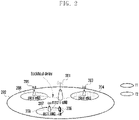
- FIG. 2 illustrates a broadband LTE-A system supporting inter-eNB carrier aggregation according to an embodiment of the present invention.
- FIG. 2 shows a system in which plural pico eNBs 203, 205, and 207 having small coverage areas are distributed within the coverage area 202 of a macro eNB 201.
- a macro eNB transmits signals at a power level higher than that of a pico eNB.
- the macro eNB 201 and the pico eNBs 203, 205, and 207 are connected to each other with a certain amount of backhaul delay. Accordingly, it is preferred not to exchange delay-sensitive information between macro and pico eNBs.
- the embodiment of FIG. 2 is directed to the case where the macro eNB 201 uses frequency f1 for downlink signal transmission, and the pico eNBs 203, 2-5 and 207 use frequency f2 for downlink transmission.
- the macro eNB 201 transmits data or control information to the UE 209 through frequency f1
- the pico eNB 207 transmits data or control information to the UE 209 through frequency f2.
- carrier aggregation multiple eNBs can transmit signals to the UE simultaneously through different frequency, resulting in improvement of peak data rate and system CARRIER AGGREGATION configuration information.
- the network configuration of FIG. 2 can be applied to uplink carrier aggregation as well as downlink carrier aggregation.
- the UE 209 may transmit data or control information to the macro eNB 201 through frequency f1 and to the pico eNBs 203, 205 and 207 through frequency f2.
- a carrier aggregation system is composed of a Primary Cell (PCell) and a Secondary Cell (SCell).
- the PCell allocates radio resources to the UE and acts as an anchor for initial access and handover of the UE.
- the PCell corresponds to a downlink primary frequency (or Primary Component Carrier (PCC)).
- the SCell allocates supplementary radio resources to the UE in cooperation with the PCell and corresponds to a downlink secondary frequency (or Secondary Component Carrier (SCC)) and uplink secondary frequency.
- the HARQ ACK/NACK and Channel Status Indicator (CSI) feedback is transmitted from the UE to the eNB on a Physical Uplink Control CHannel (PUCCH).
- PUCCH Physical Uplink Control CHannel
- FIG. 3 illustrates the inter-eNB carrier aggregation mechanism of the LTE-A system according to a first embodiment of the present invention.
- FIG. 3 includes a macro eNB 301 operating on a downlink frequency f1 and an uplink frequency f1' and a pico eNB 302 operating on a downlink frequency f2 and an uplink frequency f2' that are located at different positions.
- the macro eNB 301 is capable of receiving and processing the uplink signal transmitted on the uplink frequency f2'.
- the macro eNB 301 and pico eNB 302 are connected to each other through a backhaul having a certain amount of delay. Accordingly, it is preferred not to exchange any delay-sensitive information between the macro and pico eNBs.
- the UE 303 is capable of receiving and processing signals on the downlink frequencies f1 and f2 and transmitting and processing signals on the uplink frequencies f1' and f2'.
- the UE transmits Uplink Control Information (UCI) such as HARQ ACK/NACK and CSI on the PUCCH
- UCI Uplink Control Information
- the UE transmits the narrowband signals at high transmit power levels on f1' and f2', this causes interference between the signals and to the neighbor systems and consumes a large amount of battery power. Accordingly, it is preferred for the UE to avoid simultaneously transmitting UCIs on the uplink frequencies f1' and f2' .
- the UE In the case of data transmission, however, the UE is capable of transmitting data at a relatively low transmit power level on the relatively broad bandwidth, and thus the interference probability is low. Accordingly, it does not cause any significant problem for the UE to simultaneously transmit data on f1' and f2' at a certain instant.
- the UE transmits the PUCCH on the uplink frequency f2'.
- the PUCCH may carry at least one of a UCI addressed to the macro eNB 301 and a UCI addressed to the pico eNB 302. Since both the macro and pico eNBs are capable of receiving and processing the signals on the uplink f2', it is possible to receive the PUCCH transmitted on f2'.
- the UE has to attempt an initial attach procedure to the system on a single carrier. Once the initial attach procedure has been completed, the eNB checks the carrier aggregation capability of the UE and configures carrier aggregation to the UE. If the eNB configures carrier aggregation to the UE, it sends the UE at least one of the following informations through higher layer signaling. The eNB is also capable of sending to other eNBs participating in the carrier aggregation the control information including some or all of the following information through inter-eNB signaling.
- Second Information This is the information on the uplink frequency to be used by the UE for PUCCH transmission.
- FIG. 4 is a flowchart illustrating the UCI feedback method of the UE according to the first embodiment of the present invention.
- FIG. 4 shows the UE procedure of attaching the eNB and feeding back the UCI on the PUCCH according to whether carrier aggregation is supported.
- the UE performs the initial attach procedure to the LTE-A system at step 401.
- the initial attach procedure is performed through a Random Access procedure.
- the eNB and the UE are capable of communicating data under the control of the eNB.
- the UE reports the UE capability to the eNB at step 402.
- the UE capability indicates the LTE-A functions supported by the UE, particularly whether the UE supports carrier aggregation.
- the eNB determines whether the UE can support carrier aggregation based on the UE capability. If it is determined that the UE can support carrier aggregation, the eNB transmits carrier aggregation configuration information including at least one of the first to fourth information to the UE.
- the UE determines whether the carrier aggregation configuration information is received at step 403 and, if the carrier aggregation configuration information is received, the UE configures carrier aggregation based on the carrier aggregation configuration at step 404. Afterward, the UE is capable of communicating data and control information with the eNB through the downlink and uplink frequencies configured in the initial attach procedure and the downlink and uplink frequencies configured through carrier aggregation.
- the UE transmits, when there is UCI to be fed back to the eNB, the PUCCH on the uplink frequency indicated in the carrier aggregation configuration information at step 405.
- the UE communicates data and control information with the eNB through the downlink and uplink frequencies configured in the initial attach procedure. Afterward, when there is UCI to be fed back to the eNB, the UE transmits the PUCCH carrying the UCI on the uplink frequency configured in the initial attach procedure at step 406.
- the UE operating in the carrier aggregation mode adjusts the transmit power according to the eNB to which the UCI is addressed.
- the UE since the macro eNB 301 has a large coverage area, the distance between the UE 303 and the macro eNB 301 is relatively far away. Also, in the case of transmitting the control information requiring high reception probability, the UE has to transmit the signal at a relatively high transmit power level.
- the distance between the UE 303 and the pico eNB 302 is relatively close such that the UE is capable of transmitting the signal to the pico cell at a relatively low transmit power level. Accordingly, in the case where the UE transmits the PUCCH carrying UCI on the uplink frequency f2' as shown in FIG. 3 , if the PUCCH carries UCI addressed at least to the macro eNB 301, the UE 303 transmits the PUCCH at the transmit power level configured based on the power control information of the macro eNB 301. Otherwise, if the PUCCH carries only the UCI addressed to the pico cell but not the macro cell, the UE 303 transmits the PUCCH at the transmit power level configured based on the transmit power control information on the pico eNB 302.
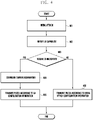
- FIG. 5 is a flowchart illustrating the PUCCH transmission power control procedure of the method according to an embodiment of the present invention.
- the PUCCH transmit power control procedure of the UE can be generalized as follows. If it is required to transmit the PUCCH carrying UCI, the UE determines whether the PUCCH includes UCI(0) at step 501.
- UCI(0) denotes the UCI addressed to the eNB(0)
- UCI(1) denotes the UCI addressed to the eNB (1).
- the eNB notifies the UE of the eNB(0) and eNB(1) among the eNBs joined in the carrier aggregation in advance. Also, it is possible for the eNB to send the UE the information on the PUCCH transmit power control depending on the UCI carried in the PUCCH.
- the macro eNB may be configured as eNB(0) and the pico eNB may be configured as eNB(1).
- the UE is capable of adjusting the PUCCH transmit power according to the presence of UCI(0) in the PUCCH to be transmitted.
- the UE transmits the PUCCH at the transmit power level adjusted according to the power control information received from the eNB(0) at step 502. Otherwise, if it is determined at step 501 that UCI(0) is not included in the PUCCH, the UE transmits the PUCCH at the transmit power level adjusted according to the power control information received from the eNB(1).
- the power control information of each eNB may include Transmit Power Control (TPC) information, power control information in consideration of intra-cell interference, and pathloss information between the eNB and the UE.
- TPC Transmit Power Control
- the second embodiment of the present invention is identical with the first embodiment in system configuration as shown in FIG. 3 with the exception that the uplink carrier aggregation is not supported. That is, when it is required to transmit uplink data or control information at a certain time, the UE is capable of performing uplink transmission only on one uplink frequency. Referring to FIG. 3 , the UE operates on the downlink frequencies f1 and f2 and only one of the uplink frequencies f1' and f2' at a certain instant.
- FIG. 6 is a flowchart illustrating the UCI feedback method of the UE according to the second embodiment of the present invention.
- FIG. 6 shows the UE procedure for UCI feedback on the PUCCH in the system configured as shown in FIG. 3 .
- the UE performs the initial attach procedure to the LTE-A system at step S601.
- the initial attach procedure is performed through a Random Access procedure.
- the eNB and the UE are capable of communication data under the control of the eNB.
- the eNB determines whether the UE supports carrier aggregation based on the UE capability to configure carrier aggregation for the UE. In the system of FIG. 3 , if the initially-attached eNB is a pico eNB 302 and if the pico eNB 302 determines to join the downlink carrier aggregation with the macro eNB 301, the pico eNB 302 notifies the UE 303 of this determination through higher layer signaling.
- the macro eNB 301 notifies the UE 303 of this determination through higher layer signaling.
- the eNB is capable of transmitting the carrier aggregation configuration information including at least the four aforementioned control information to the UE.
- the UE receives the carrier aggregation configuration information at step 602 and determines whether the eNB indicated by the carrier aggregation configuration information is a macro eNB or a pico eNB at step 603.
- the UE configures downlink carrier aggregation joining the pico eNB at step 604.
- the pico and macro eNBs are capable of perform downlink data and control information transmission to the UE on the downlink frequency f1 configured in the initial attach procedure and the downlink frequency f2 configured in the carrier aggregation procedure.
- the uplink data and control information are transmitted to the pico eNB on the uplink frequency f2'.
- the UE transmits the PUCCH carrying UCI on the uplink frequency f2' corresponding to the pico eNB which is configured in the carrier aggregation procedure other than the uplink frequency f1'configured in the initial attach procedure.
- the uplink signal transmission of the UE is performed on the uplink frequency f2' on which both the macro and pico eNBs are capable of receiving uplink signals such that the macro and pico eNBs receive the UCIs addressed thereto, respectively.
- the UE configures downlink carrier aggregation joining the macro eNB at step 606.
- both the pico and macro eNBs joined in the carrier aggregation transmit data and control information on the downlink frequency f2 configured in the initial attach procedure and downlink frequency f1 configured in the carrier aggregation procedure, and the UE transmits data and control information on the uplink frequency f2' configured in the initial attach procedure.
- the UE transmits the PUCCH carrying UCI to the eNB on the uplink frequency f2' configured in the initial attach procedure at step 607.
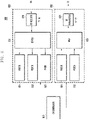
- FIG. 7 is a block diagram illustrating the configuration of the eNB according to an embodiment of the present invention.
- the eNB 700 includes a CA controller 710; a scheduler 720; a transmission unit 730 including a PDCCH generator 731, a PDSCH generator 732, a PHICH generator 733, a multiplexer 734, and an RF transmitter 735; and a reception unit 740 including a PUCCH receiver 741, a PUSCH receiver 742, a demultiplexer 743, and an RF receiver 744.
- the CA controller 710 determines carrier aggregation to the UE to be scheduled based on the amount of data to be transmitted to the UE and the resource amount available within the system, and notifies the scheduler 720 and the function blocks of the transmission unit 730 and the reception unit 740.
- the PDCCH generator 731 generates a Physical Downlink Control CHannel (PDCCH) through channel coding and modulation on the downlink control information including scheduling information under the control of the scheduler 720 and the CA controller 710.
- the PDSCH generator 732 generates a Physical Downlink Shared CHannel (PDSCH) through channel coding and modulation on the downlink data under the control of the scheduler 720 and the CA controller 710.
- the PHICH block 733 generates a Physical HARQ Indicator CHannel (PHICH) through channel coding and modulation on the HARQ-ACK/NACK corresponding to the uplink data under the control of the scheduler 720 and the CA controller 710.
- the PDCCH, PDSCH, and PHICH generated by the PDCCH generator 731, the PDSCH generator 732, and the PHICH generator 733, respectively, are multiplexed by the multiplexer 734 and then processed by the RF transmitter 735 so as to be transmitted to the UE on the downlink frequency f1 of the macro eNB.
- the reception unit 740 is capable of receiving signals on the uplink frequency f2' of the pico eNB which has joined carrier aggregation as well as the uplink frequency f1' of the macro eNB.
- the reception unit 740 receives radio signals by means of the RF receiver 744 and demultiplexes the received signal to at least one of the PUCCH receiver 741 and the PUSCH receiver 742.
- the PUCCH receiver 741 performs demodulation and channel-decoding on the Physical Uplink Control CHannel (PUCCH) including UCI to acquire HARQ-ACK/NACK and CSI.
- the PUSCH receiver 742 performs demodulation and channel-decoding on the Physical Uplink Shared CHannel (PUSCH) to acquire the uplink data transmitted by the UE.
- PUCCH Physical Uplink Control CHannel
- PUSCH Physical Uplink Shared CHannel
- the reception unit 740 delivers the output from the PUSCH receiver 741 and the PUSCH receiver 742 to the scheduler 720 and the CA controller 710 for making scheduling and carrier aggregation decisions.
- FIG. 8 is a block diagram illustrating the configuration of the UE according to an embodiment of the present invention.
- the UE is capable of receiving signals on the downlink frequencies f1 and f2 and transmitting signals on the uplink frequencies f1' and f2'.
- the UE 800 includes a CA controller 810, a reception unit 820 including a PDCCH receiver 821, a PDSCH receiver 822, a PHICH receiver 823, a demultiplexer 824, and an RF receiver 825; and a transmission unit 830 including a PUCCH transmitter 831, a PUSCH transmitter 832, a multiplexer 833, and an RF transmitter 834.
- the CA controller 810 configures carrier aggregation of the UE and controls the reception unit 820 and the transmission unit 830 based on the control information transmitted by the eNB.
- the PDCCH receiver 821 of the reception unit 820 performs demodulation and channel decoding on the PDCCH received through the downlink frequency f1 and/or f2 to acquire downlink control information.
- the PDSCH receiver 822 performs demodulation and channel-decoding on the PDSCH received through the downlink frequency f1 and/or f2 to acquire downlink data.
- the PHICH receiver 823 performs demodulation and channel-decoding on the PHICH received through downlink frequency f1 and/or f2 to acquire HARQ-ACK/NACK corresponding to the uplink data transmitted by the UE.
- the PUCCH transmitter 831 of the transmission unit 830 generates a PUCCH by performing channel coding and modulation on UCI including HARQ-ACK/NACK and CSI addressed to the macro or pico eNB under the control of the CA controller 810.
- the PUSCH transmitter 832 generates a PUSCH by performing channel coding and modulation on the uplink data addressed to the macro or pico eNB under the control of the CA controller 810.
- the PUCCH generated by the PUCCH transmitter 831 and the PUSCH generated by the PUSCH transmitter 832 are multiplexed by the multiplexer 833 and processed by the RF transmitter 834 such that the PUSCH is transmitted to the eNB through the uplink frequency f1' or f2' and the PUCCH is transmitted to the eNB through the uplink frequency f'2.
Landscapes
- Engineering & Computer Science (AREA)
- Signal Processing (AREA)
- Computer Networks & Wireless Communication (AREA)
- Mobile Radio Communication Systems (AREA)
Claims (12)
- Procédé de transmission de canal physique d'un terminal dans un système de communication prenant en charge une agrégation de porteuses, le procédé comprenant :recevoir, à partir d'une première station de base, des informations de configuration d'agrégation de porteuses ;configurer une pluralité de porteuses pour la première station de base à laquelle le terminal s'est connecté dans une procédure de rattachement initiale et une deuxième station de base qui est ajoutée selon les informations de configuration d'agrégation de porteuses ;identifier si un canal de commande de liaison montante comprend des informations de commande de liaison montante, UCI, de la première station de base et des deuxièmes UCI de la deuxième station de base, dans le cas où une zone de couverture de la première station de base serait supérieure à une zone de couverture de la deuxième station de base ;déterminer une puissance de transmission du canal de commande de liaison montante selon des informations de commande de puissance de transmission transmises par la première station de base dans le cas où le canal de commande de liaison montante comprendrait les premières UCI de la première station de base et les deuxièmes UCI de la deuxième station de base ; ettransmettre, à la première station de base, le canal de commande de liaison montante sur une deuxième fréquence de liaison montante de la deuxième station de base sur la base de la puissance de transmission,où la première station de base correspond à une cellule primaire, PCell, et la deuxième station de base correspond à une cellule secondaire, SCell, etoù une première fréquence de liaison montante est configurée pour la première station de base et la deuxième fréquence de liaison montante est configurée pour la deuxième station de base, la première station de base étant configurée pour recevoir et traiter un signal transmis sur la deuxième fréquence de liaison montante.
- Procédé selon la revendication 1, où les informations de configuration d'agrégation de porteuses comprennent au moins l'une parmi une fréquence de liaison montante et une fréquence de liaison descendante ajoutée dans une procédure d'agrégation de porteuses, une fréquence de liaison montante à être utilisée dans une transmission de canal de commande de liaison montante, un format de transmission du canal de commande de liaison montante et une ressource de transmission du canal de commande de liaison montante.
- Procédé selon la revendication 1, où la transmission du canal de commande de liaison montante comprend le changement, si les informations de configuration d'agrégation de porteuses indiquent seulement une agrégation de porteuses de liaison descendante et que la zone de couverture de la deuxième de station de base se joignant à l'agrégation de porteuses est inférieure à la zone de couverture de la première station de base à laquelle le terminal s'est connecté dans une procédure de rattachement initiale, de la fréquence de liaison montante pour la transmission de canal de commande de liaison montante à la deuxième fréquence de liaison montante de la deuxième station de base.
- Procédé de réception de canal physique d'une première station de base dans un système de communication prenant en charge une agrégation de porteuses, le procédé comprenant :établir une connexion avec un terminal qui demande une procédure de rattachement initiale ;transmettre, au terminal, des informations de configuration d'agrégation de porteuses ;transmettre, au terminal, des informations de commande de puissance de transmission, dans le cas où le canal de commande de liaison montante comprendrait les premières informations de commande de liaison montante, UCI, de la première station de base et les deuxièmes UCI d'une deuxième station de base, et qu'une zone de couverture de la première station de base à laquelle le terminal s'est connecté dans une procédure de rattachement initiale est supérieure à une zone de couverture de la deuxième station de base qui est ajoutée selon les informations de configuration ; etrecevoir, à partir du terminal, un canal de commande de liaison montante, comprenant les premières UCI de la première station de base et les deuxièmes UCI de la deuxième station de base, à travers une deuxième fréquence de liaison montante de la deuxième station de base,où une pluralité de porteuses pour la première station de base et la deuxième station de base est configurée par le terminal selon les informations de configuration d'agrégation de porteuses,où la première station de base correspond à une cellule primaire, PCell, et la deuxième station de base correspond à une cellule secondaire, SCell,où le canal de commande de liaison montante est reçu à la puissance de transmission déterminée selon les informations de commande de puissance de transmission transmises par la première station de base, etoù une première fréquence de liaison montante est configurée pour la première station de base et la deuxième fréquence de liaison montante est configurée pour la deuxième station de base, la première station de base étant configurée pour recevoir et traiter un signal transmis sur la deuxième fréquence de liaison montante.
- Procédé selon la revendication 4, où les informations de configuration d'agrégation de porteuses comprennent au moins l'une parmi une fréquence de liaison montante et une fréquence de liaison descendante ajoutée dans une procédure d'agrégation de porteuses, une fréquence de liaison montante à être utilisée dans une transmission de canal de commande de liaison montante, un format de transmission du canal de commande de liaison montante et une ressource de transmission du canal de commande de liaison montante.
- Procédé selon la revendication 4, où la réception du canal de commande de liaison montante comprend le changement, si les informations de configuration d'agrégation de porteuses indiquent seulement une agrégation de porteuses de liaison descendante et que la zone de couverture de la deuxième station de base se joignant à l'agrégation de porteuses est inférieure à la zone de couverture de la première station de base à laquelle le terminal s'est connecté dans la procédure de rattachement initiale, de la fréquence de liaison montante pour la réception de canal de commande de liaison montante à la deuxième fréquence de liaison montante de la deuxième station de base.
- Terminal de transmission d'un canal physique dans un système de communication prenant en charge une agrégation de porteuses, le terminal comprenant :un émetteur-récepteur ; etun contrôleur couplé à l'émetteur-récepteur et configuré pour commander :la réception, à partir d'une première station de base, d'informations de configuration d'agrégation de porteuses,la configuration d'une pluralité de porteuses pour la première station de base à laquelle le terminal s'est connecté dans une procédure de rattachement initiale et d'une deuxième station de base qui est ajoutée selon les informations de configuration d'agrégation de porteuses,l'identification de savoir si un canal de commande de liaison montante comprend des premières informations de commande de liaison montante, UCI, de la première station de base et des deuxièmes UCI de la deuxième station de base, dans le cas où une zone de couverture de la première station de base serait supérieure à une zone de couverture de la deuxième station de base,la détermination d'une puissance de transmission du canal de commande de liaison montante selon des informations de commande de puissance de transmission transmises par la première station de base dans le cas où le canal de commande de liaison montante comprendrait les premières UCI de la première station de base et les deuxièmes UCI de la deuxième station de base, ettransmettre, à la première station de base, le canal de commande de liaison montante sur une deuxième fréquence de liaison montante de la deuxième station de base sur la base de la puissance de transmission,où la première station de base correspond à une cellule primaire, PCell, et la deuxième station de base correspond à une cellule secondaire, SCell, etoù une première fréquence de liaison montante est configurée pour la première station de base et la deuxième fréquence de liaison montante est configurée pour la deuxième station de base, la première station de base étant configurée pour recevoir et traiter un signal transmis sur la deuxième fréquence de liaison montante.
- Terminal selon la revendication 7, où les informations de configuration d'agrégation de porteuses comprennent au moins l'une parmi une fréquence de liaison montante et une fréquence de liaison descendante ajoutée dans une procédure d'agrégation de porteuses, une fréquence de liaison montante à être utilisée dans une transmission de canal de commande de liaison montante, un format de transmission du canal de commande de liaison montante et une ressource de transmission du canal de commande de liaison montante.
- Terminal selon la revendication 7, où le contrôleur change, si les informations de configuration d'agrégation de porteuses indiquent seulement une agrégation de porteuses de liaison descendante et que la zone de couverture de la deuxième de station de base se joignant à l'agrégation de porteuses est inférieure à la zone de couverture de la première station de base à laquelle le terminal s'est connecté dans une procédure de rattachement initiale, la fréquence de liaison montante pour la transmission de canal de commande de liaison montante à la deuxième fréquence de liaison montante de la deuxième station de base.
- Première station de base permettant de recevoir un canal physique dans un système de communication prenant en charge une agrégation de porteuses, la station de base comprenant :un émetteur-récepteur ; etun contrôleur couplé à l'émetteur-récepteur et configuré pour commander :l'établissement d'une connexion avec un terminal qui demande une procédure de rattachement initiale,la transmission, au terminal, d'informations de configuration d'agrégation de porteuses,la transmission, au terminal, d'informations de commande de puissance de transmission dans le cas où le canal de commande de liaison montante comprendrait les premières informations de commande de liaison montante, UCI, de la première station de base et les deuxièmes UCI d'une deuxième station de base, et qu'une zone de couverture de la première station de base à laquelle le terminal s'est connecté dans une procédure de rattachement initiale est supérieure à une zone de couverture de la deuxième station de base qui est ajoutée selon les informations de configuration, etla réception, à partir du terminal, d'un canal de commande de liaison montante, comprenant les premières UCI de la première station de base et les deuxièmes UCI de la deuxième station de base, à travers une deuxième fréquence de liaison montante de la deuxième station de base,où une pluralité de porteuses pour la première station de base et la deuxième station de base est configurée par le terminal selon les informations de configuration d'agrégation de porteuses,où la première station de base correspond à une cellule primaire, PCell, et la deuxième station de base correspond à une cellule secondaire, SCell,où le canal de commande de liaison montante est reçu à la puissance de transmission déterminée selon les informations de commande de puissance de transmission transmises par la première station de base, etoù une première fréquence de liaison montante est configurée pour la première station de base et la deuxième fréquence de liaison montante est configurée pour la deuxième station de base, la première station de base étant configurée pour recevoir et traiter un signal transmis sur la deuxième fréquence de liaison montante.
- Station de base selon la revendication 10, où les informations de configuration d'agrégation de porteuses comprennent au moins l'une parmi une fréquence de liaison montante et une fréquence de liaison descendante ajoutée dans une procédure d'agrégation de porteuses, une fréquence de liaison montante à être utilisée dans une transmission de canal de commande de liaison montante, un format de transmission du canal de commande de liaison montante et une ressource de transmission du canal de commande de liaison montante.
- Station de base selon la revendication 10, où le contrôleur change, si les informations de configuration d'agrégation de porteuses indiquent seulement une agrégation de porteuses de liaison descendante et que la zone de couverture de la deuxième station de base se joignant à l'agrégation de porteuses est inférieure à la zone de couverture de la première station de base à laquelle le terminal s'est connecté dans une procédure de rattachement initiale, la fréquence de liaison montante pour la réception de canal de commande de liaison montante à la deuxième fréquence de liaison montante de la deuxième station de base.
Applications Claiming Priority (1)
| Application Number | Priority Date | Filing Date | Title |
|---|---|---|---|
| KR1020120058686A KR101956195B1 (ko) | 2012-05-31 | 2012-05-31 | 기지국간 반송파 결합을 지원하는 통신 시스템에서 물리채널의 송수신 방법 및 장치 |
Publications (3)
| Publication Number | Publication Date |
|---|---|
| EP2670202A2 EP2670202A2 (fr) | 2013-12-04 |
| EP2670202A3 EP2670202A3 (fr) | 2017-01-04 |
| EP2670202B1 true EP2670202B1 (fr) | 2022-06-29 |
Family
ID=48576265
Family Applications (1)
| Application Number | Title | Priority Date | Filing Date |
|---|---|---|---|
| EP13170041.1A Active EP2670202B1 (fr) | 2012-05-31 | 2013-05-31 | Procédé et appareil de transmission/réception de canaux physiques dans un système de communication supportant une agrégation de porteuse |
Country Status (6)
| Country | Link |
|---|---|
| US (1) | US10182353B2 (fr) |
| EP (1) | EP2670202B1 (fr) |
| JP (1) | JP6406523B2 (fr) |
| KR (1) | KR101956195B1 (fr) |
| CN (1) | CN104350694B (fr) |
| WO (1) | WO2013180508A1 (fr) |
Families Citing this family (21)
| Publication number | Priority date | Publication date | Assignee | Title |
|---|---|---|---|---|
| US9301183B2 (en) * | 2012-09-28 | 2016-03-29 | Intel Corporation | Transmission of uplink control information in inter-eNB carrier aggregation |
| US10164693B2 (en) * | 2013-05-09 | 2018-12-25 | Intel IP Corporation | Reduction of buffer overflow |
| US20150089382A1 (en) * | 2013-09-26 | 2015-03-26 | Wu-chi Feng | Application context migration framework and protocol |
| CN104812041A (zh) * | 2014-01-24 | 2015-07-29 | 中国移动通信集团公司 | 一种上行信号发射功率确定方法及装置 |
| CN104812007A (zh) * | 2014-01-28 | 2015-07-29 | 索尼公司 | 在无线通信系统中进行无线通信的方法、基站和用户设备 |
| WO2015113280A1 (fr) * | 2014-01-29 | 2015-08-06 | 华为技术有限公司 | Procédé, dispositif et système de transmission de données |
| CN104936291A (zh) * | 2014-03-21 | 2015-09-23 | 中兴通讯股份有限公司 | 一种控制终端能力的方法、终端及基站 |
| US20170034709A1 (en) * | 2014-04-09 | 2017-02-02 | Ntt Docomo, Inc. | Measurement control method and base station |
| CN105323849B (zh) * | 2014-06-30 | 2020-04-07 | 中兴通讯股份有限公司 | 上行控制信道的配置和发送方法、装置及基站和用户设备 |
| CN108141332B (zh) | 2015-07-22 | 2020-12-18 | 瑞典爱立信有限公司 | 在支持载波聚合的无线通信系统中移动用户设备的rf和bb能力的分开报告 |
| JP6076424B1 (ja) * | 2015-08-13 | 2017-02-08 | 株式会社Nttドコモ | ユーザ端末、無線基地局及び無線通信方法 |
| US20170325216A1 (en) * | 2016-05-09 | 2017-11-09 | Sharp Laboratories Of America, Inc. | User equipments, base stations and methods |
| CN107425946B (zh) * | 2016-05-24 | 2021-07-27 | 中兴通讯股份有限公司 | 基站资源获取方法、终端和基站 |
| US11013055B2 (en) | 2016-10-07 | 2021-05-18 | Sony Corporation | Discontinuous reception |
| US11050516B2 (en) * | 2017-01-05 | 2021-06-29 | Guangdong Oppo Mobile Telecommunications Corp., Ltd. | Method, network device and terminal device for transmitting feedback information |
| KR102825042B1 (ko) * | 2017-02-07 | 2025-06-26 | 삼성전자 주식회사 | 무선 셀룰라 통신 시스템에서 제어 및 데이터 정보 전송방법 및 장치 |
| MY203320A (en) * | 2017-05-31 | 2024-06-25 | Ntt Docomo Inc | Terminal, radio communication me thod, and base station |
| US10750482B2 (en) * | 2017-08-11 | 2020-08-18 | Mediatek Singapore Pte. Ltd. | Uplink control channel design for high reliability transmission in mobile communications |
| PL3691388T3 (pl) * | 2017-09-29 | 2023-12-18 | Ntt Docomo, Inc. | Terminal użytkownika i sposób łączności bezprzewodowej |
| CN110636641B (zh) * | 2018-06-25 | 2021-10-15 | 维沃移动通信有限公司 | 一种ca配置信息的处理方法和终端 |
| KR102771277B1 (ko) | 2019-06-14 | 2025-02-24 | 삼성전자주식회사 | 무선 통신 시스템에서 상향링크 제어 채널들을 관리하기 위한 장치 및 방법 |
Family Cites Families (14)
| Publication number | Priority date | Publication date | Assignee | Title |
|---|---|---|---|---|
| JPH08256102A (ja) * | 1995-01-19 | 1996-10-01 | Sony Corp | セルラーシステム |
| US8391192B2 (en) | 2007-05-14 | 2013-03-05 | Qualcomm Incorporated | Carrier switching in a multi-carrier wireless communication network |
| CN101669387A (zh) * | 2008-05-13 | 2010-03-10 | 高通股份有限公司 | 多载波无线通信网络中的载波转换 |
| KR100967657B1 (ko) | 2008-09-19 | 2010-07-07 | 연세대학교 산학협력단 | 펨토셀 기지국의 동기화 방법 및 이를 이용한 펨토셀 기지국 |
| US20100271970A1 (en) * | 2009-04-22 | 2010-10-28 | Interdigital Patent Holdings, Inc. | Method and apparatus for transmitting uplink control information for carrier aggregated spectrums |
| KR20110049623A (ko) * | 2009-11-04 | 2011-05-12 | 엘지전자 주식회사 | 이동통신 시스템에서의 상향링크 코디네이션 방법 및 그 단말 |
| JP2013520108A (ja) | 2010-02-12 | 2013-05-30 | インターデイジタル パテント ホールディングス インコーポレイテッド | ダウンリンク協調コンポーネントキャリアを介してセルエッジユーザパフォーマンスを向上させるため、および無線リンク障害条件をシグナリングするための方法および装置 |
| US20120113831A1 (en) * | 2010-04-30 | 2012-05-10 | Interdigital Patent Holdings, Inc. | Determination of Carriers and Multiplexing for Uplink Control Information Transmission |
| US20120113909A1 (en) | 2010-05-06 | 2012-05-10 | Yu-Chih Jen | Method of Handling an Uplink Control Channel and Related Communication Device |
| US8965442B2 (en) * | 2010-05-07 | 2015-02-24 | Qualcomm Incorporated | Uplink power control in aggregated carrier communication systems |
| CN106100793B (zh) * | 2010-06-21 | 2019-06-28 | 瑞典爱立信有限公司 | 用于无线网络中参数的信号传送的方法和装置 |
| CN103503360A (zh) * | 2011-04-29 | 2014-01-08 | 交互数字专利控股公司 | 具有子帧限制的载波的载波聚合 |
| CN103733697B (zh) * | 2011-08-12 | 2018-01-12 | 交互数字专利控股公司 | 用于功率控制和定时提前的方法和装置 |
| US8964683B2 (en) * | 2012-04-20 | 2015-02-24 | Ofinno Technologies, Llc | Sounding signal in a multicarrier wireless device |
-
2012
- 2012-05-31 KR KR1020120058686A patent/KR101956195B1/ko active Active
-
2013
- 2013-05-31 CN CN201380027817.1A patent/CN104350694B/zh active Active
- 2013-05-31 US US13/907,081 patent/US10182353B2/en active Active
- 2013-05-31 EP EP13170041.1A patent/EP2670202B1/fr active Active
- 2013-05-31 JP JP2015514909A patent/JP6406523B2/ja active Active
- 2013-05-31 WO PCT/KR2013/004802 patent/WO2013180508A1/fr not_active Ceased
Also Published As
| Publication number | Publication date |
|---|---|
| KR101956195B1 (ko) | 2019-03-08 |
| CN104350694B (zh) | 2017-09-12 |
| WO2013180508A1 (fr) | 2013-12-05 |
| EP2670202A3 (fr) | 2017-01-04 |
| JP2015521452A (ja) | 2015-07-27 |
| JP6406523B2 (ja) | 2018-10-17 |
| US10182353B2 (en) | 2019-01-15 |
| CN104350694A (zh) | 2015-02-11 |
| KR20130134851A (ko) | 2013-12-10 |
| US20130322372A1 (en) | 2013-12-05 |
| EP2670202A2 (fr) | 2013-12-04 |
Similar Documents
| Publication | Publication Date | Title |
|---|---|---|
| EP2670202B1 (fr) | Procédé et appareil de transmission/réception de canaux physiques dans un système de communication supportant une agrégation de porteuse | |
| US10880065B2 (en) | Systems and methods for carrier aggregation | |
| EP2712113B1 (fr) | Procédé et appareil permettant d'utiliser une pluralité de cellules dans un système de communication | |
| US10271316B2 (en) | User equipments, base stations and methods | |
| JP6388768B2 (ja) | ユーザ端末、無線基地局及び無線通信方法 | |
| US10205583B2 (en) | Method and apparatus for transmitting control channel depending on UE capability in intra-cell carrier aggregation system | |
| US10182451B2 (en) | Method and apparatus for requesting scheduling in cellular mobile communication system | |
| US20140307597A1 (en) | Method and apparatus for controlling transceiving of physical channels in time division duplex communication system | |
| CN103493417A (zh) | 移动通信系统及其信道发送/接收方法 | |
| KR20150107136A (ko) | 주파수분할 및 시분할 이중화 통신 시스템에서 물리채널 송수신의 제어 방법 및 장치 |
Legal Events
| Date | Code | Title | Description |
|---|---|---|---|
| PUAI | Public reference made under article 153(3) epc to a published international application that has entered the european phase |
Free format text: ORIGINAL CODE: 0009012 |
|
| AK | Designated contracting states |
Kind code of ref document: A2 Designated state(s): AL AT BE BG CH CY CZ DE DK EE ES FI FR GB GR HR HU IE IS IT LI LT LU LV MC MK MT NL NO PL PT RO RS SE SI SK SM TR |
|
| AX | Request for extension of the european patent |
Extension state: BA ME |
|
| PUAL | Search report despatched |
Free format text: ORIGINAL CODE: 0009013 |
|
| AK | Designated contracting states |
Kind code of ref document: A3 Designated state(s): AL AT BE BG CH CY CZ DE DK EE ES FI FR GB GR HR HU IE IS IT LI LT LU LV MC MK MT NL NO PL PT RO RS SE SI SK SM TR |
|
| AX | Request for extension of the european patent |
Extension state: BA ME |
|
| RIC1 | Information provided on ipc code assigned before grant |
Ipc: H04W 72/04 20090101AFI20161129BHEP |
|
| STAA | Information on the status of an ep patent application or granted ep patent |
Free format text: STATUS: REQUEST FOR EXAMINATION WAS MADE |
|
| 17P | Request for examination filed |
Effective date: 20170420 |
|
| RBV | Designated contracting states (corrected) |
Designated state(s): AL AT BE BG CH CY CZ DE DK EE ES FI FR GB GR HR HU IE IS IT LI LT LU LV MC MK MT NL NO PL PT RO RS SE SI SK SM TR |
|
| STAA | Information on the status of an ep patent application or granted ep patent |
Free format text: STATUS: EXAMINATION IS IN PROGRESS |
|
| 17Q | First examination report despatched |
Effective date: 20170920 |
|
| REG | Reference to a national code |
Ref country code: DE Ref legal event code: R079 Ref document number: 602013081944 Country of ref document: DE Free format text: PREVIOUS MAIN CLASS: H04W0072040000 Ipc: H04L0005000000 |
|
| GRAP | Despatch of communication of intention to grant a patent |
Free format text: ORIGINAL CODE: EPIDOSNIGR1 |
|
| STAA | Information on the status of an ep patent application or granted ep patent |
Free format text: STATUS: GRANT OF PATENT IS INTENDED |
|
| RIC1 | Information provided on ipc code assigned before grant |
Ipc: H04W 52/34 20090101ALN20220329BHEP Ipc: H04W 52/24 20090101ALN20220329BHEP Ipc: H04W 52/14 20090101ALN20220329BHEP Ipc: H04W 52/32 20090101ALI20220329BHEP Ipc: H04L 5/00 20060101AFI20220329BHEP |
|
| INTG | Intention to grant announced |
Effective date: 20220425 |
|
| RIC1 | Information provided on ipc code assigned before grant |
Ipc: H04W 52/34 20090101ALN20220413BHEP Ipc: H04W 52/24 20090101ALN20220413BHEP Ipc: H04W 52/14 20090101ALN20220413BHEP Ipc: H04W 52/32 20090101ALI20220413BHEP Ipc: H04L 5/00 20060101AFI20220413BHEP |
|
| GRAS | Grant fee paid |
Free format text: ORIGINAL CODE: EPIDOSNIGR3 |
|
| GRAA | (expected) grant |
Free format text: ORIGINAL CODE: 0009210 |
|
| STAA | Information on the status of an ep patent application or granted ep patent |
Free format text: STATUS: THE PATENT HAS BEEN GRANTED |
|
| AK | Designated contracting states |
Kind code of ref document: B1 Designated state(s): AL AT BE BG CH CY CZ DE DK EE ES FI FR GB GR HR HU IE IS IT LI LT LU LV MC MK MT NL NO PL PT RO RS SE SI SK SM TR |
|
| REG | Reference to a national code |
Ref country code: GB Ref legal event code: FG4D |
|
| REG | Reference to a national code |
Ref country code: CH Ref legal event code: EP |
|
| REG | Reference to a national code |
Ref country code: DE Ref legal event code: R096 Ref document number: 602013081944 Country of ref document: DE |
|
| REG | Reference to a national code |
Ref country code: AT Ref legal event code: REF Ref document number: 1502033 Country of ref document: AT Kind code of ref document: T Effective date: 20220715 |
|
| REG | Reference to a national code |
Ref country code: IE Ref legal event code: FG4D |
|
| REG | Reference to a national code |
Ref country code: LT Ref legal event code: MG9D |
|
| PG25 | Lapsed in a contracting state [announced via postgrant information from national office to epo] |
Ref country code: SE Free format text: LAPSE BECAUSE OF FAILURE TO SUBMIT A TRANSLATION OF THE DESCRIPTION OR TO PAY THE FEE WITHIN THE PRESCRIBED TIME-LIMIT Effective date: 20220629 Ref country code: NO Free format text: LAPSE BECAUSE OF FAILURE TO SUBMIT A TRANSLATION OF THE DESCRIPTION OR TO PAY THE FEE WITHIN THE PRESCRIBED TIME-LIMIT Effective date: 20220929 Ref country code: LT Free format text: LAPSE BECAUSE OF FAILURE TO SUBMIT A TRANSLATION OF THE DESCRIPTION OR TO PAY THE FEE WITHIN THE PRESCRIBED TIME-LIMIT Effective date: 20220629 Ref country code: HR Free format text: LAPSE BECAUSE OF FAILURE TO SUBMIT A TRANSLATION OF THE DESCRIPTION OR TO PAY THE FEE WITHIN THE PRESCRIBED TIME-LIMIT Effective date: 20220629 Ref country code: GR Free format text: LAPSE BECAUSE OF FAILURE TO SUBMIT A TRANSLATION OF THE DESCRIPTION OR TO PAY THE FEE WITHIN THE PRESCRIBED TIME-LIMIT Effective date: 20220930 Ref country code: FI Free format text: LAPSE BECAUSE OF FAILURE TO SUBMIT A TRANSLATION OF THE DESCRIPTION OR TO PAY THE FEE WITHIN THE PRESCRIBED TIME-LIMIT Effective date: 20220629 Ref country code: BG Free format text: LAPSE BECAUSE OF FAILURE TO SUBMIT A TRANSLATION OF THE DESCRIPTION OR TO PAY THE FEE WITHIN THE PRESCRIBED TIME-LIMIT Effective date: 20220929 |
|
| REG | Reference to a national code |
Ref country code: NL Ref legal event code: MP Effective date: 20220629 |
|
| REG | Reference to a national code |
Ref country code: AT Ref legal event code: MK05 Ref document number: 1502033 Country of ref document: AT Kind code of ref document: T Effective date: 20220629 |
|
| PG25 | Lapsed in a contracting state [announced via postgrant information from national office to epo] |
Ref country code: RS Free format text: LAPSE BECAUSE OF FAILURE TO SUBMIT A TRANSLATION OF THE DESCRIPTION OR TO PAY THE FEE WITHIN THE PRESCRIBED TIME-LIMIT Effective date: 20220629 Ref country code: LV Free format text: LAPSE BECAUSE OF FAILURE TO SUBMIT A TRANSLATION OF THE DESCRIPTION OR TO PAY THE FEE WITHIN THE PRESCRIBED TIME-LIMIT Effective date: 20220629 |
|
| PG25 | Lapsed in a contracting state [announced via postgrant information from national office to epo] |
Ref country code: NL Free format text: LAPSE BECAUSE OF FAILURE TO SUBMIT A TRANSLATION OF THE DESCRIPTION OR TO PAY THE FEE WITHIN THE PRESCRIBED TIME-LIMIT Effective date: 20220629 |
|
| PG25 | Lapsed in a contracting state [announced via postgrant information from national office to epo] |
Ref country code: SM Free format text: LAPSE BECAUSE OF FAILURE TO SUBMIT A TRANSLATION OF THE DESCRIPTION OR TO PAY THE FEE WITHIN THE PRESCRIBED TIME-LIMIT Effective date: 20220629 Ref country code: SK Free format text: LAPSE BECAUSE OF FAILURE TO SUBMIT A TRANSLATION OF THE DESCRIPTION OR TO PAY THE FEE WITHIN THE PRESCRIBED TIME-LIMIT Effective date: 20220629 Ref country code: RO Free format text: LAPSE BECAUSE OF FAILURE TO SUBMIT A TRANSLATION OF THE DESCRIPTION OR TO PAY THE FEE WITHIN THE PRESCRIBED TIME-LIMIT Effective date: 20220629 Ref country code: PT Free format text: LAPSE BECAUSE OF FAILURE TO SUBMIT A TRANSLATION OF THE DESCRIPTION OR TO PAY THE FEE WITHIN THE PRESCRIBED TIME-LIMIT Effective date: 20221031 Ref country code: ES Free format text: LAPSE BECAUSE OF FAILURE TO SUBMIT A TRANSLATION OF THE DESCRIPTION OR TO PAY THE FEE WITHIN THE PRESCRIBED TIME-LIMIT Effective date: 20220629 Ref country code: EE Free format text: LAPSE BECAUSE OF FAILURE TO SUBMIT A TRANSLATION OF THE DESCRIPTION OR TO PAY THE FEE WITHIN THE PRESCRIBED TIME-LIMIT Effective date: 20220629 Ref country code: AT Free format text: LAPSE BECAUSE OF FAILURE TO SUBMIT A TRANSLATION OF THE DESCRIPTION OR TO PAY THE FEE WITHIN THE PRESCRIBED TIME-LIMIT Effective date: 20220629 |
|
| PG25 | Lapsed in a contracting state [announced via postgrant information from national office to epo] |
Ref country code: PL Free format text: LAPSE BECAUSE OF FAILURE TO SUBMIT A TRANSLATION OF THE DESCRIPTION OR TO PAY THE FEE WITHIN THE PRESCRIBED TIME-LIMIT Effective date: 20220629 Ref country code: IS Free format text: LAPSE BECAUSE OF FAILURE TO SUBMIT A TRANSLATION OF THE DESCRIPTION OR TO PAY THE FEE WITHIN THE PRESCRIBED TIME-LIMIT Effective date: 20221029 |
|
| REG | Reference to a national code |
Ref country code: DE Ref legal event code: R097 Ref document number: 602013081944 Country of ref document: DE |
|
| PG25 | Lapsed in a contracting state [announced via postgrant information from national office to epo] |
Ref country code: AL Free format text: LAPSE BECAUSE OF FAILURE TO SUBMIT A TRANSLATION OF THE DESCRIPTION OR TO PAY THE FEE WITHIN THE PRESCRIBED TIME-LIMIT Effective date: 20220629 |
|
| PG25 | Lapsed in a contracting state [announced via postgrant information from national office to epo] |
Ref country code: DK Free format text: LAPSE BECAUSE OF FAILURE TO SUBMIT A TRANSLATION OF THE DESCRIPTION OR TO PAY THE FEE WITHIN THE PRESCRIBED TIME-LIMIT Effective date: 20220629 Ref country code: CZ Free format text: LAPSE BECAUSE OF FAILURE TO SUBMIT A TRANSLATION OF THE DESCRIPTION OR TO PAY THE FEE WITHIN THE PRESCRIBED TIME-LIMIT Effective date: 20220629 |
|
| PLBE | No opposition filed within time limit |
Free format text: ORIGINAL CODE: 0009261 |
|
| STAA | Information on the status of an ep patent application or granted ep patent |
Free format text: STATUS: NO OPPOSITION FILED WITHIN TIME LIMIT |
|
| 26N | No opposition filed |
Effective date: 20230330 |
|
| PG25 | Lapsed in a contracting state [announced via postgrant information from national office to epo] |
Ref country code: SI Free format text: LAPSE BECAUSE OF FAILURE TO SUBMIT A TRANSLATION OF THE DESCRIPTION OR TO PAY THE FEE WITHIN THE PRESCRIBED TIME-LIMIT Effective date: 20220629 |
|
| REG | Reference to a national code |
Ref country code: CH Ref legal event code: PL |
|
| PG25 | Lapsed in a contracting state [announced via postgrant information from national office to epo] |
Ref country code: MC Free format text: LAPSE BECAUSE OF FAILURE TO SUBMIT A TRANSLATION OF THE DESCRIPTION OR TO PAY THE FEE WITHIN THE PRESCRIBED TIME-LIMIT Effective date: 20220629 |
|
| REG | Reference to a national code |
Ref country code: BE Ref legal event code: MM Effective date: 20230531 |
|
| PG25 | Lapsed in a contracting state [announced via postgrant information from national office to epo] |
Ref country code: MC Free format text: LAPSE BECAUSE OF FAILURE TO SUBMIT A TRANSLATION OF THE DESCRIPTION OR TO PAY THE FEE WITHIN THE PRESCRIBED TIME-LIMIT Effective date: 20220629 Ref country code: LU Free format text: LAPSE BECAUSE OF NON-PAYMENT OF DUE FEES Effective date: 20230531 Ref country code: LI Free format text: LAPSE BECAUSE OF NON-PAYMENT OF DUE FEES Effective date: 20230531 Ref country code: IT Free format text: LAPSE BECAUSE OF FAILURE TO SUBMIT A TRANSLATION OF THE DESCRIPTION OR TO PAY THE FEE WITHIN THE PRESCRIBED TIME-LIMIT Effective date: 20220629 Ref country code: CH Free format text: LAPSE BECAUSE OF NON-PAYMENT OF DUE FEES Effective date: 20230531 |
|
| REG | Reference to a national code |
Ref country code: IE Ref legal event code: MM4A |
|
| PG25 | Lapsed in a contracting state [announced via postgrant information from national office to epo] |
Ref country code: IE Free format text: LAPSE BECAUSE OF NON-PAYMENT OF DUE FEES Effective date: 20230531 |
|
| PG25 | Lapsed in a contracting state [announced via postgrant information from national office to epo] |
Ref country code: IE Free format text: LAPSE BECAUSE OF NON-PAYMENT OF DUE FEES Effective date: 20230531 |
|
| PG25 | Lapsed in a contracting state [announced via postgrant information from national office to epo] |
Ref country code: FR Free format text: LAPSE BECAUSE OF NON-PAYMENT OF DUE FEES Effective date: 20230531 Ref country code: BE Free format text: LAPSE BECAUSE OF NON-PAYMENT OF DUE FEES Effective date: 20230531 |
|
| PG25 | Lapsed in a contracting state [announced via postgrant information from national office to epo] |
Ref country code: BG Free format text: LAPSE BECAUSE OF FAILURE TO SUBMIT A TRANSLATION OF THE DESCRIPTION OR TO PAY THE FEE WITHIN THE PRESCRIBED TIME-LIMIT Effective date: 20220629 |
|
| PG25 | Lapsed in a contracting state [announced via postgrant information from national office to epo] |
Ref country code: BG Free format text: LAPSE BECAUSE OF FAILURE TO SUBMIT A TRANSLATION OF THE DESCRIPTION OR TO PAY THE FEE WITHIN THE PRESCRIBED TIME-LIMIT Effective date: 20220629 |
|
| PGFP | Annual fee paid to national office [announced via postgrant information from national office to epo] |
Ref country code: DE Payment date: 20250422 Year of fee payment: 13 |
|
| PG25 | Lapsed in a contracting state [announced via postgrant information from national office to epo] |
Ref country code: CY Free format text: LAPSE BECAUSE OF FAILURE TO SUBMIT A TRANSLATION OF THE DESCRIPTION OR TO PAY THE FEE WITHIN THE PRESCRIBED TIME-LIMIT; INVALID AB INITIO Effective date: 20130531 |
|
| PG25 | Lapsed in a contracting state [announced via postgrant information from national office to epo] |
Ref country code: HU Free format text: LAPSE BECAUSE OF FAILURE TO SUBMIT A TRANSLATION OF THE DESCRIPTION OR TO PAY THE FEE WITHIN THE PRESCRIBED TIME-LIMIT; INVALID AB INITIO Effective date: 20130531 |
|
| PG25 | Lapsed in a contracting state [announced via postgrant information from national office to epo] |
Ref country code: TR Free format text: LAPSE BECAUSE OF FAILURE TO SUBMIT A TRANSLATION OF THE DESCRIPTION OR TO PAY THE FEE WITHIN THE PRESCRIBED TIME-LIMIT Effective date: 20220629 |
|
| PGFP | Annual fee paid to national office [announced via postgrant information from national office to epo] |
Ref country code: GB Payment date: 20260324 Year of fee payment: 14 |