EP2672076A2 - Verfahren zum Herunterfahren eines Generators zur Vorbereitung des Generator für einen Neustart - Google Patents
Verfahren zum Herunterfahren eines Generators zur Vorbereitung des Generator für einen Neustart Download PDFInfo
- Publication number
- EP2672076A2 EP2672076A2 EP13170618.6A EP13170618A EP2672076A2 EP 2672076 A2 EP2672076 A2 EP 2672076A2 EP 13170618 A EP13170618 A EP 13170618A EP 2672076 A2 EP2672076 A2 EP 2672076A2
- Authority
- EP
- European Patent Office
- Prior art keywords
- generator
- fuel
- purge gas
- gas turbine
- fuel system
- Prior art date
- Legal status (The legal status is an assumption and is not a legal conclusion. Google has not performed a legal analysis and makes no representation as to the accuracy of the status listed.)
- Withdrawn
Links
- 238000000034 method Methods 0.000 title claims abstract description 30
- 239000000446 fuel Substances 0.000 claims abstract description 126
- 238000010926 purge Methods 0.000 claims abstract description 94
- 238000002485 combustion reaction Methods 0.000 claims abstract description 56
- 239000007789 gas Substances 0.000 claims description 156
- 230000000977 initiatory effect Effects 0.000 claims description 13
- 238000012360 testing method Methods 0.000 claims description 13
- 238000002955 isolation Methods 0.000 claims description 10
- 238000007865 diluting Methods 0.000 claims description 7
- 238000010408 sweeping Methods 0.000 claims description 7
- 230000004044 response Effects 0.000 claims description 6
- 239000003570 air Substances 0.000 description 19
- 101100100125 Mus musculus Traip gene Proteins 0.000 description 5
- IJGRMHOSHXDMSA-UHFFFAOYSA-N Atomic nitrogen Chemical compound N#N IJGRMHOSHXDMSA-UHFFFAOYSA-N 0.000 description 4
- 238000011084 recovery Methods 0.000 description 3
- 238000013022 venting Methods 0.000 description 3
- 230000006835 compression Effects 0.000 description 2
- 238000007906 compression Methods 0.000 description 2
- 238000006073 displacement reaction Methods 0.000 description 2
- 238000012806 monitoring device Methods 0.000 description 2
- 238000012544 monitoring process Methods 0.000 description 2
- 229910052757 nitrogen Inorganic materials 0.000 description 2
- 230000004075 alteration Effects 0.000 description 1
- 239000012080 ambient air Substances 0.000 description 1
- 230000015572 biosynthetic process Effects 0.000 description 1
- 238000004891 communication Methods 0.000 description 1
- 230000005611 electricity Effects 0.000 description 1
- 238000001914 filtration Methods 0.000 description 1
- 239000012530 fluid Substances 0.000 description 1
- 239000010763 heavy fuel oil Substances 0.000 description 1
- 238000005259 measurement Methods 0.000 description 1
- 239000000203 mixture Substances 0.000 description 1
- 238000012545 processing Methods 0.000 description 1
- 238000006467 substitution reaction Methods 0.000 description 1
- 238000011144 upstream manufacturing Methods 0.000 description 1
Images

Classifications
-
- F—MECHANICAL ENGINEERING; LIGHTING; HEATING; WEAPONS; BLASTING
- F01—MACHINES OR ENGINES IN GENERAL; ENGINE PLANTS IN GENERAL; STEAM ENGINES
- F01D—NON-POSITIVE DISPLACEMENT MACHINES OR ENGINES, e.g. STEAM TURBINES
- F01D21/00—Shutting-down of machines or engines, e.g. in emergency; Regulating, controlling, or safety means not otherwise provided for
-
- F—MECHANICAL ENGINEERING; LIGHTING; HEATING; WEAPONS; BLASTING
- F01—MACHINES OR ENGINES IN GENERAL; ENGINE PLANTS IN GENERAL; STEAM ENGINES
- F01D—NON-POSITIVE DISPLACEMENT MACHINES OR ENGINES, e.g. STEAM TURBINES
- F01D25/00—Component parts, details, or accessories, not provided for in, or of interest apart from, other groups
- F01D25/002—Cleaning of turbomachines
-
- F—MECHANICAL ENGINEERING; LIGHTING; HEATING; WEAPONS; BLASTING
- F02—COMBUSTION ENGINES; HOT-GAS OR COMBUSTION-PRODUCT ENGINE PLANTS
- F02C—GAS-TURBINE PLANTS; AIR INTAKES FOR JET-PROPULSION PLANTS; CONTROLLING FUEL SUPPLY IN AIR-BREATHING JET-PROPULSION PLANTS
- F02C7/00—Features, components parts, details or accessories, not provided for in, or of interest apart form groups F02C1/00 - F02C6/00; Air intakes for jet-propulsion plants
- F02C7/22—Fuel supply systems
- F02C7/232—Fuel valves; Draining valves or systems
-
- F—MECHANICAL ENGINEERING; LIGHTING; HEATING; WEAPONS; BLASTING
- F02—COMBUSTION ENGINES; HOT-GAS OR COMBUSTION-PRODUCT ENGINE PLANTS
- F02C—GAS-TURBINE PLANTS; AIR INTAKES FOR JET-PROPULSION PLANTS; CONTROLLING FUEL SUPPLY IN AIR-BREATHING JET-PROPULSION PLANTS
- F02C7/00—Features, components parts, details or accessories, not provided for in, or of interest apart form groups F02C1/00 - F02C6/00; Air intakes for jet-propulsion plants
- F02C7/26—Starting; Ignition
- F02C7/262—Restarting after flame-out
-
- F—MECHANICAL ENGINEERING; LIGHTING; HEATING; WEAPONS; BLASTING
- F02—COMBUSTION ENGINES; HOT-GAS OR COMBUSTION-PRODUCT ENGINE PLANTS
- F02C—GAS-TURBINE PLANTS; AIR INTAKES FOR JET-PROPULSION PLANTS; CONTROLLING FUEL SUPPLY IN AIR-BREATHING JET-PROPULSION PLANTS
- F02C9/00—Controlling gas-turbine plants; Controlling fuel supply in air- breathing jet-propulsion plants
Definitions
- the subject matter disclosed herein relates to methods and apparatus for shutting down a gas turbine generator for a fast restart.
- Gas turbine generators which are often used in combined cycle power plants, are often shut down and started up depending on the demand for electricity, which is constantly fluctuating.
- a generator is shut down, a series of tests and preparatory steps are performed before the generator can be restarted.
- residual combustible gas is purged from the generator.
- Prior methods for purging the residual combustible gas are initiated after the generator has come to a complete stop. Such purge methods limit how soon the generator can be returned to full power after shutdown. Therefore, the present disclosure provides a method of shutting down a generator that places the generator in a "ready to start" condition in a reduced amount of time.
- a method of shutting down a generator to prepare the generator for restart including: initiating a power down sequence of a gas turbine of the generator from an operating state; forcing a purge gas into the gas turbine to extinguish a combustion flame in the gas turbine; and sweeping the purge gas through the gas turbine to displace the fuel from the gas turbine using a coast down airflow through the gas turbine during the power down sequence to prepare the generator for restart.
- a generator includes: a combustion chamber; a fuel system coupled to the combustion chamber configured to provide a purge gas to extinguish a combustion flame in the combustion chamber; and a source of the purge gas configured to provide the purge gas to the fuel system, wherein the purge gas displaces fuel remaining in the generator after the combustion flame is extinguished during a shutdown sequence of the generator, wherein the purge gas is swept through the generator using a coast down airflow of the generator.
- FIG. 1 shows an exemplary combined gas turbine/heat recovery steam generator (GT/HRSG) system 100 of the present disclosure generally used to generator power such as electrical power in a combined cycle power plant.
- the exemplary GT/HRSG system 100 includes a gas turbine (GT) 102, a heat recovery steam generator (HRSG) 104 and a fuel system 106.
- the fuel system 106 generally provides fuel to the gas turbine for combustion and is discussed in detail with respect to FIG. 2 .
- four fuel lines 107a, 107b, 107c and 107d provide fuel from the fuel system 106 to the gas turbine 102.
- the number of fuel lines is not meant as a limitation of the disclosure and any number of fuel lines can be used in various embodiments of the disclosure.
- the exemplary gas turbine 102 typically includes a compressor section 108, a combustion section 110 and a turbine section 112.
- the compressor section includes a series of compressor stages, each stage including a plurality of compressor blades that rotate to compress air.
- the compressor section 108 generally receives ambient air at an inlet to the compressor section, compresses the air at the compressor stages and provides the compressed air at the outlet of the compressor section to the combustion section 110.
- An inlet guide vane 109 at the inlet can be opened and closed to regulate a flow of air through the compressor section 108.
- fuel from the fuel system 106 is mixed with the compressed air from the compressor.
- the air/fuel mixture is then ignited using an ignition device such as a spark plug to create a working gas.
- the working gas is directed through the turbine section 112.
- the turbine section 112 is made up of a serial arrangement of stages, each stage having rotating blades known as buckets.
- the rotating buckets are supported by a common rotary shaft.
- the working gas exiting the combustion section 110 expands through the serial stages to cause rotation of the buckets and therefore of the rotary shaft.
- the rotary shaft of the turbine section 112 can be connected to the compression blades in the compressor section so that rotation of the rotary shaft drives air compression in the compressor section 108.
- the rotary shaft also extends beyond the turbine section to an electric generator (not shown) where the rotary motion of the rotary shaft is converted into electrical power. Meanwhile the exhausted working gas from the turbine section 112 is directed toward the HRSG 104.
- the HRSG 104 receives exhaust from the gas turbine and uses the exhaust as a heat source to drive one or more steam turbines.
- the HRSG includes an inlet 120, a high pressure superheater 122 and one or more HSRG pressure sections124a, 124b and 124c, which are operable to generate steam at high pressure, intermediate pressure and/or low pressure, respectively.
- Exhaust gas from the HRSG is sent through HRSG outlet duct 126 to an exhaust stack 124.
- the gas turbine 102 and fuel system 106 are coupled to a control unit 140 configured to control various elements of the fuel system and gas turbine.
- the control unit 140 includes a memory 144, a set of programs 146 storing instructions therein for shutting down the generator according to the methods described herein, and a processor 142 having access to the set of programs 146 and to the contents of the memory 144.
- the processor 142 is configured to run various programs of the present embodiment for shutting down the gas turbine and completing a displacement of remaining fuel in the gas turbine manifolds, exhaust, and attached equipment, among others.
- the control unit can control valve configurations at the fuel system 106 as well as monitor various parameters, such as pressure at the fuel system 106, gas levels in the gas turbine 102, etc.
- a monitoring device 132 is coupled to the generator. In one embodiment, the monitoring device 132 generates a trip signal to the control unit 140 wherein a fault occurs at the generator. The trip signal can be used to initiate a trip of the generator to shut down the generator.
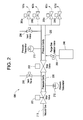
- FIG. 2 shows a detailed illustration of the exemplary fuel system 106 of FIG. 1 .
- the fuel system 106 comprises a piping configuration including pressure cavities 220 and 230 for supplying fuel to the gas turbine 102.
- the two pressure cavities 220 and 230 are in fluid communication with each other by a series of valves, which control the flow therebetween and, when operated in concert with each other, permit fuel to flow to the gas turbine 102 in a controlled manner to allow an operation of the combined cycle power plant.
- Pressure cavity 220 has a valve 201 on one side of the pressure cavity 220 that connects the pressure cavity 220 to a fuel inlet line 210 and permits flow therebetween.
- a vent valve 203 is connected to the pressure cavity 220 and allows the pressure cavity 220 to be vented to an appropriate venting receptacle when necessary.
- Valve 202 connects pressure cavity 220 to pressure cavity 230 and permits flow therebetween.
- Pressure cavity 230 comprises several exemplary gas control valves 205a, 205b, 205c and 205d, which connect the pressure cavity 230 to respective fuel lines 107a, 107b, 107c and 107d. While the exemplary pressure cavity 230 as illustrated in FIG. 2 comprises four such gas control valves, the pressure cavity 230 can include any number of gas control valves in alternate embodiments. Pressure cavity 230 further includes a vent valve 206 for venting of the pressure cavity 230 to an appropriate venting location when necessary. The vent valve 206 can be a single valve in one embodiment or can comprise a configuration of multiple vent valves in an alternate embodiment.
- Pressure cavity 230 also includes an isolation valve 208 that can be opened to allow a purge gas to enter into the pressure cavity 230 from an exemplary purge gas supply system 240.
- the purge gas forces fuel isolated in pressure chamber 230 into the combustion flame.
- the purge gas is thus forced through the pressure cavity 230 to the generator to extinguish a flame at the combustor.
- the purge gas then displaces fuel remaining in the generator from the generator system of FIG. 1 .
- the purge gas can be used to perform a tightness test of various valves of the fuel system 106.
- Pressure cavities 220 and 230 further include various exemplary pressure gauges 212 and 213 respectively coupled thereto.
- the control unit 140 of FIG. 1 can be coupled to the various pressure gauges to monitor the pressures at the pressure cavities 220 and 230.
- the control unit 140 can be used to monitor operating conditions of the fuel system during various operational stages, such as during online operation, during a shutdown sequence, during a startup sequence, during a purge sequence, after establishing a purge credit as described below, etc.
- two pressure gauges 212 and 213 are shown in FIG. 2 this is only meant for illustrative purposes and is not meant as a limitation of the disclosure.
- Pressure gauges can also be coupled to the various vent valves, gas control valves, isolation valves and stop valves of an exemplary fuel system and measurements obtained at these pressure gauges can be provided to the control unit 140 for monitoring and/or processing.
- valves of the fuel system 106 can be opened and closed according to any appropriate valve setting configuration.
- the valves as embodied by the disclosure, either alone or collectively, can comprise rotary valves, gate valves, stem valves, butterfly valves, ball valves, choke valves, or any other valve configuration.
- valves of the fuel system 106 can be controlled by any appropriate means, such as solenoid, manual, sensor controlled, remotely controlled or any other appropriate control, so the valves work as intended.
- valve 202 is closed to isolate fuel in the pressure chamber 230 and purge gas isolation valve 208 is opened to introduce the purge gas into the pressure 230. With valves 205a-205d open, the fuel is forced into the combustion chamber via the purge gas.
- Purge gas supply system 240 supplies a gaseous medium such as a purge gas to the fuel system in one embodiment of the present disclosure.
- the purge gas can be supplied from the power plant or from a dedicated system.
- the dedicated purge gas supply system 240 includes but is not limited to components to isolate, control pressure, prevent backflow, provide filtering of particulates, remove moisture and provide indication of successful operation to the controller.
- the gaseous medium can be used for a tightness test of the valves of the fuel system.
- the purge gas can be used to force fuel from the fuel supply and to extinguish a flame at the combustor section.
- the purge gas at the combustor purges the gas turbine and/or HRSG of volatile fuel remaining in the gas turbine/HRSG after extinguishing the flame.
- the present disclosure provides a method of shutting down a generator system in order to be in a ready state for restart, e.g. a "ready to start” condition, within a reduced amount of time from shutdown.
- a “ready to start” condition is a general indication that combustible gases are substantially diluted and/or removed from the generator and that the generator systems are in a desired state for start up of the generator.
- a “ready to start” condition can also involve removal of risks associated with remaining fuel in the gas turbine components, exhaust, and downstream equipment, placing the fuel system in a specific startup configuration, completing a leak test of the fuel system, securing the fuel system to a standby condition, and monitoring conditions after establishing the desired conditions.
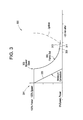
- FIG. 3 shows an exemplary shutdown and startup sequence in an exemplary embodiment of the present disclosure.
- the purge gas displaces remaining fuel from the generator components into the compressor coast down air flow during the shut down sequence of the generator.
- Coast down airflow generally refers to air flowing through the generator/combustor due to the residual (unpowered) rotation of the turbine blades of the turbine section and/or the coupled compressor blades of the compressor section after extinguishing of the combustion flame, known as flame-out, during shutdown of the generator.
- An inlet guide vane 109 of the gas turbine generator can be substantially closed upon shutdown or tripping of the gas turbine generator. The inlet guide vane 109 can be operated to provide an air flow for purging combustible gas from the gas turbine generator.
- the shutdown sequence includes at least the steps of 1) "flame-out” or extinguishing the combustor flame, 2) testing of valves in the fuel system, 3) displacing and diluting remaining fuel through the generator using the coast down airflow to purge remaining fuel from the generator, and 4) isolating a fuel for restart at the fuel system.
- these steps can be monitored by control unit 140 to ensure that the gas turbine 102 is prepared for a startup sequence.
- the generator is shut down as part of a planned shut down sequence.
- time 301 indicates a time at which the generator is taken offline.
- Line 320 indicates the amount of power contributed from the generator to an attached power grid.
- a breaker to the generator is opened to initiate the planned shut down sequence of the gas turbine.
- the generator is shut down due to a trip sequence. The generator can be tripped when a fault is detected.
- the breaker may be opened (time 303) simultaneously with taking the generator offline. In either sequence, at 303, fuel flow to the combustion section 110 is reduced to a specified setting to support the combustion flame.
- the fuel supply is isolated in pressure cavity 230 by closing valve 202.
- Purge gas isolation valve 208 is opened to provide a purge gas that pushes the isolated fuel supply from the pressure cavity 230 into the combustor.
- turbine blades and compressor blades still rotating provide a coast down airflow flowing through the generator.
- the combustion flame may be extinguished (at flame-out point 305) either when the air supplied to the flame falls below a flame threshold value or when the purge gas reaches the flame.
- the flame-out point 305 can be made to occur at a selected time.
- the purge gas is the swept through the gas turbine manifold to displace remaining fuel.
- Valves 205a-d are opened to allow the purge gas into the gas turbine to flow out the exhaust of the HRSG using the coast down airflow.
- Valve 202 can be closed to prevent upstream flow of the purge gas during the purge process.
- the fuel in the gas turbine manifold is diluted until the level of fuel falls below a designated value.
- Various parameters can be measured to ensure that residual fuel and/or volatile gases are below selected levels and/or are swept from volatile areas of the gas turbine to low temperature or non-volatile areas of the generator.
- the purge gas can be swept through the generator manifold beginning at flame-out 305. A test of the fuel system 106 is generally performed after a successful purge of the generator.
- a valve configuration of the fuel system is set in order to prevent leaks of fuel and to prepare the fuel system for a startup sequence.
- the fuel pressure plug is typically formed to provide pressure cavity 230 at a selected pressure and the pressure in pressure cavity 220 held at a low pressure through vent valve 203 to atmosphere.
- Successful completion of the valve test displacement of remaining fuel and the formation of a leak free shutoff therefore generates a "ready to start” condition indicating that the system is in a prepared state for a startup sequence.
- Exemplary time 313 indicates the beginning of a startup sequence once the "ready to start" condition is achieved.
- the present disclosure provides a method of shutting down a generator to prepare the generator for restart, the method including: initiating a power down sequence of a gas turbine of the generator from an operating state; forcing a purge gas into the gas turbine to extinguish a combustion flame in the gas turbine; and sweeping the purge gas through the gas turbine to displace the fuel from the gas turbine using a coast down airflow through the gas turbine during the power down sequence to prepare the generator for restart.
- Initiating the power down sequence can be part of either a planned shutdown sequence or in response to a tripping signal.
- Fuel is isolated at a fuel system coupled to the gas turbine, and the isolated fuel is forced from the fuel system using the purge gas.
- a pressure plug can be formed at the fuel system after sweeping the purge gas through the gas turbine.
- the combustion flame is extinguished at a predetermined time after initiation of the power down sequence.
- the predetermined time can be based on either a selected air pressure of airflow in the generator or a time at which the purge gas reaches the combustion flame.
- the purge gas can include at least one of nitrogen and compressed air and can be provided from either a combined cycle generator plant or a dedicated purge gas supply system.
- the generator is considered ready for restart when a measured concentration of the fuel in the generator falls below a selected threshold.
- the generator can also be considered ready for restart upon performing at least one of: 1) extinguishing the flame in the generator, 2) testing valves in a fuel system, 3) displacing and diluting remaining fuel through the generator using the coast down air flow and a purge gas, and 4) forming a leak-free isolated at the fuel system.
- the present disclosure provides a generator that includes: a combustion chamber; a fuel system coupled to the combustion chamber configured to provide a purge gas to extinguish a combustion flame in the combustion chamber; and a source of the purge gas configured to provide the purge gas to the fuel system , wherein the purge gas displaces fuel remaining in the generator after the combustion flame is extinguished during a shutdown sequence of the generator, wherein the purge gas is swept through the generator using a coast down airflow of the generator.
- the shutdown sequence may be a planned shutdown sequence or a shutdown sequence initiated in response to a tripping signal.
- the fuel system includes a pressure chamber configured to provide the purge gas to the generator.
- the pressure chamber includes a control valve configured to isolate a fuel at the pressure chamber and an isolation valve configured to allow the purge gas into the pressure chamber.
- the purge gas forces the isolated fuel from the pressure chamber to extinguish the flame at the combustion chamber.
- a control unit coupled to the generator can be used to determine a ready to start condition of the generator.
- the control can determine the ready to start condition when a measured concentration of the fuel in the generator falls below a selected threshold.
- the control unit can determine the ready to start condition by performing at least one of: 1) extinguishing the flame in the combustion chamber, 2) testing valves in the fuel system, 3) displacing and diluting remaining fuel through the generator using the coast down airflow and a purge gas, and 4) forming a leak-free isolation at the fuel system.
- the control unit may be further configured to control an inlet guide vane to provide an airflow for purging combustible gases from the generator.
- the control unit is further configured to perform the extinguishing of the combustion flame at a predetermined time after initiation of a power down sequence.
- the predetermined time for extinguishing the combustion flame can be based on a selected air pressure of airflow in the generator.
Landscapes
- Engineering & Computer Science (AREA)
- Mechanical Engineering (AREA)
- General Engineering & Computer Science (AREA)
- Chemical & Material Sciences (AREA)
- Combustion & Propulsion (AREA)
- Control Of Turbines (AREA)
- Regulation And Control Of Combustion (AREA)
- Feeding And Controlling Fuel (AREA)
- Control Of Eletrric Generators (AREA)
Applications Claiming Priority (1)
| Application Number | Priority Date | Filing Date | Title |
|---|---|---|---|
| US13/490,091 US20120240591A1 (en) | 2007-12-10 | 2012-06-06 | Method for shutting down a generator to prepare the generator for restart |
Publications (2)
| Publication Number | Publication Date |
|---|---|
| EP2672076A2 true EP2672076A2 (de) | 2013-12-11 |
| EP2672076A3 EP2672076A3 (de) | 2017-07-19 |
Family
ID=48607088
Family Applications (1)
| Application Number | Title | Priority Date | Filing Date |
|---|---|---|---|
| EP13170618.6A Withdrawn EP2672076A3 (de) | 2012-06-06 | 2013-06-05 | Verfahren zum Herunterfahren eines Generators zur Vorbereitung des Generator für einen Neustart |
Country Status (4)
| Country | Link |
|---|---|
| EP (1) | EP2672076A3 (de) |
| JP (1) | JP2013253602A (de) |
| CN (1) | CN103470387A (de) |
| RU (1) | RU2622576C2 (de) |
Cited By (8)
| Publication number | Priority date | Publication date | Assignee | Title |
|---|---|---|---|---|
| FR3018561A1 (fr) * | 2014-03-12 | 2015-09-18 | Ge Energy Products France Snc | Procede de controle du fonctionnement de vannes d'un dispositif d'alimentation en gaz de turbine a gaz |
| US10082089B2 (en) | 2016-08-25 | 2018-09-25 | General Electric Company | Systems and methods to improve shut-down purge flow in a gas turbine system |
| US10082090B2 (en) | 2016-08-25 | 2018-09-25 | General Electric Company | Systems and methods to improve shut-down purge flow in a gas turbine system |
| US10082087B2 (en) | 2016-08-25 | 2018-09-25 | General Electric Company | Systems and methods to improve shut-down purge flow in a gas turbine system |
| US10082091B2 (en) | 2016-08-25 | 2018-09-25 | General Electric Company | Systems and methods to improve shut-down purge flow in a gas turbine system |
| EP3283369A4 (de) * | 2015-04-15 | 2018-12-05 | Sikorsky Aircraft Corporation | Eintrittsleitrad für flugzeugeinzelmotorbetrieb |
| EP3511537A1 (de) * | 2018-01-12 | 2019-07-17 | Mitsubishi Hitachi Power Systems, Ltd. | Kraft-wärme-kopplungssystem mit gasturbine und betriebsmodusänderungsverfahren dafür |
| CN117795183A (zh) * | 2021-08-04 | 2024-03-29 | 诺沃皮尼奥内技术股份有限公司 | 用于估计和设置燃烧系统中的排气吹扫时间的改进方法及其燃烧系统 |
Families Citing this family (2)
| Publication number | Priority date | Publication date | Assignee | Title |
|---|---|---|---|---|
| JP7137397B2 (ja) * | 2018-08-08 | 2022-09-14 | 川崎重工業株式会社 | コンバインドサイクル発電プラント |
| KR20240105445A (ko) * | 2022-01-24 | 2024-07-05 | 미츠비시 파워 가부시키가이샤 | 가스 터빈의 제어 장치, 가스 터빈 및 가스 터빈의 제어 방법 |
Family Cites Families (15)
| Publication number | Priority date | Publication date | Assignee | Title |
|---|---|---|---|---|
| US4041695A (en) * | 1975-11-21 | 1977-08-16 | The Garrett Corporation | Fuel system pneumatic purge apparatus and method |
| JPS5529076A (en) * | 1978-08-24 | 1980-03-01 | Toshiba Corp | Controller for gas turbine |
| JPS5918240A (ja) * | 1982-07-23 | 1984-01-30 | Nissan Motor Co Ltd | ガスタ−ビンエンジンの制御装置 |
| SU1710803A1 (ru) * | 1989-12-05 | 1992-02-07 | Ленинградское объединение "Пролетарский завод" | Система управлени газотурбинной установкой |
| JPH07253030A (ja) * | 1994-03-15 | 1995-10-03 | Mitsubishi Heavy Ind Ltd | ガスタービンの再起動方法 |
| US5819539A (en) * | 1996-12-30 | 1998-10-13 | Combustion Engineering, Inc. | Detecting and purging combustible gases from heat recovery steam generator cavities |
| JPH11210492A (ja) * | 1998-01-20 | 1999-08-03 | Toshiba Corp | ガスタービンプラントの燃料供給装置、その装置の暖機運転方法および冷却運転方法 |
| US6792760B2 (en) * | 2002-03-11 | 2004-09-21 | Alstom Technology Ltd | Method for operating a turbine |
| US7104070B2 (en) * | 2004-03-04 | 2006-09-12 | General Electric Company | Liquid fuel nozzle apparatus with passive water injection purge |
| JP4865476B2 (ja) * | 2006-09-28 | 2012-02-01 | 三菱重工業株式会社 | ガスタービンの起動停止方法及び起動停止制御装置 |
| US7770400B2 (en) * | 2006-12-26 | 2010-08-10 | General Electric Company | Non-linear fuel transfers for gas turbines |
| US8510013B2 (en) * | 2009-05-04 | 2013-08-13 | General Electric Company | Gas turbine shutdown |
| US20100275608A1 (en) * | 2009-05-04 | 2010-11-04 | General Electric Company | Systems and Methods for Rapid Turbine Deceleration |
| US8955334B2 (en) * | 2010-07-22 | 2015-02-17 | General Electric Company | Systems and methods for controlling the startup of a gas turbine |
| RU2451921C1 (ru) * | 2010-10-07 | 2012-05-27 | Закрытое Акционерное Общество Научно-Производственная Фирма "Газ-Система-Сервис" | Способ контроля технического состояния газотурбинной установки |
-
2013
- 2013-06-04 JP JP2013117426A patent/JP2013253602A/ja not_active Ceased
- 2013-06-05 EP EP13170618.6A patent/EP2672076A3/de not_active Withdrawn
- 2013-06-05 RU RU2013125744A patent/RU2622576C2/ru not_active IP Right Cessation
- 2013-06-06 CN CN2013102239718A patent/CN103470387A/zh active Pending
Non-Patent Citations (1)
| Title |
|---|
| None |
Cited By (10)
| Publication number | Priority date | Publication date | Assignee | Title |
|---|---|---|---|---|
| FR3018561A1 (fr) * | 2014-03-12 | 2015-09-18 | Ge Energy Products France Snc | Procede de controle du fonctionnement de vannes d'un dispositif d'alimentation en gaz de turbine a gaz |
| EP3283369A4 (de) * | 2015-04-15 | 2018-12-05 | Sikorsky Aircraft Corporation | Eintrittsleitrad für flugzeugeinzelmotorbetrieb |
| US10738698B2 (en) | 2015-04-15 | 2020-08-11 | Sikorsky Aircraft Corporation | Inlet guide vane control for aircraft single engine operation |
| US10082089B2 (en) | 2016-08-25 | 2018-09-25 | General Electric Company | Systems and methods to improve shut-down purge flow in a gas turbine system |
| US10082090B2 (en) | 2016-08-25 | 2018-09-25 | General Electric Company | Systems and methods to improve shut-down purge flow in a gas turbine system |
| US10082087B2 (en) | 2016-08-25 | 2018-09-25 | General Electric Company | Systems and methods to improve shut-down purge flow in a gas turbine system |
| US10082091B2 (en) | 2016-08-25 | 2018-09-25 | General Electric Company | Systems and methods to improve shut-down purge flow in a gas turbine system |
| EP3511537A1 (de) * | 2018-01-12 | 2019-07-17 | Mitsubishi Hitachi Power Systems, Ltd. | Kraft-wärme-kopplungssystem mit gasturbine und betriebsmodusänderungsverfahren dafür |
| US11156130B2 (en) | 2018-01-12 | 2021-10-26 | Mitsubishi Power, Ltd. | Gas turbine cogeneration system and operation mode change method therefor |
| CN117795183A (zh) * | 2021-08-04 | 2024-03-29 | 诺沃皮尼奥内技术股份有限公司 | 用于估计和设置燃烧系统中的排气吹扫时间的改进方法及其燃烧系统 |
Also Published As
| Publication number | Publication date |
|---|---|
| RU2013125744A (ru) | 2014-12-10 |
| RU2622576C2 (ru) | 2017-06-16 |
| JP2013253602A (ja) | 2013-12-19 |
| EP2672076A3 (de) | 2017-07-19 |
| CN103470387A (zh) | 2013-12-25 |
Similar Documents
| Publication | Publication Date | Title |
|---|---|---|
| US20120240591A1 (en) | Method for shutting down a generator to prepare the generator for restart | |
| EP2672076A2 (de) | Verfahren zum Herunterfahren eines Generators zur Vorbereitung des Generator für einen Neustart | |
| JP2013253602A5 (de) | ||
| CN101290342B (zh) | 水电机组黑启动能力验证的试验方法 | |
| US10082089B2 (en) | Systems and methods to improve shut-down purge flow in a gas turbine system | |
| US20130104516A1 (en) | Method of monitoring an operation of a compressor bleed valve | |
| CA3068610C (en) | Method and system for safe gas turbine startup | |
| US10082087B2 (en) | Systems and methods to improve shut-down purge flow in a gas turbine system | |
| EP3460438B1 (de) | Lackagedetektionssystem und methode für eine gasturbine | |
| US10082090B2 (en) | Systems and methods to improve shut-down purge flow in a gas turbine system | |
| CN110030090A (zh) | 燃气轮机热电联产系统及其运行切换方法 | |
| US10480420B2 (en) | Methods and systems for controlling turbine powered system to reduce startup time | |
| US10082091B2 (en) | Systems and methods to improve shut-down purge flow in a gas turbine system | |
| US9677686B2 (en) | Control process for operation of valves of a gas supply device of the gas turbine | |
| US20150107217A1 (en) | Vent system for use in a gas turbine and method of operating thereof | |
| EP2746555A2 (de) | Kraftstoffzufuhrsystem für eine Gasturbine und Verfahren dafür | |
| CN113339252A (zh) | 一种大容量电泵配100%汽泵机组给水特性试验方法 | |
| EP3171005A1 (de) | Brennstoffzufuhrsystem zur verwendung in einem gasturbinenmotor und verfahren zur steuerung eines überdrehzahlereignisses darin | |
| US10704427B2 (en) | Method to diagnose power plant degradation using efficiency models | |
| Teplov et al. | Thermal tests of the SGT5-4000F gas-turbine plant of the PGU-420T power-generating unit at combined heat and power plant 16 of Mosenergo | |
| CN110146310B (zh) | 送引风机rb功能冷态模拟试验方法 | |
| CN107731324B (zh) | 一种核电站机组热力性能试验夏季工况模拟系统和方法 | |
| CN114813134B (zh) | 高温堆汽轮机注油装置的检验方法 | |
| CN117795183A (zh) | 用于估计和设置燃烧系统中的排气吹扫时间的改进方法及其燃烧系统 | |
| CN120990752A (zh) | 一种v94.2型燃气轮机启动清吹优化方法及系统 |
Legal Events
| Date | Code | Title | Description |
|---|---|---|---|
| PUAI | Public reference made under article 153(3) epc to a published international application that has entered the european phase |
Free format text: ORIGINAL CODE: 0009012 |
|
| AK | Designated contracting states |
Kind code of ref document: A2 Designated state(s): AL AT BE BG CH CY CZ DE DK EE ES FI FR GB GR HR HU IE IS IT LI LT LU LV MC MK MT NL NO PL PT RO RS SE SI SK SM TR |
|
| AX | Request for extension of the european patent |
Extension state: BA ME |
|
| PUAL | Search report despatched |
Free format text: ORIGINAL CODE: 0009013 |
|
| AK | Designated contracting states |
Kind code of ref document: A3 Designated state(s): AL AT BE BG CH CY CZ DE DK EE ES FI FR GB GR HR HU IE IS IT LI LT LU LV MC MK MT NL NO PL PT RO RS SE SI SK SM TR |
|
| AX | Request for extension of the european patent |
Extension state: BA ME |
|
| RIC1 | Information provided on ipc code assigned before grant |
Ipc: F01D 21/00 20060101ALI20170613BHEP Ipc: F02C 7/232 20060101ALI20170613BHEP Ipc: F01D 25/00 20060101AFI20170613BHEP Ipc: F02C 7/26 20060101ALI20170613BHEP Ipc: F01D 19/00 20060101ALI20170613BHEP Ipc: F02C 7/22 20060101ALI20170613BHEP |
|
| STAA | Information on the status of an ep patent application or granted ep patent |
Free format text: STATUS: THE APPLICATION IS DEEMED TO BE WITHDRAWN |
|
| 18D | Application deemed to be withdrawn |
Effective date: 20180103 |