EP2672111A2 - Commande d'un parc éolien en fonction de valeurs cibles - Google Patents
Commande d'un parc éolien en fonction de valeurs cibles Download PDFInfo
- Publication number
- EP2672111A2 EP2672111A2 EP13159099.4A EP13159099A EP2672111A2 EP 2672111 A2 EP2672111 A2 EP 2672111A2 EP 13159099 A EP13159099 A EP 13159099A EP 2672111 A2 EP2672111 A2 EP 2672111A2
- Authority
- EP
- European Patent Office
- Prior art keywords
- wind turbine
- weather data
- wind
- energy
- energy yield
- Prior art date
- Legal status (The legal status is an assumption and is not a legal conclusion. Google has not performed a legal analysis and makes no representation as to the accuracy of the status listed.)
- Withdrawn
Links
Images

Classifications
-
- F—MECHANICAL ENGINEERING; LIGHTING; HEATING; WEAPONS; BLASTING
- F03—MACHINES OR ENGINES FOR LIQUIDS; WIND, SPRING, OR WEIGHT MOTORS; PRODUCING MECHANICAL POWER OR A REACTIVE PROPULSIVE THRUST, NOT OTHERWISE PROVIDED FOR
- F03D—WIND MOTORS
- F03D7/00—Controlling wind motors
- F03D7/02—Controlling wind motors the wind motors having rotation axis substantially parallel to the air flow entering the rotor
- F03D7/04—Automatic control; Regulation
- F03D7/042—Automatic control; Regulation by means of an electrical or electronic controller
- F03D7/048—Automatic control; Regulation by means of an electrical or electronic controller controlling wind farms
-
- F—MECHANICAL ENGINEERING; LIGHTING; HEATING; WEAPONS; BLASTING
- F03—MACHINES OR ENGINES FOR LIQUIDS; WIND, SPRING, OR WEIGHT MOTORS; PRODUCING MECHANICAL POWER OR A REACTIVE PROPULSIVE THRUST, NOT OTHERWISE PROVIDED FOR
- F03D—WIND MOTORS
- F03D17/00—Monitoring or testing of wind motors, e.g. diagnostics
-
- F—MECHANICAL ENGINEERING; LIGHTING; HEATING; WEAPONS; BLASTING
- F03—MACHINES OR ENGINES FOR LIQUIDS; WIND, SPRING, OR WEIGHT MOTORS; PRODUCING MECHANICAL POWER OR A REACTIVE PROPULSIVE THRUST, NOT OTHERWISE PROVIDED FOR
- F03D—WIND MOTORS
- F03D7/00—Controlling wind motors
- F03D7/02—Controlling wind motors the wind motors having rotation axis substantially parallel to the air flow entering the rotor
- F03D7/0204—Controlling wind motors the wind motors having rotation axis substantially parallel to the air flow entering the rotor for orientation in relation to wind direction
-
- F—MECHANICAL ENGINEERING; LIGHTING; HEATING; WEAPONS; BLASTING
- F03—MACHINES OR ENGINES FOR LIQUIDS; WIND, SPRING, OR WEIGHT MOTORS; PRODUCING MECHANICAL POWER OR A REACTIVE PROPULSIVE THRUST, NOT OTHERWISE PROVIDED FOR
- F03D—WIND MOTORS
- F03D7/00—Controlling wind motors
- F03D7/02—Controlling wind motors the wind motors having rotation axis substantially parallel to the air flow entering the rotor
- F03D7/028—Controlling wind motors the wind motors having rotation axis substantially parallel to the air flow entering the rotor controlling wind motor output power
-
- F—MECHANICAL ENGINEERING; LIGHTING; HEATING; WEAPONS; BLASTING
- F05—INDEXING SCHEMES RELATING TO ENGINES OR PUMPS IN VARIOUS SUBCLASSES OF CLASSES F01-F04
- F05B—INDEXING SCHEME RELATING TO WIND, SPRING, WEIGHT, INERTIA OR LIKE MOTORS, TO MACHINES OR ENGINES FOR LIQUIDS COVERED BY SUBCLASSES F03B, F03D AND F03G
- F05B2260/00—Function
- F05B2260/82—Forecasts
- F05B2260/821—Parameter estimation or prediction
- F05B2260/8211—Parameter estimation or prediction of the weather
-
- F—MECHANICAL ENGINEERING; LIGHTING; HEATING; WEAPONS; BLASTING
- F05—INDEXING SCHEMES RELATING TO ENGINES OR PUMPS IN VARIOUS SUBCLASSES OF CLASSES F01-F04
- F05B—INDEXING SCHEME RELATING TO WIND, SPRING, WEIGHT, INERTIA OR LIKE MOTORS, TO MACHINES OR ENGINES FOR LIQUIDS COVERED BY SUBCLASSES F03B, F03D AND F03G
- F05B2270/00—Control
- F05B2270/10—Purpose of the control system
- F05B2270/20—Purpose of the control system to optimise the performance of a machine
- F05B2270/204—Purpose of the control system to optimise the performance of a machine taking into account the wake effect
-
- F—MECHANICAL ENGINEERING; LIGHTING; HEATING; WEAPONS; BLASTING
- F05—INDEXING SCHEMES RELATING TO ENGINES OR PUMPS IN VARIOUS SUBCLASSES OF CLASSES F01-F04
- F05B—INDEXING SCHEME RELATING TO WIND, SPRING, WEIGHT, INERTIA OR LIKE MOTORS, TO MACHINES OR ENGINES FOR LIQUIDS COVERED BY SUBCLASSES F03B, F03D AND F03G
- F05B2270/00—Control
- F05B2270/30—Control parameters, e.g. input parameters
- F05B2270/329—Azimuth or yaw angle
-
- F—MECHANICAL ENGINEERING; LIGHTING; HEATING; WEAPONS; BLASTING
- F05—INDEXING SCHEMES RELATING TO ENGINES OR PUMPS IN VARIOUS SUBCLASSES OF CLASSES F01-F04
- F05B—INDEXING SCHEME RELATING TO WIND, SPRING, WEIGHT, INERTIA OR LIKE MOTORS, TO MACHINES OR ENGINES FOR LIQUIDS COVERED BY SUBCLASSES F03B, F03D AND F03G
- F05B2270/00—Control
- F05B2270/40—Type of control system
- F05B2270/404—Type of control system active, predictive, or anticipative
-
- Y—GENERAL TAGGING OF NEW TECHNOLOGICAL DEVELOPMENTS; GENERAL TAGGING OF CROSS-SECTIONAL TECHNOLOGIES SPANNING OVER SEVERAL SECTIONS OF THE IPC; TECHNICAL SUBJECTS COVERED BY FORMER USPC CROSS-REFERENCE ART COLLECTIONS [XRACs] AND DIGESTS
- Y02—TECHNOLOGIES OR APPLICATIONS FOR MITIGATION OR ADAPTATION AGAINST CLIMATE CHANGE
- Y02A—TECHNOLOGIES FOR ADAPTATION TO CLIMATE CHANGE
- Y02A30/00—Adapting or protecting infrastructure or their operation
-
- Y—GENERAL TAGGING OF NEW TECHNOLOGICAL DEVELOPMENTS; GENERAL TAGGING OF CROSS-SECTIONAL TECHNOLOGIES SPANNING OVER SEVERAL SECTIONS OF THE IPC; TECHNICAL SUBJECTS COVERED BY FORMER USPC CROSS-REFERENCE ART COLLECTIONS [XRACs] AND DIGESTS
- Y02—TECHNOLOGIES OR APPLICATIONS FOR MITIGATION OR ADAPTATION AGAINST CLIMATE CHANGE
- Y02E—REDUCTION OF GREENHOUSE GAS [GHG] EMISSIONS, RELATED TO ENERGY GENERATION, TRANSMISSION OR DISTRIBUTION
- Y02E10/00—Energy generation through renewable energy sources
- Y02E10/70—Wind energy
- Y02E10/72—Wind turbines with rotation axis in wind direction
Definitions
- the subject matter relates to a method for controlling at least one wind turbine and a wind turbine control device.
- the electrical power network must always provide the retrieved electrical power. For this it is necessary to adapt the energy production to the demand. For example, it makes little sense to generate large amounts of electrical energy with wind turbines at night, as these large amounts of electrical energy can not be accessed. On the other hand, it is necessary for the network planning that wind turbines actually inject the electrical power into the power grid at peak load times, which is necessary.
- the operator of the wind farm is always interested in controlling the energy yield as precisely as possible, so that target values can be reached within a certain period of time.
- the object of the object to optimize a wind turbine to achieve a target value of energy to be supplied in operation.
- forecasts for weather data may include information on wind speeds and wind directions. This information can be provided, for example, in a windrose diagram.
- a historical information about weather data available indicating, for example, a frequency distribution of wind speed at a given wind turbine within a certain period. This frequency distribution can also be broken down Be wind directions.
- forecast weather data may also include a weather forecast that includes forecasts of wind speed and wind direction in the future.
- an energy yield of the wind turbine can be calculated by assuming that the forecasted weather data coincide with the actual weather data. In this case, the wind turned on the wind, which was forecasted. In known wind conditions, however, the energy yield can be calculated for a single wind turbine. It is also possible to determine / calculate the energy yield of a wind park under known weather conditions.
- topologies of the wind farm as well as the roughness of the landscape.
- other weather data such as swell, turbulence, shear winds, falling and ascending winds or the like may have an impact on the energy yield of a wind turbine and / or a wind farm.
- the energy yield is also dependent on setting parameters for the respective wind turbine.
- an adjustment parameter may be the azimuth.
- Another setting parameter can be, for example, the pitch of a rotor blade.
- the performance of the wind turbine varies with constant wind conditions.
- the different services lead to different energy yields of the wind turbine.
- the wind turbine be operated at the set of adjustment parameters at which the calculated energy yield has the smallest distance from a target value for the energy yield.
- the forecasted weather data comprise at least information on a wind speed and / or a wind direction on at least one wind turbine.
- This information can be applied, for example, in a wind rose. This contains information about the wind direction as well as the wind speed.
- the wind rose can be specified for different times.
- the predicted weather data be determined from historical weather data and / or that the forecast weather data be calculated from a weather forecast. Based on historical weather data, it is possible to estimate how the weather will develop in the future. It is thus possible, for example, to draw conclusions about future wind speeds through a frequency distribution of wind speeds over a certain period of time. For example, a frequency distribution can be for a day, a week, a month, or a year. The frequency distribution is preferably plotted in a Weibull curve. It is also possible that information about wind directions are stored. On the basis of this historical weather data, it is possible to predict how the weather, in particular the wind, will behave in the predetermined time period and to calculate from this information how large the energy yield may be.
- the forecast weather data include a weather forecast. From the weather forecast, the weather data can be calculated.
- the weather forecast can include meteorological data from which probabilities for wind direction and wind speed can be derived. With the help of this weather forecast, it is possible to estimate how the wind at a wind turbine will behave over a certain period of time.
- the historical weather data comprise at least one frequency distribution of a wind speed of a wind turbine.
- the frequency distribution can be applied, for example, in a Weibull diagram. Here not only wind speed but also wind direction can be indicated.
- a higher fault tolerance is possible, for example, by determining an average frequency distribution of a wind speed at a plurality of wind turbines. In this case, measured values from a plurality of wind power plants can be used and from this an average frequency distribution can be calculated.
- wind speeds are measured at different heights.
- weather data from meteorological monitoring stations may be used to supplement the frequency distributions.
- these meteorological measuring stations can be meteorological measuring masts which are arranged outside a wind farm and preferably measure wind speeds with an anemometer at different altitudes. These too Information can be incorporated into the frequency distribution of the wind speed.
- the energy yield is simulated using the forecasted weather data for different sets of adjustment parameters.
- the information about wind speed and wind direction are determined from the weather data. With the help of this information, it can be simulated for a wind turbine in which settings it supplies which energy yield.
- the simulation can be used to calculate how the energy yield changes when the setting parameters for the different wind turbines are varied. In this way, target achievement can be optimized by selecting the setting parameters for the various wind turbines so that the target value is reached as far as possible at the end of the period for the energy yield.
- the energy yield is calculated from historical data. This can be used to determine what the setting parameters for a wind turbine were in certain weather conditions that correspond to the predicted weather conditions. Then it can be determined how large the energy yield of the wind turbine was. This historical information can be used to estimate how large the energy yield of the wind turbine at the predicted weather situation at the same Setting parameters is because it is assumed that the energy output is identical under identical weather conditions and identical setting parameters. A combination of simulation and derivation from historical values is also possible. Here, the historical values can be averaged or weighted using the simulation values.
- the forecasted weather data are recorded for different time intervals and that the energy yields are calculated for each of these intervals.
- a resolution of the energy yield into smaller intervals makes it possible to determine an energy yield for each of these intervals and to simulate possible adjustment parameters.
- power limits and / or maintenance idle periods be taken into account in the calculation of the energy yield of the wind power plant within the period.
- the wind power plant generates a power that is above the power limit of the grid.
- Such performance limits must be considered.
- the energy yields can not be increased arbitrarily when the power limit is reached.
- performance limits must be taken into account.
- maintenance idling can occur, which are unavoidable due to planned maintenance. Such idling must also be considered in order to determine the total energy yield of a wind turbine as accurately as possible for a certain period.
- the energy yield of a plurality of wind turbines is calculated within the time period, wherein the energy yield is calculated for different sets of adjustment parameters for the respective wind turbines.
- the energy yield is calculated for different sets of adjustment parameters for the respective wind turbines.
- the calculated energy yield results from the most recent forecasts at all times. When operating the Wind turbine within the period, it turns out, whether the actual energy yield corresponds to the calculated. If, as proposed, the energy yield within the period is calculated several times with the help of updated weather data and already achieved energy yields since the beginning of the period, a more accurate target achievement can be achieved. Thus, it is possible to check whether the actual energy yield is equal to the predicted or above or below this value. In addition, more up-to-date weather data can be used to re-forecast energy yields for the remainder of the period and optimize them taking into account the energy yield already achieved. This results in that new setting parameters are calculated, which contribute to the wind turbine reaching the target value of the energy yield as far as possible.
- adjustment parameters for a respective wind turbine are changed within the period when the updated weather data deviates from the previously forecast weather data and / or when the already achieved energy yields at one time are calculated from the calculated energy yields deviate from this date.
- the adjustment parameters can be optimized to reach the target value in the remaining period until the end of the specified period.
- the adjustment parameters include at least one azimuth and / or one pitch of at least one wind turbine.
- a further object is a wind turbine control apparatus having an input configured to receive predicted weather data for a predetermined period of time, a processor configured to calculate an energy yield of the wind turbine within the time period using the predicted weather data, the energy yield for at least two different sets of wind turbine setup parameters and a comparator for comparing the calculated energy yields with the target value for the various adjustment parameters and outputting those adjustment parameters where the calculated energy output has the shortest distance from a target value for the energy yield.
- wind turbine setup parameters have been calculated that will most likely achieve the target value. These setting parameters are output and the wind turbine is adjusted accordingly. During the operation of the wind turbine, a comparison can be made as to whether or not the predicted energy yields will be achieved within certain intervals. The cumulated energy yields can be checked and an adjustment of the adjustment parameters can be made so that the target value is reached even more precisely.
- the aforementioned methods can also be realized as a computer program or as a computer program stored on a storage medium.
- a microprocessor for executing the respective method steps can be suitably programmed by a computer program on the control computer side and / or wind turbine side.
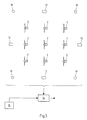
- Fig. 1 shows a schematic plan view of a nacelle of a wind turbine 2.
- rotor blades 4a, 4b are arranged.
- the nacelle of the wind turbine 2 is arranged at 360 ° rotatable about the angle 6.
- the angle 6 is also referred to as the azimuth 6 of the wind turbine 2.
- the angle 6 represent a rotation angle relative to the north direction.
- An azimuth 6 of 180 ° then meant, for example, that the wind turbine 2 would be oriented to the south.
- Fig. 2 shows the nacelle 2a of the wind turbine 2 on which the rotor blades 4 are arranged. It can be seen that each rotor blade 4 can be pivoted at an angle 8 which indicates the pitch of the rotor blade 4. With the help of the angle 8, the pitch of the rotor blade 4 can be adjusted and thus the inflow surface of the wind can be influenced on the rotor blade 4.
- the energy yield of a wind turbine 2 is dependent on both azimuth 6 and the pitch 8 as well as the current wind conditions at the wind turbine 2.
- a plurality of wind turbines 2 are arranged.
- the arrangement shown is purely schematic.
- Meteorological measuring masts 10 can be arranged around the wind turbines 2. These are preferably arranged in a few hundred meters to a few kilometers away from the arranged at the outer edge of the wind farm wind turbines 2. Furthermore, measuring buoys 12 be provided, which may also be located away from the wind turbines 2 or within the wind turbines 2.
- Each individual wind turbine 2 measures with a local anemometer, e.g. anemometer, the local wind direction as well as the local wind speed.
- a local anemometer e.g. anemometer
- These local weather data are transmitted from each wind turbine 2 to a central control device 14.
- a transmission can take place via mobile radio, radio relay, Ethernet or the like.
- each meteorological measuring mast 10 In addition to the local weather data, which are measured at the respective wind turbines 2, each meteorological measuring mast 10 also measures weather data, such as wind speed and wind direction. This can be done in different heights, for example at heights of 10, 20, 50, 100 and 200 meters. This indication of heights is purely exemplary.
- the respective meteorological measured values recorded on the meteorological measuring masts 10 are likewise transmitted to the central control device 14.
- wave information which is determined by means of the buoys 12, can also be transmitted as meteorological measurement data to the central control device 14.
- Other meteorological weather data that can be transmitted to the central control device 14, including air temperature, humidity, water temperature and like. All of these environmental parameters affect the energy yield of a wind turbine at a given setting. Data sets can be created for each wind turbine or even for the total wind farm, which, in addition to the weather data, contain the electrical power of the wind turbine. In addition, the respective setting, in particular the azimuth and the pitch of the respective wind turbine can be stored in these data records. Thus, it is possible to generate a plurality of datasets indicating wind turbine performance resulting from certain weather conditions and certain settings.
- these records can then be searched by matching the predicted weather data with the weather data in the records and using the records that contain the least deviation in the weather data.
- a weighting of the weather data can be done so that wind speed is treated as the highest priority, then wind direction and finally further weather data.
- the weather data in the data sets can be compared with current or predicted weather data, and the data sets whose weather data is most similar to the current or predicted weather data can be used. It is possible that a plurality of data sets are used, which were obtained with a variety of setting parameters. Subsequently, an energy yield for the different settings can be calculated from the power values contained in the data sets. Thus, it is possible to make an estimate of an energy yield for a wind turbine with the help of historical information.
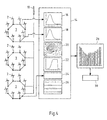
- Fig. 4 schematically shows a plurality of wind turbines 2, which are each electrically connected to a ring 3. Furthermore, a meteorological measuring mast 10 and the central control device 14 are shown.
- a frequency distribution 16 for wind at the respective wind turbine 2 can be detected by each individual wind turbine 2.
- the frequency distribution is preferably a Weibull curve and indicates the percentage frequency of a specific wind speed at the individual wind turbine 2.
- the weather data measured in each wind turbine 2 as well as the weather data of the meteorological measuring mast 10 can each be recorded with its own frequency distribution 16.
- an averaged frequency distribution 18 can be created across all frequency distributions 16, with the result that a frequency distribution with a high fault tolerance is created for the total wind farm.
- a frequency distribution 16/18 can be created for different periods, for example 24 hours, one week, one month. Based on these frequency distributions 16/18 it is already possible to create a forecast for weather data. It is already possible with these frequency distributions 16/18 to predict the energy yield by assuming that the measured frequency distributions 16/18 are actually reached in the particular period of time and the wind turbines are operated with certain adjustment parameters. By variations of the setting parameters For a given frequency distribution, the energy yield can be varied so that it reaches the target value as well as possible.
- weather forecasts can be taken from weather forecasts 20. These weather forecasts 20 make it possible to conclude a probable weather course at a wind turbine 2. This predicted weather pattern can be used to simulate energy yields of the individual wind turbines 2 as well as the wind farm 3. For this purpose, different setting parameters can be simulated and checked to which energy yield they lead.
- the maintenance calendar 26 can be taken into account, which already contains scheduled maintenance on the wind turbines 2, at which times they can not generate energy. These times should be taken into account when calculating the energy yield.
- the central control device 14 can predict the energy yield. This prognosis can be output, for example, in a hydrograph 28 over the entire period. In this case, the respectively predicted energy yields can be specified at intervals and the cumulated energy yield 30 can be output.
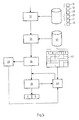
- Fig. 5 shows a possible flowchart of a subject method.
- a period is determined for which a forecast of an energy yield is to be delivered. This means that it should be determined how much electrical energy is to be fed into the grid during the period.
- forecast weather data for that period will be collected. These predicted weather data may include the frequency distributions 16 and 18, among others.
- a weather forecast 20 can be read.
- boundary parameters that have an influence on the energy yield are imported. These marginal parameters may include a power curve 22 of a wind turbine 2.
- performance limits 24 and maintenance schedules 26 can be read in as outer boundary parameters that affect the energy yield within the predetermined time period.
- the predetermined period may be, for example, the next day or the next week. Other periods are also possible. For example, a period can be a half an hour, an hour, several hours, a day, a week or so. Within the period, it is also possible that the temporal resolution of the energy yield takes place in intervals, so, for example, in a period of one hour, a resolution of the energy yield in 10-minute steps.
- a possible energy yield is calculated in step.
- simulation programs can be used which simulate the wind turbine 2 or the entire wind farm 3 and simulate how the energy yield changes with changed settings of the azimuth and pitch of each wind turbine 2 within the wind farm 3. With the help of the simulation, it is possible to play through the most diverse scenarios of different settings of the wind turbines 2.
- Historical records 42 may be stored in a database 41.
- a data record 42 can be formed from a plurality of data fields AE. In the data fields AE, information about weather data and adjustment parameters can be stored with the corresponding services of the respective wind power stations 2.
- Historical data 42 can be stored for each individual wind turbine 2 as well as for the wind farm 3.
- a first value A may contain information about a wind direction.
- a second value B may contain information about a wind speed.
- a third value C may be an information about an azimuth of a Wind turbine 2 included.
- a fourth value D may contain information about the pitch of the corresponding wind turbine 2.
- a value E may indicate the electric power of the wind turbine 2 under the conditions indicated in the values A to D.
- the determined setting value for azimuth and pitch with the values C and D is output. These can be the values from the historical data and / or simulated values.
- the wind turbine 2 is then operated with the adjustment data C and D. At intervals, for example, every five minutes, every ten minutes, every half hour, every hour, a check may be made of the amount of energy produced since the beginning of the period. This achieved energy yield can be compared with the predicted energy yield 28. Furthermore, updated weather forecasts can be read in and from this a recalculation of the adjustment parameters can take place if the target value 28 with changed setting parameters can be better achieved.
Landscapes
- Engineering & Computer Science (AREA)
- Life Sciences & Earth Sciences (AREA)
- Sustainable Development (AREA)
- Sustainable Energy (AREA)
- Chemical & Material Sciences (AREA)
- Combustion & Propulsion (AREA)
- Mechanical Engineering (AREA)
- General Engineering & Computer Science (AREA)
- Wind Motors (AREA)
Applications Claiming Priority (1)
| Application Number | Priority Date | Filing Date | Title |
|---|---|---|---|
| DE102012011210A DE102012011210A1 (de) | 2012-06-06 | 2012-06-06 | Zielwertabhängige Steuerung eines Windparks |
Publications (2)
| Publication Number | Publication Date |
|---|---|
| EP2672111A2 true EP2672111A2 (fr) | 2013-12-11 |
| EP2672111A3 EP2672111A3 (fr) | 2017-05-10 |
Family
ID=47845853
Family Applications (1)
| Application Number | Title | Priority Date | Filing Date |
|---|---|---|---|
| EP13159099.4A Withdrawn EP2672111A3 (fr) | 2012-06-06 | 2013-03-14 | Commande d'un parc éolien en fonction de valeurs cibles |
Country Status (2)
| Country | Link |
|---|---|
| EP (1) | EP2672111A3 (fr) |
| DE (1) | DE102012011210A1 (fr) |
Cited By (7)
| Publication number | Priority date | Publication date | Assignee | Title |
|---|---|---|---|---|
| CN104005917A (zh) * | 2014-04-30 | 2014-08-27 | 叶翔 | 基于贝叶斯推理方式对风机状态进行预测的方法和系统 |
| EP2940296B1 (fr) | 2014-04-29 | 2017-06-14 | General Electric Company | Systèmes et procédés pour optimiser le fonctionnement d'un parc éolien |
| WO2018113889A1 (fr) * | 2016-12-22 | 2018-06-28 | Vestas Wind Systems A/S | Régulation de température basée sur la prévision météorologique |
| WO2019238185A1 (fr) * | 2018-06-11 | 2019-12-19 | Vestas Wind Systems A/S | Prévision de production d'énergie pour éolienne |
| WO2021041089A1 (fr) * | 2019-08-27 | 2021-03-04 | William Larry Hamilton | Parc éolien |
| CN113553714A (zh) * | 2021-07-27 | 2021-10-26 | 国网河南省电力公司电力科学研究院 | 限风情况下基于预测信息的风电场切风量计算方法及装置 |
| CN117195136A (zh) * | 2023-11-03 | 2023-12-08 | 南通威森新能源科技有限公司 | 一种电网新能源异常数据监测方法 |
Families Citing this family (2)
| Publication number | Priority date | Publication date | Assignee | Title |
|---|---|---|---|---|
| DE102013208204A1 (de) * | 2013-05-06 | 2014-11-06 | Aktiebolaget Skf | Kontorollvorrichtung und Verfahren zum Betrieb von Energieerzeugungsanlagen |
| DK3741991T3 (da) | 2019-05-23 | 2022-02-14 | E On Digital Tech Gmbh | Fremgangsmåde til dynamisk realtidsoptimering af ydeevnen af en vindmøllepark og vindmøllepark |
Family Cites Families (8)
| Publication number | Priority date | Publication date | Assignee | Title |
|---|---|---|---|---|
| DE10020965A1 (de) * | 2000-04-28 | 2001-10-31 | Umweltkontor Ingenieurgmbh | Energieerzeuger sowie Verfahren und Vorrichtung zur Energieerzeugung |
| US6975925B1 (en) * | 2002-03-19 | 2005-12-13 | Windlynx Systems, B.V. | Forecasting an energy output of a wind farm |
| JP4470933B2 (ja) * | 2006-09-08 | 2010-06-02 | 祥人 平田 | 任意の観測地点数に対応した風況予測制御による地域型風力発電システム |
| JP4698718B2 (ja) * | 2008-09-30 | 2011-06-08 | 株式会社日立製作所 | 風力発電装置群の制御装置及び制御方法 |
| US8620634B2 (en) * | 2009-07-24 | 2013-12-31 | Honeywell International Inc. | Energy resource allocation including renewable energy sources |
| IT1399087B1 (it) * | 2010-03-25 | 2013-04-05 | En Eco Energy For Ecology S R L Ora En Eco S P A | Metodo di controllo di aerogeneratori per la produzione di energia elettrica. |
| US8076789B2 (en) * | 2010-12-21 | 2011-12-13 | General Electric Company | System and method for controlling wind turbine power output |
| DE102011081197A1 (de) * | 2011-08-18 | 2013-02-21 | Siemens Aktiengesellschaft | Verfahren zur rechnergestützten Modellierung eines technischen Systems |
-
2012
- 2012-06-06 DE DE102012011210A patent/DE102012011210A1/de not_active Withdrawn
-
2013
- 2013-03-14 EP EP13159099.4A patent/EP2672111A3/fr not_active Withdrawn
Non-Patent Citations (1)
| Title |
|---|
| None * |
Cited By (14)
| Publication number | Priority date | Publication date | Assignee | Title |
|---|---|---|---|---|
| EP2940296B1 (fr) | 2014-04-29 | 2017-06-14 | General Electric Company | Systèmes et procédés pour optimiser le fonctionnement d'un parc éolien |
| EP2940296B2 (fr) † | 2014-04-29 | 2025-07-09 | General Electric Renovables España, S.L. | Systèmes et procédés pour optimiser le fonctionnement d'un parc éolien |
| CN104005917A (zh) * | 2014-04-30 | 2014-08-27 | 叶翔 | 基于贝叶斯推理方式对风机状态进行预测的方法和系统 |
| US11536253B2 (en) | 2016-12-22 | 2022-12-27 | Vestas Wind Systems A/S | Temperature control based on weather forecasting |
| WO2018113889A1 (fr) * | 2016-12-22 | 2018-06-28 | Vestas Wind Systems A/S | Régulation de température basée sur la prévision météorologique |
| CN110114572A (zh) * | 2016-12-22 | 2019-08-09 | 维斯塔斯风力系统集团公司 | 基于天气预测的温度控制 |
| CN110114572B (zh) * | 2016-12-22 | 2020-12-15 | 维斯塔斯风力系统集团公司 | 基于天气预测的温度控制 |
| CN112262257A (zh) * | 2018-06-11 | 2021-01-22 | 维斯塔斯风力系统集团公司 | 风力涡轮机的电力生产预测 |
| US11365719B2 (en) | 2018-06-11 | 2022-06-21 | Vestas Wind Systems A/S | Power production forecasting for a wind turbine |
| WO2019238185A1 (fr) * | 2018-06-11 | 2019-12-19 | Vestas Wind Systems A/S | Prévision de production d'énergie pour éolienne |
| WO2021041089A1 (fr) * | 2019-08-27 | 2021-03-04 | William Larry Hamilton | Parc éolien |
| CN113553714A (zh) * | 2021-07-27 | 2021-10-26 | 国网河南省电力公司电力科学研究院 | 限风情况下基于预测信息的风电场切风量计算方法及装置 |
| CN117195136A (zh) * | 2023-11-03 | 2023-12-08 | 南通威森新能源科技有限公司 | 一种电网新能源异常数据监测方法 |
| CN117195136B (zh) * | 2023-11-03 | 2024-03-05 | 南通威森新能源科技有限公司 | 一种电网新能源异常数据监测方法 |
Also Published As
| Publication number | Publication date |
|---|---|
| DE102012011210A1 (de) | 2013-12-12 |
| EP2672111A3 (fr) | 2017-05-10 |
Similar Documents
| Publication | Publication Date | Title |
|---|---|---|
| EP2672111A2 (fr) | Commande d'un parc éolien en fonction de valeurs cibles | |
| EP3867990A1 (fr) | Procédé et parc éolien pour fournir une puissance électrique à un réseau de distribution électrique | |
| DE102011017694A1 (de) | Verfahren und Vorrichtung zur Bestimmung einer von einer photovoltaischen Anlage abgegebenen Leistung | |
| EP3987178B1 (fr) | Méthode de réalisation d'un pronostic de rendement énergétique et parc éolien | |
| DE102014112974A1 (de) | System und Verfahren zur Minimierung von Netzwarmreserveverlusten durch vorausschauende Sequenzierung von Energieerzeugungsanlagen zur Ergänzung mit Windenergieerzeugungskapazität auf Basis räumlich geografischer regionaler Windbedingungen | |
| DE102014112979A1 (de) | System und Verfahren zur Minimierung von Erzeugerleistungsreserveverlusten durch vorausschauende Reihenfolgebestimmung von Energieerzeugungsanlagen zur Verrechnung von solarer Stromerzeugungskapazität auf Basis geografischer regionaler Besonnungs- und Bewölkungsverhältisse | |
| EP3380726B1 (fr) | Procédé de représentation graphique de données de capteur de plusieurs éoliennes ainsi que dispositif et système associés | |
| DE102011081446A1 (de) | Verfahren zum Betreiben einer Windenergieanlage | |
| DE102012215565A1 (de) | Verfahren und Steuerungsvorrichtung zur Steuerung eines Anlagenpools von Stromerzeugern | |
| EP2366895A1 (fr) | Procédé de détermination d'un angle d'azimut pendant une activité de maintenance d'éolienne | |
| EP2674616A2 (fr) | Dispositif de commande d'installation éolienne et système de commande d'un parc éolien | |
| EP3947964B1 (fr) | Procédé et dispositif permettant d'établir et de distribuer une puissance escomptée | |
| DE102021210569B4 (de) | Verfahren zum Betreiben einer Windenergieanlage in einem Windpark und Windparkmanager | |
| EP4245988B1 (fr) | Procédé de fonctionnement d'un parc éolien pouvant être connecté à un réseau électrique externe | |
| WO2021013487A1 (fr) | Procédé pour commander un parc éolien, module de commande pour un parc éolien et parc éolien | |
| WO2021122347A1 (fr) | Procédé de détermination d'une durée de vie restante d'une turbine éolienne et turbine éolienne | |
| DE102019119909B4 (de) | Verfahren zum Betreiben einer Windenergieanlage und Computerprogrammprodukt | |
| DE102015104016B4 (de) | Verfahren zur Erstellung einer Leistungsprognose und Prognosevorrichtung | |
| DE102012214329A1 (de) | Verfahren zur Bestimmung von Parametern einer Photovoltaikanlage | |
| DE102013002662A1 (de) | Verfahren und Vorrichtung zum Betreiben zumindest einer Windenergieanlage und zum Bestimmen einer Zustandsgröße einer Windenergieanlage | |
| EP3352326A1 (fr) | Système de génération d'informations en temps réel et de prévision de réglage de la puissance en fonction de la congestion du réseau dans un réseau électrique | |
| EP2741153B1 (fr) | Procédé et dispositif destinés au fonctionnement d'une éolienne | |
| DE102019112976A1 (de) | Verfahren zur Bestimmung einer Rotorausrichtung eines Rotors einer Windenergieanlage | |
| EP3587805A1 (fr) | Système de détermination de la performance disponible d'un parc éolien | |
| DE102014211256A1 (de) | Steuervorrichtung und Verfahren zum Steuern eines Gebäudeautomationssystems |
Legal Events
| Date | Code | Title | Description |
|---|---|---|---|
| PUAI | Public reference made under article 153(3) epc to a published international application that has entered the european phase |
Free format text: ORIGINAL CODE: 0009012 |
|
| AK | Designated contracting states |
Kind code of ref document: A2 Designated state(s): AL AT BE BG CH CY CZ DE DK EE ES FI FR GB GR HR HU IE IS IT LI LT LU LV MC MK MT NL NO PL PT RO RS SE SI SK SM TR |
|
| AX | Request for extension of the european patent |
Extension state: BA ME |
|
| PUAL | Search report despatched |
Free format text: ORIGINAL CODE: 0009013 |
|
| AK | Designated contracting states |
Kind code of ref document: A3 Designated state(s): AL AT BE BG CH CY CZ DE DK EE ES FI FR GB GR HR HU IE IS IT LI LT LU LV MC MK MT NL NO PL PT RO RS SE SI SK SM TR |
|
| AX | Request for extension of the european patent |
Extension state: BA ME |
|
| RIC1 | Information provided on ipc code assigned before grant |
Ipc: F03D 7/04 20060101AFI20170405BHEP Ipc: F03D 7/02 20060101ALI20170405BHEP |
|
| STAA | Information on the status of an ep patent application or granted ep patent |
Free format text: STATUS: REQUEST FOR EXAMINATION WAS MADE |
|
| 17P | Request for examination filed |
Effective date: 20171108 |
|
| RBV | Designated contracting states (corrected) |
Designated state(s): AL AT BE BG CH CY CZ DE DK EE ES FI FR GB GR HR HU IE IS IT LI LT LU LV MC MK MT NL NO PL PT RO RS SE SI SK SM TR |
|
| STAA | Information on the status of an ep patent application or granted ep patent |
Free format text: STATUS: EXAMINATION IS IN PROGRESS |
|
| 17Q | First examination report despatched |
Effective date: 20190711 |
|
| RAP1 | Party data changed (applicant data changed or rights of an application transferred) |
Owner name: RWE RENEWABLES GMBH |
|
| RIC1 | Information provided on ipc code assigned before grant |
Ipc: F03D 7/02 20060101AFI20210608BHEP Ipc: F03D 7/04 20060101ALI20210608BHEP Ipc: F03D 17/00 20160101ALI20210608BHEP |
|
| GRAP | Despatch of communication of intention to grant a patent |
Free format text: ORIGINAL CODE: EPIDOSNIGR1 |
|
| STAA | Information on the status of an ep patent application or granted ep patent |
Free format text: STATUS: GRANT OF PATENT IS INTENDED |
|
| INTG | Intention to grant announced |
Effective date: 20210722 |
|
| STAA | Information on the status of an ep patent application or granted ep patent |
Free format text: STATUS: THE APPLICATION IS DEEMED TO BE WITHDRAWN |
|
| 18D | Application deemed to be withdrawn |
Effective date: 20211202 |