EP2672645A2 - Verfahren zur Handhabung einer HARQ-Ressource in TDD-System und zugehörige Kommunikationsvorrichtung - Google Patents
Verfahren zur Handhabung einer HARQ-Ressource in TDD-System und zugehörige Kommunikationsvorrichtung Download PDFInfo
- Publication number
- EP2672645A2 EP2672645A2 EP13170820.8A EP13170820A EP2672645A2 EP 2672645 A2 EP2672645 A2 EP 2672645A2 EP 13170820 A EP13170820 A EP 13170820A EP 2672645 A2 EP2672645 A2 EP 2672645A2
- Authority
- EP
- European Patent Office
- Prior art keywords
- association set
- subframe
- configuration
- new association
- advanced
- Prior art date
- Legal status (The legal status is an assumption and is not a legal conclusion. Google has not performed a legal analysis and makes no representation as to the accuracy of the status listed.)
- Granted
Links
Images





Classifications
-
- H—ELECTRICITY
- H04—ELECTRIC COMMUNICATION TECHNIQUE
- H04J—MULTIPLEX COMMUNICATION
- H04J3/00—Time-division multiplex systems
- H04J3/16—Time-division multiplex systems in which the time allocation to individual channels within a transmission cycle is variable, e.g. to accommodate varying complexity of signals, to vary number of channels transmitted
- H04J3/1694—Allocation of channels in TDM/TDMA networks, e.g. distributed multiplexers
-
- H—ELECTRICITY
- H04—ELECTRIC COMMUNICATION TECHNIQUE
- H04L—TRANSMISSION OF DIGITAL INFORMATION, e.g. TELEGRAPHIC COMMUNICATION
- H04L1/00—Arrangements for detecting or preventing errors in the information received
- H04L1/12—Arrangements for detecting or preventing errors in the information received by using return channel
- H04L1/16—Arrangements for detecting or preventing errors in the information received by using return channel in which the return channel carries supervisory signals, e.g. repetition request signals
- H04L1/18—Automatic repetition systems, e.g. Van Duuren systems
- H04L1/1829—Arrangements specially adapted for the receiver end
- H04L1/1861—Physical mapping arrangements
-
- H—ELECTRICITY
- H04—ELECTRIC COMMUNICATION TECHNIQUE
- H04L—TRANSMISSION OF DIGITAL INFORMATION, e.g. TELEGRAPHIC COMMUNICATION
- H04L1/00—Arrangements for detecting or preventing errors in the information received
- H04L1/12—Arrangements for detecting or preventing errors in the information received by using return channel
- H04L1/16—Arrangements for detecting or preventing errors in the information received by using return channel in which the return channel carries supervisory signals, e.g. repetition request signals
- H04L1/18—Automatic repetition systems, e.g. Van Duuren systems
- H04L1/1867—Arrangements specially adapted for the transmitter end
- H04L1/1893—Physical mapping arrangements
Definitions
- the present invention relates to a method of handling hybrid automatic repeat request (HARQ) resource in a time-division duplexing (TDD) system and TDD system related communication device.
- HARQ hybrid automatic repeat request
- LTE long-term evolution
- 3GPP 3rd Generation Partnership Project
- 3GPP Rel-8 3rd Generation Partnership Project
- 3GPP Rel-9 3rd Generation Partnership Project
- UMTS universal mobile telecommunications system
- the LTE system includes a new radio interface and a new radio network architecture that provides a high data rate, low latency, packet optimization, and improved system capacity and coverage.
- a radio access network known as an evolved universal terrestrial radio access network (E-UTRAN) includes multiple evolved Node-Bs (eNBs) for communicating with multiple user equipments (UEs) and for communicating with a core network including a mobility management entity (MME), a serving gateway, etc., for Non-Access Stratum (NAS) control.
- E-UTRAN evolved universal terrestrial radio access network
- eNBs evolved Node-Bs
- MME mobility management entity
- serving gateway etc.
- NAS Non-Access Stratum
- LTE-advanced (LTE-A) system is an evolution of the LTE system.
- the LTE-A system targets faster switching between power states, improves performance at the edge of the coverage area of an eNB, and includes advanced techniques, such as carrier aggregation (CA), coordinated multipoint transmission/reception (CoMP), UL multiple-input multiple-output (MIMO), etc.
- CA carrier aggregation
- CoMP coordinated multipoint transmission/reception
- MIMO multiple-input multiple-output
- the UE and the eNB must support standards developed for the LTE-A system, such as the 3GPP Rel-10 standard or later versions.
- the subframes in the same frequency band are divided into uplink (UL) subframes, downlink (DL) subframes and special subframes according to the UL/DL configuration specified in the 3GPP standard.
- Fig. 1 is a table 10 of the UL/DL configuration with subframes and corresponding directions.
- 7 UL/DL configurations are shown, wherein each of the UL/DL configurations indicates a set of directions for 10 subframes, respectively.
- U means that the subframe is a UL subframe where UL data is transmitted
- D means that the subframe is a DL subframe where DL data is transmitted
- S means that the subframe is a special subframe where control information and maybe data (according to the special subframe configuration) is transmitted, and the special subframe can also be seen as the DL subframe in the present invention.
- a UL/DL configuration of a legacy UE can be changed according to system information (e.g., System Information Block Type 1 (SIB1)) transmitted by an eNB, e.g., from the UL/DL configuration 1 to the UL/DL configuration 3.
- SIB1 System Information Block Type 1
- a minimum periodicity of transmitting the SIB1 is usually large (e.g., 640 ms), and the legacy UE can only change the UL/DL configuration with the periodicity equal or greater than 640 ms.
- the semi-statics allocation cannot match fast varying traffic characteristics and environments, and there is space for improving system performance.
- changing the UL/DL configuration with a lower periodicity e.g., lower than 640 ms
- the legacy UE is configured with a UL/DL configuration according to the SIB1, and this UL/DL configuration is also known by an advanced UE which is configured with an additional UL/DL configuration.
- the additional configuration is a real configuration operated by the eNB, and the eNB provides services (i.e., performs transmissions and/or receptions) to both the legacy UE and the advanced UE according to the additional configuration.
- a collision of HARQ resources may occur if the legacy UE and the advanced UE intend to transmit HARQ feedbacks in a same UL subframe.
- the collision may occur because the legacy UE and the advanced UE transmit the HARQ feedbacks by using overlapped HARQ resource (e.g., the same HARQ resource) in the UL subframe.
- the network cannot detect the HARQ feedbacks transmitted by the legacy UE and the advanced UE. Communications between the network and the legacy UE and the advanced UE cannot proceed regularly.
- the application aims at providing a method and related communication device for handling HARQ resource in a time-division duplexing (TDD) system to solve the abovementioned problem.
- TDD time-division duplexing
- the claimed method of determining hybrid automatic repeat request (HARQ) resource of an uplink (UL) subframe for an advanced communication device comprises determining a first new association set of the UL subframe according to an association set of the UL subframe of a first UL/downlink (DL) configuration of a legacy communication device; replacing a subset of the first new association set by a subset of an association set of the UL subframe of a second UL/DL configuration of the advanced communication device, when the legacy communication device is not able to perform a reception in at least one subframe corresponding to the subset of the first new association set; configuring a mapping between at least one sequence index of the UL subframe of the first UL/DL configuration and the first new association set according to the first UL/DL configuration; and determining the HARQ resource of the UL subframe according to the mapping and the first new association set.
- Fig. 2 is a schematic diagram of a wireless communication system 20 according to an example of the present invention.
- the wireless communication system 20 is briefly composed of a network, advanced user equipments (UEs) and a legacy UE.
- the wireless communication system 20 supports a time-division duplexing (TDD) mode. That is, the network and the UEs can communicate with each other by using uplink (UL) subframes and downlink (DL) subframes according to one or more UL/DL configurations.
- TDD time-division duplexing
- UL uplink
- DL downlink
- a minimum periodicity for changing an UL/DL configuration of the advanced UE is smaller than a minimum periodicity for changing a UL/DL configuration of the legacy UE. That is, the advanced UE can change its UL/DL configuration fast according to fast varying traffic characteristics and environments.
- the advanced UE know the UL/DL configuration of the legacy UE, e.g., according to System Information Block Type 1 (SIB1) transmitted by the network.
- SIB1 System Information Block Type 1
- the advanced UE may refer to a communication device supporting the 3rd Generation Partnership Project (3GPP) Rel-11 standard or later versions.
- 3GPP 3rd Generation Partnership Project
- the legacy UE may also have functions similar to those supported by the advanced UE via an update, and is not limited herein.
- the advanced UE may refer to a communication device support an enhanced interference mitigation and traffic adaption (EIMTA) function.
- EIMTA enhanced interference mitigation and traffic adaption
- the legacy may refer to a communication device which does not enable (e.g., support) the EIMTA function.
- the network and the UEs are simply utilized for illustrating the structure of the wireless communication system 20.
- the network may be a universal terrestrial radio access network (UTRAN) comprising a plurality of Node-Bs (NBs) in a universal mobile telecommunications system (UMTS).
- UTRAN universal terrestrial radio access network
- UMTS universal mobile telecommunications system
- the network may be an evolved UTRAN (E-UTRAN) comprising a plurality of evolved NBs (eNBs) and/or relays in a long term evolution (LTE) system, a LTE-Advanced (LTE-A) system or an evolution of the LTE-A system.
- LTE long term evolution
- LTE-A LTE-Advanced
- the network can also include both the UTRAN/E-UTRAN and a core network, wherein the core network includes network entities such as Mobility Management Entity (MME), Serving Gateway (S-GW), Packet Data Network (PDN) Gateway (P-GW), Self-Organizing Networks (SON) server and/or Radio Network Controller (RNC), etc.
- MME Mobility Management Entity
- S-GW Serving Gateway
- PDN Packet Data Network
- P-GW Packet Data Network Gateway
- SON Self-Organizing Networks
- RNC Radio Network Controller
- the UTRAN/E-UTRAN may forward the information to the core network, and the decisions corresponding to the information are made at the core network after the core network processes the information.
- the information may be processed by both the UTRAN/E-UTRAN and the core network, and the decisions are made after coordination and/or cooperation are performed by the UTRAN/E-UTRAN and the core network.
- a UE can be a mobile phone, a laptop, a tablet computer, an electronic book or a portable computer system but is not limited.
- the network and the UE can be seen as a transmitter or a receiver according to direction, e.g., for an UL, the UE is the transmitter and the network is the receiver, and for a DL, the network is the transmitter and the UE is the receiver. More specifically, for the network, the direction of the transmission is DL, and the direction of the reception is UL. For the UE, the direction of the transmission is UL, and the direction of the reception is DL.
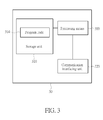
- Fig. 3 is a schematic diagram of a communication device 30 according to an example of the present invention.
- the communication device 30 can be the advanced UE, the legacy UE or the network shown in Fig. 2 , but is not limited herein.
- the communication device 30 may include a processing means 300 such as a microprocessor or Application Specific Integrated Circuit (ASIC), a storage unit 310 and a communication interfacing unit 320.
- the storage unit 310 may be any data storage device that can store a program code 314, accessed and executed by the processing means 300. Examples of the storage unit 310 include but are not limited to a subscriber identity module (SIM), read-only memory (ROM), flash memory, random-access memory (RAM), CD-ROM/DVD-ROM, magnetic tape, hard disk and optical data storage device.
- SIM subscriber identity module
- ROM read-only memory
- flash memory random-access memory
- CD-ROM/DVD-ROM magnetic tape
- hard disk and optical data storage device optical data storage device.
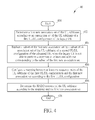
- Fig. 4 is a flowchart of a process 40 according to an example of the present invention.
- the process 40 is utilized in the advanced UE shown in Fig. 2 , for determining hybrid automatic repeat request (HARQ) resource of a UL subframe.
- the process 40 may be compiled into the program code 314 and includes the following steps:
- the advanced UE first determines a first new association set of the UL subframe according to an association set of the UL subframe of a first UL/DL configuration of the legacy UE. Then, the advanced UE replaces a subset of the first new association set by a subset of an association set of the UL subframe of a second UL/DL configuration of the advanced UE, when the legacy UE is not able to perform a reception in at least one subframe corresponding to the subset of the first new association set.
- the advanced UE configures (e.g., establishes) a mapping between at least one sequence index of the UL subframe of the first UL/DL configuration and the first new association set according to the first UL/DL configuration (i.e., the mapping of the UL subframe of the first UL/DL configuration), and determines the HARQ resource of the UL subframe according to the mapping and the first new association set.
- the advanced UE determines the HARQ resource for transmitting HARQ feedbacks according to the UL/DL configuration of the legacy UE and properties (e.g., directions) of subframes to be acknowledged.
- the subset may be the entire set. For example, the entire first new association set is replaced.
- the subset of the first new association set may be replaced by the entire association set of the UL subframe of the second UL/DL configuration.
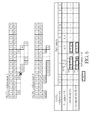
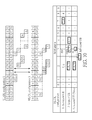
- FIG. 5 is a schematic diagram of association sets of the advanced UE and the legacy UE with different UL/DL configurations according to an example of the present invention, wherein subframe allocations corresponding to the UL/DL configurations are shown in the upper half of Fig. 5 .
- the advanced UE and the legacy UE are configured with the UL/DL configurations 3 and 4, respectively, wherein the UL/DL configuration of the legacy UE may be a SIB1 configuration.
- Association sets for various UL subframes and UL/DL configurations are shown in Fig. 5 .
- the association set of the subframe 2 which includes the association set indices 7, 6 and 11 will be used for determining HARQ resource according to the prior art, when the advanced UE intends to transmit a HARQ feedback in the subframe 2.
- the HARQ feedback corresponds to DL receptions in DL subframes corresponding to the association set indices 7, 6 and 11, wherein the DL subframes are the subframes 5, 6 and 1 of a previous frame in the present example.
- the sequence indices m mapping to the association set indices are shown on the top of the association set.
- the association set indices 7, 6 and 11 of the subframe 2 of the UL/DL configuration 2 are mapped by the sequence indices 0, 1 and 2, respectively.
- the advanced UE can determine the first new association set as the association set of the legacy UE, replace the subset of the first new association set by the subset of the association set of the UL subframe of the UL/DL configuration 3 when the legacy UE is not able to perform the reception in the at least one subframe corresponding to the subset of the first new association set, and configure the mapping between the sequence indices and the first new association set as the mapping used by the legacy UE.
- each association set index of the subset of the UL subframe of the UL/DL configuration 3 and each association set index of the rest of the first new association set are different.
- the advanced UE when the subframe 2 is considered, the advanced UE first determines the first new association set as (12, 8, 7, 11). Then, the advanced UE replaces the association set index 8 by the association set index 6, since the association set index 8 corresponds to the subframe 4 in the previous frame and the subframe 4 is actually a UL subframe. More specifically, the subframe 4 is a DL subframe determined according to the UL/DL configuration 4 operated by the legacy UE, and is the UL subframe determined according to the UL/DL configuration 3 which is the real configuration operated by the network and the advanced UE. The association set indices 7, 6 and 11 are now mapped by the sequence indices 2, 1 and 3, respectively, according to the process 40.
- association set indices 6, 7 and 11 with the sequence indices 1, 2 and 3 are used for determining the HARQ resource according to the process 40, when the advanced UE intends to transmit the HARQ feedback in the subframe 2.
- the determination of the HARQ resource in the subframe 2 is illustrated in the present example, those skilled in the art can readily determine the HARQ resource in other subframes according to the above description. Note that an interleaving for the first new association set (12, 6, 7, 11) is performed according to the UL/DL configuration 4.
- the rule for performing the interleaving used by the legacy UE is kept the same, e.g., the number of the sequence indices M which is the size of the first new association set is 4, such that the legacy UE can transmit the HARQ feedback regularly.
- the collision of the HARQ resources can be solved, while the operation of the legacy UE is not affected.
- communications between the network and the legacy UE and the advanced UE can proceed regularly.
- FIG. 6 is a schematic diagram of association sets of the advanced UE and the legacy UE with different UL/DL configurations according to an example of the present invention, wherein subframe allocations corresponding to the UL/DL configurations are shown in the upper half of Fig. 6 .
- the advanced UE and the legacy UE are configured with the UL/DL configurations 4 and 3, respectively, wherein the UL/DL configuration of the legacy UE may be a SIB1 configuration.
- Association sets for various UL subframes and UL/DL configurations are shown in Fig. 6 .
- the association set of the subframe 2 which includes the association set indices 12, 8, 7 and 11 will be used for determining HARQ resource according to the prior art, when the advanced UE intends to transmit a HARQ feedback in the subframe 2.
- the HARQ feedback corresponds to DL receptions in DL subframes corresponding to the association set indices 12, 8, 7 and 11, wherein the DL subframes are the subframes 0, 4, 5 and 1 of a previous frame in the present example.
- the sequence indices m mapping to the association set indices are shown on the top of the association set.
- the association set indices 12, 8, 7 and 11 of the subframe 2 of the UL/DL configuration 4 are mapped by the sequence indices 0, 1, 2 and 3, respectively.
- the advanced UE determines the first new association set as the association set of the legacy UE, replaces the subset of the first new association set by the subset of the association set of the UL subframe of the UL/DL configuration 4 when the legacy UE is not able to perform the reception in the at least one subframe corresponding to the subset of the first new association set, determines a second new association set of the UL subframe of the UL/DL configuration 4, and configures the mapping between the sequence indices and the first new association set as the mapping used by the legacy UE.
- each association set index of the subset of the UL subframe of the UL/DL configuration 4 and each association set index of the rest of the first new association set are different. That is, when the subframe 2 is considered, the advanced UE first determines the first new association set as (7, 6, 11). Then, the advanced UE replaces the association set index 6 by the association set index 12, since the association set index 6 corresponds to the subframe 6 in the previous frame and the subframe 6 is not available for the legacy UE. For example, the network does not schedule the subframe 6 to the legacy UE for performing the reception, and the advanced UE may be notified by the network such scheduling decision. Then, the advanced UE determines the second new association set as "8" according to the UL/DL configuration 4.
- the second new association set does not overlap with the first new association set.
- the second new association set does not overlap with the subset of the UL subframe of the UL/DL configuration 4 (i.e., "12"), as shown in Fig. 7 .
- the association set indices 7, 12 and 11 are now mapped by the sequence indices 0, 1 and 2, respectively, according to the process 40.
- a resource region e.g., physical UL control channel (PUCCH) resource region
- PUCCH physical UL control channel
- association set indices 7, 12 and 11 in the first new association set with the sequence indices 0, 1 and 2 and the second new association set with corresponding sequence index are used for determining the HARQ resource according to the process 40, when the advanced UE intends to transmit the HARQ feedback in the subframe 2. Accordingly, the HARQ resource in the resource region corresponding to the first new association set do not overlap with the HARQ resource in the resource region corresponding to the second new association set.
- a sequence index for the association set index 8 in the second new association set can be specified according to system requirements and design considerations, and is not limited herein.
- the determination of the HARQ resource in the subframe 2 is illustrated in the present example, those skilled in the art can readily determine the HARQ resource in other subframes according to the above description.
- an interleaving for the first subset of the association set (7, 12, 11) is performed according to the UL/DL configuration 3. That is, the rule for performing the interleaving used by the legacy UE is kept the same, e.g., the number of the sequence indices M is 3, such that the legacy UE can transmit the HARQ feedback regularly.
- the collision of the HARQ resources can be solved, while the operation of the legacy UE is not affected. As a result, communications between the network and the legacy UE and the advanced UE can proceed regularly.
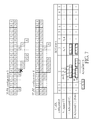
- FIG. 7 is a schematic diagram of association sets of the advanced UE and the legacy UE with different UL/DL configurations according to an example of the present invention, wherein subframe allocations corresponding to the UL/DL configurations are shown in the upper half of Fig. 7 .
- the advanced UE and the legacy UE are configured with the UL/DL configurations 4 and 3, respectively, wherein the UL/DL configuration of the legacy UE may be a SIB1 configuration.
- Association sets for various UL subframes and UL/DL configurations are shown in Fig. 7 . Detailed description of the association sets can be referred to the previous description, and is not narrated herein.
- the advanced UE determines the first new association set as the association set of the legacy UE, replaces the subset of the first new association set by the subset of the association set of the UL subframe of the UL/DL configuration 4 when the legacy UE is not able to perform the reception in the at least one subframe corresponding to the subset of the first new association set, determines a second new association set of the UL subframe of the UL/DL configuration 4, and configures the mapping between the sequence indices and the first new association set as the mapping used by the legacy UE.
- each association set index of the subset of the UL subframe of the UL/DL configuration 4 and each association set index of the rest of the first new association set are different. That is, when the subframe 2 is considered, the advanced UE first determines the first new association set as (7, 6, 11). Then, the advanced UE replaces the association set index 6 by the association set index 12, since the association set index 6 corresponds to the subframe 6 in the previous frame and the subframe 6 is not available for the legacy UE. For example, the network does not schedule the subframe 6 to the legacy UE for performing the reception, and the advanced UE may be notified by the network such scheduling decision. Then, the advanced UE determines the second new association set as (8, 7, 11) according to the UL/DL configuration 4.
- the second new association set overlaps with the first new association set.
- the second new association set does not overlap with the subset of the UL subframe of the UL/DL configuration 4 (i.e., "12"), as shown in Fig. 7 .
- the association set indices 7, 12 and 11 are now mapped by the sequence indices 0, 1 and 2, respectively, according to the process 40.
- a resource region e.g., PUCCH resource region
- the association set index 12 in the first new association set with the sequence index 1 and the second new association set with corresponding sequence indices are used for determining the HARQ resource according to the process 40, when the advanced UE intends to transmit the HARQ feedback in the subframe 2. Accordingly, the HARQ resource in the resource region corresponding to the first new association set do not overlap with the HARQ resource in the resource region corresponding to the second new association set.
- the sequence indices for the association set indices 8, 7 and 11 in the second new association set can be specified according to system requirements and design considerations, and is not limited herein.
- the determination of the HARQ resource in the subframe 2 is illustrated in the present example, those skilled in the art can readily determine the HARQ resource in other subframes according to the above description.
- an interleaving for the first subset of the association set (7, 12, 11) is performed according to the UL/DL configuration 3. That is, the rule for performing the interleaving used by the legacy UE is kept the same, e.g., the number of the sequence indices M is 3, such that the legacy UE can transmit the HARQ feedback regularly.
- the collision of the HARQ resources can be solved, while the operation of the legacy UE is not affected. As a result, communications between the network and the legacy UE and the advanced UE can proceed regularly.
- FIG. 8 is a schematic diagram of association sets of the advanced UE and the legacy UE with different UL/DL configurations according to an example of the present invention, wherein subframe allocations corresponding to the UL/DL configurations are shown in the upper half of Fig. 8 .
- the advanced UE and the legacy UE are configured with the UL/DL configurations 3 and 4, respectively, wherein the UL/DL configuration of the legacy UE may be a SIB1 configuration.
- Association sets for various UL subframes and UL/DL configurations are shown in Fig. 8 .
- the association set of the subframe 2 which includes the association set indices 7, 6 and 11 will be used for determining HARQ resource according to the prior art, when the advanced UE intends to transmit a HARQ feedback in the subframe 2.
- the HARQ feedback corresponds to DL receptions in DL subframes corresponding to the association set indices 7, 6 and 11, wherein the DL subframes are the subframes 5, 6 and 1 of a previous frame in the present example.
- the sequence indices m mapping to the association set indices are shown on the top of the association set.
- the association set indices 7, 6 and 11 of the subframe 2 of the UL/DL configuration 3 are mapped by the sequence indices 0, 1 and 2, respectively.
- the advanced UE determines the first new association set as the association set of the legacy UE, replaces the subset of the first new association set by the subset of the association set of the UL subframe of the UL/DL configuration 3 when the legacy UE is not able to perform the reception in the at least one subframe corresponding to the subset of the first new association set, determines a second new association set of the UL subframe of the UL/DL configuration 3, and configures the mapping between the sequence indices and the first new association set as the mapping used by the legacy UE.
- each association set index of the subset of the UL subframe of the UL/DL configuration 3 and each association set index of the rest of the first new association set are different. That is, when the subframe 2 is considered, the advanced UE first determines the first new association set as (12, 8, 7, 11). Then, the advanced UE replaces the association set index 8 by the association set index 6, since the association set index 8 corresponds to the subframe 4 in the previous frame and the subframe 4 is actually a UL subframe.
- the subframe 4 is a DL subframe determined according to the UL/DL configuration 4 operated by the legacy UE, and is the UL subframe determined according to the UL/DL configuration 3 which is the real configuration operated by the network and the advanced UE. Then, the advanced UE determines the second new association set as (7, 11) according to the UL/DL configuration 3.
- the second new association set overlaps with the first new association set.
- the second new association set does not overlap with the subset of the UL subframe of the UL/DL configuration 3 (i.e., "6"), as shown in Fig. 8 .
- the association set indices 12, 6, 7 and 11 are now mapped by the sequence indices 0, 1, 2 and 3, respectively, according to the process 40.
- a resource region e.g., PUCCH resource region
- association set index 6 in the first subset of the association set with the sequence index 1 and the second subset of the association set with corresponding sequence indices are used for determining the HARQ resource according to the process 40, when the advanced UE intends to transmit the HARQ feedback in the subframe 2. Accordingly, the HARQ resource in the resource region corresponding to the first new association set do not overlap with the HARQ resource in the resource region corresponding to the second new association set.
- sequence indices for the association set indices 7 and 11 in the second new association set can be specified according to system requirements and design considerations, and is not limited herein.
- the determination of the HARQ resource in the subframe 2 is illustrated in the present example, those skilled in the art can readily determine the HARQ resource in other subframes according to the above description.
- an interleaving for the first subset of the association set (12, 6, 7, 11) is performed according to the UL/DL configuration 4. That is, the rule for performing the interleaving used by the legacy UE is kept the same, e.g., the number of the sequence indices M is 4, such that the legacy UE can transmit the HARQ feedback regularly.
- the collision of the HARQ resources can be solved, while the operation of the legacy UE is not affected. As a result, communications between the network and the legacy UE and the advanced UE can proceed regularly.
- Fig. 9 is a schematic diagram of association sets of the advanced UE and the legacy UE with different UL/DL configurations according to an example of the present invention.
- the advanced UE and the legacy UE are configured with the UL/DL configurations 0 and 2, respectively, wherein the UL/DL configuration of the legacy UE may be a SIB1 configuration.
- Association sets for various UL subframes and UL/DL configurations are shown in Fig. 9 .
- Detailed description of the association sets can be referred to the previous description, and is not narrated herein.
- the legacy UE is restricted to perform receptions in the subframes 0 and 5 of the frames.
- the network only schedules the legacy UE to perform the receptions in the subframes 0 and 5 of the frames, and the advanced UE may be notified by the network such scheduling decision.
- the advanced UE determines the first new association set as the association set of the legacy UE, replaces the subset of the first new association set by the subset of the association set of the UL subframe of the UL/DL configuration 0 when the legacy UE is not able to perform the reception in the at least one subframe corresponding to the subset of the first new association set, and configures the mapping between the sequence indices and the first new association set as the mapping used by the legacy UE.
- each association set index of the subset of the UL subframe of the UL/DL configuration 0 and each association set index of the rest of the first new association set are different.
- the advanced UE when the subframe 2 is considered, the advanced UE first determines the first new association set as (8, 7, 4, 6). Then, the advanced UE replaces the association set indices 8, 4 and 6 by the association set index 6, since the association set indices 8, 4 and 6 correspond to the subframes 4, 8 and 6 where no reception is performed.
- the association set indices of the first new association set which are 6 and 7 are mapped by the sequence indices 0 and 1, respectively, according to the process 40. Then, the association set index 6 in the first new association set with the sequence index 0 is used for determining the HARQ resource according to the process 40, when the advanced UE intends to transmit the HARQ feedback in the subframe 2.
- the determination of the HARQ resource in the subframe 2 is illustrated in the present example, those skilled in the art can readily determine the HARQ resource in other subframes according to the above description.
- an interleaving for the first new association set (6, 7) is performed according to the UL/DL configuration 2. That is, the rule for performing the interleaving used by the legacy UE is kept the same, e.g., the number of the sequence indices M which is the size of the first new association set is 4, such that the legacy UE can transmit the HARQ feedback regularly.
- the collision of the HARQ resources can be solved, while the operation of the legacy UE is not affected. As a result, communications between the network and the legacy UE and the advanced UE can proceed regularly.
- FIG. 10 is a schematic diagram of association sets of the advanced UE and the legacy UE with different UL/DL configurations according to an example of the present invention, wherein subframe allocations corresponding to the UL/DL configurations are shown in the upper half of Fig. 10 .
- the advanced UE and the legacy UE are configured with the UL/DL configurations 1 and 3, respectively, wherein the UL/DL configuration of the legacy UE may be a SIB1 configuration.
- Association sets for various UL subframes and UL/DL configurations are shown in Fig. 10 .
- the association set of the subframe 3 which includes the association set index 4 will be used for determining HARQ resource according to the prior art, when the advanced UE intends to transmit a HARQ feedback in the subframe 3.
- the HARQ feedback corresponds to a DL reception in a DL subframe corresponding to the association set index 4, wherein the DL subframe is the subframe 9 of a previous frame in the present example.
- the sequence indices m mapping to the association set indices are shown on the top of the association set.
- the association set index 4 of the subframe 3 of the UL/DL configuration 1 is mapped by the sequence index 0.
- the advanced UE can determine the first new association set as the association set of the legacy UE, replace the subset of the first new association set by the subset of the association set of the UL subframe of the UL/DL configuration 1, when the legacy UE is not able to perform the reception in the at least one subframe corresponding to the subset of the first new association set, and configure the mapping between the sequence indices and the first new association set as the mapping used by the legacy UE.
- each association set index of the subset of the UL subframe of the UL/DL configuration 1 and each association set index of the rest of the first new association set are different.
- the advanced UE when the subframe 3 is considered, the advanced UE first determines the first new association set as (6, 5). Then, the advanced UE replaces the association set indices 6 and 5 by the association set index 4, since the association set indices 6 and 5 correspond to the subframes 7 and 8 in the previous frame and the subframes 7 and 8 are actually UL subframes. More specifically, the subframes 7 and 8 are DL subframes determined according to the UL/DL configuration 3 operated by the legacy UE, and are the UL subframes determined according to the UL/DL configuration 1 which is the real configuration operated by the network and the advanced UE.
- the association set index 4 with a sequence index (e.g., 0) is used for determining the HARQ resource according to the process 40, when the advanced UE intends to transmit the HARQ feedback in the subframe 3.
- the advanced UE can actually stop configuring the mapping and determine the HARQ resource according to the first new association set without using the mapping, when the advanced UE replaces the first new association set completely by the subset of the association set of the UL subframe of the second UL/DL configuration which is true in the present example.
- the reason is that the advanced UE does not need to take the operation of the legacy UE into consideration, when the association indices which may be used by the legacy UE are completely replaced.
- the determination of the HARQ resource in the subframe 3 is illustrated in the present example, those skilled in the art can readily determine the HARQ resource in other subframes according to the above description.
- the collision of the HARQ resources can be solved, while the operation of the legacy UE is not affected.
- communications between the network and the legacy UE and the advanced UE can proceed regularly.
- the process 40 and the above description can be applied to the case of carrier aggregation (CA), when 2 UL/DL configurations which correspond to 2 component carriers configured to the advanced UE, respectively, are considered.
- the first UL/DL configuration may correspond to a primary cell (e.g., primary component carrier), and the second UL/DL configuration may correspond to a secondary cell (e.g., secondary component carrier).
- the operation related to the primary cell should not be affected, since most control information is transmitted via the primary cell.
- the process 40 and the above description can be readily applied (i.e., extended) to the case of the CA, after replacing the legacy UE by the primary cell (i.e., the first UL/DL configuration of the primary cell) and replacing the advanced UE by the secondary cell (i.e., the second UL/DL configuration of the secondary cell) in the abovementioned description and examples.
- the present invention provides a method for handling HARQ Resource in the TDD mode. Since the collision of the HARQ resources occurred due to different UL/DL configurations of the advanced UE and the legacy UE is solved, while the operation of the legacy UE is not affected. As a result, communications between the network and the legacy UE and the advanced UE can proceed regularly.
Landscapes
- Engineering & Computer Science (AREA)
- Computer Networks & Wireless Communication (AREA)
- Signal Processing (AREA)
- Mobile Radio Communication Systems (AREA)
Applications Claiming Priority (2)
| Application Number | Priority Date | Filing Date | Title |
|---|---|---|---|
| US201261656493P | 2012-06-06 | 2012-06-06 | |
| US13/909,043 US9160475B2 (en) | 2012-06-06 | 2013-06-03 | Method of handling HARQ resource in TDD system and related communication device |
Publications (3)
| Publication Number | Publication Date |
|---|---|
| EP2672645A2 true EP2672645A2 (de) | 2013-12-11 |
| EP2672645A3 EP2672645A3 (de) | 2017-01-18 |
| EP2672645B1 EP2672645B1 (de) | 2025-12-31 |
Family
ID=48577563
Family Applications (1)
| Application Number | Title | Priority Date | Filing Date |
|---|---|---|---|
| EP13170820.8A Active EP2672645B1 (de) | 2012-06-06 | 2013-06-06 | Verfahren zur Handhabung einer HARQ-Ressource in TDD-System und zugehörige Kommunikationsvorrichtung |
Country Status (4)
| Country | Link |
|---|---|
| US (1) | US9160475B2 (de) |
| EP (1) | EP2672645B1 (de) |
| CN (1) | CN103475457B (de) |
| TW (1) | TWI502918B (de) |
Families Citing this family (4)
| Publication number | Priority date | Publication date | Assignee | Title |
|---|---|---|---|---|
| WO2014068839A1 (ja) * | 2012-10-30 | 2014-05-08 | パナソニック株式会社 | 端末装置、基地局装置、受信方法及び送信方法 |
| US10237020B2 (en) * | 2013-07-19 | 2019-03-19 | Sharp Kabushiki Kaisha | Systems and methods for carrier aggregation |
| US9668288B2 (en) * | 2014-03-19 | 2017-05-30 | Acer Incorporated | Method of handling device-to-device operation and related communication device |
| WO2018170670A1 (en) | 2017-03-20 | 2018-09-27 | Qualcomm Incorporated | Techniques to handle collisions between uplink transmissions and downlink transmissions over a wireless spectrum |
Family Cites Families (15)
| Publication number | Priority date | Publication date | Assignee | Title |
|---|---|---|---|---|
| BRPI0714637A2 (pt) | 2006-08-21 | 2013-05-07 | Interdigital Tech Corp | mÉtodo e aparelho de alocaÇço dinÂmica de processos harq no link superior |
| CN101505208A (zh) | 2008-02-04 | 2009-08-12 | 三星电子株式会社 | 分配上行ack/nack信道的方法 |
| WO2009109070A1 (zh) * | 2008-03-07 | 2009-09-11 | 上海贝尔阿尔卡特股份有限公司 | 与兼容第一协议和第二协议的bs交互工作的ms及其方法 |
| KR101636089B1 (ko) * | 2008-04-21 | 2016-07-04 | 애플 인크. | Harq 프로토콜을 위한 방법 및 시스템 |
| CN104184567B (zh) * | 2009-01-24 | 2019-11-22 | 华为技术有限公司 | Ack/nack信道资源分配及确认信息处理的方法及装置 |
| WO2010129295A1 (en) | 2009-04-28 | 2010-11-11 | Zte U.S.A., Inc. | Method and system for dynamic adjustment of downlink/uplink allocation ratio in lte/tdd systems |
| US9184899B2 (en) | 2009-10-14 | 2015-11-10 | Qualcomm Incorporated | Downlink association set for uplink ACK/NACK in time division duplex system |
| US9363059B2 (en) * | 2010-04-02 | 2016-06-07 | Acer Incorporated | Method of handling component carrier activation and deactivation and communication device thereof |
| KR101673906B1 (ko) * | 2010-04-29 | 2016-11-22 | 삼성전자주식회사 | Ofdm 시스템에서 공간 다중화 제어 채널 지원을 위한 상향 링크 ack/nack 채널의 맵핑 방법 및 장치 |
| US8649363B2 (en) * | 2010-06-01 | 2014-02-11 | Htc Corporation | Method of hybrid automatic repeat request entity handling and communication device thereof |
| US8812924B2 (en) * | 2010-06-22 | 2014-08-19 | Htc Corporation | Method of handling a damage information-assisted hybrid ARQ scheme and related communication device |
| EP2421191A3 (de) | 2010-08-19 | 2012-08-08 | HTC Corporation | Verfahren zur Handhabung eines Uplink-Berichterstattungstriggers und zugehörige Kommunikationsvorrichtung |
| US8670379B2 (en) * | 2010-10-02 | 2014-03-11 | Sharp Kabushiki Kaisha | Uplink control information multiplexing on the physical uplink control channel for LTE-A |
| WO2012106840A1 (en) * | 2011-02-10 | 2012-08-16 | Renesas Mobile Corporation | Resource allocation for flexible tdd configuration |
| KR102401006B1 (ko) * | 2011-09-30 | 2022-05-24 | 인터디지탈 패튼 홀딩스, 인크 | 감소된 채널 대역폭을 사용하는 장치 통신 |
-
2013
- 2013-06-03 US US13/909,043 patent/US9160475B2/en active Active
- 2013-06-06 CN CN201310223492.6A patent/CN103475457B/zh active Active
- 2013-06-06 EP EP13170820.8A patent/EP2672645B1/de active Active
- 2013-06-06 TW TW102120118A patent/TWI502918B/zh active
Non-Patent Citations (1)
| Title |
|---|
| None * |
Also Published As
| Publication number | Publication date |
|---|---|
| CN103475457A (zh) | 2013-12-25 |
| CN103475457B (zh) | 2016-12-28 |
| EP2672645B1 (de) | 2025-12-31 |
| US9160475B2 (en) | 2015-10-13 |
| TWI502918B (zh) | 2015-10-01 |
| EP2672645A3 (de) | 2017-01-18 |
| US20130329703A1 (en) | 2013-12-12 |
| TW201351919A (zh) | 2013-12-16 |
Similar Documents
| Publication | Publication Date | Title |
|---|---|---|
| US9807746B2 (en) | Method of handling hybrid automatic repeat request feedback and related communication device | |
| EP3211813B1 (de) | Vorrichtung und verfahren zur handhabung von hybrider automatischer wiederholungsanfragenübertragung | |
| EP2696529B1 (de) | Verfahren zur Handhabung des Kommunikationsbetriebs in einem TDD-System und zugehörige Vorrichtung | |
| US9882699B2 (en) | Device and method of handling device-to-cellular communication | |
| US20150098370A1 (en) | Method of Handling HARQ Resource for FDD Carrier and Related Communication Device | |
| US9722719B2 (en) | Method of handling HARQ resource in TDD system and related communication device | |
| US9929799B2 (en) | Network and user equipment of HD-FDD communication system for handling HARQ | |
| US9635645B2 (en) | Method of handling resource allocation in TDD system and related communication device | |
| EP2757726B1 (de) | Verfahren zur handhabung von kommunikationsoperationen und zugehörige kommunikationsvorrichtung | |
| US9590770B2 (en) | Method of handling hybrid automatic repeat request feedback and related communication device | |
| US9160475B2 (en) | Method of handling HARQ resource in TDD system and related communication device | |
| EP2680653A1 (de) | Verfahren zur Handhabung der Ressourcenzuweisung in TDD-System und zugehörige Kommunikationsvorrichtung | |
| US9906350B2 (en) | Method of handling interference mitigation and related communication device |
Legal Events
| Date | Code | Title | Description |
|---|---|---|---|
| PUAI | Public reference made under article 153(3) epc to a published international application that has entered the european phase |
Free format text: ORIGINAL CODE: 0009012 |
|
| AK | Designated contracting states |
Kind code of ref document: A2 Designated state(s): AL AT BE BG CH CY CZ DE DK EE ES FI FR GB GR HR HU IE IS IT LI LT LU LV MC MK MT NL NO PL PT RO RS SE SI SK SM TR |
|
| AX | Request for extension of the european patent |
Extension state: BA ME |
|
| PUAL | Search report despatched |
Free format text: ORIGINAL CODE: 0009013 |
|
| AK | Designated contracting states |
Kind code of ref document: A3 Designated state(s): AL AT BE BG CH CY CZ DE DK EE ES FI FR GB GR HR HU IE IS IT LI LT LU LV MC MK MT NL NO PL PT RO RS SE SI SK SM TR |
|
| AX | Request for extension of the european patent |
Extension state: BA ME |
|
| RIC1 | Information provided on ipc code assigned before grant |
Ipc: H04L 1/18 20060101AFI20161209BHEP |
|
| STAA | Information on the status of an ep patent application or granted ep patent |
Free format text: STATUS: REQUEST FOR EXAMINATION WAS MADE |
|
| 17P | Request for examination filed |
Effective date: 20170711 |
|
| RBV | Designated contracting states (corrected) |
Designated state(s): AL AT BE BG CH CY CZ DE DK EE ES FI FR GB GR HR HU IE IS IT LI LT LU LV MC MK MT NL NO PL PT RO RS SE SI SK SM TR |
|
| RAP1 | Party data changed (applicant data changed or rights of an application transferred) |
Owner name: ACER INCORPORATED |
|
| STAA | Information on the status of an ep patent application or granted ep patent |
Free format text: STATUS: EXAMINATION IS IN PROGRESS |
|
| 17Q | First examination report despatched |
Effective date: 20200507 |
|
| GRAP | Despatch of communication of intention to grant a patent |
Free format text: ORIGINAL CODE: EPIDOSNIGR1 |
|
| STAA | Information on the status of an ep patent application or granted ep patent |
Free format text: STATUS: GRANT OF PATENT IS INTENDED |
|
| INTG | Intention to grant announced |
Effective date: 20250801 |
|
| GRAS | Grant fee paid |
Free format text: ORIGINAL CODE: EPIDOSNIGR3 |
|
| GRAA | (expected) grant |
Free format text: ORIGINAL CODE: 0009210 |
|
| STAA | Information on the status of an ep patent application or granted ep patent |
Free format text: STATUS: THE PATENT HAS BEEN GRANTED |
|
| AK | Designated contracting states |
Kind code of ref document: B1 Designated state(s): AL AT BE BG CH CY CZ DE DK EE ES FI FR GB GR HR HU IE IS IT LI LT LU LV MC MK MT NL NO PL PT RO RS SE SI SK SM TR |
|
| REG | Reference to a national code |
Ref country code: CH Ref legal event code: F10 Free format text: ST27 STATUS EVENT CODE: U-0-0-F10-F00 (AS PROVIDED BY THE NATIONAL OFFICE) Effective date: 20251231 Ref country code: GB Ref legal event code: FG4D |
|
| REG | Reference to a national code |
Ref country code: DE Ref legal event code: R096 Ref document number: 602013087255 Country of ref document: DE |
|
| REG | Reference to a national code |
Ref country code: IE Ref legal event code: FG4D |
|
| REG | Reference to a national code |
Ref country code: LT Ref legal event code: MG9D |
|
| PG25 | Lapsed in a contracting state [announced via postgrant information from national office to epo] |
Ref country code: NO Free format text: LAPSE BECAUSE OF FAILURE TO SUBMIT A TRANSLATION OF THE DESCRIPTION OR TO PAY THE FEE WITHIN THE PRESCRIBED TIME-LIMIT Effective date: 20260331 |
|
| PG25 | Lapsed in a contracting state [announced via postgrant information from national office to epo] |
Ref country code: FI Free format text: LAPSE BECAUSE OF FAILURE TO SUBMIT A TRANSLATION OF THE DESCRIPTION OR TO PAY THE FEE WITHIN THE PRESCRIBED TIME-LIMIT Effective date: 20251231 Ref country code: HR Free format text: LAPSE BECAUSE OF FAILURE TO SUBMIT A TRANSLATION OF THE DESCRIPTION OR TO PAY THE FEE WITHIN THE PRESCRIBED TIME-LIMIT Effective date: 20251231 |
|
| PG25 | Lapsed in a contracting state [announced via postgrant information from national office to epo] |
Ref country code: RS Free format text: LAPSE BECAUSE OF FAILURE TO SUBMIT A TRANSLATION OF THE DESCRIPTION OR TO PAY THE FEE WITHIN THE PRESCRIBED TIME-LIMIT Effective date: 20260331 |
|
| PG25 | Lapsed in a contracting state [announced via postgrant information from national office to epo] |
Ref country code: LV Free format text: LAPSE BECAUSE OF FAILURE TO SUBMIT A TRANSLATION OF THE DESCRIPTION OR TO PAY THE FEE WITHIN THE PRESCRIBED TIME-LIMIT Effective date: 20251231 |