EP2673832B1 - Verfahren zur bereitstellung eines antennenmastes und eines antennenmastsystems - Google Patents
Verfahren zur bereitstellung eines antennenmastes und eines antennenmastsystems Download PDFInfo
- Publication number
- EP2673832B1 EP2673832B1 EP11707723.0A EP11707723A EP2673832B1 EP 2673832 B1 EP2673832 B1 EP 2673832B1 EP 11707723 A EP11707723 A EP 11707723A EP 2673832 B1 EP2673832 B1 EP 2673832B1
- Authority
- EP
- European Patent Office
- Prior art keywords
- modules
- mast
- module
- antenna
- utilized
- Prior art date
- Legal status (The legal status is an assumption and is not a legal conclusion. Google has not performed a legal analysis and makes no representation as to the accuracy of the status listed.)
- Active
Links
Images



Classifications
-
- H—ELECTRICITY
- H01—ELECTRIC ELEMENTS
- H01Q—ANTENNAS, i.e. RADIO AERIALS
- H01Q1/00—Details of, or arrangements associated with, antennas
- H01Q1/12—Supports; Mounting means
- H01Q1/1242—Rigid masts specially adapted for supporting an aerial
-
- H—ELECTRICITY
- H01—ELECTRIC ELEMENTS
- H01Q—ANTENNAS, i.e. RADIO AERIALS
- H01Q1/00—Details of, or arrangements associated with, antennas
- H01Q1/44—Details of, or arrangements associated with, antennas using equipment having another main function to serve additionally as an antenna, e.g. means for giving an antenna an aesthetic aspect
Definitions
- the technical field concerned relates to a method of providing an antenna mast for a wireless communication system and a modular antenna mast system for providing antenna masts of a wireless communication system.
- Wireless communication systems using radio communication comprise transceiver arrangements and processors comprised in what may be referred to as base stations, radio network controllers, or node B:s. Furthermore, antennas are connected to the transceiver arrangements and are required for transmitting and receiving radio signals. The antennas may for instance be arranged on an antenna mast. A variety of masts have been suggested in the prior art but in practice a steel lattice mast is the most common type of mast used.
- Wireless communication such as mobile internet access by means of mobile communication equipment is demanded by more people and more devices.
- radio traffic within the wireless communication systems increases and so does the required number of access points for the mobile communication equipment.
- For each access point at least one antenna is required and thus the number of antennas that are required increases with the increased demand in mobile internet access.
- EP1198024 discloses an antenna mast wherein an antenna is raised and lowered along a guiding means inside the antenna mast.
- the antenna mast comprises a carrying pipe for a lamp.
- US6335709 discloses a service tower integrating a water tank and an antenna mast in a single structure.
- EP1286412 discloses a radio tower with a central supporting tower structure comprising several modules of the same outer shape being arranged one above the other.
- the modules house for instance transmission and power supply equipment.
- the tower comprises stiff ring-shaped portions of covering made from glass fibre reinforced plastic material, inside which the modules of the radio tower are arranged.
- Each ringshaped covering is supported by a module of the radio tower.
- screens for providing information or announcements may be arranged.
- the use of the covering for housing small shops or ticket machines Is suggested.
- WO98/58420 discloses a wireless communication pole system.
- the system Is fully integrated for rapid installation.
- the system comprises a pole, a base assembly, and an antenna assembly.
- the pole doubles as a banner-carrying light pole.
- WO 02/073736 discloses an antenna housing for at least one antenna, such as mobile radio antennae or directional antennae.
- the antenna housing at least in some sections, has the shape of at least a part of a lighting device and/or of an optical signaling equipment.
- a light mains cable and an antenna feed can be arranged inside of a post.
- WO 02/50943 discloses a housing for at least one antenna, or an antenna arrangement, such as, for example, mobile radio antennae or directional transmission antennae.
- a wall of the housing Is at least partly transparent and at least one recess for at least one optical information support is provided.
- the recess is for example formed by two sidewalls, which comprise the wall.
- WO 2007/108731 discloses a hollow antenna tower structure for use in a wireless communications network.
- the tower comprises tubular tower sections made of concrete, and having a generally hollowed cross section.
- a movable base station unit having at least one antenna and at least one micro wave link, is being disposed Inside the tubular tower.
- the whole base station unit Is movable up and down inside the tower by the aid of an elevator system.
- the tower further comprises at least one entrance into the tower and a climbing facility and/or a second elevator system, inside the tower, giving access to the base station unit.
- WO 2006/081679 discloses a method of modular pole construction and an elongate modular pole structure.
- a first step of the method involves providing hollow tapered pole section modules, each module having a first open end and an opposed second open end. A cross-section of the second end Is less than a cross-section of the first end.
- the modules are stacked to form an elongated modular pole structure of a selected length by mating the second end of a first module with the first end of a second module.
- the first and second modules may have different structural properties, such that poles having desired structural properties can be constructed by selectively combining modules having differing structural properties.
- WO 2007/136241 discloses a portable mobile communication tower use for wireless communication applications comprising: a) A portable cage having side panels and supporting frames assembled thereof forming an enclosed base structure for the tower, wherein the structure is provided with adjustable stabilizer stands and supporting legs for leveling and supporting the cage on uneven surface respectively. b) A mast or lattice tower constructed in modular form and having an identical but In different predetermined size of sectional mast permitting the sectional mast to be assembled section-by-section by eid of a removable winch assembly. c) A bracing member for supporting the mast or lattice tower and serve as a supporting means to restrict sway movement of the sectional mast during assembling process.
- the portable mobile communication tower can be easily transported and rapidly assembled in place of use; and is able to dismantled and removed from the place in a simple, quick and safe mode so that can be readily transportable elsewhere or to be stored.
- a high number of access points, and accordingly antennas, for wireless communication systems puts a requirement on associated antenna masts to be accepted by the public.
- Providing a further function other than supporting an antenna arrangement in connection with an antenna mast, as disclosed in the above-mentioned prior art documents, may facilitate such acceptance.
- An object is thus to at least alleviate the above mentioned problem.
- the object Is achieved by a method of providing an antenna mast for a wireless communication system.
- the antenna mast comprising a mast body adapted to form a supporting structure for an antenna arrangement of the wireless communication system.
- the mast body comprises a lower module and an upper module.
- the upper module Is adapted to comprise the antenna arrangement.
- At least one of the lower module and the upper module is adapted to comprise a device to be utilized for a further function other than supporting the antenna arrangement.
- the method comprises:
- the antenna mast provided according to the method, assembled including the selected lower module and upper module may be designed for a specific further function, which may be different than a further function provided in a different antenna mast assembled from the same set of modules, high flexibility in the adaptation of antenna masts is provided. As a result, the above mentioned object is achieved.
- a set of modules comprising different lower modules and/or different upper modules may be a rational and advantageous way of manufacturing different antenna masts adapted to specific requirements at different antenna mast sites.
- the device to be utilized for the further function may be a traffic light or a street sign.
- a lower module forming a base of the mast body may be selected from the set of modules and an upper module adapted to receive the lights of a traffic light, or adapted to form the street sign, may be selected from the set of modules.
- antenna mast site there may be a bus stop, in which case a lower module comprising a bench may be selected from the set of modules and an upper module adapted to support the antenna arrangement may be selected from the set of modules.
- a further example antenna mast site may be situated in a park area, in which case a lower module selected from the set of modules may comprise a waste bin and the upper module selected from the set of modules may be adapted to comprise a street light. Since different mast bodies may be provided, the antenna masts at different sites assembled from the set of modules may blend in well in a present environment. Public acceptance of antenna masts will thus be achieved in a rational manner.
- the upper module being adapted to comprise the antenna arrangement encompasses that the antenna arrangement may be mounted to the upper module or arranged inside the upper module.
- the antenna arrangement is arranged at an elevated position on the antenna mast. Accordingly, the antenna arrangement may be provided at a top of the upper module, or it is alternatively foreseen that some portions of the upper module may be provided above the antenna arrangement.
- the set of modules comprises at least one lower and one upper module, and at least one further of the lower and upper modules.
- a wireless communication system may comprise transceiver arrangements and processors providing radio coverage over at least one respective geographical area forming a cell.
- User equipment such as mobile telephones, are served in the cells by the respective transceiver arrangements and processors and communicate with the respective transceiver arrangements and processors.
- An antenna mast may be erected at an antenna site in a cell. Typically, such antenna sites are outdoors in areas frequented by the public. In such areas, use of wireless communication systems is to be expected.
- the further function may be a function other than a function directly related to the wireless communication system. It is to be understood that the device to be utilized for the further function of a specific assembled antenna mast may make use of the wireless communication system but the device is not involved in communication between random users of the wireless communication system utilizing the antenna arrangement of the specific assembled antenna mast. Put differently, the communication between the random users of the wireless communication system is performed independently of any communication relating to the device to be utilized for the further function.
- a device to be utilized for a further function may communicate e.g. its status of operation to a service provider via the wireless communication system.
- the set of modules may comprise at least two different lower modules and/or at least two different middle modules and/or at least two different upper modules, and wherein selecting may comprise:
- assembling the antenna mast body may comprise:
- a lower module of the set of modules may form a supporting structure which is adapted to carry a weight of a middle module, an upper module, and devices arranged in the middle and upper modules.
- a lower module may carry the weight of an assembled mast body and be fastened to the ground to support the relevant antenna mast.
- a modular antenna mast system for providing antenna masts of a wireless communication system, at least some of the antenna masts of the antenna mast system each comprising a mast body adapted to form a supporting structure for an antenna arrangement of the wireless communication system.
- the mast body comprises a lower module and an upper module, the upper module being adapted to comprise the antenna arrangement.
- At least one of the lower module and the upper module is adapted to comprise a device to be utilized for a further function other than supporting the antenna arrangement.
- the antenna mast system comprises a set of modules comprising lower and upper modules, wherein the set of modules comprises at least two different lower modules and/or at least two different upper modules such that differently configured mast bodies comprising a lower and an upper module are able to be assembled from the set of modules.
- an antenna mast may be designed for a specific further function, which may be different than a further function provided in a different antenna mast assembled from the same set of modules. Again, high flexibility in the adaptation of antenna masts to a particular antenna site is provided. As a result, the above mentioned object is achieved.
- the further function may be a function other than a function directly related to the wireless communication system. It is to be understood that the device to be for the further function of a specific assembled antenna mast may make use of the wireless communication system but the device is not involved in communication between random users of the wireless communication system utilizing the antenna arrangement of the specific assembled antenna mast. For instance, a device to be utilized for a further function may communicate its status of operation to a service provider via the wireless communication system.
- a lower module may be arranged substantially below an upper module in an assembled mast body of an antenna mast of the antenna mast system.
- a lower module and an upper module may form at least part of an outer surface of an assembled mast body of an antenna mast of the antenna mast system.
- a mast body assembled from the set of modules may comprise a continuous outer surface.
- a lower module of the set of modules may form a supporting structure which is adapted to carry at least a weight of an upper module and devices arranged in the upper module of an assembled mast body.
- a lower module may carry the weight of an assembled mast body and be fastened to the ground to support the relevant antenna mast.
- an assembled mast body of an antenna mast of the antenna mast system may be adapted to house the device to be utilized for the further function substantially within the outer surface of the assembled mast body.
- the device to be utilized for the further function may blend in well with the mast body to form a homogeneous antenna mast.
- the device to be utilized for the further function may be protectedly arranged in the antenna mast body.
- At least some of the antennas masts of the antenna mast system may have a height of 3 - 8 metres.
- the differently configured mast bodies of the modular antenna mast system may be arranged to comprise different devices to be utilized for the further function depending on which modules are selected from the set of modules for a particular mast body.
- the arranging of a particular device to be utilized for the further function in the mast body may thus depend on which specific module is selected from the set of modules.
- the device may be arranged in a module before the mast body is assembled or after the mast body has been assembled.
- At least one of the differently configured mast bodies may be adapted to house therein at least a transmitter and/or a receiver and a processor of the wireless communication system.
- an antenna mast with a mast body may be provided, which may be adapted to provide for the device for performing the further function, and which also may house key components of the wireless communication system.
- At least one lower module of the set of modules may be adapted to comprise the device to be utilized for the further function.
- the device to be utilized for the further function may comprise a bench, a roof arrangement, a waste bin, a vending machine, an electronic screen, a parking meter, a traffic light, a lighting arrangement, a card-reading device, an electric power socket, or a life-saving device such as a defibrillator.
- At least one upper module of the set of modules may be adapted to comprise the device to be utilized for the further function, besides the antenna arrangement.
- the device to be utilized for the further function may comprises: a sign, a lighting arrangement, a clock, a roof arrangement, a traffic light, or an electronic screen.
- the set of modules may comprise at least two different lower modules and/or at least two different middle modules and/or at least two different upper modules such that differently configured mast bodies comprising a middle module are able to be assembled from the set of modules.
- antenna masts comprising a middle module besides upper and lower modules may be provided.
- the middle modules being comprised in the set of modules ensures flexibility to provide an antenna mast adapted for a specific antenna mast site.
- a middle module may be arranged substantially between a lower module and an upper module of an assembled mast body of an antenna mast of the antenna mast system.
- At least one middle module of the set of modules may be adapted to comprise the device to be utilized for the further function.
- the device to be utilized for the further function may comprise: a traffic light, an electronic screen, a roof arrangement, or a lighting arrangement.
- a lower module forms a supporting structure which is adapted to carry a weight of a middle module, an upper module, and devices arranged in the middle and upper modules.
- a lower module may carry the weight of an assembled mast body and be fastened to the ground to support the relevant antenna mast.
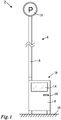
- Fig. 1 illustrates an antenna mast 2 according to embodiments.
- the antenna mast 2 comprises a mast body 4 comprising a lower module 6 and an upper module 8.
- the lower module 6 is attached to the ground 10 and supports the mast body 4 and the antenna mast 2 in its upright position.
- the lower module 6 and the upper module 8 have been assembled to form the mast body 4.
- the lower module 6 and the upper module 8 have been selected from a set of modules comprising different lower modules and different upper modules.
- the antenna mast 2 forms part of a wireless communication system.
- the upper module supports an antenna arrangement of the wireless communication system.
- the mast body 4 may house a transceiver arrangement and a processor of the wireless communication system.
- the transceiver arrangement may comprise a separate transmitter and a separate receiver, or a combined transceiver.
- the transceiver arrangement and the processor may be comprised in one unit.
- the antenna arrangement, the transceiver arrangement and the processor are involved in communication between random users of the wireless communication system, such as two persons communicating via mobile telephone or a wireless device which via a web browser accesses a website stored on a server.
- the lower module 6 carries the weight of the upper module 8, and the antenna arrangement as well as any transceiver arrangement and processor in the mast body 4.
- the upper module 8 comprises a device to be utilized for a further function, i.e. a function other than supporting the antenna arrangement.
- the device to be utilized for the further function of the upper module is a sign 12.
- the sign 12 indicates a vehicle parking facility.
- the antenna arrangement supported by the antenna mast is arranged inside the sign 12.
- the lower module 6 comprises devices to be utilized for further functions.
- a first device comprises an electronic screen 14 on which information may be presented.
- the screen 14 may be a touch screen such that a user may provide input to the first device.
- a second device comprises a card-reading device 16.
- the card-reading device 16 may for instance read plastic cards provided with a magnetic strip and/or a readable chip, such as a credit card.
- a third device to be utilized for a further function is a parking meter 18 comprising the electronic screen 14 and the card-reading device 16.
- a vehicle owner who desires to park his vehicle in the parking facility indicated by the sign 12 may thus receive information about the parking fee via the screen 14 and via the touch screen input the duration for parking the vehicle.
- the user may insert a credit card in the card-reading device 16 to pay for parking the vehicle.
- a receipt may be printed by a non-shown printer.
- the printer may form a fourth device to be utilized for a further function of the lower module 6.
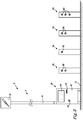
- Fig. 2 illustrates an antenna mast 2 according to embodiments.
- the antenna mast 2 comprises a mast body 4 comprising a lower module 6 and an upper module 8. Again, the lower module 6 is attached to the ground 10 and supports the mast body 4 and the antenna mast 2 in its upright position.
- the mast body 4 has been assembled from the lower module 6 and the upper module 8, which have been selected from a set of modules comprising different lower modules and different upper modules.
- the antenna mast 2 forms part of a wireless communication system and at an upper end of the antenna mast 2, the upper module 8 supports an antenna arrangement of the wireless communication system.
- the mast body 4 may house a transceiver arrangement and a processor of the wireless communication system.
- the upper module 8 comprises a device to be utilized for a further function in the form of a sign 12 and the lower module 6 comprises several devices to be utilized for further functions.
- the antenna mast 2 comprises an arrangement 20 for charging an electric vehicle.
- the sign 12 indicates such an arrangement.
- the lower module 6 thus comprises a device to be utilized for a further function in the form of an arrangement 20 for charging an electric vehicle.
- the arrangement 20 comprises three devices to be utilized for a further function; a first device comprising an electronic screen 14, a second device comprising a card-reading device 16, and a third device comprising an electric power socket 22.
- the electronic screen 14 and the card-reading device 16 may function as mentioned above in connection with the parking meter.
- the electric power socket 22 is provided for an owner of an electric vehicle to charge the electric vehicle.
- a number of separate charging posts 24, each comprising one or more electric power sockets 22, may be connected to the arrangement 20 for charging an electronic vehicle. A user desiring to charge a vehicle may thus be directed by instructions on the screen 14 to an available power socket 22 on one of the posts 24 for charging the vehicle.
- the lower modules 6 and the upper modules 8 illustrated in Figs. 1 and 2 form part of a set of modules. Accordingly, the set of modules comprises at least two different lower modules 6 and at least two different upper modules 8.
- the set of modules may comprise further lower modules 6 and/or upper modules 8 of the same kind as illustrated in Figs. 1 and 2 and/or of a different kind than illustrated in Figs. 1 and 2 .
- An antenna mast system may comprise the set of modules.
- differently configured mast bodies 4 may be assembled from the set of modules.
- a method of providing an antenna mast 2 may thus comprise selecting a lower module 6 and an upper module 8 from a set of modules, and assembling a mast body 4 including the selected lower module 6 and the selected upper module 8 to form an assembled mast body 4.
- Fig. 3 illustrates an antenna mast 2 according to embodiments.
- the antenna mast 2 comprises a mast body 4 comprising a lower module 6, a middle module 30, and an upper module 8.
- the lower module 6 is attached to the ground and supports the mast body 4 and the antenna mast 2 in its upright position.
- the mast body 4 has been assembled from the lower module 6, the middle module 30, and the upper module 8, which have been selected from a set of modules comprising different lower modules, different middle modules, and different upper modules.
- the antenna mast 2 forms part of a wireless communication system and at an upper end of the antenna mast 2, the upper module 8 supports an antenna arrangement of the wireless communication system.
- the mast body 4 may house a transceiver arrangement and a processor of the wireless communication system.
- the antenna mast 2 is adapted to be placed at an antenna site where members of the public may want to sit down or may want to know the time of day, such as at a public transportation station or at a shopping centre.
- the upper module comprises a device to be utilized for a further function other than supporting the antenna arrangement in the form of a clock 32.
- the lower module 6 thus comprises a device to be utilized for a further function in the form of a bench 34.
- the middle module 30 in these embodiments forms an extension for positioning the clock 32 and the antenna arrangement of the upper module 8 at a suitable height, such as at 3 - 8 metres above the ground.
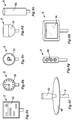
- Figs. 4a - 4i illustrate embodiments of lower modules 6 of antenna masts.
- the lower modules 6 illustrated in Figs. 4a - 4e, and 4g - 4i each comprise at least one device to be utilized for a further function, i.e. a function other than supporting an antenna arrangement of a relevant antenna mast.
- Fig. 4a illustrates a lower module 6 comprising a device to be utilized for a further function in the form of a vending machine 40.
- Fig. 4b illustrates a lower module 6 comprising a device to be utilized for a further function in the form of a parking meter 18.
- Fig. 4c illustrates a lower module 6 comprising a device to be utilized for a further function in the form of an electronic screen 14.
- Fig. 4a - 4i illustrate embodiments of lower modules 6 of antenna masts.
- the lower modules 6 illustrated in Figs. 4a - 4e, and 4g - 4i each comprise at least one device to be utilized for
- FIG. 4d illustrates a lower module 6 comprising a device to be utilized for a further function in the form of an electronic screen 14.
- the electronic screens illustrated in Figs. 4c and 4d are of different sizes. The larger screen 14 of Fig. 4d may be suited for public announcements or commercial messages whereas the smaller screen of Fig. 4c may be utilized for providing information to one person.
- Fig. 4e illustrates a lower module 6 comprising a device to be utilized for a further function in the form of a waste bin 42.
- Fig. 4f illustrates a lower module 6 without any device to be utilized for a further function. However, inside this lower module 6 there may be arranged parts of the wireless communication system.
- FIG. 4g illustrates a lower module 6 comprising a device to be utilized for a further function in the form of a traffic light 44 for a pedestrian or bicycle crossing.
- Fig. 4h illustrates a lower module 6 comprising a first device to be utilized for a further function in the form of a lighting arrangement 45, such as an electric lamp, and a second device to be utilized for a further function in the form of a roof arrangement 46.
- Fig. 4i illustrates a lower module 6 comprising a device to be utilized for a further function in the form of a defibrillator 47. At least the electrodes of the defibrillator 47 are arranged in a compartment inside the lower module 6.
- At least the electrodes of the defibrillator 47 may be taken out of the compartment for aiding a person in need.
- At least one of the devices to be utilized for a further function illustrated in each of the Figs. 4a - 4e, and 4g - 4i is housed substantially within the lower modules 6 and thus within an outer surface of the lower module 6. Portions of the devices which need to be accessible or visible in use are arranged at an outer surface of the lower module 6.
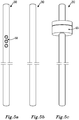
- Figs 5a - 5e illustrate embodiments of middle modules 30 of antenna masts.
- the middle modules 30 illustrated in Figs. 5a , and 5c - 5e each comprise at least one device to be utilized for a further function, i.e. a function other than supporting an antenna arrangement of a relevant antenna mast.
- Fig. 5a illustrates of a middle module 30 comprising a device to be utilized for a further function in the form of a traffic light 50.
- Fig. 5b illustrates a middle module 30 without any device to be utilized for a further function. Inside this middle module 30 there may be arranged parts of the wireless communication system.
- FIG. 5c illustrates embodiments of a middle module 30 comprising a device to be utilized for a further function in the form of a lighting arrangement 45.
- Fig. 5d illustrates embodiments of a middle module 30 comprising a device to be utilized for a further function in the form of a roof arrangement 46.
- Fig. 5e illustrates embodiments of a middle module 30 comprising a device to be utilized for a further function in the form of an electronic screen 14.
- the devices to be utilized for a further function illustrated in Figs. 5a, 5c , and 5e are housed substantially within the middle modules 30 and thus within an outer surface of the middle modules 30. Portions of the devices which need to be accessible or visible in use are arranged at an outer surface of the middle modules 30.
- Figs. 6a - 6h illustrate embodiments of upper modules 8 of antenna masts.
- the upper modules 8 illustrated in Figs. 6a - 6h support an antenna arrangement of a wireless communication system.
- Figs. 6a - 6d, and 6f - 6h each comprise at least one device to be utilized for a further function, i.e. a function other than supporting an antenna arrangement of a relevant antenna mast.
- Fig. 6a illustrates an upper module 8 comprising a device to be utilized for a further function in the form of a sign 12 for a public buss service.
- Fig. 6b illustrates an upper module 8 comprising a device to be utilized for a further function in the form of a clock 32.
- FIG. 6c illustrates an upper module 8 comprising a device to be utilized for a further function in the form of a parking sign 12.
- Fig. 6d illustrates an upper module 8 comprising a device to be utilized for a further function in the form of a lighting arrangement 45, such as an electric streetlamp.
- Fig. 6e illustrates an upper module 8 without any device to be utilized for a further function.
- Fig. 6f illustrates an upper module 8 comprising a device to be utilized for a further function in the form of a roof arrangement 46.
- Fig. 6g illustrates an upper module 8 comprising a device to be utilized for a further function in the form of a traffic light 50.
- Fig. 6h illustrates an upper module 8 comprising a device to be utilized for a further function in the form of an electronic screen 14.
- the antenna arrangement is arranged inside each of the upper modules 8 illustrated in Figs. 6a - 6h . At least a portion of an outer surface of the upper modules 8 is permeable to radio waves. Further parts of the wireless communication system may also be arranged in any of the upper modules 8 illustrated in Figs. 6a - 6h .
- the devices to be utilized for a further function illustrated in Figs. 6b, 6d, 6g, and 6h are housed substantially within the upper modules 8 and thus within an outer surface of the upper modules 8. Portions of the devices which need to be accessible or visible in use are arranged at an outer surface of the upper modules 8.
- the set of modules comprises at least two different lower modules 6, and/or at least two different middle modules 30, and/or at least two different upper modules 8.
- the set of modules may comprise all of, or a certain number of, the modules illustrated in Figs.
- An antenna mast system may comprise the set of modules.
- differently configured mast bodies 4 may be assembled from the set of modules.
- a method of providing an antenna mast 2 may thus comprise selecting a lower module 6, a middle module 30, and an upper module 8 from the set of modules, and assembling a mast body 4 including the selected lower module 6, the selected middle module 30, and the selected upper module 8 to form an assembled mast body.
- An assemble mast body may look like the mast body 4 illustrated in Fig. 3 when the set of modules also comprises a lower module 6 comprising a device to be utilized for a further function in the form of a bench 34.
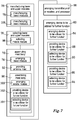
- Fig. 7 is a flow chart illustrating embodiments of a method of providing an antenna mast for a wireless communication system.
- the antenna mast 2 may be of the kind illustrated in Figs. 1 - 3 and may comprise modules 6, 8, 30 as illustrated in Figs. 4a - 4i , 5a - 5e , and 6a - 6h .
- the antenna mast comprises a mast body adapted to form a supporting structure for an antenna arrangement of the wireless communication system.
- the mast body comprises a lower module and an upper module.
- the upper module is adapted to comprise the antenna arrangement. At least one of the lower module and the upper module is adapted to comprise a device to be utilized for a further function other than supporting the antenna arrangement.
- the method comprises:
- Assembling may comprise:
- the method may comprise:
- the method may comprise:
- the method may comprise:
- the method may comprise:
- the method may comprise:
- the method may comprise:
- the method may comprise:
- the method may comprise:
- the method may comprise:
- the method may comprise:
- the method may comprise:
- An antenna mast may comprise more than three modules.
- One or more further modules may be placed on top of the upper module of a mast body of an antenna mast.
- the different modules of a mast body may be assembled in such a manner or using such method that they may be separated again, alternatively one or more of the different modules may be permanently attached to each other such that only mechanical damage will separate the modules.
- the modules may be provided with connecting elements, such as flanges or sleeves, to allow easy fitting and attachment of the lower module with a middle module or an upper module, and a middle module with an upper module.
- One or more antennas may be arranged such that they are visible from an outside of the antenna mast.
- a further device to be utilized for a further function may comprise a monitoring arrangement for instance comprising a surveillance camera.
- An antenna mast may have a height of 3-8 metres.
- Antenna masts may also have a higher height such as up to 15 metres.
- the common abbreviation " e.g .” which derives from the Latin phrase “exempli gratia,” may be used to introduce or specify a general example or examples of a previously mentioned item, and is not intended to be limiting of such item. If used herein, the common abbreviation “ i.e .”, which derives from the Latin phrase “id est,” may be used to specify a particular item from a more general recitation.
Landscapes
- Support Of Aerials (AREA)
Claims (36)
- Verfahren zum Bereitstellen eines Antennenmastes (2) für ein drahtloses Kommunikationssystem, wobei der Antennenmast einen Mastkörper (4) zum Bilden einer Stützstruktur für eine Antennenanordnung des drahtlosen Kommunikationssystems umfasst, wobei der Mastkörper ein unteres Modul (6) und ein oberes Modul (8) umfasst, wobei das obere Modul die Antennenanordnung umfasst, und wobei mindestens eines von dem unteren Modul und dem oberen Modul eine Vorrichtung umfasst, die für eine weitere Funktion außer dem Stützen der Antennenanordnung einzusetzen ist, wobei das Verfahren Folgendes umfasst:- Auswählen (70) eines unteren Moduls und eines oberen Moduls aus einem Satz von Modulen, der mindestens zwei verschiedene untere Module und mindestens zwei verschiedene obere Module umfasst, und- Zusammenbauen (72) des Mastkörpers einschließlich des ausgewählten unteren Moduls und des ausgewählten oberen Moduls, um einen zusammengebauten Mastkörper zu bilden.
- Verfahren nach Anspruch 1, wobei die weitere Funktion eine andere Funktion als eine direkt auf das drahtlose Kommunikationssystem bezogene Funktion ist.
- Verfahren nach einem der vorhergehenden Ansprüche, wobei das Zusammenbauen (72) Folgendes umfasst:- Anordnen (74) des unteren Moduls im Wesentlichen unter dem oberen Modul im zusammengebauten Mastkörper.
- Verfahren nach einem der vorhergehenden Ansprüche, wobei das Verfahren Folgendes umfasst:- Herstellen (78) der unteren Module und der oberen Module des Satzes von Modulen, um mindestens einen Teil einer äußeren Oberfläche des zusammengebauten Mastkörpers zu bilden.
- Verfahren nach einem der vorhergehenden Ansprüche, wobei das Verfahren Folgendes umfasst:- Herstellen (78) von unteren Modulen, um eine Stützstruktur zu bilden, die ausgeführt ist, um mindestens ein Gewicht eines oberen Moduls und von Geräten, die im oberen Modul eines zusammengebauten Mastkörpers angeordnet sind, zu tragen.
- Verfahren nach Anspruch 5, wobei das Verfahren Folgendes umfasst:- Anordnen (80) der Vorrichtung, die für die weitere Funktion einzusetzen ist, im Wesentlichen innerhalb der äußeren Oberfläche des zusammengebauten Mastkörpers.
- Verfahren nach einem der vorhergehenden Ansprüche, wobei das Verfahren Folgendes umfasst:- Bereitstellen (82) eines Antennenmastes mit einer Höhe von 3-8 Metern.
- Verfahren nach einem der vorhergehenden Ansprüche, wobei das Verfahren Folgendes umfasst:- Anordnen (84) einer bestimmten Vorrichtung, die in Abhängigkeit von den aus dem Satz von Modulen ausgewählten Modulen für die weitere Funktion im zusammengebauten Mastkörper einzusetzen ist.
- Verfahren nach einem der vorhergehenden Ansprüche, wobei das Verfahren Folgendes umfasst:- Anordnen (86) mindestens eines Senders und/oder eines Empfängers und eines Prozessors des drahtlosen Kommunikationssystems in den ausgewählten unteren und/oder oberen Modulen.
- Verfahren nach einem der vorhergehenden Ansprüche, wobei das Verfahren Folgendes umfasst:- Bereitstellen (88) der Vorrichtung, die für die weitere Funktion in Verbindung mit dem unteren Modul des zusammengebauten Mastkörpers einzusetzen ist.
- Verfahren nach Anspruch 10, wobei das Verfahren Folgendes umfasst:- Auswählen (90) der für die weitere Funktion einzusetzenden Vorrichtung aus der Gruppe von: einer Bank, einer Dachanordnung, einem Abfallbehälter, einer Verkaufsmaschine, einem elektronischen Bildschirm, einer Parkuhr, einer Ampel, einer Beleuchtungsanordnung, einer Kartenlesevorrichtung, einer elektrischen Steckdose oder einer lebensrettenden Vorrichtung, wie etwa einem Defibrillator.
- Verfahren nach einem der vorhergehenden Ansprüche, wobei das Verfahren Folgendes umfasst:- Bereitstellen (92) der Vorrichtung, die für die weitere Funktion neben der Antennenanordnung in Verbindung mit dem oberen Modul des zusammengebauten Mastkörpers einzusetzen ist.
- Verfahren nach Anspruch 12, wobei das Verfahren Folgendes umfasst:- Auswählen (94) der für die weitere Funktion einzusetzenden Vorrichtung aus einer Gruppe von: einem Schild, einer Beleuchtungsanordnung, einer Uhr, einer Dachanordnung, einer Ampel oder einem elektronischen Bildschirm.
- Verfahren nach einem der vorhergehenden Ansprüche, wobei der Satz von Modulen mindestens zwei verschiedene untere Module und mindestens zwei verschiedene mittlere Module und mindestens zwei verschiedene obere Module umfasst und wobei das Auswählen (70) Folgendes umfasst:- Auswählen (96) eines mittleren Moduls aus dem Satz von Modulen und wobei das Zusammenbauen (72) Folgendes umfasst:- Zusammenbauen (98) des Mastkörpers einschließlich des ausgewählten mittleren Moduls, um den zusammengebauten Mastkörper zu bilden.
- Verfahren nach Anspruch 14, wobei das Zusammenbauen des Antennenmastkörpers Folgendes umfasst:- Anordnen (100) des mittleren Moduls im Wesentlichen zwischen dem unteren Modul und dem oberen Modul.
- Verfahren nach einem der Ansprüche 14 und 15, wobei das Verfahren Folgendes umfasst:- Bereitstellen (102) der Vorrichtung, die in Verbindung mit dem mittleren Modul für die weitere Funktion einzusetzen ist.
- Verfahren nach Anspruch 16, wobei das Verfahren Folgendes umfasst:Auswählen (104) der für die weitere Funktion einzusetzenden Vorrichtung aus einer Gruppe von: einer Ampel, einem elektronischen Bildschirm, einer Dachanordnung oder einer Beleuchtungsanordnung.
- Verfahren nach einem der Ansprüche 14-17, wobei ein unteres Modul des Satzes von Modulen eine Stützstruktur bildet, die ausgeführt ist, um ein Gewicht eines mittleren Moduls, eines oberen Moduls und von Geräten, die im mittleren und oberen Modul angeordnet sind, zu tragen.
- Modulares Antennenmastsystem zum Bereitstellen von Antennenmasten (2) eines drahtlosen Kommunikationssystems, wobei die Antennenmasten (2) des Antennenmastsystems jeweils einen Mastkörper (4) zum Bilden einer Stützstruktur für eine Antennenanordnung des drahtlosen Kommunikationssystems umfasst, wobei der Mastkörper (4) ein unteres Modul (6) und ein oberes Modul (8) umfasst, wobei das obere Modul (8) die Antennenanordnung umfasst, und wobei mindestens eines von dem unteren Modul (6) und dem oberen Modul (8) eine Vorrichtung umfasst, die für eine weitere Funktion außer dem Stützen der Antennenanordnung einzusetzen ist,
dadurch gekennzeichnet, dass
das Antennenmastsystem einen Satz von Modulen umfasst, der ein unteres und ein oberes Modul (6, 8) umfasst, wobei der Satz von Modulen mindestens zwei verschiedene untere Module (6) und mindestens zwei verschiedene obere Module (8) umfasst, sodass verschieden ausgelegte Mastkörper (4), die ein unteres und ein oberes Modul (6, 8) umfassen, aus dem Satz von Modulen zusammengebaut werden können. - Modulares Antennenmastsystem nach Anspruch 19, wobei die weitere Funktion eine andere Funktion als eine direkt auf das drahtlose Kommunikationssystem bezogene Funktion ist.
- Modulares Antennenmastsystem nach einem der Ansprüche 19 und 20, wobei ein unteres Modul (6) in einem zusammengebauten Mastkörper (4) eines Antennenmastes (2) des Antennenmastsystems im Wesentlichen unter einem oberen Modul (8) angeordnet ist.
- Modulares Antennenmastsystem nach einem der Ansprüche 19-21, wobei ein unteres Modul (6) und ein oberes Modul (8) mindestens einen Teil einer äußeren Oberfläche eines zusammengebauten Mastkörpers (4) eines Antennenmastes (2) des Antennenmastsystems bilden.
- Modulares Antennenmastsystem nach einem der Ansprüche 19-22, wobei ein unteres Modul (6) des Satzes von Modulen eine Stützstruktur bildet, die ausgeführt ist, um mindestens ein Gewicht eines oberen Moduls (8) und von Geräten, die im oberen Modul (8) eines zusammengebauten Mastkörpers (4) angeordnet sind, zu tragen.
- Modulares Antennenmastsystem nach Anspruch 23, wobei ein zusammengebauter Mastkörper (4) eines Antennenmastes (2) des Antennenmastsystems ausgeführt ist, um die Vorrichtung die für die weitere Funktion einzusetzen ist, im Wesentlichen innerhalb einer äußeren Oberfläche des zusammengebauten Mastkörpers (4) zu beherbergen.
- Modulares Antennenmastsystem nach einem der Ansprüche 19-24, wobei die Antennenmasten (2) des Antennenmastsystems eine Höhe von 3-8 Metern haben.
- Modulares Antennenmastsystem nach einem der Ansprüche 19-25, wobei die verschieden ausgelegten Mastkörper (4) des modularen Antennenmastsystems angeordnet sind, um verschiedene Vorrichtungen, die in Abhängigkeit davon, welche Module aus dem Satz von Modulen für einen bestimmten Mastkörper (4) ausgewählt werden, für die weitere Funktion einzusetzen sind, zu umfassen.
- Modulares Antennenmastsystem nach einem der Ansprüche 19-26, wobei mindestens einer der verschieden ausgelegten Mastkörper (4) ausgeführt ist, mindestens einen Sender und/oder Empfänger und einen Prozessor des drahtlosen Kommunikationssystems darin zu beherbergen.
- Modulares Antennenmastsystem nach einem der Ansprüche 19-27, wobei mindestens ein unteres Modul (6) des Satzes von Modulen ausgeführt ist, die für die weitere Funktion einzusetzende Vorrichtung zu umfassen.
- Modulares Antennenmastsystem nach Anspruch 28, wobei die für die weitere Funktion einzusetzende Vorrichtung eine Bank (34), eine Dachanordnung (46), einen Abfallbehälter (42), eine Verkaufsmaschine (40), einen elektronischen Bildschirm (14), eine Parkuhr (18), eine Ampel (44, 50), eine Beleuchtungsanordnung (45), eine Kartenlesevorrichtung (16), eine elektrische Steckdose (22) oder eine lebensrettende Vorrichtung, wie etwa einen Defibrillator (47), umfasst.
- Modulares Antennenmastsystem nach einem der Ansprüche 19-29, wobei mindestens ein oberes Modul (8) des Satzes von Modulen ausgeführt ist, neben der Antennenanordnung die für die weitere Funktion einzusetzende Vorrichtung zu umfassen.
- Modulares Antennenmastsystem nach Anspruch 30, wobei die für die weitere Funktion einzusetzende Vorrichtung Folgendes umfasst: ein Schild (12), eine Beleuchtungsanordnung (45), eine Uhr (32), eine Dachanordnung (46), eine Ampel (44, 50) oder einen elektronischen Bildschirm (14).
- Modulares Antennenmastsystem nach einem der Ansprüche 19-30, wobei der Satz von Modulen mindestens zwei verschiedene untere Module (6) und mindestens zwei verschiedene mittlere Module (30) und mindestens zwei verschiedene obere Module (8) umfasst, sodass verschieden ausgelegte Mastkörper (4), die ein mittleres Modul (30) umfassen, aus dem Satz von Modulen zusammengebaut werden können.
- Modulares Antennenmastsystem nach Anspruch 32, wobei ein mittleres Modul (30) im Wesentlichen zwischen einem unteren Modul (6) und einem oberen Modul (8) eines zusammengebauten Mastkörpers (4) eines Antennenmastes (2) des Antennenmastsystems angeordnet ist.
- Modulares Antennenmastsystem nach einem der Ansprüche 32 und 33, wobei mindestens ein mittleres Modul (30) des Satzes von Modulen ausgeführt ist, die für die weitere Funktion einzusetzende Vorrichtung zu umfassen.
- Modulares Antennenmastsystem nach einem der Ansprüche 32-34, wobei die für die weitere Funktion einzusetzende Vorrichtung Folgendes umfasst: eine Ampel (44, 50), einen elektronischen Bildschirm (14), eine Dachanordnung (46) oder eine Beleuchtungsanordnung (45).
- Verfahren nach einem der Ansprüche 14-17, wobei ein unteres Modul (6) eine Stützstruktur bildet, die ausgeführt ist, um ein Gewicht eines mittleren Moduls (30), eines oberen Moduls (8) und von Geräten, die im mittleren und oberen Modul (30, 8) angeordnet sind, zu tragen.
Applications Claiming Priority (1)
| Application Number | Priority Date | Filing Date | Title |
|---|---|---|---|
| PCT/SE2011/050150 WO2012108799A1 (en) | 2011-02-11 | 2011-02-11 | Method of providing an antenna mast and an antenna mast system |
Publications (2)
| Publication Number | Publication Date |
|---|---|
| EP2673832A1 EP2673832A1 (de) | 2013-12-18 |
| EP2673832B1 true EP2673832B1 (de) | 2017-05-10 |
Family
ID=44625351
Family Applications (1)
| Application Number | Title | Priority Date | Filing Date |
|---|---|---|---|
| EP11707723.0A Active EP2673832B1 (de) | 2011-02-11 | 2011-02-11 | Verfahren zur bereitstellung eines antennenmastes und eines antennenmastsystems |
Country Status (5)
| Country | Link |
|---|---|
| EP (1) | EP2673832B1 (de) |
| JP (1) | JP5833676B2 (de) |
| CN (1) | CN103370833B (de) |
| MX (1) | MX2013007781A (de) |
| WO (1) | WO2012108799A1 (de) |
Families Citing this family (4)
| Publication number | Priority date | Publication date | Assignee | Title |
|---|---|---|---|---|
| JP2013227770A (ja) * | 2012-04-25 | 2013-11-07 | Toyo Tire & Rubber Co Ltd | 道路標識柱 |
| CN104410433A (zh) * | 2014-11-19 | 2015-03-11 | 中国电子科技集团公司第二十研究所 | 一种多频段电磁集成桅杆 |
| CN111916883A (zh) * | 2019-05-08 | 2020-11-10 | 罗森伯格技术(昆山)有限公司 | 一种集成的5g天线系统及通信网络 |
| WO2023282664A1 (ko) * | 2021-07-07 | 2023-01-12 | 주식회사 케이엠더블유 | 멀티 기능성 지주 폴 어셈블리 |
Family Cites Families (21)
| Publication number | Priority date | Publication date | Assignee | Title |
|---|---|---|---|---|
| JPH04223724A (ja) * | 1990-12-26 | 1992-08-13 | Mitsubishi Electric Corp | 基地局装置 |
| JPH0653894A (ja) * | 1991-08-23 | 1994-02-25 | Nippon Steel Corp | 移動通信用無線基地局 |
| JP2531362B2 (ja) * | 1993-09-20 | 1996-09-04 | 日本電気株式会社 | 屋外用通信機器の設置構造 |
| JP3007969U (ja) * | 1994-08-19 | 1995-02-28 | 株式会社トーツー創研 | 移動通信用アンテナ装置の支持構造 |
| US5963178A (en) | 1997-06-16 | 1999-10-05 | Telestructures, Inc. | Wireless communication pole system and method of use |
| DE69915269D1 (de) * | 1998-03-31 | 2004-04-08 | Vodafone Ltd | Anordnung für zellulartelefon |
| JP2001059365A (ja) * | 1999-06-17 | 2001-03-06 | Nippon Steel Corp | 地上に立設される長尺の金属製ストレートポール |
| IT1315884B1 (it) * | 2000-04-06 | 2003-03-26 | Mario Gigli | Pinza per freni a disco antinquinante e a circuiti automatici eforzati di raffreddamento. |
| US6335709B1 (en) | 2000-06-28 | 2002-01-01 | Utility Service Company | Integrated service tower |
| EP1198024A1 (de) | 2000-10-16 | 2002-04-17 | Simexgroup AG | Antennenmast |
| AT4900U1 (de) * | 2000-12-21 | 2001-12-27 | Andes Telecom Consulting Gmbh | Gehäuse für antennen oder antennenanordnungen |
| AT5157U1 (de) * | 2001-02-15 | 2002-03-25 | Andes Telecom Consulting Gmbh | Antennengehäuse |
| JP3923833B2 (ja) * | 2001-03-29 | 2007-06-06 | 積水樹脂株式会社 | 道路用情報通信システム |
| EP1286412A3 (de) | 2001-08-13 | 2003-03-12 | Ulrich Carthäuser | Funkmast |
| JP2005318077A (ja) * | 2004-04-27 | 2005-11-10 | Nec System Integration & Construction Ltd | アンテナ用支持柱及びその設置方法 |
| CA2495596A1 (en) * | 2005-02-07 | 2006-08-07 | Resin Systems Inc. | Method of modular pole construction and modular pole assembly |
| EP1997185A1 (de) * | 2006-03-20 | 2008-12-03 | Telefonaktiebolaget L M Ericsson (Publ) | Röhrenförmiger telekom-turm |
| WO2007136241A1 (en) * | 2006-05-18 | 2007-11-29 | Elite Comm Network Sdn. Bhd. | A portable mobile communication tower |
| CN201060944Y (zh) * | 2007-06-05 | 2008-05-14 | 王剑 | 短波扇锥形双极宽带天线 |
| CN201188458Y (zh) * | 2008-04-18 | 2009-01-28 | 咸阳广通电子科技有限公司 | 一种套筒式数字宽频带中波发射天线 |
| KR200450063Y1 (ko) * | 2009-03-10 | 2010-09-02 | 주식회사 케이엠더블유 | 이동통신 시스템용 안테나 장치 |
-
2011
- 2011-02-11 EP EP11707723.0A patent/EP2673832B1/de active Active
- 2011-02-11 WO PCT/SE2011/050150 patent/WO2012108799A1/en not_active Ceased
- 2011-02-11 CN CN201180067312.9A patent/CN103370833B/zh active Active
- 2011-02-11 MX MX2013007781A patent/MX2013007781A/es active IP Right Grant
- 2011-02-11 JP JP2013553393A patent/JP5833676B2/ja not_active Expired - Fee Related
Non-Patent Citations (1)
| Title |
|---|
| None * |
Also Published As
| Publication number | Publication date |
|---|---|
| CN103370833B (zh) | 2016-07-06 |
| WO2012108799A1 (en) | 2012-08-16 |
| JP2014512712A (ja) | 2014-05-22 |
| JP5833676B2 (ja) | 2015-12-16 |
| CN103370833A (zh) | 2013-10-23 |
| EP2673832A1 (de) | 2013-12-18 |
| MX2013007781A (es) | 2013-08-12 |
Similar Documents
| Publication | Publication Date | Title |
|---|---|---|
| US8970438B2 (en) | Method of providing an antenna mast and an antenna mast system | |
| US20120208521A1 (en) | Antenna Mast and a Method of Providing a Further Function in an Antenna Mast | |
| EP3855626B1 (de) | Werbemedium, das ein 5g-telefonsignal verstärkt | |
| CN101410581B (zh) | 模块天线塔结构 | |
| EP2673832B1 (de) | Verfahren zur bereitstellung eines antennenmastes und eines antennenmastsystems | |
| US20190154004A1 (en) | Mobile renewable energy structures providing wireless networking and associated systems and methods | |
| CN202095107U (zh) | 一体化基站支撑结构及基站 | |
| US20100231469A1 (en) | Antenna Device for Mobile Communication System | |
| US12362467B2 (en) | Small cell installation structure | |
| CN102334233B (zh) | 一种可移动的低视觉影响的无线/远程通信杆 | |
| BR102013030331B1 (pt) | poste de iluminação com compartimento interno encaixado na sua base para equipamentos de telecomunicação | |
| WO2016069024A1 (en) | Wireless equipment concealment system utilizing an aerial multimedia platform | |
| EP1844554A2 (de) | Substituierte triazine als prionproteinliganden und deren verwendung zum nachweis oder zum entfernen von prionen | |
| WO2011104393A1 (es) | Monoposte publicitario con estación para telefonía móvil | |
| CN203232671U (zh) | 一种智能信息指示牌 | |
| US20190389323A1 (en) | Multifunctional utility box with display and vehicle charging station | |
| CN104265045B (zh) | 基站通讯信号发射塔 | |
| CN106320784A (zh) | 一种微型集成通信基站 | |
| US20150201460A1 (en) | Wireless communications station with satellite backhaul | |
| WO2019073432A1 (en) | TELECOMMUNICATION MASTS | |
| US20230146405A1 (en) | Vertically stacked, integratable, multipurpose platform configurable as wireless base stations | |
| WO2012108800A1 (en) | An antenna mast and a method of providing a further function in an antenna mast | |
| CN210443668U (zh) | 一种基于4、5g基站玻璃钢伪装天线外罩集成系统 | |
| CN107862754A (zh) | 一种共享单车有围停车区域的基于无线通讯的收费系统 | |
| RU57948U1 (ru) | Несущая конструкция средства размещения наружной рекламы |
Legal Events
| Date | Code | Title | Description |
|---|---|---|---|
| PUAI | Public reference made under article 153(3) epc to a published international application that has entered the european phase |
Free format text: ORIGINAL CODE: 0009012 |
|
| 17P | Request for examination filed |
Effective date: 20130618 |
|
| AK | Designated contracting states |
Kind code of ref document: A1 Designated state(s): AL AT BE BG CH CY CZ DE DK EE ES FI FR GB GR HR HU IE IS IT LI LT LU LV MC MK MT NL NO PL PT RO RS SE SI SK SM TR |
|
| DAX | Request for extension of the european patent (deleted) | ||
| GRAP | Despatch of communication of intention to grant a patent |
Free format text: ORIGINAL CODE: EPIDOSNIGR1 |
|
| INTG | Intention to grant announced |
Effective date: 20170223 |
|
| GRAS | Grant fee paid |
Free format text: ORIGINAL CODE: EPIDOSNIGR3 |
|
| GRAA | (expected) grant |
Free format text: ORIGINAL CODE: 0009210 |
|
| AK | Designated contracting states |
Kind code of ref document: B1 Designated state(s): AL AT BE BG CH CY CZ DE DK EE ES FI FR GB GR HR HU IE IS IT LI LT LU LV MC MK MT NL NO PL PT RO RS SE SI SK SM TR |
|
| REG | Reference to a national code |
Ref country code: GB Ref legal event code: FG4D |
|
| REG | Reference to a national code |
Ref country code: AT Ref legal event code: REF Ref document number: 893209 Country of ref document: AT Kind code of ref document: T Effective date: 20170515 Ref country code: CH Ref legal event code: EP |
|
| REG | Reference to a national code |
Ref country code: IE Ref legal event code: FG4D |
|
| REG | Reference to a national code |
Ref country code: DE Ref legal event code: R096 Ref document number: 602011037778 Country of ref document: DE |
|
| REG | Reference to a national code |
Ref country code: NL Ref legal event code: FP |
|
| REG | Reference to a national code |
Ref country code: LT Ref legal event code: MG4D |
|
| REG | Reference to a national code |
Ref country code: AT Ref legal event code: MK05 Ref document number: 893209 Country of ref document: AT Kind code of ref document: T Effective date: 20170510 |
|
| PG25 | Lapsed in a contracting state [announced via postgrant information from national office to epo] |
Ref country code: NO Free format text: LAPSE BECAUSE OF FAILURE TO SUBMIT A TRANSLATION OF THE DESCRIPTION OR TO PAY THE FEE WITHIN THE PRESCRIBED TIME-LIMIT Effective date: 20170810 Ref country code: AT Free format text: LAPSE BECAUSE OF FAILURE TO SUBMIT A TRANSLATION OF THE DESCRIPTION OR TO PAY THE FEE WITHIN THE PRESCRIBED TIME-LIMIT Effective date: 20170510 Ref country code: GR Free format text: LAPSE BECAUSE OF FAILURE TO SUBMIT A TRANSLATION OF THE DESCRIPTION OR TO PAY THE FEE WITHIN THE PRESCRIBED TIME-LIMIT Effective date: 20170811 Ref country code: ES Free format text: LAPSE BECAUSE OF FAILURE TO SUBMIT A TRANSLATION OF THE DESCRIPTION OR TO PAY THE FEE WITHIN THE PRESCRIBED TIME-LIMIT Effective date: 20170510 Ref country code: LT Free format text: LAPSE BECAUSE OF FAILURE TO SUBMIT A TRANSLATION OF THE DESCRIPTION OR TO PAY THE FEE WITHIN THE PRESCRIBED TIME-LIMIT Effective date: 20170510 Ref country code: FI Free format text: LAPSE BECAUSE OF FAILURE TO SUBMIT A TRANSLATION OF THE DESCRIPTION OR TO PAY THE FEE WITHIN THE PRESCRIBED TIME-LIMIT Effective date: 20170510 Ref country code: HR Free format text: LAPSE BECAUSE OF FAILURE TO SUBMIT A TRANSLATION OF THE DESCRIPTION OR TO PAY THE FEE WITHIN THE PRESCRIBED TIME-LIMIT Effective date: 20170510 |
|
| PG25 | Lapsed in a contracting state [announced via postgrant information from national office to epo] |
Ref country code: LV Free format text: LAPSE BECAUSE OF FAILURE TO SUBMIT A TRANSLATION OF THE DESCRIPTION OR TO PAY THE FEE WITHIN THE PRESCRIBED TIME-LIMIT Effective date: 20170510 Ref country code: BG Free format text: LAPSE BECAUSE OF FAILURE TO SUBMIT A TRANSLATION OF THE DESCRIPTION OR TO PAY THE FEE WITHIN THE PRESCRIBED TIME-LIMIT Effective date: 20170810 Ref country code: RS Free format text: LAPSE BECAUSE OF FAILURE TO SUBMIT A TRANSLATION OF THE DESCRIPTION OR TO PAY THE FEE WITHIN THE PRESCRIBED TIME-LIMIT Effective date: 20170510 Ref country code: SE Free format text: LAPSE BECAUSE OF FAILURE TO SUBMIT A TRANSLATION OF THE DESCRIPTION OR TO PAY THE FEE WITHIN THE PRESCRIBED TIME-LIMIT Effective date: 20170510 Ref country code: PL Free format text: LAPSE BECAUSE OF FAILURE TO SUBMIT A TRANSLATION OF THE DESCRIPTION OR TO PAY THE FEE WITHIN THE PRESCRIBED TIME-LIMIT Effective date: 20170510 Ref country code: IS Free format text: LAPSE BECAUSE OF FAILURE TO SUBMIT A TRANSLATION OF THE DESCRIPTION OR TO PAY THE FEE WITHIN THE PRESCRIBED TIME-LIMIT Effective date: 20170910 |
|
| PG25 | Lapsed in a contracting state [announced via postgrant information from national office to epo] |
Ref country code: CZ Free format text: LAPSE BECAUSE OF FAILURE TO SUBMIT A TRANSLATION OF THE DESCRIPTION OR TO PAY THE FEE WITHIN THE PRESCRIBED TIME-LIMIT Effective date: 20170510 Ref country code: SK Free format text: LAPSE BECAUSE OF FAILURE TO SUBMIT A TRANSLATION OF THE DESCRIPTION OR TO PAY THE FEE WITHIN THE PRESCRIBED TIME-LIMIT Effective date: 20170510 Ref country code: RO Free format text: LAPSE BECAUSE OF FAILURE TO SUBMIT A TRANSLATION OF THE DESCRIPTION OR TO PAY THE FEE WITHIN THE PRESCRIBED TIME-LIMIT Effective date: 20170510 Ref country code: EE Free format text: LAPSE BECAUSE OF FAILURE TO SUBMIT A TRANSLATION OF THE DESCRIPTION OR TO PAY THE FEE WITHIN THE PRESCRIBED TIME-LIMIT Effective date: 20170510 Ref country code: DK Free format text: LAPSE BECAUSE OF FAILURE TO SUBMIT A TRANSLATION OF THE DESCRIPTION OR TO PAY THE FEE WITHIN THE PRESCRIBED TIME-LIMIT Effective date: 20170510 |
|
| REG | Reference to a national code |
Ref country code: DE Ref legal event code: R097 Ref document number: 602011037778 Country of ref document: DE |
|
| PG25 | Lapsed in a contracting state [announced via postgrant information from national office to epo] |
Ref country code: IT Free format text: LAPSE BECAUSE OF FAILURE TO SUBMIT A TRANSLATION OF THE DESCRIPTION OR TO PAY THE FEE WITHIN THE PRESCRIBED TIME-LIMIT Effective date: 20170510 Ref country code: SM Free format text: LAPSE BECAUSE OF FAILURE TO SUBMIT A TRANSLATION OF THE DESCRIPTION OR TO PAY THE FEE WITHIN THE PRESCRIBED TIME-LIMIT Effective date: 20170510 |
|
| PLBE | No opposition filed within time limit |
Free format text: ORIGINAL CODE: 0009261 |
|
| STAA | Information on the status of an ep patent application or granted ep patent |
Free format text: STATUS: NO OPPOSITION FILED WITHIN TIME LIMIT |
|
| 26N | No opposition filed |
Effective date: 20180213 |
|
| PG25 | Lapsed in a contracting state [announced via postgrant information from national office to epo] |
Ref country code: SI Free format text: LAPSE BECAUSE OF FAILURE TO SUBMIT A TRANSLATION OF THE DESCRIPTION OR TO PAY THE FEE WITHIN THE PRESCRIBED TIME-LIMIT Effective date: 20170510 |
|
| REG | Reference to a national code |
Ref country code: DE Ref legal event code: R082 Ref document number: 602011037778 Country of ref document: DE Representative=s name: BURCHARDI, THOMAS, DIPL.-ING. UNIV., DE |
|
| REG | Reference to a national code |
Ref country code: CH Ref legal event code: PL |
|
| PG25 | Lapsed in a contracting state [announced via postgrant information from national office to epo] |
Ref country code: MC Free format text: LAPSE BECAUSE OF FAILURE TO SUBMIT A TRANSLATION OF THE DESCRIPTION OR TO PAY THE FEE WITHIN THE PRESCRIBED TIME-LIMIT Effective date: 20170510 |
|
| REG | Reference to a national code |
Ref country code: IE Ref legal event code: MM4A |
|
| REG | Reference to a national code |
Ref country code: BE Ref legal event code: MM Effective date: 20180228 |
|
| PG25 | Lapsed in a contracting state [announced via postgrant information from national office to epo] |
Ref country code: CH Free format text: LAPSE BECAUSE OF NON-PAYMENT OF DUE FEES Effective date: 20180228 Ref country code: LI Free format text: LAPSE BECAUSE OF NON-PAYMENT OF DUE FEES Effective date: 20180228 Ref country code: LU Free format text: LAPSE BECAUSE OF NON-PAYMENT OF DUE FEES Effective date: 20180211 |
|
| REG | Reference to a national code |
Ref country code: FR Ref legal event code: ST Effective date: 20181031 |
|
| PG25 | Lapsed in a contracting state [announced via postgrant information from national office to epo] |
Ref country code: IE Free format text: LAPSE BECAUSE OF NON-PAYMENT OF DUE FEES Effective date: 20180211 |
|
| PG25 | Lapsed in a contracting state [announced via postgrant information from national office to epo] |
Ref country code: FR Free format text: LAPSE BECAUSE OF NON-PAYMENT OF DUE FEES Effective date: 20180228 Ref country code: BE Free format text: LAPSE BECAUSE OF NON-PAYMENT OF DUE FEES Effective date: 20180228 |
|
| PG25 | Lapsed in a contracting state [announced via postgrant information from national office to epo] |
Ref country code: MT Free format text: LAPSE BECAUSE OF NON-PAYMENT OF DUE FEES Effective date: 20180211 |
|
| PG25 | Lapsed in a contracting state [announced via postgrant information from national office to epo] |
Ref country code: TR Free format text: LAPSE BECAUSE OF FAILURE TO SUBMIT A TRANSLATION OF THE DESCRIPTION OR TO PAY THE FEE WITHIN THE PRESCRIBED TIME-LIMIT Effective date: 20170510 |
|
| PG25 | Lapsed in a contracting state [announced via postgrant information from national office to epo] |
Ref country code: PT Free format text: LAPSE BECAUSE OF FAILURE TO SUBMIT A TRANSLATION OF THE DESCRIPTION OR TO PAY THE FEE WITHIN THE PRESCRIBED TIME-LIMIT Effective date: 20170510 Ref country code: HU Free format text: LAPSE BECAUSE OF FAILURE TO SUBMIT A TRANSLATION OF THE DESCRIPTION OR TO PAY THE FEE WITHIN THE PRESCRIBED TIME-LIMIT; INVALID AB INITIO Effective date: 20110211 |
|
| PG25 | Lapsed in a contracting state [announced via postgrant information from national office to epo] |
Ref country code: MK Free format text: LAPSE BECAUSE OF NON-PAYMENT OF DUE FEES Effective date: 20170510 Ref country code: CY Free format text: LAPSE BECAUSE OF FAILURE TO SUBMIT A TRANSLATION OF THE DESCRIPTION OR TO PAY THE FEE WITHIN THE PRESCRIBED TIME-LIMIT Effective date: 20170510 |
|
| PG25 | Lapsed in a contracting state [announced via postgrant information from national office to epo] |
Ref country code: AL Free format text: LAPSE BECAUSE OF FAILURE TO SUBMIT A TRANSLATION OF THE DESCRIPTION OR TO PAY THE FEE WITHIN THE PRESCRIBED TIME-LIMIT Effective date: 20170510 |
|
| PGFP | Annual fee paid to national office [announced via postgrant information from national office to epo] |
Ref country code: NL Payment date: 20260226 Year of fee payment: 16 |
|
| PGFP | Annual fee paid to national office [announced via postgrant information from national office to epo] |
Ref country code: GB Payment date: 20260227 Year of fee payment: 16 |
|
| PGFP | Annual fee paid to national office [announced via postgrant information from national office to epo] |
Ref country code: DE Payment date: 20260227 Year of fee payment: 16 |