EP2674145A1 - Compositions d'adhésif dentaire hydrophobes et d' aute-gravure - Google Patents
Compositions d'adhésif dentaire hydrophobes et d' aute-gravure Download PDFInfo
- Publication number
- EP2674145A1 EP2674145A1 EP13155461.0A EP13155461A EP2674145A1 EP 2674145 A1 EP2674145 A1 EP 2674145A1 EP 13155461 A EP13155461 A EP 13155461A EP 2674145 A1 EP2674145 A1 EP 2674145A1
- Authority
- EP
- European Patent Office
- Prior art keywords
- hydrophobic
- adhesive composition
- dental adhesive
- water
- monomer
- Prior art date
- Legal status (The legal status is an assumption and is not a legal conclusion. Google has not performed a legal analysis and makes no representation as to the accuracy of the status listed.)
- Granted
Links
Images
Classifications
-
- C—CHEMISTRY; METALLURGY
- C08—ORGANIC MACROMOLECULAR COMPOUNDS; THEIR PREPARATION OR CHEMICAL WORKING-UP; COMPOSITIONS BASED THEREON
- C08F—MACROMOLECULAR COMPOUNDS OBTAINED BY REACTIONS ONLY INVOLVING CARBON-TO-CARBON UNSATURATED BONDS
- C08F2/00—Processes of polymerisation
- C08F2/46—Polymerisation initiated by wave energy or particle radiation
- C08F2/48—Polymerisation initiated by wave energy or particle radiation by ultraviolet or visible light
Definitions
- the present invention relates to dental adhesives and, in particular, to hydrophobic compositions for self-etch dental adhesives.
- Advances in dental restorative techniques include the use of various materials such as composite resins to effect tooth filling or other restorative processes.
- Other advances include the use of dental components such as thin wire braces and other types of dental components made of metal, ceramics, resins or other bio-compatible substances.
- such restoratives and components may be applied directly to the tooth dentin and/or enamel, or may be applied to other bio-compatible substrates such as metals, ceramics, resins, amalgams, or other restorative materials which may already exist in the patient and/or are to be added as part of the clinical treatment.
- Those earlier patents disclose, inter alia, two or three component primer systems employing the separate steps of treating the dental substrate with (1) an acidic acid solution of inorganic acids, polycarboxylic acids and metal salts of such acids capable of changing valence states, (2) applying a first primer compound comprising N-arylglycine and derivatives such as NTG-GMA (the adduct ofN(p-tolyl)glycine and glycidyl methacrylate), NPG (N-phenylglycine), and other amino acids and metal salts thereof to the substrate, followed by (3) applying a second polymerizable adhesive bonding monomer to the substrate comprising PMDM, BDTA-HEMA, 4-META, or other polymerizable acidic monomers disclosed therein and having groups or moieties that do not interfere with polymerization.
- NTG-GMA the adduct ofN(p-tolyl)glycine and glycidyl methacrylate
- NPG N-phenylglycine
- the primer composition begins to polymerize upon mixing due to the chemical nature of the primer molecules, at least one of which contains ethylenically unsaturated (vinyl) groups whose polymerization is initiated by the tertiary amine group present on the other primer component of the system.
- the two-component primer bonding systems typically require an acid-etch step to provide a secure bond between the dentin and/or enamel and the primer, resulting in the so-called “hybrid layer" wherein the dentin/enamel and primer interface with one another.
- a different type of a two-component primer bonding system is disclosed in Waknine U.S. Pat. No. 5,276,068 .
- That two-component system comprises a polymerization initiator and a polymerizable compound which are packaged separately.
- the first step in that system requires application of polymerization initiator alone to the dental substrate.
- the polymerizable compound is applied to the substrate. Polymerization begins when the polymerizable compound comes into contact with the initiator on the substrate surface.
- Some of the aforesaid multiple-component primer systems were reported as providing only moderate dentin adhesive bonding strengths.
- the data included in the Bowen '351 and'886 patents show dentin adhesive bond strengths of from about 10 to about 15 MPa.
- the higher bond strengths reported in the'351 patent were achieved only after an additional step and component, comprising applying an unfilled adhesive resin monomer to the primed substrate before application of the dental restorative composite material, was added to the restorative process.
- the Waknine '068 patent also reports relatively low bond strengths in the 10 MPa range and also used an additional step of application of a commercial bonding resin (see Examples 22-23).
- Bunker et al. reported slightly lower dentin shear bond strengths of between about 5 MPa and 8 MPa (49.3 to 86.5 kg/cm 2 ).
- the Bunker et al. system is reported as involving polymerizable phosphoric acid ester adhesives. Such compositions are generally disclosed therein as capable of being packaged with polymerization initiators in the presence of polymerization inhibitors and other compounds in one package. (See '585 patent, col. 10, line 31 to col. 11, line 8.) However, such one-component packaging is not exemplified in the '585 patent. Instead, a two-component was tested in Example 1 of that patent, involving admixing of the polymerization initiator sodium benzenesulfinate first component with the phosphorous ester monomer second component immediately before application to the tooth substrate. Bunker et al. also reported relatively low bond strength to dentin of around 9 MPa. (See '585 patent, col. 12, lines 16-42.)
- Dentsply patents also disclose alleged one-component dentin and enamel bonding primer and adhesive systems. Such systems are reported as based inter alia on phosphorous-containing adhesion promoter compounds. However, the phosphorous-based bonding systems disclosed in the examples of '941 and'495 patents all gave relatively low bond strengths of 8.39 MPa or less.
- the dipentaerythritol pentaacrylate phosphoric acid ester-based (PENTA) bonding systems disclosed in the '934 patent were reported as generating higher dentin bond strengths in the range of 10-27 MPa. (See '934 patent Example 10.) However, also reported therein is data showing that the higher reported bond strength systems were not stable over time, with the 27 MPa strength system reported as decreasing to around 10 MPa or less after 1-2 weeks storage of the system at elevated temperatures. (See '934 patent, Table VIII.) Moreover, the higher bond strengths reported in the '934 patent were in actuality two-component systems in which a second commercial, unfilled adhesive bonding resin component was used after application of the phosphorous primer composition. (See Example 4 and Example 10 at Col.
- U.S. Pat. No. 4,525,256 discloses certain one component photopolymerizable resins containing certain tertiary amine accelerators. However, such compositions are composite (filled) resins, and not dental primer or adhesive compositions. (See '256 patent, Examples 1-3.)
- U.S. Pat. No. 5,295,824 discloses inter alia plastic orthodontic devices with a "shelf-stable" monomeric adhesive layer pre-coated and “solvated” into the plastic device. The bond strengths reported therein are about 10-20 kg, which if meant to be kg/cm 2 , translate to rather low levels of around 2-4 MPa.
- Bracket's adhesive layer comprises ethoxylated diglycidyimethacrylate of Bisphenol A (Bis-GMA), Bis-GMA and/or other monomers and photo-initiator catalysts and inhibitors.
- the bond strength of such pre-coated brackets were reported to be in the range of 54-104 kg/cm 2 (about 5-10 MPa).
- Hydrophobic dental adhesive compositions comprising a hydrophobic, surfactant-type acidic monomer, a hydrophobic monomer, a hydrophilic monomer, and a solvent.
- the hydrophobic, surfactant-type acidic monomer is a methacryloxyloxyalkyl dihydrogen phosphate and, preferably, a methacryloxyloxyalkyl dihydrogen phosphate having an alkyl carbon chain of 10-18 carbon atoms.
- the solvent is an azeotrope and, preferably, comprises ethanol and water in a ratio of about 22:1 ethanol to water.
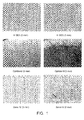
- FIG. 1 is a series of photographic images showing the phase separation during evaporation of a hydrophobic self-etch adhesive composition and the conventional commercially available adhesives Xeno® IV and OptiBond® All-In-One.
- hydrophilic compositions that comprise an aqueous mixture of hydrophilic and hydrophobic monomers and solvents. Sufficient solvents are added to create a single-phase solution of the hydrophilic and hydrophobic components.
- Low-molecular weight hydrophilic monomers such as 2-hydroxyethyl methacrylate (HEMA) are commonly incorporated in adhesive compositions and act as cosolvents that minimize phase separation.
- HEMA 2-hydroxyethyl methacrylate
- a hydrophilic composition is thought to be required to promote infiltration and bonding of the adhesive to the dentin.
- the bond strength of the adhesive typically decreases as the hydrophobicity increases.
- such hydrophilic adhesive compositions have also been found to be permeable and water-sorptive even after curing, which may cause patient sensitivity and accelerate hydrolysis and bond degradation.
- such adhesive compositions have been observed to undergo phase separation of the hydrophobic components in the form of microscopic "droplets" which form during evaporation of the solvent. These droplets may reflect the nonhomogeneous polymerization of the hydrophilic and hydrophobic monomers, which may cause the formation of voids and/or water trees and make the cured adhesive permeable to water.
- the droplet residue may also affect the polymerization and curing of the adhesive, interfere with the adherence of the restorative resin to the adhesive, and cause debonding of the restorative material.
- self-etch adhesives have been found have reduced bond strength when used with self-cure and dual-cure restorative resins.
- Self-etch adhesives generally comprise acidic monomers that serve to etch the dentin surface and promote bonding.
- the cured adhesives may have a residual low pH that can interfere with the activity of tertiary amines in self-cure and dual-cure resin compositions that are used to promote polymerization. As a result, polymerization of the resin at the interface with the adhesive may be inhibited and debonding of the restorative material may occur.
- a one-component, hydrophobic self-etch dental adhesive composition is described that has reduced water-sorption and permeability, and has improved compatibility with self-cure and dual-cure resins.
- the composition has reduced phase separation during evaporation of solvents.
- the hydrophobicity of the self-etch adhesive composition system is achieved through the use of a hydrophobic, surfactant-type acidic monomer, in addition to a hydrophilic monomer, a hydrophobic monomer.
- the hydrophobicity of the composition is further ensured by reducing or minimizing the relative amount of the hydrophilic monomer and increasing or maximizing the relative amount of the hydrophobic monomer.
- Conventional adhesives commonly contain a ratio of hydrophilic to hydrophobic monomers of 1:1 to 1.5:1.
- the hydrophobic self-etch adhesive composition preferably comprises a ratio of hydrophilic to hydrophobic monomers that is less than 1:1, and more preferably less than about 1:2.
- the hydrophobic self-etch adhesive compositions comprises between about 3-20 wt% of the hydrophobic, surfactant-type acidic monomer, between about 5-15 wt% of the hydrophilic monomer, and at least about 30 wt% of the hydrophobic monomer.
- Suitable hydrophobic, surfactant-type acidic monomers generally comprise compounds having long carbon chains and phosphoric acid and/or carboxylic acid groups.
- Suitable hydrophilic monomers include HEMA, methacrylic acid, methylmethacrylate, hydroxylpropyl methacrylate, and other hydrophilic monomers known in the art.
- the hydrophilic monomer is HEMA.
- Suitable hydrophobic monomers include bisphenol A glycidylmethacrylate (BisGMA), urethane dimethacrylate (UDMA), ethoxylated bisphenol A glycol dimethacrylate (BisEMA), 1,6-hexanediol dimethacrylate, and other hydrophobic monomers known in the art.
- the hydrophobic monomer is a hydrophobic dimethacrylate, and more particularly, BisGMA.
- the hydrophobic adhesive composition also includes one or more solvents, as are known in the art, including water and/or ethanol.
- the solvent comprises between about 15-50 wt% of ethanol and between about 0.5-10 wt% of water, more preferably with a ratio of ethanol:water in a range of between about 10:1 to about 30:1, and most preferably with a ratio of between about 20:1 to about 30:1.
- the solvent is an azeotrope -- i.e. a mixture of two or more liquids in such a ratio that its composition cannot be changed by simple distillation. It has been found that the use of an azeotropic solvent facilitates evaporation, reduces phase separation and the formation of droplets and, therefore, is believed to improve bond strength and durability of the adhesive.
- Suitable azeotropes include azeotropic mixtures of water/ethanol, water/isopropanol, water acetonitrile and water/ethyl acetate.
- the solvent is most preferably an azeotrope of ethanol and water. Not only does the azeotrope have a lower boiling point than either water and ethanol, the water and ethanol will be evaporated together. This means that there would be no water residue after ethanol was evaporated, and consequently, no phase separation.
- the azeotrope of ethanol and water is well known and comprises about 95.63 wt% of ethanol and 4.37 wt% of water.
- the solvent comprises ethanol and water in a ratio of about 22:1.
- the hydrophobic adhesive composition may also include polymerization initiators and/or activators, as are known in the art.
- the hydrophobic adhesive composition comprises between about 0.1-2 wt% of a polymerization initiator, and between about 0.2-4 wt% of a polymerization activator.
- Suitable polymerization initiators include photoinitiators, such as camphorquinone (CQ).
- Suitable polymerization activators include tertiary amines, such as ethyl-4-dimethylaminobenzoate (EDMAB).
- H-SEA hydrophobic self-etch adhesive
- Extracted human teeth were embedded in resin discs, abraded on the facial surface with a model trimmer, and then polished with wet 320 grit SiC paper to create a flat and smooth dentin substrate for bonding.
- the polished dentin surfaces were rinsed with water and blotted dry.
- the prepared dentin substrates were treated with the H-SEA composition of Example 1.
- One or two coats of the H-SEA composition were applied to the polished dentin surface using a micro-brush.
- the amount of the H-SEA composition applied was sufficient to cover the surface.
- the applied H-SEA composition was subsequently air dried and then light-cured for 10 seconds at 500 mW/cm 2 using a VIP Junior Dental Curing Light (Bisco, Inc. - Schaumburg, IL) having a wavelength of 400-500 nm.
- prepared dentin substrates were also treated with conventional, commercially available self-etch dental adhesives: Ace All-Bond SE® (Bisco, Inc. - Schaumburg, IL), Multilink® Primer A/B (Ivoclar Vivadent Inc. - Amherst, NY), OptiBond® All-In-One (Kerr Corp. - Orange, CA), G- ⁇ nial Bond (GC America Inc. - Alsip, IL), or Adper® Easy Bond (3M ESPE - St. Paul, MN). Treatment of the prepared dentin samples was carried out according to the respective manufacturer's instructions and the adhesives were fully cured.
- Ace All-Bond SE® Bisco, Inc. - Schaumburg, IL
- Multilink® Primer A/B Ivoclar Vivadent Inc. - Amherst, NY
- OptiBond® All-In-One Kerr Corp. - Orange, CA
- G- ⁇ nial Bond GC America Inc. - Alsip
- Cured adhesive samples were prepared by applying one or two coats of the H-SEA composition to the surface of a glass slide. The adhesive was covered with a plastic cover slip to prevent the formation of an oxygen inhibited layer, and then fully light-cured for 40 seconds at 500 mW/cm 2 using a VIP Junior Dental Curing Light. For comparison, cured adhesive samples were also prepared using the commercially available adhesives: Ace All-Bond SE®, Multilink® Primer A/B, OptiBond® All-In-One, G- ⁇ nial Bond or Adper® Easy Bond.
- the cover slip was removed from the sample and a de-ionized water droplet was applied to the surface of the cured adhesive.
- the hydrophobicity of the cured adhesive was determined by measuring the contact angle of the water droplet using an NRL Contact Angle Goniometer Model 100-00-115 (Rame-Hart Inc. - Mountain Lakes, NJ), according to the manufacturer's instructions.
- Ten cured adhesive samples were measured for each of the H-SEA composition, Ace All-Bond SE®, OptiBond® All-In-One, G- ⁇ nial Bond and Adper® Easy Bond, and the mean (standard deviation) values shown in Table 2.
- Shear bond strength was tested using the Ultradent jig method and performed as generally described in Pashley et al., Dental Materials 11:117-125 (1995 ). Test samples were prepared by applying Duo-Link resin cement (Bisco, Inc. - Shaumburg, IL) to the treated dentin substrate using an Ultradent shear bond test device with a Teflon mold (Ultradent Products, Inc. - South Jordan, UT) with a bonding area 4.5mm 2 , and light-cured for 40 seconds at 500 mW/cm 2 using a VIP Junior Dental Curing Light.
- Duo-Link resin cement Bosco, Inc. - Shaumburg, IL
- Teflon mold Ultradent Products, Inc. - South Jordan, UT
- the cured test samples were stored in de-ionized water for 96 hours at 80 °C to simulate aging, or for 24 hours at 37°C as a control. Shear bond strength was determined as the force required to debond the Duo-Link resin from the treated dentin substrate measured using an INstron Universal Testing Machine Model 4466 (Instron - Canton, MA) with a crosshead speed of 1 mm/min. Eight test samples were measured for each of the H-SEA composition, Ace All-Bond SE®, Multilink® Primer A/B, OptiBond® All-In-One, G- ⁇ nial Bond and Adper® Easy Bond, and the mean (standard deviation) values are shown in Table 2.
- the H-SEA treated dentin substrate was found to have the highest degree of hydrophobicity (highest contact angle) of any of the self-etch adhesives tested without sacrificing bond strength, and provided substantially improved bond strength durability (lowest percentage bond strength decrease) over the commercially available dental adhesives tested.
- the ability of the H-SEA composition to act as a barrier to water and seal the dentin surface was tested using calcium-releasing discs prepared from TheraCal LC® (Bisco, Inc. - Schaumburg, IL), a resin-modified calcium silicate that is designed to release calcium ions in aqueous environments.
- the calcium-releasing discs were prepared using a round stainless steel mold having an inner diameter of 20 mm and a height of 10 mm. The molds were filled with TheraCal, covered with a polyethylene cover slip, and then light-cured for 100 seconds at 500 mW/cm 2 using a VIP Junior Dental Curing Light.
- the cured TheraCal discs were coated with the H-SEA composition prepared as in Example 1, the solvent evaporated, and then light-cured for 40 seconds at 500 mW/cm2 using a VIP Junior Dental Curing Light.
- TheraCal discs were also coated with the commercially available adhesives: One-Step, All-Bond 3®, or All-Bond SE (all from Bisco, Inc. - Schaumburg, IL). Uncoated discs were used as a control.
- the discs were stored in 20 ml of de-ionized water at 37 °C for 24 hours. Calcium release (leaking out) from the TheraCal discs into solution was measured with a pH/ISE meter with a Calcium Ion Selective Electrode Model 9720BNWP (Thermo-Scientific Orion - Beverly, MA). Five test samples were measured for each of the H-SEA composition, One-Step®, All-Bond 3®, All-Bond SE® and control, and the mean (standard deviation) values are shown in Table 3. [0049] The data were analyzed statistically by one-way ANOVA and Tukey Tests (p ⁇ 0.05).
- the H-SEA composition exhibits substantially improved sealing properties in comparison to conventional adhesives. Although all of the adhesives tested provided some reduction in calcium release, the H-SEA composition acted as a virtually complete water barrier with a 98% reduction in calcium ion release, indicating that the H-SEA composition provides almost perfect sealing ability in oral environments (i.e. 37 °C water).
- H-SEA composition The ability of the H-SEA composition to serve as an adhesive for self-cure resin cements was tested using the self-etch and total-etch techniques.
- Dentin substrates were prepared as described in Example 2, except that the polished dentin substrates were either rinsed with water (self-etch technique), or were etched with a solution of 37% H 3 PO 4 for 15 seconds and then rinsed with water (total-etch technique). The prepared dentin substrates were then treated with the H-SEA composition as described in Example 2. As a control, phosphoric acid etched dentin substrates were treated with One-Step® adhesive (Bisco, Inc. - Schaumburg, IL) and light-cured, according to manufacturer's instructions.
- One-Step® adhesive Bisco, Inc. - Schaumburg, IL
- Shear bond strength was tested using the Ultradent jig method as described in Example 3, except that the Duo-Link (dual-cure) resin cement was either light-cured for 40 seconds at 500 mW/cm 2 , or self-cured for 15 minutes in the dark at 37 °C. All test samples were stored in de-ionized water for 24 hours at 37 °C. Shear bond strength was measured using an Instron Universal Testing Machine as described in Example 3. Eight test samples were measured for the control and for each of the H-SEA composition using either the self-etch or total-etch techniques, and light-cure or self-cure, and the mean (standard deviation) values are shown in Table 4.
- the H-SEA composition is fully compatible with self-cured resin materials.
- Evaporation test samples were prepared by applying one drop of the H-SEA composition (Example 1) to the surface of a flat glass slide. The solvent was allowed to evaporate undisturbed at room temperature. The evaporation of the solvent was analyzed by time lapse video using a Sony TechnoLook (TW-TL10M) video microscope at 100x magnification. For comparison, evaporation test samples were also prepared and analyzed using the commercially available conventional adhesives: Xeno® IV (Dentsply Int'l - Ontario, Canada) or OptiBond® All-In-One.
- FIG. 1 pictures were taken after the initial application of the adhesives (0 min) and after 5 minutes (5 min) to determine if there were any signs of phase separation during evaporation. After 5 minutes, separation of the insoluble organic resins from the water phase during evaporation was readily observed for samples coated with Xeno® IV and OptiBond® All-In-One, as indicated by the arrows. In contrast, no phase separation was observed for samples coated with the H-SEA composition, which comprises an azeotropic solvent of water and ethanol.
- H-SEA composition which comprises an azeotropic solvent of water and ethanol.
- Sample resin discs were prepared using a mold having an inner diameter of 10 mm and height of 0.5 mm. The mold was filled with the H-SEA composition (Example 1) without the solvent, to simulate clinical situations, and sandwiched between two glass slides covered with polyethylene film. The H-SEA composition was light-cured for 100 seconds on each side of the mold at 500 mW/cm 2 using a VIP Junior Dental Curing Light.
- sample discs were also prepared from the commercially available conventional adhesives One-Step®, All-Bond 3® or All-Bond SE®, also excluding the solvent.
- the sample discs were placed in a desiccator and weighed to an accuracy of 0.1 mg until a constant mass (m1) was obtained (i.e. until a mass difference of not more than 0.1 mg).
- the sample discs were then stored in de-ionized water for 7 days at 37 °C ( ⁇ 1 °C). After 7 days, the discs were removed, rinsed with water, blotted until free of visible surface water, waved in the air for 15 seconds, and then weighed (m2). After weighing, the hydrated sample discs were again placed in a desiccator and weighed until a constant mass (m3) was obtained. The diameter and thickness of the sample disc was measured and the volume (V) was calculated (mm 3 ).
- Wsp water-sorption
- solubility m ⁇ 2 - m ⁇ 3 / V
- Wsl m ⁇ 1 - m ⁇ 3 / V
- the H-SEA composition has substantially reduced water absorption and relatively low solubility in comparison to conventional adhesives.
Landscapes
- Chemical & Material Sciences (AREA)
- Health & Medical Sciences (AREA)
- Chemical Kinetics & Catalysis (AREA)
- Medicinal Chemistry (AREA)
- Polymers & Plastics (AREA)
- Organic Chemistry (AREA)
- Dental Preparations (AREA)
Applications Claiming Priority (1)
| Application Number | Priority Date | Filing Date | Title |
|---|---|---|---|
| US13/385,379 US9527931B2 (en) | 2012-02-16 | 2012-02-16 | Hydrophobic self-etch dental adhesive compositions |
Publications (2)
| Publication Number | Publication Date |
|---|---|
| EP2674145A1 true EP2674145A1 (fr) | 2013-12-18 |
| EP2674145B1 EP2674145B1 (fr) | 2022-06-15 |
Family
ID=47747452
Family Applications (1)
| Application Number | Title | Priority Date | Filing Date |
|---|---|---|---|
| EP13155461.0A Active EP2674145B1 (fr) | 2012-02-16 | 2013-02-15 | Compositions adhésives dentaires auto-mordançantes |
Country Status (3)
| Country | Link |
|---|---|
| US (1) | US9527931B2 (fr) |
| EP (1) | EP2674145B1 (fr) |
| CA (1) | CA2805569C (fr) |
Cited By (1)
| Publication number | Priority date | Publication date | Assignee | Title |
|---|---|---|---|---|
| US11147746B2 (en) | 2016-06-24 | 2021-10-19 | Regents Of The University Of Minnesota | Hydrophobic dental surfaces |
Families Citing this family (2)
| Publication number | Priority date | Publication date | Assignee | Title |
|---|---|---|---|---|
| JP6888760B2 (ja) * | 2016-03-24 | 2021-06-16 | エスディーアイ リミテッド | 歯科用接着剤組成物 |
| US20230240947A1 (en) * | 2020-07-09 | 2023-08-03 | Mitsui Chemicais, Inc. | Dental adhesive composition and dental material |
Citations (22)
| Publication number | Priority date | Publication date | Assignee | Title |
|---|---|---|---|---|
| US4514527A (en) | 1983-01-10 | 1985-04-30 | American Dental Association Health Foundation | Method for obtaining strong adhesive bonding of composites to dentin enamel and other substrates |
| US4525256A (en) | 1983-07-01 | 1985-06-25 | Johnson & Johnson Dental Products Company | Photopolymerizable composition including catalyst comprising diketone plus 4-(N,N-dimethylamino)benzoic acid or ester thereof |
| US4544467A (en) | 1983-06-28 | 1985-10-01 | Minnesota Mining And Manufacturing Company | Light-curable dentin and enamel adhesive |
| US4551550A (en) | 1983-12-06 | 1985-11-05 | Merrell Dow Pharmaceuticals Inc. | N-2,3-Butadienyl-1,4-butanediamine derivatives |
| US4558756A (en) | 1984-04-23 | 1985-12-17 | Toledo Transducers, Inc. | Cantilever support beam assembly for a load cell and the like |
| US4657941A (en) | 1984-11-29 | 1987-04-14 | Dentsply Research & Development Corp. | Biologically compatible adhesive containing a phosphorus adhesion promoter and a sulfinic accelerator |
| US4659751A (en) | 1983-01-10 | 1987-04-21 | American Dental Association Health Foundation | Simplified method for obtained strong adhesive bonding of composites to dentin, enamel and other substrates |
| US4964911A (en) | 1987-10-13 | 1990-10-23 | Den-Mat Corporation | Adhesive bonding of acrylic resins, especially in dentistry |
| US4966934A (en) | 1984-11-29 | 1990-10-30 | Dentsply Research & Development Corp. | Biological compatible adhesive containing a phosphorous adhesion promoter and accelerator |
| WO1993002630A1 (fr) | 1991-08-02 | 1993-02-18 | Minnesota Mining And Manufacturing Company | Article orthodontique conditionne dans un boitier |
| US5270351A (en) | 1992-06-15 | 1993-12-14 | American Dental Association Health Foundation | Adhesion-promoting agents incorporating polyvalent cations |
| US5276068A (en) | 1985-03-29 | 1994-01-04 | Jeneric/Pentron, Inc. | Dental resin materials |
| US5295824A (en) | 1992-09-04 | 1994-03-22 | Ormco Corporation | Plastic bracket with adhesive primer layer and methods of making |
| US5304585A (en) | 1981-02-13 | 1994-04-19 | Minnesota Mining And Manufacturing | Dentin and enamel adhesive |
| US5320886A (en) | 1991-11-14 | 1994-06-14 | American Dental Association Health Foundation | Hydrophilic crosslinking monomers and polymers made therefrom |
| US5348988A (en) | 1990-04-12 | 1994-09-20 | Bisco, Inc. | Dentin bonding system |
| USRE34937E (en) | 1987-10-13 | 1995-05-16 | Den-Mat Corporation | Adhesive bonding of acrylic resins, especially in dentistry |
| US5733949A (en) * | 1994-10-07 | 1998-03-31 | Kuraray Co., Ltd. | Antimicrobial adhesive composition for dental uses |
| US6458868B1 (en) * | 1999-03-31 | 2002-10-01 | Kuraray Co., Ltd. | Organophosphorus compounds for dental polymerizable compositions |
| US20050277706A1 (en) * | 2004-06-09 | 2005-12-15 | Han Dong K | Highly functional dental adhesive composition |
| US20060270751A1 (en) * | 2003-07-14 | 2006-11-30 | Christoph Thalacker | Adhesive composition with decreased polarity upon polymerization |
| WO2010110798A1 (fr) * | 2009-03-27 | 2010-09-30 | Bisco, Inc. | Compositions adhésives durcissables à base de zircone pour restaurations dentaires |
Family Cites Families (11)
| Publication number | Priority date | Publication date | Assignee | Title |
|---|---|---|---|---|
| US6147137A (en) | 1998-09-10 | 2000-11-14 | Jeneric/Pentron Incorporated | Dental primer and adhesive |
| TWI284540B (en) | 1999-05-13 | 2007-08-01 | Kuraray Co | Bonding composition suitable to tooth tissue |
| TWI262795B (en) * | 1999-05-31 | 2006-10-01 | Kuraray Co | Adhesive composition and method for producing it |
| US6730715B2 (en) | 2001-07-06 | 2004-05-04 | Pentron Clinical Technologies, Llc | Dental restorative composition, dental restoration, and a method of use thereof |
| US6994551B2 (en) * | 2002-02-14 | 2006-02-07 | Bisco, Inc. | Stable self-etching primer and adhesive bonding resin compositions, systems, and methods |
| US20030186196A1 (en) * | 2002-02-14 | 2003-10-02 | Wang Yantong J. | Self-etching primer and adhesive bonding resin compositions, systems, and methods |
| JP4425568B2 (ja) * | 2003-03-28 | 2010-03-03 | 株式会社ジーシー | 歯科用組成物 |
| US7449499B2 (en) * | 2003-08-12 | 2008-11-11 | 3M Innovative Properties Company | Self-etching dental compositions and methods |
| US20050154081A1 (en) | 2004-01-09 | 2005-07-14 | Bisco, Inc. | Opacity and color change polymerizable dental materials |
| US7090721B2 (en) | 2004-05-17 | 2006-08-15 | 3M Innovative Properties Company | Use of nanoparticles to adjust refractive index of dental compositions |
| EP1968528B1 (fr) | 2005-12-29 | 2016-02-17 | 3M Innovative Properties Company | Compositions dentaires contenant une charge traitee en surface pour la stabilite de conservation |
-
2012
- 2012-02-16 US US13/385,379 patent/US9527931B2/en active Active
-
2013
- 2013-02-13 CA CA2805569A patent/CA2805569C/fr active Active
- 2013-02-15 EP EP13155461.0A patent/EP2674145B1/fr active Active
Patent Citations (23)
| Publication number | Priority date | Publication date | Assignee | Title |
|---|---|---|---|---|
| US5304585A (en) | 1981-02-13 | 1994-04-19 | Minnesota Mining And Manufacturing | Dentin and enamel adhesive |
| US4659751A (en) | 1983-01-10 | 1987-04-21 | American Dental Association Health Foundation | Simplified method for obtained strong adhesive bonding of composites to dentin, enamel and other substrates |
| US4514527A (en) | 1983-01-10 | 1985-04-30 | American Dental Association Health Foundation | Method for obtaining strong adhesive bonding of composites to dentin enamel and other substrates |
| US4544467A (en) | 1983-06-28 | 1985-10-01 | Minnesota Mining And Manufacturing Company | Light-curable dentin and enamel adhesive |
| US4525256A (en) | 1983-07-01 | 1985-06-25 | Johnson & Johnson Dental Products Company | Photopolymerizable composition including catalyst comprising diketone plus 4-(N,N-dimethylamino)benzoic acid or ester thereof |
| US4551550A (en) | 1983-12-06 | 1985-11-05 | Merrell Dow Pharmaceuticals Inc. | N-2,3-Butadienyl-1,4-butanediamine derivatives |
| US4558756A (en) | 1984-04-23 | 1985-12-17 | Toledo Transducers, Inc. | Cantilever support beam assembly for a load cell and the like |
| US4657941A (en) | 1984-11-29 | 1987-04-14 | Dentsply Research & Development Corp. | Biologically compatible adhesive containing a phosphorus adhesion promoter and a sulfinic accelerator |
| US4816495A (en) | 1984-11-29 | 1989-03-28 | Dentsply Research & Development Corp. | Biologically compatible adhesive visible light curable compositions |
| US4966934A (en) | 1984-11-29 | 1990-10-30 | Dentsply Research & Development Corp. | Biological compatible adhesive containing a phosphorous adhesion promoter and accelerator |
| US5276068A (en) | 1985-03-29 | 1994-01-04 | Jeneric/Pentron, Inc. | Dental resin materials |
| US4964911A (en) | 1987-10-13 | 1990-10-23 | Den-Mat Corporation | Adhesive bonding of acrylic resins, especially in dentistry |
| USRE34937E (en) | 1987-10-13 | 1995-05-16 | Den-Mat Corporation | Adhesive bonding of acrylic resins, especially in dentistry |
| US5348988A (en) | 1990-04-12 | 1994-09-20 | Bisco, Inc. | Dentin bonding system |
| WO1993002630A1 (fr) | 1991-08-02 | 1993-02-18 | Minnesota Mining And Manufacturing Company | Article orthodontique conditionne dans un boitier |
| US5320886A (en) | 1991-11-14 | 1994-06-14 | American Dental Association Health Foundation | Hydrophilic crosslinking monomers and polymers made therefrom |
| US5270351A (en) | 1992-06-15 | 1993-12-14 | American Dental Association Health Foundation | Adhesion-promoting agents incorporating polyvalent cations |
| US5295824A (en) | 1992-09-04 | 1994-03-22 | Ormco Corporation | Plastic bracket with adhesive primer layer and methods of making |
| US5733949A (en) * | 1994-10-07 | 1998-03-31 | Kuraray Co., Ltd. | Antimicrobial adhesive composition for dental uses |
| US6458868B1 (en) * | 1999-03-31 | 2002-10-01 | Kuraray Co., Ltd. | Organophosphorus compounds for dental polymerizable compositions |
| US20060270751A1 (en) * | 2003-07-14 | 2006-11-30 | Christoph Thalacker | Adhesive composition with decreased polarity upon polymerization |
| US20050277706A1 (en) * | 2004-06-09 | 2005-12-15 | Han Dong K | Highly functional dental adhesive composition |
| WO2010110798A1 (fr) * | 2009-03-27 | 2010-09-30 | Bisco, Inc. | Compositions adhésives durcissables à base de zircone pour restaurations dentaires |
Non-Patent Citations (9)
| Title |
|---|
| DE MUNCK ET AL., J. DENT. RES., vol. 84, no. 2, 2005, pages 118 - 124 |
| INOUE ET AL., J. DENT. RES, vol. 84, no. 12, 2005, pages 1160 - 1164 |
| KERBY R. E.: "Synthesis and evaluation of modified urethanedimethacrylate resins with reduced water sorption andsolubility", DENTAL MATERIAL, vol. 25, no. 3, 16 September 2008 (2008-09-16), pages 302 - 313, XP025911727 |
| MALACARNE J., DENTAL MATERIALS, vol. 22, 2006, pages 973 - 980 |
| NISHIYAMA ET AL., J. DENT. RES., vol. 85, no. 5, 2006, pages 422 - 426 |
| PASHLEY ET AL., DENTAL MATERIALS, vol. 11, 1995, pages 117 - 125 |
| SUH: "All-Bond--Fourth Generation Dentin Bonding System", J. ESTHETIC DENTISTRY, vol. 3, no. 4, July 1991 (1991-07-01), pages 139 - 147, XP055178211, DOI: doi:10.1111/j.1708-8240.1991.tb00986.x |
| VAN LANDUYT ET AL: "Systematic review of the chemical composition of contemporary dental adhesives", BIOMATERIALS, ELSEVIER SCIENCE PUBLISHERS BV., BARKING, GB, vol. 28, no. 26, 14 July 2007 (2007-07-14), pages 3757 - 3785, XP022153654, ISSN: 0142-9612, DOI: 10.1016/J.BIOMATERIALS.2007.04.044 * |
| YIU CK, BIOMATERIALS, no. 25, 2004, pages 5789 - 5796 |
Cited By (1)
| Publication number | Priority date | Publication date | Assignee | Title |
|---|---|---|---|---|
| US11147746B2 (en) | 2016-06-24 | 2021-10-19 | Regents Of The University Of Minnesota | Hydrophobic dental surfaces |
Also Published As
| Publication number | Publication date |
|---|---|
| CA2805569C (fr) | 2018-07-24 |
| CA2805569A1 (fr) | 2013-08-16 |
| US9527931B2 (en) | 2016-12-27 |
| EP2674145B1 (fr) | 2022-06-15 |
| US20130217800A1 (en) | 2013-08-22 |
Similar Documents
| Publication | Publication Date | Title |
|---|---|---|
| US8026297B2 (en) | Dental primer adhesive system and optional hydrophobic resin | |
| JP5570091B2 (ja) | 歯科用接着剤組成物および方法 | |
| CA1245396A (fr) | Agent promoteur d'adherence, sa preparation et son emploi sur des materiaux collagenes | |
| US8497312B2 (en) | One-package dental adhesive composition | |
| AU2002300612B2 (en) | Dental Adhesive Composition | |
| US20070197683A1 (en) | Self etch all purpose dental compositions, method of manufacture, and method of use thereof | |
| Bolhuis et al. | Contraction stress and bond strength to dentinfor compatible and incompatible combinations of bonding systems and chemical and light-cured core build-up resin composites | |
| EP1462079B1 (fr) | Composition dentaire | |
| EP2674145B1 (fr) | Compositions adhésives dentaires auto-mordançantes | |
| EP0980233B1 (fr) | Procede et composition adherant a une structure dentaire | |
| EP1508321A1 (fr) | Composition adhésive dentaire | |
| US9427382B2 (en) | Method and composition for adhering to tooth structure | |
| US8664294B2 (en) | Self etch all purpose dental cement composition and method of use thereof | |
| Moll et al. | Dentin bonding of light-and self-curing resin composites using simplified total-and self-etch adhesives. | |
| WO2010033515A1 (fr) | Adhésif dentaire à un seul contenant | |
| US8106110B2 (en) | Dual application mode self-etch dental adhesives compatible with self-cured and dual-cured composites | |
| KR102636315B1 (ko) | 치과용 레진 강화 글라스 아이오노머 시멘트 조성물 | |
| EP2410942B1 (fr) | Compositions adhésives durcissables à base de zircone pour restaurations dentaires | |
| KR20250095267A (ko) | 1액형 치과용 상아질 접착제 조성물 | |
| JP2005232127A (ja) | 歯科用組成物 | |
| US20020198285A1 (en) | Method and composition for adhering to tooth structure |
Legal Events
| Date | Code | Title | Description |
|---|---|---|---|
| PUAI | Public reference made under article 153(3) epc to a published international application that has entered the european phase |
Free format text: ORIGINAL CODE: 0009012 |
|
| AK | Designated contracting states |
Kind code of ref document: A1 Designated state(s): AL AT BE BG CH CY CZ DE DK EE ES FI FR GB GR HR HU IE IS IT LI LT LU LV MC MK MT NL NO PL PT RO RS SE SI SK SM TR |
|
| AX | Request for extension of the european patent |
Extension state: BA ME |
|
| 17P | Request for examination filed |
Effective date: 20140618 |
|
| RBV | Designated contracting states (corrected) |
Designated state(s): AL AT BE BG CH CY CZ DE DK EE ES FI FR GB GR HR HU IE IS IT LI LT LU LV MC MK MT NL NO PL PT RO RS SE SI SK SM TR |
|
| STAA | Information on the status of an ep patent application or granted ep patent |
Free format text: STATUS: EXAMINATION IS IN PROGRESS |
|
| 17Q | First examination report despatched |
Effective date: 20180515 |
|
| TPAC | Observations filed by third parties |
Free format text: ORIGINAL CODE: EPIDOSNTIPA |
|
| TPAC | Observations filed by third parties |
Free format text: ORIGINAL CODE: EPIDOSNTIPA |
|
| TPAC | Observations filed by third parties |
Free format text: ORIGINAL CODE: EPIDOSNTIPA |
|
| REG | Reference to a national code |
Ref country code: DE Ref legal event code: R079 Ref document number: 602013081848 Country of ref document: DE Free format text: PREVIOUS MAIN CLASS: A61K0006000000 Ipc: C08F0002480000 |
|
| GRAP | Despatch of communication of intention to grant a patent |
Free format text: ORIGINAL CODE: EPIDOSNIGR1 |
|
| STAA | Information on the status of an ep patent application or granted ep patent |
Free format text: STATUS: GRANT OF PATENT IS INTENDED |
|
| RIC1 | Information provided on ipc code assigned before grant |
Ipc: A61K 6/30 20200101ALI20220208BHEP Ipc: C08F 2/48 20060101AFI20220208BHEP |
|
| INTG | Intention to grant announced |
Effective date: 20220224 |
|
| GRAS | Grant fee paid |
Free format text: ORIGINAL CODE: EPIDOSNIGR3 |
|
| GRAA | (expected) grant |
Free format text: ORIGINAL CODE: 0009210 |
|
| STAA | Information on the status of an ep patent application or granted ep patent |
Free format text: STATUS: THE PATENT HAS BEEN GRANTED |
|
| AK | Designated contracting states |
Kind code of ref document: B1 Designated state(s): AL AT BE BG CH CY CZ DE DK EE ES FI FR GB GR HR HU IE IS IT LI LT LU LV MC MK MT NL NO PL PT RO RS SE SI SK SM TR |
|
| REG | Reference to a national code |
Ref country code: CH Ref legal event code: EP Ref country code: GB Ref legal event code: FG4D |
|
| REG | Reference to a national code |
Ref country code: IE Ref legal event code: FG4D |
|
| REG | Reference to a national code |
Ref country code: DE Ref legal event code: R096 Ref document number: 602013081848 Country of ref document: DE |
|
| REG | Reference to a national code |
Ref country code: AT Ref legal event code: REF Ref document number: 1498364 Country of ref document: AT Kind code of ref document: T Effective date: 20220715 |
|
| REG | Reference to a national code |
Ref country code: SE Ref legal event code: TRGR |
|
| REG | Reference to a national code |
Ref country code: LT Ref legal event code: MG9D |
|
| REG | Reference to a national code |
Ref country code: NL Ref legal event code: MP Effective date: 20220615 |
|
| PG25 | Lapsed in a contracting state [announced via postgrant information from national office to epo] |
Ref country code: NO Free format text: LAPSE BECAUSE OF FAILURE TO SUBMIT A TRANSLATION OF THE DESCRIPTION OR TO PAY THE FEE WITHIN THE PRESCRIBED TIME-LIMIT Effective date: 20220915 Ref country code: LT Free format text: LAPSE BECAUSE OF FAILURE TO SUBMIT A TRANSLATION OF THE DESCRIPTION OR TO PAY THE FEE WITHIN THE PRESCRIBED TIME-LIMIT Effective date: 20220615 Ref country code: HR Free format text: LAPSE BECAUSE OF FAILURE TO SUBMIT A TRANSLATION OF THE DESCRIPTION OR TO PAY THE FEE WITHIN THE PRESCRIBED TIME-LIMIT Effective date: 20220615 Ref country code: GR Free format text: LAPSE BECAUSE OF FAILURE TO SUBMIT A TRANSLATION OF THE DESCRIPTION OR TO PAY THE FEE WITHIN THE PRESCRIBED TIME-LIMIT Effective date: 20220916 Ref country code: FI Free format text: LAPSE BECAUSE OF FAILURE TO SUBMIT A TRANSLATION OF THE DESCRIPTION OR TO PAY THE FEE WITHIN THE PRESCRIBED TIME-LIMIT Effective date: 20220615 Ref country code: BG Free format text: LAPSE BECAUSE OF FAILURE TO SUBMIT A TRANSLATION OF THE DESCRIPTION OR TO PAY THE FEE WITHIN THE PRESCRIBED TIME-LIMIT Effective date: 20220915 |
|
| REG | Reference to a national code |
Ref country code: AT Ref legal event code: MK05 Ref document number: 1498364 Country of ref document: AT Kind code of ref document: T Effective date: 20220615 |
|
| PG25 | Lapsed in a contracting state [announced via postgrant information from national office to epo] |
Ref country code: RS Free format text: LAPSE BECAUSE OF FAILURE TO SUBMIT A TRANSLATION OF THE DESCRIPTION OR TO PAY THE FEE WITHIN THE PRESCRIBED TIME-LIMIT Effective date: 20220615 Ref country code: LV Free format text: LAPSE BECAUSE OF FAILURE TO SUBMIT A TRANSLATION OF THE DESCRIPTION OR TO PAY THE FEE WITHIN THE PRESCRIBED TIME-LIMIT Effective date: 20220615 |
|
| PG25 | Lapsed in a contracting state [announced via postgrant information from national office to epo] |
Ref country code: NL Free format text: LAPSE BECAUSE OF FAILURE TO SUBMIT A TRANSLATION OF THE DESCRIPTION OR TO PAY THE FEE WITHIN THE PRESCRIBED TIME-LIMIT Effective date: 20220615 |
|
| PG25 | Lapsed in a contracting state [announced via postgrant information from national office to epo] |
Ref country code: SM Free format text: LAPSE BECAUSE OF FAILURE TO SUBMIT A TRANSLATION OF THE DESCRIPTION OR TO PAY THE FEE WITHIN THE PRESCRIBED TIME-LIMIT Effective date: 20220615 Ref country code: SK Free format text: LAPSE BECAUSE OF FAILURE TO SUBMIT A TRANSLATION OF THE DESCRIPTION OR TO PAY THE FEE WITHIN THE PRESCRIBED TIME-LIMIT Effective date: 20220615 Ref country code: RO Free format text: LAPSE BECAUSE OF FAILURE TO SUBMIT A TRANSLATION OF THE DESCRIPTION OR TO PAY THE FEE WITHIN THE PRESCRIBED TIME-LIMIT Effective date: 20220615 Ref country code: PT Free format text: LAPSE BECAUSE OF FAILURE TO SUBMIT A TRANSLATION OF THE DESCRIPTION OR TO PAY THE FEE WITHIN THE PRESCRIBED TIME-LIMIT Effective date: 20221017 Ref country code: ES Free format text: LAPSE BECAUSE OF FAILURE TO SUBMIT A TRANSLATION OF THE DESCRIPTION OR TO PAY THE FEE WITHIN THE PRESCRIBED TIME-LIMIT Effective date: 20220615 Ref country code: EE Free format text: LAPSE BECAUSE OF FAILURE TO SUBMIT A TRANSLATION OF THE DESCRIPTION OR TO PAY THE FEE WITHIN THE PRESCRIBED TIME-LIMIT Effective date: 20220615 Ref country code: CZ Free format text: LAPSE BECAUSE OF FAILURE TO SUBMIT A TRANSLATION OF THE DESCRIPTION OR TO PAY THE FEE WITHIN THE PRESCRIBED TIME-LIMIT Effective date: 20220615 Ref country code: AT Free format text: LAPSE BECAUSE OF FAILURE TO SUBMIT A TRANSLATION OF THE DESCRIPTION OR TO PAY THE FEE WITHIN THE PRESCRIBED TIME-LIMIT Effective date: 20220615 |
|
| PG25 | Lapsed in a contracting state [announced via postgrant information from national office to epo] |
Ref country code: PL Free format text: LAPSE BECAUSE OF FAILURE TO SUBMIT A TRANSLATION OF THE DESCRIPTION OR TO PAY THE FEE WITHIN THE PRESCRIBED TIME-LIMIT Effective date: 20220615 Ref country code: IS Free format text: LAPSE BECAUSE OF FAILURE TO SUBMIT A TRANSLATION OF THE DESCRIPTION OR TO PAY THE FEE WITHIN THE PRESCRIBED TIME-LIMIT Effective date: 20221015 |
|
| REG | Reference to a national code |
Ref country code: DE Ref legal event code: R097 Ref document number: 602013081848 Country of ref document: DE |
|
| PG25 | Lapsed in a contracting state [announced via postgrant information from national office to epo] |
Ref country code: AL Free format text: LAPSE BECAUSE OF FAILURE TO SUBMIT A TRANSLATION OF THE DESCRIPTION OR TO PAY THE FEE WITHIN THE PRESCRIBED TIME-LIMIT Effective date: 20220615 |
|
| PLBE | No opposition filed within time limit |
Free format text: ORIGINAL CODE: 0009261 |
|
| STAA | Information on the status of an ep patent application or granted ep patent |
Free format text: STATUS: NO OPPOSITION FILED WITHIN TIME LIMIT |
|
| PG25 | Lapsed in a contracting state [announced via postgrant information from national office to epo] |
Ref country code: DK Free format text: LAPSE BECAUSE OF FAILURE TO SUBMIT A TRANSLATION OF THE DESCRIPTION OR TO PAY THE FEE WITHIN THE PRESCRIBED TIME-LIMIT Effective date: 20220615 |
|
| 26N | No opposition filed |
Effective date: 20230316 |
|
| PG25 | Lapsed in a contracting state [announced via postgrant information from national office to epo] |
Ref country code: SI Free format text: LAPSE BECAUSE OF FAILURE TO SUBMIT A TRANSLATION OF THE DESCRIPTION OR TO PAY THE FEE WITHIN THE PRESCRIBED TIME-LIMIT Effective date: 20220615 |
|
| PG25 | Lapsed in a contracting state [announced via postgrant information from national office to epo] |
Ref country code: MC Free format text: LAPSE BECAUSE OF FAILURE TO SUBMIT A TRANSLATION OF THE DESCRIPTION OR TO PAY THE FEE WITHIN THE PRESCRIBED TIME-LIMIT Effective date: 20220615 |
|
| REG | Reference to a national code |
Ref country code: BE Ref legal event code: MM Effective date: 20230228 |
|
| PG25 | Lapsed in a contracting state [announced via postgrant information from national office to epo] |
Ref country code: LU Free format text: LAPSE BECAUSE OF NON-PAYMENT OF DUE FEES Effective date: 20230215 |
|
| REG | Reference to a national code |
Ref country code: IE Ref legal event code: MM4A |
|
| PG25 | Lapsed in a contracting state [announced via postgrant information from national office to epo] |
Ref country code: IT Free format text: LAPSE BECAUSE OF FAILURE TO SUBMIT A TRANSLATION OF THE DESCRIPTION OR TO PAY THE FEE WITHIN THE PRESCRIBED TIME-LIMIT Effective date: 20220615 Ref country code: IE Free format text: LAPSE BECAUSE OF NON-PAYMENT OF DUE FEES Effective date: 20230215 |
|
| PG25 | Lapsed in a contracting state [announced via postgrant information from national office to epo] |
Ref country code: BE Free format text: LAPSE BECAUSE OF NON-PAYMENT OF DUE FEES Effective date: 20230228 |
|
| PG25 | Lapsed in a contracting state [announced via postgrant information from national office to epo] |
Ref country code: BG Free format text: LAPSE BECAUSE OF FAILURE TO SUBMIT A TRANSLATION OF THE DESCRIPTION OR TO PAY THE FEE WITHIN THE PRESCRIBED TIME-LIMIT Effective date: 20220615 |
|
| PG25 | Lapsed in a contracting state [announced via postgrant information from national office to epo] |
Ref country code: BG Free format text: LAPSE BECAUSE OF FAILURE TO SUBMIT A TRANSLATION OF THE DESCRIPTION OR TO PAY THE FEE WITHIN THE PRESCRIBED TIME-LIMIT Effective date: 20220615 |
|
| PG25 | Lapsed in a contracting state [announced via postgrant information from national office to epo] |
Ref country code: CY Free format text: LAPSE BECAUSE OF FAILURE TO SUBMIT A TRANSLATION OF THE DESCRIPTION OR TO PAY THE FEE WITHIN THE PRESCRIBED TIME-LIMIT; INVALID AB INITIO Effective date: 20130215 |
|
| PG25 | Lapsed in a contracting state [announced via postgrant information from national office to epo] |
Ref country code: HU Free format text: LAPSE BECAUSE OF FAILURE TO SUBMIT A TRANSLATION OF THE DESCRIPTION OR TO PAY THE FEE WITHIN THE PRESCRIBED TIME-LIMIT; INVALID AB INITIO Effective date: 20130215 |
|
| PG25 | Lapsed in a contracting state [announced via postgrant information from national office to epo] |
Ref country code: TR Free format text: LAPSE BECAUSE OF FAILURE TO SUBMIT A TRANSLATION OF THE DESCRIPTION OR TO PAY THE FEE WITHIN THE PRESCRIBED TIME-LIMIT Effective date: 20220615 |
|
| REG | Reference to a national code |
Ref country code: CH Ref legal event code: U11 Free format text: ST27 STATUS EVENT CODE: U-0-0-U10-U11 (AS PROVIDED BY THE NATIONAL OFFICE) Effective date: 20260301 |
|
| PGFP | Annual fee paid to national office [announced via postgrant information from national office to epo] |
Ref country code: SE Payment date: 20260218 Year of fee payment: 14 |
|
| PGFP | Annual fee paid to national office [announced via postgrant information from national office to epo] |
Ref country code: GB Payment date: 20260213 Year of fee payment: 14 |
|
| PGFP | Annual fee paid to national office [announced via postgrant information from national office to epo] |
Ref country code: DE Payment date: 20260218 Year of fee payment: 14 |
|
| PGFP | Annual fee paid to national office [announced via postgrant information from national office to epo] |
Ref country code: FR Payment date: 20260218 Year of fee payment: 14 |
|
| PGFP | Annual fee paid to national office [announced via postgrant information from national office to epo] |
Ref country code: CH Payment date: 20260301 Year of fee payment: 14 |