EP2674877A1 - Procédé et appareil de lecture et d'écriture de données dans un système de fichiers - Google Patents
Procédé et appareil de lecture et d'écriture de données dans un système de fichiers Download PDFInfo
- Publication number
- EP2674877A1 EP2674877A1 EP12757914.2A EP12757914A EP2674877A1 EP 2674877 A1 EP2674877 A1 EP 2674877A1 EP 12757914 A EP12757914 A EP 12757914A EP 2674877 A1 EP2674877 A1 EP 2674877A1
- Authority
- EP
- European Patent Office
- Prior art keywords
- data
- file
- read
- strip
- written
- Prior art date
- Legal status (The legal status is an assumption and is not a legal conclusion. Google has not performed a legal analysis and makes no representation as to the accuracy of the status listed.)
- Withdrawn
Links
Images

Classifications
-
- G—PHYSICS
- G06—COMPUTING OR CALCULATING; COUNTING
- G06F—ELECTRIC DIGITAL DATA PROCESSING
- G06F3/00—Input arrangements for transferring data to be processed into a form capable of being handled by the computer; Output arrangements for transferring data from processing unit to output unit, e.g. interface arrangements
- G06F3/06—Digital input from, or digital output to, record carriers, e.g. RAID, emulated record carriers or networked record carriers
- G06F3/0601—Interfaces specially adapted for storage systems
- G06F3/0668—Interfaces specially adapted for storage systems adopting a particular infrastructure
- G06F3/0671—In-line storage system
- G06F3/0683—Plurality of storage devices
- G06F3/0689—Disk arrays, e.g. RAID, JBOD
-
- G—PHYSICS
- G06—COMPUTING OR CALCULATING; COUNTING
- G06F—ELECTRIC DIGITAL DATA PROCESSING
- G06F11/00—Error detection; Error correction; Monitoring
- G06F11/07—Responding to the occurrence of a fault, e.g. fault tolerance
- G06F11/08—Error detection or correction by redundancy in data representation, e.g. by using checking codes
- G06F11/10—Adding special bits or symbols to the coded information, e.g. parity check, casting out 9's or 11's
- G06F11/1076—Parity data used in redundant arrays of independent storages, e.g. in RAID systems
-
- G—PHYSICS
- G06—COMPUTING OR CALCULATING; COUNTING
- G06F—ELECTRIC DIGITAL DATA PROCESSING
- G06F3/00—Input arrangements for transferring data to be processed into a form capable of being handled by the computer; Output arrangements for transferring data from processing unit to output unit, e.g. interface arrangements
- G06F3/06—Digital input from, or digital output to, record carriers, e.g. RAID, emulated record carriers or networked record carriers
- G06F3/0601—Interfaces specially adapted for storage systems
- G06F3/0602—Interfaces specially adapted for storage systems specifically adapted to achieve a particular effect
- G06F3/0614—Improving the reliability of storage systems
- G06F3/0619—Improving the reliability of storage systems in relation to data integrity, e.g. data losses, bit errors
-
- G—PHYSICS
- G06—COMPUTING OR CALCULATING; COUNTING
- G06F—ELECTRIC DIGITAL DATA PROCESSING
- G06F3/00—Input arrangements for transferring data to be processed into a form capable of being handled by the computer; Output arrangements for transferring data from processing unit to output unit, e.g. interface arrangements
- G06F3/06—Digital input from, or digital output to, record carriers, e.g. RAID, emulated record carriers or networked record carriers
- G06F3/0601—Interfaces specially adapted for storage systems
- G06F3/0628—Interfaces specially adapted for storage systems making use of a particular technique
- G06F3/0662—Virtualisation aspects
- G06F3/0665—Virtualisation aspects at area level, e.g. provisioning of virtual or logical volumes
-
- G—PHYSICS
- G06—COMPUTING OR CALCULATING; COUNTING
- G06F—ELECTRIC DIGITAL DATA PROCESSING
- G06F12/00—Accessing, addressing or allocating within memory systems or architectures
- G06F12/02—Addressing or allocation; Relocation
- G06F12/08—Addressing or allocation; Relocation in hierarchically structured memory systems, e.g. virtual memory systems
- G06F12/0802—Addressing of a memory level in which the access to the desired data or data block requires associative addressing means, e.g. caches
- G06F12/0866—Addressing of a memory level in which the access to the desired data or data block requires associative addressing means, e.g. caches for peripheral storage systems, e.g. disk cache
- G06F12/0868—Data transfer between cache memory and other subsystems, e.g. storage devices or host systems
-
- G—PHYSICS
- G06—COMPUTING OR CALCULATING; COUNTING
- G06F—ELECTRIC DIGITAL DATA PROCESSING
- G06F2211/00—Indexing scheme relating to details of data-processing equipment not covered by groups G06F3/00 - G06F13/00
- G06F2211/10—Indexing scheme relating to G06F11/10
- G06F2211/1002—Indexing scheme relating to G06F11/1076
- G06F2211/1009—Cache, i.e. caches used in RAID system with parity
-
- G—PHYSICS
- G06—COMPUTING OR CALCULATING; COUNTING
- G06F—ELECTRIC DIGITAL DATA PROCESSING
- G06F2212/00—Indexing scheme relating to accessing, addressing or allocation within memory systems or architectures
- G06F2212/26—Using a specific storage system architecture
- G06F2212/261—Storage comprising a plurality of storage devices
- G06F2212/262—Storage comprising a plurality of storage devices configured as RAID
Definitions
- the present invention relates to the field of communication technologies, and in particular, to a method and an apparatus for reading and writing data in a file system.
- a file system is a file management system for managing and storing file information.
- the file system is capable of reading and writing data from and into a redundant array of independent disks (Redundant Array of Independent Disks, RAID) module by using a virtual block device of a logic unit (LUN).
- the RAID module may include one or more data storage blocks (marked as RAIDn). Each data storage block includes multiple hard disk drives. The data is stored in the hard disk drives, and carries additional redundant information.
- the file system parses the data read/write request, and then stores the request into a corresponding location in the LUN virtual block device; the RAID module reads the data read/write request in the LUN virtual block device, parses the data read/write request, and then processes the requested data by using a RAID data protection method, for example, stores the data into one or more hard disk drives or reads the data from one or more hard disk drives.
- Embodiments of the present invention provide a method and an apparatus for reading and writing data in a file system to improve efficiency of reading and writing data.
- An embodiment of the present invention provides a method for reading and writing data in a file system, where the file system supports file-level redundancy algorithm operations of independent disks.
- the method includes:
- An embodiment of the present invention provides an apparatus for reading and writing data in a file system, where the file system supports file-level redundancy algorithm operations of independent disks.
- the apparatus includes: a request receiving module, a location determining module, a strip caching module, and an operating module.
- the request receiving module is configured to receive a file read/write request.
- the location determining module is configured to determine locations of the data to be read/written as requested by the file read/write request in a data strip, where the data strip is a data read/write strip of a redundant array of independent disks RAID.
- the strip caching module is configured to, sequentially cache, according to read/write locations determined by the location determining module, data information to be read/written as requested by the file read/write request corresponding to at least one data strip.
- the operating module is configured to: read data from a corresponding data strip of a hard disk drive according to the cached data information to be read as requested by a file read request corresponding to at least one complete data strip; or, according to the cached data information to be written as requested by a file write request corresponding to at least one complete data strip, write the cached data information to be written as requested by the file write request corresponding to the at least one complete data strip into a corresponding data strip of the hard disk drive.
- the file system supports file-level redundancy algorithm operations of independent disks; after receiving a file read/write request, the file system determines the read/write locations of the data to be read/written in the data strip, sequentially caches the to-be-read/written data information corresponding to at least one data strip, and processes the cached data information of at least one complete data strip.
- the data is read/written by using a data strip as a unit, and it is not necessary to write the file read/write request into the LUN virtual block device first and then use the RAID module to access the hard disk drive whenever the file read/write request is received, thereby improving efficiency of reading/writing data.
- the file system and the RAID module do not need to parse the file operation request respectively, and further the RAID module does not need to perform file operations in the hard disk drives.
- the file system uses a RAID data protection algorithm to cache data information into data strips, and accesses the hard disk drive directly, thereby improving reliability of data storage and simplifying the file processing.
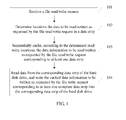
- FIG. 1 is a flowchart of a method for reading and writing data in a file system according to an embodiment of the present invention
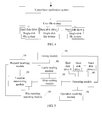
- FIG. 2 is a schematic structural diagram of a method for reading and writing data in a file system according to an embodiment of the present invention
- FIG. 3 is a schematic structural diagram of an apparatus for reading and writing data in a file system according to an embodiment of the present invention
- FIG. 4 is a schematic structural diagram of the relationship between a file system and an upper-layer application system according to an embodiment of the present invention.
- FIG. 5 is a schematic structural diagram of another apparatus for reading and writing data in a file system according to an embodiment of the present invention.
- An embodiment of the present invention provides a method for reading and writing data in a file system.
- the file operation method in this embodiment of the present invention is a method executed by the file system. As shown in FIG. 1 , the method includes:
- the file system supports the file-level redundancy algorithm operations of independent disks.
- the file system may store a single file in a distributed way according to the RAID strips. That is, the data in the file system is stored in multiple hard disk drives in the form of data strips, and the file system performs file operations for the hard disk drives directly, for example, writes data into or reads data from the hard disk drives directly.
- the hard disk drive here may be any non-volatile storage medium such as a traditional hard disk, a solid-state hard disk, a magnetic tape, or an erasable compact disc.
- RAIDn is a data storage block.
- Each data storage block has a different type of data protection method.
- RAID1 is a multi-mirroring redundant protection method for data
- RAID5 stores data into data strips
- any data fragment in each data strip may be calculated through the check block and other data fragments in the data strip.
- the data fragments in a data strip are stored in different hard disk drives.
- the data strip is a unit of storing data by using specific types of RAID data protection algorithms.
- One data strip may include multiple data fragments.
- Each file read/write request includes an offset location of file data relative to initially stored data.
- the file system may determine the read/write locations of the to-be-read/written data in the data strip according to the offset location.
- the read/write locations may be specific fragments in the data strip, or specific hard disk drives, and so on.
- a single-disk file system may be set on each hard disk drive, at least two fragment files are created on the single-disk file system, and file data may be distributed into the fragment files.
- the file data corresponding to one file read/write request may be distributed into fragment files of a single-disk file system on at least two hard disk drives to form a RAID data protection relationship.
- the data to be written as requested by the file write request corresponding to at least one data strip is cached; and if a file read request is received, the data information to be read as requested by the file read request corresponding to at least one data strip is cached.
- step 104 is performed.
- a data strip stores up to seven data fragments, but the data to be read/written as requested by a received file read/write request forms four data fragments. Therefore, the file system needs to wait for other file read/write requests until the data to be read/written as requested by other file read/write requests forms the other three data fragments. Then step 104 is performed.
- step 104 is performed whenever the to-be-read/written data occupies a data strip fully and continue to cache the remaining data information to be read/written as requested by the file read/write request, which is stored outside the data strip.
- a data strip stores up to four data fragments, but the data to be read/written as requested by a received file read/write request forms seven data fragments. Therefore, the file system performs step 104 after caching four data fragments sequentially, and continues caching the data information of the other three fragments to be read/written as requested by the file read/write request.
- the to-be-read/written data information corresponding to multiple data strips may be cached simultaneously.
- the file system when the file system performs steps 103-104, the file system performs the steps sequentially for a same data strip, but performs the steps concurrently for different data strips. That is, while caching the data information corresponding to a data strip, the file system may perform corresponding read/write operations for the data information corresponding to other cached data strips.
- the file system accesses the hard disk drive and reads/writes data only after caching a complete data strip.
- the file system accesses the hard disk drive by using a data strip rather than a file read/write request as a unit. Because a data strip is a storage location of data in the hard disk drive, such a practice improves efficiency of reading/writing data in the file system.
- the file system supports file-level redundancy algorithm operations of independent disks; after receiving a file read/write request, the file system determines the read/write locations of the data to be read/written in the data strip, sequentially caches the to-be-read/written data information corresponding to at least one data strip, and processes the cached data information of at least one complete data strip.
- the data is read/written by using a data strip as a unit, and it is not necessary to write the file read/write request into the LUN virtual block device first and then use the RAID module to access the hard disk drive whenever the file read/write request is received, thereby improving efficiency of reading/writing data.
- the file system and the RAID module do not need to parse the file operation request respectively, and further the RAID module does not need to perform file operations on hard disk drives.
- the file system uses a RAID data protection algorithm to cache data information into data strips, and accesses hard disk drives directly, thereby improving reliability of data storage and simplifying the file processing.
- the file system may determine the type of the file to be read/written as requested by the file read/write request first, and perform step 102 if the file type is file data, namely, content data of the file.
- the file system may read file metadata in any hard disk drive that stores the file metadata, or back up the file metadata into multiple copies and store them into at least two hard disk drives according to a multi-mirroring redundancy algorithm.
- the file system in this embodiment applies a different method to each different file type.
- the file system may use a multi-mirroring redundancy algorithm of RAID1; for data of certain types (such as file data), the file system may use a protection method such as RAID5 and RAID 6 as required by the application scenario, and operate data in hard disk drives in the form of data strips.
- the specific RAID algorithm may be determined according to a preset policy.
- the data of important file types may be protected primarily.
- important data is written into at least two hard disk drives in the system, thereby improving reliability of data storage.
- the file system when the file system receives a sync (sync) operation instruction, a flush (flush) operation instruction, or a close (close) operation instruction, and so on, if the data information currently being cached does not occupy a data strip fully, the file system also needs to perform the operation of writing data in step 104, that is, write the data information corresponding to the currently cached data strip in step 103 into the corresponding data strip. In this way, it is ensured that all data information is backed up into one or more hard disk drives before the operation such as synchronizing, flushing or closing a file is performed.
- the file system uses a data strip as a unit to cache the data written in a hard disk drive first; if the cached data in the data strip needs to be read before the cached data is written into the hard disk drive, to ensure timely and accurate reading of data, in another specific embodiment: If a file read request is received in step 101, before reading data in step 104, the file system needs to determine whether the cached data information, which is to be read as requested by the file read request corresponding to at least one complete data strip, is stored in other currently cached data strips of the file system; if yes, the file system reads the corresponding data from the currently cached data strip of the file system; and if no, the file system reads the data from the corresponding data strip of the hard disk drive.
- the system may start counting time at the beginning of caching the data information corresponding to a data strip, and when the counted time reaches a preset duration but the data information corresponding to a complete data strip is not fully cached, the system may write the data information, corresponding to the data strip that is not fully cached currently, into the corresponding data strip. This avoids the failure of writing the file into the hard disk drive when the time of caching the data information corresponding to a complete data strip is too long.
- the data is stored into 10 hard disk drives; each hard disk drive has multiple data fragments.
- FIG. 2 illustrates only 11 data fragments on the hard disk drives; the part filled with oblique lines stores a check block P, and each file data strip includes nine horizontally distributed data fragments and 1 check block P.
- the file system If the file system receives a file read request and it is determined that the locations of the data to be read as requested by the file read request are hard disk drives 1, 2, 4, and 5 in the second data strip, the file system sequentially caches the data information to be read as requested by the file read request corresponding to the data strip. Because the to-be-read data does not fully occupy the space of the nine data fragments in the data strip, the file system waits for another file read request until the data to be read as requested by other file read requests is the other five data fragments, whereupon the file system reads data in the second data strip of the hard disk drive according to the cached data information corresponding to the data strip.
- the file system If the file system receives a file write request and it is determined that the locations of the data to be written as requested by the file write request are hard disk drives 1-4 in the third data strip and the fourth data strip, the file system sequentially caches the data to be written as requested by the file write request corresponding to the data strips. Because the to-be-read data exceeds the space of the nine data fragments in the data strip, the file system writes the cached data corresponding to a data strip into the third data strip of the hard disk drive first, and waits for another file write request until the data to be written as requested by other file write requests forms other five data fragments, whereupon the file system writes data corresponding to the fourth data strip.
- An embodiment of the present invention provides an apparatus for reading and writing data in a file system, where the file system supports file-level redundancy algorithm operations of independent disks.
- the structure of the apparatus in this embodiment is shown in FIG. 3 , and the apparatus includes: a request receiving module 10, a location determining module 20, a strip caching module 30, and an operating module 40.
- the request receiving module 10 is configured to receive a file read/write request.
- the location determining module 20 is configured to determine locations of the data to be read/written as requested by the file read/write request received by the request receiving module 10 in a data strip, where the data strip is a data read/write strip of a redundant array of independent disks RAID.
- the strip caching module 30 is configured to, sequentially cache, according to read/write locations determined by the location determining module 20, data information to be read/written as requested by the file read/write request corresponding to at least one data strip.
- the operating module 40 is configured to: read data from a corresponding data strip of a hard disk drive according to the data information to be read as requested by a file read request corresponding to at least one complete data strip, where the data information is cached by the strip caching module 30; or, according to the cached data information to be written as requested by a file write request corresponding to at least one complete data strip, write the cached data information to be written as requested by the file write request corresponding to the at least one complete data strip into a corresponding data strip of the hard disk drive.
- the apparatus in this embodiment of the present invention may be an apparatus for operating files while the device executes an application program.
- the apparatus may include a user file system, and perform data operations in hard disk drives.
- Each hard disk drive includes a single-disk file system.
- the upper-layer application system is a user-oriented interface. After receiving a file read/write request, the upper-layer application system sends the request to the user file system, and the user file system accesses the hard disk drive directly by using a RAID data protection method, and therefore, the files are distributed in the fragment files in a single-disk file system on multiple hard disk drives to form a RAID protection relationship.
- the location determining module 20 determines the read/write locations of the to-be-read/written data in the data strip
- the strip caching module 30 sequentially caches the to-be-read/written data information corresponding to at least one data strip
- the operating module 40 processes the cached data information of at least one complete data strip.
- the data is read/written by using a data strip as a unit, and it is not necessary to write the file read/write request into the LUN virtual block device first and then use the RAID module to access the hard disk drive whenever the file read/write request is received, thereby improving efficiency of reading/writing data.
- the file system and the RAID module do not need to parse the file operation request respectively, and further the RAID module does not need to perform file operations in the hard disk drives.
- the file system uses a RAID data protection algorithm to cache data information into data strips, and accesses the hard disk drive directly, thereby improving reliability of data storage and simplifying the file processing.
- the apparatus for reading and writing data in a file system may further include a file metadata operating module 60 and an operation receiving module 70.
- the file metadata operating module 60 is configured to, if the type of the file to be read/written as requested by the file read/write request received by the request receiving module 10 is file metadata: when a file read request is received, read file metadata in any hard disk drive that stores the file metadata; or when a file write request is received, back up the file metadata into multiple copies and store them into at least two hard disk drives according to a multi-mirroring redundancy algorithm.
- the operation receiving module 70 is configured to receive a sync operation instruction, a flush operation instruction, or a close operation instruction.
- the location determining module 20 determines read/write locations in the data strip; and if the file type is file metadata, the file metadata operating module 60 reads file metadata in any hard disk drive that stores the file metadata, or backs up the file metadata into multiple copies and stores them into at least two hard disk drives according to a multi-mirroring redundancy algorithm.
- the data of important file types may be protected primarily. For example, important data is written into at least two hard disk drives, thereby improving reliability of data storage.
- the operation receiving module 70 receives an operation instruction such as a sync operation instruction, a flush operation, or a close operation
- the operating module 40 writes the data information corresponding to the data strip currently cached by the strip caching module 30 into the corresponding data strip of the hard disk drive. This ensures that all data information is backed up into the hard disk drive before the operation instruction such as synchronizing, flushing or closing a file is performed.
- the apparatus for reading and writing data in a file system may further include a cache reading module 80 and a timing module 90.
- the cache reading module 80 is configured to: determine whether the data information cached by the strip caching module 30 and to be read as requested by the file read request corresponding to at least one complete data strip is stored in other data strips cached currently; if yes, read the corresponding data from the currently cached data strip; and if no, instruct the operating module 40 to read data from the corresponding data strip of the hard disk drive.
- the timing module 90 is configured to, when the time spent in caching the to-be-written data information corresponding to a complete data strip exceeds a preset duration, send a write operation instruction to the operating module 40 as an instruction of writing the data information corresponding to the currently cached but not fully cached data strip into the data strip of the hard disk drive.
- the cache reading module 80 determines whether the to-be-read data information is stored in other data strips cached by the strip caching module 30; if yes, reads data from other data strips; and if no, instructs the operating module 40 to read data from the hard disk drive.
- the timing module 90 may start counting time at the beginning of caching the data information corresponding to a data strip, and, when the counted time reaches a preset duration but the data information corresponding to a complete data strip is not fully cached, instruct the operating module 40 to write the data information corresponding to the data strip that is not fully cached currently into the corresponding data strip. This avoids the failure of writing the file into the hard disk drive when caching the data information corresponding to a complete data strip takes long.
- the program may be stored in a computer readable storage medium, which may be a read only memory (ROM), a random access memory (RAM), a magnetic disk, or a CD-ROM.
- ROM read only memory
- RAM random access memory
- magnetic disk or a CD-ROM.
Landscapes
- Engineering & Computer Science (AREA)
- Theoretical Computer Science (AREA)
- Physics & Mathematics (AREA)
- General Engineering & Computer Science (AREA)
- General Physics & Mathematics (AREA)
- Human Computer Interaction (AREA)
- Quality & Reliability (AREA)
- Computer Security & Cryptography (AREA)
- Information Retrieval, Db Structures And Fs Structures Therefor (AREA)
- Memory System Of A Hierarchy Structure (AREA)
Applications Claiming Priority (2)
| Application Number | Priority Date | Filing Date | Title |
|---|---|---|---|
| CN2011100604402A CN102682012A (zh) | 2011-03-14 | 2011-03-14 | 一种文件系统内读写数据的方法及装置 |
| PCT/CN2012/072107 WO2012122915A1 (fr) | 2011-03-14 | 2012-03-09 | Procédé et appareil de lecture et d'écriture de données dans un système de fichiers |
Publications (2)
| Publication Number | Publication Date |
|---|---|
| EP2674877A1 true EP2674877A1 (fr) | 2013-12-18 |
| EP2674877A4 EP2674877A4 (fr) | 2014-03-05 |
Family
ID=46813958
Family Applications (1)
| Application Number | Title | Priority Date | Filing Date |
|---|---|---|---|
| EP12757914.2A Withdrawn EP2674877A4 (fr) | 2011-03-14 | 2012-03-09 | Procédé et appareil de lecture et d'écriture de données dans un système de fichiers |
Country Status (4)
| Country | Link |
|---|---|
| US (1) | US9116638B2 (fr) |
| EP (1) | EP2674877A4 (fr) |
| CN (1) | CN102682012A (fr) |
| WO (1) | WO2012122915A1 (fr) |
Cited By (2)
| Publication number | Priority date | Publication date | Assignee | Title |
|---|---|---|---|---|
| WO2019157929A1 (fr) * | 2018-02-13 | 2019-08-22 | 阿里巴巴集团控股有限公司 | Procédé de traitement de fichier, dispositif et équipement |
| CN113411398A (zh) * | 2021-06-18 | 2021-09-17 | 全方位智能科技(南京)有限公司 | 一种基于大数据的文件清理写入及清理管理系统及方法 |
Families Citing this family (42)
| Publication number | Priority date | Publication date | Assignee | Title |
|---|---|---|---|---|
| US8843676B2 (en) * | 2012-06-27 | 2014-09-23 | International Business Machines Corporation | Optimizing an operating system I/O operation that pertains to a specific program and file |
| CN103530319B (zh) * | 2013-09-16 | 2017-12-15 | 华为技术有限公司 | 一种操作请求的处理方法和装置 |
| CN103488435B (zh) * | 2013-09-24 | 2017-08-04 | 华为技术有限公司 | Raid子系统及其数据读写方法 |
| CN103605479B (zh) * | 2013-10-16 | 2016-06-01 | 北京奇虎科技有限公司 | 数据文件写入方法及系统、数据文件读取方法及系统 |
| CN105094691B (zh) * | 2014-05-21 | 2019-05-21 | 华为技术有限公司 | 一种数据操作的方法、设备和系统 |
| CN104102594B (zh) * | 2014-07-15 | 2017-10-13 | 上海龙晶科技有限公司 | 实现图像数据缓存读写控制的系统及方法 |
| CN104102724A (zh) * | 2014-07-22 | 2014-10-15 | 浪潮电子信息产业股份有限公司 | 一种基于视频监控数据的写入方法 |
| CN105471930B (zh) * | 2014-07-28 | 2019-03-26 | 浙江大华技术股份有限公司 | 一种读取分布式数据的方法、系统和设备 |
| CN105471955B (zh) * | 2014-09-11 | 2019-01-18 | 北京金山云网络技术有限公司 | 分布式文件系统的写方法、客户端设备及分布式文件系统 |
| CN104375784B (zh) * | 2014-11-17 | 2018-04-27 | 浙江宇视科技有限公司 | 一种降低虚拟磁盘管理复杂度的方法和装置 |
| CN105718484A (zh) * | 2014-12-04 | 2016-06-29 | 中兴通讯股份有限公司 | 写文件、读文件、删除文件、查询文件的方法及客户端 |
| US9853873B2 (en) | 2015-01-10 | 2017-12-26 | Cisco Technology, Inc. | Diagnosis and throughput measurement of fibre channel ports in a storage area network environment |
| CN105487811A (zh) * | 2015-02-09 | 2016-04-13 | 哈尔滨安天科技股份有限公司 | 一种基于缓冲对齐的文件读写方法及系统 |
| CN106033320B (zh) * | 2015-03-11 | 2020-04-14 | 中兴通讯股份有限公司 | 高性能廉价磁盘冗余阵列raid机制的处理方法及装置 |
| US9900250B2 (en) | 2015-03-26 | 2018-02-20 | Cisco Technology, Inc. | Scalable handling of BGP route information in VXLAN with EVPN control plane |
| CN106161503A (zh) * | 2015-03-27 | 2016-11-23 | 中兴通讯股份有限公司 | 一种分布式存储系统中的文件读取方法及服务端 |
| US10678641B2 (en) * | 2015-03-31 | 2020-06-09 | EMC IP Holding Company LLC | Techniques for optimizing metadata resiliency and performance |
| CN104794070B (zh) * | 2015-04-23 | 2017-10-31 | 南京道熵信息技术有限公司 | 基于动态非覆盖raid技术的固态闪存写缓存系统及方法 |
| US11829333B2 (en) * | 2015-05-08 | 2023-11-28 | Chicago Mercantile Exchange Inc. | Thread safe lock-free concurrent write operations for use with multi-threaded in-line logging |
| US10222986B2 (en) | 2015-05-15 | 2019-03-05 | Cisco Technology, Inc. | Tenant-level sharding of disks with tenant-specific storage modules to enable policies per tenant in a distributed storage system |
| US11588783B2 (en) | 2015-06-10 | 2023-02-21 | Cisco Technology, Inc. | Techniques for implementing IPV6-based distributed storage space |
| US10778765B2 (en) | 2015-07-15 | 2020-09-15 | Cisco Technology, Inc. | Bid/ask protocol in scale-out NVMe storage |
| US9892075B2 (en) | 2015-12-10 | 2018-02-13 | Cisco Technology, Inc. | Policy driven storage in a microserver computing environment |
| US10140172B2 (en) | 2016-05-18 | 2018-11-27 | Cisco Technology, Inc. | Network-aware storage repairs |
| US20170351639A1 (en) | 2016-06-06 | 2017-12-07 | Cisco Technology, Inc. | Remote memory access using memory mapped addressing among multiple compute nodes |
| US10664169B2 (en) * | 2016-06-24 | 2020-05-26 | Cisco Technology, Inc. | Performance of object storage system by reconfiguring storage devices based on latency that includes identifying a number of fragments that has a particular storage device as its primary storage device and another number of fragments that has said particular storage device as its replica storage device |
| US11563695B2 (en) | 2016-08-29 | 2023-01-24 | Cisco Technology, Inc. | Queue protection using a shared global memory reserve |
| US10545914B2 (en) | 2017-01-17 | 2020-01-28 | Cisco Technology, Inc. | Distributed object storage |
| CN106802774A (zh) * | 2017-01-18 | 2017-06-06 | 广东睿江云计算股份有限公司 | 写请求处理方法和装置、读请求处理方法和装置 |
| US10243823B1 (en) | 2017-02-24 | 2019-03-26 | Cisco Technology, Inc. | Techniques for using frame deep loopback capabilities for extended link diagnostics in fibre channel storage area networks |
| US10713203B2 (en) | 2017-02-28 | 2020-07-14 | Cisco Technology, Inc. | Dynamic partition of PCIe disk arrays based on software configuration / policy distribution |
| CN106990917B (zh) * | 2017-03-02 | 2020-03-24 | 信雅达系统工程股份有限公司 | 文件读写方法及系统 |
| US10254991B2 (en) | 2017-03-06 | 2019-04-09 | Cisco Technology, Inc. | Storage area network based extended I/O metrics computation for deep insight into application performance |
| US10303534B2 (en) | 2017-07-20 | 2019-05-28 | Cisco Technology, Inc. | System and method for self-healing of application centric infrastructure fabric memory |
| CN109558070B (zh) * | 2017-09-27 | 2023-09-15 | 北京忆恒创源科技股份有限公司 | 可扩展存储系统架构 |
| US10404596B2 (en) | 2017-10-03 | 2019-09-03 | Cisco Technology, Inc. | Dynamic route profile storage in a hardware trie routing table |
| US10942666B2 (en) | 2017-10-13 | 2021-03-09 | Cisco Technology, Inc. | Using network device replication in distributed storage clusters |
| CN108304249B (zh) * | 2017-12-26 | 2021-08-24 | 广东睿江云计算股份有限公司 | 一种XenServer虚拟机快速更换光盘ISO文件的方法、系统 |
| CN110825552B (zh) * | 2018-08-14 | 2021-04-09 | 华为技术有限公司 | 数据存储方法、数据恢复方法、节点及存储介质 |
| CN109558386A (zh) * | 2018-11-26 | 2019-04-02 | 北京微播视界科技有限公司 | 一种客户端数据的缓存方法、装置、设备和介质 |
| CN114238232B (zh) * | 2021-12-15 | 2024-04-02 | 南方电网电力科技股份有限公司 | 一种智能电表文件读写系统、方法、设备和介质 |
| US11934699B2 (en) | 2022-03-21 | 2024-03-19 | International Business Machines Corporation | Linear tape file system unoptimized read detection |
Family Cites Families (15)
| Publication number | Priority date | Publication date | Assignee | Title |
|---|---|---|---|---|
| US8195760B2 (en) * | 2001-01-11 | 2012-06-05 | F5 Networks, Inc. | File aggregation in a switched file system |
| US6954824B2 (en) * | 2001-10-15 | 2005-10-11 | International Business Machines Corporation | Method, system, and program for determining a configuration of a logical array including a plurality of storage devices |
| US7076606B2 (en) * | 2002-09-20 | 2006-07-11 | Quantum Corporation | Accelerated RAID with rewind capability |
| US6904498B2 (en) * | 2002-10-08 | 2005-06-07 | Netcell Corp. | Raid controller disk write mask |
| US8140860B2 (en) * | 2003-12-15 | 2012-03-20 | International Business Machines Corporation | Policy-driven file system with integrated RAID functionality |
| US8379520B2 (en) | 2004-03-03 | 2013-02-19 | Texas Instruments Incorporated | Group based packet scheduling algorithm |
| CN1306381C (zh) * | 2004-08-18 | 2007-03-21 | 华为技术有限公司 | 一种磁盘阵列数据的读写方法及并行读写方法 |
| US7873782B2 (en) * | 2004-11-05 | 2011-01-18 | Data Robotics, Inc. | Filesystem-aware block storage system, apparatus, and method |
| WO2006086379A2 (fr) * | 2005-02-07 | 2006-08-17 | Dot Hill Systems Corporation | Controleur de type raid a coalescence d'instructions |
| US20090204846A1 (en) * | 2008-02-12 | 2009-08-13 | Doug Baloun | Automated Full Stripe Operations in a Redundant Array of Disk Drives |
| CN201397674Y (zh) * | 2009-04-21 | 2010-02-03 | 北京国科环宇空间技术有限公司 | 一种存储设备 |
| US8392813B2 (en) * | 2009-12-22 | 2013-03-05 | Intel Corporation | Redundant file system |
| CN101833422B (zh) * | 2010-03-08 | 2012-01-04 | 成都市华为赛门铁克科技有限公司 | 磁盘阵列的数据处理方法及设备 |
| CN101916173B (zh) * | 2010-08-27 | 2013-08-28 | 杭州华三通信技术有限公司 | 一种基于raid的数据读写方法及其系统 |
| US8938583B1 (en) * | 2011-11-16 | 2015-01-20 | Western Digital Technologies, Inc. | System and method for concurrently executing data access requests |
-
2011
- 2011-03-14 CN CN2011100604402A patent/CN102682012A/zh active Pending
-
2012
- 2012-03-09 WO PCT/CN2012/072107 patent/WO2012122915A1/fr not_active Ceased
- 2012-03-09 EP EP12757914.2A patent/EP2674877A4/fr not_active Withdrawn
-
2013
- 2013-09-12 US US14/025,413 patent/US9116638B2/en active Active
Cited By (3)
| Publication number | Priority date | Publication date | Assignee | Title |
|---|---|---|---|---|
| WO2019157929A1 (fr) * | 2018-02-13 | 2019-08-22 | 阿里巴巴集团控股有限公司 | Procédé de traitement de fichier, dispositif et équipement |
| CN113411398A (zh) * | 2021-06-18 | 2021-09-17 | 全方位智能科技(南京)有限公司 | 一种基于大数据的文件清理写入及清理管理系统及方法 |
| CN113411398B (zh) * | 2021-06-18 | 2022-02-18 | 全方位智能科技(南京)有限公司 | 一种基于大数据的文件清理写入及清理管理系统及方法 |
Also Published As
| Publication number | Publication date |
|---|---|
| US9116638B2 (en) | 2015-08-25 |
| EP2674877A4 (fr) | 2014-03-05 |
| CN102682012A (zh) | 2012-09-19 |
| US20140019684A1 (en) | 2014-01-16 |
| WO2012122915A1 (fr) | 2012-09-20 |
Similar Documents
| Publication | Publication Date | Title |
|---|---|---|
| US9116638B2 (en) | Method and apparatus for reading and writing data in file system | |
| US11797191B2 (en) | Systems and methods for storing data in SSD | |
| US10860494B2 (en) | Flushing pages from solid-state storage device | |
| EP2573689A1 (fr) | Procédé et dispositif de mise en place d'une protection par réseau redondant de disques indépendants dans un système de fichiers | |
| US20070162692A1 (en) | Power controlled disk array system using log storage area | |
| US9223509B2 (en) | File processing method and storage device | |
| US20120159050A1 (en) | Memory system and data transfer method | |
| US20130036265A1 (en) | Method to allow storage cache acceleration when the slow tier is on independent controller | |
| US8862819B2 (en) | Log structure array | |
| CN102982182B (zh) | 一种数据存储规划方法及装置 | |
| US11132145B2 (en) | Techniques for reducing write amplification on solid state storage devices (SSDs) | |
| US20120221813A1 (en) | Storage apparatus and method of controlling the same | |
| CN103907096A (zh) | 闪存高速缓存中的部分数据片段的提升 | |
| CN103150128A (zh) | 基于ssd和磁盘的可靠混合存储系统实现方法 | |
| JP5415333B2 (ja) | ストレージアレイでミラー化されたキャッシュボリュームを用いることでドライブオーバーヘッドを軽減するシステム | |
| US8019937B2 (en) | Applying storage device commit-cached-data-to-media functionality to improve data security in systems that allow storage devices to cache writes | |
| US20130179634A1 (en) | Systems and methods for idle time backup of storage system volumes | |
| US8990615B1 (en) | System and method for cache management | |
| CN101387943B (zh) | 一种存储设备以及缓存数据的方法 | |
| US9817585B1 (en) | Data retrieval system and method | |
| US9286219B1 (en) | System and method for cache management | |
| WO2023102784A1 (fr) | Procédé et appareil d'accès à des données, contrôleur de disque, disque et système de stockage de données | |
| WO2013014701A1 (fr) | Appareil de stockage de données et procédé de gestion de données | |
| US9128854B1 (en) | System and method for data prediction | |
| WO2020168516A1 (fr) | Procédé et système permettant de faciliter des opérations d'écriture atomique rapide dans des lecteurs de disque dur d'enregistrement magnétique à bardeaux |
Legal Events
| Date | Code | Title | Description |
|---|---|---|---|
| PUAI | Public reference made under article 153(3) epc to a published international application that has entered the european phase |
Free format text: ORIGINAL CODE: 0009012 |
|
| 17P | Request for examination filed |
Effective date: 20130816 |
|
| AK | Designated contracting states |
Kind code of ref document: A1 Designated state(s): AL AT BE BG CH CY CZ DE DK EE ES FI FR GB GR HR HU IE IS IT LI LT LU LV MC MK MT NL NO PL PT RO RS SE SI SK SM TR |
|
| A4 | Supplementary search report drawn up and despatched |
Effective date: 20140203 |
|
| RIC1 | Information provided on ipc code assigned before grant |
Ipc: G06F 11/10 20060101AFI20140128BHEP Ipc: G06F 3/06 20060101ALN20140128BHEP |
|
| DAX | Request for extension of the european patent (deleted) | ||
| 17Q | First examination report despatched |
Effective date: 20150114 |
|
| STAA | Information on the status of an ep patent application or granted ep patent |
Free format text: STATUS: THE APPLICATION HAS BEEN WITHDRAWN |
|
| 18W | Application withdrawn |
Effective date: 20160302 |