EP2675218A1 - Procédé de communications entre mobiles et n ud de gestion mobile - Google Patents
Procédé de communications entre mobiles et n ud de gestion mobile Download PDFInfo
- Publication number
- EP2675218A1 EP2675218A1 EP12744772.0A EP12744772A EP2675218A1 EP 2675218 A1 EP2675218 A1 EP 2675218A1 EP 12744772 A EP12744772 A EP 12744772A EP 2675218 A1 EP2675218 A1 EP 2675218A1
- Authority
- EP
- European Patent Office
- Prior art keywords
- bearer
- information
- network
- video
- radio access
- Prior art date
- Legal status (The legal status is an assumption and is not a legal conclusion. Google has not performed a legal analysis and makes no representation as to the accuracy of the status listed.)
- Withdrawn
Links
Images




Classifications
-
- H—ELECTRICITY
- H04—ELECTRIC COMMUNICATION TECHNIQUE
- H04W—WIRELESS COMMUNICATION NETWORKS
- H04W40/00—Communication routing or communication path finding
- H04W40/34—Modification of an existing route
- H04W40/36—Modification of an existing route due to handover
-
- H—ELECTRICITY
- H04—ELECTRIC COMMUNICATION TECHNIQUE
- H04N—PICTORIAL COMMUNICATION, e.g. TELEVISION
- H04N7/00—Television systems
- H04N7/14—Systems for two-way working
- H04N7/141—Systems for two-way working between two video terminals, e.g. videophone
- H04N7/147—Communication arrangements, e.g. identifying the communication as a video-communication, intermediate storage of the signals
-
- H—ELECTRICITY
- H04—ELECTRIC COMMUNICATION TECHNIQUE
- H04W—WIRELESS COMMUNICATION NETWORKS
- H04W36/00—Hand-off or reselection arrangements
- H04W36/0005—Control or signalling for completing the hand-off
- H04W36/0011—Control or signalling for completing the hand-off for data sessions of end-to-end connection
- H04W36/0027—Control or signalling for completing the hand-off for data sessions of end-to-end connection for a plurality of data sessions of end-to-end connections, e.g. multi-call or multi-bearer end-to-end data connections
-
- H—ELECTRICITY
- H04—ELECTRIC COMMUNICATION TECHNIQUE
- H04W—WIRELESS COMMUNICATION NETWORKS
- H04W36/00—Hand-off or reselection arrangements
- H04W36/14—Reselecting a network or an air interface
- H04W36/144—Reselecting a network or an air interface over a different radio air interface technology
- H04W36/1443—Reselecting a network or an air interface over a different radio air interface technology between licensed networks
Definitions
- the present invention relates to a mobile communication method and a mobility management node.
- UTRAN Universal Terrestrial Radio Access Network
- GERAN GSM EDGE Radio Access Network
- E-UTRAN Evolved Universal Terrestrial Radio Access Network
- LTE Long Term Evolution
- SRVCC Single Radio Voice Call Continuity
- a path is switched from a path via the E-UTRAN/UTRAN (path for VoIP (Voice over IP) communication) to a path via the UTRAN/GERAN (path for CS (Circuit Switch) communication) without disconnection of a path for voice call between UE (User Equipment) #1 and UE#2.
- vSRVCC Single Radio Video Call Continuity
- TR23. 886 of the 3GPP see Non-Patent Document 2.
- vSRVCC Single Radio Video Call Continuity
- a path is switched from a path via the E-UTRAN /UTRAN (path for VoIP communication) to a path via the UTRAN (path for CS communication) without disconnection of a path for video call between UE#1 and UE#2.
- the switching method is as follows: whether both a video bearer and a voice bearer which configure a path for the video call are switched; whether a voice bearer alone which configures a path for the video call is switched; or whether neither a video bearer nor a voice bearer, both of which configure a path for the video call, is switched.
- An objective of the present invention is to provide a mobile communication method and a mobility management node capable of providing a scheme for deciding a switching method for the video call when the UE#1 in video call with the UE#2 is caused to perform handover from the E-UTRAN to the UTRAN/GERAN.
- a first aspect of the present invention is summarized by a mobile communication method in a mobile communication system which includes a first radio access network not supporting circuit-switched communications, a mobile communcation network which connects the first radio access network, a second radio access network supporting the circuit-switched communications, and a service control network, and which is capable of switching from a path via the first radio access network to a path via the second radio access network without disconnection of a path for video call performed between a first mobile station and a second mobile station.
- the mobile communication method includes the steps of: deciding a switching method for the video call by the service control network when a video bearer and a voice bearer which configure a path for the video call are set; maintaining information on the switching method decided and association information with which information on the video bearer is in association with information on the voice bearer, by the mobile communcation network and a radio base station in the first radio access network; requesting the service control network to delete the video bearer, by the first mobile station; requesting the mobile communcation network to delete the video bearer, by the service control network; deleting the information on the video bearer from the association information in response to the request from the service control network, and requesting the radio base station to delete the video bearer, by the mobile communcation network; and deleting the information on the video bearer from the association information in response to the request from the mobile communcation network, by the radio base station.
- a mobile communication system according to a first embodiment of the present invention will be explained with reference to Fig. 1 to Fig. 8 .
- a path can be switched from a path via the E-UTRAN /UTRAN (path for IMS VoIP communication) to a path via the UTRAN/GERAN (path for circuit-switched communications), without disconnection of a path for video call between an UE#1 and an UE#2.
- the improved vSRVCC scheme indicates a scheme in which, by using an ATCF (Access Transfer Control Function) or an ATGW (Access Transfer Gateway) which are standardized by TR23.237 of the 3GPP, an SRVCC scheme (hereinafter, referred to an improved SRVCC scheme) which performs switching in a network where the UE#1 is located is applied to the vSRVCC scheme.
- ATCF Access Transfer Control Function
- ATGW Access Transfer Gateway
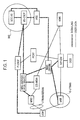
- Fig. 1 shows a configuration of a mobile communication system according to the embodiment when the vSRVCC scheme is used
- Fig. 2 shows another configuration of the mobile communication system according to the embodiment when the improved vSRVCC scheme is used.
- the mobile communication system connects the E-UTRAN and the UTRAN/GERAN.
- the mobile communication system includes, in the network where the UE#1 is located, an eNB (radio base station), an RNC (Radio Network Controller, radio channel control station, not shown), an NodeB/BSS (radio base station, not shown), an MME (Mobility Management Entity, mobility management node), an S-GW (Serving-Gateway, serving gateway device), a P-GW (PDN-Gateway, PDN gateway device), a P-CSCF (Proxy-Call Session Control Function, proxy session control device), an MSC (Mobile-service Switching Center, circuit switching device), an SGSN (Serving GPRS Support Node, packet switching device), an MSC server, a CS (Circuit Switch)-MGW (Media Gateway), a PCRF (Policy and Charging Rules Function, policy and charging rules device), an OCS (Online Charging System), or the like.
- eNB radio base station
- RNC Radio Network Controller, radio channel control station, not shown
- NodeB/BSS
- the mobile communication system includes an SCC-AS, and I/S-CSCF, or the like, in an IMS (IP Multimedia Subsystem).
- IMS IP Multimedia Subsystem
- the mobile communication system according to the embodiment includes an ATCF (Access Transfer Control Function), an ATGW (Access Transfer Gateway), or the like, in addition to the configuration of the mobile communication system according to the embodiment shown in Fig. 1 .
- ATCF Access Transfer Control Function
- ATGW Access Transfer Gateway
- the ATCF and the ATGW are standardized by TS23.237 of the 3GPP as devices for the improved SRVCC scheme, and are applicable to the present invention in the similar manner.
- the ATGW is an anchor node configured to perform the abovementioned switching
- the ATCF is a control device configured to control the ATGW.
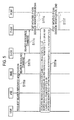
- the procedure shown in Fig. 3 is obtained by simplifying the procedure standardized by TS23.228 or TS23.237 of the 3GPP, and portions not being described are in conformity with the procedure standardized by TS23.228 or TS23.237 of the 3GPP.
- the UE#1 transmits an "Invite (Initial SDP Offer)" to the P-CSCF (or, the ATCF, the same applies below), in response to an originating operation of video call by a user.
- an "Invite (Initial SDP Offer)" to the P-CSCF (or, the ATCF, the same applies below), in response to an originating operation of video call by a user.
- the P-CSCF transmits the "Invite (Initial SDP Offer)" to the S-CSCF in the IMS.
- the S-CSCF transmits the "Invite (Initial SDP Offer) "to the SCC-AS in the IMS.
- the SCC-AS transmits the "Invite (Initial SDP Offer)" to the S-CSCF.
- the S-CSCF transmits the "Invite (Initial SDP Offer)" if to the UE#2.
- the UE#2 transmits an "Offer Response" to the S-CSCF via the SCC-AS.
- the SCC-AS or the S-CSCF decides a switching method for the video call.
- the SCC-AS or the S-CSCF may decide a switching method for the video call as follows: both a video bearer and a voice bearer which configure a path for the video call are switched without being disconnected; a voice bearer alone which configures a path for the video call is switched without being disconnected; or neither a video bearer nor a voice bearer, both of which configure a path for the video call, is switched (in other words, no process of the vSRVCC scheme is applied).
- the SCC-AS or the S-CSCF may decide a switching method for the video call based on the profile of a subscriber related to the UE#1, abilities of a home network of the UE#1 (which includes information indicating whether or not video call can be provided in the circuit-switched communications), abilities of a network where the UE#1 is located (which includes information indicating whether or not video call can be provided in the circuit-switched communications), abilities of the UE#1 (for example, whether or not video call can be provided in the circuit-switched communications, whether or not the UE#1 adapts the vSRVCC scheme, or the like), roaming agreement information, operator policies, or the like.
- the S-CSCF transmits an "Offer Response" including first vSRVCC information to the P-CSCF.
- the first vSRVCC information includes an "application type", "media information", or "the presence or absence of an object of the vSRVCC". Note that, "a presence or absence of an object of the vSRVCC” may not be included in the "Offer Response". In such a case, the PCRF may determine "the presence or absence of an object of the vSRVCC" when receiving the first vSRVCC information from the P-CSCF.
- the "application type” is information indicating the type of the application used for the call related to the originating procedure.
- the "media information” is information indicating the type of the call related to the originating procedure (information indicating video call or voice call, information included in the SDP, or the like).
- the presence or absence of an object of the vSRVCC is information indicating whether each bearer which configures a path for call related to the originating procedure is an object of switching by the vSRVCC scheme.
- the S-CSCF may notify the P-CSCF of the "switching method for the video call” together with the "Offer Response”.
- the P-CSCF transmits the "Offer Response" to the UE#1.
- the UE#1 transmits a "Response Conf (Opt SDP)" to the P-CSCF.
- a process for reserving resources of a video bearer and a voice bearer which configure a path for the video call is performed at Step S108 or at Step S111.
- the P-CSCF upon receiving the "Offer Response" including the first vSRVCC information from the S-CSCF at Step 107, the P-CSCF transmits "Application/Service Info" including the first vSRVCC information to the PCRF at Step S108a.
- the PCRF transmits an "Ack" to the P-CSCF at Step S108b, decides a policy related to the video call at Step S108c, and transmits a "Policy and Charging Rules Provision" including second vSRVCC information to the P-GW at Step S108e.
- the second vSRVCC information includes the abovementioned “media information (QoS Rule, QoS Information, or the like) or "the presence or absence of an object of the vSRVCC". Furthermore, the second vSRVCC information may include information on the abovementioned switching method for the video call.
- the PCRF may determine whether or not each bearer is an object of switching by the vSRVCC scheme based on the "application type", the "media information", or the like, which are set in the first vSRVCC information.
- Step S108d a Gateway Control process and a QoS Rules Provision process are performed.
- PMIP Proxy Mobile IP
- the PCRF can notify the eNB of the abovementioned second vSRVCC information through with these processes. Note that, the processes may be performed followed by a process at Step S108k.
- the P-GW performs a Policy Enforcement process at Step S108e, and transmits a "Credit Request" to the OCS at Step S108g.
- the OCS transmits a "Credit Response" to the P-GW.
- the P-GW transmits a "Create Bearer Request" including third vSRVCC information to the S-GW.
- the third vSRVCC information includes "bearer context association information" or "the presence or absence of an object of the vSRVCC" described above.
- the third vSRVCC information may include information on the abovementioned switching method for the video call.
- the S-GW Upon receiving the "Create Bearer Request" including the third vSRVCC information from the P-GW at Step S108i, the S-GW transmits the "Create Bearer Request" including the third vSRVCC information to the MME at Step S123, as shown in Fig. 6 .
- the MME maintains information on the abovementioned switching method for the video call and association information with which a "bearer identifier" indicating a video bearer is in association with a "bearer identifier” indicating a voice bearer at Step S124, and transmits a "Bearer Setup Request" (which includes a "Session Management Request") including fourth vSRVCC information to the eNB at Step S125.
- the fourth vSRVCC information includes "bearer identifiers (a bearer identifier indicating a voice bearer and a bearer identifier indicating a video bearer)", which is information indicating each bearer which configures a path for the call related to the originating procedure and is allocated in the MME in accordance with the abovementioned "Create Bearer Request", association information with which a "bearer identifier” indicating a video bearer is in association with a "bearer identifier” indicating a voice bearer, or "the presence or absence of an object of the vSRVCC" described above.
- bearer identifiers a bearer identifier indicating a voice bearer and a bearer identifier indicating a video bearer
- the fourth vSRVCC information may include information on the abovementioned switching method for the video call.
- the eNB maintains information on the abovementioned switching method for the video call and the association information with which a "bearer identifier" indicating a video bearer is in association with a "bearer identifier” indicating a voice bearer at Step S126, and transmits an "RRC Connection Reconfiguration" to the UE#1 at Step S127.
- the MME and the eNB may determine whether each bearer is an object of switching by the vSRVCC scheme, based on the association information with which a "bearer identifier" indicating a video bearer is in association with a "bearer identifier” indicating a voice bearer, instead of "the presence or absence of an object of the vSRVCC" described above.
- the UE#1 transmits an "RRC Connection Reconfiguration Complete" to the eNB.
- the eNB transmits a "Bearer Setup Response" to the MME.
- the UE#1 transmits a "Direct Transfer” to the eNB.
- the eNB transmits a "Session Management Response" to the MME.
- the MME transmits a "Create Bearer Response" to the S-GW.
- the S-GW transmits the "Create Bearer Response" to the P-GW.
- the P-GW transmits an "Ack" to the PCRF.
- the PCRF transmits a "Notification of Bearer Level Event” to the P-CSCF.
- the P-CSCF transmits an "Ack" to the PCRF.
- the UE#1 transmits a "Request Bearer Resource Modification" to the MME at Step S111a, as shown in Fig. 5 .
- Step S111b the MME transmits a "Bearer Resource Command" to the S-GW.
- Step S111c the S-GW transmits the "Bearer Resource Command" to the P-GW.
- Step S111d a "PCEF Initiated IP-CAN (IP Connectivity Access Network) Session Modification process" is started.
- Step S111e operations from Step S108i to S108j, which are shown in Fig. 6 , are performed.
- Step S111f the "PCEF Initiated IP-CAN Session Modification process" is completed.
- the MME and the eNB can maintain information on a switching method for the video call and association information with which a "bearer identifier" indicating a video bearer is in association with a "bearer identifier” indicating a voice bearer. Accordingly, the use of the association makes it possible to decide, in handover from the E-UTRAN to the UTRAN/GERAN of the UE#1 in video call with the UE#2, whether both a video bearer and a voice bearer are switched, whether a voice bearer alone is switched, or whether neither a video bearer nor a voice bearer is switched.
- an example shown in Fig. 7 indicates a case of changing from a state where video call is performed between the UE#1 and the UE#2 to a state where voice call is to be performed between the UE#1 and the UE#2.
- the UE#1 transmits, in response to a deleting operation of a video bearer by a user, an "Invite" including information indicating a media delete for requesting to delete a video bearer, via the P-CSCF to the IMS, at Step S201.
- the IMS starts a delete process for a video bearer in the IP-CAN at Step S202, and transmits an "Application/Service Info" including the first vSRVCC information to the PCRF, whereby requesting the PCRF to delete the abovementioned video bearer, at Step S203.
- the PCRF transmits a "Policy and Charging Rules Provision" including the second vSRVCC information to the P-GW, whereby requesting the P-GW to delete the abovementioned video bearer.
- the P-GW transmits a "Delete Bearer Request" including the third vSRVCC information to the S-GW.
- the S-GW transmits the "Delete Bearer Request" including the third vSRVCC information to the MME.
- the MME deletes information on the video bearer from the stored association information at Step S207. In this manner, information on the switching method for the video call and association information with which a "bearer identifier" indicating a video bearer is in association with a "bearer identifier" indicating a voice bearer are deleted.
- the MME transmits a "Bearer Release Request" (which includes the session Management Request") including the fourth vSRVCC information to the eNB.
- the eNB deletes the information on the switching method for the video call and the association information with which a "bearer identifier" indicating a video bearer is in association with a "bearer identifier” indicating a voice bearer, which have been stored therein, at Step S209, and transmits an "RRC Connection Reconfiguration" to the UE#1 at Step S210.
- the UE#1 transmits an "RRC Connection Reconfiguration Complete" to the eNB.
- the eNB transmits a "Bearer Release Response" to the MME.
- the UE#1 transmits a "Direct Transfer” to the eNB.
- the eNB transmits a "Session Management Response" to the MME.
- the MME transmits a "Delete Bearer Response" to the S-GW.
- the S-GW transmits the "Delete Bearer Response" to the P-GW.
- the P-GW transmits an "Ack" to the PCRF.
- the association information stored in the eNB and the MME can be updated.
- an example shown in Fig. 8 indicates a case of changing a state where voice call is performed between the UE#1 and the UE#2 to a state where video call is to be performed between the UE#1 and the UE#2.
- the UE#1 transmits, in response to an adding operation of a video bearer by a user, an "Invite" including information indicating a media addition for request to add a video bearer, via the P-CSCF to the IMS, at Step S301.
- the IMS starts an addition process for a video bearer in the IP-CAN at Step S302, and transmits an "Application/Service Info" including the first vSRVCC information to the PCRF at Step S303, whereby requesting the PCRF to add the abovementioned video bearer.
- the PCRF transmits a "Policy and Charging Rules Provision" including the second vSRVCC information to the P-GW, whereby requesting the P-GW to add the abovementioned video bearer.
- the P-GW transmits a "Create Bearer Request" including the third vSRVCC information to the S-GW.
- the S-GW transmits the "Create Bearer Request" including the third vSRVCC information to the MME.
- the "Create Bearer Request” includes "bearer context association information” including a context of a voice bearer to which the video bearer is added.
- the MME creates a context of the video bearer, and maintains association information with which information on the allocated video bearer is in association with information on the voice bearer to which the video bearer is added.
- Step S308 the MME transmits a "Bearer Setup Request" (which includes the "Session Management Request") including the fourth vSRVCC information to the eNB.
- E-RAB Setup Request an "E-RAB Modify Request”, or the like is used as the "Session Management Request”.
- the eNB maintains the received association information at Step S309, and transmits an "RRC Connection Reconfiguration" to the UE#1 at Step S310.
- the UE#1 transmits an "RRC Connection Reconfiguration Complete" to the eNB.
- the eNB transmits a "Bearer Setup Response" to the MME.
- the UE#1 transmits a "Direct Transfer” to the eNB.
- the eNB transmits a "Session Management Response" to the MME.
- the MME transmits a "Create Bearer Response" to the S-GW.
- the S-GW transmits the "Create Bearer Response" to the P-GW.
- the P-GW transmits an "Ack" to the PCRF.
- the association information stored in the eNB and the MME can be updated.
- a mobile communication method in a mobile communication system which includes an E-UTRAN (first radio access network not supporting circuit-switched communications), a mobile communcation network which connects the E-UTRAN, an UTRAN/GERAN (second radio access network supporting the circuit-switched communications), and an IMS (service control network), and which is capable of switching from a path via the E-UTRAN to a path via the UTRAN/GERAN without disconnection of a path for video call performed between an UE#1 (first mobile station) and an UE#2 (second mobile station), by using the vSRVCC scheme or the improved vSRVCC scheme.
- E-UTRAN first radio access network not supporting circuit-switched communications
- a mobile communcation network which connects the E-UTRAN
- an UTRAN/GERAN second radio access network supporting the circuit-switched communications
- IMS service control network
- the mobile communication method includes the steps of: deciding a path for the video call by the IMS when a video bearer and a voice bearer which configure a path for the video call are set; maintaining information on the decided switching method and association information with which information on the video bearer is in association with information on the voice bearer, by the mobile communcation network and an eNB (radio base station in the first radio access network) ; requesting the IMS to delete the video bearer, by the UE#1; requesting the mobile communcation network to delete the video bearer, by the IMS; deleting the information on the video bearer from the association information in response to the request from the IMS, and requesting the eNB to delete the video bearer, by mobile communcation network; and deleting the information on the video bearer from the association information in response to the request from the mobile communcation network, by the eNB.
- the feature according to the first embodiment may include the steps of: requesting the IMS to add a video bearer, by the UE#1; requesting the mobile communcation network to add the video bearer, by the IMS; adding information on the video bearer to the association information, in response to the request from the IMS, and requesting the eNB to add the video bearer, by the mobile communcation network; and adding the information on the video bearer to the association information, in response to the request from the mobile communcation network, by the eNB.
- the information on the switching method may indicate any of the cases: a case where both of the video bearer and the voice bearer are switched without being disconnected; a case where the voice bearer alone is switched without being disconnected; and a case where neither of the video bearer nor the voice bearer is disconnected or switched.
- operations of the MSC server, the CS-MGW, the MME, the SGSN, the S-GW, the P-GW, the P-CSCF, the I/S-CSCF, the SCC-AS, the ATCF, the ATGW, the HSS, the MSC, the UE#1, the UE#2, and the eNB may implemented by hardware, by software modules executed by a processor, or a combination thereof.
- the software module may be provided in a storage medium of an arbitrary form, such as a RAM (Random Access Memory), a flash memory, a ROM (Read Only Memory), an EPROM (Erasable Programmable ROM), an EEPROM (Electronically Erasable and Programmable ROM), a register, a hard disk, a removable disk, or a CD-ROM.
- a RAM Random Access Memory
- flash memory a ROM (Read Only Memory)
- EPROM Erasable Programmable ROM
- EEPROM Electrically Erasable and Programmable ROM
- Such a storage medium is connected to a processor so that the processor can read and write information from and in the storage medium. Furthermore, the storage medium may be integrated in the processor. Furthermore, the storage medium and the processor may be provided in an ASIC. Such an ASIC may be provided in the MSC server, the CS-MGW, the MME, SGSN, the S-GW, the P-GW, the P-CSCF, the I/ S-CSCF, the SCC-AS, the ATCF, the ATGW, the HSS, the MSC, the UE#1, the UE#2, or the eNB.
- the storage medium and the processor may be provided, as discrete components, in the MSC server, the CS-MGW, the MME, the SGSN, the S-GW, the P-GW, the P-CSCF, the I/S-CSCF, the SCC-AS, the ATCF, the ATGW, the HSS, the MSC, the UE#1, the UE#2, or the eNB.
- the present invention can provide a mobile communication method capable of providing a scheme for deciding a switching method for the video call when an UE#1 in video call with an UE#2 is caused to perform handover from the E-UTRAN to the UTRAN/GERAN.
Landscapes
- Engineering & Computer Science (AREA)
- Signal Processing (AREA)
- Computer Networks & Wireless Communication (AREA)
- Multimedia (AREA)
- Mobile Radio Communication Systems (AREA)
Applications Claiming Priority (2)
| Application Number | Priority Date | Filing Date | Title |
|---|---|---|---|
| JP2011024383A JP5063787B2 (ja) | 2011-02-07 | 2011-02-07 | 移動通信方法及び移動管理ノード |
| PCT/JP2012/052727 WO2012108423A1 (fr) | 2011-02-07 | 2012-02-07 | Procédé de communications entre mobiles et nœud de gestion mobile |
Publications (2)
| Publication Number | Publication Date |
|---|---|
| EP2675218A1 true EP2675218A1 (fr) | 2013-12-18 |
| EP2675218A4 EP2675218A4 (fr) | 2015-04-08 |
Family
ID=46638636
Family Applications (1)
| Application Number | Title | Priority Date | Filing Date |
|---|---|---|---|
| EP12744772.0A Withdrawn EP2675218A4 (fr) | 2011-02-07 | 2012-02-07 | Procédé de communications entre mobiles et n ud de gestion mobile |
Country Status (9)
| Country | Link |
|---|---|
| US (1) | US9253437B2 (fr) |
| EP (1) | EP2675218A4 (fr) |
| JP (1) | JP5063787B2 (fr) |
| KR (1) | KR101364263B1 (fr) |
| CN (1) | CN103348736B (fr) |
| AU (1) | AU2012215743B2 (fr) |
| BR (1) | BR112013019974A2 (fr) |
| CA (1) | CA2826668C (fr) |
| WO (1) | WO2012108423A1 (fr) |
Families Citing this family (8)
| Publication number | Priority date | Publication date | Assignee | Title |
|---|---|---|---|---|
| WO2014034058A1 (fr) * | 2012-08-29 | 2014-03-06 | 日本電気株式会社 | Système de réseau de communication audio, appareil de commande de la communication, appareil de communication mobile, procédé de commande de la communication et support d'enregistrement de programme |
| US9246988B2 (en) * | 2013-06-17 | 2016-01-26 | Google Inc. | Managing data communications based on phone calls between mobile computing devices |
| WO2015070420A1 (fr) * | 2013-11-14 | 2015-05-21 | Qualcomm Incorporated | Continuité d'appel vocal radio double |
| CN104883672A (zh) * | 2014-02-28 | 2015-09-02 | 中兴通讯股份有限公司 | 语音呼叫连续性业务中的媒体锚定方法及装置 |
| EP3308595B1 (fr) * | 2015-06-10 | 2021-08-18 | Telefonaktiebolaget LM Ericsson (publ) | Établissement d'une session d'interaction sur une porteuse dans un réseau de communication radioélectrique |
| JP6743824B2 (ja) | 2015-09-14 | 2020-08-19 | 日本電気株式会社 | 通信方法及び基地局 |
| CN106102103A (zh) * | 2016-05-27 | 2016-11-09 | 努比亚技术有限公司 | 通话模式切换装置及方法 |
| EP4207828B1 (fr) * | 2020-09-27 | 2025-11-26 | Huawei Technologies Co., Ltd. | Procédé de communication de données et appareil de communication |
Family Cites Families (14)
| Publication number | Priority date | Publication date | Assignee | Title |
|---|---|---|---|---|
| US20040148392A1 (en) * | 2003-01-29 | 2004-07-29 | Web.De Ag | Website having an event identification element |
| USPP14740P3 (en) * | 2002-08-29 | 2004-04-27 | Mitch Rabin | Guzmania plant named ‘Amimosa’ |
| US7613171B2 (en) * | 2004-08-31 | 2009-11-03 | Ephraim Zehavi | Cellular network service over WLAN |
| ATE434361T1 (de) * | 2004-11-03 | 2009-07-15 | Nokia Corp | Inter-system-weiterreichung eines mobilen endgeräts, das mit einem ersten und zweiten funkzugangsnetz betreibbar ist |
| WO2006066610A1 (fr) * | 2004-12-23 | 2006-06-29 | Telecom Italia S.P.A. | Procede et systeme d'etablissement de communication telephonique video, equipement et produit-programme informatique associes |
| US8144587B2 (en) * | 2006-08-22 | 2012-03-27 | Embarq Holdings Company, Llc | System and method for load balancing network resources using a connection admission control engine |
| EP2582191B1 (fr) * | 2006-11-03 | 2018-03-07 | Huawei Technologies Co., Ltd. | Procédé de communication mobile, système de communication mobile et entité d'accès |
| BRPI0823518B1 (pt) * | 2007-09-07 | 2020-09-29 | Ntt Docomo, Inc | Estação móvel e método de comunicação móvel |
| WO2009082301A1 (fr) * | 2007-12-20 | 2009-07-02 | Telefonaktiebolaget L M Ericsson (Publ) | Procédé et appareil de gestion d'appels multimédia |
| JP5021844B2 (ja) * | 2008-03-21 | 2012-09-12 | インターデイジタル パテント ホールディングス インコーポレイテッド | パケット交換ドメインから回線交換ドメインへのフォールバックを可能にする方法および装置 |
| JP2010028680A (ja) * | 2008-07-23 | 2010-02-04 | Ntt Docomo Inc | 移動端末及び通信方法 |
| JP5227695B2 (ja) * | 2008-08-15 | 2013-07-03 | 株式会社エヌ・ティ・ティ・ドコモ | ハンドオーバ方法及び無線アクセスネットワーク装置 |
| US8391239B2 (en) * | 2008-09-22 | 2013-03-05 | Qualcomm Incorporated | Bearer count alignment during inter-rat handover |
| JP5647257B2 (ja) * | 2009-11-09 | 2014-12-24 | サムスン エレクトロニクス カンパニー リミテッド | ハンドオーバー中に単一無線映像通話連続性を支援する方法及びシステム |
-
2011
- 2011-02-07 JP JP2011024383A patent/JP5063787B2/ja active Active
-
2012
- 2012-02-07 EP EP12744772.0A patent/EP2675218A4/fr not_active Withdrawn
- 2012-02-07 BR BR112013019974A patent/BR112013019974A2/pt not_active IP Right Cessation
- 2012-02-07 AU AU2012215743A patent/AU2012215743B2/en active Active
- 2012-02-07 US US13/984,002 patent/US9253437B2/en active Active
- 2012-02-07 KR KR1020137021230A patent/KR101364263B1/ko active Active
- 2012-02-07 WO PCT/JP2012/052727 patent/WO2012108423A1/fr not_active Ceased
- 2012-02-07 CN CN201280007931.3A patent/CN103348736B/zh active Active
- 2012-02-07 CA CA2826668A patent/CA2826668C/fr active Active
Also Published As
| Publication number | Publication date |
|---|---|
| WO2012108423A1 (fr) | 2012-08-16 |
| EP2675218A4 (fr) | 2015-04-08 |
| CA2826668C (fr) | 2016-12-20 |
| CN103348736A (zh) | 2013-10-09 |
| US20130321558A1 (en) | 2013-12-05 |
| BR112013019974A2 (pt) | 2019-09-24 |
| AU2012215743A1 (en) | 2013-09-05 |
| AU2012215743B2 (en) | 2015-03-26 |
| KR101364263B1 (ko) | 2014-02-14 |
| CN103348736B (zh) | 2015-06-24 |
| JP5063787B2 (ja) | 2012-10-31 |
| KR20130102124A (ko) | 2013-09-16 |
| CA2826668A1 (fr) | 2012-08-16 |
| JP2012165201A (ja) | 2012-08-30 |
| US9253437B2 (en) | 2016-02-02 |
Similar Documents
| Publication | Publication Date | Title |
|---|---|---|
| USRE49636E1 (en) | Method and apparatus of improving quality of calls in mobile communication system | |
| AU2012215743B2 (en) | Mobile communication method and mobility management node | |
| US9008043B2 (en) | Method for processing data associated with location area update in a wireless communication system | |
| AU2011286831B2 (en) | Mobile communication method and mobile communication system | |
| KR102179048B1 (ko) | 패킷망을 통한 응급 콜 서비스를 지속적으로 제공하기 위한 방법 | |
| CN102325355B (zh) | 切换到cs网络、测量cs网络、实现cs业务的方法及设备 | |
| EP2652988B1 (fr) | Prise en charge de qos étendue dans epc | |
| AU2011313318B2 (en) | Mobile communication method, mobility management node, serving gateway apparatus, packet data network gateway apparatus, policy controller, and packet switch | |
| US20180007609A1 (en) | Mobile communication method and mobile communication system | |
| US20130321557A1 (en) | Mobile communication method | |
| US20130279475A1 (en) | Mobile communication method and mobility management node | |
| EP2709410A1 (fr) | Procédé de communication mobile et dispositif de serveur d'applications | |
| JP2012085074A (ja) | 移動通信システム及び無線基地局 |
Legal Events
| Date | Code | Title | Description |
|---|---|---|---|
| PUAI | Public reference made under article 153(3) epc to a published international application that has entered the european phase |
Free format text: ORIGINAL CODE: 0009012 |
|
| 17P | Request for examination filed |
Effective date: 20130905 |
|
| AK | Designated contracting states |
Kind code of ref document: A1 Designated state(s): AL AT BE BG CH CY CZ DE DK EE ES FI FR GB GR HR HU IE IS IT LI LT LU LV MC MK MT NL NO PL PT RO RS SE SI SK SM TR |
|
| DAX | Request for extension of the european patent (deleted) | ||
| RA4 | Supplementary search report drawn up and despatched (corrected) |
Effective date: 20150310 |
|
| RIC1 | Information provided on ipc code assigned before grant |
Ipc: H04N 7/14 20060101ALI20150304BHEP Ipc: H04W 36/14 20090101ALI20150304BHEP Ipc: H04W 40/36 20090101ALI20150304BHEP Ipc: H04W 36/00 20090101ALI20150304BHEP Ipc: H04W 36/28 20090101AFI20150304BHEP |
|
| 17Q | First examination report despatched |
Effective date: 20160401 |
|
| GRAP | Despatch of communication of intention to grant a patent |
Free format text: ORIGINAL CODE: EPIDOSNIGR1 |
|
| INTG | Intention to grant announced |
Effective date: 20180509 |
|
| STAA | Information on the status of an ep patent application or granted ep patent |
Free format text: STATUS: THE APPLICATION IS DEEMED TO BE WITHDRAWN |
|
| 18D | Application deemed to be withdrawn |
Effective date: 20180920 |