EP2676419B1 - Aufzeichnung von kommunikationen - Google Patents
Aufzeichnung von kommunikationen Download PDFInfo
- Publication number
- EP2676419B1 EP2676419B1 EP12709618.8A EP12709618A EP2676419B1 EP 2676419 B1 EP2676419 B1 EP 2676419B1 EP 12709618 A EP12709618 A EP 12709618A EP 2676419 B1 EP2676419 B1 EP 2676419B1
- Authority
- EP
- European Patent Office
- Prior art keywords
- wireless device
- recording
- controlling server
- policy
- communications
- Prior art date
- Legal status (The legal status is an assumption and is not a legal conclusion. Google has not performed a legal analysis and makes no representation as to the accuracy of the status listed.)
- Active
Links
Images


Classifications
-
- H—ELECTRICITY
- H04—ELECTRIC COMMUNICATION TECHNIQUE
- H04M—TELEPHONIC COMMUNICATION
- H04M3/00—Automatic or semi-automatic exchanges
- H04M3/42—Systems providing special services or facilities to subscribers
- H04M3/42221—Conversation recording systems
-
- H—ELECTRICITY
- H04—ELECTRIC COMMUNICATION TECHNIQUE
- H04L—TRANSMISSION OF DIGITAL INFORMATION, e.g. TELEGRAPHIC COMMUNICATION
- H04L63/00—Network architectures or network communication protocols for network security
- H04L63/30—Network architectures or network communication protocols for network security for supporting lawful interception, monitoring or retaining of communications or communication related information
-
- H—ELECTRICITY
- H04—ELECTRIC COMMUNICATION TECHNIQUE
- H04W—WIRELESS COMMUNICATION NETWORKS
- H04W12/00—Security arrangements; Authentication; Protecting privacy or anonymity
- H04W12/80—Arrangements enabling lawful interception [LI]
-
- H—ELECTRICITY
- H04—ELECTRIC COMMUNICATION TECHNIQUE
- H04W—WIRELESS COMMUNICATION NETWORKS
- H04W4/00—Services specially adapted for wireless communication networks; Facilities therefor
- H04W4/20—Services signaling; Auxiliary data signalling, i.e. transmitting data via a non-traffic channel
-
- H—ELECTRICITY
- H04—ELECTRIC COMMUNICATION TECHNIQUE
- H04M—TELEPHONIC COMMUNICATION
- H04M2203/00—Aspects of automatic or semi-automatic exchanges
- H04M2203/60—Aspects of automatic or semi-automatic exchanges related to security aspects in telephonic communication systems
- H04M2203/6081—Service authorization mechanisms
-
- H—ELECTRICITY
- H04—ELECTRIC COMMUNICATION TECHNIQUE
- H04M—TELEPHONIC COMMUNICATION
- H04M2207/00—Type of exchange or network, i.e. telephonic medium, in which the telephonic communication takes place
- H04M2207/20—Type of exchange or network, i.e. telephonic medium, in which the telephonic communication takes place hybrid systems
- H04M2207/206—Type of exchange or network, i.e. telephonic medium, in which the telephonic communication takes place hybrid systems composed of PSTN and wireless network
Definitions
- This disclosure relates generally to recording of a wireless device's communications.
- the disclosure relates to a method of controlling the recording of a wireless device's communications, and a wireless device and controlling server operable in accordance with such a method.
- PBX private branch exchange
- the PBX is generally located on-site at the business's offices.
- the PBX routes calls originating from outside the business's offices, for example from a PSTN (public switched telephone network), to the private telephone lines of the business, and vice versa.
- PSTN public switched telephone network
- a preferred method of recording calls made to and from mobile phones is to utilise the mobile phone network to aid recording of each call at a private recording device.
- multiparty calling which is a standard mobile network feature, can be used to set up a three-way call between the two communicating devices and the recording device. Security risks are minimised because the recording is performed at a recording device which the business can maintain sole control of. Additionally, delays are minimised because there is no re-routing of the call off the mobile network to a PBX.
- the mobile phones on the call communicate over the mobile network as normal, with multiparty calling being used to enable recording of the call at the recording device.
- a method of controlling the recording of a wireless device's communications comprising: recording the wireless device's communications according to a first recording policy; at the wireless device, detecting an event indicating a change in the recording environment of the wireless device; transmitting an alert from the wireless device to the controlling server identifying the event; at the controlling server, comparing the identified event to events defined by the recording protocol, and based on the comparison determining to instruct the wireless device to implement a second recording policy; transmitting an instruction from the controlling server to the wireless device to implement the second recording policy; and at the wireless device, modifying the operation of the wireless device so as to implement the second recording policy.
- the detected event is the change in location of the wireless device from a first jurisdiction to a second jurisdiction.
- the detected event is a failure in the connection between the wireless device and the recording device.
- the controlling server only determines to instruct the wireless device to implement the second recording policy if the number of alerts transmitted from the wireless device to the controlling server identifying failed connections to the recording device exceeds a threshold number.
- the detected event is that the subscriber identification module of the wireless device has been replaced.
- the method further comprises storing at the controlling server at least one identification number, and wherein the detected event is that the wireless device has connected to a device having the identification number.
- the first recording policy requires the wireless device to connect to the recording device so as to allow the recording device to record the wireless device's communications, and wherein the second recording policy requires the wireless device to disconnect from the recording device.
- the second recording policy requires the wireless device to disconnect from the recording device during a predetermined time period.
- the second recording policy further requires the wireless device to connect to an alternative recording device so as to allow the alternative recording device to record the wireless device's communications.
- the first recording policy enables the wireless device to perform communications
- the second recording policy disables the wireless device from performing communications
- the method further comprises, prior to the step of transmitting an instruction from the controlling server to the wireless device to implement the second recording policy, authenticating the wireless device as being controlled by the controlling server, and only if that authentication is successful performing the transmitting step.
- the method further comprises, after the comparison step and prior to transmitting the instruction to implement the second recording policy: at the controlling server transmitting a trigger message to the wireless device; and at the wireless device responding to the trigger message by transmitting a request to the controlling server to change the recording policy.
- the method further comprises storing at the controlling server data identifying the wireless device and data identifying the recording device.
- the data identifying the wireless device includes an identification number of the wireless device and a user identification registered as valid for that wireless device.
- the system is a unified communications system in which communications are routed through an exchange server at which the communications are recorded, wherein the wireless device's communications bypass the exchange server.
- a wireless device operable in accordance with first and second recording policies in a system
- a recording device operable to record the wireless device's communications
- a controlling server operable to control the recording of the wireless device's communications in accordance with a recording protocol
- the wireless device configured to: whilst implementing the first recording policy, detect an event indicating a change in the recording environment of the wireless device; transmit an alert to the controlling server identifying the event; receive an instruction from the controlling server instructing the wireless device to implement the second recording policy, the instruction based on a comparison of the identified event and events defined by the recording protocol; and modify the operation of the wireless device so as to implement the second recording policy.
- the wireless device is further configured to receive a trigger message from the controlling server, and to respond to that trigger message by transmitting a request to the controlling server to change the recording policy.
- a controlling server operable to control the recording of a wireless device's communications in accordance with a recording protocol in a system
- the wireless device a recording device operable to record the wireless device's communications
- the controlling server configured to: receive an alert from the wireless device identifying that the wireless device has detected an event indicating a change in the recording environment of the wireless device whilst the wireless device is implementing a first recording policy; compare the identified event to events defined by the recording protocol, and based on the comparison determine to instruct the wireless device to implement a second recording policy; and transmit an instruction to the wireless device to implement the second recording policy.
- the controlling server is further configured to only determine to instruct the wireless device to implement the second recording policy if the number of alerts transmitted from the wireless device to the controlling server identifying failed connections to the recording device exceeds a threshold number.
- the controlling server is further configured to store at least one identification number, and wherein the detected event is that the wireless device has connected to a device having the identification number.
- the controlling server is further configured to, prior to transmitting an instruction from the controlling server to the wireless device to implement the second recording policy, authenticate the wireless device as being controlled by the controlling server, and only if that authentication is successful perform the transmitting step.
- the controlling server is further configured to, after the comparison step and prior to transmitting the instruction to implement the second recording policy, transmit a trigger message to the wireless device, and receive a request from the wireless device to change the recording policy.
- controlling server is further configured to store data identifying the wireless device and data identifying the recording device.
- a system comprising: a wireless device operable in accordance with first and second recording policies, and configured to detect an event indicating a change in the recording environment of the wireless device; a recording device operable to record the wireless device's communications; and a controlling server operable to control the recording of the wireless device's communications in accordance with a recording protocol, wherein the wireless device is configured, whilst implementing the first recording policy, to detect the event and to transmit an alert to the controlling server identifying the event, and wherein the controlling server is configured to compare the identified event to events defined by the recording protocol, and based on the comparison, to instruct the wireless device to implement the second recording policy, and is further configured to transmit an instruction to the wireless device to implement the second recording policy; and wherein the wireless device is further configured to modify the operation of the wireless device so as to implement the second recording policy.
- FIG. 1 illustrates an example system in which may take place.
- Wireless device 100 communicates with wireless device 102 via mobile network 104.
- Wireless device 100 implements a designated recording policy (i.e. a recording protocol) in which its communications are recorded by recording device 106.
- the recording device 106 is typically a landline recorder connected to a PSTN 108.
- a three-way connection is set up by the wireless device 100 in accordance with the designated recording policy when a communication with wireless device 102 is to be established.
- the three-way connection connects the wireless device 100, wireless device 102 and recording device 106 via the mobile network 104.
- a controlling server 110 controls the recording policy implemented by the wireless device 100.
- the controlling server 110 may be a landline server. Alternatively, the controlling server 110 may be wireless.
- the controlling server 110 is connected to the wireless device 100 via mobile network 104.
- FIG. 2 illustrates another example system.
- wireless device 100 communicates with landline device 202 via mobile network 104 and LAN (local area network) 212.
- wireless device 100 implements a designated recording policy (i.e. a recording protocol) in which its communications are recorded by recording device 106.
- the recording device 106 is typically a landline recorder connected to a PSTN 108.
- a three-way connection is set up by the wireless device 100 in accordance with the designated recording policy when a communication with landline device 202 is to be established.
- the three-way connection connects the wireless device 100, landline device 202 and recording device 106 via the mobile network 104.
- a controlling server 110 controls the recording policy implemented by the wireless device 100.
- the controlling server 110 may be a landline server. Alternatively, the controlling server 110 may be wireless.
- the controlling server 110 is connected to the wireless device 100 via mobile network 104.
- the communications being recorded are voice calls.
- data communications such as SMS or PIN messages.
- communications between the wireless device 100 and controlling server 110 are implemented by SMS (short message service) or by using the mobile data network.
- communications between the wireless device 100 and controlling server 110 are only implemented by SMS or by using the mobile data network.
- connection between the wireless device 100 and the controlling server 110 is set up by the wireless device 100 polling the transport or application layer on the mobile cellular network 104 which in turn polls and connects to the controlling server 110 over the radio transport layer.
- the wireless device 100 is typically mobile and its location changes, the same recording policy (i.e. recording protocol) is not necessarily appropriate for the wireless device 100 to use at all times.
- the wireless device is able to operate in accordance with a plurality of recording policies.
- a recording policy may specify any one or a combination of the following criteria:
- the controlling server 110 determines which recording policy to instruct the wireless device 100 to implement.
- the controlling server 110 determines this recording policy in accordance with a recording protocol for that wireless device.
- this recording protocol specifies conditions under which each of the plurality of recording policies is to be implemented.
- FIG 3 is a flow diagram illustrating an example method of controlling the recording of wireless device 100's communications.
- the wireless device is communicating with another device (for example wireless device 102 of figure 1 or landline device 202 of figure 2 ) and that communication is being recorded by a first recording device 106 according to a first recording policy.
- the wireless device 100 monitors its recording environment.
- the wireless device 100 is configured to detect events which the controlling server may respond to by changing the recording policy that the wireless device is implementing. These events indicate a change in the recording environment of the wireless device. Examples of such events are described later.
- the wireless device detects an event then, at step 304, the wireless device transmits an alert to the controlling server 110. This alert identifies the detected event.
- the alert is sent over the radio transport layer to the controlling server 110. Typically, this alert is sent as an SMS (short message service) or wireless data.
- the controlling server has a store of events defined by the recording protocol for the wireless device. Entries in the store identify recording policies to be implemented on occurrence of the events.
- the controlling server compares the detected event identified in the alert to the events defined by the recording protocol. This comparison enables the controlling server to determine if a different recording policy should be implemented by the wireless device, and if so which different recording policy (step 308). If the detected event does not match any of the events defined by the recording protocol, then no action is taken by the controlling server to instruct the wireless device to change its current recording policy.
- the controlling server instructs the wireless device to change to the recording policy identified by the recording protocol to match the detected event.
- step 310 this is referred to as the second recording policy.
- the wireless device modifies its operation so as to implement the second recording policy as instructed by the controlling server.
- the wireless device disables its implementation of the first recording policy and enables implementation of the second recording policy.
- the wireless device transmits a message back to the controlling server acknowledging that it has successfully implemented the second recording policy.
- the wireless device if the wireless device is unable to successfully implement the second recording policy, then it transmits a message back to the controlling server requesting a retransmission of the instruction of step 310. Consequently, the controlling server retransmits the instruction of step 310.
- the wireless device then again attempts to modify its operation so as to implement the second recording policy.
- FIG. 4 is a flow diagram illustrating a further example method of controlling the recording of wireless device 100's communications.
- the method of figure 4 is as described for figure 3 with the addition of two steps between steps 308 and 310 of figure 3 .
- the controlling server transmits a trigger to the wireless device.
- This trigger is a message which causes the wireless device to respond, in step 402, by transmitting a request back to the controlling server for a change in recording policy.
- the controlling server responds to this request at step 310 by instructing the wireless device to change to the second recording policy.
- the instruction at step 310 to change to the second recording policy includes the new settings that the wireless device employs in order to implement the second recording policy.
- Figure 5 is a flow diagram illustrating a further example method of controlling the recording of wireless device 100's communications.
- the method of figure 5 is as described for figure 3 with the addition of a step between steps 308 and 310 of figure 3 .
- step 500 a determination is made as to whether the wireless device is authenticated as being controlled by the controlling server. This authentication verification may occur at any point in the method. For example, the authentication may occur prior to the wireless device transmitting the alert to the controlling server in step 304. If the authentication is successful, the method continues to step 310 at which the controlling server instructs the wireless device to change to the second recording policy.
- the controlling server takes no action to instruct the wireless device to change recording policy.
- the wireless device is configured such that it only implements recording policies instructed to it by a controlling server that it has performed a successful authentication process with.
- the authentication process may involve the exchange of a security key from the controlling server to the wireless device.
- the method as described in relation to figure 3 is augmented by both the additional authentication step of figure 5 and the additional messaging steps of figure 4 .
- the wireless device 100 is configured to monitor its environment.
- the wireless device 100 detects events which may cause the controlling server to change the current recording policy of the wireless device.
- Events that the wireless device is configured to detect may include any one or a combination of the following:
- Figures 6 and 7 illustrate example implementations of the methods described with respect to figures 3 , 4 and 5 .
- the wireless device detects that it is unable to connect to the first recording device.
- the wireless device is communicating, and its communication is being recorded by the first recording device according to the first recording policy.
- the wireless device detects that the connection to the first recording device is not available. For example, the connection to the PSTN line that enables connection to the first recording device has failed.
- the wireless device transmits an alert to the controlling server identifying the failed connection to the first recording device. The alert may, for example, specify that the recording device's PSTN number is not available.
- the controlling server may log the alert by placing it in a database.
- the controlling server determines the number of failed connections between the wireless device and the first recording device. Preferably, the controlling server determines the number of consecutive failed connections between the wireless device and the first recording device. The controlling server determines if this number of failed connections exceeds a threshold value. If the number of failed connections does not exceed the threshold value then the controlling server does not instruct the wireless device to change its recording policy. If the number of failed connections does exceed the threshold value then the method progresses to step 608.
- the controlling server compares the detected event (i.e. failed connection to the first recording device) to the events defined by the recording protocol for that wireless device.
- the controlling server may implement a table which includes a list of wireless device identifiers, events, and actions to take at each wireless device as a result of those events.
- the wireless device identifier is typically a PIN (personal identification number) or IMEI (international mobile equipment identity) number. If the detected event matches an event in the table, and there is an action to take associated with that event, then the controlling server determines that the wireless device should take that action. For example, if the detected event is a failed connection to the first recording device, the action is suitably to initiate a connection to a second recording device.
- the table specifies the identity of the second recording device.
- the table may provide the PSTN number of the second recording device. Consequently, at step 610 the controlling server instructs the wireless device to implement a second recording policy in which the wireless device connects to the second recording device.
- the wireless device disables attempts to connect to the first recording device and enables a connection attempt to the second recording device. The second recording device subsequently records communications from the wireless device. If the table does not indicate a second recording device to switch to, then the controlling server may instruct the wireless device to disable recording and allow the call to continue unrecorded.
- the controlling server may instruct the wireless device to disable its communications (for example calls to wireless device 102 and landline device 202) until the first recording device is available again.
- the wireless device then implements the change in recording policy instructed by the controlling server.
- the wireless device has changed location from one jurisdiction to another.
- the wireless device may have moved from one country to another.
- Many jurisdictions have different legal requirements regarding the manner in which recording can take place. For example, there are laws in Switzerland directed at the recording of landline phone calls. These laws could equally apply to a mobile phone user, especially when roaming. These laws require that call recordings be created on a recording device and stored within Switzerland.
- Some US states have laws that are directed at phone recording that require all parties on a phone call to be aware that recording is taking place.
- the requirements of the different jurisdictions are stored by the controlling server, and on receiving an alert from the wireless device indicating that the wireless device has changed jurisdictions, the controlling server determines the appropriate recording policy for that jurisdiction and instructs the wireless device to use it.
- the wireless device is communicating, and its communication is being recorded by the first recording device according to the first recording policy.
- the wireless device detects that it has started using the network of a different country.
- the wireless device transmits an alert to the controlling server identifying the MCC (mobile country code) of the network that the wireless device is now using.
- the controlling server may log the alert by placing it in a database.
- the controlling server compares the detected event (i.e. MCC of the new network) to the events defined by the recording protocol for that wireless device.
- the controlling server may implement a table which includes a list of wireless device identifiers, events, and actions to take at each wireless device as a result of those events.
- the wireless device identifier is typically a PIN (personal identification number) or IMEI (international mobile equipment identity) number. If the detected event matches an event in the table, and there is an action to take associated with that event, then the controlling server determines that the wireless device should take that action.
- the action is suitably to initiate a connection to a second recording device located in Switzerland.
- the table specifies the identity of the second recording device.
- the table may provide the PSTN number of the second recording device. Consequently, at step 708 the controlling server instructs the wireless device to implement a second recording policy in which the wireless device connects to the second recording device.
- the wireless device disables its connection to the first recording device and enables a connection to the second recording device. The second recording device subsequently records communications from the wireless device. If the table does not indicate a second recording device to switch to, then the controlling server may instruct the wireless device to disable recording and allow the call to continue unrecorded.
- the controlling server may take no action. Consequently, the wireless device continues operating in accordance with the first recording policy in which the first recording device records the wireless device's communications.
- the controlling server may instruct the wireless device to disable its communications (for example calls to wireless device 102 and landline device 202) until the wireless device changes its location to a country where the first recording device may legally be used to record the wireless device's communications. As described with respect to figure 3 , the wireless device then implements the change in recording policy instructed by the controlling server.
- the action is suitably to warn the participants of the call that they are being recorded. For example, audible beeps may be played to indicate that the call is being recorded. Consequently, the controlling server instructs the wireless device to change to a second recording policy in which the participants of the call are warned that they are being recorded.
- the controlling server instructs the wireless device to implement a second recording policy in which recording is enabled and disabled according to the second recording policy.
- This may be implemented, for example, by the controlling server transmitting a first instruction to the wireless device at a first predetermined time.
- the wireless device responds to this first instruction by disabling recording of its communications by the first recording device.
- the first instruction sent to the wireless device by the controlling server may specify a blank recording device PSTN number.
- the controlling server transmits a second instruction to the wireless device at a second predetermined time.
- the wireless device responds to this second instruction by enabling recording of its communications by the first recording device.
- the second instruction sent to the wireless device by the controlling server may specify the PSTN number of the first recording device.
- the first and second predetermined times are specified by the recording protocol. For example the country may only allow calls to be recorded during office hours. In this case, the first predetermined time may be 5pm and the second predetermined time may be 9am. Similarly, call recording may be disabled at weekends.
- the wireless device detects that the SIM card of the wireless device has been removed and replaced with another SIM card.
- the wireless device detects that the caller ID (identification) has been changed.
- the wireless device transmits an alert to the controlling server identifying the change in identity.
- the controlling server responds by flagging the user and placing the user on a list for action by an administrator.
- the wireless device detects that it is having support problems such as mobile network failures or incorrect authentication.
- the controlling server responds by flagging the user and placing the user on a list for action by an administrator.
- the wireless device is configured to terminate its communications with other devices if it detects that its connection to the recording device has failed. For example, if the wireless device 100 of figure 1 is communicating with wireless device 102 of figure 1 according to a first recording policy in which the communication is being recorded by recording device 106, and the connection between wireless device 100 and recording device 106 fails, then wireless device 100 terminates its communication with wireless device 102.
- the wireless device 100 terminates its communications with other devices if its connection to the recording device fails mid-communication, is initially unavailable, or is placed on HOLD mid-communication. This combats attempts by the user to bypass the connection to the recording device in order to prevent a communication being recorded.
- the controlling server 110 comprises a store.
- the controlling server is configured to store data in this store which identifies the wireless device that is being recorded.
- this store also stores data which identifies the recording device 106 that is recording the communications of the wireless device 100.
- this store stores the PSTN number of the recording device.
- this store includes one or more phone numbers of wireless devices that are to be treated as exempt from call recording when connected.
- a further function of the controlling server is to collect a call data record after each recorded call by a wireless device.
- the data stored includes one or a combination of the following: the type of call (incoming, outgoing, to-the-recording-device); the time, date and duration of the call; the wireless device identification (PIN or IMEI); the name of the mobile network used; and the mobile network's identification number.
- the alerts sent by the wireless device to the controlling server are also stored. Data on call statistics and user call volumes are made available for the user and/or data managers.
- the controlling server stores a list of PIN or IMEI numbers associated with the wireless devices.
- the controlling server also stores a list of the caller IDs that have been registered as valid for each wireless device.
- the store maps the PIN/IMEI number of a wireless device to the caller ID of the wireless device. If the caller ID of the wireless device that has been recorded is withheld by the user, then the controlling server determines the caller ID by comparing the wireless device's PIN/IMEI number to the store. This caller ID is stored as part of the call data record.
- the wireless device is a mobile phone.
- the mobile phone may be a BlackBerry.
- the method described herein also applies to unified communications systems.
- the wireless device is the device which connects calls in a unified communications system.
- Such calls are routed via a telephony infrastructure that includes a call recorder and a PBX.
- a recorded wireless device (100) and other landline or mobile cellular devices with the PBX as the central hub the method and systems described herein will not be in use. Instead, the communications are recorded at the call recorder associated with the PBX.
- the system and method of recording calls described herein can be used to enable all communications to and from the SIM card of the wireless device (100) to be connected to a call recording device (106) as described herein.
- This connection to the call recording device (106) is independent of the PBX. This ensures that whilst all calls that are connected via the PBX are recorded as in known unified communications systems, calls that bypass the PBX are also recorded as described herein.
- Communications from the wireless device (100) may bypass the PBX if policies set at PBX or network level to prevent calls to and from the SIM card fail to be properly implemented or enforced. Communications from the wireless device (100) may bypass the PBX if the unified communications system is deliberately set up to allow calls to and from the SIM card of the wireless device (100) for situations such as disaster recovery and adherence to local laws when roaming.
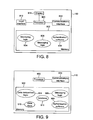
- FIG. 8 illustrates components of exemplary wireless device 100 in which the method steps described herein with respect to wireless device 100 can be implemented.
- the wireless device 100 comprises processor 800 for processing computer executable instructions.
- the processor is configured to control the operation of the wireless device in order to perform the method steps of the wireless device.
- the computer executable instructions can be provided using any computer readable media such as memory 802. Methods may be performed by software in machine readable form on a tangible storage medium.
- Software that can be provided on the memory of the wireless device includes monitoring logic 804 (for implementing environment monitoring and event detection), messaging logic 806 (for preparing and transmitting alerts, acknowledgments, policy requests, and authentication messages) and authentication software 808 (for implementing authentication processes).
- the wireless device comprises communications interface 810 for communicating with mobile network 104.
- the wireless device optionally further comprises user input interface 812 suitable for enabling a user to make and receive calls.
- the wireless device optionally further comprises display 814 suitable for communicating information visually to a user.
- Figure 9 illustrates components of exemplary controlling server 110 in which the method steps described herein with respect to controlling server 110 can be implemented.
- the controlling server 110 comprises processor 900 for processing computer executable instructions.
- the processor is configured to control the operation of the controlling server 110 in order to perform the method steps of the controlling server 110.
- the computer executable instructions can be provided using any computer readable media such as memory 902. Methods may be performed by software in machine readable form on a tangible storage medium.
- Software that can be provided on the memory of the controlling server includes data comparison logic 904 (for implementing event comparison and policy determination), messaging logic 906 (for preparing and transmitting instructions and authentication messages), authentication software 908 (for implementing authentication processes), data store 910 (for storing data identifying the wireless devices and recording devices), and database 912 (for storing recording policies for each wireless device).
- the controlling server comprises communications interface 914 for communicating with mobile network 104.
Landscapes
- Engineering & Computer Science (AREA)
- Signal Processing (AREA)
- Computer Networks & Wireless Communication (AREA)
- Technology Law (AREA)
- Computer Security & Cryptography (AREA)
- Computer Hardware Design (AREA)
- Computing Systems (AREA)
- General Engineering & Computer Science (AREA)
- Mobile Radio Communication Systems (AREA)
Claims (15)
- Verfahren zur Steuerung der Aufzeichnung der Kommunikationen eines drahtlosen Geräts (100), wobei das Verfahren umfasst:Aufzeichnen der Kommunikationen des drahtlosen Geräts (100) gemäß einer ersten Aufzeichnungspolitik;am drahtlosen Gerät (100), detektieren eines Ereignisses, das eine Änderung in der Aufzeichnungsumgebung des drahtlosen Geräts (100) anzeigt;Senden eines Alarms vom drahtlosen Gerät (100) zu einem Steuerungsserver (110), der das Ereignis identifiziert;am Steuerungsserver (110), Vergleichen des identifizierten Ereignisses mit Ereignissen, die von einem Aufzeichnungsprotokoll definiert sind und auf dem Vergleich beruhend zu bestimmen das drahtlose Gerät (100) zu instruieren eine zweite Aufzeichnungspolitik zu implementieren;Senden eines Befehls vom Steuerungsserver (110) an das drahtlose Gerät (100), um die zweite Aufzeichnungspolitik zu implementieren; undam drahtlosen Gerät (100), Modifizieren des Betriebs des drahtlosen Geräts (100), um die zweite Aufzeichnungspolitik zu implementieren.
- Verfahren wie in Anspruch 1 beansprucht, wobei das detektierte Ereignis wenigstens eins von Folgenden ist: eine Ortsveränderung des drahtlosen Geräts (100) aus einer ersten Jurisdiktion in eine zweite Jurisdiktion; ein Versagen in der Verbindung zwischen dem drahtlosen Gerät (100) und einem Aufzeichnungsgerät (106); und, dass das Teilnehmer-Identifizierungsmodul des drahtlosen Geräts (100) ersetzt worden ist.
- Verfahren wie in Anspruch 1 oder 2 beansprucht, wobei die zweite Aufzeichnungspolitik vom drahtlosen Gerät (100) wenigstens eins von Folgenden verlangt: Trennen von einem Aufzeichnungsgerät (106) während eines vorbestimmten Zeitraums; und anschließen an ein alternatives Aufzeichnungsgerät, um dem alternativen Aufzeichnungsgerät zu erlauben, die Kommunikationen des drahtlosen Geräts (100) aufzuzeichnen.
- Drahtloses Gerät (100), das in Übereinstimmung mit ersten und zweiten Aufzeichnungspolitiken in einem System betreibbar ist, welches das drahtlose Gerät (100), ein Aufzeichnungsgerät (106), das betreibbar ist, die Kommunikationen des drahtlosen Geräts (100) aufzuzeichnen und einen Steuerungsserver (110) umfasst, der betreibbar ist, die Aufzeichnung der Kommunikationen des Geräts (100) in Übereinstimmung mit einem Aufzeichnungsprotokoll zu steuern, wobei das drahtlose Gerät (100) konfiguriert ist, Folgendes auszuführen:während der Implementierung der ersten Aufzeichnungspolitik, detektieren eines Ereignisses, das eine Änderung in der Aufzeichnungsumgebung des drahtlosen Geräts (100) anzeigt;Senden eines Alarms an den Steuerungsserver (110), der das Ereignis identifiziert;Empfangen eines Befehls vom Steuerungsserver (110), der das drahtlose Gerät (100) instruiert, die zweite Aufzeichnungspolitik zu implementieren, wobei der Befehl auf einem Vergleich des identifizierten Ereignisses und Ereignissen beruht, die vom Aufzeichnungsprotokoll definiert sind; undModifizieren des Betriebs des drahtlosen Geräts (100), um die zweite Aufzeichnungspolitik zu implementieren.
- Drahtloses Gerät (100) wie in Anspruch 4 beansprucht, wobei die erste Aufzeichnungspolitik erfordert, dass das drahtlose Gerät (100) an das Aufzeichnungsgerät (106) angeschlossen wird, um dem Aufzeichnungsgerät (106) zu ermöglichen, Kommunikationen des drahtlosen Geräts (100) aufzuzeichnen, und wobei die zweite Aufzeichnungspolitik erfordert, dass das drahtlose Gerät (100) vom Aufzeichnungsgerät (106) getrennt wird.
- Drahtloses Gerät (100) wie in Anspruch 4 beansprucht, wobei die zweite Aufzeichnungspolitik vom drahtlosen Gerät (100) wenigstens eins von Folgenden verlangt: Trennen vom Aufzeichnungsgerät (106) während eines vorbestimmten Zeitraums; und anschließen an ein alternatives Aufzeichnungsgerät, um dem alternativen Aufzeichnungsgerät zu erlauben, die Kommunikationen des drahtlosen Geräts (100) aufzuzeichnen.
- Drahtloses Gerät (100) wie in Anspruch 5 beansprucht, wobei die zweite Aufzeichnungspolitik erfordert, dass das drahtlose Gerät (100) ferner an ein alternatives Aufzeichnungsgerät angeschlossen wird, um dem alternativen Aufzeichnungsgerät zu erlauben, die Kommunikationen des drahtlosen Geräts (100) aufzuzeichnen.
- Drahtloses Gerät (100) wie in irgendeinem der Ansprüche 4 bis 7 beansprucht, wobei das System ein einheitliches Kommunikationssystem ist, in dem Kommunikationen durch einen Vermittlungsserver geleitet werden, an dem die Kommunikationen aufgezeichnet werden, und wobei das drahtlose Gerät (100) derart konfiguriert ist, dass die Kommunikationen des drahtlosen Geräts (100) den Vermittlungsserver umgehen.
- Steuerungsserver (110), der betreibbar ist, die Aufzeichnung der Kommunikationen eines drahtlosen Geräts (100) in Übereinstimmung mit einem Aufzeichnungsprotokoll in einem System zu steuern, welches das drahtlose Gerät (100), ein Aufzeichnungsgerät (106), das betreibbar ist, die Kommunikationen des drahtlosen Geräts (100) aufzuzeichnen und einen Steuerungsserver (110) umfasst, wobei der Steuerungsserver (110) konfiguriert ist, Folgendes auszuführen:Empfangen eines Alarms vom drahtlosen Gerät (100) der identifiziert, dass das drahtlose Gerät (100) ein Ereignis detektiert hat, das eine Änderung in der Aufzeichnungsumgebung des drahtlosen Geräts (100) anzeigt, während das drahtlose Gerät (100) eine erste Aufzeichnungspolitik implementiert;Vergleichen des identifizierten Ereignisses mit Ereignissen, die vom Aufzeichnungsprotokoll definiert sind und auf dem Vergleich beruhend zu bestimmen, das drahtlose Gerät (100) zu instruieren eine zweite Aufzeichnungspolitik zu implementieren; undSenden eines Befehls an das drahtlose Gerät (100), um die zweite Aufzeichnungspolitik zu implementieren.
- Steuerungsserver (110) wie in Anspruch 9 beansprucht, der ferner konfiguriert ist, nur zu bestimmen das drahtlose Gerät (100) zu instruieren die zweite Aufzeichnungspolitik zu implementieren, wenn die Anzahl der vom drahtlosen Gerät (100) an den Steuerungsserver (110) gesendeten Alarme, die erfolglose Verbindungen zum Aufzeichnungsgerät (106) identifizieren, eine Schwellenzahl überschreitet.
- Steuerungsserver (110) wie in Anspruch 9 beansprucht, wobei der Steuerungsserver (110) ferner konfiguriert ist, wenigstens eine Identifikationsnummer zu speichern, und wobei das detektierte Ereignis ist, dass sich das drahtlose Gerät (100) mit einem Gerät verbunden hat, das die Identifikationsnummer aufweist.
- Steuerungsserver (110) wie in irgendeinem der Ansprüche 9 bis 11 beansprucht, der ferner konfiguriert ist, vor dem Senden eines Befehls vom Steuerungsserver (110) an das drahtlose Gerät (100), die zweite Aufzeichnungspolitik zu implementieren, das drahtlose Gerät (100) als vom Steuerungsserver (110) gesteuert zu authentisieren, und nur, wenn jene Authentifizierung erfolgreich ist, den Sendeschritt auszuführen.
- Drahtloses Gerät (100) wie in irgendeinem der Ansprüche 4 bis 8 beansprucht oder ein Steuerungsserver (110) wie in irgendeinem der Ansprüche 9 bis 12 beansprucht, wobei das detektierte Ereignis wenigstens eins von Folgenden ist: eine Ortsveränderung des drahtlosen Geräts (100) aus einer ersten Jurisdiktion in eine zweite Jurisdiktion; ein Versagen in der Verbindung zwischen dem drahtlosen Gerät (100) und einem Aufzeichnungsgerät (106); und, dass das Teilnehmer-Identifizierungsmodul des drahtlosen Geräts (100) ersetzt worden ist.
- Ein System bestehend aus:einem drahtlosen Gerät (100), das in Übereinstimmung mit ersten und zweiten Aufzeichnungspolitiken betreibbar ist, und konfiguriert ist, ein Ereignis zu detektieren, das eine Änderung in der Aufzeichnungsumgebung des drahtlosen Geräts (100) anzeigt;einem Aufzeichnungsgerät (106), das betreibbar ist, die Kommunikationen des drahtlosen Geräts (100) aufzuzeichnen; undeinem Steuerungsserver (110), der betreibbar ist, die Aufzeichnung der Kommunikationen des drahtlosen Geräts (100) in Übereinstimmung mit einem Aufzeichnungsprotokoll zu steuern, wobei das drahtlose Gerät (100) konfiguriert ist, während der Implementierung der ersten Aufzeichnungspolitik, das Ereignis zu detektieren und einen Alarm an den Steuerungsserver (110) zu senden, der das Ereignis identifiziert, undwobei der Steuerungsserver (110) konfiguriert ist, das identifizierte Ereignis mit Ereignissen zu vergleichen, die vom Aufzeichnungsprotokoll definiert wurden, und beruhend auf dem Vergleich, das drahtlose Gerät (100) zu instruieren die zweite Aufzeichnungspolitik zu implementieren, und ferner konfiguriert ist, einen Befehl an das drahtlose Gerät (100) zu senden die zweite Aufzeichnungspolitik zu implementieren; undwobei das drahtlose Gerät (100) ferner konfiguriert ist, den Betrieb des drahtlosen Geräts (100) zu modifizieren, um die zweite Aufzeichnungspolitik zu implementieren.
- Computerlesbare Medien, die, wenn auf einem Prozessor des drahtlosen Geräts (100) ausgeführt, eingerichtet sind, das Detektieren des Ereignisses, das Senden des Alarms und den Betrieb modifizierende Schritte des Verfahrens nach Anspruch 1 auszuführen.
Applications Claiming Priority (2)
| Application Number | Priority Date | Filing Date | Title |
|---|---|---|---|
| GBGB1104702.4A GB201104702D0 (en) | 2011-03-21 | 2011-03-21 | Recording communications |
| PCT/EP2012/054545 WO2012126795A1 (en) | 2011-03-21 | 2012-03-15 | Recording communications |
Publications (3)
| Publication Number | Publication Date |
|---|---|
| EP2676419A1 EP2676419A1 (de) | 2013-12-25 |
| EP2676419B1 true EP2676419B1 (de) | 2016-01-13 |
| EP2676419B8 EP2676419B8 (de) | 2016-04-13 |
Family
ID=44012876
Family Applications (1)
| Application Number | Title | Priority Date | Filing Date |
|---|---|---|---|
| EP12709618.8A Active EP2676419B8 (de) | 2011-03-21 | 2012-03-15 | Aufzeichnung von kommunikationen |
Country Status (4)
| Country | Link |
|---|---|
| US (1) | US20140044047A1 (de) |
| EP (1) | EP2676419B8 (de) |
| GB (1) | GB201104702D0 (de) |
| WO (1) | WO2012126795A1 (de) |
Families Citing this family (2)
| Publication number | Priority date | Publication date | Assignee | Title |
|---|---|---|---|---|
| US11488590B2 (en) * | 2018-05-09 | 2022-11-01 | Staton Techiya Llc | Methods and systems for processing, storing, and publishing data collected by an in-ear device |
| US12341926B2 (en) * | 2022-11-22 | 2025-06-24 | Qualcomm Incorporated | Selective recording of multiuser calls |
Family Cites Families (8)
| Publication number | Priority date | Publication date | Assignee | Title |
|---|---|---|---|---|
| JP4839554B2 (ja) * | 2000-10-19 | 2011-12-21 | ソニー株式会社 | 無線通信システム、クライアント装置、サーバ装置および無線通信方法 |
| US7860222B1 (en) * | 2003-11-24 | 2010-12-28 | Securus Technologies, Inc. | Systems and methods for acquiring, accessing, and analyzing investigative information |
| US7657922B2 (en) * | 2005-06-15 | 2010-02-02 | Microsoft Corporation | Dynamic digital recording |
| JP4630770B2 (ja) * | 2005-08-31 | 2011-02-09 | キヤノン株式会社 | 記録再生装置 |
| FR2903841B1 (fr) * | 2006-07-13 | 2009-01-23 | Aastra Matra Telecom Soc Par A | Enregistrement de communications dans un reseau de telecommunications |
| US8345828B2 (en) * | 2008-04-01 | 2013-01-01 | Verint Americas, Inc. | System and method for pooled IP recording |
| US8806630B2 (en) * | 2008-05-13 | 2014-08-12 | At&T Intellectual Property, I, L.P. | Methods and apparatus for intrusion protection in systems that monitor for improper network usage |
| US20120058800A1 (en) * | 2010-09-07 | 2012-03-08 | Lian Wen International Technology Co. Ltd | Structure of moving recording device for transportation tools |
-
2011
- 2011-03-21 GB GBGB1104702.4A patent/GB201104702D0/en not_active Ceased
-
2012
- 2012-03-15 WO PCT/EP2012/054545 patent/WO2012126795A1/en not_active Ceased
- 2012-03-15 EP EP12709618.8A patent/EP2676419B8/de active Active
- 2012-03-15 US US14/006,165 patent/US20140044047A1/en not_active Abandoned
Also Published As
| Publication number | Publication date |
|---|---|
| EP2676419A1 (de) | 2013-12-25 |
| US20140044047A1 (en) | 2014-02-13 |
| WO2012126795A1 (en) | 2012-09-27 |
| EP2676419B8 (de) | 2016-04-13 |
| GB201104702D0 (en) | 2011-05-04 |
Similar Documents
| Publication | Publication Date | Title |
|---|---|---|
| US10419936B2 (en) | Methods and systems for causing mobile communications devices to emit sounds with encoded information | |
| US8886154B2 (en) | Systems and methods for providing emergency callback procedures | |
| CN101834834A (zh) | 一种鉴权方法、装置及鉴权系统 | |
| US10841802B2 (en) | Call authentication using call forwarding | |
| US8755502B1 (en) | Call contention mediation after dropped call | |
| US10277457B2 (en) | Network access fault reporting | |
| CN108495306A (zh) | 用于非3gpp接入的hss故障恢复 | |
| CN110830934A (zh) | 一种呼叫失败处理方法及装置 | |
| EP2676419B1 (de) | Aufzeichnung von kommunikationen | |
| CN101902712A (zh) | 呼叫失败的处理方法及装置 | |
| US20140004813A1 (en) | Emergency Call Processing Method and Related Apparatus and System | |
| US8548156B2 (en) | Method and system for blocking lower priority communications for improved automatic call distribution | |
| CN106330513A (zh) | tr069协议信息的处理方法及装置 | |
| WO2017000625A1 (zh) | 动态主机配置协议dhcp服务器管理方法及装置 | |
| WO2012034279A1 (en) | Remote mobile device information retrieval | |
| KR20150065017A (ko) | 스미싱 방지 방법, 이를 수행하는 스미싱 방지 서버 및 이를 저장하는 기록매체 | |
| CN101835150B (zh) | 一种共享加密数据更新的方法、装置和系统 | |
| CN116866473A (zh) | 基于可信通信的身份展示方法、终端及服务器 | |
| CN101690148A (zh) | 移动网络架构中无法复机报文的处理 | |
| EP4097937B1 (de) | Kommunikationsaufzeichnung | |
| WO2021041657A1 (en) | Call authentication at the call center using a mobile device | |
| CA3150456C (en) | Call authentication at the call center using a mobile device | |
| US12526634B1 (en) | Automatically detecting SIM-breach events | |
| KR20050071945A (ko) | 호 연결 실패 원인 통보 서비스 시스템 및 방법 | |
| US11470673B2 (en) | Method and system for detecting interruption of communications and for automatically re-establishing the communications |
Legal Events
| Date | Code | Title | Description |
|---|---|---|---|
| PUAI | Public reference made under article 153(3) epc to a published international application that has entered the european phase |
Free format text: ORIGINAL CODE: 0009012 |
|
| 17P | Request for examination filed |
Effective date: 20130917 |
|
| AK | Designated contracting states |
Kind code of ref document: A1 Designated state(s): AL AT BE BG CH CY CZ DE DK EE ES FI FR GB GR HR HU IE IS IT LI LT LU LV MC MK MT NL NO PL PT RO RS SE SI SK SM TR |
|
| DAX | Request for extension of the european patent (deleted) | ||
| GRAP | Despatch of communication of intention to grant a patent |
Free format text: ORIGINAL CODE: EPIDOSNIGR1 |
|
| RIC1 | Information provided on ipc code assigned before grant |
Ipc: H04W 12/02 20090101ALI20150626BHEP Ipc: H04M 3/42 20060101ALI20150626BHEP Ipc: H04L 29/06 20060101AFI20150626BHEP |
|
| INTG | Intention to grant announced |
Effective date: 20150714 |
|
| GRAS | Grant fee paid |
Free format text: ORIGINAL CODE: EPIDOSNIGR3 |
|
| GRAA | (expected) grant |
Free format text: ORIGINAL CODE: 0009210 |
|
| AK | Designated contracting states |
Kind code of ref document: B1 Designated state(s): AL AT BE BG CH CY CZ DE DK EE ES FI FR GB GR HR HU IE IS IT LI LT LU LV MC MK MT NL NO PL PT RO RS SE SI SK SM TR |
|
| REG | Reference to a national code |
Ref country code: GB Ref legal event code: FG4D |
|
| REG | Reference to a national code |
Ref country code: CH Ref legal event code: EP |
|
| GRAT | Correction requested after decision to grant or after decision to maintain patent in amended form |
Free format text: ORIGINAL CODE: EPIDOSNCDEC |
|
| REG | Reference to a national code |
Ref country code: FR Ref legal event code: PLFP Year of fee payment: 5 |
|
| REG | Reference to a national code |
Ref country code: IE Ref legal event code: FG4D |
|
| REG | Reference to a national code |
Ref country code: AT Ref legal event code: REF Ref document number: 771159 Country of ref document: AT Kind code of ref document: T Effective date: 20160215 |
|
| REG | Reference to a national code |
Ref country code: DE Ref legal event code: R096 Ref document number: 602012013872 Country of ref document: DE |
|
| REG | Reference to a national code |
Ref country code: LT Ref legal event code: MG4D |
|
| REG | Reference to a national code |
Ref country code: NL Ref legal event code: MP Effective date: 20160113 |
|
| REG | Reference to a national code |
Ref country code: AT Ref legal event code: MK05 Ref document number: 771159 Country of ref document: AT Kind code of ref document: T Effective date: 20160113 |
|
| PG25 | Lapsed in a contracting state [announced via postgrant information from national office to epo] |
Ref country code: NL Free format text: LAPSE BECAUSE OF FAILURE TO SUBMIT A TRANSLATION OF THE DESCRIPTION OR TO PAY THE FEE WITHIN THE PRESCRIBED TIME-LIMIT Effective date: 20160113 |
|
| PG25 | Lapsed in a contracting state [announced via postgrant information from national office to epo] |
Ref country code: NO Free format text: LAPSE BECAUSE OF FAILURE TO SUBMIT A TRANSLATION OF THE DESCRIPTION OR TO PAY THE FEE WITHIN THE PRESCRIBED TIME-LIMIT Effective date: 20160413 Ref country code: ES Free format text: LAPSE BECAUSE OF FAILURE TO SUBMIT A TRANSLATION OF THE DESCRIPTION OR TO PAY THE FEE WITHIN THE PRESCRIBED TIME-LIMIT Effective date: 20160113 Ref country code: HR Free format text: LAPSE BECAUSE OF FAILURE TO SUBMIT A TRANSLATION OF THE DESCRIPTION OR TO PAY THE FEE WITHIN THE PRESCRIBED TIME-LIMIT Effective date: 20160113 Ref country code: GR Free format text: LAPSE BECAUSE OF FAILURE TO SUBMIT A TRANSLATION OF THE DESCRIPTION OR TO PAY THE FEE WITHIN THE PRESCRIBED TIME-LIMIT Effective date: 20160414 Ref country code: FI Free format text: LAPSE BECAUSE OF FAILURE TO SUBMIT A TRANSLATION OF THE DESCRIPTION OR TO PAY THE FEE WITHIN THE PRESCRIBED TIME-LIMIT Effective date: 20160113 Ref country code: IT Free format text: LAPSE BECAUSE OF FAILURE TO SUBMIT A TRANSLATION OF THE DESCRIPTION OR TO PAY THE FEE WITHIN THE PRESCRIBED TIME-LIMIT Effective date: 20160113 |
|
| PG25 | Lapsed in a contracting state [announced via postgrant information from national office to epo] |
Ref country code: LT Free format text: LAPSE BECAUSE OF FAILURE TO SUBMIT A TRANSLATION OF THE DESCRIPTION OR TO PAY THE FEE WITHIN THE PRESCRIBED TIME-LIMIT Effective date: 20160113 Ref country code: PT Free format text: LAPSE BECAUSE OF FAILURE TO SUBMIT A TRANSLATION OF THE DESCRIPTION OR TO PAY THE FEE WITHIN THE PRESCRIBED TIME-LIMIT Effective date: 20160513 Ref country code: SE Free format text: LAPSE BECAUSE OF FAILURE TO SUBMIT A TRANSLATION OF THE DESCRIPTION OR TO PAY THE FEE WITHIN THE PRESCRIBED TIME-LIMIT Effective date: 20160113 Ref country code: LV Free format text: LAPSE BECAUSE OF FAILURE TO SUBMIT A TRANSLATION OF THE DESCRIPTION OR TO PAY THE FEE WITHIN THE PRESCRIBED TIME-LIMIT Effective date: 20160113 Ref country code: BE Free format text: LAPSE BECAUSE OF NON-PAYMENT OF DUE FEES Effective date: 20160331 Ref country code: IS Free format text: LAPSE BECAUSE OF FAILURE TO SUBMIT A TRANSLATION OF THE DESCRIPTION OR TO PAY THE FEE WITHIN THE PRESCRIBED TIME-LIMIT Effective date: 20160513 Ref country code: AT Free format text: LAPSE BECAUSE OF FAILURE TO SUBMIT A TRANSLATION OF THE DESCRIPTION OR TO PAY THE FEE WITHIN THE PRESCRIBED TIME-LIMIT Effective date: 20160113 Ref country code: PL Free format text: LAPSE BECAUSE OF FAILURE TO SUBMIT A TRANSLATION OF THE DESCRIPTION OR TO PAY THE FEE WITHIN THE PRESCRIBED TIME-LIMIT Effective date: 20160113 Ref country code: RS Free format text: LAPSE BECAUSE OF FAILURE TO SUBMIT A TRANSLATION OF THE DESCRIPTION OR TO PAY THE FEE WITHIN THE PRESCRIBED TIME-LIMIT Effective date: 20160113 |
|
| REG | Reference to a national code |
Ref country code: DE Ref legal event code: R097 Ref document number: 602012013872 Country of ref document: DE |
|
| PG25 | Lapsed in a contracting state [announced via postgrant information from national office to epo] |
Ref country code: MC Free format text: LAPSE BECAUSE OF FAILURE TO SUBMIT A TRANSLATION OF THE DESCRIPTION OR TO PAY THE FEE WITHIN THE PRESCRIBED TIME-LIMIT Effective date: 20160113 Ref country code: LU Free format text: LAPSE BECAUSE OF FAILURE TO SUBMIT A TRANSLATION OF THE DESCRIPTION OR TO PAY THE FEE WITHIN THE PRESCRIBED TIME-LIMIT Effective date: 20160315 Ref country code: EE Free format text: LAPSE BECAUSE OF FAILURE TO SUBMIT A TRANSLATION OF THE DESCRIPTION OR TO PAY THE FEE WITHIN THE PRESCRIBED TIME-LIMIT Effective date: 20160113 Ref country code: DK Free format text: LAPSE BECAUSE OF FAILURE TO SUBMIT A TRANSLATION OF THE DESCRIPTION OR TO PAY THE FEE WITHIN THE PRESCRIBED TIME-LIMIT Effective date: 20160113 |
|
| REG | Reference to a national code |
Ref country code: CH Ref legal event code: PL |
|
| PLBE | No opposition filed within time limit |
Free format text: ORIGINAL CODE: 0009261 |
|
| STAA | Information on the status of an ep patent application or granted ep patent |
Free format text: STATUS: NO OPPOSITION FILED WITHIN TIME LIMIT |
|
| PG25 | Lapsed in a contracting state [announced via postgrant information from national office to epo] |
Ref country code: SK Free format text: LAPSE BECAUSE OF FAILURE TO SUBMIT A TRANSLATION OF THE DESCRIPTION OR TO PAY THE FEE WITHIN THE PRESCRIBED TIME-LIMIT Effective date: 20160113 Ref country code: RO Free format text: LAPSE BECAUSE OF FAILURE TO SUBMIT A TRANSLATION OF THE DESCRIPTION OR TO PAY THE FEE WITHIN THE PRESCRIBED TIME-LIMIT Effective date: 20160113 Ref country code: CZ Free format text: LAPSE BECAUSE OF FAILURE TO SUBMIT A TRANSLATION OF THE DESCRIPTION OR TO PAY THE FEE WITHIN THE PRESCRIBED TIME-LIMIT Effective date: 20160113 Ref country code: SM Free format text: LAPSE BECAUSE OF FAILURE TO SUBMIT A TRANSLATION OF THE DESCRIPTION OR TO PAY THE FEE WITHIN THE PRESCRIBED TIME-LIMIT Effective date: 20160113 |
|
| 26N | No opposition filed |
Effective date: 20161014 |
|
| REG | Reference to a national code |
Ref country code: IE Ref legal event code: MM4A |
|
| PG25 | Lapsed in a contracting state [announced via postgrant information from national office to epo] |
Ref country code: BE Free format text: LAPSE BECAUSE OF FAILURE TO SUBMIT A TRANSLATION OF THE DESCRIPTION OR TO PAY THE FEE WITHIN THE PRESCRIBED TIME-LIMIT Effective date: 20160113 |
|
| PG25 | Lapsed in a contracting state [announced via postgrant information from national office to epo] |
Ref country code: IE Free format text: LAPSE BECAUSE OF NON-PAYMENT OF DUE FEES Effective date: 20160315 Ref country code: CH Free format text: LAPSE BECAUSE OF NON-PAYMENT OF DUE FEES Effective date: 20160331 Ref country code: LI Free format text: LAPSE BECAUSE OF NON-PAYMENT OF DUE FEES Effective date: 20160331 |
|
| REG | Reference to a national code |
Ref country code: FR Ref legal event code: PLFP Year of fee payment: 6 |
|
| PG25 | Lapsed in a contracting state [announced via postgrant information from national office to epo] |
Ref country code: SI Free format text: LAPSE BECAUSE OF FAILURE TO SUBMIT A TRANSLATION OF THE DESCRIPTION OR TO PAY THE FEE WITHIN THE PRESCRIBED TIME-LIMIT Effective date: 20160113 Ref country code: BG Free format text: LAPSE BECAUSE OF FAILURE TO SUBMIT A TRANSLATION OF THE DESCRIPTION OR TO PAY THE FEE WITHIN THE PRESCRIBED TIME-LIMIT Effective date: 20160413 |
|
| PG25 | Lapsed in a contracting state [announced via postgrant information from national office to epo] |
Ref country code: MT Free format text: LAPSE BECAUSE OF FAILURE TO SUBMIT A TRANSLATION OF THE DESCRIPTION OR TO PAY THE FEE WITHIN THE PRESCRIBED TIME-LIMIT Effective date: 20160113 |
|
| REG | Reference to a national code |
Ref country code: FR Ref legal event code: PLFP Year of fee payment: 7 |
|
| PG25 | Lapsed in a contracting state [announced via postgrant information from national office to epo] |
Ref country code: HU Free format text: LAPSE BECAUSE OF FAILURE TO SUBMIT A TRANSLATION OF THE DESCRIPTION OR TO PAY THE FEE WITHIN THE PRESCRIBED TIME-LIMIT; INVALID AB INITIO Effective date: 20120315 Ref country code: CY Free format text: LAPSE BECAUSE OF FAILURE TO SUBMIT A TRANSLATION OF THE DESCRIPTION OR TO PAY THE FEE WITHIN THE PRESCRIBED TIME-LIMIT Effective date: 20160113 |
|
| PG25 | Lapsed in a contracting state [announced via postgrant information from national office to epo] |
Ref country code: MK Free format text: LAPSE BECAUSE OF FAILURE TO SUBMIT A TRANSLATION OF THE DESCRIPTION OR TO PAY THE FEE WITHIN THE PRESCRIBED TIME-LIMIT Effective date: 20160113 Ref country code: TR Free format text: LAPSE BECAUSE OF FAILURE TO SUBMIT A TRANSLATION OF THE DESCRIPTION OR TO PAY THE FEE WITHIN THE PRESCRIBED TIME-LIMIT Effective date: 20160113 Ref country code: MT Free format text: LAPSE BECAUSE OF FAILURE TO SUBMIT A TRANSLATION OF THE DESCRIPTION OR TO PAY THE FEE WITHIN THE PRESCRIBED TIME-LIMIT Effective date: 20160331 |
|
| PG25 | Lapsed in a contracting state [announced via postgrant information from national office to epo] |
Ref country code: AL Free format text: LAPSE BECAUSE OF FAILURE TO SUBMIT A TRANSLATION OF THE DESCRIPTION OR TO PAY THE FEE WITHIN THE PRESCRIBED TIME-LIMIT Effective date: 20160113 |
|
| REG | Reference to a national code |
Ref country code: DE Ref legal event code: R082 Ref document number: 602012013872 Country of ref document: DE Representative=s name: PAGE, WHITE & FARRER GERMANY LLP, DE |
|
| REG | Reference to a national code |
Ref country code: DE Ref legal event code: R079 Ref document number: 602012013872 Country of ref document: DE Free format text: PREVIOUS MAIN CLASS: H04L0029060000 Ipc: H04L0065000000 |
|
| PGFP | Annual fee paid to national office [announced via postgrant information from national office to epo] |
Ref country code: DE Payment date: 20250319 Year of fee payment: 14 |
|
| PGFP | Annual fee paid to national office [announced via postgrant information from national office to epo] |
Ref country code: FR Payment date: 20250326 Year of fee payment: 14 |
|
| PGFP | Annual fee paid to national office [announced via postgrant information from national office to epo] |
Ref country code: GB Payment date: 20250326 Year of fee payment: 14 |
|
| REG | Reference to a national code |
Ref country code: DE Ref legal event code: R082 Ref document number: 602012013872 Country of ref document: DE Representative=s name: WESTPHAL, MUSSGNUG & PARTNER PATENTANWAELTE MI, DE |