EP2676428B1 - Gateway für sprachverkehr - Google Patents
Gateway für sprachverkehr Download PDFInfo
- Publication number
- EP2676428B1 EP2676428B1 EP12705397.3A EP12705397A EP2676428B1 EP 2676428 B1 EP2676428 B1 EP 2676428B1 EP 12705397 A EP12705397 A EP 12705397A EP 2676428 B1 EP2676428 B1 EP 2676428B1
- Authority
- EP
- European Patent Office
- Prior art keywords
- voice
- domain
- traffic
- signalling
- message
- Prior art date
- Legal status (The legal status is an assumption and is not a legal conclusion. Google has not performed a legal analysis and makes no representation as to the accuracy of the status listed.)
- Active
Links
Images




Classifications
-
- H—ELECTRICITY
- H04—ELECTRIC COMMUNICATION TECHNIQUE
- H04M—TELEPHONIC COMMUNICATION
- H04M3/00—Automatic or semi-automatic exchanges
- H04M3/38—Graded-service arrangements, i.e. some subscribers prevented from establishing certain connections
-
- H—ELECTRICITY
- H04—ELECTRIC COMMUNICATION TECHNIQUE
- H04L—TRANSMISSION OF DIGITAL INFORMATION, e.g. TELEGRAPHIC COMMUNICATION
- H04L63/00—Network architectures or network communication protocols for network security
- H04L63/02—Network architectures or network communication protocols for network security for separating internal from external traffic, e.g. firewalls
- H04L63/0227—Filtering policies
-
- H—ELECTRICITY
- H04—ELECTRIC COMMUNICATION TECHNIQUE
- H04L—TRANSMISSION OF DIGITAL INFORMATION, e.g. TELEGRAPHIC COMMUNICATION
- H04L63/00—Network architectures or network communication protocols for network security
- H04L63/10—Network architectures or network communication protocols for network security for controlling access to devices or network resources
- H04L63/105—Multiple levels of security
-
- H—ELECTRICITY
- H04—ELECTRIC COMMUNICATION TECHNIQUE
- H04M—TELEPHONIC COMMUNICATION
- H04M3/00—Automatic or semi-automatic exchanges
- H04M3/20—Automatic or semi-automatic exchanges with means for interrupting existing connections; with means for breaking-in on conversations
- H04M3/205—Eavesdropping prevention - indication of insecurity of line or network
-
- H—ELECTRICITY
- H04—ELECTRIC COMMUNICATION TECHNIQUE
- H04M—TELEPHONIC COMMUNICATION
- H04M7/00—Arrangements for interconnection between switching centres
- H04M7/006—Networks other than PSTN/ISDN providing telephone service, e.g. Voice over Internet Protocol (VoIP), including next generation networks with a packet-switched transport layer
- H04M7/0078—Security; Fraud detection; Fraud prevention
Definitions
- the invention relates to a voice traffic gateway.
- US 2010/115630 A1 discloses a system for data exchange between at least two communication networks using the IP Internet protocol, a first network having a security level N1 higher than the security network N2 of a second network, and several terminals being connected to the first and second networks, characterised in that it comprises at least: means for marking the flows based on their security level, a gateway between the first network (1) and the network (2) for carrying out a protocol interruption, and means for filtering the data flows suitable for checking the marking and to give authorisation for the broadcasting of the flow based on the relevancy between the marker and the sensitivity level of the communication, and visual means on the terminal for indicating to the user whether or not he communicates on a secured media.
- This is known to be done in the case of analogue voice calls by applying a non-secure warning tone to the voice call received from the non-trusted party, so that an audible warning is heard over the call by the receiving party.
- a first aspect of the invention provides a voice traffic gateway comprising:
- the voice traffic gateway may enable voice calls to be made between callers in two different traffic domains of a communications network.
- the non-secure warning tone application apparatus may enable the voice traffic gateway to apply a warning tone to a voice call to alert a recipient to the fact that the call has originated from a different traffic domain.
- the signalling filter may enable the voice security gateway to prevent a covert message being transmitted with a signalling message and may prevent a cover communications channel being established between the two different traffic domains.
- each voice message and signalling message received from the first traffic domain comprises a first domain identification label
- the voice traffic input and the voice traffic output comprise a shared communications port
- the voice traffic gateway further comprises:
- the voice traffic gateway may be used with a communications network in which voice traffic belonging to the two different traffic domains is transmitted across a shared network, the traffic of each domain being identified by its respective domain identification label.
- the voice traffic gateway is arranged to receive voice traffic from each of a plurality of different traffic domains and to output voice traffic to each of said traffic domains and the voice traffic gateway comprises:
- the voice traffic gateway may be used with a communications network in which voice traffic belonging to each of a plurality of different traffic domains is transmitted across a shared network, the traffic of each domain being identified by its respective domain identification label.
- the voice traffic gateway may be used to enable communication between any pre-selected pair of the plurality of different traffic domains within the communications network.
- the routing apparatus is further arranged to decrypt voice traffic received from the communications port prior to routing said traffic to the respective domain separator and is further arranged to encrypt traffic to be output prior to routing said traffic to the communications port.
- the voice traffic gateway may therefore be used to enable encrypted communication between two different traffic domains within a communications network
- said feature of each signalling message comprises at least one of a source address, a destination address, signalling message format, the content of a signalling message field.
- the signalling filter may therefore be arranged only to pass signalling messages which originate from an acceptable source, which are addressed to an acceptable destination, which have an acceptable message format or which have acceptable content in one or more pre-selected message fields.
- the signalling messages have a bit rate and the signalling filter is further arranged to control the bit rate to be not greater than a pre-selected threshold bit rate. This may enable the signalling filter to throttle the bit rate of a signalling message to a minimum bit rate required to successfully transmit signalling messages and may thereby disrupt transmission of covert messages with signalling messages.
- the signalling messages comprise signalling packets and the signalling filter is arranged to: convert received signalling packets into a first serial bit stream; convert the first serial bit stream into a second serial bit stream having a pre-selected, lower bit rate; and convert the second serial bit stream into output signalling packets.
- the bit rate of a signalling message may thereby be reduced to a pre-selected lower bit rate, throttling the bit rate of the signalling message.
- each traffic domain has a trust level and the non-secure warning tone apparatus is operable to apply the non-secure warning tone only to messages being sent from a traffic domain having a first trust level to a traffic domain having a second, higher trust level. Only the more trusted party to a call may hear the non-secure warning tone, alerting them that the other caller is less trusted, without the less trusted caller being aware that they are talking to a more trusted party.
- each voice message comprises a voice signal comprising a sequence of voice samples and the non-secure warning tone application apparatus comprises:
- the non-secure warning tone application apparatus may apply a non-secure warning tone to a packetized voice signal while minimising disruption of the voice signal.
- the apparatus may modify a voice signal by including tone samples which may corrupt a data signal comprising data samples which is being transmitted across a voice signal path through the non-secure warning tone application apparatus, and may prevent a data signal from being covertly transmitted across the voice signal path.
- the signal modification apparatus is arranged to select a plurality of the voice samples and replace each selected voice sample with a respective tone sample.
- the tone samples may be provided with a constant amplitude which may ensure that they are always audible and easily recognised. Replacement of voice samples with tone samples may enable a caller to adjust the voice call volume relative to the non-secure warning tone volume. Replacement of voice samples with tone samples may provide a resulting voice call having a non-secure warning tone which is easy and pleasant to listen to.
- the signal modification apparatus is arranged to select a plurality of the voice samples and to combine each selected voice sample with a respective tone sample to form a combined sample. This may enable the relative and absolute levels of the tone samples and the voice samples to be varied while clamping the minimum and maximum non-secure warning tone amplitude on the voice call between pre-selected limits.
- each combined sample comprises a weighted average of the respective voice sample and tone sample.
- the signal modification apparatus is arranged to select alternate voice samples.
- a non-secure warning tone may thereby be applied to the voice signal which may be heard without obscuring the voice call and may maximise the intelligibility of a voice call having a non-secure warning tone on it.
- the signal modification apparatus is arranged to select one in up to every sixteen voice samples. In an embodiment, the signal modification apparatus is arranged to select one in up to every four voice samples. This may reduce the amount of signal processing required without affecting the intelligibility of the voice call.
- the non-secure warning tone application apparatus is arranged to periodically modify the voice signal.
- the non-secure warning tone application apparatus may thereby apply a non-secure warning tone during only selected parts of a voice call.
- a periodically repeating non-secure warning tone may thus be applied to a packetized voice signal.
- a non-secure warning tone may therefore be applied which may not distract a receiving party from the content of a voice call.
- the non-secure warning tone signal source is arranged to generate a tone signal comprising periodically occurring tone periods each comprising a plurality of tone samples and the signal modification apparatus is arranged to selectively include tone samples in the sequence of voice samples during the tone periods.
- a periodic modification of the voice signal is therefore achieved modifying the voice signal with a periodic tone signal, which only comprises tone samples within periodically occurring tone periods.
- the voice messages and the signalling messages have a voice over internet protocol signal format and comprise voice message packets and signalling message packets.
- the sequence of voice samples comprises a sequence of voice message packets and the apparatus further comprises voice signal validation apparatus arranged to compare a structural feature of a voice message packet of the voice signal with a reference structural feature and arranged to determine whether said structural feature is the same as said reference feature. If said structural feature is the same as said reference feature the voice signal validation apparatus may validate the voice message packet as comprising an acceptable voice message packet. If said structural feature is not the same as said reference feature the voice signal validation apparatus may reject the voice message packet as comprising an acceptable voice message packet. This may prevent unacceptable voice message packets or data packets from being transmitted by the non-secure warning tone application apparatus.
- said structural feature comprises at least one of packet length, packet header and voice header.
- each voice message packet has a packet length of between 10ms and 50ms.ln an embodiment, the non-secure warning tone signal has a lower signal level than the voice signal. The non-secure warning tone may therefore be heard in the background of a voice call.
- a first embodiment of the invention provides a voice traffic gateway 10 comprising a voice traffic input 12, a voice traffic output 14, a first domain router 16, non-secure warning tone application apparatus 18 and a signalling filter 20.
- the voice traffic input 12 is arranged to receive voice traffic from a first traffic domain of a communications network.
- the voice traffic comprises voice messages and signalling messages.
- the voice traffic output 14 is arranged to deliver output voice messages and output signalling messages to a second, different traffic domain of the communications network.
- the first domain router 16 is coupled to the voice traffic input and is arranged to route voice messages received from the first traffic domain to the non-secure warning tone application apparatus 18.
- the first domain router 16 is further arranged to route signalling messages received from the first traffic domain to the signalling filter 20.
- the non-secure warning tone application apparatus 18 is arranged to apply a non-secure warning tone to a received voice message to form an output voice message.
- the signalling filter 20 is arranged to compare a feature of a received signalling message with a reference feature.
- the signalling filter 20 will pass a signalling message as an output signalling message if the signalling message feature is the same as the reference feature.
- the signalling filter 20 will block a signalling message if the signalling message feature is not the same as the reference feature.
- a second embodiment of the invention provides a voice traffic gateway 30 as shown in Figure 2 .
- the voice traffic gateway 30 of this embodiment is similar to the voice traffic gateway 10 of Figure 1 with the following modifications.
- the same reference numbers are retained for corresponding features.
- the voice traffic input and the voice traffic output are provided as a shared communications port 32, arranged to be connected to a transmission network shared by both the first and second traffic domains.
- the voice traffic gateway 30 comprises a first domain separator 36 and a second domain separator 38.
- the first domain separator is arranged to receive voice traffic and to read the domain identification label of each voice message and each signalling message received.
- the first domain separator is arranged to remove the domain identification label from each voice message and each signalling message having an identification label of the first traffic domain.
- the second domain separator 38 is arranged to apply a second domain identification label to each voice message and each signalling message to be output to the second domain through the communications port 32.
- the voice traffic gateway 30 further comprises routing apparatus 34 arranged to route voice traffic of the first domain received from the communications port to the first domain separator 36.
- the routing apparatus 34 is further arranged to route voice traffic to be output to the second domain from the second domain separator 38 to the communications port 32.
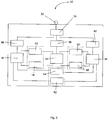
- FIG 3 shows a voice traffic gateway 40 according to a third embodiment of the invention.
- the voice traffic gateway 40 of this embodiment is similar to the voice traffic gateway 30 of Figure 2 with the following modifications.
- the same reference numbers are retained for corresponding features.
- the voice traffic has a voice over internet protocol, VoIP, signal format and comprises voice message packets and signalling message packets.
- the routing apparatus comprises encryption and routing apparatus 56.
- the encryption and routing apparatus 56 is arranged to decrypt voice traffic received from the communications 32 port and to route the decrypted traffic to the respective domain separator 36, 38, 42.
- the encryption and routing apparatus 56 is additionally arranged to encrypt traffic to be output prior to routing the encrypted output traffic to the communications port 32.
- the voice traffic gateway 40 is arranged to receive voice traffic from each of three different traffic domains and to output voice traffic to each of the three traffic domains.
- the voice traffic gateway 40 comprises three domain separators 36, 38, 42, three domain routers 16, 44, 46 and three sets of non-secure warning tone application apparatus 18, 48, 52and signalling filters 20, 50, 54.
- Each domain separator 36, 38, 42 is arranged to receive voice traffic and to read the domain identification label of each voice message and each signalling message of the voice traffic. Each domain separator 36, 38, 42 is arranged to remove the respective domain identification label from each voice message and each signalling message having an identification label of its respective domain. Each domain separator 36, 38, 42 is additionally arranged to apply its respective domain identification label to each voice message and each signalling message to be output to its respective domain.
- Each domain router 16, 44, 46 is coupled to a respective domain separator 36, 38, 42. Each domain router 16, 44, 46 is also coupled to at least one other domain router 16, 44, 46 through a non-secure warning tone application apparatus 20, 50, 54 and said signalling filter 18, 48, 52.
- the first domain separator 36 and the first domain router 16 belong to a first traffic domain.
- the second domain separator 38 and the second domain router 44 belong to a second traffic domain.
- the third domain separator 42 and the third domain router 46 belong to a third traffic domain.
- the first domain router 16 is connected to the second domain router 44 through a first non-secure warning tone application apparatus 20 and a first signalling filter 18.
- the second domain router 44 is connected to the third domain router 46 through a second non-secure warning tone application apparatus 50 and a second signalling filter 48.
- the first domain router 16 is also connected to the third domain router 46 through a third non-secure warning tone application apparatus 54 and a third signalling filter 52.
- Each domain router 16, 44, 46 is arranged to read a destination address of each voice message and each signalling message received from its respective domain separator 36, 38, 42. The destination address is indicative of the destination domain.
- Each domain router 16, 44, 46 is arranged to route the voice messages and signalling messages to the respective non-secure warning tone application apparatus 20, 50, 54 or signalling filter 18, 48, 52 connected to the domain separator 36, 38, 42 of the destination domain.
- Each domain router 16, 44, 46 is arranged to default route voice messages and signalling messages received from a respective non-secure warning tone application apparatus 20, 50, 54 or signalling filter 18, 48, 52 to the encryption and routing apparatus 56, through its respective domain separator 36, 38, 42.
- Each non-secure warning tone application apparatus 20, 50, 54 and each signalling filter 18, 48, 52 is operable for bi-directional communication.
- Voice messages can therefore be transmitted from the first domain router 16 to the second domain router 44 through the first non-secure warning tone application apparatus 20, and vice versa.
- Voice messages can be transmitted from the first domain router 16 to the third domain router 46 through the third non-secure warning tone application apparatus 54, and vice versa.
- Voice messages can be transmitted from the second domain router 44 to the third domain router 46 through the second non-secure warning tone application apparatus 50, and vice versa.
- signalling messages can therefore be transmitted from the first domain router 16 to the second domain router 44 through the first signalling filter 18, and vice versa.
- Signalling messages can be transmitted from the first domain router 16 to the third domain router 46 through the third signalling filter 52, and vice versa.
- Signalling messages can be transmitted from the second domain router 44 to the third domain router 46 through the second signalling filter 48, and vice versa.
- Voice traffic may therefore be transmitted between any pair of the three traffic domains.
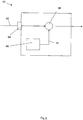
- a fourth embodiment of the invention provides a voice traffic gateway comprising non-secure warning tone application apparatus 60 as shown in Figure 4 .
- the non-secure warning tone application apparatus 60 comprises a port 64, a non-secure warning tone signal source 66 and signal modification apparatus 68.
- the port 64 is arranged to receive a voice message 62 comprising a voice signal comprising a sequence of voice samples.
- the non-secure warning tone signal source 66 is arranged to generate a non-secure warning tone signal 70 comprising a plurality of tone samples.
- the signal modification apparatus 68 is arranged to modify the voice signal 62 by selectively including tone samples of the tone signal 70 in the sequence of voice samples.
- a fifth embodiment of the invention provides a voice traffic gateway comprising non-secure warning tone application apparatus which is similar to the apparatus 60 shown in Figure 4 , with the following modifications. This embodiment will be described with reference to Figure 4 .
- the voice traffic has a voice over internet protocol, VoIP, signal format and comprises voice message packets and signalling message packets.
- the signal modification apparatus 68 is arranged to select some of the voice samples of the voice signal 62 and to replace each selected voice sample with a respective tone sample.
- An sixth embodiment of the invention provides a voice traffic gateway comprising non-secure warning tone application apparatus which is similar to the apparatus 60 shown in Figure 4 , with the following modifications. This embodiment will be described with reference to Figure 4 .
- the voice traffic has a voice over internet protocol, VoIP, signal format and comprises voice message packets and signalling message packets.
- the signal modification apparatus 68 is arranged to select some of the voice samples of the voice signal 62 and to combine each selected voice sample with a respective tone sample to form a combined sample.
- the signal modification apparatus 68 is arranged to combine the voice and tone samples by taking a weighted average of each pair of voice sample and tone samples. The resulting voice signal therefore comprises a sequence of voice samples and combined samples.
- a seventh embodiment of the invention provides a voice traffic gateway comprising non-secure warning tone application apparatus which is similar to the apparatus 40 shown in Figure 4 , with the following modifications. This embodiment will be described with reference to Figure 4 .
- the voice traffic has a voice over internet protocol, VoIP, signal format and comprises voice message packets and signalling message packets.
- the signal modification apparatus 68 is arranged to modify the voice signal 62 periodically, so that a non-secure warning tone is only applied to selected periods of a voice call, referred to as tone periods.
- the method of this embodiment comprises modifying the voice signal only during tone periods.
- the tone periods are periodically occurring so that a periodic non-secure warning tone is applied to the voice signal.
- Applying a periodic non-secure warning tone may enable a receiving party to be made aware that they are holding a call with a non-trusted party without distracting the receiving party from the content of the call. This may ensure that the non-trusted party does not receive any indication (by, for example, the receiving party missing part of what is being said by the non-trusted party and requesting them to repeat it) that a non-secure warning tone is being heard by the receiving party.
- the non-trusted party may therefore be kept unaware of their non-trusted status.
- the tone signal 70 provides a tone samples during tone periods 72a, 72b, which repeat at a periodicity P.
- the non-secure warning tone signal source 66 is arranged to generate first tone samples arranged to provide a tone signal 70 at a first frequency tone, for example "beep”, in the first tone periods 72a and to generate second tone samples arranged to provide a second frequency tone, for example "bop", in the second tone periods 72b. This results in a repeating "beep" "bop” non-secure warning tone being applied to the voice signal 62.
- An eighth embodiment of the invention provides a voice traffic gateway comprising non-secure warning tone application apparatus which is similar to the apparatus 60 of the previous embodiment, with the following modifications. This embodiment will also be described with reference to Figure 4 .
- the voice signal has a voice over internet protocol (VoIP) signal format and comprises voice message packets and signalling message packets.
- VoIP voice over internet protocol
- the signal modification apparatus 68 is arranged to select alternate ones of the voice samples within each tone period and to replace each selected voice sample with a respective tone sample.
- a non-secure warning tone may thereby be applied to the voice signal which may be heard without obscuring the voice call and may maximise the intelligibility of a voice call having a non-secure warning tone on it.
- a ninth embodiment of the invention provides a voice traffic gateway comprising non-secure warning tone application apparatus which is similar to the apparatus 60 of the previous embodiment, with the following modifications. This embodiment will also be described with reference to Figure 4 .
- the voice signal has a voice over internet protocol (VoIP) signal format.
- VoIP voice over internet protocol
- the signal modification apparatus 68 is arranged to select every fourth voice sample within each tone period and to replace each selected voice sample with a respective tone sample. This may reduce the amount of signal processing required by the signal modification apparatus 68 without affecting the intelligibility of the voice call.
- the signal merging apparatus 68 may alternatively be arranged to select up to every sixteenth voice sample.
- the non-secure warning tone signal source 66 is arranged to generate a non-secure warning tone signal 70 having a lower signal level than the voice signal 62 so that the voice call can be clearly heard over the non-secure warning tone during tone periods. This is advantageous in ensuring that the voice call is not corrupted or obscured during tone periods.
- a tenth embodiment of the invention provides a voice traffic gateway comprising non-secure warning tone application apparatus 80 which is similar to the non-secure warning tone application apparatus 60 shown in Figure 4 , with the following modifications.
- the same reference numbers are retained for corresponding features.
- the voice signal has a voice over internet protocol (VoIP) signal format and comprises voice message packets and signalling message packets.
- the sequence of voice samples is provided as a sequence of voice message packets.
- Each voice message packet has a packet length of 20ms and comprises 160 voice samples each having a sample length of 0.125ms.
- the apparatus 80 further comprises voice signal validation apparatus 82 arranged to compare a structural feature of a voice message packet of the voice signal 62 with a reference structural feature.
- the structural feature is selected from one of packet length, packet header and voice header.
- a voice message packet has a well known structure and will have a pre-selected length, packet header and voice header, each which may be stored as a reference structural feature. It will be appreciated that one or more of the structural features may be compared with the corresponding reference structural feature during the validation step. Other structural features may alternatively be used.
- the validation apparatus 82 is further arranged to determine whether the selected structural feature is the same as the reference feature. If the structural feature is the same as the reference feature the voice signal validation apparatus 82 is arranged to validate the voice packet as comprising an acceptable voice packet. If the structural feature is not the same as the reference feature, the voice signal validation apparatus 82 is arranged to reject the voice packet as comprising an acceptable voice packet. The validation apparatus 82 is further arranged to discard any voice packet which is rejected as being acceptable. In this way unacceptable voice packets or data packets may be prevented from being transmitted by the non-secure warning tone application apparatus 80.
Landscapes
- Engineering & Computer Science (AREA)
- Computer Security & Cryptography (AREA)
- Signal Processing (AREA)
- Computer Networks & Wireless Communication (AREA)
- Computer Hardware Design (AREA)
- Computing Systems (AREA)
- General Engineering & Computer Science (AREA)
- Data Exchanges In Wide-Area Networks (AREA)
Claims (15)
- Gateway (10, 30, 40) für Sprachdatenverkehr, umfassend:einen Sprachdatenverkehrseingang (12, 32), der eingerichtet ist, um Sprachdatenverkehr aus einem ersten Datenverkehrsbereich eines Kommunikationsnetzes zu empfangen, wobei der Sprachdatenverkehr Sprachmitteilungen und Signalgabemitteilungen umfasst,einen Sprachdatenverkehrsausgang (14, 32), der eingerichtet ist, um ausgegebene Sprachmitteilungen und ausgegebene Signalgabemitteilungen an einen zweiten, anderen Datenverkehrsbereich des Kommunikationsnetzes zu liefern,einen ersten Bereichsrouter (16, 44, 46), der an den Sprachdatenverkehrseingang gekoppelt und eingerichtet ist, um aus dem ersten Datenverkehrsbereich empfangene Sprachmitteilungen an eine Sicherheitswarnton-Anwendungsvorrichtung (20, 50, 54) weiterzuleiten und aus dem ersten Datenverkehrsbereich empfangene Signalgabemitteilungen an ein Signalgabefilter (18, 48, 52) weiterzuleiten,wobei die Sicherheitswarnton-Anwendungsvorrichtung eingerichtet ist, um auf jede Sprachmitteilung, die sie empfängt, einen Sicherheitswarnton anzuwenden, um eine jeweilige ausgegebene Sprachmitteilung zu bilden,und das Signalfilter eingerichtet ist, ein Merkmal jeder Signalgabemitteilung, die es empfängt, mit einem Referenzmerkmal zu vergleichen, und ferner eingerichtet ist, um eine solche Signalgabemitteilung als ausgegebene Signalgabemitteilung weiterzugeben, falls das Merkmal dem Referenzmerkmal gleicht, und eine Signalgabemitteilung zu blockieren, falls das Merkmal dem Referenzmerkmal nicht gleicht.
- Gateway für Sprachdatenverkehr nach Anspruch 1, wobei jede aus dem ersten Datenverkehrsbereich empfangene Sprachmitteilung und Signalgabemitteilung eine erste Bereichsidentifikationskennzeichnung umfasst und der Sprachdatenverkehrseingang und der Sprachdatenverkehrsausgang einen gemeinsamen Kommunikationsport (32) umfassen und wobei das Gateway für Sprachdatenverkehr ferner Folgendes umfasst:eine erste Bereichstrennungseinheit (36), die eingerichtet ist, um den Sprachdatenverkehr zu empfangen und die Bereichsidentifikationskennzeichnung jeder Sprachmitteilung und jeder Signalgabemitteilung zu lesen und die erste Bereichsidentifikationskennzeichnung aus jeder Sprachmitteilung und jeder Signalgabemitteilung mit einer Identifikationskennzeichnung des ersten Datenverkehrsbereichs zu entfernen,eine zweite Bereichstrennungseinheit (38), die eingerichtet ist, um auf jede an den zweiten Bereich auszugebende Sprachmitteilung und Signalgabemitteilung eine zweite Bereichsidentifikationskennzeichnung anzuwenden, undeine Weiterleitungsvorrichtung, die eingerichtet ist, um aus dem ersten Bereich empfangenen Sprachdatenverkehr vom Kommunikationsport an die erste Bereichstrennungseinheit weiterzuleiten und an den zweiten Bereich auszugebenden Sprachdatenverkehr von der zweiten Bereichstrennungseinheit an den Kommunikationsport weiterzuleiten.
- Gateway für Sprachdatenverkehr nach Anspruch 2, wobei das Gateway für Sprachdatenverkehr eingerichtet ist, um Sprachdatenverkehr aus jedem einer Vielzahl verschiedener Datenverkehrsbereiche zu empfangen und Sprachdatenverkehr an jeden der Datenverkehrsbereiche auszugeben, und das Gateway für Sprachdatenverkehr Folgendes umfasst:eine solche Vielzahl von Bereichstrennungseinheiten (36, 38, 42), die jeweils eingerichtet sind, um jeweiligen Sprachdatenverkehr zu empfangen und die Bereichsidentifikationskennzeichnung jeder Sprachmitteilung und jeder Signalgabemitteilung des Sprachdatenverkehrs zu lesen und die jeweilige Bereichsidentifikationskennzeichnung aus jeder Sprachmitteilung und Signalgabemitteilung mit einer Identifikationskennzeichnung ihres jeweiligen Bereichs zu entfernen und die jeweilige Bereichsidentifikationskennzeichnung auf jede an ihren jeweiligen Bereich auszugebende Sprachmitteilung und Signalgabemitteilung anzuwenden,eine solche Vielzahl von Sicherheitswarnton-Anwendungsvorrichtungen und Signalgabefiltern,eine solche Vielzahl von Bereichsroutern, die jeweils durch eine jeweilige solche Sicherheitswarnton-Anwendungsvorrichtung und ein jeweiliges solches Signalgabefilter an eine jeweilige Bereichstrennungseinheit und an mindestens einen weiteren Bereichsrouter gekoppelt sind,und wobei jeder Bereichsrouter eingerichtet ist, um von dessen jeweiliger Bereichstrennungseinheit empfangenen Sprachdatenverkehr an eine jeweilige solche Sicherheitswarnton-Anwendungsvorrichtung oder ein jeweiliges solches Signalgabefilter weiterzuleiten, und jeder Bereichsrouter ferner eingerichtet ist, um von einer jeweiligen solchen Sicherheitswarnton-Anwendungsvorrichtung oder einem jeweiligen solchen Signalgabefilter empfangenen Sprachdatenverkehr an dessen jeweilige Bereichstrennungseinheit weiterzuleiten.
- Gateway für Sprachdatenverkehr nach Anspruch 2 oder 3, wobei die Weiterleitungsvorrichtung ferner eingerichtet ist, um vom Kommunikationsport empfangenen Sprachdatenverkehr vor dem Weiterleiten des Datenverkehrs an die jeweilige Bereichstrennungseinheit zu entschlüsseln, und ferner eingerichtet ist, um auszugebenden Datenverkehr vor dem Weiterleiten des Datenverkehrs an den Kommunikationsport zu verschlüsseln.
- Gateway für Sprachdatenverkehr nach einem der vorhergehenden Ansprüche, wobei das Merkmal der Signalgabemitteilung mindestens eines einer Ursprungsadresse, einer Zieladresse, eines Signalgabemitteilungsformats und/oder des Inhalts eines Signalgabemitteilungsfelds umfasst.
- Gateway für Sprachdatenverkehr nach einem der vorhergehenden Ansprüche, wobei die Signalgabemitteilungen eine Bitrate aufweisen und das Signalgabefilter ferner eingerichtet ist, um die Bitrate so zu steuern, dass diese nicht größer ist als eine vorab ausgewählte Grenz-Bitrate.
- Gateway für Sprachdatenverkehr nach Anspruch 6, wobei die Signalgabemitteilungen Signalgabepakete umfassen und das Signalgabefilter eingerichtet ist, um: empfangene Signalgabepakete in einen ersten seriellen Bitstrom umzuwandeln, den ersten seriellen Bitstrom in einen zweiten seriellen Bitstrom mit einer vorab ausgewählten niedrigeren Bitrate umzuwandeln und den zweiten seriellen Bitstrom in ausgegebene Signalgabepakete umzuwandeln.
- Gateway für Sprachdatenverkehr nach einem der vorhergehenden Ansprüche, wobei jeder Datenverkehrsbereich eine Vertrauensstufe aufweist und die Sicherheitswarntonvorrichtung betriebsfähig ist, den Sicherheitswarnton nur auf Mitteilungen anzuwenden, die von einem Datenverkehrsbereich mit einer ersten Vertrauensstufe an einen Datenverkehrsbereich mit einer zweiten, höheren Vertrauensstufe gesendet werden.
- Gateway für Sprachdatenverkehr nach einem der vorhergehenden Ansprüche, wobei jede Sprachmitteilung ein Sprachsignal umfasst, das eine Abfolge von Sprachproben umfasst, und die Sicherheitswarnton-Anwendungsvorrichtung Folgendes umfasst:einen Port (64), der eingerichtet ist, um ein solches Sprachsignal zu empfangen,eine Sicherheitswarnton-Signalquelle (66), die eingerichtet ist, um ein Sicherheitswarntonsignal (70) zu erzeugen, das eine Vielzahl von Sprachproben (72) umfasst, undeine Signalmodifikationsvorrichtung (68), die eingerichtet ist, selektiv Tonproben in die Abfolge von Sprachproben einzubeziehen.
- Gateway für Sprachdatenverkehr nach Anspruch 9, wobei die Signalmodifikationsvorrichtung eingerichtet ist, um eine Vielzahl der Sprachproben auszuwählen und jede ausgewählte Sprachprobe durch eine jeweilige Tonprobe zu ersetzen.
- Gateway für Sprachdatenverkehr nach Anspruch 9, wobei die Signalmodifikationsvorrichtung eingerichtet ist, um eine Vielzahl der Sprachproben auszuwählen und jede ausgewählte Sprachprobe mit einer jeweiligen Tonprobe zu kombinieren, um eine kombinierte Probe zu bilden.
- Gateway für Sprachdatenverkehr nach Anspruch 11, wobei jede kombinierte Probe ein gewichtetes Mittel der jeweiligen Sprachprobe und Tonprobe umfasst.
- Gateway für Sprachdatenverkehr nach einem der Ansprüche 10 bis 12, wobei die Signalmodifikationsvorrichtung eingerichtet ist, um wechselnde Sprachproben auszuwählen.
- Gateway für Sprachdatenverkehr nach einem der Ansprüche 9 bis 13, wobei die Abfolge von Sprachproben eine Abfolge von Sprachmitteilungspaketen umfasst und die Vorrichtung ferner eine Sprachsignalvalidierungsvorrichtung umfasst, die eingerichtet ist, um ein Strukturmerkmal eines Sprachmitteilungspakets des Sprachsignals mit einem Referenzstrukturmerkmal zu vergleichen, und eingerichtet ist, um zu bestimmen, ob das Strukturmerkmal dem Referenzmerkmal gleicht, und falls das Strukturmerkmal dem Referenzstrukturmerkmal gleicht, das Sprachmitteilungspaket als ein akzeptables Sprachmitteilungspaket umfassend zu validieren.
- Gateway für Sprachdatenverkehr nach Anspruch 14, wobei das Strukturmerkmal mindestens eines einer Paketlänge, eines Paketheaders und eines Sprachheaders umfasst.
Applications Claiming Priority (3)
| Application Number | Priority Date | Filing Date | Title |
|---|---|---|---|
| EP11275033A EP2490429A1 (de) | 2011-02-18 | 2011-02-18 | Sprachverkehr-Gateway |
| GBGB1102869.3A GB201102869D0 (en) | 2011-02-19 | 2011-02-19 | Voice traffic gateway |
| PCT/GB2012/050347 WO2012110818A1 (en) | 2011-02-18 | 2012-02-16 | Voice traffic gateway |
Publications (2)
| Publication Number | Publication Date |
|---|---|
| EP2676428A1 EP2676428A1 (de) | 2013-12-25 |
| EP2676428B1 true EP2676428B1 (de) | 2018-10-10 |
Family
ID=45755407
Family Applications (1)
| Application Number | Title | Priority Date | Filing Date |
|---|---|---|---|
| EP12705397.3A Active EP2676428B1 (de) | 2011-02-18 | 2012-02-16 | Gateway für sprachverkehr |
Country Status (4)
| Country | Link |
|---|---|
| US (1) | US8666039B2 (de) |
| EP (1) | EP2676428B1 (de) |
| AU (1) | AU2012219222B2 (de) |
| WO (1) | WO2012110818A1 (de) |
Families Citing this family (3)
| Publication number | Priority date | Publication date | Assignee | Title |
|---|---|---|---|---|
| EP2800347B1 (de) * | 2013-05-02 | 2020-07-01 | Airbus Defence and Space Limited | Verbesserung der Unterstützung von nicht sicheren Warntönen auf paketvermittelten Netzwerken, insbesondere über mehrere Sicherheitsdomänen |
| JP6660030B2 (ja) * | 2017-06-22 | 2020-03-04 | カシオ計算機株式会社 | 情報処理装置、人工知能識別方法及びプログラム |
| US10791091B1 (en) * | 2018-02-13 | 2020-09-29 | Architecture Technology Corporation | High assurance unified network switch |
Family Cites Families (14)
| Publication number | Priority date | Publication date | Assignee | Title |
|---|---|---|---|---|
| GB2449410B (en) | 1992-10-30 | 2009-04-08 | Commw Of Australia | Communications trusted path means |
| US6404775B1 (en) * | 1997-11-21 | 2002-06-11 | Allen Telecom Inc. | Band-changing repeater with protocol or format conversion |
| US7069432B1 (en) | 2000-01-04 | 2006-06-27 | Cisco Technology, Inc. | System and method for providing security in a telecommunication network |
| US7281043B1 (en) * | 2001-05-31 | 2007-10-09 | Cisco Technology, Inc. | System for sharing resources among RSVP sessions |
| DE60309446T2 (de) | 2002-03-01 | 2007-08-30 | Research In Motion Ltd., Waterloo | System und verfahren für die anzeige eines signatur- und vertrauenswürdigkeitsstatuses einer gesicherten nachricht |
| US7562389B1 (en) | 2004-07-30 | 2009-07-14 | Cisco Technology, Inc. | Method and system for network security |
| US20060230278A1 (en) | 2005-03-30 | 2006-10-12 | Morris Robert P | Methods,systems, and computer program products for determining a trust indication associated with access to a communication network |
| JP2007142972A (ja) | 2005-11-21 | 2007-06-07 | Toshiba Corp | サーバ装置及び電話端末 |
| US8139566B2 (en) | 2006-07-21 | 2012-03-20 | Cisco Technology, Inc. | System and method for establishing a communication session between two endpoints that do not both support secure media |
| US8156536B2 (en) | 2006-12-01 | 2012-04-10 | Cisco Technology, Inc. | Establishing secure communication sessions in a communication network |
| US7852783B2 (en) | 2006-12-07 | 2010-12-14 | Cisco Technology, Inc. | Identify a secure end-to-end voice call |
| FR2914805A1 (fr) | 2007-04-03 | 2008-10-10 | Thales Sa | Architecture d'un reseau local ouvert support de services audio entre usagers ip appartenant a des domaines cloisonnes |
| US8223755B2 (en) | 2007-07-20 | 2012-07-17 | Cisco Technology, Inc. | Node reputation based on knowledge of PSTN calls |
| US9531695B2 (en) | 2009-06-12 | 2016-12-27 | Microsoft Technology Licensing, Llc | Access control to secured application features using client trust levels |
-
2012
- 2012-02-16 US US14/000,284 patent/US8666039B2/en not_active Expired - Fee Related
- 2012-02-16 WO PCT/GB2012/050347 patent/WO2012110818A1/en not_active Ceased
- 2012-02-16 AU AU2012219222A patent/AU2012219222B2/en not_active Ceased
- 2012-02-16 EP EP12705397.3A patent/EP2676428B1/de active Active
Non-Patent Citations (1)
| Title |
|---|
| None * |
Also Published As
| Publication number | Publication date |
|---|---|
| AU2012219222B2 (en) | 2015-07-30 |
| AU2012219222A1 (en) | 2013-09-12 |
| WO2012110818A1 (en) | 2012-08-23 |
| US8666039B2 (en) | 2014-03-04 |
| US20130343531A1 (en) | 2013-12-26 |
| EP2676428A1 (de) | 2013-12-25 |
Similar Documents
| Publication | Publication Date | Title |
|---|---|---|
| CN102804705B (zh) | 用于处理网络通信的技术 | |
| US8848551B2 (en) | Identify a secure end-to-end voice call | |
| KR20100107033A (ko) | 암호화된 트래픽의 합법적 인터셉트를 가능하게 하는 방법 및 장치 | |
| JPWO2006046577A1 (ja) | パケット通信ネットワーク及びパケット通信方法 | |
| US20030005284A1 (en) | Method, system for transmitting data from a transmitter to a receiver and transmitter or receiver | |
| CN100488309C (zh) | 在电信网络中监控 | |
| US7580403B2 (en) | Status transmission system and method | |
| JP5242683B2 (ja) | インターネットプロトコル(ip)ドメインでの監視における又はこれに関連する改良 | |
| US8666039B2 (en) | Voice traffic gateway | |
| US7315537B2 (en) | Method for the transmission of data in a packet-oriented data network | |
| US8789141B2 (en) | Method and apparatus for providing security for an internet protocol service | |
| US20110078283A1 (en) | Service providing system, filtering device, filtering method and method of confirming message | |
| EP2490429A1 (de) | Sprachverkehr-Gateway | |
| Radmand et al. | Impact of encryption on QoS in VoIP | |
| US20060126664A1 (en) | Systems and methods for dynamic modification of a stream of data packets | |
| KR101379779B1 (ko) | 발신 정보가 변조된 보이스 피싱 및 문자 피싱 공격을 탐지 및 차단하는 방법 | |
| EP2676427B1 (de) | Anwendung eines nichtsicheren warntons an ein paket-sprachsignal | |
| Sherr et al. | Can they hear me now? A security analysis of law enforcement wiretaps | |
| US20120304246A1 (en) | System and Method for Selective Security of Wireless Bearers | |
| Neacşu et al. | An analysis of security threats in VoIP communication systems | |
| Jones | The future implications of computer forensics on VoIP | |
| Radman et al. | VoIP: making secure calls and maintaining high call quality | |
| EP2490428A1 (de) | Sprachverkehr-Gateway | |
| Feroz et al. | Security and Risk Analysis of VoIP Networks | |
| CN121217358A (zh) | 网络管理接口的管理方法、装置、电子设备和存储介质 |
Legal Events
| Date | Code | Title | Description |
|---|---|---|---|
| PUAI | Public reference made under article 153(3) epc to a published international application that has entered the european phase |
Free format text: ORIGINAL CODE: 0009012 |
|
| 17P | Request for examination filed |
Effective date: 20130904 |
|
| AK | Designated contracting states |
Kind code of ref document: A1 Designated state(s): AL AT BE BG CH CY CZ DE DK EE ES FI FR GB GR HR HU IE IS IT LI LT LU LV MC MK MT NL NO PL PT RO RS SE SI SK SM TR |
|
| DAX | Request for extension of the european patent (deleted) | ||
| STAA | Information on the status of an ep patent application or granted ep patent |
Free format text: STATUS: EXAMINATION IS IN PROGRESS |
|
| 17Q | First examination report despatched |
Effective date: 20171023 |
|
| GRAP | Despatch of communication of intention to grant a patent |
Free format text: ORIGINAL CODE: EPIDOSNIGR1 |
|
| STAA | Information on the status of an ep patent application or granted ep patent |
Free format text: STATUS: GRANT OF PATENT IS INTENDED |
|
| INTG | Intention to grant announced |
Effective date: 20180524 |
|
| GRAS | Grant fee paid |
Free format text: ORIGINAL CODE: EPIDOSNIGR3 |
|
| GRAA | (expected) grant |
Free format text: ORIGINAL CODE: 0009210 |
|
| STAA | Information on the status of an ep patent application or granted ep patent |
Free format text: STATUS: THE PATENT HAS BEEN GRANTED |
|
| AK | Designated contracting states |
Kind code of ref document: B1 Designated state(s): AL AT BE BG CH CY CZ DE DK EE ES FI FR GB GR HR HU IE IS IT LI LT LU LV MC MK MT NL NO PL PT RO RS SE SI SK SM TR |
|
| REG | Reference to a national code |
Ref country code: GB Ref legal event code: FG4D |
|
| REG | Reference to a national code |
Ref country code: CH Ref legal event code: EP Ref country code: AT Ref legal event code: REF Ref document number: 1052625 Country of ref document: AT Kind code of ref document: T Effective date: 20181015 |
|
| REG | Reference to a national code |
Ref country code: IE Ref legal event code: FG4D |
|
| REG | Reference to a national code |
Ref country code: DE Ref legal event code: R096 Ref document number: 602012051999 Country of ref document: DE |
|
| REG | Reference to a national code |
Ref country code: NL Ref legal event code: MP Effective date: 20181010 |
|
| REG | Reference to a national code |
Ref country code: LT Ref legal event code: MG4D |
|
| REG | Reference to a national code |
Ref country code: AT Ref legal event code: MK05 Ref document number: 1052625 Country of ref document: AT Kind code of ref document: T Effective date: 20181010 |
|
| PG25 | Lapsed in a contracting state [announced via postgrant information from national office to epo] |
Ref country code: NL Free format text: LAPSE BECAUSE OF FAILURE TO SUBMIT A TRANSLATION OF THE DESCRIPTION OR TO PAY THE FEE WITHIN THE PRESCRIBED TIME-LIMIT Effective date: 20181010 |
|
| PG25 | Lapsed in a contracting state [announced via postgrant information from national office to epo] |
Ref country code: ES Free format text: LAPSE BECAUSE OF FAILURE TO SUBMIT A TRANSLATION OF THE DESCRIPTION OR TO PAY THE FEE WITHIN THE PRESCRIBED TIME-LIMIT Effective date: 20181010 Ref country code: LV Free format text: LAPSE BECAUSE OF FAILURE TO SUBMIT A TRANSLATION OF THE DESCRIPTION OR TO PAY THE FEE WITHIN THE PRESCRIBED TIME-LIMIT Effective date: 20181010 Ref country code: AT Free format text: LAPSE BECAUSE OF FAILURE TO SUBMIT A TRANSLATION OF THE DESCRIPTION OR TO PAY THE FEE WITHIN THE PRESCRIBED TIME-LIMIT Effective date: 20181010 Ref country code: IS Free format text: LAPSE BECAUSE OF FAILURE TO SUBMIT A TRANSLATION OF THE DESCRIPTION OR TO PAY THE FEE WITHIN THE PRESCRIBED TIME-LIMIT Effective date: 20190210 Ref country code: FI Free format text: LAPSE BECAUSE OF FAILURE TO SUBMIT A TRANSLATION OF THE DESCRIPTION OR TO PAY THE FEE WITHIN THE PRESCRIBED TIME-LIMIT Effective date: 20181010 Ref country code: NO Free format text: LAPSE BECAUSE OF FAILURE TO SUBMIT A TRANSLATION OF THE DESCRIPTION OR TO PAY THE FEE WITHIN THE PRESCRIBED TIME-LIMIT Effective date: 20190110 Ref country code: LT Free format text: LAPSE BECAUSE OF FAILURE TO SUBMIT A TRANSLATION OF THE DESCRIPTION OR TO PAY THE FEE WITHIN THE PRESCRIBED TIME-LIMIT Effective date: 20181010 Ref country code: PL Free format text: LAPSE BECAUSE OF FAILURE TO SUBMIT A TRANSLATION OF THE DESCRIPTION OR TO PAY THE FEE WITHIN THE PRESCRIBED TIME-LIMIT Effective date: 20181010 Ref country code: HR Free format text: LAPSE BECAUSE OF FAILURE TO SUBMIT A TRANSLATION OF THE DESCRIPTION OR TO PAY THE FEE WITHIN THE PRESCRIBED TIME-LIMIT Effective date: 20181010 Ref country code: BG Free format text: LAPSE BECAUSE OF FAILURE TO SUBMIT A TRANSLATION OF THE DESCRIPTION OR TO PAY THE FEE WITHIN THE PRESCRIBED TIME-LIMIT Effective date: 20190110 |
|
| PG25 | Lapsed in a contracting state [announced via postgrant information from national office to epo] |
Ref country code: SE Free format text: LAPSE BECAUSE OF FAILURE TO SUBMIT A TRANSLATION OF THE DESCRIPTION OR TO PAY THE FEE WITHIN THE PRESCRIBED TIME-LIMIT Effective date: 20181010 Ref country code: GR Free format text: LAPSE BECAUSE OF FAILURE TO SUBMIT A TRANSLATION OF THE DESCRIPTION OR TO PAY THE FEE WITHIN THE PRESCRIBED TIME-LIMIT Effective date: 20190111 Ref country code: AL Free format text: LAPSE BECAUSE OF FAILURE TO SUBMIT A TRANSLATION OF THE DESCRIPTION OR TO PAY THE FEE WITHIN THE PRESCRIBED TIME-LIMIT Effective date: 20181010 Ref country code: PT Free format text: LAPSE BECAUSE OF FAILURE TO SUBMIT A TRANSLATION OF THE DESCRIPTION OR TO PAY THE FEE WITHIN THE PRESCRIBED TIME-LIMIT Effective date: 20190210 Ref country code: RS Free format text: LAPSE BECAUSE OF FAILURE TO SUBMIT A TRANSLATION OF THE DESCRIPTION OR TO PAY THE FEE WITHIN THE PRESCRIBED TIME-LIMIT Effective date: 20181010 |
|
| REG | Reference to a national code |
Ref country code: DE Ref legal event code: R097 Ref document number: 602012051999 Country of ref document: DE |
|
| PG25 | Lapsed in a contracting state [announced via postgrant information from national office to epo] |
Ref country code: IT Free format text: LAPSE BECAUSE OF FAILURE TO SUBMIT A TRANSLATION OF THE DESCRIPTION OR TO PAY THE FEE WITHIN THE PRESCRIBED TIME-LIMIT Effective date: 20181010 Ref country code: CZ Free format text: LAPSE BECAUSE OF FAILURE TO SUBMIT A TRANSLATION OF THE DESCRIPTION OR TO PAY THE FEE WITHIN THE PRESCRIBED TIME-LIMIT Effective date: 20181010 Ref country code: DK Free format text: LAPSE BECAUSE OF FAILURE TO SUBMIT A TRANSLATION OF THE DESCRIPTION OR TO PAY THE FEE WITHIN THE PRESCRIBED TIME-LIMIT Effective date: 20181010 |
|
| PLBE | No opposition filed within time limit |
Free format text: ORIGINAL CODE: 0009261 |
|
| STAA | Information on the status of an ep patent application or granted ep patent |
Free format text: STATUS: NO OPPOSITION FILED WITHIN TIME LIMIT |
|
| PG25 | Lapsed in a contracting state [announced via postgrant information from national office to epo] |
Ref country code: SK Free format text: LAPSE BECAUSE OF FAILURE TO SUBMIT A TRANSLATION OF THE DESCRIPTION OR TO PAY THE FEE WITHIN THE PRESCRIBED TIME-LIMIT Effective date: 20181010 Ref country code: RO Free format text: LAPSE BECAUSE OF FAILURE TO SUBMIT A TRANSLATION OF THE DESCRIPTION OR TO PAY THE FEE WITHIN THE PRESCRIBED TIME-LIMIT Effective date: 20181010 Ref country code: SM Free format text: LAPSE BECAUSE OF FAILURE TO SUBMIT A TRANSLATION OF THE DESCRIPTION OR TO PAY THE FEE WITHIN THE PRESCRIBED TIME-LIMIT Effective date: 20181010 Ref country code: EE Free format text: LAPSE BECAUSE OF FAILURE TO SUBMIT A TRANSLATION OF THE DESCRIPTION OR TO PAY THE FEE WITHIN THE PRESCRIBED TIME-LIMIT Effective date: 20181010 |
|
| REG | Reference to a national code |
Ref country code: DE Ref legal event code: R119 Ref document number: 602012051999 Country of ref document: DE |
|
| 26N | No opposition filed |
Effective date: 20190711 |
|
| REG | Reference to a national code |
Ref country code: CH Ref legal event code: PL |
|
| PG25 | Lapsed in a contracting state [announced via postgrant information from national office to epo] |
Ref country code: SI Free format text: LAPSE BECAUSE OF FAILURE TO SUBMIT A TRANSLATION OF THE DESCRIPTION OR TO PAY THE FEE WITHIN THE PRESCRIBED TIME-LIMIT Effective date: 20181010 Ref country code: LU Free format text: LAPSE BECAUSE OF NON-PAYMENT OF DUE FEES Effective date: 20190216 Ref country code: MC Free format text: LAPSE BECAUSE OF FAILURE TO SUBMIT A TRANSLATION OF THE DESCRIPTION OR TO PAY THE FEE WITHIN THE PRESCRIBED TIME-LIMIT Effective date: 20181010 |
|
| REG | Reference to a national code |
Ref country code: BE Ref legal event code: MM Effective date: 20190228 |
|
| REG | Reference to a national code |
Ref country code: IE Ref legal event code: MM4A |
|
| PG25 | Lapsed in a contracting state [announced via postgrant information from national office to epo] |
Ref country code: CH Free format text: LAPSE BECAUSE OF NON-PAYMENT OF DUE FEES Effective date: 20190228 Ref country code: LI Free format text: LAPSE BECAUSE OF NON-PAYMENT OF DUE FEES Effective date: 20190228 |
|
| PG25 | Lapsed in a contracting state [announced via postgrant information from national office to epo] |
Ref country code: DE Free format text: LAPSE BECAUSE OF NON-PAYMENT OF DUE FEES Effective date: 20190903 Ref country code: IE Free format text: LAPSE BECAUSE OF NON-PAYMENT OF DUE FEES Effective date: 20190216 |
|
| PG25 | Lapsed in a contracting state [announced via postgrant information from national office to epo] |
Ref country code: BE Free format text: LAPSE BECAUSE OF NON-PAYMENT OF DUE FEES Effective date: 20190228 Ref country code: FR Free format text: LAPSE BECAUSE OF NON-PAYMENT OF DUE FEES Effective date: 20190228 |
|
| PG25 | Lapsed in a contracting state [announced via postgrant information from national office to epo] |
Ref country code: TR Free format text: LAPSE BECAUSE OF FAILURE TO SUBMIT A TRANSLATION OF THE DESCRIPTION OR TO PAY THE FEE WITHIN THE PRESCRIBED TIME-LIMIT Effective date: 20181010 |
|
| PG25 | Lapsed in a contracting state [announced via postgrant information from national office to epo] |
Ref country code: MT Free format text: LAPSE BECAUSE OF NON-PAYMENT OF DUE FEES Effective date: 20190216 |
|
| PG25 | Lapsed in a contracting state [announced via postgrant information from national office to epo] |
Ref country code: CY Free format text: LAPSE BECAUSE OF FAILURE TO SUBMIT A TRANSLATION OF THE DESCRIPTION OR TO PAY THE FEE WITHIN THE PRESCRIBED TIME-LIMIT Effective date: 20181010 |
|
| PG25 | Lapsed in a contracting state [announced via postgrant information from national office to epo] |
Ref country code: HU Free format text: LAPSE BECAUSE OF FAILURE TO SUBMIT A TRANSLATION OF THE DESCRIPTION OR TO PAY THE FEE WITHIN THE PRESCRIBED TIME-LIMIT; INVALID AB INITIO Effective date: 20120216 |
|
| PG25 | Lapsed in a contracting state [announced via postgrant information from national office to epo] |
Ref country code: MK Free format text: LAPSE BECAUSE OF FAILURE TO SUBMIT A TRANSLATION OF THE DESCRIPTION OR TO PAY THE FEE WITHIN THE PRESCRIBED TIME-LIMIT Effective date: 20181010 |
|
| PGFP | Annual fee paid to national office [announced via postgrant information from national office to epo] |
Ref country code: GB Payment date: 20260121 Year of fee payment: 15 |