EP2677575A1 - Matière active d'électrode négative pour batterie secondaire au lithium-ion et procédé de fabrication associé - Google Patents
Matière active d'électrode négative pour batterie secondaire au lithium-ion et procédé de fabrication associé Download PDFInfo
- Publication number
- EP2677575A1 EP2677575A1 EP12747339.5A EP12747339A EP2677575A1 EP 2677575 A1 EP2677575 A1 EP 2677575A1 EP 12747339 A EP12747339 A EP 12747339A EP 2677575 A1 EP2677575 A1 EP 2677575A1
- Authority
- EP
- European Patent Office
- Prior art keywords
- titanium complex
- ion secondary
- complex oxide
- secondary battery
- negative electrode
- Prior art date
- Legal status (The legal status is an assumption and is not a legal conclusion. Google has not performed a legal analysis and makes no representation as to the accuracy of the status listed.)
- Granted
Links
Images



Classifications
-
- H—ELECTRICITY
- H01—ELECTRIC ELEMENTS
- H01M—PROCESSES OR MEANS, e.g. BATTERIES, FOR THE DIRECT CONVERSION OF CHEMICAL ENERGY INTO ELECTRICAL ENERGY
- H01M10/00—Secondary cells; Manufacture thereof
- H01M10/05—Accumulators with non-aqueous electrolyte
- H01M10/052—Li-accumulators
- H01M10/0525—Rocking-chair batteries, i.e. batteries with lithium insertion or intercalation in both electrodes; Lithium-ion batteries
-
- C—CHEMISTRY; METALLURGY
- C01—INORGANIC CHEMISTRY
- C01G—COMPOUNDS CONTAINING METALS NOT COVERED BY SUBCLASSES C01D OR C01F
- C01G23/00—Compounds of titanium
- C01G23/003—Titanates
- C01G23/005—Alkali titanates
-
- H—ELECTRICITY
- H01—ELECTRIC ELEMENTS
- H01M—PROCESSES OR MEANS, e.g. BATTERIES, FOR THE DIRECT CONVERSION OF CHEMICAL ENERGY INTO ELECTRICAL ENERGY
- H01M4/00—Electrodes
- H01M4/02—Electrodes composed of, or comprising, active material
- H01M4/13—Electrodes for accumulators with non-aqueous electrolyte, e.g. for lithium-accumulators; Processes of manufacture thereof
- H01M4/131—Electrodes based on mixed oxides or hydroxides, or on mixtures of oxides or hydroxides, e.g. LiCoOx
-
- H—ELECTRICITY
- H01—ELECTRIC ELEMENTS
- H01M—PROCESSES OR MEANS, e.g. BATTERIES, FOR THE DIRECT CONVERSION OF CHEMICAL ENERGY INTO ELECTRICAL ENERGY
- H01M4/00—Electrodes
- H01M4/02—Electrodes composed of, or comprising, active material
- H01M4/13—Electrodes for accumulators with non-aqueous electrolyte, e.g. for lithium-accumulators; Processes of manufacture thereof
- H01M4/139—Processes of manufacture
- H01M4/1391—Processes of manufacture of electrodes based on mixed oxides or hydroxides, or on mixtures of oxides or hydroxides, e.g. LiCoOx
-
- H—ELECTRICITY
- H01—ELECTRIC ELEMENTS
- H01M—PROCESSES OR MEANS, e.g. BATTERIES, FOR THE DIRECT CONVERSION OF CHEMICAL ENERGY INTO ELECTRICAL ENERGY
- H01M4/00—Electrodes
- H01M4/02—Electrodes composed of, or comprising, active material
- H01M4/36—Selection of substances as active materials, active masses, active liquids
- H01M4/362—Composites
- H01M4/366—Composites as layered products
-
- H—ELECTRICITY
- H01—ELECTRIC ELEMENTS
- H01M—PROCESSES OR MEANS, e.g. BATTERIES, FOR THE DIRECT CONVERSION OF CHEMICAL ENERGY INTO ELECTRICAL ENERGY
- H01M4/00—Electrodes
- H01M4/02—Electrodes composed of, or comprising, active material
- H01M4/36—Selection of substances as active materials, active masses, active liquids
- H01M4/48—Selection of substances as active materials, active masses, active liquids of inorganic oxides or hydroxides
- H01M4/485—Selection of substances as active materials, active masses, active liquids of inorganic oxides or hydroxides of mixed oxides or hydroxides for inserting or intercalating light metals, e.g. LiTi2O4 or LiTi2OxFy
-
- C—CHEMISTRY; METALLURGY
- C01—INORGANIC CHEMISTRY
- C01P—INDEXING SCHEME RELATING TO STRUCTURAL AND PHYSICAL ASPECTS OF SOLID INORGANIC COMPOUNDS
- C01P2002/00—Crystal-structural characteristics
- C01P2002/70—Crystal-structural characteristics defined by measured X-ray, neutron or electron diffraction data
- C01P2002/72—Crystal-structural characteristics defined by measured X-ray, neutron or electron diffraction data by d-values or two theta-values, e.g. as X-ray diagram
-
- C—CHEMISTRY; METALLURGY
- C01—INORGANIC CHEMISTRY
- C01P—INDEXING SCHEME RELATING TO STRUCTURAL AND PHYSICAL ASPECTS OF SOLID INORGANIC COMPOUNDS
- C01P2004/00—Particle morphology
- C01P2004/01—Particle morphology depicted by an image
- C01P2004/03—Particle morphology depicted by an image obtained by SEM
-
- C—CHEMISTRY; METALLURGY
- C01—INORGANIC CHEMISTRY
- C01P—INDEXING SCHEME RELATING TO STRUCTURAL AND PHYSICAL ASPECTS OF SOLID INORGANIC COMPOUNDS
- C01P2004/00—Particle morphology
- C01P2004/60—Particles characterised by their size
- C01P2004/61—Micrometer sized, i.e. from 1-100 micrometer
-
- C—CHEMISTRY; METALLURGY
- C01—INORGANIC CHEMISTRY
- C01P—INDEXING SCHEME RELATING TO STRUCTURAL AND PHYSICAL ASPECTS OF SOLID INORGANIC COMPOUNDS
- C01P2004/00—Particle morphology
- C01P2004/60—Particles characterised by their size
- C01P2004/62—Submicrometer sized, i.e. from 0.1-1 micrometer
-
- C—CHEMISTRY; METALLURGY
- C01—INORGANIC CHEMISTRY
- C01P—INDEXING SCHEME RELATING TO STRUCTURAL AND PHYSICAL ASPECTS OF SOLID INORGANIC COMPOUNDS
- C01P2006/00—Physical properties of inorganic compounds
- C01P2006/11—Powder tap density
-
- C—CHEMISTRY; METALLURGY
- C01—INORGANIC CHEMISTRY
- C01P—INDEXING SCHEME RELATING TO STRUCTURAL AND PHYSICAL ASPECTS OF SOLID INORGANIC COMPOUNDS
- C01P2006/00—Physical properties of inorganic compounds
- C01P2006/40—Electric properties
-
- H—ELECTRICITY
- H01—ELECTRIC ELEMENTS
- H01M—PROCESSES OR MEANS, e.g. BATTERIES, FOR THE DIRECT CONVERSION OF CHEMICAL ENERGY INTO ELECTRICAL ENERGY
- H01M4/00—Electrodes
- H01M4/02—Electrodes composed of, or comprising, active material
- H01M4/36—Selection of substances as active materials, active masses, active liquids
- H01M4/48—Selection of substances as active materials, active masses, active liquids of inorganic oxides or hydroxides
- H01M4/50—Selection of substances as active materials, active masses, active liquids of inorganic oxides or hydroxides of manganese
- H01M4/505—Selection of substances as active materials, active masses, active liquids of inorganic oxides or hydroxides of manganese of mixed oxides or hydroxides containing manganese for inserting or intercalating light metals, e.g. LiMn2O4 or LiMn2OxFy
-
- Y—GENERAL TAGGING OF NEW TECHNOLOGICAL DEVELOPMENTS; GENERAL TAGGING OF CROSS-SECTIONAL TECHNOLOGIES SPANNING OVER SEVERAL SECTIONS OF THE IPC; TECHNICAL SUBJECTS COVERED BY FORMER USPC CROSS-REFERENCE ART COLLECTIONS [XRACs] AND DIGESTS
- Y02—TECHNOLOGIES OR APPLICATIONS FOR MITIGATION OR ADAPTATION AGAINST CLIMATE CHANGE
- Y02E—REDUCTION OF GREENHOUSE GAS [GHG] EMISSIONS, RELATED TO ENERGY GENERATION, TRANSMISSION OR DISTRIBUTION
- Y02E60/00—Enabling technologies; Technologies with a potential or indirect contribution to GHG emissions mitigation
- Y02E60/10—Energy storage using batteries
-
- Y—GENERAL TAGGING OF NEW TECHNOLOGICAL DEVELOPMENTS; GENERAL TAGGING OF CROSS-SECTIONAL TECHNOLOGIES SPANNING OVER SEVERAL SECTIONS OF THE IPC; TECHNICAL SUBJECTS COVERED BY FORMER USPC CROSS-REFERENCE ART COLLECTIONS [XRACs] AND DIGESTS
- Y02—TECHNOLOGIES OR APPLICATIONS FOR MITIGATION OR ADAPTATION AGAINST CLIMATE CHANGE
- Y02P—CLIMATE CHANGE MITIGATION TECHNOLOGIES IN THE PRODUCTION OR PROCESSING OF GOODS
- Y02P70/00—Climate change mitigation technologies in the production process for final industrial or consumer products
- Y02P70/50—Manufacturing or production processes characterised by the final manufactured product
-
- Y—GENERAL TAGGING OF NEW TECHNOLOGICAL DEVELOPMENTS; GENERAL TAGGING OF CROSS-SECTIONAL TECHNOLOGIES SPANNING OVER SEVERAL SECTIONS OF THE IPC; TECHNICAL SUBJECTS COVERED BY FORMER USPC CROSS-REFERENCE ART COLLECTIONS [XRACs] AND DIGESTS
- Y02—TECHNOLOGIES OR APPLICATIONS FOR MITIGATION OR ADAPTATION AGAINST CLIMATE CHANGE
- Y02T—CLIMATE CHANGE MITIGATION TECHNOLOGIES RELATED TO TRANSPORTATION
- Y02T10/00—Road transport of goods or passengers
- Y02T10/60—Other road transportation technologies with climate change mitigation effect
- Y02T10/70—Energy storage systems for electromobility, e.g. batteries
Definitions
- the lithium titanium complex oxide contained in the negative electrode active material for a lithium ion secondary battery of the present embodiment can be synthesized by mixing and baking a compound containing the constituent elements. Specifically, for example, the production can be done through a step of weighing the Li source, titanium oxide and the Mn source to such a proportion that Li, Ti and Mn will be in a ratio indicated by the composition formula and uniformly mixing the weighed materials together, and a step of baking the mixture.
- the Li source may be LiOH or a hydrate thereof, Li 2 CO 3 , Li 2 SO 4 , LiF, Li 2 O, or the like. While the LiOH hydrate is typically a monohydrate (LiOH ⁇ H 2 O), LiOH hydrates of other levels of water content may by used. In view of the reaction temperature and the possibility of impurity residue, it is preferred to use LiOH or a hydrate thereof or Li 2 CO 3 .
- the titanium oxide may be one that has the rutile or anatase crystalline structure. In view of the reactivity, it is preferred to use one that has the anatase crystalline structure.
- the Mn source may be MnO, Mn 3 O 4 , MnO 2 , Mn(OH) 2 , MnCO 3 , MnSO 4 , or the like. In view of the reaction temperature, it is preferred to use MnO 2 or MnCO 3 .
- the baking may be done in an air atmosphere, an oxygen atmosphere, or an inert gas atmosphere such as nitrogen or argon.
- the baking temperature depends on the Li source, the titanium oxide and the Mn source used. Where the respective preferred materials described above are used for the Li source, the titanium oxide and the Mn source, it is possible to obtain a lithium titanium complex oxide having a composition expressed as Li 4 Ti 5-x Mn x O 12 (where 0 ⁇ x ⁇ 0.3) by baking the mixture at a temperature of about 700°C or more and about 1000°C or less.
- the lithium titanium complex oxide has a better electronic conductivity than that of Li 4 Ti 5 O 12 . Therefore, when used as a negative electrode active material for a lithium ion secondary battery, it is possible to realize a lithium ion secondary battery with desirable high output characteristics.
- the negative electrode active material for a lithium ion secondary battery of the present embodiment contains a lithium titanium complex oxide having a composition expressed as Li 4 Ti 5-x-y Mn x V y O 12 (where 0 ⁇ x ⁇ 0.3, 0 ⁇ y ⁇ 0.05).
- the lithium titanium complex oxide of the present embodiment is a compound obtained by further substituting a portion of Ti element of the lithium titanium complex oxide of the first embodiment with V element.
- x and y represent the amounts of substitution of Mn element and V element, respectively.
- V element provides an effect of increasing the particle size of the lithium titanium complex oxide.
- Conventional lithium titanium complex oxide materials typically have primary particle sizes of 1 ⁇ m or less. Therefore, it was not possible to realize a large packing density when the electrode is formed by using such a lithium titanium complex oxide material.
- the present inventors have found that substituting a portion of Ti element with V element increases the primary particle size, thereby improving the packing property as an electrode of a lithium ion secondary battery.
- a lithium titanium complex oxide having a composition expressed as Li 4 Ti 5-x Mn x O 12 (where 0 ⁇ x ⁇ 0.3), which is the lithium titanium complex oxide of the first embodiment it is possible to realize a lithium titanium complex oxide with a high electronic conductivity and a large primary particle size. Therefore, when the lithium titanium complex oxide of the present embodiment is used as a negative electrode active material for a lithium ion secondary battery, it is possible to realize a lithium ion secondary battery having desirable high output characteristics with a high capacity.
- the amount x of Mn element added preferably satisfies 0 ⁇ x ⁇ 0.3 in the lithium titanium complex oxide of the present embodiment. More preferably, the amount x of Mn element added satisfies 0 ⁇ x ⁇ 0.1. This is based on a reason similar to that of the first embodiment.
- the lithium titanium complex oxide has a better electronic conductivity than that of Li 4 Ti 5 O 12 . Therefore, when used as a negative electrode active material for a lithium ion secondary battery, it is possible to realize a lithium ion secondary battery with desirable high output characteristics. Moreover, since the packing density of the negative electrode active material at the negative electrode can be increased, it is possible to realize a lithium ion secondary battery with a high capacity.
- a lithium ion secondary battery using a negative electrode active material of the present embodiment with large amounts x and z of substitution of Mn element and B element shows a decrease in the available discharge capacity. That is, the available discharge capacity decreases in accordance with the amounts of substitution of Mn element and B element.
- the packing density in the electrode is increased, thereby improving the capacity density as an electrode, due to the effect of increasing the primary particle size, within the aforementioned range for the amounts x and z of substitution.
- the lithium titanium complex oxide contained in the negative electrode active material for a lithium ion secondary battery of the present embodiment can also be synthesized by mixing and baking a compound containing the constituent elements.
- the production can be done through a step of weighing the Li source, the titanium oxide, the Mn source and the B source to such a proportion that Li, Ti, Mn and B will be in a ratio indicated by the composition formula and uniformly mixing the weighed materials together, and a step of baking the mixture.
- the Li source may be LiOH or a hydrate thereof, Li 2 CO 3 , Li 2 SO 4 , LiF, Li 2 O, or the like. While the LiOH hydrate is typically a monohydrate (LiOH ⁇ H 2 O), LiOH hydrates of other levels of water content may by used. In view of the reaction temperature and the possibility of impurity residue, it is preferred to use LiOH or a hydrate thereof or Li 2 CO 3 .
- the titanium oxide may be one that has the rutile or anatase crystalline structure. In view of the reactivity, it is preferred to use one that has the anatase crystalline structure.
- the Mn source may be MnO, Mn 3 O 4 , MnO 2 , Mn(OH) 2 , MnCO 3 , MnSO 4 , or the like. In view of the reaction temperature, it is preferred to use MnO 2 or MnCO 3 . It is preferred to use H 3 BO 3 or B 2 O 3 the B source.
- the material TiO 2 used was one having an anatase crystalline structure and an average particle size of about 0.3 ⁇ m.
- the baked material was taken out of the crucible and crushed in a mortar to obtain an intended lithium titanium complex oxide.
- the mixture of the material powders was put in an Al 2 O 3 crucible and baked in an electric furnace in an air atmosphere.
- the baking temperature was 850°C, and the baking temperature holding time was 12 hours.
- the baked material was taken out of the crucible and crushed in a mortar to obtain an intended lithium titanium complex oxide.
- the material TiO 2 used was one having an anatase crystalline structure and an average particle size of about 0.3 ⁇ m.
- the baked material was taken out of the crucible and crushed in a mortar to obtain an intended lithium titanium complex oxide.
- the material TiO 2 used was one having an anatase crystalline structure and an average particle size of about 0.3 ⁇ m.
- the mixture of the material powders was put in an Al 2 O 3 crucible and baked in an electric furnace in an air atmosphere.
- the baking temperature was 850°C, and the baking temperature holding time was 12 hours.
- the baked material was taken out of the crucible and crushed in a mortar to obtain an intended lithium titanium complex oxide.
- the material TiO 2 used was one having an anatase crystalline structure and an average particle size of about 0.3 ⁇ m.
- the mixture of the material powders was put in an Al 2 O 3 crucible and baked in an electric furnace in an air atmosphere.
- the baking temperature was 850°C, and the baking temperature holding time was 12 hours.
- the baked material was taken out of the crucible and crushed in a mortar to obtain an intended lithium titanium complex oxide.
- the material TiO 2 used was one having an anatase crystalline structure and an average particle size of about 0.3 ⁇ m.
- the baked material was taken out of the crucible and crushed in a mortar to obtain an intended lithium titanium complex oxide.
- the material TiO 2 used was one having an anatase crystalline structure and an average particle size of about 0.3 ⁇ m.
- the baked material was taken out of the crucible and crushed in a mortar to obtain an intended lithium titanium complex oxide.
- the material TiO 2 used was one having an anatase crystalline structure and an average particle size of about 0.3 ⁇ m.
- the baked material was taken out of the crucible and crushed in a mortar to obtain an intended lithium titanium complex oxide.
- the mixture of the material powders was put in an Al 2 O 3 crucible and baked in an electric furnace in an air atmosphere.
- the baking temperature was 850°C, and the baking temperature holding time was 12 hours.
- the baked material was taken out of the crucible and crushed in a mortar to obtain an intended lithium titanium complex oxide.
- the material TiO 2 used was one having an anatase crystalline structure and an average particle size of about 0.3 ⁇ m.
- the baked material was taken out of the crucible and crushed in a mortar to obtain an intended lithium titanium complex oxide.
- the material TiO 2 used was one having an anatase crystalline structure and an average particle size of about 0.3 ⁇ m.
- the mixture of the material powders was put in an Al 2 O 3 crucible and baked in an electric furnace in an air atmosphere.
- the baking temperature was 850°C, and the baking temperature holding time was 12 hours.
- the baked material was taken out of the crucible and crushed in a mortar to obtain an intended lithium titanium complex oxide.
- the baked material was taken out of the crucible and crushed in a mortar to obtain an intended lithium titanium complex oxide.
- the material TiO 2 used was one having an anatase crystalline structure and an average particle size of about 0.3 ⁇ m.
- the mixture of the material powders was put in an Al 2 O 3 crucible and baked in an electric furnace in an air atmosphere.
- the baking temperature was 850°C, and the baking temperature holding time was 12 hours.
- the baked material was taken out of the crucible and crushed in a mortar to obtain an intended lithium titanium complex oxide.
- the baked material was taken out of the crucible and crushed in a mortar to obtain an intended lithium titanium complex oxide.
- the material TiO 2 used was one having an anatase crystalline structure and an average particle size of about 0.3 ⁇ m.
- the baked material was taken out of the crucible and crushed in a mortar to obtain an intended lithium titanium complex oxide.
- the mixture of the material powders was put in an Al 2 O 3 crucible and baked in an electric furnace in an air atmosphere.
- the baking temperature was 850°C, and the baking temperature holding time was 12 hours.
- the material TiO 2 used was one having an anatase crystalline structure and an average particle size of about 0.3 ⁇ m.
- the mixture of the material powders was put in an Al 2 O 3 crucible and baked in an electric furnace in an air atmosphere.
- the baking temperature was 850°C, and the baking temperature holding time was 12 hours.
- the baked material was taken out of the crucible and crushed in a mortar to obtain an intended lithium titanium complex oxide.
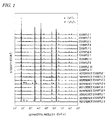
- Powder X-ray diffraction (XRD) measurements were done in order to confirm the crystalline structure of the lithium titanium complex oxides of Examples 1-11 and Reference Examples 1-9.
- An XRD measurement apparatus from Rigaku Corporation was used for the measurements.
- FIG. 1 shows the profiles of the XRD measurements.
- Table 1 shows the amounts x, y and z of Mn, V and B added for all examples of the present invention and reference examples.
- Example 1 Amount of Mn added (x) Amount of V added (y) Amount of B added (z)
- Example 1 0.01 0 0
- Example 2 0.05 0 0
- Example 3 0.1 0 0
- Example 4 0.3 0 0
- Example 5 0.01 0.05 0
- Example 6 0.05 0.05 0
- Example 7 0.3 0.05 0
- Example 8 0.01 0 0.3
- Example 9 0.05 0 0.05 Example 10 0.3 0 0.3 Example 11 0.3 0 0 Reference Example 1 0 0 0 Reference Example 2 0 0.01 0 Reference Example 3 0 0.05 0 Reference Example 4 0 0.1 0 Reference Example 5 0 0 0.01 Reference Example 6 0 0 0.05 Reference Example 7 0 0 0.1 Reference Example 8 0 0 0.3 Reference Example 9 0 0 0.75
- the lithium titanium complex oxides of Examples 1-11, Reference Examples 1-3 and 5-8 had a single spinel phase.
- the lithium titanium complex oxide of Reference Example 4 contains a small amount of an Li 3 VO 4 phase, in addition to the spinel phase.
- the lithium titanium complex oxide of Reference Example 9 contains a small amount of an Li 2 B 4 O 7 phase, in addition to the spinel phase.
- the average particle size of the primary particles was evaluated in terms of the "average particle size d" as defined below.
- the "cumulative average particle size d 50 " in granular variation measurement is often used as the average particle size.
- the granular variation measurement is a measurement of the size of aggregated particles (secondary particles), as opposed to the size of primary particles.
- the "average particle size d" which is a unit representing the size of primary particles, is suitable for demonstrating the effects from the examples of the present invention.
- a scanning electron microscope (SEM) was used to examine the "average particle size d" for the lithium titanium complex oxides of Examples 1-10 and Reference Examples 1-3 and 5-8, which had a single spinel phase.
- An apparatus from Hitachi High-Technologies Corporation was used.
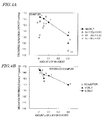
- the average particle size d of the lithium titanium complex oxides of Examples 1-4 and Reference Example 1 is about 0.8 ⁇ m, whereas the average particle size d of the lithium titanium complex oxides of Examples 5-10 and Reference Examples 2-3 and 5-8 is larger and about 1 ⁇ m to about 10 ⁇ m.
- the pressed density was measured as a measure of the packing property when made into an electrode.
- a powder resistance measurement system from Mitsubishi Chemical Analytech Co., Ltd. was used for the measurement.
- the density under an applied pressure of 64 MPa was determined as the pressed density.
- Examples 5-10 were larger and from about 2.6 g/cm 3 to 2.8 g/cm 3
- those of Reference Examples 2, 3 and 5-8 were larger and from about 2.3 g/cm 3 to about 2.7 g/cm 3 .
- the lithium titanium complex oxide when a portion of Ti element is substituted with Mn element, the lithium titanium complex oxide has a sufficiently high electronic conductivity. It is believed that even if the particle size of the lithium titanium complex oxide increases due to further substitution of a portion of Ti element with B element or V element, Li ion diffusion within particles is sufficiently fast, thus improving the rate characteristics.
- the capacity density per volume of an electrode directly contributes to the energy density of the battery, and an improvement thereof has been sought for.
- the electrode capacity density is expressed as the product between the density of the active material in the electrode, the weight capacity density of the active material, and the discharge average voltage.
- the pressed density of the active material can be used as one measure of the density of the active material in the electrode, i.e., the packing property.
- the weight capacity density of the active material is the available discharge capacity measured as described above.
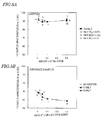
- the "electrode capacity density p" is defined and calculated as the product between the pressed density and the available discharge capacity.
Landscapes
- Chemical & Material Sciences (AREA)
- Chemical Kinetics & Catalysis (AREA)
- Electrochemistry (AREA)
- General Chemical & Material Sciences (AREA)
- Engineering & Computer Science (AREA)
- Materials Engineering (AREA)
- Inorganic Chemistry (AREA)
- Composite Materials (AREA)
- Organic Chemistry (AREA)
- Manufacturing & Machinery (AREA)
- Environmental & Geological Engineering (AREA)
- General Life Sciences & Earth Sciences (AREA)
- Geology (AREA)
- Life Sciences & Earth Sciences (AREA)
- Battery Electrode And Active Subsutance (AREA)
- Inorganic Compounds Of Heavy Metals (AREA)
Applications Claiming Priority (2)
| Application Number | Priority Date | Filing Date | Title |
|---|---|---|---|
| US201161442966P | 2011-02-15 | 2011-02-15 | |
| PCT/JP2012/000907 WO2012111293A1 (fr) | 2011-02-15 | 2012-02-10 | Matière active d'électrode négative pour batterie secondaire au lithium-ion et procédé de fabrication associé |
Publications (3)
| Publication Number | Publication Date |
|---|---|
| EP2677575A1 true EP2677575A1 (fr) | 2013-12-25 |
| EP2677575A4 EP2677575A4 (fr) | 2015-08-19 |
| EP2677575B1 EP2677575B1 (fr) | 2017-06-28 |
Family
ID=46653009
Family Applications (1)
| Application Number | Title | Priority Date | Filing Date |
|---|---|---|---|
| EP12747339.5A Active EP2677575B1 (fr) | 2011-02-15 | 2012-02-10 | Matière active d'électrode négative pour batterie secondaire au lithium-ion et procédé de fabrication associé |
Country Status (5)
| Country | Link |
|---|---|
| US (1) | US9065148B2 (fr) |
| EP (1) | EP2677575B1 (fr) |
| JP (2) | JP5148781B2 (fr) |
| CN (1) | CN102834956B (fr) |
| WO (1) | WO2012111293A1 (fr) |
Families Citing this family (6)
| Publication number | Priority date | Publication date | Assignee | Title |
|---|---|---|---|---|
| WO2013118220A1 (fr) * | 2012-02-10 | 2013-08-15 | パナソニック株式会社 | Matériau actif d'électrode négative pour accumulateurs au lithium-ion, et son procédé de fabrication |
| WO2015045254A1 (fr) * | 2013-09-25 | 2015-04-02 | 三洋電機株式会社 | Oxyde mixte de lithium-titane |
| CN109983610B (zh) * | 2016-11-18 | 2022-09-23 | 株式会社东芝 | 非水电解质二次电池 |
| US11201322B2 (en) | 2017-08-03 | 2021-12-14 | Tokyo Institute Of Technology | Electrode active material for nonaqueous secondary battery, and method for manufacturing same |
| JP7406109B2 (ja) | 2019-02-01 | 2023-12-27 | 日亜化学工業株式会社 | 非水系二次電池用電極活物質及びその製造方法 |
| WO2020158887A1 (fr) | 2019-02-01 | 2020-08-06 | 日亜化学工業株式会社 | Procédé de fabrication de matériau actif d'électrode pour batterie secondaire non aqueuse |
Family Cites Families (21)
| Publication number | Priority date | Publication date | Assignee | Title |
|---|---|---|---|---|
| JPH10251020A (ja) * | 1997-03-11 | 1998-09-22 | Ishihara Sangyo Kaisha Ltd | 金属置換チタン酸リチウムおよびその製造方法ならびにそれを用いてなるリチウム電池 |
| JP4196234B2 (ja) | 1998-11-20 | 2008-12-17 | 株式会社ジーエス・ユアサコーポレーション | 非水電解質リチウム二次電池 |
| JP3625680B2 (ja) | 1999-03-25 | 2005-03-02 | 三洋電機株式会社 | リチウム二次電池 |
| JP2001126728A (ja) | 1999-10-26 | 2001-05-11 | Toyota Motor Corp | リチウムイオン2次電池用負極 |
| JP4296580B2 (ja) * | 2000-01-11 | 2009-07-15 | 株式会社ジーエス・ユアサコーポレーション | 非水電解質リチウム二次電池 |
| CA2327370A1 (fr) * | 2000-12-05 | 2002-06-05 | Hydro-Quebec | Nouvelle methode de fabrication de li4ti5o12 pur a partir du compose ternaire tix-liy-carbone: effet du carbone sur la synthese et la conductivite de l'electrode |
| JP2003217583A (ja) | 2002-01-18 | 2003-07-31 | Hitachi Maxell Ltd | 複合電極およびそれを用いた電気化学素子 |
| JP2003297433A (ja) * | 2002-03-28 | 2003-10-17 | Hitachi Maxell Ltd | 電気化学素子 |
| JP4061648B2 (ja) * | 2003-04-11 | 2008-03-19 | ソニー株式会社 | 非水電解質二次電池用正極活物質及びそれを用いた非水電解質二次電池 |
| JP2005135775A (ja) * | 2003-10-30 | 2005-05-26 | Yuasa Corp | リチウムイオン二次電池 |
| JP4237074B2 (ja) | 2004-02-16 | 2009-03-11 | ソニー株式会社 | 非水電解質二次電池用の正極活物質および非水電解質二次電池 |
| KR101326118B1 (ko) | 2004-10-29 | 2013-11-06 | 메드트로닉 인코포레이티드 | 리튬 이온 전지의 충전방법 |
| US7337010B2 (en) | 2004-10-29 | 2008-02-26 | Medtronic, Inc. | Medical device having lithium-ion battery |
| US7682745B2 (en) | 2004-10-29 | 2010-03-23 | Medtronic, Inc. | Medical device having lithium-ion battery |
| JP5066831B2 (ja) | 2006-05-12 | 2012-11-07 | 株式会社Gsユアサ | 非水電解質二次電池 |
| US7879493B2 (en) * | 2006-06-05 | 2011-02-01 | A123 Systems, Inc. | Alkali metal titanates and methods for their synthesis |
| JP5459757B2 (ja) * | 2008-10-17 | 2014-04-02 | Necエナジーデバイス株式会社 | 二次電池用正極活物質およびそれを使用した二次電池 |
| JP4728385B2 (ja) * | 2008-12-10 | 2011-07-20 | ナミックス株式会社 | リチウムイオン二次電池、及び、その製造方法 |
| CN101877407B (zh) * | 2009-04-30 | 2013-06-19 | 比亚迪股份有限公司 | 一种负极活性物质以及制备方法及电池 |
| KR20120017991A (ko) * | 2010-08-20 | 2012-02-29 | 삼성에스디아이 주식회사 | 리튬 이차 전지용 음극 활물질, 이의 제조 방법 및 이를 포함하는 리튬 이차 전지 |
| US20120045696A1 (en) * | 2010-08-23 | 2012-02-23 | Herle P Subramanya | Negative electrode materials for non-aqueous electrolyte secondary battery |
-
2012
- 2012-02-10 US US13/371,032 patent/US9065148B2/en active Active
- 2012-02-10 EP EP12747339.5A patent/EP2677575B1/fr active Active
- 2012-02-10 JP JP2012524987A patent/JP5148781B2/ja active Active
- 2012-02-10 WO PCT/JP2012/000907 patent/WO2012111293A1/fr not_active Ceased
- 2012-02-10 CN CN201280001029.0A patent/CN102834956B/zh active Active
- 2012-09-12 JP JP2012200598A patent/JP2013012496A/ja active Pending
Non-Patent Citations (1)
| Title |
|---|
| See references of WO2012111293A1 * |
Also Published As
| Publication number | Publication date |
|---|---|
| EP2677575B1 (fr) | 2017-06-28 |
| EP2677575A4 (fr) | 2015-08-19 |
| JP5148781B2 (ja) | 2013-02-20 |
| JP2013012496A (ja) | 2013-01-17 |
| WO2012111293A1 (fr) | 2012-08-23 |
| JPWO2012111293A1 (ja) | 2014-07-03 |
| US20120214069A1 (en) | 2012-08-23 |
| CN102834956B (zh) | 2016-06-01 |
| US9065148B2 (en) | 2015-06-23 |
| CN102834956A (zh) | 2012-12-19 |
Similar Documents
| Publication | Publication Date | Title |
|---|---|---|
| US8753532B2 (en) | Positive electrode materials combining high safety and high power in a Li rechargeable battery | |
| US9601772B2 (en) | Cathode active material for a nonaqueous electrolyte secondary battery and manufacturing method thereof, and a nonaqueous electrolyte secondary battery that uses cathode active material | |
| EP2544280B1 (fr) | Matière active d'électrode positive destinée à une batterie au lithium-ion, électrode positive destinée à une batterie au lithium-ion et batterie au lithium-ion | |
| KR101644252B1 (ko) | 니켈 복합 수산화물과 그의 제조 방법, 비수계 전해질 이차 전지용 정극 활물질과 그의 제조 방법, 및 비수계 전해질 이차 전지 | |
| TWI586025B (zh) | 基於鈷之鋰金屬氧化物陰極材料 | |
| US8673170B2 (en) | Non-homogenous positive electrode materials combining high safety and high power in a Li rechargeable battery | |
| EP2544272A1 (fr) | Substance active d'électrode positive pour batteries à ions lithium, électrode positive pour batteries à ions lithium et batteries à ions lithium | |
| EP2544274A1 (fr) | Substance active d'électrode positive pour batteries à ions lithium, électrode positive pour batteries à ions lithium et batteries à ions lithium | |
| EP2544273A1 (fr) | Substance active d'électrode positive pour batteries à ions lithium, électrode positive pour batteries à ions lithium et batteries à ions lithium | |
| EP2544275A1 (fr) | Matériau actif d'électrode positive pour batteries au lithium-ion, électrode positive pour batteries au lithium-ion, batterie au lithium-ion | |
| US20230037673A1 (en) | Positive electrode active material for all-solid-state lithium ion secondary battery, method for producing the same, and all-solid-state lithium ion secondary battery | |
| EP2677575B1 (fr) | Matière active d'électrode négative pour batterie secondaire au lithium-ion et procédé de fabrication associé | |
| US20210408584A1 (en) | All-solid-state secondary battery | |
| EP1912271B1 (fr) | Matière active d électrode positive, électrode positive pour une batterie électrolytique non aqueuse et batterie électrolytique non aqueuse | |
| EP2814095B1 (fr) | Matériau actif d'électrode négative pour accumulateurs au lithium-ion, et son procédé de fabrication | |
| EP3223345B1 (fr) | Poudre de particules de matériau actif d'électrode positive pour batterie secondaire à électrolyte non aqueux et procédé de production de celle-ci, ainsi que batterie secondaire à électrolyte non aqueux | |
| EP2677576B1 (fr) | Matière active d'électrode négative pour batterie secondaire au lithium-ion et procédé de fabrication associé |
Legal Events
| Date | Code | Title | Description |
|---|---|---|---|
| PUAI | Public reference made under article 153(3) epc to a published international application that has entered the european phase |
Free format text: ORIGINAL CODE: 0009012 |
|
| 17P | Request for examination filed |
Effective date: 20130617 |
|
| AK | Designated contracting states |
Kind code of ref document: A1 Designated state(s): AL AT BE BG CH CY CZ DE DK EE ES FI FR GB GR HR HU IE IS IT LI LT LU LV MC MK MT NL NO PL PT RO RS SE SI SK SM TR |
|
| DAX | Request for extension of the european patent (deleted) | ||
| RAP1 | Party data changed (applicant data changed or rights of an application transferred) |
Owner name: PANASONIC INTELLECTUAL PROPERTY MANAGEMENT CO., LT |
|
| RA4 | Supplementary search report drawn up and despatched (corrected) |
Effective date: 20150722 |
|
| RIC1 | Information provided on ipc code assigned before grant |
Ipc: H01M 4/485 20100101AFI20150716BHEP Ipc: H01M 10/0525 20100101ALN20150716BHEP Ipc: H01M 4/36 20060101ALI20150716BHEP Ipc: C01G 23/00 20060101ALI20150716BHEP Ipc: H01M 4/131 20100101ALI20150716BHEP Ipc: H01M 4/505 20100101ALN20150716BHEP |
|
| GRAP | Despatch of communication of intention to grant a patent |
Free format text: ORIGINAL CODE: EPIDOSNIGR1 |
|
| INTG | Intention to grant announced |
Effective date: 20170324 |
|
| GRAS | Grant fee paid |
Free format text: ORIGINAL CODE: EPIDOSNIGR3 |
|
| GRAA | (expected) grant |
Free format text: ORIGINAL CODE: 0009210 |
|
| AK | Designated contracting states |
Kind code of ref document: B1 Designated state(s): AL AT BE BG CH CY CZ DE DK EE ES FI FR GB GR HR HU IE IS IT LI LT LU LV MC MK MT NL NO PL PT RO RS SE SI SK SM TR |
|
| REG | Reference to a national code |
Ref country code: GB Ref legal event code: FG4D |
|
| REG | Reference to a national code |
Ref country code: CH Ref legal event code: EP |
|
| REG | Reference to a national code |
Ref country code: AT Ref legal event code: REF Ref document number: 905571 Country of ref document: AT Kind code of ref document: T Effective date: 20170715 |
|
| REG | Reference to a national code |
Ref country code: IE Ref legal event code: FG4D |
|
| REG | Reference to a national code |
Ref country code: DE Ref legal event code: R096 Ref document number: 602012033966 Country of ref document: DE |
|
| PG25 | Lapsed in a contracting state [announced via postgrant information from national office to epo] |
Ref country code: FI Free format text: LAPSE BECAUSE OF FAILURE TO SUBMIT A TRANSLATION OF THE DESCRIPTION OR TO PAY THE FEE WITHIN THE PRESCRIBED TIME-LIMIT Effective date: 20170628 Ref country code: LT Free format text: LAPSE BECAUSE OF FAILURE TO SUBMIT A TRANSLATION OF THE DESCRIPTION OR TO PAY THE FEE WITHIN THE PRESCRIBED TIME-LIMIT Effective date: 20170628 Ref country code: NO Free format text: LAPSE BECAUSE OF FAILURE TO SUBMIT A TRANSLATION OF THE DESCRIPTION OR TO PAY THE FEE WITHIN THE PRESCRIBED TIME-LIMIT Effective date: 20170928 Ref country code: GR Free format text: LAPSE BECAUSE OF FAILURE TO SUBMIT A TRANSLATION OF THE DESCRIPTION OR TO PAY THE FEE WITHIN THE PRESCRIBED TIME-LIMIT Effective date: 20170929 Ref country code: HR Free format text: LAPSE BECAUSE OF FAILURE TO SUBMIT A TRANSLATION OF THE DESCRIPTION OR TO PAY THE FEE WITHIN THE PRESCRIBED TIME-LIMIT Effective date: 20170628 |
|
| REG | Reference to a national code |
Ref country code: NL Ref legal event code: MP Effective date: 20170628 |
|
| REG | Reference to a national code |
Ref country code: LT Ref legal event code: MG4D |
|
| REG | Reference to a national code |
Ref country code: AT Ref legal event code: MK05 Ref document number: 905571 Country of ref document: AT Kind code of ref document: T Effective date: 20170628 |
|
| PG25 | Lapsed in a contracting state [announced via postgrant information from national office to epo] |
Ref country code: LV Free format text: LAPSE BECAUSE OF FAILURE TO SUBMIT A TRANSLATION OF THE DESCRIPTION OR TO PAY THE FEE WITHIN THE PRESCRIBED TIME-LIMIT Effective date: 20170628 Ref country code: SE Free format text: LAPSE BECAUSE OF FAILURE TO SUBMIT A TRANSLATION OF THE DESCRIPTION OR TO PAY THE FEE WITHIN THE PRESCRIBED TIME-LIMIT Effective date: 20170628 Ref country code: BG Free format text: LAPSE BECAUSE OF FAILURE TO SUBMIT A TRANSLATION OF THE DESCRIPTION OR TO PAY THE FEE WITHIN THE PRESCRIBED TIME-LIMIT Effective date: 20170928 Ref country code: NL Free format text: LAPSE BECAUSE OF FAILURE TO SUBMIT A TRANSLATION OF THE DESCRIPTION OR TO PAY THE FEE WITHIN THE PRESCRIBED TIME-LIMIT Effective date: 20170628 Ref country code: RS Free format text: LAPSE BECAUSE OF FAILURE TO SUBMIT A TRANSLATION OF THE DESCRIPTION OR TO PAY THE FEE WITHIN THE PRESCRIBED TIME-LIMIT Effective date: 20170628 |
|
| PG25 | Lapsed in a contracting state [announced via postgrant information from national office to epo] |
Ref country code: AT Free format text: LAPSE BECAUSE OF FAILURE TO SUBMIT A TRANSLATION OF THE DESCRIPTION OR TO PAY THE FEE WITHIN THE PRESCRIBED TIME-LIMIT Effective date: 20170628 Ref country code: EE Free format text: LAPSE BECAUSE OF FAILURE TO SUBMIT A TRANSLATION OF THE DESCRIPTION OR TO PAY THE FEE WITHIN THE PRESCRIBED TIME-LIMIT Effective date: 20170628 Ref country code: CZ Free format text: LAPSE BECAUSE OF FAILURE TO SUBMIT A TRANSLATION OF THE DESCRIPTION OR TO PAY THE FEE WITHIN THE PRESCRIBED TIME-LIMIT Effective date: 20170628 Ref country code: SK Free format text: LAPSE BECAUSE OF FAILURE TO SUBMIT A TRANSLATION OF THE DESCRIPTION OR TO PAY THE FEE WITHIN THE PRESCRIBED TIME-LIMIT Effective date: 20170628 Ref country code: RO Free format text: LAPSE BECAUSE OF FAILURE TO SUBMIT A TRANSLATION OF THE DESCRIPTION OR TO PAY THE FEE WITHIN THE PRESCRIBED TIME-LIMIT Effective date: 20170628 |
|
| PG25 | Lapsed in a contracting state [announced via postgrant information from national office to epo] |
Ref country code: IT Free format text: LAPSE BECAUSE OF FAILURE TO SUBMIT A TRANSLATION OF THE DESCRIPTION OR TO PAY THE FEE WITHIN THE PRESCRIBED TIME-LIMIT Effective date: 20170628 Ref country code: ES Free format text: LAPSE BECAUSE OF FAILURE TO SUBMIT A TRANSLATION OF THE DESCRIPTION OR TO PAY THE FEE WITHIN THE PRESCRIBED TIME-LIMIT Effective date: 20170628 Ref country code: SM Free format text: LAPSE BECAUSE OF FAILURE TO SUBMIT A TRANSLATION OF THE DESCRIPTION OR TO PAY THE FEE WITHIN THE PRESCRIBED TIME-LIMIT Effective date: 20170628 Ref country code: PL Free format text: LAPSE BECAUSE OF FAILURE TO SUBMIT A TRANSLATION OF THE DESCRIPTION OR TO PAY THE FEE WITHIN THE PRESCRIBED TIME-LIMIT Effective date: 20170628 Ref country code: IS Free format text: LAPSE BECAUSE OF FAILURE TO SUBMIT A TRANSLATION OF THE DESCRIPTION OR TO PAY THE FEE WITHIN THE PRESCRIBED TIME-LIMIT Effective date: 20171028 |
|
| REG | Reference to a national code |
Ref country code: DE Ref legal event code: R097 Ref document number: 602012033966 Country of ref document: DE |
|
| PG25 | Lapsed in a contracting state [announced via postgrant information from national office to epo] |
Ref country code: DK Free format text: LAPSE BECAUSE OF FAILURE TO SUBMIT A TRANSLATION OF THE DESCRIPTION OR TO PAY THE FEE WITHIN THE PRESCRIBED TIME-LIMIT Effective date: 20170628 |
|
| PLBE | No opposition filed within time limit |
Free format text: ORIGINAL CODE: 0009261 |
|
| STAA | Information on the status of an ep patent application or granted ep patent |
Free format text: STATUS: NO OPPOSITION FILED WITHIN TIME LIMIT |
|
| 26N | No opposition filed |
Effective date: 20180329 |
|
| PG25 | Lapsed in a contracting state [announced via postgrant information from national office to epo] |
Ref country code: SI Free format text: LAPSE BECAUSE OF FAILURE TO SUBMIT A TRANSLATION OF THE DESCRIPTION OR TO PAY THE FEE WITHIN THE PRESCRIBED TIME-LIMIT Effective date: 20170628 |
|
| REG | Reference to a national code |
Ref country code: CH Ref legal event code: PL |
|
| PG25 | Lapsed in a contracting state [announced via postgrant information from national office to epo] |
Ref country code: MC Free format text: LAPSE BECAUSE OF FAILURE TO SUBMIT A TRANSLATION OF THE DESCRIPTION OR TO PAY THE FEE WITHIN THE PRESCRIBED TIME-LIMIT Effective date: 20170628 |
|
| GBPC | Gb: european patent ceased through non-payment of renewal fee |
Effective date: 20180210 |
|
| REG | Reference to a national code |
Ref country code: IE Ref legal event code: MM4A |
|
| REG | Reference to a national code |
Ref country code: BE Ref legal event code: MM Effective date: 20180228 |
|
| PG25 | Lapsed in a contracting state [announced via postgrant information from national office to epo] |
Ref country code: CH Free format text: LAPSE BECAUSE OF NON-PAYMENT OF DUE FEES Effective date: 20180228 Ref country code: LI Free format text: LAPSE BECAUSE OF NON-PAYMENT OF DUE FEES Effective date: 20180228 Ref country code: LU Free format text: LAPSE BECAUSE OF NON-PAYMENT OF DUE FEES Effective date: 20180210 |
|
| REG | Reference to a national code |
Ref country code: FR Ref legal event code: ST Effective date: 20181031 |
|
| PG25 | Lapsed in a contracting state [announced via postgrant information from national office to epo] |
Ref country code: IE Free format text: LAPSE BECAUSE OF NON-PAYMENT OF DUE FEES Effective date: 20180210 |
|
| PG25 | Lapsed in a contracting state [announced via postgrant information from national office to epo] |
Ref country code: FR Free format text: LAPSE BECAUSE OF NON-PAYMENT OF DUE FEES Effective date: 20180228 Ref country code: GB Free format text: LAPSE BECAUSE OF NON-PAYMENT OF DUE FEES Effective date: 20180210 Ref country code: BE Free format text: LAPSE BECAUSE OF NON-PAYMENT OF DUE FEES Effective date: 20180228 |
|
| PG25 | Lapsed in a contracting state [announced via postgrant information from national office to epo] |
Ref country code: MT Free format text: LAPSE BECAUSE OF NON-PAYMENT OF DUE FEES Effective date: 20180210 |
|
| PG25 | Lapsed in a contracting state [announced via postgrant information from national office to epo] |
Ref country code: TR Free format text: LAPSE BECAUSE OF FAILURE TO SUBMIT A TRANSLATION OF THE DESCRIPTION OR TO PAY THE FEE WITHIN THE PRESCRIBED TIME-LIMIT Effective date: 20170628 |
|
| PG25 | Lapsed in a contracting state [announced via postgrant information from national office to epo] |
Ref country code: HU Free format text: LAPSE BECAUSE OF FAILURE TO SUBMIT A TRANSLATION OF THE DESCRIPTION OR TO PAY THE FEE WITHIN THE PRESCRIBED TIME-LIMIT; INVALID AB INITIO Effective date: 20120210 Ref country code: PT Free format text: LAPSE BECAUSE OF FAILURE TO SUBMIT A TRANSLATION OF THE DESCRIPTION OR TO PAY THE FEE WITHIN THE PRESCRIBED TIME-LIMIT Effective date: 20170628 |
|
| PG25 | Lapsed in a contracting state [announced via postgrant information from national office to epo] |
Ref country code: MK Free format text: LAPSE BECAUSE OF NON-PAYMENT OF DUE FEES Effective date: 20170628 Ref country code: CY Free format text: LAPSE BECAUSE OF FAILURE TO SUBMIT A TRANSLATION OF THE DESCRIPTION OR TO PAY THE FEE WITHIN THE PRESCRIBED TIME-LIMIT Effective date: 20170628 |
|
| PG25 | Lapsed in a contracting state [announced via postgrant information from national office to epo] |
Ref country code: AL Free format text: LAPSE BECAUSE OF FAILURE TO SUBMIT A TRANSLATION OF THE DESCRIPTION OR TO PAY THE FEE WITHIN THE PRESCRIBED TIME-LIMIT Effective date: 20170628 |
|
| PGFP | Annual fee paid to national office [announced via postgrant information from national office to epo] |
Ref country code: DE Payment date: 20260218 Year of fee payment: 15 |