EP2677785A1 - Procédé et dispositif de verrouillage de réseau destinés à un terminal mobile - Google Patents
Procédé et dispositif de verrouillage de réseau destinés à un terminal mobile Download PDFInfo
- Publication number
- EP2677785A1 EP2677785A1 EP11861129.2A EP11861129A EP2677785A1 EP 2677785 A1 EP2677785 A1 EP 2677785A1 EP 11861129 A EP11861129 A EP 11861129A EP 2677785 A1 EP2677785 A1 EP 2677785A1
- Authority
- EP
- European Patent Office
- Prior art keywords
- mobile terminal
- sim card
- verification
- network locking
- network
- Prior art date
- Legal status (The legal status is an assumption and is not a legal conclusion. Google has not performed a legal analysis and makes no representation as to the accuracy of the status listed.)
- Ceased
Links
Images


Classifications
-
- H—ELECTRICITY
- H04—ELECTRIC COMMUNICATION TECHNIQUE
- H04W—WIRELESS COMMUNICATION NETWORKS
- H04W12/00—Security arrangements; Authentication; Protecting privacy or anonymity
- H04W12/06—Authentication
-
- H—ELECTRICITY
- H04—ELECTRIC COMMUNICATION TECHNIQUE
- H04W—WIRELESS COMMUNICATION NETWORKS
- H04W12/00—Security arrangements; Authentication; Protecting privacy or anonymity
- H04W12/12—Detection or prevention of fraud
- H04W12/126—Anti-theft arrangements, e.g. protection against subscriber identity module [SIM] cloning
-
- H—ELECTRICITY
- H04—ELECTRIC COMMUNICATION TECHNIQUE
- H04W—WIRELESS COMMUNICATION NETWORKS
- H04W12/00—Security arrangements; Authentication; Protecting privacy or anonymity
- H04W12/40—Security arrangements using identity modules
- H04W12/48—Security arrangements using identity modules using secure binding, e.g. securely binding identity modules to devices, services or applications
-
- H—ELECTRICITY
- H04—ELECTRIC COMMUNICATION TECHNIQUE
- H04W—WIRELESS COMMUNICATION NETWORKS
- H04W8/00—Network data management
- H04W8/18—Processing of user or subscriber data, e.g. subscribed services, user preferences or user profiles; Transfer of user or subscriber data
-
- H—ELECTRICITY
- H04—ELECTRIC COMMUNICATION TECHNIQUE
- H04W—WIRELESS COMMUNICATION NETWORKS
- H04W8/00—Network data management
- H04W8/18—Processing of user or subscriber data, e.g. subscribed services, user preferences or user profiles; Transfer of user or subscriber data
- H04W8/183—Processing at user equipment or user record carrier
-
- H—ELECTRICITY
- H04—ELECTRIC COMMUNICATION TECHNIQUE
- H04M—TELEPHONIC COMMUNICATION
- H04M1/00—Substation equipment, e.g. for use by subscribers
- H04M1/66—Substation equipment, e.g. for use by subscribers with means for preventing unauthorised or fraudulent calling
- H04M1/667—Preventing unauthorised calls from a telephone set
- H04M1/67—Preventing unauthorised calls from a telephone set by electronic means
-
- H—ELECTRICITY
- H04—ELECTRIC COMMUNICATION TECHNIQUE
- H04W—WIRELESS COMMUNICATION NETWORKS
- H04W12/00—Security arrangements; Authentication; Protecting privacy or anonymity
- H04W12/10—Integrity
Definitions
- the present document relates to network locking technology in the field of mobile communication, and more particularly, to a network locking method and device for mobile terminal.
- the existing network locking method is typically as follows: pre-store the encrypted subscriber identity module (SIM) card information, such as mobile country code (MCC) and Mobile Network Code (MNC), in the mobile terminal; when the mobile terminal is powered on each time, verify the MCC and MNC in the SIM card, namely, compare the stored MCC and MNC with the MCC and MNC in the SIM card inserted in the mobile terminal, if there is a verification error, the mobile terminal cannot work properly, so as to achieve the network locking function of the mobile terminal.
- SIM subscriber identity module
- MCC mobile country code
- MNC Mobile Network Code
- the existing network locking method only designs the network locking scheme at the side of the mobile terminal, that is, the existing solution only optimizes the design of the software or hardware of the mobile terminal, so as to improve the security of the network locking mechanism.
- the mobile terminal can only verify whether the SIM card is a customized SIM card or not, while the SIM card cannot judge whether the mobile terminal in which the SIM card is inserted is a customized mobile terminal or not, that is, they can not verify each other, so that the customized SIM card can also be used even if it is inserted into a non-customized mobile terminal, thus deteriorating legitimate rights and interests of the operators and the mobile terminal manufacturers.
- the main purpose of the present document is to provide a network locking method and device for a mobile terminal, so that the mobile terminal and a subscriber identity module (SIM) card can verify each other, thereby improving the security of existing network locking mechanisms of the mobile terminal.
- SIM subscriber identity module
- verification signals stored in the mobile terminal are verification signals C1 and C2; verification signals correspondingly stored in the SIM card are verification signals S1 and S2.
- the mobile terminal and the SIM card verifying each other is:
- the network locking information comprises: network locking flag, as well as network locking Mobile Country Code (MCC) and Mobile Netwrok Code (MNC).
- MCC Mobile Country Code
- MNC Mobile Netwrok Code
- the mobile terminal and the SIM card comparing their network locking information is:
- the network locking flag comprises: active state, unlocking success state and locking state.
- the present document also provides a network locking device for mobile terminal, and the device comprises: a mobile terminal and a subscriber identity module (SIM) card; wherein the mobile terminal is used to store network locking information as well as verification signals for performing the verification operation with the SIM card; after the mobile terminal is powered on, verify with the SIM card each other through the verification signals, and if it is determined that both parties pass through the verification performed by the other party, compare the stored network locking information with that in the SIM card, and if it is determined that the comparison result indicates consistency, enter into a normal standby state; the SIM card is used to store the network locking information and the verification signal for performing the verification operation with the mobile terminal; after the mobile terminal is powered on, verify with the mobile terminal each other through the verification signals.
- SIM subscriber identity module
- the present document also provides a mobile terminal, comprising: a storage module, a verification module and a comparison module; wherein, the storage module is used to store the network locking information and the verification signals for performing the verification operation with the SIM card; the verification module is used to, after the mobile terminal is powered on, verify with the SIM card each other through the verification signals stored in the storage module, if it is determined that the both parties pass through the verification performed by the other party, notify the comparison module; the comparison module is used to, after receiving the notification from the verification module, compare the network locking information stored in the storage module with that in the SIM card, when it is determined that the comparison result indicates consistency, make the mobile terminal enter into the normal standby state.
- the storage module is used to store the network locking information and the verification signals for performing the verification operation with the SIM card
- the verification module is used to, after the mobile terminal is powered on, verify with the SIM card each other through the verification signals stored in the storage module, if it is determined that the both parties pass through the verification performed by the other party, notify the comparison module
- the present document also provides a SIM card, and the SIM card is used to store network locking information and verification signals for performing verification operation with a mobile terminal; after the mobile terminal is powered on, the SIM card is used to verify with the mobile terminal each other through the verification signals.
- the network locking information and the verification signals of the mobile terminal and the SIM card are respectively stored into the both parties in advance; after the mobile terminal is powered on, the mobile terminal and the SIM card verify each other through the verification signals, if the both parties pass through the verification performed by the other party, the mobile terminal compares the stored network locking information with that in the SIM card, and if the comparison result indicates consistency, the mobile terminal enters into the normal standby state.
- the verification process performed by the mobile terminal and the SIM card through the verification signals can guarantee that: the customized mobile terminal cannot be used if another non-customized SIM card is inserted, meanwhile, the customized SIM card can not be used if it is inserted into another mobile terminal.
- the MCC and MNC in the mobile terminal are cracked, if a non-customized SIM card is inserted, since the non-customized SIM card can not perform the verification operation with the mobile terminal, the non-customized SIM card still cannot be recognized and used, thereby improving the security of the existing network locking mechanism.
- a network locking flag is also set in the network locking information, which not only improves the security of the network locking information comparison process, but also is convenient for the unlocking operation by the related legitimate personnel such as the operator.
- the basic idea of the present document is: network locking information and verification signals of the mobile terminal and the SIM card are respectively stored in the both parties in advance; after the mobile terminal is powered on, the mobile terminal and the SIM card verify each other through the verification signals, and if the both parties pass through the verification performed by the other party, the mobile terminal compares the stored network locking information with that in the SIM card, and if the comparison result indicates consistency, the mobile terminal enters into the normal standby state; otherwise, the mobile terminal is not available.
- the mobile terminal if the verification process performed by the mobile terminal and the SIM card fails, the mobile terminal identifies the SIM card as an illegal card, and does not perform subsequent comparison operation any longer.
- FIG. 1 is a flow chart of implementing a network locking method for the mobile terminal in accordance with the present document, and as shown in FIG. 1 , the process comprises the following steps:
- step 101 the network locking information and the verification signals of the mobile terminal and the SIM card are respectively stored in the both parties in advance;
- the mobile terminal manufacturer can cooperate with the mobile operator, and before the customized mobile terminal and the customized SIM card are put into use, the network locking information specified by the mobile operator is pre-stored into the mobile terminal and the SIM card, so as to reflect the network locking requirement of the mobile operator.
- the network locking information comprises: the network locking flag, as well as the network locking MCC and MNC; the network locking flag may be used to indicate the three network locking states, respectively: active state, unlocking success state and locking state, and the values of the network locking flags corresponding to the three network locking states can be expressed as: 0, 1 and 2.
- the network locking flag is defaulted to be active, that is, the mobile terminal and the SIM card are in the network locking state, and the value of the network locking flag is represented as 0; the network locking flag only changes when the network is unlocked, and after the unlocking is successful, the mobile terminal sets the values of the network locking flags stored in itself and the SIM card to 1; when they are unlocked, if the wrong unlocking code is entered too many times and the limited maximum number is exceeded, the values of the network locking flags in the mobile terminal and the SIM card are set to 2, and the unlocking operation cannot be performed, thus preventing brute cracking of hackers.
- the mobile terminal which is in the locking state cannot be identified when any SIM card is inserted, and the SIM card that is in the locking state is also not able to work when it is inserted into any mobile terminal.
- the network locking information pre-stored in the customized mobile terminal and the network locking information pre-stored in the customized SIM card are the same, that is, the network locking flags correspondingly are the same, so as the network locking MCC and MNC.
- the verification signals of the mobile terminal and the SIM card also need to be stored in the both parties, in particular:
- the network locking information and the verification signal S2 in the SIM card are all stored in the same file, if the file fails to be read or the file is illegally cracked, errors would occur in both the network locking information and the verification signal S2.
- the file can be called as a network locking file.
- Step 102 after the mobile terminal is powered on, the mobile terminal and the SIM card verify each other through the verification signals, and if the both parties pass through the verification performed by the other party, it is to proceed to step 103; otherwise, the mobile terminal identifies the SIM card as an illegal card;
- the mobile terminal after the mobile terminal is powered on, it actively sends the verification signal C1 to the SIM card, after the SIM card receives the verification signal C1, it returns the verification signal S1 to the mobile terminal, and only after the mobile terminal receives the verification signal S1, does the subsequent process continue, that is, it continues to send the verification signal C2 to the SIM card; otherwise, if the mobile terminal does not receive the verification signal S1, it is indicated that the SIM card is not illegal, and the SIM card does not pass the verification performed by the mobile terminal, the mobile terminal cannot idnetify the SIM card, and the mobile terminal can not communicate.
- the mobile terminal After the mobile terminal receives the verification signal S1, it sends the verification signal C2 to the SIM card, and the verification signal indicates that the mobile terminal will acquire the network locking information, namely, the network locking flag as well as the network locking MCC and MNC, stored in the SIM card; after the SIM card receives the verification signal C2, it returns the verification signal S2 to confirm that the verification signal C2 is received, meanwhile, it returns the network locking information stored in the SIM card.
- the mobile terminal After the mobile terminal receives the verification signal S2 and the network locking information returned by the SIM card, according to the verification signal S2 returned by the SIM card, it determines whether the subsequent comparison operation would be performed or not, that is, the mobile terminal first judges whether the verification signal S2 returned by the SIM card is correct or not, and if the verification signal S2 is correct, it is indicated that the mobile terminal and the SIM card pass through the verification performed by the other party, and it is to proceed to step 103; if the verification signal S2 is not correct, the mobile terminal identifies the SIM card as an illegal card, and displays "SIM card not inserted" or "illegal SIM card", and so on, on the mobile terminal interface.
- the verification signal S2 and the network locking information in the SIM card are stored in the same file, if the file fails to be read or if the file is unlawfully destructed, the verification signal S2 and the network locking information will be destroyed, therefore, if the verification signal S2 is determined as correct, it is to continue the subsequent comparison operation; otherwise, it is indicated that the network locking information may be destroyed, and the mobile terminal identifies the SIM card as an illegal card.
- the verification signals C1 and C2, and the verification signals S1 and S2 are customized signals, and each of which has a corresponding meaning, which will be described as follows:
- the verification signal S1 is a signal returned by the SIM card to the mobile terminal, which has two meanings: 1) the SIM card proves to the mobile terminal that it is a customized SIM card, and conforms with the network locking requirement, and if the verification signal C1 is normally received, the function of the SIM card is activated; 2) the mobile terminal is informed that it should continue the subsequent process, that is, sending the verification signal C2.
- the verification signal C2 is a signal sent by the mobile terminal to the SIM card, it indicates that the mobile terminal requires to acquire the network locking information in the SIM card, comprising: the network locking MCC and MNC, the network locking flag, and other network locking information.
- the verification signal S2 is a signal returned by the SIM card to the mobile terminal, it has three meanings: 1) the SIM card receives the proper verification signal C2, and normally accesses to the network locking file stored on the SIM card; 2) the network locking file is not corrupted or erased; 3) the verification signal comparison process ends, and the mobile terminal can continue to perform the subsequent process.
- the verification signal C1 corresponds to the verification signal S1, ensuring that the SIM card and the mobile terminal that are in use are customized in the present document, excluding the possibility of using other types of SIM cards or mobile terminals to operate. Therefore, it can effectively prevent the hackers from using the unlawful deception of "intermediary" to disguise an illegal SIM card as a legal one, this is because that the illegal SIM card cannot return the verification signal S 1 to the mobile terminal.
- the comparison process of the verification signals C2 and S2 ensures that the network locking information in the mobile terminal or the SIM card is not cracked individually, otherwise, the comparison process of the network locking information in the mobile terminal and the SIM card must fail in the subsequent process, causing that the mobile terminal cannot work normally. Therefore, it can effectively prevent the hackers from using software defects to attack and destroy the network locking information in the mobile terminal. Furthermore, the comparison operation of the network locking information in the mobile terminal and the SIM card can also prevent the mobile terminal and the SIM card whose network locking flags are inconsistent from working cooperatively, for example: it will be abnormal when an unlocked SIM card is inserted into the mobile terminal that is unlocked successfully, and the mobile terminal still cannot work normally.
- the use of the verification signals in the present document can guarantee that: if the user uses a customized mobile terminal, if another non-customized SIM card is inserted in, the mobile terminal cannot be used, even if a small chip card disguises as a legal card to attack, this is because the mobile terminal does not receive the verification signal S1, and it cannot continue the subsequent process; meanwhile, the customized SIM card cannot be inserted into an non-customized mobile terminal to be used, and since the SIM card does not receive the verification signal C1 sent by the mobile terminal, the SIM card cannot work.
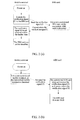
- FIG. 2 (a) ⁇ (d) are four flow charts that the verification process of the mobile terminal and the SIM card fails in accordance with the present document, and as shown in FIG. 2, FIG. 2 (a) shows the case that a non-customized SIM card is inserted in a customized mobile terminal or the customized SIM card becomes abnormal, therefore, the SIM card cannot return the verification signal S1, and the mobile terminal displays that the SIM card is illegal, and the subsequent operation can not be performed; FIG.
- FIG. 2 (b) is the case that the mobile terminal in which the customized SIM card is inserted is a non-customized mobile terminal or the customized mobile terminal becomes abnormal, the mobile terminal cannot send the verification signal C1, and the customized SIM card does not receive the verification signal C1 and will not continue the subsequent process, therefore, it cannot return the verification signal S1;
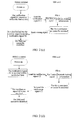
- FIG. 2 (c) is the case that a customized SIM card is inserted in the customized mobile terminal, but the file in which the verification signal and the network locking information are stored in the SIM card are damaged, at this time, the SIM card returns a wrong signal, that is, the returned signal is not the proper verification signal S2, therefore, the customized mobile terminal does not identify the SIM card and does not continue the subsequent operation;
- FIG. 2 (c) is the case that a customized SIM card is inserted in the customized mobile terminal, but the file in which the verification signal and the network locking information are stored in the SIM card are damaged, at this time, the SIM card returns a wrong signal, that is, the returned signal is not the proper verification signal S2, therefore, the
- Step 103 the mobile terminal compares the stored network locking information with that in the SIM card, and if the comparison result indicates consistency, the mobile terminal enters into the normal standby state; otherwise, the mobile terminal is not available;
- the mobile terminal compares the network locking information in the SIM card with its own stored network locking information, and if the comparison result indicates consistency, namely, the network locking flags are the same, and both are not in the locking state, and the network locking MCC and MNC are consistent, the mobile terminal enters into the normal standby state; if any information in the network locking information of the both parties is inconsistent, it is indicated that the network locking information is abnormal, and the mobile terminal can not be used.
- the network locking flags of the mobile terminal and the SIM card are unlocking success state, that is, the mobile terminal and the SIM card are legally unlocked, and the mobile terminal also enters into the normal standby state.
- FIG. 3 is a flow chart of the network locking information comparison process in accordance with the present document, and as shown in FIG. 3 , it comprises the following steps:
- step 301 the mobile terminal judges whether the network locking flag of the SIM card and its own stored network locking flag are consistent or not, if they are consistent, it is to proceed to step 302; otherwise, it is to proceed to step 304, and the mobile terminal is not available;
- step 302 the mobile terminal judges whether the network locking MCC and MNC in the SIM card and its own stored network locking MCC and MNC are consistent or not, if they are consistent, it is to proceed to step 303; otherwise, it is to proceed to step 304, and the mobile terminal is not available;
- step 303 the mobile terminal enters into the normal standby state.
- the comparison result indicates consistency, and the mobile terminal is not available, thus ensuring the security of the locked network.
- FIG. 4 is a structural diagram of the network locking device for the mobile terminal in accordance with the present document, and as shown in FIG. 4 , the device comprises: the mobile terminal and the SIM card; wherein, the mobile terminal is used to store the network locking information and the verification signals for performing the verification with the SIM card; after the mobile terminal is powered on, verify with the SIM card each other through the verification signals, when it is determined that the both parties pass through the verification performed by the other party, compare the stored network locking information with that in the SIM card, and when it is determined that the comparison result indicates consistency, enter into the normal standby state; the SIM card is used to store the network locking information and the verification signals for verification performed with the mobile terminal; and after the mobile terminal is powered on, verify with the mobile terminal each other through the verification signals.
- the present document also provides a mobile terminal, and as shown in FIG. 4 , comprising: a storage module, a verification module and a comparison module; wherein the storage module is used to store the network locking information and the verification signals for verification performed with the SIM card; the verification module is used to, after the mobile terminal is powered on, verify with the SIM card each other through the verification signals in the storage module, and when it is determined that the both parties pass through the verification performed by the other party, notify the comparison module; the comparison module is used to, after receiving the notification from the verification module, compare the network locking information stored in the storage module with that in the SIM card, and if it is determined that the comparison result indicates consistency, make the mobile terminal enter into the normal standby state.
- the storage module is used to store the network locking information and the verification signals for verification performed with the SIM card
- the verification module is used to, after the mobile terminal is powered on, verify with the SIM card each other through the verification signals in the storage module, and when it is determined that the both parties pass through the verification performed by the other party, notify the comparison
- the present document also provides a SIM card, which is used to store the network locking information and the verification signals for verification performed with the mobile terminal; after the mobile terminal is powered on, verify with the mobile terminal each other through the verification signals.
Landscapes
- Engineering & Computer Science (AREA)
- Computer Networks & Wireless Communication (AREA)
- Signal Processing (AREA)
- Computer Security & Cryptography (AREA)
- Databases & Information Systems (AREA)
- Mobile Radio Communication Systems (AREA)
- Telephone Function (AREA)
Applications Claiming Priority (2)
| Application Number | Priority Date | Filing Date | Title |
|---|---|---|---|
| CN201110060786.2A CN102131182B (zh) | 2011-03-14 | 2011-03-14 | 一种移动终端锁网的方法和装置 |
| PCT/CN2011/076058 WO2012122753A1 (fr) | 2011-03-14 | 2011-06-21 | Procédé et dispositif de verrouillage de réseau destinés à un terminal mobile |
Publications (2)
| Publication Number | Publication Date |
|---|---|
| EP2677785A1 true EP2677785A1 (fr) | 2013-12-25 |
| EP2677785A4 EP2677785A4 (fr) | 2014-08-20 |
Family
ID=44269048
Family Applications (1)
| Application Number | Title | Priority Date | Filing Date |
|---|---|---|---|
| EP11861129.2A Ceased EP2677785A4 (fr) | 2011-03-14 | 2011-06-21 | Procédé et dispositif de verrouillage de réseau destinés à un terminal mobile |
Country Status (4)
| Country | Link |
|---|---|
| US (1) | US9191815B2 (fr) |
| EP (1) | EP2677785A4 (fr) |
| CN (1) | CN102131182B (fr) |
| WO (1) | WO2012122753A1 (fr) |
Cited By (1)
| Publication number | Priority date | Publication date | Assignee | Title |
|---|---|---|---|---|
| CN109743722A (zh) * | 2019-01-03 | 2019-05-10 | 中国联合网络通信集团有限公司 | 网络连接处理方法和装置 |
Families Citing this family (17)
| Publication number | Priority date | Publication date | Assignee | Title |
|---|---|---|---|---|
| JP5672313B2 (ja) * | 2011-02-04 | 2015-02-18 | 富士通株式会社 | 情報処理装置及び設定情報管理方法 |
| CN102612136A (zh) * | 2012-03-28 | 2012-07-25 | 华为技术有限公司 | 客户身份识别卡sim卡注册失败后重启通信的方法和装置 |
| CN103379478B (zh) * | 2012-04-25 | 2015-05-27 | 腾讯科技(深圳)有限公司 | 一种控制方法、系统、客户端和服务器 |
| CN102752754B (zh) * | 2012-06-21 | 2016-05-25 | 华为终端有限公司 | 用户识别卡锁数据进行安全认证的方法及移动终端 |
| TWI531256B (zh) * | 2013-10-09 | 2016-04-21 | 宏碁股份有限公司 | 對行動裝置進行網路個人化之方法 |
| EP2861001B1 (fr) * | 2013-10-09 | 2019-02-27 | Acer Incorporated | Procédé permettant d'effectuer une personnalisation de réseau sur des dispositifs mobiles |
| FR3014629B1 (fr) * | 2013-12-06 | 2017-03-31 | Oberthur Technologies | Procedes de mise a jour d'une memoire cache d'un terminal de telecommunications |
| CN104735647A (zh) * | 2013-12-20 | 2015-06-24 | 中兴通讯股份有限公司 | 无线终端的锁网方法及系统 |
| CN104811926A (zh) * | 2014-01-26 | 2015-07-29 | 中兴通讯股份有限公司 | 移动终端锁网锁卡的方法、装置及移动终端、sim卡 |
| CN104735251A (zh) * | 2015-03-17 | 2015-06-24 | 上海天奕达电子科技有限公司 | 一种解锁移动终端的方法及装置 |
| WO2018076148A1 (fr) * | 2016-10-25 | 2018-05-03 | 深圳市佳润鑫信息技术有限公司 | Procédé de prévention de craquage pour des informations de verrouillage de réseau d'un terminal |
| CN107222863A (zh) * | 2017-07-03 | 2017-09-29 | 上海与德科技有限公司 | 一种网络锁定的方法及装置 |
| CN107889096A (zh) * | 2017-11-30 | 2018-04-06 | 上海诺行信息技术有限公司 | 一种实现单次解锁锁网的方法及其终端 |
| CN110070902A (zh) * | 2018-01-22 | 2019-07-30 | 富泰华工业(深圳)有限公司 | 控制电路及包含该控制电路的手机 |
| CN110366164B (zh) * | 2019-07-16 | 2022-04-22 | 深圳沸石科技股份有限公司 | 远程控制终端的方法、服务器、终端及计算设备 |
| CN112203269B (zh) * | 2020-09-29 | 2023-06-23 | Oppo(重庆)智能科技有限公司 | 识别方法、装置、终端、客户识别模块卡及存储介质 |
| CN117652167A (zh) | 2021-07-19 | 2024-03-05 | 三星电子株式会社 | 用于设置电子装置的网络锁定功能的方法及电子装置 |
Family Cites Families (12)
| Publication number | Priority date | Publication date | Assignee | Title |
|---|---|---|---|---|
| GB2327570C2 (en) * | 1997-07-18 | 2005-08-22 | Orange Personal Comm Serv Ltd | Subscriber system |
| GB2335568B (en) * | 1998-03-18 | 2003-04-09 | Nec Technologies | Network operator controlled locking and unlocking mechanism for mobile phones |
| KR100557132B1 (ko) * | 2003-10-07 | 2006-03-03 | 삼성전자주식회사 | 개인 정보 보호를 위한 이동 단말기 및 그 방법 |
| WO2005051018A1 (fr) * | 2003-10-28 | 2005-06-02 | Gemplus | Verrou de carte à puce pour la communication mobile |
| ATE431683T1 (de) * | 2005-04-06 | 2009-05-15 | Telit Comm S P A | Teilnehmeridentitätsmodul und mobilkommunikationseinrichtung mit einem solchen modul |
| US20070094507A1 (en) * | 2005-10-21 | 2007-04-26 | Rush Frederick A | Method and system for securing a wireless communication apparatus |
| US20080003980A1 (en) * | 2006-06-30 | 2008-01-03 | Motorola, Inc. | Subsidy-controlled handset device via a sim card using asymmetric verification and method thereof |
| CN101163290A (zh) * | 2006-10-09 | 2008-04-16 | 中兴通讯股份有限公司 | 一种通过机卡相互认证限制移动终端使用的方法 |
| CN100574189C (zh) * | 2007-03-16 | 2009-12-23 | 中兴通讯股份有限公司 | 基于非对称算法的移动终端安全锁网锁卡保护和解锁方法 |
| CN101409949B (zh) * | 2008-11-21 | 2010-09-01 | 闻泰集团有限公司 | 双卡双待移动终端待机模式控制方法及移动终端 |
| CN101707645B (zh) * | 2009-10-22 | 2013-07-03 | 中兴通讯股份有限公司 | 一种终端和卡批量互锁方法及终端 |
| CN101860850B (zh) * | 2010-05-07 | 2014-09-10 | 中兴通讯股份有限公司 | 一种利用驱动实现移动终端锁网或锁卡的方法 |
-
2011
- 2011-03-14 CN CN201110060786.2A patent/CN102131182B/zh not_active Expired - Fee Related
- 2011-06-21 WO PCT/CN2011/076058 patent/WO2012122753A1/fr not_active Ceased
- 2011-06-21 EP EP11861129.2A patent/EP2677785A4/fr not_active Ceased
- 2011-06-21 US US14/004,688 patent/US9191815B2/en not_active Expired - Fee Related
Cited By (1)
| Publication number | Priority date | Publication date | Assignee | Title |
|---|---|---|---|---|
| CN109743722A (zh) * | 2019-01-03 | 2019-05-10 | 中国联合网络通信集团有限公司 | 网络连接处理方法和装置 |
Also Published As
| Publication number | Publication date |
|---|---|
| US9191815B2 (en) | 2015-11-17 |
| US20140004831A1 (en) | 2014-01-02 |
| CN102131182B (zh) | 2015-06-03 |
| CN102131182A (zh) | 2011-07-20 |
| EP2677785A4 (fr) | 2014-08-20 |
| WO2012122753A1 (fr) | 2012-09-20 |
Similar Documents
| Publication | Publication Date | Title |
|---|---|---|
| US9191815B2 (en) | Network locking method and device for mobile terminal | |
| CN101252703B (zh) | 一种终端资料的保护方法、系统以及移动通信终端 | |
| EP2503806B1 (fr) | Terminal mobile avec sécurité antivol et procédé de sécurité antivol pour terminal mobile | |
| US7574235B2 (en) | Mobile communication apparatus having anti-theft and auto-notification functions | |
| US8763130B2 (en) | Protecting a mobile device against a denial of service attack | |
| US7974603B2 (en) | Authentication vector generating device, subscriber authentication module, mobile communication system, and authentication vector generation method | |
| EP2693789A1 (fr) | Procédé de chiffrement de terminal mobile, dispositif de chiffrement de matériel et terminal mobile | |
| US10496802B2 (en) | Security audit tracking on access | |
| CN101521886A (zh) | 一种对终端和电信智能卡进行认证的方法和设备 | |
| US20160227413A1 (en) | Terminal, Network Locking and Network Uunlocking Method for Same, and Storage Medium | |
| CN101711023B (zh) | 一种实现机卡互锁的方法及系统 | |
| US20130303112A1 (en) | Tracking of missing communication devices | |
| EP1909514B1 (fr) | Terminal de communication mobile et son procédé de contrôle de terminal | |
| KR20170103691A (ko) | Ip 주소와 sms를 이용한 인증 방법 및 시스템 | |
| CN107404719A (zh) | Sim卡处理方法、装置、终端及esam芯片 | |
| CN112469042A (zh) | 一种对绑定的设备、模组、用户识别模块进行锁定的系统 | |
| CN112165458A (zh) | 一种实名认证方法、装置及终端 | |
| CN110191464B (zh) | 一种防止sim卡被盗用的方法以及系统 | |
| CN116383851A (zh) | 一种接口权限管理的方法、系统、计算机和存储介质 | |
| CN109379744B (zh) | 伪基站识别方法、装置及通信终端 | |
| US20260052136A1 (en) | System and a method for determining an attempt to gain unauthorized access to a system or a service | |
| KR102758849B1 (ko) | 안심본인확인 서비스의 제공 방법 | |
| KR100974522B1 (ko) | 중계기 및 중계기용 통신 모뎀의 인증 방법 | |
| CN119136205A (zh) | 一种身份识别卡与终端设备绑定使用的方法 | |
| WO2018047203A1 (fr) | Système et procédé de verrouillage d'un dispositif de communication portable perdu |
Legal Events
| Date | Code | Title | Description |
|---|---|---|---|
| PUAI | Public reference made under article 153(3) epc to a published international application that has entered the european phase |
Free format text: ORIGINAL CODE: 0009012 |
|
| 17P | Request for examination filed |
Effective date: 20130912 |
|
| AK | Designated contracting states |
Kind code of ref document: A1 Designated state(s): AL AT BE BG CH CY CZ DE DK EE ES FI FR GB GR HR HU IE IS IT LI LT LU LV MC MK MT NL NO PL PT RO RS SE SI SK SM TR |
|
| DAX | Request for extension of the european patent (deleted) | ||
| A4 | Supplementary search report drawn up and despatched |
Effective date: 20140723 |
|
| RIC1 | Information provided on ipc code assigned before grant |
Ipc: H04W 12/06 20090101ALI20140717BHEP Ipc: H04W 12/10 20090101ALI20140717BHEP Ipc: H04W 8/18 20090101AFI20140717BHEP Ipc: H04M 1/67 20060101ALI20140717BHEP Ipc: H04M 1/66 20060101ALI20140717BHEP |
|
| 17Q | First examination report despatched |
Effective date: 20160816 |
|
| REG | Reference to a national code |
Ref country code: DE Ref legal event code: R003 |
|
| 18R | Application refused |
Effective date: 20180913 |