EP2679690A1 - Procédé de production d'alcool et d'autres bioproduits à partir de biomasse, utilisé dans la conversion thermique en énergie et procédé d'hydrolyse enzymatique par étapes pour fibre cellulosique - Google Patents
Procédé de production d'alcool et d'autres bioproduits à partir de biomasse, utilisé dans la conversion thermique en énergie et procédé d'hydrolyse enzymatique par étapes pour fibre cellulosique Download PDFInfo
- Publication number
- EP2679690A1 EP2679690A1 EP13173314.9A EP13173314A EP2679690A1 EP 2679690 A1 EP2679690 A1 EP 2679690A1 EP 13173314 A EP13173314 A EP 13173314A EP 2679690 A1 EP2679690 A1 EP 2679690A1
- Authority
- EP
- European Patent Office
- Prior art keywords
- solids
- produce
- evaporation stage
- pulp
- extract
- Prior art date
- Legal status (The legal status is an assumption and is not a legal conclusion. Google has not performed a legal analysis and makes no representation as to the accuracy of the status listed.)
- Withdrawn
Links
- 238000000034 method Methods 0.000 title claims abstract description 121
- 239000002028 Biomass Substances 0.000 title claims abstract description 34
- LFQSCWFLJHTTHZ-UHFFFAOYSA-N Ethanol Chemical compound CCO LFQSCWFLJHTTHZ-UHFFFAOYSA-N 0.000 title claims abstract description 26
- 238000006243 chemical reaction Methods 0.000 title abstract description 17
- 230000007071 enzymatic hydrolysis Effects 0.000 title description 7
- 238000006047 enzymatic hydrolysis reaction Methods 0.000 title description 7
- 239000000835 fiber Substances 0.000 title description 7
- 229920002488 Hemicellulose Polymers 0.000 claims abstract description 35
- 239000002253 acid Substances 0.000 claims abstract description 6
- QTBSBXVTEAMEQO-UHFFFAOYSA-N Acetic acid Chemical compound CC(O)=O QTBSBXVTEAMEQO-UHFFFAOYSA-N 0.000 claims description 54
- 108090000790 Enzymes Proteins 0.000 claims description 40
- 102000004190 Enzymes Human genes 0.000 claims description 40
- 239000007787 solid Substances 0.000 claims description 40
- 238000001704 evaporation Methods 0.000 claims description 36
- 230000008020 evaporation Effects 0.000 claims description 36
- 238000000605 extraction Methods 0.000 claims description 23
- 235000000346 sugar Nutrition 0.000 claims description 22
- XLYOFNOQVPJJNP-UHFFFAOYSA-N water Substances O XLYOFNOQVPJJNP-UHFFFAOYSA-N 0.000 claims description 21
- 150000008163 sugars Chemical class 0.000 claims description 18
- 238000004821 distillation Methods 0.000 claims description 14
- RAHZWNYVWXNFOC-UHFFFAOYSA-N Sulphur dioxide Chemical compound O=S=O RAHZWNYVWXNFOC-UHFFFAOYSA-N 0.000 claims description 8
- 229920002678 cellulose Polymers 0.000 claims description 7
- 239000001913 cellulose Substances 0.000 claims description 7
- 239000007788 liquid Substances 0.000 claims description 7
- 238000001035 drying Methods 0.000 claims description 6
- QAOWNCQODCNURD-UHFFFAOYSA-N Sulfuric acid Chemical compound OS(O)(=O)=O QAOWNCQODCNURD-UHFFFAOYSA-N 0.000 claims description 4
- 229910052500 inorganic mineral Inorganic materials 0.000 claims description 4
- 239000011707 mineral Substances 0.000 claims description 4
- 125000002777 acetyl group Chemical group [H]C([H])([H])C(*)=O 0.000 claims description 3
- 238000002485 combustion reaction Methods 0.000 claims description 2
- 239000000178 monomer Substances 0.000 claims description 2
- 230000003301 hydrolyzing effect Effects 0.000 claims 1
- 229920003043 Cellulose fiber Polymers 0.000 abstract description 14
- 230000002255 enzymatic effect Effects 0.000 abstract description 13
- 238000004519 manufacturing process Methods 0.000 abstract description 5
- 238000004537 pulping Methods 0.000 abstract description 5
- 238000004061 bleaching Methods 0.000 abstract description 2
- 229940088598 enzyme Drugs 0.000 description 39
- 230000007062 hydrolysis Effects 0.000 description 27
- 238000006460 hydrolysis reaction Methods 0.000 description 27
- 239000000725 suspension Substances 0.000 description 13
- 238000000855 fermentation Methods 0.000 description 12
- 230000004151 fermentation Effects 0.000 description 12
- 238000002156 mixing Methods 0.000 description 12
- 230000004580 weight loss Effects 0.000 description 9
- 229920005610 lignin Polymers 0.000 description 8
- 239000000047 product Substances 0.000 description 8
- 238000007792 addition Methods 0.000 description 7
- 238000006911 enzymatic reaction Methods 0.000 description 7
- 230000014759 maintenance of location Effects 0.000 description 7
- CURLTUGMZLYLDI-UHFFFAOYSA-N Carbon dioxide Chemical compound O=C=O CURLTUGMZLYLDI-UHFFFAOYSA-N 0.000 description 6
- WQZGKKKJIJFFOK-GASJEMHNSA-N Glucose Natural products OC[C@H]1OC(O)[C@H](O)[C@@H](O)[C@@H]1O WQZGKKKJIJFFOK-GASJEMHNSA-N 0.000 description 6
- 239000008367 deionised water Substances 0.000 description 6
- 229910021641 deionized water Inorganic materials 0.000 description 6
- 230000000694 effects Effects 0.000 description 6
- 238000009472 formulation Methods 0.000 description 6
- 239000008103 glucose Substances 0.000 description 6
- 239000000203 mixture Substances 0.000 description 6
- 238000003860 storage Methods 0.000 description 6
- 239000000706 filtrate Substances 0.000 description 5
- 239000000126 substance Substances 0.000 description 5
- 235000013405 beer Nutrition 0.000 description 4
- 238000004880 explosion Methods 0.000 description 4
- 238000005406 washing Methods 0.000 description 4
- 239000002023 wood Substances 0.000 description 4
- 241000555308 Pinus durangensis Species 0.000 description 3
- LSNNMFCWUKXFEE-UHFFFAOYSA-N Sulfurous acid Chemical compound OS(O)=O LSNNMFCWUKXFEE-UHFFFAOYSA-N 0.000 description 3
- 239000008351 acetate buffer Substances 0.000 description 3
- 239000001569 carbon dioxide Substances 0.000 description 3
- 229910002092 carbon dioxide Inorganic materials 0.000 description 3
- 210000000038 chest Anatomy 0.000 description 3
- 238000010494 dissociation reaction Methods 0.000 description 3
- 230000005593 dissociations Effects 0.000 description 3
- 230000005764 inhibitory process Effects 0.000 description 3
- 239000011550 stock solution Substances 0.000 description 3
- 239000002918 waste heat Substances 0.000 description 3
- 241000196324 Embryophyta Species 0.000 description 2
- 239000000872 buffer Substances 0.000 description 2
- 239000012141 concentrate Substances 0.000 description 2
- 230000010354 integration Effects 0.000 description 2
- 239000000463 material Substances 0.000 description 2
- 238000010248 power generation Methods 0.000 description 2
- 238000003825 pressing Methods 0.000 description 2
- 230000035484 reaction time Effects 0.000 description 2
- QTBSBXVTEAMEQO-UHFFFAOYSA-M Acetate Chemical compound CC([O-])=O QTBSBXVTEAMEQO-UHFFFAOYSA-M 0.000 description 1
- 108010059892 Cellulase Proteins 0.000 description 1
- 229920001503 Glucan Polymers 0.000 description 1
- 229920000057 Mannan Polymers 0.000 description 1
- 230000002378 acidificating effect Effects 0.000 description 1
- 238000004458 analytical method Methods 0.000 description 1
- 230000015572 biosynthetic process Effects 0.000 description 1
- 239000007844 bleaching agent Substances 0.000 description 1
- 238000009835 boiling Methods 0.000 description 1
- 239000006227 byproduct Substances 0.000 description 1
- 229910052799 carbon Inorganic materials 0.000 description 1
- -1 carbon sugars Chemical class 0.000 description 1
- 239000003054 catalyst Substances 0.000 description 1
- 239000000498 cooling water Substances 0.000 description 1
- 230000007423 decrease Effects 0.000 description 1
- 238000004090 dissolution Methods 0.000 description 1
- 239000012065 filter cake Substances 0.000 description 1
- 238000001914 filtration Methods 0.000 description 1
- 239000007789 gas Substances 0.000 description 1
- 239000011121 hardwood Substances 0.000 description 1
- 238000010438 heat treatment Methods 0.000 description 1
- 108010002430 hemicellulase Proteins 0.000 description 1
- 239000003112 inhibitor Substances 0.000 description 1
- 244000005700 microbiome Species 0.000 description 1
- 235000013379 molasses Nutrition 0.000 description 1
- 239000002808 molecular sieve Substances 0.000 description 1
- 235000015097 nutrients Nutrition 0.000 description 1
- 238000010979 pH adjustment Methods 0.000 description 1
- 238000011084 recovery Methods 0.000 description 1
- URGAHOPLAPQHLN-UHFFFAOYSA-N sodium aluminosilicate Chemical compound [Na+].[Al+3].[O-][Si]([O-])=O.[O-][Si]([O-])=O URGAHOPLAPQHLN-UHFFFAOYSA-N 0.000 description 1
- 239000011122 softwood Substances 0.000 description 1
- 239000000243 solution Substances 0.000 description 1
- 238000001179 sorption measurement Methods 0.000 description 1
- 229920001221 xylan Polymers 0.000 description 1
- 150000004823 xylans Chemical class 0.000 description 1
Images


Classifications
-
- C—CHEMISTRY; METALLURGY
- C12—BIOCHEMISTRY; BEER; SPIRITS; WINE; VINEGAR; MICROBIOLOGY; ENZYMOLOGY; MUTATION OR GENETIC ENGINEERING
- C12P—FERMENTATION OR ENZYME-USING PROCESSES TO SYNTHESISE A DESIRED CHEMICAL COMPOUND OR COMPOSITION OR TO SEPARATE OPTICAL ISOMERS FROM A RACEMIC MIXTURE
- C12P19/00—Preparation of compounds containing saccharide radicals
- C12P19/02—Monosaccharides
-
- C—CHEMISTRY; METALLURGY
- C08—ORGANIC MACROMOLECULAR COMPOUNDS; THEIR PREPARATION OR CHEMICAL WORKING-UP; COMPOSITIONS BASED THEREON
- C08B—POLYSACCHARIDES; DERIVATIVES THEREOF
- C08B37/00—Preparation of polysaccharides not provided for in groups C08B1/00 - C08B35/00; Derivatives thereof
- C08B37/0003—General processes for their isolation or fractionation, e.g. purification or extraction from biomass
-
- C—CHEMISTRY; METALLURGY
- C08—ORGANIC MACROMOLECULAR COMPOUNDS; THEIR PREPARATION OR CHEMICAL WORKING-UP; COMPOSITIONS BASED THEREON
- C08B—POLYSACCHARIDES; DERIVATIVES THEREOF
- C08B37/00—Preparation of polysaccharides not provided for in groups C08B1/00 - C08B35/00; Derivatives thereof
- C08B37/0006—Homoglycans, i.e. polysaccharides having a main chain consisting of one single sugar, e.g. colominic acid
- C08B37/0057—Homoglycans, i.e. polysaccharides having a main chain consisting of one single sugar, e.g. colominic acid beta-D-Xylans, i.e. xylosaccharide, e.g. arabinoxylan, arabinofuronan, pentosans; (beta-1,3)(beta-1,4)-D-Xylans, e.g. rhodymenans; Hemicellulose; Derivatives thereof
-
- C—CHEMISTRY; METALLURGY
- C08—ORGANIC MACROMOLECULAR COMPOUNDS; THEIR PREPARATION OR CHEMICAL WORKING-UP; COMPOSITIONS BASED THEREON
- C08H—DERIVATIVES OF NATURAL MACROMOLECULAR COMPOUNDS
- C08H8/00—Macromolecular compounds derived from lignocellulosic materials
-
- C—CHEMISTRY; METALLURGY
- C12—BIOCHEMISTRY; BEER; SPIRITS; WINE; VINEGAR; MICROBIOLOGY; ENZYMOLOGY; MUTATION OR GENETIC ENGINEERING
- C12P—FERMENTATION OR ENZYME-USING PROCESSES TO SYNTHESISE A DESIRED CHEMICAL COMPOUND OR COMPOSITION OR TO SEPARATE OPTICAL ISOMERS FROM A RACEMIC MIXTURE
- C12P19/00—Preparation of compounds containing saccharide radicals
- C12P19/14—Preparation of compounds containing saccharide radicals produced by the action of a carbohydrase (EC 3.2.x), e.g. by alpha-amylase, e.g. by cellulase, hemicellulase
-
- C—CHEMISTRY; METALLURGY
- C13—SUGAR INDUSTRY
- C13K—SACCHARIDES OBTAINED FROM NATURAL SOURCES OR BY HYDROLYSIS OF NATURALLY OCCURRING DISACCHARIDES, OLIGOSACCHARIDES OR POLYSACCHARIDES
- C13K1/00—Glucose; Glucose-containing syrups
- C13K1/02—Glucose; Glucose-containing syrups obtained by saccharification of cellulosic materials
-
- C—CHEMISTRY; METALLURGY
- C13—SUGAR INDUSTRY
- C13K—SACCHARIDES OBTAINED FROM NATURAL SOURCES OR BY HYDROLYSIS OF NATURALLY OCCURRING DISACCHARIDES, OLIGOSACCHARIDES OR POLYSACCHARIDES
- C13K13/00—Sugars not otherwise provided for in this class
-
- F—MECHANICAL ENGINEERING; LIGHTING; HEATING; WEAPONS; BLASTING
- F23—COMBUSTION APPARATUS; COMBUSTION PROCESSES
- F23G—CREMATION FURNACES; CONSUMING WASTE PRODUCTS BY COMBUSTION
- F23G5/00—Incineration of waste; Incinerator constructions; Details, accessories or control therefor
- F23G5/02—Incineration of waste; Incinerator constructions; Details, accessories or control therefor with pretreatment
- F23G5/04—Incineration of waste; Incinerator constructions; Details, accessories or control therefor with pretreatment drying
Definitions
- This invention relates, in general, to the extraction of hemicelluloses from biomass prior to thermal conversion of the biomass to energy and the treatment of the extracted hemicelluloses for the production of alcohol and other bioproducts.
- the invention also relates to this invention relates, in general to the enzymatic conversion of cellulosic fiber to glucose and other monomeric sugars and specifically the re-utilization of existing process equipment in pulp and paper mills
- the major components of cellulosic biomass are lignin, hemicelluloses and cellulose.
- the forest products industry practices the addition of steam to wood chips, to dissolve predominantly hemicelluloses at temperatures above 160 degrees C; this process is termed “steam explosion”. Hemicelluloses removed in this process is termed “extract”.
- a concentration of the extract through evaporation is energy intensive, although it is currently practiced in industry to produce molasses.
- the present inventors found, inter alia, an alternative method to extract hemicelluloses from biomass prior to thermal conversion of the biomass to energy and have developed a process wherein the hemicelluloses in the extract can be converted to alcohol and other chemical bioproducts in an energy efficient process.
- the current practice in proposed cellulosic ethanol processes is to add enzymes to 6-15% solids cellulosic fiber stock, termed medium consistency stock, and wait for completion of cellulose hydrolysis in 24-72 hours. This process is inefficient, because mixing of medium consistency stock consumes disproportionally more energy than mixing of low consistency (1-6% solids) stock. However, the equipment required for the storage and processing of low consistency stock are larger than for medium or high consistency (16-35% solids) stock.
- the activity of the enzymes reduces upon time, because of binding to non-specific sites, e.g., lignin. Mixing at high consistency is not efficient and slows enzymatic reaction. Over the hydrolysis period, the stock consistency decreases thus improving both mixing efficiency and enzyme activity, however high dissolved sugar concentration from the hydrolyzed cellulose fiber has a negative impact on enzyme activity.
- Jameel et al. have taught in U.S. patent application "HIGH CONSISTENCY ENZYMATIC HYDROLYSIS FOR THE PRODUCTION OF ETHANOL" (Attorney Docket No. 297/240 PROV) a method of converting biomass to sugars using two step process, where enzymes are adsorbed on biomass at approximately 5% consistency for 5-10 minutes and then dewatered to 20-30% consistency for 24-48 hours. Jameel et al. further taught that these steps can be repeated and the filtrate recycled to the previous step.
- the current inventors have discovered, inter alia, that a stepwise addition of enzymes improved the hydrolysis yields at lower enzyme dosage and at low consistency typical of the stock consistencies used in pulp and paper mills. This advantageous because existing pulp and paper mill equipment and vessel infrastructure can be redeployed.
- the present invention describes a process for the extraction of hemicelluloses from biomass by steam explosion prior to thermal conversion of the biomass to energy and the treatment of the extracted hemicelluloses through hydrolysis, evaporation, fermentation and distillation steps to recover and concentrate alcohol, acetate, and other chemical bioproducts.
- the process is integrated with the host biomass thermal energy plant and/or host facility to minimize process energy and water consumption.
- a biorefinery process to extract hemicelluloses from cellulosic biomass destined for thermal conversion to energy, while maintaining full cellulose material utilization.
- the process may use steam for extraction of the hemicelluloses.
- the process my further include steam extraction pressure at between 5 and 30 atmospheres and/or where the steam extraction time is between 2 minutes and 1 hour.
- the process may also include evaporation for the concentration of the hemicelluloses containing extract up to 25% or more.
- the process may also include the use of mechanical vapor recompression evaporation for said evaporation.
- the process may also include having extract maintained below acetic acid dissociation point of pH 4.8 to remove acetic acid by evaporation.
- the process may also include using stillage from distillation bottoms as biomass for thermal conversion to energy.
- the process may also include using a host facility steam generator feed water heated with waste heat from the biorefinery process.
- the process may also include a biorefinery process integrated with a host facility to minimize overall steam and water.
- the process may also include using steam and acetic acid for extraction of the hemicelluloses and/or where steam and sulfur dioxide is used for extraction of the hemicelluloses and or where steam and a mineral acid is used for extraction of the hemicelluloses.
- the process may also include using a biorefinery process comprising an extraction reactor, washing, low solids evaporation, hydrolysis, post hydrolysis evaporation, fermentation, distillation, product drying, distillation, product drying, and solid biomass dewatering.
- the process may also include using mechanical vapor recompression evaporators for said evaporation.
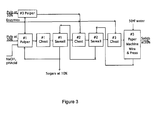
- a process which proposes that a stepwise enzymatic break down of cellulose fibers from a pulping operation is performed using the equipment and vessels contained within typical pulp and paper manufacturing facilities.
- the preferred cellulose fiber feedstock to an enzymatic hydrolysis process is highly delignified pulp from an acid or alkaline pulping process, or bleaching process.
- Cellulase enzymes are used to break down the cellulose fibers to glucose and hemicellulases are used to free hemicelluloses side chains. These enzymes are added stepwise to the pulp suspension.
- pulpers High efficiency mixing vessels termed pulpers are used to disperse and adsorb the enzymes on cellulose fibers at a pulp consistency of 3-12% solids. After short adsorption time, the pulp suspension is transferred to agitated vessels which are used for retention storage during the hydrolysis. At specified times, additional enzymes are added in one or more steps to boost the hydrolysis to completion. Hydrolyzed glucose may be filtered and the remaining pulp suspension may be concentrated or diluted in between the enzyme additions.
- Also disclosed in the second embodiment is a process using stepwise addition of enzymes and pulp for the enzymatic hydrolysis of cellulose fiber.
- the process further includes pulp being added stepwise to maintain optimum consistency for mixing and enzymatic activity.
- the process further includes enzyme being added stepwise to maintain hydrolysis activity during the extended period.
- the process further includes dissolved sugars being removed to reduce enzymatic inhibition.
- the process further includes utilizing existing pulp and paper mill equipment in enzymatic hydrolysis of cellulose fibers.
- the process further includes pulp and paper machine pulpers being used to promote enzymes contacting cellulose fibers.
- the process further includes pulp and paper machine stock chests being used for retention storage to provide enzyme reaction time.
- the process further includes pulp and paper machine saveall filters being used for dewatering of a pulp suspension.
- the process further includes pulp and paper machine fourdrinier sections being used for dewatering of unhydrolyzed solids.
- the first step of the process is extraction.
- Cellulosic biomass is charged into a batch or continuous extraction reactor vessel and steam is added to heat the biomass at a pressure of 5 - 30 atmospheres for a duration of 2 minutes or more to obtain 10-30% yield of dissolved solids comprised mostly of hemicelluloses and lignin.
- This extraction process is termed steam explosion.
- the reaction is catalyzed by formation of acetic acid from the cellulosic biomass.
- Additional catalyst such as acetic acid or a mineral acid or sulfur dioxide may be used to increase the dissolved solids fraction or to speed the extraction process.
- the second step of the process is washing. Following extraction by steam explosion, the heated biomass is washed with water, and/or recirculated wash filtrate, and drained to recover the majority of the dissolved cellulosic biomass components.
- the wash filtrate termed extract, contains dissolved xylan, glucan, mannan, arbinan, galactan and acetyl groups in oligomeric form of hemicelluloses as well as lignin.
- the extract has a low organic solids concentration of 1% -12% by weight. The majority of the water in the extract must be removed before an economic treatment of hemicelluloses is possible.
- the third step of the process is dewatering of the biomass.
- the remaining solid biomass is dewatered to approximately the same moisture content that it was when fed to the extraction reactor, typically 40% - 60% solids, by pressing it to approximately 30 atmospheres or more mechanical pressure through a commercial plug screw feeder, other pressing device, or other thermal/mechanical dewatering device.
- the host facility therefore experiences little or no change in the moisture content of its biomass feedstock available to be fed to the existing equipment for thermal conversion to energy.
- the fourth step of the process is low solids evaporation.
- Evaporation is used to concentrate the low solids extract from the second step, in-reactor washing, from 1 - 5% solids to around 25% or more. This concentration is preferably performed using a mechanical vapor recompression evaporator which is suitable because the boiling point rise of the extract is small. Evaporated vapor is compressed, and condensed in the hot side of the evaporator to produce an almost equivalent amount of evaporation. If the extract feed concentration is over 5% solids, this step may be omitted. When the pH of this step is kept below the acetic acid dissociation point of pH 4.8, acetic acid in the extract, a fermentation inhibitor, is volatilized to the vapor fraction.
- the fifth step of the process is hydrolysis.
- Concentrated extract from the low solids evaporation is hydrolyzed using sulfuric acid, heat or enzymes. Oligomer hemicelluloses in the concentrated extract are converted into monomer sugars and acetyl groups are released.
- the hydrolyzate resulting from the hydrolysis is controlled to pH 3 - 4.8 to maintain acetic acid in unassociated form.
- the sixth step of the process is post hydrolysis evaporation. Hydrolyzate from hydrolysis is concentrated up to 50% solids by evaporation, preferably using a mechanical vapor recompression evaporator. More of the remaining acetic acid and water is evaporated in this step. Under the appropriate economic criteria, this step could be done with steam evaporation.
- the seventh step of the process is fermentation of sugars.
- Sugars in the concentrated hydrolyzate are fermented in a continuous or batch fermentation tanks with one or more micro-organisms capable of converting five and six carbon sugars into alcohol and carbon dioxide.
- the majority of acetic acid, which may inhibit fermentation, was removed in the previous evaporation step. Some additional acetic acid may be formed during fermentation.
- Nutrients and pH adjustment chemicals as well as make-up fermentative organism are added in this fermentation step as and if needed.
- Carbon dioxide is removed from the fermenters and scrubbed with cool water for alcohol recovery. This purified gas can be further compressed and sold as industrial grade carbon dioxide.
- the fermentation broth, commonly termed "beer" from the fermentation step is sent to a distillation column.
- the eighth step of the process is distillation of ethanol.
- the beer from the fermentation step is sent to a beer distillation column to separate the alcohol from the solids and residual sugars.
- Alcohol leaving as the overhead from the distillation column is recovered at approximately 30-50 mass-% strength.
- the final concentration of the alcohol product is performed in a rectifying column and drying system, preferably a molecular sieve, to obtain over 99-mass % alcohol.
- the ninth step of the process is the solids concentration from the stillage.
- the solids, commonly termed “stillage”, from the beer distillation column bottom can be further evaporated in an optional concentrator, preferably a mechanical vapor recompression concentrator to achieve zero-liquid discharge operation..
- the tenth step of the process is combustion of biomass.
- the dewatered biomass from the third step and the concentrated stillage from the ninth step are fed to the host facility existing equipment for thermal conversion to energy
- the eleventh step of the process is the integration of the biorefinery with the existing host facility.
- the physical plant combining the process steps as a whole or in part to produce alcohol and other chemical bioproducts is termed "biorefinery”.
- An energy integration analysis of the proposed biorefinery process indicates that utilizing mechanical vapor recompression evaporators achieves the minimum need for cooling water.
- the waste heat generated in the process is absorbed into the evaporator and column condensate streams, which can be utilized in the host facility to minimize overall steam and water consumption, and is preferably used for steam generator feedwater heating.
- the first step of the process is the pulp mixing at 3-10% consistency, using a low dosage of enzymes.
- the cellulose fiber feedstock termed pulp
- the cellulose fiber feedstock is prepared by chemical pulping of wood chips in acidic or alkaline conditions and may be partially bleached to have residual lignin content below 3% by weight of the feedstock.
- the pulp at a consistency of 3% - 10% solids is mixed with an enzyme formulation which is preferably at less than 3% by weight in proportion to cellulose and hemicellulose content of the delignified pulp.
- Mechanical mixing is performed to promote enzymes contacting the cellulose fibers.
- Mixing tanks in existing pulp and paper mills include broke and stock pulpers these are among the existing equipment and vessels that can be redeployed for this purpose.
- the second step of the process is the retention of pulp suspension, while maintaining moderate mixing. Following step 1, retention time must be provided to achieve the desired enzyme reaction on the pulp stock to produce a partially hydrolyzed pulp suspension.
- Retention tanks in existing pulp and paper mills include high density storage, low density storage, machine chests, bleach towers, and broke surge tanks; these are the among the existing equipment and vessels that can be redeployed for this purpose.
- the third step of the process is an addition of a small amount of enzymes.
- the partially hydrolyzed pulp suspension from the second step may be dewatered back to 3-10% consistency, without significant loss of adsorbed enzymes. Dissolved sugars in the filtrate are removed to reduce enzymatic inhibition. Filtrate from subsequent steps may also be used to wash the pulp in the dewatering process.
- a small amount of enzyme formulation used in the first step is then added to the dewatered pulp suspension to maintain hydrolysis activity during the extended period. New pulp from the first step is also added as needed to maintain optimum consistency for mixing and enzymatic activity.
- Dewatering devices in existing pulp and paper mills include side hill screens, stock washers, savealls, fourdrinier wire sections and press sections of pulp and paper machines; these are the among the existing equipment and vessels that can be redeployed for this purpose.
- the second and third steps may be repeated one or more times to achieve complete hydrolysis.
- the final step of the process is to remove unhydrolyzed solids, consisting mainly lignin In the pulp feedstock .
- the lignin is filtered from the sugar solution.
- the filter cake may be washed and pressed to minimize the sugar content.
- the lignin filtering devices in existing pulp and paper mills include stock washers, screw presses, fourdrinier wire sections and press sections of pulp and paper machines; these are among the existing equipment and vessels that can be redeployed for this purpose.
- the suspension was dewatered to 10% consistency.
- the hydrolysis proceeded to approximately 32% weight loss in 24 hours.
- a fresh buffer and 25 mg of enzyme formulation was added to 5% consistency.
- the hydrolysis was allowed to proceed another 12 hours, at which point the consistency was increased to 10% for 24 hours.
- the hydrolysis proceeded to approximately 47% weight loss, at which point fresh buffer and 25 mg of enzyme formulation was added to 5% consistency.
- the hydrolysis was allowed to proceed another 12 hours, at which point the consistency was increased to 10% for 24 hours.
Landscapes
- Chemical & Material Sciences (AREA)
- Life Sciences & Earth Sciences (AREA)
- Organic Chemistry (AREA)
- Engineering & Computer Science (AREA)
- Health & Medical Sciences (AREA)
- Biochemistry (AREA)
- General Health & Medical Sciences (AREA)
- Chemical Kinetics & Catalysis (AREA)
- Zoology (AREA)
- Wood Science & Technology (AREA)
- Medicinal Chemistry (AREA)
- Polymers & Plastics (AREA)
- Materials Engineering (AREA)
- General Engineering & Computer Science (AREA)
- Microbiology (AREA)
- Genetics & Genomics (AREA)
- Bioinformatics & Cheminformatics (AREA)
- General Chemical & Material Sciences (AREA)
- Biotechnology (AREA)
- Molecular Biology (AREA)
- Sustainable Development (AREA)
- Emergency Medicine (AREA)
- Mechanical Engineering (AREA)
- Preparation Of Compounds By Using Micro-Organisms (AREA)
- Polysaccharides And Polysaccharide Derivatives (AREA)
Applications Claiming Priority (3)
| Application Number | Priority Date | Filing Date | Title |
|---|---|---|---|
| US21976409P | 2009-06-23 | 2009-06-23 | |
| US21975909P | 2009-06-23 | 2009-06-23 | |
| EP10792572A EP2446063A4 (fr) | 2009-06-23 | 2010-06-22 | Procédé de production d'alcool et d'autres bioproduits à partir de biomasse, utilisé dans la conversion thermique en énergie et procédé d'hydrolyse enzymatique par étapes pour fibre cellulosique |
Related Parent Applications (1)
| Application Number | Title | Priority Date | Filing Date |
|---|---|---|---|
| EP10792572.9 Division | 2010-06-22 |
Publications (1)
| Publication Number | Publication Date |
|---|---|
| EP2679690A1 true EP2679690A1 (fr) | 2014-01-01 |
Family
ID=43386851
Family Applications (2)
| Application Number | Title | Priority Date | Filing Date |
|---|---|---|---|
| EP13173314.9A Withdrawn EP2679690A1 (fr) | 2009-06-23 | 2010-06-22 | Procédé de production d'alcool et d'autres bioproduits à partir de biomasse, utilisé dans la conversion thermique en énergie et procédé d'hydrolyse enzymatique par étapes pour fibre cellulosique |
| EP10792572A Withdrawn EP2446063A4 (fr) | 2009-06-23 | 2010-06-22 | Procédé de production d'alcool et d'autres bioproduits à partir de biomasse, utilisé dans la conversion thermique en énergie et procédé d'hydrolyse enzymatique par étapes pour fibre cellulosique |
Family Applications After (1)
| Application Number | Title | Priority Date | Filing Date |
|---|---|---|---|
| EP10792572A Withdrawn EP2446063A4 (fr) | 2009-06-23 | 2010-06-22 | Procédé de production d'alcool et d'autres bioproduits à partir de biomasse, utilisé dans la conversion thermique en énergie et procédé d'hydrolyse enzymatique par étapes pour fibre cellulosique |
Country Status (3)
| Country | Link |
|---|---|
| US (4) | US8518672B2 (fr) |
| EP (2) | EP2679690A1 (fr) |
| WO (1) | WO2010151536A1 (fr) |
Cited By (1)
| Publication number | Priority date | Publication date | Assignee | Title |
|---|---|---|---|---|
| CN107287261A (zh) * | 2016-03-30 | 2017-10-24 | 郑州大学 | 一种淀粉质原料液化糖化余热回收工艺 |
Families Citing this family (22)
| Publication number | Priority date | Publication date | Assignee | Title |
|---|---|---|---|---|
| EP2679690A1 (fr) * | 2009-06-23 | 2014-01-01 | American Process, Inc. | Procédé de production d'alcool et d'autres bioproduits à partir de biomasse, utilisé dans la conversion thermique en énergie et procédé d'hydrolyse enzymatique par étapes pour fibre cellulosique |
| CA2775656C (fr) | 2009-09-29 | 2018-03-27 | Nova Pangaea Technologies Limited | Procede et systeme de fractionnement de biomasse lignocellulosique |
| WO2011116317A1 (fr) | 2010-03-19 | 2011-09-22 | Poet Research, Inc. | Système pour le traitement de biomasse |
| BR112013023683A2 (pt) | 2011-03-17 | 2016-12-13 | Univ Aalto Foundation | processo para condicionamento de licor residual de so2-etanol-água (sew) derivado de madeira para fermentação com bactérias clostridia e processo para produção de butanol a partir de material de madeira |
| KR102053293B1 (ko) | 2012-03-12 | 2019-12-06 | 조지아-퍼시픽 엘엘씨 | 목질계 바이오매스로부터 레불린산을 제조하는 방법 |
| US8685685B2 (en) | 2012-03-19 | 2014-04-01 | Api Intellectual Property Holdings, Llc | Processes for producing fermentable sugars and low-ash biomass for combustion or pellets |
| US8906657B2 (en) * | 2012-03-19 | 2014-12-09 | Api Intellectual Property Holdings, Llc | Processes for producing fermentable sugars and energy-dense biomass for combustion |
| US20140024093A1 (en) * | 2012-03-29 | 2014-01-23 | Shell Oil Company | Process for the production of digested biomass useful for chemicals and biofuels |
| US20140065682A1 (en) * | 2012-09-04 | 2014-03-06 | Api Intellectual Property Holdings, Llc | Processes and apparatus for producing fermentable sugars, cellulose solids, and lignin from lignocellulosic biomass |
| US20140170713A1 (en) * | 2012-12-19 | 2014-06-19 | Api Intellectual Property Holdings, Llc | Biomass fractionation processes, apparatus, and products produced therefrom |
| US9487840B2 (en) * | 2013-09-16 | 2016-11-08 | Api Intellectual Property Holdings, Llc | Processes and apparatus for refining sugarcane to produce sugars, biofuels, and/or biochemicals |
| US20150232703A1 (en) * | 2014-02-18 | 2015-08-20 | Api Intellectual Property Holdings, Llc | Processes for producing lignin-coated hydrophobic cellulose, and compositions and products produced therefrom |
| WO2015160887A1 (fr) * | 2014-04-17 | 2015-10-22 | Shell Oil Company | Procédés de production de produits de fermentation |
| GB2528832A (en) | 2014-06-06 | 2016-02-10 | Glommen Skog Sa | Method |
| EP2982703A1 (fr) * | 2014-08-06 | 2016-02-10 | Clariant International Ltd. | Procédé respectueux de l'environnement et énergétiquement efficace pour la production de composés chimiques cibles à partir d'un matériau cellulosique |
| WO2016201031A1 (fr) | 2015-06-09 | 2016-12-15 | Api Intellectual Property Holdings, Llc | Traitement mécano-hydrothermique d'une biomasse lignocellulosique pour la production de produits de fermentation |
| US11236371B2 (en) * | 2015-07-08 | 2022-02-01 | GranBio Intellectual Property Holdings, LLC | Processes for fermentation of lignocellulosic glucose to aliphatic alcohols or acids |
| NO20170031A1 (en) * | 2017-01-08 | 2018-07-09 | Abadjom Consulting As | Electron beam and steam explosion pretreatments of biomass for production in a low energy biorefinery |
| WO2019067526A1 (fr) | 2017-09-26 | 2019-04-04 | Poet Research, Inc. | Systèmes et procédés de traitement d'une biomasse lignocellulosique |
| US11118017B2 (en) | 2019-11-13 | 2021-09-14 | American Process International LLC | Process for the production of bioproducts from lignocellulosic material |
| US11306113B2 (en) | 2019-11-13 | 2022-04-19 | American Process International LLC | Process for the production of cellulose, lignocellulosic sugars, lignosulfonate, and ethanol |
| CN113310052A (zh) * | 2021-05-24 | 2021-08-27 | 江苏秋林特能装备股份有限公司 | 有热值的固体废弃物综合制浆制备系统 |
Citations (6)
| Publication number | Priority date | Publication date | Assignee | Title |
|---|---|---|---|---|
| WO2003025280A1 (fr) * | 2001-09-14 | 2003-03-27 | Rhodia Acetow Gmbh | Procede pour separer des hemicelluloses d'une biomasse renfermant des hemicelluloses |
| US20050136520A1 (en) * | 2003-10-03 | 2005-06-23 | Kinley Michael T. | Biomass conversion to alcohol using ultrasonic energy |
| US20070051481A1 (en) * | 2005-05-24 | 2007-03-08 | Zheng Tan | Modified kraft fibers |
| US20070079944A1 (en) | 2004-04-20 | 2007-04-12 | The Research Foundation Of The State University Of New York | Product and processes from an integrated forest biorefinery |
| WO2007146245A2 (fr) * | 2006-06-12 | 2007-12-21 | American Process, Inc. | Procédé de traitement étape par étape d'un matériau lignocellulosique pour produire des composés chimiques de base réactifs |
| WO2009031164A1 (fr) * | 2007-09-07 | 2009-03-12 | Council Of Scientific & Industrial Research | PROCÉDÉ PERMETTANT DE FRACTIONNER LA BAGASSE DE CANNE À SUCRE EN UNE PÂTE CELLULOSIQUE, EN XYLANE ET EN LIGNINE À HAUTE TENEUR EN CELLULOSE α |
Family Cites Families (27)
| Publication number | Priority date | Publication date | Assignee | Title |
|---|---|---|---|---|
| US3972775A (en) * | 1974-06-28 | 1976-08-03 | The United States Of America As Represented By The United States Energy Research And Development Administration | Conversion of cellulosic materials to sugar |
| US4237226A (en) * | 1979-02-23 | 1980-12-02 | Trustees Of Dartmouth College | Process for pretreating cellulosic substrates and for producing sugar therefrom |
| US4556430A (en) * | 1982-09-20 | 1985-12-03 | Trustees Of Dartmouth College | Process for hydrolysis of biomass |
| US4699124A (en) * | 1985-06-28 | 1987-10-13 | Power Alcohol, Inc. | Process for converting cellulose to glucose and other saccharides |
| US4911788A (en) * | 1988-06-23 | 1990-03-27 | The Celotex Corporation | Method of wet-forming mineral fiberboard with formation of fiber nodules |
| US7109005B2 (en) * | 1990-01-15 | 2006-09-19 | Danisco Sweeteners Oy | Process for the simultaneous production of xylitol and ethanol |
| US5693296A (en) * | 1992-08-06 | 1997-12-02 | The Texas A&M University System | Calcium hydroxide pretreatment of biomass |
| ATE201463T1 (de) | 1994-07-26 | 2001-06-15 | Novozymes As | Verfahren zur herstellung eines aus lignocellulose hergestellten produktes, und nach diesem verfahren herstellbares produkt |
| US5635071A (en) | 1995-01-20 | 1997-06-03 | Zenon Airport Enviromental, Inc. | Recovery of carboxylic acids from chemical plant effluents |
| US6043392A (en) * | 1997-06-30 | 2000-03-28 | Texas A&M University System | Method for conversion of biomass to chemicals and fuels |
| US20030062138A1 (en) * | 2001-05-09 | 2003-04-03 | Hache Maurice Joseph Albert | Method for brightening mechanical pulps |
| US7727746B2 (en) * | 2004-12-17 | 2010-06-01 | Iogen Energy Corporation | Upflow reactor for enzymatic hydrolysis of cellulose |
| CA2606190A1 (fr) | 2005-04-27 | 2006-11-02 | Hw Process Technologies, Inc. | Traitement d'eaux de forage |
| US7771565B2 (en) * | 2006-02-21 | 2010-08-10 | Packaging Corporation Of America | Method of pre-treating woodchips prior to mechanical pulping |
| US7666637B2 (en) * | 2006-09-05 | 2010-02-23 | Xuan Nghinh Nguyen | Integrated process for separation of lignocellulosic components to fermentable sugars for production of ethanol and chemicals |
| EA201600301A1 (ru) * | 2006-10-26 | 2016-12-30 | Ксилеко, Инк. | Переработка биомассы |
| US7842161B2 (en) | 2006-12-18 | 2010-11-30 | The University Of Maine System Board Of Trustees | Pre-extraction and solvent pulping of lignocellulosic material |
| US8247200B2 (en) | 2007-01-25 | 2012-08-21 | Iogen Energy Corporation | Method of obtaining inorganic salt and acetate salt from cellulosic biomass |
| US20080251374A1 (en) * | 2007-04-16 | 2008-10-16 | Team Ten, Llc | System and method for producing ethanol from paper mill sludge |
| US20090020481A1 (en) | 2007-07-20 | 2009-01-22 | Bailie Robert E | Method and system for treating feedwater |
| WO2009117818A1 (fr) * | 2008-03-25 | 2009-10-01 | University Of New Brunswick | Procédé de blanchiment au dioxyde de chlore de pâtes chimiques utilisant de l'hydroxyde de magnésium ou de l'oxyde de magnésium |
| US8211680B2 (en) * | 2008-05-29 | 2012-07-03 | Api Intellectual Property Holdings, Llc | Process for obtaining biochemicals in a zero-liquid discharge plant |
| US8030039B1 (en) * | 2008-10-14 | 2011-10-04 | American Process, Inc. | Method for the production of fermentable sugars and cellulose from lignocellulosic material |
| US20120036768A1 (en) | 2008-11-21 | 2012-02-16 | Richard Phillips | High consistency enzymatic hydrolysis for the production of ethanol |
| US20100313882A1 (en) * | 2009-04-23 | 2010-12-16 | Greenfield Ethanol Inc. | Fractionation of biomass for cellulosic ethanol and chemical production |
| EP2679690A1 (fr) * | 2009-06-23 | 2014-01-01 | American Process, Inc. | Procédé de production d'alcool et d'autres bioproduits à partir de biomasse, utilisé dans la conversion thermique en énergie et procédé d'hydrolyse enzymatique par étapes pour fibre cellulosique |
| US8685685B2 (en) * | 2012-03-19 | 2014-04-01 | Api Intellectual Property Holdings, Llc | Processes for producing fermentable sugars and low-ash biomass for combustion or pellets |
-
2010
- 2010-06-22 EP EP13173314.9A patent/EP2679690A1/fr not_active Withdrawn
- 2010-06-22 WO PCT/US2010/039481 patent/WO2010151536A1/fr not_active Ceased
- 2010-06-22 EP EP10792572A patent/EP2446063A4/fr not_active Withdrawn
-
2011
- 2011-02-13 US US13/026,280 patent/US8518672B2/en active Active - Reinstated
-
2012
- 2012-09-25 US US13/626,220 patent/US9139857B2/en active Active
-
2013
- 2013-07-25 US US13/950,289 patent/US9453249B2/en active Active
-
2015
- 2015-09-14 US US14/853,431 patent/US20160002689A1/en not_active Abandoned
Patent Citations (6)
| Publication number | Priority date | Publication date | Assignee | Title |
|---|---|---|---|---|
| WO2003025280A1 (fr) * | 2001-09-14 | 2003-03-27 | Rhodia Acetow Gmbh | Procede pour separer des hemicelluloses d'une biomasse renfermant des hemicelluloses |
| US20050136520A1 (en) * | 2003-10-03 | 2005-06-23 | Kinley Michael T. | Biomass conversion to alcohol using ultrasonic energy |
| US20070079944A1 (en) | 2004-04-20 | 2007-04-12 | The Research Foundation Of The State University Of New York | Product and processes from an integrated forest biorefinery |
| US20070051481A1 (en) * | 2005-05-24 | 2007-03-08 | Zheng Tan | Modified kraft fibers |
| WO2007146245A2 (fr) * | 2006-06-12 | 2007-12-21 | American Process, Inc. | Procédé de traitement étape par étape d'un matériau lignocellulosique pour produire des composés chimiques de base réactifs |
| WO2009031164A1 (fr) * | 2007-09-07 | 2009-03-12 | Council Of Scientific & Industrial Research | PROCÉDÉ PERMETTANT DE FRACTIONNER LA BAGASSE DE CANNE À SUCRE EN UNE PÂTE CELLULOSIQUE, EN XYLANE ET EN LIGNINE À HAUTE TENEUR EN CELLULOSE α |
Non-Patent Citations (2)
| Title |
|---|
| EVA PALMQVIST ET AL: "Simultaneous detoxification and enzyme production of hemicellulose hydrolysates obtained after steam pretreatment", ENZYME AND MICROBIAL TECHNOLOGY, STONEHAM, MA, US, vol. 20, 1 January 1997 (1997-01-01), pages 286 - 293, XP007904791, ISSN: 0141-0229, DOI: 10.1016/S0141-0229(96)00130-5 * |
| SUN X F ET AL: "Characteristics of degraded hemicellulosic polymers obtained from steam exploded wheat straw", CARBOHYDRATE POLYMERS, APPLIED SCIENCE PUBLISHERS, LTD. BARKING, GB, vol. 60, no. 1, 7 April 2005 (2005-04-07), pages 15 - 26, XP027721524, ISSN: 0144-8617, [retrieved on 20050407] * |
Cited By (1)
| Publication number | Priority date | Publication date | Assignee | Title |
|---|---|---|---|---|
| CN107287261A (zh) * | 2016-03-30 | 2017-10-24 | 郑州大学 | 一种淀粉质原料液化糖化余热回收工艺 |
Also Published As
| Publication number | Publication date |
|---|---|
| US20120009632A1 (en) | 2012-01-12 |
| US20130309728A1 (en) | 2013-11-21 |
| US20160002689A1 (en) | 2016-01-07 |
| EP2446063A4 (fr) | 2012-12-26 |
| BRPI1012256A2 (pt) | 2019-04-16 |
| EP2446063A1 (fr) | 2012-05-02 |
| US8518672B2 (en) | 2013-08-27 |
| US9453249B2 (en) | 2016-09-27 |
| US9139857B2 (en) | 2015-09-22 |
| US20130266990A1 (en) | 2013-10-10 |
| WO2010151536A1 (fr) | 2010-12-29 |
Similar Documents
| Publication | Publication Date | Title |
|---|---|---|
| US9453249B2 (en) | Process for producing hemicellulose sugars and energy from biomass | |
| CN102027021B (zh) | 使用超纤维素溶剂和高挥发性溶剂预处理木质纤维素的方法和装置 | |
| Cardona et al. | Production of bioethanol from sugarcane bagasse: status and perspectives | |
| US8889384B2 (en) | Process for the production of alcohols from biomass | |
| US8980595B2 (en) | In situ production of furfural in a controlled amount in an alcohol production unit from a lignocellulosic biomass | |
| US9994873B2 (en) | Process for the production of alcohols and/or solvents from lignocellulosic biomass with acid recycle of solid residues | |
| WO2014106222A2 (fr) | Procédés de fractionnement d'une biomasse faisant appel au dioxyde de soufre | |
| CA2994668A1 (fr) | Traitement mecano-hydrothermique d'une biomasse lignocellulosique pour la production de produits de fermentation | |
| US8518213B2 (en) | Process for producing alcohol and other bioproducts from biomass extracts in a kraft pulp mill | |
| US12606849B2 (en) | Converting lignocellulosic feedstock to fuel | |
| EP3822407B1 (fr) | Procédé de production de bioproduits à partir d'un matériau lignocellulosique | |
| BRPI1012256B1 (pt) | Processo para produzir açucares de hemicelulose e energia a partir de biomassa | |
| HK1198447B (en) | Method and apparatus for lignocellulose pretreatment using a super-cellulose-solvent and highly volatile solvents |
Legal Events
| Date | Code | Title | Description |
|---|---|---|---|
| PUAI | Public reference made under article 153(3) epc to a published international application that has entered the european phase |
Free format text: ORIGINAL CODE: 0009012 |
|
| AC | Divisional application: reference to earlier application |
Ref document number: 2446063 Country of ref document: EP Kind code of ref document: P |
|
| AK | Designated contracting states |
Kind code of ref document: A1 Designated state(s): AL AT BE BG CH CY CZ DE DK EE ES FI FR GB GR HR HU IE IS IT LI LT LU LV MC MK MT NL NO PL PT RO SE SI SK SM TR |
|
| RAP1 | Party data changed (applicant data changed or rights of an application transferred) |
Owner name: API INTELLECTUAL PROPERTY HOLDINGS, LLC. |
|
| 17P | Request for examination filed |
Effective date: 20140619 |
|
| RBV | Designated contracting states (corrected) |
Designated state(s): AL AT BE BG CH CY CZ DE DK EE ES FI FR GB GR HR HU IE IS IT LI LT LU LV MC MK MT NL NO PL PT RO SE SI SK SM TR |
|
| 17Q | First examination report despatched |
Effective date: 20160708 |
|
| STAA | Information on the status of an ep patent application or granted ep patent |
Free format text: STATUS: THE APPLICATION IS DEEMED TO BE WITHDRAWN |
|
| 18D | Application deemed to be withdrawn |
Effective date: 20170119 |