EP2679698A1 - Kaltgearbeiteter werkzeugstahl mit hervorragender bearbeitbarkeit - Google Patents
Kaltgearbeiteter werkzeugstahl mit hervorragender bearbeitbarkeit Download PDFInfo
- Publication number
- EP2679698A1 EP2679698A1 EP12749932.5A EP12749932A EP2679698A1 EP 2679698 A1 EP2679698 A1 EP 2679698A1 EP 12749932 A EP12749932 A EP 12749932A EP 2679698 A1 EP2679698 A1 EP 2679698A1
- Authority
- EP
- European Patent Office
- Prior art keywords
- cold
- work tool
- machining
- tool steel
- steel
- Prior art date
- Legal status (The legal status is an assumption and is not a legal conclusion. Google has not performed a legal analysis and makes no representation as to the accuracy of the status listed.)
- Granted
Links
Images






Classifications
-
- C—CHEMISTRY; METALLURGY
- C22—METALLURGY; FERROUS OR NON-FERROUS ALLOYS; TREATMENT OF ALLOYS OR NON-FERROUS METALS
- C22C—ALLOYS
- C22C38/00—Ferrous alloys, e.g. steel alloys
-
- C—CHEMISTRY; METALLURGY
- C21—METALLURGY OF IRON
- C21D—MODIFYING THE PHYSICAL STRUCTURE OF FERROUS METALS; GENERAL DEVICES FOR HEAT TREATMENT OF FERROUS OR NON-FERROUS METALS OR ALLOYS; MAKING METAL MALLEABLE, e.g. BY DECARBURISATION OR TEMPERING
- C21D1/00—General methods or devices for heat treatment, e.g. annealing, hardening, quenching or tempering
- C21D1/18—Hardening; Quenching with or without subsequent tempering
-
- C—CHEMISTRY; METALLURGY
- C21—METALLURGY OF IRON
- C21D—MODIFYING THE PHYSICAL STRUCTURE OF FERROUS METALS; GENERAL DEVICES FOR HEAT TREATMENT OF FERROUS OR NON-FERROUS METALS OR ALLOYS; MAKING METAL MALLEABLE, e.g. BY DECARBURISATION OR TEMPERING
- C21D6/00—Heat treatment of ferrous alloys
- C21D6/02—Hardening by precipitation
-
- C—CHEMISTRY; METALLURGY
- C22—METALLURGY; FERROUS OR NON-FERROUS ALLOYS; TREATMENT OF ALLOYS OR NON-FERROUS METALS
- C22C—ALLOYS
- C22C38/00—Ferrous alloys, e.g. steel alloys
- C22C38/02—Ferrous alloys, e.g. steel alloys containing silicon
-
- C—CHEMISTRY; METALLURGY
- C22—METALLURGY; FERROUS OR NON-FERROUS ALLOYS; TREATMENT OF ALLOYS OR NON-FERROUS METALS
- C22C—ALLOYS
- C22C38/00—Ferrous alloys, e.g. steel alloys
- C22C38/04—Ferrous alloys, e.g. steel alloys containing manganese
-
- C—CHEMISTRY; METALLURGY
- C22—METALLURGY; FERROUS OR NON-FERROUS ALLOYS; TREATMENT OF ALLOYS OR NON-FERROUS METALS
- C22C—ALLOYS
- C22C38/00—Ferrous alloys, e.g. steel alloys
- C22C38/06—Ferrous alloys, e.g. steel alloys containing aluminium
-
- C—CHEMISTRY; METALLURGY
- C22—METALLURGY; FERROUS OR NON-FERROUS ALLOYS; TREATMENT OF ALLOYS OR NON-FERROUS METALS
- C22C—ALLOYS
- C22C38/00—Ferrous alloys, e.g. steel alloys
- C22C38/18—Ferrous alloys, e.g. steel alloys containing chromium
- C22C38/20—Ferrous alloys, e.g. steel alloys containing chromium with copper
-
- C—CHEMISTRY; METALLURGY
- C22—METALLURGY; FERROUS OR NON-FERROUS ALLOYS; TREATMENT OF ALLOYS OR NON-FERROUS METALS
- C22C—ALLOYS
- C22C38/00—Ferrous alloys, e.g. steel alloys
- C22C38/18—Ferrous alloys, e.g. steel alloys containing chromium
- C22C38/22—Ferrous alloys, e.g. steel alloys containing chromium with molybdenum or tungsten
-
- C—CHEMISTRY; METALLURGY
- C22—METALLURGY; FERROUS OR NON-FERROUS ALLOYS; TREATMENT OF ALLOYS OR NON-FERROUS METALS
- C22C—ALLOYS
- C22C38/00—Ferrous alloys, e.g. steel alloys
- C22C38/18—Ferrous alloys, e.g. steel alloys containing chromium
- C22C38/24—Ferrous alloys, e.g. steel alloys containing chromium with vanadium
-
- C—CHEMISTRY; METALLURGY
- C22—METALLURGY; FERROUS OR NON-FERROUS ALLOYS; TREATMENT OF ALLOYS OR NON-FERROUS METALS
- C22C—ALLOYS
- C22C38/00—Ferrous alloys, e.g. steel alloys
- C22C38/18—Ferrous alloys, e.g. steel alloys containing chromium
- C22C38/26—Ferrous alloys, e.g. steel alloys containing chromium with niobium or tantalum
-
- C—CHEMISTRY; METALLURGY
- C22—METALLURGY; FERROUS OR NON-FERROUS ALLOYS; TREATMENT OF ALLOYS OR NON-FERROUS METALS
- C22C—ALLOYS
- C22C38/00—Ferrous alloys, e.g. steel alloys
- C22C38/18—Ferrous alloys, e.g. steel alloys containing chromium
- C22C38/40—Ferrous alloys, e.g. steel alloys containing chromium with nickel
- C22C38/42—Ferrous alloys, e.g. steel alloys containing chromium with nickel with copper
-
- C—CHEMISTRY; METALLURGY
- C22—METALLURGY; FERROUS OR NON-FERROUS ALLOYS; TREATMENT OF ALLOYS OR NON-FERROUS METALS
- C22C—ALLOYS
- C22C38/00—Ferrous alloys, e.g. steel alloys
- C22C38/18—Ferrous alloys, e.g. steel alloys containing chromium
- C22C38/40—Ferrous alloys, e.g. steel alloys containing chromium with nickel
- C22C38/44—Ferrous alloys, e.g. steel alloys containing chromium with nickel with molybdenum or tungsten
-
- C—CHEMISTRY; METALLURGY
- C22—METALLURGY; FERROUS OR NON-FERROUS ALLOYS; TREATMENT OF ALLOYS OR NON-FERROUS METALS
- C22C—ALLOYS
- C22C38/00—Ferrous alloys, e.g. steel alloys
- C22C38/18—Ferrous alloys, e.g. steel alloys containing chromium
- C22C38/40—Ferrous alloys, e.g. steel alloys containing chromium with nickel
- C22C38/46—Ferrous alloys, e.g. steel alloys containing chromium with nickel with vanadium
-
- C—CHEMISTRY; METALLURGY
- C22—METALLURGY; FERROUS OR NON-FERROUS ALLOYS; TREATMENT OF ALLOYS OR NON-FERROUS METALS
- C22C—ALLOYS
- C22C38/00—Ferrous alloys, e.g. steel alloys
- C22C38/60—Ferrous alloys, e.g. steel alloys containing lead, selenium, tellurium, or antimony, or more than 0.04% by weight of sulfur
-
- C—CHEMISTRY; METALLURGY
- C21—METALLURGY OF IRON
- C21D—MODIFYING THE PHYSICAL STRUCTURE OF FERROUS METALS; GENERAL DEVICES FOR HEAT TREATMENT OF FERROUS OR NON-FERROUS METALS OR ALLOYS; MAKING METAL MALLEABLE, e.g. BY DECARBURISATION OR TEMPERING
- C21D2211/00—Microstructure comprising significant phases
- C21D2211/004—Dispersions; Precipitations
Definitions
- the present invention relates to a cold-work tool steel suitable for a tool material, in particular, a cold-work die material for forming parts of home electric appliances, mobile phones or automobiles.
- a steel material In a field of cold-work tools for use in press forming such as bending, squeezing or punching of a plate material at a room temperature, a steel material has been proposed that can obtain a hardness of not lower than 60 HRC by quenching and tempering (hereinafter, quenching and tempering are referred to as "hardening process") in order to improve wear resistance (see Patent Literatures 1 to 3). Since it is difficult to machine the steel material having such a high hardness into a tool shape after the hardening process, the steel material is usually roughly worked in an annealed state where the hardness is low, and then is subjected to the hardening process to a hardness of not lower than 60 HRC for use.
- the tool since the tool is deformed due to the heat treatment of the hardening process, the tool is again subjected to finish machining to correct the deformed portion after the hardening process, and finished in a final tool shape.
- the main reason for the heat treatment deformation of the tool due to the hardening process is because the steel material transforms from a ferritic structure in the annealed state to a martensitic structure and thus volume expansion generates.
- a cold-work tool steel has been proposed for suppressing tool wear caused by a friction between a cutting tool and a steel material at a time of machining.
- the steel has self-lubricating properties by adding an element forming an oxide having a melting point of 1200°C or lower ((FeO) 2 ⁇ SiO2, Fe 2 SiO 4 or (FeSi)Cr 2 O 2 ) to form the oxide on a surface of a die by heat generated at the time of machining (Patent Literature 5).
- the cold-work tool steel disclosed in Patent Literature 4 is a superior pre-hardened steel simultaneously satisfying machinability at the time of machining and wear resistance as a tool.
- the compositional range is limited for having a hardness of not lower than 60 HRC.
- Patent Literature 4 discloses that Nb and V are preferably added for suppressing grain growth at a time of heating for quenching.
- the elements are likely to form insoluble MC carbides at the above quenching temperature. Since the MC carbides are hard, there is a problem that machinability after the hardening process is deteriorated in the composition disclosed in Patent Literature 4.
- the cold-work tool steel disclosed in Patent Literature 5 utilizes a low melting point oxide as a self-lubricating film.
- the lubricating effect is not obtained when the machining temperature is below the melting point of the oxide.
- the machining temperature rises too high, there is a problem that a viscosity of the oxide is remarkably reduced and the oxide will not serve as the lubricating film.
- An object of the present invention is to provide a cold-work tool steel having a composition for stably achieving a high hardness of not lower than 60 HRC, and also preferably having remarkably improved machinability after the hardening process without depending on a machining temperature even if an amount of insoluble carbides are further increased.
- the present inventors have studied to improve machinability of a cold-work tool steel. As a result, the inventors have found that Al 2 O 3 which is an oxide having a high melting point is positively introduced to form a complex lubricating protective film including Al 2 O 3 and MnS, which is a high ductility inclusion, on a surface of a cutting tool by heat generated at a time of machining. The inventors has found a compositional range for the steel material that is capable of forming the complex lubricating protective film as well as having a hardness of not lower than 60 HRC, thereby reaching the present invention.
- the hardness after the hardening process is not lower than 60 HRC.
- the cold-work tool steel of the present invention may include not greater than 1.0% of Ni, or may further include not greater than 1.0% of Cu.
- the cold-work tool steel of the present invention may include not greater than 1.0% of V, or may further include not greater than 0.5% ofNb.
- the present invention uses a mechanism for improving machinability, which can be widely applied to a number of steel compositions.
- machinability machinability
- an alloy is designed to have a hardness of not lower than 60 HRC and to include a large amount insoluble carbides
- the cold-work tool steel can have remarkably improved machinability after the hardening process without depending on a machining temperature. Therefore, the hardness of the cold-work tool steel and the amount of the insoluble carbides can be widely selected depending on various functions, and in particular the invention provides an essential technique for practical use of the pre-hardened cold-work tool steels.
- the present invention realizes a cold-work tool steel having not only an improved hardness but also good machinability after the hardening process without depending on a machining temperature even if a large amount of insoluble carbides are formed to, for example, control a grain size.
- a steel material is designed so that a hardness of not lower than 60 HRC is achieved, as well as a complex lubricating protective film of Al 2 O 3 as a high melting point oxide and MnS as a high ductility inclusion are formed on a surface of a cutting tool in order to suppress wear of the cutting tool.
- the present inventors have studied to improve machinability, which can be widely applied to a composition of a cold-work tool steel. As a result, the inventors have noticed on effectiveness of self-lubricating properties. Then, the inventors have studied the effect of self-lubricating properties of the oxide having a low melting point as Patent Literature 5, and consequently have found a problem that the low melting point oxide depends on a machining temperature.
- the low melting point oxide having self-lubricating properties is generally a complex oxide including Fe and Cr which are included in a steel material in a large amount. Thus, when the machining temperature changes, a composition and an amount of the complex oxide change and a stable lubricating effect is not obtained.
- Carbon is an important element for forming carbides in a steel to make a cold-work tool steel hard. If the carbon content is too small, an amount of the carbides is insufficient, and it is difficult to provide a hardness of not lower than 60 HRC. On the other hand, if an excessive amount of carbon is included, an amount of insoluble carbides increases in quenching, and toughness is likely to be decreased. Therefore, the carbon content is defined as 0.6 to 1.2%. Preferably, the content is not less than 0.7% and/or not greater than 1.0%.
- Si solid-solutes in a steel, and is an important element for making the cold-work tool steel hard.
- Si since Si has a stronger tendency to be oxidized than Fe and Cr and is also likely to form corundum-type oxides with Al 2 O 3 , Si has an important function to suppress a formation of Fe-based and Cr-based oxides which reduce a melting point of oxides, and to promote formation of an Al 2 O 3 protective film.
- the Si content is defined as 0.7 to 2.5%.
- the content is not less than 0.8% and/or not greater than 2.0%.
- Mn is an important element in the present invention. Mn acts as a good lubricating film on the Al 2 O 3 protective film formed on a surface of a cutting tool. Mn forms austenitic phase and solid-solutes in the steel to enhance quenching properties. However, if the Mn content is too large, a large amount of retained austenite remains after the hardening process, which causes secular deformation during use of a tool. In addition, since Mn is likely to form low melting point oxides with Fe and Cr, it becomes a factor of inhibiting the function of the Al 2 O 3 protective film. Therefore, the Mn content is defined as 0.3 to 2.0% in the present invention. Preferably, the content is not less than 0.4% and/or not greater than 1.5%.
- Sulfur is an important element in the present invention. Sulfur acts as a good lubricating film on the Al 2 O 3 protective film formed on a surface of a cutting tool. In order to sufficiently exert such a lubricating action, sulfur is required to be added in an amount of not less than 0.02%. However, sulfur deteriorates toughness of the steel, and therefore an upper limit thereof is defined as 0.1%. Preferably, the sulfur content is not less than 0.03% and/or not greater than 0.08%.
- Cr forms an M 7 C 3 carbide in a structure after the hardening process, thereby it makes a cold-work tool steel hard.
- Cr has an effect of suppressing grain growth since a part of Cr forms insoluble carbides at a time of quenching heating.
- Cr is included in an amount of less than 3.0%, an amount of the formed carbides is small, and it is difficult to achieve a hardness of not lower than 60 HRC.
- Cr is included in an amount of less than 5.0%, an amount of the insoluble carbides is reduced and toughness is improved.
- the function of the Al 2 O 3 protective film is enhanced and makes it possible to remarkably enhance machinability.
- Cr has an effect of suppressing the formation of coarse MC carbides by making M 7 C 3 carbides coexist.
- the effect is not sufficient if an amount of Cr is less than 3.0%, and machinability is decreased. Therefore, it is important that the Cr content is 3.0 to less than 5.0%.
- the content is not less than 3.1 % and/or not greater than 4.8%.
- Mo and W increase hardness by precipitation strengthening (secondary hardening) of fine carbides during tempering of the hardening process.
- Mo and W make the decomposition of retained austenite retard during the tempering.
- Mo and W are expensive, their addition should be reduced as much as possible in terms of practical use. Therefore, the amounts of the elements are defined as 0.5 to 2.0% in a form of relational expression (Mo + 1/2W).
- Al is an important element in the present invention.
- Al forms Al 2 O 3 , that is a high melting point oxide, on a surface of a cutting tool at the time of machining.
- Al 2 O 3 serves as the protective film.
- An amount of not less than 0.04% Al forms the protective film having a sufficient thickness, and improves tool lifetime.
- the upper limit of the Al content is defined as less than 0.3%.
- the Al content is not less than 0.05% and/or not greater than 0.15%.
- Machinability index MP determined by the relational expression of the S, Cr and Al contents: 21.9 ⁇ S + 124.2 ⁇ (Al/Cr) - 2.1 is greater than 0. Adjustment of the machinability index MP is essentially required for sufficiently forming the complex lubricating protective film including Al 2 O 3 and MnS, which is a main feature of the present invention, on a surface of a tool at the time of machining.
- a sufficient amount of Al in the steel material of the present invention forms Al 2 O 3 as a high melting point oxide on the surface of the cutting tool by generated heat at the time of machining. Since the melting point of Al 2 O 3 is about 2050°C and is much higher than the machining temperature, Al 2 O 3 serves as the protective film of the cutting tool.
- MnS has good ductility and is compatible with Al 2 O 3 .
- it deposits on the Al 2 O 3 protective film to form a good complex lubricating protective film.
- the cold-work tool steel of the present invention contain a sufficient amount of not less than 0.04% Al and also to balance (Al/Cr) between the Al content and the Cr content in the steel. By adjusting the amount of S correspondingly, the function of the above complex lubricating protective film is exerted.
- Ni not greater than 1.0%
- Ni improves toughness and weldability of the steel.
- Ni precipitates as Ni 3 Al in tempering of the hardening process and effects to increase hardness of the steel.
- it is effective to add Ni depending on the Al content in the cold-work tool steel of the present invention.
- Ni is an expensive metal, it should be reduced as much as possible in terms of practical use.
- Cr is also an expensive metal and can be significantly reduced in the cold-work tool steel as compared with JIS-SKD11 as a representative cold-work tool steel, the Ni content can be increased by the reduced amount of Cr. Therefore, in the present invention, Ni may be added up to 1.0%.
- Cu precipitates as ⁇ -Cu in tempering of the hardening process and effects to increase a hardness of the steel.
- Cu causes hot-shortness of the steel material. Therefore, in the present invention, not greater than 1.0% Cu may be added.
- Ni is preferably added at the same time in order to suppress hot-shortness by Cu. Further preferably, the substantially same amount of Cu and Ni are added.
- Vanadium forms various carbides and effects to increase hardness of the steel.
- the formed insoluble MC carbides effect to suppress grain growth.
- vanadium is added in combination with Nb described later to make the insoluble MC carbides fine and uniform at the time of quenching heating, and vanadium acts to effectively suppress grain growth.
- the MC carbides are hard and deteriorate machinability.
- the present invention forms the above-described complex lubricating protective film on the surface of the tool at the time of machining to make it possible to ensure good machinability even if a large amount of MC carbides are formed in the steel material.
- the vanadium content is preferably not greater than 1.0% even if it is added. More preferably, the vanadium content is not greater than 0.7%.
- Nb not greater than 0.5%
- the Cr content is defined as not less than 3.0% in order to suppress the formation of coarse MC carbides.
- the Nb content is preferably not greater than 0.5%. More preferably, the Nb content is not greater than 0.3%.
- the cold-work tool steel of the present invention When the cold-work tool steel of the present invention is used as a pre-hardened steel, it is possible to eliminate heat treatment deformation due to the hardening process and to omit finish machining.
- the complex lubricating protective film is formed on the surface of the cutting tool, and thus it is effective for efficient finish machining and improves the tool lifetime.
- wear resistance is further improved while maintaining a high dimensional accuracy.
- Sample Nos. 35 and 36 includes small amounts of Cr forming M 7 C 3 carbides and Nb and V forming MC carbides, and thus they can not have a hardness of 55 HRC or more in the tempering treatment at 500 to 540°C. They are not suitable for use as a cold-work tool steel.
- a machinability test was conducted by surface-grinding with an insert PICOmini manufactured by Hitachi Tool Engineering Ltd. as a cutting edge replaceable tool that can machine a high hardness material.
- the insert is made of a cemented carbide alloy as a base material coated with TiN. Machining conditions were as follows:
- Machinability was evaluated based on the following two points. First, an amount of the complex lubricating protective film including Al2O3 and MnS on the surface of the cutting tool was evaluated. The amount was determined as follows. When a machining length is 0.8m after the beginning of the machining, the insert was analyzed from a rake face side with EPMA, and the amount was evaluated by average counts of Al and S. Then, the machining length was extended to 8 m and the tool wear at this time was measured using an optical microscope. These evaluation results are shown in Table 2.
- the complex lubricating protective film is formed on the surface of the cutting tool to suppress the tool wear. Even in a case where V and Nb are added for forming insoluble carbides, good machinability is maintained. On the contrary, in the cold-work tool steels that do not satisfy the machinability index MP of the present invention, the tool wear is larger than the steels of the present invention.
- Samples Nos. 33 and 34 have a high machinability index MP, they have less machinability. The reason is because large amounts of V and Nb were added in regardless of the small Cr content in order to ensure a hardness of 60 ⁇ 2 HRC, and a large amount of coarse MC carbides are produced.
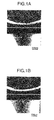
- Figs. 1A to 1E are digital microscope photographs showing flank faces and rake faces of cutting tools used for, respectively, Samples Nos. 1, 6, 11, 22, 30 and 34.
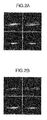
- Figs. 2A to 2E are analysis results of belag on the surfaces in, respectively, Figs. 1A to 1E with use of EPMA, in which a high concentration portion of each element is represented in white color.
- Samples Nos. 1, 6 and 11 exhibit large average counts of Al and S in Table 2, and it has been confirmed that Al and S are attached over a wide region in the EPMA analysis of Figs. 2A to 2C .
- Sample No. 22 has a minus value of the machinability index MP and has smaller average counts of Al and S and smaller attached Al and S than Samples Nos.
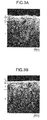
- Figs. 3A to 3C are cross sectional TEM (transmission electron microscope) images showing belag confirmed on the surfaces of the tools of respectively Samples No. 1, 22 and 30, together with an underlying TiN coating.
- reference number 1 denotes a protective film for preparing a sample
- reference number 2 denotes a belag at the time of machining
- reference number 3 denotes a plastically deformed TiN region
- reference number 4 denotes an un-deformed TiN region.
- the machinability was evaluated using an insert PICOmini manufactured by Hitachi Tool Engineering Ltd., which has a harder TiAlN coating than the TiN coating on a cemented carbide base material. Machining conditions were as follows:
- Materials supplied to the machining were prepared from ingots having compositions in Table 3 by using a high frequency induction furnace and an atmosphere arc melting furnace.
- the ingots were hot forged with a forging ratio of about 5, and then cooled and annealed at 860°C. Then, the annealed materials were quenched from 1030°C by air cooling. Then, they were tempered at 500 to 540°C twice. Thus, they were hardened so as to have a hardness of 60 ⁇ 2 HRC, thereby preparing test pieces.
- Fig. 4 shows an exposed width of the super-hard base material on the flank face of the cutting tool with respect to a machining length extended to 25 m.
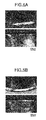
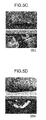
- Figs. 5A to 5E show digital microscope photographs showing the flank face and the rake face of the cutting tool.
- an exposed width of the base material is 0.02 mm or less even when it is machined at 25 m. Thus, the tool is hardly damaged.
- 0.05 mm or more of the base material is already exposed at a machining length of 10 m, and chipping occurred in Samples Nos. 3 and 4.
- the cold-work tool steel of the present invention has been confirmed to exhibit superior machinability even under different machining conditions from those in Example 1.
Landscapes
- Chemical & Material Sciences (AREA)
- Engineering & Computer Science (AREA)
- Materials Engineering (AREA)
- Mechanical Engineering (AREA)
- Metallurgy (AREA)
- Organic Chemistry (AREA)
- Physics & Mathematics (AREA)
- Thermal Sciences (AREA)
- Crystallography & Structural Chemistry (AREA)
- Heat Treatment Of Steel (AREA)
- Heat Treatment Of Articles (AREA)
- Cutting Tools, Boring Holders, And Turrets (AREA)
Applications Claiming Priority (2)
| Application Number | Priority Date | Filing Date | Title |
|---|---|---|---|
| JP2011034187 | 2011-02-21 | ||
| PCT/JP2012/053928 WO2012115024A1 (ja) | 2011-02-21 | 2012-02-20 | 被削性に優れた冷間工具鋼 |
Publications (3)
| Publication Number | Publication Date |
|---|---|
| EP2679698A1 true EP2679698A1 (de) | 2014-01-01 |
| EP2679698A4 EP2679698A4 (de) | 2017-01-04 |
| EP2679698B1 EP2679698B1 (de) | 2018-09-12 |
Family
ID=46720801
Family Applications (1)
| Application Number | Title | Priority Date | Filing Date |
|---|---|---|---|
| EP12749932.5A Active EP2679698B1 (de) | 2011-02-21 | 2012-02-20 | Kaltgearbeiteter werkzeugstahl mit hervorragender bearbeitbarkeit |
Country Status (5)
| Country | Link |
|---|---|
| EP (1) | EP2679698B1 (de) |
| JP (1) | JP5672466B2 (de) |
| CN (1) | CN103403206B (de) |
| TW (1) | TWI447233B (de) |
| WO (1) | WO2012115024A1 (de) |
Cited By (1)
| Publication number | Priority date | Publication date | Assignee | Title |
|---|---|---|---|---|
| US20210254202A1 (en) * | 2020-02-19 | 2021-08-19 | Questek Innovations Llc | Precipitation strengthened carburizable and nitridable steel alloys |
Families Citing this family (4)
| Publication number | Priority date | Publication date | Assignee | Title |
|---|---|---|---|---|
| JP6032582B2 (ja) | 2013-03-29 | 2016-11-30 | 日立金属株式会社 | 金型用鋼素材の製造方法 |
| WO2014192730A1 (ja) | 2013-05-30 | 2014-12-04 | 日立金属株式会社 | 冷間加工用金型の製造方法 |
| CN106917045B (zh) * | 2017-03-07 | 2019-03-05 | 广西大学行健文理学院 | 铸造冷镦模具的制造方法 |
| CN110016617B (zh) * | 2019-05-08 | 2021-05-04 | 上海大学 | 一种冷作模具钢及其制备方法 |
Family Cites Families (14)
| Publication number | Priority date | Publication date | Assignee | Title |
|---|---|---|---|---|
| JP2001316769A (ja) * | 2000-05-10 | 2001-11-16 | Daido Steel Co Ltd | 冷間工具鋼 |
| US8900382B2 (en) * | 2002-06-13 | 2014-12-02 | Uddeholm Tooling Aktiebolag | Hot worked steel and tool made therewith |
| US7722727B2 (en) * | 2002-06-13 | 2010-05-25 | Uddeholm Tooling Aktiebolag | Steel and mould tool for plastic materials made of the steel |
| JP2004169177A (ja) * | 2002-11-06 | 2004-06-17 | Daido Steel Co Ltd | 合金工具鋼及びその製造方法、並びにそれを用いた金型 |
| JP4093978B2 (ja) | 2004-03-23 | 2008-06-04 | 日本高周波鋼業株式会社 | 自己潤滑性を有する工具鋼 |
| JP4737606B2 (ja) * | 2004-11-18 | 2011-08-03 | 日立金属株式会社 | 変寸抑制特性および耐カジリ性に優れた冷間ダイス鋼 |
| JP2006193790A (ja) * | 2005-01-14 | 2006-07-27 | Daido Steel Co Ltd | 冷間工具鋼 |
| JP4844874B2 (ja) * | 2005-05-26 | 2011-12-28 | 日立金属株式会社 | プレス成形品の製造方法 |
| CN100381599C (zh) * | 2005-06-22 | 2008-04-16 | 贵州大学 | 低成本的高速钢 |
| CN101528962A (zh) * | 2006-10-17 | 2009-09-09 | 株式会社神户制钢所 | 冷加工模具钢、模具和用于制造冷加工模具钢的方法 |
| JP2008189982A (ja) | 2007-02-02 | 2008-08-21 | Daido Steel Co Ltd | 工具鋼 |
| JP5338188B2 (ja) * | 2007-10-31 | 2013-11-13 | 大同特殊鋼株式会社 | 合金工具鋼及びその製造方法 |
| JP5143531B2 (ja) * | 2007-11-13 | 2013-02-13 | 株式会社神戸製鋼所 | 冷間金型用鋼および金型 |
| JP2009174017A (ja) * | 2008-01-25 | 2009-08-06 | Hitachi Metals Ltd | 表面被覆処理用合金及び摺動部材 |
-
2012
- 2012-02-20 JP JP2013501015A patent/JP5672466B2/ja active Active
- 2012-02-20 CN CN201280009816.XA patent/CN103403206B/zh active Active
- 2012-02-20 WO PCT/JP2012/053928 patent/WO2012115024A1/ja not_active Ceased
- 2012-02-20 TW TW101105392A patent/TWI447233B/zh active
- 2012-02-20 EP EP12749932.5A patent/EP2679698B1/de active Active
Cited By (2)
| Publication number | Priority date | Publication date | Assignee | Title |
|---|---|---|---|---|
| US20210254202A1 (en) * | 2020-02-19 | 2021-08-19 | Questek Innovations Llc | Precipitation strengthened carburizable and nitridable steel alloys |
| US12152295B2 (en) * | 2020-02-19 | 2024-11-26 | Questek Innovations Llc | Precipitation strengthened carburizable and nitridable steel alloys |
Also Published As
| Publication number | Publication date |
|---|---|
| EP2679698B1 (de) | 2018-09-12 |
| CN103403206B (zh) | 2015-11-25 |
| JPWO2012115024A1 (ja) | 2014-07-07 |
| JP5672466B2 (ja) | 2015-02-18 |
| CN103403206A (zh) | 2013-11-20 |
| TWI447233B (zh) | 2014-08-01 |
| EP2679698A4 (de) | 2017-01-04 |
| TW201241191A (en) | 2012-10-16 |
| WO2012115024A1 (ja) | 2012-08-30 |
Similar Documents
| Publication | Publication Date | Title |
|---|---|---|
| EP2679697B1 (de) | Herstellungsverfahren für eine kaltbearbeitungsmatrize | |
| EP2159294B1 (de) | Stahl für eine mechanische struktur mit hervorragender bearbeitbarkeit und herstellungsverfahren dafür | |
| EP1314791B1 (de) | Niedrig-kohlenstoffhaltiger martensitischer rostfreier stahl und entsprechendes herstellungsverfahren | |
| EP2381003A1 (de) | Stahl für hochfrequenzhärtung | |
| JP2004169177A (ja) | 合金工具鋼及びその製造方法、並びにそれを用いた金型 | |
| EP1930459A1 (de) | Hochzäher verschleissfester stahl mit geringer härteänderung im einsatz und herstellungsverfahren dafür | |
| JP2009007643A (ja) | 被削性に優れた機械構造用鋼 | |
| EP2679698B1 (de) | Kaltgearbeiteter werkzeugstahl mit hervorragender bearbeitbarkeit | |
| JP2017155306A (ja) | 優れた高温強度および靱性を有する熱間工具鋼 | |
| EP2439303A1 (de) | Stahl für mechanische strukturierung | |
| US6841122B2 (en) | Hot working die steel excelling in molten corrosion resistance and strength at elevated temperature and member for high temperature use formed of the hot working die steel | |
| JP5029942B2 (ja) | 靭性に優れた熱間工具鋼 | |
| JP4860774B1 (ja) | 冷間工具鋼 | |
| JP5351528B2 (ja) | 冷間金型用鋼および金型 | |
| JP6096040B2 (ja) | 高温焼戻し硬さに優れた粉末高速度工具鋼 | |
| JP2006299296A (ja) | 疲労特性と耐結晶粒粗大化特性に優れた肌焼用圧延棒鋼およびその製法 | |
| JP5318638B2 (ja) | 被削性に優れた機械構造用鋼 | |
| JP2005336553A (ja) | 熱間工具鋼 | |
| JP6416624B2 (ja) | 冷間工具鋼の切削方法及び冷間金型材料の製造方法 | |
| JP2004277818A (ja) | プラスチック成形用の快削性金型用鋼 | |
| JP2018154884A (ja) | 冷間工具鋼 | |
| JPS58144456A (ja) | 粉末高速度工具鋼 | |
| JP7608772B2 (ja) | 金型用鋼及び金型 | |
| JP2004307979A (ja) | 優れた工具寿命特性を有する電磁ステンレス鋼 | |
| JP2004315840A (ja) | 被削性に優れた冷間工具鋼及びその製造方法 |
Legal Events
| Date | Code | Title | Description |
|---|---|---|---|
| PUAI | Public reference made under article 153(3) epc to a published international application that has entered the european phase |
Free format text: ORIGINAL CODE: 0009012 |
|
| 17P | Request for examination filed |
Effective date: 20130923 |
|
| AK | Designated contracting states |
Kind code of ref document: A1 Designated state(s): AL AT BE BG CH CY CZ DE DK EE ES FI FR GB GR HR HU IE IS IT LI LT LU LV MC MK MT NL NO PL PT RO RS SE SI SK SM TR |
|
| DAX | Request for extension of the european patent (deleted) | ||
| RA4 | Supplementary search report drawn up and despatched (corrected) |
Effective date: 20161205 |
|
| RIC1 | Information provided on ipc code assigned before grant |
Ipc: C22C 38/22 20060101ALI20161129BHEP Ipc: C21D 6/00 20060101ALI20161129BHEP Ipc: C22C 38/04 20060101ALI20161129BHEP Ipc: C22C 38/60 20060101ALI20161129BHEP Ipc: C21D 6/02 20060101ALI20161129BHEP Ipc: C22C 38/02 20060101ALI20161129BHEP Ipc: C22C 38/44 20060101ALI20161129BHEP Ipc: C22C 38/06 20060101ALI20161129BHEP Ipc: C22C 38/20 20060101ALI20161129BHEP Ipc: C22C 38/26 20060101ALI20161129BHEP Ipc: C22C 38/00 20060101AFI20161129BHEP Ipc: C22C 38/24 20060101ALI20161129BHEP Ipc: C21D 1/18 20060101ALI20161129BHEP |
|
| GRAP | Despatch of communication of intention to grant a patent |
Free format text: ORIGINAL CODE: EPIDOSNIGR1 |
|
| STAA | Information on the status of an ep patent application or granted ep patent |
Free format text: STATUS: GRANT OF PATENT IS INTENDED |
|
| RIC1 | Information provided on ipc code assigned before grant |
Ipc: C22C 38/26 20060101ALI20180409BHEP Ipc: C21D 1/18 20060101ALI20180409BHEP Ipc: C22C 38/22 20060101ALI20180409BHEP Ipc: C22C 38/20 20060101ALI20180409BHEP Ipc: C22C 38/44 20060101ALI20180409BHEP Ipc: C22C 38/42 20060101ALI20180409BHEP Ipc: C22C 38/00 20060101AFI20180409BHEP Ipc: C22C 38/46 20060101ALI20180409BHEP Ipc: C22C 38/04 20060101ALI20180409BHEP Ipc: C22C 38/02 20060101ALI20180409BHEP Ipc: C21D 6/02 20060101ALI20180409BHEP Ipc: C21D 6/00 20060101ALI20180409BHEP Ipc: C22C 38/24 20060101ALI20180409BHEP Ipc: C22C 38/06 20060101ALI20180409BHEP Ipc: C22C 38/60 20060101ALI20180409BHEP |
|
| INTG | Intention to grant announced |
Effective date: 20180508 |
|
| GRAS | Grant fee paid |
Free format text: ORIGINAL CODE: EPIDOSNIGR3 |
|
| GRAA | (expected) grant |
Free format text: ORIGINAL CODE: 0009210 |
|
| STAA | Information on the status of an ep patent application or granted ep patent |
Free format text: STATUS: THE PATENT HAS BEEN GRANTED |
|
| AK | Designated contracting states |
Kind code of ref document: B1 Designated state(s): AL AT BE BG CH CY CZ DE DK EE ES FI FR GB GR HR HU IE IS IT LI LT LU LV MC MK MT NL NO PL PT RO RS SE SI SK SM TR |
|
| RAP1 | Party data changed (applicant data changed or rights of an application transferred) |
Owner name: HITACHI METALS, LTD. |
|
| REG | Reference to a national code |
Ref country code: GB Ref legal event code: FG4D |
|
| REG | Reference to a national code |
Ref country code: CH Ref legal event code: EP |
|
| REG | Reference to a national code |
Ref country code: IE Ref legal event code: FG4D |
|
| REG | Reference to a national code |
Ref country code: DE Ref legal event code: R096 Ref document number: 602012050988 Country of ref document: DE |
|
| REG | Reference to a national code |
Ref country code: AT Ref legal event code: REF Ref document number: 1040676 Country of ref document: AT Kind code of ref document: T Effective date: 20181015 |
|
| REG | Reference to a national code |
Ref country code: NL Ref legal event code: MP Effective date: 20180912 |
|
| REG | Reference to a national code |
Ref country code: LT Ref legal event code: MG4D |
|
| PG25 | Lapsed in a contracting state [announced via postgrant information from national office to epo] |
Ref country code: NO Free format text: LAPSE BECAUSE OF FAILURE TO SUBMIT A TRANSLATION OF THE DESCRIPTION OR TO PAY THE FEE WITHIN THE PRESCRIBED TIME-LIMIT Effective date: 20181212 Ref country code: SE Free format text: LAPSE BECAUSE OF FAILURE TO SUBMIT A TRANSLATION OF THE DESCRIPTION OR TO PAY THE FEE WITHIN THE PRESCRIBED TIME-LIMIT Effective date: 20180912 Ref country code: GR Free format text: LAPSE BECAUSE OF FAILURE TO SUBMIT A TRANSLATION OF THE DESCRIPTION OR TO PAY THE FEE WITHIN THE PRESCRIBED TIME-LIMIT Effective date: 20181213 Ref country code: FI Free format text: LAPSE BECAUSE OF FAILURE TO SUBMIT A TRANSLATION OF THE DESCRIPTION OR TO PAY THE FEE WITHIN THE PRESCRIBED TIME-LIMIT Effective date: 20180912 Ref country code: LT Free format text: LAPSE BECAUSE OF FAILURE TO SUBMIT A TRANSLATION OF THE DESCRIPTION OR TO PAY THE FEE WITHIN THE PRESCRIBED TIME-LIMIT Effective date: 20180912 Ref country code: RS Free format text: LAPSE BECAUSE OF FAILURE TO SUBMIT A TRANSLATION OF THE DESCRIPTION OR TO PAY THE FEE WITHIN THE PRESCRIBED TIME-LIMIT Effective date: 20180912 Ref country code: BG Free format text: LAPSE BECAUSE OF FAILURE TO SUBMIT A TRANSLATION OF THE DESCRIPTION OR TO PAY THE FEE WITHIN THE PRESCRIBED TIME-LIMIT Effective date: 20181212 |
|
| PG25 | Lapsed in a contracting state [announced via postgrant information from national office to epo] |
Ref country code: AL Free format text: LAPSE BECAUSE OF FAILURE TO SUBMIT A TRANSLATION OF THE DESCRIPTION OR TO PAY THE FEE WITHIN THE PRESCRIBED TIME-LIMIT Effective date: 20180912 Ref country code: LV Free format text: LAPSE BECAUSE OF FAILURE TO SUBMIT A TRANSLATION OF THE DESCRIPTION OR TO PAY THE FEE WITHIN THE PRESCRIBED TIME-LIMIT Effective date: 20180912 Ref country code: HR Free format text: LAPSE BECAUSE OF FAILURE TO SUBMIT A TRANSLATION OF THE DESCRIPTION OR TO PAY THE FEE WITHIN THE PRESCRIBED TIME-LIMIT Effective date: 20180912 |
|
| REG | Reference to a national code |
Ref country code: AT Ref legal event code: MK05 Ref document number: 1040676 Country of ref document: AT Kind code of ref document: T Effective date: 20180912 |
|
| PG25 | Lapsed in a contracting state [announced via postgrant information from national office to epo] |
Ref country code: NL Free format text: LAPSE BECAUSE OF FAILURE TO SUBMIT A TRANSLATION OF THE DESCRIPTION OR TO PAY THE FEE WITHIN THE PRESCRIBED TIME-LIMIT Effective date: 20180912 Ref country code: PL Free format text: LAPSE BECAUSE OF FAILURE TO SUBMIT A TRANSLATION OF THE DESCRIPTION OR TO PAY THE FEE WITHIN THE PRESCRIBED TIME-LIMIT Effective date: 20180912 Ref country code: IS Free format text: LAPSE BECAUSE OF FAILURE TO SUBMIT A TRANSLATION OF THE DESCRIPTION OR TO PAY THE FEE WITHIN THE PRESCRIBED TIME-LIMIT Effective date: 20190112 Ref country code: EE Free format text: LAPSE BECAUSE OF FAILURE TO SUBMIT A TRANSLATION OF THE DESCRIPTION OR TO PAY THE FEE WITHIN THE PRESCRIBED TIME-LIMIT Effective date: 20180912 Ref country code: AT Free format text: LAPSE BECAUSE OF FAILURE TO SUBMIT A TRANSLATION OF THE DESCRIPTION OR TO PAY THE FEE WITHIN THE PRESCRIBED TIME-LIMIT Effective date: 20180912 Ref country code: ES Free format text: LAPSE BECAUSE OF FAILURE TO SUBMIT A TRANSLATION OF THE DESCRIPTION OR TO PAY THE FEE WITHIN THE PRESCRIBED TIME-LIMIT Effective date: 20180912 Ref country code: RO Free format text: LAPSE BECAUSE OF FAILURE TO SUBMIT A TRANSLATION OF THE DESCRIPTION OR TO PAY THE FEE WITHIN THE PRESCRIBED TIME-LIMIT Effective date: 20180912 Ref country code: CZ Free format text: LAPSE BECAUSE OF FAILURE TO SUBMIT A TRANSLATION OF THE DESCRIPTION OR TO PAY THE FEE WITHIN THE PRESCRIBED TIME-LIMIT Effective date: 20180912 |
|
| PG25 | Lapsed in a contracting state [announced via postgrant information from national office to epo] |
Ref country code: SK Free format text: LAPSE BECAUSE OF FAILURE TO SUBMIT A TRANSLATION OF THE DESCRIPTION OR TO PAY THE FEE WITHIN THE PRESCRIBED TIME-LIMIT Effective date: 20180912 Ref country code: SM Free format text: LAPSE BECAUSE OF FAILURE TO SUBMIT A TRANSLATION OF THE DESCRIPTION OR TO PAY THE FEE WITHIN THE PRESCRIBED TIME-LIMIT Effective date: 20180912 Ref country code: PT Free format text: LAPSE BECAUSE OF FAILURE TO SUBMIT A TRANSLATION OF THE DESCRIPTION OR TO PAY THE FEE WITHIN THE PRESCRIBED TIME-LIMIT Effective date: 20190112 |
|
| REG | Reference to a national code |
Ref country code: DE Ref legal event code: R097 Ref document number: 602012050988 Country of ref document: DE |
|
| PLBE | No opposition filed within time limit |
Free format text: ORIGINAL CODE: 0009261 |
|
| STAA | Information on the status of an ep patent application or granted ep patent |
Free format text: STATUS: NO OPPOSITION FILED WITHIN TIME LIMIT |
|
| PG25 | Lapsed in a contracting state [announced via postgrant information from national office to epo] |
Ref country code: DK Free format text: LAPSE BECAUSE OF FAILURE TO SUBMIT A TRANSLATION OF THE DESCRIPTION OR TO PAY THE FEE WITHIN THE PRESCRIBED TIME-LIMIT Effective date: 20180912 |
|
| 26N | No opposition filed |
Effective date: 20190613 |
|
| PG25 | Lapsed in a contracting state [announced via postgrant information from national office to epo] |
Ref country code: SI Free format text: LAPSE BECAUSE OF FAILURE TO SUBMIT A TRANSLATION OF THE DESCRIPTION OR TO PAY THE FEE WITHIN THE PRESCRIBED TIME-LIMIT Effective date: 20180912 |
|
| REG | Reference to a national code |
Ref country code: CH Ref legal event code: PL |
|
| PG25 | Lapsed in a contracting state [announced via postgrant information from national office to epo] |
Ref country code: MC Free format text: LAPSE BECAUSE OF FAILURE TO SUBMIT A TRANSLATION OF THE DESCRIPTION OR TO PAY THE FEE WITHIN THE PRESCRIBED TIME-LIMIT Effective date: 20180912 Ref country code: LU Free format text: LAPSE BECAUSE OF NON-PAYMENT OF DUE FEES Effective date: 20190220 |
|
| REG | Reference to a national code |
Ref country code: BE Ref legal event code: MM Effective date: 20190228 |
|
| REG | Reference to a national code |
Ref country code: IE Ref legal event code: MM4A |
|
| PG25 | Lapsed in a contracting state [announced via postgrant information from national office to epo] |
Ref country code: LI Free format text: LAPSE BECAUSE OF NON-PAYMENT OF DUE FEES Effective date: 20190228 Ref country code: CH Free format text: LAPSE BECAUSE OF NON-PAYMENT OF DUE FEES Effective date: 20190228 |
|
| PG25 | Lapsed in a contracting state [announced via postgrant information from national office to epo] |
Ref country code: IE Free format text: LAPSE BECAUSE OF NON-PAYMENT OF DUE FEES Effective date: 20190220 |
|
| PG25 | Lapsed in a contracting state [announced via postgrant information from national office to epo] |
Ref country code: FR Free format text: LAPSE BECAUSE OF NON-PAYMENT OF DUE FEES Effective date: 20190228 Ref country code: BE Free format text: LAPSE BECAUSE OF NON-PAYMENT OF DUE FEES Effective date: 20190228 |
|
| PG25 | Lapsed in a contracting state [announced via postgrant information from national office to epo] |
Ref country code: MT Free format text: LAPSE BECAUSE OF NON-PAYMENT OF DUE FEES Effective date: 20190220 |
|
| PG25 | Lapsed in a contracting state [announced via postgrant information from national office to epo] |
Ref country code: CY Free format text: LAPSE BECAUSE OF FAILURE TO SUBMIT A TRANSLATION OF THE DESCRIPTION OR TO PAY THE FEE WITHIN THE PRESCRIBED TIME-LIMIT Effective date: 20180912 |
|
| PG25 | Lapsed in a contracting state [announced via postgrant information from national office to epo] |
Ref country code: HU Free format text: LAPSE BECAUSE OF FAILURE TO SUBMIT A TRANSLATION OF THE DESCRIPTION OR TO PAY THE FEE WITHIN THE PRESCRIBED TIME-LIMIT; INVALID AB INITIO Effective date: 20120220 |
|
| PG25 | Lapsed in a contracting state [announced via postgrant information from national office to epo] |
Ref country code: MK Free format text: LAPSE BECAUSE OF FAILURE TO SUBMIT A TRANSLATION OF THE DESCRIPTION OR TO PAY THE FEE WITHIN THE PRESCRIBED TIME-LIMIT Effective date: 20180912 |
|
| P01 | Opt-out of the competence of the unified patent court (upc) registered |
Effective date: 20230525 |
|
| PGFP | Annual fee paid to national office [announced via postgrant information from national office to epo] |
Ref country code: GB Payment date: 20260106 Year of fee payment: 15 |
|
| PGFP | Annual fee paid to national office [announced via postgrant information from national office to epo] |
Ref country code: DE Payment date: 20251230 Year of fee payment: 15 |
|
| PGFP | Annual fee paid to national office [announced via postgrant information from national office to epo] |
Ref country code: IT Payment date: 20260122 Year of fee payment: 15 |
|
| PGFP | Annual fee paid to national office [announced via postgrant information from national office to epo] |
Ref country code: TR Payment date: 20260218 Year of fee payment: 15 |