EP2681346B1 - Composant coulissant revêtu d'une couche de carbone comprenant du métal pour l'amélioration de l'usure et du comportement de frottement par des applications tribologiques dans des conditions lubrifiées - Google Patents
Composant coulissant revêtu d'une couche de carbone comprenant du métal pour l'amélioration de l'usure et du comportement de frottement par des applications tribologiques dans des conditions lubrifiées Download PDFInfo
- Publication number
- EP2681346B1 EP2681346B1 EP12708496.0A EP12708496A EP2681346B1 EP 2681346 B1 EP2681346 B1 EP 2681346B1 EP 12708496 A EP12708496 A EP 12708496A EP 2681346 B1 EP2681346 B1 EP 2681346B1
- Authority
- EP
- European Patent Office
- Prior art keywords
- layer
- coating
- coatings
- wear
- sliding component
- Prior art date
- Legal status (The legal status is an assumption and is not a legal conclusion. Google has not performed a legal analysis and makes no representation as to the accuracy of the status listed.)
- Active
Links
Images





Classifications
-
- C—CHEMISTRY; METALLURGY
- C23—COATING METALLIC MATERIAL; COATING MATERIAL WITH METALLIC MATERIAL; CHEMICAL SURFACE TREATMENT; DIFFUSION TREATMENT OF METALLIC MATERIAL; COATING BY VACUUM EVAPORATION, BY SPUTTERING, BY ION IMPLANTATION OR BY CHEMICAL VAPOUR DEPOSITION, IN GENERAL; INHIBITING CORROSION OF METALLIC MATERIAL OR INCRUSTATION IN GENERAL
- C23C—COATING METALLIC MATERIAL; COATING MATERIAL WITH METALLIC MATERIAL; SURFACE TREATMENT OF METALLIC MATERIAL BY DIFFUSION INTO THE SURFACE, BY CHEMICAL CONVERSION OR SUBSTITUTION; COATING BY VACUUM EVAPORATION, BY SPUTTERING, BY ION IMPLANTATION OR BY CHEMICAL VAPOUR DEPOSITION, IN GENERAL
- C23C14/00—Coating by vacuum evaporation, by sputtering or by ion implantation of the coating forming material
- C23C14/06—Coating by vacuum evaporation, by sputtering or by ion implantation of the coating forming material characterised by the coating material
-
- C—CHEMISTRY; METALLURGY
- C23—COATING METALLIC MATERIAL; COATING MATERIAL WITH METALLIC MATERIAL; CHEMICAL SURFACE TREATMENT; DIFFUSION TREATMENT OF METALLIC MATERIAL; COATING BY VACUUM EVAPORATION, BY SPUTTERING, BY ION IMPLANTATION OR BY CHEMICAL VAPOUR DEPOSITION, IN GENERAL; INHIBITING CORROSION OF METALLIC MATERIAL OR INCRUSTATION IN GENERAL
- C23C—COATING METALLIC MATERIAL; COATING MATERIAL WITH METALLIC MATERIAL; SURFACE TREATMENT OF METALLIC MATERIAL BY DIFFUSION INTO THE SURFACE, BY CHEMICAL CONVERSION OR SUBSTITUTION; COATING BY VACUUM EVAPORATION, BY SPUTTERING, BY ION IMPLANTATION OR BY CHEMICAL VAPOUR DEPOSITION, IN GENERAL
- C23C14/00—Coating by vacuum evaporation, by sputtering or by ion implantation of the coating forming material
- C23C14/06—Coating by vacuum evaporation, by sputtering or by ion implantation of the coating forming material characterised by the coating material
- C23C14/14—Metallic material, boron or silicon
-
- C—CHEMISTRY; METALLURGY
- C23—COATING METALLIC MATERIAL; COATING MATERIAL WITH METALLIC MATERIAL; CHEMICAL SURFACE TREATMENT; DIFFUSION TREATMENT OF METALLIC MATERIAL; COATING BY VACUUM EVAPORATION, BY SPUTTERING, BY ION IMPLANTATION OR BY CHEMICAL VAPOUR DEPOSITION, IN GENERAL; INHIBITING CORROSION OF METALLIC MATERIAL OR INCRUSTATION IN GENERAL
- C23C—COATING METALLIC MATERIAL; COATING MATERIAL WITH METALLIC MATERIAL; SURFACE TREATMENT OF METALLIC MATERIAL BY DIFFUSION INTO THE SURFACE, BY CHEMICAL CONVERSION OR SUBSTITUTION; COATING BY VACUUM EVAPORATION, BY SPUTTERING, BY ION IMPLANTATION OR BY CHEMICAL VAPOUR DEPOSITION, IN GENERAL
- C23C14/00—Coating by vacuum evaporation, by sputtering or by ion implantation of the coating forming material
- C23C14/02—Pretreatment of the material to be coated
- C23C14/021—Cleaning or etching treatments
-
- C—CHEMISTRY; METALLURGY
- C23—COATING METALLIC MATERIAL; COATING MATERIAL WITH METALLIC MATERIAL; CHEMICAL SURFACE TREATMENT; DIFFUSION TREATMENT OF METALLIC MATERIAL; COATING BY VACUUM EVAPORATION, BY SPUTTERING, BY ION IMPLANTATION OR BY CHEMICAL VAPOUR DEPOSITION, IN GENERAL; INHIBITING CORROSION OF METALLIC MATERIAL OR INCRUSTATION IN GENERAL
- C23C—COATING METALLIC MATERIAL; COATING MATERIAL WITH METALLIC MATERIAL; SURFACE TREATMENT OF METALLIC MATERIAL BY DIFFUSION INTO THE SURFACE, BY CHEMICAL CONVERSION OR SUBSTITUTION; COATING BY VACUUM EVAPORATION, BY SPUTTERING, BY ION IMPLANTATION OR BY CHEMICAL VAPOUR DEPOSITION, IN GENERAL
- C23C14/00—Coating by vacuum evaporation, by sputtering or by ion implantation of the coating forming material
- C23C14/02—Pretreatment of the material to be coated
- C23C14/024—Deposition of sublayers, e.g. to promote adhesion of the coating
- C23C14/025—Metallic sublayers
-
- C—CHEMISTRY; METALLURGY
- C23—COATING METALLIC MATERIAL; COATING MATERIAL WITH METALLIC MATERIAL; CHEMICAL SURFACE TREATMENT; DIFFUSION TREATMENT OF METALLIC MATERIAL; COATING BY VACUUM EVAPORATION, BY SPUTTERING, BY ION IMPLANTATION OR BY CHEMICAL VAPOUR DEPOSITION, IN GENERAL; INHIBITING CORROSION OF METALLIC MATERIAL OR INCRUSTATION IN GENERAL
- C23C—COATING METALLIC MATERIAL; COATING MATERIAL WITH METALLIC MATERIAL; SURFACE TREATMENT OF METALLIC MATERIAL BY DIFFUSION INTO THE SURFACE, BY CHEMICAL CONVERSION OR SUBSTITUTION; COATING BY VACUUM EVAPORATION, BY SPUTTERING, BY ION IMPLANTATION OR BY CHEMICAL VAPOUR DEPOSITION, IN GENERAL
- C23C14/00—Coating by vacuum evaporation, by sputtering or by ion implantation of the coating forming material
- C23C14/02—Pretreatment of the material to be coated
- C23C14/027—Graded interfaces
-
- C—CHEMISTRY; METALLURGY
- C23—COATING METALLIC MATERIAL; COATING MATERIAL WITH METALLIC MATERIAL; CHEMICAL SURFACE TREATMENT; DIFFUSION TREATMENT OF METALLIC MATERIAL; COATING BY VACUUM EVAPORATION, BY SPUTTERING, BY ION IMPLANTATION OR BY CHEMICAL VAPOUR DEPOSITION, IN GENERAL; INHIBITING CORROSION OF METALLIC MATERIAL OR INCRUSTATION IN GENERAL
- C23C—COATING METALLIC MATERIAL; COATING MATERIAL WITH METALLIC MATERIAL; SURFACE TREATMENT OF METALLIC MATERIAL BY DIFFUSION INTO THE SURFACE, BY CHEMICAL CONVERSION OR SUBSTITUTION; COATING BY VACUUM EVAPORATION, BY SPUTTERING, BY ION IMPLANTATION OR BY CHEMICAL VAPOUR DEPOSITION, IN GENERAL
- C23C14/00—Coating by vacuum evaporation, by sputtering or by ion implantation of the coating forming material
- C23C14/06—Coating by vacuum evaporation, by sputtering or by ion implantation of the coating forming material characterised by the coating material
- C23C14/0605—Carbon
-
- C—CHEMISTRY; METALLURGY
- C23—COATING METALLIC MATERIAL; COATING MATERIAL WITH METALLIC MATERIAL; CHEMICAL SURFACE TREATMENT; DIFFUSION TREATMENT OF METALLIC MATERIAL; COATING BY VACUUM EVAPORATION, BY SPUTTERING, BY ION IMPLANTATION OR BY CHEMICAL VAPOUR DEPOSITION, IN GENERAL; INHIBITING CORROSION OF METALLIC MATERIAL OR INCRUSTATION IN GENERAL
- C23C—COATING METALLIC MATERIAL; COATING MATERIAL WITH METALLIC MATERIAL; SURFACE TREATMENT OF METALLIC MATERIAL BY DIFFUSION INTO THE SURFACE, BY CHEMICAL CONVERSION OR SUBSTITUTION; COATING BY VACUUM EVAPORATION, BY SPUTTERING, BY ION IMPLANTATION OR BY CHEMICAL VAPOUR DEPOSITION, IN GENERAL
- C23C14/00—Coating by vacuum evaporation, by sputtering or by ion implantation of the coating forming material
- C23C14/06—Coating by vacuum evaporation, by sputtering or by ion implantation of the coating forming material characterised by the coating material
- C23C14/0664—Carbonitrides
-
- C—CHEMISTRY; METALLURGY
- C23—COATING METALLIC MATERIAL; COATING MATERIAL WITH METALLIC MATERIAL; CHEMICAL SURFACE TREATMENT; DIFFUSION TREATMENT OF METALLIC MATERIAL; COATING BY VACUUM EVAPORATION, BY SPUTTERING, BY ION IMPLANTATION OR BY CHEMICAL VAPOUR DEPOSITION, IN GENERAL; INHIBITING CORROSION OF METALLIC MATERIAL OR INCRUSTATION IN GENERAL
- C23C—COATING METALLIC MATERIAL; COATING MATERIAL WITH METALLIC MATERIAL; SURFACE TREATMENT OF METALLIC MATERIAL BY DIFFUSION INTO THE SURFACE, BY CHEMICAL CONVERSION OR SUBSTITUTION; COATING BY VACUUM EVAPORATION, BY SPUTTERING, BY ION IMPLANTATION OR BY CHEMICAL VAPOUR DEPOSITION, IN GENERAL
- C23C14/00—Coating by vacuum evaporation, by sputtering or by ion implantation of the coating forming material
- C23C14/06—Coating by vacuum evaporation, by sputtering or by ion implantation of the coating forming material characterised by the coating material
- C23C14/067—Borides
-
- C—CHEMISTRY; METALLURGY
- C23—COATING METALLIC MATERIAL; COATING MATERIAL WITH METALLIC MATERIAL; CHEMICAL SURFACE TREATMENT; DIFFUSION TREATMENT OF METALLIC MATERIAL; COATING BY VACUUM EVAPORATION, BY SPUTTERING, BY ION IMPLANTATION OR BY CHEMICAL VAPOUR DEPOSITION, IN GENERAL; INHIBITING CORROSION OF METALLIC MATERIAL OR INCRUSTATION IN GENERAL
- C23C—COATING METALLIC MATERIAL; COATING MATERIAL WITH METALLIC MATERIAL; SURFACE TREATMENT OF METALLIC MATERIAL BY DIFFUSION INTO THE SURFACE, BY CHEMICAL CONVERSION OR SUBSTITUTION; COATING BY VACUUM EVAPORATION, BY SPUTTERING, BY ION IMPLANTATION OR BY CHEMICAL VAPOUR DEPOSITION, IN GENERAL
- C23C14/00—Coating by vacuum evaporation, by sputtering or by ion implantation of the coating forming material
- C23C14/06—Coating by vacuum evaporation, by sputtering or by ion implantation of the coating forming material characterised by the coating material
- C23C14/0682—Silicides
-
- C—CHEMISTRY; METALLURGY
- C23—COATING METALLIC MATERIAL; COATING MATERIAL WITH METALLIC MATERIAL; CHEMICAL SURFACE TREATMENT; DIFFUSION TREATMENT OF METALLIC MATERIAL; COATING BY VACUUM EVAPORATION, BY SPUTTERING, BY ION IMPLANTATION OR BY CHEMICAL VAPOUR DEPOSITION, IN GENERAL; INHIBITING CORROSION OF METALLIC MATERIAL OR INCRUSTATION IN GENERAL
- C23C—COATING METALLIC MATERIAL; COATING MATERIAL WITH METALLIC MATERIAL; SURFACE TREATMENT OF METALLIC MATERIAL BY DIFFUSION INTO THE SURFACE, BY CHEMICAL CONVERSION OR SUBSTITUTION; COATING BY VACUUM EVAPORATION, BY SPUTTERING, BY ION IMPLANTATION OR BY CHEMICAL VAPOUR DEPOSITION, IN GENERAL
- C23C14/00—Coating by vacuum evaporation, by sputtering or by ion implantation of the coating forming material
- C23C14/06—Coating by vacuum evaporation, by sputtering or by ion implantation of the coating forming material characterised by the coating material
- C23C14/0688—Cermets, e.g. mixtures of metal and one or more of carbides, nitrides, oxides or borides
-
- C—CHEMISTRY; METALLURGY
- C23—COATING METALLIC MATERIAL; COATING MATERIAL WITH METALLIC MATERIAL; CHEMICAL SURFACE TREATMENT; DIFFUSION TREATMENT OF METALLIC MATERIAL; COATING BY VACUUM EVAPORATION, BY SPUTTERING, BY ION IMPLANTATION OR BY CHEMICAL VAPOUR DEPOSITION, IN GENERAL; INHIBITING CORROSION OF METALLIC MATERIAL OR INCRUSTATION IN GENERAL
- C23C—COATING METALLIC MATERIAL; COATING MATERIAL WITH METALLIC MATERIAL; SURFACE TREATMENT OF METALLIC MATERIAL BY DIFFUSION INTO THE SURFACE, BY CHEMICAL CONVERSION OR SUBSTITUTION; COATING BY VACUUM EVAPORATION, BY SPUTTERING, BY ION IMPLANTATION OR BY CHEMICAL VAPOUR DEPOSITION, IN GENERAL
- C23C14/00—Coating by vacuum evaporation, by sputtering or by ion implantation of the coating forming material
- C23C14/22—Coating by vacuum evaporation, by sputtering or by ion implantation of the coating forming material characterised by the process of coating
- C23C14/24—Vacuum evaporation
- C23C14/32—Vacuum evaporation by explosion; by evaporation and subsequent ionisation of the vapours, e.g. ion-plating
-
- C—CHEMISTRY; METALLURGY
- C23—COATING METALLIC MATERIAL; COATING MATERIAL WITH METALLIC MATERIAL; CHEMICAL SURFACE TREATMENT; DIFFUSION TREATMENT OF METALLIC MATERIAL; COATING BY VACUUM EVAPORATION, BY SPUTTERING, BY ION IMPLANTATION OR BY CHEMICAL VAPOUR DEPOSITION, IN GENERAL; INHIBITING CORROSION OF METALLIC MATERIAL OR INCRUSTATION IN GENERAL
- C23C—COATING METALLIC MATERIAL; COATING MATERIAL WITH METALLIC MATERIAL; SURFACE TREATMENT OF METALLIC MATERIAL BY DIFFUSION INTO THE SURFACE, BY CHEMICAL CONVERSION OR SUBSTITUTION; COATING BY VACUUM EVAPORATION, BY SPUTTERING, BY ION IMPLANTATION OR BY CHEMICAL VAPOUR DEPOSITION, IN GENERAL
- C23C14/00—Coating by vacuum evaporation, by sputtering or by ion implantation of the coating forming material
- C23C14/22—Coating by vacuum evaporation, by sputtering or by ion implantation of the coating forming material characterised by the process of coating
- C23C14/34—Sputtering
-
- C—CHEMISTRY; METALLURGY
- C23—COATING METALLIC MATERIAL; COATING MATERIAL WITH METALLIC MATERIAL; CHEMICAL SURFACE TREATMENT; DIFFUSION TREATMENT OF METALLIC MATERIAL; COATING BY VACUUM EVAPORATION, BY SPUTTERING, BY ION IMPLANTATION OR BY CHEMICAL VAPOUR DEPOSITION, IN GENERAL; INHIBITING CORROSION OF METALLIC MATERIAL OR INCRUSTATION IN GENERAL
- C23C—COATING METALLIC MATERIAL; COATING MATERIAL WITH METALLIC MATERIAL; SURFACE TREATMENT OF METALLIC MATERIAL BY DIFFUSION INTO THE SURFACE, BY CHEMICAL CONVERSION OR SUBSTITUTION; COATING BY VACUUM EVAPORATION, BY SPUTTERING, BY ION IMPLANTATION OR BY CHEMICAL VAPOUR DEPOSITION, IN GENERAL
- C23C14/00—Coating by vacuum evaporation, by sputtering or by ion implantation of the coating forming material
- C23C14/22—Coating by vacuum evaporation, by sputtering or by ion implantation of the coating forming material characterised by the process of coating
- C23C14/34—Sputtering
- C23C14/35—Sputtering by application of a magnetic field, e.g. magnetron sputtering
- C23C14/352—Sputtering by application of a magnetic field, e.g. magnetron sputtering using more than one target
-
- C—CHEMISTRY; METALLURGY
- C23—COATING METALLIC MATERIAL; COATING MATERIAL WITH METALLIC MATERIAL; CHEMICAL SURFACE TREATMENT; DIFFUSION TREATMENT OF METALLIC MATERIAL; COATING BY VACUUM EVAPORATION, BY SPUTTERING, BY ION IMPLANTATION OR BY CHEMICAL VAPOUR DEPOSITION, IN GENERAL; INHIBITING CORROSION OF METALLIC MATERIAL OR INCRUSTATION IN GENERAL
- C23C—COATING METALLIC MATERIAL; COATING MATERIAL WITH METALLIC MATERIAL; SURFACE TREATMENT OF METALLIC MATERIAL BY DIFFUSION INTO THE SURFACE, BY CHEMICAL CONVERSION OR SUBSTITUTION; COATING BY VACUUM EVAPORATION, BY SPUTTERING, BY ION IMPLANTATION OR BY CHEMICAL VAPOUR DEPOSITION, IN GENERAL
- C23C14/00—Coating by vacuum evaporation, by sputtering or by ion implantation of the coating forming material
- C23C14/22—Coating by vacuum evaporation, by sputtering or by ion implantation of the coating forming material characterised by the process of coating
- C23C14/50—Substrate holders
- C23C14/505—Substrate holders for rotation of the substrates
-
- F—MECHANICAL ENGINEERING; LIGHTING; HEATING; WEAPONS; BLASTING
- F04—POSITIVE - DISPLACEMENT MACHINES FOR LIQUIDS; PUMPS FOR LIQUIDS OR ELASTIC FLUIDS
- F04B—POSITIVE-DISPLACEMENT MACHINES FOR LIQUIDS; PUMPS
- F04B1/00—Multi-cylinder machines or pumps characterised by number or arrangement of cylinders
- F04B1/12—Multi-cylinder machines or pumps characterised by number or arrangement of cylinders having cylinder axes coaxial with, or parallel or inclined to, main shaft axis
- F04B1/14—Multi-cylinder machines or pumps characterised by number or arrangement of cylinders having cylinder axes coaxial with, or parallel or inclined to, main shaft axis having stationary cylinders
- F04B1/141—Details or component parts
- F04B1/146—Swash plates; Actuating elements
-
- F—MECHANICAL ENGINEERING; LIGHTING; HEATING; WEAPONS; BLASTING
- F04—POSITIVE - DISPLACEMENT MACHINES FOR LIQUIDS; PUMPS FOR LIQUIDS OR ELASTIC FLUIDS
- F04B—POSITIVE-DISPLACEMENT MACHINES FOR LIQUIDS; PUMPS
- F04B1/00—Multi-cylinder machines or pumps characterised by number or arrangement of cylinders
- F04B1/12—Multi-cylinder machines or pumps characterised by number or arrangement of cylinders having cylinder axes coaxial with, or parallel or inclined to, main shaft axis
- F04B1/20—Multi-cylinder machines or pumps characterised by number or arrangement of cylinders having cylinder axes coaxial with, or parallel or inclined to, main shaft axis having rotary cylinder block
- F04B1/2014—Details or component parts
- F04B1/2078—Swash plates
-
- F—MECHANICAL ENGINEERING; LIGHTING; HEATING; WEAPONS; BLASTING
- F04—POSITIVE - DISPLACEMENT MACHINES FOR LIQUIDS; PUMPS FOR LIQUIDS OR ELASTIC FLUIDS
- F04B—POSITIVE-DISPLACEMENT MACHINES FOR LIQUIDS; PUMPS
- F04B27/00—Multi-cylinder pumps specially adapted for elastic fluids and characterised by number or arrangement of cylinders
- F04B27/08—Multi-cylinder pumps specially adapted for elastic fluids and characterised by number or arrangement of cylinders having cylinders coaxial with, or parallel or inclined to, main shaft axis
- F04B27/0804—Multi-cylinder pumps specially adapted for elastic fluids and characterised by number or arrangement of cylinders having cylinders coaxial with, or parallel or inclined to, main shaft axis having rotary cylinder block
- F04B27/0821—Multi-cylinder pumps specially adapted for elastic fluids and characterised by number or arrangement of cylinders having cylinders coaxial with, or parallel or inclined to, main shaft axis having rotary cylinder block component parts, details, e.g. valves, sealings, lubrication
- F04B27/086—Multi-cylinder pumps specially adapted for elastic fluids and characterised by number or arrangement of cylinders having cylinders coaxial with, or parallel or inclined to, main shaft axis having rotary cylinder block component parts, details, e.g. valves, sealings, lubrication swash plate
-
- F—MECHANICAL ENGINEERING; LIGHTING; HEATING; WEAPONS; BLASTING
- F04—POSITIVE - DISPLACEMENT MACHINES FOR LIQUIDS; PUMPS FOR LIQUIDS OR ELASTIC FLUIDS
- F04B—POSITIVE-DISPLACEMENT MACHINES FOR LIQUIDS; PUMPS
- F04B27/00—Multi-cylinder pumps specially adapted for elastic fluids and characterised by number or arrangement of cylinders
- F04B27/08—Multi-cylinder pumps specially adapted for elastic fluids and characterised by number or arrangement of cylinders having cylinders coaxial with, or parallel or inclined to, main shaft axis
- F04B27/10—Multi-cylinder pumps specially adapted for elastic fluids and characterised by number or arrangement of cylinders having cylinders coaxial with, or parallel or inclined to, main shaft axis having stationary cylinders
- F04B27/1036—Component parts, details, e.g. sealings, lubrication
- F04B27/109—Lubrication
-
- F—MECHANICAL ENGINEERING; LIGHTING; HEATING; WEAPONS; BLASTING
- F05—INDEXING SCHEMES RELATING TO ENGINES OR PUMPS IN VARIOUS SUBCLASSES OF CLASSES F01-F04
- F05C—INDEXING SCHEME RELATING TO MATERIALS, MATERIAL PROPERTIES OR MATERIAL CHARACTERISTICS FOR MACHINES, ENGINES OR PUMPS OTHER THAN NON-POSITIVE-DISPLACEMENT MACHINES OR ENGINES
- F05C2201/00—Metals
- F05C2201/04—Heavy metals
- F05C2201/0469—Other heavy metals
- F05C2201/0496—Zinc
-
- F—MECHANICAL ENGINEERING; LIGHTING; HEATING; WEAPONS; BLASTING
- F05—INDEXING SCHEMES RELATING TO ENGINES OR PUMPS IN VARIOUS SUBCLASSES OF CLASSES F01-F04
- F05C—INDEXING SCHEME RELATING TO MATERIALS, MATERIAL PROPERTIES OR MATERIAL CHARACTERISTICS FOR MACHINES, ENGINES OR PUMPS OTHER THAN NON-POSITIVE-DISPLACEMENT MACHINES OR ENGINES
- F05C2203/00—Non-metallic inorganic materials
- F05C2203/08—Ceramics; Oxides
- F05C2203/0804—Non-oxide ceramics
- F05C2203/0808—Carbon, e.g. graphite
-
- F—MECHANICAL ENGINEERING; LIGHTING; HEATING; WEAPONS; BLASTING
- F05—INDEXING SCHEMES RELATING TO ENGINES OR PUMPS IN VARIOUS SUBCLASSES OF CLASSES F01-F04
- F05C—INDEXING SCHEME RELATING TO MATERIALS, MATERIAL PROPERTIES OR MATERIAL CHARACTERISTICS FOR MACHINES, ENGINES OR PUMPS OTHER THAN NON-POSITIVE-DISPLACEMENT MACHINES OR ENGINES
- F05C2203/00—Non-metallic inorganic materials
- F05C2203/08—Ceramics; Oxides
- F05C2203/0804—Non-oxide ceramics
- F05C2203/0856—Sulfides
- F05C2203/086—Sulfides of molybdenum
-
- F—MECHANICAL ENGINEERING; LIGHTING; HEATING; WEAPONS; BLASTING
- F05—INDEXING SCHEMES RELATING TO ENGINES OR PUMPS IN VARIOUS SUBCLASSES OF CLASSES F01-F04
- F05C—INDEXING SCHEME RELATING TO MATERIALS, MATERIAL PROPERTIES OR MATERIAL CHARACTERISTICS FOR MACHINES, ENGINES OR PUMPS OTHER THAN NON-POSITIVE-DISPLACEMENT MACHINES OR ENGINES
- F05C2251/00—Material properties
- F05C2251/14—Self lubricating materials; Solid lubricants
Definitions
- the present invention relates to a coating for sliding parts that allows using diamond like carbon (DLC) or DLC-comprising coatings in combination with Molybdenum- and/or Zinc-comprising lubricants in such a manner that enhanced reduction of wear and friction in comparison to the state of the art is attained.
- DLC diamond like carbon
- the coating system according to the present invention comprises at least a metal-comprising carbon layer of the type Me-C/a-C:X, whose element composition can be expressed as (Me a C 1-a ) 1-b X b with 0.3 ⁇ a ⁇ 0.6 and 0 ⁇ b ⁇ 0.3, where Me is chromium or a combination of chromium and_different metals and X is hydrogen or silicon or nitrogen or boron, or a mixture thereof.
- DLC coatings are well established in the automotive industry as standard solution to eliminate wear problems in critical designs with a demand for very high load-bearing.
- DLC coatings of the types a-C:H (metal-free, hydrogen-comprising DLC) and a-C:H:Me (metal- and hydrogen-comprising DLC) according to the German guideline VDI 2840 are for example commonly used in the automotive industry and are well established as a standard solution to cope with wear problems in critical designs which involve in particular high loads, starved lubrication and potential seizure problems.
- Metal containing a-C:H:Me coatings are mostly prepared by reactive d.c. magnetron sputtering in batch coaters or in multi chamber in-line machines as well.
- the used targets consist of metal or metal carbides and the working gas is a mixture of Argon- and a hydrocarbon gas, e.g. acetylene.
- Metal containing a-C:H:Me coatings exhibit commonly lower hardness and wear resistance than metal free a-C:H coatings but probably higher toughness.
- tungsten (W) or titanium (Ti) are used for the preparation of a-C:H:Me coatings with the intention of attaining good friction and/or wear reduction in tribological systems, but technically also other carbide forming metals could be used.
- a-C:H:Cr coatings have been produced by means of reactive magnetron sputtering deposition techniques, using low ions bombarding energies. It was observed that in these cases the a-C:H:Cr coatings grow as completely amorphous films.
- the above mentioned DLC coatings of the type a-C:H:Me which are used for sliding applications are characterized by Me:C ratios in atomic percent of not more than 20 %.
- EP additives extreme pressure additives
- the intended effect is based on the formation of surface layers containing sulfides and Mo-oxides.
- the tribochemical reaction that generates the surface layer from the complex molecules of the additive is designed to work in the presence of one steel or at least one metal surface. Supposable for this reason, the expected tribochemical reactions between additive and surface does not take place when pure carbon surfaces or mostly carbon surfaces such as a-C:H and a-C:H:Me coatings are used and therefore the formation of the surface layers fails.
- EP0087836A1 discloses a carbon based coating for sliding components for use under dry conditions, to act as a solid lubricant with the advantage to possibly overcome any dependence on relative humidity.
- the above mentioned friction and wear problems of carbon based coatings in Mo- and/or Zn comprising fluid lubricants remains.
- EP0579983A1 discloses hard carbon coatings with impurities for sliding components being operated under dry conditions, being however not suitable for lubricated conditions in Mo- and/or Zn comprising lubricants.
- the structure of coatings that comprise metals and carbon can be strongly influenced by the coating deposition conditions.
- the use of increased ion energies by deposition of Cr-C coatings can lead to the appearance of some well-defined peaks in the X-ray diffraction patterns which could be assigned to the chromium carbides Cr 7 C 3 , Cr 3 C 2 and fcc CrC.
- metastable fcc CrC phase has been revealed as sub-stoichiometric.
- sputter deposited Cr-C coatings having Cr-contents between 18 and 85 at% have been investigated regarding machining performance and they are known to exhibit good machining performance in different machining applications depending on the Cr-content. For example clearly lowest wear rates and best results in drilling tests have been observed by Cr-C coatings containing about 69 at% Cr while best performance in turning tests have been attained by Cr-C coatings containing about 18 at% Cr. It is also known that the coating thickness of Cr x C-coated tools has a considerable influence on the machining performance.
- metal-containing DLC coatings have not been investigated until now regarding chemical properties when they are used in combination with lubricants and especially with lubricants containing Mo- and/or Zn-comprising additives.
- An objective of the present invention is to provide a solution for the above described problem. Furthermore is an objective of the present invention to provide a coating system for sliding parts that allows using DLC or DLC-comprising coatings in combination with lubricants which contain Mo- and/or Zn-comprising additives such as MoDTC and ZDDP without deterioration of the DLC or DLC-comprising coatings but resulting in enhanced reduction of wear and friction in comparison to the state of the art.
- the inventors aimed to design a new by metal-doping modified DLC coatings which can offer chemical affinity to the mentioned additives and consequently better friction and wear behavior in comparison to the state of the art.
- a-C:H:Me coatings having not more than 20% in atomic ratio Me-C are known from the state of the art to be used for coating of sliding components in order to improve wear and friction behavior, however these coatings similarly like metal-free a-C:H coatings are not compatible with lubricants which contain Mo- and/or Zn-comprising additives.
- metal doped DLC coatings having a Me:C ratio in atomic percent greater than or equal to 30% and minor than or equal to 60% exhibit a positive interaction with lubricants which contain Mo- and/or Zn-comprising additives and consequently a considerably much better wear and friction behavior in comparison with conventional DLC coatings of the type a-C:H and a-C:H:Me.
- Me-comprising DLC coatings containing hydrogen and having a Me:C ratio not greater than 20% will be following only referred to as a-C:H:Me coatings, while Me-comprising DLC coatings having a Me:C ratio greater than 20% will be following only referred to as Me-C/a-C:X.
- the inventors compared the wear mechanism of Me-C/a-C:X coatings used in combination with Molybdenum- and/or Zinc-comprising lubricants according to the present invention and compared it with the wear mechanism of a-C:H and a-C:H:Me coatings.
- the Me-C/a-C:X coatings synthetized according to the present invention allowed not only to attain reduced surface wear but to utilize the benefits of the additive-induced friction reduction.
- Molybdenum- and Zinc-comprising lubricants e.g. MoDTC- and ZDDP-comprising lubricants
- Me is essentially Chromium (Cr) and X is essentially hydrogen (H) or X is a mixture of hydrogen and silicon (H + Si).
- the inventors used basically sputter techniques for adding Cr in the carbon-containing coating which were produced simultaneously in the coating chamber by means of plasma assisted chemical vapor deposition (PACVD) techniques.
- PSVD plasma assisted chemical vapor deposition
- other known physical vapor deposition techniques such as arc ion platting (AIP) or combinations of sputter and arc processes or arc and PACVD processes or processes including the activation of additional ionization sources during coating deposition could also be used for producing the coatings according to the present invention.
- the coating deposition parameters can influence the morphology and in general other coating properties of these coatings.
- Example 1 Cr-C / a-C:H coatings in interaction with MoDTC-comprising lubricants
- the Cr-C/a-C:H coatings with different Cr:C ratios were prepared in a commercial PVD/PACVD-system (Oerlikon Balzers BAI830DLC) with a residual pressure in the range of 2.0 ⁇ 10 -5 mbar or below.
- the coating chamber has a volume of approximately 1 m 3 and is equipped with two magnetron sources.
- the substrates can be coated in 2-fold-rotation and 3-fold rotation; in the present case 2-fold rotation was used.
- the steel substrates Prior to deposition, the steel substrates (DIN 1.2842, ⁇ 22 mm x 5.6 mm) were heated to approximately 150°C and etched in a pure Ar plasma with ions extracted from an additional arc discharge (low voltage arc). After etching, a pure Cr layer (adhesion layer 3) was deposited by means of dc-sputtering from two Cr-targets in a pure Ar atmosphere in order to assure a good adherence between the following coating and the steel substrate.
- a pure Cr layer adheresion layer 3
- a gradient layer comprising essentially Cr-N-C (transition layer 7) and having variable nitrogen and carbon content along its thickness was deposited between the Cr-N and the Cr-C/a-C:H layer by simultaneously reducing of the nitrogen flow and increasing of the C 2 H 2 -flow in the coating chamber in order to increase the bonding strength within the coating system.
- the Cr-C/a-C:H coatings were then deposited by means of dc-sputtering from two Cr-targets in a mixed Ar / C 2 H 2 atmosphere in a pressure range of 4.0 - 4.5 ⁇ 10 -3 mbar.
- the target power was kept constant at 7.5 kW per target, the bias voltage (applied with a d.c. pulse power supply) was adjusted to - 800 V and the Ar flow was set to 115 sccm.
- the Cr:C-ratio was then adjusted by simply varying the C 2 H 2 flow between 142 sccm (for the lowest Cr content) and 57 sccm (for the highest Cr content).
- the coating thickness was commonly adjusted to about 2 ⁇ m and the process temperature was below 230°C.
- the Cr:C ratio in the Cr-C/a-C:H coatings varies nearly linearly with the C 2 H 2 flow.
- the Cr content was adjusted between ⁇ 25 % (for the highest C 2 H 2 flow) and ⁇ 70 % (for the lowest C 2 H 2 flow).
- the run in layer 9 is preferably a Cr-C/a-C:H layer having a Cr:C ratio of 25% or a standard a-C:H layer having run-in properties.
- a-C:H coatings for comparison, the same steel samples were also coated with commercially available, metal-free DLC coatings (a-C:H coatings) with a coating thickness of about 2-3 ⁇ m.
- the a-C:H coating was performed in a m.f. glow discharge process in a mixed Ar / C 2 H 2 atmosphere with an approximately 0.5 ⁇ m thick sputtered Cr layer as adhesion layer.
- Coating characterization The composition of the coatings was determined by electron probe microanalysis (EPMA, Cameca SX 100). Furthermore the morphology of the coatings was characterized by scanning electron microscopy (SEM, Leo 1530, Leo Electron Microscopy). Cross section images were taken under an angle of 60°. Coating hardness (Indentation Hardness H IT ) and elastic indentation modulus (EIT) were determined with a commercial instrument (Fischerscope H 100) recording load vs. indentation depth curves up to 30 mN. The maximum indentation depth ranged up to 300 nm. Abrasive wear rates were determined with the ball cratering test operating with an alumina suspension (mean alumina grain size 1 ⁇ m).
- the volume of the crater ground into the coating had been divided by the normal load and the track length of the rotating ball.
- the unit used for abrasive wear rate W v of the coatings was 10 -15 m 3 N -1 m -1 .
- the analysis of the wear tracks was carried out with different techniques.
- the profile shape of the wear track was determined by a commercial confocal laser microscope (Olympus Lext OLS 3000).
- the averaged wear track depth was measured with a stylus profiler (Dektak 3, Veeco) with a diamond tip radius of 12.5 ⁇ m.
- the topography, the coating morphology and the surface elemental distribution in the wear tracks and surface layer were determined by SEM (plane and cross section) and EDX (Oxford X-max) mapping of different elements (C, Cr, Mo).
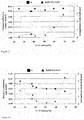
- Figure 2 gives the mechanical properties (indentation hardness H IT and abrasive wear rates) of the Cr-C/a-C:H coatings in dependence from the coating composition.
- the indentation hardness of the coatings increases up to a Cr:C ratio of approximately 50 %, the hardness seems to remain constant up to a Cr:C ratio of approximately 60% and to decrease for higher Cr:C ratios.
- the abrasive wear rates (determined with ball cratering test) are nearly constant up to a Cr:C ratio of approximately 45 %. A further rise of the Cr content leads to higher wear rates.
- Coatings having a Cr:C ratios smaller than 25 at% were not investigated in detail, because of the expected metal-free DLC like interaction (negative interaction) with Mo- and Zn-comprising oil additives as well as the expected disadvantageous combination of low coating hardness and increased wear rate as a result of the very low metal content.
- the hardness and the abrasive wear resistance of the investigated Cr-C/a-C:H coatings was lower compared to DLC-coatings of the type a-C:H as expected. Due to the wide industrial use of DLC coatings as high performance wear resistant and friction reducing coatings, a DLC coating of the type a-C:H was used as reference.
- An indentation hardness of more than 20 GPa (in the present case measured at 24.8 GPa) and abrasive wear rates of less than 1*10 -15 m 3 /Nm (here 0.6 * 10 -15 m 3 /Nm) confirm the outstanding mechanical properties of these coatings.
- Suitable process parameters allow the adjustment of the morphology as well as of the mechanical properties.
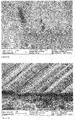
- Figure 3d gives an example of a Cr-C/a-C:H coating with a comparable composition (Cr:C ratio of ca. 50 %) which was obtained in a completely different range of deposition process parameters.
- the SEM cross section image of this coating shows the changed morphology with a more fine-grained and denser structure; in addition the surface topography is significantly changed.
- Tribological properties and interaction with oil additives Beside the properties which are imminent to the coating material itself, the behavior of a coating in a tribological system, including the substrate material, the lubricant and the counterpart is of major interest.
- 100Cr6 was used as counterpart material for the coated surfaces in a lubricated tribotest.
- the tribological tests were carried out with three different types of Cr-C/a-C:H with a significantly different behavior.
- the Cr content was low, middle and high with Cr:C ratios of approximately 25 %, 50 % and 70 % determined by EPMA analysis, covering the hardness range of H IT 10-15 GPa.
- a pure DLC (a-C:H) coating was used as reference.
- Figure 4a shows the friction curves obtained for sample coatings under lubrication with a standard engine oil.
- the oil had a standard additive package without MoDTC.
- the friction coefficient of all coatings is in the range of 0.11 and stable over the whole sliding distance. Running-in is rather fast, and the friction curves have a rather smooth shape.
- Cr-C/a-C:H coatings show nearly the same friction behavior under these conditions. The performance is comparable to the a-C:H reference coating, which has a much higher hardness and wear resistance.
- the Cr-C/a-C:H coating with Cr content corresponding to a Cr:C ratio of approximately 25 % has a significantly prolonged running-in phase.
- the friction coefficient stays for a long time at an elevated level before dropping down to a lower, but still relatively high value.
- the whole friction curve is rough in comparison to the other coatings.
- One possible explanation for this behavior is a severe wear of the coating, as demonstrated later.
- the friction coefficient curves of the Cr-C/a-C:H coating with Cr:C ratio of approximately 50 % and the a-C:H coating are quite similar. After a short running-in phase ( ⁇ 50 m) a smooth friction coefficient at a low level is reached. The fast drop to a low friction level at the start of the test could be explained by a smoothening effect of coating asperities.
- the Cr-C/a-C:H coating with a Cr:C ratio of approximately 70 % has a slightly longer running-in phase (about 200 m), resulting in a lower friction coefficient.
- the friction curve shows some "spikes". These "spikes" could indicate onset of significant wear respectively deformation of the coating. In this case the interlayer or/and the metal substrate material would be exposed. After this the additives which are optimized for metal surfaces would start to dominate the friction behavior.
- the wear track in combination with a possible deformation of the substrate material and coating surface is essential for an evaluation of the tribological performance of a coating under high load lubricated wear tests.
- a first step the depth of the friction respectively wear track was analyzed.
- Figure 5 shows the wear track depth, and the friction coefficient of Cr-C/a-C:H coatings with different Cr content.
- the wear track depth is the averaged result of a tactile stylus profiler measurement.
- Figure 5a and 5b show the results for the oil without and with MoDTC respectively.
- the friction coefficients for oil without MoDTC are nearly independent of the Cr-C/a-C:H coating compositions.
- the depth of the wear track is low for Cr contents corresponding to Cr:C ratios of up to about 55 %. At higher Cr contents the depth of the wear track increases.
- the low friction coefficient at a Cr content corresponding to a Cr:C ratio of 25 % is in the range of conventional a-C:H:Me coatings having Cr contents corresponding to Cr:C ratios of not more than 20 %.
- Those conventional a-C:H:Me coatings are designed to provide good functionality for the use under lubricated conditions with standard oils, but also under dry conditions in tribological contacts. Under such conditions the a-C:H:Me coatings are a feasible and suitable solution as a friction and wear reduction coating for a wide range of applications.
- Figure 7a shows the wear tracks of the three different Cr-C/a-C:H coatings with Cr:C ratios of approximately 25 %, 50 at% and 70 at% obtained without MoDTC.
- the laser microscope profiles of the wear tracks ( Figure 6 ) prove a smooth track and only small grooves for coating compositions corresponding to Cr-C ratios of 25 % and 50 %.
- the EDX mappings show no significant differences of the coating surface between wear track and unloaded coating areas.
- Figure 6 on the right side
- 7b shows the resulted wear tracks profiles and images after tests carried out with coatings having the same three coating compositions but using oil with MoDTC additives.
- Laser microscope profile of the coatings having a Cr-C ratio of approximately 25 % shows a significant trench over the whole wear track.
- the SEM and EDX images prove a severe wear of the coating and an exposure of the metal interlayer showing the insufficient wear resistance of the coating under these test conditions. Molybdenum could only be detected along the wear track which translates the interaction of the additive with the exposed metallic interlayer in the high loaded coating areas. However, no interaction between additive and coatings surface was detected in the unloaded coating areas.
- the laser microscope profile of the Cr-C/a-C:H coating with Cr:C ratio of approximately 50 % shows nearly no difference between the loaded and unloaded area, this means nearly no detectable or observable wear track could be noted.
- the EDX mapping images show a dense distribution of Mo over the whole loaded area. This is an indication that the intended effect of additives, especially MoDTC, also works on the homogeneous loaded area.
- the combined effect of the friction reduction properties of the coating itself and the interaction with the additives results in a rather low friction coefficient. In addition it can be assumed that this low friction is rather homogenous over the whole surface. In other words, there are no localized areas of higher friction which could initialize a local damage either by a locally increased temperature or a distortion of the material due to local overload.
- the Cr-C/a-C:H coating with Cr content corresponding to a Cr:C ratio of 70 % shows deep grooves and severe coating wear. Along the deep grooves correlated with the exposure of metallic surfaces the deposition of additives could be detected. But the poor wear resistance of the coating and the deep grooves in high loaded contacts limit the application of this coating despite the low friction coefficient.
- Figure 10 shows the SEM cross section image of a-C:H coating wear track after a lubricated friction test with MoDTC additives.
- a great number of distinguishable grooves could be detected in the wear track. It is obvious that there is no deformation of substrate material responsible for the creation of the grooves but an decrease of the a-C:H coating thickness. This is taken as a clear prove for the wear of the a-C:H coating under lubricated condition with MoDTC additives.
- Cr-C/a-C:H coatings with different compositions were synthesized successfully by sputtering chromium targets in a mixed Ar / C 2 H 2 atmosphere. A large range of Cr:C ratios could be adjusted. A detailed investigation of the mechanical and tribological properties of the coatings revealed that Cr-C/a-C:H coatings show excellent performance in high loaded tribological contacts under lubrication with a standard engine oil. When using an engine oil without MoDTC additives, the performance of the Cr-C/a-C:H coatings is comparable to that of well-established a-C:H coatings, regardless of the Cr content in the coatings.
- the better performance of Cr-C/a-C:H coatings especially at a Cr content corresponding to a Cr:C ratio of about 50 at%, can be attributed to a positive chemical and mechanical interaction between the Cr-C/a-C:H coating surface and the Molybdenum-comprising additive.
- Coating height in this context means the dimension corresponding to the length in the vertical axis of the coating machine along it the substrates to be coated are distributed and the maximum coating height corresponds to the longest coating height by which the deposition of a homogenous coating on the substrates to be coated can be assured (regarding coating quality as well as thickness).
- the respectively Cr:C ratios of the functional layers Cr-C/a-C:H were determined by EPMA analysis and the hydrogen contents were measured by secondary ion mass spectrometry (SIMS) examinations.
- Secondary ion mass spectrometry is a technique used in materials science and surface science to analyze the composition of solid surfaces and thin films by sputtering the surface of the specimen with a focused primary ion beam and collecting and analyzing ejected secondary ions. These secondary ions are measured with a mass spectrometer to determine the elemental, isotopic, or molecular composition of the surface.
- the hydrogen content decreases by increasing chromium content, however at a Cr:C ratio of about 1 there is still a significant H-content (about 3 at%) detectable.
- TMS Tetramethylsilan
- C 2 H 2 gases Tetramethylsilan
- a commercial PVD/PACVD-system Olelikon Balzers BAI830DLC with a residual pressure in the range of 2.0 ⁇ 10 -5 mbar or below was used.
- the steel substrates Prior to deposition, the steel substrates (DIN 1.2842, ⁇ 22 mm x 5.6 mm) were heated to approximately 150°C and etched in a pure Ar plasma with ions extracted from an additional arc discharge (low voltage arc). After etching, a pure Cr layer (adhesion layer 3) was deposited by means of dc-sputtering from two Cr-targets in a pure Ar atmosphere in order to assure a good adherence between the following coating and the steel substrate.
- a pure Cr layer adheresion layer 3
- a gradient layer comprising essentially Cr-N-C (transition layer 7) having variable nitrogen and carbon content along its thickness was deposited between the Cr-N and the Cr-C/a-C:(H+Si) layer by simultaneously reducing of the nitrogen flow and increasing of the C 2 H 2 - or TMS-flow or mixture of C 2 H 2 - and TMS flows in the coating chamber in order to increase the bonding strength within the coating system.
- the Cr-C/a-C:(H+Si) coatings were then deposited by means of dc-sputtering from two Cr-targets in a mixed Ar / TMS or Ar / TMS + C 2 H 2 atmosphere in a pressure range of 4.0 - 4.5 ⁇ 10 -3 mbar.
- the target power was kept constant at 7.5 kW per target, the bias voltage (applied with a d.c. pulse power supply) was adjusted to - 800 V and the Ar flow was set to 115 sccm.
- the Cr:C-ratio was then adjusted by simply varying the C 2 H 2 flow between 142 sccm (for the lowest Cr content) and 57 sccm (for the highest Cr content).
- the coating thickness was commonly adjusted to about 2 ⁇ m and the process temperature was below 230°C.
- the Cr content in the Cr-C/a-C:(H+Si) coatings varies nearly linearly with the TMS or TMS + C 2 H 2 flow.
- the Cr content was adjusted to obtain coatings with Cr:C ratios of between ⁇ 25 % (for the highest TMS or TMS + C 2 H 2 flow) and ⁇ 70 % (for the lowest TMS or TMS + C 2 H 2 flow).
- the run in layer is a Cr-C/a-C:(H+Si) layer having a Cr:C ratio of 25 % or a standard a-C:H layer having run-in properties.
- a-C:H metal-free DLC coating
- the a-C:H coating was performed in a m.f. glow discharge process in a mixed Ar / C 2 H 2 atmosphere with an approximately 0.5 ⁇ m thick sputtered Cr layer as adhesion layer.
- the Cr-C/a-C:(H+Si) coatings deposited according to the present invention as described above and having Cr:C ratios of between and including 30 and 60 % showed better interaction with Mo- and Zn-comprising oil additives in comparison with the comparative metal-free a-C:H coating resulting in better friction and wear behavior in tribological application tests.
- the at least one Me-C/a-C:X layer comprised in the coating of the sliding component mentioned above is a function layer (1).
- the coating of the sliding component mentioned above comprises in addition to the function layer (1) also at least one adhesion layer (3) and/or at least one support layer (5) and/or at least one transition layer (7) and/or at least one run-in layer (9), wherein
- the coating of the sliding component mentioned above which in addition to the function layer (1) also comprises at least one adhesion layer (3) and/or at least one support layer (5) and/or at least one transition layer (7) and/or at least one run-in layer (9) is characterized by:
- the coating of the sliding component mentioned above which in addition to the function layer (1) also comprises at least one adhesion layer (3) and/or at least one support layer (5) and/or at least one transition layer (7) and/or at least one run-in layer (9) is characterized by
- coating thickness to be used must be chosen depending on the application.
- coating thickness particularly functional layer coating thickness of up to 30 ⁇ m can be recommended for coating piston rings and up to 10 ⁇ m for coating tribological engine parts.
- a further embodiment of the present invention concerns to a tribological system comprising a sliding component according to one of above described embodiments of the present invention and a Molybdenum and/or Zinc-comprising lubricant.
- the present inventions relates also to the use of a sliding component according to one of the above described embodiments of the present invention for highly loaded applications by lubricated conditions.
Landscapes
- Chemical & Material Sciences (AREA)
- Engineering & Computer Science (AREA)
- Mechanical Engineering (AREA)
- Chemical Kinetics & Catalysis (AREA)
- Materials Engineering (AREA)
- Metallurgy (AREA)
- Organic Chemistry (AREA)
- General Engineering & Computer Science (AREA)
- Lubricants (AREA)
- Physical Vapour Deposition (AREA)
- Carbon And Carbon Compounds (AREA)
Claims (6)
- Composant de glissement adapté pour être utilisé en contact tribologique dans des conditions lubrifiées, le lubrifiant étant un molybdène et/ou du zinc comprenant de lubrifiant liquide, le composant comprenant:i) un substrat en acier;ii) un revêtement comprenant une couche contenant du carbone du type diamant (DLC) qui est du moins partiellement en contact avec le lubrifiant;le composant de glissement étant caractérisé par le fait que la couche contenant du carbone du type diamant (DLC), qui est également appelée la couche de fonction (1), a une composition d'éléments qui peut être exprimée comme (MeaC1-a)1-bXb avec 0.3 =<a=<0.6 et 0<b=<0.3,- Me étant du chrome ou une mélange de deux ou plusieurs métaux contenant principalement du chrome,- C étant du carbone,- X étant de l'hydrogène ou du silicium ou de l'azote ou du bore, ou une mélange de ceux-ci,- a étant la fraction atomique de Me, si seulement Me et C sont pris en compte dans la balance des éléments, et- b étant la fraction atomique de X, si Me, C et X sont pris en compte dans la balance des éléments.
- Composant de glissement selon la revendication 1 caractérisé par le fait que Me est du chrome et a s'élève á 0.45.
- Composant de glissement selon la revendication 1 ou 2 caractérisé par le fait que le revêtement comprend, outre la couche de fonction (1) contenant du carbone du type diamant (DLC), une ou plusieurs couches supplémentaires telles que:- du moins une couche adhésive (3) qui est déposée sur la surface de substrat d'acier à revêtir (10) entre la surface de substrat d'acier à revêtir (10) et la couche de fonction (1),- du moins une couche de support (5) déposée sous la couche de fonction (1) entre la surface de substrat à revêtir (10) et la couche de fonction (1) ou entre la du moins une couche adhésive (3) et la couche de fonction (1),- du moins une couche de transition (7) qui est déposée sous la couche de fonction (1) entre la du moins une couche adhésive (3) et la couche de fonction (1) ou entre la du moins une couche de support (5) et la couche de fonction (1),- du moins une couche de rodage (9) ayant une épaisseur de 1 µm au maximum est déposée sur la couche de fonction (1).
- Composant de glissement selon la revendication 3 caractérisé par le fait que:- Me est du chrome et- si présent, la du moins une couche adhésive (3) est essentiellement une couche métallique contenant du chrome, cette du moins une couche adhésive (3) ayant de préférence une épaisseur inférieure à 1 µm, et/ou- si présent, la du moins une couche de support (5) est essentiellement une couche de nitrure métallique contenant de préférence essentiellement de nitrure de chrome, et/ou- si présent, la du moins une couche de transition (7) est principalement une couche métallique de carbone et d'azote comprenant aussi les éléments Cr et X contenus dans la couche de fonction (1) et qui est une couche à gradient ayant une concentration variable des éléments le long de l'épaisseur de la couche, caractérisé particulièrement par une concentration de carbone moins élevée à proximité de la couche de support (5) et une concentration de carbone plus élevée à proximité de la couche de fonction (1), et/ou- si présent, la du moins une couche de rodage (9) est une couche a-C:H ou une couche Cr-C/a-C:X' qui est formée par une composition qui peut être exprimée par (CraC1-a)1-bX'b avec a = 0.25 et 0<b=<0.3, X' étant le même élément ou mélange d'éléments que X dans la couche de fonction (1).
- Composant de glissement selon une des revendications de 1 à 4, caracterisé par le fait que le composant de glissement est un segment de piston.
- Système tribologique comprenant un composant de glissement selon une des revendications de 1 à 5 et un molybdène et/ou du zinc comprenant de lubrifiant liquid.
Applications Claiming Priority (2)
| Application Number | Priority Date | Filing Date | Title |
|---|---|---|---|
| US201161448334P | 2011-03-02 | 2011-03-02 | |
| PCT/EP2012/000893 WO2012116818A1 (fr) | 2011-03-02 | 2012-03-01 | Composant coulissant revêtu d'une couche de carbone comprenant du métal pour l'amélioration de l'usure et du comportement de frottement par des applications tribologiques dans des conditions lubrifiées |
Publications (2)
| Publication Number | Publication Date |
|---|---|
| EP2681346A1 EP2681346A1 (fr) | 2014-01-08 |
| EP2681346B1 true EP2681346B1 (fr) | 2017-09-06 |
Family
ID=45819172
Family Applications (1)
| Application Number | Title | Priority Date | Filing Date |
|---|---|---|---|
| EP12708496.0A Active EP2681346B1 (fr) | 2011-03-02 | 2012-03-01 | Composant coulissant revêtu d'une couche de carbone comprenant du métal pour l'amélioration de l'usure et du comportement de frottement par des applications tribologiques dans des conditions lubrifiées |
Country Status (11)
| Country | Link |
|---|---|
| US (1) | US9528180B2 (fr) |
| EP (1) | EP2681346B1 (fr) |
| JP (1) | JP5982408B2 (fr) |
| KR (1) | KR101935067B1 (fr) |
| CN (1) | CN103635602B (fr) |
| AR (1) | AR085606A1 (fr) |
| BR (1) | BR112013021804A2 (fr) |
| MX (1) | MX346488B (fr) |
| MY (1) | MY180513A (fr) |
| PH (1) | PH12013501776A1 (fr) |
| WO (1) | WO2012116818A1 (fr) |
Families Citing this family (25)
| Publication number | Priority date | Publication date | Assignee | Title |
|---|---|---|---|---|
| AT511605B1 (de) * | 2011-12-12 | 2013-01-15 | High Tech Coatings Gmbh | Kohlenstoffbasierende beschichtung |
| US9580817B2 (en) | 2012-12-04 | 2017-02-28 | Vergason Technology, Inc. | Bilayer chromium nitride coated articles and related methods |
| JP5564099B2 (ja) * | 2012-12-28 | 2014-07-30 | 株式会社リケン | シリンダとピストンリングの組合せ |
| JP2015108181A (ja) * | 2013-12-05 | 2015-06-11 | 三菱自動車工業株式会社 | 車両用摺動部材及び車両の動弁機構 |
| CR20160376A (es) | 2014-01-20 | 2016-10-07 | Hanmi Pharm Ind Co Ltd | Insulina de acción prolongada y uso de la misma |
| AR100639A1 (es) | 2014-05-29 | 2016-10-19 | Hanmi Pharm Ind Co Ltd | Composición para tratar diabetes que comprende conjugados de análogos de insulina de acción prolongada y conjugados de péptidos insulinotrópicos de acción prolongada |
| AR100695A1 (es) | 2014-05-30 | 2016-10-26 | Hanmi Pharm Ind Co Ltd | Composición para el tratamiento de diabetes mellitus que comprende insulina y un agonista dual glp-1 / glucagón |
| FR3022560B1 (fr) | 2014-06-18 | 2022-02-25 | Hydromecanique & Frottement | Procede de revetement en carbone dlc du nez des cames d'un arbre a came, arbre a cames ainsi obtenu et installation pour la mise en oeuvre de ce procede |
| JP5941503B2 (ja) * | 2014-07-11 | 2016-06-29 | 株式会社豊田中央研究所 | 摺動機械 |
| JP6114730B2 (ja) * | 2014-10-24 | 2017-04-12 | 株式会社豊田中央研究所 | 摺動システム |
| CN107208263B (zh) | 2015-01-29 | 2019-09-20 | 株式会社捷太格特 | 非晶态烃基膜、以及具有所述膜的滑动构件和滑动系统 |
| US20170030211A1 (en) * | 2015-07-28 | 2017-02-02 | General Electric Company | Seals with a conformable coating for turbomachinery |
| UY36870A (es) | 2015-08-28 | 2017-03-31 | Hanmi Pharm Ind Co Ltd | Análogos de insulina novedosos |
| CN109863301A (zh) * | 2016-07-25 | 2019-06-07 | 开罗股份有限公司 | 摇摆板式压缩机和使用它的氧气浓缩器 |
| JP7158378B2 (ja) | 2016-09-23 | 2022-10-21 | ハンミ ファーマシューティカル カンパニー リミテッド | インスリン受容体との結合力が減少された、インスリンアナログ及びその用途 |
| JP6574801B2 (ja) * | 2017-03-10 | 2019-09-11 | 株式会社豊田中央研究所 | 摺動システム |
| KR101941975B1 (ko) | 2017-03-17 | 2019-01-25 | 고려대학교 산학협력단 | Atpif1을 함유하는 당뇨 치료용 약학조성물 |
| KR102629006B1 (ko) | 2017-03-23 | 2024-01-25 | 한미약품 주식회사 | 인슐린 수용체와의 결합력이 감소된 인슐린 아날로그의 결합체 및 이의 용도 |
| DE112018003515T5 (de) * | 2017-07-10 | 2020-04-09 | The University Of Akron | Katalytische metallbeschichtungen für metallbauteile zur verbesserung des tribologischen verhaltens in geschmierten systemen |
| CN108265291A (zh) * | 2018-01-30 | 2018-07-10 | 中国科学院宁波材料技术与工程研究所 | 一种软质基体表面的碳基涂层及其制备方法 |
| CN108396292B (zh) * | 2018-03-12 | 2020-03-17 | 中国科学院力学研究所 | 一种压铸模具用复合涂层及其制备方法 |
| FR3082527B1 (fr) * | 2018-06-18 | 2020-09-18 | Hydromecanique & Frottement | Piece revetue par un revetement de carbone amorphe non-hydrogene sur une sous-couche comportant du chrome, du carbone et du silicium |
| CN108950480B (zh) * | 2018-08-22 | 2020-08-14 | 中国科学院力学研究所 | 一种高韧耐磨复合涂层及将其沉积在热作凸模具上的方法 |
| CN115200867A (zh) * | 2021-04-13 | 2022-10-18 | 潍柴动力股份有限公司 | 一种发动机及发动机的异常磨损部位识别方法 |
| CN113896922B (zh) * | 2021-09-27 | 2023-01-17 | 江苏徐工工程机械研究院有限公司 | 一种自润滑高耐磨涂层和聚氨酯密封圈及其制备方法 |
Family Cites Families (27)
| Publication number | Priority date | Publication date | Assignee | Title |
|---|---|---|---|---|
| DE3246361A1 (de) | 1982-02-27 | 1983-09-08 | Philips Patentverwaltung Gmbh, 2000 Hamburg | Kohlenstoff enthaltende gleitschicht |
| US5266409A (en) * | 1989-04-28 | 1993-11-30 | Digital Equipment Corporation | Hydrogenated carbon compositions |
| JP3336682B2 (ja) * | 1992-07-02 | 2002-10-21 | 住友電気工業株式会社 | 硬質炭素膜 |
| NL1007046C2 (nl) * | 1997-09-16 | 1999-03-17 | Skf Ind Trading & Dev | Bekleed wentellager. |
| DE10018143C5 (de) * | 2000-04-12 | 2012-09-06 | Oerlikon Trading Ag, Trübbach | DLC-Schichtsystem sowie Verfahren und Vorrichtung zur Herstellung eines derartigen Schichtsystems |
| JP4007440B2 (ja) * | 2000-04-28 | 2007-11-14 | 三宅 正二郎 | 硬質炭素皮膜摺動部材 |
| JP4793531B2 (ja) | 2001-07-17 | 2011-10-12 | 住友電気工業株式会社 | 非晶質炭素被膜と非晶質炭素被膜の製造方法および非晶質炭素被膜の被覆部材 |
| JP3555891B2 (ja) * | 2002-02-22 | 2004-08-18 | 新日本石油株式会社 | 低摩擦摺動材料及びこれに用いる潤滑油組成物 |
| US6969198B2 (en) * | 2002-11-06 | 2005-11-29 | Nissan Motor Co., Ltd. | Low-friction sliding mechanism |
| DE602004022732D1 (de) * | 2003-03-26 | 2009-10-08 | Infineum Int Ltd | Verwendung einer Organomolybdänverbindung enthaltenden Zusammensetzung für die Schmierung von diamentartigen Kohlenstoffschichten |
| JP2005002888A (ja) * | 2003-06-12 | 2005-01-06 | Nissan Motor Co Ltd | 自動車エンジン用ピストンリング及びこれに用いる潤滑油組成物 |
| EP1666573B1 (fr) * | 2003-08-06 | 2019-05-15 | Nissan Motor Company Limited | Mecanisme coulissant a faible frottement et procede de reduction de frottement |
| EP1661971A4 (fr) * | 2003-08-06 | 2008-12-03 | Nippon Oil Corp | Systeme presentant des faces de contact dlc, methode pour lubrifier ce systeme et huile lubrifiante pour ce systeme |
| JP2005054617A (ja) * | 2003-08-08 | 2005-03-03 | Nissan Motor Co Ltd | 動弁機構 |
| WO2005047737A1 (fr) * | 2003-11-10 | 2005-05-26 | The Timken Company | Differentiel a revetement en couche mince au niveau d'un arbre transversal et procedes de fabrication dudit differentiel |
| EP1771596A1 (fr) * | 2004-07-09 | 2007-04-11 | OC Oerlikon Balzers AG | MATERIAU CONDUCTEUR A BASE DE CUIVRE PRESENTANT UN REVETEMENT EN MATERIAU DUR Me-DLC |
| PL1771602T3 (pl) * | 2004-07-15 | 2011-07-29 | Oerlikon Trading Ag | Twarde materiały powłokowe o wysokiej odporności na utlenianie dla narzędzi skrawających |
| JP2006138404A (ja) * | 2004-11-12 | 2006-06-01 | Kobe Steel Ltd | 水系環境下での耐摩耗性に優れた摺動部材 |
| JP4704950B2 (ja) * | 2006-04-27 | 2011-06-22 | 株式会社神戸製鋼所 | 非晶質炭素系硬質多層膜及びこの膜を表面に備えた硬質表面部材 |
| JP2008195903A (ja) * | 2007-02-15 | 2008-08-28 | Toyota Motor Corp | 摺動構造 |
| EP2118503B1 (fr) * | 2007-02-28 | 2012-11-14 | The Timken Company | Ensemble de rouleau a roulement conique bidirectionnel avec resistance a l'usure amelioree |
| JP2009079138A (ja) * | 2007-09-26 | 2009-04-16 | Toyota Motor Corp | 摺動構造または摺動方法 |
| JP4333794B2 (ja) * | 2007-11-06 | 2009-09-16 | トヨタ自動車株式会社 | 摺動構造 |
| JP5099693B2 (ja) * | 2008-02-06 | 2012-12-19 | 地方独立行政法人山口県産業技術センター | 非晶質炭素膜及びその成膜方法 |
| JP5342365B2 (ja) * | 2009-08-05 | 2013-11-13 | 株式会社豊田中央研究所 | 低摩擦摺動部材 |
| CN102002684B (zh) * | 2009-08-31 | 2014-07-30 | 日立金属株式会社 | 滑动部件 |
| US8895488B2 (en) * | 2010-11-30 | 2014-11-25 | Honda Motor Co., Ltd | Sliding structural members |
-
2012
- 2012-03-01 EP EP12708496.0A patent/EP2681346B1/fr active Active
- 2012-03-01 CN CN201280012217.3A patent/CN103635602B/zh active Active
- 2012-03-01 WO PCT/EP2012/000893 patent/WO2012116818A1/fr not_active Ceased
- 2012-03-01 PH PH1/2013/501776A patent/PH12013501776A1/en unknown
- 2012-03-01 BR BR112013021804A patent/BR112013021804A2/pt active Search and Examination
- 2012-03-01 US US14/002,412 patent/US9528180B2/en active Active
- 2012-03-01 MY MYPI2013003168A patent/MY180513A/en unknown
- 2012-03-01 KR KR1020137023050A patent/KR101935067B1/ko active Active
- 2012-03-01 JP JP2013555793A patent/JP5982408B2/ja active Active
- 2012-03-01 MX MX2013010078A patent/MX346488B/es active IP Right Grant
- 2012-03-02 AR ARP120100690A patent/AR085606A1/es not_active Application Discontinuation
Non-Patent Citations (1)
| Title |
|---|
| None * |
Also Published As
| Publication number | Publication date |
|---|---|
| JP5982408B2 (ja) | 2016-08-31 |
| JP2014510196A (ja) | 2014-04-24 |
| CN103635602B (zh) | 2016-08-31 |
| US9528180B2 (en) | 2016-12-27 |
| MX346488B (es) | 2017-03-22 |
| MY180513A (en) | 2020-12-01 |
| BR112013021804A2 (pt) | 2017-03-28 |
| CN103635602A (zh) | 2014-03-12 |
| US20140128298A1 (en) | 2014-05-08 |
| AR085606A1 (es) | 2013-10-16 |
| WO2012116818A1 (fr) | 2012-09-07 |
| PH12013501776A1 (en) | 2013-11-18 |
| KR101935067B1 (ko) | 2019-01-03 |
| MX2013010078A (es) | 2014-03-12 |
| EP2681346A1 (fr) | 2014-01-08 |
| KR20140006938A (ko) | 2014-01-16 |
Similar Documents
| Publication | Publication Date | Title |
|---|---|---|
| EP2681346B1 (fr) | Composant coulissant revêtu d'une couche de carbone comprenant du métal pour l'amélioration de l'usure et du comportement de frottement par des applications tribologiques dans des conditions lubrifiées | |
| Keunecke et al. | CrC/aC: H coatings for highly loaded, low friction applications under formulated oil lubrication | |
| Hovsepian et al. | TiAlN/VN superlattice structured PVD coatings: a new alternative in machining of aluminium alloys for aerospace and automotive components | |
| RU2622553C2 (ru) | Слои монооксида молибдена и их получение с помощью pvd | |
| US10041017B2 (en) | Coating with enhanced sliding properties | |
| Bobzin et al. | Arc PVD (Cr, Al, Mo) N and (Cr, Al, Cu) N coatings for mobility applications | |
| Hovsepian et al. | Friction and wear behaviour of Mo–W doped carbon-based coating during boundary lubricated sliding | |
| EP3643805A1 (fr) | Élément coulissant et film de revêtement | |
| KR101704910B1 (ko) | 슬라이딩 기계 | |
| Kuprin et al. | Structural, mechanical and tribological properties of Cr-VN coatings deposited by cathodic arc evaporation | |
| Seynstahl et al. | Enhancing the lifetime and vacuum tribological performance of PVD-MoS2 coatings by nitrogen modification | |
| Ouyang et al. | Friction and wear characteristics of a Ti-containing diamond-like carbon coating with an SRV tester at high contact load and elevated temperature | |
| CA2883432A1 (fr) | Revetement par depot physique en phase vapeur par arc presentant de meilleures proprietes de reduction du frottement et de reduction de l'usure | |
| Bakhytuly et al. | Microstructure and tribological study of TiAlCN and TiTaCN coatings | |
| JP6295285B2 (ja) | 摺動システム | |
| CN111148858B (zh) | 滑动部件 | |
| Bobzin | Mechanical and tribological characterization of self-lubricating (Cr1-xAlx) N coatings for deposition on complex-shaped forging tools | |
| JP5502677B2 (ja) | 潤滑特性に優れた金属塑性加工用工具およびその製造方法 | |
| Rodziňák et al. | Effect of TiCN coating on tribological properties of Astaloy CrL sintered steel | |
| JP7159111B2 (ja) | 摺動部材と潤滑油との組み合わせ | |
| Kowalczyk et al. | Tribological characterization of AlTiN, TiN, and TiAlN coatings | |
| EP2060656A2 (fr) | Film en carbone dur et élément coulissant en film de carbone dur | |
| Bhowmick et al. | Enhanced high-temperature tribological performance of fluorinated tetrahedral amorphous carbon (ta-C: F) coatings in sliding applications | |
| Polychronopoulou et al. | Tribological properties of twin electron-beam evaporated Cr–N and Al–Cr–N coatings under laboratory sliding and drill experiments | |
| JP7061006B2 (ja) | 摺動部材と摺動機械 |
Legal Events
| Date | Code | Title | Description |
|---|---|---|---|
| PUAI | Public reference made under article 153(3) epc to a published international application that has entered the european phase |
Free format text: ORIGINAL CODE: 0009012 |
|
| 17P | Request for examination filed |
Effective date: 20131002 |
|
| AK | Designated contracting states |
Kind code of ref document: A1 Designated state(s): AL AT BE BG CH CY CZ DE DK EE ES FI FR GB GR HR HU IE IS IT LI LT LU LV MC MK MT NL NO PL PT RO RS SE SI SK SM TR |
|
| DAX | Request for extension of the european patent (deleted) | ||
| RAP1 | Party data changed (applicant data changed or rights of an application transferred) |
Owner name: OERLIKON SURFACE SOLUTIONS AG, TRUEBBACH |
|
| 17Q | First examination report despatched |
Effective date: 20160714 |
|
| RAP1 | Party data changed (applicant data changed or rights of an application transferred) |
Owner name: OERLIKON SURFACE SOLUTIONS AG, PFAEFFIKON |
|
| STAA | Information on the status of an ep patent application or granted ep patent |
Free format text: STATUS: EXAMINATION IS IN PROGRESS |
|
| GRAP | Despatch of communication of intention to grant a patent |
Free format text: ORIGINAL CODE: EPIDOSNIGR1 |
|
| STAA | Information on the status of an ep patent application or granted ep patent |
Free format text: STATUS: GRANT OF PATENT IS INTENDED |
|
| RIC1 | Information provided on ipc code assigned before grant |
Ipc: F04B 1/14 20060101ALI20170428BHEP Ipc: C23C 14/14 20060101ALI20170428BHEP Ipc: C23C 14/06 20060101AFI20170428BHEP Ipc: C23C 14/02 20060101ALI20170428BHEP Ipc: F04B 1/20 20060101ALI20170428BHEP Ipc: C23C 14/35 20060101ALI20170428BHEP Ipc: F04B 27/10 20060101ALI20170428BHEP Ipc: F04B 27/08 20060101ALI20170428BHEP Ipc: C23C 14/50 20060101ALI20170428BHEP |
|
| INTG | Intention to grant announced |
Effective date: 20170601 |
|
| GRAS | Grant fee paid |
Free format text: ORIGINAL CODE: EPIDOSNIGR3 |
|
| GRAA | (expected) grant |
Free format text: ORIGINAL CODE: 0009210 |
|
| STAA | Information on the status of an ep patent application or granted ep patent |
Free format text: STATUS: THE PATENT HAS BEEN GRANTED |
|
| AK | Designated contracting states |
Kind code of ref document: B1 Designated state(s): AL AT BE BG CH CY CZ DE DK EE ES FI FR GB GR HR HU IE IS IT LI LT LU LV MC MK MT NL NO PL PT RO RS SE SI SK SM TR |
|
| REG | Reference to a national code |
Ref country code: GB Ref legal event code: FG4D |
|
| REG | Reference to a national code |
Ref country code: CH Ref legal event code: EP Ref country code: AT Ref legal event code: REF Ref document number: 926026 Country of ref document: AT Kind code of ref document: T Effective date: 20170915 |
|
| REG | Reference to a national code |
Ref country code: IE Ref legal event code: FG4D |
|
| REG | Reference to a national code |
Ref country code: DE Ref legal event code: R096 Ref document number: 602012036893 Country of ref document: DE |
|
| REG | Reference to a national code |
Ref country code: NL Ref legal event code: FP |
|
| REG | Reference to a national code |
Ref country code: LT Ref legal event code: MG4D |
|
| PG25 | Lapsed in a contracting state [announced via postgrant information from national office to epo] |
Ref country code: NO Free format text: LAPSE BECAUSE OF FAILURE TO SUBMIT A TRANSLATION OF THE DESCRIPTION OR TO PAY THE FEE WITHIN THE PRESCRIBED TIME-LIMIT Effective date: 20171206 Ref country code: FI Free format text: LAPSE BECAUSE OF FAILURE TO SUBMIT A TRANSLATION OF THE DESCRIPTION OR TO PAY THE FEE WITHIN THE PRESCRIBED TIME-LIMIT Effective date: 20170906 Ref country code: LT Free format text: LAPSE BECAUSE OF FAILURE TO SUBMIT A TRANSLATION OF THE DESCRIPTION OR TO PAY THE FEE WITHIN THE PRESCRIBED TIME-LIMIT Effective date: 20170906 Ref country code: SE Free format text: LAPSE BECAUSE OF FAILURE TO SUBMIT A TRANSLATION OF THE DESCRIPTION OR TO PAY THE FEE WITHIN THE PRESCRIBED TIME-LIMIT Effective date: 20170906 Ref country code: HR Free format text: LAPSE BECAUSE OF FAILURE TO SUBMIT A TRANSLATION OF THE DESCRIPTION OR TO PAY THE FEE WITHIN THE PRESCRIBED TIME-LIMIT Effective date: 20170906 |
|
| PG25 | Lapsed in a contracting state [announced via postgrant information from national office to epo] |
Ref country code: BG Free format text: LAPSE BECAUSE OF FAILURE TO SUBMIT A TRANSLATION OF THE DESCRIPTION OR TO PAY THE FEE WITHIN THE PRESCRIBED TIME-LIMIT Effective date: 20171206 Ref country code: ES Free format text: LAPSE BECAUSE OF FAILURE TO SUBMIT A TRANSLATION OF THE DESCRIPTION OR TO PAY THE FEE WITHIN THE PRESCRIBED TIME-LIMIT Effective date: 20170906 Ref country code: GR Free format text: LAPSE BECAUSE OF FAILURE TO SUBMIT A TRANSLATION OF THE DESCRIPTION OR TO PAY THE FEE WITHIN THE PRESCRIBED TIME-LIMIT Effective date: 20171207 Ref country code: LV Free format text: LAPSE BECAUSE OF FAILURE TO SUBMIT A TRANSLATION OF THE DESCRIPTION OR TO PAY THE FEE WITHIN THE PRESCRIBED TIME-LIMIT Effective date: 20170906 Ref country code: RS Free format text: LAPSE BECAUSE OF FAILURE TO SUBMIT A TRANSLATION OF THE DESCRIPTION OR TO PAY THE FEE WITHIN THE PRESCRIBED TIME-LIMIT Effective date: 20170906 |
|
| REG | Reference to a national code |
Ref country code: FR Ref legal event code: PLFP Year of fee payment: 7 |
|
| REG | Reference to a national code |
Ref country code: SK Ref legal event code: T3 Ref document number: E 25952 Country of ref document: SK |
|
| PG25 | Lapsed in a contracting state [announced via postgrant information from national office to epo] |
Ref country code: RO Free format text: LAPSE BECAUSE OF FAILURE TO SUBMIT A TRANSLATION OF THE DESCRIPTION OR TO PAY THE FEE WITHIN THE PRESCRIBED TIME-LIMIT Effective date: 20170906 Ref country code: PL Free format text: LAPSE BECAUSE OF FAILURE TO SUBMIT A TRANSLATION OF THE DESCRIPTION OR TO PAY THE FEE WITHIN THE PRESCRIBED TIME-LIMIT Effective date: 20170906 |
|
| PG25 | Lapsed in a contracting state [announced via postgrant information from national office to epo] |
Ref country code: IT Free format text: LAPSE BECAUSE OF FAILURE TO SUBMIT A TRANSLATION OF THE DESCRIPTION OR TO PAY THE FEE WITHIN THE PRESCRIBED TIME-LIMIT Effective date: 20170906 Ref country code: EE Free format text: LAPSE BECAUSE OF FAILURE TO SUBMIT A TRANSLATION OF THE DESCRIPTION OR TO PAY THE FEE WITHIN THE PRESCRIBED TIME-LIMIT Effective date: 20170906 Ref country code: SM Free format text: LAPSE BECAUSE OF FAILURE TO SUBMIT A TRANSLATION OF THE DESCRIPTION OR TO PAY THE FEE WITHIN THE PRESCRIBED TIME-LIMIT Effective date: 20170906 Ref country code: IS Free format text: LAPSE BECAUSE OF FAILURE TO SUBMIT A TRANSLATION OF THE DESCRIPTION OR TO PAY THE FEE WITHIN THE PRESCRIBED TIME-LIMIT Effective date: 20180106 |
|
| REG | Reference to a national code |
Ref country code: DE Ref legal event code: R097 Ref document number: 602012036893 Country of ref document: DE |
|
| PLBE | No opposition filed within time limit |
Free format text: ORIGINAL CODE: 0009261 |
|
| STAA | Information on the status of an ep patent application or granted ep patent |
Free format text: STATUS: NO OPPOSITION FILED WITHIN TIME LIMIT |
|
| PG25 | Lapsed in a contracting state [announced via postgrant information from national office to epo] |
Ref country code: DK Free format text: LAPSE BECAUSE OF FAILURE TO SUBMIT A TRANSLATION OF THE DESCRIPTION OR TO PAY THE FEE WITHIN THE PRESCRIBED TIME-LIMIT Effective date: 20170906 |
|
| 26N | No opposition filed |
Effective date: 20180607 |
|
| PG25 | Lapsed in a contracting state [announced via postgrant information from national office to epo] |
Ref country code: SI Free format text: LAPSE BECAUSE OF FAILURE TO SUBMIT A TRANSLATION OF THE DESCRIPTION OR TO PAY THE FEE WITHIN THE PRESCRIBED TIME-LIMIT Effective date: 20170906 |
|
| PG25 | Lapsed in a contracting state [announced via postgrant information from national office to epo] |
Ref country code: MC Free format text: LAPSE BECAUSE OF FAILURE TO SUBMIT A TRANSLATION OF THE DESCRIPTION OR TO PAY THE FEE WITHIN THE PRESCRIBED TIME-LIMIT Effective date: 20170906 |
|
| REG | Reference to a national code |
Ref country code: BE Ref legal event code: MM Effective date: 20180331 |
|
| REG | Reference to a national code |
Ref country code: IE Ref legal event code: MM4A |
|
| PG25 | Lapsed in a contracting state [announced via postgrant information from national office to epo] |
Ref country code: LU Free format text: LAPSE BECAUSE OF NON-PAYMENT OF DUE FEES Effective date: 20180301 |
|
| PG25 | Lapsed in a contracting state [announced via postgrant information from national office to epo] |
Ref country code: IE Free format text: LAPSE BECAUSE OF NON-PAYMENT OF DUE FEES Effective date: 20180301 |
|
| PG25 | Lapsed in a contracting state [announced via postgrant information from national office to epo] |
Ref country code: BE Free format text: LAPSE BECAUSE OF NON-PAYMENT OF DUE FEES Effective date: 20180331 |
|
| PGFP | Annual fee paid to national office [announced via postgrant information from national office to epo] |
Ref country code: CZ Payment date: 20190301 Year of fee payment: 8 |
|
| PGFP | Annual fee paid to national office [announced via postgrant information from national office to epo] |
Ref country code: AT Payment date: 20190401 Year of fee payment: 8 |
|
| PGFP | Annual fee paid to national office [announced via postgrant information from national office to epo] |
Ref country code: SK Payment date: 20190301 Year of fee payment: 8 Ref country code: NL Payment date: 20190401 Year of fee payment: 8 |
|
| PGFP | Annual fee paid to national office [announced via postgrant information from national office to epo] |
Ref country code: CH Payment date: 20190401 Year of fee payment: 8 |
|
| PGFP | Annual fee paid to national office [announced via postgrant information from national office to epo] |
Ref country code: GB Payment date: 20190401 Year of fee payment: 8 |
|
| PG25 | Lapsed in a contracting state [announced via postgrant information from national office to epo] |
Ref country code: MT Free format text: LAPSE BECAUSE OF NON-PAYMENT OF DUE FEES Effective date: 20180301 |
|
| PG25 | Lapsed in a contracting state [announced via postgrant information from national office to epo] |
Ref country code: TR Free format text: LAPSE BECAUSE OF FAILURE TO SUBMIT A TRANSLATION OF THE DESCRIPTION OR TO PAY THE FEE WITHIN THE PRESCRIBED TIME-LIMIT Effective date: 20170906 |
|
| REG | Reference to a national code |
Ref country code: AT Ref legal event code: UEP Ref document number: 926026 Country of ref document: AT Kind code of ref document: T Effective date: 20170906 |
|
| PG25 | Lapsed in a contracting state [announced via postgrant information from national office to epo] |
Ref country code: HU Free format text: LAPSE BECAUSE OF FAILURE TO SUBMIT A TRANSLATION OF THE DESCRIPTION OR TO PAY THE FEE WITHIN THE PRESCRIBED TIME-LIMIT; INVALID AB INITIO Effective date: 20120301 Ref country code: PT Free format text: LAPSE BECAUSE OF FAILURE TO SUBMIT A TRANSLATION OF THE DESCRIPTION OR TO PAY THE FEE WITHIN THE PRESCRIBED TIME-LIMIT Effective date: 20170906 |
|
| PG25 | Lapsed in a contracting state [announced via postgrant information from national office to epo] |
Ref country code: CY Free format text: LAPSE BECAUSE OF FAILURE TO SUBMIT A TRANSLATION OF THE DESCRIPTION OR TO PAY THE FEE WITHIN THE PRESCRIBED TIME-LIMIT Effective date: 20170906 Ref country code: MK Free format text: LAPSE BECAUSE OF NON-PAYMENT OF DUE FEES Effective date: 20170906 |
|
| PG25 | Lapsed in a contracting state [announced via postgrant information from national office to epo] |
Ref country code: AL Free format text: LAPSE BECAUSE OF FAILURE TO SUBMIT A TRANSLATION OF THE DESCRIPTION OR TO PAY THE FEE WITHIN THE PRESCRIBED TIME-LIMIT Effective date: 20170906 |
|
| PG25 | Lapsed in a contracting state [announced via postgrant information from national office to epo] |
Ref country code: CZ Free format text: LAPSE BECAUSE OF NON-PAYMENT OF DUE FEES Effective date: 20200301 |
|
| REG | Reference to a national code |
Ref country code: CH Ref legal event code: PL |
|
| REG | Reference to a national code |
Ref country code: NL Ref legal event code: MM Effective date: 20200401 |
|
| REG | Reference to a national code |
Ref country code: AT Ref legal event code: MM01 Ref document number: 926026 Country of ref document: AT Kind code of ref document: T Effective date: 20200301 |
|
| REG | Reference to a national code |
Ref country code: SK Ref legal event code: MM4A Ref document number: E 25952 Country of ref document: SK Effective date: 20200301 |
|
| PG25 | Lapsed in a contracting state [announced via postgrant information from national office to epo] |
Ref country code: NL Free format text: LAPSE BECAUSE OF NON-PAYMENT OF DUE FEES Effective date: 20200401 |
|
| PG25 | Lapsed in a contracting state [announced via postgrant information from national office to epo] |
Ref country code: LI Free format text: LAPSE BECAUSE OF NON-PAYMENT OF DUE FEES Effective date: 20200331 Ref country code: CH Free format text: LAPSE BECAUSE OF NON-PAYMENT OF DUE FEES Effective date: 20200331 Ref country code: AT Free format text: LAPSE BECAUSE OF NON-PAYMENT OF DUE FEES Effective date: 20200301 |
|
| PG25 | Lapsed in a contracting state [announced via postgrant information from national office to epo] |
Ref country code: SK Free format text: LAPSE BECAUSE OF NON-PAYMENT OF DUE FEES Effective date: 20200301 |
|
| GBPC | Gb: european patent ceased through non-payment of renewal fee |
Effective date: 20200301 |
|
| PG25 | Lapsed in a contracting state [announced via postgrant information from national office to epo] |
Ref country code: GB Free format text: LAPSE BECAUSE OF NON-PAYMENT OF DUE FEES Effective date: 20200301 |
|
| PGFP | Annual fee paid to national office [announced via postgrant information from national office to epo] |
Ref country code: DE Payment date: 20260320 Year of fee payment: 15 |
|
| PGFP | Annual fee paid to national office [announced via postgrant information from national office to epo] |
Ref country code: FR Payment date: 20260323 Year of fee payment: 15 |