EP2683199B1 - Détermination de voies de communication dans un réseau de communication sans fil - Google Patents
Détermination de voies de communication dans un réseau de communication sans fil Download PDFInfo
- Publication number
- EP2683199B1 EP2683199B1 EP12175093.9A EP12175093A EP2683199B1 EP 2683199 B1 EP2683199 B1 EP 2683199B1 EP 12175093 A EP12175093 A EP 12175093A EP 2683199 B1 EP2683199 B1 EP 2683199B1
- Authority
- EP
- European Patent Office
- Prior art keywords
- node
- message
- network
- weight
- investigating
- Prior art date
- Legal status (The legal status is an assumption and is not a legal conclusion. Google has not performed a legal analysis and makes no representation as to the accuracy of the status listed.)
- Active
Links
Images



Classifications
-
- H—ELECTRICITY
- H04—ELECTRIC COMMUNICATION TECHNIQUE
- H04W—WIRELESS COMMUNICATION NETWORKS
- H04W40/00—Communication routing or communication path finding
- H04W40/24—Connectivity information management, e.g. connectivity discovery or connectivity update
-
- H—ELECTRICITY
- H04—ELECTRIC COMMUNICATION TECHNIQUE
- H04L—TRANSMISSION OF DIGITAL INFORMATION, e.g. TELEGRAPHIC COMMUNICATION
- H04L41/00—Arrangements for maintenance, administration or management of data switching networks, e.g. of packet switching networks
- H04L41/08—Configuration management of networks or network elements
- H04L41/085—Retrieval of network configuration; Tracking network configuration history
- H04L41/0853—Retrieval of network configuration; Tracking network configuration history by actively collecting configuration information or by backing up configuration information
-
- H—ELECTRICITY
- H04—ELECTRIC COMMUNICATION TECHNIQUE
- H04L—TRANSMISSION OF DIGITAL INFORMATION, e.g. TELEGRAPHIC COMMUNICATION
- H04L45/00—Routing or path finding of packets in data switching networks
- H04L45/12—Shortest path evaluation
- H04L45/123—Evaluation of link metrics
-
- H—ELECTRICITY
- H04—ELECTRIC COMMUNICATION TECHNIQUE
- H04L—TRANSMISSION OF DIGITAL INFORMATION, e.g. TELEGRAPHIC COMMUNICATION
- H04L45/00—Routing or path finding of packets in data switching networks
- H04L45/26—Route discovery packet
-
- H—ELECTRICITY
- H04—ELECTRIC COMMUNICATION TECHNIQUE
- H04W—WIRELESS COMMUNICATION NETWORKS
- H04W40/00—Communication routing or communication path finding
- H04W40/02—Communication route or path selection, e.g. power-based or shortest path routing
- H04W40/12—Communication route or path selection, e.g. power-based or shortest path routing based on transmission quality or channel quality
Definitions
- the present invention generally relates to wireless communication devices in industrial wireless networks. More particularly the present invention relates to a method for allowing a network manager device to determine communication paths in an industrial wireless network, a wireless communication device for an industrial wireless network, a computer program product for a wireless communication device, a method for investigating communication paths in an industrial wireless network, a network manager device for an industrial wireless network and a computer program product for a network manager device of an industrial wireless network.
- Wireless sensor networks are known to be used in process control systems. Examples on such networks are ZigBee and WirelessHart, ISA100, WIA-PA and Bluetooth. There also exist some WLAN based sensor networks.
- TDMA Time Division Multiple Access
- Some wireless networks use a fixed allocation of the time interval to field devices. This requires a network manager or radio resource manager that manages the resources.
- Weights have also been used for various purposes in data networks.
- Distribution weightings are provided for a node of the communication network which has several alternatives or downward links for the routing to a target.
- the distribution weightings are modified relative to each other as a measure of the traffic loading on the downward links in order to reduce distributed traffic on highly loaded links and to increase distributed traffic on the less loaded links.
- US 2006/0209785 describes a method of routing data packets across a multi-layer network which includes a plurality of nodes, a logical level provided with a plurality of logical links and a physical level provided with a plurality of physical links, each of the logical links corresponding to at least one of the physical links.
- the method comprising assigning a weight to each logical link with respect to a first critical constraint in the logical level, refining the weight assigned to each logical link with respect to a second critical constraint in the physical level and, based on the weights assigned to each link, computing a path at the logical level connecting a start node to an end node for the transport of the data packets.
- US 2006/0168317 describes the routing of data packets comprising a target address in a packet switching data network.
- a first and second transmission path are assigned respective traffic distribution weightings in a routing table for individual target addresses that is assigned to a network node, wherein weightings indicate the respective allocated traffic load per transmission path.
- the maximum traffic distribution weighting is assigned to the respective first transmission path and the minimum traffic distribution weighting is assigned to the second transmission path.
- data packets are routed via the first transmission path and if the path is interrupted, the packets are routed via the second transmission path.
- US 2011/0164565 describes a method of routing a wireless network. The method is performed by each of a group of nodes and includes: receiving a routing request signal; determining whether a node itself is a destination node, by referring to a traffic distribution table showing traffic throughput of the group of nodes and an intermediate-node weight table showing weights of intermediate nodes on all paths between the group of nodes and a source node, wherein a route path is selected by referring to the weights of intermediate nodes; and when it is determined that the node itself is the destination node transmitting a routing response signal to the source node that has transmitted the routing request signal, and receiving a packet from the source node, wherein the transmitting and receiving are performed by the determined destination node.
- a source routing scheme routes packets by establishing a fixed path from the source to the destination. If any node or link through this path fails, the communication will be terminated.
- Graph routing schemes are more reliable than source routing by providing additional paths from the source to the destination.
- the network topology changes, it will take a long time to generate a new graph. During the graph adjusting period, the communication in this network may also be terminated. All of this may lead to economic loss or a safety problem, which is unacceptable for industrial applications.
- the present invention is directed towards providing an improved industrial wireless communication network.
- One object of the present invention is to provide an improved method for allowing a network manager device to determine communication paths in an industrial wireless network.
- This object is according to a first aspect of the present invention achieved through a method for allowing a network manager device to determine communication paths in an industrial wireless network, the method being performed by a wireless communication device being a node in the industrial wireless communication network, the wireless communication device having node configuration data comprising a node weight and the method comprising the steps of:
- Another object of the present invention is to provide an improved wireless communication device in an industrial wireless network.
- This object is according to a second aspect of the present invention achieved through a wireless communication device for an industrial wireless network, the wireless communication device providing a node in the industrial wireless network and comprising:
- Another object of the present invention is to provide a computer program product for a wireless communication device, which computer program product provides an improved wireless communication device.
- a computer program product for a wireless communication device the wireless communication device providing a node in an industrial wireless network and being provided with a node weight
- the computer program product comprising a data carrier with computer program code which when run on a processor forming a node configuration control unit of the wireless communication device, causes the node configuration control unit to:
- Another object of the present invention is to provide an improved method for determining communication paths in an industrial wireless network.
- This object is according to a fourth aspect achieved by a method for investigating communication paths in an industrial wireless network, the method being performed by a network manager device of the industrial wireless network and comprising the steps of:
- Yet another object of the present invention is to provide an improved network manager device.
- a network manager device for an industrial wireless network comprising:
- Yet another object is to provide a computer program product for a network manager device, which computer program product provides an improved network manager device.
- This object is according to a sixth aspect achieved through a computer program product for a network manager device of an industrial wireless network, the computer program product comprising a data carrier with computer program code which when run on a processor forming a network topology determining unit of the network manager device, causes the network manager device to:
- the present invention has a number of advantages. It improves the reliability by packet delivery diversity. A routing table is not required for all nodes. Possible changes of the network topology will not terminate the communications. With the invention it will become easier to configure and download parameters to wireless field devices. This will reduce maintenance time. Furthermore, the invention will improve the transmission reliability which reduces the risk of communication failures. Because of the invention it is also possible to run safety applications on industrial wireless sensor networks. The invention is furthermore generic and therefore applicable on all types of Industrial Wireless Sensor Networks.
- Fig. 1 schematically shows a control system 10 for a process, i.e. a process control system.
- the process may be an industrial process and may furthermore be any of a number of different types of processes such as a pulp and paper production process, an oil refining process, an electric power transmission process or an electric power distribution process.
- the control system 10 may for instance be an object based computerised system for controlling the process.
- the process control system 10 includes a number of operator terminals 12 and 14 connected to a first bus B1. There is furthermore a second bus B2 and between the first and second busses there are connected a server 16 providing control and monitoring of the process and a database 18 where data, like historical data relating to control and monitoring of the process is stored. To the second bus B2 there is furthermore connected a gateway 20, which gateway is in turn connected to a wireless network WN.
- the wireless network WN may be an industrial network and may also be a wireless communication network. It may more particularly be a wireless sensor and actuator network (WSAN) and may thus be an industrial wireless sensor and actuator network.
- the industrial wireless network may also use a time division communication scheme.
- this wireless network WN there are shown seven exemplifying nodes. There is a first node 24, a second node 26, a third node 28, a fourth node 30, a fifth node 32 and a sixth node 34. These nodes are provided in the form of wireless communication devices or wireless field devices. These field devices as well as the gateway are nodes in the industrial wireless network WN. The gateway 20 may therefore be considered to be a seventh node.
- the field devices are devices that are interfaces to the process and they communicate wirelessly with the gateway 20.
- the first, second and third nodes 24, 26, 28 are furthermore shown as communicating with the gateway 20, while the fourth and fifth nodes 30 and 32 are communicating with the first, second and third nodes 24, 26 and 28.
- the sixth node 34 in turn communicates with the fourth and fifth nodes 30 and 32.
- the fourth, fifth and sixth nodes 30, 32 and 34 do not communicate directly with the gateway 20, they are still able to communicate with it using hop or multi-hop technique.
- the sixth node 34 is sending data, this data is relayed to the gateway 20 via the fifth or sixth node together with via the first, second or third node 24, 26 and 28.
- the first, second and third node 24, 26, 28 may act as relay nodes for data sent by the fourth and fifth nodes 30 and 32.
- the field devices implementing the first, second, third, fourth, fifth and sixth nodes 24, 26, 28, 30, 32 and 34 may typically be responsible for performing some type of control activity of the process, such as measuring a process parameter like a physical property of the process or providing a control activity in the process, such as actuating a valve, operating a pump, a switch etc.
- the actual control of the field devices is performed by the server 16.
- Fig. 2 shows a block schematic of the gateway 20, which is also acting as a network manager device. It will in the following only be referred to as a network manager device.
- the network manager device 20 comprises a data handling unit 38, which is connected to a wireless interface 40, typically comprising radio circuitry and one or more antennas, as well as to a communication interface 36 for communication using the second bus B2.
- the communication interface 36 may as an example be an Ethernet interface.
- the network manager device 20 also comprises a network topology determining unit 42 that is connected to the wireless interface 40 as well as to the data handling unit 38.
- Fig. 3 shows a block schematic of units in a wireless communication device 43 that makes up a node in the industrial wireless network.
- this wireless communication device 43 is the field device that implements the fourth node 30. It should be realized that all field devices may comprise the units shown in fig. 3 .
- the wireless communication device 43 here comprises a node configuration control unit 50, which is connected to a transmitter circuit 48 or wireless transmitter.
- the transmitter circuit 48 is in turn connected to an antenna 44, which is also connected to a receiver circuit 46 or wireless receiver.
- the receiver and transmitter circuits 46 and 48 may be combined in one circuit, a transceiver circuit.
- the node configuration control unit 50 is also connected to a node configuration memory 52.
- a data handling unit 53 connected to the receiver and transmitter circuits 46 and 48, to the node configuration control unit 50 and to the node configuration memory 52.
- Fig. 4 schematically shows the content of the node configuration memory 52.
- This memory comprises node configuration data.
- the node configuration data comprises a node identifier, NID, which is an identifier identifying the wireless communication device or fourth node, which identifier is recognised by the network manager device 20.
- NW node weight
- NW node hop number
- Data identifying a parent node may be an identifier of such a parent node.
- a parent node is here a node that the node 30 provided by the wireless communication device 43 employs for communicating with the network manager device 20.
- the parent node may thus be a relay node, and more particularly a first relay node in a number of relay nodes in a communication path from the wireless communication device 43 to the network manager device 20.
- the data from the wireless communication device 43 passes via this first relay node on its way from the wireless communication device to the network manager device 20.
- Fig. 5 schematically outlines a network investigating message NIM.
- the network investigating message NIM comprises a sending identifier SID, which is an identifier of the node that is sending the message. It also comprises a message weight MW as well as a message hop number MHN.
- the node configuration message NCM comprises node configuration data comprising an originating node identifier OID, which is an identifier of the node where the message originates, i.e. the node in which the message is originally formed or created. It also comprises an originating node weight ONW, which is the weight of this originating node, an originating node hop number ONHN, which is the hop number of this originating node. It also comprises parent node data PN 1 and PN 2 of this originating node.
- Fig. 7 schematically outlines a data message DM.
- the data message DM also comprises an originating node identifier OID, i.e. an identifier of the node where the message originates. It also comprises an originating node weight ONW and an originating node hop number ONHN. Finally it also comprises data DATA that is being sent from the originating node to the network manager device.
- OID originating node identifier
- OID i.e. an identifier of the node where the message originates.
- OID i.e. an identifier of the node where the message originates.
- It also comprises an originating node weight ONW and an originating node hop number ONHN.
- data DATA that is being sent from the originating node to the network manager device.
- the data communication with which the present invention is concerned is mainly communication in the uplink, i.e. from the field devices to the manager network device.
- the invention may also be of interest in the downlink.
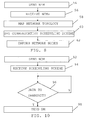
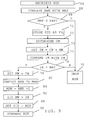
- fig. 8 shows a flow chart of a number of method steps being performed in the network manager device and to fig. 9 , which shows a first number of method steps being performed in the wireless communication device.
- the network topology determining unit 42 of the network manager device 20 assigns an initial node weight to it as well as an initial hop number.
- the node weight is a measure of the quality of communication links between the node and the network manager device, while the hop number is a counter indicating how many hops away from the network manager device 20 the node is. These assignments are being sent via the wireless interface 40.
- the initial weight is typically a weight having a high number, such as 99 and the hop number is typically also initially a high number such as 99.
- the wireless communication device 43 that implements the fourth node 30 is considered to be such a node being initiated.
- the network topology determining unit 42 sends a network investigating message NIM, step 54.
- the message is sent via the wireless interface 40 and comprises a sending identifier SID, which is thus initially the identifier of the network manager device 20, a message weight MW and a message hop number MHN.
- the message weight MW is initially set to the lowest node weight in the network, which may be zero, and the message hop number MHN is also initially set to the lowest hop number in the network, which may likewise be zero.
- both these values as well as the sending identifier SID are being changed in the course of the network investigating message NIM passing through the network WN.
- the network investigating message NIM is sent to at least one other network node for being processed and forwarded through the industrial wireless network.
- the network investigating message NIM may more particularly be broadcast in the network so that all nodes that are able to communicate directly with the network manager device 20 receive it.
- the message NIM may more particularly be sent regularly, such as once a minute, once every ten minutes once an hour etc. As an alternative it is possible that the message NIM is sent as soon as the network manager device loses contact with another node.
- a node that forwards it in the network more particularly sets its own network identifier to be the sending identifier SID. It may also change the message weight and message hop number. How this is done will be described below.
- the field devices When about to receive a network investigation message for the first time the field devices are thus all using their initial node hop numbers NHN and initial node weights NW.
- the network investigation message NIM is for instance first received by the first node 24, which changes it and then passes the message on to the wireless communication device 43 that implements the fourth node 30.
- the first node 24 has changed the content of the network investigating message NIM from the original content provided by the network manager device 20. More particularly the network investigating message NIM has received a new sending identifier SID, being the identifier of the first node 24, a new message weight MW and a new message hop number MHN, which is typically the hop number of one.
- the network investigating message NIM is then received in the wireless communication device 43 by the receiver 46 via the antenna 44 and forwarded to the node configuration control unit 50.
- the network investigating message NIM is thus received by the node configuration control unit 50, step 64.
- the node configuration control unit 50 then fetches the node hop number NHN from the node configuration memory 52 and thereafter compares the node hop number NHN with the message hop number MHN, step 66. In case the message hop number MHN is lower than or equal to the node hop number NHN, step 68, then the node configuration control unit 50 stores the sending identifier SID as an identifier PN 1 of a parent node, step 71, and thereafter inspects the network investigating message NIM further. However, if the message hop number MHN is higher than the node hop number NHN, step 68, then the network investigating message NIM is dropped by the node configuration control unit, step 70.
- the further inspection of the network investigating message NIM comprises the determining of a communication weight CW, step 72.
- the determination of the communication weight CW may involve the determining of communication quality between the sending node, i.e. the node from which the wireless communication device 43 receives the network investigating message NIM, which in this example is the first node 24.
- the communication weight CW is thus determined based on the quality of communication with the other node from which the message NI is received and may for instance be determined based on received signal strength indicator (RSSI), bit error rate, packet error rate and link quality indicators LQI.
- RSSI received signal strength indicator
- bit error rate bit error rate
- packet error rate packet error rate
- link quality indicators LQI link quality indicators
- the node configuration control unit 50 forms an intermediate weight IW, step 74, which intermediate weight IW is formed through combining the communication weight with the message weight.
- the intermediate weight IW is thus formed through adding the communication weight CW to the message weight WM.
- the intermediate weight IW is in this example thus formed as the sum of the communication weight CW and the message weight MW.
- step 76 further processing is performed, while if it is higher than or equal to the node weight NW, step 76, then the network investigating message NIM is dropped by the node configuration control unit 50, step 70.
- the further processing does in this case involve an updating of the settings in the node configuration memory 52. It more particularly involves the node configuration control unit 50 setting the intermediate weight IW as a new node weight NW, step 78, changing the node hop number NHN to the message hop number MHN, step 80. It is here also possible to provide a link between the new node weight and the identifier of the corresponding parent node.
- the further processing also involves changing the content of the network investigating message NIM.
- the node configuration control unit 50 changes the message hop number MHN through increasing it. The message hop number is thus increased, and in this example incremented, step 84.
- the intermediate weight IW is also set as new message weight MW, step 86, and the sending identifier SID is set to be equal to the network identifier NID of the node, step 88.
- the sending identifier SID is thus set to be the same as the node identifier NID stored in the node configuration memory 52.
- the node configuration control unit 50 forwards the network investigating message through the network, step 90. In this way a changed network investigating message having the new message weight is sent to the other nodes in the network.
- the network investigating message NIM being sent is thus an updated network investigating message where there is a new message weight, a new message hop number and a new sender identifier SID.
- the sending may be performed through making the transmitter 48 broadcast the network investigating message through the network.
- All the nodes function in the above-described way. This means that the first, second and third nodes 24, 26 and 28 forward network investigation messages through the communication network WN.
- the wireless communication device 43 also receives and processes a network investigating message from the second node 26 and thus stores the identifier of this node as a parent node PN 2 .
- the first second and third nodes 24, 26 and 28 will all drop the network investigation messages they receive from the fourth node 30, since they will both have lower hop numbers and weights than the message hop number and message weight of this particular network investigating message.
- the fifth node 32 may most likely drop the message but the sixth node 34 will likely receive and process it.
- the node configuration control unit 50 of the wireless communication device 53 sends a node configuration message NCM with node configuration data destined for the network manager device 20, which message is also sent via the transmitter unit 48 and antenna 44.
- the node configuration data may furthermore be node configuration data that has been updated through processing of the network configuration message and may more particularly comprise an updated node weight.
- the node configuration message may also have been sent as a response to the original network investigating message sent by the network manager device.
- the node configuration message NCM then comprises the originating node identifier OID, which in the case of the wireless communication device 43 is the network identifier NID stored in the node configuration memory 52 of the fourth node 30.
- the node configuration message NCM also comprises the originating node weight ONW, the originating node hop number ONHN as well as the identifiers of parent nodes PN 1 and PN 2 obtained in the above described process.
- the node configuration message NCM comprises the current settings of node weight, node hop number and parent nodes that are present in the node configuration memory 52. It may also comprise a link between the node weight and the corresponding parent node.
- the node configuration messages NCM from all the other network nodes 24, 26, 28, 30, 32, and 34 are then received by the network topology determining unit 42 of the network manager device 20 via the wireless communication interface 40, step 56.
- These messages may thus comprise node configuration data that has been updated through processing, in the other nodes, of the network investigating message and at least one may comprise a node weight of a corresponding node that has been updated based on a message weight.
- the network topology determining unit 42 then maps the network topology based on the node configuration data of the received node configuration messages, step 58. This may involve determining various communication paths used by the nodes to communicate with the network manager device as well as which of those paths that are preferred.
- a preferred path may for instance be obtained through knowing the link between a node weight and a parent node.
- the mapping may more particularly involve the determining of a communication tree, i.e. a tree depicting how the nodes are connected to a root node, the network manager device 20.
- the network topology determining unit 42 sets a communication scheduling scheme, step 60, which involves determining where in the communication structure the nodes are to communicate, such as which time slots in the TDMA structure they are to use. After this has been done the network topology determining unit 42 informs the network nodes of the communication scheduling scheme using the wireless interface 40, step 62, which may involve informing them of which time slots they are to use for communications. It may also involve confirming the node hop numbers and node weights. It should here be realized that a confirmation may just as well be sent before informing of the scheduling scheme.
- the network manager device 20 will thus use the information in the node configuration messages to generate a topology tree of the network, reschedule the network and thereafter send a command to all nodes with a new scheduling scheme which allows all nodes to use their updated weight and hop numbers.
- fig. 10 shows a flow chart of a number of method steps for informing a network managing device about the communication paths
- fig. 11 shows a flow chart of a number of method steps showing how a node in the industrial wireless network handles a received data message.
- a node such as the sixth node 34 continuously investigates if there is data to transmit. This may be done through the data handling unit 53 of the wireless communication device investigating if there is sensor data to be transmitted.
- a data message DM intended for the network manager device 20 is sent, step 98.
- the data message is then sent including an originating node identifier OID, an originating node weight ONW, which may be an updated node weight, an originating node hop number ONHN and data DATA to be reported to the network manager device 20.
- This data message DM is typically sent using broadcasting. In the example given here, the originating node identifier OID, originating node weight ONW, originating node hop number ONHN and data are all associated with the sixth node 34.
- the data handling unit 53 of a node in the network such as the fourth node 30 then receives such a data message DM via the antenna 44 and receiver 46, step 100. It then investigates if it is the first time it receives this particular data message. If it is not, step 104, then the data message DM is dropped. However if it is the first time the data message is received, step 102, then the message is processed.
- This processing involves comparing the originating node weight ONW with the node weight NW, step 106.
- the data handling unit 53 compares the node weight NW of the own node being stored in the node configuration memory 52 with the originating node weight ONW in the received data message DM, which is the weight of the node that sends the data destined for the network manager device 20.
- This node is thus a message originating node, i.e. a node in which the data message DM originates. If the originating node weight ONW is higher then the own node weight NW, step 108, then the data message DM is forwarded, step 110, which forwarding may also here be performed through broadcasting. However, if the originating node weight ONW is lower then the own node weight NW, step 108, then data message DM is dropped, step 104.
- the network manager has a weight of zero, which ensures that it will receive data messages from all nodes.
- the network manager device 20 may send the network investigating message regularly. Some time after having sent the previously mentioned network investigating message, the network manager device may thus send a new message. When this happens the field devices will all reset their node hop numbers and node weights to their initial node hop numbers and node weights, i.e. to the values initially assigned by the network manager device. This can be done through receiving a special re-set instruction from the network manager device. It can also be done through detecting the first presence of a network investigating message after a previous confirmation from the network manager device.
- the invention has a number of advantages. It improves the reliability by packet delivery diversity. A routing table is not required for all nodes. Possible changes of the network topology will not terminate the communications. With the invention it will become easier to configure and download parameters to wireless field devices. This will reduce maintenance time. Furthermore, the invention will improve the transmission reliability which reduces the risk of communication failures. Because of the invention it is also possible to run safety applications on industrial wireless sensor networks. The invention is furthermore generic and therefore applicable on all Industrial Wireless Sensor Networks.
- the network manager device is not necessarily a gateway. It is possible to provide as a separate device in the network. If it is a separate device, the network topology determining unit will be a part of the network manager device. However, the data handling unit will be placed in the gateway. As the node hop number is used in the data message, this can also be used for determining if a data message is to be forwarded or not. It should however be realized that the originating node hope number may be omitted from the data message. It should in fact be realized that the use of hop numbers may be omitted completely. It is possible to only use weights for determining if a network investigating message is to be forwarded through the network.
- the node configuration control unit and optionally also the data handling unit of the wireless communication device may be realized in the form of a discrete component, such as an Application Specific Integrated Circuit (ASIC) or Field-Programmable Gate Array (FPGA) circuit, which may also comprise the other units and circuits of the first field device.
- ASIC Application Specific Integrated Circuit
- FPGA Field-Programmable Gate Array
- the node configuration control unit may also be realized through a processor with an associated program memory including computer program code for performing the functionality of the node configuration control unit when being run on the processor.
- This computer program product can be provided as a data carrier such as one or more CD ROM discs or one or more memory sticks carrying computer program code, which provides the above-described access control unit when being run by said processor.
- One such data carrier 112 in the form of a CD ROM disk with a computer program 114 carrying such computer program code is schematically shown in fig. 12 .
- the network topology determining unit and optionally also the data handling unit of the network manager device may be realized in the above-described ways.
Landscapes
- Engineering & Computer Science (AREA)
- Computer Networks & Wireless Communication (AREA)
- Signal Processing (AREA)
- Mobile Radio Communication Systems (AREA)
- Small-Scale Networks (AREA)
- Data Exchanges In Wide-Area Networks (AREA)
Claims (18)
- Procédé pour permettre à un dispositif de gestion de réseau (20) de déterminer des voies de communication dans un réseau sans fil industriel (WN), le procédé étant exécuté par un dispositif de communication sans fil (43), tel qu'un noeud (30) dans le réseau de communication sans fil industriel, le dispositif de communication sans fil ayant des données de configuration de noeud comprenant un poids de noeud (NW) et le procédé comprenant les étapes suivantes :recevoir (64), un message d'investigation de réseau (NIM) d'un autre noeud de réseau (24), le message d'investigation de réseau comprenant un poids de message (MW),caractérisé en ce qu'il comprend en outre les étapes suivantes :inspecter le message d'investigation de réseau et exécuter un traitement supplémentaire du message d'investigation de réseau sur la base des résultats de l'inspection,où l'inspection comprend les étapes suivantes :déterminer (72) un poids de communication (CW) basé sur la qualité de communication avec l'autre noeud,former (74) un poids intermédiaire (IW) par l'intermédiaire d'une combinaison du poids de communication (CW) et du poids de message (MW), etcomparer (75) le poids intermédiaire (IW) au poids de noeud (NW),où le traitement supplémentaire est exécuté si (76) le poids intermédiaire est inférieur au poids de noeud et comprend les étapes suivantes :fixer (78) le poids intermédiaire comme nouveau poids de noeud,fixer (86) le poids intermédiaire comme nouveau poids de message, etenvoyer le message d'investigation de réseau modifié ayant le nouveau poids de message aux autres noeuds (30) dans le réseau.
- Procédé selon la revendication 1 comprenant en outre d'envoyer (92) un message de configuration de noeud (NCM) avec des données de configuration de noeud au dispositif de gestion de réseau (20), les données de configuration de noeud comprenant des données de configuration de noeud qui ont été mises à jour par l'intermédiaire du traitement du message d'investigation de réseau comprenant un poids de noeud mis à jour (ONW).
- Procédé selon la revendication 2, dans lequel le message de configuration de noeud comprend des données envoyées comme réponse à un message d'investigation de réseau original envoyé par le dispositif de gestion de réseau.
- Procédé selon l'une quelconque des revendications précédentes, comprenant en outre d'envoyer (98) un message de données (DM) destiné au dispositif de gestion de réseau (20), le message de données comprenant le poids de noeud mis à jour (ONW) et des données (DATA) à rapporter au dispositif de gestion de réseau.
- Procédé selon l'une quelconque des revendications précédentes, comprenant en outre de recevoir (100) un message de données (DM) d'un autre noeud de réseau (34), ledit message de données comprenant un poids de noeud (ONW) d'un noeud provenant d'un message, de comparer (106) le poids de noeud reçu (ONW) au poids de noeud (NW) propre et transférer (110) le message de données à d'autres noeuds au cas où (108) le poids de noeud reçu serait supérieur au poids de noeud propre.
- Procédé selon l'une quelconque des revendications précédentes, dans lequel les données de configuration de noeud comprennent un nombre de bonds de noeud (NHN) et le message d'investigation de réseau comprend un nombre de bonds de message (MHN), le procédé comprenant en outre de comparer (66) le nombre de bonds de noeud (NHN) au nombre de bonds de message (MHN), où l'inspection et le traitement supplémentaire sont seulement exécutés si (68) le nombre de bonds de message (MHN) est inférieur ou égal au nombre de bonds de noeud (NHN) et, dans ce cas, le traitement supplémentaire comprend également de changer (80) le nombre de bonds de noeud en nombre de bonds de message et d'augmenter (84) le nombre de bonds de message.
- Procédé selon l'une quelconque des revendications précédentes, dans lequel le message d'investigation de réseau comprend un identifiant (SIN) de l'autre noeud et le traitement basé sur l'investigation comprend de stocker (82) l'identifiant de l'autre noeud comme noeud parent (PN1) dans les données de configuration de noeud.
- Dispositif de communication sans fil (43) pour un réseau sans fil industriel (WN), le dispositif de communication sans fil étant un noeud (30) dans le réseau sans fil industriel et comprenant :un émetteur sans fil (48),un récepteur sans fil (46),une mémoire de configuration de noeud (52) comprenant des données de configuration de noeud comprenant un poids de noeud (NW), etune unité de contrôle de configuration de noeud (50) configurée pour :recevoir un message d'investigation de réseau (NIM) d'un autre noeud de réseau (24), le message d'investigation de réseau comprenant un poids de message (MW), caractérisé en ce qu'il est en outre configuré pour :inspecter le message d'investigation de réseau et exécuter un traitement supplémentaire du message d'investigation de réseau sur la base des résultats de l'inspection,où l'inspection comprend les étapes suivantes :déterminer un poids de communication (CW) sur la base de la qualité de communication avec l'autre noeud,former un poids intermédiaire (IW) par l'intermédiaire d'une combinaison du poids de communication (CW) avec le poids de message (MW), etcomparer le poids intermédiaire (IW) au poids de noeud (NW),où le traitement supplémentaire est exécuté si le poids intermédiaire (IW) est inférieur au poids de noeud (NW) et comprend les étapes suivantes :définir le poids intermédiaire (IW) comme nouveau poids de noeud (NW),définir le poids intermédiaire (IW) comme nouveau poids de message (MW), etenvoyer un message d'investigation de réseau modifié (NIM) ayant le nouveau poids de message aux autres noeuds (34) dans le réseau.
- Dispositif de communication sans fil selon la revendication 8, comprenant en outre une unité de traitement de message de données (53) configurée pour recevoir un message de données (DM) d'un autre noeud de réseau (34), ledit message de données comprenant un poids de noeud (ONW) d'un noeud provenant d'un message, comparer le poids de noeud (ONW) reçu au poids de noeud (NW) propre et transférer le message de données aux autres noeuds au cas où le poids de noeud reçu serait supérieur au poids de noeud propre.
- Produit programme informatique pour un dispositif de communication sans fil (43), le dispositif de communication sans fil étant un noeud (30) dans un réseau de communication sans fil industriel et étant pourvu d'un poids de noeud (NW), le produit programme informatique comprenant un support de données (112) ayant un code de programme informatique (114) qui, lorsqu'il est exécuté sur un processeur formant une unité de contrôle de configuration de noeud (50) du dispositif de communication sans fil, amène l'unité de contrôle de configuration de noeud à :recevoir un message d'investigation de réseau (NIM) d'un autre noeud de réseau (24), le message d'investigation de réseau comprenant un poids de message (MW), caractérisé en ce qu'il est configuré en outre pour :inspecter le message d'investigation de réseau et exécuter un traitement supplémentaire du message d'investigation de réseau sur la base des résultats de l'inspection,où l'inspection comprend les étapes suivantes :déterminer un poids de communication (CW) basé sur la qualité de communication avec l'autre noeud,former un poids intermédiaire (IW) par l'intermédiaire d'une combinaison du poids de communication (CW) avec le poids de message (MW), etcomparer le poids intermédiaire (IW) au poids de noeud (NW),où le traitement supplémentaire est exécuté si le poids intermédiaire (IW) est inférieur au poids de noeud (NW) et comprend les étapes suivantes :définir le poids intermédiaire (IW) comme nouveau poids de noeud (NW),définir le poids intermédiaire (IW) comme nouveau poids de message (MW), etenvoyer un message d'investigation de réseau modifié (NIM) ayant le nouveau poids de message aux autres noeuds (34) dans le réseau.
- Procédé pour examiner des voies de communication dans un réseau sans fil industriel (WN), le procédé étant exécuté par un dispositif de gestion de réseau (20) du réseau sans fil industriel et comprenant les étapes suivantes :envoyer (54) un message d'investigation de réseau à au moins un autre noeud de réseau (24, 26, 28, 30, 34) pour être traité et transféré par l'intermédiaire du réseau sans fil industriel, le message d'investigation de réseau comprenant un poids de message (MW), caractérisé en ce qu'il comprend en outre les étapes suivantes :recevoir (56) des messages de configuration de noeud (NCM) depuis les autres noeuds (24, 26, 28, 30, 34) du réseau sans fil industriel, les messages de configuration de noeud comprenant des données de configuration de noeud qui ont été mises à jour par l'intermédiaire d'un traitement du message d'investigation de réseau dans les noeuds de réseau, les données de configuration de noeud d'un message de configuration de noeud comprenant un poids de noeud (NW) d'un noeud correspondant ayant été mis à jour sur la base d'un poids de message,mapper (58) la topologie du réseau de communication sans fil sur la base des données de configuration de noeud dans les messages de configuration de noeud reçus,définir (60) un schéma d'ordonnancement de communication sur la base de la topologie mappée, etinformer (62) les noeuds de réseau du schéma d'ordonnancement de communication.
- Procédé selon la revendication 1, dans lequel les données de configuration de noeud comprennent des valeurs de compteur de bonds de noeud (NHN) et le message d'investigation de noeud comprend une valeur de compteur de bonds de message (MHN).
- Procédé selon la revendication 11 ou la revendication 12, dans lequel les données de configuration de noeud comprennent des données de noeuds parents (PN1) pour les noeuds de réseau.
- Procédé selon l'une quelconque des revendications 11 à 13, dans lequel le message d'investigation de réseau est périodiquement envoyé dans le réseau sans fil industriel.
- Procédé selon l'une quelconque des revendications 11 à 14, dans lequel le dispositif de gestion de réseau comprend un poids de noeud propre et comprend en outre de recevoir (100) un message de données (DM) d'un noeud de réseau, ledit message de données comprenant un poids de noeud (ONW) d'un noeud provenant d'un message, comparer (106) le poids de noeud reçu au poids de noeud propre et traiter le message de données au cas où le poids de noeud (ONW) reçu serait supérieur au poids de noeud propre.
- Dispositif de gestion de réseau (20) pour un réseau sans fil industriel (WN), le dispositif de gestion de réseau sans fil comprenant :une unité de détermination de topologie de réseau (42) configurée pour :envoyer un message d'investigation de réseau (NIM) à au moins un autre noeud de réseau (24, 26, 28, 30, 32, 34) pour être traité et transféré par l'intermédiaire du réseau sans fil industriel, le message d'investigation de réseau comprenant un poids de message (MW), caractérisé en ce qu'il est en outre configuré pour :recevoir des messages de configuration de noeud (NCM) depuis les autres noeuds du réseau, les messages de configuration de noeud comprenant des données de configuration de noeud qui ont été mises à jour par l'intermédiaire d'un traitement du message d'investigation de réseau dans les noeuds de réseau, les données de configuration de noeud d'un message de configuration de noeud comprenant un poids de noeud (NW) d'un noeud correspondant ayant été mis à jour sur la base d'un poids de message,mapper la topologie du réseau sur la base des données de configuration de noeud dans les messages de configuration de noeud reçus,définir un schéma d'ordonnancement de communication sur la base de la topologie mappée, etinformer les noeuds de réseau du schéma d'ordonnancement de communication.
- Dispositif de gestion de réseau selon la revendication 16, comprenant en outre un poids de noeud propre et une unité de traitement de données (38) configurée pour recevoir un message de données (DM) depuis un noeud de réseau, ledit message de données comprenant un poids de noeud (ONW) d'un noeud provenant d'un message, comparer le poids de noeud reçu au poids de noeud propre et traiter le message de données au cas où le poids de noeud reçu serait supérieur au poids de noeud propre.
- Produit programme informatique pour un dispositif de gestion de réseau (20) d'un réseau sans fil industriel (WN),
le produit programme informatique comprenant un support de données (112) ayant un code de programme informatique (114) qui, lorsqu'il est exécuté sur un processeur formant une unité de détermination de topologie de réseau du dispositif de gestion de réseau, amène le dispositif de gestion de réseau à :envoyer un message d'investigation de réseau (NIM) à au moins un autre noeud de réseau (24, 26, 28, 30, 32, 34) pour être traité et transféré par l'intermédiaire du réseau sans fil industriel, le message d'investigation de réseau comprenant un poids de message (MW), caractérisé en ce qu'il est en outre configuré pour :recevoir des messages de configuration de noeud (NCM) depuis les autres noeuds du réseau, les messages de configuration de noeud comprenant des données de configuration de noeud qui ont été mises à jour par l'intermédiaire d'un traitement du message d'investigation de réseau dans les noeuds de réseau, les données de configuration de noeud d'un message de configuration de noeud comprenant un poids de noeud (NW) d'un noeud correspondant ayant été mis à jour sur la base d'un poids de message,mapper la topologie du réseau sur la base des données de configuration de noeud dans les messages de configuration de noeud reçus,définir un schéma d'ordonnancement de communication sur la base de la topologie mappée, etinformer les noeuds de réseau du schéma d'ordonnancement de communication.
Priority Applications (5)
| Application Number | Priority Date | Filing Date | Title |
|---|---|---|---|
| PL12175093T PL2683199T3 (pl) | 2012-07-05 | 2012-07-05 | Określanie tras komunikacyjnych w sieci komunikacji bezprzewodowej |
| EP12175093.9A EP2683199B1 (fr) | 2012-07-05 | 2012-07-05 | Détermination de voies de communication dans un réseau de communication sans fil |
| CN201380046373.6A CN104685931B (zh) | 2012-07-05 | 2013-05-17 | 无线通信网络中的通信路由的确定 |
| US14/411,555 US9338058B2 (en) | 2012-07-05 | 2013-05-17 | Determination of communication routes in a wireless communication network |
| PCT/EP2013/060239 WO2014005754A1 (fr) | 2012-07-05 | 2013-05-17 | Détermination de routes de communication dans un réseau de communication sans fil |
Applications Claiming Priority (1)
| Application Number | Priority Date | Filing Date | Title |
|---|---|---|---|
| EP12175093.9A EP2683199B1 (fr) | 2012-07-05 | 2012-07-05 | Détermination de voies de communication dans un réseau de communication sans fil |
Publications (2)
| Publication Number | Publication Date |
|---|---|
| EP2683199A1 EP2683199A1 (fr) | 2014-01-08 |
| EP2683199B1 true EP2683199B1 (fr) | 2014-09-17 |
Family
ID=48468302
Family Applications (1)
| Application Number | Title | Priority Date | Filing Date |
|---|---|---|---|
| EP12175093.9A Active EP2683199B1 (fr) | 2012-07-05 | 2012-07-05 | Détermination de voies de communication dans un réseau de communication sans fil |
Country Status (5)
| Country | Link |
|---|---|
| US (1) | US9338058B2 (fr) |
| EP (1) | EP2683199B1 (fr) |
| CN (1) | CN104685931B (fr) |
| PL (1) | PL2683199T3 (fr) |
| WO (1) | WO2014005754A1 (fr) |
Families Citing this family (16)
| Publication number | Priority date | Publication date | Assignee | Title |
|---|---|---|---|---|
| EP2683199B1 (fr) | 2012-07-05 | 2014-09-17 | ABB Research Ltd. | Détermination de voies de communication dans un réseau de communication sans fil |
| US10389815B2 (en) | 2015-03-26 | 2019-08-20 | Lg Electronics Inc. | Method and device for transmitting event information in V2X communication |
| CN104883285B (zh) * | 2015-04-27 | 2017-07-11 | 厦门纵行信息科技有限公司 | 一种网络的组网方法以及多模无线通信设备 |
| US10156841B2 (en) | 2015-12-31 | 2018-12-18 | General Electric Company | Identity management and device enrollment in a cloud service |
| CN106507492B (zh) * | 2016-11-08 | 2019-07-26 | 重庆邮电大学 | 基于优先级分配的工业无线网络确定性传输调度方法 |
| CN106454917A (zh) * | 2016-12-06 | 2017-02-22 | 无锡悟莘科技有限公司 | 一种无线传感网络监测系统、支点及网关 |
| CN108462982B (zh) * | 2017-02-17 | 2020-09-08 | 中移(杭州)信息技术有限公司 | 一种数据收集方法及装置 |
| CN108449776B (zh) * | 2018-02-27 | 2023-09-05 | 深圳市亚特联科技有限公司 | 网络路径规划方法、节点设备及计算机存储介质 |
| CN108541039B (zh) * | 2018-04-24 | 2021-10-22 | 苏州市职业大学 | 一种低功耗无线传感器网络静态节点路由方法 |
| TWI674814B (zh) * | 2018-04-30 | 2019-10-11 | 奇邑科技股份有限公司 | 多閘道通訊方法及其無線閘道系統 |
| WO2020018953A1 (fr) * | 2018-07-20 | 2020-01-23 | Schneider Electric Systems Usa, Inc. | Réseau d'instruments sans fil industriels à faible énergie |
| CN111436091B (zh) | 2019-03-28 | 2022-05-20 | 维沃移动通信有限公司 | 传输路径的选择方法、信息配置方法、终端及网络设备 |
| CN110365541B (zh) * | 2019-07-31 | 2021-06-15 | 腾讯科技(深圳)有限公司 | 一种网关中对应关系的生成方法、指令发送方法及装置 |
| CN113573379A (zh) * | 2021-07-05 | 2021-10-29 | 北京和峰科技有限公司 | 数据传输方法和装置 |
| CN115239086B (zh) * | 2022-07-01 | 2025-11-18 | 国网福建省电力有限公司 | 一种基于电力调度数据网网络拓扑结构的重要度评估方法 |
| TWI869084B (zh) * | 2023-11-30 | 2025-01-01 | 四零四科技股份有限公司 | 更新網路拓撲的方法及控制節點 |
Family Cites Families (12)
| Publication number | Priority date | Publication date | Assignee | Title |
|---|---|---|---|---|
| EP1386432A4 (fr) * | 2001-03-21 | 2009-07-15 | John A Stine | Protocole d'acces et d'acheminement pour reseaux ad hoc, dans lequel la resolution de collision et la dissemination d'etats de noeuds sont utilisees |
| CN100592702C (zh) | 2002-05-17 | 2010-02-24 | 艾利森电话股份有限公司 | 分组交换多层通信网中的动态路由 |
| DE10301265A1 (de) | 2003-01-15 | 2004-07-29 | Siemens Ag | Verfahren und Anordnung zum Routing von Datenpaketen in einem paketvermittelnden Datennetz |
| DE102004003548B3 (de) | 2004-01-23 | 2005-06-30 | Siemens Ag | Optimierung der Verkehrsverteilung bei Mehrwegerouting |
| WO2009012809A1 (fr) * | 2007-07-23 | 2009-01-29 | Abb Technology Ag | Procédé et dispositif de protection pour un réseau électrique tenant compte d'une commutation de route dans un réseau de télécommunication |
| US20110164527A1 (en) * | 2008-04-04 | 2011-07-07 | Mishra Rajesh K | Enhanced wireless ad hoc communication techniques |
| KR100970385B1 (ko) | 2008-06-09 | 2010-07-15 | 한국전자통신연구원 | 무선 네트워크의 경로 설정 방법 및 장치 |
| CN101321134B (zh) * | 2008-07-21 | 2012-05-23 | 西安电子科技大学 | 动态网络条件下的服务质量路由选择方法 |
| KR20100067011A (ko) | 2008-12-10 | 2010-06-18 | 한국전자통신연구원 | 유무선 통합망에서의 경로 설정 방법 |
| CN102055663B (zh) | 2009-11-10 | 2012-06-27 | 武汉大学 | 一种在覆盖网络中实现负载均衡的QoS路由分配方法 |
| US8331267B2 (en) * | 2010-04-30 | 2012-12-11 | Palo Alto Research Center Incorporated | System and method for determining an optimal backbone for robotic relay networks |
| EP2683199B1 (fr) | 2012-07-05 | 2014-09-17 | ABB Research Ltd. | Détermination de voies de communication dans un réseau de communication sans fil |
-
2012
- 2012-07-05 EP EP12175093.9A patent/EP2683199B1/fr active Active
- 2012-07-05 PL PL12175093T patent/PL2683199T3/pl unknown
-
2013
- 2013-05-17 US US14/411,555 patent/US9338058B2/en active Active
- 2013-05-17 CN CN201380046373.6A patent/CN104685931B/zh active Active
- 2013-05-17 WO PCT/EP2013/060239 patent/WO2014005754A1/fr not_active Ceased
Also Published As
| Publication number | Publication date |
|---|---|
| EP2683199A1 (fr) | 2014-01-08 |
| CN104685931A (zh) | 2015-06-03 |
| PL2683199T3 (pl) | 2015-04-30 |
| US9338058B2 (en) | 2016-05-10 |
| US20150156070A1 (en) | 2015-06-04 |
| CN104685931B (zh) | 2018-09-11 |
| WO2014005754A1 (fr) | 2014-01-09 |
Similar Documents
| Publication | Publication Date | Title |
|---|---|---|
| EP2683199B1 (fr) | Détermination de voies de communication dans un réseau de communication sans fil | |
| EP3310009B1 (fr) | Cadre de travail d'ingénierie de la circulation dans un réseau défini par logiciel | |
| EP2140617B1 (fr) | Routage de paquets sur un réseau en utilisant des graphes orientés | |
| US10116523B1 (en) | Predictive connectivity diagnostics for a wireless mesh network in a process control system | |
| US7917149B2 (en) | System and method for reusing wireless resources in a wireless network | |
| JP4960353B2 (ja) | 無線ルーティングの実施 | |
| US8493841B2 (en) | Wireless communication system and nodes | |
| US20150244635A1 (en) | Packet prioritizing in an industrial wireless network | |
| WO2020207489A1 (fr) | Systèmes et procédés de personnalisation d'un réseau de communication | |
| CN101682537A (zh) | 无线网络中的基于优先级的调度和路由 | |
| US10075366B2 (en) | Communication device, communication system, communication control method, and communication control program | |
| JP2013115471A (ja) | フィールド無線システム | |
| CN110445720B (zh) | 路由表更新方法、装置、飞行器及存储介质 | |
| US20240356686A1 (en) | An Automation Network With Actively Managed Redundant Connectivity | |
| US9807018B2 (en) | Transmitting data packets in an industrial wireless network | |
| US9419678B2 (en) | Fast frequency hopping adapted to the environment | |
| Yu et al. | Realization and measurements of industrial wireless sensor and actuator networks | |
| EP4449745B1 (fr) | Routage de données dans un réseau de communication | |
| US11310854B2 (en) | Industrial wireless network infrastructure supporting multiple subnets | |
| Chadha | Efficient Channel Allocation for Load Balancing in Wireless Mesh Networks |
Legal Events
| Date | Code | Title | Description |
|---|---|---|---|
| PUAI | Public reference made under article 153(3) epc to a published international application that has entered the european phase |
Free format text: ORIGINAL CODE: 0009012 |
|
| 17P | Request for examination filed |
Effective date: 20121219 |
|
| AK | Designated contracting states |
Kind code of ref document: A1 Designated state(s): AL AT BE BG CH CY CZ DE DK EE ES FI FR GB GR HR HU IE IS IT LI LT LU LV MC MK MT NL NO PL PT RO RS SE SI SK SM TR |
|
| AX | Request for extension of the european patent |
Extension state: BA ME |
|
| REG | Reference to a national code |
Ref country code: DE Ref legal event code: R079 Ref document number: 602012003122 Country of ref document: DE Free format text: PREVIOUS MAIN CLASS: H04W0040240000 Ipc: H04L0012751000 |
|
| RIC1 | Information provided on ipc code assigned before grant |
Ipc: H04L 12/751 20130101AFI20140129BHEP Ipc: H04L 12/733 20130101ALI20140129BHEP |
|
| GRAP | Despatch of communication of intention to grant a patent |
Free format text: ORIGINAL CODE: EPIDOSNIGR1 |
|
| INTG | Intention to grant announced |
Effective date: 20140506 |
|
| GRAS | Grant fee paid |
Free format text: ORIGINAL CODE: EPIDOSNIGR3 |
|
| GRAA | (expected) grant |
Free format text: ORIGINAL CODE: 0009210 |
|
| AK | Designated contracting states |
Kind code of ref document: B1 Designated state(s): AL AT BE BG CH CY CZ DE DK EE ES FI FR GB GR HR HU IE IS IT LI LT LU LV MC MK MT NL NO PL PT RO RS SE SI SK SM TR |
|
| REG | Reference to a national code |
Ref country code: GB Ref legal event code: FG4D |
|
| REG | Reference to a national code |
Ref country code: CH Ref legal event code: EP |
|
| REG | Reference to a national code |
Ref country code: IE Ref legal event code: FG4D |
|
| REG | Reference to a national code |
Ref country code: AT Ref legal event code: REF Ref document number: 688115 Country of ref document: AT Kind code of ref document: T Effective date: 20141015 |
|
| REG | Reference to a national code |
Ref country code: DE Ref legal event code: R096 Ref document number: 602012003122 Country of ref document: DE Effective date: 20141030 |
|
| REG | Reference to a national code |
Ref country code: SE Ref legal event code: TRGR |
|
| PG25 | Lapsed in a contracting state [announced via postgrant information from national office to epo] |
Ref country code: NO Free format text: LAPSE BECAUSE OF FAILURE TO SUBMIT A TRANSLATION OF THE DESCRIPTION OR TO PAY THE FEE WITHIN THE PRESCRIBED TIME-LIMIT Effective date: 20141217 Ref country code: GR Free format text: LAPSE BECAUSE OF FAILURE TO SUBMIT A TRANSLATION OF THE DESCRIPTION OR TO PAY THE FEE WITHIN THE PRESCRIBED TIME-LIMIT Effective date: 20141218 Ref country code: LT Free format text: LAPSE BECAUSE OF FAILURE TO SUBMIT A TRANSLATION OF THE DESCRIPTION OR TO PAY THE FEE WITHIN THE PRESCRIBED TIME-LIMIT Effective date: 20140917 |
|
| REG | Reference to a national code |
Ref country code: NL Ref legal event code: VDEP Effective date: 20140917 |
|
| REG | Reference to a national code |
Ref country code: LT Ref legal event code: MG4D |
|
| PG25 | Lapsed in a contracting state [announced via postgrant information from national office to epo] |
Ref country code: CY Free format text: LAPSE BECAUSE OF FAILURE TO SUBMIT A TRANSLATION OF THE DESCRIPTION OR TO PAY THE FEE WITHIN THE PRESCRIBED TIME-LIMIT Effective date: 20140917 Ref country code: HR Free format text: LAPSE BECAUSE OF FAILURE TO SUBMIT A TRANSLATION OF THE DESCRIPTION OR TO PAY THE FEE WITHIN THE PRESCRIBED TIME-LIMIT Effective date: 20140917 Ref country code: RS Free format text: LAPSE BECAUSE OF FAILURE TO SUBMIT A TRANSLATION OF THE DESCRIPTION OR TO PAY THE FEE WITHIN THE PRESCRIBED TIME-LIMIT Effective date: 20140917 Ref country code: LV Free format text: LAPSE BECAUSE OF FAILURE TO SUBMIT A TRANSLATION OF THE DESCRIPTION OR TO PAY THE FEE WITHIN THE PRESCRIBED TIME-LIMIT Effective date: 20140917 |
|
| REG | Reference to a national code |
Ref country code: AT Ref legal event code: MK05 Ref document number: 688115 Country of ref document: AT Kind code of ref document: T Effective date: 20140917 |
|
| PG25 | Lapsed in a contracting state [announced via postgrant information from national office to epo] |
Ref country code: NL Free format text: LAPSE BECAUSE OF FAILURE TO SUBMIT A TRANSLATION OF THE DESCRIPTION OR TO PAY THE FEE WITHIN THE PRESCRIBED TIME-LIMIT Effective date: 20140917 |
|
| PG25 | Lapsed in a contracting state [announced via postgrant information from national office to epo] |
Ref country code: EE Free format text: LAPSE BECAUSE OF FAILURE TO SUBMIT A TRANSLATION OF THE DESCRIPTION OR TO PAY THE FEE WITHIN THE PRESCRIBED TIME-LIMIT Effective date: 20140917 Ref country code: SK Free format text: LAPSE BECAUSE OF FAILURE TO SUBMIT A TRANSLATION OF THE DESCRIPTION OR TO PAY THE FEE WITHIN THE PRESCRIBED TIME-LIMIT Effective date: 20140917 Ref country code: IS Free format text: LAPSE BECAUSE OF FAILURE TO SUBMIT A TRANSLATION OF THE DESCRIPTION OR TO PAY THE FEE WITHIN THE PRESCRIBED TIME-LIMIT Effective date: 20150117 Ref country code: RO Free format text: LAPSE BECAUSE OF FAILURE TO SUBMIT A TRANSLATION OF THE DESCRIPTION OR TO PAY THE FEE WITHIN THE PRESCRIBED TIME-LIMIT Effective date: 20140917 Ref country code: PT Free format text: LAPSE BECAUSE OF FAILURE TO SUBMIT A TRANSLATION OF THE DESCRIPTION OR TO PAY THE FEE WITHIN THE PRESCRIBED TIME-LIMIT Effective date: 20150119 Ref country code: ES Free format text: LAPSE BECAUSE OF FAILURE TO SUBMIT A TRANSLATION OF THE DESCRIPTION OR TO PAY THE FEE WITHIN THE PRESCRIBED TIME-LIMIT Effective date: 20140917 |
|
| REG | Reference to a national code |
Ref country code: PL Ref legal event code: T3 |
|
| PG25 | Lapsed in a contracting state [announced via postgrant information from national office to epo] |
Ref country code: AT Free format text: LAPSE BECAUSE OF FAILURE TO SUBMIT A TRANSLATION OF THE DESCRIPTION OR TO PAY THE FEE WITHIN THE PRESCRIBED TIME-LIMIT Effective date: 20140917 |
|
| REG | Reference to a national code |
Ref country code: DE Ref legal event code: R097 Ref document number: 602012003122 Country of ref document: DE |
|
| PLBE | No opposition filed within time limit |
Free format text: ORIGINAL CODE: 0009261 |
|
| STAA | Information on the status of an ep patent application or granted ep patent |
Free format text: STATUS: NO OPPOSITION FILED WITHIN TIME LIMIT |
|
| PG25 | Lapsed in a contracting state [announced via postgrant information from national office to epo] |
Ref country code: DK Free format text: LAPSE BECAUSE OF FAILURE TO SUBMIT A TRANSLATION OF THE DESCRIPTION OR TO PAY THE FEE WITHIN THE PRESCRIBED TIME-LIMIT Effective date: 20140917 |
|
| 26N | No opposition filed |
Effective date: 20150618 |
|
| PG25 | Lapsed in a contracting state [announced via postgrant information from national office to epo] |
Ref country code: IT Free format text: LAPSE BECAUSE OF FAILURE TO SUBMIT A TRANSLATION OF THE DESCRIPTION OR TO PAY THE FEE WITHIN THE PRESCRIBED TIME-LIMIT Effective date: 20140917 |
|
| PG25 | Lapsed in a contracting state [announced via postgrant information from national office to epo] |
Ref country code: SI Free format text: LAPSE BECAUSE OF FAILURE TO SUBMIT A TRANSLATION OF THE DESCRIPTION OR TO PAY THE FEE WITHIN THE PRESCRIBED TIME-LIMIT Effective date: 20140917 |
|
| PG25 | Lapsed in a contracting state [announced via postgrant information from national office to epo] |
Ref country code: MC Free format text: LAPSE BECAUSE OF FAILURE TO SUBMIT A TRANSLATION OF THE DESCRIPTION OR TO PAY THE FEE WITHIN THE PRESCRIBED TIME-LIMIT Effective date: 20140917 |
|
| REG | Reference to a national code |
Ref country code: CH Ref legal event code: PL |
|
| PG25 | Lapsed in a contracting state [announced via postgrant information from national office to epo] |
Ref country code: LU Free format text: LAPSE BECAUSE OF FAILURE TO SUBMIT A TRANSLATION OF THE DESCRIPTION OR TO PAY THE FEE WITHIN THE PRESCRIBED TIME-LIMIT Effective date: 20150705 |
|
| REG | Reference to a national code |
Ref country code: IE Ref legal event code: MM4A |
|
| PG25 | Lapsed in a contracting state [announced via postgrant information from national office to epo] |
Ref country code: LI Free format text: LAPSE BECAUSE OF NON-PAYMENT OF DUE FEES Effective date: 20150731 Ref country code: CH Free format text: LAPSE BECAUSE OF NON-PAYMENT OF DUE FEES Effective date: 20150731 |
|
| REG | Reference to a national code |
Ref country code: FR Ref legal event code: ST Effective date: 20160331 |
|
| PG25 | Lapsed in a contracting state [announced via postgrant information from national office to epo] |
Ref country code: FR Free format text: LAPSE BECAUSE OF NON-PAYMENT OF DUE FEES Effective date: 20150731 |
|
| PG25 | Lapsed in a contracting state [announced via postgrant information from national office to epo] |
Ref country code: IE Free format text: LAPSE BECAUSE OF NON-PAYMENT OF DUE FEES Effective date: 20150705 |
|
| PGFP | Annual fee paid to national office [announced via postgrant information from national office to epo] |
Ref country code: FI Payment date: 20160713 Year of fee payment: 5 |
|
| PGFP | Annual fee paid to national office [announced via postgrant information from national office to epo] |
Ref country code: SE Payment date: 20160720 Year of fee payment: 5 Ref country code: CZ Payment date: 20160701 Year of fee payment: 5 Ref country code: PL Payment date: 20160704 Year of fee payment: 5 |
|
| GBPC | Gb: european patent ceased through non-payment of renewal fee |
Effective date: 20160705 |
|
| PG25 | Lapsed in a contracting state [announced via postgrant information from national office to epo] |
Ref country code: MT Free format text: LAPSE BECAUSE OF FAILURE TO SUBMIT A TRANSLATION OF THE DESCRIPTION OR TO PAY THE FEE WITHIN THE PRESCRIBED TIME-LIMIT Effective date: 20140917 |
|
| PG25 | Lapsed in a contracting state [announced via postgrant information from national office to epo] |
Ref country code: SM Free format text: LAPSE BECAUSE OF FAILURE TO SUBMIT A TRANSLATION OF THE DESCRIPTION OR TO PAY THE FEE WITHIN THE PRESCRIBED TIME-LIMIT Effective date: 20140917 Ref country code: HU Free format text: LAPSE BECAUSE OF FAILURE TO SUBMIT A TRANSLATION OF THE DESCRIPTION OR TO PAY THE FEE WITHIN THE PRESCRIBED TIME-LIMIT; INVALID AB INITIO Effective date: 20120705 Ref country code: GB Free format text: LAPSE BECAUSE OF NON-PAYMENT OF DUE FEES Effective date: 20160705 Ref country code: BG Free format text: LAPSE BECAUSE OF FAILURE TO SUBMIT A TRANSLATION OF THE DESCRIPTION OR TO PAY THE FEE WITHIN THE PRESCRIBED TIME-LIMIT Effective date: 20140917 |
|
| PG25 | Lapsed in a contracting state [announced via postgrant information from national office to epo] |
Ref country code: BE Free format text: LAPSE BECAUSE OF FAILURE TO SUBMIT A TRANSLATION OF THE DESCRIPTION OR TO PAY THE FEE WITHIN THE PRESCRIBED TIME-LIMIT Effective date: 20140917 |
|
| PG25 | Lapsed in a contracting state [announced via postgrant information from national office to epo] |
Ref country code: CZ Free format text: LAPSE BECAUSE OF NON-PAYMENT OF DUE FEES Effective date: 20170705 |
|
| REG | Reference to a national code |
Ref country code: SE Ref legal event code: EUG |
|
| PG25 | Lapsed in a contracting state [announced via postgrant information from national office to epo] |
Ref country code: SE Free format text: LAPSE BECAUSE OF NON-PAYMENT OF DUE FEES Effective date: 20170706 Ref country code: FI Free format text: LAPSE BECAUSE OF NON-PAYMENT OF DUE FEES Effective date: 20170705 |
|
| PG25 | Lapsed in a contracting state [announced via postgrant information from national office to epo] |
Ref country code: TR Free format text: LAPSE BECAUSE OF FAILURE TO SUBMIT A TRANSLATION OF THE DESCRIPTION OR TO PAY THE FEE WITHIN THE PRESCRIBED TIME-LIMIT Effective date: 20140917 Ref country code: MK Free format text: LAPSE BECAUSE OF FAILURE TO SUBMIT A TRANSLATION OF THE DESCRIPTION OR TO PAY THE FEE WITHIN THE PRESCRIBED TIME-LIMIT Effective date: 20140917 |
|
| PG25 | Lapsed in a contracting state [announced via postgrant information from national office to epo] |
Ref country code: AL Free format text: LAPSE BECAUSE OF FAILURE TO SUBMIT A TRANSLATION OF THE DESCRIPTION OR TO PAY THE FEE WITHIN THE PRESCRIBED TIME-LIMIT Effective date: 20140917 |
|
| PG25 | Lapsed in a contracting state [announced via postgrant information from national office to epo] |
Ref country code: PL Free format text: LAPSE BECAUSE OF NON-PAYMENT OF DUE FEES Effective date: 20170705 |
|
| REG | Reference to a national code |
Ref country code: DE Ref legal event code: R081 Ref document number: 602012003122 Country of ref document: DE Owner name: ABB SCHWEIZ AG, CH Free format text: FORMER OWNER: ABB RESEARCH LTD., ZUERICH, CH |
|
| REG | Reference to a national code |
Ref country code: DE Ref legal event code: R079 Ref document number: 602012003122 Country of ref document: DE Free format text: PREVIOUS MAIN CLASS: H04L0012751000 Ipc: H04L0045020000 |
|
| PGFP | Annual fee paid to national office [announced via postgrant information from national office to epo] |
Ref country code: DE Payment date: 20250722 Year of fee payment: 14 |