EP2683397B1 - Inhibiteurs du facteur xii destinés à être administrés avec des procédures médicales comprenant le contact avec des surfaces artificielles - Google Patents
Inhibiteurs du facteur xii destinés à être administrés avec des procédures médicales comprenant le contact avec des surfaces artificielles Download PDFInfo
- Publication number
- EP2683397B1 EP2683397B1 EP12707782.4A EP12707782A EP2683397B1 EP 2683397 B1 EP2683397 B1 EP 2683397B1 EP 12707782 A EP12707782 A EP 12707782A EP 2683397 B1 EP2683397 B1 EP 2683397B1
- Authority
- EP
- European Patent Office
- Prior art keywords
- fxii
- fxiia
- inhibitor
- blood
- sequence
- Prior art date
- Legal status (The legal status is an assumption and is not a legal conclusion. Google has not performed a legal analysis and makes no representation as to the accuracy of the status listed.)
- Active
Links
Images




Classifications
-
- A—HUMAN NECESSITIES
- A61—MEDICAL OR VETERINARY SCIENCE; HYGIENE
- A61K—PREPARATIONS FOR MEDICAL, DENTAL OR TOILETRY PURPOSES
- A61K38/00—Medicinal preparations containing peptides
- A61K38/16—Peptides having more than 20 amino acids; Gastrins; Somatostatins; Melanotropins; Derivatives thereof
- A61K38/17—Peptides having more than 20 amino acids; Gastrins; Somatostatins; Melanotropins; Derivatives thereof from animals; from humans
- A61K38/1767—Peptides having more than 20 amino acids; Gastrins; Somatostatins; Melanotropins; Derivatives thereof from animals; from humans from invertebrates
-
- A—HUMAN NECESSITIES
- A61—MEDICAL OR VETERINARY SCIENCE; HYGIENE
- A61K—PREPARATIONS FOR MEDICAL, DENTAL OR TOILETRY PURPOSES
- A61K38/00—Medicinal preparations containing peptides
- A61K38/16—Peptides having more than 20 amino acids; Gastrins; Somatostatins; Melanotropins; Derivatives thereof
- A61K38/55—Protease inhibitors
-
- A—HUMAN NECESSITIES
- A61—MEDICAL OR VETERINARY SCIENCE; HYGIENE
- A61K—PREPARATIONS FOR MEDICAL, DENTAL OR TOILETRY PURPOSES
- A61K31/00—Medicinal preparations containing organic active ingredients
- A61K31/70—Carbohydrates; Sugars; Derivatives thereof
- A61K31/715—Polysaccharides, i.e. having more than five saccharide radicals attached to each other by glycosidic linkages; Derivatives thereof, e.g. ethers, esters
- A61K31/726—Glycosaminoglycans, i.e. mucopolysaccharides
- A61K31/727—Heparin; Heparan
-
- A—HUMAN NECESSITIES
- A61—MEDICAL OR VETERINARY SCIENCE; HYGIENE
- A61K—PREPARATIONS FOR MEDICAL, DENTAL OR TOILETRY PURPOSES
- A61K38/00—Medicinal preparations containing peptides
- A61K38/16—Peptides having more than 20 amino acids; Gastrins; Somatostatins; Melanotropins; Derivatives thereof
-
- A—HUMAN NECESSITIES
- A61—MEDICAL OR VETERINARY SCIENCE; HYGIENE
- A61K—PREPARATIONS FOR MEDICAL, DENTAL OR TOILETRY PURPOSES
- A61K38/00—Medicinal preparations containing peptides
- A61K38/16—Peptides having more than 20 amino acids; Gastrins; Somatostatins; Melanotropins; Derivatives thereof
- A61K38/55—Protease inhibitors
- A61K38/556—Angiotensin converting enzyme inhibitors
-
- A—HUMAN NECESSITIES
- A61—MEDICAL OR VETERINARY SCIENCE; HYGIENE
- A61K—PREPARATIONS FOR MEDICAL, DENTAL OR TOILETRY PURPOSES
- A61K38/00—Medicinal preparations containing peptides
- A61K38/16—Peptides having more than 20 amino acids; Gastrins; Somatostatins; Melanotropins; Derivatives thereof
- A61K38/55—Protease inhibitors
- A61K38/57—Protease inhibitors from animals; from humans
-
- A—HUMAN NECESSITIES
- A61—MEDICAL OR VETERINARY SCIENCE; HYGIENE
- A61K—PREPARATIONS FOR MEDICAL, DENTAL OR TOILETRY PURPOSES
- A61K38/00—Medicinal preparations containing peptides
- A61K38/16—Peptides having more than 20 amino acids; Gastrins; Somatostatins; Melanotropins; Derivatives thereof
- A61K38/55—Protease inhibitors
- A61K38/57—Protease inhibitors from animals; from humans
- A61K38/58—Protease inhibitors from animals; from humans from leeches, e.g. hirudin, eglin
-
- A—HUMAN NECESSITIES
- A61—MEDICAL OR VETERINARY SCIENCE; HYGIENE
- A61K—PREPARATIONS FOR MEDICAL, DENTAL OR TOILETRY PURPOSES
- A61K39/00—Medicinal preparations containing antigens or antibodies
- A61K39/395—Antibodies; Immunoglobulins; Immune serum, e.g. antilymphocytic serum
-
- A—HUMAN NECESSITIES
- A61—MEDICAL OR VETERINARY SCIENCE; HYGIENE
- A61K—PREPARATIONS FOR MEDICAL, DENTAL OR TOILETRY PURPOSES
- A61K39/00—Medicinal preparations containing antigens or antibodies
- A61K39/395—Antibodies; Immunoglobulins; Immune serum, e.g. antilymphocytic serum
- A61K39/39533—Antibodies; Immunoglobulins; Immune serum, e.g. antilymphocytic serum against materials from animals
- A61K39/3955—Antibodies; Immunoglobulins; Immune serum, e.g. antilymphocytic serum against materials from animals against proteinaceous materials, e.g. enzymes, hormones, lymphokines
-
- A—HUMAN NECESSITIES
- A61—MEDICAL OR VETERINARY SCIENCE; HYGIENE
- A61K—PREPARATIONS FOR MEDICAL, DENTAL OR TOILETRY PURPOSES
- A61K47/00—Medicinal preparations characterised by the non-active ingredients used, e.g. carriers or inert additives; Targeting or modifying agents chemically bound to the active ingredient
- A61K47/50—Medicinal preparations characterised by the non-active ingredients used, e.g. carriers or inert additives; Targeting or modifying agents chemically bound to the active ingredient the non-active ingredient being chemically bound to the active ingredient, e.g. polymer-drug conjugates
- A61K47/51—Medicinal preparations characterised by the non-active ingredients used, e.g. carriers or inert additives; Targeting or modifying agents chemically bound to the active ingredient the non-active ingredient being chemically bound to the active ingredient, e.g. polymer-drug conjugates the non-active ingredient being a modifying agent
- A61K47/62—Medicinal preparations characterised by the non-active ingredients used, e.g. carriers or inert additives; Targeting or modifying agents chemically bound to the active ingredient the non-active ingredient being chemically bound to the active ingredient, e.g. polymer-drug conjugates the non-active ingredient being a modifying agent the modifying agent being a protein, peptide or polyamino acid
- A61K47/64—Drug-peptide, drug-protein or drug-polyamino acid conjugates, i.e. the modifying agent being a peptide, protein or polyamino acid which is covalently bonded or complexed to a therapeutically active agent
- A61K47/643—Albumins, e.g. HSA, BSA, ovalbumin or a Keyhole Limpet Hemocyanin [KHL]
-
- A—HUMAN NECESSITIES
- A61—MEDICAL OR VETERINARY SCIENCE; HYGIENE
- A61K—PREPARATIONS FOR MEDICAL, DENTAL OR TOILETRY PURPOSES
- A61K47/00—Medicinal preparations characterised by the non-active ingredients used, e.g. carriers or inert additives; Targeting or modifying agents chemically bound to the active ingredient
- A61K47/50—Medicinal preparations characterised by the non-active ingredients used, e.g. carriers or inert additives; Targeting or modifying agents chemically bound to the active ingredient the non-active ingredient being chemically bound to the active ingredient, e.g. polymer-drug conjugates
- A61K47/51—Medicinal preparations characterised by the non-active ingredients used, e.g. carriers or inert additives; Targeting or modifying agents chemically bound to the active ingredient the non-active ingredient being chemically bound to the active ingredient, e.g. polymer-drug conjugates the non-active ingredient being a modifying agent
- A61K47/62—Medicinal preparations characterised by the non-active ingredients used, e.g. carriers or inert additives; Targeting or modifying agents chemically bound to the active ingredient the non-active ingredient being chemically bound to the active ingredient, e.g. polymer-drug conjugates the non-active ingredient being a modifying agent the modifying agent being a protein, peptide or polyamino acid
- A61K47/65—Peptidic linkers, binders or spacers, e.g. peptidic enzyme-labile linkers
-
- A—HUMAN NECESSITIES
- A61—MEDICAL OR VETERINARY SCIENCE; HYGIENE
- A61L—METHODS OR APPARATUS FOR STERILISING MATERIALS OR OBJECTS IN GENERAL; DISINFECTION, STERILISATION OR DEODORISATION OF AIR; CHEMICAL ASPECTS OF BANDAGES, DRESSINGS, ABSORBENT PADS OR SURGICAL ARTICLES; MATERIALS FOR BANDAGES, DRESSINGS, ABSORBENT PADS OR SURGICAL ARTICLES
- A61L33/00—Antithrombogenic treatment of surgical articles, e.g. sutures, catheters, prostheses, or of articles for the manipulation or conditioning of blood; Materials for such treatment
- A61L33/0005—Use of materials characterised by their function or physical properties
- A61L33/0011—Anticoagulant, e.g. heparin, platelet aggregation inhibitor, fibrinolytic agent, other than enzymes, attached to the substrate
- A61L33/0041—Anticoagulant, e.g. heparin, platelet aggregation inhibitor, fibrinolytic agent, other than enzymes, attached to the substrate characterised by the choice of an antithrombatic agent other than heparin
-
- A—HUMAN NECESSITIES
- A61—MEDICAL OR VETERINARY SCIENCE; HYGIENE
- A61L—METHODS OR APPARATUS FOR STERILISING MATERIALS OR OBJECTS IN GENERAL; DISINFECTION, STERILISATION OR DEODORISATION OF AIR; CHEMICAL ASPECTS OF BANDAGES, DRESSINGS, ABSORBENT PADS OR SURGICAL ARTICLES; MATERIALS FOR BANDAGES, DRESSINGS, ABSORBENT PADS OR SURGICAL ARTICLES
- A61L33/00—Antithrombogenic treatment of surgical articles, e.g. sutures, catheters, prostheses, or of articles for the manipulation or conditioning of blood; Materials for such treatment
- A61L33/0076—Chemical modification of the substrate
- A61L33/0082—Chemical modification of the substrate by reacting with an organic compound other than heparin
-
- A—HUMAN NECESSITIES
- A61—MEDICAL OR VETERINARY SCIENCE; HYGIENE
- A61L—METHODS OR APPARATUS FOR STERILISING MATERIALS OR OBJECTS IN GENERAL; DISINFECTION, STERILISATION OR DEODORISATION OF AIR; CHEMICAL ASPECTS OF BANDAGES, DRESSINGS, ABSORBENT PADS OR SURGICAL ARTICLES; MATERIALS FOR BANDAGES, DRESSINGS, ABSORBENT PADS OR SURGICAL ARTICLES
- A61L33/00—Antithrombogenic treatment of surgical articles, e.g. sutures, catheters, prostheses, or of articles for the manipulation or conditioning of blood; Materials for such treatment
- A61L33/06—Use of macromolecular materials
- A61L33/12—Polypeptides, proteins or derivatives thereof, e.g. degradation products thereof
- A61L33/128—Other specific proteins or polypeptides not covered by A61L33/122 - A61L33/126
-
- A—HUMAN NECESSITIES
- A61—MEDICAL OR VETERINARY SCIENCE; HYGIENE
- A61P—SPECIFIC THERAPEUTIC ACTIVITY OF CHEMICAL COMPOUNDS OR MEDICINAL PREPARATIONS
- A61P7/00—Drugs for disorders of the blood or the extracellular fluid
- A61P7/02—Antithrombotic agents; Anticoagulants; Platelet aggregation inhibitors
-
- A—HUMAN NECESSITIES
- A61—MEDICAL OR VETERINARY SCIENCE; HYGIENE
- A61P—SPECIFIC THERAPEUTIC ACTIVITY OF CHEMICAL COMPOUNDS OR MEDICINAL PREPARATIONS
- A61P9/00—Drugs for disorders of the cardiovascular system
- A61P9/10—Drugs for disorders of the cardiovascular system for treating ischaemic or atherosclerotic diseases, e.g. antianginal drugs, coronary vasodilators, drugs for myocardial infarction, retinopathy, cerebrovascula insufficiency, renal arteriosclerosis
-
- C—CHEMISTRY; METALLURGY
- C07—ORGANIC CHEMISTRY
- C07K—PEPTIDES
- C07K16/00—Immunoglobulins [IG], e.g. monoclonal or polyclonal antibodies
- C07K16/18—Immunoglobulins [IG], e.g. monoclonal or polyclonal antibodies against material from animals or humans
- C07K16/36—Immunoglobulins [IG], e.g. monoclonal or polyclonal antibodies against material from animals or humans against blood coagulation factors
-
- C—CHEMISTRY; METALLURGY
- C07—ORGANIC CHEMISTRY
- C07K—PEPTIDES
- C07K16/00—Immunoglobulins [IG], e.g. monoclonal or polyclonal antibodies
- C07K16/40—Immunoglobulins [IG], e.g. monoclonal or polyclonal antibodies against enzymes
-
- A—HUMAN NECESSITIES
- A61—MEDICAL OR VETERINARY SCIENCE; HYGIENE
- A61L—METHODS OR APPARATUS FOR STERILISING MATERIALS OR OBJECTS IN GENERAL; DISINFECTION, STERILISATION OR DEODORISATION OF AIR; CHEMICAL ASPECTS OF BANDAGES, DRESSINGS, ABSORBENT PADS OR SURGICAL ARTICLES; MATERIALS FOR BANDAGES, DRESSINGS, ABSORBENT PADS OR SURGICAL ARTICLES
- A61L2300/00—Biologically active materials used in bandages, wound dressings, absorbent pads or medical devices
- A61L2300/20—Biologically active materials used in bandages, wound dressings, absorbent pads or medical devices containing or releasing organic materials
- A61L2300/252—Polypeptides, proteins, e.g. glycoproteins, lipoproteins, cytokines
-
- A—HUMAN NECESSITIES
- A61—MEDICAL OR VETERINARY SCIENCE; HYGIENE
- A61L—METHODS OR APPARATUS FOR STERILISING MATERIALS OR OBJECTS IN GENERAL; DISINFECTION, STERILISATION OR DEODORISATION OF AIR; CHEMICAL ASPECTS OF BANDAGES, DRESSINGS, ABSORBENT PADS OR SURGICAL ARTICLES; MATERIALS FOR BANDAGES, DRESSINGS, ABSORBENT PADS OR SURGICAL ARTICLES
- A61L2300/00—Biologically active materials used in bandages, wound dressings, absorbent pads or medical devices
- A61L2300/20—Biologically active materials used in bandages, wound dressings, absorbent pads or medical devices containing or releasing organic materials
- A61L2300/252—Polypeptides, proteins, e.g. glycoproteins, lipoproteins, cytokines
- A61L2300/256—Antibodies, e.g. immunoglobulins, vaccines
-
- A—HUMAN NECESSITIES
- A61—MEDICAL OR VETERINARY SCIENCE; HYGIENE
- A61L—METHODS OR APPARATUS FOR STERILISING MATERIALS OR OBJECTS IN GENERAL; DISINFECTION, STERILISATION OR DEODORISATION OF AIR; CHEMICAL ASPECTS OF BANDAGES, DRESSINGS, ABSORBENT PADS OR SURGICAL ARTICLES; MATERIALS FOR BANDAGES, DRESSINGS, ABSORBENT PADS OR SURGICAL ARTICLES
- A61L2300/00—Biologically active materials used in bandages, wound dressings, absorbent pads or medical devices
- A61L2300/40—Biologically active materials used in bandages, wound dressings, absorbent pads or medical devices characterised by a specific therapeutic activity or mode of action
- A61L2300/42—Anti-thrombotic agents, anticoagulants, anti-platelet agents
-
- A—HUMAN NECESSITIES
- A61—MEDICAL OR VETERINARY SCIENCE; HYGIENE
- A61L—METHODS OR APPARATUS FOR STERILISING MATERIALS OR OBJECTS IN GENERAL; DISINFECTION, STERILISATION OR DEODORISATION OF AIR; CHEMICAL ASPECTS OF BANDAGES, DRESSINGS, ABSORBENT PADS OR SURGICAL ARTICLES; MATERIALS FOR BANDAGES, DRESSINGS, ABSORBENT PADS OR SURGICAL ARTICLES
- A61L2420/00—Materials or methods for coatings medical devices
-
- C—CHEMISTRY; METALLURGY
- C07—ORGANIC CHEMISTRY
- C07K—PEPTIDES
- C07K2317/00—Immunoglobulins specific features
- C07K2317/70—Immunoglobulins specific features characterized by effect upon binding to a cell or to an antigen
- C07K2317/76—Antagonist effect on antigen, e.g. neutralization or inhibition of binding
Definitions
- the present application relates to the use of inhibitors of FXII/FXIIa in medical procedures which comprise contacting blood with artificial surfaces.
- Certain embodiments relate to the anticoagulant therapy of patients who need surgical procedures that call for cardiopulmonary bypass (CPB) pumps where the novel use of coagulation factor FXII/FXIIa inhibitors reduces or replaces the need for heparin/bivalirudin administration during CPB procedures.
- the FXII inhibitor is coated on the artificial surface.
- Vessel wall injury and artificial surfaces trigger sudden adhesion and aggregation of blood platelets, followed by the activation of the plasma coagulation system and the formation of fibrin-containing thrombi, which occlude the site of injury.
- These mechanisms are crucial to limit post-traumatic blood loss but may also occlude diseased vessels leading to ischemia and infarction of vital organs, or occlusion of CPB membranes.
- blood coagulation proceeds by a series of reactions involving the activation of zymogens by limited proteolysis culminating in generation of thrombin, which converts plasma fibrinogen to fibrin and activates platelets.
- collagen- or fibrin-adherent platelets facilitate thrombin generation by several orders of magnitude via exposing procoagulant phospholipids (mainly phosphatidyl serine) on their outer surface, which propagates assembly and activation of coagulation protease complexes and by direct interaction between platelet receptors and coagulation factors.
- procoagulant phospholipids mainly phosphatidyl serine
- extrinsic vessel wall
- intrinsic blood-borne
- TF integral membrane protein tissue factor
- FXII factor XII
- Hageman factor factor XII
- FXII can be activated by macromolecular constituents of the subendothelial matrix such as glycosaminoglycans and collagens, sulfatides, nucleotides and other soluble polyanions or non-physiological material such as glass or polymers.
- the coagulation cascade may be activated inappropriately which then results in the formation of hemostatically acting plugs inside the blood vessels.
- vessels can be occluded and the blood supply to distal organs is limited.
- formed thrombi can detach and embolize into other parts of the body, there leading to ischemic occlusion. This process is known as thromboembolism and is associated with high mortality.
- antithrombin As potential inhibitors antithrombin (AT III), angiotensin converting enzyme inhibitor, C1 inhibitor, aprotinin, alpha-I protease inhibitor, antipain ([(S)-I-Carboxy-2-Phenylethyl]-Carbamoyl-L-Arg-L-Val-Arginal), Z-Pro-Proaldehyde-dimethyl acetate, DX88 (Dyax Inc., 300 Technology Square, Cambridge, MA 02139, USA; cited in: Williams A and Baird LG.2003.
- DX-88 and HAE a developmental perspective. Transfus Apheresis Sci. 29:255-258 ), leupeptin, inhibitors of prolyl oligopeptidase such as Fmoc-Ala-Pyr-CN, corn-trypsin inhibitor, mutants of the bovine pancreatic trypsin inhibitor, ecotin, yellowfin sole anticoagulant protein, Cucurbita maxima trypsin inhibitor-v including Curcurbita maxima isoinhibitors and Hamadarin (as disclosed by Isawa H et al. 2002. A mosquito salivary protein inhibits activation of the plasma contact system by binding to factor XI and high molecular weight kininogen. J. Biol. Chem. 277:27651-27658 ) have been proposed.
- prolyl oligopeptidase such as Fmoc-Ala-Pyr-CN
- corn-trypsin inhibitor mutants of the bovine pancreatic trypsin inhibitor
- ecotin
- Infestin-4 was reported to be a novel inhibitor of FXIIa.
- Infestins are a class of serine protease inhibitors derived from the midgut of the hematophagous insect, Triatoma infestans, a major vector for the parasite Trypanosoma cruzi, known to cause Chagas' disease ( Campos ITN et al. 32 Insect Biochem. Mol. Bio. 991-997, 2002 ; Campos ITN et al. 577 FEBS Lett. 512-516, 2004 ).
- This insect uses these inhibitors to prevent coagulation of ingested blood.
- the Infestin gene encodes 4 domains that result in proteins that can inhibit different factors in the coagulation pathway.
- domain 4 encodes a protein (Infestin-4) that is a strong inhibitor of FXIIa.
- Infestin-4 has been administered in mice without bleeding complications ( WO 2008/098720 ).
- anticoagulants such as heparin
- heparin In cases where such devices are used, anticoagulants, such as heparin, need to be administered to prevent fibrin formation on the surface.
- CPB cardiopulmonary bypass
- the patient's blood is routed over a semipermeable membrane ( ⁇ 3m 2 , artificial surface) that allows oxygen passing through the membrane and binding to erythrocytes while the blood itself keeps in the closed artificial circulation system.
- This artificial oxygenation is vital to the patient and requires an anticoagulation strategy during CPB ( H.P. Wendl at al 1996; Immunpharmacology ; C. Sperling et al.; Biomaterials 30 (2009 )).
- the currently used CPB devices have up to 3 m 2 artificial surface that leads to a massive contact activation of the coagulation system, the inflammation system as well as activation of the complement system.
- polymeric biomaterials of different kind are used (e.g. 2-methylacryloxyethylphosphorylcholin MCP) ( Yu J et al.; Int J Artif Organs 1994; 17: 499-504 ; C. Sperling et al. Biomaterial 30 (2009) 4447-4456 ).
- novel surface materials like polar phosphorylcholin which are less thrombogenic are used, it still remains necessary to anticoagulate patients undergoing CPB via heparin/bivalirudin since a platelet-mediated reaction would immediately lead to an occlusion of the CPB oxygenator with fatal outcome for the patient.
- Heparin is administered in body weight adjusted manner (300 - 400 IU/kg body weight (BW)) to the patient shortly before connecting the CPB devices in order to prevent the patient's blood from clotting.
- the CPB itself is also loaded with heparin before it is connected to the patient.
- This is the only anticoagulation strategy that allows CPB operations with an artificial oxygenation during the whole procedure without immediate fatal outcome for the patient.
- the clotting capacity is monitored via activated clotting time (ACT) during the surgery (normal value 100-120 sec.; 300-500 sec. during operation). By measuring the ACT the physician can guide dosing of heparin in a semi-quantitative manner.
- ACT activated clotting time
- Heparin binds AT (ATIII) and builds a fast inhibition complex that inactivates the coagulation system.
- Low molecular weight heparins mainly inhibit the prothrombinase-complex (factor X, factor Va, Ca 2+ , phospholipids) while unfractionated heparins (UFH) also inhibit factor II and therefore react faster than the LMWH.
- the factors IX, XI, XII and kallikrein are inactivated via heparins.
- Bivalirudin (derived from hirudin) is registered for the use in patients with known HIT as an alternative to anticoagulation via heparin.
- HIT bivalirudin
- the application provides an inhibitor of FXII/FXIIa for use in the prevention of the formation and/or stabilization of thrombi during and/or after a medical procedure performed on a human or animal subject comprising contacting blood of said human or animal subject with artificial surfaces, wherein said inhibitor of FXII/FXIIa is administered before and/or during and/or after said medical procedure.
- the contact between said subject's blood and the artificial surface occurs outside of the subject's body.
- the artificial surface is exposed to at least 80%, 90%, or 100% of the blood of the human or animal subject.
- the volume of 80%, 90%, or 100% of the blood of the human or animal subject contacts the artificial surface in less than 30 minutes, less than 15 minutes, less than 10 minutes, or less than 5 minutes.
- the artificial surface serves as a container for blood outside of the human or animal body, and such blood may be in the amount of at least 50 mL, 100 mL, 200 mL, 300 mL, 400 mL, 500 mL or more.
- the artificial surface being exposed to the patient's blood is at least 0.2 m 2 .
- the artificial surface area is at least 0.1 m 2 , or at least 0.5 m 2 .
- the artificial surface excludes retractors, needles, scalpels and other routine surgical equipment that only come in contact with a fraction of a subject's blood.
- Another embodiment includes, an Inhibitor of FXII/FXIIa for use in the prevention of the formation and/or stabilization of thrombi during and/or after a medical procedure performed on a human or animal subject comprising contacting blood of said human or animal subject with artificial surfaces, wherein said inhibitor of FXII/FXIIa is administered before and/or during and/or after said medical procedure, and further wherein
- Another embodiment refers to an inhibitor of FXII/FXIIa for use in the prevention of the formation and/or stabilization of thrombi during and/or after a medical procedure performed on a human or animal subject comprising contacting blood of said human or animal subject with artificial surfaces, wherein said inhibitor of FXII/FXIIa is administered before, during and/or after said medical procedure, and wherein said human or animal subject has not an increased bleeding risk or wherein said human or animal subject has a reduced bleeding risk compared to the bleeding risk associated with the administration of heparin or derivatives thereof and/or hirudin or derivatives thereof.
- the bleeding risk is not increased.
- Another embodiment refers to an inhibitor of FXII/FXIIa for use in the prevention of the formation and/or stabilization of thrombi during and/or after a medical procedure performed on a human or animal subject comprising contacting blood of said human or animal subject with artificial surfaces, wherein said inhibitor of FXII/FXIIa is administered before, during and/or after said medical procedure, and wherein said human or animal subject has not an increased bleeding risk and wherein in said human or animal subject i) the ear or finger tip bleeding time according to Duke is not longer than 10 minutes or ii) the bleeding time according to the method of Ivy is no longer than 10 minutes or iii) the bleeding time according to the method of Marx is no longer than 4 minutes.
- the medical procedure is
- a medical device wherein the medical device is coated with an inhibitor of FXII/FXIIa.
- the medical device may be a cardiopulmonary bypass machine, an extracorporeal membrane oxygenation system for oxygenation of blood, a device for assisted pumping of blood, a blood dialysis device, a device for the extracorporeal filtration of blood, a repository for use in the collection of blood, an intraluminal catheter, a stent, an artificial heart valve and/or accessories for any of these devices including tubing, cannulae, centrifugal pump, valves, ports, diverters, etc.
- the inhibitor of FXII/FXIIa is administered before, after and/or during a medical procedure comprising the collection of blood in any repository for later use in an animal or human subject. In one embodiment, the FXII/FXIIa inhibitor is administered to the blood donor before and/or during the blood donation process.
- the FXII/FXIIa inhibitor is mixed with the blood in the collection repository.
- the FXII/FXIIa inhibitor is located in the collection repository before the collection of blood, and may be coated on the interior surface of the repository.
- the FXII/FXIIa inhibitor is administered to the blood recipient before, during, and/or after the blood is administered to the human or animal recipient.
- the inhibitor of FXII/FXIIa is administered with heparin or derivatives thereof and/or hirudin or derivatives thereof wherein a reduced amount of heparin or derivatives thereof and/or hirudin or derivatives thereof is added in addition to the FXII/FXIIa inhibitor before and/or during and/or after the medical procedure as compared to the amount of heparin or derivatives thereof and/or hirudin or derivatives thereof which is administered normally before and/or during said medical procedure when no inhibitor of FXII/FXIIa is administered.
- administered with it is meant administered at the same time (in either a single formulation or two separate formulations), or administered within 1 minute, 5, 10, 15, 30, or 45 minutes, or 1 hour, 2, 3, 4, 5, or 6 hours, or administered at different times but for the same medical procedures. Either agent may be administered first.
- Heparin derivatives consist of a group of products derived from heparin, made by one or more chemical modifications.
- sulfated heparin is a derivative in which all primary hydroxyls in glucosamine residues and a large proportion of secondary hydroxyl groups in disaccharide units have been substituted by O-sulfate esters
- carboxyl reduced heparin is a derivative in which the carboxyl group of uronic acid residues of heparin have been reduced to alcohols
- periodate-oxidized heparin is a derivative in which all unsulfated uronic acid residues of heparin are oxidized by periodic acid.
- heparin derivatives include, for example, de-O-sulfated heparin, 2-O-desulfated heparin, fully N-acetylated heparin, fully N-sulfated heparin, de-N-sulfated heparin, de-N-acetylated heparin.
- Hirudin derivatives may also contain chemical modifications, which are to the hirudin peptide, or derivatives may be synthetic analogues of the hirudin peptide, and/or may comprise the hirudin peptide linked to, for example, a carrier molecule, which may be used, for example, to increase the half-life of hirudin.
- hirudin derivatives include, lepirudin, and desirudin.
- Hirudin derivatives are characterized in that they bind the active catalytic site of thrombin.
- heparin or derivatives thereof and/or hirudin or derivatives thereof which are administered with the FXII/FXIIa inhibitor are administered in a reduced amount such that the ACT without the FXII/FXIIa inhibitor is below 500 seconds.
- the inhibitor of FXII/FXIIa is administered in a medical procedure without the administration of heparin or a derivative thereof and/or the administration of hirudin or a derivative thereof.
- the human or animal subject has a reduced a no prothrombotic risk after the medical procedure. In another embodiment, the human or animal subject has a reduced or no prothrombotic risk following the postoperative antagonism of heparin or derivatives thereof and/or the postoperative antagonism of hirudin or derivatives thereof is prevented or reduced by using a FXII/FXIIa inhibitor.
- the prothrombotic risk following the postoperative antagonism of heparin or derivatives thereof and/or the postoperative antagonism of hirudin or derivatives thereof is prevented or reduced by administering the inhibitor of FXII/FXIIa before, during and/or after a medical procedure, wherein a reduced or no amount of heparin antagonist and/or hirudin antagonist is added after the medical procedure compared to the amount of said antagonist which is administered normally after said medical procedure when no inhibitor of FXII/FXIIa is administered.
- the inhibitor of FXII/FXIIa which is used according to the current invention, comprises
- the inhibitor of FXII/FXIIa which is used according to the current invention, is linked to a half-life enhancing polypeptide, wherein the half-life enhancing peptide is optionally albumin, afamin, alpha-fetoprotein or vitamin D binding protein, human albumin, or a variant thereof, an immunoglobulin or variant thereof, an Fc of an IgG.
- said half-life enhancing polypeptide is linked to the FXII/FXIIa inhibitor via a linker.
- a FXII/FXIIa inhibitor refers to inhibitors of either or both of Factor XII and activated Factor XII(FXIIa).
- the application provides an inhibitor of FXII/FXIIa for use in the prevention of the formation and/or stabilization of thrombi during and/or after a medical procedure performed on a human or animal subject comprising contacting blood of said human or animal subject with artificial surfaces, wherein said inhibitor of FXII/FXIIa is administered before, during and/or after said medical procedure.
- An artificial surface is any non human or non animal surface which is contacted with blood during a medical procedure and which leads to the contact activation of Factor XII to Factor XIIa.
- contact between a subject's blood and the artificial surface occurs outside of the subject's body.
- such artificial surfaces may be steel, any type of plastics, glass, silicon, rubber, etc.
- the artificial surface is exposed to at least 80%, 90%, or 100% of the blood of the human or animal subject.
- the volume of 80%, 90%, or 100% of the blood of the human or animal subject contacts the artificial surface in less than 30 minutes, less than 15 minutes, less than 10 minutes, or less than 5 minutes.
- the artificial surface serves as a container for blood outside of the human or animal body, and such blood may be in the amount of at least 50 mL, 100 mL, 200 mL, 300 mL, 400 mL, 500 mL or more.
- the artificial surface being exposed to the patient's blood is at least 0.2 m 2 .
- the entire volume of the patient's blood is exposed to the artificial surface, which is at least 0.2 m 2 .
- the artificial surface area is at least 0.1 m 2 , or at least 0.5 m 2 .
- the artificial surface excludes retractors, needles, scalpels and other routine surgical equipment that only come in contact with a fraction of a subject's blood.
- the FXII/FXIIa inhibitor is administered before, during, and/or after the medical procedure. In another embodiment, the FXII/FXIIa inhibitor is administered during the medical procedure. In another embodiment, it may also be administered before the medical procedure is started. It may even be beneficial to be administered after the medical procedure since a contact activation may occur on artificial surfaces that had been integrated in vessels during operations.
- Another embodiment refers to an inhibitor of FXII/FXIIa for the prevention of the formation and/or stabilization of thrombi during and/or after a medical procedure performed on a human or animal subject comprising contacting blood of said human or animal subject with artificial surfaces, wherein contact between the blood and the artificial surface occurs outside the subject's body, wherein said inhibitor of FXII/FXIIa is administered before, during and/or after said medical procedure, and wherein said human or animal subject has not an increased bleeding risk.
- contact between said subject's blood and at least a portion of the artificial surface occurs "outside" of a subject's body, which in certain embodiments is at least 1 cm, or 2 cm, or 3 cm, or 4 cm, or 5 cm, or 10 cm, or 15 cm, or 20 cm, or 50 cm, or more away from the subject's body.
- Another embodiment refers to an inhibitor of FXII/FXIIa for the prevention of the formation and/or stabilization of thrombi during and/or after a medical procedure performed on a human or animal subject comprising contacting blood of said human or animal subject with artificial surfaces, wherein said inhibitor of FXII/FXIIa is administered before, during and/or after said medical procedure, and wherein said human or animal subject has not an increased bleeding risk and wherein in said human or animal subject i) the ear or finger tip bleeding time according to Duke is not longer than 10 minutes, not longer than 8 minutes, not longer than 6 minutes or not longer than 5 minutes or ii) the bleeding time according to the method of Ivy is not longer than 10 minutes, not longer than 8 minutes, not longer than 6 minutes or not longer than 5 minutes or iii) the bleeding time according to the method of Marx is not longer than 4 minutes, not longer than 3 minutes or not longer than 2 minutes.
- due to the administration of a FXII/FXIIa inhibitor due to the administration of
- the determination of the bleeding risk according to Duke, Ivy or Marx are only non-limiting examples of methods which can be used to determine the bleeding risk in human or animal subjects.
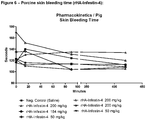
- the bleeding risk may also be assessed by determining the skin bleeding time.
- the skin bleeding time SBT can be defined as the time until cessation of blood loss from a standardized 5 mm long by 1 mm deep inner ear incision created by using a Surgicutt ® cutting device (International Technidyne Corp., Edison, New Jersey, USA).
- the bleeding time according to the Duke method is performed on the rim of the earlobe, or the finger tip with blood pressure cuff around the upper arm (40 mm Hg), of a subject.
- the investigator punctures the rim of the earlobe, or the finger tip, with a lancet and induces a tissue damage which is ⁇ 3mm deep. Then the investigator let the blood drop out of the tissue damage via gravity without compromising the damage technically, or manually.
- the dripping blood is wiped away with a cellulose paper every 15 to 30 sec without touching the lesion. This procedure is repeated until a cessation is detected by the investigator via visual inspection. Normal values for this visual assessed bleeding test are up to 5 minutes. However there are certain variations depending also on the individual subject, so that the normal bleeding time according to Duke can also be up to 6 minutes, or up to 8 minutes or up to 10 minutes.
- the bleeding time according to the Ivy method is performed with a defined cut in the skin of the inner side of the forearm (e.g. Surgicutt ® ), while a standardized tissue pressure is created via a blood pressure cuff (40 mm Hg) on the upper arm of the subject.
- the investigator wipes away the blood that runs out of the lesion via gravity every 30 sec without touching the lesion. Then the time is taken until bleeding stops.
- Normal values for this visual assessed bleeding test are up to 5 minutes. However there are certain variations depending also on the individual subject, so that the normal bleeding time according to Ivy can also be up to 6 minutes, or up to 8 minutes or up to 10 minutes.
- the subaquale bleeding time according to Marx is performed via tissue damage created on the finger tip of a subject by using a lancet. After the tissue damage is made, the finger tip needs to be inserted into water at 37°C immediately. Then, while the finger remains underwater, the investigator visually inspects the bleeding and monitors the time until the bleeding stops without compromising the tissue damage. Normal values for this visual assessed bleeding test are up to 2 minutes. However there are certain variations depending also on the individual subject, so that the normal bleeding time according to Marx can also be up to 3 minutes or up to 4 minutes.
- the medical procedure is by way of non-limiting examples:
- External contact (outside of the human body) can be summarized as procedures including an extracorporeal circulation so that blood is taken out of the body and after a while returned into the body (bypass, ECMO, hemofiltration, dialysis, collection of blood etc).
- a medical device wherein the medical device is coated with an inhibitor of FXII/FXIIa.
- the medical device may be a cardiopulmonary bypass machine, an extracorporeal membrane oxygenation system for oxygenation of blood, an device for assisted pumping of blood, a blood dialysis device, a device for the extracorporeal filtration of blood, a repository for use in the collection of blood, an intraluminal catheter, a stent, an artificial heart valve and/or accessories for any of these devices including tubing, cannulae, centrifugal pump, valves, ports, diverters, etc.
- Another embodiment includes methods of preparing such devices by coating them with FXII/FXIIa inhibitors by dipping, spraying, and other methods conventional in the art of coating technologies.
- the FXII/FXIIa inhibitor is coated onto the artificial surface, wherein the FXII/FXIIa inhibitor is on the surface in a way such that it is available for binding to FXII/FXIIa, i.e. the biological activity of the FXII/FXIIa inhibitor is preserved.
- the FXII/FXIIa inhibitor is covalently attached to the artificial surface.
- the FXII/FXIIa inhibitor is non-covalently attached to the surface.
- the artificial surface is impregnated with the FXII/FXIIa inhibitor.
- the artificial surface may be a drug-eluting surface, wherein the FXII/FXIIa inhibitor is slowly released from the surface.
- the FXII/FXIIa inhibitor may be embedded in the surface, wherein the FXII/FXIIa inhibitor slowly dissolves as blood contacts the artificial surface.
- the surface is derivatized for FXII/FXIIa inhibitors to adhere to the surface.
- the concentration of FXII/FXIIa inhibitor that is coated on the surface may be similar to the amount administered to a subject systemically.
- Concentrations of FXII/FXIIa inhibitor solutions and/or the final concentration of FXII/FXIIa inhibitor available on the artificial surface may be determined before and/or during manufacturing.
- the FXII/FXIIa inhibitor is administered by being coated on the artificial surface of the device.
- the inhibitor of FXII/FXIIa is administered with heparin or derivatives thereof and/or hirudin or derivatives thereof wherein the amount of heparin or derivatives thereof and/or hirudin or derivatives thereof which is added in addition to the FXII/FXIIa inhibitor before and/or during and/or after the medical procedure is reduced as compared to the amount of heparin or derivatives thereof and/or hirudin or derivatives thereof which is administered normally before and/or during said medical procedure when no inhibitor of FXII/FXIIa is administered.
- Standard therapy in the above mentioned medical procedures is the administration of heparin or derivatives thereof and/or hirudin or derivatives thereof. These drugs are administered to prevent clotting due to the contact activation taking place where blood comes into contact with artificial surfaces. To achieve a prevention of clotting these drugs are dosed such that the Activated Clotting Time (ACT) is between 300-500 seconds. At ACT values below 300 seconds performing the above mentioned medical procedures would entail a high risk of thrombosis.
- ACT Activated Clotting Time
- FXII/FXIIa inhibitors were found to enable performing the above mentioned medical procedures with reduced amounts of heparin or derivatives thereof and/or hirudin or derivatives thereof which would on their own without the administration of a FXII/FXIIa inhibitor lead to ACT values below 500 seconds.
- Embodiments include performing the above mentioned medical procedures with further reduced amounts of heparin or derivatives thereof and/or hirudin or derivatives thereof such that the ACT values would be below 400 seconds, below 300 seconds, below 250 seconds, below 200 seconds, below 150 seconds, below 100 seconds, below 50 seconds when the heparin or derivatives thereof and/or hirudin or derivatives thereof would be given on their own without the administration of a FXII/FXIIa inhibitor.
- Such reduced amounts of heparin may include from 1 to 400 IU/kg body weight (BW), 50 to 300 IU/kg BW, 100 to 200 IU/kg BW, and 200 to 300 IU/kg BW).
- Reduced amount of heparin may include amounts below 400 IU/kg body weight (BW), amounts below 300 IU/kg body weight (BW), amounts below 200 IU/kg body weight (BW), amounts below 100 IU/kg body weight (BW), amounts below 50 IU/kg body weight (BW), or amounts below 10 IU/kg body weight (BW).
- the inhibitor of FXII/FXIIa is administered in a medical procedure as described above without the administration of heparin or a derivative thereof and/or without the administration of hirudin or a derivative thereof.
- heparin or a derivative thereof Due to this increased bleeding risk associated with the administration of heparin or a derivative thereof after the medical procedure is performed and the blood of the human or animal subject is no longer exposed to artificial surfaces, the effect of heparin or a derivative thereof must be antagonized as early as possible to reduce the increased bleeding risk as early as possible.
- protamine is given; however, antagonism presents its own risks as described below.
- hirudin or a derivative thereof is used instead or in combination with heparin or a derivative thereof, it would also be beneficial to antagonize the effects of hirudin or a derivative thereof as the bleeding risk is also increased, although a clinically-useful antagonist has not yet been licensed and therefore remaining unantagonized hirudin or a derivative thereof presents risks. Should such antagonists of hirudin or derivatives thereof become available it is foreseeable that the use of the antagonists would carry a prothrombotic risk comparable to that of the use of heparin antagonists.
- protamine The risks associated with the administration of protamine are, an immediate severe allergic reaction caused by protamine molecule, the risk for severe hypotension and the risk for clotting due to the sudden cessation of the heparin effect, which may cause overshooting thrombin generation.
- the prothrombotic risk following the postoperative antagonism of heparin or derivatives thereof and/or the postoperative antagonism of hirudin or derivatives thereof is prevented or reduced by using a FXII/FXIIa inhibitor.
- the prothrombotic risk following the postoperative antagonism of heparin or derivatives thereof and/or the postoperative antagonism of hirudin or derivatives thereof is prevented or reduced by administering the inhibitor of FXII/FXIIa before, during and/or after a medical procedure, wherein a reduced or no amount of heparin antagonist and/or hirudin antagonist is added after the medical procedure compared to the amount of said antagonist which is administered normally after said medical procedure when no inhibitor of FXII/FXIIa is administered.
- the human or animal subject has a reduced a no prothrombotic risk after the medical procedure.
- FXII/FXIIa refers to either or both of Factor XII and activated Factor XII (FXIIa).
- FXII/FXIIa inhibitor includes inhibitors of either or both of FXII and FXIIa.
- anti-FXII/FXIIa antibodies include antibodies that bind to and inhibit either or both of FXII and FXIIa.
- FXII/FXIIa inhibitor is also meant to include an inhibitor of FXII/FXIIa that is linked to a half-life extending polypeptide, which in one embodiment, includes a linker.
- the FXII/FXIIa inhibitor is a specific FXII/FXIIa inhibitor, preferably a specific FXIIa inhibitor.
- a specific FXII/FXIIa inhibitor refers to an inhibitor which inhibits plasmatic serine proteases other than FXII and/or FXIIa less than or equal to 25% if used in a molar ratio of 1:1.
- a specific FXII/FXIIa inhibitor inhibits plasmatic serine proteases other than FXII and/or FXIIa less than or equal to 25% when said inhibitor is used in a molar ratio of 1:1 of the respective plasmatic serine protease to said inhibitor.
- a specific FXII/FXIIa mAb inhibits the plasmatic serine protease FXIa by only 5%, wherein the molar ratio of FXIa to said mAb is 1:1 whereas the same FXII/FXIIa mAb inhibits FXIIa by at least 80%, preferably at least 90%.
- one other plasmatic serine protease is inhibited by more than 50% if used in a molar ratio of 1:1 of the respective plasmatic serine protease to said inhibitor.
- two other plasmatic serine proteases are inhibited by more than 50% if used in a molar ratio of 1:1 of the respective plasmatic serine protease to said inhibitor.
- the FXII/FXIIa inhibitor is a human FXII/FXIIa inhibitor, including a humanized monoclonal antibody, preferably a fully humanized monoclonal antibody.
- Homology refers to the percentage number of amino acids that are identical or constitute conservative substitutions. Homology may be determined using sequence comparison programs such as GAP ( Deveraux et al., 1984, Nucleic Acids Research 12, 387-395 ), which is incorporated herein by reference. In this way sequences of a similar or substantially different length to those cited herein could be compared by insertion of gaps into the alignment, such gaps being determined, for example, by the comparison algorithm used by GAP.
- the application provides a FXII/FXIIa inhibitor comprising Infestin domain 4, Infestin-4.
- a FXII/FXIIa inhibitor comprises a variant of Infestin-4.
- FXII/FXIIa inhibitors comprise Infestin domain 4, and optionally Infestin domains 1, 2, and/or 3; these proteins are known to be potent inhibitors of FXII/FXIIa (see WO 2008/098720 ; also see Campos ITN et al. 577 FEBS Lett. 512-516, 2004 ).
- the wild type polypeptide sequence of Infestin-4 is provided (SEQ ID NO: 1).
- variant refers to a polypeptide with an amino acid mutation, wherein a “mutation” is defined as a substitution, a deletion, or an addition, to the wild type Infestin-4 sequence, wherein such changes do not alter the functional ability of the polypeptide to inhibit FXII/FXIIa.
- variant includes fragments of the wild type or mutated Infestin-4 sequence. Further examples of such variants are provided below.
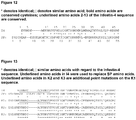
- an Infestin-4 variant comprises the N-terminal amino acids 2-13 of the wild type Infestin-4 sequence (see underlined sequence in Figure 12 ), and at least one and up to five amino acid mutations outside the N-terminal amino acids that result in differences from the wild type Infestin-4 sequence, or six conserved cysteine residues (see amino acids in bold in Figure 12 ) and homology of at least 70% to the wild type Infestin-4 sequence.
- the N-terminal amino acids 2-13 of the Infestin-4 sequence may be important for binding to FXII/FXIIa based on analysis of structural data for a related inhibitor Rhodnius prolixus (PDB: 1 TSO) binding to thrombin, and analysis of SPINK-1 binding to chymotrypsin, which both share a common feature of the accumulation of contact sites in the N-terminal region as shown in Figure 11 . Therefore in one embodiment, a variant of Infestin-4 comprises the conserved N-terminal region of amino acids 2-13 of the wild type Infestin-4 sequence, and at least one and up to five amino acid mutations outside these conserved N-terminal amino acids that result in differences from the wild type Infestin-4 sequence.
- PDB Rhodnius prolixus
- a mutation may be a substitution, a deletion, or an addition.
- the term “outside said N-terminal amino acids” refers to any amino acid along the polypeptide chain of the variant other than the contiguous stretch of amino acids that comprises the sequence VRNPCACFRNYV, i.e., amino acids 2-13 from the wild type Infestin-4 sequence.
- an Infestin-4 variant comprises six conserved cysteine residues and has homology of at least 70% to the wild type Infestin-4 sequence. I n one embodiment, the six conserved cysteine residues are amino acids at positions 6, 8, 16, 27, 31, and 48 of the wild type Infestin-4 sequence (see Figure 12 ). In one embodiment, the variant comprises the final conserved cysteine.
- an Infestin-4 variant comprises all six cysteines and may share 70%, 75%, 85%, 90%, 91 %, 92%, 93%, 94%, 95%, 96%, 97%, 98% or 99% homology to the wild type Infestin-4 sequence.
- a variant of Infestin-4 is characterized in that it inhibits FXII/FXIIa.
- the functional activity of inhibiting FXII/FXIIa may be assessed for example, through in vitro and/or in vivo characterization, including direct assays to test inhibition of FXII/FXIIa enzyme activity, prolonged coagulation time, i.e. activated partial thromboplastin time (aPTT), or in vivo methods that evaluate coagulation.
- Further examples of Infestin-4 variants are SPINK-1 mutants, which are described below.
- a human protein with high similarity to Infestin-4 may be employed.
- the human protein with the highest similarity to Infestin-4 is SPINK-1, a Kazal-type serine protease inhibitor expressed in the pancreas (also known as pancreatic secretory trypsin inhibitor, PSTI).
- the Kazal-type serine protease inhibitor family is one of numerous families of serine protease inhibitors. Many proteins from different species have been described ( Laskowski M and Kato I, 49 Ann. Rev. Biochem. 593-626, 1980 ).
- the amino acid sequence similarities between Infestin-4 and SPINK-1 are outlined in Figure 12 .
- the wild type SPINK-1 sequence (SEQ ID NO: 2) different variants may be generated in order to increase homology of the SPINK-1 sequence to Infestin-4.
- the phrase "increased homology to Infestin-4" refers to the process whereby amino acid mutations are made to SPINK-1 to bring the SPINK-1 sequence closer to the Infestin-4 sequence.
- SPINK-1 is mutated to comprise the N-terminal amino acids 2-13 of the wild type Infestin-4 sequence; the polypeptide sequence is given and is referred to as K1 (SEQ ID NO: 3). As described above, the N-terminal portion of the Infestin-4 sequence is thought to be important for FXII/FXIIa inhibitory function.
- a variant of the mutated SPINK-1 also comprises N-terminal amino acids 2-13 of the wild type Infestin-4 sequence, and at least one and up to five amino acid mutations outside said N-terminal amino acids that result in differences from the wild type SPINK-1 sequence and which increase the homology of the variant to the wild type Infestin-4 sequence.
- a variant of mutated SPINK-1 comprises six conserved cysteine residues and has homology of at least 70% to the wild type SPINK-1 sequence.
- a mutation may be a substitution, a deletion, or an addition.
- the term “outside said N-terminal amino acids” refers to any amino acid along the polypeptide chain of the variant other than the contiguous stretch of amino acids that is comprised of the sequence VRNPCACFRNYV, i.e., amino acids 2-13 from the wild type Infestin-4 sequence.
- the term “variant” includes fragments of said mutated SPINK-1 sequence.
- the six conserved cysteine residues may be amino acids at positions 9, 16, 24, 35, 38, and 56 of the wild type SPINK-1 sequence (see Figure 12 ).
- the variant comprises the final conserved cysteine.
- a SPINK-1 variant comprises all six cysteines.
- a SPINK-1 variant is also characterized in that it inhibits FXII/FXIIa.
- SPINK-1 variants examples are given and are named K2, and K3 (SEQ ID NO: 4 and 5 respectively).
- K2 and K3 further amino acid substitutions outside of the N-terminus were made in order to increase homology to Infestin-4, wherein the variants are also characterized in that they inhibit FXII/FXIIa activity. See WO 2008/098720 .
- Figure 13 shows the amino acid sequence of these variants and the degree of changes to the SPINK-1 wild-type sequence.
- the SPINK-1 variant K3 five amino acid substitutions were made to increase homology to Infestin-4.
- a SPINK-1 variant may share 70%, 75%, 85%, 90%, 91%, 92%, 93%, 94%, 95%, 96%, 97%, 98% or 99% homology with the wildtype SPINK-1 sequence.
- other inhibitors of FXII/FXIIa are administered to a patient receiving a medical procedure.
- WO 2006/066878 the use of antibodies against FXII/FXIIa or the use of inhibitors of FXII/FXIIa is proposed.
- inhibitors to FXII/FXIIa include antithrombin III (AT III), angiotensin converting enzyme inhibitor, C1 inhibitor, aprotinin, alpha-1 protease inhibitor, antipain ([(S)-1-Carboxy-2-Phenylethyl]-Carbamoyl-L-Arg-L-Val-Arginal), Z-Pro-Proaldehyde-dimethyl acetate, DX88 (Dyax Inc., 300 Technology Square, Cambridge, MA 02139, USA; cited in: Williams A and Baird LG, 29 Transfus Apheresis Sci.
- AT III antithrombin III
- angiotensin converting enzyme inhibitor C1 inhibitor
- aprotinin alpha-1 protease inhibitor
- antipain [(S)-1-Carboxy-2-Phenylethyl]-Carbamoyl-L-Arg-L-Val-Arginal
- leupeptin inhibitors of prolyl oligopeptidase such as Fmoc-Ala-Pyr-CN, corn-trypsin inhibitor (CTI), mutants of the bovine pancreatic trypsin inhibitor, ecotin, yellowfin sole anticoagulant protein (YAP), Cucurbita maxima trypsin inhibitor-V including Curcurbita maxima isoinhibitors and Hamadarin (as disclosed by Isawa H et al. 277 J. Biol. Chem. 27651-27658, 2002 ), and Pro-Phe-Arg-chloromethyl-ketone (PCK).
- PCK Pro-Phe-Arg-chloromethyl-ketone
- the FXII/FXIIa inhibitor may be for example an antibody, or fragment of the same or mimetic retaining the inhibitory activity, for example analogues of Kunitz Protease Inhibitor domain of amyloid precursor protein as disclosed in U.S. Patent No. 6,613,890 in columns 4 through 8.
- Other suitable inhibitors may be Hamadarin as disclosed in Isawa H et al. 277 J. Biol. Chem. 27651-27658, 2002 .
- a suitable Corn Trypsin Inhibitor and methods of its production are disclosed in Chen Z et al. 65 Applied and Environmental Microbiology, 1320-1324, 1999 , and in Wen L et al. 18 Plant Mol. Biol. 813-814, 1992 .
- the FXII/FXIIa inhibitor may be an anti-FXII/FXIIa antibody that binds to FXII/FXIIa and inhibits FXII/FXIIa activation and/or activity.
- an antibody has been described for example in WO 2006/066878 , and in Ravon et al., 1 Blood 4134-43, 1995 .
- an "anti-FXII/FXIIa antibody” includes antibodies that bind to and inhibit either or both of FXII and FXIIa. Anti-FXII/FXIIa antibodies are described in further detail below.
- FXII/FXIIa inhibitors linked to a half-life enhancing polypeptide (HLEP).
- FXII/FXIIa inhibitors are small proteins. Therefore a rapid renal clearance as published for other small proteins can be expected ( Werle M and Bernkop-Schnurch A, 30 Amino Acids 351-367, 2006 ).
- One way to address a short plasma half-life of a polypeptidic compound is to inject it repeatedly or via continuous infusion. Another approach is to increase the intrinsic plasma half-life of the polypeptide itself.
- FXII/FXIIa inhibitors are linked to half-life extending proteins.
- a "half-life enhancing polypeptide” increases the half-life of the FXII/FXIIa inhibitor in vivo in a patient or in an animal.
- albumin and immunoglobulins and their fragments or derivatives have been described as half-life enhancing polypeptides (HLEPs).
- Ballance et al. (WO 2001/79271 ) described fusion polypeptides of a multitude of different therapeutic polypeptides which, when fused to human serum albumin, are predicted to have an increased functional half-life in vivo and extended shelf-life.
- albumin and “serum albumin” encompass human albumin (HA) and variants thereof, the full mature form of which is given (SEQ ID NO: 6), as well as albumin from other species and variants thereof.
- albumin refers to an albumin polypeptide or amino acid sequence, or an albumin variant, having one or more functional activities (e.g. biological activities) of albumin.
- albumin is capable of stabilizing or prolonging the therapeutic activity of a FXII/FXIIa inhibitor.
- the albumin may be derived from any vertebrate, especially any mammal, for example human, monkey, cow, sheep, or pig.
- Non-mammalian albumins include, but are not limited to, albumin from hen and salmon.
- the albumin portion of the albumin-linked polypeptide may be from a different animal than the therapeutic polypeptide portion. See WO 2008/098720 for examples of albumin fusion proteins.
- an albumin variant is at least 10, 20, 40, or at least 70 amino acids long or may include 15, 20, 25, 30, 50 or more contiguous amino acids from the HA sequence (SEQ ID NO 6) or may include part or all of specific domains of HA.
- An albumin variant may include an amino acid substitution, deletion, or addition, either conservative or non-conservative substitution, wherein such changes do not substantially alter the active site, or active domain, which confers the therapeutic activities of the half-life enhancing polypeptides. These variants may share 70%, 75%, 85%, 90%, 91%, 92%, 93%, 94%, 95%, 96%, 97%, 98% or 99% homology.
- the albumin variant includes fragments and may consist of or alternatively comprise at least one whole domain of albumin or fragments of said domains, for example domains 1 (amino acids 1-194 of SEQ ID NO 6), 2 (amino acids 195-387 of SEQ ID NO 6), 3 (amino acids 388-585 of SEQ ID NO 6), 1 + 2 (1-387 of SEQ ID NO 6), 2 + 3 (195-585 of SEQ ID NO 6) or 1 +3 (amino acids 1-194 of SEQ ID NO 6 + amino acids 388-585 of SEQ ID NO 6).
- domains 1 amino acids 1-194 of SEQ ID NO 6
- 2 amino acids 195-387 of SEQ ID NO 6
- 3 amino acids 388-585 of SEQ ID NO 6
- 1 + 2 1-387 of SEQ ID NO 6
- 2 + 3 195-585 of SEQ ID NO 6
- 1 +3 amino acids 1-194 of SEQ ID NO 6 + amino acids 388-585 of SEQ ID NO 6
- Each domain is itself made up of two homologous subdomains namely 1-105, 120-194, 195-291, 316-387, 388-491 and 512-585, with flexible inter-subdomain linker regions comprising residues Lys106 to Glu119, Glu292 to Val315 and Glu492 to Ala511.
- HLEPs proteins that are structurally or evolutionarily related to albumin
- alpha-fetoprotein WO 2005/024044 ; Beattie and Dugaiczyk, 20 Gene 415-422, 1982
- afamin Lichenstein et al. 269 J. Biol. Chem. 18149-18154, 1994
- vitamin D binding protein Cooke and David, 76 J. Clin. Invest. 2420-2424, 1985 .
- Their genes represent a multigene cluster with structural and functional similarities mapping to the same chromosomal region in humans, mice, and rat.
- the structural similarity of the albumin family members suggest their usability as HLEPs.
- alpha-fetoprotein has been claimed to extend the half-life of an attached therapeutic polypeptide in vivo ( WO 2005/024044 ).
- Such proteins, or variants thereof, that are capable of stabilizing or prolonging therapeutic activity may be used, and may be derived from any vertebrate, especially any mammal, for example human, monkey, cow, sheep, or pig, or non-mammal including but not limited to, hen or salmon. See WO 2008/098720 .
- Such variants may be of 10 or more amino acids in length or may include about 15, 20, 25, 30, 50 or more contiguous amino acids of the respective protein sequence or may include part or all of specific domains of the respective proteins.
- Albumin family member fusion proteins may include naturally occurring polymorphic variants.
- an immunoglobulin (Ig), or variants thereof, may be used as an HELP, wherein a variant includes fragments.
- the Fc domain or portions of the immunoglobulin constant region are used.
- the constant region may be that of an IgM, IgG, IgD, IgA, or IgE immunoglobulin.
- the therapeutic polypeptide portion is connected to the Ig via the hinge region of the antibody or a peptidic linker, which may be cleavable.
- Fc fragments of immunoglobulins and variants thereof may be fused to Fc domains or at least portions of immunoglobulin constant regions as HLEPs and may be produced as recombinant molecules in prokaryotic or eukaryotic host cells, such as bacteria, yeast, plant, animal (including insect) or human cell lines or in transgenic animals ( WO 2008/098720 ).
- a SPINK-K2-Fc fusion protein is exemplarily shown in SEQ ID NO: 7.
- an intervening peptidic linker may be introduced between the therapeutic polypeptide and the HLEP.
- a cleavable linker is introduced, particularly if the HLEP interferes with the therapeutic polypeptide's specific activity, e.g. by steric hindrance.
- the linker is cleaved by enzymes such as coagulation proteases of the intrinsic, extrinsic, or common coagulation pathway. Coagulation proteases of the intrinsic pathway are proteases in the contact activation pathway, including, for example, FXIIa, FXIa, or FIXa. In one embodiment, the linker is cleaved by FXIIa.
- Proteases of the extrinsic pathway include proteases in the tissue factor pathway, for example, FVIIa.
- Proteases of the common pathway include proteases involved in the conversion of fibrinogen to fibrin, for example, FXa, FIIa, and FXIIIa.
- the FXII/FXIIa inhibitor or variant thereof may have a purity greater than 80%, or greater than 95%, 96%, 97%, 98%, or 99% purity.
- the variant may have a pharmaceutically pure state that is greater than 99.9% pure with respect to contaminating macromolecules, such as other proteins and nucleic acids, and free of infectious and pyrogenic agents.
- the purified FXII/FXIIa inhibitor may be dissolved in conventional physiologically compatible aqueous buffer solutions to which there may be added, optionally, pharmaceutical excipients to provide pharmaceutical preparations for treating SBI in a patient.
- pharmaceutical excipients as well as suitable pharmaceutical formulations are well known in the art. See for example Kibbe et al. Handbook of Pharmaceutical Excipients, (3rd ed., Pharmaceutical Press), 2000 .
- the pharmaceutical composition may be formulated in lyophilized or stable soluble form.
- the polypeptide may be lyophilized by a variety of procedures known in the art. Lyophilized formulations are reconstituted prior to use by the addition of one or more pharmaceutically acceptable diluents such as sterile water for injection or sterile physiological saline solution.
- Formulations of the FXII/FXIIa inhibitor are delivered to the patient by any pharmaceutically suitable means of administration.
- Various delivery systems are known and can be used to administer the composition by any convenient route.
- the compositions may be administered systemically, such as parenterally.
- parenteral as used here includes subcutaneous, intravenous, intramuscular, intraarterial and intra-tracheal injection, instillation, spray application and infusion techniques.
- Parenteral formulations may be administered intravenously, either in bolus form or as a constant infusion, or subcutaneously, according to known procedures.
- Liquid carriers which are well known for parenteral use, include sterile water, saline, aqueous dextrose, sugar solutions, ethanol, glycols, and oils.
- the therapeutic proteins may be formulated for an intravenous line or an arterial line.
- the formulations may be administered continuously by infusion or by bolus injection. Some formulations encompass slow release systems.
- the formulation is administered as a patch.
- Tablets and capsules for oral administration may contain conventional excipients such as binding agents, fillers, lubricants or wetting agents, etc.
- Oral liquid preparations may be in the form of aqueous or oily suspensions, solutions, emulsions, syrups, elixirs or the like, or may be presented as a dry product for reconstitution with water or other suitable vehicle for use. Such liquid preparations may contain conventional additives, such as suspending agents, emulsifying agents, non-aqueous vehicles, and preservatives.
- the dose of the FXII/FXIIa inhibitor may depend on many factors such as, e.g. the indication, formulation, or mode of administration and may be determined in preclinical and clinical trials for each respective indication.
- the dose of FXII/FXIIa inhibitor may be administered to a patient before, during, and/or after a medical procedure.
- the FXII/FXIIa inhibitor may be administered within 1, 2, 4, 6, 12, 24, 48, 72, or 96 hours before and/or after a medical procedure.
- a FXII/FXIIa inhibitor may be administered in a single dose, or in multiple doses, or repeatedly in intervals of 0.25, 0.5, 1, 2, 4, 6, 12, 24, or 48 hours before, during and/or after a medical procedure.
- the FXII/FXIIa inhibitor is administered during the procedure.
- the pharmaceutical composition may be administered alone or in conjunction with other therapeutic agents. These agents may be co-formulated, or may be administered as separate formulations either concurrently or separately and via the same route of administration or different routes of administration.
- the schedule of administration or dose of a FXII/FXIIa inhibitor may also vary between individual patients with the same indication or different indications depending on factors such as other medical conditions or therapies.
- Another embodiment are FXII/FXIIa inhibitors for the prevention or the treatment of the Pump Head syndrome.
- the Pump Head syndrome is a central nervous dysfunction or cognitive impairment or cognitive decline after bypass procedures like CABG. Amongst others, it is assumed to be caused by micro-thrombi generated by contact activation at artificial surfaces used in CABG or other medical procedure where blood comes into contact with artificial surfaces.
- NEJM NEJM
- Another embodiment is the use of the above mentioned FXII/FXIIa inhibitors to prevent the blockage of human blood flow in an extracorporeal medical device, which may be by way of non-limiting example a cardiopulmonary bypass device or a device used for the dialysis of blood or the extracorporeal filtration of blood.
- blockage we mean a reduction of blood flow by at least 10%, at least 20%, at least 30%, at least 40%, at least 50%, at least 60%, at least 70%, at least 80%, at least 90%, at least 95%, at least 99% or a complete cessation of blood flow.
- Castrated male pigs large white x German noble weighing 24-40 kg were procured from a local breeding farm (Willi Schlosser, Schwalmtal, Germany) at age 3-4 months. The animals were housed at 18-21°C in stables with straw bedding under ambient day-night cycles and fed ad libitum with Deuka V pig chow (Deutsche Tiernahrung Cremer GmbH & Co. KG, Düsseldorf, Germany). Tap water was supplied ad libitum. Animal husbandry and study procedures complied with the German Animal Welfare law and European Union regulations.
- Inhaled anaesthesia was maintained with 1-2% isoflurane (Isofluran CP ® , CP Pharma GmbH, Burgdorf, Germany).
- Isofluran CP ® CP Pharma GmbH, Burgdorf, Germany.
- a 1.4 x 2.1 mm catheter was advanced into a carotid artery for collection of blood samples and a 0.5 x 0.9 mm catheter into a femoral artery for continuous blood pressure measurements. Ringer's solution at 4 mL kg-1 h-1 to satisfy basal fluid requirements and test fluids were infused via an indwelling 1.4 x 2.1 mm catheter in an external jugular vein. Body temperature was monitored by rectal thermometry.
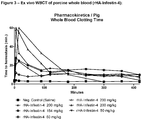
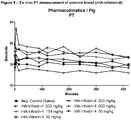
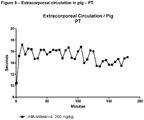
- rHA-Infestin-4 influences mainly the intrinsic coagulation pathway (aPTT) as well as, at higher doses, slightly the extrinsic coagulation pathway (PT). Furthermore a prolongation of the clotting time in thrombelastography could be detected.
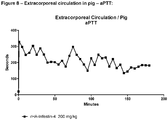
- rHA-Infestin-4 In order to evaluate and prove the anticoagulant effect of rHA-Infestin-4 during cardiopulmonary bypass (CPB) procedures, a preclinical CPB trial was performed in a pig model. Primarily the CPB was loaded with rHA-Infestin-4 (corresponding to 50 mg/kg body weight (BW)), and the animal itself was treated with rHA-Infestin-4 at a dose of 200 mg/kg BW before connecting to the CPB device in order to prevent clotting and consecutive occlusion of the oxygenator membrane of the CPB device. No other substances like heparin, or bivalirudin ( A. Koster et al. Am J Cardio 2004; 93:356-359 ) were used as anticoagulant substances.
- the extracorporeal circuit was primed with a solution consisting of 500 mL isotonic saline, 1000 mL 6% hydroxyethyl starch 200/0.5 (Infukoll, Schwarz Pharma AG, Mannheim, Germany), 2 mL kg-1 15% mannitol (Osmofundin ® , B. Braun) and 50 mg/kg BW rHA-Infestin-4.
- the venous and arterial lines were opened in succession and the venous blood allowed to flow into the venous reservoir by gravity.
- a pump conveyed the blood into the oxygenator.
- the oxygenated blood was equilibrated to target temperature and returned via the arterial line to the left ventricle. Hypothermia was maintained at 25°C for 2 hours followed by 1 hour of rewarming to normothermia (37°C).
- SBT skin bleeding time
- rHA-Infestin-4 was able to prevent clotting of the CBP oxygenator by influencing mainly the intrinsic coagulation pathway, which is reflected in the aPTT, while the extrinsic pathway (PT evaluations) remains unaffected to a certain degree/dose of rHA-Infestin-4.
- FXII/FXIIa inhibitors are tested in a novel study setup where rabbit whole blood is routed to a cardiopulmonary bypass (CPB) circuit ex vivo.
- CPB cardiopulmonary bypass
- the blood constantly circulates through the circuit (and not going back into the rabbit) where it encounters massive (contact) activation of the coagulation system if not anticoagulated.
- This model is used to test the efficacy of FXII/FXIIa inhibitors or combinations of FXII/FXIIa inhibitors and heparin to prevent occlusion of the CPB circuit.
- Readouts are amongst others: Pre- and post-oxygenator pressure, complete blood count including platelet count and size, patency of the oxygenator and filters, further readouts of the function of the coagulation system, complement system and kinin-kallikrein system.
- FXII/FXIIa inhibitors are able to prevent occlusion/clotting of the CPB in this ex vivo setup and furthermore are able to reduce the activation of the complement system and kinin-kallikrein system.
- FXII/FXIIa inhibitors which is needed to achieve equivalent efficacy in the parameters named above (WBCT) compared to a standard dose of unfractionated heparin, will be determined. Additionally, also combinations of FXII/FXIIa inhibitors and low-dose heparin (or other antithrombotic drugs) are tested.
- Readouts are amongst others: Pre- and post-oxygenator pressure, complete blood count including platelet count and size, patency of the oxygenator and filters, further readouts of the function of the coagulation system, complement system and kinin-kallikrein system. It is assumed that, FXII/FXIIa inhibitors or combinations of FXII/FXIIa inhibitors and low-dose heparin (or other antithrombotic drugs) are also able to prevent clotting of the circuit. Furthermore, it is assumed that FXII/FXIIa inhibitors are able to reduce the activation of the complement system and kinin-kallikrein-system within this ex vivo circuit. The dose of FXII/FXIIa inhibitors, which needed to achieve equivalent efficacy in the parameters and readouts named above compared to a standard dose of unfractionated heparin, will be determined.
- This novel approach to the treatment of patients before, during and/or after contact activation of the coagulation system provides protection of thrombosis before, during and/or after certain procedures, while the patient is not put on risk for bleeding events at the same time.
Landscapes
- Health & Medical Sciences (AREA)
- Life Sciences & Earth Sciences (AREA)
- Chemical & Material Sciences (AREA)
- General Health & Medical Sciences (AREA)
- Medicinal Chemistry (AREA)
- Animal Behavior & Ethology (AREA)
- Public Health (AREA)
- Veterinary Medicine (AREA)
- Engineering & Computer Science (AREA)
- Epidemiology (AREA)
- Proteomics, Peptides & Aminoacids (AREA)
- Bioinformatics & Cheminformatics (AREA)
- Pharmacology & Pharmacy (AREA)
- Immunology (AREA)
- Gastroenterology & Hepatology (AREA)
- Organic Chemistry (AREA)
- Molecular Biology (AREA)
- Zoology (AREA)
- Hematology (AREA)
- Genetics & Genomics (AREA)
- Biophysics (AREA)
- Biochemistry (AREA)
- Surgery (AREA)
- Vascular Medicine (AREA)
- Dermatology (AREA)
- Materials Engineering (AREA)
- Tropical Medicine & Parasitology (AREA)
- Microbiology (AREA)
- Mycology (AREA)
- Nuclear Medicine, Radiotherapy & Molecular Imaging (AREA)
- Chemical Kinetics & Catalysis (AREA)
- General Chemical & Material Sciences (AREA)
- Endocrinology (AREA)
- Diabetes (AREA)
- Cardiology (AREA)
- Heart & Thoracic Surgery (AREA)
- Urology & Nephrology (AREA)
- Medicines That Contain Protein Lipid Enzymes And Other Medicines (AREA)
- Materials For Medical Uses (AREA)
- Peptides Or Proteins (AREA)
Claims (19)
- Inhibiteur de FXII/FXIIa pour utilisation dans la prévention de la formation et/ou la stabilisation de thrombus pendant et/ou après une procédure médicale effectuée sur un sujet humain ou animal comprenant la mise en contact du sang dudit sujet humain ou animal avec des surfaces artificielles, ledit inhibiteur de FXII/FXIIa étant administré avant et/ou pendant et/ou après ladite procédure médicale, et en outre(i) la surface artificielle est exposée à au moins 80 % du volume sanguin du sujet et la surface artificielle est d'au moins 0,2 m2 ou(ii) la surface artificielle est un récipient de collecte de sang à l'extérieur du corps du sujet ou(iii) la surface artificielle est un stent, une valve, un cathéter intraluminal, ou un système pour le pompage interne assisté de sang,l'inhibiteur de FXII/FXIIa comprenant(i) la séquence polypeptidique d'infestine 4 de type sauvage (SEQ ID NO: 1), ou un variant de celle-ci, un variant comprenant(a) les acides aminés N-terminaux 2-13 de la séquence d'infestine 4 de type sauvage et au moins une et jusqu'à cinq mutations d'acide aminé à l'extérieur desdits acides aminés N-terminaux qui conduisent à des différences par rapport à la séquence d'infestine 4 de type sauvage ; et/ou(b) six résidus cystéine conservés de la séquence d'infestine 4 de type sauvage et une homologie d'au moins 70 % avec la séquence d'infestine 4 de type sauvage ;(ii) SPINK-1 (SEO ID NO: 2), qui est muté de manière à comprendre les acides aminés N-terminaux 2-13 de la séquence d'infestine 4 de type sauvage, ou un variant dudit SPINK-1 muté, un variant comprenant(a) les acides aminés N-terminaux 2-13 de la séquence d'infestine 4 de type sauvage ; et au moins une et jusqu'à cinq mutations d'acide aminé à l'extérieur desdits acides aminés N-terminaux qui conduisent à des différences par rapport à la séquence SPINK-1 de type sauvage et qui augmentent l'homologie du variant avec la séquence d'infestine 4 de type sauvage ; et/ou(b) six résidus cystéine conservés de la séquence SPINK-1 de type sauvage et une homologie d'au moins 70 % avec la séquence SPINK-1 de type sauvage ;(iii) un anticorps anti-FXII/FXIIa, l'anticorps se liant à FXII/FXIIa et inhibant son activité et/ou activation.
- Inhibiteur de FXII/FXIIa pour utilisation selon la revendication 1, ledit sujet humain ou animal présentant un risque de saignement qui n'est pas augmenté et qui est déterminéa) par l'intermédiaire du temps de saignement de l'oreille ou de la pointe du doigt selon Duke et ledit temps de saignement de l'oreille ou de la pointe du doigt n'étant pas supérieur à 10 minutes oub) selon le procédé d'Ivy et le temps de saignement n'étant pas supérieur à 10 minutes ouc) selon le procédé de Marx et le temps de saignement n'étant pas supérieur à 4 minutes.
- Inhibiteur de FXII/FXIIa pour utilisation selon les revendications 1 et 2, la procédure médicale étanti) une procédure quelconque nécessitant une circulation extracorporelle ouii) l'oxygénation et le pompage de sang par oxygénation à membrane extracorporelle ouiii) le pompage assisté de sang (interne ou externe) ouiv) la dialyse de sang ouv) la filtration extracorporelle de sang ouvi) la collecte de sang dans un dépôt quelconque pour usage ultérieur chez un sujet animal ou humain ouvii) l'utilisation de cathéter(s) intraluminaux veineux ou artériel(s) ouviii) l'utilisation de dispositif(s) pour cathéterisation cardiaque diagnostique ou interventionnelle ouix) l'utilisation de dispositif(s) intravasculaire(s) oux) l'utilisation de valve(s) cardiaque(s) artificielle(s) ouxi) l'utilisation de greffe(s) artificielle(s).
- Inhibiteur de FXII/FXIIa pour utilisation selon les revendications 1 à 3, l'inhibiteur de FXII/FXIIa étant administré avant, après, et/ou pendant une procédure médicale nécessitant une circulation extracorporelle.
- Inhibiteur de FXII/FXIIa pour utilisation selon les revendications 1 à 3, l'inhibiteur de FXII/FXIIa étant administré avant, après, et/ou pendant une procédure médicale comprenant la collecte de sang dans un dépôt quelconque pour usage ultérieur chez un sujet animal ou humain.
- Inhibiteur de FXII/FXIIa pour utilisation selon la revendication 5, l'inhibiteur étant :i) administré au donneur de sang avant et/ou pendant le processus de don de sang ouii) mélangé avec le sang dans le dépôt de collecte ouiii) administré au receveur de sang avant, pendant et/ou après que le sang ait été administré au receveur humain ou animal.
- Inhibiteur de FXII/FXIIa pour utilisation selon les revendications 1 à 6, l'inhibiteur de FXII/FXIIa étant administré par enduction sur la surface artificielle.
- Inhibiteur de FXII/FXIIa pour utilisation selon les revendications 1 à 7, une quantité réduite d'héparine ou de dérivés de celle-ci et/ou d'hirudine ou de dérivés de celle-ci étant ajoutée en plus de l'inhibiteur de FXII/FXIIa avant et/ou pendant et/ou après la procédure médicale par rapport à la quantité d'héparine ou de dérivés de celle-ci et/ou d'hirudine ou de dérivés de celle-ci qui est normalement administrée avant et/ou pendant ladite procédure médicale lorsqu'aucun inhibiteur de FXII/FXIIa n'est administré.
- Inhibiteur de FXII/FXIIa pour utilisation selon les revendications 1 à 8, aucune héparine ou dérivé de celle-ci et/ou aucune hirudine ou dérivé de celle-ci n'étant utilisée en plus de l'inhibiteur de FXII/FXIIa.
- Inhibiteur de FXII/FXIIa pour utilisation selon les revendications 1 à 9, ledit sujet humain ou animal présente un risque prothrombotique réduit ou nul après la procédure médicale.
- Inhibiteur de FXII/FXIIa pour utilisation selon les revendications 1 à 10, ledit sujet humain ou animal présentant un risque prothrombotique réduit ou nul après un antagonisme postopératoire de l'héparine ou des dérivés de celle-ci et/ou un antagonisme postopératoire de l'hirudine ou des dérivés de celle-ci, et facultativement, le risque prothrombotique étant causé par l'administration de protamine.
- Inhibiteur de FXII/FXIIa pour utilisation selon les revendications 1 à 11, une quantité réduite ou nulle d'antagoniste d'héparine et/ou d'antagoniste d'hirudine étant ajoutée audit sujet humain ou animal après la procédure médicale par rapport à la quantité dudit antagoniste qui est normalement administrée après ladite procédure médicale lorsqu'aucun inhibiteur de FXII/FXIIa n'est administré.
- Inhibiteur de FXII/FXIIa pour utilisation selon les revendications 1 à 12 pour la prévention ou le traitement du syndrome post-perfusion.
- Inhibiteur de FXII/FXIIa pour utilisation selon les revendications 1 à 13, l'inhibiteur de FXII/FXIIa comprenant SPINK K1, K2, ou K3 (SEO ID NO: 3, 4 ou 5).
- Inhibiteur de FXII/FXIIa pour utilisation selon les revendications 1 à 14, l'inhibiteur de FXII/FXIIa étant lié à un polypeptide augmentant la demi-vie, le peptide augmentant la demi-vie étant facultativement l'albumine, l'afamine, l'alpha-foetoprotéine ou la protéine de liaison de vitamine D, l'albumine humaine, ou un variant de celle-ci, une immunoglobuline ou un variant de celle-ci, un Fc d'un IgG.
- Inhibiteur de FXII/FXIIa pour utilisation selon la revendication 15, le polypeptide augmentant la demi-vie étant lié à l'inhibiteur de FXII/FXIIa par l'intermédiaire d'un lieur.
- Inhibiteur de FXII/FXIIa pour utilisation selon la revendication 16, le lieur étant au moins l'un de :(i) clivable ;(ii) clivable par une protéase de coagulation de la voie de coagulation intrinsèque, extrinsèque ou commune ; et(iii) clivable par FXIIa.
- Inhibiteur de FXII/FXIIa tel que défini dans les revendications 1 à 17 pour utilisation pour prévenir le blocage de la circulation sanguine humaine vers un dispositif médical extracorporel, le dispositif médical étant facultativement un dispositif de circulation extracorporelle ou un dispositif utilisé pour la dialyse de sang ou la filtration extracorporelle de sang.
- Dispositif médical revêtu d'un inhibiteur de FXII/FXIIa tel que défini dans les revendications 1 à 18, le dispositif étant une machine de circulation extracorporelle, un système d'oxygénation à membrane extracorporelle pour l'oxygénation de sang, un dispositif pour le pompage assisté de sang, un dispositif de dialyse de sang, un dispositif pour la filtration extracorporelle de sang, un dépôt pour utilisation dans la collecte de sang, un cathéter intraluminal, un stent, une valve cardiaque artificielle et/ou des accessoires pour l'un quelconques desdits dispositifs comprenant une tubulure, une canule, une pompe centrifuge, une vanne, un orifice et/ou une dérivation.
Priority Applications (2)
| Application Number | Priority Date | Filing Date | Title |
|---|---|---|---|
| EP12707782.4A EP2683397B1 (fr) | 2011-03-09 | 2012-03-09 | Inhibiteurs du facteur xii destinés à être administrés avec des procédures médicales comprenant le contact avec des surfaces artificielles |
| PL12707782T PL2683397T3 (pl) | 2011-03-09 | 2012-03-09 | Inhibitory czynnika XII do podawania w zabiegach medycznych obejmujących kontakt z powierzchniami sztucznymi |
Applications Claiming Priority (5)
| Application Number | Priority Date | Filing Date | Title |
|---|---|---|---|
| US201161450881P | 2011-03-09 | 2011-03-09 | |
| EP11157557 | 2011-03-09 | ||
| US201161496740P | 2011-06-14 | 2011-06-14 | |
| EP12707782.4A EP2683397B1 (fr) | 2011-03-09 | 2012-03-09 | Inhibiteurs du facteur xii destinés à être administrés avec des procédures médicales comprenant le contact avec des surfaces artificielles |
| PCT/EP2012/054149 WO2012120128A1 (fr) | 2011-03-09 | 2012-03-09 | Inhibiteurs du facteur xii destinés à être administrés avec des procédures médicales comprenant le contact avec des surfaces artificielles |
Publications (2)
| Publication Number | Publication Date |
|---|---|
| EP2683397A1 EP2683397A1 (fr) | 2014-01-15 |
| EP2683397B1 true EP2683397B1 (fr) | 2017-08-09 |
Family
ID=44515129
Family Applications (1)
| Application Number | Title | Priority Date | Filing Date |
|---|---|---|---|
| EP12707782.4A Active EP2683397B1 (fr) | 2011-03-09 | 2012-03-09 | Inhibiteurs du facteur xii destinés à être administrés avec des procédures médicales comprenant le contact avec des surfaces artificielles |
Country Status (11)
| Country | Link |
|---|---|
| US (2) | US9352016B2 (fr) |
| EP (1) | EP2683397B1 (fr) |
| JP (1) | JP6109081B2 (fr) |
| KR (1) | KR101954052B1 (fr) |
| CN (1) | CN103415301A (fr) |
| AU (1) | AU2016213799A1 (fr) |
| CA (1) | CA2829037C (fr) |
| DK (1) | DK2683397T3 (fr) |
| ES (1) | ES2646191T3 (fr) |
| PL (1) | PL2683397T3 (fr) |
| WO (1) | WO2012120128A1 (fr) |
Families Citing this family (22)
| Publication number | Priority date | Publication date | Assignee | Title |
|---|---|---|---|---|
| US9352016B2 (en) | 2011-03-09 | 2016-05-31 | Csl Behring Gmbh | Factor XII inhibitors for the administration with medical procedures comprising contact with artificial surfaces |
| RU2015136025A (ru) * | 2013-02-01 | 2017-03-06 | Бектон, Дикинсон энд Кампани | Устройства для сбора крови, содержащие добавки, ингибирующие контактный путь свертывания крови |
| CN105188750A (zh) | 2013-03-08 | 2015-12-23 | 德国杰特贝林生物制品有限公司 | 治疗和预防远端缺血-再灌注损伤 |
| RU2733405C2 (ru) | 2014-02-07 | 2020-10-01 | Экзитера Фармасьютикалз Инк. | Терапевтические соединения и композиции |
| JP7109160B2 (ja) | 2014-06-18 | 2022-07-29 | ツェー・エス・エル・ベーリング・ゲー・エム・ベー・ハー | 神経外傷性障害において第xii因子インヒビターを使用する療法 |
| JP6907188B2 (ja) * | 2015-08-13 | 2021-07-21 | ダイアックス コーポレーション | 接触系活性化の評価のためのプロテアーゼ阻害剤を含む真空採血管 |
| US20190175683A1 (en) | 2016-08-05 | 2019-06-13 | Csl Behring Gmbh | Pharmaceutical formulations of c1 esterase inhibitor |
| AU2019288299B2 (en) | 2018-06-19 | 2026-02-05 | Regeneron Pharmaceuticals, Inc. | Anti-factor XII/XIIa antibodies and uses thereof |
| JP7135620B2 (ja) * | 2018-09-07 | 2022-09-13 | ソニーグループ株式会社 | 血液凝固系解析装置、血液凝固系解析方法及び血液凝固系解析プログラム |
| JP6888175B2 (ja) | 2018-11-07 | 2021-06-16 | 第一三共株式会社 | Klk5阻害ペプチド |
| JP2022523712A (ja) * | 2019-01-29 | 2022-04-26 | エクセセーラ ファーマシューティカルズ インコーポレイテッド | 治療用化合物および組成物 |
| WO2021032936A1 (fr) * | 2019-08-21 | 2021-02-25 | Kalvista Pharmaceuticals Limited | Inhibiteurs d'enzymes |
| BR112022001054A2 (pt) | 2019-08-21 | 2022-03-15 | Kalvista Pharmaceuticals Ltd | Inibidores enzimáticos |
| WO2021032935A1 (fr) | 2019-08-21 | 2021-02-25 | Kalvista Pharmaceuticals Limited | Inhibiteurs d'enzyme |
| CN114286820A (zh) | 2019-08-21 | 2022-04-05 | 卡尔维斯塔制药有限公司 | 酶抑制剂 |
| US20240352150A2 (en) * | 2020-06-16 | 2024-10-24 | Ningbo Comgen Biotech Co., Ltd. | Anti-factor xii (fxii) nanobody or antigen-binding fragment thereof, and use thereof |
| US20240059691A1 (en) | 2020-12-01 | 2024-02-22 | Kalvista Pharmaceuticals Limited | Enzyme inhibitors |
| EP4294798A1 (fr) | 2021-02-19 | 2023-12-27 | Kalvista Pharmaceuticals Limited | Inhibiteurs du facteur xiia |
| TW202412765A (zh) | 2022-08-18 | 2024-04-01 | 英商卡爾維斯塔製藥有限公司 | 酶抑制劑 |
| EP4605390A1 (fr) | 2022-10-19 | 2025-08-27 | Kalvista Pharmaceuticals Limited | Dérivés de 3a,4,5,6-tétrahydro-1h-pyrazolo[3,4-c]pyridin-7(7ah)-one utilisés en tant qu'inhibiteurs du facteur xiia |
| WO2024218503A1 (fr) | 2023-04-20 | 2024-10-24 | Kalvista Pharmaceuticals Limited | Formes solides d'un inhibiteur d'enzyme et sels associés |
| IL325613A (en) | 2023-07-19 | 2026-02-01 | Regeneron Pharma | Antibodies against factor xii/xiia and their uses |
Family Cites Families (33)
| Publication number | Priority date | Publication date | Assignee | Title |
|---|---|---|---|---|
| JPS5714358A (en) * | 1980-07-02 | 1982-01-25 | Toray Industries | Antithrombus medical material |
| US5380299A (en) * | 1993-08-30 | 1995-01-10 | Med Institute, Inc. | Thrombolytic treated intravascular medical device |
| DE69534265T2 (de) | 1994-12-12 | 2006-05-04 | Beth Israel Deaconess Medical Center, Inc., Boston | Chimäre zytokine und ihre verwendung |
| ZA963619B (en) | 1995-05-08 | 1996-11-22 | Scios Inc | Protease inhibitor peptides |
| US5674236A (en) * | 1996-04-30 | 1997-10-07 | Medtronic, Inc. | Lancet for capillary puncture blood samples |
| GB9800817D0 (en) * | 1998-01-16 | 1998-03-11 | Bio Discovery Ltd | Serine protease inhibitors |
| US6660843B1 (en) | 1998-10-23 | 2003-12-09 | Amgen Inc. | Modified peptides as therapeutic agents |
| JP2001276217A (ja) * | 2000-04-04 | 2001-10-09 | Dountsuendorufaa Udo | 単一又は複数の疾患のある患者での組織、血漿又は血液透析用のバイオコートされた吸着剤 |
| EP2213743A1 (fr) | 2000-04-12 | 2010-08-04 | Human Genome Sciences, Inc. | Protéines de fusion d'albumine |
| CN1568166A (zh) * | 2001-10-15 | 2005-01-19 | 荷姆泰克股份有限公司 | 预防再狭窄的涂层支架 |
| WO2003065881A2 (fr) | 2002-02-06 | 2003-08-14 | Orbus Medical Technologies Inc. | Dispositif medical recouvert d'un revetement qui facilite la fixation et la differenciation de cellules endotheliales |
| EP1482882B1 (fr) * | 2002-02-11 | 2011-09-14 | Gold-T Tech, Inc. | Dispositif implantable pour prevenir la formation de thrombus |
| AU2003210806A1 (en) | 2002-03-05 | 2003-09-22 | Eli Lilly And Company | Heterologous g-csf fusion proteins |
| DE10301300B4 (de) | 2003-01-15 | 2009-07-16 | Curacyte Chemistry Gmbh | Verwendung von acylierten 4-Amidino- und 4-Guanidinobenzylaminen zur Inhibierung von Plasmakallikrein |
| PL2298347T3 (pl) | 2003-05-06 | 2016-03-31 | Bioverativ Therapeutics Inc | Białka chimeryczne czynnika krzepnięcia do leczenia zaburzenia hemostazy |
| TWI353991B (en) | 2003-05-06 | 2011-12-11 | Syntonix Pharmaceuticals Inc | Immunoglobulin chimeric monomer-dimer hybrids |
| CN100431604C (zh) | 2003-05-16 | 2008-11-12 | 法明知识产权股份有限公司 | 用于瞬时性治疗的具有短半衰期的c1抑制剂 |
| DK1641823T3 (da) | 2003-06-12 | 2011-12-12 | Lilly Co Eli | GLP-1-analog fusionsproteiner |
| US20050059660A1 (en) * | 2003-08-01 | 2005-03-17 | Pharmacia & Upjohn Company | Novel combination |
| CA2537273A1 (fr) | 2003-09-05 | 2005-03-17 | Gtc Biotherapeutics, Inc. | Procede de production de proteines de fusion dans le lait de mammiferes transgeniques |
| RU2370276C2 (ru) | 2003-12-31 | 2009-10-20 | Мерк Патент Гмбх | Fc-ЭРИТРОПОЭТИН СЛИТЫЙ БЕЛОК С УЛУЧШЕННОЙ ФАРМАКОКИНЕТИКОЙ |
| US7670595B2 (en) | 2004-06-28 | 2010-03-02 | Merck Patent Gmbh | Fc-interferon-beta fusion proteins |
| CA2591786C (fr) * | 2004-12-23 | 2013-07-16 | Bernhard Nieswandt | Prevention de la formation et/ou de la stabilisation des caillots de sang |
| PL2380587T3 (pl) * | 2005-12-21 | 2018-03-30 | Pharming Intellectual Property B.V. | Zastosowanie inhibitora C1 do zapobiegania uszkodzeniu niedokrwiennoreperfuzyjnemu |
| PE20081834A1 (es) * | 2006-12-31 | 2009-01-16 | Boehringer Ingelheim Int | Proceso para la sintesis de derivados de acido 3-amino-tetrahidrofuran-3-carboxilico y uso de los mismos como medicamentos |
| CA2678001C (fr) | 2007-02-12 | 2017-07-11 | Stefan Schulte | Application therapeutique d'inhibiteurs de serine protease de type kazal |
| JP2011504371A (ja) * | 2007-11-21 | 2011-02-10 | オレゴン ヘルス アンド サイエンス ユニバーシティー | 抗第xi因子モノクローナル抗体およびその使用方法 |
| US9352016B2 (en) | 2011-03-09 | 2016-05-31 | Csl Behring Gmbh | Factor XII inhibitors for the administration with medical procedures comprising contact with artificial surfaces |
| EP2497489A1 (fr) | 2011-03-09 | 2012-09-12 | CSL Behring GmbH | Inhibiteur du facteur XII pour le traitement de la pénombre ischémique cérébrale et l'ischémie d'autres organes |
| KR101956585B1 (ko) | 2011-09-24 | 2019-03-11 | 체에스엘 베링 게엠베하 | 면역글로불린과 c1-억제제를 사용하는 병용 치료요법 |
| EP2623110A1 (fr) | 2012-01-31 | 2013-08-07 | CSL Behring GmbH | Inhibiteurs de facteur XII pour le traitement de troubles inflammatoires neurologiques |
| CN105188750A (zh) | 2013-03-08 | 2015-12-23 | 德国杰特贝林生物制品有限公司 | 治疗和预防远端缺血-再灌注损伤 |
| CA2916399C (fr) | 2013-06-28 | 2022-08-02 | Marc Nolte | Polytherapie utilisant un inhibiteur du facteur xii et un inhibiteur de c1 |
-
2012
- 2012-03-09 US US14/004,066 patent/US9352016B2/en active Active
- 2012-03-09 WO PCT/EP2012/054149 patent/WO2012120128A1/fr not_active Ceased
- 2012-03-09 ES ES12707782.4T patent/ES2646191T3/es active Active
- 2012-03-09 KR KR1020137026670A patent/KR101954052B1/ko active Active
- 2012-03-09 CA CA2829037A patent/CA2829037C/fr active Active
- 2012-03-09 DK DK12707782.4T patent/DK2683397T3/en active
- 2012-03-09 CN CN2012800122440A patent/CN103415301A/zh active Pending
- 2012-03-09 JP JP2013557120A patent/JP6109081B2/ja active Active
- 2012-03-09 EP EP12707782.4A patent/EP2683397B1/fr active Active
- 2012-03-09 PL PL12707782T patent/PL2683397T3/pl unknown
-
2016
- 2016-04-28 US US15/141,036 patent/US9987328B2/en active Active
- 2016-08-11 AU AU2016213799A patent/AU2016213799A1/en not_active Abandoned
Non-Patent Citations (1)
| Title |
|---|
| None * |
Also Published As
| Publication number | Publication date |
|---|---|
| PL2683397T3 (pl) | 2018-01-31 |
| WO2012120128A1 (fr) | 2012-09-13 |
| KR20140011372A (ko) | 2014-01-28 |
| KR101954052B1 (ko) | 2019-03-06 |
| US20140072600A1 (en) | 2014-03-13 |
| JP2014508771A (ja) | 2014-04-10 |
| CA2829037C (fr) | 2022-05-17 |
| EP2683397A1 (fr) | 2014-01-15 |
| CA2829037A1 (fr) | 2012-09-13 |
| US9987328B2 (en) | 2018-06-05 |
| US20160279195A1 (en) | 2016-09-29 |
| JP6109081B2 (ja) | 2017-04-05 |
| AU2012224514A1 (en) | 2013-05-02 |
| DK2683397T3 (en) | 2017-09-18 |
| US9352016B2 (en) | 2016-05-31 |
| CN103415301A (zh) | 2013-11-27 |
| AU2016213799A1 (en) | 2016-09-01 |
| ES2646191T3 (es) | 2017-12-12 |
Similar Documents
| Publication | Publication Date | Title |
|---|---|---|
| US9987328B2 (en) | Factor XII inhibitors for the administration with medical procedures comprising contact with artificial surfaces | |
| CA2581680C (fr) | Inhibiteurs de kallikreine et leurs utilisations | |
| WO1999049880A1 (fr) | Methodes permettant de traiter un trouble d'origine ischemique et de mieux gerer l'accident cerebrovasculaire | |
| US20050250688A1 (en) | Methods for treating an ischemic disorder and improving stroke outcome | |
| EP2285400B1 (fr) | Traitement de saignement par un fibrinogène de faible demi-vie | |
| US9255263B2 (en) | Antithrombotic compounds | |
| AU2012224514B2 (en) | Factor XII inhibitors for the administration with medical procedures comprising contact with artificial surfaces | |
| HK1193570A (en) | Factor xii inhibitors for the administration with medical procedures comprising contact with artificial surfaces | |
| HK1193570B (en) | Factor xii inhibitors for the administration with medical procedures comprising contact with artificial surfaces | |
| US20250205313A1 (en) | Nonpolymerizable fibrinogen as an antithrombotic agent | |
| CA2625888C (fr) | Procede de traitement d'une insuffisance renale aigue avec variante de thrombomoduline | |
| EP3871684B1 (fr) | Médicament permettant de traiter et/ou d'atténuer la septicémie associée à une anomalie de coagulation | |
| TW202146042A (zh) | 用於治療動脈和靜脈血栓形成的協同且靶向的組成物 | |
| HK40059596A (en) | Drug for treating and/or improving septicemia associated with coagulation abnormality | |
| JP2002241400A (ja) | 血液体外循環回路用の血液凝固防止のための医薬組成物 | |
| Kato | Tissue factor pathway inhibitor: structure and function | |
| Royston | Hemostatic Drugs in Prothrombotic or Hypercoagulable States |
Legal Events
| Date | Code | Title | Description |
|---|---|---|---|
| PUAI | Public reference made under article 153(3) epc to a published international application that has entered the european phase |
Free format text: ORIGINAL CODE: 0009012 |
|
| 17P | Request for examination filed |
Effective date: 20131009 |
|
| AK | Designated contracting states |
Kind code of ref document: A1 Designated state(s): AL AT BE BG CH CY CZ DE DK EE ES FI FR GB GR HR HU IE IS IT LI LT LU LV MC MK MT NL NO PL PT RO RS SE SI SK SM TR |
|
| DAX | Request for extension of the european patent (deleted) | ||
| REG | Reference to a national code |
Ref country code: HK Ref legal event code: DE Ref document number: 1193570 Country of ref document: HK |
|
| 17Q | First examination report despatched |
Effective date: 20150113 |
|
| RIC1 | Information provided on ipc code assigned before grant |
Ipc: A61K 38/55 20060101AFI20170223BHEP Ipc: A61L 33/12 20060101ALI20170223BHEP Ipc: A61K 38/16 20060101ALI20170223BHEP Ipc: C07K 16/40 20060101ALI20170223BHEP Ipc: A61K 38/57 20060101ALI20170223BHEP Ipc: C07K 16/36 20060101ALI20170223BHEP Ipc: A61P 9/10 20060101ALI20170223BHEP Ipc: A61K 38/58 20060101ALI20170223BHEP Ipc: A61K 31/727 20060101ALI20170223BHEP Ipc: A61K 39/395 20060101ALI20170223BHEP Ipc: A61L 33/00 20060101ALI20170223BHEP Ipc: A61K 38/17 20060101ALI20170223BHEP |
|
| GRAP | Despatch of communication of intention to grant a patent |
Free format text: ORIGINAL CODE: EPIDOSNIGR1 |
|
| INTG | Intention to grant announced |
Effective date: 20170404 |
|
| GRAS | Grant fee paid |
Free format text: ORIGINAL CODE: EPIDOSNIGR3 |
|
| GRAA | (expected) grant |
Free format text: ORIGINAL CODE: 0009210 |
|
| AK | Designated contracting states |
Kind code of ref document: B1 Designated state(s): AL AT BE BG CH CY CZ DE DK EE ES FI FR GB GR HR HU IE IS IT LI LT LU LV MC MK MT NL NO PL PT RO RS SE SI SK SM TR |
|
| REG | Reference to a national code |
Ref country code: GB Ref legal event code: FG4D |
|
| REG | Reference to a national code |
Ref country code: CH Ref legal event code: EP Ref country code: AT Ref legal event code: REF Ref document number: 916094 Country of ref document: AT Kind code of ref document: T Effective date: 20170815 |
|
| REG | Reference to a national code |
Ref country code: IE Ref legal event code: FG4D |
|
| REG | Reference to a national code |
Ref country code: DK Ref legal event code: T3 Effective date: 20170911 |
|
| REG | Reference to a national code |
Ref country code: DE Ref legal event code: R096 Ref document number: 602012035599 Country of ref document: DE |
|
| REG | Reference to a national code |
Ref country code: CH Ref legal event code: NV Representative=s name: FIAMMENGHI-FIAMMENGHI, CH |
|
| REG | Reference to a national code |
Ref country code: SE Ref legal event code: TRGR |
|
| REG | Reference to a national code |
Ref country code: NL Ref legal event code: FP |
|
| REG | Reference to a national code |
Ref country code: ES Ref legal event code: FG2A Ref document number: 2646191 Country of ref document: ES Kind code of ref document: T3 Effective date: 20171212 |
|
| REG | Reference to a national code |
Ref country code: LT Ref legal event code: MG4D |
|
| PG25 | Lapsed in a contracting state [announced via postgrant information from national office to epo] |
Ref country code: NO Free format text: LAPSE BECAUSE OF FAILURE TO SUBMIT A TRANSLATION OF THE DESCRIPTION OR TO PAY THE FEE WITHIN THE PRESCRIBED TIME-LIMIT Effective date: 20171109 Ref country code: FI Free format text: LAPSE BECAUSE OF FAILURE TO SUBMIT A TRANSLATION OF THE DESCRIPTION OR TO PAY THE FEE WITHIN THE PRESCRIBED TIME-LIMIT Effective date: 20170809 Ref country code: HR Free format text: LAPSE BECAUSE OF FAILURE TO SUBMIT A TRANSLATION OF THE DESCRIPTION OR TO PAY THE FEE WITHIN THE PRESCRIBED TIME-LIMIT Effective date: 20170809 Ref country code: LT Free format text: LAPSE BECAUSE OF FAILURE TO SUBMIT A TRANSLATION OF THE DESCRIPTION OR TO PAY THE FEE WITHIN THE PRESCRIBED TIME-LIMIT Effective date: 20170809 |
|
| REG | Reference to a national code |
Ref country code: FR Ref legal event code: PLFP Year of fee payment: 7 |
|
| PG25 | Lapsed in a contracting state [announced via postgrant information from national office to epo] |
Ref country code: BG Free format text: LAPSE BECAUSE OF FAILURE TO SUBMIT A TRANSLATION OF THE DESCRIPTION OR TO PAY THE FEE WITHIN THE PRESCRIBED TIME-LIMIT Effective date: 20171109 Ref country code: IS Free format text: LAPSE BECAUSE OF FAILURE TO SUBMIT A TRANSLATION OF THE DESCRIPTION OR TO PAY THE FEE WITHIN THE PRESCRIBED TIME-LIMIT Effective date: 20171209 Ref country code: GR Free format text: LAPSE BECAUSE OF FAILURE TO SUBMIT A TRANSLATION OF THE DESCRIPTION OR TO PAY THE FEE WITHIN THE PRESCRIBED TIME-LIMIT Effective date: 20171110 Ref country code: LV Free format text: LAPSE BECAUSE OF FAILURE TO SUBMIT A TRANSLATION OF THE DESCRIPTION OR TO PAY THE FEE WITHIN THE PRESCRIBED TIME-LIMIT Effective date: 20170809 Ref country code: RS Free format text: LAPSE BECAUSE OF FAILURE TO SUBMIT A TRANSLATION OF THE DESCRIPTION OR TO PAY THE FEE WITHIN THE PRESCRIBED TIME-LIMIT Effective date: 20170809 |
|
| REG | Reference to a national code |
Ref country code: HK Ref legal event code: GR Ref document number: 1193570 Country of ref document: HK |
|
| PG25 | Lapsed in a contracting state [announced via postgrant information from national office to epo] |
Ref country code: RO Free format text: LAPSE BECAUSE OF FAILURE TO SUBMIT A TRANSLATION OF THE DESCRIPTION OR TO PAY THE FEE WITHIN THE PRESCRIBED TIME-LIMIT Effective date: 20170809 Ref country code: CZ Free format text: LAPSE BECAUSE OF FAILURE TO SUBMIT A TRANSLATION OF THE DESCRIPTION OR TO PAY THE FEE WITHIN THE PRESCRIBED TIME-LIMIT Effective date: 20170809 |
|
| REG | Reference to a national code |
Ref country code: DE Ref legal event code: R097 Ref document number: 602012035599 Country of ref document: DE |
|
| PG25 | Lapsed in a contracting state [announced via postgrant information from national office to epo] |
Ref country code: SK Free format text: LAPSE BECAUSE OF FAILURE TO SUBMIT A TRANSLATION OF THE DESCRIPTION OR TO PAY THE FEE WITHIN THE PRESCRIBED TIME-LIMIT Effective date: 20170809 Ref country code: SM Free format text: LAPSE BECAUSE OF FAILURE TO SUBMIT A TRANSLATION OF THE DESCRIPTION OR TO PAY THE FEE WITHIN THE PRESCRIBED TIME-LIMIT Effective date: 20170809 Ref country code: EE Free format text: LAPSE BECAUSE OF FAILURE TO SUBMIT A TRANSLATION OF THE DESCRIPTION OR TO PAY THE FEE WITHIN THE PRESCRIBED TIME-LIMIT Effective date: 20170809 |
|
| PLBE | No opposition filed within time limit |
Free format text: ORIGINAL CODE: 0009261 |
|
| STAA | Information on the status of an ep patent application or granted ep patent |
Free format text: STATUS: NO OPPOSITION FILED WITHIN TIME LIMIT |
|
| 26N | No opposition filed |
Effective date: 20180511 |
|
| PG25 | Lapsed in a contracting state [announced via postgrant information from national office to epo] |
Ref country code: SI Free format text: LAPSE BECAUSE OF FAILURE TO SUBMIT A TRANSLATION OF THE DESCRIPTION OR TO PAY THE FEE WITHIN THE PRESCRIBED TIME-LIMIT Effective date: 20170809 |
|
| PG25 | Lapsed in a contracting state [announced via postgrant information from national office to epo] |
Ref country code: MC Free format text: LAPSE BECAUSE OF FAILURE TO SUBMIT A TRANSLATION OF THE DESCRIPTION OR TO PAY THE FEE WITHIN THE PRESCRIBED TIME-LIMIT Effective date: 20170809 |
|
| PG25 | Lapsed in a contracting state [announced via postgrant information from national office to epo] |
Ref country code: MT Free format text: LAPSE BECAUSE OF NON-PAYMENT OF DUE FEES Effective date: 20180309 |
|
| REG | Reference to a national code |
Ref country code: AT Ref legal event code: UEP Ref document number: 916094 Country of ref document: AT Kind code of ref document: T Effective date: 20170809 |
|
| PG25 | Lapsed in a contracting state [announced via postgrant information from national office to epo] |
Ref country code: HU Free format text: LAPSE BECAUSE OF FAILURE TO SUBMIT A TRANSLATION OF THE DESCRIPTION OR TO PAY THE FEE WITHIN THE PRESCRIBED TIME-LIMIT; INVALID AB INITIO Effective date: 20120309 Ref country code: PT Free format text: LAPSE BECAUSE OF FAILURE TO SUBMIT A TRANSLATION OF THE DESCRIPTION OR TO PAY THE FEE WITHIN THE PRESCRIBED TIME-LIMIT Effective date: 20170809 |
|
| PG25 | Lapsed in a contracting state [announced via postgrant information from national office to epo] |
Ref country code: MK Free format text: LAPSE BECAUSE OF NON-PAYMENT OF DUE FEES Effective date: 20170809 Ref country code: CY Free format text: LAPSE BECAUSE OF FAILURE TO SUBMIT A TRANSLATION OF THE DESCRIPTION OR TO PAY THE FEE WITHIN THE PRESCRIBED TIME-LIMIT Effective date: 20170809 |
|
| PG25 | Lapsed in a contracting state [announced via postgrant information from national office to epo] |
Ref country code: AL Free format text: LAPSE BECAUSE OF FAILURE TO SUBMIT A TRANSLATION OF THE DESCRIPTION OR TO PAY THE FEE WITHIN THE PRESCRIBED TIME-LIMIT Effective date: 20170809 |
|
| P01 | Opt-out of the competence of the unified patent court (upc) registered |
Effective date: 20230428 |
|
| PGFP | Annual fee paid to national office [announced via postgrant information from national office to epo] |
Ref country code: ES Payment date: 20250414 Year of fee payment: 14 |
|
| PGFP | Annual fee paid to national office [announced via postgrant information from national office to epo] |
Ref country code: CH Payment date: 20250401 Year of fee payment: 14 |
|
| REG | Reference to a national code |
Ref country code: CH Ref legal event code: U11 Free format text: ST27 STATUS EVENT CODE: U-0-0-U10-U11 (AS PROVIDED BY THE NATIONAL OFFICE) Effective date: 20260401 |
|
| PGFP | Annual fee paid to national office [announced via postgrant information from national office to epo] |
Ref country code: SE Payment date: 20260323 Year of fee payment: 15 |
|
| PGFP | Annual fee paid to national office [announced via postgrant information from national office to epo] |
Ref country code: GB Payment date: 20260319 Year of fee payment: 15 |
|
| PGFP | Annual fee paid to national office [announced via postgrant information from national office to epo] |
Ref country code: DK Payment date: 20260323 Year of fee payment: 15 Ref country code: IE Payment date: 20260318 Year of fee payment: 15 Ref country code: DE Payment date: 20260320 Year of fee payment: 15 |
|
| PGFP | Annual fee paid to national office [announced via postgrant information from national office to epo] |
Ref country code: AT Payment date: 20260318 Year of fee payment: 15 |
|
| PGFP | Annual fee paid to national office [announced via postgrant information from national office to epo] |
Ref country code: BE Payment date: 20260323 Year of fee payment: 15 Ref country code: LU Payment date: 20260323 Year of fee payment: 15 Ref country code: IT Payment date: 20260320 Year of fee payment: 15 |
|
| PGFP | Annual fee paid to national office [announced via postgrant information from national office to epo] |
Ref country code: NL Payment date: 20260323 Year of fee payment: 15 |
|
| PGFP | Annual fee paid to national office [announced via postgrant information from national office to epo] |
Ref country code: FR Payment date: 20260323 Year of fee payment: 15 |
|
| PGFP | Annual fee paid to national office [announced via postgrant information from national office to epo] |
Ref country code: TR Payment date: 20260218 Year of fee payment: 15 |
|
| PGFP | Annual fee paid to national office [announced via postgrant information from national office to epo] |
Ref country code: PL Payment date: 20260212 Year of fee payment: 15 |