EP2684143B1 - Contrôle de comportement de page web - Google Patents
Contrôle de comportement de page web Download PDFInfo
- Publication number
- EP2684143B1 EP2684143B1 EP12708573.6A EP12708573A EP2684143B1 EP 2684143 B1 EP2684143 B1 EP 2684143B1 EP 12708573 A EP12708573 A EP 12708573A EP 2684143 B1 EP2684143 B1 EP 2684143B1
- Authority
- EP
- European Patent Office
- Prior art keywords
- enabled device
- web enabled
- result
- client side
- side module
- Prior art date
- Legal status (The legal status is an assumption and is not a legal conclusion. Google has not performed a legal analysis and makes no representation as to the accuracy of the status listed.)
- Active
Links
Images



Classifications
-
- G—PHYSICS
- G06—COMPUTING OR CALCULATING; COUNTING
- G06F—ELECTRIC DIGITAL DATA PROCESSING
- G06F3/00—Input arrangements for transferring data to be processed into a form capable of being handled by the computer; Output arrangements for transferring data from processing unit to output unit, e.g. interface arrangements
- G06F3/01—Input arrangements or combined input and output arrangements for interaction between user and computer
- G06F3/048—Interaction techniques based on graphical user interfaces [GUI]
- G06F3/0484—Interaction techniques based on graphical user interfaces [GUI] for the control of specific functions or operations, e.g. selecting or manipulating an object, an image or a displayed text element, setting a parameter value or selecting a range
-
- G—PHYSICS
- G06—COMPUTING OR CALCULATING; COUNTING
- G06F—ELECTRIC DIGITAL DATA PROCESSING
- G06F16/00—Information retrieval; Database structures therefor; File system structures therefor
- G06F16/90—Details of database functions independent of the retrieved data types
- G06F16/95—Retrieval from the web
- G06F16/958—Organisation or management of web site content, e.g. publishing, maintaining pages or automatic linking
-
- G—PHYSICS
- G06—COMPUTING OR CALCULATING; COUNTING
- G06F—ELECTRIC DIGITAL DATA PROCESSING
- G06F11/00—Error detection; Error correction; Monitoring
- G06F11/30—Monitoring
- G06F11/34—Recording or statistical evaluation of computer activity, e.g. of down time, of input/output operation ; Recording or statistical evaluation of user activity, e.g. usability assessment
- G06F11/3466—Performance evaluation by tracing or monitoring
- G06F11/3495—Performance evaluation by tracing or monitoring for systems
-
- G—PHYSICS
- G06—COMPUTING OR CALCULATING; COUNTING
- G06F—ELECTRIC DIGITAL DATA PROCESSING
- G06F11/00—Error detection; Error correction; Monitoring
- G06F11/30—Monitoring
- G06F11/34—Recording or statistical evaluation of computer activity, e.g. of down time, of input/output operation ; Recording or statistical evaluation of user activity, e.g. usability assessment
-
- G—PHYSICS
- G06—COMPUTING OR CALCULATING; COUNTING
- G06F—ELECTRIC DIGITAL DATA PROCESSING
- G06F11/00—Error detection; Error correction; Monitoring
- G06F11/30—Monitoring
- G06F11/34—Recording or statistical evaluation of computer activity, e.g. of down time, of input/output operation ; Recording or statistical evaluation of user activity, e.g. usability assessment
- G06F11/3438—Recording or statistical evaluation of computer activity, e.g. of down time, of input/output operation ; Recording or statistical evaluation of user activity, e.g. usability assessment monitoring of user actions
-
- G—PHYSICS
- G06—COMPUTING OR CALCULATING; COUNTING
- G06F—ELECTRIC DIGITAL DATA PROCESSING
- G06F11/00—Error detection; Error correction; Monitoring
- G06F11/30—Monitoring
- G06F11/34—Recording or statistical evaluation of computer activity, e.g. of down time, of input/output operation ; Recording or statistical evaluation of user activity, e.g. usability assessment
- G06F11/3466—Performance evaluation by tracing or monitoring
-
- G—PHYSICS
- G06—COMPUTING OR CALCULATING; COUNTING
- G06F—ELECTRIC DIGITAL DATA PROCESSING
- G06F11/00—Error detection; Error correction; Monitoring
- G06F11/30—Monitoring
- G06F11/34—Recording or statistical evaluation of computer activity, e.g. of down time, of input/output operation ; Recording or statistical evaluation of user activity, e.g. usability assessment
- G06F11/3466—Performance evaluation by tracing or monitoring
- G06F11/3476—Data logging
-
- G—PHYSICS
- G06—COMPUTING OR CALCULATING; COUNTING
- G06F—ELECTRIC DIGITAL DATA PROCESSING
- G06F16/00—Information retrieval; Database structures therefor; File system structures therefor
- G06F16/30—Information retrieval; Database structures therefor; File system structures therefor of unstructured textual data
- G06F16/33—Querying
- G06F16/335—Filtering based on additional data, e.g. user or group profiles
-
- G—PHYSICS
- G06—COMPUTING OR CALCULATING; COUNTING
- G06F—ELECTRIC DIGITAL DATA PROCESSING
- G06F16/00—Information retrieval; Database structures therefor; File system structures therefor
- G06F16/90—Details of database functions independent of the retrieved data types
- G06F16/95—Retrieval from the web
- G06F16/953—Querying, e.g. by the use of web search engines
- G06F16/9535—Search customisation based on user profiles and personalisation
-
- G—PHYSICS
- G06—COMPUTING OR CALCULATING; COUNTING
- G06Q—INFORMATION AND COMMUNICATION TECHNOLOGY [ICT] SPECIALLY ADAPTED FOR ADMINISTRATIVE, COMMERCIAL, FINANCIAL, MANAGERIAL OR SUPERVISORY PURPOSES; SYSTEMS OR METHODS SPECIALLY ADAPTED FOR ADMINISTRATIVE, COMMERCIAL, FINANCIAL, MANAGERIAL OR SUPERVISORY PURPOSES, NOT OTHERWISE PROVIDED FOR
- G06Q30/00—Commerce
- G06Q30/02—Marketing; Price estimation or determination; Fundraising
-
- H—ELECTRICITY
- H04—ELECTRIC COMMUNICATION TECHNIQUE
- H04L—TRANSMISSION OF DIGITAL INFORMATION, e.g. TELEGRAPHIC COMMUNICATION
- H04L67/00—Network arrangements or protocols for supporting network services or applications
- H04L67/01—Protocols
- H04L67/02—Protocols based on web technology, e.g. hypertext transfer protocol [HTTP]
-
- H—ELECTRICITY
- H04—ELECTRIC COMMUNICATION TECHNIQUE
- H04L—TRANSMISSION OF DIGITAL INFORMATION, e.g. TELEGRAPHIC COMMUNICATION
- H04L67/00—Network arrangements or protocols for supporting network services or applications
- H04L67/01—Protocols
- H04L67/02—Protocols based on web technology, e.g. hypertext transfer protocol [HTTP]
- H04L67/025—Protocols based on web technology, e.g. hypertext transfer protocol [HTTP] for remote control or remote monitoring of applications
-
- H—ELECTRICITY
- H04—ELECTRIC COMMUNICATION TECHNIQUE
- H04L—TRANSMISSION OF DIGITAL INFORMATION, e.g. TELEGRAPHIC COMMUNICATION
- H04L67/00—Network arrangements or protocols for supporting network services or applications
- H04L67/50—Network services
- H04L67/535—Tracking the activity of the user
-
- G—PHYSICS
- G06—COMPUTING OR CALCULATING; COUNTING
- G06F—ELECTRIC DIGITAL DATA PROCESSING
- G06F2201/00—Indexing scheme relating to error detection, to error correction, and to monitoring
- G06F2201/875—Monitoring of systems including the internet
-
- Y—GENERAL TAGGING OF NEW TECHNOLOGICAL DEVELOPMENTS; GENERAL TAGGING OF CROSS-SECTIONAL TECHNOLOGIES SPANNING OVER SEVERAL SECTIONS OF THE IPC; TECHNICAL SUBJECTS COVERED BY FORMER USPC CROSS-REFERENCE ART COLLECTIONS [XRACs] AND DIGESTS
- Y02—TECHNOLOGIES OR APPLICATIONS FOR MITIGATION OR ADAPTATION AGAINST CLIMATE CHANGE
- Y02D—CLIMATE CHANGE MITIGATION TECHNOLOGIES IN INFORMATION AND COMMUNICATION TECHNOLOGIES [ICT], I.E. INFORMATION AND COMMUNICATION TECHNOLOGIES AIMING AT THE REDUCTION OF THEIR OWN ENERGY USE
- Y02D10/00—Energy efficient computing, e.g. low power processors, power management or thermal management
Definitions
- This invention relates to controlling web page behaviour.
- this invention relates to enhancing the collection of monitoring information from web pages, allowing session context to be maintained and providing security features.
- This application is directed to allowing control of web page behaviour with an eye on the above issues.
- At least some of the techniques described in the present application are particularly relevant where client side page tagging monitoring techniques are used.
- Such monitoring techniques are currently used in systems and services provided by the applicant and described for example in the applicant's previous patent applications such as WO 01/69412 , WO 01/69386 and WO 2007/088334 .
- EP 1045547 describes a method in which the on-line activities of an on-line user are monitored and stored. Information regarding the user's activities are used as a basis for targeting advertisements to the user.
- US 2003/187976 describes a method for tracking clients at a web server.
- Network page communications are intercepted between the client computer and the web server that carries the requested network page.
- a client tag is created and associated with the client computer and intercepted network communication.
- every uniform resource locator (URL) in the returned network page includes the client tag attached at the end of the URL string.
- URL uniform resource locator
- WO 99/13423 describes a method for tracking a user's interactions with a web page. Tracked user interactions are forwarded from the user's device to a remote server.
- US 2008/270412 describes a method for tracking user clicks.
- a hyperlink in a content item an asynchronous request is submitted that indicates selection of the hyperlink and a request is submitted for a second content item in response to the selection of the hyperlink.
- a timer interval is set corresponding to an estimation of an interval time required for completion of the transmission of the asynchronous request.
- a further issue in the realm of client side page tagging monitoring techniques is that there is a risk that monitoring data will be lost as a page transition is experienced at the web enabled device. Again at least some aspects of the present invention are aimed at alleviating this problem.
- the usefulness of the present techniques is not limited to the area of client side page tagging monitoring techniques.
- This provides an opportunity for desired operations to be carried out before a page transition occurs in a controlled way that does not rely merely on undesirably spinning the browser/CPU for a period to buy some time. This can help ensure that performance of the device and/or power consumption are not adversely affected.
- the user interaction may be one having an intended result of sending of a data message from the web enabled device.
- the data message may include a request for a new webpage.
- the data message may comprise a URL query string.
- the user interaction may be one having an intended result of causing a page transition at the web enabled device.
- the user interaction may comprise activating, for example clicking on, a link.
- the user interaction may comprise a form post.
- the controlled result may be the same as the intended result.
- the controlled result may be no action - that is cancelling of the intended result.
- the controlled result may be a modified result.
- the method may comprise the further steps, before the above mentioned steps, of receiving a webpage at a web enabled device, and calling the client side module.
- the step of carrying out additional processing may comprise introducing a delay between said user interaction and the step of causing the controlled result to occur.
- the delay can provide time for other actions to be completed. This can be particularly useful if the intended result of the user interaction comprises a page transition. Other actions may be completed before the page transition is allowed to occur. This can include processing and exporting monitoring data collected in relation to the current webpage.
- the step of carrying out additional processing may comprise carrying out further processing steps during said delay.
- the step of carrying out additional processing may comprise using a timer to control said delay.
- the timer may be used to introduce and/or limit the delay.
- the further processing may introduce the delay by the fact of the further processing being arranged to be executed before the controlled result. In such a case the timer may be used to limit the delay.
- the further processing steps may be carried out asynchronously (in the sense of independently) to the timer operation.
- the additional processing, and where appropriate the further processing steps may, for example, comprise any one of or any combination of: dynamic URL re-writing of a URL for a target page identified in the captured details concerning the intended result of said user interaction to append selected parameters; processing and exporting monitoring data collected during interaction with the webpage; verifying whether a target page specified in a page transition identified in the captured details concerning the intended result of said user interaction belongs to a predetermined set of valid pages; determining whether referrer information held at the web enabled device should be deleted to prevent onward transmission to a subsequent page.
- the selected parameters appended to the URL in the URL re-writing may be session context parameters for the client side module. These will then be visible to the web enabled device when the target page is visited. If the client side module is called whilst the target page is active, the client side module will be able to pick-up the session context parameters and maintain session context.
- the step of determining whether predetermined conditions are satisfied may comprise determining whether the web enabled device supports fail-safe interaction cancelling. Said predetermined conditions may comprise support of fail-safe interaction cancelling by the web enabled device.
- the step of determining whether predetermined conditions are satisfied may comprise the steps of the client side module applying a filter to the user interaction with the webpage and determining whether said user interaction passes said filtering.
- the filter may specify at least one type of interaction which passes the filter.
- the filter may specify at least one characteristic of an interaction which is necessary and/or sufficient for the respective interaction to pass the filter.
- the characteristic of an interaction may comprise a characteristic of an intended result of the interaction.
- the predetermined conditions may comprise the user interaction being one having an intended result of causing a page transition to a page in a different domain than the current page.
- the predetermined conditions may comprise the user interaction being one having an intended result of causing a page transition to a page in one domain from a predetermined set of domains.
- the set of domains may be a set of domains controlled by one entity.
- the method may comprise the further step of causing the intended result to occur as the controlled result if at least one of:
- the link activation event's prevent default method may be invoked to at least temporarily prevent occurrence of the intended result.
- the step of at least temporarily preventing occurrence of the intended result may comprise wrapping the form in another object.
- the step may comprise making use of the fact that the form is wrapped in another object.
- the method may comprise the step of wrapping any form in the webpage in a respective other object before the step of determining whether predetermined conditions are satisfied.
- wrapping the form in another object comprises renaming an original submit function of the form from an old name to a new name and renaming said other object with the old name of the original submit function.
- the additional processing may be defined within or called from within said other object.
- the original submit function may be called as part of the additional processing using the new name applied in the renaming.
- the webpage received will include code which causes calling of the client side module.
- the client side module may then be downloaded onto the web enabled device.
- the client side module may be resident on the web enabled device.
- calling of the client side module may be initiated by the web enabled device without the presence of code in the webpage which causes calling of the client side module.
- a web enabled device arranged for controlling webpage behaviour on the web enabled device, according to claim 12.
- a computer program comprising code portions which when loaded and run on a web enabled device cause the web enabled device to execute any one of the methods defined above and/or cause the web enabled device to constitute any one of the web enabled devices defined above.
- a machine readable medium carrying a computer program comprising code portions which when loaded and run on a web enabled device cause the web enabled device to execute any one of the methods defined above and/or cause the web enabled device to constitute any one of the web enabled devices defined above.
- FIG 1 schematically shows the basic general architecture used in a client side page tagging webpage monitoring system.
- the system comprises one or more web server 1, one or more collection server 2 for collecting the monitoring information, and any number of web enabled devices 3 all of which may communicate with one another via the Internet.
- web enabled devices 3 are shown.
- First there is a mobile device such as a mobile phone which is web enabled, for example, by including an embedded browser or "app" or similar.
- Second there is a general purpose computer 3 which is web enabled by virtue of having loaded onto it a web browser and appropriate software for connecting to the Internet.
- client side page tagging monitoring techniques where an entity with a website wishes their webpages/website to be monitored they include an appropriate tag on each webpage to be monitored.
- the tag in the page causes a monitoring application, or client side module 31, to be called by the webpage.
- This client side module 31 may then perform the necessary steps to monitor the behaviour of the webpage as perceived by the user and user interactions and collect monitoring information.
- the client side module 31 may be arranged to send the monitoring information back to the collection server 2.
- the client side module 31 may be delivered from the collection server 2 (or web server 1) to the web enabled device 3 when it is called by the page or alternatively the client side module 31 might be resident on the web enabled device.
- web server 1 and collection server 2 are shown separately in Figure 1 this is not essential. That is to say the web server 1 and the collection server 2 can be the same machine and/or controlled by the same entity although this is not the normal architecture used.
- the above described architecture is used, as is the basic technique of providing client side tagged web pages.
- further functionality is provided by the client side module 31 and this is of particular interest and described in more detail below.
- Figure 2 schematically shows a method for controlling webpage behaviour on a web enabled device 3.
- step 201 a webpage is received at the web enabled device 3.
- the webpage must include a tag to call the client side module 31. If not the current method will stop. Assuming that there is such a tag, then the following steps of the method can be carried out.
- step 202 the client side module 31 is called by the web page. Then in step 203 the client side module 31 is used to monitor user interactions with the webpage. In the present embodiment then, whilst this is not essential, the client side module 31 will also carry out the basic function of collecting monitoring information based on user interactions and submitting this back to the collection server 2.
- step 204 it is determined whether predetermined conditions are satisfied at the time when a particular user interaction with the web page is monitored. If the predetermined conditions are satisfied at that stage, the further steps of the method of the present embodiment may be carried out.
- step 205 details of an intended result of that user interaction are captured.
- step 206 the intended result of that user interaction is stopped or at least delayed.
- step 207 the client side module 31 carries out additional processing.
- step 208 a controlled result is determined in dependence on the additional processing and the original intended result as captured in step 205.
- step 209 the controlled result is caused to occur by the client side module 31.
- steps 203 to 209 are carried out by the client side module 31.
- the initial steps 201 and 202 are carried out by other software provided on the web enabled device 3 such as browser software or similar.
- client side module is arranged to cause the controlled result to occur, in step 209, then actual execution of the controlled result will again most likely be carried out by other software provided at the web enabled device 3 such as, for example, browser software.
- the predetermined conditions tested against in step 204 may take various different forms.
- one of the predetermined conditions may be that the web enabled device 3 supports fail-safe interaction cancelling.
- the user interactions will be filtered such that steps 205 to 209 are only executed when the user interaction has one or more particular characteristics.
- a predetermined condition in step 204 is that the user interaction is one which has an intended result of causing a page transition (i.e. will cause the web enabled device to navigate to a new page). That is to say steps 205-209 will only be executed if the user interaction being considered at that time is one which will cause a page transition.
- step 205 includes capturing a URL (uniform resource locator) of a target page of the page transition.
- the intended result comprises navigation to a target page having that URL.
- the client side module 31 executing steps 205-209 a different controlled result may be achieved.
- the controlled result might be navigation to the original target page but after some delay introduced by the additional processing in step 207, or might be navigation to a different page or cancellation of the navigation, or navigation to the target page but with referrer information deleted, or navigation to the target page but with a modified URL query string.
- “referrer information” is information available within the web enabled device visible to code executing in the web enabled device, typically the web browser.
- the result of use of the method described above in relation to Figure 2 may be one or more of: improved security, improved collection of monitoring data, the ability to maintain session context and so on.
- step 206 Different techniques may be used to stop or at least delay the intended result in step 206 depending on the user interaction being considered at that time and also the underlying technology of the web enabled device and its browser or similar software.
- the monitored event is link activation (for example a click on a link) then the event's prevent default method may be invoked.
- link activation for example a click on a link
- a form wrapping technique may be used. This may rely on the form wrapping technique having been carried out by the client side module 31 for all forms in the webpage before step 204 or may take place in respect of the particular form after step 204.
- the submit function of the form is wrapped in another object. This is achieved by renaming an original submit function of the form from an old name to a new name and renaming said other object with the old name of the original submit function. Then the additional processing in step 207 may be defined within or called from within said other object. Furthermore, the original submit function may be called as part of the additional processing using the new name applied in the renaming.
- Figure 3 shows a flow chart illustrating a method for enhancing the collection of monitoring information as mentioned in 1) above.
- the basic process of steps in this implementation is the same as steps 201 to 209 shown in Figure 2 but the core part of the method is shown in more detail in the flow chart of Figure 3 .
- step 204a there is a user interaction with a webpage on the web enabled device 3.
- step 204b a determination is made as to whether the interaction is of interest. If not the process ends. If the interaction is of interest then in step 204c a determination is made as to whether the web enabled device 3 supports fail-safe interaction cancelling. If not the process stops but if so the process continues. As noted in Figure 3 , this step of checking for fail-safe interaction cancelling is optional.
- step 205/206 the interaction is recorded and the result of it is cancelled.
- step 207a a timer function is initiated. At this point the process branches.
- step 207b further processing is carried out. In this embodiment this comprises ensuring that the monitoring information collected during the time when the present webpage was active in the web enabled device 3 is sent to the collection server 2.
- Step 207b may optionally also include further aspects of additional processing.
- additional processing For example URL re-writing or security aspects may also be implemented, as will be described in more detail below in respect of the other implementations. If the processing in step 207b completes, it cancels the timer and in step 208/209 the appropriate controlled result is determined and caused to occur without further delay.
- step 207c a determination is made at the end of the timer period as to whether the timer has been cancelled by the successful completion of step 207b. If so nothing is to be done since the process has already completed. However if the timer has not been cancelled then in step 208/209 the appropriate controlled result is determined and caused to occur.
- the controlled result is just a replaying of the original interaction and result. That is, here, the controlled result is the same as the intended result, but delayed.
- the timer is used to control the delay between the user interaction and the intended result, i.e. to ensure the delay is not too great. In other implementations the timer may be used to active introduce a delay, with the data export functionality running entirely separately and perhaps outside the control of the additional processing/the present client side module.
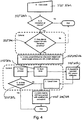
- Figure 4 shows a flow chart illustrating the URL re-writing process mentioned in 2) above in more detail. Again some of initial steps as shown in Figure 2 are omitted from Figure 4 and some of the steps shown in Figure 2 are shown broken down into sub steps in Figure 4 and labelled accordingly.
- step 204a a link is activated by being clicked upon.
- step 204b it is determined whether the interaction is of interest. In practice in the present embodiment this means determining whether the click will lead to a page transition. If not the process ends. However assuming that the activation of the link will lead to a page transition, then in step 204c it is determined whether the web enabled device 3 supports fail-safe interaction cancelling (again an optional step). Assuming that fail-safe interaction cancelling is supported, then in step 205/206 the prevent default method on the click event object is invoked and the target page URL is recorded. Then in step 207a a timer process is started and the processing branches such that whilst the timer is running, further processing is carried out in step 207b. In this case the target URL is re-written to include session context parameters. If the processing in step 207b completes, it cancels the timer and in step 208/209 the appropriate controlled result is determined and caused to occur without further delay.
- step 207c a determination is made as to whether the timer has been cancelled by the successful completion of step 207b. If so nothing is done as the process has been completed as above. However if the timer has not been cancelled then in step 208/209 the controlled result is determined and caused to occur.
- the controlled result assuming that there has been time to complete its generation, is the creation of a dummy GET form control including the re-written URL which is then submitted.
- the web enabled device 3 requests and has delivered to it, the original target page, but because the URL query string has been re-written to include session parameters then the web enabled device 3 will be able to see these session context parameters and pick them up when processing the target page.
- session context may be maintained where the target page also serves to call another instance of the same client side module 31.
- session context may be maintained where the user is using his web enabled device 3 to navigate from a first page belonging to one entity to a second page belonging to the same entity, and each is appropriately client side tagged. This can allow generation of a constant stream of monitoring information across that whole session.
- session context information is included in the URL query string, session context can be maintained even when the target page is in a different domain from the original page.
- this technique obviates the need for using cookies to maintain session context and also gets around the problem of not being able to use third party cookies in practical situations such that session context may be conveniently maintained across domains.
- this URL re-writing is carried out at the web enabled device 3 and in particular, in this embodiment, is carried out by the client side module 31 operating on the web enabled device 3.
- Figure 5 shows a similar method for maintaining session context as described above with reference to Figure 4 .
- the method shows the steps taken where the interaction which triggers the steps corresponding to step 205 to 209 in Figure 2 , is the activation of a form submit function by a user.
- a wrapped form submit function receives a submit initiated by a user.
- step 204c a determination is made as to whether the device supports fail-safe interaction cancelling. Assuming that such fail-safe interaction cancelling is supported, then the method proceeds to step 205/206 where due to the form wrapping, the original intended result is prevented or at least put on hold and details of the intended result can be captured.
- step 207a A timer is initiated in step 207a and the process branches with the timer running unless it is cancelled in step 207c by the fail-safe interaction cancelling functionality.
- the URL specified in the form submit is re-written to include session context parameters in step 207b.
- step 208/209 the controlled result is determined and caused to occur. In this case this is by invoking the original submit function from the wrapped form whilst including the re-written URL in the accompanying page request.
- the net result is that the session context parameters will be visible to the web enabled device 3 when viewing the target page specified in the original form submit.
- This in turn means that a client side module 31 operated whilst the target page is active, can see the session context parameters so that session context may be maintained. Further, this may be done irrespective of the domains of the original page and the target page and without the use of any cookies.
- the present methods may be used as part of a website monitoring method or system.
- the ability to delay page transitions whilst collected monitoring information is exported and the ability to maintain session context as page transitions occur can enhance the functionality and effectiveness of the website monitoring method/system in a particularly neat and efficient way.
- a third particular aspect of the present ideas is their use in providing security functionality.
- the methods are like those of Figures 3 , 4 and 5 .
- step 207 of the method claim in Figure 2 may similarly contain the timer functions illustrated in Figures 3 , 4 and 5 as carried out in steps 207a and 207c.
- the further processing carried out in 207b may include checking to see whether the link or form which is being activated is a valid link or form for that webpage or, for example, is requiring a page transition to a page which is specified in a list of allowed pages and/or domains. A result of this may be allowing the page transition to occur in step 208/209 if the link/page transition is valid and preventing it if not.
- step 207b may be such as to determine whether referrer information known by code executing within the page should be removed as part of the page transition. This might be done on the same basis for all page transitions or may be selectively done in dependence on whether the page transition to be made is to a page appearing in an allowed list for example an allowed list of links, pages, websites, domains or so on.
- the enhanced collection process mentioned under 1) above, the URL re-writing process mentioned under 2) above, and the security aspects mentioned under 3) above may be used either in isolation or together with one another in any particular combination or sub combination.
- the step of determining whether the interaction is of interest in step 204b may include the specific test of checking whether the interaction is the activation of a link or a form post and, if not ignoring the interaction. After this, the check may comprise (where the interaction is a link) the further step of determining whether the target for the link is within the same browser window/frame/iframe as where the interaction originated. If not the interaction is then ignored.
- the client side module may be arranged for recording interactions with a webpage and for later playing out those interactions. This is one way in which details of the interaction and its intended result can be captured.
- a suitable default timeout period for the timer to run i.e. a suitable delay
- 500ms a suitable default timeout period for the timer to run
- timer process carried out in steps 207a and 207c in the above methods is conducted asynchronously with the further processing carried out in step 207b. That is to say these processes are independent of one another within the program flow.
- the present embodiments of the invention may be embodied in various different forms for example: a method, a computer (i.e. web enabled device) arranged under the control of software, a computer program, a computer program stored on a machine readable record carrier such as a disk (hard disc, CD-ROM, DVD-ROM or so on) or memory module, or as carried on a signal.
- a computer i.e. web enabled device
- a computer program i.e. web enabled device
- a computer program i.e. web enabled device
- a computer program stored on a machine readable record carrier such as a disk (hard disc, CD-ROM, DVD-ROM or so on) or memory module, or as carried on a signal.
Landscapes
- Engineering & Computer Science (AREA)
- Theoretical Computer Science (AREA)
- General Engineering & Computer Science (AREA)
- Physics & Mathematics (AREA)
- General Physics & Mathematics (AREA)
- Computer Hardware Design (AREA)
- Databases & Information Systems (AREA)
- Quality & Reliability (AREA)
- Business, Economics & Management (AREA)
- Computer Networks & Wireless Communication (AREA)
- Signal Processing (AREA)
- Data Mining & Analysis (AREA)
- Finance (AREA)
- Strategic Management (AREA)
- Accounting & Taxation (AREA)
- Development Economics (AREA)
- Computational Linguistics (AREA)
- Entrepreneurship & Innovation (AREA)
- Game Theory and Decision Science (AREA)
- Economics (AREA)
- Marketing (AREA)
- General Business, Economics & Management (AREA)
- Human Computer Interaction (AREA)
- Information Transfer Between Computers (AREA)
- Computer And Data Communications (AREA)
Claims (20)
- Procédé de commande du comportement d'une page web sur un dispositif compatible web (3), comprenant les étapes ci-dessous consistant à :recevoir une page web au niveau du dispositif compatible web (3), dans lequel la page web comprend une balise pour appeler un module côté dispositif client (31) opérant sur le dispositif compatible web (3) lorsque la page web est délivrée au dispositif compatible web (3) ;surveiller une interaction d'utilisateur avec la page web, en utilisant le module côté dispositif client (31) ;déterminer si des conditions prédéterminées sont satisfaites, et lorsque les conditions prédéterminées sont satisfaites, mettre en œuvre les étapes supplémentaires ci-dessous consistant à :capturer des détails concernant un résultat attendu de ladite interaction d'utilisateur, en utilisant le module côté dispositif client (31), le résultat attendu étant une opération résultante attendue du dispositif compatible web (3) ;annuler une occurrence du résultat attendu de ladite interaction d'utilisateur en utilisant le module côté dispositif client (31) ;mettre en œuvre un traitement supplémentaire en utilisant le module côté dispositif client (31) ;déterminer un résultat commandé, en utilisant le module côté dispositif client (31), en fonction dudit résultat attendu et du traitement supplémentaire ; etoccasionner l'occurrence du résultat commandé, dans lequel, les conditions prédéterminées impliquent que l'interaction d'utilisateur soit une interaction présentant un résultat attendu occasionnant une transition de page au niveau du dispositif compatible web (3), qui conduirait à une navigation vers une page cible ; etle résultat commandé est une opération résultante commandée du dispositif compatible web (3) et comprend l'un des événements ci-dessous :i) aucune action en réponse à l'interaction d'utilisateur, de sorte que la navigation est annulée ;ii) une régénération du résultat attendu, conduisant à une navigation vers la page cible, mais après un délai donné introduit par le traitement supplémentaire ; etiii) un résultat modifié qui correspond à une opération résultante modifiée du dispositif compatible web, conduisant à une navigation vers la page cible, mais avec une chaîne de requête de localisateur uniforme de ressources (URL) modifiée, ou avec des informations de référent supprimées ou conduisant à une navigation vers une page différente.
- Procédé selon la revendication 1, dans lequel l'étape de mise en œuvre du traitement supplémentaire comprend l'étape consistant à introduire un délai entre ladite interaction d'utilisateur et l'étape consistant à occasionner l'occurrence du résultat commandé.
- Procédé selon la revendication 2, dans lequel l'étape de mise en œuvre du traitement supplémentaire consiste à mettre en œuvre des étapes de traitement supplémentaires pendant ledit délai.
- Procédé selon la revendication 2 ou 3, dans lequel le traitement supplémentaire comprend l'utilisation d'un temporisateur pour commander ledit délai.
- Procédé selon l'une quelconque des revendications précédentes, dans lequel le traitement supplémentaire comprend l'une quelconque ou une combinaison quelconque des étapes ci-dessous consistant à :mettre en œuvre une réécriture de localisateur URL dynamique d'un localisateur URL pour une page cible identifiée dans les détails capturés concernant le résultat attendu de ladite interaction d'utilisateur en vue d'annexer des paramètres sélectionnés ;traiter et exporter des données de surveillance collectées lors d'une interaction avec la page web ;vérifier si une page cible spécifiée dans une transition de page identifiée dans les détails capturés concernant le résultat attendu de ladite interaction d'utilisateur appartient à un ensemble prédéterminé de pages valides ;déterminer si des informations de référent conservées au niveau du dispositif compatible web (3) doivent être supprimées pour empêcher une transmission ultérieure vers une page subséquente.
- Procédé selon la revendication 5, dans lequel il existe une réécriture de localisateur URL dynamique, et dans lequel les paramètres sélectionnés annexés au localisateur URL dans le cadre de la réécriture de localisateur URL comprennent des paramètres de contexte de session pour le module côté dispositif client (31).
- Procédé selon l'une quelconque des revendications précédentes, dans lequel l'étape consistant à déterminer si des conditions prédéterminées sont satisfaites consiste à déterminer si le dispositif compatible web (3) prend en charge une annulation d'interaction à sécurité intégrée.
- Procédé selon l'une quelconque des revendications précédentes, dans lequel l'étape consistant à déterminer si des conditions prédéterminées sont satisfaites comprend les étapes dans lesquelles le module côté dispositif client (31) applique un filtre à l'interaction d'utilisateur avec la page web, et détermine si ladite interaction d'utilisateur passe ledit filtre.
- Procédé selon la revendication 8, dans lequel le filtre spécifie au moins un type d'interaction qui passe le filtre, et/ou dans lequel le filtre spécifie au moins une caractéristique d'une interaction qui est nécessaire et/ou suffisante pour que l'interaction respective passe le filtre.
- Procédé selon la revendication 9, dans lequel la caractéristique d'une interaction comprend une caractéristique d'un résultat attendu de l'interaction.
- Procédé selon l'une quelconque des revendications précédentes, dans lequel le procédé comprend l'étape supplémentaire consistant à occasionner l'occurrence du résultat attendu en tant que le résultat commandé, si au moins l'un des événements suivants se produit, à savoir :le traitement supplémentaire échoue ;l'achèvement du traitement supplémentaire échoue avant la fin d'un délai autorisé par un temporisateur dans le cadre du traitement supplémentaire ;l'invocation d'une annulation d'interaction à sécurité intégrée du dispositif compatible web (3).
- Procédé selon l'une quelconque des revendications 1 à 11, comprenant l'étape consistant à collecter des informations de surveillance en utilisant le module côté dispositif client (31), et l'étape consistant à envoyer des données représentatives desdites informations de surveillance, du dispositif compatible web (3) à un serveur ; et dans lequel l'étape consistant à déterminer si des conditions prédéterminées sont satisfaites consiste à déterminer si un résultat attendu d'une interaction d'utilisateur surveillée comprend une transition de page, et dans lequel le traitement supplémentaire comprend l'utilisation d'un temporisateur pour commander un délai entre ladite interaction d'utilisateur et l'étape consistant à occasionner l'occurrence du résultat commandé.
- Procédé selon la revendication 1, dans lequel le résultat commandé est une régénération du résultat attendu, conduisant à une navigation vers la page cible, mais après un délai donné introduit par le traitement supplémentaire, dans lequel le module côté dispositif client (13) est agencé de manière à traiter des données de surveillance pendant le délai, et à exporter lesdites données de surveillance vers un serveur de collecte (2) pendant le délai.
- Procédé selon la revendication 1, dans lequel le résultat commandé est une opération résultante commandée du dispositif compatible web (3), et comprend un résultat modifié qui correspond à une opération résultante modifiée du dispositif compatible web (3), conduisant à une navigation vers la page cible, mais avec une chaîne de requête de localisateur uniforme de ressources (URL) modifiée, dans lequel le localisateur URL est modifié pour inclure des paramètres de contexte de session.
- Dispositif compatible web (3) agencé de manière à commander un comportement de page web sur le dispositif compatible web (3), le dispositif compatible web (3) étant agencé, sous la commande d'un logiciel, de manière à :recevoir une page web au niveau du dispositif compatible web (3), dans lequel la page web comprend une balise pour appeler un module côté dispositif client (31) opérant sur le dispositif compatible web (3) lorsque la page web est délivrée au dispositif compatible web (3) ;surveiller une interaction d'utilisateur avec la page web, en utilisant le module côté dispositif client (31) ;déterminer si des conditions prédéterminées sont satisfaites, et dans lequel, lorsque les conditions prédéterminées sont satisfaites, le dispositif est agencé de manière à :capturer des détails concernant un résultat attendu de ladite interaction d'utilisateur, en utilisant le module côté dispositif client (31), le résultat attendu étant une opération résultante attendue du dispositif compatible web (3) ;annuler une occurrence du résultat attendu de ladite interaction d'utilisateur en utilisant le module côté dispositif client (31) ;mettre en œuvre un traitement supplémentaire en utilisant le module côté dispositif client (31) ;déterminer un résultat commandé, en utilisant le module côté dispositif client (31), en fonction dudit résultat attendu et du traitement supplémentaire ; etoccasionner l'occurrence du résultat commandé, dans lequel, les conditions prédéterminées impliquent que l'interaction d'utilisateur soit une interaction présentant un résultat attendu occasionnant une transition de page au niveau du dispositif compatible web (3), qui conduirait à une navigation vers une page cible ; etle résultat commandé est une opération résultante commandée du dispositif compatible web (3) et comprend l'un des événements ci-dessous :i) aucune action en réponse à l'interaction d'utilisateur, de sorte que la navigation est annulée ;ii) une régénération du résultat attendu, conduisant à une navigation vers la page cible, mais après un délai donné introduit par le traitement supplémentaire ; etiii) un résultat modifié qui correspond à une opération résultante modifiée du dispositif compatible web, conduisant à une navigation vers la page cible, mais avec une chaîne de requête de localisateur uniforme de ressources (URL) modifiée, ou avec des informations de référent supprimées ou conduisant à une navigation vers une page différente.
- Dispositif compatible web (3) selon la revendication 15, comprenant le fait d'être agencé sous la commande d'un logiciel de manière à collecter des informations de surveillance en utilisant le module côté dispositif client (31) et à envoyer des données représentatives desdites informations de surveillance, du dispositif compatible web à un serveur ;
dans lequel le fait d'être agencé de manière à déterminer si des conditions prédéterminées sont satisfaites comprend le fait d'être agencé de manière à déterminer si un résultat attendu d'une interaction d'utilisateur surveillée comprend une transition de page, et dans lequel le traitement supplémentaire comprend l'utilisation d'un temporisateur pour commander un délai entre ladite interaction d'utilisateur et le résultat commandé dont l'occurrence est occasionnée. - Dispositif selon la revendication 15, dans lequel le résultat commandé est une régénération du résultat attendu, conduisant à une navigation vers la page cible, mais après un délai donné introduit par le traitement supplémentaire, dans lequel le module côté dispositif client (13) est agencé de manière à traiter des données de surveillance pendant le délai, et à exporter lesdites données de surveillance vers un serveur de collecte (2) pendant le délai.
- Dispositif selon la revendication 15, dans lequel le résultat commandé est une opération résultante commandée du dispositif compatible web (3), et comprend un résultat modifié qui correspond à une opération résultante modifiée du dispositif compatible web (3), conduisant à une navigation vers la page cible, mais avec une chaîne de requête de localisateur uniforme de ressources (URL) modifiée, dans lequel le localisateur URL est modifié pour inclure des paramètres de contexte de session.
- Support lisible par machine portant un programme informatique comprenant des parties de code qui, lorsqu'elles sont chargées et exécutées sur un dispositif compatible web (3), amènent le dispositif compatible web (3) à exécuter un procédé selon l'une quelconque des revendications 1 à 14.
- Support lisible par machine portant un programme informatique comprenant des parties de code qui, lorsqu'elles sont chargées et exécutées sur un dispositif compatible web (3), amènent le dispositif compatible web (3) à constituer un dispositif compatible web (3) selon l'une quelconque des revendications 15 à 18.
Applications Claiming Priority (3)
| Application Number | Priority Date | Filing Date | Title |
|---|---|---|---|
| GB1103862.7A GB2488790A (en) | 2011-03-07 | 2011-03-07 | A method of controlling web page behaviour on a web enabled device |
| US201161457414P | 2011-03-22 | 2011-03-22 | |
| PCT/GB2012/000221 WO2012120257A2 (fr) | 2011-03-07 | 2012-03-06 | Contrôle de comportement de page web |
Publications (3)
| Publication Number | Publication Date |
|---|---|
| EP2684143A2 EP2684143A2 (fr) | 2014-01-15 |
| EP2684143B1 true EP2684143B1 (fr) | 2020-08-19 |
| EP2684143B8 EP2684143B8 (fr) | 2020-10-07 |
Family
ID=43923333
Family Applications (1)
| Application Number | Title | Priority Date | Filing Date |
|---|---|---|---|
| EP12708573.6A Active EP2684143B8 (fr) | 2011-03-07 | 2012-03-06 | Contrôle de comportement de page web |
Country Status (4)
| Country | Link |
|---|---|
| US (1) | US10430037B2 (fr) |
| EP (1) | EP2684143B8 (fr) |
| GB (1) | GB2488790A (fr) |
| WO (1) | WO2012120257A2 (fr) |
Families Citing this family (7)
| Publication number | Priority date | Publication date | Assignee | Title |
|---|---|---|---|---|
| US20130232424A1 (en) * | 2012-03-02 | 2013-09-05 | Hitachi, Ltd. | User operation detection system and user operation detection method |
| FR3022645A1 (fr) * | 2014-06-19 | 2015-12-25 | Orange | Procede d'adaptation et adaptateur d'interface utilisateur |
| US10372791B2 (en) * | 2014-10-08 | 2019-08-06 | Staples, Inc. | Content customization |
| US10491685B2 (en) * | 2015-03-31 | 2019-11-26 | Microsoft Technology Licensing, Llc | Session transfer between resources |
| CN106446115A (zh) * | 2016-09-18 | 2017-02-22 | 成都九鼎瑞信科技股份有限公司 | 移动上网用户分类方法及装置 |
| CN110336812A (zh) * | 2019-07-03 | 2019-10-15 | 深圳市珍爱捷云信息技术有限公司 | 资源拦截处理方法、装置、计算机设备和存储介质 |
| EP4309057B1 (fr) * | 2021-03-17 | 2026-05-06 | Celebrus Technologies Plc. | Surveillance d'interaction d'utilisateur avec des dispositifs clients |
Family Cites Families (21)
| Publication number | Priority date | Publication date | Assignee | Title |
|---|---|---|---|---|
| US6351745B1 (en) * | 1996-02-28 | 2002-02-26 | Netzero, Inc. | Communication system for distributing such message as advertisement to user of terminal equipment |
| US6393407B1 (en) * | 1997-09-11 | 2002-05-21 | Enliven, Inc. | Tracking user micro-interactions with web page advertising |
| CA2299773C (fr) * | 1999-03-09 | 2003-12-09 | Netzero, Inc. | Surveillance de l'utilisation d'internet par un particulier |
| EP1264261B1 (fr) | 2000-03-14 | 2005-11-16 | Speed-trap.com Ltd. | Operation de surveillance de services fournis sur un reseau et interaction avec ces services |
| US8239445B1 (en) * | 2000-04-25 | 2012-08-07 | International Business Machines Corporation | URL-based sticky routing tokens using a server-side cookie jar |
| GB0019151D0 (en) * | 2000-08-07 | 2000-09-27 | Pace Micro Tech Plc | Deferred internet page reformatting |
| US20020196275A1 (en) * | 2001-06-22 | 2002-12-26 | Willner Barry E. | Method and apparatus for facilitating display of an advertisement with software |
| US20030187976A1 (en) * | 2002-04-01 | 2003-10-02 | Decime Jerry B. | Tracking users at a web server network |
| CN101023419B (zh) * | 2004-05-14 | 2010-06-16 | 模比莱普斯有限公司 | 提供具有嵌入内容的网页的方法 |
| US20060136372A1 (en) | 2004-11-19 | 2006-06-22 | Schunemann Alan J | Inserted contextual web content derived from intercepted web viewing content |
| CN1835507A (zh) * | 2005-03-17 | 2006-09-20 | 国际商业机器公司 | 用于用户与web浏览器交互的服务器端处理的方法与系统 |
| US8898309B2 (en) | 2006-01-31 | 2014-11-25 | Speed-Trap.Com Ltd. | Website monitoring and cookie setting |
| GB0601939D0 (en) | 2006-01-31 | 2006-03-15 | Speed Trap Com Ltd | Website monitoring and cookie setting |
| US20080071881A1 (en) * | 2006-09-15 | 2008-03-20 | Curtis Duane Kronlund | Advertising on Idle Web Browser Windows |
| US20080270412A1 (en) | 2007-04-27 | 2008-10-30 | Venkateswaran Udayasankar | Tracking user clicks using ajax based beacons |
| US20090064337A1 (en) * | 2007-09-05 | 2009-03-05 | Shih-Wei Chien | Method and apparatus for preventing web page attacks |
| US8250585B2 (en) * | 2007-11-05 | 2012-08-21 | International Business Machines Corporation | Extensible framework for managing UI state in a composite AJAX application |
| US20090119769A1 (en) * | 2007-11-05 | 2009-05-07 | Microsoft Corporation | Cross-site scripting filter |
| US9686288B2 (en) * | 2008-01-25 | 2017-06-20 | Ntt Docomo, Inc. | Method and apparatus for constructing security policies for web content instrumentation against browser-based attacks |
| US8078691B2 (en) * | 2009-08-26 | 2011-12-13 | Microsoft Corporation | Web page load time prediction and simulation |
| US8996986B2 (en) * | 2010-01-11 | 2015-03-31 | Ensighten, Inc. | Enhanced delivery of content and program instructions |
-
2011
- 2011-03-07 GB GB1103862.7A patent/GB2488790A/en not_active Withdrawn
-
2012
- 2012-03-06 EP EP12708573.6A patent/EP2684143B8/fr active Active
- 2012-03-06 WO PCT/GB2012/000221 patent/WO2012120257A2/fr not_active Ceased
- 2012-03-06 US US14/003,047 patent/US10430037B2/en active Active
Non-Patent Citations (1)
| Title |
|---|
| None * |
Also Published As
| Publication number | Publication date |
|---|---|
| EP2684143A2 (fr) | 2014-01-15 |
| US10430037B2 (en) | 2019-10-01 |
| EP2684143B8 (fr) | 2020-10-07 |
| WO2012120257A2 (fr) | 2012-09-13 |
| US20140026081A1 (en) | 2014-01-23 |
| GB201103862D0 (en) | 2011-04-20 |
| WO2012120257A3 (fr) | 2013-04-25 |
| GB2488790A (en) | 2012-09-12 |
Similar Documents
| Publication | Publication Date | Title |
|---|---|---|
| EP2684143B1 (fr) | Contrôle de comportement de page web | |
| US11252252B2 (en) | Installable web applications | |
| US8880710B2 (en) | Website monitoring and cookie setting | |
| US8898309B2 (en) | Website monitoring and cookie setting | |
| US8645453B2 (en) | Method and system of processing cookies across domains | |
| US20100017695A1 (en) | Integrating an applet into a multi-page or multi-tasking web application to enable applet state to be automatically saved and restored | |
| CN106682176A (zh) | 页面的加载方法、装置和设备 | |
| US20080052392A1 (en) | System and Method for Monitoring a User's Online Activity | |
| US20130254649A1 (en) | Establishing user consent to cookie storage on user terminal equipment | |
| EP2790121A1 (fr) | Procédé de détection de logiciel malveillant locale basée sur le client | |
| US20070255979A1 (en) | Event trace conditional logging | |
| CN102542056B (zh) | 用于扩展功能的基于云的网页应用 | |
| US20100179873A1 (en) | Displaying Online Advertisements | |
| CN102592086B (zh) | 在沙箱中浏览网页方法及装置 | |
| CN107391115B (zh) | 一种实现弹窗交互事件的方法、装置及计算机设备 | |
| JP2014510329A (ja) | WebアプリケーションとWebサービスのアンビエント適応性を管理するためのシステム、方法および媒体 | |
| CN109684571B (zh) | 一种数据采集方法及装置、存储介质 | |
| WO2004079544A2 (fr) | Transmission temporisee de donnees d'utilisation de site web | |
| CN107566200A (zh) | 一种监控方法、装置及系统 | |
| US20180205705A1 (en) | Network request proxy system and method | |
| US9009600B2 (en) | Filter module for a browser history | |
| CN103475630A (zh) | 一种会话保存的方法和装置 | |
| CN103648049B (zh) | 一种实现安全播放视频的方法和装置 | |
| CN103581343A (zh) | 一种录制http请求的方法 | |
| US20090222463A1 (en) | Systems and methods for a journal page |
Legal Events
| Date | Code | Title | Description |
|---|---|---|---|
| PUAI | Public reference made under article 153(3) epc to a published international application that has entered the european phase |
Free format text: ORIGINAL CODE: 0009012 |
|
| 17P | Request for examination filed |
Effective date: 20130916 |
|
| AK | Designated contracting states |
Kind code of ref document: A2 Designated state(s): AL AT BE BG CH CY CZ DE DK EE ES FI FR GB GR HR HU IE IS IT LI LT LU LV MC MK MT NL NO PL PT RO RS SE SI SK SM TR |
|
| DAX | Request for extension of the european patent (deleted) | ||
| STAA | Information on the status of an ep patent application or granted ep patent |
Free format text: STATUS: EXAMINATION IS IN PROGRESS |
|
| 17Q | First examination report despatched |
Effective date: 20190408 |
|
| REG | Reference to a national code |
Ref country code: DE Ref legal event code: R079 Ref document number: 602012071847 Country of ref document: DE Free format text: PREVIOUS MAIN CLASS: G06F0017300000 Ipc: G06F0016335000 |
|
| GRAP | Despatch of communication of intention to grant a patent |
Free format text: ORIGINAL CODE: EPIDOSNIGR1 |
|
| STAA | Information on the status of an ep patent application or granted ep patent |
Free format text: STATUS: GRANT OF PATENT IS INTENDED |
|
| RIC1 | Information provided on ipc code assigned before grant |
Ipc: G06F 16/335 20190101AFI20200130BHEP Ipc: G06F 16/9535 20190101ALI20200130BHEP Ipc: G06F 11/34 20060101ALI20200130BHEP Ipc: G06Q 30/02 20120101ALI20200130BHEP Ipc: H04L 29/08 20060101ALI20200130BHEP |
|
| INTG | Intention to grant announced |
Effective date: 20200227 |
|
| GRAS | Grant fee paid |
Free format text: ORIGINAL CODE: EPIDOSNIGR3 |
|
| GRAA | (expected) grant |
Free format text: ORIGINAL CODE: 0009210 |
|
| STAA | Information on the status of an ep patent application or granted ep patent |
Free format text: STATUS: THE PATENT HAS BEEN GRANTED |
|
| REG | Reference to a national code |
Ref country code: DE Ref legal event code: R081 Ref document number: 602012071847 Country of ref document: DE Owner name: D4T4 SOLUTIONS PLC, SUNBURY-ON-THAMES, GB Free format text: FORMER OWNER: CELEBRUS TECHNOLOGIES LTD., NEWBURY, BERKSHIRE, GB |
|
| AK | Designated contracting states |
Kind code of ref document: B1 Designated state(s): AL AT BE BG CH CY CZ DE DK EE ES FI FR GB GR HR HU IE IS IT LI LT LU LV MC MK MT NL NO PL PT RO RS SE SI SK SM TR |
|
| REG | Reference to a national code |
Ref country code: GB Ref legal event code: FG4D |
|
| REG | Reference to a national code |
Ref country code: CH Ref legal event code: EP |
|
| RAP2 | Party data changed (patent owner data changed or rights of a patent transferred) |
Owner name: D4T4 SOLUTIONS PLC |
|
| REG | Reference to a national code |
Ref country code: DE Ref legal event code: R096 Ref document number: 602012071847 Country of ref document: DE |
|
| REG | Reference to a national code |
Ref country code: AT Ref legal event code: REF Ref document number: 1304744 Country of ref document: AT Kind code of ref document: T Effective date: 20200915 Ref country code: CH Ref legal event code: PK Free format text: BERICHTIGUNG B8 |
|
| REG | Reference to a national code |
Ref country code: IE Ref legal event code: FG4D |
|
| REG | Reference to a national code |
Ref country code: LT Ref legal event code: MG4D |
|
| REG | Reference to a national code |
Ref country code: NL Ref legal event code: MP Effective date: 20200819 |
|
| PG25 | Lapsed in a contracting state [announced via postgrant information from national office to epo] |
Ref country code: NO Free format text: LAPSE BECAUSE OF FAILURE TO SUBMIT A TRANSLATION OF THE DESCRIPTION OR TO PAY THE FEE WITHIN THE PRESCRIBED TIME-LIMIT Effective date: 20201119 Ref country code: BG Free format text: LAPSE BECAUSE OF FAILURE TO SUBMIT A TRANSLATION OF THE DESCRIPTION OR TO PAY THE FEE WITHIN THE PRESCRIBED TIME-LIMIT Effective date: 20201119 Ref country code: HR Free format text: LAPSE BECAUSE OF FAILURE TO SUBMIT A TRANSLATION OF THE DESCRIPTION OR TO PAY THE FEE WITHIN THE PRESCRIBED TIME-LIMIT Effective date: 20200819 Ref country code: SE Free format text: LAPSE BECAUSE OF FAILURE TO SUBMIT A TRANSLATION OF THE DESCRIPTION OR TO PAY THE FEE WITHIN THE PRESCRIBED TIME-LIMIT Effective date: 20200819 Ref country code: FI Free format text: LAPSE BECAUSE OF FAILURE TO SUBMIT A TRANSLATION OF THE DESCRIPTION OR TO PAY THE FEE WITHIN THE PRESCRIBED TIME-LIMIT Effective date: 20200819 Ref country code: GR Free format text: LAPSE BECAUSE OF FAILURE TO SUBMIT A TRANSLATION OF THE DESCRIPTION OR TO PAY THE FEE WITHIN THE PRESCRIBED TIME-LIMIT Effective date: 20201120 Ref country code: LT Free format text: LAPSE BECAUSE OF FAILURE TO SUBMIT A TRANSLATION OF THE DESCRIPTION OR TO PAY THE FEE WITHIN THE PRESCRIBED TIME-LIMIT Effective date: 20200819 Ref country code: PT Free format text: LAPSE BECAUSE OF FAILURE TO SUBMIT A TRANSLATION OF THE DESCRIPTION OR TO PAY THE FEE WITHIN THE PRESCRIBED TIME-LIMIT Effective date: 20201221 |
|
| REG | Reference to a national code |
Ref country code: AT Ref legal event code: MK05 Ref document number: 1304744 Country of ref document: AT Kind code of ref document: T Effective date: 20200819 |
|
| PG25 | Lapsed in a contracting state [announced via postgrant information from national office to epo] |
Ref country code: NL Free format text: LAPSE BECAUSE OF FAILURE TO SUBMIT A TRANSLATION OF THE DESCRIPTION OR TO PAY THE FEE WITHIN THE PRESCRIBED TIME-LIMIT Effective date: 20200819 Ref country code: PL Free format text: LAPSE BECAUSE OF FAILURE TO SUBMIT A TRANSLATION OF THE DESCRIPTION OR TO PAY THE FEE WITHIN THE PRESCRIBED TIME-LIMIT Effective date: 20200819 Ref country code: RS Free format text: LAPSE BECAUSE OF FAILURE TO SUBMIT A TRANSLATION OF THE DESCRIPTION OR TO PAY THE FEE WITHIN THE PRESCRIBED TIME-LIMIT Effective date: 20200819 Ref country code: LV Free format text: LAPSE BECAUSE OF FAILURE TO SUBMIT A TRANSLATION OF THE DESCRIPTION OR TO PAY THE FEE WITHIN THE PRESCRIBED TIME-LIMIT Effective date: 20200819 Ref country code: IS Free format text: LAPSE BECAUSE OF FAILURE TO SUBMIT A TRANSLATION OF THE DESCRIPTION OR TO PAY THE FEE WITHIN THE PRESCRIBED TIME-LIMIT Effective date: 20201219 |
|
| PG25 | Lapsed in a contracting state [announced via postgrant information from national office to epo] |
Ref country code: EE Free format text: LAPSE BECAUSE OF FAILURE TO SUBMIT A TRANSLATION OF THE DESCRIPTION OR TO PAY THE FEE WITHIN THE PRESCRIBED TIME-LIMIT Effective date: 20200819 Ref country code: DK Free format text: LAPSE BECAUSE OF FAILURE TO SUBMIT A TRANSLATION OF THE DESCRIPTION OR TO PAY THE FEE WITHIN THE PRESCRIBED TIME-LIMIT Effective date: 20200819 Ref country code: CZ Free format text: LAPSE BECAUSE OF FAILURE TO SUBMIT A TRANSLATION OF THE DESCRIPTION OR TO PAY THE FEE WITHIN THE PRESCRIBED TIME-LIMIT Effective date: 20200819 Ref country code: SM Free format text: LAPSE BECAUSE OF FAILURE TO SUBMIT A TRANSLATION OF THE DESCRIPTION OR TO PAY THE FEE WITHIN THE PRESCRIBED TIME-LIMIT Effective date: 20200819 Ref country code: RO Free format text: LAPSE BECAUSE OF FAILURE TO SUBMIT A TRANSLATION OF THE DESCRIPTION OR TO PAY THE FEE WITHIN THE PRESCRIBED TIME-LIMIT Effective date: 20200819 |
|
| REG | Reference to a national code |
Ref country code: DE Ref legal event code: R097 Ref document number: 602012071847 Country of ref document: DE |
|
| PG25 | Lapsed in a contracting state [announced via postgrant information from national office to epo] |
Ref country code: ES Free format text: LAPSE BECAUSE OF FAILURE TO SUBMIT A TRANSLATION OF THE DESCRIPTION OR TO PAY THE FEE WITHIN THE PRESCRIBED TIME-LIMIT Effective date: 20200819 Ref country code: AL Free format text: LAPSE BECAUSE OF FAILURE TO SUBMIT A TRANSLATION OF THE DESCRIPTION OR TO PAY THE FEE WITHIN THE PRESCRIBED TIME-LIMIT Effective date: 20200819 Ref country code: AT Free format text: LAPSE BECAUSE OF FAILURE TO SUBMIT A TRANSLATION OF THE DESCRIPTION OR TO PAY THE FEE WITHIN THE PRESCRIBED TIME-LIMIT Effective date: 20200819 |
|
| PLBE | No opposition filed within time limit |
Free format text: ORIGINAL CODE: 0009261 |
|
| STAA | Information on the status of an ep patent application or granted ep patent |
Free format text: STATUS: NO OPPOSITION FILED WITHIN TIME LIMIT |
|
| PG25 | Lapsed in a contracting state [announced via postgrant information from national office to epo] |
Ref country code: SK Free format text: LAPSE BECAUSE OF FAILURE TO SUBMIT A TRANSLATION OF THE DESCRIPTION OR TO PAY THE FEE WITHIN THE PRESCRIBED TIME-LIMIT Effective date: 20200819 |
|
| 26N | No opposition filed |
Effective date: 20210520 |
|
| PG25 | Lapsed in a contracting state [announced via postgrant information from national office to epo] |
Ref country code: IT Free format text: LAPSE BECAUSE OF FAILURE TO SUBMIT A TRANSLATION OF THE DESCRIPTION OR TO PAY THE FEE WITHIN THE PRESCRIBED TIME-LIMIT Effective date: 20200819 |
|
| PG25 | Lapsed in a contracting state [announced via postgrant information from national office to epo] |
Ref country code: SI Free format text: LAPSE BECAUSE OF FAILURE TO SUBMIT A TRANSLATION OF THE DESCRIPTION OR TO PAY THE FEE WITHIN THE PRESCRIBED TIME-LIMIT Effective date: 20200819 |
|
| PG25 | Lapsed in a contracting state [announced via postgrant information from national office to epo] |
Ref country code: MC Free format text: LAPSE BECAUSE OF FAILURE TO SUBMIT A TRANSLATION OF THE DESCRIPTION OR TO PAY THE FEE WITHIN THE PRESCRIBED TIME-LIMIT Effective date: 20200819 |
|
| REG | Reference to a national code |
Ref country code: CH Ref legal event code: PL |
|
| REG | Reference to a national code |
Ref country code: BE Ref legal event code: MM Effective date: 20210331 |
|
| PG25 | Lapsed in a contracting state [announced via postgrant information from national office to epo] |
Ref country code: IE Free format text: LAPSE BECAUSE OF NON-PAYMENT OF DUE FEES Effective date: 20210306 Ref country code: CH Free format text: LAPSE BECAUSE OF NON-PAYMENT OF DUE FEES Effective date: 20210331 Ref country code: LU Free format text: LAPSE BECAUSE OF NON-PAYMENT OF DUE FEES Effective date: 20210306 Ref country code: LI Free format text: LAPSE BECAUSE OF NON-PAYMENT OF DUE FEES Effective date: 20210331 |
|
| PG25 | Lapsed in a contracting state [announced via postgrant information from national office to epo] |
Ref country code: BE Free format text: LAPSE BECAUSE OF NON-PAYMENT OF DUE FEES Effective date: 20210331 |
|
| PG25 | Lapsed in a contracting state [announced via postgrant information from national office to epo] |
Ref country code: HU Free format text: LAPSE BECAUSE OF FAILURE TO SUBMIT A TRANSLATION OF THE DESCRIPTION OR TO PAY THE FEE WITHIN THE PRESCRIBED TIME-LIMIT; INVALID AB INITIO Effective date: 20120306 Ref country code: CY Free format text: LAPSE BECAUSE OF FAILURE TO SUBMIT A TRANSLATION OF THE DESCRIPTION OR TO PAY THE FEE WITHIN THE PRESCRIBED TIME-LIMIT Effective date: 20200819 |
|
| PG25 | Lapsed in a contracting state [announced via postgrant information from national office to epo] |
Ref country code: MK Free format text: LAPSE BECAUSE OF FAILURE TO SUBMIT A TRANSLATION OF THE DESCRIPTION OR TO PAY THE FEE WITHIN THE PRESCRIBED TIME-LIMIT Effective date: 20200819 |
|
| PG25 | Lapsed in a contracting state [announced via postgrant information from national office to epo] |
Ref country code: MT Free format text: LAPSE BECAUSE OF FAILURE TO SUBMIT A TRANSLATION OF THE DESCRIPTION OR TO PAY THE FEE WITHIN THE PRESCRIBED TIME-LIMIT Effective date: 20200819 |
|
| PGFP | Annual fee paid to national office [announced via postgrant information from national office to epo] |
Ref country code: DE Payment date: 20250328 Year of fee payment: 14 |
|
| PG25 | Lapsed in a contracting state [announced via postgrant information from national office to epo] |
Ref country code: TR Free format text: LAPSE BECAUSE OF FAILURE TO SUBMIT A TRANSLATION OF THE DESCRIPTION OR TO PAY THE FEE WITHIN THE PRESCRIBED TIME-LIMIT Effective date: 20200819 |
|
| PGFP | Annual fee paid to national office [announced via postgrant information from national office to epo] |
Ref country code: GB Payment date: 20260327 Year of fee payment: 15 |
|
| PGFP | Annual fee paid to national office [announced via postgrant information from national office to epo] |
Ref country code: FR Payment date: 20260331 Year of fee payment: 15 |