EP2684844A1 - Procédé de fabrication de nanotubes de carbone - Google Patents
Procédé de fabrication de nanotubes de carbone Download PDFInfo
- Publication number
- EP2684844A1 EP2684844A1 EP12755349.3A EP12755349A EP2684844A1 EP 2684844 A1 EP2684844 A1 EP 2684844A1 EP 12755349 A EP12755349 A EP 12755349A EP 2684844 A1 EP2684844 A1 EP 2684844A1
- Authority
- EP
- European Patent Office
- Prior art keywords
- compound
- reaction
- mol
- cycloparaphenylene
- cyclic
- Prior art date
- Legal status (The legal status is an assumption and is not a legal conclusion. Google has not performed a legal analysis and makes no representation as to the accuracy of the status listed.)
- Withdrawn
Links
- 0 *=C1C=C*CC1 Chemical compound *=C1C=C*CC1 0.000 description 4
- NJXUWONHNYJPMY-UHFFFAOYSA-N CC1(C)COB(c(cc2)ccc2-c2ccc(B3OCC(C)(C)CO3)cc2)OC1 Chemical compound CC1(C)COB(c(cc2)ccc2-c2ccc(B3OCC(C)(C)CO3)cc2)OC1 NJXUWONHNYJPMY-UHFFFAOYSA-N 0.000 description 1
- PWAYZVAYKCBWAX-UHFFFAOYSA-N C[B]1=[O]CC(CC(C)C)CO1 Chemical compound C[B]1=[O]CC(CC(C)C)CO1 PWAYZVAYKCBWAX-UHFFFAOYSA-N 0.000 description 1
Images



Classifications
-
- C—CHEMISTRY; METALLURGY
- C01—INORGANIC CHEMISTRY
- C01B—NON-METALLIC ELEMENTS; COMPOUNDS THEREOF; METALLOIDS OR COMPOUNDS THEREOF NOT COVERED BY SUBCLASS C01C
- C01B32/00—Carbon; Compounds thereof
- C01B32/15—Nano-sized carbon materials
- C01B32/158—Carbon nanotubes
- C01B32/16—Preparation
-
- B—PERFORMING OPERATIONS; TRANSPORTING
- B82—NANOTECHNOLOGY
- B82Y—SPECIFIC USES OR APPLICATIONS OF NANOSTRUCTURES; MEASUREMENT OR ANALYSIS OF NANOSTRUCTURES; MANUFACTURE OR TREATMENT OF NANOSTRUCTURES
- B82Y30/00—Nanotechnology for materials or surface science, e.g. nanocomposites
-
- B—PERFORMING OPERATIONS; TRANSPORTING
- B82—NANOTECHNOLOGY
- B82Y—SPECIFIC USES OR APPLICATIONS OF NANOSTRUCTURES; MEASUREMENT OR ANALYSIS OF NANOSTRUCTURES; MANUFACTURE OR TREATMENT OF NANOSTRUCTURES
- B82Y40/00—Manufacture or treatment of nanostructures
-
- C—CHEMISTRY; METALLURGY
- C01—INORGANIC CHEMISTRY
- C01B—NON-METALLIC ELEMENTS; COMPOUNDS THEREOF; METALLOIDS OR COMPOUNDS THEREOF NOT COVERED BY SUBCLASS C01C
- C01B2202/00—Structure or properties of carbon nanotubes
- C01B2202/02—Single-walled nanotubes
-
- Y—GENERAL TAGGING OF NEW TECHNOLOGICAL DEVELOPMENTS; GENERAL TAGGING OF CROSS-SECTIONAL TECHNOLOGIES SPANNING OVER SEVERAL SECTIONS OF THE IPC; TECHNICAL SUBJECTS COVERED BY FORMER USPC CROSS-REFERENCE ART COLLECTIONS [XRACs] AND DIGESTS
- Y10—TECHNICAL SUBJECTS COVERED BY FORMER USPC
- Y10S—TECHNICAL SUBJECTS COVERED BY FORMER USPC CROSS-REFERENCE ART COLLECTIONS [XRACs] AND DIGESTS
- Y10S977/00—Nanotechnology
- Y10S977/70—Nanostructure
- Y10S977/734—Fullerenes, i.e. graphene-based structures, such as nanohorns, nanococoons, nanoscrolls or fullerene-like structures, e.g. WS2 or MoS2 chalcogenide nanotubes, planar C3N4, etc.
- Y10S977/742—Carbon nanotubes, CNTs
- Y10S977/75—Single-walled
-
- Y—GENERAL TAGGING OF NEW TECHNOLOGICAL DEVELOPMENTS; GENERAL TAGGING OF CROSS-SECTIONAL TECHNOLOGIES SPANNING OVER SEVERAL SECTIONS OF THE IPC; TECHNICAL SUBJECTS COVERED BY FORMER USPC CROSS-REFERENCE ART COLLECTIONS [XRACs] AND DIGESTS
- Y10—TECHNICAL SUBJECTS COVERED BY FORMER USPC
- Y10S—TECHNICAL SUBJECTS COVERED BY FORMER USPC CROSS-REFERENCE ART COLLECTIONS [XRACs] AND DIGESTS
- Y10S977/00—Nanotechnology
- Y10S977/84—Manufacture, treatment, or detection of nanostructure
- Y10S977/842—Manufacture, treatment, or detection of nanostructure for carbon nanotubes or fullerenes
- Y10S977/843—Gas phase catalytic growth, i.e. chemical vapor deposition
Definitions
- the present invention relates to a method for producing a carbon nanotube (CNT) using, as a template, a cyclic compound having a n-electron conjugated system with continuously bonded multiple aromatic rings.
- Hitherto-known nanostructures containing carbon atoms include carbon nanotubes made of a cylindrically rolled two-dimensional graphene sheet.
- Carbon nanotubes have high electrical conductivity, high mechanical strength, superior elasticity, heat resistance, and are lightweight. With these advantageous properties, carbon nanotubes are expected to be applied to various fields, including chemistry, electronics, and life science.
- Carbon nanotubes can be produced through arc discharge, laser furnaces, chemical vapor deposition (CVD), and the like.
- CVD chemical vapor deposition
- these methods have a disadvantage in that they can only produce mixtures of carbon nanotubes of various lengths and diameters.
- the carbon nanotubes for the above usages are expected to be uniform in property; therefore, a method for selectively producing a carbon nanotube having a desired chemical structure has been strongly desired.
- Non-Patent Document 1 discloses a method for producing a cycloparaphenylene compound as a mixture having a cyclic structure composed of 9, 12, or 18 continuously bonded benzene rings, using 1,4-diiodobenzene and benzoquinone as materials.
- Non-Patent Documents 2 and 3 disclose a method for producing a cycloparaphenylene compound having a cyclic structure in which 12 benzene rings are regularly bonded, using 1,4-cyclohexanedione and 1,4-diiodobenzene.
- Non-Patent Document 4 discloses a method for producing a cycloparaphenylene compound in which 8 benzene rings are regularly bonded by reductive elimination of a biphenylene platinum square complex with bromine.
- Non-Patent Documents have a cyclic chemical structure in which multiple phenylene groups are singly bonded. This structure has an interesting property as the smallest unit for making an armchair single-walled carbon nanotube (CNT).
- CNT carbon nanotube
- An object of the present invention is to provide a method for selectively producing a carbon nanotube (hereinafter referred to as "CNT") having a desired diameter.
- CNT carbon nanotube
- the inventors of the present invention conducted extensive research to attain the above objective, and found that, by heating a cyclic compound, which serves as a template, having a n-electron conjugated system with continuously bonded multiple aromatic rings together with a carbon source such as ethanol, it is possible to produce a single-walled carbon nanotube (SWCNT) with a diameter directly derived from the template.
- a carbon source such as ethanol
- a typical template is a cyclic compound in which bivalent aromatic hydrocarbon groups are continuously bonded. Such a template is hereinafter referred to as a "carbon nanoring.”
- carbon nanorings include a "cycloparaphenylene compound” (see Non-Patent Documents 1 to 4), which is the shortest skeleton of an armchair single-walled carbon nanotube, and a "modified cycloparaphenylene compound” in which at least one phenylene group of a cycloparaphenylene compound is substituted with a bivalent condensed polycyclic aromatic hydrocarbon group (such as 2,6-naphthylene group).
- the method for producing CNT according to the present invention uses the above-described template (cyclic compound) and causes a carbon source to act on the template, thus growing a graphene sheet along the central axis direction of the cyclic compound.
- a carbon source to act on the template, thus growing a graphene sheet along the central axis direction of the cyclic compound.
- the method of the present invention is capable of selectively producing CNT with substantially uniform diameters, and therefore is significantly remarkable.
- the schematic diagram in Fig. 1 shows a growth of an armchair single-walled carbon nanotube by reacting a cycloparaphenylene compound ([n]CPP) in which n para-phenylenes are continuously bonded with a carbon source.
- [n]CPP cycloparaphenylene compound
- the present invention was completed after further studies based on these findings.
- the present invention provides the following carbon nanotube (CNT) production methods and carbon nanotubes (CNT).
- the method of the present invention produces a single-walled carbon nanotube (SWCNT) in which the diameter of the ring of the template is maintained, by using, as a template, a cyclic compound having a n-electron conjugated system with continuously bonded multiple aromatic rings.
- SWCNT single-walled carbon nanotube
- templates include cyclic compounds (carbon nanoring) in which multiple bivalent aromatic hydrocarbon groups, such as cycloparaphenylene compounds or modified cycloparaphenylene compounds, are continuously bonded.
- the template may be selected from various compounds, and can be easily produced through hitherto-known methods or the methods disclosed herein.
- the production method of the present invention enables production of various kinds of CNT such as armchair-type CNT or chiral CNT based on the structure of the template. For example, by using a cycloparaphenylene compound as a template, it is possible to selectively produce an armchair-type CNT having a predetermined diameter. Further, by using a modified cycloparaphenylene compound as a template, it is possible to selectively produce a chiral CNT having a predetermined diameter.
- catalysts are not required in the production method of the present invention. This eliminates the need for the separation of the resulting CNT from the catalyst after the reaction. Further, although many impurities derived from the catalyst, etc., are produced by hitherto-known methods, the present invention enables production of CNT having high purity. Additionally, the heating step in the production method of the present invention can be performed at a relatively low temperature. This eliminates restrictions in selecting the production apparatus, thereby decreasing the production cost.
- the method of the present invention is a significantly remarkable method capable of selectively and efficiently producing CNT with desired diameters.
- the method for producing CNT according to the present invention is characterized by reacting a cyclic compound in which multiple aromatic rings are continuously bonded with a carbon source.
- the method for producing CNT of the present invention allows for the use of a cyclic compound in which multiple aromatic rings are continuously bonded as a material.
- the cyclic compound may be used as a template of CNT.
- the cyclic compound in which multiple aromatic rings are continuously bonded refers to a compound in which multiple aromatic rings are circularly bonded as a n-electron conjugated system.
- Examples of the cyclic compound in which multiple aromatic rings are continuously bonded include a cyclic compound in which multiple bivalent aromatic hydrocarbon groups are continuously bonded (carbon nanoring).
- the cyclic compound in which multiple bivalent aromatic hydrocarbon groups are continuously bonded may be a cycloparaphenylene compound or a modified cycloparaphenylene compound in which at least one phenylene group of the cycloparaphenylene compound is substituted with a bivalent condensed polycyclic aromatic hydrocarbon group.
- Examples of the cycloparaphenylene compound include a cycloparaphenylene compound having 6 or more phenylene groups. More specifically, examples of the cycloparaphenylene compound include a compound represented by Formula (1):
- the diameter of the ring of the compound represented by Formula (1) is about 1.2 to 1.7 nm when a is an integer of 9 to 12, about 1.8 to 2.4 nm when a is an integer of 13 to 16, and is about 1.8 to 2.5 nm when a is an integer of 13 to 18.
- the diameter of the cyclic compound as a starting material is substantially maintained in the diameter of resulting CNT. Therefore, the method of the present invention enables production of CNT having a substantially uniform diameter.
- the modified cycloparaphenylene compound is a compound in which at least one (preferably 1 to 4, more preferably 1 to 2, particularly preferably 1) phenylene group of the cycloparaphenylene compound is substituted with a bivalent condensed polycyclic aromatic hydrocarbon group.
- bivalent condensed polycyclic aromatic hydrocarbon group examples include various bivalent groups obtained by removing two hydrogen atoms from a hydrocarbon resulting from condensation of two or more benzene rings (2 to 7, preferably 2 to 4, particularly preferably 2), such as naphthalene, anthracene, phenanthrene, naphthacene, triphenylene, pyrene, chrysene, pentacene, hexacene, or perylene.
- the positions of the two bonding sites of the condensed polycyclic aromatic hydrocarbon group are not limited, insofar as the modified cycloparaphenylene compound forms a ring.
- bivalent condensed polycyclic aromatic hydrocarbon group include a group represented by Formula (2) :
- Examples of the cyclic compound in which multiple bivalent aromatic hydrocarbon groups are continuously bonded (carbon nanoring) include a cyclic compound represented by Formula (3): wherein R 2 is the same or different, and each represents a phenylene group or a bivalent condensed polycyclic aromatic hydrocarbon group; R 4 is the same or different, and each represents a phenylene group or a bivalent condensed polycyclic aromatic hydrocarbon group; m is the same or different, and each represents an integer of 0 or more; and n is the same or different, and each represents an integer of 1 or more; a cyclic compound represented by Formula (4): wherein d is an integer of 1 or more; or a cyclic compound represented by Formula (13): wherein R 7 is the same or different, and each represents a phenylene group or a bivalent condensed polycyclic aromatic hydrocarbon group; and 1 is 10, 11, or 13.
- Formula (3) wherein R 2 is the same or different, and each represents a phenylene group or a bivalent
- the phenylene group represented by R 2 and R 4 may be the same or different; however, the phenylene group is preferably a 1,4-phenylene group.
- the bivalent condensed polycyclic aromatic hydrocarbon group represented by R 2 and R 4 may be the same or different; examples thereof include a bivalent group obtained by removing two hydrogen atoms from a hydrocarbon resulting from condensation of two or more (2 to 7, preferably 2 to 4, particularly preferably 2) benzene rings. Examples are as described above, and are preferably a group represented by Formula (2).
- m may be the same or different, and each represents an integer of 0 or more.
- m is an integer of not more than 10, more preferably an integer of not more than 5, further preferably an integer of not more than 3, and particularly preferably an integer of 1 or 2.
- the group has a structure in which multiple R 4 are directly bonded. In this case, R 4 directly bonded may be the same or different.
- n may be the same or different, and each represents an integer of 1 or more.
- n is an integer of not more than 10, more preferably an integer of not more than 5, further preferably an integer of not more than 3, and particularly preferably an integer of 1 or 2.
- the group has a structure in which multiple R 2 are directly bonded. In this case, R 2 directly bonded may be the same or different.
- a chiral carbon nanoring may be formed when at least one of R 2 and R 4 is a bivalent condensed polycyclic aromatic hydrocarbon group (in particular, the group represented by Formula (2)). Further, by using this carbon nanoring as a template for the later-described production method of the present invention, it is possible to produce chiral CNT with a diameter substantially derived from the diameter of the carbon nanoring.
- d is preferably an integer of 1 to 3, more preferably 1 or 2.
- the phenylene group and the bivalent condensed polycyclic aromatic hydrocarbon group represented by R 7 are specifically the same as the groups represented by R 2 and R 4 in Formula (3).
- the preferable examples thereof are also the same. 1 is 10, 11, or 13.
- Compound (13) is represented by the following formula.
- the carbon source to be used in the production method of the present invention may be selected from various carbons or carbon-containing compounds.
- the carbon source is not particularly limited insofar as it is capable of growing a graphene sheet of CNT from the above template (cyclic compound) along the central axis of the ring.
- Examples of the carbon source include carbon, hydrocarbon compounds, alcohol compounds, ether compounds, and ester compounds. These materials may be used singly, or in a combination of two or more.
- hydrocarbon compounds include saturated or unsaturated aliphatic hydrocarbon compounds and aromatic hydrocarbon compounds.
- saturated aliphatic hydrocarbon compounds include C 1-100 (preferably C 1-10 , more preferably C 1-4 ) linear, branched or cyclic alkanes, such as methane, ethane, propane, butane, pentane, hexane, and heptane.
- Examples of unsaturated aliphatic hydrocarbon compounds include C 2-100 (preferably C 2-10 , more preferably C 2-6 ) linear, branched or cyclic alkenes having 1 to 3 double bonds. Examples thereof include ethylene, propene, 1-butene, 2-butene, and butadiene. Ethylene is preferable. Examples also include C 2-100 (preferably C 2-10 , more preferably C 2-4 ) linear, branched, or cyclic alkines having 1 to 3 triple bonds. Examples thereof include acetylene and propyne. Acetylene is preferable.
- aromatic hydrocarbon compounds include monocyclic or polycyclic aromatic hydrocarbons such as benzene, toluene, xylene, naphthalene, cumene, ethyl benzene, phenanthrene, and anthracene.
- alcohol compounds include C 1-50 (preferably C 1-10 , more preferably C 1-4 ) linear, branched, or cyclic mono- or polyalcohol.
- examples thereof include methanol, ethanol, n-propanol, isopropanol, n-butanol, isobutanol, sec-butanol, tert-butanol, n-pentanol, and ethylene glycol.
- Methanol, ethanol, and propanol are preferable.
- ether compounds include C 2-50 (preferably C 210 , more preferably C 2-4 ) linear, branched, or cyclic ethers. Examples thereof include dimethyl ether, diethylether, diisopropyl ether, diisobutyl ether, tetrahydrofuran, and dioxane.
- C 1-10 alkyl groups represented by R 5 and R 6 are the same or different, and each represents a linear or branched alkyl group such as methyl, ethyl, n -propyl, isopropyl, n-butyl, isobutyl, sec-butyl, or tert-butyl.
- Examples thereof include formic acid methyl, formic acid ethyl, acetic acid methyl, ethyl acetate, methyl propionate, and propionic acid ethyl.
- a carbon source that can be turned into gas under reduced pressure is preferable.
- C 1-6 linear, branched, or cyclic monoalcohols such as methanol, ethanol, or propanol
- C 1-6 linear, branched or cyclic alkanes such as methane or ethane
- C 2-4 alkenes such as ethylene
- C 2-4 alkines such as acetylene
- the method for producing CNT of the present invention is characterized by reacting a cyclic compound (template) in which multiple aromatic rings are continuously bonded with a carbon source. More specifically, it is preferable to supply a gaseous carbon source and perform heating under reduced pressure.
- the production method of the present invention may be performed by chemical vapor deposition (CVD) using the cyclic compound as a template in the presence of a carbon source.
- CVD chemical vapor deposition
- the template is placed on an appropriate carrier, and is subjected to chemical vapor deposition (CVD) under reduced pressure and heating, using a gas material containing a carbon source.
- CNT can be produced by extending a graphene sheet from the template (i.e., by expanding the n-electron conjugated system) without using a catalyst (metal catalyst, etc.) used in hitherto-known CVD methods (see, for example, Fig. 1 ).
- the resulting CNT is a single-walled CNT (SWCNT).
- the carrier for carrying the template is not limited insofar as it is made of a material that can carry the template and insofar as it does not adversely affect the CNT production. Examples thereof include silica, alumina, magnesia, ceria, porous zeolite, and mesoporous silica.
- the shape of the carrier is not particularly limited; examples thereof include various shapes such as powder, particles, and plates.
- a substrate may be used as a carrier.
- the substrate include monocrystalline sapphire substrates, silicon substrates, quartz glass substrates, porous silicon substrates, and porous alumina substrates. Monocrystalline sapphire substrates are preferable.
- the method for placing the template on the substrate is not particularly limited; for example, it is possible to coat the substrate with a solution obtained by dissolving the template in an appropriate solvent.
- the solvent is not particularly limited insofar as it dissolves the template; examples thereof include alcohols (such as methanol, ethanol, or propanol), ethers (such as diethylether, tetrahydrofuran, or dioxane), aromatic hydrocarbons (such as benzene, toluene, or xylene), and esters (such as ethyl acetate).
- the concentration of the solution containing the template may be appropriately changed depending on the solubility of the template, the size of the substrate, etc.
- the solution containing the template preferably has a low concentration so that the molecules of the template are not overlapped, i.e., they are each present as a single molecule on the substrate.
- the concentration is 0.00001 to 0.01 wt%, preferably 0.0001 to 0.005 wt%.
- the method for coating the substrate with the solution containing the template is not particularly limited; examples thereof include spin coating, spray coating, and dip coating.
- Spin coating is preferable.
- the revolutions per minute is, for example, about 1000 to 10000 rpm, and the rotation time is about 10 to 30 seconds.
- the coating is dried to remove the solvent, thereby disposing the template on the substrate.
- a carrier with a template placed thereon it is preferable to transfer a carrier with a template placed thereon to a reaction vessel, and subject the carrier to CVD with a carbon source.
- the reaction is performed by evacuating a reaction vessel in which the carrier is placed, and advancing the reaction after a gas containing a carbon source is supplied, or while supplying a gas containing a carbon source at an appropriate temperature under an appropriate pressure.
- the reaction is preferably performed under a stable temperature, a stable pressure, and a stable supply amount of carbon source.
- the atmospheric gas in the reaction is not particularly limited insofar as the gas is inactive and does not react with the template or CNT under the reaction condition.
- atmospheric gas include helium, argon, hydrogen, nitrogen, neon, krypton, and a mixture gas thereof. Helium, argon, or the like is particularly preferable.
- a gaseous carbon source is supplied as the carbon source.
- the amount of carbon source to be supplied is not particularly limited. When a gaseous carbon source is supplied, it is generally sufficient if the amount is 5 to 2000 mL/min. It is also possible to supply a mixture gas obtained by diluting a gaseous carbon source with the atmospheric gas.
- the pressure in the reaction vessel is preferably reduced (not more than atmospheric pressure).
- the pressure in the reaction vessel is about 10 -4 to 10 5 Pa, preferably about 10 -3 to 10 5 Pa, more preferably about 10 2 to 10 4 Pa.
- the temperature inside the reaction vessel is generally 400 to 1200°C, preferably 450 to 700°C, more preferably 450 to 500°C.
- the reaction time is, for example, 5 to 30 minutes, preferably 10 to 15 minutes.
- the structure of the resulting CNT may be evaluated using Raman spectroscopy and observation with a transmission electron microscope (TEM).
- TEM transmission electron microscope
- Fig. 4 shows a result of distribution of CNT diameters measured with a transmission electron microscope regarding CNT produced from [12]cycloparaphenylene in Example 1.
- a vibration mode called breathing mode appears in a tube obtained by seamlessly folding a single graphene sheet into a cylinder.
- the number of vibrations in this vibration mode is known to be inversely proportional to the tube diameter; therefore, the distribution of CNT diameters can be found by measuring the number of vibrations of the breathing mode by Raman scattering.
- a ratio (G/D) of the spectral intensity of the G band, which is a Raman band inherent in CNT, to the spectral intensity of the D band derived from an amorphous carbon can be regarded as an index showing the purity of the synthesized single-walled carbon nanotube (i.e., a scale showing contamination with impurities).
- Raman spectroscopy enables detection of various CNT by changing the wavelength of laser, it is possible to evaluate physical properties of CNT using laser of variable wavelengths.
- an excitation wavelength of 514 nm and 488 nm enables detection of a semiconductor CNT
- an excitation wavelength of 633 nm enables detection of a metal CNT.
- the production method of the present invention enables production of CNT having a diameter substantially faithfully replicated from the diameter of the cyclic compound used as the template. Therefore, the resulting CNT has a feature such that the CNT has a diameter distribution significantly smaller than the diameter distribution of CNT produced by a hitherto-known CVD.
- the diameter of the resulting CNT is 1.4 to 1.6 nm, which is almost the same as that of [12]CPP ( Fig. 4 ). Accordingly, the production method of the present invention is useful as a CNT production method with diameter control of CNT by the template).
- the production method of the present invention may be performed under mild conditions at a relatively low temperature; that is, a catalyst or high temperature is not necessary. This is presumably because of the template used as a starting material. Thus, it is possible to form a graphene sheet (grow a n-conjugated system) under mild conditions without using a catalyst or high temperature.
- the CNT obtained by the production method of the present invention does not contain impurities since a catalyst such as a metal catalyst is not used. Therefore, the method of the present invention enables production of highly pure CNT without a burdensome purification step. Moreover, since the CNT is free of metal particles derived from a catalyst, the CNT may be appropriately used for devices, transistors, integrated circuits, memories, sensors, wires, and the like.
- the cyclic compound in which multiple aromatic rings are continuously bonded to be used as the template in the production method of the present invention may be produced, for example, as follows.
- the cycloparaphenylene compound (in particular, the compound represented by Formula (1)) may be produced, for example, according to the methods disclosed in Non-Patent Documents 1 to 4. Further, the carbon nanoring (cycloparaphenylene compound and/or modified cycloparaphenylene compound) may be produced, for example, through the production methods shown in Reaction Formulas 1 to 3.
- R 1 is the same or different, and each represents hydrogen atom or hydroxyl protecting group
- R 2 is the same or different, and each represents a phenylene group or a bivalent condensed polycyclic aromatic hydrocarbon group
- R 4 is the same or different, and each represents a phenylene group or a bivalent condensed polycyclic aromatic hydrocarbon group
- m' is the same or different, and each represents an integer of 1 or more
- n is the same or different, and each represents an integer of 1 or more
- X is the same or different, and each represents halogen atom
- Y is the same or different, and each represents a group represented by Formula (9):
- R 3 is the same or different, and each represents hydrogen atom or C 1-10 alkyl group; R 3 may be bonded to form a ring with adjacent -O-B-O-.
- R 1 represents hydrogen atom or hydroxyl protecting group.
- the hydroxyl protecting groups include an alkoxy alkyl group (such as a methoxymethyl group (-CH 2 -O-CH 3 , which may be referred to as "-MOM” hereinafter), alkanoyl group (e.g., an acetyl group, propionyl group, etc.), a silyl group (e.g., a trimethylsilyl group, triethylsilyl group, t-butyldimethylsilyl group, etc.), a tetrahydropyranyl group (THP), an alkyl group (e.g., methyl group, ethyl group, etc.), and an aralkyl group (such as a benzyl group).
- An alkoxy alkyl group in particular, a methoxymethyl group, is preferable.
- R 2 and R 4 are as defined above.
- m' is preferably an integer of 1 to 30, more preferably an integer of 1 to 20, further preferably an integer of 1 to 10, particularly preferably an integer of 1 to 2.
- n are as defined above.
- halogen atoms represented by X include fluorine atom, chlorine atom, bromine atom and iodine atom. Bromine atom and iodine atom are preferable. Bromine atom is particularly preferable.
- the alkyl group represented by R 3 is preferably a linear or branched C 1-8 alkyl group, more preferably a linear or branched C 15 alkyl group. Further, when R 3 is an alkyl group, the carbon atoms of these alkyls may be bonded to each other to form a ring with the boron atom and the two oxygen atoms.
- Y may be any of the groups represented by Formulas (9a) to (9c) below:
- Compound (7a) is produced.
- the reaction of Compound (5) and Compound (6) may be performed according to the Suzuki-Miyaura coupling reaction.
- the Suzuki-Miyaura coupling reaction is a carbon-carbon bond reaction that couples an aryl halide compound and an organic boron compound.
- Compound (5) is an aryl halide compound having a halogen atom
- Compound (6) is an organic boron compound having a boronic acid or an ester thereof.
- the amounts of Compound (6) is preferably 0.01 to 0.5 mol, more preferably 0.05 to 0.4 mol, and yet more preferably 0.08 to 0.2 mol, per mol of Compound (5).
- a palladium catalyst is generally used.
- palladium catalysts include Pd(PPh 3 ) 4 (Ph represents a phenyl group), PdCl 2 (PPh 3 ) 2 (Ph represents a phenyl group), Pd(OAc) 2 (Ac represents an acetyl group), tris(dibenzylideneacetone)dipalladium(0) (Pd 2 (dba) 3 ), tris(dibenzylideneacetone)dipalladium(0)chloroform complex, bis(dibenzylideneacetone)palladium(0), bis(tri- t- butyl)phosphino)palladium(0), and (1,1'-bis(diphenylphosphino)ferrocene)dichloropalladium(II).
- Pd(PPh 3 ) 4 and Pd 2 (dba) 3 are preferable.
- the amount of the palladium catalyst is generally 0.0001 to 0.1 mol, preferably 0.0005 to 0.02 mol, and more preferably 0.001 to 0.01 mol, per mol of Compound (5).
- phosphorus ligands include triphenylphosphine, tri- o -tolylphosphine, tri- m -tolylphosphine, tri- p -tolylphosphine, tris(2,6-dimethoxyphenyl)phosphine, tris [2-(diphenylphosphino)ethyl]phosphine, bis(2-methoxyphenyl)phenyl phosphine, 2-(di- t -butyl phosphino)biphenyl, 2-(dicyclohexylphosphino)biphenyl, 2-(diphenylphosphino)-2'-(N,N-dimethylamino)biphenyl, tri- t -butyl phos
- the amount is, in terms of the yield, generally 0.001 to 1.0 mol, preferably 0.01 to 0.8 mol, and more preferably 0.05 to 0.3 mol, per mol of Compound (5).
- a base (a reagent for activation of boron species) is preferably used in addition to the palladium catalyst.
- This base is not particularly limited insofar as the base is a compound that can form an ate complex on the boron atom through the Suzuki-Miyaura coupling reaction.
- bases include potassium fluoride, cesium fluoride, sodium hydroxide, potassium hydroxide, sodium methoxide, sodium hydrogen carbonate, potassium hydrogen carbonate, sodium carbonate, potassium carbonate, cesium carbonate, potassium phosphate, sodium acetate, potassium acetate, and calcium acetate.
- cesium fluoride, cesium carbonate, and potassium phosphate are preferable.
- the amount of the base is generally about 0.01 to 10 mol, preferably 0.1 to 5.0 mol, more preferably 0.5 to 1.0 mol, per mol of Compound (5).
- reaction solvents include aromatic hydrocarbons such as toluene, xylene, or benzene; esters such as methyl acetate, ethyl acetate, or butyl acetate; cyclic ethers such as diethylether, tetrahydrofuran, dioxane, dimethoxyethane, or diisopropyl ether; halogenated hydrocarbons such as methyl chloride, chloroform, dichloromethane, dichloroethane, or dibromoethane; ketones such as acetone or methyl ethyl ketone; amides such as dimethylformamide or dimethylacetamide; nitriles such as acetonitrile; alcohols such as methanol, ethanol, or isopropyl alcohol; and dimethylsulfoxides. These substances can be used singly, or in a combination of two or more. Among aromatic hydrocarbons such as toluene, xylene,
- the temperature in the above reaction is generally selected from a temperature range of not less than 0°C and not more than the boiling point of the reaction solvent.
- the reaction atmosphere in the above coupling step is not particularly limited; an inert gas atmosphere, such as an argon gas atmosphere, a nitrogen gas atmosphere, etc., is preferable. It is also possible to adopt an air atmosphere.
- a purification step may be performed as necessary.
- general post-treatment steps such as solvent removal, washing, chromatography separation, or the like, may be performed.
- This reaction is a step for forming Compound (8) using Compound (7a) and a boron compound having a boronic acid or an ester thereof (-B(OR 3 ) 2 ; R 3 is as defined above) (this boron compound may be simply referred to as "boron compound” hereinafter).
- the halogen atom X in Compound (7a) is substituted with Y, which is a boronic acid or an ester thereof, in the boron compound, thereby obtaining Compound (8) having Y (boronic acid or an ester thereof) derived from the boron compound.
- This reaction for forming Compound (8) is a borylation reaction.
- Examples of boron compounds used in the above reaction include 2-phenyl-1,3,2-dioxaborinane, (4,4,5,5)-tetramethyl-1,3,2-dioxaborolane, 4,4,4',4',5,5,5',5'-octamethyl-2,2'-bi[1,3,2-dioxaborolane](bispinacolatodiboron), 5,5,5',5'-tetramethyl-5,5',6,6'-tetrahydro--2,2'-bi[4H-1,3,2-dioxaborine], and 1,1,2,2-tetrahydroxy-1,2-diboraethane.
- the amount of the boron compound used in the reaction is preferably 1 to 10 mol, more preferably 1.5 to 7 mol, and further more preferably 2 to 5 mol, per mol of Compound (7a).
- the above reaction is generally performed in the presence of a catalyst, preferably a palladium catalyst.
- a catalyst preferably a palladium catalyst.
- the palladium catalyst used herein can be selected from the palladium catalysts used in the above coupling reaction.
- Pd 2 (dba) 3 , Pd(PPh 3 ) 4 , and the like, are preferable.
- the amount thereof is, in view of the yield, generally 0.001 to 1 mol, preferably 0.005 to 0.1 mol, and more preferably 0.01 to 0.05 mol, per mol of Compound (7a) used as a raw material.
- a phosphorus ligand may be used together with a catalyst.
- This phosphorus ligand may be selected from the phosphorus ligands used in the coupling reaction.
- 2-(dicyclohexylphosphino)-2',4',6'-tri-isopropyl-1,1'-biphenyl (X-Phos), and the like, are preferable.
- the amount thereof is, in view of the yield, generally 0.01 to 1.0 mol, preferably 0.05 to 0.5 mol, more preferably 0.08 to 0.2 mol, per mol of Compound (7a) used as a raw material.
- a base may be used in this reaction.
- the base may be selected from the bases used in the above coupling reaction.
- the amount of the base is generally about 0.1 to 5.0 mol, preferably 0.5 to 1.0 mol, per mol of Compound (7a) used as a raw material.
- reaction is generally performed in the presence of a reaction solvent.
- the reaction solvent may be selected from the reaction solvents used in the above coupling reaction.
- the temperature in the reaction is generally selected from a range of not less than 0°C and not more than the boiling point of the reaction solvent.
- the reaction atmosphere in the above coupling step is not particularly limited; an inert gas atmosphere, such as an argon gas atmosphere, a nitrogen gas atmosphere, etc., is preferable. It is also possible to adopt an air atmosphere.
- the boron compound is a compound having a boronic acid ester group
- This step is performed to form Compound (7b) from Compound (8) and Compound (10).
- the amount of Compound (10) is preferably 0.1 to 10 mol, more preferably 0.5 to 5 mol, further preferably 0.8 to 2 mol, per mol of Compound (8).
- This reaction is generally performed in the presence of a catalyst, preferably a palladium catalyst.
- the palladium catalyst used herein can be selected from the palladium catalysts used in the above coupling reaction.
- (1,1'-bis (diphenylphosphino)ferrocene) dichloro palladium (II), Pd 2 (dba) 3 , Pd(PPh 3 ) 4 , and the like, are preferable.
- the amount thereof is, in view of the yield, generally 0.001 to 1 mol, preferably 0.005 to 0.2 mol, more preferably 0.01 to 0.1 mol, per mol of Compound (8) used as a raw material.
- a phosphorus ligand may be used together with a catalyst.
- This phosphorus ligand may also be selected from the phosphorus ligands used in the coupling reaction.
- 1,1'-bis(diphenylphosphino)ferrocene, 2-(dicyclohexylphosphino)-2',4',6'-tri-isopropyl-1,1'-biphenyl (X-Phos), and the like, are preferable.
- the amount thereof is, in view of the yield, generally 0.01 to 1.0 mol, preferably 0.05 to 0.5 mol, more preferably 0.08 to 0.2 mol, per mol of Compound (8) used as a raw material.
- a base may be used as required.
- the base used herein may be selected from the bases used in the above coupling reaction. Examples of preferable bases include sodium carbonate, phosphate potassium, and the like.
- the amount of the base is generally about 0.1 to 5.0 mol, preferably 0.5 to 1.0 mol, per mol of Compound (8) used as a raw material.
- reaction is generally performed in the presence of a reaction solvent.
- the reaction solvent may be selected from the reaction solvents used in the above coupling reaction. In this step, toluene, 1,4-dioxane, water, a mixed solvent thereof, etc., are preferable.
- the temperature in the reaction is generally selected from a range of not less than 0°C, and not more than the boiling point of the reaction solvent.
- the reaction atmosphere is not particularly limited; an inert gas atmosphere, such as an argon gas atmosphere, a nitrogen gas atmosphere, etc., is preferable. It is also possible to adopt an air atmosphere.
- R 1 , R 2 , R 4 , m, n, X and Y are as defined above.
- Compound (7) includes Compound (7a) and Compound (7b).
- Compound (11) is obtained through a coupling reaction that forms a cyclic compound by reacting Compound (7) with Compound (8). Due to their U-shaped structures, the coupling of Compound (7) and Compound (8) efficiently form Compound (11).
- the amount of Compound (8) is preferably 0.8 to 3.0 mol, more preferably 1.0 to 2.0 mol, further preferably 1.2 to 1.8 mol, per mol of Compound (7).
- This reaction is generally performed in the presence of a catalyst, preferably a palladium catalyst.
- a catalyst preferably a palladium catalyst.
- the palladium catalyst used herein can be selected from the palladium catalysts used in the above coupling reaction. In particular, Pd 2 (dba) 3 and Pd(PPh 3 ) 4 are preferable.
- the amount thereof is, in view of the yield, generally 0.001 to 1 mol, preferably 0.005 to 0.1 mol, and more preferably 0.01 to 0.05 mol, per mol of Compound (7) used as a raw material.
- a phosphorus ligand may be used together with a catalyst.
- This phosphorus ligand may be selected from the phosphorus ligands used in the coupling reaction.
- 2-(dicyclohexylphosphino)-2',4',6'-tri-isopropyl-1,1'-biphenyl (X-Phos), and the like, are preferable.
- the amount thereof is, in view of the yield, generally 0.01 to 1.0 mol, preferably 0.05 to 0.5 mol, and more preferably 0.08 to 0.2 mol, per mol of Compound (7) used as a raw material.
- a base may be used as required.
- the base may be selected from the bases used in the above coupling reaction.
- examples of preferable bases include cesium fluoride, cesium carbonate, and potassium phosphate.
- the amount of the base is generally about 0.1 to 5.0 mol, and preferably 0.5 to 1.0 mol, per mol of Compound (7) used as a raw material.
- reaction is generally performed in the presence of a reaction solvent.
- the reaction solvent may be selected from the reaction solvents used in the above coupling reaction. In this reaction, tetrahydrofuran, etc., are preferable.
- the temperature in the reaction is generally selected from a range of not less than 0°C and not more than the boiling point of the reaction solvent.
- the reaction atmosphere is not particularly limited; an inert gas atmosphere, such as an argon gas atmosphere, a nitrogen gas atmosphere, etc., is preferable. It is also possible to adopt an air atmosphere.
- Cyclic Compound (3) is obtained by converting cyclohexane rings of Compound (11) into benzene rings (aromatic rings).
- this reaction may be performed by a general oxidation reaction.
- a method of heating Compound (11) in the presence of acid (acid-treatment), a method of heating the compound in the presence of oxygen (in air atmosphere, oxygen atmosphere, etc.), a reaction with quinones, metallic oxidants, etc., may be adopted.
- Such processes are generally performed by a dehydrogenation reaction or the like, thereby chemically changing (aromatizing) the cyclohexane rings of Compound (11) into benzene rings to synthesize Cyclic Compound (3). More specifically, such processes eliminate the OR 1 in each cyclohexane ring of the cyclic compound before conversion, while advancing the dehydrogenation reaction, thereby yielding Cyclic Compound (3).
- the manner of the acid treatment is not particularly limited. Preferable examples thereof include the following methods.
- the acid treatment can be performed without a solvent.
- the acid is not particularly limited; however, strong acids generally used as catalysts or the like are preferable. Examples thereof include sulfuric acids, methanesulfonic acids, para-toluenesulfonic acids, tungstophosphoric acids, tungstosilicic acids, molybdophosphoric acids, molybdosilicic acids, boron trifluoride etherates, and tin tetrachlorides. They may be used singly, or in a combination of two or more.
- the acid amount may be varied depending on the production conditions, etc.
- the acid amount is preferably 0.01 to 100 mol, more preferably 0.5 to 50 mol, and yet more preferably 1 to 20 mol, per mol of Compound (11).
- the acid amount is preferably 0.01 to 100 mol, more preferably 0.5 to 50 mol, and yet more preferably 1 to 20 mol, per mol of Compound (11).
- Both nonpolar solvents and polar solvents may be used as solvents for the acid treatment reaction.
- examples thereof include alkanes such as hexane, heptane, or octane; haloalkanes such as methylene chloride, chloroform, carbon tetrachloride, or ethylene chloride; benzenes such as benzene, toluene, xylene, mesitylene, or pentamethylbenzene; halobenzenes such as chrolobenzene or bromobenzene; ethers such as diethyl ether or anisole; and dimethylsulfoxides. These solvents may be used singly, or in a combination of two or more.
- the reaction intermediate between the raw material and Cyclic Compound (3) may have low solubility with respect to the solvent used in this step.
- another solvent may be added in advance or during the reaction.
- the amount of the solvent is appropriately determined depending on the production conditions.
- the amount of the solvent be 100 to 100000 parts by mass, and more preferably 1000 to 10000 parts by mass, based on 100 parts by mass of Compound (11).
- the heating temperature in Methods (A) and (B) above is generally 50°C or more, preferably 80°C or more, more preferably 100°C or more, and yet more preferably 120°C or more.
- the temperature is selected from a range of not more than the boiling point of the solvent.
- the heating is performed by using, for example, an oil bath, an aluminum block constant-temperature bath, a heat gun, a burner, microwave irradiation, etc.
- microwave irradiation it is possible to use a known microwave reaction device for microwave reaction. Reflux cooling may be performed together with the heating process.
- reaction atmosphere is not particularly limited; an inert gas atmosphere, such as an argon gas atmosphere, a nitrogen gas atmosphere, etc., is preferable. It is also possible to adopt an air atmosphere.
- a purification step may be performed as necessary. More specifically, general post-treatment steps, such as solvent removal (when a solvent is used), washing, chromatography separation, or the like, may be performed.
- general post-treatment steps such as solvent removal (when a solvent is used), washing, chromatography separation, or the like, may be performed.
- the resulting Cyclic Compound (3) is usually amorphous (non-crystalline)
- the compound can be crystallized using a hitherto-known recrystallization method.
- the organic solvent used for the recrystallization may be incorporated in the ring of the molecule.
- a cyclic compound in which 14 or more bivalent aromatic rings are continuously bonded is obtained.
- a cyclic compound in which 14 bivalent aromatic rings are continuously bonded is obtained.
- a cyclic compound in which 15 bivalent aromatic rings are continuously bonded is obtained.
- a cyclic compound in which 16 bivalent aromatic rings are continuously bonded is obtained.
- d is an integer of 1 or more; and R 1 and X are as defined above.
- Cyclic Compound (12) a plurality of Compounds (5) are coupled (homocoupling) to each other to form Cyclic Compound (12).
- Compound (5) has two halogen atoms.
- the carbon atoms attached to these two halogen atoms in the plurality of Compounds (5) i.e., the carbon atoms attached to the halogen atoms in one of Compounds (5) and the carbon atoms attached to the two halogen atoms of the other Compound (5), are coupled.
- a coupling reaction of Compounds (5) is continuously advanced as the carbon atoms therein keep coupling, thereby obtaining Cyclic Compound (12).
- a nickel compound is generally used.
- the nickel compound is not particularly limited; however, zerovalent nickel salts or bivalent nickel salts are preferable. They may be used singly, or in a combination of two or more. These complexes designate both a reagent to be added, and a product generated during the reaction.
- the zerovalent nickel salts are not particularly limited, and examples thereof include bis(1,5-cyclooctadiene)nickel(0), bis(triphenylphosphine)nickeldicarbonyl, nickelcarbonyl, and the like.
- examples of bivalent nickel salts include nickel (II) acetate, nickel(II)trifluoroacetate, nickel (II) nitrate, nickel(II)chloride, nickel(II)bromide, nickel(II)acetylacetonato, nickel(II)perchlorate, nickel(II)citrate, nickel(II)oxalate, nickel cyclohexanebutyrate, nickel(II)benzoate, nickel(II)stearate, nickel(II)stearate, nickel(II)sulfamate, nickel(II)carbonate, nickel(II)thiocyanate, nickel(II)trifluoromethanesulfonate, bis(1,5-cyclooctadiene)nickel(II), bis(4-diethylamino dithiobenzyl)nickel(II), nickel(II)cyanide, nickel fluoride(II), nickel(II)boride, nickel
- Zerovalent nickel salts and bivalent nickel salts also include compounds with previously coordinated ligands.
- the amount of the nickel compound added as a reagent is generally 0.01 to 50 mol, preferably 0.1 to 10 mol, more preferably 0.5 to 5 mol, and particularly preferably 1 to 3 mol, per mol of Compound (5) used as a raw material.
- a ligand that can be coordinated to nickel may be used as well as the nickel compound.
- ligands include carboxylate-based ligands, amide-based ligands, phosphine-based ligands, oxime-based ligands, sulfonate-based ligands, 1,3-diketone-based ligands, Schiff base ligands, oxazoline-based ligands, diamine-based ligands, carbon monoxide ligands, carbene-based ligands, and the like. They may be used singly, or in a combination of two or more.
- the coordinating atoms in the ligands are a nitrogen atom, phosphorus atom, and oxygen atom, sulfur atoms, and the like. These ligands include monodentate ligands having a coordinating atom at one site, and multidentate ligands having coordinating atoms at two or more sites. Further, in carbon monoxide ligands and carbene-based ligands, carbon atoms serve as coordinating atoms.
- Examples of monodentate ligands include triphenylphosphine, trimethoxyphosphine, triethylphosphine, tri(i-propyl)phosphine, tri( tert -butyl)phosphine, tri( n- butyl)phosphine, tri(isopropoxy)phosphine, tri(cyclopentyl)phosphine, tri(cyclohexyl)phosphine, tri(ortho-toluyl)phosphine, tri(mesityl)phosphine, tri(phenoxy)phosphine, tri-(2-furyl)phosphine, bis( p -sulfonatophenyl)phenylphosphine potassium, di( tert -butyl)methylphosphine, methyldiphenylphosphine, dimethylphenylphosphine, triethylamine, pyridine, and the like.
- bidentate ligands include 2,2'-bipyridyl, 4,4'-( tert -butyl)bipyridyl, phenanthroline, 2,2'-bipyrimidyl, 1,4-diazabicyclo[2,2,2]octane, 2-(dimethylamino)ethanol, tetramethylethylenediamine, N,N -dimethylethylenediamine, N,N'- dimethylethylenediamine, 2-aminomethylpyridine, or (NE)- N- (pyridine-2-ylmethyliden)aniline, 1,1'-bis(diphenylphosphino)ferrocene, 1,1'-bis( tert -butyl)ferrocene, diphenylphosphino methane, 1,2-bis(diphenylphosphino)ethane, 1,3-bis(diphenylphosphino)propane, 1,5-bis(diphenylphosphin
- the amount thereof is generally 0.01 to 50 mol, preferably 0.1 to 10 mol, and more preferably 0.5 to 5 mol, per mol of Compound (5) used as a raw material.
- reaction solvents include aliphatic hydrocarbons (hexane, cyclohexane, heptane, and the like), aliphatic halogenated hydrocarbons (dichloromethane, chloroform, carbon tetrachloride, dichloroethane, and the like), aromatic hydrocarbons (benzene, toluene, xylene, chlorobenzene, and the like), ethers (diethylether, dibutylether, dimethoxyethane(DME), cyclopentylmethylether (CPME), tert- butylmethylether, tetrahydrofuran, dioxane, and the like), esters (ethyl acetate, ethyl propanoate, and the like), acid amides (dimethylformamide (DMF), dimethylacetamido (DMA), N- methylpyrrolidone (1-methyl)
- the amount of the solvent is generally 1 to 1000 parts by mass, preferably 5 to 200 parts by mass, and more preferably 10 to 100 parts by mass, per 100 parts by mass of Compound (5).
- the temperature in the above reaction is generally selected from a range of not less than 0°C, and not more than the boiling point of the reaction solvent.
- This method enables production of various cyclic compounds with various numbers of continuously bonded bivalent aromatic rings according to Method 1 and Method 2 below using the following raw materials.
- This method encompasses the methods according to Reaction Formulas 1 to 3.
- a cyclic compound is obtained by using various combinations of compounds and reactions that enable production of a cyclic compound, using a compound selected from the group consisting of Compound (5), a compound represented by Formula (Ib): wherein R 1 and Y are as defined above, Compound (10), and Compound (6).
- the halogen atom (represented by Y') is not particularly limited. Examples thereof include fluorine atom, chlorine atom, bromine atom, and iodine atom. In the present invention, bromine atom and iodine atom are preferable. Bromine atom is particularly preferable. Further, Y' (when Y' is a halogen atom) may be the same or different.
- Compound (Ib) is obtained by converting the halogen atom at each end of Compound (5) into a boronic acid or an ester thereof through, for example, a borylation reaction using a boron compound.
- Examples of the boron compound are same as those above.
- the amount of the boron compound is preferably 1 to 10 mol, more preferably 1.5 to 7 mol, per mol of Compound (5).
- This reaction is generally performed in the presence of a catalyst, preferably a palladium catalyst.
- the palladium catalyst used herein can be selected from the palladium catalysts used in the methods according to Reaction formulas 1 to 3.
- Pd 2 (dba) 3 , Pd(PPh 3 ) 4 , (1,1'-bis (diphenylphosphino)ferrocene) dichloro palladium (II), and the like, are preferable.
- the amount of the palladium catalyst is generally 0.001 to 1 mol, preferably 0.005 to 0.1 mol, per mol of Compound (5).
- a phosphorus ligand that can be coordinated with the palladium atom that is the center element of the palladium catalyst.
- This phosphorus ligand may be selected from the phosphorus ligands used in the reactions represented by Reaction Formulas 1 to 3.
- 2-(dicyclohexylphosphino)-2',4',6'-tri-isopropyl-1,1'-biphenyl (X-Phos), and the like, are preferable.
- the amount thereof is, in terms of the yield, generally 0.01 to 1.0 mol, preferably 0.05 to 0.5 mol, per mol of Compound (5).
- a base (a reagent for activation of boron species) may be used in addition to the palladium catalyst.
- bases include those described in the methods according to Reaction Formulas 1 to 3.
- Preferable examples include potassium acetate.
- the amount of the base is generally about 0.1 to 5.0 mol, and preferably 0.5 to 1.0 mol, per mol of Compound (5) used as a raw material.
- reaction is generally performed in the presence of a reaction solvent.
- the reaction solvent may be selected from the reaction solvents used in the above methods according to Reaction Formulas 1 to 3. In this reaction, dimethyl sulfoxide, etc., are preferable.
- the temperature in the reaction is generally selected from a range of not less than 0°C and not more than the boiling point of the reaction solvent.
- reaction atmosphere is not particularly limited; an inert gas atmosphere, such as an argon gas atmosphere, a nitrogen gas atmosphere, etc., is preferable. It is also possible to adopt an air atmosphere.
- the boron compound has a boronic acid ester group
- examples of the compounds obtained by reacting two or more compounds selected from Compound (I) and Compound (II) include a compound represented by Formula (14): wherein R 1 and Y' are as defined above; a compound represented by Formula (15): wherein R 1 , R 2 , Y' and n are as defined above; Compound (7a); Compound (8); and a compound represented by Formula (16): wherein R 8 is the same as R 2 or R 4 ; ml is the same as n or m'; Y' is as defined above.
- Compound (14) can be obtained by, for example, a reaction using Compound (I). More specifically, using Compound (5) and Compound (Ib), Compound (14) can be obtained by reacting the halogen atom at an end of Compound (5) with the boronic acid or an ester thereof at an end of Compound (Ib), thereby obtaining a trimer.
- R 1 , X, Y and Y' are as defined above.
- This reaction uses each corner of the cyclohexane ring, thereby producing Compound (14) as a C-shaped chain compound.
- the reaction of Compound (5) and Compound (Ib) may be performed by the Suzuki-Miyaura coupling reaction.
- the amounts of Compound (5) and Compound (Ib) are preferably adjusted depending on target Compound (14) to be produced.
- the amount of Compound (Ib) is preferably 0.05 to 0.2 mol, more preferably 0.075 to 0.15 mol, per mol of Compound (5).
- the amount of Compound (Ib) is preferably 5 to 20 mol, more preferably 7 to 15 mol, per mol of Compound (5).
- This reaction is generally performed in the presence of a catalyst, preferably a palladium catalyst.
- the palladium catalyst used herein can be selected from the palladium catalysts used in the above reaction represented by Reaction Formulas 1 to 3.
- Pd(PPh 3 ) 4 , Pd 2 (dba) 3 , and the like, are preferable.
- the amount of the palladium catalyst is generally 0.001 to 1 mol, preferably 0.005 to 0.5 mol, per mol of one of Compound (Ib) and Compound (5) in a smaller amount.
- a phosphorus ligand that can be coordinated with the palladium atom that is the center element of the palladium catalyst.
- This phosphorus ligand may be selected from the phosphorus ligands used in the reactions represented by Reaction Formulas 1 to 3.
- 2-(dicyclohexylphosphino)-2',4',6'-tri-isopropyl-1,1'-biphenyl (X-Phos), and the like, are preferable.
- the amount is, in terms of the yield, generally 0.01 to 1.0 mol, preferably 0.05 to 0.5 mol, per mol of one of Compound (5) and Compound (Ib) in a smaller amount.
- a base (a reagent for activation of boron species) may be used in addition to the palladium catalyst.
- the base may be selected from the bases used in the above reactions represented by Reaction Formulas 1 to 3. Among them, cesium fluoride, cesium carbonate, silver carbonate, potassium phosphate, and the like, are preferable.
- the amount of the base is generally about 0.1 to 5.0 mol, preferably 0.5 to 4.0 mol, per mol of one of Compound (5) and Compound (Ib) in a smaller amount.
- reaction solvent may be selected from the reaction solvents used in the above reactions represented by Reaction Formulas 1 to 3.
- cyclic ethers such as tetrahydrofuran are preferable.
- the temperature in the reaction is generally selected from a range of not less than 0°C and not more than the boiling point of the reaction solvent.
- reaction atmosphere is not particularly limited; an inert gas atmosphere, such as an argon gas atmosphere, a nitrogen gas atmosphere, etc., is preferable. It is also possible to adopt an air atmosphere.
- Compound (15) is obtained by reacting the halogen atom at an end of Compound (7a) with the boronic acid or an ester thereof at an end of Compound (Ib), after Compound (7a) is obtained according to Reaction Formula (1).
- R 1 , R 2 , X, Y, Y' and n are as defined above.
- Compound (15) may also be obtained by reacting the boronic acid or an ester thereof at an end of Compound (8) with the halogen atom at an end of Compound (5).
- R 1 , R 2 , X, Y, Y' and n are as defined above.
- This reaction uses each corner of the cyclohexane ring, thereby producing Compound (15) as a C-shaped chain compound.
- the above reaction is preferably performed by the Suzuki-Miyaura coupling reaction.
- the amount of Compound (Ib) is preferably 5 to 20 mol, more preferably 7 to 15 mol, per mol of Compound (7a). Further, the amount of Compound (5) is preferably 5 to 20 mol, more preferably 7 to 15 mol, per mol of Compound (8).
- a palladium catalyst is generally used.
- the palladium catalyst used herein can be selected from the palladium catalysts used in the above reactions represented by Reaction Formulas 1 to 3. In particular, Pd(PPh 3 ) 4 , and the like, are preferable.
- the amount of the palladium catalyst is generally 0.001 to 1 mol, preferably 0.005 to 0.5 mol, per mol of Compound (7a) or Compound (8).
- a phosphorus ligand that can be coordinated with the palladium atom that is the center element of the palladium catalyst.
- This phosphorus ligand may be selected from the phosphorus ligands used in the reactions represented by Reaction Formulas 1 to 3. Among them, 2-(dicyclohexylphosphino)-2',4',6'-tri-isopropyl-1,1'-biphenyl (X-Phos), and the like, are preferable.
- the amount thereof is, in terms of the yield, generally 0.001 to 1.0 mol, preferably 0.01 to 0.8 mol, per mol of Compound (7a) or Compound (8).
- a base (a reagent for activation of boron species) may be used.
- the base may be selected from the bases used in the above reactions represented by Reaction Formulas 1 to 3. Sodium carbonate, silver carbonate, and the like, are preferable.
- the amount of the base (the activation reagent) is generally about 0.01 to 10 mol, and preferably 0.1 to 5.0 mol, per mol of Compound (7a) or Compound (8).
- the reaction is generally performed in the presence of a reaction solvent.
- the reaction solvent may be selected from the reaction solvents used in the above reactions represented by Reaction Formulas 1 to 3. Among them, in this reaction, aromatic hydrocarbons (toluene, etc.) are preferable.
- the system may contain water.
- the temperature in the reaction is generally selected from a range of not less than 0°C and not more than the boiling point of the reaction solvent.
- reaction atmosphere is not particularly limited; an inert gas atmosphere, such as an argon gas atmosphere, a nitrogen gas atmosphere, etc., is preferable. It is also possible to adopt an air atmosphere.
- Compound (16) can be obtained, for example, a reaction using Compound (I) and Compound (II). More specifically, Compound (16) can be obtained by reacting the halogen atom at an end of Compound (5) or Compound (10) with the boronic acid or an ester thereof at an end of Compound (6) or Compound (Ib).
- R 1 , R 2 , R 4 , R 8 , X, Y, Y', n, m' and ml are as defined above.
- This reaction uses each corner of the cyclohexane ring, thereby producing Compound (16) as an L-shaped chain compound.
- the above reaction is preferably performed by the Suzuki-Miyaura coupling reaction.
- the amount of Compound (6) is preferably 5 to 20 mol, more preferably 7 to 15 mol, per mol of Compound (5). Further, the amount of Compound (10) is preferably 5 to 20 mol, more preferably 7 to 15 mol, per mol of Compound (Ib).
- a palladium catalyst is generally used.
- the palladium catalyst used herein can be selected from the palladium catalysts used in the above reactions represented by Reaction Formulas 1 to 3. Among them, Pd(PPh 3 ) 4 , and the like, are preferable.
- the amount of the palladium catalyst is, in terms of the yield, generally 0.0001 to 0.5 mol, preferably 0.0005 to 0.2 mol, per mol of Compound (5) or Compound (Ib).
- a phosphorus ligand that can be coordinated with the palladium atom that is the center element of the palladium catalyst.
- This phosphorus ligand may be selected from the phosphorus ligands used in the reactions represented by Reaction Formulas 1 to 3. Among them, 2-(dicyclohexylphosphino)-2',4',6'-tri-isopropyl-1,1'-biphenyl (X-Phos), and the like, are preferable.
- the amount is, in terms of the yield, generally 0.001 to 1.0 mol, preferably 0.01 to 0.8 mol, per mol of Compound (5) or Compound (Ib).
- a base (a reagent for activation of boron species) may be used.
- the base may be selected from the bases used in the above reactions represented by Reaction Formulas 1 to 3. Silver carbonate, and the like, are preferable.
- the amount of the base (the activation reagent) is generally about 0.01 to 10 mol, and preferably 0.1 to 5.0 mol, per mol of Compound (5) or Compound (Ib) used as a raw material.
- reaction solvent may be selected from the reaction solvents used in the above reactions represented by Reaction Formulas 1 to 3. Among them, in the present invention, cyclic ethers (such as tetrahydrofuran) are preferable.
- the temperature in the reaction is generally selected from a range of not less than 0°C and not more than the boiling point of the reaction solvent.
- reaction atmosphere is not particularly limited; an inert gas atmosphere, such as an argon gas atmosphere, a nitrogen gas atmosphere, etc., is preferable. It is also possible to adopt an air atmosphere.
- the method for producing the cyclic compounds having continuously bonded 9 to 13 (in particular, 9, 11 or 13) aromatic rings includes, for example, a step of reacting the terminal atoms (in particular, halogen atoms) of the chain compounds represented by Formula (III): X-R 9 -X (wherein R 9 is a bivalent group having 3 to 4 structural units represented by Formula (17): wherein R 1 is as defined above, and 6 or more (in particular, 6 to 9) phenylene groups or bivalent condensed polycyclic aromatic hydrocarbon groups; X is as defined above) by intramolecular ring closure reaction, thereby obtaining a cyclic compound.
- Formula (III): X-R 9 -X wherein R 9 is a bivalent group having 3 to 4 structural units represented by Formula (17): wherein R 1 is as defined above, and 6 or more (in particular, 6 to 9) phenylene groups or bivalent condensed polycyclic aromatic hydrocarbon groups; X is as defined above
- a cyclic compound is obtained by subjecting Compound (III) to intramolecular ring closure reaction.
- Compound (III) is obtained by reacting the above raw materials.
- Compound (III) corresponds to Compound (14) and Compound (15) having halogen atoms at the two ends. Therefore, other compounds of Compound (III) may also be obtained by the same method as the method for producing Compound (14) and Compound (15) having halogen atoms at the two ends.
- the number of rings in the resulting cyclic compound directly derives from the number of rings in Compound (III). Accordingly, by appropriately selecting Compound (III), it is possible to arbitrarily design the number of continuously bonded aromatic rings, thereby efficiently producing a cyclic compound in which a desired number of aromatic rings are continuously bonded with a short production process.
- a nickel compound is used in the intramolecular ring closure reaction.
- the nickel compound used herein may be selected from the nickel compounds used in the above reaction represented by Reaction Formula 3.
- the amount of the nickel compound depends on the raw material to be used; the amount of the nickel compound to be supplied as a reagent is generally 0.01 to 50 mol, preferably 0.1 to 10 mol, per mol of Compound (III) used as a raw material.
- This ligand may be selected from the ligands used in the reaction represented by Reaction Formula 3.
- the amount is generally 0.01 to 50 mol, preferably 0.1 to 10 mol, per mol of Compound (III).
- reaction solvent may be selected from the reaction solvents used in the above reaction represented by Reaction Formula 3. Among them, in the present invention, cyclic ethers (such as tetrahydrofuran) are preferable.
- the concentration of the raw material is preferably adjusted; however, it is preferable to avoid an excessively high concentration.
- the concentration of Compound (III) is preferably 0.1 to 5 mmol/L, more preferably 0.2 to 3 mol/L.
- the temperature in the reaction is generally selected from a range of not less than 0°C and not more than the boiling point of the reaction solvent.
- reaction atmosphere is not particularly limited; an inert gas atmosphere, such as an argon gas atmosphere, a nitrogen gas atmosphere, etc., is preferable. It is also possible to adopt an air atmosphere.
- the method for producing the cyclic compounds having continuously bonded 10 to 13 (in particular, 10) aromatic rings includes a step of reacting a compound represented by Formula (IV-1) : Y'-R 10a -Y' (wherein R 10a is a bivalent group having 3 structural units represented by Formula (17) and 6 or more (in particular, 6 to 9) phenylene groups or bivalent condensed polycyclic aromatic hydrocarbon groups; Y' is as defined above) with a compound represented by Formula (IV-2) : Y'-R 10b -Y' (wherein R 10b is a bivalent group having at least one (in particular, 1 to 4) phenylene group or a bivalent condensed polycyclic aromatic hydrocarbon group; Y' is as defined above), thereby producing a cyclic compound; or a step of reacting a compound represented by Formula (V-1) : Y'-R 11a Y' (wherein R 11a is a bivalent group having 2 structural units represented by Formula (17) and 4 or
- a cyclic compound is obtained by reacting Compound (IV-1) with Compound (IV-2), or reacting Compound (V-1) with Compound (V-2).
- Compound (IV-1) encompasses Compound (14), and Compound (IV-2) encompasses Compound (II), Compound (6), Compound (10), etc.
- a cyclic compound is obtained by a reaction of Compound (IV-1) and Compound (IV-2), more specifically, the following reaction: wherein R 1 and Y' are as defined above.
- Compound (V-1) encompasses Compound (8)
- Compound (V-2) encompasses Compound (I), Compound (Ib), Compound (5), Compound (16), etc.
- a cyclic compound is obtained by a reaction of Compound (V-1) and Compound (V-2), more specifically, the following reaction:
- R 1 , R 2 , X, Y and n are as defined above.
- the reaction is not limited to the above reaction, and various combinations of Compound (IV-1) and Compound (IV-2), and combinations of Compound (V-1) and Compound (V-2) can be adopted.
- the above reaction is preferably performed by the Suzuki-Miyaura coupling reaction. More specifically, it is preferable that one of Compound (IV-1) and Compound (IV-2) has halogen atoms at the two ends, while the other has boronic acids or esters thereof at the two ends. Further, it is preferable that one of Compound (V-1) and Compound (V-2) has halogen atoms at the two ends, while the other has boronic acids or esters thereof at the two ends.
- the amount of Compound (IV-2) is preferably 0.01 to 5.0 mol, more preferably 0.05 to 3.0 mol, per mol of Compound (IV-1).
- the amount of Compound (V-2) is preferably 0.01 to 5.0 mol, more preferably 0.05 to 3.0 mol, per mol of Compound (V-1).
- a palladium catalyst is generally used.
- the palladium catalyst used herein can be selected from the palladium catalysts used in the above reactions represented by Reaction Formulas 1 to 3. Among them, Pd(OAc) 2 (Ac is an acetyl group), bis(dibenzylideneacetone)palladium (0), bis(tri-t-butyl phosphino)palladium (0), and the like, are preferable.
- the amount of the palladium catalyst is, in terms of the yield, generally 0.0001 to 1.0 mol, preferably 0.0005 to 0.5 mol, per mol of Compound (IV-1) or Compound (V-1).
- a phosphorus ligand that can be coordinated with the palladium atom that is the center element of the palladium catalyst.
- This phosphorus ligand may be selected from the phosphorus ligands used in the reactions represented by Reaction Formulas 1 to 3. Among them, 2-(dicyclohexylphosphino)-2',4',6'-tri-isopropyl-1,1'-biphenyl (X-Phos), and the like, are preferable.
- the amount is, in terms of the yield, generally 0.001 to 1.0 mol, preferably 0.01 to 0.8 mol, per mol of Compound (IV-1) or Compound (V-1).
- a base (a reagent for activation of boron species) may be used.
- the base may be selected from the bases used in the above reactions represented by Reaction Formulas 1 to 3. Sodium hydroxide, potassium phosphate, and the like, are preferable.
- the amount of the base (the activation reagent) is generally about 0.01 to 10 mol, preferably 0.1 to 5.0 mol, per mol of Compound (IV-1) or Compound (V-1) used as a raw material.
- reaction solvent may be selected from the reaction solvents in the above reactions represented by Reaction Formulas 1 to 3. Among them, in the present invention, cyclic ethers (such as dioxane) are preferable.
- the system may contain water.
- the concentration of the raw material is preferably adjusted; however, it is preferable to avoid an excessively high concentration.
- the concentration of Compound (14) is preferably 0.1 to 5 mmol/L, more preferably 0.2 to 3 mol/L.
- the concentration of Compound (8) is preferably 0.1 to 5 mmol/L, more preferably 0.2 to 3 mol/L.
- the temperature in the reaction is generally selected from a range of not less than 0°C and not more than the boiling point of the reaction solvent.
- reaction atmosphere is not particularly limited; an inert gas atmosphere, such as an argon gas atmosphere, a nitrogen gas atmosphere, etc., is preferable. It is also possible to adopt an air atmosphere.
- the cyclic compound thus obtained has 3 to 4 structural units represented by Formula (17): wherein R 1 is as defined above, and 6 to 9 phenylene groups or bivalent condensed polycyclic aromatic hydrocarbon groups. Further, in the cyclic compound, the total number of structural units represented by Formula (17) and the phenylene groups or bivalent condensed polycyclic aromatic hydrocarbon groups is 10, 11, or 13.
- the conversion can be performed in the same manner as in the method represented by Reaction Formula 2 for converting Compound (11) into Compound (3).
- TLC Thin-layer chromatography
- FCC Flash column chromatography
- Preparative thin-layer chromatography (PTLC) was performed using Wakogel B5-F silica coated plates (0.75 mm). Recycling preparative gel permeation chromatography (GPC) was performed with JAI LC-9204 (preparative column: JAIGEL-1H/JAIGEL-2H, chloroform).
- Mass spectra were recorded on a Waters Micromass LCT Premier (electrospray ionization time-of-flight mass spectrometry, ESI-TOFMS), JEOL JMS700 (Fast atom bombardment mass spectroscopy, FAB-MS), and Bruker Daltonics Ultraflex III TOF/TOF (MALDI-TOF-MS). Elemental analyses were performed with Yanako MT-6. Melting points were measured on a MPA100 OptiMelt automated melting point system.
- Nuclear magnetic resonance (NMR) spectra were recorded on a JEOL GSX-270 spectrometer ( 1 H 270 MHz, 13 C 67.5 MHz), a JEOL JNM-ECS400 spectrometer ( 1 H 400 MHz, 13 C 100 MHz), and a JEOL JNM-ECA-600 spectrometer ( 1 H 600 MHz, 13 C 150 MHz), in CDCl 3 or DMSO-d6.
- Chemical shifts for 1 H NMR are expressed in ppm relative to tetramethylsilane ( ⁇ 0.00 ppm), CHCl 3 ( ⁇ 7.26 ppm), or CDCl 2 ( ⁇ 5.32 ppm).
- Chemical shifts for 13 C NMR are expressed in ppm relative to CDCl 3 ( ⁇ 77.0 ppm).
- This compound is commercially available.
- Synthesis Example 22 Production of Carbon Nanoring (3d) made of 14 organic rings including a naphthylene ring
- the yields of the cyclic tetramer and the cyclic trimer were 23% and 32%, respectively. These substances were analyzed by 1 H NMR and 13H-NMR.
- [9]Cycloparaphenylene (amorphous) and THF were placed in a reactor to obtain a saturated solution.
- the reactor was left open to allow it to stand in pentane vapor (10°C, 24 hours), thereby obtaining crystals of [9]cycloparaphenylene.
- the crystal ring of [9]cycloparaphenylene contained THF.
- the crystals of [9]cycloparaphenylene were regularly arranged such that the adjacent crystals were maintained at an angle of 5 to 45 degrees relative to each other, and such that the crystal rings are in a tube-like shape formed from a large number of rings due to the arrangement thereof.
- the yield was 59% when the same procedure was performed, except that the reaction conditions were changed to 60°C and 24 hours.
- the [12]CPP-coated sapphire single crystal substrate was placed at an edge portion of a quartz reaction tube, and a vacuum was drawn on the reaction tube (final ultimate pressure: about 0.01 torr (about 1.33 Pa)). Ethanol was then supplied into the reaction tube (pressure: 7 torr (933.25 Pa)) while the center of the tube was heated to 500°C in an electric furnace. After the temperature and ethanol supply were stabilized, the [12]CPP-coated sapphire substrate was quickly moved to the center of the reaction tube to initiate the growth of the nanotube by chemical vapor deposition (CVD). Fifteen minutes after the initiation of the reaction, the sapphire single crystal substrate in the reaction tube was moved from the center at 500°C to an edge portion at room temperature to stop the growth of the nanotube.
- CVD chemical vapor deposition
- the formation and structure of the carbon nanotube was observed by transmission electron microscope (TEM) and evaluated by Raman spectroscopy.
- TEM transmission electron microscope
- JEM-2100 F/HR produced by JEOL Ltd. was used; and for a Raman spectrometer, LabRAM HR-800 produced by Horiba Jobin Yvon was used.
- Figs. 2 and 3 show the results observed with a transmission electron microscope.
- the diameter of the obtained CNT was measured using these figures; the CNTs each had a substantially uniform diameter ( Fig. 4).
- Fig. 4 confirms that the use of [12]cycloparaphenylene as a starting material resulted in the selective formation of CNTs each having a diameter of 1.5 to 1.6 nm.
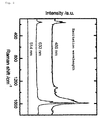
- the physical properties of the CNTs were measured by Raman spectroscopy.
- Raman spectroscopy a different laser excitation wavelength detects a different CNT.
- Fig. 5 shows the results obtained by evaluating the CNTs using laser with excitation wavelength of 488, 514, or 633 nm.
- the synthesized CNTs each had a diameter of about 1.6 nm.
- Semiconducting CNTs were detected at excitation wavelengths of 488 and 514 nm.
- Metallic CNTs were detected at an excitation wavelength of 633 nm.
- Raman bands specific to CNTs were observed at excitation wavelengths of 488 and 633 nm.
- the CNTs obtained herein had a semiconducting property in combination with a metallic property.
- the [9]CPP-coated sapphire single crystal substrate was placed at an edge portion of a quartz reaction tube, and a vacuum was drawn on the reaction tube (final ultimate pressure: about 0.01 torr (about 1.33 Pa)). Ethanol was then supplied into the reaction tube (pressure: 7 torr (933.25 Pa)) while the center of the tube was heated to 500°C in an electric furnace. After the temperature and ethanol supply were stabilized, the [9]CPP-coated sapphire substrate was quickly moved to the center of the reaction tube to initiate the growth of the nanotube by chemical vapor deposition (CVD). Fifteen minutes after the initiation of the reaction, the sapphire single crystal substrate in the reaction tube was moved from the center at 500°C to an edge portion at room temperature to stop the growth of the nanotube.
- CVD chemical vapor deposition
- the formation and the structure of the carbon nanotube were evaluated by Raman spectroscopy.
- Raman spectrometer LabRAM HR-800 produced by Horiba Jobin Yvon was used.
- Fig. 6 shows the results obtained by evaluating the CNTs using laser with excitation wavelength of 488 nm, 514 nm, or 633 nm.
- the CNTs each had a diameter of about 1.0 to 1.2 nm.
- Semiconducting CNTs were detected at excitation wavelengths of 488 and 514 nm, and metallic CNTs were detected at an excitation wavelength of 633 nm.
- Raman bands specific to CNTs were observed at excitation wavelengths of 488, 514, and 633 nm.
Landscapes
- Chemical & Material Sciences (AREA)
- Engineering & Computer Science (AREA)
- Nanotechnology (AREA)
- Materials Engineering (AREA)
- Organic Chemistry (AREA)
- Physics & Mathematics (AREA)
- Condensed Matter Physics & Semiconductors (AREA)
- General Physics & Mathematics (AREA)
- Crystallography & Structural Chemistry (AREA)
- Manufacturing & Machinery (AREA)
- Inorganic Chemistry (AREA)
- Composite Materials (AREA)
- Carbon And Carbon Compounds (AREA)
- Organic Low-Molecular-Weight Compounds And Preparation Thereof (AREA)
Applications Claiming Priority (2)
| Application Number | Priority Date | Filing Date | Title |
|---|---|---|---|
| JP2011050398 | 2011-03-08 | ||
| PCT/JP2012/056033 WO2012121354A1 (fr) | 2011-03-08 | 2012-03-08 | Procédé de fabrication de nanotubes de carbone |
Publications (2)
| Publication Number | Publication Date |
|---|---|
| EP2684844A1 true EP2684844A1 (fr) | 2014-01-15 |
| EP2684844A4 EP2684844A4 (fr) | 2014-09-03 |
Family
ID=46798307
Family Applications (1)
| Application Number | Title | Priority Date | Filing Date |
|---|---|---|---|
| EP12755349.3A Withdrawn EP2684844A4 (fr) | 2011-03-08 | 2012-03-08 | Procédé de fabrication de nanotubes de carbone |
Country Status (6)
| Country | Link |
|---|---|
| US (1) | US9527737B2 (fr) |
| EP (1) | EP2684844A4 (fr) |
| JP (1) | JP6086387B2 (fr) |
| KR (1) | KR20140014224A (fr) |
| CN (1) | CN103415465A (fr) |
| WO (1) | WO2012121354A1 (fr) |
Cited By (1)
| Publication number | Priority date | Publication date | Assignee | Title |
|---|---|---|---|---|
| EP2933228A1 (fr) * | 2014-04-15 | 2015-10-21 | Max-Planck-Gesellschaft zur Förderung der Wissenschaften e.V. | Procédé de préparation de nanotubes de carbone à paroi unique d'une chiralité prédéfinie |
Families Citing this family (10)
| Publication number | Priority date | Publication date | Assignee | Title |
|---|---|---|---|---|
| US9266909B2 (en) | 2012-03-08 | 2016-02-23 | National University Corporation Nagoya University | Cyclic compound containing functional group or containing no functional group, and method for producing same |
| JP6388114B2 (ja) * | 2014-07-30 | 2018-09-12 | コニカミノルタ株式会社 | 有機エレクトロニクス素子用材料に用いる環状芳香族化合物の製造方法 |
| US10654780B2 (en) * | 2017-04-11 | 2020-05-19 | University Of Oregon | Halogenated nanohoop compounds and methods of making and using the same |
| US11555820B2 (en) | 2017-07-21 | 2023-01-17 | University Of Oregon | Nanohoop compounds for use in biotechnology and methods of making and using the same |
| JP7303795B2 (ja) | 2017-08-22 | 2023-07-05 | インサーマ コーポレーション | グラフェンナノリボン、グラフェンナノプレートレット及びこれらの混合物並びに合成の方法 |
| WO2019040468A1 (fr) | 2017-08-22 | 2019-02-28 | Ntherma Corporation | Procédés et dispositifs de synthèse de nanotubes de carbone |
| US11142500B2 (en) | 2018-07-09 | 2021-10-12 | University Of Oregon | Nanohoop compound embodiments comprising meta-substitution and molecular systems comprising the same |
| US11505644B2 (en) | 2019-09-27 | 2022-11-22 | University Of Oregon | Polymer embodiments comprising nanohoop-containing polymer backbones and methods of making and using the same |
| US11739178B2 (en) | 2019-09-27 | 2023-08-29 | University Of Oregon | Nanohoop-functionalized polymer embodiments and methods of making and using the same |
| CN111986834B (zh) * | 2020-07-29 | 2022-03-22 | 北海惠科光电技术有限公司 | 一种碳纳米管导电薄膜的制作方法、显示面板和显示装置 |
Family Cites Families (5)
| Publication number | Priority date | Publication date | Assignee | Title |
|---|---|---|---|---|
| CN1176014C (zh) * | 2002-02-22 | 2004-11-17 | 清华大学 | 一种直接合成超长连续单壁碳纳米管的工艺方法 |
| JP4608863B2 (ja) * | 2003-09-22 | 2011-01-12 | 富士ゼロックス株式会社 | カーボンナノチューブの製造装置および製造方法、並びにそれに用いるガス分解器 |
| WO2008048227A2 (fr) * | 2005-08-11 | 2008-04-24 | Kansas State University Research Foundation | Nanotubes de carbone synthétique |
| JP2009538809A (ja) * | 2006-03-29 | 2009-11-12 | ハイピリオン カタリシス インターナショナル インコーポレイテッド | 金属層から単層カーボンナノチューブを製造する方法 |
| JP5360643B2 (ja) * | 2008-05-23 | 2013-12-04 | 国立大学法人 名古屋工業大学 | カーボンナノチューブの製造方法及び製造装置 |
-
2012
- 2012-03-08 EP EP12755349.3A patent/EP2684844A4/fr not_active Withdrawn
- 2012-03-08 KR KR1020137026510A patent/KR20140014224A/ko not_active Ceased
- 2012-03-08 CN CN2012800121541A patent/CN103415465A/zh active Pending
- 2012-03-08 US US14/003,289 patent/US9527737B2/en not_active Expired - Fee Related
- 2012-03-08 WO PCT/JP2012/056033 patent/WO2012121354A1/fr not_active Ceased
- 2012-03-08 JP JP2013503617A patent/JP6086387B2/ja active Active
Non-Patent Citations (8)
| Title |
|---|
| BRIAN D. STEINBERG ET AL: "New Strategies for Synthesizing Short Sections of Carbon Nanotubes", ANGEWANDTE CHEMIE INTERNATIONAL EDITION, vol. 48, no. 30, 13 July 2009 (2009-07-13) , pages 5400-5402, XP055124250, ISSN: 1433-7851, DOI: 10.1002/anie.200901025 * |
| GU G ET AL: "GROWTH OF SINGLE-WALLED CARBON NANOTUBES FROM MICROCONTACT-PRINTED CATALYST PATTERNS ON THIN SI3N4 MEMBRANES", ADVANCED FUNCTIONAL MATERIALS, WILEY - V C H VERLAG GMBH & CO. KGAA, DE, vol. 11, no. 4, 1 August 2001 (2001-08-01) , pages 295-298, XP001072705, ISSN: 1616-301X, DOI: 10.1002/1616-3028(200108)11:4<295::AID-ADF M295>3.3.CO;2-U * |
| HARUKA OMACHI ET AL: "A Modular and Size-Selective Synthesis of [n]Cycloparaphenylenes: A Step toward the Selective Synthesis of [n,n] Single-Walled Carbon Nanotubes", ANGEWANDTE CHEMIE INTERNATIONAL EDITION, vol. 49, no. 52, 27 December 2010 (2010-12-27), pages 10202-10205, XP055130008, ISSN: 1433-7851, DOI: 10.1002/anie.201005734 * |
| HIROKI AGO ET AL: "CVD Growth of Single-Walled Carbon Nanotubes with Narrow Diameter Distribution over Fe/MgO Catalyst and Their Fluorescence Spectroscopy", THE JOURNAL OF PHYSICAL CHEMISTRY B, vol. 109, no. 20, 1 May 2005 (2005-05-01), pages 10035-10041, XP055060696, ISSN: 1520-6106, DOI: 10.1021/jp050307q * |
| HIROKO TAKABA ET AL: "Selective Synthesis of [12]Cycloparaphenylene", ANGEWANDTE CHEMIE INTERNATIONAL EDITION, vol. 48, no. 33, 3 August 2009 (2009-08-03), pages 6112-6116, XP055079993, ISSN: 1433-7851, DOI: 10.1002/anie.200902617 * |
| JASTI R ET AL: "Progress and challenges for the bottom-up synthesis of carbon nanotubes with discrete chirality", CHEMICAL PHYSICS LETTERS, ELSEVIER BV, NL, vol. 494, no. 1-3, 9 July 2010 (2010-07-09), pages 1-7, XP027108611, ISSN: 0009-2614, DOI: 10.1016/J.CPLETT.2010.04.067 [retrieved on 2010-05-17] * |
| RAMESH JASTI ET AL: "Synthesis, Characterization, and Theory of [9]-, [12]-, and [18]Cycloparaphenylene: Carbon Nanohoop Structures", JOURNAL OF THE AMERICAN CHEMICAL SOCIETY, vol. 130, no. 52, 31 December 2008 (2008-12-31), pages 17646-17647, XP055079995, ISSN: 0002-7863, DOI: 10.1021/ja807126u * |
| See also references of WO2012121354A1 * |
Cited By (2)
| Publication number | Priority date | Publication date | Assignee | Title |
|---|---|---|---|---|
| EP2933228A1 (fr) * | 2014-04-15 | 2015-10-21 | Max-Planck-Gesellschaft zur Förderung der Wissenschaften e.V. | Procédé de préparation de nanotubes de carbone à paroi unique d'une chiralité prédéfinie |
| WO2015158705A1 (fr) * | 2014-04-15 | 2015-10-22 | MAX-PLANCK-Gesellschaft zur Förderung der Wissenschaften e.V. | Procédé de préparation de nanotubes de carbone à paroi simple ayant une chiralité prédéfinie |
Also Published As
| Publication number | Publication date |
|---|---|
| US9527737B2 (en) | 2016-12-27 |
| US20140030183A1 (en) | 2014-01-30 |
| JP6086387B2 (ja) | 2017-03-01 |
| KR20140014224A (ko) | 2014-02-05 |
| JPWO2012121354A1 (ja) | 2014-07-17 |
| WO2012121354A1 (fr) | 2012-09-13 |
| CN103415465A (zh) | 2013-11-27 |
| EP2684844A4 (fr) | 2014-09-03 |
Similar Documents
| Publication | Publication Date | Title |
|---|---|---|
| EP2684844A1 (fr) | Procédé de fabrication de nanotubes de carbone | |
| CN102844288B (zh) | 碳纳米环及其制备方法,与适宜作为该碳纳米环制备原料的化合物及其制备方法 | |
| TWI552953B (zh) | 石墨烯奈米帶前驅物及適用於製備彼等之單體 | |
| Li et al. | Mesoporous silica-supported copper-catalysts for homocoupling reaction of terminal alkynes at room-temperature | |
| WO2013112493A1 (fr) | [n]cycloparaphénylènes (cpp), [n]macrocycles intermédiaires et procédés de fabrication associés | |
| WO2008059771A1 (fr) | Procédé de production d'un dérivé du fullerène | |
| JP5971656B2 (ja) | シクロポリアリーレン化合物及びそれらの製造方法 | |
| Qiu et al. | Isolation of a carbon nanohoop with Möbius topology | |
| KR20160123335A (ko) | 제어된 지그-재그 에지 및 코브 에지 배열을 갖는 그래핀 나노리본 | |
| CN108546229B (zh) | 弯曲合成子、其制备方法及制备环苯撑类化合物的方法 | |
| CN102822123B (zh) | 碳纳米环及适宜用作其原料的环状化合物的制备方法 | |
| Kato et al. | Synthesis of hexa-aminated trinaphtho [3.3. 3] propellane and its porous polymer solids with alkane adsorption properties | |
| JP6449014B2 (ja) | 官能基含有又は非含有環状化合物及びこれらの製造方法 | |
| TW201600453A (zh) | 製備預定掌性之單層奈米碳管的方法 | |
| KR102647809B1 (ko) | 아릴 화합물 및 폴리머 및 이들의 제조 및 사용 방법 | |
| CN114181220B (zh) | 一种螺线管状磁性碳纳米材料及其制备方法 | |
| CN117623281B (zh) | 一种以Pd催化脱HCl制备弯曲碳纳米带的方法 | |
| JPWO2014132467A1 (ja) | カーボンナノケージ及びその中間体、並びにこれらの製造方法 | |
| JP5028610B2 (ja) | 新規なアセン系有機シリル化合物およびその製造方法 | |
| CN120004702A (zh) | 一种通过自偶联反应快速制备环对苯撑的方法 | |
| MacKinnon | Synthesis of novel π-systems containing two pyrene units | |
| JP2017001962A (ja) | シクロポリアリーレン化合物及びその製造方法 | |
| JP2016113401A (ja) | シクロポリアリーレン金属錯体 |
Legal Events
| Date | Code | Title | Description |
|---|---|---|---|
| PUAI | Public reference made under article 153(3) epc to a published international application that has entered the european phase |
Free format text: ORIGINAL CODE: 0009012 |
|
| 17P | Request for examination filed |
Effective date: 20131008 |
|
| AK | Designated contracting states |
Kind code of ref document: A1 Designated state(s): AL AT BE BG CH CY CZ DE DK EE ES FI FR GB GR HR HU IE IS IT LI LT LU LV MC MK MT NL NO PL PT RO RS SE SI SK SM TR |
|
| DAX | Request for extension of the european patent (deleted) | ||
| A4 | Supplementary search report drawn up and despatched |
Effective date: 20140806 |
|
| RIC1 | Information provided on ipc code assigned before grant |
Ipc: C01B 31/02 20060101AFI20140731BHEP |
|
| 17Q | First examination report despatched |
Effective date: 20160426 |
|
| STAA | Information on the status of an ep patent application or granted ep patent |
Free format text: STATUS: THE APPLICATION IS DEEMED TO BE WITHDRAWN |
|
| 18D | Application deemed to be withdrawn |
Effective date: 20160907 |