EP2684863B1 - Dérivé d'iodoarène, procédé de production d'un composé de spirolactone optiquement actif l'utilisant, et procédé de production d'un produit d'addition par cyclisation optiquement actif - Google Patents
Dérivé d'iodoarène, procédé de production d'un composé de spirolactone optiquement actif l'utilisant, et procédé de production d'un produit d'addition par cyclisation optiquement actif Download PDFInfo
- Publication number
- EP2684863B1 EP2684863B1 EP12754890.7A EP12754890A EP2684863B1 EP 2684863 B1 EP2684863 B1 EP 2684863B1 EP 12754890 A EP12754890 A EP 12754890A EP 2684863 B1 EP2684863 B1 EP 2684863B1
- Authority
- EP
- European Patent Office
- Prior art keywords
- group
- derivative
- iodoarene
- optically active
- compound
- Prior art date
- Legal status (The legal status is an assumption and is not a legal conclusion. Google has not performed a legal analysis and makes no representation as to the accuracy of the status listed.)
- Not-in-force
Links
- 0 *C(CC1)OC1(c(c(C=C1)c2)ccc2I)C1=O Chemical compound *C(CC1)OC1(c(c(C=C1)c2)ccc2I)C1=O 0.000 description 3
- QGBSNZUDYBYGBD-DTBGRZLTSA-N CC(C)C(C(C1)Br)=CC(O)=C1[C@H](C)C[Cu] Chemical compound CC(C)C(C(C1)Br)=CC(O)=C1[C@H](C)C[Cu] QGBSNZUDYBYGBD-DTBGRZLTSA-N 0.000 description 1
- KWMUTJHUOURWBK-UHFFFAOYSA-N CCC(C)c1ccc(C)c(OCC(O)=O)c1O Chemical compound CCC(C)c1ccc(C)c(OCC(O)=O)c1O KWMUTJHUOURWBK-UHFFFAOYSA-N 0.000 description 1
- ZWZMRVKROKQMOT-UHFFFAOYSA-N COC(C1=CC=CCC1C1(CC2)OC2=[U])=CC1=O Chemical compound COC(C1=CC=CCC1C1(CC2)OC2=[U])=CC1=O ZWZMRVKROKQMOT-UHFFFAOYSA-N 0.000 description 1
- FKQSMIDMHVAVSU-JTQLQIEISA-N C[C@@H](CNc(c(F)c(c(F)c1F)F)c1F)Oc1cccc(OC2(CNc(c(F)c(c(C)c3F)F)c3F)CC2)c1I Chemical compound C[C@@H](CNc(c(F)c(c(F)c1F)F)c1F)Oc1cccc(OC2(CNc(c(F)c(c(C)c3F)F)c3F)CC2)c1I FKQSMIDMHVAVSU-JTQLQIEISA-N 0.000 description 1
- KBKXSLSPGFSTCW-ZDUSSCGKSA-N O=C(CC1)O[C@@]1(c(cccc1)c1C=C1)C1=O Chemical compound O=C(CC1)O[C@@]1(c(cccc1)c1C=C1)C1=O KBKXSLSPGFSTCW-ZDUSSCGKSA-N 0.000 description 1
- PNXYTSMSGNLUEK-LBPRGKRZSA-N O=C(CC1)O[C@@]1(c1cccnc1C=C1)C1=O Chemical compound O=C(CC1)O[C@@]1(c1cccnc1C=C1)C1=O PNXYTSMSGNLUEK-LBPRGKRZSA-N 0.000 description 1
- CUGZCJCFTXPOLR-UHFFFAOYSA-N OC(CCC(c(cc(cc1)OCc2ccccc2)c1C=C1)(C1=O)[Ar])O Chemical compound OC(CCC(c(cc(cc1)OCc2ccccc2)c1C=C1)(C1=O)[Ar])O CUGZCJCFTXPOLR-UHFFFAOYSA-N 0.000 description 1
Classifications
-
- C—CHEMISTRY; METALLURGY
- C07—ORGANIC CHEMISTRY
- C07C—ACYCLIC OR CARBOCYCLIC COMPOUNDS
- C07C217/00—Compounds containing amino and etherified hydroxy groups bound to the same carbon skeleton
- C07C217/02—Compounds containing amino and etherified hydroxy groups bound to the same carbon skeleton having etherified hydroxy groups and amino groups bound to acyclic carbon atoms of the same carbon skeleton
- C07C217/04—Compounds containing amino and etherified hydroxy groups bound to the same carbon skeleton having etherified hydroxy groups and amino groups bound to acyclic carbon atoms of the same carbon skeleton the carbon skeleton being acyclic and saturated
- C07C217/06—Compounds containing amino and etherified hydroxy groups bound to the same carbon skeleton having etherified hydroxy groups and amino groups bound to acyclic carbon atoms of the same carbon skeleton the carbon skeleton being acyclic and saturated having only one etherified hydroxy group and one amino group bound to the carbon skeleton, which is not further substituted
- C07C217/14—Compounds containing amino and etherified hydroxy groups bound to the same carbon skeleton having etherified hydroxy groups and amino groups bound to acyclic carbon atoms of the same carbon skeleton the carbon skeleton being acyclic and saturated having only one etherified hydroxy group and one amino group bound to the carbon skeleton, which is not further substituted the oxygen atom of the etherified hydroxy group being further bound to a carbon atom of a six-membered aromatic ring
- C07C217/18—Compounds containing amino and etherified hydroxy groups bound to the same carbon skeleton having etherified hydroxy groups and amino groups bound to acyclic carbon atoms of the same carbon skeleton the carbon skeleton being acyclic and saturated having only one etherified hydroxy group and one amino group bound to the carbon skeleton, which is not further substituted the oxygen atom of the etherified hydroxy group being further bound to a carbon atom of a six-membered aromatic ring the six-membered aromatic ring or condensed ring system containing that ring being further substituted
- C07C217/20—Compounds containing amino and etherified hydroxy groups bound to the same carbon skeleton having etherified hydroxy groups and amino groups bound to acyclic carbon atoms of the same carbon skeleton the carbon skeleton being acyclic and saturated having only one etherified hydroxy group and one amino group bound to the carbon skeleton, which is not further substituted the oxygen atom of the etherified hydroxy group being further bound to a carbon atom of a six-membered aromatic ring the six-membered aromatic ring or condensed ring system containing that ring being further substituted by halogen atoms, by trihalomethyl, nitro or nitroso groups, or by singly-bound oxygen atoms
-
- B—PERFORMING OPERATIONS; TRANSPORTING
- B01—PHYSICAL OR CHEMICAL PROCESSES OR APPARATUS IN GENERAL
- B01J—CHEMICAL OR PHYSICAL PROCESSES, e.g. CATALYSIS OR COLLOID CHEMISTRY; THEIR RELEVANT APPARATUS
- B01J31/00—Catalysts comprising hydrides, coordination complexes or organic compounds
- B01J31/02—Catalysts comprising hydrides, coordination complexes or organic compounds containing organic compounds or metal hydrides
- B01J31/0201—Oxygen-containing compounds
- B01J31/0209—Esters of carboxylic or carbonic acids
-
- C—CHEMISTRY; METALLURGY
- C07—ORGANIC CHEMISTRY
- C07C—ACYCLIC OR CARBOCYCLIC COMPOUNDS
- C07C233/00—Carboxylic acid amides
- C07C233/64—Carboxylic acid amides having carbon atoms of carboxamide groups bound to carbon atoms of six-membered aromatic rings
- C07C233/67—Carboxylic acid amides having carbon atoms of carboxamide groups bound to carbon atoms of six-membered aromatic rings having the nitrogen atom of at least one of the carboxamide groups bound to a carbon atom of a hydrocarbon radical substituted by singly-bound oxygen atoms
- C07C233/68—Carboxylic acid amides having carbon atoms of carboxamide groups bound to carbon atoms of six-membered aromatic rings having the nitrogen atom of at least one of the carboxamide groups bound to a carbon atom of a hydrocarbon radical substituted by singly-bound oxygen atoms with the substituted hydrocarbon radical bound to the nitrogen atom of the carboxamide group by an acyclic carbon atom
- C07C233/69—Carboxylic acid amides having carbon atoms of carboxamide groups bound to carbon atoms of six-membered aromatic rings having the nitrogen atom of at least one of the carboxamide groups bound to a carbon atom of a hydrocarbon radical substituted by singly-bound oxygen atoms with the substituted hydrocarbon radical bound to the nitrogen atom of the carboxamide group by an acyclic carbon atom of an acyclic saturated carbon skeleton
-
- C—CHEMISTRY; METALLURGY
- C07—ORGANIC CHEMISTRY
- C07C—ACYCLIC OR CARBOCYCLIC COMPOUNDS
- C07C233/00—Carboxylic acid amides
- C07C233/64—Carboxylic acid amides having carbon atoms of carboxamide groups bound to carbon atoms of six-membered aromatic rings
- C07C233/67—Carboxylic acid amides having carbon atoms of carboxamide groups bound to carbon atoms of six-membered aromatic rings having the nitrogen atom of at least one of the carboxamide groups bound to a carbon atom of a hydrocarbon radical substituted by singly-bound oxygen atoms
- C07C233/68—Carboxylic acid amides having carbon atoms of carboxamide groups bound to carbon atoms of six-membered aromatic rings having the nitrogen atom of at least one of the carboxamide groups bound to a carbon atom of a hydrocarbon radical substituted by singly-bound oxygen atoms with the substituted hydrocarbon radical bound to the nitrogen atom of the carboxamide group by an acyclic carbon atom
- C07C233/70—Carboxylic acid amides having carbon atoms of carboxamide groups bound to carbon atoms of six-membered aromatic rings having the nitrogen atom of at least one of the carboxamide groups bound to a carbon atom of a hydrocarbon radical substituted by singly-bound oxygen atoms with the substituted hydrocarbon radical bound to the nitrogen atom of the carboxamide group by an acyclic carbon atom of a saturated carbon skeleton containing rings
-
- C—CHEMISTRY; METALLURGY
- C07—ORGANIC CHEMISTRY
- C07C—ACYCLIC OR CARBOCYCLIC COMPOUNDS
- C07C235/00—Carboxylic acid amides, the carbon skeleton of the acid part being further substituted by oxygen atoms
- C07C235/42—Carboxylic acid amides, the carbon skeleton of the acid part being further substituted by oxygen atoms having carbon atoms of carboxamide groups bound to carbon atoms of six-membered aromatic rings and singly-bound oxygen atoms bound to the same carbon skeleton
- C07C235/44—Carboxylic acid amides, the carbon skeleton of the acid part being further substituted by oxygen atoms having carbon atoms of carboxamide groups bound to carbon atoms of six-membered aromatic rings and singly-bound oxygen atoms bound to the same carbon skeleton with carbon atoms of carboxamide groups and singly-bound oxygen atoms bound to carbon atoms of the same non-condensed six-membered aromatic ring
- C07C235/48—Carboxylic acid amides, the carbon skeleton of the acid part being further substituted by oxygen atoms having carbon atoms of carboxamide groups bound to carbon atoms of six-membered aromatic rings and singly-bound oxygen atoms bound to the same carbon skeleton with carbon atoms of carboxamide groups and singly-bound oxygen atoms bound to carbon atoms of the same non-condensed six-membered aromatic ring having the nitrogen atom of at least one of the carboxamide groups bound to an acyclic carbon atom of a hydrocarbon radical substituted by singly-bound oxygen atoms
-
- C—CHEMISTRY; METALLURGY
- C07—ORGANIC CHEMISTRY
- C07C—ACYCLIC OR CARBOCYCLIC COMPOUNDS
- C07C271/00—Derivatives of carbamic acids, i.e. compounds containing any of the groups, the nitrogen atom not being part of nitro or nitroso groups
- C07C271/06—Esters of carbamic acids
- C07C271/08—Esters of carbamic acids having oxygen atoms of carbamate groups bound to acyclic carbon atoms
- C07C271/10—Esters of carbamic acids having oxygen atoms of carbamate groups bound to acyclic carbon atoms with the nitrogen atoms of the carbamate groups bound to hydrogen atoms or to acyclic carbon atoms
- C07C271/16—Esters of carbamic acids having oxygen atoms of carbamate groups bound to acyclic carbon atoms with the nitrogen atoms of the carbamate groups bound to hydrogen atoms or to acyclic carbon atoms to carbon atoms of hydrocarbon radicals substituted by singly-bound oxygen atoms
-
- C—CHEMISTRY; METALLURGY
- C07—ORGANIC CHEMISTRY
- C07C—ACYCLIC OR CARBOCYCLIC COMPOUNDS
- C07C311/00—Amides of sulfonic acids, i.e. compounds having singly-bound oxygen atoms of sulfo groups replaced by nitrogen atoms, not being part of nitro or nitroso groups
- C07C311/15—Sulfonamides having sulfur atoms of sulfonamide groups bound to carbon atoms of six-membered aromatic rings
- C07C311/16—Sulfonamides having sulfur atoms of sulfonamide groups bound to carbon atoms of six-membered aromatic rings having the nitrogen atom of at least one of the sulfonamide groups bound to hydrogen atoms or to an acyclic carbon atom
- C07C311/17—Sulfonamides having sulfur atoms of sulfonamide groups bound to carbon atoms of six-membered aromatic rings having the nitrogen atom of at least one of the sulfonamide groups bound to hydrogen atoms or to an acyclic carbon atom to an acyclic carbon atom of a hydrocarbon radical substituted by singly-bound oxygen atoms
-
- C—CHEMISTRY; METALLURGY
- C07—ORGANIC CHEMISTRY
- C07D—HETEROCYCLIC COMPOUNDS
- C07D307/00—Heterocyclic compounds containing five-membered rings having one oxygen atom as the only ring hetero atom
- C07D307/94—Heterocyclic compounds containing five-membered rings having one oxygen atom as the only ring hetero atom spiro-condensed with carbocyclic rings or ring systems, e.g. griseofulvins
-
- C—CHEMISTRY; METALLURGY
- C07—ORGANIC CHEMISTRY
- C07D—HETEROCYCLIC COMPOUNDS
- C07D317/00—Heterocyclic compounds containing five-membered rings having two oxygen atoms as the only ring hetero atoms
- C07D317/08—Heterocyclic compounds containing five-membered rings having two oxygen atoms as the only ring hetero atoms having the hetero atoms in positions 1 and 3
- C07D317/72—Heterocyclic compounds containing five-membered rings having two oxygen atoms as the only ring hetero atoms having the hetero atoms in positions 1 and 3 spiro-condensed with carbocyclic rings
-
- C—CHEMISTRY; METALLURGY
- C07—ORGANIC CHEMISTRY
- C07D—HETEROCYCLIC COMPOUNDS
- C07D491/00—Heterocyclic compounds containing in the condensed ring system both one or more rings having oxygen atoms as the only ring hetero atoms and one or more rings having nitrogen atoms as the only ring hetero atoms, not provided for by groups C07D451/00 - C07D459/00, C07D463/00, C07D477/00 or C07D489/00
- C07D491/02—Heterocyclic compounds containing in the condensed ring system both one or more rings having oxygen atoms as the only ring hetero atoms and one or more rings having nitrogen atoms as the only ring hetero atoms, not provided for by groups C07D451/00 - C07D459/00, C07D463/00, C07D477/00 or C07D489/00 in which the condensed system contains two hetero rings
- C07D491/10—Spiro-condensed systems
- C07D491/107—Spiro-condensed systems with only one oxygen atom as ring hetero atom in the oxygen-containing ring
Definitions
- the present invention relates to an iodoarene derivative, a method for manufacturing an optically active spirolactone compound by using the same, and a method for manufacturing an optically active cycloadduct.
- NPL 1 the present inventors designed a hypervalent iodine compound precursor, which contained 2,6-dihydroxyiodobenzene as a base skeleton and which was able to be designed flexibly by using lactic acid as a chiral source, from a commercially available product in 3 to 4 steps.
- a hypervalent iodine compound was prepared in a reaction system (in situ) by using a catalyst quantity of the resulting hypervalent iodine compound precursor in the presence of a stoichiometric quantity of m-CPBA, and a catalytic enantioselective dearomatization type oxidation reaction of a 1-naphthol derivative was induced.
- a spirolactone compound was obtained at high chemical yield and enantiomeric excess.
- NPL 1 Angewandte Chemie International Edition (Angew. Chem. Int. Ed.), 2010, vol. 49, p. 2175-2177
- the present invention has been made to solve the above-described problems, and a main object is to highly enantioselectively produce an optically active spirolactone compound by using a stable iodoarene derivative which can be synthesized easily.
- the present inventors synthesized a hypervalent iodine compound precursor, which was able to be designed flexibly, from 2,6-dihydroxyiodobenzene by using 1,2-aminoalcohol as a chiral source in short steps, prepared a hypervalent iodine compound in a reaction system (in situ) by using a catalyst quantity of the resulting precursor in the presence of a stoichiometric quantity of m-CPBA, and attempted to induce a spirolactonization reaction of 3-(1-hydroxy-2-naphthyl)propionic acid.
- a hypervalent iodine compound precursor which was able to be designed flexibly, from 2,6-dihydroxyiodobenzene by using 1,2-aminoalcohol as a chiral source in short steps, prepared a hypervalent iodine compound in a reaction system (in situ) by using a catalyst quantity of the resulting precursor in the presence of a stoichiometric
- An iodoarene derivative of the present invention is represented by Formula (1).
- A represents a monovalent iodine atom or a trivalent iodine atom having two ligands
- R 1 and R 2 represent independently a hydrogen atom, an alkyl group, an aryl group, -COR a , or -SO 2 R a
- R a represents an alkyl group, a cycloalkyl group, an aryl group, or an alkoxy group
- R represents a hydrogen atom, an alkyl group, or -OCH(R 7 )CH(R 8 )NR 5 R 6
- R 5 and R 6 represent independently a hydrogen atom, an alkyl group, an aryl group, -COR b , or - SO 2 R b
- R b represents an alkyl group, a cycloalkyl group, an aryl group, or an alkoxy group
- a method for manufacturing an optically active spirolactone compound, according to the present invention is
- the iodoarene derivative according to the present invention can be synthesized from 2-iodoresorcinol, 2-iodophenol, and derivatives thereof by using 1,2-aminoalcohol as a chiral source in short steps (for example, 3 steps). Therefore, mass-production can be performed inexpensively and there is high economy. In addition, stability is high because there is no fear of racemization of asymmetric center carbon due to tautomerism.
- This iodoarene derivative is utilized for enantioselective dearomatization type oxidation of the phenol derivative in which one of two adjacent carbon atoms constituting an aromatic ring is bonded to a OH group and the other is bonded to -Q-COOH (Q is as described above). Furthermore, the structure can be flexibly designed. Consequently, for example, screening is performed by using various iodoarene derivatives on a reaction substrate basis, and a structure suitable for the reaction substrate can be found easily. Moreover, the stability is very high as described above, so that recovery and reuse are also possible after the dearomatization type oxidation is finished.
- the optically active spirolactone compound can be highly enantioselectively produced by using the above-described iodoarene derivative.
- the iodoarene derivative in which A represents a monovalent iodine atom functions as a catalyst precursor.
- the reaction proceeds as described below. That is, when this iodoarene derivative, the peroxycarboxylic acid (or hydrogen peroxide or other peracid), and the reaction substrate are mixed, the iodoarene derivative is oxidized by the peroxycarboxylic acid to become a catalyst (hypervalent iodine compound).
- the catalyst oxidizes and, at the same time, dearomatizes the phenol derivative so as to convert to a corresponding spirolactone compound.
- the iodoarene derivative in itself is reduced and is returned to the catalyst precursor, that is, the iodoarene derivative, again.
- the iodoarene derivative in which A represents a trivalent iodine atom oxidizes and, at the same time, dearomatizes the phenol derivative so as to convert to a corresponding spirolactone compound.
- the iodoarene derivative in itself is reduced and is returned to the iodoarene derivative in which A represents I.
- the iodoarene derivative according to the present invention is represented by Formula (1) described above, where A represents a monovalent iodine atom or a trivalent iodine atom having two ligands, R 1 and R 2 represent independently a hydrogen atom, an alkyl group, an aryl group, -COR a , or -SO 2 R a (R a represents an alkyl group, a cycloalkyl group, an aryl group, or an alkoxy group) or bond to each other to form a lactam, R represents a hydrogen atom, an alkyl group, or -OCH(R 7 )CH(R 8 )NR 5 R 6 , R 5 and R 6 represent independently a hydrogen atom, an alkyl group, an aryl group, -COR b , or -SO 2 R b (R represents an alkyl group, a cycloalkyl group, an aryl group, or an alkoxy group) or
- Examples of the ligand include an acyloxy group and a hydroxy group.
- Examples of acyloxy groups include acyloxy groups having the carbon number of 2 to 12, e.g., an acetoxy group, a benzoyloxy group, and a p-chlorobenzoyloxy group.
- the two ligands bonding to the trivalent iodine atom may be the same or different.
- alkyl group examples include alkyl groups which may have a branch and which have the carbon number of 1 to 4, e.g., a methyl group, an ethyl group, a propyl group, an isopropyl group, a butyl group, an isobutyl group, a sec-butyl group, and a tert-butyl group.
- cycloalkyl group examples include cycloalkyl groups having the carbon number of 3 to 7, e.g., a cyclopropyl group, a cyclobutyl group, a cyclopentyl group, a cyclohexyl group, and a cycloheptyl group.
- Examples of the aryl group include a phenyl group, a naphthyl group, and those groups in which at least one hydrogen atom has been substituted with a substituent.
- substituents include a halogen atom, an alkyl group, a cycloalkyl group, and a perfluoroalkyl group.
- the alkyl group and the cycloalkyl group the groups described above as examples are mentioned.
- the perfluoroalkyl groups a trifluoromethyl group, and a pentafluoroethyl group are mentioned.
- aryl groups include a phenyl group, a 2-tolyl group, a 3-tolyl group, a 4-tolyl group, a 2-trifluoromethyl phenyl group, a 3-trifluoromethyl phenyl group, a 4-trifluoromethyl phenyl group, a 2-methoxyphenyl group, a 3-methoxyphenyl group, a 4-methoxyphenyl group, a 2,3-xylyl group, a 2,4-xylyl group, a 2,5-xylyl group, a 2,6-xylyl group, a 3,4-xylyl group, a 3,5-xylyl group, a 2,3-bis(trifluoromethyl)phenyl group, a 2,4-bis(trifluoromethyl)phenyl group, a 2,5-bis(trifluoromethyl)phenyl group, a 2,6-bis(trifluoromethyl)phenyl group
- alkoxy groups examples include alkoxy groups which may have a branch and which have the carbon number of 1 to 4, e.g., a methoxy group, an ethoxy group, a propoxy group, an isopropoxy group, a n-butoxy group, an isobutoxy group, a sec-butoxy group, and a tert-butoxy group.
- lactams include five-membered ring lactams, six-membered ring lactams, and seven-membered ring lactams.
- the m position, the p position, or both of them relative to the iodine atom are bonded to Z.
- electron-withdrawing groups include a chlorine atom, a bromine atom, a cyano group, and a nitro group.
- electron-donating groups include an alkyl group and an alkoxy group. As for the alkyl group and the alkoxy group, the groups described above as examples are mentioned.
- the iodoarene derivative according to the present invention is used for enantioselective dearomatization type oxidation of the phenol derivative in which one of two adjacent carbon atoms constituting an aromatic ring is bonded to a OH group and the other is bonded to -Q-COOH (Q is as described above).
- the iodoarene derivative (referred to as Type 1) be represented by Formula (1), where R represents R 5 R 6 NCH(R 8 )CH(R 7 )O-, R 1 , R 4 , R 5 , and R 8 represent hydrogen atoms, R 2 and R 6 represent independently -COR a (R a represents an aryl group), and R 3 and R represent independently an alkyl group or the iodoarene derivative (referred to as Type 2) be represented by Formula (1), where R represents R 5 R 6 NCH(R 8 )CH(R 7 )O-, R 1 , R 3 , R 5 , and R 7 represent hydrogen atoms, R 2 and R 6 represent independently -COR a (R a represents an aryl group), and R 4 and R 8 represent independently an alkyl group.
- R represents R 5 R 6 NCH(R 8 )CH(R 7 )O-
- R 1 , R 4 , R 5 , and R 8 represent hydrogen atoms
- the optically active spirolactone compound can be produced from the phenol derivative at a high enantiomeric excess.
- -COR a R a represents an aryl group
- Z Z be a hydrogen atom or an alkyl group, and in the case of the alkyl group, it is preferable to be bonded to the p position relative to the iodine atom.
- iodoarene derivative which serves as a reaction promoter
- various types of iodobenzene represented by Formula (1), in which R 1 to R 8 are changed may be synthesized, optically active spirolactone compounds may be produced from the reaction substrate by using them, and a structure which leads to an optimum result may be selected.
- the method for manufacturing the optically active spirolactone compound according to the present invention is
- one of two adjacent carbon atoms constituting an aromatic ring is bonded to a OH group and the other is bonded to -Q-COOH.
- substituents include an alkyl group, a trialkylsilyl group, a triarylsilyl group, an alkyldiarylsilyl group, an aryldialkylsilyl group, a cycloalkyl group, an alkoxy group, an aryl group, an aromatic alkyl group, a halogen group, an alkyl group having an ether bond, an arylcarbonyl group, an alkylcarbonyl group, a cyano group, and a nitro group. Specific examples thereof will be described in the following paragraph.
- phenol derivatives used in this manufacturing method include phenol compounds, e.g., 3-(2-hydroxyphenyl)propionic acid, 4-(2-hydroxyphenyl)butanoic acid, 2-hydroxyphenoxyacetic acid, and 3-(2-hydroxyphenoxy)propionic acid; and naphthol compounds, e.g., 3-(1-hydroxy-2-naphthyl)propionic acid, 4-(1-hydroxy-2-naphthyl)butanoic acid, 1-hydroxy-2-naphthoxyacetic acid, 1-hydroxy-2-naphthoxypropionic acid, 3-(2-hydroxy-1-naphthyl)propionic acid, 4-(2-hydroxy-1-naphthyl)butanoic acid, 2-hydroxy-1-naphthoxyacetic acid, and 2-hydroxy-1-naphthoxypropionic acid.
- phenol compounds e.g., 3-(2-hydroxyphenyl)propionic acid, 4-(2-hydroxyphenyl)buta
- At least one of positions 3 to 5 (in particular, position 5, that is, a carbon atom adjacent to the hydroxyl group) of 2-hydroxyphenyl of the phenol compound may have a substituent.
- At least one of positions 3 to 8 of 1-hydroxy-2-naphthyl and 2-hydroxy-1-naphthyl of the naphthol compound may have a substituent.
- substituents include alkyl groups, e.g., a methyl group, an ethyl group, a propyl group, an isopropyl group, a n-butyl group, an isobutyl group, a sec-butyl group, and a tert-butyl group; trialkylsilyl groups, e.g., a trimethylsilyl group, a triethylsylyl group, a triisopropylsylyl group, a diethylisopropylsylyl group, a dimethylisopropylsylyl group, a di-tert-butylmethylsylyl group, an isopropyldimethylsylyl group, and a tert-butyldimethylsylyl group; triarylsilyl groups, e.g., a triphenylsylyl group; alkyldiarylsylyl group
- the naphthol compound is preferable rather than the phenol compound, and a naphthol compound in which a OH group is bonded to position 1 and -Q-COOH is bonded to position 2 and a naphthol compound in which -Q-COOH is bonded to position 1 and a OH group is bonded to position 2 are more preferable.
- the number of atoms between an aromatic ring and COOH is preferably 2 because the five-membered ring lactone is more stable than the six-membered ring lactone.
- peroxycarboxylic acids used for the above-described manufacturing method (A) include peracetic acid, perbenzoic acid, and m-chloroperbenzoic acid (m-CPBA).
- perbenzoic acid and m-CPBA are preferable because of ease of handling.
- m-CPBA having a low-purity purity about 77%) may be used without purification (the remainder includes mCBA, and water), or such a commercially available product may be used after purification.
- the peroxycarboxylic acid is a peracid produced by substituting a hydroxyl group of carboxylic acid with a hydroperoxy group and is generated by reacting carboxylic acid with a peroxide, e.g., hydrogen peroxide. Therefore, carboxylic acid and a peroxide may be put into a reaction system in combination and the peroxycarboxylic acid may be generated on the spot instead of putting the peroxycarboxylic acid into the reaction system.
- the peroxycarboxylic acid oxidizes the iodoarene derivative in which A represents a monovalent iodine atom to convert to a hypervalent iodine compound (iodoarene derivative in which A represents a trivalent iodine atom having two ligands) and, in addition, the peroxycarboxylic acid in itself is reduced to a carboxylic acid.
- the hypervalent iodine compound converts the phenol derivative to a spirolactone compound and, in addition, the hypervalent iodine compound in itself is reduced to return to the iodoarene derivative in which A represents a monovalent iodine atom. Therefore, it is enough that the iodoarene derivative in which A represents a monovalent iodine atom is a catalyst quantity. However, it is necessary that the peroxycarboxylic acid be more than or equal to a stoichiometric quantity relative to the phenol derivative. Consequently, preferably 0.5 to 50 percent by mole of iodoarene derivative is used relative to the phenol derivative.
- the hypervalent iodine compound converts the phenol derivative to a spirolactone compound and, in addition, the hypervalent iodine compound in itself is reduced to the iodoarene derivative in which A represents a monovalent iodine atom. Therefore, it is necessary that the hypervalent iodine compound be more than or equal to a stoichiometric quantity relative to the phenol derivative.
- the hypervalent iodine compound is produced by isolating a reaction product of the iodoarene derivative which is a monovalent iodine atom and the peroxycarboxylic acid.
- this manufacturing method (B) it is not necessary that the peroxycarboxylic acid is present in the reaction system. Consequently, in the case where a reaction substrate which reacts with the peroxycarboxylic acid easily is used or in the case where the resulting spirolactone compound reacts with the peroxycarboxylic acid and is converted to another compound, it is preferable that the manufacturing method (B) be adopted rather than the manufacturing method (A). Conversely, in the case where isolation of the hypervalent iodine compound is difficult, it is preferable that the manufacturing method (A) be adopted.
- reaction solvents include halogenated alkanes, e.g., methylene chloride, chloroform, carbon tetrachloride, and 1,2-dichloroethane; aromatic hydrocarbons, e.g., benzene, toluene, xylene, and benzene chloride; nitroalkanes, e.g., nitromethane; nitrile based solvents, e.g., acetonitrile and propionitrile; ester based solvents, e.g., methyl acetate and ethyl acetate; fluorine based alcohols, e.g., 2,2,2-trifluoroethanol (TFE) and 1,1,1,3,3,3-hexafluoro-2-propanol (HFIP); and mixtures thereof.
- halogenated alkanes e.g., methylene chloride, chloroform, carbon tetrachloride, and 1,2-dichlor
- halogenated alkanes in consideration of the yield and the enantiomeric excess, halogenated alkanes, nitroalkanes, esters, fluorine based alcohols, and mixtures thereof are preferable.
- concentration of the phenol derivative becomes 0.01 to 1 M, and preferably 0.02 to 0.2 M.
- a naphthol compound or phenol compound in which a OH group is bonded to position 1 and -Q-COOH is bonded to position 2 is used as the phenol derivative, it is preferable that alcohol be added to the reaction solvent because the enantiomeric excess is improved.
- alcohols include alcohols having the carbon number of 1 to 4, e.g., methanol, ethanol, n-propanol, isopropanol, n-butanol, isobutanol, sec-butanol, and tert-butanol, and among them, ethanol is more preferable.
- the amount of addition of the alcohol is 1 to 50 equivalents relative to the phenol derivative, and preferably 3 to 10 equivalents are employed.
- the temperatures of the above-described manufacturing methods (A) and (B) are preferabyl -50°C to 50°C and -20°C to 40°C are more preferable. Lower than -50°C is not preferable because the reaction rate becomes too low. Higher than 50°C is not preferable because the enantioselectivity may be degraded, although the reaction rate is improved. Meanwhile, it is not necessary that the atmosphere of the reaction system be specified as an inert atmosphere of a nitrogen gas, or an argon gas. The reaction proceeds without problem even in an air atmosphere.
- the method for manufacturing an optically active cycloadduct is a method for obtaining an optically active [4+2]cycloadduct by reacting the optically active spirolactone compound obtained by the above-described method for manufacturing an optically active spirolactone compound with a dienophile without isolation.
- This manufacturing method is effective especially in the case where an optically active spirolactone compound is unstable.
- dienophiles include alkenes and alkynes. Such a dienophile may be added after the optically active spirolactone compound has been generated in the system, but it is preferable that the dienophile is included in the system together with the phenol derivative from the start in consideration of the operability.
- addition be performed after the optically active spirolactone compound have been generated in the system.
- the [4+2]cycloaddition reaction be performed at a temperature higher than the reaction temperature in production of the optically active spirolactone compound.
- dienophile examples include ⁇ , ⁇ -unsaturated aldehydes, e.g., acrolein; ⁇ , ⁇ -unsaturated ketones, e.g., methyl vinyl ketone and quinone; ⁇ , ⁇ -unsaturated carboxylic acid esters, e.g., methyl acrylate and ethyl acrylate; and ⁇ , ⁇ -unsaturated acid anhydrides, e.g., maleic anhydride.
- aldehydes e.g., acrolein
- ketones e.g., methyl vinyl ketone and quinone
- carboxylic acid esters e.g., methyl acrylate and ethyl acrylate
- acid anhydrides e.g., maleic anhydride.
- the 1 H NMR spectrum was measured with a JEOL ECS-400 (400 MHz) spectrometer and the 13 C NMR spectrum was measured with a JEOL ECS-400 (100 MHz) spectrometer.
- the optical purity of the reaction product was measured with a Shimadzu LC-10 apparatus on the basis of high performance liquid chromatography (HPLC) by using 4.6 mm x 25 cm Daicel CHIRALCEL OD-H, AD-H, AS-H, and AD-3.
- HPLC high performance liquid chromatography
- the proceeding of the reaction was monitored on the basis of the thin layer chromatography (TLC) by using a Merck precoated TLC plate (silica gel 60, GF254, 0.25 mm).
- Iodoarene derivatives A to M and R to V were synthesized following the reaction formulae described below. They are referred to as Type 1, in which a substituent is bonded to the carbon atom on the oxygen side of the ethylene chain between the oxygen atom and the nitrogen atom in the side chain. All the iodoarene derivatives A to M and R to V correspond to the examples according to the present invention. In this regard, 2-iodoresorcinols were synthesized on the basis of the method described in a literature ( Org. Syn., 2007, vol.84, p272 ).
- a solution was prepared by dissolving 2-iodoresorcinol (0.94 g, 4.0 mmol), PPh 3 (2.62 g, 10.0 mmol), and (R)-1-amino-2-propanol in which a nitrogen atom was protected by a Boc group (1.75 g, 10.0 mmol) into THF (13.0 mL).
- Diisopropylazodicarboxylate (DIAD, 1.9-M toluene solution, 10.0 mmol, 5.3 mL) was added to the resulting solution at 0°C gradually.
- the resulting reaction mixed solution was stood and the temperature was returned to room temperature. After agitation was performed for a night, the mixture was concentrated in a vacuum.
- Iodoarene derivative B (1.83 g, 3.3 mmol) at a yield of 83%.
- the spectrum data of Iodoarene derivative B are as described below.
- Trifluoroacetic acid (TFA, 1.1 mL, 15 mmol) was added to a solution in which Iodoarene derivative B (1.83 g, 3.3 mmol) was dissolved into CH 2 Cl 2 (15.0 mL), and agitation was performed at room temperature for 8 hours. The resulting reaction mixed solution was cooled to 0°C and was quenched with 2-N NaOH. Extraction was performed with chloroform.
- Iodoarene derivative A (1.16 g, 3.3 mmol) at a yield of more than 99% and the purity of more than 99% (on the basis of 1 H NMR analysis).
- the spectrum data of Iodoarene derivative A are as described below.
- Benzoyl chloride (0.3 mL, 2.79 mmol) was added to a solution, in which Iodoarene derivative A (326 mg, 0.93 mmol) was dissolved into CH 2 Cl 2 (8.0 mL) and pyridine (1.5 mL), at 0°C and agitation was performed at room temperature for a night.
- the resulting reaction mixed solution was poured into 1-N HCl, and extraction was performed with CHCl 3 .
- An organic layer was washed with a saturated NaHCO 3 aqueous solution, and was dried with anhydrous MgSO 4 .
- the solvent was removed by distillation in a vacuum.
- Iodoarene derivative C (0.11 g, 0.20 mmol) at a yield of 23%.
- the spectrum data of Iodoarene derivative C are as described below.
- a solution was prepared by dissolving 2,6-diethylbenzoic acid (0.64 g, 3.57 mmol), EDAC ⁇ HCL (0.82 g, 4.27 mmol), and i-PrNEt (0.97 mL, 4.27 mmol) into THF (7.4 mL), and HOBt (0.58 g, 4.27 mmol) was added. After agitation was performed at room temperature for 10 minutes, a solution in which Iodoarene derivative A (0.31 g, 0.89 mmol) was dissolved into THF (5.9 mL) was added to the reaction mixed solution at room temperature, and reflux was performed for a night. The resulting mixed solution was cooled to room temperature and was poured into 1-N HCl.
- Iodoarene derivative H (0.10 g, 0.15 mmol) at a yield of 17%.
- the spectrum data of Iodoarene derivative H are as described below.
- Iodoarene derivative J (0.10 g, 0.15 mmol) at a yield of 45%.
- the spectrum data of Iodoarene derivative J are as described below.
- Iodoarene derivatives N to Q were synthesized following the reaction formulae described below. They were referred to as Type 2, in which a substituent was bonded to the carbon atom on the nitrogen side in the ethylene chain between the oxygen atom and the nitrogen atom in the side chain. All the iodoarene derivatives N to Q correspond to the examples according to the present invention.
- Iodoarene derivative N was synthesized following the above-described reaction formula in conformity with the synthesis of Iodoarene derivative I.
- the yield from an iodoarene intermediate was 14%.
- the spectrum data thereof are as described below.
- Iodoarene derivative O was synthesized following the above-described reaction formula.
- 2,4,6-trimethylbenzoyl chloride (0.73 mL, 4.39 mmol) was added at 0°C to a solution in which an iodoarene intermediate (0.59 g, 1.46 mmol), DMAP (0.18 g, 1.46 mmol), and Et 3 N (0.48 mL, 4.39 mmol) were dissolved into CH 2 Cl 2 (10.4 mL), and agitation was performed at room temperature for a night.
- the resulting reaction mixed solution was poured into 1-N HCl, and extraction was performed with CHCl 3 .
- Iodoarene derivative O (0.55 g, 0.79 mmol) at a yield of 54%.
- the spectrum data of Iodoarene derivative O are as described below.
- Iodoarene derivative P was synthesized following the above-described reaction formula in conformity with the synthesis of Iodoarene derivative O.
- the yield from an iodoarene intermediate was 40%.
- the spectrum data thereof are as described below.
- Iodoarene derivative Q was synthesized following the above-described reaction formula in conformity with the synthesis of Iodoarene derivative O.
- the yield from an iodoarene intermediate was 74%.
- the spectrum data thereof are as described below.
- Pivalic acid (1.53 g, 15 mmol) was added to a solution in which 1-naphthol (4.33 g, 30 mmol) and triethylorthoacrylate (6.0 mL, 48 mmol) were dissolved into toluene (100 mL), while the solution was agitated.
- the resulting mixed solution was refluxed for a day.
- the resulting mixed solution was poured into 1-N NaOH (30 mL). Extraction with Et 2 O was performed two times and washing was performed with a saline solution. Organic layers were mixed and dried with anhydrous Na 2 SO 4 . The solvent was removed by distillation in a vacuum.
- the solvent was removed by distillation in a vacuum.
- the resulting reaction mixed solution was poured into 1-N HCl (100 mL), extraction with EtOAc was performed two times, and washing was performed with a saline solution. Organic layers were mixed and dried with anhydrous MgSO 4 .
- the solvent was removed by distillation in a vacuum.
- Naphthol compound S1 that is, 3-(1-hydroxynaphthalen-2-yl)propanoic acid (4.05 g, 18.7 mmol) at a yield of 62%.
- the spectrum data thereof are as described below.
- various naphthol compounds used as reaction substrates in Examples 41 to 50 described later were synthesized by this method.
- Spirolactone compound P1 was obtained by reacting Naphthol compound S1 with various Iodoarene derivatives A to V and m-CPBA.
- the synthesis procedure of Example 9 will be described below as a typical example.
- Example 9 initially, a solution in which 1-Naphthol compound S1 (21.6 mg, 0.11 mmol), Iodoarene derivative I (6.4 mg, 0.01 mmol, 10 percent by mole), and mCPBA (26.9 mg, 0.12 mmol), 1.2 equiv) were dissolved into chloroform (5 mL, S1 concentration 0.02 M) was agitated at 0°C. After 9 hours were elapsed, the reaction mixed solution was poured into a Na 2 S 2 O 3 aqueous solution (5 mL) and a NaHCO 3 aqueous solution (5 mL), and extraction with CHCl 3 was performed two times. An organic layer was dried with anhydrous MgSO 4 .
- Spirolactone compound P1 (15.4 mg, 0.072 mmol) at a yield of 72% and 98%ee.
- the spectrum data of Spirolactone compound P1 are as described below.
- Example 18 in Table 2 the catalyst precursor of Type 1 having a methyl group at the p position relative to the iodine atom of iodobenzene was used and both the enantiomeric excess and yield were very high as with Example 13 (not including a methyl group).
- Example 19 the catalyst precursor of Type 1 in which iodobenzene had one side chain (that is, left-right asymmetry) was used. As a result, good results were obtained, although the enantiomeric excess and the yield decreased to some extent as compared with Example 9 (two side chains).
- Example 20 the catalyst precursor of Type 1 having tert-butyl groups at the o position and the p position relative to the iodine atom of iodobenzene was used. As a result, good results were obtained, although the enantiomeric excess and the yield decreased to some extent as compared with Example 9.
- Example 30 5 Refined product Commercial product EtOH(34eq) DCE(0.02M), 0°C, 18h 71 97
- Example 31 5 Refined product Commercial product MeOH(6eq) DCE(0.02M), 0°C, 18h 71 96
- Example 32 5 Refined product Commercial product i-PrOH(6eq) DCE(0.02M), 0°C, 18h 70 94
- Example 33 5 Refined product Commercial product t-BuOH(6eq) DCE(0.02M), 0°C, 18h 81 96
- Example 34 5 Refined product Commercial product TFA(6eq) DCE(0.02M), 0°C, 18h 66 91
- Example 35 5 Refined product Commercial product AcOH(6eq) DCE(0.02M), 0°C, 18h 78 93
- Example 36 5 Refined product Commercial product - DCE(0.02M)/H 2 O(50:1), 0°C,
- *2 A commercially available m-CPBA (Aldrich) was purified to have a purity of more than 99%.
- CHCl 3 (Nacalai) had a purity of 99% and included 1 percent by weight of EtOH serving as a stabilizer.
- *4 A commercially available CHCl 3 (Nacalai) was distilled in such a way that EtOH was not included.
- *5 A commercially available DCE (Wako Pure Chemical Industries, Ltd.) was used. A stabilizer was not included.
- Example 36 influences of water and mCBA contained in the commercially available mCPBA were examined. As a result, adverse influences due to water and mCBA were not specifically observed. In this regard, in Example 38, the enantiomeric excess and the yield were improved because of addition of ethanol as compared with Example 37.
- Example 39 the reaction temperature was examined.
- the reaction temperature in Example 27 was changed from 0°C to -20°C
- the reaction temperature in Example 29 was changed from 0°C to -20°C.
- the enantiomeric excess and the yield were at the same level.
- Synthesis of optically active spirolactone compounds was performed by using various reaction substrates in conformity with the reaction example in Example 40 and, thereby, various products shown in Table 4 were obtained.
- reaction substrates having a chloro group, a bromo group, or a phenyl group at position 4 of 1-naphthol were used. As a result, in every case, a product was obtained at very high enantiomeric excess and yield.
- reaction substrates having a methoxy group at position 6 of 1-naphthol were used.
- a reaction substrate having a benzyloxymethyl group at position 3 of 1-naphthol was used.
- Example 48 reaction substrates having a 4-bromophenylcarbonyl group at position 4 of 1-naphthol were used. As a result, in every case, a product was obtained at a very high enantiomeric excess.
- Example 50 a reaction substrate having a p-toluenesulfonylamino group (TsNH group) at position 5 of 1-naphthol was used. As a result, a product was obtained at a high enantiomeric excess.
- TsNH group p-toluenesulfonylamino group
- Acrylic acid (1.36 mL, 20.0 mmol) was added to a solution in which 2-naphthol (1.44 g, 10.0 mmol) and AMBERLIST (produced by Aldrich, strong acid, 1.0 g) serving as an ion-exchange resin were dissolved into toluene (30 mL), while the solution was agitated. The resulting mixed solution was refluxed for a day. The resulting suspension was filtrated through celite, and the solvent was removed by distillation in a vacuum.
- Synthesis of optically active spirolactone compounds was performed by using various 2-naphthol compounds as reaction substrates in conformity with the reaction example in Example 40 and, thereby, various products shown in Table 5 were obtained.
- Catalyst precursors I and M were used.
- 2-Naphthol compound S2 was used as the reaction substrate, and products were obtained at high enantiomeric excesses and good yields.
- Example 52 a mixed solvent of DCE and HFIP was used as the reaction solvent and, thereby, both the yield and the enantiomeric excess were improved as compared with those in Example 51 in which a DCE single solvent was used.
- Example 53 to 57 reaction substrates having a bromo group at position 3, position 6, or position 7 of the 2-naphthol compound were used, and in every case, a product was obtained at a high enantiomeric excess.
- the yield decreased.
- the reaction substrates having a bromo group at position 3 or position 6 were used, the yields were also good.
- reaction substrates having a methoxy group at position 7 or position 4 of the 2-naphthol compound were used, and in every case, a product was obtained at a high enantiomeric excess.
- the yield decreased.
- the reaction substrate having a methoxy group at position 7 was used, the yield was also good.
- 2-naphthol compounds having a fluoro group at position 8, a methyl group at position 4, a benzyloxy group at position 7, and a methoxymethoxy group at position 7, respectively, are used as the reaction substrates.
- Trivalent hypervalent iodine compounds (Iodoarene derivatives I' and M') were synthesized from Catalyst precursors I and M.
- Iodoarene derivative I was synthesized following the reaction formula described below. That is, a solution in which Iodoarene derivative I (0.64 g, 1.0 mmol) was dissolved into peracetic acid (solution having a concentration of 9% in acetic acid, 8 mL, ca. 10 mmol) was agitated at room temperature for a night. The resulting mixed solution was diluted with CH 2 Cl 2 and was washed two times with distilled water.
- Iodoarene derivative I' (0.72 g, 0.94 mmol) at a yield of 94% and the purity of more than 99% (on the basis of 1 H NMR analysis).
- the spectrum data of Iodoarene derivative I' are as described below.
- Iodoarene derivative M' was synthesized from Iodoarene derivative M, following the reaction formula described below, in conformity with the synthesis of Iodoarene derivative I'. The yield was 90%.
- the spectrum data of Iodoarene derivative M' are as described below.
- Synthesis of optically active spirolactone compounds was performed by using Iodoarene derivatives I' and M' described above, while the 1-naphthol compound or the 2-naphthol compound served as the reaction substrate, and thereby, various products of Examples 64 to 70 shown in Table 6 were obtained.
- the reaction conditions shown in Table 6 were adopted in conformity with the reaction example in Example 40.
- Iodoarene derivatives I' and M' were specified to be stoichiometric quantities (1 equivalent) relative to the reaction substrate. In every Example, a predetermined product was obtained at good enantiomeric excess and yield.
- Iodoarene derivatives I' and M' were able to be utilized for the spirolactonization reaction.
- the reaction did not proceed smoothly because the reaction substrate reacted with m-CPBA or the spirolactone compound reacted with m-CPBA.
- Iodoarene derivatives I' and M' having a trivalent iodine atom were used, the reaction proceeded smoothly.
- Example 68 Iodoarene I' (1equiv), DCE(0.02M), -20°C, 18h 71 75
- Example 69 Iodoarene M' (1equiv), DCE(0.02M), -20°C, 18h 72
- Example 70 Iodoarene I' (1equiv), DCE(0.01M), rt, 24h 84 51
- both L 1 and L 2 may be an acyloxy group (acyloxy group derived from a carboxylic acid of mCBA or the reaction substrate), one of them may be OH and the other may be an acyloxy group, or both of them may be OH.
- Example 78 a mixed solvent of DCE and nitromethane was used in Examples 74 and 75, a DCE single solvent was used in Examples 71 to 73 and 76, a dichloromethane (DCM) single solvent was used in Example 77, and a mixed solvent of DCM and HFIP was used in Example 78.
- DCM dichloromethane
- Example 78 a mixed solvent of DCM and HFIP
- Example 79 a phenol compound in which a OH group was bonded to position 1 and OCH 2 COOH was bonded to position 2 was oxidized under the reaction condition described below. As a result, a spirolactone compound was obtained at a yield of 88% and 89%ee.
- Example 80 As indicated by Examples 80 to 85 shown in Table 8, various phenol compounds were converted to optically active spirolactone compounds through dearomatization type oxidation, and the resulting spirolactone compounds were subjected to a [4+2] cyclization reaction (Diels-Alder reaction) with methyl vinyl ketone (MVK), which was a dienophile, without being isolated. Consequently, an optically active cycloadduct having a complicated skeleton was highly enantioselectively obtained at a high yield at a stroke.
- MVK methyl vinyl ketone
- MVK (82 ⁇ L, 1 mmol, 10 equiv) was added to the reaction solution, and the resulting reaction liquid was agitated at room temperature. After 12 hours were elapsed, the reaction mixed solution was poured into a Na 2 S 2 O 3 aqueous solution (5 mL) and a NaHCO 3 aqueous solution (5 mL), and extraction with CHCl 3 was performed two times. An organic layer was dried with anhydrous MgSO 4 . The solvent was removed by distillation in a vacuum.
- Example 81 mCPBA(1.2equiv) 4 60 74 MVK(10equiv) Iodoarene I(5mol%) 1 DCM/HFIP(2:1 v/v, 0.02M) -10°C, 24h ⁇ rt, 12h
- Example 82 mCPBA(1.2equiv) 4 91 86 MVK(10equiv) Iodoarene I(5mol%) 1 DCM/HFIP(9:1 v/v, 0.02M) -10°C, 24h ⁇ rt, 12h
- Example 83 mCPBA(1.2equiv) 4 94 91 MVK(10equiv) Iodoarene O(5mol%) 2 DCM/HFIP(9:1 v/v, 0.02M) -10°C, 24h ⁇ rt, 12h
- Example 84 mCPBA(1.2equiv) 4 90 99 MVK(10equiv) Iodoarene
- the present invention can be utilized mainly for a pharmaceutical chemical industry and can be utilized in production of, for example, natural products, drugs, pesticides, and cosmetics, which have optically active spirolactone skeletons.
Landscapes
- Chemical & Material Sciences (AREA)
- Organic Chemistry (AREA)
- Engineering & Computer Science (AREA)
- Materials Engineering (AREA)
- Chemical Kinetics & Catalysis (AREA)
- Organic Low-Molecular-Weight Compounds And Preparation Thereof (AREA)
- Heterocyclic Compounds That Contain Two Or More Ring Oxygen Atoms (AREA)
- Furan Compounds (AREA)
- Low-Molecular Organic Synthesis Reactions Using Catalysts (AREA)
Claims (13)
- Dérivé iodoarène représenté par la formule (1)
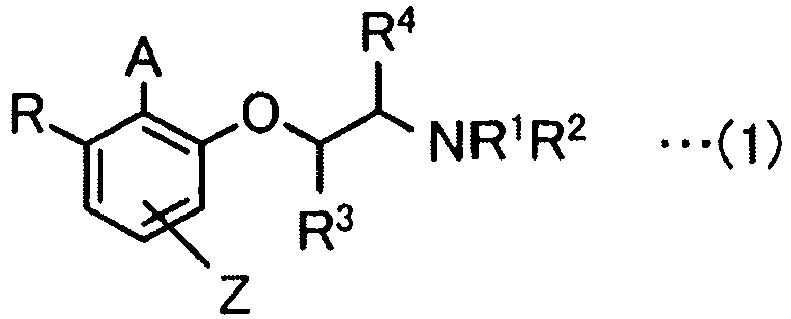 dans la formule (1),A représente un atome d'iode monovalent ou un atome d'iode trivalent ayant deux ligands,R1 et R2 représentent indépendamment un atome d'hydrogène, un groupe alkyle, un groupe aryle, -CORa, ou -SO2Ra (Ra représente un groupe alkyle, un groupe cycloalkyle, un groupe aryle, ou un groupe alkoxy) ou sont liés l'un à l'autre pour former un lactame,R représente un atome d'hydrogène, un groupe alkyle, ou
-OCH(R7)CH(R8)NR5R6,
R5 et R6 représentent indépendamment un atome d'hydrogène, un groupe alkyle, un groupe aryle, -CORb, ou -SO2Rb (Rb représente un groupe alkyle, un groupe cycloalkyle, un groupe aryle, ou un groupe alkoxy) ou sont liés l'un à l'autre pour former un lactame,R4 et R8 représentent des atomes d'hydrogène, R3 et R7 représentent indépendamment un groupe alkyle, un groupe cycloalkyle, un groupe arylméthyle, ou un groupe aryle, et les deux configurations d'atomes de carbone asymétriques liés à R3 et R7 sont R ou les deux configurations sont S, ou bien R3 et R7 représentent des atomes d'hydrogène, R4 et R8 représentent indépendamment un groupe alkyle, un groupe cycloalkyle, un groupe arylméthyle, ou un groupe aryle, et les deux configurations d'atomes de carbone asymétriques liés à R4 et R8 sont R ou les deux configurations sont S, etZ représente un atome d'hydrogène, un atome de chlore, un atome de brome, un groupe cyano, un groupe nitro, un groupe alkyle ou un groupe alkoxy. - Dérivé iodoarène selon la revendication 1,
où dans la formule (1), R représente R5R6NCH(R8)CH(R7)O-, R1, R4, R5 et R8 représentent des atomes d'hydrogène, R2 et R6 représentent indépendamment -CORa (Ra représente un groupe aryle) et R3 et R7 représentent indépendamment un groupe alkyle. - Dérivé iodoarène selon la revendication 1,
où dans la formule (1), R représente R5R6NCH(R8)CH(R7)O-, R1, R3, R5 et R7 représentent des atomes d'hydrogène, R2 et R6 représentent indépendamment -CORa (Ra représente un groupe aryle) et R4 et R8 représentent indépendamment un groupe alkyle. - Dérivé iodoarène selon l'une quelconque des revendications 1 à 3,
où dans la formule (1), Z représente un atome d'hydrogène ou un groupe alkyle. - Procédé de fabrication d'un composé spirolactone optiquement actif, le procédé comprenant l'étape consistant à
mélanger un dérivé phénolique, un dérivé iodoarène et un acide peroxycarboxylique de telle manière que le dérivé iodoarène soit en une quantité catalytique par rapport au dérivé phénolique et l'acide peroxycarboxylique soit supérieur ou égal à une quantité stoechiométrique par rapport au dérivé phénolique afin d'induire une réaction, de façon à obtenir un composé spirolactone optiquement actif dans lequel un groupe OH du dérivé phénolique est converti en un groupe oxo (=O) et désaromatisé afin d'avoir une liaison spiro des cycles lactone,
le dérivé phénolique ayant l'un parmi deux atomes de carbone adjacents constituant un cycle aromatique lié à un groupe OH et l'autre lié à -Q-COOH (Q représente -(CH2)n- (n représente 2 ou 3), -O(CH2)m- (m représente 1 ou 2), -CH2OCH2-, -(CH2)kCH=CH- (k représente 0 ou 1 et une partie oléfinique est cis), -(CH2)kC=C- (k représente 0 ou 1 et C=C représente deux atomes de carbone adjacents d'un noyau benzène ou d'un noyau naphtalène), -OCH=CH- (une partie oléfinique est cis), ou -OC=C- (C=C représente deux atomes de carbone adjacents d'un noyau benzène ou d'un noyau naphtalène)), le dérivé iodoarène étant le dérivé selon l'une quelconque des revendications 1 à 4, dans lequel A représente un atome d'iode monovalent, et l'acide peroxycarboxylique étant capable d'oxyder le dérivé iodoarène pour le convertir en un composé d'iode hypervalent. - Procédé de fabrication d'un composé spirolactone optiquement actif, le procédé comprenant l'étape consistant à
mélanger un dérivé phénolique et un dérivé iodoarène de telle manière que le dérivé iodoarène soit supérieur ou égal à une quantité stoechiométrique par rapport au dérivé phénolique afin d'induire une réaction, de façon à obtenir un composé spirolactone optiquement actif dans lequel un groupe OH du dérivé phénolique est converti en un groupe oxo (=O) et désaromatisé afin d'avoir une liaison spiro des cycles lactone,
le dérivé phénolique ayant l'un parmi deux atomes de carbone adjacents constituant un cycle aromatique lié à un groupe OH et l'autre lié à -Q-COOH (Q représente -(CH2)n- (n représente 2 ou 3), -O(CH2)m- (m représente 1 ou 2), -CH2OCH2-, -(CH2)kCH=CH- (k représente 0 ou 1 et une partie oléfinique est cis),-(CH2)kC=C- (k représente 0 ou 1 et C=C représente deux atomes de carbone adjacents d'un noyau benzène ou d'un noyau naphtalène), -OCH=CH- (une partie oléfinique est cis), ou -OC=C- (C=C représente deux atomes de carbone adjacents d'un noyau benzène ou d'un noyau naphtalène)), le dérivé iodoarène étant le dérivé selon l'une quelconque des revendications 1 à 4, dans lequel A représente un atome d'iode trivalent. - Procédé de fabrication d'un composé spirolactone optiquement actif, selon la revendication 5 ou la revendication 6,
le dérivé phénolique étant un composé naphtol dans lequel un groupe OH est lié à la position 1 et -Q-COOH est lié à la position 2. - Procédé de fabrication d'un composé spirolactone optiquement actif, selon la revendication 5 ou la revendication 6,
le dérivé phénolique étant un composé phénol dans lequel un groupe OH est lié à la position 1 et -Q-COOH est lié à la position 2. - Procédé de fabrication d'un composé spirolactone optiquement actif, selon la revendication 7 ou la revendication 8, un alcool étant présent dans le système réactionnel.
- Procédé de fabrication d'un composé spirolactone optiquement actif, selon la revendication 5 ou la revendication 6,
le dérivé phénolique étant un composé naphtol dans lequel -Q-COOH est lié à la position 1 et un groupe OH est lié à la position 2. - Procédé de fabrication d'un composé spirolactone optiquement actif, selon l'une quelconque des revendications 5 à 10,
dans lequel un alcane halogéné, un nitroalcane, un ester, un alcool à base de fluor ou un mélange de ceux-ci est utilisé en tant que solvant de réaction. - Procédé de fabrication d'un adduit cyclique optiquement actif, comprenant le procédé de fabrication d'un composé spirolactone optiquement actif selon l'une quelconque des revendications 5 à 11, et consistant en outre à faire réagir le composé spirolactone optiquement actif non isolé avec un diénophile, de façon à obtenir un adduit cyclique [4+2] optiquement actif.
- Procédé de fabrication d'un adduit cyclique optiquement actif, selon la revendication 12,
dans lequel le diénophile est inclus dans le système conjointement au dérivé phénolique dès le départ.
Applications Claiming Priority (2)
| Application Number | Priority Date | Filing Date | Title |
|---|---|---|---|
| JP2011052572 | 2011-03-10 | ||
| PCT/JP2012/055679 WO2012121248A1 (fr) | 2011-03-10 | 2012-03-06 | Dérivé d'iodoarène, procédé de production d'un composé de spirolactone optiquement actif l'utilisant, et procédé de production d'un produit d'addition par cyclisation optiquement actif |
Publications (3)
| Publication Number | Publication Date |
|---|---|
| EP2684863A1 EP2684863A1 (fr) | 2014-01-15 |
| EP2684863A4 EP2684863A4 (fr) | 2014-08-20 |
| EP2684863B1 true EP2684863B1 (fr) | 2017-05-24 |
Family
ID=46798206
Family Applications (1)
| Application Number | Title | Priority Date | Filing Date |
|---|---|---|---|
| EP12754890.7A Not-in-force EP2684863B1 (fr) | 2011-03-10 | 2012-03-06 | Dérivé d'iodoarène, procédé de production d'un composé de spirolactone optiquement actif l'utilisant, et procédé de production d'un produit d'addition par cyclisation optiquement actif |
Country Status (5)
| Country | Link |
|---|---|
| US (1) | US9000216B2 (fr) |
| EP (1) | EP2684863B1 (fr) |
| JP (1) | JP5688647B2 (fr) |
| CN (1) | CN103415501A (fr) |
| WO (1) | WO2012121248A1 (fr) |
Families Citing this family (3)
| Publication number | Priority date | Publication date | Assignee | Title |
|---|---|---|---|---|
| CN115490607A (zh) * | 2022-09-29 | 2022-12-20 | 南通大学 | 一种c2-对称性手性芳基碘催化剂的合成方法 |
| CN116813587B (zh) * | 2022-12-30 | 2025-08-12 | 浙江工业大学 | 以氯霉胺衍生的手性芳基碘催化剂制备手性螺甾类化合物的方法 |
| CN116813659B (zh) * | 2022-12-30 | 2025-07-29 | 浙江工业大学 | 一种以苏氨酸为手性源的手性芳基碘催化剂及其合成方法与应用 |
Family Cites Families (4)
| Publication number | Priority date | Publication date | Assignee | Title |
|---|---|---|---|---|
| TW542822B (en) * | 1997-01-17 | 2003-07-21 | Ajinomoto Kk | Benzamidine derivatives |
| US6251947B1 (en) * | 1997-02-04 | 2001-06-26 | Board Of Trustees Of The University Of Arkansas | Fungicidal carboxamides |
| EP2431380A3 (fr) * | 2006-09-11 | 2013-07-03 | Tranzyme Pharma, Inc. | Antagoniste macrocyclique du récepteur de motiline pour le traitement des troubles de dysmotilité gastro-intestinale |
| JP2011052572A (ja) | 2009-08-31 | 2011-03-17 | Daimler Ag | 内燃機関の動弁機構 |
-
2012
- 2012-03-06 CN CN201280012292XA patent/CN103415501A/zh active Pending
- 2012-03-06 WO PCT/JP2012/055679 patent/WO2012121248A1/fr not_active Ceased
- 2012-03-06 EP EP12754890.7A patent/EP2684863B1/fr not_active Not-in-force
- 2012-03-06 US US14/002,574 patent/US9000216B2/en not_active Expired - Fee Related
- 2012-03-06 JP JP2013503554A patent/JP5688647B2/ja not_active Expired - Fee Related
Also Published As
| Publication number | Publication date |
|---|---|
| CN103415501A (zh) | 2013-11-27 |
| WO2012121248A1 (fr) | 2012-09-13 |
| JP5688647B2 (ja) | 2015-03-25 |
| EP2684863A1 (fr) | 2014-01-15 |
| JPWO2012121248A1 (ja) | 2014-07-17 |
| US20130338364A1 (en) | 2013-12-19 |
| EP2684863A4 (fr) | 2014-08-20 |
| US9000216B2 (en) | 2015-04-07 |
Similar Documents
| Publication | Publication Date | Title |
|---|---|---|
| DK2861554T3 (en) | Improved process for the preparation of treprostinil and its derivatives | |
| EP0608307B1 (fr) | Nouveaux ligands pour dihydroxylation asymetrique: unites multiples d'alcaloides de quinquina fixees a un noyau heterocyclique central | |
| Ginotra et al. | Studies on enantioselective allylic oxidation of olefins using peresters catalyzed by Cu (I)-complexes of chiral pybox ligands | |
| CA1090361A (fr) | Procede d'epoxydation catalytique des olefines | |
| CN108976123B (zh) | 一种高光学活性轴手性联烯化合物及其构建方法 | |
| EP2684863B1 (fr) | Dérivé d'iodoarène, procédé de production d'un composé de spirolactone optiquement actif l'utilisant, et procédé de production d'un produit d'addition par cyclisation optiquement actif | |
| EP3529230B1 (fr) | Synthèse de bicyclo (2.2.2) octanes | |
| Pietruszka et al. | Laccase-catalysed α-arylation of cyclic β-dicarbonyl compounds | |
| CA2449555C (fr) | Hydroxylation de beta-dicarbonyles avec des catalyseurs de zirconium | |
| AU2002305832A1 (en) | Hydroxylation of beta-dicaardonyls with zirconium catalysts | |
| Klein et al. | 2-Substituted-2, 4-endo-dimethyl-8-oxabicyclo [3.2. 1] octan-3-ones as catalysts for the asymmetric epoxidation of some alkenes with Oxone® | |
| JP5544596B2 (ja) | 光学活性な環状エーテル化合物の製法及びそれに用いる触媒 | |
| JP2009073739A (ja) | 医薬品中間体として許容しうる高純度な光学活性1−アリール−1,3−プロパンジオールの製造方法 | |
| JP4858356B2 (ja) | トランス−2,2−ジメチル−3−ホルミルシクロプロパンカルボン酸エステルの製造方法 | |
| JP4899022B2 (ja) | ネプラノシンaの新規製造方法及び中間体 | |
| JPS62142171A (ja) | ラクトン環を含むシクロプロパン誘導体の製造法 | |
| Astashko et al. | Synthesis of isomeric 1, 3-dimethyl-2, 9-dioxabicyclo [3.3. 1] nonanes and 1’-hydroxybrevicomin from ethyl 5-oxohexenoate ethyleneacetal through cyclopropanation of an ester group followed by oxidative opening of the three-membered ring | |
| JP4605321B2 (ja) | 光学活性オキサゾリン化合物及び該化合物を用いる光学活性アリルアルコール誘導体の製造法 | |
| US5670661A (en) | Process for producing lactones and lactones obtained with this process | |
| EP0277052B1 (fr) | Dérivés de la 4,4-diméthyl tétrahydropyr-2-one, leur procédé de préparation et leur application à la synthèse de produits pyréthrinoides | |
| FR2797443A1 (fr) | Procede de prepartion de quinoleine-5,8-diones | |
| JP2018197218A (ja) | 不均一系パラジウム触媒を用いたシクロアルカジエンまたはシクロアルケン構造を有する化合物の脱水素反応による芳香族化合物の製造方法 | |
| JP4178251B2 (ja) | チアゾリン製造用触媒、チアゾリン化合物の製法、オキサゾリン製造用触媒及びオキサゾリン化合物の製法 | |
| Song et al. | Stereoselective E/Z-photoisomerization of cyclooctene using 2, 4-pentanediol chiral tether | |
| CN119176819A (zh) | 水相中碘催化制备3,6-二氢-1,2-恶嗪衍生物的方法 |
Legal Events
| Date | Code | Title | Description |
|---|---|---|---|
| PUAI | Public reference made under article 153(3) epc to a published international application that has entered the european phase |
Free format text: ORIGINAL CODE: 0009012 |
|
| 17P | Request for examination filed |
Effective date: 20130905 |
|
| AK | Designated contracting states |
Kind code of ref document: A1 Designated state(s): AL AT BE BG CH CY CZ DE DK EE ES FI FR GB GR HR HU IE IS IT LI LT LU LV MC MK MT NL NO PL PT RO RS SE SI SK SM TR |
|
| DAX | Request for extension of the european patent (deleted) | ||
| A4 | Supplementary search report drawn up and despatched |
Effective date: 20140723 |
|
| RIC1 | Information provided on ipc code assigned before grant |
Ipc: C07B 61/00 20060101ALI20140717BHEP Ipc: C07C 235/48 20060101ALI20140717BHEP Ipc: C07C 217/20 20060101AFI20140717BHEP Ipc: C07C 271/12 20060101ALI20140717BHEP Ipc: C07D 317/72 20060101ALI20140717BHEP Ipc: C07C 311/17 20060101ALI20140717BHEP Ipc: C07C 233/69 20060101ALI20140717BHEP Ipc: C07D 307/94 20060101ALI20140717BHEP |
|
| 17Q | First examination report despatched |
Effective date: 20160217 |
|
| GRAP | Despatch of communication of intention to grant a patent |
Free format text: ORIGINAL CODE: EPIDOSNIGR1 |
|
| INTG | Intention to grant announced |
Effective date: 20170130 |
|
| GRAS | Grant fee paid |
Free format text: ORIGINAL CODE: EPIDOSNIGR3 |
|
| GRAA | (expected) grant |
Free format text: ORIGINAL CODE: 0009210 |
|
| AK | Designated contracting states |
Kind code of ref document: B1 Designated state(s): AL AT BE BG CH CY CZ DE DK EE ES FI FR GB GR HR HU IE IS IT LI LT LU LV MC MK MT NL NO PL PT RO RS SE SI SK SM TR |
|
| REG | Reference to a national code |
Ref country code: GB Ref legal event code: FG4D |
|
| REG | Reference to a national code |
Ref country code: CH Ref legal event code: EP |
|
| REG | Reference to a national code |
Ref country code: IE Ref legal event code: FG4D |
|
| REG | Reference to a national code |
Ref country code: AT Ref legal event code: REF Ref document number: 895957 Country of ref document: AT Kind code of ref document: T Effective date: 20170615 |
|
| REG | Reference to a national code |
Ref country code: DE Ref legal event code: R096 Ref document number: 602012032792 Country of ref document: DE |
|
| REG | Reference to a national code |
Ref country code: NL Ref legal event code: MP Effective date: 20170524 |
|
| REG | Reference to a national code |
Ref country code: LT Ref legal event code: MG4D |
|
| REG | Reference to a national code |
Ref country code: AT Ref legal event code: MK05 Ref document number: 895957 Country of ref document: AT Kind code of ref document: T Effective date: 20170524 |
|
| PG25 | Lapsed in a contracting state [announced via postgrant information from national office to epo] |
Ref country code: HR Free format text: LAPSE BECAUSE OF FAILURE TO SUBMIT A TRANSLATION OF THE DESCRIPTION OR TO PAY THE FEE WITHIN THE PRESCRIBED TIME-LIMIT Effective date: 20170524 Ref country code: AT Free format text: LAPSE BECAUSE OF FAILURE TO SUBMIT A TRANSLATION OF THE DESCRIPTION OR TO PAY THE FEE WITHIN THE PRESCRIBED TIME-LIMIT Effective date: 20170524 Ref country code: GR Free format text: LAPSE BECAUSE OF FAILURE TO SUBMIT A TRANSLATION OF THE DESCRIPTION OR TO PAY THE FEE WITHIN THE PRESCRIBED TIME-LIMIT Effective date: 20170825 Ref country code: LT Free format text: LAPSE BECAUSE OF FAILURE TO SUBMIT A TRANSLATION OF THE DESCRIPTION OR TO PAY THE FEE WITHIN THE PRESCRIBED TIME-LIMIT Effective date: 20170524 Ref country code: NO Free format text: LAPSE BECAUSE OF FAILURE TO SUBMIT A TRANSLATION OF THE DESCRIPTION OR TO PAY THE FEE WITHIN THE PRESCRIBED TIME-LIMIT Effective date: 20170824 Ref country code: FI Free format text: LAPSE BECAUSE OF FAILURE TO SUBMIT A TRANSLATION OF THE DESCRIPTION OR TO PAY THE FEE WITHIN THE PRESCRIBED TIME-LIMIT Effective date: 20170524 Ref country code: ES Free format text: LAPSE BECAUSE OF FAILURE TO SUBMIT A TRANSLATION OF THE DESCRIPTION OR TO PAY THE FEE WITHIN THE PRESCRIBED TIME-LIMIT Effective date: 20170524 |
|
| PG25 | Lapsed in a contracting state [announced via postgrant information from national office to epo] |
Ref country code: RS Free format text: LAPSE BECAUSE OF FAILURE TO SUBMIT A TRANSLATION OF THE DESCRIPTION OR TO PAY THE FEE WITHIN THE PRESCRIBED TIME-LIMIT Effective date: 20170524 Ref country code: NL Free format text: LAPSE BECAUSE OF FAILURE TO SUBMIT A TRANSLATION OF THE DESCRIPTION OR TO PAY THE FEE WITHIN THE PRESCRIBED TIME-LIMIT Effective date: 20170524 Ref country code: IS Free format text: LAPSE BECAUSE OF FAILURE TO SUBMIT A TRANSLATION OF THE DESCRIPTION OR TO PAY THE FEE WITHIN THE PRESCRIBED TIME-LIMIT Effective date: 20170924 Ref country code: SE Free format text: LAPSE BECAUSE OF FAILURE TO SUBMIT A TRANSLATION OF THE DESCRIPTION OR TO PAY THE FEE WITHIN THE PRESCRIBED TIME-LIMIT Effective date: 20170524 Ref country code: LV Free format text: LAPSE BECAUSE OF FAILURE TO SUBMIT A TRANSLATION OF THE DESCRIPTION OR TO PAY THE FEE WITHIN THE PRESCRIBED TIME-LIMIT Effective date: 20170524 Ref country code: BG Free format text: LAPSE BECAUSE OF FAILURE TO SUBMIT A TRANSLATION OF THE DESCRIPTION OR TO PAY THE FEE WITHIN THE PRESCRIBED TIME-LIMIT Effective date: 20170824 |
|
| PG25 | Lapsed in a contracting state [announced via postgrant information from national office to epo] |
Ref country code: CZ Free format text: LAPSE BECAUSE OF FAILURE TO SUBMIT A TRANSLATION OF THE DESCRIPTION OR TO PAY THE FEE WITHIN THE PRESCRIBED TIME-LIMIT Effective date: 20170524 Ref country code: RO Free format text: LAPSE BECAUSE OF FAILURE TO SUBMIT A TRANSLATION OF THE DESCRIPTION OR TO PAY THE FEE WITHIN THE PRESCRIBED TIME-LIMIT Effective date: 20170524 Ref country code: SK Free format text: LAPSE BECAUSE OF FAILURE TO SUBMIT A TRANSLATION OF THE DESCRIPTION OR TO PAY THE FEE WITHIN THE PRESCRIBED TIME-LIMIT Effective date: 20170524 Ref country code: EE Free format text: LAPSE BECAUSE OF FAILURE TO SUBMIT A TRANSLATION OF THE DESCRIPTION OR TO PAY THE FEE WITHIN THE PRESCRIBED TIME-LIMIT Effective date: 20170524 Ref country code: DK Free format text: LAPSE BECAUSE OF FAILURE TO SUBMIT A TRANSLATION OF THE DESCRIPTION OR TO PAY THE FEE WITHIN THE PRESCRIBED TIME-LIMIT Effective date: 20170524 |
|
| REG | Reference to a national code |
Ref country code: DE Ref legal event code: R097 Ref document number: 602012032792 Country of ref document: DE |
|
| PG25 | Lapsed in a contracting state [announced via postgrant information from national office to epo] |
Ref country code: PL Free format text: LAPSE BECAUSE OF FAILURE TO SUBMIT A TRANSLATION OF THE DESCRIPTION OR TO PAY THE FEE WITHIN THE PRESCRIBED TIME-LIMIT Effective date: 20170524 Ref country code: IT Free format text: LAPSE BECAUSE OF FAILURE TO SUBMIT A TRANSLATION OF THE DESCRIPTION OR TO PAY THE FEE WITHIN THE PRESCRIBED TIME-LIMIT Effective date: 20170524 Ref country code: SM Free format text: LAPSE BECAUSE OF FAILURE TO SUBMIT A TRANSLATION OF THE DESCRIPTION OR TO PAY THE FEE WITHIN THE PRESCRIBED TIME-LIMIT Effective date: 20170524 |
|
| PLBE | No opposition filed within time limit |
Free format text: ORIGINAL CODE: 0009261 |
|
| STAA | Information on the status of an ep patent application or granted ep patent |
Free format text: STATUS: NO OPPOSITION FILED WITHIN TIME LIMIT |
|
| PGFP | Annual fee paid to national office [announced via postgrant information from national office to epo] |
Ref country code: GB Payment date: 20180329 Year of fee payment: 7 |
|
| 26N | No opposition filed |
Effective date: 20180227 |
|
| PG25 | Lapsed in a contracting state [announced via postgrant information from national office to epo] |
Ref country code: SI Free format text: LAPSE BECAUSE OF FAILURE TO SUBMIT A TRANSLATION OF THE DESCRIPTION OR TO PAY THE FEE WITHIN THE PRESCRIBED TIME-LIMIT Effective date: 20170524 |
|
| PGFP | Annual fee paid to national office [announced via postgrant information from national office to epo] |
Ref country code: DE Payment date: 20180328 Year of fee payment: 7 |
|
| REG | Reference to a national code |
Ref country code: CH Ref legal event code: PL |
|
| PG25 | Lapsed in a contracting state [announced via postgrant information from national office to epo] |
Ref country code: MC Free format text: LAPSE BECAUSE OF FAILURE TO SUBMIT A TRANSLATION OF THE DESCRIPTION OR TO PAY THE FEE WITHIN THE PRESCRIBED TIME-LIMIT Effective date: 20170524 |
|
| REG | Reference to a national code |
Ref country code: BE Ref legal event code: MM Effective date: 20180331 |
|
| REG | Reference to a national code |
Ref country code: IE Ref legal event code: MM4A |
|
| PG25 | Lapsed in a contracting state [announced via postgrant information from national office to epo] |
Ref country code: LU Free format text: LAPSE BECAUSE OF NON-PAYMENT OF DUE FEES Effective date: 20180306 |
|
| PG25 | Lapsed in a contracting state [announced via postgrant information from national office to epo] |
Ref country code: IE Free format text: LAPSE BECAUSE OF NON-PAYMENT OF DUE FEES Effective date: 20180306 |
|
| PG25 | Lapsed in a contracting state [announced via postgrant information from national office to epo] |
Ref country code: CH Free format text: LAPSE BECAUSE OF NON-PAYMENT OF DUE FEES Effective date: 20180331 Ref country code: BE Free format text: LAPSE BECAUSE OF NON-PAYMENT OF DUE FEES Effective date: 20180331 Ref country code: LI Free format text: LAPSE BECAUSE OF NON-PAYMENT OF DUE FEES Effective date: 20180331 |
|
| PG25 | Lapsed in a contracting state [announced via postgrant information from national office to epo] |
Ref country code: FR Free format text: LAPSE BECAUSE OF NON-PAYMENT OF DUE FEES Effective date: 20180331 |
|
| REG | Reference to a national code |
Ref country code: DE Ref legal event code: R119 Ref document number: 602012032792 Country of ref document: DE |
|
| GBPC | Gb: european patent ceased through non-payment of renewal fee |
Effective date: 20190306 |
|
| PG25 | Lapsed in a contracting state [announced via postgrant information from national office to epo] |
Ref country code: DE Free format text: LAPSE BECAUSE OF NON-PAYMENT OF DUE FEES Effective date: 20191001 Ref country code: MT Free format text: LAPSE BECAUSE OF NON-PAYMENT OF DUE FEES Effective date: 20180306 Ref country code: GB Free format text: LAPSE BECAUSE OF NON-PAYMENT OF DUE FEES Effective date: 20190306 |
|
| PG25 | Lapsed in a contracting state [announced via postgrant information from national office to epo] |
Ref country code: TR Free format text: LAPSE BECAUSE OF FAILURE TO SUBMIT A TRANSLATION OF THE DESCRIPTION OR TO PAY THE FEE WITHIN THE PRESCRIBED TIME-LIMIT Effective date: 20170524 |
|
| PG25 | Lapsed in a contracting state [announced via postgrant information from national office to epo] |
Ref country code: PT Free format text: LAPSE BECAUSE OF FAILURE TO SUBMIT A TRANSLATION OF THE DESCRIPTION OR TO PAY THE FEE WITHIN THE PRESCRIBED TIME-LIMIT Effective date: 20170524 Ref country code: HU Free format text: LAPSE BECAUSE OF FAILURE TO SUBMIT A TRANSLATION OF THE DESCRIPTION OR TO PAY THE FEE WITHIN THE PRESCRIBED TIME-LIMIT; INVALID AB INITIO Effective date: 20120306 |
|
| PG25 | Lapsed in a contracting state [announced via postgrant information from national office to epo] |
Ref country code: MK Free format text: LAPSE BECAUSE OF NON-PAYMENT OF DUE FEES Effective date: 20170524 Ref country code: CY Free format text: LAPSE BECAUSE OF FAILURE TO SUBMIT A TRANSLATION OF THE DESCRIPTION OR TO PAY THE FEE WITHIN THE PRESCRIBED TIME-LIMIT Effective date: 20170524 |
|
| PG25 | Lapsed in a contracting state [announced via postgrant information from national office to epo] |
Ref country code: AL Free format text: LAPSE BECAUSE OF FAILURE TO SUBMIT A TRANSLATION OF THE DESCRIPTION OR TO PAY THE FEE WITHIN THE PRESCRIBED TIME-LIMIT Effective date: 20170524 |