EP2685441B1 - Verallgemeinerter Ankunftsplaner - Google Patents
Verallgemeinerter Ankunftsplaner Download PDFInfo
- Publication number
- EP2685441B1 EP2685441B1 EP13170889.3A EP13170889A EP2685441B1 EP 2685441 B1 EP2685441 B1 EP 2685441B1 EP 13170889 A EP13170889 A EP 13170889A EP 2685441 B1 EP2685441 B1 EP 2685441B1
- Authority
- EP
- European Patent Office
- Prior art keywords
- arrival
- airspace
- aircraft
- runway
- scheduling
- Prior art date
- Legal status (The legal status is an assumption and is not a legal conclusion. Google has not performed a legal analysis and makes no representation as to the accuracy of the status listed.)
- Active
Links
Images




Classifications
-
- G—PHYSICS
- G08—SIGNALLING
- G08G—TRAFFIC CONTROL SYSTEMS
- G08G5/00—Traffic control systems for aircraft
-
- G—PHYSICS
- G06—COMPUTING OR CALCULATING; COUNTING
- G06Q—INFORMATION AND COMMUNICATION TECHNOLOGY [ICT] SPECIALLY ADAPTED FOR ADMINISTRATIVE, COMMERCIAL, FINANCIAL, MANAGERIAL OR SUPERVISORY PURPOSES; SYSTEMS OR METHODS SPECIALLY ADAPTED FOR ADMINISTRATIVE, COMMERCIAL, FINANCIAL, MANAGERIAL OR SUPERVISORY PURPOSES, NOT OTHERWISE PROVIDED FOR
- G06Q10/00—Administration; Management
- G06Q10/06—Resources, workflows, human or project management; Enterprise or organisation planning; Enterprise or organisation modelling
- G06Q10/063—Operations research, analysis or management
- G06Q10/0631—Resource planning, allocation, distributing or scheduling for enterprises or organisations
-
- G—PHYSICS
- G06—COMPUTING OR CALCULATING; COUNTING
- G06Q—INFORMATION AND COMMUNICATION TECHNOLOGY [ICT] SPECIALLY ADAPTED FOR ADMINISTRATIVE, COMMERCIAL, FINANCIAL, MANAGERIAL OR SUPERVISORY PURPOSES; SYSTEMS OR METHODS SPECIALLY ADAPTED FOR ADMINISTRATIVE, COMMERCIAL, FINANCIAL, MANAGERIAL OR SUPERVISORY PURPOSES, NOT OTHERWISE PROVIDED FOR
- G06Q50/00—Information and communication technology [ICT] specially adapted for implementation of business processes of specific business sectors, e.g. utilities or tourism
- G06Q50/40—Business processes related to the transportation industry
-
- G—PHYSICS
- G08—SIGNALLING
- G08G—TRAFFIC CONTROL SYSTEMS
- G08G5/00—Traffic control systems for aircraft
- G08G5/50—Navigation or guidance aids
- G08G5/54—Navigation or guidance aids for approach or landing
-
- G—PHYSICS
- G08—SIGNALLING
- G08G—TRAFFIC CONTROL SYSTEMS
- G08G5/00—Traffic control systems for aircraft
- G08G5/50—Navigation or guidance aids
- G08G5/56—Navigation or guidance aids for two or more aircraft
-
- Y—GENERAL TAGGING OF NEW TECHNOLOGICAL DEVELOPMENTS; GENERAL TAGGING OF CROSS-SECTIONAL TECHNOLOGIES SPANNING OVER SEVERAL SECTIONS OF THE IPC; TECHNICAL SUBJECTS COVERED BY FORMER USPC CROSS-REFERENCE ART COLLECTIONS [XRACs] AND DIGESTS
- Y02—TECHNOLOGIES OR APPLICATIONS FOR MITIGATION OR ADAPTATION AGAINST CLIMATE CHANGE
- Y02T—CLIMATE CHANGE MITIGATION TECHNOLOGIES RELATED TO TRANSPORTATION
- Y02T50/00—Aeronautics or air transport
- Y02T50/80—Energy efficient operational measures, e.g. ground operations or mission management
Definitions
- Optimal runway assignment can have the effect of achieving this homogenization by segregating aircraft of a given weight class to the same runway, as well as to balance the traffic across the runways. Arrival rushes tend to be directional and often create heavy traffic on a subset of the airport meter fixes. Without the opportunity for runway re-assignment these arrivals will simply be scheduled to the closest runways, creating heavy demand and associated delays on a subset of the runways while others remained underutilized. Route and runway re-assignment addresses these issues by balancing loads across the runways and other scheduling points resulting in decreased delays and increased airport throughput.
- the N scheduling points may include a meter fix and runway, and at least one additional scheduling point between the meter fix and runway.
- the N scheduling points may include a meter fix and runway, and at least one additional scheduling point between a birth node and the meter fix.
- the N scheduling points in a plan for TRACON airspace, may include a runway, and at least two additional scheduling points between a meter fix and the runway.
- example implementations of the present disclosure provide a generalized arrival planning (GARP) system 200 which is illustrated according to example implementations of the present disclosure.
- the system may include any of a number of different subsystems (each an individual system) for performing one or more functions or operations.
- the system may include a configurator 202 and/or arrival planner 204.
- the configurator and/or arrival planner may instead be separate from but in communication with the GARP system.
- one or more of the subsystems may function or operate as a separate system without regard to others of the subsystems.
- the GARP system may include one or more additional or alternative subsystems than those shown in FIG. 2 .
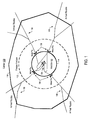
- Scoping may involve estimating the time it would take for an arrival to reach a runway 104 along some type of nominal route, and then comparing that time to a temporal window formed from the influence horizon at or outside the boundary 110 of the center airspace 100, and the inner freeze horizon 112 may be at or outside the TRACON boundary 114.
- the planning process may consider those arrivals that have estimated flying times within the scoping window. Notably, one may not always want to consider an arrival all the way back to its originating airport.
- the configurator 202 may be configured to define or the otherwise receive the definition of other types of scheduling points in addition to or in lieu of those identified above.
- the required separation may be given as a function of which legs along the route may come into a node and then go out of the node for a leading aircraft versus a trailing aircraft.
- the various combinations may be interpreted, for example, as aircraft merging, demerging or even just crossing with the possibility for defining separation for each situation occurring at the same scheduling point.
- a constraint may be imposed to restrict a final sequence of arrivals to be "close” to a nominal sequence such as the "first come first served” (FCFS) sequence in consideration of the estimated times of arrival (ETA) of each arrival at its birth node and in consideration of a route set for the arrival, which may include allowable routes to which the arrival may be assigned.
- FCFS first come first served
- the nominal sequence may be based on the fastest way for the arrival to reach a runway 104 under an assumption of "non-interference;” that is, assuming the arrival never needs to take a delay to satisfy a separation constraint (this is like assuming the arrival is the only arrival).
- this nominal FCFS sequence is approximately optimal but not always. Lack of optimality of the FCFS sequence is usually for one of two reasons. First, it could be that the arrival "load” is unbalanced, and to achieve the best result, this unbalanced load (too many arrivals wanting the same runway 104, for example) needs to be redistributed across the arrival network. Second, it could be that the FCFS sequence contains too many consecutive arrivals at a runway 104 with a higher weight class arrival leading a lower weight class trailing arrival.
- constraints include a feasible position constraint, proper ordering constraint, equivalence class constraint, arrival family constraint, general ordering constraint, same route constraint, different route constraint or the like.
- each arrival if desired
- any two consecutive arrivals assigned routes that do not share a common scheduling point may be scheduled only in FCFS order.
- the proper ordering constraint may reduce the number of cases considered by avoiding multiple consideration of identical cases, and may result in computational savings.
- a same route constraint may require that a set of arrivals all be assigned the same route (without saying in advance which route). Conversely, a different route constraint may require that a set of arrivals all be assigned different routes.
- the arrival planner may be configured by the configurator 202 according to the one or more parameters (e.g., objective function, arrival network, one or more constraints).
- the arrival planner may further receive one or more inputs, and determine an arrival plan for a number of arrivals from the input(s) and according to the parameter(s).
- the arrival planner 204 may be configured to receive a delay authority for each leg of the arrival network.
- the delay authority may define an allowable delay that may be taken by an arrival flying a respective leg. This delay may be some extra flying time over and above a nominal flying time for the respective leg that may also be input for one or more legs, and which in one example may be dimensioned by aircraft performance type. In one example, this delay may come in two parts, namely, an option delay and a hold delay.
- the option delay may be designated as a continuous value with a maximum upper bound limit, or as a finite set of discrete values that in one example may be given in an order from smallest to largest.
- the hold delay may be designated by the flying time of the hold along with a limit on the number of allowable holds that a given arrival may possess on a respective leg.
- the delays that may be assigned for an arrival on a specific leg may be given by various combinations of hold delay multiplied by number of holds plus an option delay.
- the arrival planner 204 being configured to determine an arrival plan may include being configured to define a route set of allowable routes for each arrival in the arrival plan to be determined.
- a route may be considered a path through the arrival network from the arrival's birth node, along a sequence of legs so that each leg is traversed in the proper direction from upstream to downstream, and which ultimately passes through exactly one allowable runway 104.
- the network may include an artificial "diversion" runway along with the associated diversion routes. This diversion may represent one of a number of examples of artificial nodes and legs that may be added to the arrival network such as by the configurator 202, where one or more of these artificial nodes may be designated as scheduling points.
- the arrival planner 204 of example implementations may address N-point planning for N > 2 since routes may be allowed to pass through any number of scheduling points so long as the route is compatible with the arrival network topology, compatible with the directionality of the legs, and as long as the route does not possess a cycle.
- the route set may define all routes that a given arrival may be allowed to fly from its birth node to an allowable runway 104.
- these points of transition may be desirable to designate these points of transition as scheduling points. This may be, in fact, the case in two-stage planning including center planning in a first stage and TRACON planning in a second stage.
- the meter fixes 106 serve as points of transition and are also designated as scheduling points.
- this type of two-stage planning may be generalized to M-stage planning for M > 2 (note that M-stage planning refers to a different aspect of arrival planning than the N-point planning discussed earlier).
- the arrival planner 204 may accomplish this M-stage planning by identifying additional sets of transition nodes lying at the boundary of other adjacent subspaces of the overall arrival airspace.
- the arrival planner may support this type of M-stage planning, which in the context of two-stage planning may include meter fixes defining this transition between the center airspace 100 and the TRACON airspace 102.
- the GARP system may function as a center planner and consider both the meter fixes and the runways 104 as scheduling points.
- the arrival planner may treat the meter fixes as "dynamic" birth nodes, and consider the runways and possibly other points within the TRACON airspace as scheduling points.
- the arrival planner 204 is configured to determine an arrival plan and is configured to iteratively construct partial sequences of arrivals, and does so utilizing a technique based on implicit enumeration or, equivalently, branch-and-bound, but best described as "restricted branch-and-bound.”
- Implicit enumeration is a technique for finding optimal solutions to optimization problems through an exhaustive (or “implicitly” exhaustive) enumeration of all feasible alternatives.
- a bounding technique is utilized to reduce the search space by eliminating or "pruning" large numbers of feasible solutions without direct examination. Suppose, for example, that a partial sequence and schedule (say the first X of Y arrivals) has been constructed.
- the arrival planner 204 may implement restricted branch-and-bound utilizing a moving window technique that may provide for additional computational savings.
- the moving window technique may include designating a window including the first X of Y arrivals and constructing a partial sequence and schedule for the X arrivals.
- the first one or more of the X arrivals in the partial sequence (corresponding to a step size Z) may be fixed, and the window may be advanced by the step size to next consider the (Z + 1) to (X + Z) arrivals. This may then continue through all arrivals to be scheduled for the arrival plan.
- this moving window technique see C.R. Brinton, An Implicit Enumeration Algorithm for Arrival Aircraft scheduling, IEEE 0-7803-0820-4/92, pp. 268-274 (Apr. 1992 ).
- the approach taken by the arrival planner 204 may be based upon the view that a complete arrival plan can be viewed as an ordered series of individual decisions involving the assignment of an arrival aircraft to a route from its route set which takes the arrival from its birth node to an allowable runway 104. Viewed this way enables each decision to be considered as:
- the STAs for this next arrival may be efficiently computed in (3) because the previously scheduled arrivals at each scheduling point along the route may have already been computed in prior scheduling steps.
- pushback may occur when the STAs at some downstream scheduling point requires a delay in excess of a maximum delay authority on the leg immediately prior to the scheduling point. In this instance, the delay may be immediately "pushed back" to one or more upstream legs having sufficient maximum delay authority. If this is not possible, then that particular route assignment may be deemed infeasible, and the arrival planner 204 may consider a different route in the same route set. If all routes are infeasible, then if provided, a diversion may take place; otherwise, the arrival planner may calculate and utilize "dynamic hold infeasibility," flag the case as infeasible and continue processing.
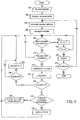
- FIG. 3 illustrates a flowchart including various steps in a method of air traffic planning according to example implementations of the present disclosure.
- the method includes defining or receiving definition of an arrival network of nodes and legs therebetween.
- Each leg represents a segment traversed by an aircraft from an upstream one of the nodes to a downstream one of the nodes, with a plurality of the nodes being designated as scheduling points where one or more constraints are enforceable.
- the method also includes defining for each of a plurality of aircraft, a route set including a plurality of allowed routes each of which includes a plurality of legs between an arbitrary N scheduling points, as shown in block 302.
- each of the allowed routes may include a plurality of legs between N > 2 scheduling points.
- the N scheduling points may include a runway, and at least two additional scheduling points between a birth node and the runway.
- the method may include receiving one or more inputs, such as those described above.
- the method may include performing an overall initialization and check, as shown in block 402. This may include initialization of an objective function (e.g., minimized total scheduled arrival delay), and/or one or more constraints according to which the process may be configured to determine an arrival plan, such as any one or more of the constraints described above.
- an objective function e.g., minimized total scheduled arrival delay
- constraints e.g., minimized total scheduled arrival delay
- the branch-and-bound may include determining if a next strategy S exists at depth D.
- the strategy S that may extend A from depth D to D + 1 may be evaluated for feasibility.
- the strategy S may be evaluated in the context of pre-existing ordered set A, where arrival a is not already in A. The evaluation may test for feasibility with respect to separation constraints and/or one or more other constraints such as those described above. One such other constraint may require that an updated A be close to FCFS.
- a new potential A (denoted A) may be constructed by the union of A and S, and it may be evaluated, as shown in blocks 412, 414.
- the process may continue by determining if A represents the complete subset of arrivals in the current window; and if not, if A is worth continued processing, as shown in blocks 416, 418. In an instance in which A is complete, a determination may be made as to whether A represents the best current A (denoted A*) based on the objective function (e.g., minimized total scheduled arrival delay), as shown in block 420. If yes, the best A may be updated to A, as shown in block 422; otherwise, if no, the process may continue with the next strategy S at depth D (see block 408 et seq.).
- the depth may be decremented and the determination performed again for the current depth for so long as the depth is greater than or equal to zero.
- A may be updated and a new window initialized (if one exists), and the process repeated for the new, now current window (see block 404 et seq.).
- FIG. 6 is an abstracted version of the scenario of FIG. 5 , but in a manner more easily recognized as a partial arrival route network as described above.
- the eight nodes at the top are the meter fixes, and the three nodes at the bottom are the runways. Besides the meter fixes and the runways, there are illustrated an additional ten merge and demerge points. If this network is visualized from the standpoint of a center planner, it may be realized that there are birth nodes upstream from the meter fixes and additional network components connecting the birth nodes to the eight meter fixes. Assuming, also, that there are no other scheduling points in the center airspace, the center planning problem may consider all of the eight meter fixes, three runways and ten merge / demerge points interior to the TRACON as scheduling points.
- a route going from a birth node through RAMMS to RW35L may involve a minimum of six scheduling points (one meter fix, one runway and four additional merge / demerge scheduling points on the route and strictly between the meter fix and the runway).
- N-point planning for N at least as large as six.
- FIG. 7 in which the network of FIGS. 5 and 6 may be simplified in a manner consistent with a center planning representation that may be used for a 2-point plan.
- the network of FIG. 7 ignores the numerous merge / demerge scheduling points, and may therefore be seen as greatly simplified relative to FIGS. 3 and 4 .
- This type of airspace geometry may be a good example of how a complex geometry may benefit from a capability for N-point planning with N > 2.
- one or more apparatuses may be provided that are configured to function as or otherwise implement the systems, subsystems and respective elements shown and described herein.
- the respective apparatuses may be connected to or otherwise in communication with one another in a number of different manners, such as directly or indirectly via a wireline or wireless network or the like.
- the processor is generally any piece of hardware that is capable of processing information such as, for example, data, computer-readable program code, instructions or the like (generally "computer programs," e.g., software, firmware, etc.), and/or other suitable electronic information. More particularly, for example, the processor may be configured to execute computer programs, which may be stored onboard the processor or otherwise stored in the memory (of the same or another apparatus).
- the processor may be a number of processors, a multi-processor core or some other type of processor, depending on the particular implementation. Further, the processor may be implemented using a number of heterogeneous processor systems in which a main processor is present with one or more secondary processors on a single chip.
- the memory is generally any piece of hardware that is capable of storing information such as, for example, data, computer programs and/or other suitable information either on a temporary basis and/or a permanent basis.
- the memory may include volatile and/or non-volatile memory, and may be fixed or removable. Examples of suitable memory include random access memory (RAM), read-only memory (ROM), a hard drive, a flash memory, a thumb drive, a removable computer diskette, an optical disk, a magnetic tape or some combination of the above.
- Optical disks may include compact disk - read only memory (CD-ROM), compact disk - read/write (CD-R/W), DVD or the like.
- the processor may also be connected to one or more interfaces for displaying, transmitting and/or receiving information.
- the interfaces may include a communications interface (e.g., communications unit) and/or one or more user interfaces.
- the communications interface may be configured to transmit and/or receive information, such as to and/or from other apparatus(es), network(s) or the like.
- the communications interface may be configured to transmit and/or receive information by physical (wireline) and/or wireless communications links. Examples of suitable communication interfaces include a network interface controller (NIC), wireless NIC (WNIC) or the like.
- NIC network interface controller
- WNIC wireless NIC
- the user interfaces may include a display and/or one or more user input interfaces (e.g., input/output unit).
- the display may be configured to present or otherwise display information to a user, suitable examples of which include a liquid crystal display (LCD), light-emitting diode display (LED), plasma display panel (PDP) or the like.
- the user input interfaces may be wireline or wireless, and may be configured to receive information from a user into the apparatus, such as for processing, storage and/or display. Suitable examples of user input interfaces include a microphone, image or video capture device, keyboard or keypad, joystick, touch-sensitive surface (separate from or integrated into a touchscreen), biometric sensor or the like.
- the user interfaces may further include one or more interfaces for communicating with peripherals such as printers, scanners or the like.
- program code instructions may be stored in memory, and executed by a processor, to implement functions of the systems, subsystems and their respective elements described herein.
- any suitable program code instructions may be loaded onto a computer or other programmable apparatus from a computer-readable storage medium to produce a particular machine, such that the particular machine becomes a means for implementing the functions specified herein.
- These program code instructions may also be stored in a computer-readable storage medium that can direct a computer, a processor or other programmable apparatus to function in a particular manner to thereby generate a particular machine or particular article of manufacture.
- the instructions stored in the computer-readable storage medium may produce an article of manufacture, where the article of manufacture becomes a means for implementing functions described herein.
- the program code instructions may be retrieved from a computer-readable storage medium and loaded into a computer, processor or other programmable apparatus to configure the computer, processor or other programmable apparatus to execute operations to be performed on or by the computer, processor or other programmable apparatus.
- Retrieval, loading and execution of the program code instructions may be performed sequentially such that one instruction is retrieved, loaded and executed at a time. In some example implementations, retrieval, loading and/or execution may be performed in parallel such that multiple instructions are retrieved, loaded, and/or executed together. Execution of the program code instructions may produce a computer-implemented process such that the instructions executed by the computer, processor or other programmable apparatus provide operations for implementing functions described herein.
- Execution of instructions by a processor, or storage of instructions in a computer-readable storage medium supports combinations of operations for performing the specified functions. It will also be understood that one or more functions, and combinations of functions, may be implemented by special purpose hardware-based computer systems and/or processors which perform the specified functions, or combinations of special purpose hardware and program code instructions.
- example implementations may provide a wide array of new capabilities from a number of points of view, including from a modeling and representational point of view.
- example implementations may be configurable (e.g., by way of the input network topology and designated scheduling points) to represent a variety of different arrival planning functions.
- example implementations can be configured as a center planner (sometimes termed CARP) where center planning functions may be performed, and/or as a TRACON planner (sometimes termed TARP) where the focus may be on planning arrivals from (only) meter fixes 106 to runways 104.
- CARP center planner
- TRACON planner sometimes termed TRACON planner
- Example implementations may be configurable for N-point planning for an arbitrary N.
- example implementations may utilize routes and route sets, and enable optimal or nearly optimal sequencing and scheduling even when routes have several (specifically, more than two) scheduling points at nodes along the route. Among other considerations, this may permit a much more explicit consideration of complex airspace geometry such as in the case of a TRACON airspace 102.
- Example implementations may address many different kinds of scheduling points including, for example, simple separation, merges, demerges, crossing routes, wake vortex style separation and the like. It may even be possible to define different separation values at the same scheduling point depending upon whether or not two consecutive arrivals are trailing/leading, merging, demerging or just crossing.
- Example implementations may address runway 104 (or other scheduling point) dependencies.
- an arrival network may be defined to include artificial scheduling points to enforce "staggering" arrivals between closely spaced parallel runways.
- a variety of possibilities may be addressed through the network topology and in recognition of the fact that artificial nodes, legs, scheduling points or the like may be created to accomplish certain types of constraints.
- Example implementations may address diversions in order to guarantee the existence of feasible sequencing and scheduling solutions; and/or it may address meter fix re-assignment in center planning. It may also be configured to allow "dynamic hold infeasibilities" which are, in the absence of diversions, another mechanism that may be used to guarantee that every problem has a feasible solution.
- Example implementations may also be integratable into fast-time simulation environments such as the Trajectory Analysis and Modeling Environment (TAME), Monte-Carlo Schedule Effectiveness Model (McSEM) or a standalone test environment.
- TAME Trajectory Analysis and Modeling Environment
- McSEM Monte-Carlo Schedule Effectiveness Model
- Example implementations may also be integratable into fast-time simulation environments such as the Trajectory Analysis and Modeling Environment (TAME), Monte-Carlo Schedule Effectiveness Model (McSEM) or a standalone test environment.
- TAME Trajectory Analysis and Modeling Environment
- McSEM Monte-Carlo Schedule Effectiveness Model
- Example implementations may include a special simplified mode in which two-point planners such as NASA's Traffic Management Advisor (TMA) may be extended to cases involving N-point planning with N > 2. This may be used to create a good initial feasible solution for the branch and bound.
- TMA Traffic Management Advisor
- Example implementations may also be utilized for M-stage planning such as, for example, single-stage two-point planning, single-stage N-point planning with N > 2, two-stage planning with or without feedback and the like.
- example implementations may form the basis for a departure planner or even a combined arrival and departure planner.
Landscapes
- Business, Economics & Management (AREA)
- Engineering & Computer Science (AREA)
- Human Resources & Organizations (AREA)
- General Physics & Mathematics (AREA)
- Physics & Mathematics (AREA)
- Strategic Management (AREA)
- Economics (AREA)
- Aviation & Aerospace Engineering (AREA)
- Tourism & Hospitality (AREA)
- Entrepreneurship & Innovation (AREA)
- General Business, Economics & Management (AREA)
- Theoretical Computer Science (AREA)
- Marketing (AREA)
- Operations Research (AREA)
- Educational Administration (AREA)
- Game Theory and Decision Science (AREA)
- Quality & Reliability (AREA)
- Development Economics (AREA)
- Health & Medical Sciences (AREA)
- General Health & Medical Sciences (AREA)
- Primary Health Care (AREA)
- Traffic Control Systems (AREA)
- Radar, Positioning & Navigation (AREA)
- Remote Sensing (AREA)
Claims (10)
- Verfahren zur Luftverkehrsplanung, wobei das Verfahren aufweist:Definieren oder Empfanden einer Definition eines Ankunfts-Netzwerks für ein Luftraum-Zentrum mit einem darin liegenden Terminal Radar Approach Control (TRACON) Luftraum, wobei sich das Ankunfts-Netzwerk aus Knoten und dazwischenliegenden Strecken zusammensetzt, wobei jede Strecke sich als ein von einem Luftfahrzeug durchquertes Segment von einem stromaufwärtsliegenden Knoten zu einem stromabwärtsliegenden Knoten darstellt, wobei eine Vielzahl der Knoten als Planungsknoten bezeichnet werden, bei denen eine oder mehrere Bedingungen durchzusetzten sind, wobei die ein oder die mehreren Bedingungen eine zeitliche Trennungs-Bedingung zwischen aufeinanderfolgenden Luftfahrzeugen an jedem Planungspunkt umfassen;Definieren eines Routen-Satzes für jedes der Vielzahl von Luftfahrzeugen, welcher Routen-Satz eine Vielzahl von erlaubten Routen umfasst, deren jede eine Vielzahl von Strecken zwischen einer beliebigen Anzahl N von Planungspunkten des Ankunfts-Netzwerks aufweist; undBestimmen eines Plans für die Vielzahl von Luftfahrzeugen innerhalb entweder des Luftraum-Zentrums oder des TRACON Luftraums oder beiden, wobei der Plan zumindest eine Reihenfolge der Vielzahl von Luftfahrzeugen und eine jedem Luftfahrzeug zugeordnete Route aufweist, wobei der Plan basierend auf dem Routen-Satz für jedes der Vielzahl von Luftfahrzeugen bestimmt wird und in Übereinstimmung mit dem Ankunfts-Netzwerk und den Planungspunkten und deren Bedingungen, wobei die zugeordnete Route für jedes Luftfahrzeug eine der erlaubten Routen in dem Routen-Satz des jeweiligen Luftfahrzeugs ist, wobei jede der erlaubten Routen eine Vielzahl von Strecken zwischen N > 2 Planungspunkten aufweist,wobei das Bestimmen des Plans ein iteratives Erstellen von Teil-Reihenfolgen bis zur Reihenfolge der Vielzahl von Luftfahrzeugen umfasst, wobei die Teil-Reihenfolgen aus alternativen Reihenfolgen erstellt werden, die einem Begrenzungs-Argument entsprechend einer Branch- und Bound-Technik unterzogen sind.
- Verfahren nach Anspruch 1, wobei die N Planungspunkte eine Landebahn umfassen, und zumindest zwei zusätzliche Planungspunkte zwischen einem Geburtsknoten und der Landebahn.
- Verfahren nach Anspruch 1, wobei der TRACON Luftraum einen Flugplatz mit einer Landebahn umfasst, und
wobei die N Planungspunkte einen Meter Fix zwischen dem Luftraum-Zentrum und dem TRACON Luftraum umfassen, und die Landebahn und zumindest einen zusätzlichen Planungspunkt zwischen dem Meter Fix und der Landebahn. - Verfahren nach Anspruch 1, wobei der TRACON Luftraum einen Flugplatz mit einer Landebahn aufweist, und
wobei die N Planungspunkte einen Meter Fix zwischen dem Luftraum-Zentrum und dem TRACON Luftraum umfassen und die Landebahn und zumindest einen zusätzlichen Planungspunkt zwischen einem Geburtsknoten außerhalb des TRACON Luftraums und dem Meter Fix. - Verfahren nach Anspruch 1, wobei das Zentrum oder der TRACON Luftraum ein TRACON Luftraum mit dem Flugplatz ist, wobei der Flugplatz eine Landebahn aufweist, und
wobei die N Planungspunkte die Landebahn und zumindest zwei zusätzliche Planungspunkte zwischen einem Meter Fix an der Grenze des TRACON Luftraums und der Landebahn umfassen. - Verfahren nach Anspruch 1, wobei das Ankunfts-Netzwerk für einen Luftraum mit M > 2 Teilräumen definiert ist, die das Luftraum-Zentrum und den TRACON Luftraum aufweisen, und wobei der Plan einen Plan für jeden und mehrere der M Teilräume aufweist.
- Verfahren nach Anspruch 1, wobei die Teil-Reihenfolgen ferner gebildet werden nach einer Bedingung, die die alternativen Reihenfolgen mit einer nominalen Reihenfolge in Beziehung setzen.
- Verfahren nach Anspruch 1, wobei der Plan weiter bestimmt wird entsprechend einem oder mehreren anderen Bedingungen, wobei die eine oder die mehreren anderen Bedingungen eine oder mehrere machbare Positions-Bedingung, eine geeignete Reihenfolgen-Bedingung, eine Äquivalenzklassen-Bedingung, eine Ankunftsfamilien-Bedingung, eine allgemeine Reihenfolge-Bedingung, eine gleiche Routen-Bedingung oder unterschiedliche Routen-Bedingungen umfassen.
- Vorrichtung mit einem Prozessor und einem Speicher, der computerlesbare Programmcodeabschnitte speichert, die bei Ausführung durch den Prozessor die Vorrichtung dazu veranlassen, das Verfahren nach einem der Ansprüche 1 - 8 auszuführen.
- Computerlesbares Speichermedium mit computerlesbaren Programmcodeabschnitten, die darin gespeichert sind und die bei Ausführung durch einen Prozessor die Vorrichtung veranlassen, das Verfahren nach einem der Ansprüche 1 - 8 auszuführen.
Applications Claiming Priority (2)
| Application Number | Priority Date | Filing Date | Title |
|---|---|---|---|
| US201261671138P | 2012-07-13 | 2012-07-13 | |
| US13/744,918 US10269251B2 (en) | 2012-07-13 | 2013-01-18 | Generalized arrival planning |
Publications (2)
| Publication Number | Publication Date |
|---|---|
| EP2685441A1 EP2685441A1 (de) | 2014-01-15 |
| EP2685441B1 true EP2685441B1 (de) | 2016-02-03 |
Family
ID=48672370
Family Applications (1)
| Application Number | Title | Priority Date | Filing Date |
|---|---|---|---|
| EP13170889.3A Active EP2685441B1 (de) | 2012-07-13 | 2013-06-06 | Verallgemeinerter Ankunftsplaner |
Country Status (2)
| Country | Link |
|---|---|
| US (1) | US10269251B2 (de) |
| EP (1) | EP2685441B1 (de) |
Families Citing this family (11)
| Publication number | Priority date | Publication date | Assignee | Title |
|---|---|---|---|---|
| CN103854518B (zh) * | 2014-03-17 | 2015-12-09 | 南京航空航天大学 | 一种航路网络节点时空流量的计算方法 |
| US9262930B2 (en) * | 2014-03-18 | 2016-02-16 | The Boeing Company | Arrival Traffic scheduling system incorporating equipage-dependent in-trial spacing |
| FR3030853B1 (fr) * | 2014-12-19 | 2017-01-27 | Thales Sa | Procede et dispositif de calcul d'un graphe conjugue de navigation aeroportuaire, procede et systeme associes de generation d'une trajectoire de roulage au sol d'un aeronef, produit programme d'ordinateur associe |
| RU2616106C2 (ru) * | 2015-09-18 | 2017-04-12 | Борис Георгиевич Кухаренко | Способ определения посадочных траекторий летательных аппаратов, соответствующих одной взлетно-посадочной полосе |
| US9997080B1 (en) * | 2015-10-06 | 2018-06-12 | Zipline International Inc. | Decentralized air traffic management system for unmanned aerial vehicles |
| CN105355091B (zh) * | 2015-10-22 | 2017-11-24 | 北京航空航天大学 | 终端区流量调控方法 |
| RU2651342C1 (ru) * | 2017-01-16 | 2018-04-19 | Мария Олеговна Солнцева-Чалей | Способ последовательного определения усредненных траекторий движения материальных объектов в трехмерном пространстве |
| EP4006876A1 (de) | 2020-11-25 | 2022-06-01 | The Boeing Company | Lauftraumverwaltungssysteme und -verfahren |
| EP4006877B1 (de) | 2020-11-25 | 2025-11-05 | The Boeing Company | Systeme und verfahren zur verwaltung der ankunft von flugzeugen |
| US12481527B2 (en) * | 2021-04-01 | 2025-11-25 | The Boeing Company | Resource teaming optimization for resource planning |
| US20230186206A1 (en) * | 2021-12-15 | 2023-06-15 | International Business Machines Corporation | Ordering flight takeoffs and landings based on passenger complaint propensities |
Family Cites Families (17)
| Publication number | Priority date | Publication date | Assignee | Title |
|---|---|---|---|---|
| US3623090A (en) * | 1968-11-15 | 1971-11-23 | Butler National Corp | Air traffic control system |
| US5959574A (en) * | 1993-12-21 | 1999-09-28 | Colorado State University Research Foundation | Method and system for tracking multiple regional objects by multi-dimensional relaxation |
| US6314362B1 (en) * | 1999-02-02 | 2001-11-06 | The United States Of America As Represented By The Administrator Of The National Aeronautics And Space Administration | Method and system for an automated tool for en route traffic controllers |
| US6789011B2 (en) * | 1999-04-16 | 2004-09-07 | R. Michael Baiada | Method and system for allocating aircraft arrival/departure slot times |
| US6721714B1 (en) * | 1999-04-16 | 2004-04-13 | R. Michael Baiada | Method and system for tactical airline management |
| US6463383B1 (en) * | 1999-04-16 | 2002-10-08 | R. Michael Baiada | Method and system for aircraft flow management by airlines/aviation authorities |
| US6393358B1 (en) * | 1999-07-30 | 2002-05-21 | The United States Of America As Represented By The Administrator Of The National Aeronautics And Space Administration | En route spacing system and method |
| US6704692B1 (en) * | 1999-10-25 | 2004-03-09 | The Boeing Company | Method and system for tracking multiple objects |
| US7333887B2 (en) * | 2003-08-08 | 2008-02-19 | Baiada R Michael | Method and system for tactical gate management by aviation entities |
| US6873903B2 (en) * | 2001-09-07 | 2005-03-29 | R. Michael Baiada | Method and system for tracking and prediction of aircraft trajectories |
| US7248963B2 (en) * | 2003-03-25 | 2007-07-24 | Baiada R Michael | Method and system for aircraft flow management |
| US20050071206A1 (en) * | 2003-04-30 | 2005-03-31 | The Boeing Company | System, method and computer program product for schedule recovery |
| US20060095156A1 (en) * | 2004-10-20 | 2006-05-04 | Baiada R M | Method and system for tactical airline system management |
| DE102006006972A1 (de) | 2006-02-14 | 2007-08-30 | Deutsches Zentrum für Luft- und Raumfahrt e.V. | Führungseinrichtung und Verfahren zur Anflugführung von Luftfahrzeugen |
| US7876259B2 (en) * | 2006-11-06 | 2011-01-25 | Leonard Schuchman | Automatic dependent surveillance system secure ADS-S |
| US9159240B2 (en) | 2009-03-17 | 2015-10-13 | The Boeing Company | Methods and systems for tailored allocation of arrivals |
| US8700298B2 (en) | 2010-09-30 | 2014-04-15 | The Boeing Company | Tailored arrivals allocation system clearance generator |
-
2013
- 2013-01-18 US US13/744,918 patent/US10269251B2/en active Active
- 2013-06-06 EP EP13170889.3A patent/EP2685441B1/de active Active
Also Published As
| Publication number | Publication date |
|---|---|
| EP2685441A1 (de) | 2014-01-15 |
| US10269251B2 (en) | 2019-04-23 |
| US20140019033A1 (en) | 2014-01-16 |
Similar Documents
| Publication | Publication Date | Title |
|---|---|---|
| EP2685441B1 (de) | Verallgemeinerter Ankunftsplaner | |
| Ruiz et al. | Strategic de-confliction in the presence of a large number of 4D trajectories using a causal modeling approach | |
| Erzberger et al. | Automated conflict resolution, arrival management, and weather avoidance for air traffic management | |
| Atkin et al. | Hybrid metaheuristics to aid runway scheduling at London Heathrow airport | |
| US9741253B2 (en) | Distributed air traffic flow management | |
| Diepen et al. | Finding a robust assignment of flights to gates at Amsterdam Airport Schiphol | |
| CN112216151B (zh) | 空中交通四维航迹调控决策方法 | |
| Pellegrini et al. | Metaheuristic algorithms for the simultaneous slot allocation problem | |
| CN106781708B (zh) | 一种终端管制区的航线规划方法及装置 | |
| Eun et al. | Optimal arrival flight sequencing and scheduling using discrete airborne delays | |
| US10423904B2 (en) | Workforce optimization by improved provision of job performance plan | |
| CA3108711A1 (en) | Systems and methods for providing en route rerouting | |
| CN114518771B (zh) | 一种多无人机路径规划方法、装置及相关组件 | |
| Erzberger et al. | Design principles and algorithms for air traffic arrival scheduling | |
| US20180274929A1 (en) | Moving body management system and method | |
| CN113807790A (zh) | 一种机器人的路径规划方法、装置、电子设备和存储介质 | |
| CN119851514A (zh) | 基于低空空域网格的飞行计划冲突检测方法、装置、设备 | |
| Cecen | Multi-objective TMA management optimization using the point merge system | |
| Cao et al. | Greedy-heuristic-aided mixed-integer linear programming approach for arrival scheduling | |
| Kim et al. | Drone delivery problem with multi-flight level: Machine learning based solution approach | |
| Hu et al. | Multiairport capacity management: Genetic algorithm with receding horizon | |
| Baspinar et al. | Large scale data-driven delay distribution models of european air traffic flow network | |
| Liang et al. | Sequence assignment model for the flight conflict resolution problem | |
| Diepen et al. | Using column generation for gate planning at Amsterdam Airport Schiphol | |
| Mirjafari et al. | An integrated model of aircraft routing and crew rostering problems to develop fair schedule for the crew under COVID-19 condition |
Legal Events
| Date | Code | Title | Description |
|---|---|---|---|
| PUAI | Public reference made under article 153(3) epc to a published international application that has entered the european phase |
Free format text: ORIGINAL CODE: 0009012 |
|
| AK | Designated contracting states |
Kind code of ref document: A1 Designated state(s): AL AT BE BG CH CY CZ DE DK EE ES FI FR GB GR HR HU IE IS IT LI LT LU LV MC MK MT NL NO PL PT RO RS SE SI SK SM TR |
|
| AX | Request for extension of the european patent |
Extension state: BA ME |
|
| 17P | Request for examination filed |
Effective date: 20140624 |
|
| RBV | Designated contracting states (corrected) |
Designated state(s): AL AT BE BG CH CY CZ DE DK EE ES FI FR GB GR HR HU IE IS IT LI LT LU LV MC MK MT NL NO PL PT RO RS SE SI SK SM TR |
|
| 17Q | First examination report despatched |
Effective date: 20140801 |
|
| GRAP | Despatch of communication of intention to grant a patent |
Free format text: ORIGINAL CODE: EPIDOSNIGR1 |
|
| INTG | Intention to grant announced |
Effective date: 20150716 |
|
| GRAS | Grant fee paid |
Free format text: ORIGINAL CODE: EPIDOSNIGR3 |
|
| GRAA | (expected) grant |
Free format text: ORIGINAL CODE: 0009210 |
|
| AK | Designated contracting states |
Kind code of ref document: B1 Designated state(s): AL AT BE BG CH CY CZ DE DK EE ES FI FR GB GR HR HU IE IS IT LI LT LU LV MC MK MT NL NO PL PT RO RS SE SI SK SM TR |
|
| REG | Reference to a national code |
Ref country code: GB Ref legal event code: FG4D |
|
| REG | Reference to a national code |
Ref country code: AT Ref legal event code: REF Ref document number: 774015 Country of ref document: AT Kind code of ref document: T Effective date: 20160215 Ref country code: CH Ref legal event code: EP |
|
| REG | Reference to a national code |
Ref country code: IE Ref legal event code: FG4D |
|
| REG | Reference to a national code |
Ref country code: DE Ref legal event code: R096 Ref document number: 602013004857 Country of ref document: DE |
|
| REG | Reference to a national code |
Ref country code: LT Ref legal event code: MG4D Ref country code: NL Ref legal event code: MP Effective date: 20160203 |
|
| REG | Reference to a national code |
Ref country code: AT Ref legal event code: MK05 Ref document number: 774015 Country of ref document: AT Kind code of ref document: T Effective date: 20160203 |
|
| REG | Reference to a national code |
Ref country code: FR Ref legal event code: PLFP Year of fee payment: 4 |
|
| PG25 | Lapsed in a contracting state [announced via postgrant information from national office to epo] |
Ref country code: HR Free format text: LAPSE BECAUSE OF FAILURE TO SUBMIT A TRANSLATION OF THE DESCRIPTION OR TO PAY THE FEE WITHIN THE PRESCRIBED TIME-LIMIT Effective date: 20160203 Ref country code: FI Free format text: LAPSE BECAUSE OF FAILURE TO SUBMIT A TRANSLATION OF THE DESCRIPTION OR TO PAY THE FEE WITHIN THE PRESCRIBED TIME-LIMIT Effective date: 20160203 Ref country code: NO Free format text: LAPSE BECAUSE OF FAILURE TO SUBMIT A TRANSLATION OF THE DESCRIPTION OR TO PAY THE FEE WITHIN THE PRESCRIBED TIME-LIMIT Effective date: 20160503 Ref country code: ES Free format text: LAPSE BECAUSE OF FAILURE TO SUBMIT A TRANSLATION OF THE DESCRIPTION OR TO PAY THE FEE WITHIN THE PRESCRIBED TIME-LIMIT Effective date: 20160203 Ref country code: GR Free format text: LAPSE BECAUSE OF FAILURE TO SUBMIT A TRANSLATION OF THE DESCRIPTION OR TO PAY THE FEE WITHIN THE PRESCRIBED TIME-LIMIT Effective date: 20160504 Ref country code: IT Free format text: LAPSE BECAUSE OF FAILURE TO SUBMIT A TRANSLATION OF THE DESCRIPTION OR TO PAY THE FEE WITHIN THE PRESCRIBED TIME-LIMIT Effective date: 20160203 |
|
| PG25 | Lapsed in a contracting state [announced via postgrant information from national office to epo] |
Ref country code: SE Free format text: LAPSE BECAUSE OF FAILURE TO SUBMIT A TRANSLATION OF THE DESCRIPTION OR TO PAY THE FEE WITHIN THE PRESCRIBED TIME-LIMIT Effective date: 20160203 Ref country code: AT Free format text: LAPSE BECAUSE OF FAILURE TO SUBMIT A TRANSLATION OF THE DESCRIPTION OR TO PAY THE FEE WITHIN THE PRESCRIBED TIME-LIMIT Effective date: 20160203 Ref country code: RS Free format text: LAPSE BECAUSE OF FAILURE TO SUBMIT A TRANSLATION OF THE DESCRIPTION OR TO PAY THE FEE WITHIN THE PRESCRIBED TIME-LIMIT Effective date: 20160203 Ref country code: PL Free format text: LAPSE BECAUSE OF FAILURE TO SUBMIT A TRANSLATION OF THE DESCRIPTION OR TO PAY THE FEE WITHIN THE PRESCRIBED TIME-LIMIT Effective date: 20160203 Ref country code: IS Free format text: LAPSE BECAUSE OF FAILURE TO SUBMIT A TRANSLATION OF THE DESCRIPTION OR TO PAY THE FEE WITHIN THE PRESCRIBED TIME-LIMIT Effective date: 20160603 Ref country code: NL Free format text: LAPSE BECAUSE OF FAILURE TO SUBMIT A TRANSLATION OF THE DESCRIPTION OR TO PAY THE FEE WITHIN THE PRESCRIBED TIME-LIMIT Effective date: 20160203 Ref country code: PT Free format text: LAPSE BECAUSE OF FAILURE TO SUBMIT A TRANSLATION OF THE DESCRIPTION OR TO PAY THE FEE WITHIN THE PRESCRIBED TIME-LIMIT Effective date: 20160603 Ref country code: LV Free format text: LAPSE BECAUSE OF FAILURE TO SUBMIT A TRANSLATION OF THE DESCRIPTION OR TO PAY THE FEE WITHIN THE PRESCRIBED TIME-LIMIT Effective date: 20160203 Ref country code: LT Free format text: LAPSE BECAUSE OF FAILURE TO SUBMIT A TRANSLATION OF THE DESCRIPTION OR TO PAY THE FEE WITHIN THE PRESCRIBED TIME-LIMIT Effective date: 20160203 |
|
| PG25 | Lapsed in a contracting state [announced via postgrant information from national office to epo] |
Ref country code: DK Free format text: LAPSE BECAUSE OF FAILURE TO SUBMIT A TRANSLATION OF THE DESCRIPTION OR TO PAY THE FEE WITHIN THE PRESCRIBED TIME-LIMIT Effective date: 20160203 Ref country code: EE Free format text: LAPSE BECAUSE OF FAILURE TO SUBMIT A TRANSLATION OF THE DESCRIPTION OR TO PAY THE FEE WITHIN THE PRESCRIBED TIME-LIMIT Effective date: 20160203 |
|
| REG | Reference to a national code |
Ref country code: DE Ref legal event code: R097 Ref document number: 602013004857 Country of ref document: DE |
|
| PG25 | Lapsed in a contracting state [announced via postgrant information from national office to epo] |
Ref country code: CZ Free format text: LAPSE BECAUSE OF FAILURE TO SUBMIT A TRANSLATION OF THE DESCRIPTION OR TO PAY THE FEE WITHIN THE PRESCRIBED TIME-LIMIT Effective date: 20160203 Ref country code: SK Free format text: LAPSE BECAUSE OF FAILURE TO SUBMIT A TRANSLATION OF THE DESCRIPTION OR TO PAY THE FEE WITHIN THE PRESCRIBED TIME-LIMIT Effective date: 20160203 Ref country code: SM Free format text: LAPSE BECAUSE OF FAILURE TO SUBMIT A TRANSLATION OF THE DESCRIPTION OR TO PAY THE FEE WITHIN THE PRESCRIBED TIME-LIMIT Effective date: 20160203 Ref country code: RO Free format text: LAPSE BECAUSE OF FAILURE TO SUBMIT A TRANSLATION OF THE DESCRIPTION OR TO PAY THE FEE WITHIN THE PRESCRIBED TIME-LIMIT Effective date: 20160203 |
|
| PLBE | No opposition filed within time limit |
Free format text: ORIGINAL CODE: 0009261 |
|
| STAA | Information on the status of an ep patent application or granted ep patent |
Free format text: STATUS: NO OPPOSITION FILED WITHIN TIME LIMIT |
|
| PG25 | Lapsed in a contracting state [announced via postgrant information from national office to epo] |
Ref country code: BE Free format text: LAPSE BECAUSE OF FAILURE TO SUBMIT A TRANSLATION OF THE DESCRIPTION OR TO PAY THE FEE WITHIN THE PRESCRIBED TIME-LIMIT Effective date: 20160203 |
|
| 26N | No opposition filed |
Effective date: 20161104 |
|
| PG25 | Lapsed in a contracting state [announced via postgrant information from national office to epo] |
Ref country code: MC Free format text: LAPSE BECAUSE OF FAILURE TO SUBMIT A TRANSLATION OF THE DESCRIPTION OR TO PAY THE FEE WITHIN THE PRESCRIBED TIME-LIMIT Effective date: 20160203 |
|
| REG | Reference to a national code |
Ref country code: CH Ref legal event code: PL |
|
| PG25 | Lapsed in a contracting state [announced via postgrant information from national office to epo] |
Ref country code: SI Free format text: LAPSE BECAUSE OF FAILURE TO SUBMIT A TRANSLATION OF THE DESCRIPTION OR TO PAY THE FEE WITHIN THE PRESCRIBED TIME-LIMIT Effective date: 20160203 Ref country code: BG Free format text: LAPSE BECAUSE OF FAILURE TO SUBMIT A TRANSLATION OF THE DESCRIPTION OR TO PAY THE FEE WITHIN THE PRESCRIBED TIME-LIMIT Effective date: 20160503 |
|
| REG | Reference to a national code |
Ref country code: IE Ref legal event code: MM4A |
|
| PG25 | Lapsed in a contracting state [announced via postgrant information from national office to epo] |
Ref country code: LI Free format text: LAPSE BECAUSE OF NON-PAYMENT OF DUE FEES Effective date: 20160630 Ref country code: CH Free format text: LAPSE BECAUSE OF NON-PAYMENT OF DUE FEES Effective date: 20160630 |
|
| PG25 | Lapsed in a contracting state [announced via postgrant information from national office to epo] |
Ref country code: IE Free format text: LAPSE BECAUSE OF NON-PAYMENT OF DUE FEES Effective date: 20160606 |
|
| REG | Reference to a national code |
Ref country code: FR Ref legal event code: PLFP Year of fee payment: 5 |
|
| PG25 | Lapsed in a contracting state [announced via postgrant information from national office to epo] |
Ref country code: HU Free format text: LAPSE BECAUSE OF FAILURE TO SUBMIT A TRANSLATION OF THE DESCRIPTION OR TO PAY THE FEE WITHIN THE PRESCRIBED TIME-LIMIT; INVALID AB INITIO Effective date: 20130606 Ref country code: CY Free format text: LAPSE BECAUSE OF FAILURE TO SUBMIT A TRANSLATION OF THE DESCRIPTION OR TO PAY THE FEE WITHIN THE PRESCRIBED TIME-LIMIT Effective date: 20160203 |
|
| REG | Reference to a national code |
Ref country code: FR Ref legal event code: PLFP Year of fee payment: 6 |
|
| PG25 | Lapsed in a contracting state [announced via postgrant information from national office to epo] |
Ref country code: MK Free format text: LAPSE BECAUSE OF FAILURE TO SUBMIT A TRANSLATION OF THE DESCRIPTION OR TO PAY THE FEE WITHIN THE PRESCRIBED TIME-LIMIT Effective date: 20160203 Ref country code: TR Free format text: LAPSE BECAUSE OF FAILURE TO SUBMIT A TRANSLATION OF THE DESCRIPTION OR TO PAY THE FEE WITHIN THE PRESCRIBED TIME-LIMIT Effective date: 20160203 Ref country code: MT Free format text: LAPSE BECAUSE OF NON-PAYMENT OF DUE FEES Effective date: 20160630 Ref country code: LU Free format text: LAPSE BECAUSE OF NON-PAYMENT OF DUE FEES Effective date: 20160606 |
|
| PG25 | Lapsed in a contracting state [announced via postgrant information from national office to epo] |
Ref country code: AL Free format text: LAPSE BECAUSE OF FAILURE TO SUBMIT A TRANSLATION OF THE DESCRIPTION OR TO PAY THE FEE WITHIN THE PRESCRIBED TIME-LIMIT Effective date: 20160203 |
|
| P01 | Opt-out of the competence of the unified patent court (upc) registered |
Effective date: 20230516 |
|
| PGFP | Annual fee paid to national office [announced via postgrant information from national office to epo] |
Ref country code: DE Payment date: 20250627 Year of fee payment: 13 |
|
| PGFP | Annual fee paid to national office [announced via postgrant information from national office to epo] |
Ref country code: GB Payment date: 20250627 Year of fee payment: 13 |
|
| PGFP | Annual fee paid to national office [announced via postgrant information from national office to epo] |
Ref country code: FR Payment date: 20250625 Year of fee payment: 13 |