EP2686964B1 - Dekodierverfahren, dekodiergerät und entsprechendes computerprogramprodukt - Google Patents
Dekodierverfahren, dekodiergerät und entsprechendes computerprogramprodukt Download PDFInfo
- Publication number
- EP2686964B1 EP2686964B1 EP12711602.8A EP12711602A EP2686964B1 EP 2686964 B1 EP2686964 B1 EP 2686964B1 EP 12711602 A EP12711602 A EP 12711602A EP 2686964 B1 EP2686964 B1 EP 2686964B1
- Authority
- EP
- European Patent Office
- Prior art keywords
- data
- decoding
- class
- encoded
- encoding
- Prior art date
- Legal status (The legal status is an assumption and is not a legal conclusion. Google has not performed a legal analysis and makes no representation as to the accuracy of the status listed.)
- Active
Links
Images

Classifications
-
- H—ELECTRICITY
- H03—ELECTRONIC CIRCUITRY
- H03M—CODING; DECODING; CODE CONVERSION IN GENERAL
- H03M13/00—Coding, decoding or code conversion, for error detection or error correction; Coding theory basic assumptions; Coding bounds; Error probability evaluation methods; Channel models; Simulation or testing of codes
- H03M13/29—Coding, decoding or code conversion, for error detection or error correction; Coding theory basic assumptions; Coding bounds; Error probability evaluation methods; Channel models; Simulation or testing of codes combining two or more codes or code structures, e.g. product codes, generalised product codes, concatenated codes, inner and outer codes
- H03M13/2948—Iterative decoding
-
- G—PHYSICS
- G06—COMPUTING OR CALCULATING; COUNTING
- G06F—ELECTRIC DIGITAL DATA PROCESSING
- G06F11/00—Error detection; Error correction; Monitoring
- G06F11/07—Responding to the occurrence of a fault, e.g. fault tolerance
- G06F11/08—Error detection or correction by redundancy in data representation, e.g. by using checking codes
-
- H—ELECTRICITY
- H03—ELECTRONIC CIRCUITRY
- H03M—CODING; DECODING; CODE CONVERSION IN GENERAL
- H03M13/00—Coding, decoding or code conversion, for error detection or error correction; Coding theory basic assumptions; Coding bounds; Error probability evaluation methods; Channel models; Simulation or testing of codes
- H03M13/29—Coding, decoding or code conversion, for error detection or error correction; Coding theory basic assumptions; Coding bounds; Error probability evaluation methods; Channel models; Simulation or testing of codes combining two or more codes or code structures, e.g. product codes, generalised product codes, concatenated codes, inner and outer codes
- H03M13/2957—Turbo codes and decoding
- H03M13/296—Particular turbo code structure
- H03M13/2972—Serial concatenation using convolutional component codes
-
- H—ELECTRICITY
- H03—ELECTRONIC CIRCUITRY
- H03M—CODING; DECODING; CODE CONVERSION IN GENERAL
- H03M13/00—Coding, decoding or code conversion, for error detection or error correction; Coding theory basic assumptions; Coding bounds; Error probability evaluation methods; Channel models; Simulation or testing of codes
- H03M13/35—Unequal or adaptive error protection, e.g. by providing a different level of protection according to significance of source information or by adapting the coding according to the change of transmission channel characteristics
- H03M13/356—Unequal error protection [UEP]
-
- H—ELECTRICITY
- H03—ELECTRONIC CIRCUITRY
- H03M—CODING; DECODING; CODE CONVERSION IN GENERAL
- H03M13/00—Coding, decoding or code conversion, for error detection or error correction; Coding theory basic assumptions; Coding bounds; Error probability evaluation methods; Channel models; Simulation or testing of codes
- H03M13/37—Decoding methods or techniques, not specific to the particular type of coding provided for in groups H03M13/03 - H03M13/35
- H03M13/39—Sequence estimation, i.e. using statistical methods for the reconstruction of the original codes
- H03M13/3905—Maximum a posteriori probability [MAP] decoding or approximations thereof based on trellis or lattice decoding, e.g. forward-backward algorithm, log-MAP decoding, max-log-MAP decoding
-
- H—ELECTRICITY
- H03—ELECTRONIC CIRCUITRY
- H03M—CODING; DECODING; CODE CONVERSION IN GENERAL
- H03M13/00—Coding, decoding or code conversion, for error detection or error correction; Coding theory basic assumptions; Coding bounds; Error probability evaluation methods; Channel models; Simulation or testing of codes
- H03M13/63—Joint error correction and other techniques
- H03M13/635—Error control coding in combination with rate matching
- H03M13/6362—Error control coding in combination with rate matching by puncturing
-
- H—ELECTRICITY
- H03—ELECTRONIC CIRCUITRY
- H03M—CODING; DECODING; CODE CONVERSION IN GENERAL
- H03M13/00—Coding, decoding or code conversion, for error detection or error correction; Coding theory basic assumptions; Coding bounds; Error probability evaluation methods; Channel models; Simulation or testing of codes
- H03M13/03—Error detection or forward error correction by redundancy in data representation, i.e. code words containing more digits than the source words
- H03M13/05—Error detection or forward error correction by redundancy in data representation, i.e. code words containing more digits than the source words using block codes, i.e. a predetermined number of check bits joined to a predetermined number of information bits
- H03M13/11—Error detection or forward error correction by redundancy in data representation, i.e. code words containing more digits than the source words using block codes, i.e. a predetermined number of check bits joined to a predetermined number of information bits using multiple parity bits
- H03M13/1102—Codes on graphs and decoding on graphs, e.g. low-density parity check [LDPC] codes
-
- H—ELECTRICITY
- H03—ELECTRONIC CIRCUITRY
- H03M—CODING; DECODING; CODE CONVERSION IN GENERAL
- H03M13/00—Coding, decoding or code conversion, for error detection or error correction; Coding theory basic assumptions; Coding bounds; Error probability evaluation methods; Channel models; Simulation or testing of codes
- H03M13/03—Error detection or forward error correction by redundancy in data representation, i.e. code words containing more digits than the source words
- H03M13/05—Error detection or forward error correction by redundancy in data representation, i.e. code words containing more digits than the source words using block codes, i.e. a predetermined number of check bits joined to a predetermined number of information bits
- H03M13/11—Error detection or forward error correction by redundancy in data representation, i.e. code words containing more digits than the source words using block codes, i.e. a predetermined number of check bits joined to a predetermined number of information bits using multiple parity bits
- H03M13/1102—Codes on graphs and decoding on graphs, e.g. low-density parity check [LDPC] codes
- H03M13/1191—Codes on graphs other than LDPC codes
- H03M13/1194—Repeat-accumulate [RA] codes
-
- H—ELECTRICITY
- H03—ELECTRONIC CIRCUITRY
- H03M—CODING; DECODING; CODE CONVERSION IN GENERAL
- H03M13/00—Coding, decoding or code conversion, for error detection or error correction; Coding theory basic assumptions; Coding bounds; Error probability evaluation methods; Channel models; Simulation or testing of codes
- H03M13/03—Error detection or forward error correction by redundancy in data representation, i.e. code words containing more digits than the source words
- H03M13/05—Error detection or forward error correction by redundancy in data representation, i.e. code words containing more digits than the source words using block codes, i.e. a predetermined number of check bits joined to a predetermined number of information bits
- H03M13/13—Linear codes
- H03M13/132—Algebraic geometric codes, e.g. Goppa codes
-
- H—ELECTRICITY
- H03—ELECTRONIC CIRCUITRY
- H03M—CODING; DECODING; CODE CONVERSION IN GENERAL
- H03M13/00—Coding, decoding or code conversion, for error detection or error correction; Coding theory basic assumptions; Coding bounds; Error probability evaluation methods; Channel models; Simulation or testing of codes
- H03M13/03—Error detection or forward error correction by redundancy in data representation, i.e. code words containing more digits than the source words
- H03M13/05—Error detection or forward error correction by redundancy in data representation, i.e. code words containing more digits than the source words using block codes, i.e. a predetermined number of check bits joined to a predetermined number of information bits
- H03M13/13—Linear codes
- H03M13/136—Reed-Muller [RM] codes
-
- H—ELECTRICITY
- H03—ELECTRONIC CIRCUITRY
- H03M—CODING; DECODING; CODE CONVERSION IN GENERAL
- H03M13/00—Coding, decoding or code conversion, for error detection or error correction; Coding theory basic assumptions; Coding bounds; Error probability evaluation methods; Channel models; Simulation or testing of codes
- H03M13/03—Error detection or forward error correction by redundancy in data representation, i.e. code words containing more digits than the source words
- H03M13/05—Error detection or forward error correction by redundancy in data representation, i.e. code words containing more digits than the source words using block codes, i.e. a predetermined number of check bits joined to a predetermined number of information bits
- H03M13/13—Linear codes
- H03M13/15—Cyclic codes, i.e. cyclic shifts of codewords produce other codewords, e.g. codes defined by a generator polynomial, Bose-Chaudhuri-Hocquenghem [BCH] codes
- H03M13/1505—Golay Codes
-
- H—ELECTRICITY
- H03—ELECTRONIC CIRCUITRY
- H03M—CODING; DECODING; CODE CONVERSION IN GENERAL
- H03M13/00—Coding, decoding or code conversion, for error detection or error correction; Coding theory basic assumptions; Coding bounds; Error probability evaluation methods; Channel models; Simulation or testing of codes
- H03M13/03—Error detection or forward error correction by redundancy in data representation, i.e. code words containing more digits than the source words
- H03M13/05—Error detection or forward error correction by redundancy in data representation, i.e. code words containing more digits than the source words using block codes, i.e. a predetermined number of check bits joined to a predetermined number of information bits
- H03M13/13—Linear codes
- H03M13/15—Cyclic codes, i.e. cyclic shifts of codewords produce other codewords, e.g. codes defined by a generator polynomial, Bose-Chaudhuri-Hocquenghem [BCH] codes
- H03M13/151—Cyclic codes, i.e. cyclic shifts of codewords produce other codewords, e.g. codes defined by a generator polynomial, Bose-Chaudhuri-Hocquenghem [BCH] codes using error location or error correction polynomials
- H03M13/1515—Reed-Solomon codes
-
- H—ELECTRICITY
- H03—ELECTRONIC CIRCUITRY
- H03M—CODING; DECODING; CODE CONVERSION IN GENERAL
- H03M13/00—Coding, decoding or code conversion, for error detection or error correction; Coding theory basic assumptions; Coding bounds; Error probability evaluation methods; Channel models; Simulation or testing of codes
- H03M13/03—Error detection or forward error correction by redundancy in data representation, i.e. code words containing more digits than the source words
- H03M13/05—Error detection or forward error correction by redundancy in data representation, i.e. code words containing more digits than the source words using block codes, i.e. a predetermined number of check bits joined to a predetermined number of information bits
- H03M13/13—Linear codes
- H03M13/15—Cyclic codes, i.e. cyclic shifts of codewords produce other codewords, e.g. codes defined by a generator polynomial, Bose-Chaudhuri-Hocquenghem [BCH] codes
- H03M13/151—Cyclic codes, i.e. cyclic shifts of codewords produce other codewords, e.g. codes defined by a generator polynomial, Bose-Chaudhuri-Hocquenghem [BCH] codes using error location or error correction polynomials
- H03M13/152—Bose-Chaudhuri-Hocquenghem [BCH] codes
-
- H—ELECTRICITY
- H03—ELECTRONIC CIRCUITRY
- H03M—CODING; DECODING; CODE CONVERSION IN GENERAL
- H03M13/00—Coding, decoding or code conversion, for error detection or error correction; Coding theory basic assumptions; Coding bounds; Error probability evaluation methods; Channel models; Simulation or testing of codes
- H03M13/03—Error detection or forward error correction by redundancy in data representation, i.e. code words containing more digits than the source words
- H03M13/05—Error detection or forward error correction by redundancy in data representation, i.e. code words containing more digits than the source words using block codes, i.e. a predetermined number of check bits joined to a predetermined number of information bits
- H03M13/13—Linear codes
- H03M13/19—Single error correction without using particular properties of the cyclic codes, e.g. Hamming codes, extended or generalised Hamming codes
-
- H—ELECTRICITY
- H03—ELECTRONIC CIRCUITRY
- H03M—CODING; DECODING; CODE CONVERSION IN GENERAL
- H03M13/00—Coding, decoding or code conversion, for error detection or error correction; Coding theory basic assumptions; Coding bounds; Error probability evaluation methods; Channel models; Simulation or testing of codes
- H03M13/27—Coding, decoding or code conversion, for error detection or error correction; Coding theory basic assumptions; Coding bounds; Error probability evaluation methods; Channel models; Simulation or testing of codes using interleaving techniques
-
- H—ELECTRICITY
- H03—ELECTRONIC CIRCUITRY
- H03M—CODING; DECODING; CODE CONVERSION IN GENERAL
- H03M13/00—Coding, decoding or code conversion, for error detection or error correction; Coding theory basic assumptions; Coding bounds; Error probability evaluation methods; Channel models; Simulation or testing of codes
- H03M13/29—Coding, decoding or code conversion, for error detection or error correction; Coding theory basic assumptions; Coding bounds; Error probability evaluation methods; Channel models; Simulation or testing of codes combining two or more codes or code structures, e.g. product codes, generalised product codes, concatenated codes, inner and outer codes
- H03M13/2957—Turbo codes and decoding
- H03M13/296—Particular turbo code structure
-
- H—ELECTRICITY
- H03—ELECTRONIC CIRCUITRY
- H03M—CODING; DECODING; CODE CONVERSION IN GENERAL
- H03M13/00—Coding, decoding or code conversion, for error detection or error correction; Coding theory basic assumptions; Coding bounds; Error probability evaluation methods; Channel models; Simulation or testing of codes
- H03M13/29—Coding, decoding or code conversion, for error detection or error correction; Coding theory basic assumptions; Coding bounds; Error probability evaluation methods; Channel models; Simulation or testing of codes combining two or more codes or code structures, e.g. product codes, generalised product codes, concatenated codes, inner and outer codes
- H03M13/2957—Turbo codes and decoding
- H03M13/296—Particular turbo code structure
- H03M13/2963—Turbo-block codes, i.e. turbo codes based on block codes, e.g. turbo decoding of product codes
Definitions
- the field of the invention is that of encoding digital data, for being transmitted in particular in the presence of a transmission noise, and of decoding said digital data after transmission.
- the error correction encoding is followed with a modulation for transmission, that is why generally, the modulation and coding scheme (MCS) is used to designate both the error correction encoding and the modulation.
- MCS modulation and coding scheme
- Another purpose of the present invention is to provide error correction encoding/decoding methods and devices which require fewer transmission rates than the methods and devices of prior art.
- the invention enables at least one of these purposes to be achieved by an error correction decoding method for decoding encoded digital data having the form of a frame, wherein said data can be classified into a plurality of classes.
- At least one intermediate step can be provided, before a step of mixing data of said other class with data encoded or to be encoded from a preceding encoding step, consisting in implementing:
- the method according to the invention enables a quicker encoding to be performed by consuming less power than state of the art methods.
- the method according to the invention thus enables the transmission of synchronization information to be avoided, and thus the resources of the transmission network to be optimized.
- the method according to the invention thus enables the modulation of data that have been encoded to be simplified, wherein all the classes of a frame can be modulated together. It enables a single modulation scheme to be applied.
- the decoding method according to the invention comprises the following steps:
- the encoded data of a class preferably correspond to the encoded data obtained during the first encoding of the data of said class.
- a first encoding is mentioned since data of a class can be encoded several times, a first time as a datum of a class, another time as a datum to be encoded or encoded from a preceding encoding step.
- a decoding step is successively performed for all the classes.
- demultiplexing when demultiplexing is mentioned to, it refers to a given multiplexing, the demultiplexing being the reverse operation of said multiplexing.
- the method 100 comprises after the step 104 2 , a coding step 104 3 and so on up to the step 104 n .
- Each of the steps 104 i for i ⁇ 3 comprises the following operations:
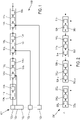
- the data of the frame 102 are modulated and transmitted together as the data A, because they are not separated prior to the implementation of the encoding method according to the invention.
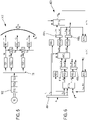
- Fig. 3 gives details of the particular case where a puncturing is further performed after each encoding step.
- a frame of data 102 is encoded.
- Data of the frame 102 are classified into n classes 102 1 -102 n .
- Each of the classes 102 i is associated with a priority level.
- the priority level of the class 102 1 is greater than the priority level of the class 102 2 , and so on, the class with the lowest priority level being the class 102 n .
- This step is followed by a second coding step performing (in the same time, after or even before the encoding 306 1 ):
- the encoded frame A is obtained by a multiplexing 340 of the punctured encoded data provided at each puncturing.
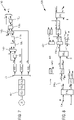
- data A are decoded. These data A have been encoded in accordance with the parallel encoding method 300 according to the invention.
- Each step of decoding the data of the class 102 i comprises the following steps, i ranging from 1 to n:
- extrinsic data used for a reiteration of a decoding step can be interleaved to retrieve so-called a priori data, of the same dimension and in the same order as the data at the output from the corresponding encoding step.
- the systematic data and parity data can comprise tail bits.
- the data of the class 102 1 are designated by the symbol a 1 .
- the data of the class 102 3 are designated by the symbol a 3 .
- the method 300 comprises a first encoding step 306 1 of the data of the class 102 1 .
- the parity data P 1 that is the redundancy data relating to the data a 1 are obtained.
- the obtained data P 1 are called "parity of the class 102 1 ".
- the method 300 according to the invention then (or simultaneously) comprises a step 304 2 of interleaving the data a 1 with the data a 2 of the class 102 2 .
- the method 300 according to the invention then (or simultaneously) comprises a step 304 3 of interleaving the data b 1 with the data a 3 of the class 102 3 .
- the interleaved data b 2 are then encoded during an encoding step 306 3 , which provides parity data P 3 , that is redundancy data relating to the data b 2 .
- So-called extrinsic data L ext (b 2 ) comprise in particular information relating to an assessment of the data of the class 102 3 .
- the L priori (b 1 ) data are used as a priori information at the following decoding step.
- the demultiplexing 414 3 is followed by a second decoding comprising a decoding step 410 2 of the parity P 2 , as a function of L priori (b 1 ) and the systematic output S 3 at which a deinterleaving 420 2 has been applied implementing a deinterleaving function reverse of the interleaving function implemented in the interleaving step 304 3 , and a demultiplexing to separate systematic information corresponding to the data b 1 and the data of the class a 3 . Only the systematic data b 1 are useful for this decoding.
- the output L soft (b 1 ) enables data b 1 to be assessed.
- the L priori (a 1 ) data are used as a priori information in the following decoding step.
- the encoded data S 2 obtained are called "systematic of b 1 ".
- the method 500 comprises a first decoding comprising a decoding step 510 3 using the data A and an a priori datum initially set to zero.
- the sizes of the different processed classes can vary.
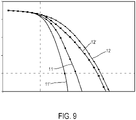
- Bit error rate curves that can be obtained with a decoding method according to the invention are illustrated in Fig. 9 .
- the bit error rate is the number of erroneous bits in the assessments of the encoded data of a class, divided by the total number of bits analysed by the decoding method according to the invention. It is thus a quantity without unit.
- bit error rate is often expressed as a function of a signal to noise ratio.
- the abscissa axis corresponds to a bit error rate
- the ordinate axis corresponds to the Eb/No ratio in dB, that is the ration in dB of an energy per bit to the power spectral density of the noise.
- Fig. 9 there is a ratio 2/3 between the size of the class 102 2 less protected and the size of the frame, and a frame size of 900 bits.
- the curve 11' represents the bit error rate associated with the decoding of the class 102 1 , upon the second iteration of the decoding step of the data of the class 102 1 .
- This property of the invention is particularly interesting, because it can be seen that each class benefits from the decoding accuracy obtained for the other classes and from the "turbo" effect.
- any decoding type implementing in particular different feedback phases can be considered.
Landscapes
- Engineering & Computer Science (AREA)
- Physics & Mathematics (AREA)
- Theoretical Computer Science (AREA)
- Probability & Statistics with Applications (AREA)
- Quality & Reliability (AREA)
- General Engineering & Computer Science (AREA)
- General Physics & Mathematics (AREA)
- Error Detection And Correction (AREA)
Claims (12)
- Entschlüsselungsverfahren von digitalen Daten (30), die die Form eines Rahmens (102) aufweisen, wobei die genannten Daten in eine Vielzahl von Klassen (102i) klassifiziert werden,wobei jede Klasse der Vielzahl von Klassen (102i) einem Schutzniveau in Bezug auf Fehler entspricht, wobei jede Klasse der Vielzahl von Klasen (102i) einem unterschiedlichen Schutzniveau zu dem Schutzniveau der anderen Klassen der Vielzahl von Klassen (102i) entspricht, wobei die digitalen Daten (30) unter Verwenden eines Fehlerkorrektur-Verschlüsselungsverfahrens (100; 300) zum Verschlüsseln so genannter digitaler Daten (30) verschlüsselt wurden, umfassend die folgenden Schritte:- einen ersten Verschlüsselungsschritt (1101; 306i) zum Verschlüsseln von zu verschlüsselnden Daten, die durch die Daten einer ersten Klasse (102i) gebildet werden, um verschlüsselte Daten zu erhalten; und- Implementieren der folgenden Schritte sukzessive für wenigstens eine andere Klasse (102i>1);o Vermischen (108i>1); 304i>1) der Daten der genannten anderen Klasse (102i>1) mit Daten, die aus einem vorherigen Verschlüsselungsschritt verschlüsselt sind oder zu verschlüsseln sind; undo Verschlüsseln (110i>1; 306i>1) von zu verschlüsselnden Daten, die durch die genannten vermischten Daten gebildet werden, um verschlüsselte Daten zu erhaltenund wobei die verschlüsselten Daten über einen Übertragungskanal übertragen wurden, wobei das Verschlüsselungsverfahren dadurch gekennzeichnet ist, dass es die folgenden Schritte umfasst:- für eine der Klassen (102i) einen ersten Entschlüsselungsschritt, der die folgenden Operationen durchführt:∘ Entschlüsseln (510i; 410i) von verschlüsselten Daten der genannten Klasse,∘ Bereitstellen wenigstens eines so genannten extrinsischen Bezugswertes, der bereitgestellt wird, um als ein a priori-Bezugswert für wenigstens ein Entschlüsseln der Daten einer anderen Klasse verwendet zu werden;∘ Bereitstellen wenigstens eines so genannten "Soft"-Bezugswertes zum Bestimmen der Daten der Klasse,- einen Entschlüsselungsschritt für wenigstens eine andere verschlüsselte Klasse, der die folgenden Operationen durchführt:∘ Entschlüsseln der verschlüsselten Daten der genannten anderen Klasse als eine Funktion von wenigstens einem extrinsischen Bezugswert, der von wenigstens einem anderen Entschlüsselungsschritt bereitgestellt wird, der als ein a priori-Bezugswert verwendet wird,∘ Bereitstellen wenigstens eines extrinsischen Bezugswertes,∘ Bereitstellen wenigstens eines "Soft"-Bezugswertes zum Bestimmen der genannten anderen Klasse, wenn der erste Entschlüsselungsschritt für die letzte Klasse durchgeführt wird, die verschlüsselt wurde, und die folgenden Entschlüsselungsschritte für Klassen durchgeführt werden, die in der umgekehrten Reihenfolge von der betrachtet werden, in der sie verschlüsselt wurden.
- Entschlüsselungsverfahren (500; 400) gemäß Anspruch 1, dadurch gekennzeichnet, dass ein Entschlüsselungsschritt (510i; 410i) sukzessive für alle Klassen durchgeführt wird.
- Entschlüsselungsverfahren (500; 400) gemäß irgendeinem der Ansprüche 1 bis 2, dadurch gekennzeichnet, dass wenigstens ein Entschlüsselungsschritt (510i; 410i) wenigstens einmal als eine Funktion eines a priori-Datenelements wiederholt wird, das extrinsischen Daten entspricht, die durch wenigstens einen Entschlüsselungsschritt von Daten einer anderen Klasse bereitgestellt werden.
- Entschlüsselungsverfahren (500; 400) gemäß irgendeinem der Ansprüche 1 bis 2, dadurch gekennzeichnet, dass alle Entschlüsselungsschritte, die jeder der Klassen entsprechen, eine Entschlüsselungsphase ausmachen, wobei das genannte Verfahren (500; 400) eine Iteration der genannten Entschlüsselungsphase wenigstens zweimal umfasst und dass der genannte Entschlüsselungsschritt (510n; 410n) der Daten der letzten Klasse, die verschlüsselt wurde, von der zweiten Iteration als eine Funktion eines a priori-Datenelements verschlüsselt wird, das extrinsischen Daten entspricht, die von dem Entschlüsselungsschritt (5101; 4101) der Daten der ersten Klasse bereitgestellt werden, die verschlüsselt wurden.
- Entschlüsselungsverfahren (400) gemäß irgendeinem der Ansprüche 1 bis 4, dadurch gekennzeichnet, dass es weiterhin einen anfänglichen Demultiplexen-Schritt (402) umfasst, der die Trennung der verschlüsselten Daten jeder Klasse durchführt.
- Entschlüsselungsverfahren gemäß irgendeinem der Ansprüche 1 bis 5, dadurch gekennzeichnet, dass jeder der Klassen (102i) ein Prioritätsniveau zugeordnet wird, wobei die Verschlüsselungsschritte (110i; 306i) für die Klassen in absteigender Reihenfolge der Prioritätsniveaus durchgeführt werden.
- Entschlüsselungsverfahren gemäß irgendeinem der Ansprüche 1 bis 6, dadurch gekennzeichnet, dass die Schritte:- des Vermischens (108i>1; 304i>1) der Daten der genannten anderen Klasse (102i>1) mit Daten, die von einem vorherigen Verschlüsselungsschritt verschlüsselt werden oder zu verschlüsseln sind; und- des Verschlüsselns (110i>1; 306i>1) der zu verschlüsselnden Daten, die durch die genannten vermischten Daten gebildet werden, um verschlüsselte Daten zu erhalten,
für alle anderen Klassen (102i>1) des Rahmens (102) implementiert werden. - Verschlüsselungsverfahren gemäß irgendeinem der Ansprüche 1 bis 7, dadurch gekennzeichnet, dass wenigstens einer der Verschlüsselungsschritte (110i; 306i) einen rekursiven, systematischen Konvolutionscode implementiert.
- Entschlüsselungsverfahren gemäß irgendeinem der Ansprüche 1 bis 8, dadurch gekennzeichnet, dass wenigstens einer der Verschlüsselungsschritte (110i; 306i) ein digitales Verschlüsseln implementiert.
- Entschlüsselungsvorrichtung, dadurch gekennzeichnet, dass sie zum Implementieren des Entschlüsselungsverfahrens (500; 400) gemäß irgendeinem der voranstehenden Ansprüche konfiguriert ist, und dass sie umfasst:- ein erstes Entschlüsselungsmodul, das zum Entschlüsseln der verschlüsselten Daten einer Klasse konfiguriert ist, um wenigstens einem anderen Entschlüsselungsmodul einen so genannten extrinsischen Bezugswert bereitzustellen und um wenigstens einen so genannten "Soft"-Bezugswert zum Bestimmten der genannten Klasse bereitzustellen;- für jede der anderen Klassen ein Entschlüsselungsmodul, das zum Empfangen wenigstens eines extrinsischen Bezugswertes, der von wenigstens einem anderen Entschlüsselungsmodul bereitgestellt wird, als einen a priori-Bezugswert konfiguriert ist, um die verschlüsselten Daten der genannten anderen Klasse zu entschlüsseln, und um wenigstens einen so genannten extrinsischen Bezugswert und wenigstens einen so genannten "Soft"-Bezugswert zum Bestimmen der genannten anderen Klasse bereitzustellen.
- Entschlüsselungssystem, dadurch gekennzeichnet, dass es eine Entschlüsselungsvorrichtung gemäß Anspruch 10 und eine Fehlerkorrektur-Verschlüsselungsvorrichtung umfasst, die zum Verschlüsseln der so genannten digitalen Quelldaten (30) konfiguriert ist, die die Form eines Rahmens (102) aufweisen, wobei die genannten Daten in einer Vielzahl von Klassen (102i) klassifiziert werden können, wobei die genannte Fehlerkorrektur-Verschlüsselungsvorrichtung umfasst:- ein erstes Verschlüsselungsmodul, das zum Verschlüsseln von zu verschlüsselnden Daten, die durch die Daten einer ersten Klasse (102i) gebildet werden, und zum Erhalten von verschlüsselten Daten, konfiguriert ist;- wenigstens einen Satz, wobei jeder Satz einer anderen Klasse (102i>1) zugeordnet ist und umfasst:∘ einen Vermischer, der zum Vermischen der Daten der genannten anderen Klasse und die durch ein vorheriges Verschlüsselungsmodul verschlüsselten oder zu verschlüsselnden Daten konfiguriert ist, und∘ ein Verschlüsselungsmodul, das zum Verschlüsseln von zu verschlüsselnden Daten, die von dem Output des entsprechenden Vermischers gebildet werden, und zum Erhalten von verschlüsselten Daten konfiguriert ist.
- Computerprogramm-Produkt, umfassend Anweisungen, die, wenn das Programm von einem Computer ausgeführt ist, den Computer veranlassen, die Schritte des Entschlüsselungsverfahrens gemäß irgendeinem der Ansprüche 1 bis 9 durchzuführen.
Applications Claiming Priority (2)
| Application Number | Priority Date | Filing Date | Title |
|---|---|---|---|
| FR1152107A FR2972878B1 (fr) | 2011-03-15 | 2011-03-15 | Procede d'encodage correcteur d'erreur, procede de decodage et dispositifs associes. |
| PCT/EP2012/054500 WO2012123517A1 (en) | 2011-03-15 | 2012-03-14 | Error correction encoding method, decoding method and associated devices |
Publications (2)
| Publication Number | Publication Date |
|---|---|
| EP2686964A1 EP2686964A1 (de) | 2014-01-22 |
| EP2686964B1 true EP2686964B1 (de) | 2022-06-01 |
Family
ID=44350925
Family Applications (1)
| Application Number | Title | Priority Date | Filing Date |
|---|---|---|---|
| EP12711602.8A Active EP2686964B1 (de) | 2011-03-15 | 2012-03-14 | Dekodierverfahren, dekodiergerät und entsprechendes computerprogramprodukt |
Country Status (5)
| Country | Link |
|---|---|
| US (1) | US9189321B2 (de) |
| EP (1) | EP2686964B1 (de) |
| CA (1) | CA2827347C (de) |
| FR (1) | FR2972878B1 (de) |
| WO (1) | WO2012123517A1 (de) |
Families Citing this family (3)
| Publication number | Priority date | Publication date | Assignee | Title |
|---|---|---|---|---|
| US9641303B2 (en) * | 2013-09-09 | 2017-05-02 | Huawei Technologies Co., Ltd. | System and method for increasing low density signature space |
| FR3022675B1 (fr) * | 2014-06-18 | 2017-10-06 | Sagem Defense Securite | Procede de protection de memoire |
| CN115085866B (zh) * | 2022-05-20 | 2023-11-28 | 杭州信熵科技有限公司 | 基于Zigzag拓展贪心轮转解码的喷泉码方法 |
Family Cites Families (4)
| Publication number | Priority date | Publication date | Assignee | Title |
|---|---|---|---|---|
| FR2675971B1 (fr) | 1991-04-23 | 1993-08-06 | France Telecom | Procede de codage correcteur d'erreurs a au moins deux codages convolutifs systematiques en parallele, procede de decodage iteratif, module de decodage et decodeur correspondants. |
| FI97837C (fi) * | 1995-04-11 | 1997-02-25 | Nokia Mobile Phones Ltd | Tiedonsiirtomenetelmä sekä lähetin |
| CN1976454B (zh) * | 2002-04-19 | 2011-05-11 | 松下电器产业株式会社 | 运动矢量的确定方法 |
| KR100957603B1 (ko) * | 2009-07-17 | 2010-05-13 | 동국대학교 산학협력단 | 다중 입출력 통신 시스템에서의 비트 할당 방법 및 그를 위한 프로그램을 기록한 기록 매체 |
-
2011
- 2011-03-15 FR FR1152107A patent/FR2972878B1/fr active Active
-
2012
- 2012-03-14 EP EP12711602.8A patent/EP2686964B1/de active Active
- 2012-03-14 CA CA2827347A patent/CA2827347C/en not_active Expired - Fee Related
- 2012-03-14 WO PCT/EP2012/054500 patent/WO2012123517A1/en not_active Ceased
- 2012-03-14 US US14/004,796 patent/US9189321B2/en not_active Expired - Fee Related
Also Published As
| Publication number | Publication date |
|---|---|
| CA2827347A1 (en) | 2012-09-20 |
| FR2972878A1 (fr) | 2012-09-21 |
| US20140006895A1 (en) | 2014-01-02 |
| EP2686964A1 (de) | 2014-01-22 |
| CA2827347C (en) | 2014-10-28 |
| WO2012123517A1 (en) | 2012-09-20 |
| FR2972878B1 (fr) | 2014-01-10 |
| US9189321B2 (en) | 2015-11-17 |
Similar Documents
| Publication | Publication Date | Title |
|---|---|---|
| EP2239854B9 (de) | Verkürzen und Punktieren von Low-Density Parity-Check (LDPC) Codes für die Kanaldecodierung | |
| RU2595542C2 (ru) | Устройство и способ для передачи и приема данных в системе связи/широковещания | |
| JP5219699B2 (ja) | 符号化装置及び復号装置 | |
| JP5612699B2 (ja) | 通信システムにおけるデータ送受信方法及び装置 | |
| US9806853B2 (en) | Method and apparatus for transmitting and receiving control information in a broadcasting/communication system | |
| CN106899311A (zh) | 混合极性码的生成方法和生成装置 | |
| KR20060052488A (ko) | 연결된 반복 및 대수 코딩 | |
| EP2686964B1 (de) | Dekodierverfahren, dekodiergerät und entsprechendes computerprogramprodukt | |
| JP5523064B2 (ja) | 復号装置及び方法 | |
| KR102914737B1 (ko) | 통신 또는 방송 시스템에서 데이터 복호화 방법 및 장치 | |
| EP4385134A1 (de) | Vorrichtung und verfahren zur erzeugung eines gefrorenen satzes in zusammenhang mit einem polaren code | |
| US8904264B2 (en) | Error correction encoding method, decoding method and associated devices | |
| US8782501B2 (en) | Error correction encoding method, decoding method and associated devices | |
| RU2541844C1 (ru) | Способ декодирования кода-произведения с использованием упорядоченного по весу смежного класса векторов ошибок и устройство его реализующее |
Legal Events
| Date | Code | Title | Description |
|---|---|---|---|
| PUAI | Public reference made under article 153(3) epc to a published international application that has entered the european phase |
Free format text: ORIGINAL CODE: 0009012 |
|
| 17P | Request for examination filed |
Effective date: 20131014 |
|
| AK | Designated contracting states |
Kind code of ref document: A1 Designated state(s): AL AT BE BG CH CY CZ DE DK EE ES FI FR GB GR HR HU IE IS IT LI LT LU LV MC MK MT NL NO PL PT RO RS SE SI SK SM TR |
|
| DAX | Request for extension of the european patent (deleted) | ||
| RAP1 | Party data changed (applicant data changed or rights of an application transferred) |
Owner name: AIRBUS DS SAS |
|
| STAA | Information on the status of an ep patent application or granted ep patent |
Free format text: STATUS: EXAMINATION IS IN PROGRESS |
|
| 17Q | First examination report despatched |
Effective date: 20190503 |
|
| GRAP | Despatch of communication of intention to grant a patent |
Free format text: ORIGINAL CODE: EPIDOSNIGR1 |
|
| STAA | Information on the status of an ep patent application or granted ep patent |
Free format text: STATUS: GRANT OF PATENT IS INTENDED |
|
| INTG | Intention to grant announced |
Effective date: 20211216 |
|
| GRAS | Grant fee paid |
Free format text: ORIGINAL CODE: EPIDOSNIGR3 |
|
| GRAA | (expected) grant |
Free format text: ORIGINAL CODE: 0009210 |
|
| STAA | Information on the status of an ep patent application or granted ep patent |
Free format text: STATUS: THE PATENT HAS BEEN GRANTED |
|
| AK | Designated contracting states |
Kind code of ref document: B1 Designated state(s): AL AT BE BG CH CY CZ DE DK EE ES FI FR GB GR HR HU IE IS IT LI LT LU LV MC MK MT NL NO PL PT RO RS SE SI SK SM TR |
|
| REG | Reference to a national code |
Ref country code: GB Ref legal event code: FG4D |
|
| REG | Reference to a national code |
Ref country code: AT Ref legal event code: REF Ref document number: 1496104 Country of ref document: AT Kind code of ref document: T Effective date: 20220615 Ref country code: CH Ref legal event code: EP Ref country code: DE Ref legal event code: R096 Ref document number: 602012078290 Country of ref document: DE |
|
| REG | Reference to a national code |
Ref country code: IE Ref legal event code: FG4D |
|
| REG | Reference to a national code |
Ref country code: LT Ref legal event code: MG9D |
|
| REG | Reference to a national code |
Ref country code: NL Ref legal event code: MP Effective date: 20220601 |
|
| PG25 | Lapsed in a contracting state [announced via postgrant information from national office to epo] |
Ref country code: SE Free format text: LAPSE BECAUSE OF FAILURE TO SUBMIT A TRANSLATION OF THE DESCRIPTION OR TO PAY THE FEE WITHIN THE PRESCRIBED TIME-LIMIT Effective date: 20220601 Ref country code: NO Free format text: LAPSE BECAUSE OF FAILURE TO SUBMIT A TRANSLATION OF THE DESCRIPTION OR TO PAY THE FEE WITHIN THE PRESCRIBED TIME-LIMIT Effective date: 20220901 Ref country code: LT Free format text: LAPSE BECAUSE OF FAILURE TO SUBMIT A TRANSLATION OF THE DESCRIPTION OR TO PAY THE FEE WITHIN THE PRESCRIBED TIME-LIMIT Effective date: 20220601 Ref country code: HR Free format text: LAPSE BECAUSE OF FAILURE TO SUBMIT A TRANSLATION OF THE DESCRIPTION OR TO PAY THE FEE WITHIN THE PRESCRIBED TIME-LIMIT Effective date: 20220601 Ref country code: GR Free format text: LAPSE BECAUSE OF FAILURE TO SUBMIT A TRANSLATION OF THE DESCRIPTION OR TO PAY THE FEE WITHIN THE PRESCRIBED TIME-LIMIT Effective date: 20220902 Ref country code: FI Free format text: LAPSE BECAUSE OF FAILURE TO SUBMIT A TRANSLATION OF THE DESCRIPTION OR TO PAY THE FEE WITHIN THE PRESCRIBED TIME-LIMIT Effective date: 20220601 Ref country code: ES Free format text: LAPSE BECAUSE OF FAILURE TO SUBMIT A TRANSLATION OF THE DESCRIPTION OR TO PAY THE FEE WITHIN THE PRESCRIBED TIME-LIMIT Effective date: 20220601 Ref country code: BG Free format text: LAPSE BECAUSE OF FAILURE TO SUBMIT A TRANSLATION OF THE DESCRIPTION OR TO PAY THE FEE WITHIN THE PRESCRIBED TIME-LIMIT Effective date: 20220901 |
|
| REG | Reference to a national code |
Ref country code: AT Ref legal event code: MK05 Ref document number: 1496104 Country of ref document: AT Kind code of ref document: T Effective date: 20220601 |
|
| PG25 | Lapsed in a contracting state [announced via postgrant information from national office to epo] |
Ref country code: RS Free format text: LAPSE BECAUSE OF FAILURE TO SUBMIT A TRANSLATION OF THE DESCRIPTION OR TO PAY THE FEE WITHIN THE PRESCRIBED TIME-LIMIT Effective date: 20220601 Ref country code: PL Free format text: LAPSE BECAUSE OF FAILURE TO SUBMIT A TRANSLATION OF THE DESCRIPTION OR TO PAY THE FEE WITHIN THE PRESCRIBED TIME-LIMIT Effective date: 20220601 Ref country code: LV Free format text: LAPSE BECAUSE OF FAILURE TO SUBMIT A TRANSLATION OF THE DESCRIPTION OR TO PAY THE FEE WITHIN THE PRESCRIBED TIME-LIMIT Effective date: 20220601 |
|
| PG25 | Lapsed in a contracting state [announced via postgrant information from national office to epo] |
Ref country code: NL Free format text: LAPSE BECAUSE OF FAILURE TO SUBMIT A TRANSLATION OF THE DESCRIPTION OR TO PAY THE FEE WITHIN THE PRESCRIBED TIME-LIMIT Effective date: 20220601 |
|
| PG25 | Lapsed in a contracting state [announced via postgrant information from national office to epo] |
Ref country code: SM Free format text: LAPSE BECAUSE OF FAILURE TO SUBMIT A TRANSLATION OF THE DESCRIPTION OR TO PAY THE FEE WITHIN THE PRESCRIBED TIME-LIMIT Effective date: 20220601 Ref country code: SK Free format text: LAPSE BECAUSE OF FAILURE TO SUBMIT A TRANSLATION OF THE DESCRIPTION OR TO PAY THE FEE WITHIN THE PRESCRIBED TIME-LIMIT Effective date: 20220601 Ref country code: RO Free format text: LAPSE BECAUSE OF FAILURE TO SUBMIT A TRANSLATION OF THE DESCRIPTION OR TO PAY THE FEE WITHIN THE PRESCRIBED TIME-LIMIT Effective date: 20220601 Ref country code: PT Free format text: LAPSE BECAUSE OF FAILURE TO SUBMIT A TRANSLATION OF THE DESCRIPTION OR TO PAY THE FEE WITHIN THE PRESCRIBED TIME-LIMIT Effective date: 20221003 Ref country code: EE Free format text: LAPSE BECAUSE OF FAILURE TO SUBMIT A TRANSLATION OF THE DESCRIPTION OR TO PAY THE FEE WITHIN THE PRESCRIBED TIME-LIMIT Effective date: 20220601 Ref country code: CZ Free format text: LAPSE BECAUSE OF FAILURE TO SUBMIT A TRANSLATION OF THE DESCRIPTION OR TO PAY THE FEE WITHIN THE PRESCRIBED TIME-LIMIT Effective date: 20220601 Ref country code: AT Free format text: LAPSE BECAUSE OF FAILURE TO SUBMIT A TRANSLATION OF THE DESCRIPTION OR TO PAY THE FEE WITHIN THE PRESCRIBED TIME-LIMIT Effective date: 20220601 |
|
| PG25 | Lapsed in a contracting state [announced via postgrant information from national office to epo] |
Ref country code: IS Free format text: LAPSE BECAUSE OF FAILURE TO SUBMIT A TRANSLATION OF THE DESCRIPTION OR TO PAY THE FEE WITHIN THE PRESCRIBED TIME-LIMIT Effective date: 20221001 |
|
| REG | Reference to a national code |
Ref country code: DE Ref legal event code: R097 Ref document number: 602012078290 Country of ref document: DE |
|
| PG25 | Lapsed in a contracting state [announced via postgrant information from national office to epo] |
Ref country code: AL Free format text: LAPSE BECAUSE OF FAILURE TO SUBMIT A TRANSLATION OF THE DESCRIPTION OR TO PAY THE FEE WITHIN THE PRESCRIBED TIME-LIMIT Effective date: 20220601 |
|
| PLBE | No opposition filed within time limit |
Free format text: ORIGINAL CODE: 0009261 |
|
| STAA | Information on the status of an ep patent application or granted ep patent |
Free format text: STATUS: NO OPPOSITION FILED WITHIN TIME LIMIT |
|
| PG25 | Lapsed in a contracting state [announced via postgrant information from national office to epo] |
Ref country code: DK Free format text: LAPSE BECAUSE OF FAILURE TO SUBMIT A TRANSLATION OF THE DESCRIPTION OR TO PAY THE FEE WITHIN THE PRESCRIBED TIME-LIMIT Effective date: 20220601 |
|
| 26N | No opposition filed |
Effective date: 20230302 |
|
| PG25 | Lapsed in a contracting state [announced via postgrant information from national office to epo] |
Ref country code: SI Free format text: LAPSE BECAUSE OF FAILURE TO SUBMIT A TRANSLATION OF THE DESCRIPTION OR TO PAY THE FEE WITHIN THE PRESCRIBED TIME-LIMIT Effective date: 20220601 |
|
| REG | Reference to a national code |
Ref country code: DE Ref legal event code: R119 Ref document number: 602012078290 Country of ref document: DE |
|
| PG25 | Lapsed in a contracting state [announced via postgrant information from national office to epo] |
Ref country code: MC Free format text: LAPSE BECAUSE OF FAILURE TO SUBMIT A TRANSLATION OF THE DESCRIPTION OR TO PAY THE FEE WITHIN THE PRESCRIBED TIME-LIMIT Effective date: 20220601 |
|
| REG | Reference to a national code |
Ref country code: CH Ref legal event code: PL |
|
| GBPC | Gb: european patent ceased through non-payment of renewal fee |
Effective date: 20230314 |
|
| REG | Reference to a national code |
Ref country code: BE Ref legal event code: MM Effective date: 20230331 |
|
| PG25 | Lapsed in a contracting state [announced via postgrant information from national office to epo] |
Ref country code: LU Free format text: LAPSE BECAUSE OF NON-PAYMENT OF DUE FEES Effective date: 20230314 |
|
| REG | Reference to a national code |
Ref country code: IE Ref legal event code: MM4A |
|
| PG25 | Lapsed in a contracting state [announced via postgrant information from national office to epo] |
Ref country code: GB Free format text: LAPSE BECAUSE OF NON-PAYMENT OF DUE FEES Effective date: 20230314 |
|
| PG25 | Lapsed in a contracting state [announced via postgrant information from national office to epo] |
Ref country code: LI Free format text: LAPSE BECAUSE OF NON-PAYMENT OF DUE FEES Effective date: 20230331 Ref country code: IT Free format text: LAPSE BECAUSE OF FAILURE TO SUBMIT A TRANSLATION OF THE DESCRIPTION OR TO PAY THE FEE WITHIN THE PRESCRIBED TIME-LIMIT Effective date: 20220601 Ref country code: IE Free format text: LAPSE BECAUSE OF NON-PAYMENT OF DUE FEES Effective date: 20230314 Ref country code: GB Free format text: LAPSE BECAUSE OF NON-PAYMENT OF DUE FEES Effective date: 20230314 Ref country code: FR Free format text: LAPSE BECAUSE OF NON-PAYMENT OF DUE FEES Effective date: 20230331 Ref country code: DE Free format text: LAPSE BECAUSE OF NON-PAYMENT OF DUE FEES Effective date: 20231003 Ref country code: CH Free format text: LAPSE BECAUSE OF NON-PAYMENT OF DUE FEES Effective date: 20230331 |
|
| PG25 | Lapsed in a contracting state [announced via postgrant information from national office to epo] |
Ref country code: BE Free format text: LAPSE BECAUSE OF NON-PAYMENT OF DUE FEES Effective date: 20230331 |
|
| PG25 | Lapsed in a contracting state [announced via postgrant information from national office to epo] |
Ref country code: BG Free format text: LAPSE BECAUSE OF FAILURE TO SUBMIT A TRANSLATION OF THE DESCRIPTION OR TO PAY THE FEE WITHIN THE PRESCRIBED TIME-LIMIT Effective date: 20220601 |
|
| PG25 | Lapsed in a contracting state [announced via postgrant information from national office to epo] |
Ref country code: BG Free format text: LAPSE BECAUSE OF FAILURE TO SUBMIT A TRANSLATION OF THE DESCRIPTION OR TO PAY THE FEE WITHIN THE PRESCRIBED TIME-LIMIT Effective date: 20220601 |
|
| PG25 | Lapsed in a contracting state [announced via postgrant information from national office to epo] |
Ref country code: CY Free format text: LAPSE BECAUSE OF FAILURE TO SUBMIT A TRANSLATION OF THE DESCRIPTION OR TO PAY THE FEE WITHIN THE PRESCRIBED TIME-LIMIT; INVALID AB INITIO Effective date: 20120314 |
|
| PG25 | Lapsed in a contracting state [announced via postgrant information from national office to epo] |
Ref country code: HU Free format text: LAPSE BECAUSE OF FAILURE TO SUBMIT A TRANSLATION OF THE DESCRIPTION OR TO PAY THE FEE WITHIN THE PRESCRIBED TIME-LIMIT; INVALID AB INITIO Effective date: 20120314 |
|
| PG25 | Lapsed in a contracting state [announced via postgrant information from national office to epo] |
Ref country code: TR Free format text: LAPSE BECAUSE OF FAILURE TO SUBMIT A TRANSLATION OF THE DESCRIPTION OR TO PAY THE FEE WITHIN THE PRESCRIBED TIME-LIMIT Effective date: 20220601 |