EP2689032B1 - Modifizierte hybridisierungssonden - Google Patents
Modifizierte hybridisierungssonden Download PDFInfo
- Publication number
- EP2689032B1 EP2689032B1 EP12714582.9A EP12714582A EP2689032B1 EP 2689032 B1 EP2689032 B1 EP 2689032B1 EP 12714582 A EP12714582 A EP 12714582A EP 2689032 B1 EP2689032 B1 EP 2689032B1
- Authority
- EP
- European Patent Office
- Prior art keywords
- probe
- probes
- nucleic acid
- abasic site
- pcr
- Prior art date
- Legal status (The legal status is an assumption and is not a legal conclusion. Google has not performed a legal analysis and makes no representation as to the accuracy of the status listed.)
- Not-in-force
Links
Images


Classifications
-
- C—CHEMISTRY; METALLURGY
- C12—BIOCHEMISTRY; BEER; SPIRITS; WINE; VINEGAR; MICROBIOLOGY; ENZYMOLOGY; MUTATION OR GENETIC ENGINEERING
- C12Q—MEASURING OR TESTING PROCESSES INVOLVING ENZYMES, NUCLEIC ACIDS OR MICROORGANISMS; COMPOSITIONS OR TEST PAPERS THEREFOR; PROCESSES OF PREPARING SUCH COMPOSITIONS; CONDITION-RESPONSIVE CONTROL IN MICROBIOLOGICAL OR ENZYMOLOGICAL PROCESSES
- C12Q1/00—Measuring or testing processes involving enzymes, nucleic acids or microorganisms; Compositions therefor; Processes of preparing such compositions
- C12Q1/68—Measuring or testing processes involving enzymes, nucleic acids or microorganisms; Compositions therefor; Processes of preparing such compositions involving nucleic acids
- C12Q1/6813—Hybridisation assays
- C12Q1/6832—Enhancement of hybridisation reaction
-
- C—CHEMISTRY; METALLURGY
- C12—BIOCHEMISTRY; BEER; SPIRITS; WINE; VINEGAR; MICROBIOLOGY; ENZYMOLOGY; MUTATION OR GENETIC ENGINEERING
- C12Q—MEASURING OR TESTING PROCESSES INVOLVING ENZYMES, NUCLEIC ACIDS OR MICROORGANISMS; COMPOSITIONS OR TEST PAPERS THEREFOR; PROCESSES OF PREPARING SUCH COMPOSITIONS; CONDITION-RESPONSIVE CONTROL IN MICROBIOLOGICAL OR ENZYMOLOGICAL PROCESSES
- C12Q1/00—Measuring or testing processes involving enzymes, nucleic acids or microorganisms; Compositions therefor; Processes of preparing such compositions
- C12Q1/68—Measuring or testing processes involving enzymes, nucleic acids or microorganisms; Compositions therefor; Processes of preparing such compositions involving nucleic acids
- C12Q1/6876—Nucleic acid products used in the analysis of nucleic acids, e.g. primers or probes
-
- C—CHEMISTRY; METALLURGY
- C12—BIOCHEMISTRY; BEER; SPIRITS; WINE; VINEGAR; MICROBIOLOGY; ENZYMOLOGY; MUTATION OR GENETIC ENGINEERING
- C12Q—MEASURING OR TESTING PROCESSES INVOLVING ENZYMES, NUCLEIC ACIDS OR MICROORGANISMS; COMPOSITIONS OR TEST PAPERS THEREFOR; PROCESSES OF PREPARING SUCH COMPOSITIONS; CONDITION-RESPONSIVE CONTROL IN MICROBIOLOGICAL OR ENZYMOLOGICAL PROCESSES
- C12Q1/00—Measuring or testing processes involving enzymes, nucleic acids or microorganisms; Compositions therefor; Processes of preparing such compositions
- C12Q1/68—Measuring or testing processes involving enzymes, nucleic acids or microorganisms; Compositions therefor; Processes of preparing such compositions involving nucleic acids
- C12Q1/6844—Nucleic acid amplification reactions
- C12Q1/6853—Nucleic acid amplification reactions using modified primers or templates
Definitions
- the present invention is in the field of biology and diagnostics. It is more particularly in the field of molecular biology and in vitro diagnostics. More specifically it is in the field of nucleic acid amplification and multiplex amplification of preferentially RNA and DNA molecules.
- nucleic acids which encode proteins are not always 100 % preserved. Mutations and SNPs (single nucleotide polymorphisms) are very common in each type of organism. Viruses are a particular example of this variability.
- PCR is often used for the amplification of the corresponding nucleic acids.
- One example thereof is the detection of pathogens in animal or human samples.
- sequence-specific probes such as e.g. TaqMan probes
- the multiplex real-time technology ( WO 2009/135832 ) is a particular case.
- the origin of the signal e.g. the identity of a pathogen, can be determined by combinatory classification of the melting temperature of the generated PCR product and the probe reporter dye.
- the melting temperature of the generated PCR product must not vary outside measuring inaccuracy.
- sequence variations such as e.g. often with viral, microbial or other target sequences with variable genotypes within the probe-specific target sequence, would usually lead to a shift of the melting point since the probe cannot hybridise to the target in a perfect way. Often, this problem cannot be solved by changing the position of the probe to another region, since the corresponding perfectly preserved regions are not present.
- the aim of the present invention is to provide for a method that allows amplification of potentially multiple nucleic acids, wherein at least one of said target nucleic acids displays sequence variation in a given population of a specific organism.
- TMAC At high concentrations (3M), TMAC affects the melting temperature of DNA so that it is independent from the sequence but only dependent from the length of the oligonucleotide.
- TMAC 3M is PCR inhibitory and, thus, cannot be used directly in a PCR reaction; see also "Alteration of the Relative Stability of dA ⁇ dT and dG ⁇ dC Base Pairs in DNA ( Melchior and von Hippel, Proc. Nat. Acad. Sci. USA, February 1973, Vol. 70, No. 2, pp. 298-302 ).
- Inosine is known as a universal base. However, in the literature it is disputed that this base can be designated as such since it has been proven that there are clear differences in the stability with different opposing bases; see also “Nearest-neighbor thermodynamics of deoxyinosine pairs in DNA duplexes” ( Watkins, Jr and SantaLucia, Jr, Nucleic Acids Research, 2005, Vol, 33, No. 19, pp. 6258-6267 ).
- Nebularine also exhibits a bias so that the pairing does not take place with all the four natural bases with the same stability.
- Nitroindole and nitropyrrole are known modifications which are called universal bases.
- the differences in the melting temperature in the presence of different opposite bases are at least 2 °C.
- the disclosure relates to a method for detecting a nucleic acid, comprising the steps of, (i) amplifying the nucleic acid to be detected, (ii) during or after amplification, hybridizing to said nucleic acid to be detected a first probe that comprises an abasic site (apurinic/apyrimidinic site) additionally optionally carrying a detectable label, (iii) wherein the position of the abasic site corresponds to a position in said nucleic acid to be detected, known to have a polymorphism, and wherein said nucleic acid is detected if hybridization occurs.
- probes that comprise an abasic site are nucleic acids or oligonucleotides in which one or more bases are missing, the backbone or an appropriate structure to replace the backbone of the nucleic acid or oligonucleotide however is present. At the site of the missing base no hydrogen bonding or other specific interaction can thus take place with a complementary strand.
- meltbridge may be used to indicate an abasic site.
- meltbridge and abasic site in a nucleic acid are used synonymously.
- the 'abasic site' in the context of the present invention is preferably a stable 'abasic site', i.e. an abasic site at which the backbone may not be cleaved. This can for example be achieved by the use of 1', 2'-dideoxyribose nucleoside analogues or synthetic linker molecules that replace the sugar-phosphate backbone at the abasic site.
- the preferred stable abasic sites are described in the following.
- An abasic site may for example be generated by the incorporation of abasic DNA nucleoside analogues, abasic RNA nucleoside analogues and abasic linker molecules that replace the natural backbone structure.
- a preferred stable abasic DNA nucleoside analogue is based on a 1', 2'-dideoxyribose molecule without a base attached to the C1 atom of the dideoxyribose.
- a preferred example of an abasic RNA analogue is a 1'deoxyribose without a base at the C1 atom.
- a base instead of a base also a different chemical moiety can be bound to the C1 atom of the spacer which, however, is not capable of forming hydrogen bonds or another specific interaction with the corresponding base of the complementary target strand.
- X may be selected from the following groups:
- cyclic spacer molecules that generate a bridge of 2 to 6 C-atoms between the backbone phosphates of the probe resulting in stable abasic sites like cyclopentane and cyclohexane may also be used.
- the abasic sites in oligonucleotides or nucleic acid comprise at the 'abasic' position an abasic nucleoside or another chemical linker that does not form hydrogen bonds with the corresponding nucleobase in an opposing nucleic acid strand.
- Solid-phase synthesis using the phosphoramidite method and phosphoramidite building blocks derived from protected 2'-deoxynucleosides (dA, dC, dG, and dT), ribonucleosides (A, C, G, and U), or chemically modified nucleosides, e.g. LNA is the preferred method for the synthesis of probes comprising an abasic site.
- the building blocks are sequentially coupled to the growing oligonucleotide chain in the order required by the sequence of the product. Upon completion of the chain assembly, the product is released from the solid phase to solution, deprotected, and collected.
- a propyl linker may be incorporated with the phosphoramidite (3-(4,4'-dimethoxytrityloxy)propyl-1-[(2-cyanoethyl)-(N,N-diisopropyl)]-phosphoramidite).
- Nucleosides are glycosylamines consisting of a nucleobase (often referred to as 'base') bound to a ribose or deoxyribose sugar via a beta-glycosidic linkage. The base is missing in nucleosides in abasic sites.
- a nucleotide is a nucleoside with one to three phosphate groups.
- the abasic nucleoside analogue is a compound having Formula I or II: wherein each R3, R4, R5, R6, R7, R8, R10, R11, R12, and R13 is independently H, OH, alkyl, substituted alkyl, alkaryl or aralkyl, F, Cl, Br, CN, CF3, OCF3, OCN, OPO3H2, O-alkyl, S-alkyl, N-alkyl, O-alkenyl, S-alkenyl, N-alkenyl, SO-alkyl, alkyl-SH, alkyl-OH, O-alkyl-OH, O-alkyl-SH, S-alkyl-OH, S-alkyl-SH, alkyl-S-alkyl, alkyl-O-alkyl, ONO2, NO2, N3, NH2, aminoalkyl, aminoacid, aminoacyl, ONH2, O-aminoalkyl, O-aminoacid
- Preferred examples of abasic chemical analogues that can be used in an oligonucleotide probe with an abasic site do not have a sugar backbone but are still capable of linking two ribose rings respectively deoxyribose rings of the antisense strand.
- abasic chemical analogues may be used. It is decisive that the formation of the duplex between probe and target nucleic acid is not disturbed by the abasic chemical. However, for this purpose, several abasic chemical analogues may be used. 1,3-propandiols based abasic sites and derivatives thereof are particularly suitable.
- the chemical abasic modification is a compound having Formula III: wherein each n is independently an integer from 0 to 12, each R1, R2 and R3 is independently H, OH, alkyl, substituted alkyl, alkaryl or aralkyl, F, Cl, Br, CN, CF3, OCF3, OCN, OPO3H2, O-alkyl, S-alkyl, N-alkyl, O-alkenyl, S-alkenyl, N-alkenyl, SO-alkyl, alkyl-SH, alkyl-OH, O-alkyl-OH, O-alkyl-SH, S-alkyl-OH, S-alkyl-SH, alkyl-S-alkyl, alkyl-O-alkyl, ONO2, NO2, N3, NH2, aminoalkyl, aminoacid, aminoacyl, ONH2, O-aminoalkyl, O-aminoacid, O-aminoacyl, heterocycloalkyl,
- n is independently 0 or 1
- R1 forms a phosphodiester linkage to the C5 position of the 3'-adjacent nucleotide
- R3 forms a phosphodiester linkage to the C3 position of the 5'-adjacent nucleotide
- R2 is hydrogen or hydroxy, preferably hydrogen.
- analogues are described by the following formulae.
- the abasic modification can be accordingly derived there from.
- a nucleic acid may be, inter alia, RNA, DNA, cDNA (complementary DNA), LNA (locked nucleic acid), mRNA (messenger RNA), mtRNA (mitochondrial RNA), rRNA (ribosomal RNA), tRNA (transfer RNA), nRNA (nuclear RNA), siRNA (short interfering RNA), snRNA (small nuclear RNA), snoRNA (small nucleolar RNA), scaRNA (Small Cajal Body specific RNA), microRNA, dsRNA (doubled-stranded RNA), ribozyme, riboswitch, viral RNA, dsDNA (double-stranded DNA), ssDNA (single-stranded DNA), plasmid DNA, cosmid DNA, chromosomal DNA, viral DNA, mtDNA (mitochondrial DNA), nDNA (nuclear DNA), snDNA (small
- fluorescent dyes may for example be FAM (5- or 6-carboxyfluorescein), VIC, NED, fluorescein, fluorescein isothiocyanate (FITC), IRD-700/800, cyanine dyes, such as CY3, CY5, CY3.5, CY5.5, Cy7, xanthen, 6-carboxy-2',4',7',4,7-hexachlorofluorescein (HEX), TET, 6-carboxy-4',5'-dichloro-2',7'-dimethoxyfluorescein (JOE), N,N,N',N'-tetramethyl-6-carboxyrhodamine (TAMRA), 6-carboxy-X-rhodamine (ROX), 5-carboxyrhodamine-6G (R6G5), 6-carboxyrhodamine-6G (RG6), rhodamine, rhodamine green, rhodamine red,
- FAM fluoresc
- amplification methods are for example, rolling circle amplification (such as in Liu, et al., “Rolling circle DNA synthesis: Small circular oligonucleotides as efficient templates for DNA polymerases," J. Am. Chem. Soc. 118:1587-1594 (1996 )), isothermal amplification (such as in Walker, et al., “Strand displacement amplification an isothermal, in vitro DNA amplification technique," Nucleic Acids Res.
- rolling circle amplification such as in Liu, et al., “Rolling circle DNA synthesis: Small circular oligonucleotides as efficient templates for DNA polymerases," J. Am. Chem. Soc. 118:1587-1594 (1996 )
- isothermal amplification such as in Walker, et al., “Strand displacement amplification an isothermal, in vitro DNA amplification technique," Nucleic Acids Res.
- ligase chain reaction such as in Landegren, et al., "A Ligase-Mediated Gene Detection Technique," Science 241:1077-1080, 1988 , or, in Wiedmann, et al., “Ligase Chain Reaction (LCR)--Overview and Applications,” PCR Methods and Applications (Cold Spring Harbor Laboratory Press, Cold Spring Harbor Laboratory, NY, 1994) pp. S51-S64 )).
- LCR Ligase Chain Reaction
- Nucleic acid amplification can be accomplished by any of the various nucleic acid amplification methods known in the art, including but not limited to the polymerase chain reaction (PCR), real-time PCR (rtPCR), ligase chain reaction (LCR), transcription-based amplification system (TAS), nucleic acid sequence based amplification (NASBA), rolling circle amplification (RCA), transcription-mediated amplification (TMA), self-sustaining sequence replication (3SR) and Q ⁇ amplification.
- PCR polymerase chain reaction
- rtPCR real-time PCR
- LCR transcription-based amplification system
- TAS transcription-based amplification system
- NASBA nucleic acid sequence based amplification
- RCA rolling circle amplification
- TMA transcription-mediated amplification
- Q ⁇ amplification Q ⁇ amplification.
- a possible detection method is the LUMINEX method.
- label is a moiety that is bound covalently or non-covalently to a probe where it can give rise to signal which may be detected by optical or other physical means.
- a "polymorphism” is for example a single-nucleotide polymorphism (SNP) or mutation which is a DNA sequence variation occurring when a single nucleotide - A, T, C, or G - in the genome (or other shared sequence) differs between members of a species or paired chromosomes in an individual.
- SNP single-nucleotide polymorphism
- mutation which is a DNA sequence variation occurring when a single nucleotide - A, T, C, or G - in the genome (or other shared sequence) differs between members of a species or paired chromosomes in an individual.
- AAGCCTA to AAGCTTA two sequenced DNA fragments from different individuals, AAGCCTA to AAGCTTA, contain a difference in a single nucleotide. In this case one says that there are two alleles: C and T.
- amplification requires reagents such, as for example, an enzyme for amplification, a buffer, nucleotides and the like. This of course depends on the type of amplification.
- the inventors have developed a method which makes it possible to perform for example a multiplex amplification reaction with, for example 5 different targets, wherein probes with identical labels are used.
- the stable abasic site in the probe makes it possible to distinguish such targets, even if the template DNA comprises a SNP or a mutation.
- probes ordinarily, i.e. without abasic sites such probes would have a shift in melting temperature when hybridizing to and melting from a target with SNP or mutation. Such a shift would make it difficult to correctly detect the nucleic acid, as the probe would not display the expected melting temperature.
- the melting temperature, Tm, of an oligonucleotide is its most critically important value. The most reliable and accurate determination of melting temperature is determined empirically.
- Tm The main factors affecting Tm are salt concentration, strand concentration, and the presence of denaturants (such as formamide or DMSO). Other effects such as sequence, length, and hybridization conditions can be important as well.
- T m is the temperature at which 50 % of the oligonucleotide and its perfect complement are in duplex.
- Td is the temperature at a particular salt concentration, and total strand concentration at which 50 % of an oligo and its perfect filter-bound complement are in duplex.
- Td 2 ° C A + T + 4 ° C G + C
- Td is a filter-based calculation where A, G, C, and T are the number of occurrences of each nucleotide. This equation was developed for short DNA oligos of 14-20 base pairs hybridizing to membrane bound DNA targets in 0.9M NaCl.
- the nature of the immobilized target strand provides a net decrease in the Tm observed when both target and probe are free in solution. The magnitude of the decrease is approximately 7-8 °C.
- Tm 81.5 + 16.6 log M + 41 XG + XC ⁇ 500 / L ⁇ 0.62 F
- M is the molar concentration of monovalent cations
- XG and XC are the mole fractions of G and C in the oligo
- L is the length of the shortest strand in the duplex
- F is the molar concentration of formamide.
- more than two different labels are used and all the probes that share a common label have a slightly varying melting temperature. All the probes that share a common melting temperature on the other hand have a different label.
- a probe as used herein is a nucleic acid molecule, such as, inter alia, RNA, DNA, cDNA (complementary DNA), LNA (locked nucleic acid), ssDNA (single-stranded DNA), or modified in the backbone, or the like which is capable of hybridizing to a further nucleic acid molecule.
- the probes may be over 1,000 nucleotides in length, are, however, preferably between 300 and 12 nucleotides, between 200 and 12 nucleotides, between 150 and 12 nucleotides, between 100 and 12 nucleotides, between 50 and 12 nucleotides or between 30 and 12 nucleotides in length.
- Oligonucleotides Shorter probes (about 100 to 12 nucleotides) are also referred to as oligonucleotides. Oligonucleotides may be prepared using any suitable method, such as, for example, the phosphotriester and phosphodiester methods or automated embodiments thereof. In one such automated embodiment diethyl phosphoramidites are used as starting materials and may be synthesized as described by Beaucage et al. (1981) Tetrahedron Letters 22:1859-1862 . One method for synthesizing oligonucleotides on a modified solid support is described in US Patent No. 4,458,006 .
- the probe is labeled.
- the label is a fluorescent dye.
- the probe carries an additional quencher moiety that is able to quench the fluorescence of the label attached to the probe.
- the melting temperature and/or point of said first hybridization probe is determined after hybridization.
- Methods where one measurement, i.e. melting point, is determined are known such as melt analysis, HRM analysis or end-point analysis.
- HRM High-resolution melting analysis
- the method comprises at least one further probe which may optionally also comprise an abasic site but which carries the same label as said first hybridization probe and wherein the probes are distinguishable due to their difference in melting temperatures.
- the abasic site may in a preferred embodiment be derived from 1'-2'-dideoxyribose or 1, 3-propandiol incorporated into the backbone of the probe.
- each of the probes is specific for a nucleic acid sequence, (ii) at least two probes carry the same label; and (iii) each of the probes that carry the same label has a melting temperature (T m ) which differs by more than 1 °C from the other probes.
- T m melting temperature
- the probes with the same label have melting temperatures that differ at least by 2 °C, preferably by at least about 5 °C, more preferably by between about 5 ° and 10 °C, even more preferably by between about 5 °C and 8 °C, even more preferably by between about 5 °C and 7 °C, even more preferably by between about 5 °C and 6 °C.
- melting temperatures that differ at least by 2 °C, preferably by at least about 5 °C, more preferably by between about 5 ° and 10 °C, even more preferably by between about 5 °C and 8 °C, even more preferably by between about 5 °C and 7 °C, even more preferably by between about 5 °C and 6 °C.
- the term "about” is to be understood as to include deviations of up to +/- 10 % of the temperature value.
- the amplification method is selected from the group of polymerase chain reaction (PCR), real-time PCR (rtPCR), ligase chain reaction (LCR), transcription-based amplification system (TAS), nucleic acid sequence based amplification (NASBA), rolling-circle amplification (RCA), transcription-mediated amplification (TMA), self-sustaining sequence replication (3SR) and Q ⁇ amplification.
- PCR polymerase chain reaction
- rtPCR real-time PCR
- LCR transcription-based amplification system
- TAS transcription-based amplification system
- NASBA nucleic acid sequence based amplification
- RCA rolling-circle amplification
- TMA transcription-mediated amplification
- Q ⁇ amplification Q ⁇ amplification.
- the amplification method is selected from the group of polymerase chain reaction (PCR) and real-time PCR (rtPCR) and the melting temperature and/or point of said probes is determined during PCR or post PCR.
- PCR polymerase chain reaction
- rtPCR real-time PCR
- a PCR reaction may consist of 10 to 100 "cycles" of denaturation and synthesis of a DNA molecule.
- the temperature at which denaturation is done in a thermocycling amplification reaction is between about 90 °C to greater than 95 °C, more preferably between 92-94 °C.
- Preferred thermo cycling amplification methods include polymerase chain reactions involving from about 10 to about 100 cycles, more preferably from about 25 to about 50 cycles, and peak temperatures from about 90 °C to greater than 95 °C, more preferably 92-94 °C.
- a PCR reaction is done using a DNA Polymerase I to produce, in exponential quantities relative to the number of reaction steps involved, at least one target nucleic acid sequence, given (a) that the ends of the target sequence are known in sufficient detail that oligonucleotide primers can be synthesized which will hybridize to them and (b) that a small amount of the target sequence is available to initiate the chain reaction.
- the product of the chain reaction will be a discrete nucleic acid duplex with termini corresponding to the ends of the specific primers employed.
- nucleic acid in purified or non-purified form, can be utilized as the starting nucleic acid, if it contains or is thought to contain the target nucleic acid sequence desired.
- the process may employ, for example, DNA which may be single-stranded or double-stranded.
- a DNA-RNA hybrid which contains one strand of each may be utilized.
- a mixture of any of these nucleic acids may also be employed, or the nucleic acids produced from a previous amplification reaction using the same or different primers may be so utilized.
- the nucleic acid amplified is preferably DNA or RNA or both.
- the target nucleic acid sequence to be amplified may be only a fraction of a larger molecule or can be present initially as a discrete molecule, so that the target sequence constitutes the entire nucleic acid. It is not necessary that the target sequence to be amplified be present initially in a pure form; it may be a minor fraction of a complex mixture or a portion of nucleic acid sequence due to a particular animal which organism might constitute only a very minor fraction of a particular biological sample.
- the starting nucleic acid may contain more than one desired target nucleic acid sequence which may be the same or different. Therefore, the method is useful for amplifying simultaneously multiple target nucleic acid sequences located on the same or different nucleic acid molecules.
- the nucleic acid(s) may be obtained from any source and include plasmids and cloned DNA, DNA from any source, including bacteria, yeast, viruses, and higher organisms such as plants or animals.
- DNA may be extracted from, for example, blood or other fluid, or tissue material such as chorionic villi or amniotic cells by a variety of techniques such as that described by Maniatis et al., Molecular Cloning: A Laboratory Manual, (New York: Cold Spring Harbor Laboratory) pp 280-281 (1982 ). Additionally the Templex technology may be applied which combines Genaco's Tem-PCR technology and Luminex' xMAP technology.
- the melting temperature and/or point of said first hybridization probe is determined.
- labelled probes are known. These for example comprise a quencher and a label. Preferred are TaqMan probes, Scorpion probes, Molecular beacons, light cycler probes, LUX probes, amplifluor probes.
- TaqMan probes are hydrolysis probes that are designed to increase the specificity of real-time PCR assays.
- the TaqMan probe principle relies on the 5'-3' nuclease activity of Taq polymerase to cleave a dual-labeled probe during hybridization to the complementary target sequence and fluorophore-based detection.
- the resulting fluorescence signal permits quantitative measurements of the accumulation of the product during the exponential stages of the PCR; however, the TaqMan probe significantly increases the specificity of the detection.
- Molecular Beacons also use FRET (Fluorescene Resonance Energy Transfer) to detect and quantitate the synthesized PCR product via a fluorophore coupled to the 5' end and a quencher attached to the 3' end of an oligonucleotide substrate.
- FRET Fluorescene Resonance Energy Transfer
- Molecular Beacons are designed to remain intact during the amplification reaction, and must re-bind to target in every cycle for signal measurement. Molecular Beacons form a stem-loop structure when free in solution. Thus, the close proximity of the fluorophore and quencher molecules prevents the probe from fluorescing.
- FRET Fluorescene Resonance Energy Transfer
- Scorpion probes sequence-specific priming and PCR product detection is achieved using a single oligonucleotide.
- the Scorpion probe maintains a stem-loop configuration in the unhybridized state.
- the fluorophore is attached to the 5' end and is quenched by a moiety coupled to the 3' end.
- the 3' portion of the stem also contains a sequence that is complementary to the extension product of the primer. This sequence is linked to the 5' end of a specific primer via a non-amplifiable monomer.
- the specific probe sequence is able to bind to its complement within the extended amplicon thus opening up the hairpin loop. This prevents the fluorescence from being quenched and a signal is observed.
- a light cycler FRET probe system is a pair of single-stranded fluorescently-labeled oligonucleotides.
- Probe 1 (the donor probe) is labeled at its 3' end with a donor fluorophore (generally fluorescein) and Probe 2 (the acceptor probe) is labeled at its 5' end with one of four available fluorophores (red 610, 640, 670 or 705).
- the free 3'-hydroxyl group of Probe 2 must be blocked with a phosphate group (P) to prevent Taq DNA polymerase extension.
- the PCR primers and the light cycler probes hybridize to their specific target regions causing the donor dye to come into close proximity to the acceptor dye.
- the donor dye is excited by light from the light cycler instrument (h ⁇ 1)
- energy is transferred by Fluorescence Resonance Energy Transfer (FRET) from the donor to the acceptor dye.
- FRET Fluorescence Resonance Energy Transfer
- the energy transfer causes the acceptor dye to emit light (h ⁇ 2) at a longer wavelength than the light emitted from the instrument (h ⁇ 1).
- the acceptor fluorophore's emission wavelength is detected by the instrument's optical unit.
- the increase in measured fluorescent signal is directly proportional to the amount of accumulating target DNA.
- the melting transitions of the double-stranded segments can also be determined by monitoring fluorescence intensity of double-stranded nucleic acid-specific (dsNAS) dyes.
- the double-stranded nucleic acid-specific dye is selected from the group consisting of SYBR® Green I, SYBR® Gold, ethidium bromide, propidium bromide, Pico Green, Hoechst 33258, YO-PRO-I and YO-YO-I, SYTO®9, LC Green®, LC Green® Plus+, EvaGreenTM. These saturation dyes are capable of existing at sufficiently saturating conditions with respect to the DNA during or after amplification, while minimizing the inhibition of PCR.
- the dsDNA binding dye has a percent saturation of at least 50 %. In other embodiments, the percent saturation is at least 80 %. In yet other embodiments, the percent saturation is at least 99 %. It is understood that the percent saturation is the percent fluorescence compared to fluorescence of the same dye at saturating concentrations. Saturating concentration is the concentration that provides the highest fluorescence intensity possible in the presence of a predetermined amount of dsDNA. Because these dyes can be present at significantly higher concentrations without significantly interfering with certain nucleic acid reactions, these dyes may be particularly useful for monitoring the conformation of single-stranded nucleic acids and dsDNA.
- the invention relates also to a probe selected from the group of TaqMan probe, Scorpion probe, molecular beacon probe, light cycler probe, LUX probe and amplifluor probe, wherein the probe comprises at least one abasic site.
- the disclosure also relates to a kit for the detection of a nucleic acid, wherein the kit comprises at least one probe with an abasic site.
- the probe in the kit is labelled.
- the probe in the kit with the abasic site may by a TaqMan probe, Scorpion probe, molecular beacon probe, light cycler probe, LUX probe or amplifluor probe.
- the kit may comprise two probes wherein these two carry the same label, one of which carries an abasic site and each of which are specific for a certain target.
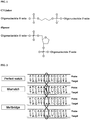
- meltbridge base stable abasic site
- SNP possible mutation
- This meltbridge base has the particular advantage that it does not form a hydrogen bridge bond or otherwise specifically interact with the opposite base and thus, as shown in the following experiments, does not affect the melting point of the probe.
- the modified probes have a defined melting temperature which is independent from the opposite base and can be measured in a narrow temperature range.
- the modified oligonucleotides were ordered and tested in various variants (different reporter dyes, different quenchers, different suppliers). A probe was used as control, which was not modified. All the reactions were carried out on a Rotor-Gene Q (QIAGEN, Hilden, Germany).
- Tmelt or Tm melting temperature
- NTC no template control
- IVT in vitro transcript
- the melting temperature of the probes was first tested using artificial templates which were antisense oligonucleotides (oligonucleotides having the sequence which is reverse complementary to the probe and being longer than the probe due to 3 nucleotides both at the 5' and the 3' end).
- Two different antisense oligonucleotides were used, i.e. one with a perfectly complementary sequence to the control probe and the other one having a base substitution at the site directly complementary to the modification; see Table 1.
- Table 1 SEQ ID NO. 1 RhVrc AS3 5'AGC AATTGCGGGA C GGGACCGA CTA-3'
- Table 1 shows the sequences of antisense oligonucleotides. The position where the antisense oligonucleotides differ from one another are marked, respectively. The sequence hybridizing to the probe used is underlined.
- Table 2 shows the sequences of the probes used. The position carrying the modification is marked in bold. The probes were ordered with the fluorophor FAM and with the quencher BHQ1.
- Table 3 shows the composition of the mix for the melting profile analysis with antisense oligonucleotides.
- Fig. 3 illustrates the protocol for the melting profile analysis.
- the melting profile was registered in the presence of the unmodified probe RhVrc-TM3 and the antisense oligonucleotide RhVrc AS4 (a mismatch). In this case, the melting temperature of the probe was 65 °C; see Fig. 4 .
- the difference of 5.9 °C is due to the mismatch in the antisense oligonucleotide RhVrc AS4.
- RhVrc-TM7 dSpacer
- RhVrc-TM8 C3-linker
- Example 2 demonstrates the feasibility of a PCR and melting profile analysis by means of modified probes which do not recognize differences between different mutations (FAM label).
- This experiment is to show the feasibility of a real-time PCR reaction with subsequent melting profile analysis by means of probes modified by different spacers. We show, the melting temperature of the probe is not affected by the presence of templates with different sequences.
- RhV2 and RhV4 were ordered as plasmid (Geneart AG).
- Table 6 shows the sequences of the primers used.
- Table 6 RhV Fo (SEQ ID NO. 6) 5'-GTGAAGAGCCSCGTGTGCTC-3' RhV Ro (SEQ ID NO. 7) 5'-TATATATTGTCACCATAAGC-3'
- Control reactions were carried out in the presence of an unmodified probe (RhVrc-TM3). Reactions with template (solid and dotted curves in Fig. 9 , Fig. 10 and Fig. 11 ) and without template (thick curves in Fig. 9 , Fig. 10 and Fig. 11 , water was added to all; no template was added) were carried out respectively. The reactions without template were carried out as control for possible occurrence of nonspecific background.
- PCR protocol is represented in Fig. 8 (5 min at 95 °C, followed by 50 cycles of 15 sec at 95 °C, 30 sec at 60 °C).
- Fluorescence data (amplification plots) were registered during the 60 °C step.
- the PCRs were carried out using a Rotor Gene (Qiagen) with a reaction volume of 25 ⁇ l. Subsequently, the PCR products were subjected to a melting profile analysis.
- Fig. 9 , Fig. 10 and Fig. 11 show the amplification plots which were registered during the real-time PCR reaction in the presence of different probes and different templates. The curves show that all probes used can be used in real-time PCR.
- Fig. 9 , Fig. 10 and Fig. 11 show the melting profile analysis following the PCR.
- the unmodified probe RhVrc-TM3 showed different melting temperatures depending on which template, RhV2 or RhV4, was present in the reaction.
- the melting temperatures of the RhVrc-TM7 and the RhVrc-TM8 probes did not differ; in the presence of templates carrying a mutation, they did not differ either.
- Example 3 demonstrates the feasibility of an RT-PCR and melting profile analysis by means of modified probes which do not recognize differences between different mutations (Quasar705 label).
- the melting temperature of the probe is not affected by the presence of templates with different sequences.
- a segment of the genome of two variants of human parainfluenza virus 2 was used as an example. These were constructs which correspond, on the one hand, to human parainfluenza virus 2 (GenBank: NC_003443) and, on the other hand, to human parainfluenza virus strain V98 (GenBank: AF533011); see Fig. 12. In this segment, the two sequences selected differ by a base substitution, i.e. C to T. These artificial sequences were created as plasmids and transcribed into RNA as in vitro transcript.
- the primers indicated in Table 9 below and the probes indicated in Table 8 were used.
- the probe sequences differ in a single base substitution. All probes used are modified by means of the fluorescent dye Quasar705 and BHQ2 quencher (Biosearch Technologies). The dSpacer was not offered by this supplier, for this reason, only probes with the C3-linker were tested.
- Table 9 (Sequence of the primers used) PIV-2 Fi-ohne Tag (SEQ ID NO. 8) 5'-CACTACCTTCTGCAGCTATG-3' PIV-2 Ri-ohne Tag (SEQ ID NO.
- Control reactions were carried out in the presence of an unmodified probe (probes Piv2-Probe1, Piv2-Probe2 and PIV2 TM6). Reactions with template and without template were carried out respectively. The reactions without template were carried out as control for possible occurrence of nonspecific background.
- the PCR protocol is 20 min at 50 °C, 5 min at 95 °C, followed by 45 cycles of 15 sec at 95 °C, 45 sec at 60 °C.
- Fluorescence data (amplification plots) were registered during the 60 °C step.
- the RT-PCR analyses were carried out using an RG-Q (Qiagen) with a reaction volume of 25 ⁇ l. Subsequently, the PCR products were subjected to a melting profile analysis.
- the unmodified probes Piv2-Probe1 and Piv2-Probe1 showed different melting temperatures depending on which template, PIV2.1 or PIV2.2 was present.
- the melting temperatures of probe PIV2 TM4 C3 modified with the C3-linker did not differ from one another; in the presence of templates carrying a mutation, they did not differ either. In all reactions, the NTCs did not show a peak.
- the real-time RT-PCR was repeated with new probes (using unmodified probe PIV2 TM6 and probe PIV2 TM7 C3 modified with C3-linker) which had a modified sequence in comparison to probes Piv2-Probe1, Piv2-TagMelt2 and PIV2 TM4 C3.
- the results described so far could be confirmed in the real-time RT-PCR as well as in the melting profile analysis.
- the curves in the real-time RT-PCR can be compared with each other with respect to Ct value and the height of the graph plateau.
- probes modified with a C3-linker are as functional in the real-time RT-PCR as the unmodified probes (probes Piv2-Probe1, Piv2-Probe2 and PIV2 TM6).
- the unmodified probe PIV2 TM6 showed different melting temperatures depending on which template, PIV2.1 or PIV2.2, was present in the reaction.
- the melting temperatures of probe PIV2 TM7 C3 modified with C3-linker did not differ; in the presence of templates carrying a mutation, they did not differ either. In all reactions, the NTCs did not show a peak.
- Table 12 (Test of melting temperatures of the different probes) Probe Tmelt PIV2.1 (°C) Tmelt PIV2.2 (°C) Delta T (Match-Mismatch) (°C) PIV2 TM6 70,25 (match) 67,6 (mismatch) 2,6 PIV2 TM7 C3 (modified) 65,65 65,73 0,1
Landscapes
- Chemical & Material Sciences (AREA)
- Life Sciences & Earth Sciences (AREA)
- Organic Chemistry (AREA)
- Proteomics, Peptides & Aminoacids (AREA)
- Zoology (AREA)
- Wood Science & Technology (AREA)
- Health & Medical Sciences (AREA)
- Engineering & Computer Science (AREA)
- Analytical Chemistry (AREA)
- Microbiology (AREA)
- Immunology (AREA)
- Molecular Biology (AREA)
- Biotechnology (AREA)
- Biophysics (AREA)
- Physics & Mathematics (AREA)
- Biochemistry (AREA)
- Bioinformatics & Cheminformatics (AREA)
- General Engineering & Computer Science (AREA)
- General Health & Medical Sciences (AREA)
- Genetics & Genomics (AREA)
- Chemical Kinetics & Catalysis (AREA)
- Measuring Or Testing Involving Enzymes Or Micro-Organisms (AREA)
Claims (8)
- Verfahren zum Nachweis einer Nukleinsäure, umfassend die Schritte:a. Amplifikation der nachzuweisenden Nukleinsäure,b. während oder nach der Amplifikation, Hybridisieren der nachzuweisenden Nukleinsäure an einer Sonde die eine abasische Stelle umfasst, die zusätzlich eine nachweisbare Markierung trägt, wobei die Position der abasischen Stelle einer Position entspricht, von der bekannt ist, dass sie einen Polymorphismus in der nachzuweisenden Nukleinsäure aufweist,c. und wobei die Nukleinsäure detektiert wird, wenn eine Hybridisierung auftritt,wobei das Amplifikationsverfahren eine real-time PCR ist und die Schmelztemperatur und/oder der Schmelzpunkt der Sonde während der PCR oder nach der PCR bestimmt wird,
wobei das Verfahren mindestens eine weitere Sonde umfasst, die auch eine abasische Stelle umfasst, die aber die gleiche Markierung wie die erste Hybridisierungssonde trägt und wobei die Sonden aufgrund ihrer unterschiedlichen Schmelztemperaturen unterscheidbar sind. - Verfahren gemäß Anspruch 1, wobei nach der Hybridisierung die Schmelztemperatur und/oder der Schmelzpunkt der ersten Hybridisierungssonde bestimmt wird und die Sonde eine Markierung trägt, die nachweisbar ist, wenn die Sonde an ihr Ziel hybridisiert oder von ihrem Ziel dissoziiert.
- Verfahren gemäß Anspruch 1 oder 2, wobei die abasische Stelle von einer 1'-2'-Didesoxyribose oder einem 1,3-Propandiol abstammt.
- Verfahren gemäß den Ansprüchen 1 bis 3, wobeia. jede der Sonden spezifisch für eine Nukleinsäuresequenz ist,b. mindestens zwei Sonden die gleiche Markierung tragen; undc. jede der Sonden, die die gleiche Markierung tragen, eine Schmelztemperatur (Tm), hat die um mehr als 1° C von den anderen Sonden abweicht.
- Verfahren gemäß den Ansprüchen 1 bis 4, wobei die erste Sonde ausgewählt ist aus der Gruppe von TaqMan-Sonde, Scorpion-Sonde, Molecular Beacon-Sonde, Lichtcycler-Sonde, LUX-Sonde und Amplifluor-Sonde.
- Oligonukleotidsonde, ausgewählt aus der Gruppe von TaqMan-Sonde, Scorpion-Sonde, Molecular-Beacon-Sonde, Lichtcycler-Sonde, LUX-Sonde und Amplifluor-Sonde, wobei die Sonde mindestens eine abasische Stelle umfasst und wobei die abasische Stelle einer Position entspricht, von der bekannt ist, dass sie einen Polymorphismus in der nachzuweisenden Nukleinsäure aufweist.
- Kit zum Nachweis einer Nukleinsäure, wobei das Kit mindestens eine Oligonukleotidsonde mit einer abasischen Stelle umfasst und wobei die abasische Stelle einer Position entspricht, von der bekannt ist, dass sie einen Polymorphismus in der nachzuweisenden Nukleinsäure aufweist, wobei die Sonde markiert ist und wobei die Sonde eine TaqMan-Sonde, Scorpion-Sonde, Molecular Beacon-Sonde, Lichtcycler-Sonde, LUX-Sonde oder Amplifluor-Sonde ist.
- Kit gemäß Anspruch 7, wobei das Kit zwei Oligonukleotidsonden umfasst, wobei diese zwei die gleiche Markierung tragen, wobei mindestens eine Sonde eine abasische Stelle trägt und beide spezifisch für ein gegebenes Ziel sind.
Priority Applications (1)
| Application Number | Priority Date | Filing Date | Title |
|---|---|---|---|
| EP12714582.9A EP2689032B1 (de) | 2011-03-24 | 2012-03-21 | Modifizierte hybridisierungssonden |
Applications Claiming Priority (3)
| Application Number | Priority Date | Filing Date | Title |
|---|---|---|---|
| EP11159652 | 2011-03-24 | ||
| EP12714582.9A EP2689032B1 (de) | 2011-03-24 | 2012-03-21 | Modifizierte hybridisierungssonden |
| PCT/EP2012/001602 WO2012126639A1 (en) | 2011-03-24 | 2012-03-21 | Modified hybridization probes |
Publications (2)
| Publication Number | Publication Date |
|---|---|
| EP2689032A1 EP2689032A1 (de) | 2014-01-29 |
| EP2689032B1 true EP2689032B1 (de) | 2018-05-30 |
Family
ID=45974247
Family Applications (1)
| Application Number | Title | Priority Date | Filing Date |
|---|---|---|---|
| EP12714582.9A Not-in-force EP2689032B1 (de) | 2011-03-24 | 2012-03-21 | Modifizierte hybridisierungssonden |
Country Status (3)
| Country | Link |
|---|---|
| US (1) | US20140057263A1 (de) |
| EP (1) | EP2689032B1 (de) |
| WO (1) | WO2012126639A1 (de) |
Families Citing this family (6)
| Publication number | Priority date | Publication date | Assignee | Title |
|---|---|---|---|---|
| US11473140B2 (en) * | 2013-11-26 | 2022-10-18 | Lc Sciences Lc | Highly selective omega primer amplification of nucleic acid sequences |
| US9637791B2 (en) * | 2013-12-20 | 2017-05-02 | Roche Molecular Systems, Inc. | Multiplexed nucleic acid target identification by strucutre based probe cleavage |
| WO2015147370A1 (en) * | 2014-03-28 | 2015-10-01 | Seegene, Inc. | Detection of target nucleic acid sequences using different detection temperatures |
| EP2949759B1 (de) * | 2014-05-27 | 2017-07-26 | Université Paris Sud 11 | Gemultiplexter homogener Oligonukleotidnachweis |
| EP3548634B1 (de) * | 2016-12-02 | 2021-02-24 | CONGEN Biotechnologie GmbH | Sonde zur detektion von snps |
| JP6956800B2 (ja) | 2017-03-25 | 2021-11-02 | ジェン−プローブ・インコーポレーテッド | アデノウイルス、メタニューモウイルス、および/またはライノウイルス核酸を検出するための組成物、方法、およびキット |
Citations (2)
| Publication number | Priority date | Publication date | Assignee | Title |
|---|---|---|---|---|
| US20020001844A1 (en) * | 2000-02-28 | 2002-01-03 | Frutos Anthony Glenn | Method for label-free detection of hybridized DNA targets |
| WO2010067874A1 (ja) * | 2008-12-12 | 2010-06-17 | 株式会社 東芝 | 脱塩基ヌクレオチドを含む核酸プライマーおよび/または核酸プローブを使用した標的核酸の検出方法 |
Family Cites Families (9)
| Publication number | Priority date | Publication date | Assignee | Title |
|---|---|---|---|---|
| DE3223104A1 (de) | 1982-06-21 | 1983-12-22 | Hoechst Ag, 6230 Frankfurt | Photopolymerisierbares gemisch und damit hergestelltes photopolymerisierbares kopiermaterial |
| US6361940B1 (en) | 1996-09-24 | 2002-03-26 | Qiagen Genomics, Inc. | Compositions and methods for enhancing hybridization and priming specificity |
| US20030165888A1 (en) * | 2001-07-18 | 2003-09-04 | Brown Bob D. | Oligonucleotide probes and primers comprising universal bases for diagnostic purposes |
| WO2004111072A2 (en) * | 2003-06-12 | 2004-12-23 | Applera Corporation | Combinatorial nucleobase oligomers comprising universal base analogues and methods for making and using same |
| US20060014189A1 (en) * | 2004-06-30 | 2006-01-19 | Applera Corporation | Controls for determining reaction performance in polynucleotide sequence detection assays |
| WO2006076650A2 (en) * | 2005-01-12 | 2006-07-20 | Applera Corporation | Compositions, methods, and kits for selective amplification of nucleic acids |
| KR101110013B1 (ko) * | 2007-10-05 | 2012-02-29 | (주)바이오니아 | 서열 내에 어베이직 부분을 포함하는 pcr 증폭용프라이머 |
| EP2116614A1 (de) | 2008-05-06 | 2009-11-11 | Qiagen GmbH | Gleichzeitiger Nachweis mehrerer Nukleinsäuresequenzen in einer Reaktion |
| GB0821457D0 (en) * | 2008-11-24 | 2008-12-31 | Trillion Genomics Ltd | Oligonucleotides |
-
2012
- 2012-03-21 EP EP12714582.9A patent/EP2689032B1/de not_active Not-in-force
- 2012-03-21 WO PCT/EP2012/001602 patent/WO2012126639A1/en not_active Ceased
- 2012-03-21 US US14/006,794 patent/US20140057263A1/en not_active Abandoned
Patent Citations (2)
| Publication number | Priority date | Publication date | Assignee | Title |
|---|---|---|---|---|
| US20020001844A1 (en) * | 2000-02-28 | 2002-01-03 | Frutos Anthony Glenn | Method for label-free detection of hybridized DNA targets |
| WO2010067874A1 (ja) * | 2008-12-12 | 2010-06-17 | 株式会社 東芝 | 脱塩基ヌクレオチドを含む核酸プライマーおよび/または核酸プローブを使用した標的核酸の検出方法 |
Also Published As
| Publication number | Publication date |
|---|---|
| EP2689032A1 (de) | 2014-01-29 |
| WO2012126639A1 (en) | 2012-09-27 |
| US20140057263A1 (en) | 2014-02-27 |
Similar Documents
| Publication | Publication Date | Title |
|---|---|---|
| EP2516679B1 (de) | Nachweis einer zielsequenz mit einem tsg-primer | |
| JP5385973B2 (ja) | 反応における複数の核酸配列の同時検出 | |
| US20070048758A1 (en) | Improved primer-based amplification methods | |
| US20110129824A1 (en) | Double-stranded probes for the fluorescent detection of nucleic acids | |
| EP2689032B1 (de) | Modifizierte hybridisierungssonden | |
| US10704087B2 (en) | Cooperative primers, probes, and applications thereof | |
| WO1999066071A1 (en) | Pcr primer constructs for use in an integrated signalling system | |
| EP2480689A1 (de) | Nachweis von zielnukleinsäuresequenzen durch zyklische exonukleolysereaktionen | |
| US20030134307A1 (en) | Asymmetric PCR with nuclease-free polymerase or nuclease-resistant molecular beacons | |
| CA3118000A1 (en) | Exponential base-3 nucleic acid amplification with reduced amplification time using nested overlapping primers | |
| AU2015270545B2 (en) | Strand-invasion based DNA amplification method | |
| CA2879421A1 (en) | Cooperative primers, probes, and applications thereof | |
| CN101495657B (zh) | 使用可逆修饰寡核苷酸扩增核酸 | |
| KR102097721B1 (ko) | 태그서열 snp를 이용한 단일 검출 프로브 기반 다중 표적 검출방법 | |
| CA3176983A1 (en) | Exponential base-3 and greater nucleic acid amplification with cycling probe | |
| US10689689B2 (en) | Generic method for the stabilization of specific RNA | |
| CA3114004C (en) | Allele-specific design of cooperative primers for improved nucleic acid variant genotyping | |
| CA2705852A1 (en) | Photoinduced electron transfer (pet) primer for nucleic acid amplification | |
| AU2002363464A1 (en) | Asymmetric PCR with nuclease-free polymerase or nuclease-resistant molecular beacons |
Legal Events
| Date | Code | Title | Description |
|---|---|---|---|
| PUAI | Public reference made under article 153(3) epc to a published international application that has entered the european phase |
Free format text: ORIGINAL CODE: 0009012 |
|
| 17P | Request for examination filed |
Effective date: 20131021 |
|
| AK | Designated contracting states |
Kind code of ref document: A1 Designated state(s): AL AT BE BG CH CY CZ DE DK EE ES FI FR GB GR HR HU IE IS IT LI LT LU LV MC MK MT NL NO PL PT RO RS SE SI SK SM TR |
|
| DAX | Request for extension of the european patent (deleted) | ||
| 17Q | First examination report despatched |
Effective date: 20150319 |
|
| STAA | Information on the status of an ep patent application or granted ep patent |
Free format text: STATUS: EXAMINATION IS IN PROGRESS |
|
| GRAP | Despatch of communication of intention to grant a patent |
Free format text: ORIGINAL CODE: EPIDOSNIGR1 |
|
| STAA | Information on the status of an ep patent application or granted ep patent |
Free format text: STATUS: GRANT OF PATENT IS INTENDED |
|
| INTG | Intention to grant announced |
Effective date: 20171207 |
|
| GRAS | Grant fee paid |
Free format text: ORIGINAL CODE: EPIDOSNIGR3 |
|
| GRAA | (expected) grant |
Free format text: ORIGINAL CODE: 0009210 |
|
| STAA | Information on the status of an ep patent application or granted ep patent |
Free format text: STATUS: THE PATENT HAS BEEN GRANTED |
|
| AK | Designated contracting states |
Kind code of ref document: B1 Designated state(s): AL AT BE BG CH CY CZ DE DK EE ES FI FR GB GR HR HU IE IS IT LI LT LU LV MC MK MT NL NO PL PT RO RS SE SI SK SM TR |
|
| REG | Reference to a national code |
Ref country code: GB Ref legal event code: FG4D |
|
| REG | Reference to a national code |
Ref country code: CH Ref legal event code: EP |
|
| REG | Reference to a national code |
Ref country code: AT Ref legal event code: REF Ref document number: 1003661 Country of ref document: AT Kind code of ref document: T Effective date: 20180615 |
|
| REG | Reference to a national code |
Ref country code: IE Ref legal event code: FG4D |
|
| REG | Reference to a national code |
Ref country code: DE Ref legal event code: R096 Ref document number: 602012046861 Country of ref document: DE |
|
| REG | Reference to a national code |
Ref country code: NL Ref legal event code: MP Effective date: 20180530 |
|
| REG | Reference to a national code |
Ref country code: LT Ref legal event code: MG4D |
|
| PG25 | Lapsed in a contracting state [announced via postgrant information from national office to epo] |
Ref country code: BG Free format text: LAPSE BECAUSE OF FAILURE TO SUBMIT A TRANSLATION OF THE DESCRIPTION OR TO PAY THE FEE WITHIN THE PRESCRIBED TIME-LIMIT Effective date: 20180830 Ref country code: FI Free format text: LAPSE BECAUSE OF FAILURE TO SUBMIT A TRANSLATION OF THE DESCRIPTION OR TO PAY THE FEE WITHIN THE PRESCRIBED TIME-LIMIT Effective date: 20180530 Ref country code: NO Free format text: LAPSE BECAUSE OF FAILURE TO SUBMIT A TRANSLATION OF THE DESCRIPTION OR TO PAY THE FEE WITHIN THE PRESCRIBED TIME-LIMIT Effective date: 20180830 Ref country code: SE Free format text: LAPSE BECAUSE OF FAILURE TO SUBMIT A TRANSLATION OF THE DESCRIPTION OR TO PAY THE FEE WITHIN THE PRESCRIBED TIME-LIMIT Effective date: 20180530 Ref country code: ES Free format text: LAPSE BECAUSE OF FAILURE TO SUBMIT A TRANSLATION OF THE DESCRIPTION OR TO PAY THE FEE WITHIN THE PRESCRIBED TIME-LIMIT Effective date: 20180530 Ref country code: LT Free format text: LAPSE BECAUSE OF FAILURE TO SUBMIT A TRANSLATION OF THE DESCRIPTION OR TO PAY THE FEE WITHIN THE PRESCRIBED TIME-LIMIT Effective date: 20180530 Ref country code: CY Free format text: LAPSE BECAUSE OF FAILURE TO SUBMIT A TRANSLATION OF THE DESCRIPTION OR TO PAY THE FEE WITHIN THE PRESCRIBED TIME-LIMIT Effective date: 20180530 |
|
| PG25 | Lapsed in a contracting state [announced via postgrant information from national office to epo] |
Ref country code: RS Free format text: LAPSE BECAUSE OF FAILURE TO SUBMIT A TRANSLATION OF THE DESCRIPTION OR TO PAY THE FEE WITHIN THE PRESCRIBED TIME-LIMIT Effective date: 20180530 Ref country code: LV Free format text: LAPSE BECAUSE OF FAILURE TO SUBMIT A TRANSLATION OF THE DESCRIPTION OR TO PAY THE FEE WITHIN THE PRESCRIBED TIME-LIMIT Effective date: 20180530 Ref country code: HR Free format text: LAPSE BECAUSE OF FAILURE TO SUBMIT A TRANSLATION OF THE DESCRIPTION OR TO PAY THE FEE WITHIN THE PRESCRIBED TIME-LIMIT Effective date: 20180530 Ref country code: GR Free format text: LAPSE BECAUSE OF FAILURE TO SUBMIT A TRANSLATION OF THE DESCRIPTION OR TO PAY THE FEE WITHIN THE PRESCRIBED TIME-LIMIT Effective date: 20180831 |
|
| REG | Reference to a national code |
Ref country code: AT Ref legal event code: MK05 Ref document number: 1003661 Country of ref document: AT Kind code of ref document: T Effective date: 20180530 |
|
| PG25 | Lapsed in a contracting state [announced via postgrant information from national office to epo] |
Ref country code: NL Free format text: LAPSE BECAUSE OF FAILURE TO SUBMIT A TRANSLATION OF THE DESCRIPTION OR TO PAY THE FEE WITHIN THE PRESCRIBED TIME-LIMIT Effective date: 20180530 |
|
| PG25 | Lapsed in a contracting state [announced via postgrant information from national office to epo] |
Ref country code: PL Free format text: LAPSE BECAUSE OF FAILURE TO SUBMIT A TRANSLATION OF THE DESCRIPTION OR TO PAY THE FEE WITHIN THE PRESCRIBED TIME-LIMIT Effective date: 20180530 Ref country code: SK Free format text: LAPSE BECAUSE OF FAILURE TO SUBMIT A TRANSLATION OF THE DESCRIPTION OR TO PAY THE FEE WITHIN THE PRESCRIBED TIME-LIMIT Effective date: 20180530 Ref country code: EE Free format text: LAPSE BECAUSE OF FAILURE TO SUBMIT A TRANSLATION OF THE DESCRIPTION OR TO PAY THE FEE WITHIN THE PRESCRIBED TIME-LIMIT Effective date: 20180530 Ref country code: DK Free format text: LAPSE BECAUSE OF FAILURE TO SUBMIT A TRANSLATION OF THE DESCRIPTION OR TO PAY THE FEE WITHIN THE PRESCRIBED TIME-LIMIT Effective date: 20180530 Ref country code: AT Free format text: LAPSE BECAUSE OF FAILURE TO SUBMIT A TRANSLATION OF THE DESCRIPTION OR TO PAY THE FEE WITHIN THE PRESCRIBED TIME-LIMIT Effective date: 20180530 Ref country code: CZ Free format text: LAPSE BECAUSE OF FAILURE TO SUBMIT A TRANSLATION OF THE DESCRIPTION OR TO PAY THE FEE WITHIN THE PRESCRIBED TIME-LIMIT Effective date: 20180530 Ref country code: RO Free format text: LAPSE BECAUSE OF FAILURE TO SUBMIT A TRANSLATION OF THE DESCRIPTION OR TO PAY THE FEE WITHIN THE PRESCRIBED TIME-LIMIT Effective date: 20180530 |
|
| PG25 | Lapsed in a contracting state [announced via postgrant information from national office to epo] |
Ref country code: SM Free format text: LAPSE BECAUSE OF FAILURE TO SUBMIT A TRANSLATION OF THE DESCRIPTION OR TO PAY THE FEE WITHIN THE PRESCRIBED TIME-LIMIT Effective date: 20180530 |
|
| REG | Reference to a national code |
Ref country code: DE Ref legal event code: R097 Ref document number: 602012046861 Country of ref document: DE |
|
| PLBE | No opposition filed within time limit |
Free format text: ORIGINAL CODE: 0009261 |
|
| STAA | Information on the status of an ep patent application or granted ep patent |
Free format text: STATUS: NO OPPOSITION FILED WITHIN TIME LIMIT |
|
| 26N | No opposition filed |
Effective date: 20190301 |
|
| PG25 | Lapsed in a contracting state [announced via postgrant information from national office to epo] |
Ref country code: SI Free format text: LAPSE BECAUSE OF FAILURE TO SUBMIT A TRANSLATION OF THE DESCRIPTION OR TO PAY THE FEE WITHIN THE PRESCRIBED TIME-LIMIT Effective date: 20180530 |
|
| PG25 | Lapsed in a contracting state [announced via postgrant information from national office to epo] |
Ref country code: MC Free format text: LAPSE BECAUSE OF FAILURE TO SUBMIT A TRANSLATION OF THE DESCRIPTION OR TO PAY THE FEE WITHIN THE PRESCRIBED TIME-LIMIT Effective date: 20180530 |
|
| REG | Reference to a national code |
Ref country code: CH Ref legal event code: PL |
|
| PG25 | Lapsed in a contracting state [announced via postgrant information from national office to epo] |
Ref country code: AL Free format text: LAPSE BECAUSE OF FAILURE TO SUBMIT A TRANSLATION OF THE DESCRIPTION OR TO PAY THE FEE WITHIN THE PRESCRIBED TIME-LIMIT Effective date: 20180530 Ref country code: LU Free format text: LAPSE BECAUSE OF NON-PAYMENT OF DUE FEES Effective date: 20190321 |
|
| REG | Reference to a national code |
Ref country code: BE Ref legal event code: MM Effective date: 20190331 |
|
| PG25 | Lapsed in a contracting state [announced via postgrant information from national office to epo] |
Ref country code: IE Free format text: LAPSE BECAUSE OF NON-PAYMENT OF DUE FEES Effective date: 20190321 Ref country code: CH Free format text: LAPSE BECAUSE OF NON-PAYMENT OF DUE FEES Effective date: 20190331 Ref country code: LI Free format text: LAPSE BECAUSE OF NON-PAYMENT OF DUE FEES Effective date: 20190331 |
|
| PG25 | Lapsed in a contracting state [announced via postgrant information from national office to epo] |
Ref country code: BE Free format text: LAPSE BECAUSE OF NON-PAYMENT OF DUE FEES Effective date: 20190331 |
|
| PG25 | Lapsed in a contracting state [announced via postgrant information from national office to epo] |
Ref country code: TR Free format text: LAPSE BECAUSE OF FAILURE TO SUBMIT A TRANSLATION OF THE DESCRIPTION OR TO PAY THE FEE WITHIN THE PRESCRIBED TIME-LIMIT Effective date: 20180530 |
|
| PG25 | Lapsed in a contracting state [announced via postgrant information from national office to epo] |
Ref country code: PT Free format text: LAPSE BECAUSE OF FAILURE TO SUBMIT A TRANSLATION OF THE DESCRIPTION OR TO PAY THE FEE WITHIN THE PRESCRIBED TIME-LIMIT Effective date: 20181001 Ref country code: MT Free format text: LAPSE BECAUSE OF NON-PAYMENT OF DUE FEES Effective date: 20190321 |
|
| PG25 | Lapsed in a contracting state [announced via postgrant information from national office to epo] |
Ref country code: IS Free format text: LAPSE BECAUSE OF FAILURE TO SUBMIT A TRANSLATION OF THE DESCRIPTION OR TO PAY THE FEE WITHIN THE PRESCRIBED TIME-LIMIT Effective date: 20180930 |
|
| PG25 | Lapsed in a contracting state [announced via postgrant information from national office to epo] |
Ref country code: HU Free format text: LAPSE BECAUSE OF FAILURE TO SUBMIT A TRANSLATION OF THE DESCRIPTION OR TO PAY THE FEE WITHIN THE PRESCRIBED TIME-LIMIT; INVALID AB INITIO Effective date: 20120321 |
|
| PG25 | Lapsed in a contracting state [announced via postgrant information from national office to epo] |
Ref country code: MK Free format text: LAPSE BECAUSE OF FAILURE TO SUBMIT A TRANSLATION OF THE DESCRIPTION OR TO PAY THE FEE WITHIN THE PRESCRIBED TIME-LIMIT Effective date: 20180530 |
|
| PGFP | Annual fee paid to national office [announced via postgrant information from national office to epo] |
Ref country code: DE Payment date: 20240320 Year of fee payment: 13 Ref country code: GB Payment date: 20240320 Year of fee payment: 13 |
|
| PGFP | Annual fee paid to national office [announced via postgrant information from national office to epo] |
Ref country code: IT Payment date: 20240329 Year of fee payment: 13 Ref country code: FR Payment date: 20240327 Year of fee payment: 13 |
|
| REG | Reference to a national code |
Ref country code: DE Ref legal event code: R119 Ref document number: 602012046861 Country of ref document: DE |
|
| GBPC | Gb: european patent ceased through non-payment of renewal fee |
Effective date: 20250321 |
|
| PG25 | Lapsed in a contracting state [announced via postgrant information from national office to epo] |
Ref country code: DE Free format text: LAPSE BECAUSE OF NON-PAYMENT OF DUE FEES Effective date: 20251001 |
|
| PG25 | Lapsed in a contracting state [announced via postgrant information from national office to epo] |
Ref country code: GB Free format text: LAPSE BECAUSE OF NON-PAYMENT OF DUE FEES Effective date: 20250321 |
|
| PG25 | Lapsed in a contracting state [announced via postgrant information from national office to epo] |
Ref country code: FR Free format text: LAPSE BECAUSE OF NON-PAYMENT OF DUE FEES Effective date: 20250331 Ref country code: IT Free format text: LAPSE BECAUSE OF NON-PAYMENT OF DUE FEES Effective date: 20250321 |