EP2695708B2 - Elektrisches Handwerkzeug mit diskretem Bedienelement - Google Patents
Elektrisches Handwerkzeug mit diskretem Bedienelement Download PDFInfo
- Publication number
- EP2695708B2 EP2695708B2 EP13173198.6A EP13173198A EP2695708B2 EP 2695708 B2 EP2695708 B2 EP 2695708B2 EP 13173198 A EP13173198 A EP 13173198A EP 2695708 B2 EP2695708 B2 EP 2695708B2
- Authority
- EP
- European Patent Office
- Prior art keywords
- moving element
- power tool
- control
- control device
- handheld power
- Prior art date
- Legal status (The legal status is an assumption and is not a legal conclusion. Google has not performed a legal analysis and makes no representation as to the accuracy of the status listed.)
- Active
Links
Images

Classifications
-
- H—ELECTRICITY
- H02—GENERATION; CONVERSION OR DISTRIBUTION OF ELECTRIC POWER
- H02K—DYNAMO-ELECTRIC MACHINES
- H02K11/00—Structural association of dynamo-electric machines with electric components or with devices for shielding, monitoring or protection
- H02K11/30—Structural association with control circuits or drive circuits
- H02K11/33—Drive circuits, e.g. power electronics
-
- B—PERFORMING OPERATIONS; TRANSPORTING
- B25—HAND TOOLS; PORTABLE POWER-DRIVEN TOOLS; MANIPULATORS
- B25F—COMBINATION OR MULTI-PURPOSE TOOLS NOT OTHERWISE PROVIDED FOR; DETAILS OR COMPONENTS OF PORTABLE POWER-DRIVEN TOOLS NOT PARTICULARLY RELATED TO THE OPERATIONS PERFORMED AND NOT OTHERWISE PROVIDED FOR
- B25F5/00—Details or components of portable power-driven tools not particularly related to the operations performed and not otherwise provided for
-
- H—ELECTRICITY
- H01—ELECTRIC ELEMENTS
- H01H—ELECTRIC SWITCHES; RELAYS; SELECTORS; EMERGENCY PROTECTIVE DEVICES
- H01H9/00—Details of switching devices, not covered by groups H01H1/00 - H01H7/00
- H01H9/02—Bases, casings, or covers
- H01H9/06—Casing of switch constituted by a handle serving a purpose other than the actuation of the switch, e.g. by the handle of a vacuum cleaner
- H01H9/061—Casing of switch constituted by a handle serving a purpose other than the actuation of the switch, e.g. by the handle of a vacuum cleaner enclosing a continuously variable impedance
-
- H—ELECTRICITY
- H01—ELECTRIC ELEMENTS
- H01H—ELECTRIC SWITCHES; RELAYS; SELECTORS; EMERGENCY PROTECTIVE DEVICES
- H01H9/00—Details of switching devices, not covered by groups H01H1/00 - H01H7/00
- H01H9/02—Bases, casings, or covers
- H01H9/06—Casing of switch constituted by a handle serving a purpose other than the actuation of the switch, e.g. by the handle of a vacuum cleaner
- H01H9/063—Casing of switch constituted by a handle serving a purpose other than the actuation of the switch, e.g. by the handle of a vacuum cleaner enclosing a reversing switch
-
- H—ELECTRICITY
- H02—GENERATION; CONVERSION OR DISTRIBUTION OF ELECTRIC POWER
- H02K—DYNAMO-ELECTRIC MACHINES
- H02K7/00—Arrangements for handling mechanical energy structurally associated with dynamo-electric machines, e.g. structural association with mechanical driving motors or auxiliary dynamo-electric machines
- H02K7/14—Structural association with mechanical loads, e.g. with hand-held machine tools or fans
- H02K7/145—Hand-held machine tool
-
- B—PERFORMING OPERATIONS; TRANSPORTING
- B25—HAND TOOLS; PORTABLE POWER-DRIVEN TOOLS; MANIPULATORS
- B25B—TOOLS OR BENCH DEVICES NOT OTHERWISE PROVIDED FOR, FOR FASTENING, CONNECTING, DISENGAGING, OR HOLDING
- B25B21/00—Portable power-driven screw or nut setting or loosening tools; Attachments for drilling apparatus serving the same purpose
- B25B21/02—Portable power-driven screw or nut setting or loosening tools; Attachments for drilling apparatus serving the same purpose with means for imparting impact to screwdriver blade or nut socket
Definitions
- the invention relates to an electric hand tool with an operating element.
- the invention relates to an electric hand tool with an operating element for controlling an electrical function of the hand tool.
- An electric hand tool for example a screwdriver or drill, comprises an electric motor in order to set a tool holder of the hand tool in rotation. Operation takes place by means of one or more control elements, one of which may influence several functions of the hand tool. For example, a first operating element can control a running direction of the electric motor or the tool holder, a second operating element can control a running speed and a third operating element can control a torque limitation that prevents the hand tool from delivering a higher than a predetermined torque via the tool holder.
- Such an operating element usually comprises a large number of electrical and mechanical components which are primarily set up to trigger an electrical switching process assigned to the operating element.
- a cross switch for reversing the polarity of the electric motor can be included, for example.
- the electrical switching process is usually processed further by means of an electronic control device.
- Such operating elements can become quite complex depending on a required design, a functional scope and a degree of integration, so that development and manufacturing costs can also be high.
- the service life of a complex control element can be short because of the large number of possible weak points. If the control element is highly integrated or miniaturized, repairing individual components is often impossible in the event of a fault.
- the invention is therefore based on the object of specifying an electric hand tool which comprises an improved, simple operating element.
- An electric hand tool comprises an electrical consumer, an operating element with a first movable element for actuation by a user and with a second movable element and a control device for controlling a current flow between the energy store and the consumer on the basis of a position of the first and the second movable element.
- the second movable element is set up to control another function of the hand tool or a speed of rotation of the electrical consumer, in particular of the electric motor.
- the control device is constructed separately from the operating element, and the position of the movable element is converted into an electrical control signal in the control device.
- the first movable element is set up to control a direction of rotation of the consumer, in particular the electric motor, the conversion of the mechanical position of the operating element into a control signal for controlling electronic assemblies of the control device by a specially provided scanning device of the control device.
- the invention it is possible to constructively separate the operating function which is presented to the user from the electrical switching function which controls an operating state of the hand tool.
- This allows the first and second movable elements in an improved manner to produce a haptic feedback to the user can be designed so that the operability of the hand tool can be improved even without optical or acoustic interaction.
- the first movable element is designed to require a predetermined operating force to change its position.
- the force required in this way is advantageously independent of a force which is required to generate corresponding electrical control signals.
- the operating force of the first movable element can be completely designed for the haptic needs of the user without having to take into account electrical aspects or aspects of converting a mechanical position into an electrical control signal or a mechanical behavior of an electrical component, in particular a switch .
- the control device which scans the mechanical movement of the first movable element and controls the current through the consumer on the basis of the scanning, can be dimensioned independently of the operating forces that the user has to apply to move the operating element. If, for example, only a miniature switch with low or very low electrical power is to be operated, it can be designed to be small and light, while a mechanical mechanism that controls the operating forces for the user on the first movable element can be dimensioned independently of this.
- the operating element comprises a latching mechanism which is designed to counteract a movement of the first movable element between predetermined positions.
- the latching mechanism can be designed to mechanically generate a predetermined noise when the first movable element is moved into one of the predetermined positions.
- the user can perceive the noise acoustically or haptically via structure-borne sound.
- the haptic feedback of the first movable element to the user can be adapted further in a targeted manner to his needs, without having to take into account the conditions of the hand tool and especially the control device.
- the operating element comprises a second movable element for operation by a user and the mobility of the second movable element is prevented as long as the first movable element is in a predetermined position of the latching mechanism.
- a state or a position of the second movable element can thus be locked.
- this state can correspond to a deactivated hand tool, so that unintentional start-up of the hand tool, for example during transport or also during handling, can be avoided.
- the second movable element may include an electrical contact for providing an electrical signal indicative of its position.
- the function of the hand tool controlled by the second movable element can require tactile feedback that is easier to use.
- the second movable element can be operated analogously and can comprise a potentiometer for providing an electrical signal.
- the first movable element can comprise connecting elements for the form-fitting attachment of the second movable element. In this way, the first movable element and the second movable element can easily be joined together to form the operating element.
- the first movable element can be rotatable about an axis.
- the axis can easily be dimensioned so that even unusually large operating forces can be safely absorbed by the user without having to introduce these forces into the control device.
- the consumer comprises an electric motor and the first movable element is set up to control a direction of rotation of the electric motor.
- a haptic feedback can be given particularly well when the first movable element is actuated, for example in the form of a full jerk, latching or jumping, without having to generate this feedback in connection with mechanical elements of the control device.
- the first movable element comprises connecting elements for the form-fitting attachment of the control device.
- the control device can be implemented by one or more switches.
- a more complex control device can be used, which can in particular allow a more differentiated evaluation of the position of the first movable element.
- corresponding operating elements can be used on different control devices and, if necessary, on different hand tools, so that the haptic feedback to the user via different device variants can remain the same.
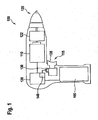
- Fig. 1 shows an electric hand tool 100.
- the hand tool 100 comprises an energy store 105, an electrical consumer 110, an operating element 115 and a control device 120.
- the electric hand tool 100 is a cordless screwdriver or cordless drill.
- the consumer 110 comprises an electric motor which is coupled to a mechanical tool holder 125 via a gear 122.
- the tool holder 125 is designed in particular to accommodate a drill, milling cutter or screwing tool.
- the operating element 115 comprises at least one first movable element 130.
- a second movable element 135 is also provided.
- the operation of the consumer 110 can be controlled by the control device 120, which controls a current flow between the energy store 105 and the consumer 110. These Control is dependent on a position of the first movable element 130.
- the second movable element can be set up to control another function of the hand tool 100.
- the first movable element 130 is movable by a user of the hand tool 100.
- the movable element 130 can be displaceable along a direction of movement or rotatable or oscillatable about an axis of movement.
- the operating element 115 is preferably set up to enable the movement of the movable element 130 in such a way that actuation and resistance forces, actuation paths or noises associated with actuations are suitable for providing haptic and possibly also acoustic feedback to convey an operating process.
- the first movable element 130 can, for example, control a direction of rotation of the electric motor 110 and the second movable element 135 can control a rotational speed of the electric motor 110.
- control device 120 is constructed separately from the operating element 115.
- the operating element 115 can be a completely mechanical component which does not include any directly scanned electrical properties such as a resistor or a switching function. Instead, the position or movement provided by the operating element 115 is converted into an electrical signal by the control device 120.
- control device 120 can only comprise a switch which can be actuated by the operating element 115.
- control device 120 can comprise, for example, a differentiated electronic control device, the conversion of the mechanical position of the operating element 115 into a control signal for controlling electronic assemblies of the control device 120 being carried out by a specially provided scanning device 140 of the control device 120.
- the scanning device 140 can comprise, for example, a microswitch, a spring contact, a slide switch, a reed contact, a Hall sensor, a light barrier or another suitable device for scanning the operating element 115.
- the electrical elements for converting the position of the second movable element 135 into an electrical signal or an electrically scannable property can be comprised by the operating element 115, in particular by the second movable element 135.
- Fig. 2 shows the operating element 115 for the hand tool 100 Fig. 1 in an exemplary embodiment.
- a latching connection in particular a detachable latching connection
- the upper section 205 comprises the first movable element 130 and can also comprise a number of further elements which ensure or define a mobility of the first element 130 in the upper section 205.
- Such elements can in particular include a spring, a ball loaded by the spring, a lever or an axle.
- an axis of rotation 215 is provided around which the first element 130 can be moved.
- the lower section 210 comprises the second movable element 135 and optionally elements in order to define the mobility of the second element 135 and / or the mobility characteristic.
- a switch or potentiometer is also installed, an electrical connection 220 being provided for making electrical contact with such components.
- the lower section 210 and in particular the presence of the scanning device 140 are not required.
- the upper section 205 and the lower section 210 are preferably attachable to one another.
- a snap connection 225 is provided in the embodiment shown.
- Fig. 3 shows the operating element 115 Fig. 2 in a perspective from above.
- a connecting element 305 for connecting the control device 120 or its scanning device 140 is provided on the operating element 115.
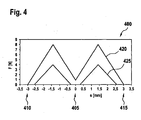
- Fig. 4 shows a force-displacement diagram 400 of the operating element 115 of one of the Figures 1 to 3 .
- the diagram 400 relates to a circumferential path of the first movable element 130 about its assigned axis of rotation 215. This path s is plotted in the horizontal direction, while the associated force is plotted in the vertical direction.
- the specified units are purely exemplary.
- the movable element 130 With a path s of 0 mm, the movable element 130 is in a central position. Here, the mobility of the second element 135 can be mechanically prevented, limited or made more difficult. This position of the first movable element 130 is therefore also called the locking position 405.
- This position of the first movable element 130 In the position -3 mm there is a left running position 410, in a position of +3 mm a right running position 415.
- the running positions 410, 415 correspond to a left and right direction of rotation of the electric motor 110 of the exemplary hand tool 100 Fig. 1 .
- a first profile 420 shows a relationship between the path s and the force.
- a second curve 425 shows a maximum deviation from the first Course 420. It can be seen that the first course 420 along the path s is symmetrical to the locking position 405.
- an actuating force In order to move from the locking position 405 into one of the running positions 410, 415, an actuating force must be applied which increases with increasing deflection from the locking position 405 up to 8N in the present example. From there the actuating force drops again in order to reach approx. 0 N at the corresponding running position 410, 415.
Landscapes
- Engineering & Computer Science (AREA)
- Power Engineering (AREA)
- Mechanical Engineering (AREA)
- Microelectronics & Electronic Packaging (AREA)
- Surgical Instruments (AREA)
Description
- Die Erfindung betrifft ein elektrisches Handwerkzeug mit einem Bedienelement. Insbesondere betrifft die Erfindung ein elektrisches Handwerkzeug mit einem Bedienelement zur Steuerung einer elektrischen Funktion des Handwerkzeugs.
- Ein elektrisches Handwerkzeug, beispielsweise ein Schraub- oder Bohrgerät, umfasst einen Elektromotor, um eine Werkzeugaufnahme des Handwerkzeugs in Drehung zu versetzen. Eine Bedienung erfolgt mittels eines oder mehrerer Bedienelemente, von denen eines unter Umständen mehrere Funktionen des Handwerkzeugs beeinflusst. Beispielsweise kann ein erstes Bedienelement eine Laufrichtung des Elektromotors bzw. der Werkzeugaufnahme, ein zweites Bedienelement eine Laufgeschwindigkeit und ein drittes Bedienelement eine Drehmomentbeschränkung steuern, die verhindert, dass das Handwerkzeug ein höheres als ein vorbestimmtes Drehmoment über die Werkzeugaufnahme abgibt.
- Ein derartiges Bedienelement umfasst üblicherweise eine Vielzahl elektrischer und mechanischer Komponenten, die in erster Linie dazu eingerichtet sind, einen dem Bedienelement zugeordneten elektrischen Schaltvorgang auszulösen. Im Fall des Bedienelements, das für die Wahl der Laufrichtung des Elektromotors verwendbar ist, kann beispielsweise ein Kreuzschalter zum Umpolen des Elektromotors umfasst sein. Eine Weiterverarbeitung des elektrischen Schaltvorgangs erfolgt üblicherweise mittels einer elektronischen Steuereinrichtung.
- Derartige Bedienelemente können in Abhängigkeit einer erforderlichen Bauform, eines Funktionsumfangs und eines Integrationsgrades recht komplex werden, sodass ein Entwicklungs- und Herstellungsaufwand ebenfalls groß sein kann. Eine Lebensdauer eines komplexen Bedienelements kann wegen der großen Anzahl möglicher Schwachstellen gering sein. Ist das Bedienelement hochgradig integriert bzw. miniaturisiert, so ist im Fehlerfall häufig eine Instandsetzung einzelner Bestandteile ausgeschlossen.
- Der Erfindung liegt daher die Aufgabe zugrunde, ein elektrisches Handwerkzeug anzugeben, welches ein verbessertes, einfaches Bedienelement umfasst.
- Die Erfindung löst diese Aufgabe mittels eines Handwerkzeugs mit den Merkmalen des unabhängigen Anspruchs. Unteransprüche geben bevorzugte Ausführungsformen wieder.
- Ein erfindungsgemäßes elektrisches Handwerkzeug umfasst einen elektrischen Verbraucher, ein Bedienelement mit einem ersten beweglichen Element zur Betätigung durch einen Benutzer und mit einem zweiten beweglichen Element und eine Steuereinrichtung zur Steuerung eines Stromflusses zwischen dem Energiespeicher und dem Verbraucher auf der Basis einer Stellung des ersten und des zweiten beweglichen Elements. Das zweite bewegliche Element ist dazu eingerichtet, eine andere Funktion des Handwerkzeugs bzw. eine Drehgeschwindigkeit des elektrischen Verbrauchers, insbesondere des Elektromotors, zu steuern. Dabei ist die Steuereinrichtung vom Bedienelement getrennt aufgebaut und eine Umsetzung der Stellung des beweglichen Elements in ein elektrisches Steuersignal findet in der Steuereinrichtung statt.
- Erfindungsgemäß ist das erste bewegliche Element dazu eingerichtet, eine Drehrichtung des Verbrauchers, insbesondere des Elektromotors, zu steuern, wobei die Umsetzung des mechanischen Stellung des Bedienelements in ein Steuersignal zur Ansteuerung von elektronischen Baugruppen der Steuereinrichtung durch eine speziell vorgesehene Abtasteinrichtung der Steuereinrichtung durchgeführt wird.
- Erfindungsgemäß ist es möglich, die Bedienfunktion, die sich dem Benutzer darbietet, von der elektrischen Schaltfunktion, die einen Betriebszustand des Handwerkzeugs steuert, konstruktiv zu trennen. Dadurch kann das erste und zweite bewegliche Element in verbesserter Weise zur Erzeugung einer haptischen Rückmeldung an den Benutzer ausgelegt werden, sodass die Bedienbarkeit des Handwerkzeugs auch ohne optische oder akustische Interaktion verbessert sein kann.
- In einer Ausführungsform ist das erste bewegliche Element dazu eingerichtet, eine vorbestimmte Bedienkraft für eine Änderung seiner Stellung zu erfordern. Vorteilhafterweise ist die solchermaßen erforderliche Kraft unabhängig von einer Kraft, die zur Generierung entsprechender elektrischer Steuersignale erforderlich ist.
- Anders ausgedrückt kann das erste bewegliche Element bezüglich seiner Bedienkraft vollständig auf die haptischen Bedürfnisse des Benutzers ausgelegt sein, ohne elektrische Aspekte oder Aspekte der Umsetzung einer mechanischen Stellung in ein elektrisches Steuersignal bzw. ein mechanisches Verhalten einer elektrischen Komponente, insbesondere eines Schalters, berücksichtigen zu müssen. Umgekehrt kann die Steuereinrichtung, die die mechanische Bewegung des ersten beweglichen Elements abtastet und auf der Basis der Abtastung den Strom durch den Verbraucher steuert, unabhängig von den Bedienkräften dimensioniert werden, die der Benutzer zur Bewegung des Bedienelements aufbringen muss. Ist beispielsweise nur ein Miniaturschalter geringer oder geringster elektrischer Leistung zu betätigen, so kann dieser klein und leicht ausgelegt werden, während ein mechanischer Mechanismus, der Betätigungskräfte für den Benutzer am ersten beweglichen Element steuert, davon unabhängig kräftig dimensioniert sein kann.
- In einer bevorzugten Ausführungsform umfasst das Bedienelement einen Rastmechanismus, der dazu eingerichtet ist, einer Bewegung des ersten beweglichen Elements zwischen vorbestimmten Positionen entgegenzuwirken.
- So kann eine unbeabsichtigte Betätigung des ersten beweglichen Elements weniger wahrscheinlich gemacht werden. Eine entsprechende Funktion muss seitens der Steuereinrichtung nicht erneut implementiert werden, sodass an dieser Stelle ein besonders einfaches und gegebenenfalls direktes Element zur Umsetzung der Stellung des zweiten beweglichen Elements in ein elektrisches Signal verwendet werden kann.
- Der Rastmechanismus kann dazu eingerichtet sein, bei einer Bewegung des ersten beweglichen Elements in eine der vorbestimmten Positionen ein vorbestimmtes Geräusch mechanisch zu erzeugen. Das Geräusch kann akustisch oder auch haptisch via Körperschall durch den Benutzer wahrnehmbar sein. So kann die haptische Rückmeldung des ersten beweglichen Elements an den Benutzer weiter zielgerichtet an dessen Bedürfnisse angepasst werden, ohne Gegebenheiten des Handwerkzeugs und speziell der Steuereinrichtung berücksichtigen zu müssen.
- In einer besonders bevorzugten Ausführungsform umfasst das Bedienelement ein zweites bewegliches Element zur Bedienung durch einen Benutzer und die Beweglichkeit des zweiten beweglichen Elements ist unterbunden, solange sich das erste bewegliche Element in einer vorbestimmten Position des Rastmechanismus befindet. So kann eine Verriegelung eines Zustands bzw. einer Stellung des zweiten beweglichen Elements erfolgen. Insbesondere kann dieser Zustand einem deaktivierten Handwerkzeug entsprechen, sodass eine unbeabsichtigte Inbetriebnahme des Handwerkzeugs, beispielsweise beim Transport oder auch während des Hantierens, vermieden werden kann.
- Das zweite bewegliche Element kann einen elektrischen Kontakt zur Bereitstellung eines elektrischen Signals, das auf seine Stellung hinweist, umfassen. Die durch das zweite bewegliche Element gesteuerte Funktion des Handwerkzeugs kann eine einfacher zu handhabende taktile Rückmeldung erfordern. Insbesondere kann das zweite bewegliche Element analog bedienbar sein und ein Potentiometer zur Bereitstellung eines elektrischen Signals umfassen.
- Das erste bewegliche Element kann Verbindungselemente zur formschlüssigen Anbringung des zweite beweglichen Elements umfassen. So können das erste bewegliche Element und das zweite bewegliche Element leicht zum Bedienelement zusammen gefügt werden.
- Das erste bewegliche Element kann um eine Achse herum drehbar sein. Dabei kann die Achse leicht so dimensioniert werden, dass auch außergewöhnlich große Bedienkräfte durch den Benutzer sicher aufgenommen werden, ohne diese Kräfte in die Steuereinrichtung einleiten zu müssen.
- In einer besonders bevorzugten Ausführungsform umfasst der Verbraucher einen Elektromotor und das erste bewegliche Element ist dazu eingerichtet, eine Drehrichtung des Elektromotors zu steuern. In dieser Ausführungsform kann besonders gut bei der Betätigung des ersten beweglichen Elements eine haptische Rückmeldung, beispielsweise in Form eines satten Ruckens, Rastens oder Umspringens gegeben werden, ohne diese Rückmeldung in Verbindung mit mechanischen Elementen der Steuereinrichtung generieren zu müssen.
- In einer Ausführungsform umfasst das erste bewegliche Element Verbindungselemente zur formschlüssigen Anbringung der Steuereinrichtung. Die Steuereinrichtung kann in einer einfachen Ausführungsform durch einen oder mehrere Schalter realisiert sein.
- In einer anderen Ausführungsform kann eine komplexere Steuereinrichtung verwendet werden, die insbesondere eine differenziertere Auswertung der Stellung des ersten beweglichen Elements erlauben kann. Durch die Separation des Bedienelements von der Steuereinrichtung können einander entsprechende Bedienelemente an unterschiedlichen Steuereinrichtungen und gegebenenfalls an unterschiedlichen Handwerkzeugen eingesetzt werden, sodass die haptische Rückmeldung an den Benutzer über unterschiedliche Gerätevarianten gleich bleiben kann. Umgekehrt ist es auch möglich, ein Handwerkzeug alternativ mit unterschiedlichen Bedienelementen auszustatten, etwa um unterschiedliche Marktvorgaben bezüglich unterschiedlichen Betätigungskräften von Benutzern aus unterschiedlichen Kulturkreisen zu berücksichtigen.
- Die Erfindung wird nun mit Bezug auf die beigefügten Figuren genauer beschrieben, in denen:
-
Fig. 1 ein elektrisches Handwerkzeug; -
Fig. 2 ein Bedienelement für das Handwerkzeug ausFig. 1 ; -
Fig. 3 das Bedienelement ausFig. 2 in einer anderen Perspektive, und -
Fig. 4 ein Kraft-Weg-Diagramm des Bedienelements einer derFiguren 1 bis 3 darstellt. -
Fig. 1 zeigt ein elektrisches Handwerkzeug 100. Das Handwerkzeug 100 umfasst einen Energiespeicher 105, einen elektrischen Verbraucher 110, ein Bedienelement 115 und eine Steuereinrichtung 120. In der dargestellten, beispielhaften Ausführungsform handelt es sich beim elektrischen Handwerkzeug 100 um einen Akkuschrauber bzw. Akkubohrer. Der Verbraucher 110 umfasst einen Elektromotor, der über ein Getriebe 122 mit einer mechanischen Werkzeugaufnahme 125 gekoppelt ist. Die Werkzeugaufnahme 125 ist insbesondere zur Aufnahme eines Bohrers, Fräsers oder Schraubwerkzeugs eingerichtet. - Das Bedienelement 115 umfasst wenigstens ein erstes bewegliches Element 130. In der dargestellten, optionalen Ausführungsform ist auch noch ein zweites bewegliches Element 135 vorgesehen. Die Operation des Verbrauchers 110 ist steuerbar durch die Steuereinrichtung 120, die einen Stromfluss zwischen dem Energiespeicher 105 und dem Verbraucher 110 steuert. Diese Steuerung ist abhängig von einer Stellung des ersten beweglichen Elements 130. Das zweite bewegliche Element kann dazu eingerichtet sein, eine andere Funktion des Handwerkzeugs 100 zu steuern.
- Das erste bewegliche Element 130 ist durch einen Benutzer des Handwerkzeugs 100 beweglich. Insbesondere kann das bewegliche Element 130 entlang einer Bewegungsrichtung verschiebbar oder um eine Bewegungsachse drehbar bzw. schwingbar sein. Wie unten noch genauer ausgeführt wird, ist das Bedienelement 115 vorzugsweise dazu eingerichtet, die Bewegung des beweglichen Elements 130 so zu ermöglichen, dass Betätigungs- und Widerstandskräfte, Betätigungswege oder mit Betätigungen verbundene Geräusche dazu geeignet sind, eine haptische und gegebenenfalls auch eine akustische Rückmeldung zu einem Bedienvorgang zu vermitteln. Entsprechendes gilt für das zweite bewegliche Element 135, wobei die Elemente 130 und 135 unterschiedliche Aspekte des Stromflusses zwischen dem Energiespeicher 105 und dem Verbraucher 110 steuern können, und dementsprechend dazu eingerichtet sein können, unterschiedliche haptische Rückmeldungen an einen Benutzer zu geben. In der dargestellten Ausführungsform kann das erste bewegliche Element 130 beispielsweise eine Drehrichtung des Elektromotors 110 und das zweite bewegliche Element 135 eine Drehgeschwindigkeit des Elektromotors 110 steuern.
- Es ist essenziell, dass die Steuereinrichtung 120 separat vom Bedienelement 115 aufgebaut ist. Das bedeutet, dass das Bedienelement 115 ein vollständig mechanisches Bauteil sein kann, welches keine unmittelbar abgetasteten elektrischen Eigenschaften wie einen Widerstand oder eine Schaltfunktion umfasst. Stattdessen erfolgt die Umsetzung der durch das Bedienelement 115 bereitgestellten Stellung bzw. Bewegung in ein elektrisches Signal durch die Steuereinrichtung 120.
- In einer einfachen Ausführungsform kann die Steuereinrichtung 120 lediglich einen Schalter umfassen, der durch das Bedienelement 115 betätigt werden kann. In einer anderen Ausführungsform kann die Steuereinrichtung 120 beispielsweise eine differenzierte elektronische Steuereinrichtung umfassen, wobei die Umsetzung der mechanischen Stellung des Bedienelements 115 in ein Steuersignal zur Ansteuerung von elektronischen Baugruppen der Steuereinrichtung 120 durch eine speziell hierfür vorgesehene Abtasteinrichtung 140 der Steuereinrichtung 120 durchgeführt wird. Die Abtasteinrichtung 140 kann beispielsweise einen Mikroschalter, einen Federkontakt, einen Schiebeschalter, einen Reed-Kontakt, einen Hall-Sensor, eine Lichtschranke oder eine andere geeignete Einrichtung zur Abtastung des Bedienelements 115 umfassen.
- In einer Ausführungsform können die elektrischen Elemente zur Umsetzung der Stellung des zweiten beweglichen Elements 135 in ein elektrisches Signal bzw. eine elektrisch abtastbare Eigenschaft vom Bedienelement 115, insbesondere vom zweiten beweglichen Element 135 umfasst sein.
-
Fig. 2 zeigt das Bedienelement 115 für das Handwerkzeug 100 ausFig. 1 in einer beispielhaften Ausführungsform. In der Darstellung vonFig. 2 ist das Bedienelement 115 aus einem oberen Abschnitt 205 und einem unteren Abschnitt 210 zusammensetzbar, wobei bevorzugterweise eine Rastverbindung, insbesondere eine lösbare Rastverbindung, eingesetzt wird. Der obere Abschnitt 205 umfasst das erste bewegliche Element 130 und kann noch eine Anzahl weiterer Elemente umfassen, die eine Beweglichkeit des ersten Elements 130 im oberen Abschnitt 205 sicherstellen bzw. definieren. Solche Elemente können insbesondere eine Feder, eine durch die Feder belastete Kugel, einen Hebel oder eine Achse umfassen. In der dargestellten Ausführungsform ist eine Drehachse 215 vorgesehen, um die das erste Element 130 herum beweglich ist. - Der untere Abschnitt 210 umfasst das zweite bewegliche Element 135 sowie optional Elemente, um die Beweglichkeit des zweiten Elements 135 und/oder die Beweglichkeitscharakteristik festzulegen. In der dargestellten, bevorzugten Ausführungsform ist zusätzlich ein Schalter oder Potentiometer eingebaut, wobei ein elektrischer Anschluss 220 zur elektrischen Kontaktierung solcher Komponenten vorgesehen ist. Für die Bedienbarkeit des oberen Abschnitts 205 ist der untere Abschnitt 210 und insbesondere das Vorhandensein der Abtasteinrichtung 140 nicht erforderlich.
- Der obere Abschnitt 205 und der untere Abschnitt 210 sind vorzugsweise aneinander anbringbar. Hierzu ist in der dargestellten Ausführungsform eine Schnappverbindung 225 vorgesehen.
-
Fig. 3 zeigt das Bedienelement 115 ausFig. 2 in einer Perspektive von oben. In der dargestellten Ausführungsform ist ein Verbindungselement 305 zur Verbindung der Steuereinrichtung 120 bzw. ihrer Abtasteinrichtung 140 am Bedienelement 115 vorgesehen. -
Fig. 4 zeigt ein Kraft-Weg-Diagramm 400 des Bedienelements 115 einer derFiguren 1 bis 3 . Das Diagramm 400 betrifft einen Umfangsweg des ersten beweglichen Elements 130 um seine zugeordnete Drehachse 215. In horizontaler Richtung ist dieser Weg s angetragen, während in vertikaler Richtung die dazugehörige Kraft angetragen ist. Die angegebenen Einheiten sind rein exemplarisch. - Bei einem Weg s von 0 mm befindet sich das bewegliche Element 130 in einer Mittelstellung. Hier kann die Beweglichkeit des zweiten Elements 135 mechanisch verhindert, begrenzt oder erschwert sein. Diese Position des ersten beweglichen Elements 130 wird daher auch Verriegelungsstellung 405 genannt. In der Stellung -3 mm befindet sich eine linke Laufstellung 410, bei einer Stellung von +3 mm eine rechte Laufstellung 415. Die Laufstellungen 410, 415 korrespondieren zu einer linken bzw. rechten Rotationsrichtung des Elektromotors 110 des beispielhaften Handwerkzeugs 100 aus
Fig. 1 . - Ein erster Verlauf 420 zeigt einen Zusammenhang zwischen dem Weg s und der Kraft. Ein zweiter Verlauf 425 zeigt eine maximale Abweichung vom ersten Verlauf 420. Es ist zu sehen, dass der erste Verlauf 420 entlang des Wegs s symmetrisch zur Verriegelungsstellung 405 ausgebildet ist. Um von der Verriegelungsstellung 405 in eine der Laufstellungen 410, 415 zu gelangen, muss eine Betätigungskraft aufgebracht werden, die sich mit steigender Auslenkung von der Verriegelungsstellung 405 bis auf im vorliegenden Beispiel 8 N steigert. Von dort fällt die Betätigungskraft wieder ab, um an der entsprechenden Laufstellung 410, 415 ca. 0 N zu erreichen.
Claims (8)
- Elektrisches Handwerkzeug (100), umfassend:- einen elektrischen Verbraucher (110), insbesondere einen Elektromotor (110);- ein Bedienelement (115) mit einem ersten beweglichen Element (130) zur Betätigung durch einen Benutzer und mit einem zweiten beweglichen Element (135), und- eine Steuereinrichtung (120) zur Steuerung eines Stromflusses durch den Verbraucher (110) auf der Basis einer Stellung des ersten und des zweiten beweglichen Elements (130, 135), wobei das zweite bewegliche Element (135) dazu eingerichtet ist, eine andere Funktion des Handwerkzeugs bzw. eine Drehgeschwindigkeit des elektrischen Verbrauchers, insbesondere des Elektromotors (110), zu steuern,wobei- die Steuereinrichtung (120) vom Bedienelement (115) getrennt aufgebaut ist und eine Umsetzung der Stellung des ersten beweglichen Elements (130) in ein elektrisches Signal in der Steuereinrichtung (120) stattfindet, wobei das erste bewegliche Element (130) dazu eingerichtet ist, eine Drehrichtung des Verbrauchers, insbesondere des Elektromotors (110), zu steuern, wobei die Umsetzung der mechanischen Stellung des Bedienelements (115) in ein Steuersignal zur Ansteuerung von elektronischen Baugruppen der Steuereinrichtung (120) durch eine speziell vorgesehene Abtasteinrichtung (140) der Steuereinrichtung (120) durchgeführt wird.
- Handwerkzeug (100) nach Anspruch 1, wobei das erste bewegliche Element (130) dazu eingerichtet ist, eine vorbestimmte Bedienkraft für eine Änderung seiner Stellung zu erfordern.
- Handwerkzeug (100) nach Anspruch 1 oder 2, wobei das Bedienelement (115) einen Rastmechanismus umfasst, der dazu eingerichtet ist, einer Bewegung des ersten beweglichen Elements (130) zwischen vorbestimmten Stellungen (405-415) entgegen zu wirken.
- Handwerkzeug (100) nach Anspruch 3, wobei der Rastmechanismus dazu eingerichtet ist, bei einer Bewegung des ersten beweglichen Elements (130) in eine der vorbestimmten Stellungen (405-415) ein vorbestimmtes Geräusch mechanisch zu erzeugen.
- Handwerkzeug (100) nach Anspruch 3 oder 4, wobei das Bedienelement (115) ein zweites bewegliches Element (135) zur Bedienung durch einen Benutzer umfasst und die Beweglichkeit des zweiten Elements (135) unterbunden ist, solange sich das erste Element (130) in einer vorbestimmten Stellung (405) des Rastmechanismus befindet.
- Handwerkzeug (100) nach Anspruch 5, wobei das zweite bewegliche Element einen elektrischen Kontakt (220) zur Bereitstellung eines elektrischen Signals, das auf seine Stellung hinweist, umfasst.
- Handwerkzeug (100) nach Anspruch 5 oder 6, wobei das erste bewegliche Element (130) Verbindungselemente (225) zur formschlüssigen Anbringung des zweiten beweglichen Elements (135) umfasst.
- Handwerkzeug (100) nach einem der vorangehenden Ansprüche, wobei das erste bewegliche Element (130) um eine Achse (215) herum drehbar ist.
Applications Claiming Priority (1)
| Application Number | Priority Date | Filing Date | Title |
|---|---|---|---|
| DE102012214030.1A DE102012214030A1 (de) | 2012-08-08 | 2012-08-08 | Elektrisches Handwerkzeug mit diskretem Bedienelement |
Publications (4)
| Publication Number | Publication Date |
|---|---|
| EP2695708A2 EP2695708A2 (de) | 2014-02-12 |
| EP2695708A3 EP2695708A3 (de) | 2014-07-02 |
| EP2695708B1 EP2695708B1 (de) | 2015-12-02 |
| EP2695708B2 true EP2695708B2 (de) | 2021-02-24 |
Family
ID=48747331
Family Applications (1)
| Application Number | Title | Priority Date | Filing Date |
|---|---|---|---|
| EP13173198.6A Active EP2695708B2 (de) | 2012-08-08 | 2013-06-21 | Elektrisches Handwerkzeug mit diskretem Bedienelement |
Country Status (3)
| Country | Link |
|---|---|
| US (1) | US9812933B2 (de) |
| EP (1) | EP2695708B2 (de) |
| DE (1) | DE102012214030A1 (de) |
Families Citing this family (2)
| Publication number | Priority date | Publication date | Assignee | Title |
|---|---|---|---|---|
| US11534903B2 (en) | 2017-08-28 | 2022-12-27 | Apex Brands, Inc. | Power tool two-stage trigger |
| JP7552171B2 (ja) * | 2020-09-10 | 2024-09-18 | オムロン株式会社 | トリガスイッチ |
Citations (1)
| Publication number | Priority date | Publication date | Assignee | Title |
|---|---|---|---|---|
| DE19756857C1 (de) † | 1997-12-19 | 1999-07-08 | Wacker Werke Kg | Stell- und/oder Regeleinrichtung für handgehaltene Elektrowerkzeuge |
Family Cites Families (22)
| Publication number | Priority date | Publication date | Assignee | Title |
|---|---|---|---|---|
| NL133173C (de) * | 1965-07-12 | |||
| US3376402A (en) * | 1967-09-25 | 1968-04-02 | Black & Decker Mfg Co | Reversible electric switch with laterally extending reversing member for use in portable electric tool or appliance |
| US4097704A (en) * | 1976-08-02 | 1978-06-27 | Cutler-Hammer, Inc. | Industrial reversing speed control trigger switch with snap-in modules |
| US4204580A (en) * | 1978-08-03 | 1980-05-27 | The Singer Company | Forward biased switch for a reversible hammer drill |
| DE3342412A1 (de) * | 1983-11-24 | 1985-06-05 | Black & Decker Inc., Newark, Del. | Schalteranordnung fuer den drehrichtungsumschalter eines elektrowerkzeugs, insbesondere einer bohr- oder schlagbohrmaschine |
| US4665290A (en) * | 1985-09-30 | 1987-05-12 | Eaton Corporation | Trigger operated portable electric tool switch |
| US4864083A (en) * | 1988-04-15 | 1989-09-05 | Lucerne Products, Inc. | Reversing switch |
| US5198793A (en) * | 1991-07-30 | 1993-03-30 | Eaton Corporation | Electric control apparatus comprising integral electrical conductors plated on a two-shot molded plastic insulating housing |
| US5657417A (en) * | 1995-05-02 | 1997-08-12 | Burndy Corporation | Control for battery powered tool |
| DE19909854A1 (de) * | 1998-03-11 | 1999-09-16 | Marquardt Gmbh | Elektrischer Schalter |
| US5892885A (en) * | 1998-05-12 | 1999-04-06 | Eaton Corporation | Variable speed control switch for direct current electric power tools |
| US6321990B1 (en) * | 1998-08-05 | 2001-11-27 | Symbol Technologies, Inc. | Scanner with shock-absorbing canopy overmolded with linear of housing |
| US7210542B2 (en) * | 2004-09-23 | 2007-05-01 | Defond Components Limited | Power tool safety device |
| EP1691385B1 (de) * | 2005-02-09 | 2010-05-05 | Satori S-Tech Co., Ltd. | Triggerschalter |
| US7705260B2 (en) * | 2005-04-18 | 2010-04-27 | Xinsheng Xu | Switch assembly |
| DE102008003287A1 (de) | 2007-01-13 | 2008-07-17 | Marquardt Gmbh | Ansteuereinrichtung für einen Elektromotor |
| DE102008063113A1 (de) * | 2008-01-09 | 2009-07-16 | Marquardt Gmbh | Elektrowerkzeug |
| WO2010043244A1 (de) * | 2008-10-13 | 2010-04-22 | Robert Bosch Gmbh | Verriegelungsvorrichtung |
| JP5548078B2 (ja) * | 2010-09-15 | 2014-07-16 | 株式会社マキタ | スイッチ機構のシール構造及び動力工具 |
| US9406457B2 (en) * | 2011-05-19 | 2016-08-02 | Black & Decker Inc. | Electronic switching module for a power tool |
| US8493172B2 (en) * | 2011-09-30 | 2013-07-23 | Snap-On Incorporated | Variable speed toggle trigger |
| US8716962B2 (en) * | 2011-11-10 | 2014-05-06 | Snap-On Incorporated | Variable speed trigger mechanism |
-
2012
- 2012-08-08 DE DE102012214030.1A patent/DE102012214030A1/de not_active Withdrawn
-
2013
- 2013-06-21 EP EP13173198.6A patent/EP2695708B2/de active Active
- 2013-08-07 US US13/961,297 patent/US9812933B2/en active Active
Patent Citations (1)
| Publication number | Priority date | Publication date | Assignee | Title |
|---|---|---|---|---|
| DE19756857C1 (de) † | 1997-12-19 | 1999-07-08 | Wacker Werke Kg | Stell- und/oder Regeleinrichtung für handgehaltene Elektrowerkzeuge |
Also Published As
| Publication number | Publication date |
|---|---|
| EP2695708A2 (de) | 2014-02-12 |
| US20140042838A1 (en) | 2014-02-13 |
| EP2695708A3 (de) | 2014-07-02 |
| EP2695708B1 (de) | 2015-12-02 |
| DE102012214030A1 (de) | 2014-02-13 |
| US9812933B2 (en) | 2017-11-07 |
Similar Documents
| Publication | Publication Date | Title |
|---|---|---|
| EP1966811B1 (de) | Bedienelement mit kipphaptik | |
| EP1496529B1 (de) | Bedienungsgerät für die Handbetätigung von Hebezeugen | |
| EP1347242A2 (de) | Bedienvorrichtung für ein Elektrogerät | |
| DE29914191U1 (de) | Handbedienungseinrichtung | |
| DE102015105940A1 (de) | Steuerungsvorrichtung zum Steuern von Einrichtungen per Hand | |
| WO2007009745A2 (de) | Bedienknopf mit integrierter funktionalität | |
| AT512033B1 (de) | Schalter | |
| EP2695708B2 (de) | Elektrisches Handwerkzeug mit diskretem Bedienelement | |
| WO2018104033A1 (de) | Bedienvorrichtung mit wippelement zum bedienen von zumindest einem elektrischen gerät, kraftfahrzeugbauteil mit einer bedienvorrichtung, kraftfahrzeug, sowie verfahren zum bedienen einer bedienvorrichtung | |
| EP2334219B1 (de) | Motorbetriebenes küchengerät mit zwei tasten zum betreiben des motors mit alternativen drehzahlen | |
| EP3035357B1 (de) | Modulares elektromechanisches Schaltelement | |
| DE102007014745B4 (de) | Elektrische Schalteinrichtung für ein Kraftfahrzeug | |
| DE102017123163A1 (de) | Bedienvorrichtung zum Steuern eines Werkzeuges oder einer Arbeitsmaschine | |
| EP1621954A1 (de) | Elektrischer Steuerknüppel | |
| WO2021052780A1 (de) | Steuerschalter zur bedienung eines hebezeugs oder krans | |
| DE10040713B4 (de) | Elektrischer Schalter | |
| DE102008015336A1 (de) | Drucktaster | |
| DE102006018518A1 (de) | Bedienknopf mit integrierter Funktionalität | |
| DE10003610A1 (de) | Bedieneinrichtung für elektrische/elektronische Geräte in Kraftfahrzeugen | |
| DE102006008034B4 (de) | Bedieneinheit | |
| EP2656983B1 (de) | Papierstapelschneidemaschine mit Ein- oder Zweihandbedienung | |
| DE10036394B4 (de) | Bedieneinrichtung für ein elektrisch betriebenes Schiebedach eines Kraftfahrzeuges | |
| DE102012014019A1 (de) | Elektrischer Schalter | |
| DE102008001154A1 (de) | Betätigungsvorrichtung für ein Elektrohandwerkzeug mit Drehrichtungsumschalter | |
| DE102005062162A1 (de) | Zünd-Anlaß-Schaltereinrichtung |
Legal Events
| Date | Code | Title | Description |
|---|---|---|---|
| AK | Designated contracting states |
Kind code of ref document: A2 Designated state(s): AL AT BE BG CH CY CZ DE DK EE ES FI FR GB GR HR HU IE IS IT LI LT LU LV MC MK MT NL NO PL PT RO RS SE SI SK SM TR |
|
| AX | Request for extension of the european patent |
Extension state: BA ME |
|
| PUAI | Public reference made under article 153(3) epc to a published international application that has entered the european phase |
Free format text: ORIGINAL CODE: 0009012 |
|
| PUAL | Search report despatched |
Free format text: ORIGINAL CODE: 0009013 |
|
| AK | Designated contracting states |
Kind code of ref document: A3 Designated state(s): AL AT BE BG CH CY CZ DE DK EE ES FI FR GB GR HR HU IE IS IT LI LT LU LV MC MK MT NL NO PL PT RO RS SE SI SK SM TR |
|
| AX | Request for extension of the european patent |
Extension state: BA ME |
|
| RIC1 | Information provided on ipc code assigned before grant |
Ipc: B25F 5/00 20060101AFI20140527BHEP |
|
| 17P | Request for examination filed |
Effective date: 20150105 |
|
| RBV | Designated contracting states (corrected) |
Designated state(s): AL AT BE BG CH CY CZ DE DK EE ES FI FR GB GR HR HU IE IS IT LI LT LU LV MC MK MT NL NO PL PT RO RS SE SI SK SM TR |
|
| GRAP | Despatch of communication of intention to grant a patent |
Free format text: ORIGINAL CODE: EPIDOSNIGR1 |
|
| INTG | Intention to grant announced |
Effective date: 20150805 |
|
| GRAS | Grant fee paid |
Free format text: ORIGINAL CODE: EPIDOSNIGR3 |
|
| GRAA | (expected) grant |
Free format text: ORIGINAL CODE: 0009210 |
|
| AK | Designated contracting states |
Kind code of ref document: B1 Designated state(s): AL AT BE BG CH CY CZ DE DK EE ES FI FR GB GR HR HU IE IS IT LI LT LU LV MC MK MT NL NO PL PT RO RS SE SI SK SM TR |
|
| REG | Reference to a national code |
Ref country code: GB Ref legal event code: FG4D Free format text: NOT ENGLISH |
|
| REG | Reference to a national code |
Ref country code: AT Ref legal event code: REF Ref document number: 763410 Country of ref document: AT Kind code of ref document: T Effective date: 20151215 Ref country code: CH Ref legal event code: EP |
|
| REG | Reference to a national code |
Ref country code: IE Ref legal event code: FG4D Free format text: LANGUAGE OF EP DOCUMENT: GERMAN |
|
| REG | Reference to a national code |
Ref country code: DE Ref legal event code: R096 Ref document number: 502013001546 Country of ref document: DE |
|
| REG | Reference to a national code |
Ref country code: NL Ref legal event code: MP Effective date: 20160302 |
|
| REG | Reference to a national code |
Ref country code: LT Ref legal event code: MG4D |
|
| PG25 | Lapsed in a contracting state [announced via postgrant information from national office to epo] |
Ref country code: LT Free format text: LAPSE BECAUSE OF FAILURE TO SUBMIT A TRANSLATION OF THE DESCRIPTION OR TO PAY THE FEE WITHIN THE PRESCRIBED TIME-LIMIT Effective date: 20151202 Ref country code: NO Free format text: LAPSE BECAUSE OF FAILURE TO SUBMIT A TRANSLATION OF THE DESCRIPTION OR TO PAY THE FEE WITHIN THE PRESCRIBED TIME-LIMIT Effective date: 20160302 Ref country code: ES Free format text: LAPSE BECAUSE OF FAILURE TO SUBMIT A TRANSLATION OF THE DESCRIPTION OR TO PAY THE FEE WITHIN THE PRESCRIBED TIME-LIMIT Effective date: 20151202 |
|
| PG25 | Lapsed in a contracting state [announced via postgrant information from national office to epo] |
Ref country code: RS Free format text: LAPSE BECAUSE OF FAILURE TO SUBMIT A TRANSLATION OF THE DESCRIPTION OR TO PAY THE FEE WITHIN THE PRESCRIBED TIME-LIMIT Effective date: 20151202 Ref country code: PL Free format text: LAPSE BECAUSE OF FAILURE TO SUBMIT A TRANSLATION OF THE DESCRIPTION OR TO PAY THE FEE WITHIN THE PRESCRIBED TIME-LIMIT Effective date: 20151202 Ref country code: LV Free format text: LAPSE BECAUSE OF FAILURE TO SUBMIT A TRANSLATION OF THE DESCRIPTION OR TO PAY THE FEE WITHIN THE PRESCRIBED TIME-LIMIT Effective date: 20151202 Ref country code: NL Free format text: LAPSE BECAUSE OF FAILURE TO SUBMIT A TRANSLATION OF THE DESCRIPTION OR TO PAY THE FEE WITHIN THE PRESCRIBED TIME-LIMIT Effective date: 20151202 Ref country code: SE Free format text: LAPSE BECAUSE OF FAILURE TO SUBMIT A TRANSLATION OF THE DESCRIPTION OR TO PAY THE FEE WITHIN THE PRESCRIBED TIME-LIMIT Effective date: 20151202 Ref country code: GR Free format text: LAPSE BECAUSE OF FAILURE TO SUBMIT A TRANSLATION OF THE DESCRIPTION OR TO PAY THE FEE WITHIN THE PRESCRIBED TIME-LIMIT Effective date: 20160303 Ref country code: FI Free format text: LAPSE BECAUSE OF FAILURE TO SUBMIT A TRANSLATION OF THE DESCRIPTION OR TO PAY THE FEE WITHIN THE PRESCRIBED TIME-LIMIT Effective date: 20151202 |
|
| REG | Reference to a national code |
Ref country code: FR Ref legal event code: PLFP Year of fee payment: 4 |
|
| PG25 | Lapsed in a contracting state [announced via postgrant information from national office to epo] |
Ref country code: IS Free format text: LAPSE BECAUSE OF FAILURE TO SUBMIT A TRANSLATION OF THE DESCRIPTION OR TO PAY THE FEE WITHIN THE PRESCRIBED TIME-LIMIT Effective date: 20151202 |
|
| PG25 | Lapsed in a contracting state [announced via postgrant information from national office to epo] |
Ref country code: CZ Free format text: LAPSE BECAUSE OF FAILURE TO SUBMIT A TRANSLATION OF THE DESCRIPTION OR TO PAY THE FEE WITHIN THE PRESCRIBED TIME-LIMIT Effective date: 20151202 Ref country code: IT Free format text: LAPSE BECAUSE OF FAILURE TO SUBMIT A TRANSLATION OF THE DESCRIPTION OR TO PAY THE FEE WITHIN THE PRESCRIBED TIME-LIMIT Effective date: 20151202 |
|
| REG | Reference to a national code |
Ref country code: DE Ref legal event code: R026 Ref document number: 502013001546 Country of ref document: DE |
|
| PG25 | Lapsed in a contracting state [announced via postgrant information from national office to epo] |
Ref country code: RO Free format text: LAPSE BECAUSE OF FAILURE TO SUBMIT A TRANSLATION OF THE DESCRIPTION OR TO PAY THE FEE WITHIN THE PRESCRIBED TIME-LIMIT Effective date: 20151202 Ref country code: PT Free format text: LAPSE BECAUSE OF FAILURE TO SUBMIT A TRANSLATION OF THE DESCRIPTION OR TO PAY THE FEE WITHIN THE PRESCRIBED TIME-LIMIT Effective date: 20160404 Ref country code: SK Free format text: LAPSE BECAUSE OF FAILURE TO SUBMIT A TRANSLATION OF THE DESCRIPTION OR TO PAY THE FEE WITHIN THE PRESCRIBED TIME-LIMIT Effective date: 20151202 Ref country code: EE Free format text: LAPSE BECAUSE OF FAILURE TO SUBMIT A TRANSLATION OF THE DESCRIPTION OR TO PAY THE FEE WITHIN THE PRESCRIBED TIME-LIMIT Effective date: 20151202 Ref country code: IS Free format text: LAPSE BECAUSE OF FAILURE TO SUBMIT A TRANSLATION OF THE DESCRIPTION OR TO PAY THE FEE WITHIN THE PRESCRIBED TIME-LIMIT Effective date: 20160402 Ref country code: SM Free format text: LAPSE BECAUSE OF FAILURE TO SUBMIT A TRANSLATION OF THE DESCRIPTION OR TO PAY THE FEE WITHIN THE PRESCRIBED TIME-LIMIT Effective date: 20151202 |
|
| PLBI | Opposition filed |
Free format text: ORIGINAL CODE: 0009260 |
|
| 26 | Opposition filed |
Opponent name: C. & E. FEIN GMBH Effective date: 20160827 |
|
| PLAX | Notice of opposition and request to file observation + time limit sent |
Free format text: ORIGINAL CODE: EPIDOSNOBS2 |
|
| PG25 | Lapsed in a contracting state [announced via postgrant information from national office to epo] |
Ref country code: DK Free format text: LAPSE BECAUSE OF FAILURE TO SUBMIT A TRANSLATION OF THE DESCRIPTION OR TO PAY THE FEE WITHIN THE PRESCRIBED TIME-LIMIT Effective date: 20151202 |
|
| PG25 | Lapsed in a contracting state [announced via postgrant information from national office to epo] |
Ref country code: SI Free format text: LAPSE BECAUSE OF FAILURE TO SUBMIT A TRANSLATION OF THE DESCRIPTION OR TO PAY THE FEE WITHIN THE PRESCRIBED TIME-LIMIT Effective date: 20151202 |
|
| PG25 | Lapsed in a contracting state [announced via postgrant information from national office to epo] |
Ref country code: BE Free format text: LAPSE BECAUSE OF NON-PAYMENT OF DUE FEES Effective date: 20160630 |
|
| PG25 | Lapsed in a contracting state [announced via postgrant information from national office to epo] |
Ref country code: MC Free format text: LAPSE BECAUSE OF FAILURE TO SUBMIT A TRANSLATION OF THE DESCRIPTION OR TO PAY THE FEE WITHIN THE PRESCRIBED TIME-LIMIT Effective date: 20151202 |
|
| REG | Reference to a national code |
Ref country code: CH Ref legal event code: PL |
|
| PLBB | Reply of patent proprietor to notice(s) of opposition received |
Free format text: ORIGINAL CODE: EPIDOSNOBS3 |
|
| REG | Reference to a national code |
Ref country code: IE Ref legal event code: MM4A |
|
| PG25 | Lapsed in a contracting state [announced via postgrant information from national office to epo] |
Ref country code: CH Free format text: LAPSE BECAUSE OF NON-PAYMENT OF DUE FEES Effective date: 20160630 Ref country code: LI Free format text: LAPSE BECAUSE OF NON-PAYMENT OF DUE FEES Effective date: 20160630 |
|
| PG25 | Lapsed in a contracting state [announced via postgrant information from national office to epo] |
Ref country code: IE Free format text: LAPSE BECAUSE OF NON-PAYMENT OF DUE FEES Effective date: 20160621 |
|
| REG | Reference to a national code |
Ref country code: FR Ref legal event code: PLFP Year of fee payment: 5 |
|
| GBPC | Gb: european patent ceased through non-payment of renewal fee |
Effective date: 20170621 |
|
| PLAB | Opposition data, opponent's data or that of the opponent's representative modified |
Free format text: ORIGINAL CODE: 0009299OPPO |
|
| PG25 | Lapsed in a contracting state [announced via postgrant information from national office to epo] |
Ref country code: GB Free format text: LAPSE BECAUSE OF NON-PAYMENT OF DUE FEES Effective date: 20170621 |
|
| R26 | Opposition filed (corrected) |
Opponent name: C. & E. FEIN GMBH Effective date: 20160827 |
|
| PG25 | Lapsed in a contracting state [announced via postgrant information from national office to epo] |
Ref country code: HU Free format text: LAPSE BECAUSE OF FAILURE TO SUBMIT A TRANSLATION OF THE DESCRIPTION OR TO PAY THE FEE WITHIN THE PRESCRIBED TIME-LIMIT; INVALID AB INITIO Effective date: 20130621 Ref country code: CY Free format text: LAPSE BECAUSE OF FAILURE TO SUBMIT A TRANSLATION OF THE DESCRIPTION OR TO PAY THE FEE WITHIN THE PRESCRIBED TIME-LIMIT Effective date: 20151202 |
|
| REG | Reference to a national code |
Ref country code: FR Ref legal event code: PLFP Year of fee payment: 6 |
|
| PG25 | Lapsed in a contracting state [announced via postgrant information from national office to epo] |
Ref country code: MT Free format text: LAPSE BECAUSE OF FAILURE TO SUBMIT A TRANSLATION OF THE DESCRIPTION OR TO PAY THE FEE WITHIN THE PRESCRIBED TIME-LIMIT Effective date: 20151202 Ref country code: TR Free format text: LAPSE BECAUSE OF FAILURE TO SUBMIT A TRANSLATION OF THE DESCRIPTION OR TO PAY THE FEE WITHIN THE PRESCRIBED TIME-LIMIT Effective date: 20151202 Ref country code: MK Free format text: LAPSE BECAUSE OF FAILURE TO SUBMIT A TRANSLATION OF THE DESCRIPTION OR TO PAY THE FEE WITHIN THE PRESCRIBED TIME-LIMIT Effective date: 20151202 Ref country code: HR Free format text: LAPSE BECAUSE OF FAILURE TO SUBMIT A TRANSLATION OF THE DESCRIPTION OR TO PAY THE FEE WITHIN THE PRESCRIBED TIME-LIMIT Effective date: 20151202 Ref country code: LU Free format text: LAPSE BECAUSE OF NON-PAYMENT OF DUE FEES Effective date: 20160621 |
|
| PG25 | Lapsed in a contracting state [announced via postgrant information from national office to epo] |
Ref country code: BG Free format text: LAPSE BECAUSE OF FAILURE TO SUBMIT A TRANSLATION OF THE DESCRIPTION OR TO PAY THE FEE WITHIN THE PRESCRIBED TIME-LIMIT Effective date: 20151202 |
|
| PLBP | Opposition withdrawn |
Free format text: ORIGINAL CODE: 0009264 |
|
| PG25 | Lapsed in a contracting state [announced via postgrant information from national office to epo] |
Ref country code: AL Free format text: LAPSE BECAUSE OF FAILURE TO SUBMIT A TRANSLATION OF THE DESCRIPTION OR TO PAY THE FEE WITHIN THE PRESCRIBED TIME-LIMIT Effective date: 20151202 |
|
| PLAY | Examination report in opposition despatched + time limit |
Free format text: ORIGINAL CODE: EPIDOSNORE2 |
|
| PLBC | Reply to examination report in opposition received |
Free format text: ORIGINAL CODE: EPIDOSNORE3 |
|
| REG | Reference to a national code |
Ref country code: AT Ref legal event code: MM01 Ref document number: 763410 Country of ref document: AT Kind code of ref document: T Effective date: 20180621 |
|
| PG25 | Lapsed in a contracting state [announced via postgrant information from national office to epo] |
Ref country code: AT Free format text: LAPSE BECAUSE OF NON-PAYMENT OF DUE FEES Effective date: 20180621 |
|
| RAP2 | Party data changed (patent owner data changed or rights of a patent transferred) |
Owner name: ROBERT BOSCH GMBH |
|
| PUAH | Patent maintained in amended form |
Free format text: ORIGINAL CODE: 0009272 |
|
| STAA | Information on the status of an ep patent application or granted ep patent |
Free format text: STATUS: PATENT MAINTAINED AS AMENDED |
|
| 27A | Patent maintained in amended form |
Effective date: 20210224 |
|
| AK | Designated contracting states |
Kind code of ref document: B2 Designated state(s): AL AT BE BG CH CY CZ DE DK EE ES FI FR GB GR HR HU IE IS IT LI LT LU LV MC MK MT NL NO PL PT RO RS SE SI SK SM TR |
|
| REG | Reference to a national code |
Ref country code: DE Ref legal event code: R102 Ref document number: 502013001546 Country of ref document: DE |
|
| P01 | Opt-out of the competence of the unified patent court (upc) registered |
Effective date: 20230509 |
|
| PGFP | Annual fee paid to national office [announced via postgrant information from national office to epo] |
Ref country code: FR Payment date: 20230622 Year of fee payment: 11 |
|
| REG | Reference to a national code |
Ref country code: DE Ref legal event code: R084 Ref document number: 502013001546 Country of ref document: DE |
|
| PG25 | Lapsed in a contracting state [announced via postgrant information from national office to epo] |
Ref country code: FR Free format text: LAPSE BECAUSE OF NON-PAYMENT OF DUE FEES Effective date: 20240630 |
|
| PGFP | Annual fee paid to national office [announced via postgrant information from national office to epo] |
Ref country code: DE Payment date: 20250814 Year of fee payment: 13 |