EP2697265B1 - Polysaccharide mit zwei antithrombin iii-bindungsstellen, ihre herstellung und ihre verwendung als antithrombotika - Google Patents
Polysaccharide mit zwei antithrombin iii-bindungsstellen, ihre herstellung und ihre verwendung als antithrombotika Download PDFInfo
- Publication number
- EP2697265B1 EP2697265B1 EP12718395.2A EP12718395A EP2697265B1 EP 2697265 B1 EP2697265 B1 EP 2697265B1 EP 12718395 A EP12718395 A EP 12718395A EP 2697265 B1 EP2697265 B1 EP 2697265B1
- Authority
- EP
- European Patent Office
- Prior art keywords
- polysaccharides
- polysaccharide
- formula
- heparin
- bond
- Prior art date
- Legal status (The legal status is an assumption and is not a legal conclusion. Google has not performed a legal analysis and makes no representation as to the accuracy of the status listed.)
- Active
Links
- 150000004676 glycans Chemical class 0.000 title claims description 112
- 229920001282 polysaccharide Polymers 0.000 title claims description 108
- 239000005017 polysaccharide Substances 0.000 title claims description 108
- 108090000935 Antithrombin III Proteins 0.000 title claims description 34
- 102000004411 Antithrombin III Human genes 0.000 title claims description 32
- 229960005348 antithrombin iii Drugs 0.000 title claims description 32
- 230000002785 anti-thrombosis Effects 0.000 title claims description 11
- 239000003814 drug Substances 0.000 title claims description 7
- 239000003146 anticoagulant agent Substances 0.000 title claims description 6
- 238000002360 preparation method Methods 0.000 title description 13
- HTTJABKRGRZYRN-UHFFFAOYSA-N Heparin Chemical compound OC1C(NC(=O)C)C(O)OC(COS(O)(=O)=O)C1OC1C(OS(O)(=O)=O)C(O)C(OC2C(C(OS(O)(=O)=O)C(OC3C(C(O)C(O)C(O3)C(O)=O)OS(O)(=O)=O)C(CO)O2)NS(O)(=O)=O)C(C(O)=O)O1 HTTJABKRGRZYRN-UHFFFAOYSA-N 0.000 claims description 82
- 229920000669 heparin Polymers 0.000 claims description 37
- 229960002897 heparin Drugs 0.000 claims description 32
- 150000001875 compounds Chemical class 0.000 claims description 29
- 238000000034 method Methods 0.000 claims description 27
- 229940127215 low-molecular weight heparin Drugs 0.000 claims description 24
- 150000001720 carbohydrates Chemical group 0.000 claims description 19
- 239000004019 antithrombin Substances 0.000 claims description 18
- 239000003055 low molecular weight heparin Substances 0.000 claims description 15
- 238000000926 separation method Methods 0.000 claims description 15
- 239000002253 acid Substances 0.000 claims description 13
- 239000000203 mixture Substances 0.000 claims description 10
- 150000003839 salts Chemical class 0.000 claims description 10
- 238000004128 high performance liquid chromatography Methods 0.000 claims description 9
- 238000001042 affinity chromatography Methods 0.000 claims description 8
- 238000000746 purification Methods 0.000 claims description 8
- 159000000000 sodium salts Chemical class 0.000 claims description 7
- 125000004432 carbon atom Chemical group C* 0.000 claims description 6
- MSWZFWKMSRAUBD-IVMDWMLBSA-N glucosamine group Chemical group OC1[C@H](N)[C@@H](O)[C@H](O)[C@H](O1)CO MSWZFWKMSRAUBD-IVMDWMLBSA-N 0.000 claims description 6
- 150000002482 oligosaccharides Chemical class 0.000 claims description 6
- 239000008194 pharmaceutical composition Substances 0.000 claims description 6
- 150000003214 pyranose derivatives Chemical group 0.000 claims description 6
- 208000007536 Thrombosis Diseases 0.000 claims description 5
- 239000000470 constituent Substances 0.000 claims description 5
- 229920001542 oligosaccharide Polymers 0.000 claims description 5
- 239000000546 pharmaceutical excipient Substances 0.000 claims description 5
- 230000008569 process Effects 0.000 claims description 5
- 206010047249 Venous thrombosis Diseases 0.000 claims description 4
- 239000004480 active ingredient Substances 0.000 claims description 4
- 238000004519 manufacturing process Methods 0.000 claims description 4
- 238000005571 anion exchange chromatography Methods 0.000 claims description 3
- 238000002523 gelfiltration Methods 0.000 claims description 3
- 206010051055 Deep vein thrombosis Diseases 0.000 claims description 2
- 208000010378 Pulmonary Embolism Diseases 0.000 claims description 2
- 238000011033 desalting Methods 0.000 claims description 2
- 125000004435 hydrogen atom Chemical group [H]* 0.000 claims description 2
- 125000002887 hydroxy group Chemical group [H]O* 0.000 claims description 2
- 210000003462 vein Anatomy 0.000 claims description 2
- 102100022977 Antithrombin-III Human genes 0.000 claims 2
- 125000000600 disaccharide group Chemical group 0.000 claims 2
- 230000000694 effects Effects 0.000 description 32
- 238000012360 testing method Methods 0.000 description 28
- FAPWRFPIFSIZLT-UHFFFAOYSA-M Sodium chloride Chemical compound [Na+].[Cl-] FAPWRFPIFSIZLT-UHFFFAOYSA-M 0.000 description 24
- KANJSNBRCNMZMV-ABRZTLGGSA-N fondaparinux Chemical compound O[C@@H]1[C@@H](NS(O)(=O)=O)[C@@H](OC)O[C@H](COS(O)(=O)=O)[C@H]1O[C@H]1[C@H](OS(O)(=O)=O)[C@@H](O)[C@H](O[C@@H]2[C@@H]([C@@H](OS(O)(=O)=O)[C@H](O[C@H]3[C@@H]([C@@H](O)[C@H](O[C@@H]4[C@@H]([C@@H](O)[C@H](O)[C@@H](COS(O)(=O)=O)O4)NS(O)(=O)=O)[C@H](O3)C(O)=O)O)[C@@H](COS(O)(=O)=O)O2)NS(O)(=O)=O)[C@H](C(O)=O)O1 KANJSNBRCNMZMV-ABRZTLGGSA-N 0.000 description 15
- 229960001318 fondaparinux Drugs 0.000 description 14
- 238000005227 gel permeation chromatography Methods 0.000 description 14
- WFIYPADYPQQLNN-UHFFFAOYSA-N 2-[2-(4-bromopyrazol-1-yl)ethyl]isoindole-1,3-dione Chemical compound C1=C(Br)C=NN1CCN1C(=O)C2=CC=CC=C2C1=O WFIYPADYPQQLNN-UHFFFAOYSA-N 0.000 description 13
- 239000002628 heparin derivative Substances 0.000 description 13
- 238000001514 detection method Methods 0.000 description 12
- 239000011780 sodium chloride Substances 0.000 description 12
- 108010074860 Factor Xa Proteins 0.000 description 10
- -1 Na+ cation Chemical class 0.000 description 10
- OKKJLVBELUTLKV-UHFFFAOYSA-N Methanol Chemical compound OC OKKJLVBELUTLKV-UHFFFAOYSA-N 0.000 description 9
- 239000007983 Tris buffer Substances 0.000 description 9
- 238000011002 quantification Methods 0.000 description 9
- 239000000126 substance Substances 0.000 description 9
- XLYOFNOQVPJJNP-UHFFFAOYSA-N water Substances O XLYOFNOQVPJJNP-UHFFFAOYSA-N 0.000 description 9
- HNSDLXPSAYFUHK-UHFFFAOYSA-N 1,4-bis(2-ethylhexyl) sulfosuccinate Chemical compound CCCCC(CC)COC(=O)CC(S(O)(=O)=O)C(=O)OCC(CC)CCCC HNSDLXPSAYFUHK-UHFFFAOYSA-N 0.000 description 8
- 238000005194 fractionation Methods 0.000 description 8
- 239000000243 solution Substances 0.000 description 8
- LENZDBCJOHFCAS-UHFFFAOYSA-N tris Chemical compound OCC(N)(CO)CO LENZDBCJOHFCAS-UHFFFAOYSA-N 0.000 description 8
- SIYLLGKDQZGJHK-UHFFFAOYSA-N dimethyl-(phenylmethyl)-[2-[2-[4-(2,4,4-trimethylpentan-2-yl)phenoxy]ethoxy]ethyl]ammonium Chemical class C1=CC(C(C)(C)CC(C)(C)C)=CC=C1OCCOCC[N+](C)(C)CC1=CC=CC=C1 SIYLLGKDQZGJHK-UHFFFAOYSA-N 0.000 description 7
- 150000002016 disaccharides Chemical class 0.000 description 7
- 238000002347 injection Methods 0.000 description 7
- 239000007924 injection Substances 0.000 description 7
- YMWUJEATGCHHMB-UHFFFAOYSA-N Dichloromethane Chemical compound ClCCl YMWUJEATGCHHMB-UHFFFAOYSA-N 0.000 description 6
- 241000282414 Homo sapiens Species 0.000 description 6
- HEMHJVSKTPXQMS-UHFFFAOYSA-M Sodium hydroxide Chemical compound [OH-].[Na+] HEMHJVSKTPXQMS-UHFFFAOYSA-M 0.000 description 6
- 230000009471 action Effects 0.000 description 6
- 238000004458 analytical method Methods 0.000 description 6
- 238000004587 chromatography analysis Methods 0.000 description 6
- DPBLXKKOBLCELK-UHFFFAOYSA-N pentan-1-amine Chemical compound CCCCCN DPBLXKKOBLCELK-UHFFFAOYSA-N 0.000 description 6
- 150000003242 quaternary ammonium salts Chemical class 0.000 description 6
- 239000002904 solvent Substances 0.000 description 6
- 238000005160 1H NMR spectroscopy Methods 0.000 description 5
- 238000003556 assay Methods 0.000 description 5
- 239000002585 base Substances 0.000 description 5
- 239000000872 buffer Substances 0.000 description 5
- 239000003593 chromogenic compound Substances 0.000 description 5
- 238000010790 dilution Methods 0.000 description 5
- 239000012895 dilution Substances 0.000 description 5
- BYEAHWXPCBROCE-UHFFFAOYSA-N 1,1,1,3,3,3-hexafluoropropan-2-ol Chemical compound FC(F)(F)C(O)C(F)(F)F BYEAHWXPCBROCE-UHFFFAOYSA-N 0.000 description 4
- MHAJPDPJQMAIIY-UHFFFAOYSA-N Hydrogen peroxide Chemical compound OO MHAJPDPJQMAIIY-UHFFFAOYSA-N 0.000 description 4
- 229920002684 Sepharose Polymers 0.000 description 4
- 238000002835 absorbance Methods 0.000 description 4
- UREZNYTWGJKWBI-UHFFFAOYSA-M benzethonium chloride Chemical compound [Cl-].C1=CC(C(C)(C)CC(C)(C)C)=CC=C1OCCOCC[N+](C)(C)CC1=CC=CC=C1 UREZNYTWGJKWBI-UHFFFAOYSA-M 0.000 description 4
- 238000006243 chemical reaction Methods 0.000 description 4
- 230000009977 dual effect Effects 0.000 description 4
- 238000010828 elution Methods 0.000 description 4
- 229960000610 enoxaparin Drugs 0.000 description 4
- 239000002609 medium Substances 0.000 description 4
- 238000012544 monitoring process Methods 0.000 description 4
- 150000004804 polysaccharides Polymers 0.000 description 4
- 238000007127 saponification reaction Methods 0.000 description 4
- BAZAXWOYCMUHIX-UHFFFAOYSA-M sodium perchlorate Chemical compound [Na+].[O-]Cl(=O)(=O)=O BAZAXWOYCMUHIX-UHFFFAOYSA-M 0.000 description 4
- 229910001488 sodium perchlorate Inorganic materials 0.000 description 4
- 238000000825 ultraviolet detection Methods 0.000 description 4
- QTBSBXVTEAMEQO-UHFFFAOYSA-N Acetic acid Chemical compound CC(O)=O QTBSBXVTEAMEQO-UHFFFAOYSA-N 0.000 description 3
- LFQSCWFLJHTTHZ-UHFFFAOYSA-N Ethanol Chemical compound CCO LFQSCWFLJHTTHZ-UHFFFAOYSA-N 0.000 description 3
- WMFOQBRAJBCJND-UHFFFAOYSA-M Lithium hydroxide Chemical compound [Li+].[OH-] WMFOQBRAJBCJND-UHFFFAOYSA-M 0.000 description 3
- AFVFQIVMOAPDHO-UHFFFAOYSA-N Methanesulfonic acid Chemical compound CS(O)(=O)=O AFVFQIVMOAPDHO-UHFFFAOYSA-N 0.000 description 3
- KWYUFKZDYYNOTN-UHFFFAOYSA-M Potassium hydroxide Chemical compound [OH-].[K+] KWYUFKZDYYNOTN-UHFFFAOYSA-M 0.000 description 3
- VMHLLURERBWHNL-UHFFFAOYSA-M Sodium acetate Chemical compound [Na+].CC([O-])=O VMHLLURERBWHNL-UHFFFAOYSA-M 0.000 description 3
- 239000012736 aqueous medium Substances 0.000 description 3
- 229960001950 benzethonium chloride Drugs 0.000 description 3
- KCXMKQUNVWSEMD-UHFFFAOYSA-N benzyl chloride Chemical compound ClCC1=CC=CC=C1 KCXMKQUNVWSEMD-UHFFFAOYSA-N 0.000 description 3
- 229940073608 benzyl chloride Drugs 0.000 description 3
- MSWZFWKMSRAUBD-UHFFFAOYSA-N beta-D-galactosamine Natural products NC1C(O)OC(CO)C(O)C1O MSWZFWKMSRAUBD-UHFFFAOYSA-N 0.000 description 3
- MSWZFWKMSRAUBD-QZABAPFNSA-N beta-D-glucosamine Chemical compound N[C@H]1[C@H](O)O[C@H](CO)[C@@H](O)[C@@H]1O MSWZFWKMSRAUBD-QZABAPFNSA-N 0.000 description 3
- 238000005345 coagulation Methods 0.000 description 3
- 230000015271 coagulation Effects 0.000 description 3
- 238000011161 development Methods 0.000 description 3
- 230000032050 esterification Effects 0.000 description 3
- 238000005886 esterification reaction Methods 0.000 description 3
- 150000002148 esters Chemical class 0.000 description 3
- ZFGMDIBRIDKWMY-PASTXAENSA-N heparin Chemical compound CC(O)=N[C@@H]1[C@@H](O)[C@H](O)[C@@H](COS(O)(=O)=O)O[C@@H]1O[C@@H]1[C@@H](C(O)=O)O[C@@H](O[C@H]2[C@@H]([C@@H](OS(O)(=O)=O)[C@@H](O[C@@H]3[C@@H](OC(O)[C@H](OS(O)(=O)=O)[C@H]3O)C(O)=O)O[C@@H]2O)CS(O)(=O)=O)[C@H](O)[C@H]1O ZFGMDIBRIDKWMY-PASTXAENSA-N 0.000 description 3
- 238000011534 incubation Methods 0.000 description 3
- 230000003993 interaction Effects 0.000 description 3
- 238000002955 isolation Methods 0.000 description 3
- GKTNLYAAZKKMTQ-UHFFFAOYSA-N n-[bis(dimethylamino)phosphinimyl]-n-methylmethanamine Chemical compound CN(C)P(=N)(N(C)C)N(C)C GKTNLYAAZKKMTQ-UHFFFAOYSA-N 0.000 description 3
- 229940100684 pentylamine Drugs 0.000 description 3
- 239000012429 reaction media Substances 0.000 description 3
- 239000001632 sodium acetate Substances 0.000 description 3
- 235000017281 sodium acetate Nutrition 0.000 description 3
- 235000000346 sugar Nutrition 0.000 description 3
- 238000004704 ultra performance liquid chromatography Methods 0.000 description 3
- 102000009064 Antithrombin Proteins Human genes 0.000 description 2
- 108010049298 Antithrombin Proteins Proteins 0.000 description 2
- 230000005526 G1 to G0 transition Effects 0.000 description 2
- 239000012564 Q sepharose fast flow resin Substances 0.000 description 2
- 150000008044 alkali metal hydroxides Chemical class 0.000 description 2
- 239000007864 aqueous solution Substances 0.000 description 2
- 229960003872 benzethonium Drugs 0.000 description 2
- 238000011088 calibration curve Methods 0.000 description 2
- RLGQACBPNDBWTB-UHFFFAOYSA-N cetyltrimethylammonium ion Chemical compound CCCCCCCCCCCCCCCC[N+](C)(C)C RLGQACBPNDBWTB-UHFFFAOYSA-N 0.000 description 2
- 239000003153 chemical reaction reagent Substances 0.000 description 2
- 238000013375 chromatographic separation Methods 0.000 description 2
- 238000002477 conductometry Methods 0.000 description 2
- 230000008878 coupling Effects 0.000 description 2
- 238000010168 coupling process Methods 0.000 description 2
- 238000005859 coupling reaction Methods 0.000 description 2
- 239000003480 eluent Substances 0.000 description 2
- 230000005764 inhibitory process Effects 0.000 description 2
- 238000004949 mass spectrometry Methods 0.000 description 2
- 230000000144 pharmacologic effect Effects 0.000 description 2
- 230000035484 reaction time Effects 0.000 description 2
- QEVHRUUCFGRFIF-MDEJGZGSSA-N reserpine Chemical compound O([C@H]1[C@@H]([C@H]([C@H]2C[C@@H]3C4=C(C5=CC=C(OC)C=C5N4)CCN3C[C@H]2C1)C(=O)OC)OC)C(=O)C1=CC(OC)=C(OC)C(OC)=C1 QEVHRUUCFGRFIF-MDEJGZGSSA-N 0.000 description 2
- 238000007619 statistical method Methods 0.000 description 2
- 150000008163 sugars Chemical class 0.000 description 2
- 238000002560 therapeutic procedure Methods 0.000 description 2
- 238000004448 titration Methods 0.000 description 2
- 239000003643 water by type Substances 0.000 description 2
- FPJHWYCPAOPVIV-VOZMEZHOSA-N (2R,3S,4R,5R,6R)-6-[(2R,3R,4R,5R,6R)-5-acetamido-2-(hydroxymethyl)-6-methoxy-3-sulfooxyoxan-4-yl]oxy-4,5-dihydroxy-3-methoxyoxane-2-carboxylic acid Chemical compound CO[C@@H]1O[C@H](CO)[C@H](OS(O)(=O)=O)[C@H](O[C@@H]2O[C@H]([C@@H](OC)[C@H](O)[C@H]2O)C(O)=O)[C@H]1NC(C)=O FPJHWYCPAOPVIV-VOZMEZHOSA-N 0.000 description 1
- QKNYBSVHEMOAJP-UHFFFAOYSA-N 2-amino-2-(hydroxymethyl)propane-1,3-diol;hydron;chloride Chemical compound Cl.OCC(N)(CO)CO QKNYBSVHEMOAJP-UHFFFAOYSA-N 0.000 description 1
- VSCBATMPTLKTOV-UHFFFAOYSA-N 2-tert-butylimino-n,n-diethyl-1,3-dimethyl-1,3,2$l^{5}-diazaphosphinan-2-amine Chemical compound CCN(CC)P1(=NC(C)(C)C)N(C)CCCN1C VSCBATMPTLKTOV-UHFFFAOYSA-N 0.000 description 1
- GNFTZDOKVXKIBK-UHFFFAOYSA-N 3-(2-methoxyethoxy)benzohydrazide Chemical compound COCCOC1=CC=CC(C(=O)NN)=C1 GNFTZDOKVXKIBK-UHFFFAOYSA-N 0.000 description 1
- QTBSBXVTEAMEQO-UHFFFAOYSA-M Acetate Chemical compound CC([O-])=O QTBSBXVTEAMEQO-UHFFFAOYSA-M 0.000 description 1
- 102000009027 Albumins Human genes 0.000 description 1
- 108010088751 Albumins Proteins 0.000 description 1
- 241000283690 Bos taurus Species 0.000 description 1
- FGUUSXIOTUKUDN-IBGZPJMESA-N C1(=CC=CC=C1)N1C2=C(NC([C@H](C1)NC=1OC(=NN=1)C1=CC=CC=C1)=O)C=CC=C2 Chemical compound C1(=CC=CC=C1)N1C2=C(NC([C@H](C1)NC=1OC(=NN=1)C1=CC=CC=C1)=O)C=CC=C2 FGUUSXIOTUKUDN-IBGZPJMESA-N 0.000 description 1
- 229920000045 Dermatan sulfate Polymers 0.000 description 1
- 208000032843 Hemorrhage Diseases 0.000 description 1
- 108010022901 Heparin Lyase Proteins 0.000 description 1
- 241000282412 Homo Species 0.000 description 1
- 241001465754 Metazoa Species 0.000 description 1
- 239000008118 PEG 6000 Substances 0.000 description 1
- 229920002584 Polyethylene Glycol 6000 Polymers 0.000 description 1
- 229910006069 SO3H Inorganic materials 0.000 description 1
- 229940124639 Selective inhibitor Drugs 0.000 description 1
- 238000010521 absorption reaction Methods 0.000 description 1
- PBCJIPOGFJYBJE-UHFFFAOYSA-N acetonitrile;hydrate Chemical compound O.CC#N PBCJIPOGFJYBJE-UHFFFAOYSA-N 0.000 description 1
- 230000004913 activation Effects 0.000 description 1
- 239000013543 active substance Substances 0.000 description 1
- 230000001476 alcoholic effect Effects 0.000 description 1
- 230000003024 amidolytic effect Effects 0.000 description 1
- 238000005349 anion exchange Methods 0.000 description 1
- 230000002429 anti-coagulating effect Effects 0.000 description 1
- 238000013459 approach Methods 0.000 description 1
- 239000000010 aprotic solvent Substances 0.000 description 1
- 229940104697 arixtra Drugs 0.000 description 1
- 238000004166 bioassay Methods 0.000 description 1
- 230000004071 biological effect Effects 0.000 description 1
- 239000008366 buffered solution Substances 0.000 description 1
- 125000003178 carboxy group Chemical group [H]OC(*)=O 0.000 description 1
- 150000001768 cations Chemical class 0.000 description 1
- 238000011210 chromatographic step Methods 0.000 description 1
- 238000012937 correction Methods 0.000 description 1
- ATDGTVJJHBUTRL-UHFFFAOYSA-N cyanogen bromide Chemical compound BrC#N ATDGTVJJHBUTRL-UHFFFAOYSA-N 0.000 description 1
- 238000012691 depolymerization reaction Methods 0.000 description 1
- 238000007865 diluting Methods 0.000 description 1
- 238000010494 dissociation reaction Methods 0.000 description 1
- 230000005593 dissociations Effects 0.000 description 1
- 230000002255 enzymatic effect Effects 0.000 description 1
- 230000023597 hemostasis Effects 0.000 description 1
- 239000002565 heparin fraction Substances 0.000 description 1
- QAOWNCQODCNURD-UHFFFAOYSA-M hydrogensulfate Chemical compound OS([O-])(=O)=O QAOWNCQODCNURD-UHFFFAOYSA-M 0.000 description 1
- 238000000338 in vitro Methods 0.000 description 1
- 238000001802 infusion Methods 0.000 description 1
- 239000003112 inhibitor Substances 0.000 description 1
- 230000002401 inhibitory effect Effects 0.000 description 1
- 230000010354 integration Effects 0.000 description 1
- 239000000543 intermediate Substances 0.000 description 1
- 239000002050 international nonproprietary name Substances 0.000 description 1
- 238000007918 intramuscular administration Methods 0.000 description 1
- 238000001990 intravenous administration Methods 0.000 description 1
- 230000000670 limiting effect Effects 0.000 description 1
- 238000004811 liquid chromatography Methods 0.000 description 1
- 229940118179 lovenox Drugs 0.000 description 1
- 229920002521 macromolecule Polymers 0.000 description 1
- 230000014759 maintenance of location Effects 0.000 description 1
- 238000005259 measurement Methods 0.000 description 1
- 230000001404 mediated effect Effects 0.000 description 1
- 229910000000 metal hydroxide Inorganic materials 0.000 description 1
- 150000004692 metal hydroxides Chemical class 0.000 description 1
- 229940098779 methanesulfonic acid Drugs 0.000 description 1
- 150000002772 monosaccharides Chemical class 0.000 description 1
- 238000006386 neutralization reaction Methods 0.000 description 1
- 239000003960 organic solvent Substances 0.000 description 1
- 239000007800 oxidant agent Substances 0.000 description 1
- 230000036961 partial effect Effects 0.000 description 1
- 230000001575 pathological effect Effects 0.000 description 1
- 229940124531 pharmaceutical excipient Drugs 0.000 description 1
- 229940093429 polyethylene glycol 6000 Drugs 0.000 description 1
- 238000001556 precipitation Methods 0.000 description 1
- 238000004237 preparative chromatography Methods 0.000 description 1
- 230000002265 prevention Effects 0.000 description 1
- 238000000425 proton nuclear magnetic resonance spectrum Methods 0.000 description 1
- 125000001453 quaternary ammonium group Chemical group 0.000 description 1
- 239000000700 radioactive tracer Substances 0.000 description 1
- 239000012088 reference solution Substances 0.000 description 1
- 230000002787 reinforcement Effects 0.000 description 1
- 230000004044 response Effects 0.000 description 1
- 230000000717 retained effect Effects 0.000 description 1
- 238000012163 sequencing technique Methods 0.000 description 1
- 239000012475 sodium chloride buffer Substances 0.000 description 1
- ILXAOQAXSHVHTM-UHFFFAOYSA-M sodium;2-amino-2-(hydroxymethyl)propane-1,3-diol;chloride Chemical compound [Na+].[Cl-].OCC(N)(CO)CO ILXAOQAXSHVHTM-UHFFFAOYSA-M 0.000 description 1
- KKVTYAVXTDIPAP-UHFFFAOYSA-M sodium;methanesulfonate Chemical compound [Na+].CS([O-])(=O)=O KKVTYAVXTDIPAP-UHFFFAOYSA-M 0.000 description 1
- 238000002305 strong-anion-exchange chromatography Methods 0.000 description 1
- 238000007920 subcutaneous administration Methods 0.000 description 1
- 125000001424 substituent group Chemical group 0.000 description 1
- 238000003786 synthesis reaction Methods 0.000 description 1
- 239000012085 test solution Substances 0.000 description 1
- 230000001225 therapeutic effect Effects 0.000 description 1
- 230000000699 topical effect Effects 0.000 description 1
Images





Classifications
-
- A—HUMAN NECESSITIES
- A61—MEDICAL OR VETERINARY SCIENCE; HYGIENE
- A61K—PREPARATIONS FOR MEDICAL, DENTAL OR TOILETRY PURPOSES
- A61K31/00—Medicinal preparations containing organic active ingredients
- A61K31/70—Carbohydrates; Sugars; Derivatives thereof
- A61K31/715—Polysaccharides, i.e. having more than five saccharide radicals attached to each other by glycosidic linkages; Derivatives thereof, e.g. ethers, esters
- A61K31/726—Glycosaminoglycans, i.e. mucopolysaccharides
- A61K31/727—Heparin; Heparan
-
- A—HUMAN NECESSITIES
- A61—MEDICAL OR VETERINARY SCIENCE; HYGIENE
- A61K—PREPARATIONS FOR MEDICAL, DENTAL OR TOILETRY PURPOSES
- A61K45/00—Medicinal preparations containing active ingredients not provided for in groups A61K31/00 - A61K41/00
- A61K45/06—Mixtures of active ingredients without chemical characterisation, e.g. antiphlogistics and cardiaca
-
- A—HUMAN NECESSITIES
- A61—MEDICAL OR VETERINARY SCIENCE; HYGIENE
- A61P—SPECIFIC THERAPEUTIC ACTIVITY OF CHEMICAL COMPOUNDS OR MEDICINAL PREPARATIONS
- A61P11/00—Drugs for disorders of the respiratory system
-
- A—HUMAN NECESSITIES
- A61—MEDICAL OR VETERINARY SCIENCE; HYGIENE
- A61P—SPECIFIC THERAPEUTIC ACTIVITY OF CHEMICAL COMPOUNDS OR MEDICINAL PREPARATIONS
- A61P43/00—Drugs for specific purposes, not provided for in groups A61P1/00-A61P41/00
-
- A—HUMAN NECESSITIES
- A61—MEDICAL OR VETERINARY SCIENCE; HYGIENE
- A61P—SPECIFIC THERAPEUTIC ACTIVITY OF CHEMICAL COMPOUNDS OR MEDICINAL PREPARATIONS
- A61P7/00—Drugs for disorders of the blood or the extracellular fluid
- A61P7/02—Antithrombotic agents; Anticoagulants; Platelet aggregation inhibitors
-
- B—PERFORMING OPERATIONS; TRANSPORTING
- B01—PHYSICAL OR CHEMICAL PROCESSES OR APPARATUS IN GENERAL
- B01D—SEPARATION
- B01D15/00—Separating processes involving the treatment of liquids with solid sorbents; Apparatus therefor
- B01D15/08—Selective adsorption, e.g. chromatography
- B01D15/26—Selective adsorption, e.g. chromatography characterised by the separation mechanism
- B01D15/34—Size-selective separation, e.g. size-exclusion chromatography; Gel filtration; Permeation
-
- B—PERFORMING OPERATIONS; TRANSPORTING
- B01—PHYSICAL OR CHEMICAL PROCESSES OR APPARATUS IN GENERAL
- B01D—SEPARATION
- B01D15/00—Separating processes involving the treatment of liquids with solid sorbents; Apparatus therefor
- B01D15/08—Selective adsorption, e.g. chromatography
- B01D15/26—Selective adsorption, e.g. chromatography characterised by the separation mechanism
- B01D15/36—Selective adsorption, e.g. chromatography characterised by the separation mechanism involving ionic interaction, e.g. ion-exchange, ion-pair, ion-suppression or ion-exclusion
- B01D15/361—Ion-exchange
- B01D15/363—Anion-exchange
-
- B—PERFORMING OPERATIONS; TRANSPORTING
- B01—PHYSICAL OR CHEMICAL PROCESSES OR APPARATUS IN GENERAL
- B01D—SEPARATION
- B01D15/00—Separating processes involving the treatment of liquids with solid sorbents; Apparatus therefor
- B01D15/08—Selective adsorption, e.g. chromatography
- B01D15/26—Selective adsorption, e.g. chromatography characterised by the separation mechanism
- B01D15/38—Selective adsorption, e.g. chromatography characterised by the separation mechanism involving specific interaction not covered by one or more of groups B01D15/265 and B01D15/30 - B01D15/36, e.g. affinity, ligand exchange or chiral chromatography
- B01D15/3804—Affinity chromatography
- B01D15/3823—Affinity chromatography of other types, e.g. avidin, streptavidin or biotin
-
- C—CHEMISTRY; METALLURGY
- C08—ORGANIC MACROMOLECULAR COMPOUNDS; THEIR PREPARATION OR CHEMICAL WORKING-UP; COMPOSITIONS BASED THEREON
- C08B—POLYSACCHARIDES; DERIVATIVES THEREOF
- C08B37/00—Preparation of polysaccharides not provided for in groups C08B1/00 - C08B35/00; Derivatives thereof
- C08B37/006—Heteroglycans, i.e. polysaccharides having more than one sugar residue in the main chain in either alternating or less regular sequence; Gellans; Succinoglycans; Arabinogalactans; Tragacanth or gum tragacanth or traganth from Astragalus; Gum Karaya from Sterculia urens; Gum Ghatti from Anogeissus latifolia; Derivatives thereof
- C08B37/0063—Glycosaminoglycans or mucopolysaccharides, e.g. keratan sulfate; Derivatives thereof, e.g. fucoidan
- C08B37/0075—Heparin; Heparan sulfate; Derivatives thereof, e.g. heparosan; Purification or extraction methods thereof
-
- B—PERFORMING OPERATIONS; TRANSPORTING
- B01—PHYSICAL OR CHEMICAL PROCESSES OR APPARATUS IN GENERAL
- B01D—SEPARATION
- B01D15/00—Separating processes involving the treatment of liquids with solid sorbents; Apparatus therefor
- B01D15/08—Selective adsorption, e.g. chromatography
- B01D15/10—Selective adsorption, e.g. chromatography characterised by constructional or operational features
- B01D15/18—Selective adsorption, e.g. chromatography characterised by constructional or operational features relating to flow patterns
- B01D15/1864—Selective adsorption, e.g. chromatography characterised by constructional or operational features relating to flow patterns using two or more columns
- B01D15/1871—Selective adsorption, e.g. chromatography characterised by constructional or operational features relating to flow patterns using two or more columns placed in series
- B01D15/1878—Selective adsorption, e.g. chromatography characterised by constructional or operational features relating to flow patterns using two or more columns placed in series for multi-dimensional chromatography
-
- Y—GENERAL TAGGING OF NEW TECHNOLOGICAL DEVELOPMENTS; GENERAL TAGGING OF CROSS-SECTIONAL TECHNOLOGIES SPANNING OVER SEVERAL SECTIONS OF THE IPC; TECHNICAL SUBJECTS COVERED BY FORMER USPC CROSS-REFERENCE ART COLLECTIONS [XRACs] AND DIGESTS
- Y10—TECHNICAL SUBJECTS COVERED BY FORMER USPC
- Y10T—TECHNICAL SUBJECTS COVERED BY FORMER US CLASSIFICATION
- Y10T436/00—Chemistry: analytical and immunological testing
- Y10T436/14—Heterocyclic carbon compound [i.e., O, S, N, Se, Te, as only ring hetero atom]
- Y10T436/142222—Hetero-O [e.g., ascorbic acid, etc.]
- Y10T436/143333—Saccharide [e.g., DNA, etc.]
Definitions
- the present invention relates to polysaccharides comprising two antithrombin III-binding sites, to the process for preparing same and to the use thereof as antithrombotic medicaments.
- Heparin is well known for its anticoagulant properties, mediated by the activation of antithrombin III (ATIII), a physiological inhibitor of coagulation. It has been used clinically since the 1930s for preventing and treating vein thrombosis.
- ATIII antithrombin III
- fondaparinux which is a synthetic pentasaccharide that is a selective inhibitor of factor Xa (structure below):
- LMWHs low-molecular-weight heparins
- the inventors have now found a novel approach for identifying compounds with antithrombotic properties.
- original separation techniques have made it possible to isolate polysaccharides which have particular structures, unknown to date in sugar chemistry, which have excellent antithrombotic properties and which can therefore be used therapeutically.
- a subject of the invention is sulphated polysaccharides which have the general structure of the constituent polysaccharides of heparin and which have a molecular weight of less than 8000 Daltons, characterized in that they comprise two ATIII-affinity sites.
- polysaccharides according to the invention advantageously comprise two ATIII-binding hexasaccharide sequences. Thus, they may be denoted as "double site” compounds in the remainder of the text.
- polysaccharides which have the general structure of the constituent polysaccharides of heparin is intended to mean compounds comprising a series of saccharide units such as those present in heparin.
- the polysaccharides according to the invention are composed of a series of disaccharide units, which may be identical to or different from one another, comprising a D-glucosamine and a uronic acid linked in the 1 ⁇ 4 position.
- ATIII-binding hexasaccharide sequence is intended to mean more specifically the hexasaccharide corresponding to formula (I): in which:
- the polysaccharides according to the invention are in acid form or in salified form, in particular in the form of any one of the pharmaceutically acceptable salts thereof.
- the -COO - and -SO 3 - functions are respectively in the -COOH and -SO 3 H forms.
- pharmaceutically acceptable salt of the compounds of the invention is intended to mean a compound in which one or more of the -COO - and/or -SO 3 - function(s) is (are) ionically bonded to a pharmaceutically acceptable cation, for example the Na + cation.
- the structure of the polysaccharides according to the invention is surprising, in the sense that no polysaccharide structure of this size comprising two ATIII-affinity sites has been reported in the literature to date.
- polysaccharides which comprise between 12 and 22 saccharide units. They may be represented by formula (II): (A) d -(I)-(B) f -(I)-(C) g (II) in which:
- polysaccharides which comprise 12 or 14 saccharide units; they may be represented by formula (II bis): (A) n -(I)-(B) m -(I)-(C) k (II bis) in which:
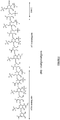
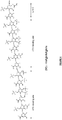
- polysaccharides according to the invention may comprise 14 saccharide units (tetradecasaccharides). They are compounds of formula (II bis) above in which one of the subscripts among n, m and k is equal to 1, the other two subscripts being equal to 0. They may, for example, correspond to formulae (IV), (V) and (VI) according to Figures 2 , 3 and 4 , respectively, and in which the wavy line denotes a bond located either below or above the plane of the pyranose cycle of the glucosamine unit. Such polysaccharides are in acid form or in salified form, as previously described.
- the polysaccharides according to the invention can be obtained from heparin derivatives using orthogonal (combined) separation techniques for separating the constituent polysaccharides of these mixtures according to their sizes, their charges and their affinities for ATIII.
- Gel permeation chromatography, high performance liquid chromatography and ATIII affinity chromatography techniques are therefore used. These techniques are combined with one another in any envisageable order.
- the gel permeation chromatography can be carried out on columns packed with Bio Gel P30 (Bio-Rad) with 0.2 M NaClO 4 as eluent circulating at a flow rate preferentially between 80 and 100 ml/h.
- the fractions are desalted on a column packed with Sephadex G10.
- the ATIII affinity chromatography can be carried out on columns packed with AT-Sepharose.
- the stationary phase is prepared by coupling human AT (antithrombin) (1 g, Biomed) to CNBr-activated Sepharose 4B (Sigma).
- the methodology used to prepare the AT column is based on the teachings of Höök et al. (FEBS Letters, 1976, 66(1), 90-3 ) and the patent application WO 2007/012754 .
- the affinity column is eluted using an NaCl gradient.
- the low-affinity fraction is eluted from the column with a 0.25 M NaCl solution buffered at pH 7.4 with 1mM Tris.
- the high-affinity fractions are eluted using a step gradient of NaCl concentration.
- the eluate is monitored by conductimetry and absorptiometry in the UV range at 232 nm.
- the high performance liquid chromatography uses the CTA-SAX technique (dynamic or strong anion exchange chromatography with cetyltrimethylammonium).
- the semi-preparative CTA-SAX columns (for example 250 ⁇ 22 mm) are grafted as described by Mourier, P.A.J. and Viskov, C. in Analytical Biochemistry, 2004, 332, 299-313 , on columns packed with Hypersil betabasic C18 (5 ⁇ m).
- the grafting of the column is carried out as for the analytical columns, by infusion of a solution of cetyltrimethylammonium hydrogen sulphate (CTA) in a water/methanol mixture.
- the mobile phases are aqueous solutions of sodium methanesulphonate, at concentrations ranging between 0 and 2.5 M.
- the pH is adjusted to 2.5 by adding dilute methanesulfonic acid.
- the various polysaccharides according to the invention can be isolated according to the order in which they are eluted in liquid chromatography: polysaccharides of the same size can be eluted at distinct retention times according to their chemical nature, the presence of various charges and substituents along the polysaccharide backbone influencing the order in which they exit at the end of the chromatography.
- the techniques described in Analytical Biochemistry ( ibid ), using sequencing of the oligosaccharides after partial depolymerization with heparinases, can be used for identifying the polysaccharides eluted at the end of the CTA-SAX, as can any other method known to those skilled in the art, such as identification by proton NMR.
- the fractions collected at the end of the CTA-SAX are neutralized, purified and desalted by gel filtration, for example on Sephadex G10 after a preliminary treatment on Mega Bond Elut C18 cartridges (Varian).
- a final separation step can be carried out on a semi-preparative anion exchange column, such as an AS11 column (Dionex).
- the mobile phase is, for example, made up as follows: solvent A: water; solvent B: 1M NaClO 4 .
- the detection is carried out in the UV range at 232 nm.
- the fractions selected are desalted by gel filtration, for example on a Sephadex G10 column.
- LMWH very particular LMWH, obtained by depolymerization of a quaternary ammonium salt of the benzyl ester of heparin by means of a phosphazene base.
- LMWH is currently under clinical development for the prevention of vein thrombosis: it is semuloparin, representing a new generation of hemisynthetic LMWHs, having an average molecular weight of from 2000 to 3000 Daltons and a new antithrombotic profile, resulting from a high anti-factor Xa (anti-FXa) activity and a residual anti-factor IIa (anti-FIIa) activity.
- the polysaccharides according to the invention have been obtained from an ULMWH as described for example in the patent application WO 2004/033503 , in particular from semuloparin: to date, such polysaccharides have never been identified, nor isolated from the other low-molecular-weight or ultra-low-molecular weight heparins currently known, such as enoxaparin. Their structures, comprising a double ATIII-binding site, are therefore completely unexpected for those skilled in the art and innovative in the heparin derivative field.
- a subject of the invention is the polysaccharides previously described in isolated form.
- a subject of the invention is also the polysaccharides previously described in the form of mixtures with other polysaccharides, whatever they are.
- a subject of the invention is a low-molecular-weight or ultra-low-molecular-weight heparin which comprises one or sulphated polysaccharides having the general structure of the constituent polysaccharides of heparin and comprising two antithrombin-III-affinity sites, such as the polysaccharides (I) previously described.
- the term "Low-Molecular-Weight Heparin” is intended to mean a mixture of sulphated polysaccharides which is obtained from heparin and has an average molecular weight of less than 8000 Daltons, as defined in the European Pharmacopoeia 6.0 (01/2008:0828, 2041-2043).
- the term “Ultra-Low-Molecular-Weight Heparin” (ULMWH) or “Very Low Molecular Weight Heparin” (VLMWH) is intended to mean a mixture having an average molecular weight of less than 4000 Daltons, more particularly less than or equal to 3000 Daltons.
- a subject of the invention is also a low-molecular-weight heparin or an ultra-low-molecular-weight heparin, in particular semuloparin, which comprises the polysaccharide of formula (III) as defined above (dodecasaccharide), in a content preferentially between 1 and 2.5% expressed as percentage area relative to the ATIII-affinity dodecasaccharide fraction.
- the term "percentage area” is intended to mean the percentage of the area under the curve (AUC) obtained by HPLC chromatographic analysis.
- the methodology used preferentially involves three chromatographic steps, as previously described.
- the assay was carried out using the following three sequences: the first step is an isolation of the dodecasaccharide fraction by GPC (Gel Permeation Chromatography); the second step involves running the previously isolated dodecasaccharide fraction through ATIII-affinity chromatography in order to split it into an affinity fraction and a nonaffinity fraction; finally, in a last step, the affinity fraction is chromatographed by HPLC in order to estimate the percentage of the double-site compound, as a percentage area relative to the ATIII-affinity dodecasaccharide fraction.
- GPC Gel Permeation Chromatography
- polysaccharides of the formula (I) according to the invention makes it possible to characterize them as tracers for LMWHs and ULMWHs which may contain them. More specifically, since the polysaccharides of formula (I) according to the invention have been detected in semuloparin, it is possible to analyse a sample of a heparin derivative and to conclude therefrom, among other relevant tests, whether or not it is indeed semuloparin by verifying the presence or the absence of said polysaccharides of formula (I) and, optionally, to verify whether or not the content of said polysaccharides corresponds to the expected amounts. Steps for verifying the nature of a sample of a heparin derivative (semuloparin or not) and whether it conforms to a standard sample of semuloparin (presence of the tracer compounds in the required amounts) are used.
- a method for analysing a sample of a heparin derivative, in particular semuloparin comprising the following steps may be used:
- Such a method may have the objective of verifying whether or not the test sample conforms to a standard sample of an LMWH or a ULMWH, in particular semuloparin.
- said method may, in addition, comprise a step d) which enable to conclude that the test sample conforms to said standard sample when step b) makes it possible to detect the presence of one or more of the sulphated polysaccharides mentioned in step b) and, optionally, when step c) makes it possible to quantify the content of said polysaccharide(s) in prespecified contents of said standard sample.
- step b) does not make it possible to detect the presence of at least one of the sulphated polysaccharides mentioned in step b) or when step c) results in the quantification of said polysaccharide(s) outside the prespecified contents for the standard sample, then it can be concluded that the test sample does not conform to the standard sample.
- Another method for analysing a sample of a heparin derivative, in particular semuloparin, comprising the following steps may be used:
- the standard sample mentioned above is advantageously a sample of semuloparin.
- step b) of the methods for analysing a sample of a heparin derivative that are described above it is advantageously the sulphated polysaccharide of formula (III) which is sought, this being in the dodecasaccharide fraction of the sample.
- step a) advantageously comprises a step of providing a dodecasaccharide fraction isolated from the test sample, and therefore resides in subjecting the test sample to orthogonal separation steps as previously defined, comprising a step of isolating the dodecasaccharide fraction of said sample.
- step b) advantageously comprises a step for detecting the presence or absence of the sulphated polysaccharide of formula (III) in said dodecasaccharide fraction of the test sample.
- step c) it can therefore advantageously comprise a step for quantifying the content of the polysaccharide (III) in the test sample.
- step d) can therefore make it possible to conclude that the test sample conforms when step b) makes it possible to detect the presence of the polysaccharide (III) and, optionally, when step c) makes it possible to quantify the content of said polysaccharide (III) in a range of from 1 to 2.5%, as a percentage area relative to the ATIII-affinity dodecasaccharide fraction.
- step d) can therefore make it possible to conclude that the test sample conforms when step b) makes it possible to detect the presence of the polysaccharide (III) and, optionally, when step c) makes it possible to quantify the content of said polysaccharide (III) in a range of from 1 to 2.5%, as a percentage area relative to the ATIII-affinity dodecasaccharide fraction.
- step b) when step b) does not make it possible to detect the presence of the polysaccharide (III) and, optionally, when step c) does not make it possible to quantify said polysaccharide (III) in the above contents, makes it possible to conclude that the test sample does not conform to a standard sample of semuloparin.
- the methods for analysing a sample of a heparin derivative that are described above can also comprise a step e) for selecting a batch as a consequence of the prior analysis steps a), b), optionally c), and d).
- a batch selection is useful during the clinical development of a heparin derivative or during the marketing of such a product, in that it can be included among the numerous tests necessary for the release of a batch, for example with the aim of its clinical use, particularly in humans.
- the method of analysis according to the invention may be a method of monitoring or testing the production of batches of a heparin derivative, in particular of semuloparin.
- Another process for analyzing a sample of a heparin derivative, in particular of semuloparin, comprising the following steps may be used:
- the ultra-low-molecular-weight heparin known under the name semuloparin (International Nonproprietary Name), and also under the laboratory code AVE5026 (Sanofi), is used as starting product for the preparation of the polysaccharides according to the present invention.
- Said heparin is prepared by depolymerization of a quaternary salt of the benzyl ester of the heparin in an organic medium by means of a phosphazene base (BEMP), conversion of the quaternary ammonium salt of the benzyl ester of the heparin depolymerized, into the sodium salt, saponification of the residual esters and final purification.
- BEMP phosphazene base
- the quaternary ammonium salt of the benzyl ester of the heparin is advantageously the benzethonium salt.
- the process for preparing AVE5026 thus comprises the following steps:
- step a) is advantageously carried out through the action of excess benzethonium chloride, on sodium heparin, at a temperature in the region of 15 to 25°C.
- the salt/sodium heparin molar ratio is advantageously between 3 and 4.
- the starting heparin used is preferably a pig heparin. It can be pre-purified so as to reduce its dermatan sulphate content according to the process described in patent FR2663639 .
- the esterification of step b) is preferably carried out in a chlorinated organic solvent such as dichloromethane, at a temperature between 25 and 45°C, preferably between 30 and 40°C.
- the ester in benzethonium salt form is then recovered in sodium salt form by precipitation with 10% by weight sodium acetate in an alcohol such as methanol. Approximately 1 volume of alcohol per volume of reaction medium is generally used.
- the amount of benzyl chloride and the reaction time are adjusted so as to obtain a degree of esterification of between 50 and 100%, preferably between 70 and 90%.
- Preferentially, 0.5 to 1.5 parts by weight of benzyl chloride are used per part by weight of the benzethonium salt of the heparin.
- the reaction time it is advantageously between 10 and 35 h.
- step c) The transalification of step c) is carried out by means of benzethonium chloride in an aqueous medium.
- the benzethonium chloride/sodium salt of the benzyl ester of the heparin mol ratio is between 2 and 3.
- the depolymerization step is advantageously carried out in an aprotic solvent such as dichloromethane, with a water content of less than 0.6% by weight.
- an aprotic solvent such as dichloromethane
- the water content in the reaction medium is less than 0.3%, more particularly less than 0.2%.
- the phosphazene base/ester molar ratio is between 0.2 and 5, preferably between 0.6 and 2, and more particularly between 0.8 and 1.2.
- the use of an equimolar ratio is preferred.
- Step e) is generally carried out by treating the reaction medium with an alcohol solution of sodium acetate, preferably in methanol, at a temperature between 15 and 25°C.
- the equivalent by weight of acetate added is preferentially three times greater than the weight of quaternary ammonium salt of the benzyl ester of the heparin used in the depolymerization reaction.
- the saponification (step f) is generally carried out by means of an alkaline metal hydroxide, such as sodium hydroxide, potassium hydroxide or lithium hydroxide, in an aqueous medium, at a temperature between 0 and 20°C and preferably between 0 and 10°C. From 1 to 5 molar equivalents of alkali metal hydroxide are generally used. Preferably, the saponification is carried out in the presence of from 1 to 2 molar equivalents of alkali metal hydroxide.
- an alkaline metal hydroxide such as sodium hydroxide, potassium hydroxide or lithium hydroxide
- the purification (step g) can be carried out by means of hydrogen peroxide, in an aqueous medium, at a temperature of from 10 to 50°C. Preferably, this operation is carried out at between 20 and 40°C.
- the anti-FXa and anti-Flla activities mentioned above for semuloparin are measured by means of amidolytic methods on a chromogenic substrate, that are adapted from the monograph on LMWHs of the European Pharmacopoeia in force, using, as reconstitution buffer, a tris-NaCl buffer, pH 7.4, containing PEG 6000 (polyethylene glycol 6000) instead of albumin, and a reference ULMWH substance having an anti-FXa activity of 159 U/mg and an anti-Flla activity of 2.9 U/mg.
- the activities are expressed in units per mg by virtue of the use of a ULMWH internal standard.
- AVE5026 is fractionated by GPC on a column packed with Bio Gel P30 (200 ⁇ 5 cm) (2 g per injection).
- the dodecasaccharide fraction which represents approximately 6 to 11% of the product, is gathered and is desalted on a column packed with Sephadex G10 (100 ⁇ 7 cm). It is recommended at this point to have at least 5 g of dodecasaccharide fraction as a starting base.
- the fraction is entirely injected onto an ATIII affinity column (30 ⁇ 5 cm), using a step-gradient of NaCl concentration (0.7; 1.15; 1.6; 2.05; 2.65 and 3 M of NaCl in 1 mM Tris-HCl, pH 7.4).
- the first step of fractionation by GPC is carried out as in Example 2.
- the tetradecasaccharide fraction gathered at the end of the fractionation represents approximately 3 to 7% of the starting product and is then desalted as indicated in Example 2.
- the fraction is entirely injected onto an ATIII affinity column, as indicated in example 2.
- the fractions enriched in tetradecasaccharide of formula (IV), eluted at conductivities between 100 and 130 mS/cm, are gathered.
- the fractions are desalted and purified on a semi-preparative AS11 column (Dionex), by injecting 20 mg per run. The fractions are tested by analytical CTA-SAX.
- the fractions containing the pure tetradecasaccharide (IV) are gathered and desalted on Sephadex G10.
- the fractions are then injected onto a CTA-SAX column (150 ⁇ 10 mm) (3 ⁇ m).
- the fractions are tested, neutralized, and then run over a Bond Elut C18 cartridge (Varian) before the final purification on a semi-preparative AS11 column (Dionex).
- the eluates containing the pure tetradecasaccharide (IV) are gathered and desalted on Sephadex G10.
- the first step of fractionation by GPC is carried out as in example 2.
- the tetradecasaccharide fraction gathered at the end of the fractionation represents approximately 3 to 7% of the starting product and is then desalted as indicated in example 2.
- the fraction is entirely injected onto an ATIII affinity column, as indicated in example 2.
- the fractions enriched in tetradecasaccharide of formula (V), eluted at conductivities between 100 and 130 mS/cm, are gathered.
- these fractions are desalted and purified on a semi-preparative AS11 column (Dionex), by injecting 20 mg per run.
- the fractions are tested by analytical CTA-SAX.
- the fractions containing the pure tetradecasaccharide (V) are gathered and desalted on Sephadex G10.
- the fractions are then injected onto a CTA-SAX column (150 ⁇ 10 mm) (3 ⁇ m).
- the fractions are tested, neutralized, then run over a Bond Elut C18 cartridge (Varian) before the final purification on a semi-preparative AS11 column (Dionex).
- the eluates containing the pure tetradecasaccharide (V) are gathered and desalted on Sephadex G10.
- the first step of fractionation by GPC is carried out as in example 2.
- the tetradecasaccharide fraction gathered at the end of the fractionation represents approximately 3 to 7% of the starting product and is then desalted as indicated in example 2.
- the fraction is entirely injected onto an ATIII affinity column, as indicated in example 2.
- the fractions enriched in tetradecasaccharide of formula (VI), eluated at conductivities between 100 and 130 mS/cm, are gathered.
- these fractions are desalted and purified on a semi-preparative AS11 column (Dionex), by injecting 20 mg per run.
- the fractions are tested by analytical CTA-SAX.
- the fractions containing the pure tetradecasaccharide (VI) are gathered and desalted on Sephadex G10.
- the fractions are then injected onto a CTA-SAX column (150 ⁇ 10 mm) (3 ⁇ m).
- the fractions are tested, neutralized, and then run over a Bond Elut C18 cartridge (Varian) before the final purification on a semi-preparative AS11 column (Dionex).
- the eluates containing the pure tetradecasaccharide (VI) are gathered and desalted on Sephadex G10.
- the GPC step makes it possible to separate the dodecasaccharide and tetradecasaccharide fractions (fractionation according to the chain size).
- the CTA-SAX step then makes it possible to isolate the polysaccharides targeted and to distinguish polysaccharides of identical size through identification of the eluted compounds by analytical HPLC monitoring, according to the methodology described in Analytical Biochemistry, 2004, 332, 299-313 , or else by 1 H NMR monitoring.
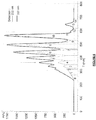
- Figure 5 represents the chromatographic separation by analytical CTA-SAX of the tetradecasaccharide fraction obtained after GPC, ATIII chromatography and anion exchange chromatography according to examples 3, 4 and 5 above.
- the thin-line signal corresponds to the UV detection at 234 nm
- the thick-line signal corresponds to the detection at the dual wavelengths 202-242 nm.
- the x-axes represent the time (in minutes) and the y-axes represent the UV absorbance (mAU: one-thousandth Absorbance Unit).
- mAU one-thousandth Absorbance Unit
- the quantification of the dodecasaccharide (III) according to the invention was carried out on various samples of semuloparin.
- the contents of total dodecasaccharide fraction having affinity for ATIII and of dodecasaccharide of formula (III) are given in Table 1.
- Table 1 Contents of dodecasaccharide fraction and of dodecasaccharide (III) Samples Dodecasaccharides having affinity for ATIII (% in the dodecasaccharide fraction) Dodecasaccharide (III) ( ⁇ llall s lsllall s ls) (% area relative to the dodecasaccharide fraction having affinity) N° 1 39.0 1.69 N° 2 41.8 1.80 N° 3 42.0 1.84 N° 4 40.3 1.82 N° 5 41.0 1.81 N° 6 40.9 1.78 N° 7 36.9 1.95 N° 8 36.4 1.86 N° 9 36.5 1.86 N° 10 36.5 1.90 N° 11 36.0 1.78 N° 12 35.9 2.11
- the dodecasaccharide fractions of the three separations are gathered and are desalted on a Sephadex G10 column (40 ⁇ 5 cm). Between 25 and 50 mg of dodecasaccharide fraction are thus isolated.
- This second step has a dual objective: to purify, from the fraction isolated, a sufficient amount of affinity dodecasaccharide fraction to carry out a quantification of the double site and, furthermore, to measure the percentage of the affinity fraction in the purified dodecasaccharide fraction.
- the preparative part which consists in purifying the affinity fraction, is carried out on a Sepharose AT column (30 ⁇ 7 cm) grafted with 2 g of human antithrombin.
- This chromatography column is prepared according to the teachings of patent application WO 2007/012754 .
- the affinity column is stored at 4°C. Dual detection is used to monitor the separation: the UV wavelength at 232 nm and a conductimetric detection for monitoring the NaCl elution.
- the elution gradient is a simple step gradient.
- the mobile phase used is the following:
- the dodecasaccharide fraction purified in the preceding phase is chromatographed on the preparative affinity column in two injections.
- An example of a chromatogram of a dodecasaccharide fraction is given in Figure 7 , corresponding to sample N° 2 (cf. table 1).
- the thin line corresponds to the UV detection at 232 nm, and the bold line corresponds to the conductivity (mS/cm).
- the affinity and non-affinity fractions resulting from the two injections are gathered and then desalted.
- the non-affinity fraction is run on a Q Sepharose Fast Flow column (20 ⁇ 2.6 cm), rinsed with water.
- the non-affinity fraction is completely retained on the column.
- the elution is carried out with a 1N NaClO 4 solution.
- the detection is carried out under UV at 232 nm and by conductimetry.
- the affinity fractions are reconcentrated in the same way by diluting them beforehand in 5 litres of water, and then by injecting them onto a Q Sepharose Fast Flow column (20 ⁇ 1.6 cm).
- the final desalting is carried out on a Sephadex G10 column (25 ⁇ 5 cm), with, as eluent, water injected at 10 ml/min.
- the desalted fractions are reconcentrated on a rotary evaporator and diluted in a 1.6 ml HPLC vial.
- the pH is tested and adjusted to between 5 and 7.
- the percentage surface (area) of the peak of the affinity compounds on the affinity chromatography, after subtraction of a blank run, is measured. This percentage is determined on the two chromatograms obtained by preparative affinity chromatography, but also on three chromatograms from injection of the same fraction on an analytical Sepharose AT affinity column.
- the analytical column is packed with the same phase as the preparative column and has the geometry 40 ⁇ 1.5 cm.
- the analytical conditions are the following:
- the amounts injected are much smaller than on the preparative column, typically 1 mg of dodecasaccharide.
- the percentage of affinity compounds is determined on the chromatogram at 232 nm according to the same method as that described for the preparative chromatography.
- the double-site dodecasaccharide of formula (III) is quantified by means of a highly resolutive HPLC method, namely using a Waters Acquity BEH C18 1.7 ⁇ m (2.1 ⁇ 150 mm) UPLC (Ultra Performance Liquid Chromatography) column, with pentylamine and HFIP (hexafluoroisopropanol) mobile phases.
- the column temperature is adjusted to 60°C.
- the eluant phase is the following:
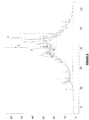
- the chromatogram of an affinity fraction of semuloparin sample N° 5 (cf. table 1) is given in Figure 8 (thin line: detection at 232 nm; thick line: detection at 245 nm).
- the peak of the double-site dodecasaccharide (III) is indicated with an arrow. This peak can be attributed to the dodecasaccharide (III) through the use of an internal standard of this product, obtained in isolated form according to example 2 above.
- the identification of the dodecasaccharide (III) peak can be determined by coupling the Acquity column with mass spectrometry, according to the teaching of C. Doneanu et al., in Analytical Chemistry, 2009, Vol. 81, 3485-3499 . In mass spectrometry, the dodecasaccharide (III) is identified by its molecular mass at 3226 Da (protonated form).
- the quantification of the double-site dodecasaccharide (III) is carried out by calculating the percentage surface area of the corresponding chromatography peak relative to the entire fraction, after subtraction of a blank run.
- An example of integration is given in Figure 9 (sample N° 5, cf. table 1), in which the surface area of the peaks identified by 1, 2, 3 and 4 are respectively of 11.783, 306.934, 465.625 and 3871.65.
- the results obtained on 12 samples of semuloparin are reported in table 1 above.
- the polysaccharides according to the invention were the subject of pharmacological tests for determining their antithrombotic properties and their value as therapeutically active substances.
- the dodecasaccharide (III) has a greater affinity for antithrombin III than the reference compound, the pentasaccharide fondaparinux (synthetic pentasaccharide with specific activity towards factor Xa).
- the dodecasaccharide (III) has 2.1 to 3.2 times more affinity for ATIII than fondaparinux.
- the anti-FXa activity of the dodecasaccharide (III) was determined with the ACL 7000 automated instrument for measuring coagulation (Instrumentation Laboratory), using the Heparin®-kit preparation (Instrumentation Laboratory) which contains antithrombin III, factor Xa and the chromogenic substrate S-2765. The measurements were carried out according to the manufacturer's recommendations. The 2nd low-molecular-weight heparin international standard (National Institute for Biological Standards and Control, London, UK, established in 2003, code no. 01/608) was used to construct the calibration curve. Enoxaparin (Clexane®) and fondaparinux (Arixtra®) were used as internal standard compounds.
- test samples or the 2nd LMWH international standard were first of all diluted in standard human plasma (Instrumentation Laboratory) or in a buffer (0.05 M Tris-HCI, 0.154 M NaCl, pH 7.4).
- the test solutions containing the samples in plasma or in the buffered medium are then diluted to 1:20 with a buffered solution containing the antithrombin and are placed in duplicate in the sites of the machine that are provided for this purpose.
- the factor Xa reagent and the chromogenic substrate are introduced into the reservoirs provided for this purpose in the ACL 7000 instrument.
- the anti-FXa activity test is carried out according to the "Heparin" program integrated into the user interface ("software") of the ACL 7000.
- the assay 50 ⁇ l of the sample diluted in the buffer are mixed with 50 ⁇ l of the factor Xa reagent. After an incubation time of 60 seconds at 37°C, 50 ⁇ l of chromogenic substrate (1.1 mM) are added and the changes in absorption are measured as a function of time at a wavelength of 405 nM.
- the anti-FXa activity of the samples tested was determined using a calibration curve constructed with the 2nd LMWH international standard (code No. 01/608).
- Table 3 Anti-FXa activities in values by mass Human plasma Tris buffer IU/mg IU/mg Dodecasaccharide (III) 986.5 890.2 Fondaparinux 868.3 856.5 Enoxaparin 125.0 103.0
- the molar anti-FXa activity is higher, by about a factor of 2, compared with that of the pentasaccharide fondaparinux (cf. table 5).
- the protocol for measuring the anti-FXa activity was determined in vitro by means of an assay which determines the ability of the compound to accelerate the inhibition of factor Xa by antithrombin III.
- the International Units for the anti-FXa activity correspond to the activities of a given amount of the international standard of the substance to be examined.
- Two independent series of four dilutions of the reference solution and of the substance to be examined are prepared in a tris(hydroxymethyl)aminomethane-sodium chloride buffer solution, pH 7,4.
- the dilutions are chosen so as to obtain a linear response when the absorbance is expressed as a function of the logarithm of the concentration.
- 20 ⁇ l of the dilutions of the reference preparation and of the substance to be examined are deposited in a microplate and mixed with 20 ⁇ l of antithrombin III solution. After an incubation time of 60 seconds, 40 ⁇ l of bovine factor Xa solution are added. After incubation for 60 seconds, 100 ⁇ l of chromogenic substrate are added.
- the reaction is stopped after 4 minutes with 100 ⁇ l of acetic acid.
- the absorbance is measured at a wavelength of 405 nm.
- the anti-FXa activity is calculated using the customary conditions of statistical analysis for parallel on-line titrations, described in ⁇ 5.3 of the European Pharmacopoeia.
- the activity of the substance to be examined is expressed in International Units of anti-FXa activity per mg on an unmodified basis (without correction with respect to the loss of water content).
- the LMWH most widely used in therapy to date (sold under the name Lovenox® or Clexane® by Sanofi-Aventis), the dodecasaccharide (III) and the tetradecasaccharides (IV), (V) and (VI) according to the invention are much more powerful on factor Xa (cf. tables 3 and 5).
- AVE5026 the starting ULMWH from which the polysaccharides according to the invention are derived (cf. example 1 above).
- the compounds according to the invention are therefore surprising both from the point of view of their chemical structure (presence of two ATIII-binding sites) and from the point of view of their pharmacological properties (very high anti-FXa activity, more stronger affinity towards ATIII than that of the reference compound fondaparinux).
- the polysaccharides according to the invention can therefore be used for preparing medicaments, in particular antithrombotic medicaments.
- Another subject of the invention is therefore a medicament which comprises a polysaccharide according to the present invention, in acid form or in the form of a pharmaceutically acceptable salt thereof.
- Such a medicament is useful in therapy, in particular for treating and preventing thromboses, including vein and arterial thromboses, deep vein thrombosis and pulmonary embolism.
- the present invention relates to pharmaceutical compositions comprising a polysaccharide according to the invention as an active ingredient.
- These pharmaceutical compositions contain an effective dose of at least one compound according to the invention, or a pharmaceutically acceptable salt of said compound, and also at least one pharmaceutically acceptable excipient.
- Said excipients are chosen, according to the pharmaceutical form and the method of administration desired, from the usual excipients which are known to those skilled in the art.
- compositions according to the invention can also comprise at least one other active ingredient chosen from antithrombotic oligosaccharides, whether they are synthetic (obtained by chemical synthesis from monosaccharide or oligosaccharide intermediates) or obtained by isolation from sources of heparins or of LMWHs.
- compositions of the present invention for oral, sublingual, subcutaneous, intramuscular, intravenous, topical, local, intratracheal, intranasal, transdermal or rectal administration the active ingredient of formula (I) above, or salt thereof, can be administered in unit administration form, as a mixture with conventional pharmaceutical excipients, to animals and to human beings for preventing or treating the abovementioned pathological conditions.
Landscapes
- Health & Medical Sciences (AREA)
- Chemical & Material Sciences (AREA)
- Life Sciences & Earth Sciences (AREA)
- Chemical Kinetics & Catalysis (AREA)
- Medicinal Chemistry (AREA)
- General Health & Medical Sciences (AREA)
- Pharmacology & Pharmacy (AREA)
- Animal Behavior & Ethology (AREA)
- Public Health (AREA)
- Veterinary Medicine (AREA)
- Analytical Chemistry (AREA)
- Engineering & Computer Science (AREA)
- Organic Chemistry (AREA)
- Molecular Biology (AREA)
- Epidemiology (AREA)
- Nuclear Medicine, Radiotherapy & Molecular Imaging (AREA)
- General Chemical & Material Sciences (AREA)
- Bioinformatics & Cheminformatics (AREA)
- Biochemistry (AREA)
- Dermatology (AREA)
- Materials Engineering (AREA)
- Polymers & Plastics (AREA)
- Diabetes (AREA)
- Pulmonology (AREA)
- Hematology (AREA)
- Polysaccharides And Polysaccharide Derivatives (AREA)
- Pharmaceuticals Containing Other Organic And Inorganic Compounds (AREA)
- Investigating Or Analysing Biological Materials (AREA)
- Medicines Containing Material From Animals Or Micro-Organisms (AREA)
- Medicines That Contain Protein Lipid Enzymes And Other Medicines (AREA)
Claims (21)
- Sulfatierte Polysaccharide, die die allgemeine Struktur der Polysaccharide, aus denen Heparin aufgebaut ist, aufweisen und die ein Molekulargewicht von weniger als 8000 Dalton haben, dadurch gekennzeichnet, dass sie zwei Antithrombin-III-Affinitätsstellen umfassen.
- Polysaccharide nach Anspruch 1, dadurch gekennzeichnet, dass sie zwei Antithrombin-III-bindende Hexasaccharid-Sequenzen umfassen.
- Polysaccharide nach Anspruch 1 oder Anspruch 2, dadurch gekennzeichnet, dass sie zweimal die Antithrombin-III-bindende Hexasaccharid-Sequenz der Formel (I) umfassen:
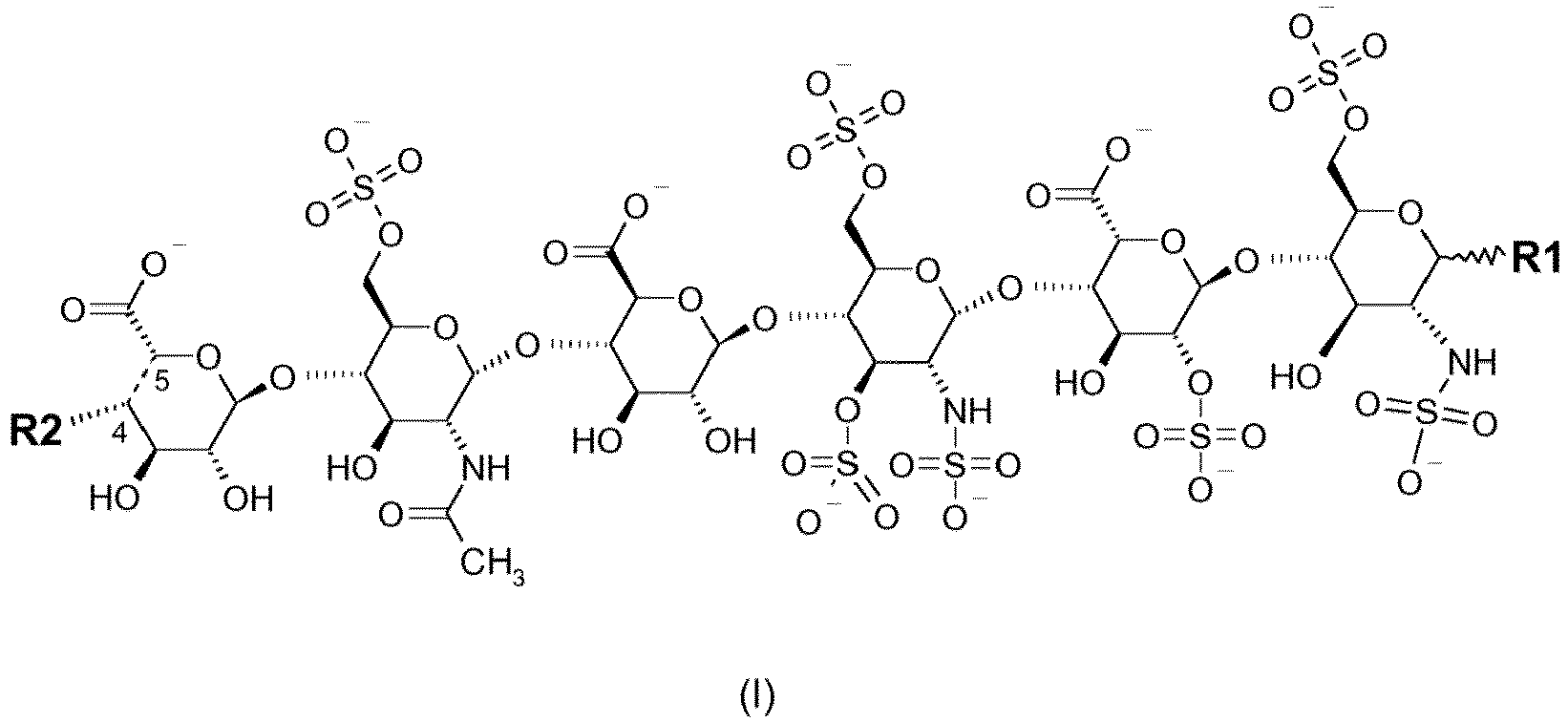 . die als gestrichelte Linie zwischen den Kohlenstoffatomen 4 und 5 der ersten Saccharid-Einheit dargestellte Bindung entweder eine Einfachbindung oder eine Doppelbindung ist,. die Wellenlinie für eine Bindung steht, die sich entweder unterhalb oder oberhalb der Ebene des Pyranoserings der Glucosamin-Einheit, an die R1 gebunden ist, befindet,. R1 für eine OH-Gruppe steht, wenn sich das Hexasaccharid der Formel (I) am reduzierenden Ende des Polysaccharids befindet, oder auch R1 für eine Bindung mit einer weiteren Saccharid-Einheit des Polysaccharids steht, wobei sich in diesem Fall die Bindung oberhalb der Ebene des Pyranoserings der Glucosamin-Einheit, an die R1 gebunden ist, befindet,. R2 für ein Wasserstoffatom steht, wenn sich das Hexasaccharid der Formel (I) am nichtreduzierenden Ende des Polysaccharids befindet, wobei in diesem Fall die Bindung zwischen den Kohlenstoffatomen 4 und 5 der ersten Saccharid-Einheit des Hexasaccharids eine Doppelbindung ist, oder auch R2 für eine Bindung mit einer weiteren Saccharid-Einheit des Polysaccharids steht, wobei in diesem Fall die Bindung zwischen den Kohlenstoffatomen 4 und 5 der ersten Saccharid-Einheit des Hexasaccharids eine Einfachbindung ist,wobei die Polysaccharide in Säureform oder in versalzter Form vorliegen.
 - Polysaccharide nach einem der Ansprüche 1 bis 3, dadurch gekennzeichnet, dass sie zwischen 12 und 22 Saccharid-Einheiten umfassen.
- Polysaccharide nach einem der Ansprüche 1 bis 4, dadurch gekennzeichnet, dass sie der Formel (II) entsprechen:
(A)d-(I)-(B)f-(I)-(C)g (II)
in der:. die A-, B- und C-Einheiten, die gleich oder voneinander verschieden sein können, für Disaccharid-Sequenzen stehen,. die Einheiten der Formel (I) für Hexasaccharid-Sequenzen gemäß Anspruch 3 stehen,. die tiefgestellten Zeichen d, f und g jeweils für eine ganze Zahl gleich 0 oder zwischen 1 und 5 stehen, mit der Maßgabe, dass die Summe der ganzen Zahlen d, f und g zwischen 0 und 5 liegt. - Polysaccharide nach einem der Ansprüche 1 bis 5, dadurch gekennzeichnet, dass sie der Formel (II bis) entsprechen:
(A)n-(I)-(B)m-(I)-(C)k (II)
in der:. die A-, B- und C-Einheiten, die gleich oder voneinander verschieden sein können, für Disaccharid-Sequenzen stehen,. die Einheiten der Formel (I) für Hexasaccharid-Sequenzen gemäß Anspruch 3 stehen,. die tiefgestellten Zeichen n, m und k jeweils für eine ganze Zahl gleich 0 oder 1 stehen, mit der Maßgabe, dass dann, wenn eines der tiefgestellten Zeichen n, m oder k gleich 1 ist, die anderen beiden tiefgestellten Zeichen gleich 0 sind. - Polysaccharid nach einem der Ansprüche 1 bis 6, dadurch gekennzeichnet, dass es 12 Saccharid-Einheiten umfasst und dass es der Formel (III) entspricht:

- Polysaccharide nach einem der Ansprüche 1 bis 6, dadurch gekennzeichnet, dass sie 14 Saccharid-Einheiten umfassen.
- Polysaccharid nach Anspruch 8, dadurch gekennzeichnet, dass es den Formeln (IV), (V) oder (VI) entspricht:


- Polysaccharide nach einem der Ansprüche 1 bis 9 in Form von Natriumsalzen.
- Polysaccharide nach einem der Ansprüche 1 bis 10 in isolierter Form.
- Polysaccharide nach einem der Ansprüche 1 bis 10 als Gemisch mit anderen Polysacchariden.
- Niedermolekulares Heparin, das als Gemisch von sulfatierten Polysacchariden, das aus Heparin erhalten wird und ein massenmittleres Molekulargewicht von weniger als 8000 Dalton aufweist, definiert ist, oder ultraniedermolekulares Heparin, das als Gemisch von sulfatierten Polysacchariden, das aus Heparin erhalten wird und ein massenmittleres Molekulargewicht von weniger als 4000 Dalton aufweist, definiert ist, dadurch gekennzeichnet, dass es ein oder mehrere Polysaccharide nach einem der Ansprüche 1 bis 10 umfasst.
- Niedermolekulares oder ultraniedermolekulares Heparin nach Anspruch 13, dadurch gekennzeichnet, dass es das Polysaccharid der Formel (III) nach Anspruch 7 in einem Gehalt, der vorzugsweise zwischen 1 und 2,5 %, ausgedrückt in Flächenprozent, bezogen auf die Dodecasaccharid-Fraktion mit Affinität zu ATIII, liegt, umfasst.
- Verfahren zur Herstellung der Polysaccharide nach einem der Ansprüche 1 bis 11, dadurch gekennzeichnet, dass es Schritte der orthogonalen Abtrennung der Polysaccharide von einem niedermolekularen oder ultraniedermolekularen Heparin umfasst, wobei die Schritte die Durchführung von Gelpermeation, Hochleistungs-Flüssigkeitschromatographie und ATIII-Affinitätschromatographie in Kombination miteinander umfassen.
- Verfahren nach Anspruch 15, dadurch gekennzeichnet, dass es die folgenden Schritte umfasst:- Gelpermeation, dann- ATIII-Affinitätschromatographie, dann- Hochleistungs-Flüssigkeitschromatographie an einer CTA-SAX-Säule, dann- Reinigung durch Anionenaustauschchromatographie und Entsalzen durch Gelfiltration.
- Verfahren nach Anspruch 15 oder Anspruch 16, dadurch gekennzeichnet, dass dabei ein ultraniedermolekulares Heparin, insbesondere Semuloparin, verwendet wird.
- Medikament, das dadurch gekennzeichnet ist, dass es ein Polysaccharid nach einem der Ansprüche 1 bis 10 oder ein Additionssalz dieser Verbindung mit einer pharmazeutisch akzeptablen Säure umfasst.
- Pharmazeutische Zusammensetzung, dadurch gekennzeichnet, dass sie ein Polysaccharid nach einem der Ansprüche 1 bis 10 oder ein pharmazeutisch akzeptables Salz dieser Verbindung sowie mindestens einen pharmazeutisch akzeptablen Hilfsstoff umfasst.
- Pharmazeutische Zusammensetzung nach Anspruch 19, dadurch gekennzeichnet, dass sie außerdem mindestens einen weiteren Wirkstoff, der aus antithrombotischen Oligosacchariden ausgewählt ist, umfasst.
- Polysaccharid nach einem der Ansprüche 1 bis 10 oder ein Additionssalz dieser Verbindung mit einer pharmazeutisch akzeptablen Säure zur Verwendung bei der Behandlung und Prävention von Thrombosen einschließlich Venen- und Arterienthrombosen, tiefer Venenthrombose und Lungenembolie.
Applications Claiming Priority (2)
| Application Number | Priority Date | Filing Date | Title |
|---|---|---|---|
| FR1153116 | 2011-04-11 | ||
| PCT/IB2012/051768 WO2012140580A1 (en) | 2011-04-11 | 2012-04-11 | Polysaccharides comprising two antithrombin iii-binding sites, preparation thereof and use thereof as antithrombotic medicaments |
Publications (2)
| Publication Number | Publication Date |
|---|---|
| EP2697265A1 EP2697265A1 (de) | 2014-02-19 |
| EP2697265B1 true EP2697265B1 (de) | 2018-09-26 |
Family
ID=46025830
Family Applications (1)
| Application Number | Title | Priority Date | Filing Date |
|---|---|---|---|
| EP12718395.2A Active EP2697265B1 (de) | 2011-04-11 | 2012-04-11 | Polysaccharide mit zwei antithrombin iii-bindungsstellen, ihre herstellung und ihre verwendung als antithrombotika |
Country Status (7)
| Country | Link |
|---|---|
| US (2) | US9346894B2 (de) |
| EP (1) | EP2697265B1 (de) |
| JP (1) | JP6122418B2 (de) |
| AR (1) | AR085961A1 (de) |
| TW (1) | TW201247209A (de) |
| UY (1) | UY34012A (de) |
| WO (1) | WO2012140580A1 (de) |
Cited By (1)
| Publication number | Priority date | Publication date | Assignee | Title |
|---|---|---|---|---|
| CN111175415A (zh) * | 2019-12-24 | 2020-05-19 | 湖北亿诺瑞生物制药有限公司 | 一种依诺肝素钠中苄索氯铵残留的测定方法 |
Families Citing this family (6)
| Publication number | Priority date | Publication date | Assignee | Title |
|---|---|---|---|---|
| EP2818871A1 (de) | 2013-06-28 | 2014-12-31 | Roche Diagniostics GmbH | Mittel und Verfahren zur universellen Kalibrierung von anti-Faktor-Xa-Tests |
| CN103743837B (zh) * | 2013-12-24 | 2015-01-21 | 山东泰邦生物制品有限公司 | 人抗凝血酶ⅲ肝素结合比例检测方法 |
| KR102240937B1 (ko) * | 2014-10-10 | 2021-04-15 | 삼성디스플레이 주식회사 | 표시 장치 |
| CN107431362A (zh) * | 2014-11-06 | 2017-12-01 | 曼蒂斯影像有限公司 | 提供能量脉冲的电路 |
| JP6741277B2 (ja) * | 2015-12-30 | 2020-08-19 | シェンツェン ヘパリンク ファーマスーティカル グループ カンパニー リミテッドShenzhen Hepalink Pharmaceutical Group Co., Ltd. | 硫酸化ヘパリン由来オリゴ糖及びその調製法と施用 |
| EP4384819A1 (de) | 2021-08-08 | 2024-06-19 | University of Rochester | Nanomembranvorrichtung und verfahren zur biomarkerprobenahme |
Family Cites Families (4)
| Publication number | Priority date | Publication date | Assignee | Title |
|---|---|---|---|---|
| FR2663639B1 (fr) | 1990-06-26 | 1994-03-18 | Rhone Poulenc Sante | Melanges de polysaccharides de bas poids moleculaires procede de preparation et utilisation. |
| FR2845686B1 (fr) * | 2002-10-10 | 2013-08-30 | Aventis Pharma Sa | Melanges de polysaccharides derives d'heparine, leur preparation et les compositions pharmaceutiques les contenant |
| US20040171819A1 (en) | 2002-10-10 | 2004-09-02 | Aventis Pharma S.A. | Mixtures of polysaccharides derived from heparin, their preparation and pharmaceutical compositions containing them |
| FR2889078B1 (fr) | 2005-07-27 | 2007-11-02 | Aventis Pharma Sa | Nouvelle methode de chromatographie d'affinite d'antithrombine iii |
-
2012
- 2012-04-10 AR ARP120101220A patent/AR085961A1/es not_active Application Discontinuation
- 2012-04-11 TW TW101112840A patent/TW201247209A/zh unknown
- 2012-04-11 US US14/111,300 patent/US9346894B2/en not_active Expired - Fee Related
- 2012-04-11 EP EP12718395.2A patent/EP2697265B1/de active Active
- 2012-04-11 JP JP2014504429A patent/JP6122418B2/ja active Active
- 2012-04-11 WO PCT/IB2012/051768 patent/WO2012140580A1/en not_active Ceased
- 2012-04-11 UY UY0001034012A patent/UY34012A/es not_active Application Discontinuation
-
2016
- 2016-04-21 US US15/135,010 patent/US20160310521A1/en not_active Abandoned
Non-Patent Citations (1)
| Title |
|---|
| "European Pharmacopeia 6.0", 2008, pages: 2041 - 2043 * |
Cited By (1)
| Publication number | Priority date | Publication date | Assignee | Title |
|---|---|---|---|---|
| CN111175415A (zh) * | 2019-12-24 | 2020-05-19 | 湖北亿诺瑞生物制药有限公司 | 一种依诺肝素钠中苄索氯铵残留的测定方法 |
Also Published As
| Publication number | Publication date |
|---|---|
| WO2012140580A1 (en) | 2012-10-18 |
| EP2697265A1 (de) | 2014-02-19 |
| AR085961A1 (es) | 2013-11-06 |
| TW201247209A (en) | 2012-12-01 |
| US9346894B2 (en) | 2016-05-24 |
| US20140031316A1 (en) | 2014-01-30 |
| JP6122418B2 (ja) | 2017-04-26 |
| JP2014511929A (ja) | 2014-05-19 |
| UY34012A (es) | 2012-11-30 |
| US20160310521A1 (en) | 2016-10-27 |
Similar Documents
| Publication | Publication Date | Title |
|---|---|---|
| US20160310521A1 (en) | Polysaccharides comprising two antithrombin iii-binding sites, preparation thereof and use thereof as antithrombotic medicaments | |
| EP1319183B1 (de) | Verfahren und produkte, die mit niedermolekularem heparin assoziiert sind | |
| EP2314632B1 (de) | Aus Heparin abgeleitete Oligosaccharide | |
| Galeotti et al. | Novel reverse-phase ion pair-high performance liquid chromatography separation of heparin, heparan sulfate and low molecular weight-heparins disaccharides and oligosaccharides | |
| EP1730200B1 (de) | Verfahren zur quantitativen Bestimmung von spezifischen Gruppen von Heparinen oder niedermolekularen Heparinen mittels HPLC | |
| US20100081629A1 (en) | Low molecular weight heparins including at least one covalent bond with biotin or a biotin derivative, method for making same and use thereof | |
| Wang et al. | Liquid chromatography–diode array detection–mass spectrometry for compositional analysis of low molecular weight heparins | |
| EP2642288A1 (de) | Profilierung von Oligosacchariden in Zusammenhang mit den Bioaktivitäten von Heparin oder Heparinderivaten | |
| EP2427503B1 (de) | Neuartigeacyliertes Decasaccharid und dessen Verwendung als Antithrombotikum | |
| Sheng et al. | Coupling liquid chromatography and tandem mass spectrometry to electrophoresis for in-depth analysis of glycosaminoglycan drugs: heparin and the multicomponent sulodexide | |
| Yu et al. | Filter-entrapment enrichment pull-down assay for glycosaminoglycan structural characterization and protein interaction | |
| Alban et al. | Gas-liquid chromatography-mass spectrometry analysis of anticoagulant active curdlan sulfates | |
| Silvestro et al. | Human pharmacokinetics of glycosaminoglycans using deuterium-labeled and unlabeled substances: evidence for oral absorption | |
| Zhang et al. | Structure and pharmacokinetics/pharmacodynamics of the anticoagulant tetradecasaccharide oHG-14 as an intrinsic tenase inhibitor | |
| Ouyang et al. | Systematic analysis of enoxaparins from different sources with online one-and two-dimensional chromatography | |
| EP2427500B1 (de) | Neues acyliertes 1,6-anhydrodecasacharid und seine verwendung als antithrombitisches mittel | |
| US8101733B1 (en) | Methods of evaluating mixtures of polysaccharides | |
| EP2256137A1 (de) | Neuartiges sulfiertes Octasaccharid und dessen Verwendung als Antithrombotikum | |
| Zhu et al. | Comprehensive chromatographic profiling and structural analysis of key anticoagulant components in enoxaparin | |
| Ramasamy et al. | Capillary electrophoresis for characterization of low molecular weight heparins | |
| Li et al. | Bottom-up LMWH analysis using LC-FTMS for extensive characterization | |
| Urso et al. | Structural variation in the linkage region of pharmaceutical heparin arising from oxidative treatments during manufacture | |
| Eldridge et al. | Heterogeneity of depolymerized heparin SEC fractions: to pool or not to pool? | |
| Thanawiroon | Chromatographic separation and LC/MS analysis of heparin-derived oligosaccharides | |
| Wang | Preparation and characterization of heparin-derived oligosaccharides and their applications |
Legal Events
| Date | Code | Title | Description |
|---|---|---|---|
| PUAI | Public reference made under article 153(3) epc to a published international application that has entered the european phase |
Free format text: ORIGINAL CODE: 0009012 |
|
| 17P | Request for examination filed |
Effective date: 20131111 |
|
| AK | Designated contracting states |
Kind code of ref document: A1 Designated state(s): AL AT BE BG CH CY CZ DE DK EE ES FI FR GB GR HR HU IE IS IT LI LT LU LV MC MK MT NL NO PL PT RO RS SE SI SK SM TR |
|
| AX | Request for extension of the european patent |
Extension state: BA ME |
|
| STAA | Information on the status of an ep patent application or granted ep patent |
Free format text: STATUS: EXAMINATION IS IN PROGRESS |
|
| 17Q | First examination report despatched |
Effective date: 20170816 |
|
| GRAP | Despatch of communication of intention to grant a patent |
Free format text: ORIGINAL CODE: EPIDOSNIGR1 |
|
| STAA | Information on the status of an ep patent application or granted ep patent |
Free format text: STATUS: GRANT OF PATENT IS INTENDED |
|
| INTG | Intention to grant announced |
Effective date: 20180530 |
|
| GRAS | Grant fee paid |
Free format text: ORIGINAL CODE: EPIDOSNIGR3 |
|
| GRAA | (expected) grant |
Free format text: ORIGINAL CODE: 0009210 |
|
| STAA | Information on the status of an ep patent application or granted ep patent |
Free format text: STATUS: THE PATENT HAS BEEN GRANTED |
|
| AK | Designated contracting states |
Kind code of ref document: B1 Designated state(s): AL AT BE BG CH CY CZ DE DK EE ES FI FR GB GR HR HU IE IS IT LI LT LU LV MC MK MT NL NO PL PT RO RS SE SI SK SM TR |
|
| AX | Request for extension of the european patent |
Extension state: BA ME |
|
| REG | Reference to a national code |
Ref country code: GB Ref legal event code: FG4D |
|
| REG | Reference to a national code |
Ref country code: CH Ref legal event code: EP |
|
| REG | Reference to a national code |
Ref country code: AT Ref legal event code: REF Ref document number: 1045937 Country of ref document: AT Kind code of ref document: T Effective date: 20181015 |
|
| REG | Reference to a national code |
Ref country code: IE Ref legal event code: FG4D |
|
| REG | Reference to a national code |
Ref country code: DE Ref legal event code: R096 Ref document number: 602012051493 Country of ref document: DE |
|
| REG | Reference to a national code |
Ref country code: NL Ref legal event code: MP Effective date: 20180926 |
|
| PG25 | Lapsed in a contracting state [announced via postgrant information from national office to epo] |
Ref country code: SE Free format text: LAPSE BECAUSE OF FAILURE TO SUBMIT A TRANSLATION OF THE DESCRIPTION OR TO PAY THE FEE WITHIN THE PRESCRIBED TIME-LIMIT Effective date: 20180926 Ref country code: LT Free format text: LAPSE BECAUSE OF FAILURE TO SUBMIT A TRANSLATION OF THE DESCRIPTION OR TO PAY THE FEE WITHIN THE PRESCRIBED TIME-LIMIT Effective date: 20180926 Ref country code: FI Free format text: LAPSE BECAUSE OF FAILURE TO SUBMIT A TRANSLATION OF THE DESCRIPTION OR TO PAY THE FEE WITHIN THE PRESCRIBED TIME-LIMIT Effective date: 20180926 Ref country code: BG Free format text: LAPSE BECAUSE OF FAILURE TO SUBMIT A TRANSLATION OF THE DESCRIPTION OR TO PAY THE FEE WITHIN THE PRESCRIBED TIME-LIMIT Effective date: 20181226 Ref country code: GR Free format text: LAPSE BECAUSE OF FAILURE TO SUBMIT A TRANSLATION OF THE DESCRIPTION OR TO PAY THE FEE WITHIN THE PRESCRIBED TIME-LIMIT Effective date: 20181227 Ref country code: RS Free format text: LAPSE BECAUSE OF FAILURE TO SUBMIT A TRANSLATION OF THE DESCRIPTION OR TO PAY THE FEE WITHIN THE PRESCRIBED TIME-LIMIT Effective date: 20180926 Ref country code: NO Free format text: LAPSE BECAUSE OF FAILURE TO SUBMIT A TRANSLATION OF THE DESCRIPTION OR TO PAY THE FEE WITHIN THE PRESCRIBED TIME-LIMIT Effective date: 20181226 |
|
| REG | Reference to a national code |
Ref country code: LT Ref legal event code: MG4D |
|
| PG25 | Lapsed in a contracting state [announced via postgrant information from national office to epo] |
Ref country code: AL Free format text: LAPSE BECAUSE OF FAILURE TO SUBMIT A TRANSLATION OF THE DESCRIPTION OR TO PAY THE FEE WITHIN THE PRESCRIBED TIME-LIMIT Effective date: 20180926 Ref country code: HR Free format text: LAPSE BECAUSE OF FAILURE TO SUBMIT A TRANSLATION OF THE DESCRIPTION OR TO PAY THE FEE WITHIN THE PRESCRIBED TIME-LIMIT Effective date: 20180926 Ref country code: LV Free format text: LAPSE BECAUSE OF FAILURE TO SUBMIT A TRANSLATION OF THE DESCRIPTION OR TO PAY THE FEE WITHIN THE PRESCRIBED TIME-LIMIT Effective date: 20180926 |
|
| REG | Reference to a national code |
Ref country code: AT Ref legal event code: MK05 Ref document number: 1045937 Country of ref document: AT Kind code of ref document: T Effective date: 20180926 |
|
| PG25 | Lapsed in a contracting state [announced via postgrant information from national office to epo] |
Ref country code: PL Free format text: LAPSE BECAUSE OF FAILURE TO SUBMIT A TRANSLATION OF THE DESCRIPTION OR TO PAY THE FEE WITHIN THE PRESCRIBED TIME-LIMIT Effective date: 20180926 Ref country code: NL Free format text: LAPSE BECAUSE OF FAILURE TO SUBMIT A TRANSLATION OF THE DESCRIPTION OR TO PAY THE FEE WITHIN THE PRESCRIBED TIME-LIMIT Effective date: 20180926 Ref country code: IT Free format text: LAPSE BECAUSE OF FAILURE TO SUBMIT A TRANSLATION OF THE DESCRIPTION OR TO PAY THE FEE WITHIN THE PRESCRIBED TIME-LIMIT Effective date: 20180926 Ref country code: AT Free format text: LAPSE BECAUSE OF FAILURE TO SUBMIT A TRANSLATION OF THE DESCRIPTION OR TO PAY THE FEE WITHIN THE PRESCRIBED TIME-LIMIT Effective date: 20180926 Ref country code: EE Free format text: LAPSE BECAUSE OF FAILURE TO SUBMIT A TRANSLATION OF THE DESCRIPTION OR TO PAY THE FEE WITHIN THE PRESCRIBED TIME-LIMIT Effective date: 20180926 Ref country code: RO Free format text: LAPSE BECAUSE OF FAILURE TO SUBMIT A TRANSLATION OF THE DESCRIPTION OR TO PAY THE FEE WITHIN THE PRESCRIBED TIME-LIMIT Effective date: 20180926 Ref country code: CZ Free format text: LAPSE BECAUSE OF FAILURE TO SUBMIT A TRANSLATION OF THE DESCRIPTION OR TO PAY THE FEE WITHIN THE PRESCRIBED TIME-LIMIT Effective date: 20180926 Ref country code: ES Free format text: LAPSE BECAUSE OF FAILURE TO SUBMIT A TRANSLATION OF THE DESCRIPTION OR TO PAY THE FEE WITHIN THE PRESCRIBED TIME-LIMIT Effective date: 20180926 Ref country code: IS Free format text: LAPSE BECAUSE OF FAILURE TO SUBMIT A TRANSLATION OF THE DESCRIPTION OR TO PAY THE FEE WITHIN THE PRESCRIBED TIME-LIMIT Effective date: 20190126 |
|
| PG25 | Lapsed in a contracting state [announced via postgrant information from national office to epo] |
Ref country code: SK Free format text: LAPSE BECAUSE OF FAILURE TO SUBMIT A TRANSLATION OF THE DESCRIPTION OR TO PAY THE FEE WITHIN THE PRESCRIBED TIME-LIMIT Effective date: 20180926 Ref country code: PT Free format text: LAPSE BECAUSE OF FAILURE TO SUBMIT A TRANSLATION OF THE DESCRIPTION OR TO PAY THE FEE WITHIN THE PRESCRIBED TIME-LIMIT Effective date: 20190126 Ref country code: SM Free format text: LAPSE BECAUSE OF FAILURE TO SUBMIT A TRANSLATION OF THE DESCRIPTION OR TO PAY THE FEE WITHIN THE PRESCRIBED TIME-LIMIT Effective date: 20180926 |
|
| REG | Reference to a national code |
Ref country code: DE Ref legal event code: R097 Ref document number: 602012051493 Country of ref document: DE |
|
| PG25 | Lapsed in a contracting state [announced via postgrant information from national office to epo] |
Ref country code: DK Free format text: LAPSE BECAUSE OF FAILURE TO SUBMIT A TRANSLATION OF THE DESCRIPTION OR TO PAY THE FEE WITHIN THE PRESCRIBED TIME-LIMIT Effective date: 20180926 |
|
| PLBE | No opposition filed within time limit |
Free format text: ORIGINAL CODE: 0009261 |
|
| STAA | Information on the status of an ep patent application or granted ep patent |
Free format text: STATUS: NO OPPOSITION FILED WITHIN TIME LIMIT |
|
| 26N | No opposition filed |
Effective date: 20190627 |
|
| PG25 | Lapsed in a contracting state [announced via postgrant information from national office to epo] |
Ref country code: SI Free format text: LAPSE BECAUSE OF FAILURE TO SUBMIT A TRANSLATION OF THE DESCRIPTION OR TO PAY THE FEE WITHIN THE PRESCRIBED TIME-LIMIT Effective date: 20180926 |
|
| REG | Reference to a national code |
Ref country code: CH Ref legal event code: PL |
|
| REG | Reference to a national code |
Ref country code: BE Ref legal event code: MM Effective date: 20190430 |
|
| PG25 | Lapsed in a contracting state [announced via postgrant information from national office to epo] |
Ref country code: MC Free format text: LAPSE BECAUSE OF FAILURE TO SUBMIT A TRANSLATION OF THE DESCRIPTION OR TO PAY THE FEE WITHIN THE PRESCRIBED TIME-LIMIT Effective date: 20180926 Ref country code: LU Free format text: LAPSE BECAUSE OF NON-PAYMENT OF DUE FEES Effective date: 20190411 |
|
| PG25 | Lapsed in a contracting state [announced via postgrant information from national office to epo] |
Ref country code: CH Free format text: LAPSE BECAUSE OF NON-PAYMENT OF DUE FEES Effective date: 20190430 Ref country code: LI Free format text: LAPSE BECAUSE OF NON-PAYMENT OF DUE FEES Effective date: 20190430 |
|
| PG25 | Lapsed in a contracting state [announced via postgrant information from national office to epo] |
Ref country code: BE Free format text: LAPSE BECAUSE OF NON-PAYMENT OF DUE FEES Effective date: 20190430 |
|
| PG25 | Lapsed in a contracting state [announced via postgrant information from national office to epo] |
Ref country code: TR Free format text: LAPSE BECAUSE OF FAILURE TO SUBMIT A TRANSLATION OF THE DESCRIPTION OR TO PAY THE FEE WITHIN THE PRESCRIBED TIME-LIMIT Effective date: 20180926 |
|
| PG25 | Lapsed in a contracting state [announced via postgrant information from national office to epo] |
Ref country code: IE Free format text: LAPSE BECAUSE OF NON-PAYMENT OF DUE FEES Effective date: 20190411 |
|
| PGFP | Annual fee paid to national office [announced via postgrant information from national office to epo] |
Ref country code: FR Payment date: 20200312 Year of fee payment: 9 |
|
| PGFP | Annual fee paid to national office [announced via postgrant information from national office to epo] |
Ref country code: DE Payment date: 20200331 Year of fee payment: 9 |
|
| PGFP | Annual fee paid to national office [announced via postgrant information from national office to epo] |
Ref country code: GB Payment date: 20200401 Year of fee payment: 9 |
|
| PG25 | Lapsed in a contracting state [announced via postgrant information from national office to epo] |
Ref country code: CY Free format text: LAPSE BECAUSE OF FAILURE TO SUBMIT A TRANSLATION OF THE DESCRIPTION OR TO PAY THE FEE WITHIN THE PRESCRIBED TIME-LIMIT Effective date: 20180926 |
|
| PG25 | Lapsed in a contracting state [announced via postgrant information from national office to epo] |
Ref country code: HU Free format text: LAPSE BECAUSE OF FAILURE TO SUBMIT A TRANSLATION OF THE DESCRIPTION OR TO PAY THE FEE WITHIN THE PRESCRIBED TIME-LIMIT; INVALID AB INITIO Effective date: 20120411 Ref country code: MT Free format text: LAPSE BECAUSE OF FAILURE TO SUBMIT A TRANSLATION OF THE DESCRIPTION OR TO PAY THE FEE WITHIN THE PRESCRIBED TIME-LIMIT Effective date: 20180926 |
|
| REG | Reference to a national code |
Ref country code: DE Ref legal event code: R119 Ref document number: 602012051493 Country of ref document: DE |
|
| GBPC | Gb: european patent ceased through non-payment of renewal fee |
Effective date: 20210411 |
|
| PG25 | Lapsed in a contracting state [announced via postgrant information from national office to epo] |
Ref country code: FR Free format text: LAPSE BECAUSE OF NON-PAYMENT OF DUE FEES Effective date: 20210430 Ref country code: GB Free format text: LAPSE BECAUSE OF NON-PAYMENT OF DUE FEES Effective date: 20210411 Ref country code: DE Free format text: LAPSE BECAUSE OF NON-PAYMENT OF DUE FEES Effective date: 20211103 |
|
| PG25 | Lapsed in a contracting state [announced via postgrant information from national office to epo] |
Ref country code: MK Free format text: LAPSE BECAUSE OF FAILURE TO SUBMIT A TRANSLATION OF THE DESCRIPTION OR TO PAY THE FEE WITHIN THE PRESCRIBED TIME-LIMIT Effective date: 20180926 |