EP2698423A2 - Appareil et procédé de séparation et de raffinage de fermentation de produit fabriqué par fermentation de micro-organismes à l'aide d'adsorbant - Google Patents
Appareil et procédé de séparation et de raffinage de fermentation de produit fabriqué par fermentation de micro-organismes à l'aide d'adsorbant Download PDFInfo
- Publication number
- EP2698423A2 EP2698423A2 EP12771036.6A EP12771036A EP2698423A2 EP 2698423 A2 EP2698423 A2 EP 2698423A2 EP 12771036 A EP12771036 A EP 12771036A EP 2698423 A2 EP2698423 A2 EP 2698423A2
- Authority
- EP
- European Patent Office
- Prior art keywords
- column
- product
- separation
- culture medium
- adsorbent
- Prior art date
- Legal status (The legal status is an assumption and is not a legal conclusion. Google has not performed a legal analysis and makes no representation as to the accuracy of the status listed.)
- Granted
Links
Images

Classifications
-
- C—CHEMISTRY; METALLURGY
- C12—BIOCHEMISTRY; BEER; SPIRITS; WINE; VINEGAR; MICROBIOLOGY; ENZYMOLOGY; MUTATION OR GENETIC ENGINEERING
- C12M—APPARATUS FOR ENZYMOLOGY OR MICROBIOLOGY; APPARATUS FOR CULTURING MICROORGANISMS FOR PRODUCING BIOMASS, FOR GROWING CELLS OR FOR OBTAINING FERMENTATION OR METABOLIC PRODUCTS, i.e. BIOREACTORS OR FERMENTERS
- C12M1/00—Apparatus for enzymology or microbiology
- C12M1/04—Apparatus for enzymology or microbiology with gas introduction means
- C12M1/06—Apparatus for enzymology or microbiology with gas introduction means with agitator, e.g. impeller
-
- C—CHEMISTRY; METALLURGY
- C12—BIOCHEMISTRY; BEER; SPIRITS; WINE; VINEGAR; MICROBIOLOGY; ENZYMOLOGY; MUTATION OR GENETIC ENGINEERING
- C12M—APPARATUS FOR ENZYMOLOGY OR MICROBIOLOGY; APPARATUS FOR CULTURING MICROORGANISMS FOR PRODUCING BIOMASS, FOR GROWING CELLS OR FOR OBTAINING FERMENTATION OR METABOLIC PRODUCTS, i.e. BIOREACTORS OR FERMENTERS
- C12M21/00—Bioreactors or fermenters specially adapted for specific uses
- C12M21/12—Bioreactors or fermenters specially adapted for specific uses for producing fuels or solvents
-
- C—CHEMISTRY; METALLURGY
- C12—BIOCHEMISTRY; BEER; SPIRITS; WINE; VINEGAR; MICROBIOLOGY; ENZYMOLOGY; MUTATION OR GENETIC ENGINEERING
- C12P—FERMENTATION OR ENZYME-USING PROCESSES TO SYNTHESISE A DESIRED CHEMICAL COMPOUND OR COMPOSITION OR TO SEPARATE OPTICAL ISOMERS FROM A RACEMIC MIXTURE
- C12P7/00—Preparation of oxygen-containing organic compounds
- C12P7/02—Preparation of oxygen-containing organic compounds containing a hydroxy group
- C12P7/04—Preparation of oxygen-containing organic compounds containing a hydroxy group acyclic
- C12P7/06—Ethanol, i.e. non-beverage
-
- B—PERFORMING OPERATIONS; TRANSPORTING
- B01—PHYSICAL OR CHEMICAL PROCESSES OR APPARATUS IN GENERAL
- B01D—SEPARATION
- B01D15/00—Separating processes involving the treatment of liquids with solid sorbents; Apparatus therefor
- B01D15/08—Selective adsorption, e.g. chromatography
- B01D15/10—Selective adsorption, e.g. chromatography characterised by constructional or operational features
- B01D15/22—Selective adsorption, e.g. chromatography characterised by constructional or operational features relating to the construction of the column
-
- C—CHEMISTRY; METALLURGY
- C12—BIOCHEMISTRY; BEER; SPIRITS; WINE; VINEGAR; MICROBIOLOGY; ENZYMOLOGY; MUTATION OR GENETIC ENGINEERING
- C12M—APPARATUS FOR ENZYMOLOGY OR MICROBIOLOGY; APPARATUS FOR CULTURING MICROORGANISMS FOR PRODUCING BIOMASS, FOR GROWING CELLS OR FOR OBTAINING FERMENTATION OR METABOLIC PRODUCTS, i.e. BIOREACTORS OR FERMENTERS
- C12M23/00—Constructional details, e.g. recesses, hinges
- C12M23/58—Reaction vessels connected in series or in parallel
-
- C—CHEMISTRY; METALLURGY
- C12—BIOCHEMISTRY; BEER; SPIRITS; WINE; VINEGAR; MICROBIOLOGY; ENZYMOLOGY; MUTATION OR GENETIC ENGINEERING
- C12M—APPARATUS FOR ENZYMOLOGY OR MICROBIOLOGY; APPARATUS FOR CULTURING MICROORGANISMS FOR PRODUCING BIOMASS, FOR GROWING CELLS OR FOR OBTAINING FERMENTATION OR METABOLIC PRODUCTS, i.e. BIOREACTORS OR FERMENTERS
- C12M25/00—Means for supporting, enclosing or fixing the microorganisms, e.g. immunocoatings
- C12M25/16—Particles; Beads; Granular material; Encapsulation
- C12M25/18—Fixed or packed bed
-
- C—CHEMISTRY; METALLURGY
- C12—BIOCHEMISTRY; BEER; SPIRITS; WINE; VINEGAR; MICROBIOLOGY; ENZYMOLOGY; MUTATION OR GENETIC ENGINEERING
- C12M—APPARATUS FOR ENZYMOLOGY OR MICROBIOLOGY; APPARATUS FOR CULTURING MICROORGANISMS FOR PRODUCING BIOMASS, FOR GROWING CELLS OR FOR OBTAINING FERMENTATION OR METABOLIC PRODUCTS, i.e. BIOREACTORS OR FERMENTERS
- C12M25/00—Means for supporting, enclosing or fixing the microorganisms, e.g. immunocoatings
- C12M25/16—Particles; Beads; Granular material; Encapsulation
- C12M25/20—Fluidized bed
-
- C—CHEMISTRY; METALLURGY
- C12—BIOCHEMISTRY; BEER; SPIRITS; WINE; VINEGAR; MICROBIOLOGY; ENZYMOLOGY; MUTATION OR GENETIC ENGINEERING
- C12M—APPARATUS FOR ENZYMOLOGY OR MICROBIOLOGY; APPARATUS FOR CULTURING MICROORGANISMS FOR PRODUCING BIOMASS, FOR GROWING CELLS OR FOR OBTAINING FERMENTATION OR METABOLIC PRODUCTS, i.e. BIOREACTORS OR FERMENTERS
- C12M47/00—Means for after-treatment of the produced biomass or of the fermentation or metabolic products, e.g. storage of biomass
- C12M47/10—Separation or concentration of fermentation products
-
- C—CHEMISTRY; METALLURGY
- C12—BIOCHEMISTRY; BEER; SPIRITS; WINE; VINEGAR; MICROBIOLOGY; ENZYMOLOGY; MUTATION OR GENETIC ENGINEERING
- C12M—APPARATUS FOR ENZYMOLOGY OR MICROBIOLOGY; APPARATUS FOR CULTURING MICROORGANISMS FOR PRODUCING BIOMASS, FOR GROWING CELLS OR FOR OBTAINING FERMENTATION OR METABOLIC PRODUCTS, i.e. BIOREACTORS OR FERMENTERS
- C12M47/00—Means for after-treatment of the produced biomass or of the fermentation or metabolic products, e.g. storage of biomass
- C12M47/12—Purification
-
- C—CHEMISTRY; METALLURGY
- C12—BIOCHEMISTRY; BEER; SPIRITS; WINE; VINEGAR; MICROBIOLOGY; ENZYMOLOGY; MUTATION OR GENETIC ENGINEERING
- C12P—FERMENTATION OR ENZYME-USING PROCESSES TO SYNTHESISE A DESIRED CHEMICAL COMPOUND OR COMPOSITION OR TO SEPARATE OPTICAL ISOMERS FROM A RACEMIC MIXTURE
- C12P7/00—Preparation of oxygen-containing organic compounds
- C12P7/02—Preparation of oxygen-containing organic compounds containing a hydroxy group
- C12P7/04—Preparation of oxygen-containing organic compounds containing a hydroxy group acyclic
-
- C—CHEMISTRY; METALLURGY
- C12—BIOCHEMISTRY; BEER; SPIRITS; WINE; VINEGAR; MICROBIOLOGY; ENZYMOLOGY; MUTATION OR GENETIC ENGINEERING
- C12P—FERMENTATION OR ENZYME-USING PROCESSES TO SYNTHESISE A DESIRED CHEMICAL COMPOUND OR COMPOSITION OR TO SEPARATE OPTICAL ISOMERS FROM A RACEMIC MIXTURE
- C12P7/00—Preparation of oxygen-containing organic compounds
- C12P7/02—Preparation of oxygen-containing organic compounds containing a hydroxy group
- C12P7/04—Preparation of oxygen-containing organic compounds containing a hydroxy group acyclic
- C12P7/06—Ethanol, i.e. non-beverage
- C12P7/065—Ethanol, i.e. non-beverage with microorganisms other than yeasts
-
- C—CHEMISTRY; METALLURGY
- C12—BIOCHEMISTRY; BEER; SPIRITS; WINE; VINEGAR; MICROBIOLOGY; ENZYMOLOGY; MUTATION OR GENETIC ENGINEERING
- C12P—FERMENTATION OR ENZYME-USING PROCESSES TO SYNTHESISE A DESIRED CHEMICAL COMPOUND OR COMPOSITION OR TO SEPARATE OPTICAL ISOMERS FROM A RACEMIC MIXTURE
- C12P7/00—Preparation of oxygen-containing organic compounds
- C12P7/02—Preparation of oxygen-containing organic compounds containing a hydroxy group
- C12P7/04—Preparation of oxygen-containing organic compounds containing a hydroxy group acyclic
- C12P7/16—Butanols
-
- C—CHEMISTRY; METALLURGY
- C12—BIOCHEMISTRY; BEER; SPIRITS; WINE; VINEGAR; MICROBIOLOGY; ENZYMOLOGY; MUTATION OR GENETIC ENGINEERING
- C12P—FERMENTATION OR ENZYME-USING PROCESSES TO SYNTHESISE A DESIRED CHEMICAL COMPOUND OR COMPOSITION OR TO SEPARATE OPTICAL ISOMERS FROM A RACEMIC MIXTURE
- C12P7/00—Preparation of oxygen-containing organic compounds
- C12P7/24—Preparation of oxygen-containing organic compounds containing a carbonyl group
- C12P7/26—Ketones
- C12P7/28—Acetone-containing products
-
- B—PERFORMING OPERATIONS; TRANSPORTING
- B01—PHYSICAL OR CHEMICAL PROCESSES OR APPARATUS IN GENERAL
- B01D—SEPARATION
- B01D15/00—Separating processes involving the treatment of liquids with solid sorbents; Apparatus therefor
- B01D15/08—Selective adsorption, e.g. chromatography
-
- B—PERFORMING OPERATIONS; TRANSPORTING
- B01—PHYSICAL OR CHEMICAL PROCESSES OR APPARATUS IN GENERAL
- B01D—SEPARATION
- B01D15/00—Separating processes involving the treatment of liquids with solid sorbents; Apparatus therefor
- B01D15/08—Selective adsorption, e.g. chromatography
- B01D15/10—Selective adsorption, e.g. chromatography characterised by constructional or operational features
- B01D15/18—Selective adsorption, e.g. chromatography characterised by constructional or operational features relating to flow patterns
- B01D15/1864—Selective adsorption, e.g. chromatography characterised by constructional or operational features relating to flow patterns using two or more columns
- B01D15/1885—Selective adsorption, e.g. chromatography characterised by constructional or operational features relating to flow patterns using two or more columns placed in parallel
-
- Y—GENERAL TAGGING OF NEW TECHNOLOGICAL DEVELOPMENTS; GENERAL TAGGING OF CROSS-SECTIONAL TECHNOLOGIES SPANNING OVER SEVERAL SECTIONS OF THE IPC; TECHNICAL SUBJECTS COVERED BY FORMER USPC CROSS-REFERENCE ART COLLECTIONS [XRACs] AND DIGESTS
- Y02—TECHNOLOGIES OR APPLICATIONS FOR MITIGATION OR ADAPTATION AGAINST CLIMATE CHANGE
- Y02E—REDUCTION OF GREENHOUSE GAS [GHG] EMISSIONS, RELATED TO ENERGY GENERATION, TRANSMISSION OR DISTRIBUTION
- Y02E50/00—Technologies for the production of fuel of non-fossil origin
- Y02E50/10—Biofuels, e.g. bio-diesel
Definitions
- the present invention relates to an apparatus and a method for continuously separating and refining products produced by microbial fermentation.
- Butanol can be used as a chemical intermediate in cosmetics, perfume, hormone, a sanitizer, an industrial coating agent, a paint additive, fiber, a plastic monomer, medical supplies, vitamins, antibiotics, pesticides, or the like (Document [ Durre, Biotechnol. J, 2:1525-1534, 2007 ]).
- Clostridium strain is used.
- productivities of acetone, butanol, and ethanol were increased by 95%, 37%, and 90%, respectively, as compared to the case of wild-type strains by inserting three genes, that is, acetoacetic acid decarboxylase (adc), CoA transferase A (ctfA) and CoA transferase B (cftB), into a vector and using a promoter of adc to thereby construct an artificial operon and then introducing this plasmid pFNK6 into Clostridium acetobutylicum ATCC 824 strains (Document [ Mermelstein et al., Biotechnol.
- a column filled with the activated carbon may be physically clogged due to aggregation of cells, thereby causing a problem in a process.
- cell aggregates may clog the column and form a channel in a flow of the culture medium, such that it is difficult to allow the products such as butanol, acetone, isopropanol, ethanol, or the like, to be adsorbed in the entire adsorbent, thereby decreasing adsorption efficiency.
- a method of using an adsorbent except for activated carbon to increase productivity and a concentration of a solvent and using a recyclable adsorbent has been reported (Document [ Nielsen et al., Bioeng. Biotech. 102:811-821, 2009 ]).
- the method is a method of adding the adsorbent in a culture medium and adsorbing butanol produced during a culture process in the adsorbent to recover butanol.
- the adsorbent should be recovered from the culture medium, and essentially, a loss of the adsorbent is generated in a recovering process.
- impurities produced by microbes in the culture process and sugar, which is a raw material are simultaneously adsorbed, such that purity and productivity of butanol are low at the time of recovering butanol.
- an adsorption amount of butanol is in proportion to an amount of adsorbent added to the culture medium, but in this method, there is a limitation in an addition amount of the adsorbent in the culture medium.
- concentrations of ethanol and acetone are relatively high, which serves to desorb the adsorbed butanol, such that there is a limitation in increasing the concentration of butanol.
- An object of the present invention is to provide a separation and refinement apparatus capable of continuously separating and refining products produced from a fermented culture medium of a microbe, and a separation and refinement method.
- a continuous fermentation, separation, and refinement apparatus of products including:
- a continuous fermentation, separation, and refinement method of products including:
- products in the culture medium of a microbe may be simply and rapidly separated and purified.
- the present invention relates to a continuous fermentation, separation, and refinement apparatus of products including:
- the present invention relates to a continuous fermentation, separation, and refinement method of products including:
- the present invention relates to a continuous fermentation, separation, and refinement method of products including:
- the fermentation, separation, and refinement apparatus of products produced by microbial fermentation according to the present invention (hereinafter, referred to as the 'fermentation, separation, and refinement apparatus') and the fermentation, separation, and refinement method of products produced through microbial fermentation according to the present invention (hereinafter, referred to as the 'fermentation, separation, and refinement method') will be described in detail with reference to the accompanying drawings.
- the fermentation, separation, and refinement apparatus includes at least two columns filled with the adsorbent.
- the fermentation, separation, and refinement apparatus according to the present invention includes, preferably, 2 to 20 columns filled with the adsorbent, more preferably, 2 to 10 columns, further more preferably, 2 to 5 columns, and most preferably, 2 to 3 columns. These columns may be represented by a first column, a second column, a third column, a fourth column, a fifth column, a sixth column, or the like. However, for convenience of explanation, hereinafter, the present invention will be described based on two columns.
- the term "the first and second columns” means arbitrarily numbered columns for convenience of explanation, but does not mean that the fermentation, separation, and refinement apparatus includes only two columns.
- the culture medium is continuously supplied to several columns, such that a description of one column is similarly applied to other columns.
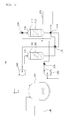
- a culture bath 130 the microbe is cultured by being supplied with the raw material and a medium from a supply bath 140.
- the products are produced in the fermented culture medium(hereinafter, referred to as a 'culture medium') by microbial fermentation.
- the culture medium discharged from the culture bath 130 is supplied to a first column 110 using a pump 160.
- the culture medium may be continuously or discontinuously supplied.
- the product produced by microbe fermentation is contained in the culture medium supplied to the first column 110, and the product in the culture medium is adsorbed in an adsorbent 112 in the column.
- the fermentation, separation, and refinement apparatus may further include a stirrer (not shown) stirring the adsorbent and the product in the column.
- the culture medium and the adsorbent in the first column 110 are uniformly mixed with each other using the stirrer, thereby making it possible to prevent the culture medium and the adsorbent from being aggregated in the column, particularly, at a portion to which the culture medium is supplied, a portion at which a discharge solution is discharged outside of the column, or the like.
- the culture medium may circulate from an upper portion of the first column 110 to a lower portion thereof, but is not limited thereto.
- connection between the culture bath 130 and the first column 110 is blocked by a first conversion part 170, such that supply of the culture medium to the first column 110 is stopped. Further, the first conversion part 170 and a third conversion part 174 are opened in a direction in which the culture bath 130 and a second column 120 are connected to each other, such that the culture medium is supplied to the second column 120. That is, when the product is sufficiently adsorbed in the first column 110, a flow of the culture medium is changed so that supply of the culture medium to the first column 110 is stopped and the culture medium is supplied to the second column 120.
- the first and third conversion parts 170 and 174 may include a 4-way valve.
- desorption means to elute the product adsorbed in the adsorbent from the adsorbent to allow the adsorbent to be recyclable.
- the desorption may be performed using heat or an eluant, but is not limited thereto.
- a kind of means used in the desorption is not limited as long as it is suitable for a process condition.
- the desorption may be performed anytime by using heat or the eluant, and a sufficiently large amount of product may be separated and purified with a small amount of adsorbent 112.
- desorption in the present invention may be performed by applying heat to the adsorbed product to vaporize the product.
- the heat generated in a process is preferable, and the heat may be applied as steam or hot air.
- the steam may be water in a vapor state and applied at a pressure of 0.01 to 6 bar.
- the hot air may be applied at a pressure of 0.01 to 6 bar and have a temperature at which the product may be eluted in a state in which the column and the adsorbent are not damaged.
- the temperature of the hot air may be 100 to 200°C, preferable 110 to 150°C, more preferably 120 to 140°C, and most preferably 130°C.
- the desorption in the present invention may be performed using the eluant, and the eluant may be an organic solvent, or an acidic or basic aqueous solution.
- the organic solvent may be tetrahydrofuran, alcohol, ketone, ether, or ester, preferably, methanol, acetone, ethylacetate, diethylether, or methylethylketone, but is not limited thereto.
- a tetrahydrofuran solvent is flowed into the column or water vapor is passed through the column.
- desorption may be performed by flowing the tetrahydrofuran solvent having a double volume of a volume of the adsorbent at a flow rate of 10mL/min or passing vapor preferably at 130°C and 2 bar.
- the desorption proceeds in a state in which the adsorbent in the first column 110 is not picked out, that is, an in-situ state.
- adsorbent in the first column 110 is not picked out, that is, an in-situ state.
- butanol in the culture medium present in the first column 110 is maintained at a concentration at which butanol does not inhibit growth of the microbe or productivity of the product.
- the culture medium is supplied to the second column 120, such that the culture medium may be continuously flowed.
- adsorption continuously proceeds, such that fermentation, separation, and refinement of the product may be continuously performed.
- the fermentation, separation, and refinement apparatus may further include a filter 114 at the upper or lower portion of the column in order to prevent the adsorbent 112 from being eluted to thereby be lost.
- the case in which the product in the column is sufficiently adsorbed means a case in which the product is sufficiently adsorbed in the adsorbent in the column. That is, the product is sufficiently adsorbed, which means that since the product is sufficiently adsorbed in the first column, it is judged that the case of stopping adsorption of the product in the first column and adsorbing the product in the second column is more preferable as compared to the case of producing and adsorbing the product in the first column.
- the case in which the product of the present invention is sufficiently adsorbed may be the case in which an adsorption rate of the product with respect to the adsorbent is decreased or the case in which a concentration of the product in a discharge solution discharged from the column is 80% or more of a concentration of the product in the culture medium supplied to the column.
- the product produced by the microbe, particularly, butanol is contained in the fermented culture medium of the microbe of the present invention.
- the concentration of butanol in the culture medium reaches at about 12g/L, the microbe may be fatally affected by toxicity of butanol.
- the discharge solution discharged from the column of the present invention is supplied to the culture bath, and as the discharge solution is continuously supplied to the culture bath, the product in the culture bath, particularly butanol is accumulated, such that the concentration of butanol is increased, thereby inhibiting culture of the microbe in the culture bath. Therefore, the case in which the product of the present invention is sufficiently adsorbed may be the case in which the growth of the microbe in the culture bath is inhibited by an increase in the concentration of the product or the case in which productivity of the product of the microbe is decreased.
- the case in which the product is sufficiently adsorbed may be the case in which the adsorption rate of the product with respect to the adsorbent is decreased, the case in which the concentration of the product in the discharge solution discharged from the column is 80% or more of the concentration of the product in the culture medium supplied to the column, the case in which the growth of the microbe in the culture bath is inhibited by the increase in the concentration of the product, or the case in which productivity of the product of the microbe is decreased, and this case may be suitably determined by those skilled in the art according to the kind of microbe, the kind of adsorbent, the kind and composition of product, and the like.
- connection between the culture bath 130 and the second column 120 is blocked by the first and third conversion parts 170 and 174, such that supply of the culture medium to the second column 120 is stopped.
- the conversion part is opened in a direction in which the culture bath 130 and a different column are connected to each other, such that the culture medium is supplied to the different column.
- desorption proceeds in the second column 120, and the product in the culture medium is adsorbed in the different column, such that separation and refinement of the product is continuously performed. In this case, desorption in the second column 120 proceeds similarly to desorption in the first column 110.
- the 'different column' may be the first column 110 or a third column.
- the different column may be changed according to the number of columns included in the fermentation, separation, and refinement apparatus. That is, in the case in which the number of columns in the fermentation, separation, and refinement apparatus is 3 or more, the 'different column' is a third column.
- the 'different column' is the first column 110, and the first column 110 is in a state in which desorption is completed while the adsorption of the product in the second column 120 proceeds.
- the first conversion part 170 is opened in the direction in which the culture bath 130 and the first column 110 are connected to each other, such that the culture medium is supplied to the first column 110.
- the fermentation, separation, and refinement apparatus may reuse the adsorbent in the columns by repeating the above-mentioned process and continuously ferment, separate, and purify the product.
- the fermentation, separation, and refinement apparatus may further include a storage bath 150 storing the product desorbed from the adsorbent filled in the first column 110. While desorption proceeds in the first column 110, second and fourth conversion parts 172 and 176 are opened in a direction in which the storage bath 150 and the first column 110 are connected to each other. Therefore, the product desorbed from the first column 110 moves to the storage bath 150.
- the second and fourth conversion parts 172 and 176 may include a 4-way valve.
- the desorbed product may also be stored in the storage bath 150.
- the fourth conversion part 176 is opened in a direction in which the storage bath 150 and the second column 120 are connected to each other, thereby making it possible to move the desorbed product to the storage bath 150.
- At least some of the discharge solution discharged from the column of the present invention may be supplied to the culture bath.
- an amount of discharge solution supplied to the culture bath may be equal to or less than an amount of culture medium supplied to the column.
- the fermentation, separation, and refinement apparatus and method according to the present invention may simply and continuously ferment, separate, and purify the product produced by culturing the microbe, and since desorption may be suitably performed when the product is sufficiently adsorbed in the adsorbent, adsorption efficiency may also be high. Therefore, the fermentation, separation, and refinement apparatus and method according to the present invention may separate and purify the product produced by culturing the microbe with the high efficiency.
- the microbe of the present invention any microbe may be used as long as the microbe may produce the product, which is a biofuel, from the raw material, but the present invention is not particularly limited.
- the microbe of the present invention may be bacteria, yeast, fungus, or the like, and preferably, bacteria or yeast.
- the microbe of the present invention may be a wild-type microbe or genetically modified microbe.
- the microbe of the present invention may be a wild type strain of Clostridium genus, E . coli, or the like, or a strain of which genes are recombined so as to increase productivity of a specific product, but it is obvious to those skilled in the art that the present invention is not limited thereto.
- the gene modified Clostridium may be prepared by a method disclosed in the released paper (Document [ Microbiology (1996), 142, 2079-2086 ]).
- PJC4BK or BKM19(KCTC 10558BP) which is a mutant strain, may be prepared by deleting the butyrate kinase gene (buk) from Clostridium acetobutylicum.
- mutant strains may be prepared by deleting the phosphotransacetylase gene (pta) and the acetate kinase gene (ackA) from the strain, respectively.
- pta phosphotransacetylase gene
- ackA acetate kinase gene
- the microbe of the present invention may be cultured by a fed-batch culture method or continuous culture method.
- the continuous culture method is a method of supplying a fresh medium to a culture bath at a predetermined rate and simultaneously discharging the same amount of fermented culture medium of the microbe to thereby always maintain the culture medium to be constant in the culture bath.
- the fed-batch culture method which is a culture method of intermittently supplying a medium, is a method of optionally controlling a concentration of a substrate in the culture medium.
- the raw material of the present invention may be a material capable of being used by the microbe at the time of fermentation to thereby produce the product, and a kind thereof is not particularly limited.
- the raw material of the present invention may be biomass, sugars, fatty acids, or the like.
- the biomass may be a woody biomass, grains, or the like, but is not limited thereto.
- the sugars may be monosaccharides, polysaccharides, polysaccharides, or the like, be (C3-C12) sugar, and include polysaccharides produced during a hydrolysis process of the biomass.
- the sugars may be glycerol, glucose, sucrose, xylose, starch, cellulose, or the like, but is not limited thereto.
- the fatty acid may be (C2-C24) fatty acid, for example, acetic acid, butyric acid, propionic acid, or the like, but is not limited thereto.
- the product of the present invention is a fermented product produced by the microbe.
- the product of the present invention may be alcohol, ketone, ester, carboxylic acid, or the like, as a biofuel, but is not limited thereto.
- the alcohol may be (C2-C6)alcohol, preferably, alcohol having at most 4 carbon atoms, and more preferably, ethanol, propanol, isopropanol (2-propanol), 1,2-propanediol, 1,3-propanediol, 1,3-butanediol, 1,4-butanediol, butanol, or the like, but is not limited thereto.
- the ketone may be (C3-C8)ketone.
- the ketone may be acetoacetate, acetone, or the like, but is not limited thereto.
- the ester may be (C4-C8)ester, for example, ethyl acetate, ethyl butyrate, butyl acetate, butyl butyrate, or the like, but is not limited thereto.
- the carboxylic acid may be (C2-C8)carboxylic acid, for example, acetic acid, butyric acid, propionic acid, or the like, but is not limited thereto.
- the product of the present invention may be butanol, isopropanol, ethanol, or acetone, but is not limited thereto.
- the adsorbent 112 of the present invention may be filled at a volume fraction of 0.1 to 99% based on a capacity, that is, a volume of the column containing the adsorbent 112.
- a capacity that is, a volume of the column containing the adsorbent 112.
- the volume fraction of the adsorbent is less than 0.1 volume% based on the volume of the column, the amount of the adsorbent 112 is insufficient, such that adsorption may not be suitably performed.
- the volume fraction of the adsorbent is 99 volume% or more, aggregates of the adsorbent 112 or cells are formed in the column, such that adsorption may not be suitably performed.
- a type of column to which the culture medium is supplied may be a slurry reactor type, a fluidized reactor type, or a packed reactor type.
- the fluidized reactor type column is a column containing a small amount of an adsorbent and having high fluidity
- the slurry reactor type column is a column containing an adsorbent suspended in a culture medium
- the packed reactor type column is a column in which an adsorbent is substantially packed.
- the middle type columns of the three type columns may be divided into the three type columns depending on which column they are close to, and although the inside of the column is the middle type of the three types, the column may be included in any one of the three types.
- the column when it is judged that the adsorbent is packed so as not to substantially flow, the column may be classified as the packed type column, and when it is judged that the adsorbent may be suspended, the column may be classified as the slurry reactor type column.
- the conversion part of the present invention serves to change and control the flow of the culture medium or discharge solution and may control so that the culture medium is supplied from the culture bath 130 to a specific column or send the discharge solution discharged from a specific column to the storage bath 150.
- a single or a plurality of conversion parts may be used, and the conversion part may be suitably installed by those skilled in the art according to the design of the fermentation, separation, and refinement apparatus of the present invention.
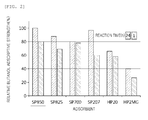
- butanol adsorption performance of various adsorbents prepared by Mitsubishi Corp. was compared. After various kinds of adsorbents were added to 50mL of a phosphate buffer solution (50mM) containing 2% butanol and left for 1 hour while being stirred, a concentration of butanol remaining in the solution was analyzed using gas chromatography. As a result, it was analyzed that the adsorbent SP850 had most excellent performance ( FIG. 2 ), but the kind of adsorbent is not limited to SP850.
- butanol was adsorbed within about 1 minute in various concentration ranges ( FIG. 3 ).
- a recombinant Clostridium strain was constructed.
- a recombinant Clostidium strain C. acetobutylicum PJC4BK-IPA2 containing secondary alcohol dehydrogenase required for fermenting the microbe was constructed.
- Clostridium strain was cultured in 60mL of liquid Clostridium growth media (CGM, 0.75g/L K2HPO4, 0.75g/L KH2PO4, 0.7g/L, MgSO4H2O, 0.017g/L MnSO4H2O, 0.01g/L, FeSO4H2O, 2g/L (NH4)2SO4, 1g/L NaCl, 2g/L asparagine, 0.004g/L p-aminobenzoic acid, 5g/L yeast extract, 4.08g/L CH3COONaH2O, and 80g/L glucose) under anaerobic conditions until OD600 reached 0.5.
- CGM Clostridium growth media
- MgSO4H2O 0.17g/L MnSO4H2O
- FeSO4H2O 2g/L (NH4)2SO4
- 1g/L NaCl 2g/L asparagine
- the culture medium was left in ice water for 10 minutes, and the culture medium was centrifuged with 7000G at 4°C for 10 minutes. 15mL of sucrose (270mM) and 0.11mL of NaH2PO4 (686mM, pH 7.4) were mixed with each other, thereby preparing an electroporation buffer solution. After a cell pellet was washed with the electroporation buffer solution prepared as described above three times, the washed cell pellet was suspended in 2mL of the same buffer solution, thereby constructing recombinant cells.
- plasmid containing secondary alcohol dehydrogenase gene was added to the prepared cells (500l) for transformation, and then electroporation (4mm cuvette, 2.5kV, ⁇ , 25uF) was performed using Gene pulser II (Bio-Rad Corp.), followed by anaerobic culture in the culture medium to which antibiotic was added, thereby completing the construction of recombinant strain. All of the plasmids used for transformation were constructed so as not to be affected by restriction system of the Clostridium strain by being methylated in E . coli ER2275 transformed with a pAN1 vector before electroporation.
- Clostridium strain PJC4BK-IPA2 cultured as described above was smeared on a CGM/chlorampenicol plate medium and anaerobically cultured overnight at 37°C. 2 cultured colonies were inoculated in a 50mL disposable tube in which 20mL of CGM/chlorampenicol culture medium was contained and anaerobically cultured while being placed at 37°C until OD600 reached 3. The cultured broth was inoculated again in a liquid CGM containing 100mL of 8% glucose and anaerobically cultured while being placed at 37°C until OD600 reached 2 to 3.
- the resultant was inoculated in a culture bath in which 1L of the liquid CGM and 0mL (0g/L, dried weight), 200mL (60g/L), 250mL (75g/L), 300mL (90g/L), 350mL (105g/L), and 400mL(120g/L) of the adsorbent were contained, respectively, and cultured.
- concentrations of the produced butanol, acetone, isopropanol, ethanol, and the like were analyzed per 3 hours while maintaining a concentration of glucose at 20g/L or more. Analysis of products such as butanol, acetone, isopropanol, ethanol, and the like, was performed using the gas chromatography (Agilent, USA), and analysis conditions were the same as in Table 1.
- Concentrations of sugar and organic acid may be confirmed using high pressure liquid chromatography (HPLC), gas chromatography, and a sugar analyzer after centrifuging the culture medium and obtaining a supernatant.
- HPLC high pressure liquid chromatography
- Conditions of the HPLC were as follows: water containing 0.01N sulfuric acid was used as a mobile phase, and a flow rate was 0.6mL/min.
- Aminex87H and Aminex87P Bio-rad, USA
- RI reflective index
- the recombinant and mutant strains cultured as described above produced larger amounts of products such as butanol, acetone, isopropanol, ethanol, and the like in the culture medium containing the adsorbent, and the optimal amount of the adsorbent was 250mL/L, as shown in Table 2.
- the same culture medium, culture method, and analysis method as in the Experimental Examples were used, and 200mL of the adsorbent was used, such that reusability of the adsorbent was tested.
- the products such as butanol, acetone, isobutanol, or ethanol, adsorbed in the adsorbent were recovered using a column for desorption and eluted by flowing a tetrahydrofuran solvent having a double volume of a volume of the adsorbent at a flow rate of 10mL/min.
- the total amount of products was analyzed using gas chromatography, and the total amount of adsorbed solvent was compared thereto every time, thereby analyzing performance of the adsorbent.
- the recombinant and mutant strains cultured as described above produced larger amounts of butanol, acetone, isopropanol, ethanol, and the like, during the culture process, depending on an amount of a nutrient, as shown in Table 4.
- This result means that in the case of simultaneously injecting the nutrient and carbon source according to the culture method in Example of the present invention, the high concentration products such as butanol, acetone, isopropanol, ethanol, and the like, may be synthesized with a high yield in the continuous culture as well as the fed-batch culture.
- the fed-batch culture apparatus shown in FIG. 1 was manufactured. In this case, two columns were included therein. In order to prevent the adsorbent from being eluted at upper and lower portions of the column having a volume of 500mL to thereby be lost, a filter (about 150m) was mounted, and then a stirrer was mounted. Thereafter, 300mL of adsorbent SP850 was filled in two columns (referred to as first and second columns, respectively). These columns were connected to a culture bath using a silicon tube, and a pump was mounted so as to circulate a culture medium in the column.
- 4-way valves were mounted at an inlet and an outlet of the column so as to flow an eluant when the products such as butanol, acetone, ethanol, and the like were sufficiently adsorbed in the adsorbent in the column during the culture process to thereby perform desorption in real time.
- the flow of the culture medium and the product were changed to the second column by adjusting the 4-way value.
- a circulation direction of the culture medium is a direction from the upper portion of the column to the lower portion thereof, but the circulation direction did not matter.
- C. acetobutylicum PJC4BK strains capable of producing butanol, acetone, ethanol, and the like were prepared using a fed-batch culture apparatus and cultured as in the Experimental Examples.
- 300mL of seed anaerobically cultured in the liquid CGM overnight was inoculated and cultured into a reactor in which 2.7L of the liquid CGM was contained.
- the seed was cultured by general batch fermentation, but in order to prepare the high concentration products such as butanol, acetone, ethanol, and the like at a higher cell concentration, cell immobilization type culture may be performed.
- the culture medium passed through the first column via the pump at a flow rate of 30mL/min simultaneously with starting the culture.
- the adsorbent SP850 was suspended in the culture medium while the culture medium passed through the first column to form a slurry phase, such that the flow of the culture medium was not blocked by the aggregates of cells, and the culture medium passed through the first column.
- culture medium samples were taken, and concentrations of butanol, acetone, ethanol, and the like, were analyzed using gas chromatography.
- a concentration of sugar was maintained at 20g/L using HPLC and a sugar analyzer. Amounts of the products such as butanol, acetone, isopropanol, ethanol, or the like were confirmed through gas chromatography.
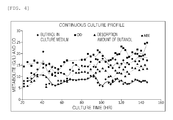
- the fed-batch culture was stably performed for about 150 hours, and the concentration of the product in the discharge solution (after adsorption) discharged from the column was significantly decreased as compared to the concentration of the product in the culture medium (before adsorption) supplied to the column. That is, it may be confirmed that the products such as butanol, acetone, ethanol, and the like, was maintained at a significantly low concentration in the discharge solution discharged from the column. In addition, it was confirmed that the concentration of the product was constantly maintained in the culture apparatus, such that the microbe was not affected by the toxicity of butanol but may stably prepare the product.
Landscapes
- Chemical & Material Sciences (AREA)
- Life Sciences & Earth Sciences (AREA)
- Organic Chemistry (AREA)
- Engineering & Computer Science (AREA)
- Health & Medical Sciences (AREA)
- Wood Science & Technology (AREA)
- Zoology (AREA)
- Bioinformatics & Cheminformatics (AREA)
- Biotechnology (AREA)
- Genetics & Genomics (AREA)
- General Engineering & Computer Science (AREA)
- Microbiology (AREA)
- General Health & Medical Sciences (AREA)
- Biochemistry (AREA)
- Biomedical Technology (AREA)
- Sustainable Development (AREA)
- Chemical Kinetics & Catalysis (AREA)
- General Chemical & Material Sciences (AREA)
- Immunology (AREA)
- Molecular Biology (AREA)
- Clinical Laboratory Science (AREA)
- Analytical Chemistry (AREA)
- Medicinal Chemistry (AREA)
- Preparation Of Compounds By Using Micro-Organisms (AREA)
- Micro-Organisms Or Cultivation Processes Thereof (AREA)
Applications Claiming Priority (2)
| Application Number | Priority Date | Filing Date | Title |
|---|---|---|---|
| KR20110034883 | 2011-04-14 | ||
| PCT/KR2012/002845 WO2012141546A2 (fr) | 2011-04-14 | 2012-04-13 | Appareil et procédé de séparation et de raffinage de fermentation de produit fabriqué par fermentation de micro-organismes à l'aide d'adsorbant |
Publications (3)
| Publication Number | Publication Date |
|---|---|
| EP2698423A2 true EP2698423A2 (fr) | 2014-02-19 |
| EP2698423A4 EP2698423A4 (fr) | 2014-12-10 |
| EP2698423B1 EP2698423B1 (fr) | 2020-12-23 |
Family
ID=47009871
Family Applications (1)
| Application Number | Title | Priority Date | Filing Date |
|---|---|---|---|
| EP12771036.6A Active EP2698423B1 (fr) | 2011-04-14 | 2012-04-13 | Appareil et procédé de séparation et de raffinage d`un produit fabriqué par fermentation de micro-organismes à l`aide d`adsorbant |
Country Status (9)
| Country | Link |
|---|---|
| US (2) | US20140038250A1 (fr) |
| EP (1) | EP2698423B1 (fr) |
| KR (2) | KR101418638B1 (fr) |
| CN (1) | CN103476918B (fr) |
| AU (1) | AU2012243504B2 (fr) |
| BR (1) | BR112013026238B1 (fr) |
| CA (1) | CA2832960C (fr) |
| MY (1) | MY180565A (fr) |
| WO (2) | WO2012141546A2 (fr) |
Cited By (2)
| Publication number | Priority date | Publication date | Assignee | Title |
|---|---|---|---|---|
| CN107583308A (zh) * | 2017-10-19 | 2018-01-16 | 苏州苏震生物工程有限公司 | 一种用于1,3‑丙二醇和2,3‑丁二醇纯化的设备及工艺 |
| EP3778852A4 (fr) * | 2018-03-27 | 2021-12-22 | Sekisui Chemical Co., Ltd. | Dispositif de fabrication d'une substance organique, et système de traitement de gaz |
Families Citing this family (7)
| Publication number | Priority date | Publication date | Assignee | Title |
|---|---|---|---|---|
| CN105327524B (zh) * | 2014-08-08 | 2017-10-17 | 苏州汇通色谱分离纯化有限公司 | 一种两端收缩平滑连接型高、中压色谱柱 |
| CN104974013B (zh) * | 2015-05-28 | 2017-03-15 | 南京工业大学 | 一种利用连续色谱技术分离丁醇发酵液的工艺 |
| CN107446813B (zh) * | 2017-08-22 | 2023-10-31 | 江西省科学院微生物研究所 | 一种连续转化生产2-pe的装置及其连续转化生产2-pe的方法 |
| KR101989814B1 (ko) | 2017-11-28 | 2019-06-17 | 지에스칼텍스 주식회사 | 클로스트리디움 및 대장균에서 복제가 가능한 셔틀 플라스미드 및 이를 이용하여 제조된, 오탄당 대사 및 발효 성능이 증강된 재조합 미생물 |
| EP3754026B1 (fr) * | 2018-02-13 | 2022-09-28 | Kao Corporation | Méthode de production d'un produit de fermentation |
| CN109609392B (zh) * | 2018-12-24 | 2022-04-19 | 上海智城分析仪器制造有限公司 | 一种用于酵母菌的虹吸导管补料摇床培养方法 |
| KR102773001B1 (ko) * | 2023-07-27 | 2025-02-27 | 동우 화인켐 주식회사 | 유기용매 정제 방법 및 탈수 시스템 |
Family Cites Families (30)
| Publication number | Priority date | Publication date | Assignee | Title |
|---|---|---|---|---|
| US1315585A (en) | 1919-09-09 | Charles weizmann | ||
| US4155849A (en) * | 1977-08-01 | 1979-05-22 | Baierl Kenneth W | Adsorber-regenerator |
| US4236349A (en) | 1978-07-24 | 1980-12-02 | Mobil Oil Corporation | Algae biopolymer production |
| US4520104A (en) * | 1982-11-18 | 1985-05-28 | Cpc International Inc. | Production of butanol by a continuous fermentation process |
| DE3570866D1 (en) | 1984-02-03 | 1989-07-13 | Ladenburg Biochemie | Process for the isolation of citric acid |
| DK309184D0 (da) | 1984-06-25 | 1984-06-25 | Nordisk Insulinlab | Fremgangsmaade til isolering af insulin eller insulinlignende materiale fra en fermenteringsvaeske |
| US5068184A (en) * | 1987-07-28 | 1991-11-26 | Escagenetics, Inc. | Flavor composition and method |
| US4946582A (en) | 1988-01-22 | 1990-08-07 | Mitsui Petrochemical Industries, Ltd. | Method of removing mercury from hydrocarbon oils |
| JP3060384B2 (ja) * | 1988-10-27 | 2000-07-10 | 雪印乳業株式会社 | 吸着カラムを連結させた細胞培養法およびそのための装置 |
| JPH03187384A (ja) * | 1989-12-15 | 1991-08-15 | Kirin Brewery Co Ltd | 連続醗酵方法およびその反応器 |
| JPH05227A (ja) * | 1991-06-25 | 1993-01-08 | Kikkoman Corp | エタノールの分離濃縮法 |
| US6114577A (en) * | 1995-02-15 | 2000-09-05 | Reilly Industries, Inc. | Desorption process and apparatus |
| DE69939590D1 (de) * | 1998-06-18 | 2008-10-30 | Upfront Chromatography As Kope | Expandiertes bett absorptionssystem |
| KR100340187B1 (ko) * | 1999-11-12 | 2002-06-12 | 채문식 | 이차대사산물의 생산 및 분리를 겸한 내부 흡착형생물반응기 |
| JP2001218840A (ja) * | 2000-02-14 | 2001-08-14 | Kanegafuchi Chem Ind Co Ltd | トランスフォーミング増殖因子βの吸着材、吸着除去方法および吸着器 |
| CN1164758C (zh) * | 2001-09-05 | 2004-09-01 | 中国科学院过程工程研究所 | 采用气升式发酵分离耦合技术制备酒精的方法和专用设备 |
| CN1200108C (zh) * | 2002-10-30 | 2005-05-04 | 中国科学院过程工程研究所 | 纤维素固相酶解-液体发酵耦合制备乙醇的方法及其装置 |
| KR100474653B1 (ko) * | 2004-04-16 | 2005-03-14 | 동국제약 주식회사 | 타이코플라닌의 고순도 생산방법 |
| JP2006333749A (ja) * | 2005-05-31 | 2006-12-14 | National Institute Of Advanced Industrial & Technology | エタノール製造方法、製造装置及びそれに用いるエタノール吸着材料 |
| RU2008141248A (ru) * | 2006-03-20 | 2010-04-27 | Б.П.Т.-Байо Пьюэ Текнолоджи Лимитед (Il) | Модуль, система и способ гибридной мембранной очистки промышленных сточных вод |
| US20080015395A1 (en) * | 2006-06-16 | 2008-01-17 | D Amore Michael B | Process for making butenes from aqueous 1-butanol |
| CN101130791B (zh) * | 2006-08-25 | 2010-05-12 | 中国科学院过程工程研究所 | 一种利用甜高粱秸秆固态发酵制备酒精的设备和方法 |
| US7763163B2 (en) * | 2006-10-20 | 2010-07-27 | Saudi Arabian Oil Company | Process for removal of nitrogen and poly-nuclear aromatics from hydrocracker feedstocks |
| WO2008095896A1 (fr) * | 2007-02-05 | 2008-08-14 | Dsm Ip Assets B.V. | Procédé de récupération de butanol |
| US8258076B2 (en) | 2007-08-03 | 2012-09-04 | Kabushiki Kaisha Toshiba | Phosphorus compound adsorbent, phosphorus compound adsorption system, and method of using phosphorus compound adsorbent |
| BRPI0816673A8 (pt) * | 2007-09-11 | 2016-01-19 | Tetravitae Bioscience Inc | Processo para produção de solventes utilizando adsorção em fase líquida. |
| CN101386815B (zh) * | 2007-09-11 | 2011-06-01 | 中国科学院过程工程研究所 | 扩张床吸附原位提取琥珀酸发酵分离的耦合装置和工艺 |
| KR20110019022A (ko) * | 2009-08-19 | 2011-02-25 | 주식회사 엔케이 | 산소발생기용 다중흡착탑 장치 및 그 운전방법 |
| CN101670191B (zh) * | 2009-10-16 | 2012-05-30 | 青岛生物能源与过程研究所 | 对溶液中易挥发的有机物吸附浓缩方法和装置 |
| CN101914433A (zh) * | 2010-08-26 | 2010-12-15 | 华中科技大学 | 发酵与扩张床原位吸附耦合的乳酸生产工艺 |
-
2012
- 2012-04-03 MY MYPI2013003757A patent/MY180565A/en unknown
- 2012-04-13 US US14/111,425 patent/US20140038250A1/en not_active Abandoned
- 2012-04-13 BR BR112013026238-9A patent/BR112013026238B1/pt active IP Right Grant
- 2012-04-13 CN CN201280018471.4A patent/CN103476918B/zh active Active
- 2012-04-13 KR KR1020120038771A patent/KR101418638B1/ko active Active
- 2012-04-13 EP EP12771036.6A patent/EP2698423B1/fr active Active
- 2012-04-13 CA CA2832960A patent/CA2832960C/fr active Active
- 2012-04-13 WO PCT/KR2012/002845 patent/WO2012141546A2/fr not_active Ceased
- 2012-04-13 US US14/111,100 patent/US10150973B2/en active Active
- 2012-04-13 KR KR20120038770A patent/KR101487057B1/ko active Active
- 2012-04-13 WO PCT/KR2012/002841 patent/WO2012141542A2/fr not_active Ceased
- 2012-04-13 AU AU2012243504A patent/AU2012243504B2/en active Active
Cited By (3)
| Publication number | Priority date | Publication date | Assignee | Title |
|---|---|---|---|---|
| CN107583308A (zh) * | 2017-10-19 | 2018-01-16 | 苏州苏震生物工程有限公司 | 一种用于1,3‑丙二醇和2,3‑丁二醇纯化的设备及工艺 |
| CN107583308B (zh) * | 2017-10-19 | 2023-10-10 | 苏州苏震生物工程有限公司 | 一种用于1,3-丙二醇和2,3-丁二醇纯化的设备及工艺 |
| EP3778852A4 (fr) * | 2018-03-27 | 2021-12-22 | Sekisui Chemical Co., Ltd. | Dispositif de fabrication d'une substance organique, et système de traitement de gaz |
Also Published As
| Publication number | Publication date |
|---|---|
| EP2698423A4 (fr) | 2014-12-10 |
| AU2012243504B2 (en) | 2015-08-13 |
| KR101487057B1 (ko) | 2015-01-27 |
| US20140038250A1 (en) | 2014-02-06 |
| MY180565A (en) | 2020-12-02 |
| BR112013026238A2 (pt) | 2017-06-20 |
| EP2698423B1 (fr) | 2020-12-23 |
| WO2012141542A3 (fr) | 2013-03-07 |
| CN103476918A (zh) | 2013-12-25 |
| WO2012141542A2 (fr) | 2012-10-18 |
| WO2012141546A3 (fr) | 2013-03-07 |
| KR101418638B1 (ko) | 2014-07-10 |
| CN103476918B (zh) | 2016-09-14 |
| CA2832960C (fr) | 2020-07-21 |
| BR112013026238B1 (pt) | 2020-02-11 |
| US10150973B2 (en) | 2018-12-11 |
| AU2012243504A1 (en) | 2013-10-31 |
| CA2832960A1 (fr) | 2012-10-18 |
| WO2012141546A2 (fr) | 2012-10-18 |
| KR20120117690A (ko) | 2012-10-24 |
| US20140030777A1 (en) | 2014-01-30 |
| KR20120117689A (ko) | 2012-10-24 |
Similar Documents
| Publication | Publication Date | Title |
|---|---|---|
| EP2698423B1 (fr) | Appareil et procédé de séparation et de raffinage d`un produit fabriqué par fermentation de micro-organismes à l`aide d`adsorbant | |
| Cheng et al. | Engineering Clostridium for improved solvent production: recent progress and perspective | |
| JP6905518B2 (ja) | エネルギー発生発酵経路を含む遺伝子操作細菌 | |
| US20140377825A1 (en) | PROCESS FOR THE BIOLOGICAL PRODUCTION OF n-BUTANOL WITH HIGH YIELD | |
| BRPI0820556B1 (pt) | bactéria e métodos para uso das mesmas | |
| JP2011522563A (ja) | 嫌気的微生物発酵によるブタンジオールの製造 | |
| Fang et al. | Metabolic and process engineering of Clostridium beijerinckii for butyl acetate production in one step | |
| Shu et al. | Temperature control and in situ product recovery strategies to enhance the bioconversion of L‐phenylalanine into 2‐phenylethanol | |
| Xue et al. | 3.07-Biofuels and Bioenergy: Acetone and Butanol☆ | |
| Wang et al. | Fermentative biobutanol production: an old topic with remarkable recent advances | |
| CN115916988A (zh) | 在酵母中生产乙醇和一种或多种副产物 | |
| CN104204206B (zh) | 一种用于生产丁醇的方法 | |
| US9957529B2 (en) | Recombinant microorganism with improved butanol production ability and method for producing butanol by using the same | |
| JP2016530894A (ja) | 発酵プロセス | |
| Mishra et al. | Present Status and Future Prospect of Butanol Fermentation | |
| EP3345995A1 (fr) | Cellules recombinantes, procédé de production de cellules recombinantes et procédé de production de 1,4-butanediol | |
| EP2084287B1 (fr) | Procédé de production biologique de n-butanol à haut rendement | |
| CA2880181A1 (fr) | Micro-organisme recombine ayant une capacite accrue pour produire du butanol, et procede de production de butanol utilisant ledit micro-organisme | |
| Daroch et al. | Biological process for butanol production | |
| Jain et al. | Production of butanol: a biofuel | |
| CN105154456B (zh) | 一种通过提高胞内辅酶水平加强2,3-丁二醇合成的方法 | |
| CN121674246A (zh) | 一种生产β-胡萝卜素的重组多形汉逊酵母工程菌株及应用 | |
| CN119410506A (zh) | 一种生产葫芦二烯醇的重组酵母工程菌株及应用 | |
| CN121472107A (zh) | 一种共利用葡萄糖和木糖生产丁酸丁酯的酪丁酸梭菌及其构建方法和应用 |
Legal Events
| Date | Code | Title | Description |
|---|---|---|---|
| PUAI | Public reference made under article 153(3) epc to a published international application that has entered the european phase |
Free format text: ORIGINAL CODE: 0009012 |
|
| 17P | Request for examination filed |
Effective date: 20131018 |
|
| AK | Designated contracting states |
Kind code of ref document: A2 Designated state(s): AL AT BE BG CH CY CZ DE DK EE ES FI FR GB GR HR HU IE IS IT LI LT LU LV MC MK MT NL NO PL PT RO RS SE SI SK SM TR |
|
| DAX | Request for extension of the european patent (deleted) | ||
| A4 | Supplementary search report drawn up and despatched |
Effective date: 20141111 |
|
| RIC1 | Information provided on ipc code assigned before grant |
Ipc: B01D 15/22 20060101ALI20141105BHEP Ipc: B01D 15/08 20060101ALI20141105BHEP Ipc: C12P 7/16 20060101ALI20141105BHEP Ipc: C12M 1/06 20060101AFI20141105BHEP Ipc: C12P 7/06 20060101ALI20141105BHEP |
|
| STAA | Information on the status of an ep patent application or granted ep patent |
Free format text: STATUS: EXAMINATION IS IN PROGRESS |
|
| 17Q | First examination report despatched |
Effective date: 20170303 |
|
| REG | Reference to a national code |
Ref country code: DE Ref legal event code: R079 Ref document number: 602012073850 Country of ref document: DE Free format text: PREVIOUS MAIN CLASS: C12M0001060000 Ipc: C12M0001000000 |
|
| GRAP | Despatch of communication of intention to grant a patent |
Free format text: ORIGINAL CODE: EPIDOSNIGR1 |
|
| STAA | Information on the status of an ep patent application or granted ep patent |
Free format text: STATUS: GRANT OF PATENT IS INTENDED |
|
| RIC1 | Information provided on ipc code assigned before grant |
Ipc: B01D 15/08 20060101ALI20200624BHEP Ipc: B01D 15/22 20060101ALI20200624BHEP Ipc: C12M 1/00 20060101AFI20200624BHEP Ipc: C12P 7/16 20060101ALI20200624BHEP Ipc: C12M 1/06 20060101ALI20200624BHEP Ipc: C12P 7/06 20060101ALI20200624BHEP |
|
| INTG | Intention to grant announced |
Effective date: 20200710 |
|
| GRAS | Grant fee paid |
Free format text: ORIGINAL CODE: EPIDOSNIGR3 |
|
| GRAA | (expected) grant |
Free format text: ORIGINAL CODE: 0009210 |
|
| STAA | Information on the status of an ep patent application or granted ep patent |
Free format text: STATUS: THE PATENT HAS BEEN GRANTED |
|
| AK | Designated contracting states |
Kind code of ref document: B1 Designated state(s): AL AT BE BG CH CY CZ DE DK EE ES FI FR GB GR HR HU IE IS IT LI LT LU LV MC MK MT NL NO PL PT RO RS SE SI SK SM TR |
|
| REG | Reference to a national code |
Ref country code: GB Ref legal event code: FG4D |
|
| REG | Reference to a national code |
Ref country code: DE Ref legal event code: R096 Ref document number: 602012073850 Country of ref document: DE |
|
| REG | Reference to a national code |
Ref country code: AT Ref legal event code: REF Ref document number: 1347742 Country of ref document: AT Kind code of ref document: T Effective date: 20210115 |
|
| REG | Reference to a national code |
Ref country code: IE Ref legal event code: FG4D |
|
| PG25 | Lapsed in a contracting state [announced via postgrant information from national office to epo] |
Ref country code: NO Free format text: LAPSE BECAUSE OF FAILURE TO SUBMIT A TRANSLATION OF THE DESCRIPTION OR TO PAY THE FEE WITHIN THE PRESCRIBED TIME-LIMIT Effective date: 20210323 Ref country code: RS Free format text: LAPSE BECAUSE OF FAILURE TO SUBMIT A TRANSLATION OF THE DESCRIPTION OR TO PAY THE FEE WITHIN THE PRESCRIBED TIME-LIMIT Effective date: 20201223 Ref country code: FI Free format text: LAPSE BECAUSE OF FAILURE TO SUBMIT A TRANSLATION OF THE DESCRIPTION OR TO PAY THE FEE WITHIN THE PRESCRIBED TIME-LIMIT Effective date: 20201223 Ref country code: GR Free format text: LAPSE BECAUSE OF FAILURE TO SUBMIT A TRANSLATION OF THE DESCRIPTION OR TO PAY THE FEE WITHIN THE PRESCRIBED TIME-LIMIT Effective date: 20210324 |
|
| REG | Reference to a national code |
Ref country code: AT Ref legal event code: MK05 Ref document number: 1347742 Country of ref document: AT Kind code of ref document: T Effective date: 20201223 |
|
| REG | Reference to a national code |
Ref country code: NL Ref legal event code: MP Effective date: 20201223 |
|
| PG25 | Lapsed in a contracting state [announced via postgrant information from national office to epo] |
Ref country code: LV Free format text: LAPSE BECAUSE OF FAILURE TO SUBMIT A TRANSLATION OF THE DESCRIPTION OR TO PAY THE FEE WITHIN THE PRESCRIBED TIME-LIMIT Effective date: 20201223 Ref country code: SE Free format text: LAPSE BECAUSE OF FAILURE TO SUBMIT A TRANSLATION OF THE DESCRIPTION OR TO PAY THE FEE WITHIN THE PRESCRIBED TIME-LIMIT Effective date: 20201223 Ref country code: BG Free format text: LAPSE BECAUSE OF FAILURE TO SUBMIT A TRANSLATION OF THE DESCRIPTION OR TO PAY THE FEE WITHIN THE PRESCRIBED TIME-LIMIT Effective date: 20210323 |
|
| PG25 | Lapsed in a contracting state [announced via postgrant information from national office to epo] |
Ref country code: NL Free format text: LAPSE BECAUSE OF FAILURE TO SUBMIT A TRANSLATION OF THE DESCRIPTION OR TO PAY THE FEE WITHIN THE PRESCRIBED TIME-LIMIT Effective date: 20201223 Ref country code: HR Free format text: LAPSE BECAUSE OF FAILURE TO SUBMIT A TRANSLATION OF THE DESCRIPTION OR TO PAY THE FEE WITHIN THE PRESCRIBED TIME-LIMIT Effective date: 20201223 |
|
| REG | Reference to a national code |
Ref country code: LT Ref legal event code: MG9D |
|
| PG25 | Lapsed in a contracting state [announced via postgrant information from national office to epo] |
Ref country code: LT Free format text: LAPSE BECAUSE OF FAILURE TO SUBMIT A TRANSLATION OF THE DESCRIPTION OR TO PAY THE FEE WITHIN THE PRESCRIBED TIME-LIMIT Effective date: 20201223 Ref country code: RO Free format text: LAPSE BECAUSE OF FAILURE TO SUBMIT A TRANSLATION OF THE DESCRIPTION OR TO PAY THE FEE WITHIN THE PRESCRIBED TIME-LIMIT Effective date: 20201223 Ref country code: PT Free format text: LAPSE BECAUSE OF FAILURE TO SUBMIT A TRANSLATION OF THE DESCRIPTION OR TO PAY THE FEE WITHIN THE PRESCRIBED TIME-LIMIT Effective date: 20210423 Ref country code: SK Free format text: LAPSE BECAUSE OF FAILURE TO SUBMIT A TRANSLATION OF THE DESCRIPTION OR TO PAY THE FEE WITHIN THE PRESCRIBED TIME-LIMIT Effective date: 20201223 Ref country code: CZ Free format text: LAPSE BECAUSE OF FAILURE TO SUBMIT A TRANSLATION OF THE DESCRIPTION OR TO PAY THE FEE WITHIN THE PRESCRIBED TIME-LIMIT Effective date: 20201223 Ref country code: EE Free format text: LAPSE BECAUSE OF FAILURE TO SUBMIT A TRANSLATION OF THE DESCRIPTION OR TO PAY THE FEE WITHIN THE PRESCRIBED TIME-LIMIT Effective date: 20201223 Ref country code: SM Free format text: LAPSE BECAUSE OF FAILURE TO SUBMIT A TRANSLATION OF THE DESCRIPTION OR TO PAY THE FEE WITHIN THE PRESCRIBED TIME-LIMIT Effective date: 20201223 |
|
| PG25 | Lapsed in a contracting state [announced via postgrant information from national office to epo] |
Ref country code: PL Free format text: LAPSE BECAUSE OF FAILURE TO SUBMIT A TRANSLATION OF THE DESCRIPTION OR TO PAY THE FEE WITHIN THE PRESCRIBED TIME-LIMIT Effective date: 20201223 Ref country code: AT Free format text: LAPSE BECAUSE OF FAILURE TO SUBMIT A TRANSLATION OF THE DESCRIPTION OR TO PAY THE FEE WITHIN THE PRESCRIBED TIME-LIMIT Effective date: 20201223 |
|
| REG | Reference to a national code |
Ref country code: DE Ref legal event code: R097 Ref document number: 602012073850 Country of ref document: DE |
|
| PG25 | Lapsed in a contracting state [announced via postgrant information from national office to epo] |
Ref country code: IS Free format text: LAPSE BECAUSE OF FAILURE TO SUBMIT A TRANSLATION OF THE DESCRIPTION OR TO PAY THE FEE WITHIN THE PRESCRIBED TIME-LIMIT Effective date: 20210423 |
|
| PG25 | Lapsed in a contracting state [announced via postgrant information from national office to epo] |
Ref country code: IT Free format text: LAPSE BECAUSE OF FAILURE TO SUBMIT A TRANSLATION OF THE DESCRIPTION OR TO PAY THE FEE WITHIN THE PRESCRIBED TIME-LIMIT Effective date: 20201223 Ref country code: AL Free format text: LAPSE BECAUSE OF FAILURE TO SUBMIT A TRANSLATION OF THE DESCRIPTION OR TO PAY THE FEE WITHIN THE PRESCRIBED TIME-LIMIT Effective date: 20201223 |
|
| PLBE | No opposition filed within time limit |
Free format text: ORIGINAL CODE: 0009261 |
|
| STAA | Information on the status of an ep patent application or granted ep patent |
Free format text: STATUS: NO OPPOSITION FILED WITHIN TIME LIMIT |
|
| REG | Reference to a national code |
Ref country code: DE Ref legal event code: R119 Ref document number: 602012073850 Country of ref document: DE |
|
| PG25 | Lapsed in a contracting state [announced via postgrant information from national office to epo] |
Ref country code: MC Free format text: LAPSE BECAUSE OF FAILURE TO SUBMIT A TRANSLATION OF THE DESCRIPTION OR TO PAY THE FEE WITHIN THE PRESCRIBED TIME-LIMIT Effective date: 20201223 Ref country code: ES Free format text: LAPSE BECAUSE OF FAILURE TO SUBMIT A TRANSLATION OF THE DESCRIPTION OR TO PAY THE FEE WITHIN THE PRESCRIBED TIME-LIMIT Effective date: 20201223 Ref country code: DK Free format text: LAPSE BECAUSE OF FAILURE TO SUBMIT A TRANSLATION OF THE DESCRIPTION OR TO PAY THE FEE WITHIN THE PRESCRIBED TIME-LIMIT Effective date: 20201223 |
|
| 26N | No opposition filed |
Effective date: 20210924 |
|
| PG25 | Lapsed in a contracting state [announced via postgrant information from national office to epo] |
Ref country code: LU Free format text: LAPSE BECAUSE OF NON-PAYMENT OF DUE FEES Effective date: 20210413 |
|
| REG | Reference to a national code |
Ref country code: BE Ref legal event code: MM Effective date: 20210430 |
|
| PG25 | Lapsed in a contracting state [announced via postgrant information from national office to epo] |
Ref country code: DE Free format text: LAPSE BECAUSE OF NON-PAYMENT OF DUE FEES Effective date: 20211103 Ref country code: FR Free format text: LAPSE BECAUSE OF NON-PAYMENT OF DUE FEES Effective date: 20210430 Ref country code: CH Free format text: LAPSE BECAUSE OF NON-PAYMENT OF DUE FEES Effective date: 20210430 Ref country code: LI Free format text: LAPSE BECAUSE OF NON-PAYMENT OF DUE FEES Effective date: 20210430 |
|
| PG25 | Lapsed in a contracting state [announced via postgrant information from national office to epo] |
Ref country code: SI Free format text: LAPSE BECAUSE OF FAILURE TO SUBMIT A TRANSLATION OF THE DESCRIPTION OR TO PAY THE FEE WITHIN THE PRESCRIBED TIME-LIMIT Effective date: 20201223 |
|
| PG25 | Lapsed in a contracting state [announced via postgrant information from national office to epo] |
Ref country code: IE Free format text: LAPSE BECAUSE OF NON-PAYMENT OF DUE FEES Effective date: 20210413 |
|
| PG25 | Lapsed in a contracting state [announced via postgrant information from national office to epo] |
Ref country code: IS Free format text: LAPSE BECAUSE OF FAILURE TO SUBMIT A TRANSLATION OF THE DESCRIPTION OR TO PAY THE FEE WITHIN THE PRESCRIBED TIME-LIMIT Effective date: 20210423 |
|
| PG25 | Lapsed in a contracting state [announced via postgrant information from national office to epo] |
Ref country code: BE Free format text: LAPSE BECAUSE OF NON-PAYMENT OF DUE FEES Effective date: 20210430 |
|
| PG25 | Lapsed in a contracting state [announced via postgrant information from national office to epo] |
Ref country code: HU Free format text: LAPSE BECAUSE OF FAILURE TO SUBMIT A TRANSLATION OF THE DESCRIPTION OR TO PAY THE FEE WITHIN THE PRESCRIBED TIME-LIMIT; INVALID AB INITIO Effective date: 20120413 Ref country code: CY Free format text: LAPSE BECAUSE OF FAILURE TO SUBMIT A TRANSLATION OF THE DESCRIPTION OR TO PAY THE FEE WITHIN THE PRESCRIBED TIME-LIMIT Effective date: 20201223 |
|
| PG25 | Lapsed in a contracting state [announced via postgrant information from national office to epo] |
Ref country code: MK Free format text: LAPSE BECAUSE OF FAILURE TO SUBMIT A TRANSLATION OF THE DESCRIPTION OR TO PAY THE FEE WITHIN THE PRESCRIBED TIME-LIMIT Effective date: 20201223 |
|
| PG25 | Lapsed in a contracting state [announced via postgrant information from national office to epo] |
Ref country code: MT Free format text: LAPSE BECAUSE OF FAILURE TO SUBMIT A TRANSLATION OF THE DESCRIPTION OR TO PAY THE FEE WITHIN THE PRESCRIBED TIME-LIMIT Effective date: 20201223 |
|
| PG25 | Lapsed in a contracting state [announced via postgrant information from national office to epo] |
Ref country code: TR Free format text: LAPSE BECAUSE OF FAILURE TO SUBMIT A TRANSLATION OF THE DESCRIPTION OR TO PAY THE FEE WITHIN THE PRESCRIBED TIME-LIMIT Effective date: 20201223 |
|
| PGFP | Annual fee paid to national office [announced via postgrant information from national office to epo] |
Ref country code: GB Payment date: 20260327 Year of fee payment: 15 |