EP2699623B1 - Funktionalisierte polyorganosiloxane oder silane zur behandlung von lignocellulosischen werkstoffen - Google Patents
Funktionalisierte polyorganosiloxane oder silane zur behandlung von lignocellulosischen werkstoffen Download PDFInfo
- Publication number
- EP2699623B1 EP2699623B1 EP12714327.9A EP12714327A EP2699623B1 EP 2699623 B1 EP2699623 B1 EP 2699623B1 EP 12714327 A EP12714327 A EP 12714327A EP 2699623 B1 EP2699623 B1 EP 2699623B1
- Authority
- EP
- European Patent Office
- Prior art keywords
- groups
- polyorganosiloxanes
- group
- silanes
- residues
- Prior art date
- Legal status (The legal status is an assumption and is not a legal conclusion. Google has not performed a legal analysis and makes no representation as to the accuracy of the status listed.)
- Active
Links
Classifications
-
- B—PERFORMING OPERATIONS; TRANSPORTING
- B27—WORKING OR PRESERVING WOOD OR SIMILAR MATERIAL; NAILING OR STAPLING MACHINES IN GENERAL
- B27K—PROCESSES, APPARATUS OR SELECTION OF SUBSTANCES FOR IMPREGNATING, STAINING, DYEING, BLEACHING OF WOOD OR SIMILAR MATERIALS, OR TREATING OF WOOD OR SIMILAR MATERIALS WITH PERMEANT LIQUIDS, NOT OTHERWISE PROVIDED FOR; CHEMICAL OR PHYSICAL TREATMENT OF CORK, CANE, REED, STRAW OR SIMILAR MATERIALS
- B27K3/00—Impregnating wood, e.g. impregnation pretreatment, for example puncturing; Wood impregnation aids not directly involved in the impregnation process
- B27K3/02—Processes; Apparatus
- B27K3/08—Impregnating by pressure, e.g. vacuum impregnation
- B27K3/083—Impregnating by pressure, e.g. vacuum impregnation along the fibers, i.e. longitudinal impregnation
-
- B—PERFORMING OPERATIONS; TRANSPORTING
- B27—WORKING OR PRESERVING WOOD OR SIMILAR MATERIAL; NAILING OR STAPLING MACHINES IN GENERAL
- B27K—PROCESSES, APPARATUS OR SELECTION OF SUBSTANCES FOR IMPREGNATING, STAINING, DYEING, BLEACHING OF WOOD OR SIMILAR MATERIALS, OR TREATING OF WOOD OR SIMILAR MATERIALS WITH PERMEANT LIQUIDS, NOT OTHERWISE PROVIDED FOR; CHEMICAL OR PHYSICAL TREATMENT OF CORK, CANE, REED, STRAW OR SIMILAR MATERIALS
- B27K3/00—Impregnating wood, e.g. impregnation pretreatment, for example puncturing; Wood impregnation aids not directly involved in the impregnation process
- B27K3/02—Processes; Apparatus
- B27K3/15—Impregnating involving polymerisation including use of polymer-containing impregnating agents
- B27K3/153—Without in-situ polymerisation, condensation, or cross-linking reactions
-
- B—PERFORMING OPERATIONS; TRANSPORTING
- B27—WORKING OR PRESERVING WOOD OR SIMILAR MATERIAL; NAILING OR STAPLING MACHINES IN GENERAL
- B27K—PROCESSES, APPARATUS OR SELECTION OF SUBSTANCES FOR IMPREGNATING, STAINING, DYEING, BLEACHING OF WOOD OR SIMILAR MATERIALS, OR TREATING OF WOOD OR SIMILAR MATERIALS WITH PERMEANT LIQUIDS, NOT OTHERWISE PROVIDED FOR; CHEMICAL OR PHYSICAL TREATMENT OF CORK, CANE, REED, STRAW OR SIMILAR MATERIALS
- B27K3/00—Impregnating wood, e.g. impregnation pretreatment, for example puncturing; Wood impregnation aids not directly involved in the impregnation process
- B27K3/34—Organic impregnating agents
- B27K3/36—Aliphatic compounds
-
- B—PERFORMING OPERATIONS; TRANSPORTING
- B27—WORKING OR PRESERVING WOOD OR SIMILAR MATERIAL; NAILING OR STAPLING MACHINES IN GENERAL
- B27K—PROCESSES, APPARATUS OR SELECTION OF SUBSTANCES FOR IMPREGNATING, STAINING, DYEING, BLEACHING OF WOOD OR SIMILAR MATERIALS, OR TREATING OF WOOD OR SIMILAR MATERIALS WITH PERMEANT LIQUIDS, NOT OTHERWISE PROVIDED FOR; CHEMICAL OR PHYSICAL TREATMENT OF CORK, CANE, REED, STRAW OR SIMILAR MATERIALS
- B27K3/00—Impregnating wood, e.g. impregnation pretreatment, for example puncturing; Wood impregnation aids not directly involved in the impregnation process
- B27K3/34—Organic impregnating agents
- B27K3/50—Mixtures of different organic impregnating agents
-
- B—PERFORMING OPERATIONS; TRANSPORTING
- B32—LAYERED PRODUCTS
- B32B—LAYERED PRODUCTS, i.e. PRODUCTS BUILT-UP OF STRATA OF FLAT OR NON-FLAT, e.g. CELLULAR OR HONEYCOMB, FORM
- B32B21/00—Layered products comprising a layer of wood, e.g. wood board, veneer, wood particle board
- B32B21/04—Layered products comprising a layer of wood, e.g. wood board, veneer, wood particle board comprising wood as the main or only constituent of a layer, which is next to another layer of the same or of a different material
- B32B21/08—Layered products comprising a layer of wood, e.g. wood board, veneer, wood particle board comprising wood as the main or only constituent of a layer, which is next to another layer of the same or of a different material of synthetic resin
-
- C—CHEMISTRY; METALLURGY
- C08—ORGANIC MACROMOLECULAR COMPOUNDS; THEIR PREPARATION OR CHEMICAL WORKING-UP; COMPOSITIONS BASED THEREON
- C08G—MACROMOLECULAR COMPOUNDS OBTAINED OTHERWISE THAN BY REACTIONS ONLY INVOLVING UNSATURATED CARBON-TO-CARBON BONDS
- C08G63/00—Macromolecular compounds obtained by reactions forming a carboxylic ester link in the main chain of the macromolecule
- C08G63/68—Polyesters containing atoms other than carbon, hydrogen and oxygen
- C08G63/695—Polyesters containing atoms other than carbon, hydrogen and oxygen containing silicon
-
- C—CHEMISTRY; METALLURGY
- C08—ORGANIC MACROMOLECULAR COMPOUNDS; THEIR PREPARATION OR CHEMICAL WORKING-UP; COMPOSITIONS BASED THEREON
- C08G—MACROMOLECULAR COMPOUNDS OBTAINED OTHERWISE THAN BY REACTIONS ONLY INVOLVING UNSATURATED CARBON-TO-CARBON BONDS
- C08G77/00—Macromolecular compounds obtained by reactions forming a linkage containing silicon with or without sulfur, nitrogen, oxygen or carbon in the main chain of the macromolecule
- C08G77/04—Polysiloxanes
- C08G77/045—Polysiloxanes containing less than 25 silicon atoms
-
- C—CHEMISTRY; METALLURGY
- C08—ORGANIC MACROMOLECULAR COMPOUNDS; THEIR PREPARATION OR CHEMICAL WORKING-UP; COMPOSITIONS BASED THEREON
- C08G—MACROMOLECULAR COMPOUNDS OBTAINED OTHERWISE THAN BY REACTIONS ONLY INVOLVING UNSATURATED CARBON-TO-CARBON BONDS
- C08G77/00—Macromolecular compounds obtained by reactions forming a linkage containing silicon with or without sulfur, nitrogen, oxygen or carbon in the main chain of the macromolecule
- C08G77/04—Polysiloxanes
- C08G77/14—Polysiloxanes containing silicon bound to oxygen-containing groups
-
- C—CHEMISTRY; METALLURGY
- C08—ORGANIC MACROMOLECULAR COMPOUNDS; THEIR PREPARATION OR CHEMICAL WORKING-UP; COMPOSITIONS BASED THEREON
- C08G—MACROMOLECULAR COMPOUNDS OBTAINED OTHERWISE THAN BY REACTIONS ONLY INVOLVING UNSATURATED CARBON-TO-CARBON BONDS
- C08G77/00—Macromolecular compounds obtained by reactions forming a linkage containing silicon with or without sulfur, nitrogen, oxygen or carbon in the main chain of the macromolecule
- C08G77/04—Polysiloxanes
- C08G77/22—Polysiloxanes containing silicon bound to organic groups containing atoms other than carbon, hydrogen and oxygen
- C08G77/26—Polysiloxanes containing silicon bound to organic groups containing atoms other than carbon, hydrogen and oxygen nitrogen-containing groups
-
- C—CHEMISTRY; METALLURGY
- C08—ORGANIC MACROMOLECULAR COMPOUNDS; THEIR PREPARATION OR CHEMICAL WORKING-UP; COMPOSITIONS BASED THEREON
- C08G—MACROMOLECULAR COMPOUNDS OBTAINED OTHERWISE THAN BY REACTIONS ONLY INVOLVING UNSATURATED CARBON-TO-CARBON BONDS
- C08G77/00—Macromolecular compounds obtained by reactions forming a linkage containing silicon with or without sulfur, nitrogen, oxygen or carbon in the main chain of the macromolecule
- C08G77/04—Polysiloxanes
- C08G77/22—Polysiloxanes containing silicon bound to organic groups containing atoms other than carbon, hydrogen and oxygen
- C08G77/28—Polysiloxanes containing silicon bound to organic groups containing atoms other than carbon, hydrogen and oxygen sulfur-containing groups
-
- C—CHEMISTRY; METALLURGY
- C08—ORGANIC MACROMOLECULAR COMPOUNDS; THEIR PREPARATION OR CHEMICAL WORKING-UP; COMPOSITIONS BASED THEREON
- C08G—MACROMOLECULAR COMPOUNDS OBTAINED OTHERWISE THAN BY REACTIONS ONLY INVOLVING UNSATURATED CARBON-TO-CARBON BONDS
- C08G77/00—Macromolecular compounds obtained by reactions forming a linkage containing silicon with or without sulfur, nitrogen, oxygen or carbon in the main chain of the macromolecule
- C08G77/04—Polysiloxanes
- C08G77/22—Polysiloxanes containing silicon bound to organic groups containing atoms other than carbon, hydrogen and oxygen
- C08G77/30—Polysiloxanes containing silicon bound to organic groups containing atoms other than carbon, hydrogen and oxygen phosphorus-containing groups
-
- C—CHEMISTRY; METALLURGY
- C08—ORGANIC MACROMOLECULAR COMPOUNDS; THEIR PREPARATION OR CHEMICAL WORKING-UP; COMPOSITIONS BASED THEREON
- C08J—WORKING-UP; GENERAL PROCESSES OF COMPOUNDING; AFTER-TREATMENT NOT COVERED BY SUBCLASSES C08B, C08C, C08F, C08G or C08H
- C08J3/00—Processes of treating or compounding macromolecular substances
- C08J3/24—Crosslinking, e.g. vulcanising, of macromolecules
-
- C—CHEMISTRY; METALLURGY
- C09—DYES; PAINTS; POLISHES; NATURAL RESINS; ADHESIVES; COMPOSITIONS NOT OTHERWISE PROVIDED FOR; APPLICATIONS OF MATERIALS NOT OTHERWISE PROVIDED FOR
- C09D—COATING COMPOSITIONS, e.g. PAINTS, VARNISHES OR LACQUERS; FILLING PASTES; CHEMICAL PAINT OR INK REMOVERS; INKS; CORRECTING FLUIDS; WOODSTAINS; PASTES OR SOLIDS FOR COLOURING OR PRINTING; USE OF MATERIALS THEREFOR
- C09D183/00—Coating compositions based on macromolecular compounds obtained by reactions forming in the main chain of the macromolecule a linkage containing silicon, with or without sulfur, nitrogen, oxygen, or carbon only; Coating compositions based on derivatives of such polymers
- C09D183/04—Polysiloxanes
- C09D183/06—Polysiloxanes containing silicon bound to oxygen-containing groups
-
- C—CHEMISTRY; METALLURGY
- C09—DYES; PAINTS; POLISHES; NATURAL RESINS; ADHESIVES; COMPOSITIONS NOT OTHERWISE PROVIDED FOR; APPLICATIONS OF MATERIALS NOT OTHERWISE PROVIDED FOR
- C09D—COATING COMPOSITIONS, e.g. PAINTS, VARNISHES OR LACQUERS; FILLING PASTES; CHEMICAL PAINT OR INK REMOVERS; INKS; CORRECTING FLUIDS; WOODSTAINS; PASTES OR SOLIDS FOR COLOURING OR PRINTING; USE OF MATERIALS THEREFOR
- C09D183/00—Coating compositions based on macromolecular compounds obtained by reactions forming in the main chain of the macromolecule a linkage containing silicon, with or without sulfur, nitrogen, oxygen, or carbon only; Coating compositions based on derivatives of such polymers
- C09D183/04—Polysiloxanes
- C09D183/08—Polysiloxanes containing silicon bound to organic groups containing atoms other than carbon, hydrogen, and oxygen
-
- C—CHEMISTRY; METALLURGY
- C09—DYES; PAINTS; POLISHES; NATURAL RESINS; ADHESIVES; COMPOSITIONS NOT OTHERWISE PROVIDED FOR; APPLICATIONS OF MATERIALS NOT OTHERWISE PROVIDED FOR
- C09D—COATING COMPOSITIONS, e.g. PAINTS, VARNISHES OR LACQUERS; FILLING PASTES; CHEMICAL PAINT OR INK REMOVERS; INKS; CORRECTING FLUIDS; WOODSTAINS; PASTES OR SOLIDS FOR COLOURING OR PRINTING; USE OF MATERIALS THEREFOR
- C09D5/00—Coating compositions, e.g. paints, varnishes or lacquers, characterised by their physical nature or the effects produced; Filling pastes
- C09D5/14—Paints containing biocides, e.g. fungicides, insecticides or pesticides
-
- B—PERFORMING OPERATIONS; TRANSPORTING
- B27—WORKING OR PRESERVING WOOD OR SIMILAR MATERIAL; NAILING OR STAPLING MACHINES IN GENERAL
- B27K—PROCESSES, APPARATUS OR SELECTION OF SUBSTANCES FOR IMPREGNATING, STAINING, DYEING, BLEACHING OF WOOD OR SIMILAR MATERIALS, OR TREATING OF WOOD OR SIMILAR MATERIALS WITH PERMEANT LIQUIDS, NOT OTHERWISE PROVIDED FOR; CHEMICAL OR PHYSICAL TREATMENT OF CORK, CANE, REED, STRAW OR SIMILAR MATERIALS
- B27K2240/00—Purpose of the treatment
- B27K2240/20—Removing fungi, molds or insects
-
- B—PERFORMING OPERATIONS; TRANSPORTING
- B27—WORKING OR PRESERVING WOOD OR SIMILAR MATERIAL; NAILING OR STAPLING MACHINES IN GENERAL
- B27K—PROCESSES, APPARATUS OR SELECTION OF SUBSTANCES FOR IMPREGNATING, STAINING, DYEING, BLEACHING OF WOOD OR SIMILAR MATERIALS, OR TREATING OF WOOD OR SIMILAR MATERIALS WITH PERMEANT LIQUIDS, NOT OTHERWISE PROVIDED FOR; CHEMICAL OR PHYSICAL TREATMENT OF CORK, CANE, REED, STRAW OR SIMILAR MATERIALS
- B27K2240/00—Purpose of the treatment
- B27K2240/70—Hydrophobation treatment
-
- Y—GENERAL TAGGING OF NEW TECHNOLOGICAL DEVELOPMENTS; GENERAL TAGGING OF CROSS-SECTIONAL TECHNOLOGIES SPANNING OVER SEVERAL SECTIONS OF THE IPC; TECHNICAL SUBJECTS COVERED BY FORMER USPC CROSS-REFERENCE ART COLLECTIONS [XRACs] AND DIGESTS
- Y10—TECHNICAL SUBJECTS COVERED BY FORMER USPC
- Y10T—TECHNICAL SUBJECTS COVERED BY FORMER US CLASSIFICATION
- Y10T428/00—Stock material or miscellaneous articles
- Y10T428/4935—Impregnated naturally solid product [e.g., leather, stone, etc.]
- Y10T428/662—Wood timber product [e.g., piling, post, veneer, etc.]
Definitions
- the present invention relates to functionalized polyorganosiloxanes or silanes for the treatment of lignocellulosic materials which are suitable for preserving wood and other substances based on cellulose and / or lignin, and in particular for protecting against weather influences, microorganisms, insects and fungi. Furthermore, the water absorption of lignocellulosic materials, especially wood, is reduced by the polyorganosiloxanes or silanes used according to the invention, and the shrinkage behavior of lignocellulosic materials, especially wood, is improved. By using the polyorganosiloxanes or silanes used according to the invention, an insecticidal treatment is also achieved which makes the use of conventional insecticides unnecessary.
- a disadvantage of this wood preservative is that at least chromium and arsenic are harmful to health and the environment. Copper complexes and boron compounds are now seen as critical from the same aspect.
- water-soluble wood preservatives which contain a quaternary ammonium compound, such as benzalkonium chloride.
- benzalkonium chloride a quaternary ammonium compound
- biocidal active ingredients are 3-iodo-2-propynyl butyl carbamate (IPBC) or triazoles (propiconazole, tebuconazole).
- the well-known organic wood preservatives are used for use classes 1, 2 and 3 according to DIN EN 351 and do not lead to the wood becoming hydrophobic, so that the tendency of the wood to absorb water and thus the dimensional stability remain unchanged.
- wood preservatives which are used for hydrophobization and contain silicon compounds are also known. So describes the JP 2002-348567A Wood preservatives consisting of a mixture of different alkoxysilanes, including alkoxysilanes and boric acid containing amino groups.
- the US 6294608 discloses aqueous emulsions for the treatment of mineral building materials and wood with a mixture of silanes which are provided with alkyl and alkoxy groups or aminoalkyl groups. Polysiloxane compounds are not disclosed.
- the EP 0716127 discloses polyorganosiloxanes and their aqueous mixtures, which are particularly suitable for the hydrophobization of surfaces, for. B. in the impregnation of leather and textiles made of natural and / or artificial materials as well as in the field of organic and mineral building materials and building protection.
- the EP 0716128 discloses aminoalkyl alkoxysilanes which can be used, inter alia, for the hydrophobization of cellulose products or as additives for paints and varnishes. Polyorganosiloxanes are not disclosed here.
- the US 2002/0026881 describes a composition for the hydrophobization of surfaces, which contains, among other things, silicone.
- the US 4757106 discloses the combination of aminoorganosiloxanes with contents of basic nitrogen> 0.5% with siloxanes with a molecular weight> 620 g / mol in largely solvent-free formulations for finishing mineral substrates.
- DE 3447636 discloses the combination of aminoorganosiloxanes with contents of basic nitrogen> 0.5% with a second aminosiloxane with basic nitrogen with contents of 0 to 0.5% and possibly a siloxane with molecular weights
- EP 0621115 and DE 4241727 disclose the combination of aminoorganosiloxanes with basic nitrogen contents> 0.5% with water-repellent active ingredients, for example siloxanes, optionally in the presence of a second compound with basic nitrogen with contents of 0 to 0.5% for the treatment of wood.
- the DE 10 2004 036918 suggests the use of aminoorganosiloxanes in wood preservatives.
- the siloxanes should have a molecular weight of 500 to 500,000 g / mol and the degree of substitution of the siloxane units with amino groups should be up to 50%.
- DE 4202320 describes the impregnation of wood with an unfunctionalized polydimethylsiloxane using supercritical carbon dioxide as a carrier medium.
- the disadvantage of this proposal is that the unfunctionalized polydimethylsiloxane can be removed from the wood.
- EP 680810 describes the modification of wood by acetylation with acetic anhydride at elevated temperatures.
- the disadvantage of this method is an insufficient reduction in the water absorption of the modified wood.
- Siloxanes with hydrolyzable groups tend to condense after contact with water and acids or bases, whereby solubility, emulsifiability and reduced penetration of the wood.
- the impregnation with the in DE 10 2004 036918 disclosed siloxanes is not permanent, since these siloxanes can be dissolved out again after prolonged exposure to water.
- insects such as wood-destroying insects such as termites, longhorn beetles, common rodent beetles, sapwood beetles.
- the yellowing and graying of the wood should be suppressed by exposure to light and weather.
- the present invention relates to polyorganosiloxanes or silanes for the treatment of lignocellulosic materials, such as in particular wood and other lignocellulosic materials, to increase their resistance, for example to microbial or fungal degradation and / or weather influences, such as sunlight (UV radiation), rain and other dimensional variations in humidity.
- the polyorganosiloxanes or silanes used according to the invention are used as protective agents for lignocellulosic materials against the weather influences of fungi, microbes and insects.
- the use of the polyorganosiloxanes or silanes used according to the invention improves the properties, such as shrinkage and swelling behavior of wood or lignocellulosic materials by treating the lignocellulosic materials with them.
- the present invention relates to lignocellulosic materials, such as in particular wood, which are compatible with the invention used polyorganosiloxanes and / or silanes were treated.
- the polyorganosiloxanes and / or silanes used according to the invention can be used in particular for the treatment of lignocellulosic materials such as wood and wood-based materials, chipboard, medium-density fiberboard, oriented beach boards (OSB), paper, cardboard, insulation boards based on lignocellulose, plywood, veneers and packaging material with a biological content degradable compounds (hereinafter collectively referred to as "lignocellulosic materials") are used.
- the polyorganosiloxanes and / or silanes used according to the invention also have a high resistance to washing out after impregnation.
- the polyorganosiloxanes and / or silanes used according to the invention enable the application, such as.
- the polyorganosiloxanes or silanes according to the invention are particularly characterized in that the radicals R 1 are selected from the group of the radicals R F and R N , the radicals R F being those radicals R 1 which have the functional groups F mentioned and the radicals R N are radicals R 1 which do not have the functional groups F mentioned.
- the molar proportion of the radicals R F which contain at least one functional group F is from 3.33 to 100 mol%, based on the number of siloxy units. This proportion is more preferably 5 to 100%, more preferably 5 to 50%, more preferably 10 to 50% and very particularly preferably 10 to 30 mol%.
- the molar proportion of the branching radicals T and Q is advantageously 0 to 50%, preferably 0 to 20%, more preferably 0 to 10%, especially 0 to 5%, very particularly 0%, based on the total number of siloxy units ,
- the number average of the siloxy units is expediently 2 to 30.
- the number average of the siloxy units in the polyorganosiloxanes used according to the invention is determined, for example, by gel permeation chromatography (GPC) after appropriate calibration, preferably using polystyrene as the standard.
- the number average of the siloxy units is preferably 2 to 20, more preferably 2 to 15, more preferably 2 to 12, even more preferably 2 to 7.
- mixtures of the polyorganosiloxanes used according to the invention with one another, and to use mixtures of polyorganosiloxanes and silanes used according to the invention.
- mixtures of polyorganosiloxanes bi-, tri- and higher-modal distributions are created. In this case, binary mixtures with a bimodal distribution are preferred.
- a preferred embodiment is the use of mixtures of short-chain polyorganosiloxanes with an average of 2 to 15 siloxy units and longer-chain polyorganosiloxanes with 16 to 30 siloxy units. The use of such mixtures has the advantage that different places of action are served in the lignocellulosic materials.
- the longer-chain polyorganosiloxanes are preferably found in the interstices (lumens), whereas the shorter-chain polyorganosiloxanes accumulate more in the cells or cell walls. As a result, a higher penetration and concentration of the active ingredient and thus an improved effect are achieved.
- radicals R 1 , R 2 and R 3 in the polyorganosiloxanes or silanes used according to the invention, including R F and R N, preferably have no amino groups. Exceptions to this are those amino group-containing radicals which have a zwitterionic group, such as a betaine or sulfobetaine group, or those radicals in which the amino group is bonded to the silicon atom via the nitrogen atom.
- R 2 is preferably hydrogen, saturated hydrocarbon radical having up to 24 carbon atoms, which may contain one or two groups selected from -O-, -S-, -NH-, -C (O) - and -C (S) -, and which may optionally be substituted by one or two hydroxyl groups.
- R 3 is preferably a divalent saturated aliphatic hydrocarbon radical with up to 20 carbon atoms, which may contain one or two groups -O- and may optionally be substituted by hydroxy and is bonded to the silicon atom via carbon
- the radicals R N preferably include: n-, iso-, or tert-C 1 C 22 alkyl, C 2 -C 22 alkoxyalkyl, C 5 -C 30 cycloalkyl, C 6 -C 30 aryl, C 6 -C 30 aryl (C 1 -C 6 ) alkyl, C 6 -C 30 alkylaryl, C 2 -C 22 alkenyl, C 2 -C 22 alkenyloxyalkyl, which radicals are all replaced by one or more (such as one to five) substituents such as hydroxy halogen (in particular fluorine) can be substituted and can have one or more ether groups, such as H 3 C-, CH 3 CH 2 -, CH 3 CH 2 CH 2
- Preferred cations which neutralize the anionic functional groups are selected from the group consisting of: ammonium groups (N + (R 2 ) 4 , wherein R 2 is as defined above), phosphonium groups (P + (R 2 ) 4 , wherein R 2 is as defined above), and one to trivalent metal cations such as Na + , K + , Fe 2+ , Fe 3+ , Al 3+ , Cu 2+ , Zn 2+ and Cr 3+ .
- polyorganosiloxanes which contain at least one radical of the formula M F : wherein R 1 is as defined above, preferably R N is as defined above, and R F is as defined above.
- polyorganosiloxanes which have the formula have, in which n is 0 to 28, preferably 0 to 20, more preferably 0 to 15, particularly preferably 5 to 15, and R 1 is as defined above, preferably R N as defined above, and R F as is defined above.
- R F radical is on a silicon atom which forms a T unit.
- the polyorganosiloxanes or silanes according to the invention can also be used in combination with other polyorganosiloxanes or silanes different from the polyorganosiloxanes or silanes according to the invention.
- These polyorganosiloxanes or silanes, which are different from the polyorganosiloxanes or silanes according to the invention can also have, for example, functional groups that are different from R F and, for example, amino groups (NH 2 , NHR 1 , NR 1 2 , wherein R 1 is an organic radical ) or ammonium groups (NH 4 + , NR 1 H 3 + , NR 1 2 H 2 + , NR 1 3 H + and NR 1 4 + , in which R 1 represents an organic radical).
- a combination of polyorganosiloxanes or silanes with basic functional groups and polyorganosiloxanes or silanes with acidic functional groups is particularly preferred.
- basic includes both the basic functional groups, such as amino groups, and their salts or protonated forms, such as ammonium groups.
- cationic polyorganosiloxanes or silanes is also used synonymously.
- acidic includes both the acidic functional groups, such as carboxyl groups, and their salts, such as carboxylates.
- anionic polyorganosiloxanes or silanes is also used synonymously.
- cationic polyorganosiloxanes or silanes which have, for example, amino groups (such as those mentioned above), ammonium groups (such as those mentioned above), quaternary ammonium groups (such as those mentioned above), quaternary phosphonium groups (such as those mentioned above), with so-called anionic polyorganosiloxanes or silanes, which have, for example, carboxylic acid groups / carboxylate groups, sulfonic acid groups / sulfonate groups, sulfuric acid half-ester groups / sulfate groups, phosphoric acid ester groups / phosphate groups, phosphonic acid ester groups / phosphonate groups, phosphoric acid ester groups / phosphite groups, xanthate groups / xanthate ester groups.
- the proportion of the cationic component b) is, for example, 1-90% by weight, preferably 5-80% by weight, based on the total amount of components a) and b).
- cationic and anionic hydrocarbon compounds it is also within the scope of the invention to partially replace the cationic and / or anionic polyorganosiloxanes or silanes by cationic and / or anionic hydrocarbon compounds, the terms cationic and anionic being understood as explained above.
- cationic or anionic surfactants such as long-chain alkyl or aryl sulfonates, long-chain alkylammonium compounds.
- the polyorganosiloxanes or silanes according to the invention have a molecular weight of ⁇ 2000 g / mol, preferably ⁇ 1500 g / mol, particularly preferably ⁇ 1000 g / mol.
- n1 + n2 is preferably 0 to 18, more preferably 0 to 13, more preferably 0 to 10, more preferably 0 to 5, at least one siloxy group having R F must be present.
- Polysiloxane or silane compounds containing phosphine groups are also accessible, for example, by alkylating dialkyl- or diarylphosphines with siloxanes or silanes substituted by haloalkyl ( Organikum, VEB German Publishing House of Sciences 1988, 17th edition, S 203 ).
- Polysiloxane or silane compounds containing phosphonium groups can be obtained, for example, by alkylating trialkyl or triarylphosphines with haloalkyl-substituted siloxanes or silanes or by alkylating the above-mentioned polysiloxane or silane compounds containing phosphine groups ( Organikum, VEB German Publishing House of Sciences 1988, 17th edition, p 203 ).
- Epoxy polyorganosiloxanes or silanes are advantageously produced by hydrosilylating epoxy-functional unsaturated compounds, for example allyl glycidyl ether and vinylcyclohexene oxide, with SiH-functional precursors under Pt catalysis ( Silicones, Chemistry and Technology, Vulkan Verlag Essen 1989, p. 90 ).
- Carbonate-functional polyorganosiloxanes or silanes can be produced on the one hand by hydrosilylating carbonate-functional unsaturated compounds, for example allyl carbonate, with SiH-functional precursors under Pt catalysis ( US 5672338 . US 5686547 ). Alternatively, they can be made from appropriate epoxides by inserting CO 2 ( DE 19505892 ) or by reaction of aminoorganosiloxanes or silanes with bifunctional carbonate couplers ( WO 2005/058863 ).
- Polyorganosiloxanes or silanes modified with isocyanate groups, including blocked isocyanate groups can be obtained by reacting polyorganosiloxanes functionalized with CHacid groups, such as hydroxy- or amino-functional polyorganosiloxanes or silanes with an excess of di- or higher-functional isocyanates, or by reacting amino-functional polyorganosiloxanes or Silanes with COCl 2 , or by pyrolysis of carbamato-functional polyorganosiloxanes or silanes.
- Polyorganosiloxanes or silanes containing urea groups can be obtained, for example, by reacting the above-mentioned isocyanate-functional polyorganosiloxanes or silanes with amines.
- Polyorganosiloxanes or silanes containing urethane and urea units are accessible on the one hand by reacting hydroxy- or amino-functional precursors with isocyanates ( Organikum, VEB German Publishing House of Sciences 1988, 17th edition, p 429 ).
- urethanes can also be obtained by reacting aminoorganosiloxanes or silanes with, for example, cyclocarbonates or carbonate-functional siloxanes or silanes with amines ( US 5672338 ).
- Amide-functional siloxanes or silanes can be obtained, for example, by reacting aminoorganosiloxanes or silanes with lactones ( DE 4318536 , Ex. 22).
- Schiff base, imine groups and enamine group-containing siloxanes or silanes can be obtained, for example, by reaction of aminosiloxanes or silanes with aldehydes or ketones, as for example in US Pat WO2008113820 , Example 1 and DE 4318536 , Example 20a demonstrated.
- Siloxanes and silanes containing hemiacetal and acetal groups are accessible, for example, by reaction of hydroxy-functional (COH-functional) siloxanes with aldehydes to form structures which contain hemiacetal or acetal functions ( Organikum, VEB German publisher of the Sciences, Berlin 1988, 17th edition, pp. 396-400 ), or as described above, by reacting polyorganosiloxanes or silanes containing aldehyde groups with mono- or polyhydric (especially dihydric) alcohols.
- Siloxanes or silanes containing aldehyde groups are accessible, for example, by reacting aminosiloxanes with dialdehydes, for example C2 to C5 dialdehydes, with the formation of structures which, for example, contain the combination of Schiff bases with aldehyde functions or enamines and aldehyde functions.
- dialdehydes for example C2 to C5 dialdehydes
- hydroxy-functional (COH-functional) siloxanes can react with dialdehydes to form structures which contain hemiacetal and aldehyde or acetal and aldehyde functions.
- hydroxy-functional (COH-functional) siloxanes can react with epoxy aldehydes to give these target products. It is also possible to convert hydroxy-functional (COH-functional) siloxanes into aldehydes by catalytic dehydrogenation over Cu or Ag catalysts.
- the production can be based on, for example US 5093518 , Example 3.
- Siloxane- or silane-based carbobetaines can be obtained, for example, by reacting tertiary amino structures with Na chloroacetate ( Silicones, Chemistry and Technology, Vulkan Verlag Essen 1989, p. 121 ). On the other hand, they can be obtained by reacting epoxysiloxanes or silanes with the alkali salts of amino acids ( DE 10036532 , Ex. 1).
- Siloxane- or silane-based sulfobetaines can be obtained, for example, by reacting tertiary amino structures with sultones ( DE 4140447 , Ex. 1) accessible. Alternatively, they can be reacted by epoxysiloxanes or -Silanes with the alkali salts of aminosulfonic acids, for example taurine, can be obtained in analogy to the corresponding carbobetaines.
- Siloxane-based or silane-based carboxylic acids can be prepared, for example, by reacting hydroxy- or amino-functional precursors with carboxylic acid anhydrides, for example phthalic anhydride, succinic anhydride and maleic anhydride ( DE 4318539 , Ex. 1).
- carboxylic acid anhydrides for example phthalic anhydride, succinic anhydride and maleic anhydride ( DE 4318539 , Ex. 1).
- Acetoxy-functionalized siloxanes or silanes can be obtained by reacting silanols with acetoxysilanes ( Silicones, Chemistry and Technology, Vulkan Verlag Essen 1989, p. 58 ).
- silanols and alkoxysilanes can react with acid anhydrides to form these target products.
- acid anhydrides and catalysts V. Bazant, Organosilicon Compounds, Volume 1, Academic Press New York, 1965, pp. 61-64 ).
- Siloxane or silane-based sulfonic acid derivatives can be prepared, for example, by reacting epoxy-functional precursors with sodium bisulfite ( Silicones, Chemistry and Technology, Vulkan Verlag Essen 1989, p. 121 ).
- Siloxane or silane-based sulfate derivatives can be prepared, for example, by reacting hydroxy-functional precursors with amidosulfuric acid ( DE 4318539 , Ex. 3).
- Alkoxy-functional siloxanes can be obtained, for example, by alkaline equilibration of alkoxysilanes with cyclosiloxanes ( Silicones, Chemistry and Technology, Vulkan Verlag Essen 1989, p. 5 ).
- Phosphonic acid esters / phosphonate group-containing polyorganosiloxanes or silanes can be obtained, for example, by reacting alkenyl polyorganosiloxanes or silanes with phosphorous acid esters.
- Polyorganosiloxanes or silanes containing phosphorous acid esters / phosphite groups can be obtained, for example, by the reaction of hydroxyalkyl polyorganosiloxanes or silanes with phosphorous acid esters or phosphites.
- Polyorganosiloxanes or silanes containing xanthate / xanthate ester groups can be obtained, for example, by reacting alkolates of the alkoxy polyorganosiloxanes or silanes with carbon disulfide and, if appropriate, then reacting them with alkyl halides to form xanthate esters.
- Polyorganosiloxanes or silanes containing organoamino groups bonded to Si can be obtained, for example, by reacting halogenated polyorganosiloxanes or silanes with amines.
- the invention further relates to compositions containing at least one polyorganosiloxane and / or silane, as defined above, and at least one solvent and / or at least one biocidal active ingredient for the treatment of lignocellulosic materials.
- the compositions according to the invention containing at least one of the functionalized polyorganosiloxanes and / or silanes defined according to the invention can contain, for example, a solubilizer and / or an emulsifier which in particular leads to an increase in the stability of the compositions according to the invention, such as an aqueous composition, e.g. an emulsion, or a solution or a dispersion in a solvent.
- solubilizers or emulsifiers are amino-modified silicones, quaternary fatty amine alcoholates, in particular a quaternary fatty amine ethanolate.
- suitable solvents are: carbon dioxide, alcohol, water, ethane, ethylene, propane, butane, sulfur hexafluoride, nitrogen oxides, ionic liquids, chlorotrifluoromethane, monofluoromethane, methanol, ethanol, DMSO, isopropanol, acetone, THF, acetic acid, ethylene glycol, Polyethylene glycol, acetic anhydride, N, N-dimethylaniline, methane, pentane, Hexane, cyclohexane, toluene, heptane, benzene, ammonia, propanol, etc.
- preferred water, organic solvents such as polyalcohols, such as in particular propylene glycol, ethylene glycol or butyl diglycol, ethanol, propanol, isopropanol, n-butanol, furfuryl alcohol, THF, DMSO, dioxane, aliphatic and / or chlorinated hydrocarbons etc. or mixtures thereof.
- polyalcohols such as in particular propylene glycol, ethylene glycol or butyl diglycol, ethanol, propanol, isopropanol, n-butanol, furfuryl alcohol, THF, DMSO, dioxane, aliphatic and / or chlorinated hydrocarbons etc. or mixtures thereof.
- the weight ratio of components [a) + b)] to [c) + d) + e)] is from 100: 0 to 100: 70, more preferably 100: 1 to 100: 30.
- the pH of such an emulsion is preferably in the range 2-12, preferably 2-7, most preferably 3 to 5, which generally increases the stability of the emulsion.
- the amount of component d) is optionally selected accordingly.
- the boron compounds are advantageously used in an amount of 0.1 to 300 parts by weight per 100 parts by weight of the total amount of polysiloxane and / or silane.
- the boron compounds stop microbial decomposition and allow insects such as termites to be warded off.
- Useful boron compounds include boric acid, borax, boresters such as trialkyl borate, eg trimethyl borate, triethyl borate, tripropyl borate and tributyl borate, borates such as Na 2 B 8 O 13 x 4H 2 O or Tim-bor (R) available from US Borax Inc., Borax and Borates such as Tim-bor (R) are preferred.
- An amount of the boron compounds of more than 300 parts by weight deteriorates the stability of the emulsions. If the boron compounds are used, they are preferably used in a concentration of at least 10% by weight, based on the total amount of the polyorganosiloxanes and silanes.
- auxiliaries which can be used in the compositions according to the invention include, for example: emulsifiers, as mentioned above, thickeners, pigments, dyes, antistatic agents, defoamers, flame retardants, etc.
- compositions according to the invention contain ⁇ 5% by weight, more preferably ⁇ 10% by weight, even more preferably ⁇ 15% by weight, most preferably ⁇ 30% by weight of functionalized polysiloxane and / or functionalized silane, as previously defined.
- the present application further relates to a method for the treatment of lignocellulosic materials, comprising the treatment of the lignocellulosic material with at least one polysiloxane or silane, as before defined, or a composition as previously defined by surface treatment, immersion treatment or vacuum or pressure impregnation.
- the lignocellulosic materials can be coated or impregnated with all the methods for introducing aqueous solutions known from the specialist literature for the treatment of wood, such as by brushing, spraying, dipping, flooding, trough impregnation, boiler pressure impregnation, vacuum impregnation , Vacuum pressure impregnation, borehole impregnation or through the juice displacement process, cf. also " Wood Encyclopedia from AZ “(Volumes I and II), Ulf Lohmann, DRW-Verlag, Leinfeld-Echterdingen, 2003 , see among others " Einbringmaschinen ", Volume I, pages 289 to 292 ,
- a boiler pressure impregnation or a surface treatment process are preferably carried out in the process according to the invention.
- Vacuum pressure impregnation is particularly preferably carried out in the process according to the invention.
- the substrate to be impregnated can first be subjected to a pressure of 10 to 500 mbar abs., Preferably 50 to 200 mbar abs.
- a pressure-resistant impregnation reactor for 5 minutes to 8 hours, preferably 15 minutes to 2 hours, in particular about half an hour to one hour .
- Expose in particular about 100 mbar abs. maintain this pressure and then immerse the substrate in the impregnating agent or cover with the impregnating agent, and the pressure for 0.5 to 4 hours to 1.5 to 20 bar abs., preferably Raise to 5 to 15 bar abs. for 1 to 3 hours, in particular to 10 to 12 bar abs. for about 2 to 3 hours.
- the pressure can then be reduced to ambient pressure.
- the substrate is removed from the impregnation solution, optionally a post-vacuum is allowed to act or is allowed to drip off, and the substrate, which has been soaked in vacuum pressure, is then dried.
- a targeted drying process is advantageously carried out after the impregnation step.
- a targeted air drying and / or a targeted technical Drying processes follow, for example microwave drying, IR drying, fresh / exhaust air drying, hot air drying, vacuum drying, freeze drying or a combination of the methods such as those obtained from " Wood Encyclopedia from AZ “(Volumes I and II), Ulf Lohmann, DRW-Verlag, Leinfelden-Echterdingen, 2003 , see among others " Wood drying ", Volume I, page 605 , can be seen.
- the combination of the polyorganosiloxanes or silanes used according to the invention with copper and / or boron compounds and / or organic biocidal protective agents can be used both in a preferred one-stage process and in a less preferred two-stage process.
- One-step processes are, for example, brushing, dipping or impregnation with formulations of the polyorganosiloxanes or silanes used according to the invention in organic solvents or as an aqueous emulsion.
- the copper and / or boron compounds and / or organic biocidal protective agents are preferably applied first, for example by brushing, dipping or impregnating, and then the polyorganosiloxanes or silanes used according to the invention.
- the polyorganosiloxanes or silanes used according to the invention are in the form of an aqueous emulsion.
- An emulsifier can be added to produce and / or stabilize such an aqueous emulsion, and the emulsifier can also be an amino-modified silicone.
- the mechanism by which the polyorganosiloxanes or silanes used according to the invention make wood and other lignocellulosic materials more resistant to the weather and / or fluctuations in the moisture content is at least in part that the surface, preferably the layers adjacent to the surface, is up to towards the total volume of the wood or lignocellulosic material be made hydrophobic.
- the polyorganosiloxanes or silanes used according to the invention lead to a reduced absorption of liquid water and to a reduced moisture sorption (gaseous water), which in turn leads to a smaller fluctuation in the dimensions when it rains or when the ambient humidity changes.
- the polyorganosiloxanes or silanes used in accordance with the invention therefore lead to better dimensional stability of wood because they penetrate into the cell wall of the wood and apparently remain there permanently due to their special functionalizations. As a result, even when dry, the wooden cell wall is in a shape that resembles a pre-swollen state and therefore absorbs less water than untreated wood.
- the penetration of the polyorganosiloxanes or silanes used according to the invention is achieved primarily with so-called microemulsions, for example with average particle sizes of 10 to 100 nm. Such microemulsions can penetrate the pores of wooden cell walls and also between cellulose strands, so that the further absorption of water is permanently reduced.
- the dimensional change for example the shrinkage when drying wood
- the polyorganosiloxanes or silanes used according to the invention at least partially coat the inner surfaces of wooden cells and penetrate into the pores of the wooden cell wall.
- the polyorganosiloxanes or silanes used according to the invention on the one hand enable a better association with the lignocellulosic material and on the other hand impart a growth-inhibiting effect for microorganisms.
- the treatment has an inhibitory effect in particular on fungi, so that lignocellulosic materials, such as wood, treated with the polyorganosiloxanes or silanes used according to the invention are less susceptible to discolouring, for example fading fungi or mold, or destructive fungi (white rot, brown rot). be infected and therefore have a greater resistance to microbial degradation. It is assumed that the impregnation with the polyorganosiloxanes or silanes used according to the invention suppresses the moisture content in the wood below the level required for the growth of the fungi.
- the polyorganosiloxanes or silanes according to the invention it is surprisingly possible to permanently impregnate wood in a one-step, practicable process, and to further reduce the tendency of the wood to absorb water, to improve the dimensional stability when the moisture content in the environment changes, and the decomposition of the wood by fungi, bacteria and effectively reduce insects such as wood-destroying insects such as termites, longhorn beetles, common rodent beetles, sapwood beetles.
- insects such as wood-destroying insects such as termites, longhorn beetles, common rodent beetles, sapwood beetles.
- the yellowing and graying of the wood is suppressed by the effects of light and weather.
- the functionalized polyorganosiloxanes or silanes are introduced into the lignocellulosic material by means of a process using supercritical carbon dioxide or other preferably gaseous solvents (such as those mentioned above) as carrier medium.
- this process comprises pressurization of, for example, about 10 to 400 bar at about 0 to 180 ° C., especially 50 to 300 bar at 32 to 100 ° C., very particularly 70 to 300 bar at 32 to 70 ° C.
- This process often requires special decompression processes in order not to damage the lignocellulosic material during decompression.
- the generally gaseous carrier medium such as carbon dioxide in particular, escapes and the polysiloxanes or silanes used according to the invention remain in the lignocellulosic material, cell walls and interstices generally being filled up with the polysiloxanes or silanes used according to the invention.
- alkoxy- and / or acyloxy-, preferably acetoxy-functionalized, polysiloxanes and / or silanes are introduced into the lignocellulosic material by means of a process using carboxylic acid anhydrides, especially acetic anhydride, as solvent and reactant.
- carboxylic acid anhydrides especially acetic anhydride
- the wood is preferably first placed under vacuum in a vacuum and pressure-resistant reactor, and then a mixture comprising acetic anhydride and alkoxy- and / or acetoxy-functionalized polysiloxane or silane is sucked in.
- the wood is impregnated over several hours.
- the weight ratio of alkoxy- and / or acetoxy-functionalized polysiloxanes and / or silanes to the carboxylic acid anhydrides, especially acetic anhydride is preferably 0.1: 100 to 20: 100, more preferably 1: 100 to 10: 100.
- the alkoxy- and / or acyloxy-, especially acetoxypolysiloxanes used in this procedure can also be used in situ by using polyorganosiloxanols, such as in particular SiOH-terminated polyorganosiloxanes, in particular hydroxy-terminated polydimethylsiloxanes in the presence of di, Tri or tetraalkoxysilanes and / or acetic anhydride and / or di, tri or tetraacetoxysilanes are generated so that they can react with the polyorganosiloxanols to form, inter alia, alkoxy and / or acetoxypolysiloxanes.
- polyorganosiloxanols such as in particular SiOH-terminated polyorganosiloxanes, in particular hydroxy-terminated polydimethylsiloxanes in the presence of di, Tri or tetraalkoxysilanes and / or acetic anhydride and
- polysiloxanes with acyloxy groups bonded to Si via O can be prepared in situ from the corresponding polyorganosiloxanols, such as, in particular, SiOH-terminated polyorganosiloxanes, in particular hydroxy-terminated polydimethylsiloxanes and the corresponding anhydrides.
- the method of applying or introducing the polyorganosiloxanes or silanes used according to the invention to contents of up to 20% by weight, preferably up to 10% by weight, particularly preferably up to 7% by weight, very particularly 1 to 7% by weight, especially about 2 to 5% by weight of the polyorganosiloxanes or silanes, based on the total mass of the treated, dried lignocellulosic material.
- the content of the polyorganosiloxanes or silanes used according to the invention in the lignocellulosic materials can be increased by using particularly concentrated aqueous emulsions of the polyorganosiloxanes or silanes.
- Preferred concentrations of said aqueous emulsions are therefore at least about 5, preferably at least about 10, more preferably at least about 15% by weight, based on the total amount of the emulsion.
- solutions of the polyorganosiloxanes or silanes can also be used, the preferred concentrations corresponding to those of the emulsion.
- microemulsions average droplet diameter of the polyorganosiloxanes or silanes less than 200 nm
- the depth of penetration and thus the effectiveness of the functionalized polyorganosiloxanes or silanes also depend on the molecular weight and the wettability of the lignocellulosic material with the functionalized polyorganosiloxanes or silanes mentioned. It has been shown that the short-chain or low molecular weight polyorganosiloxanes or silanes according to the invention which are used according to the invention are particularly preferred here.
- the polyorganosiloxanes used according to the invention have, for example, number-average molecular weights M n of less than 3000 g / mol, preferably less than 2000 g / mol, more preferably less than 1000 g / mol (in each case determined by gel permeation chromatography on polystyrene as standard).
- the silanes according to the invention are low molecular weight compounds per se and have a molecular weight of generally less than 500 g / mol, more preferably less than 400 g / mol, more preferably less than 300 g / mol.
- Test specimens of size 25 * 25 * 10 mm 3 (radial * tangential * longitudinal) of the types of pine splint ( Pinus sylvestris L.) and beech ( Fagus sylvatica L.) were dried at 103 ° C to constant weight. This was followed by vacuum impregnation with an aqueous emulsion containing 10% by weight of an analog DE 10036532
- Example 1 produced sarcosine-functionalized silicone of chain length D10 (10 D units) and structure
- the kiln was dried for 4 days at rising temperatures up to 103 ° C.
- a washout according to EN 84 was then carried out in order to separate extractable siloxanes and other materials.
- Test specimens of size 25 * 25 * 10 mm 3 (radial * tangential * longitudinal) of the types of pine splint ( Pinus sylvestris L.) and beech ( Fagus sylvatica L.) were dried at 103 ° C to constant weight. This was followed by vacuum impregnation with a solution of 30% by weight propyltriacetoxysilane in acetic acid which additionally contained 0.07% by weight H 2 SO 4 .
- test specimens were exposed to a vacuum of 7 mbar for 15 minutes in a vacuum vessel.
- the impregnation solution was then injected and normal pressure was restored (impregnation in accordance with EN 113).
- test specimens were heated in the solution for 5 hours at 120 ° C. with a reflux condenser and with the exclusion of moisture (CaCl 2 tube).
- the test specimens were then extracted in the Soxhlet extractor with acetic acid to remove soluble silane or siloxane and with ethanol to remove the acetic acid.
- the test specimens were then dried to constant weight at 103 ° C. Subsequently, it was immersed in water as described in Example 1.
- the test specimens showed a greatly slowed water absorption compared to the untreated wood samples (control). After 24 hours this was about 25% less than the control. Additionally watched there is a permanent swelling of the cell wall. The cross-sectional area was increased by 7% (bulking).
- the source shrinkage compensation (ASE) achieved averaged around 50% compared to the untreated reference.
- Test specimens of size 25 * 25 * 10 mm 3 (radial * tangential * longitudinal) of the types of pine splint ( Pinus sylvestris L.) and beech ( Fagus sylvatica L.) were dried at 103 ° C to constant weight. This was followed by vacuum impregnation (as described in Example 2) with 100% propyltriacetoxysilane.
- the test specimens soaked in this manner were heated for 5 hours at 90 ° C. in propyltriacetoxysilane, removed from the propyltriacetoxysilane solution and stored for 24 hours in a room climate of 25 ° C. and 50% atmospheric humidity.
- Example 1 This was followed by drying at 103 ° C to constant mass and then complete immersion in water at 25 ° C. This was carried out as described in Example 1.
- the weight gain after drying again was on average approx. 68% by weight based on the initial weights of the 10 test specimens.
- Example 4 Reference example without siloxane (" acetylated wood” )
- the water absorption was then tested on the dry-dried samples by weighting the samples in a vessel and approx. 300 ml Water were poured. After 2, 4, 6 and 24 hours the weight was determined after a short dab and the samples were quickly returned to the vessel. The relative water uptake was calculated based on the dry weight of the samples before acetylation. Then a decrease in water absorption after 24 hours was calculated by relating the reduction in water absorption after 24 hours compared to the control to the value of the control. This decrease was -12.8% on the first water uptake and increased to -34.9% on the fourth water uptake.
- the product has the following medium structure:
- Example 6 Impregnation with acetic anhydride and acetoxy-functional polysiloxane mixture according to Example 5.
- 16 pine sapwood samples (20 * 20 * 10 mm 3 ; radial * tangential * longitudinal) were dried at 103 ° C and then mixed with acetic anhydride with various amounts of acetoxy-functional polysiloxane (0%, 1%, 3%, 6%) in accordance with EN 113 , 10%, 20% by weight).
- the samples were then heated lying in the chemical to 120 ° C and maintained at this temperature for 5 hours. After the reaction time, the samples are placed in deionized water to stop the reaction and remove the excess chemical. The samples were left in the water for 2 days, after one day the water was changed. The samples were then dried at room temperature and then at 103 ° C.
- the weight percentage gain i.e. the percentage weight gain
- IVPG % mass to treatment mass in front treatment - 1 * 100
- a water absorption reduction (Vermind. WA) was calculated compared to the controls and the acetylated samples.
- the reduction in the relative water absorption in percentage points was related to the relative water absorption of the controls or the acetylated samples.
- the maximum reduction in water absorption was only achieved when 6% polysiloxane was added.
- the 4th water absorption there were hardly any differences between the individual combinations with polysiloxane. This means that an addition of 1% acetoxy-functional polysiloxane can bring about a maximum reduction in water absorption.
- the combination with polysiloxane shows a significantly better hydrophobization.
- Pine sapwood samples 20 * 20 * 10 mm 3 were impregnated with an aqueous emulsion consisting of 10% by weight (m / m) of amino-functional polysiloxane with an average chain length of 12 siloxy units of the formula: 3% by weight of acetic acid, 5% by weight of emulsifiers from a mixture of three emulsifiers (isotridecyl alcohol C13 polyethylene oxide with different polyethylene oxide chain lengths such as Imbentin®) and 82% water.
- the amino-functional polysiloxane was analogous to Example 22a in DE 4318536 prepared by reacting epoxy-functional siloxane with ethylenediamine.
- the water absorption was then determined in a manner analogous to that described in Example 6.
- the reduction in water absorption after 24 hours was only -8.2% with the first water absorption, which is probably due to the high emulsifier content, which favored water absorption.
- the reduction in the second water intake was -18.6%.
- Pine sapwood samples 20 * 20 * 10 mm 3 were impregnated with an aqueous emulsion consisting of 10% by weight (m / m) carboxy-functional polysiloxane with an average chain length 12 of the formula 10% by weight of emulsifiers (as in Example 7) and 80% of water.
- Pine sapwood samples 20 * 20 * 10 mm 3 were impregnated with an aqueous emulsion consisting of 10% by weight (m / m) of a mixture of the amino-functional polysiloxane (80% by weight) described in Example 7 with the carboxy-functional polysiloxane (20% by weight) described in Example 8, 3% acetic acid, 5% emulsifiers and 82% water.
- the functionalized polysiloxanes or silanes according to the invention reduce the water absorption in wooden bodies.
- the reduced water absorption makes it possible to use the functionalized polysiloxanes or silanes according to the invention as protective agents for wood and other lignocellulosic materials, wood and the like. can be made more resistant to weather influences such as changes in the moisture content of the environment.
- wood which has been treated with functionalized polysiloxanes or silanes as a protective agent according to the invention is subject to a significantly lower attack by superficial mold and blue stains.
- the functionalized polysiloxanes or silanes according to the invention as protective agents for lignocellulosic materials, for example wood offer increased resistance to infestation with algae and harmful marine organisms, such as, for example, bivalve molluscs.
- the functionalized polysiloxanes or silanes as protective agents for wood offer increased resistance to attack by algae.
- the functionalized polysiloxanes or silanes according to the invention can increase the resistance of wood to wood-destroying insects, for example termites, longhorn beetles, common rodent beetles, sapwood beetles.
- the washout tests with boric acid as cobiocide to determine the fixation of hydrophilic substances by the functionalized polysiloxanes or silanes in lignocellulosic materials according to the invention show that the functionalized polysiloxanes or silanes according to the invention achieve fixation or retention of hydrophilic substances in wood or lignocellulosic materials.
- the fixation or retention of lipophilic substances in lignocellulosic materials by the functionalized polysiloxanes or silanes according to the invention is due to the generally lipophilic properties of these silicone derivatives.
- the functionalized polysiloxanes or silanes according to the invention are therefore also suitable for fixing conventional wood treatment agents, such as, for example, flame retardants, fungicides, insecticides or dyes. This applies particularly to those conventional compounds which are poorly retained in the matrix of the lignocellulosic material and are easily washed out by water.
- pine wood impregnated with the functionalized polysiloxanes or silanes according to the invention is examined with the aid of a thermal balance (TGA).
- TGA thermal balance
- pine wood samples of size 5 x 10 x 30 mm 3 are treated with functionalized polysiloxanes or silanes according to the invention and with a commercial flame retardant for wood (Impralit F3 / 66, Rütgers Organics). The wood samples are then ground.
- a thermal balance STA 409 PC, Netzsch
- the wood flour is continuously heated under oxygen as a protective gas at a heating rate of 20 ° C / min from 0 ° C to 800 ° C and the changes in weight are traced.
- thermogravimetric analysis shows that the functionalized polysiloxanes or silanes according to the invention lead to increased flame resistance or fire resistance of the lignocellulosic materials treated with them, demonstrated using the example of wood, to lead.
- conventional flame retardants are attached to the lignocellulosic material, such as those made of phosphorus compounds (phosphates, polyphosphates), magnesium compounds (magnesium hydroxide), aluminum compounds (aluminum hydroxide), bromine / Chlorine compounds (hydrogen halide) and flame retardant systems with inflating substances.
- the functionalized polysiloxanes or silanes according to the invention can also be used for the physical and / or chemical bonding of conventional treatment agents for wood or other cellulose-based materials and thus increase their resistance.
- This relates in particular to the combination of functionalized polysiloxanes or silanes according to the invention with flame retardants, insecticides or dyes, especially those compounds which are preferably stable in a hydrophobic environment or are retained there.
- woods treated with functionalized polysiloxanes or silanes according to the invention can have more resilient surfaces, i.e. for example, harder and / or more abrasion-resistant surfaces.
Landscapes
- Chemical & Material Sciences (AREA)
- Life Sciences & Earth Sciences (AREA)
- Organic Chemistry (AREA)
- Chemical Kinetics & Catalysis (AREA)
- Polymers & Plastics (AREA)
- Health & Medical Sciences (AREA)
- Medicinal Chemistry (AREA)
- Wood Science & Technology (AREA)
- Engineering & Computer Science (AREA)
- Forests & Forestry (AREA)
- Materials Engineering (AREA)
- Plant Pathology (AREA)
- Silicon Polymers (AREA)
- Compounds Of Unknown Constitution (AREA)
- Chemical And Physical Treatments For Wood And The Like (AREA)
- Polysaccharides And Polysaccharide Derivatives (AREA)
- Paints Or Removers (AREA)
Description
- Die vorliegende Erfindung betrifft funktionalisierte Polyorganosiloxane oder Silane zur Behandlung von lignocellulosischen Werkstoffen, die geeignet sind, Holz und andere Stoffe auf Basis von Cellulose und/oder Lignin haltbar zu machen, und insbesondere gegen Witterungseinflüsse, Mikroorganismen, Insekten und Pilze zu schützen. Weiterhin wird durch die erfindungsgemäßen verwendeten Polyorganosiloxane oder Silane die Wasseraufnahme lignocellulosischer Werkstoffe, insbesondere Holz verringert, das Schrumpfverhalten lignocellulosischer Werkstoffe, insbesondere Holz verbessert. Durch den Einsatz der erfindungsgemäßen verwendeten Polyorganosiloxane oder Silane wird darüber hinaus eine insektizide Ausstattung erzielt, die den Einsatz von herkömmlichen Insektiziden entbehrlich macht.
- Es ist bekannt, die Beständigkeit von Holz gegen Witterungseinflüsse durch einen Überzug von Lacken und Farben zu erhöhen. Dimensionsveränderungen des Holzes, beispielsweise aufgrund von Quellen und Schwinden aufgrund von Wasseraufnahme bzw. -abgabe, die durch äussere Feuchtigkeitsschwankungen verursacht sind, führen jedoch zum Abplatzen von derartigen Lacken.
- Es ist auch bekannt, das optische Erscheinungsbild und die Beständigkeit von Holz gegen schädigende Mikroorganismen, beispielsweise verblauende Pilze bzw. Weissfäule, Braunfäule und Moderfäule durch Imprägnierung mit einer Mischung aus Arsen, ionischem Kupfer und Chrom VI zu schützen.
- An diesem Holzschutzmittel ist nachteilig, dass zumindest Chrom und Arsen gesundheits- und umweltschädlich sind. Auch Kupferkomplexe und Borverbindungen werden inzwischen als aus denselben Aspekten kritisch gesehen.
- Weiterhin sind wasserlösliche Holzschutzmittel bekannt, die eine quartäre Ammonium-Verbindung, wie beispielsweise Benzalkoniumchlorid enthalten. An diesen Holzschutzmitteln ist nachteilig, dass sie aufgrund ihrer sofortigen Bindung an Holz nur in den oberen Holzschichten abgelagert werden.
- Weitere biozide Wirkstoffe sind 3-Jod-2-propinyl-butylcarbamat (IPBC) oder Triazole (Propiconazol, Tebuconazol).
- Die bekannten organischen Holzschutzmittel werden für die Gebrauchsklassen 1, 2 und 3 nach DIN EN 351 eingesetzt und führen nicht zu einer Hydrophobierung des Holzes, sodass die Neigung des Holzes zur Wasseraufnahme und damit die Dimensionsstabilität unverändert bleiben.
- Zur Verminderung der Wasseraufnahme von Holz wurden im Wesentlichen Verbindungen auf Basis von Ölen, Fetten und Wachsen (Paraffine, Silikone) verwendet.
- Bekannte Holzschutzmittel, die zur Hydrophobierung eingesetzt werden und einen Gehalt an Siliziumverbindungen aufweisen, sind ebenfalls bekannt. So beschreibt die
JP 2002-348567A - Die
US 6294608 offenbart wässrige Emulsionen zur Behandlung mineralischer Baustoffe und Holz mit einer Mischung aus Silanen, die mit Alkyl- und Alkoxygruppen oder Aminoalkylgruppen versehen sind. Polysiloxanverbindungen werden nicht offenbart. - Die
EP 0716127 offenbart Polyorganosiloxane sowie deren wässrige Mischungen, die insbesondere für die Hydrophobierung von Oberflächen, z. B. bei der Imprägnierung von Leder und Textilien aus natürlichen und/oder künstlichen Materialien sowie im Bereich der organischen und mineralischen Baustoffe und des Bautenschutzes verwendet werden. - Die
EP 0716128 offenbart Aminoalkyl-Alkoxysilane, die unter anderem zur Hydrophobierung von Celluloseprodukten oder als Zusatzstoffe für Farben und Lacke eingesetzt werden können. Polyorganosiloxane werden hier nicht offenbart. - Die
US 2002/0026881 beschreibt eine Zusammensetzung zur Hydrophobierung von Oberflächen, die unter anderem Silikon enthält. - Die
US 4757106 offenbart die Kombination von Aminoorganosiloxanen mit Gehalten an basischen Stickstoff >0,5 % mit Siloxanen des Molgewichts >620 g/mol in weitgehend lösungsmittelfreien Formulierungen zur Ausrüstung mineralischer Untergründe. -
DE 3447636 offenbart die Kombination von Aminoorganosiloxanen mit Gehalten an basischem Stickstoff >0,5 % mit einem zweiten Aminosiloxan mit basischem Stickstoff mit Gehalten von 0 bis 0,5 % und ggf. einem Siloxan mit Molmassen - < 600g/mol in Gegenwart von Lösungsmitteln.
EP 0621115 undDE 4241727 offenbaren die Kombination von Aminoorganosiloxanen mit Gehalten an basischem Stickstoff >0,5 % mit wasserabweisenden Wirkstoffen, z.B. Siloxanen, ggfs. in Gegenwart einer zweiten Verbindung mit basischem Stickstoff mit Gehalten von 0 bis 0,5 % zur Behandlung von Holz. DieDE 10 2004 036918 schlägt den Einsatz von Aminoorganosiloxanen in Holzschutzmitteln vor. Die Siloxane sollen ein Molgewicht von 500 bis 500 000 g/mol aufweisen und der Substitutionsgrad der Siloxaneinheiten mit Aminogruppen bis zu 50 % betragen. -
DE 4202320 beschreibt die Imprägnierung von Holz mit einen unfunktionalisierten Polydimethylsiloxan unter Nutzung von superkritischem Kohlendioxid als Trägermedium. Nachteil dieses Vorschlags ist, dass das unfunktionalisierte Polydimethylsiloxan aus dem Holz ausgetragen werden kann. -
EP 680810 - Nachteil all der vorgenannten Vorschläge ist, daß ein beständiger Schutz von Holz in der Praxis bisher nur durch eine zweistufige Behandlung des Holzes erreicht werden. So wird beim sogenannten Royal-Verfahren das Holz zunächst in einem ersten Schritt mit einem organischen Kupfersalz (Cu-HDO) oder einem anorganischen Kupfersalz getränkt, und anschließend wird als zweiter Schritt eine Tränkung in Öl durchgeführt, um die Auswaschung des bioziden Kupfers zu verhindern.
- Siloxane mit hydrolysierbaren Gruppen neigen nach Kontakt mit Wasser und Säuren bzw. Basen zur Kondensation, wobei Löslichkeit, Emulgierbarkeit und verminderten Penetration des Holzes. Die Imprägnierung mit den in
DE 10 2004 036918 offenbarten Siloxanen ist nicht dauerhaft, da diese Siloxane nach längerer Einwirkung von Wasser wieder herausgelöst werden können. - Es ist somit Aufgabe der vorliegenden Erfindung, in einem einstufigen, praxistauglichen Verfahren Holz dauerhafter zu imprägnieren, und dabei die Neigung des Holzes zur Wasseraufnahme weiter zu verringern, die Dimensionsstabilität bei Änderung des Feuchtegehalts der Umgebung zu verbessern und den Abbau des Holzes durch Pilze, Bakterien und Insekten, wie holzzerstörende Insekten, beispielsweise Termiten, Hausbockkäfer, gewöhnliche Nagekäfer, Splintholzkäfer wirksam zu verringern. Gleichzeitig soll die Vergilbung und Vergrauung des Holzes durch Licht- und Wettereinwirkuung unterdrückt werden.
- Die vorliegende Erfindung betrifft Polyorganosiloxane oder Silane zur Behandlung von lignocellulosischen Werkstoffen, wie insbesondere Holz und andere lignocellulosische Werkstoffe zur Erhöhung von deren Widerstandsfähigkeit, beispielsweise gegenüber mikrobiellem bzw. durch Pilze verursachten Abbau und/oder Witterungseinflüssen, wie beispielsweise Sonnenlicht (UV-Strahlung), Regen und andere Dimensionsschwankungen der Luftfeuchtigkeit. Die erfindungsgemäß verwendeten Polyorganosiloxane oder Silane dienen zur Verwendung als Schutzmittel für lignocellulosische Werkstoffe gegenüber Witterungseinflüssen Pilzen, Mikroben und Insekten. Des weiteren führt die Anwendung der erfindungsgemäß verwendeten Polyorganosiloxane oder Silane zur Verbesserung der Eigenschaften wie Schwind- und Quellverhalten von Holz oder lignocellulosischen Materialien durch Behandlung der lignocellulosischen Werkstoffe mit ihnen. In einem weiteren Aspekt bezieht sich die vorliegende Erfindung auf lignocellulosische Werkstoffe, wie insbesondere Holz, das mit den erfindungsgemäß verwendeten Polyorganosiloxanen und/oder Silanen behandelt wurden.
- Die erfindungsgemäß verwendeten Polyorganosiloxane und/oder Silane können insbesondere zur Behandlung lignocellulosischer Werkstoffe wie Holz und Holzwerkstoffe, Spanplatten, mitteldichte Faserplatten, Oriented Strand-Boards (OSB), Papier, Kartonagen, Dämmplatten auf Lignocellulosebasis, Sperrholz, Furniere und Verpackungsmaterial mit einem Gehalt an biologisch abbaubaren Verbindungen (nachfolgend zusammenfassend als "lignocellulosische Werkstoffe" bezeichnet) verwendet werden. Die erfindungsgemäß verwendeten Polyorganosiloxane und/oder Silane weisen weiterhin eine hohe Beständigkeit gegen Auswaschen nach der Imprägnierung auf. Als weiteren Vorteil ermöglichen die erfindungsgemäß verwendeten Polyorganosiloxane und/oder Silane die Aufbringung, wie z. B. durch Imprägnierung, in einem einzigen Prozessschritt. Überraschenderweise gelingt die gewünschte Verbesserung mit bestimmten organofunktionellen Resten an kurzkettigen Polyorganosiloxanen bzw. Silanen. Aminogruppen-funktionalisierte Silikone sind vorrangig nicht erforderlich.
- Die vorliegende Erfindung betrifft somit Polyorganosiloxane oder Silane zur Behandlung von lignocellulosischen Werkstoffen, dadurch gekennzeichnet, dass die Polyorganosiloxane geradkettige, verzweigte oder cyclische Polyorganosiloxane sind, die im Zahlenmittel aus 2 bis 30 Siloxy-Einheiten aufgebaut sind, die aus der Gruppe ausgewählt werden, die besteht aus:

- Zwitterioniche Gruppe,
- Carbonsäre/Carboxylat-Gruppe,
- über O an Si gebundene Acyloxy-Gruppe,
- Bevorzugt besteht die Gruppe der funktionellen Gruppen aus:
- Zwitterionische Gruppe,
- Carbonsäure/Carboxylat-Gruppe,
- über O an Si gebundene Acyloxy-Gruppen,
- Die erfindungsgemäßen Polyorganosiloxane oder Silane sind insbesondere dadurch gekennzeichnet, dass die Reste R1 ausgewählt werden aus der Gruppe der Reste RF und RN, wobei es sich bei den Resten RF um solche Reste R1 handelt, die die genannten funktionellen Gruppen F aufweisen und bei den Resten RN um Reste R1 handelt, die die genannten funktionellen Gruppen F nicht aufweisen.
- In einer bevorzugten Ausführungsform der Erfindung beträgt in den erfindungsgemäß verwendeten Polyorganosiloxanen der molare Anteil der Reste RF, die mindestens eine funktionelle Gruppe F enthalten, von 3,33 bis 100 mol-% bezogen auf die Anzahl der Siloxyeinheiten. Bevorzugter beträgt dieser Anteil 5 bis 100 %, noch bevorzugter 5 bis 50 %, noch bevorzugter 10 bis 50 % und ganz besonders bevorzugt 10 bis 30 mol-%.
- In den erfindungsgemäß verwendeten Polyorganosiloxanen beträgt der molare Anteil der verzweigenden Reste T und Q zweckmäßig 0 bis 50 %, bevorzugt 0 bis 20 %, bevorzugter 0 bis 10 %, speziell 0 bis 5 %, ganz speziell 0 %, bezogen auf die Gesamtzahl der Siloxyeinheiten.
- In den erfindungsgemäß verwendeten Polyorganosiloxanen beträgt das Zahlenmittel der Siloxyeinheiten (Anzahl der Siliziumatome) zweckmäßig 2 bis 30. Das Zahlenmittel der Siloxyeinheiten in den erfindungsgemäß verwendeten Polyorganosiloxanen wird beispielsweise durch Gelpermeationschromatographie (GPC) nach entsprechender Eichung vorzugsweise mit Polystyrol als Standard bestimmt. Bevorzugt beträgt das Zahlenmittel der Siloxyeinheiten 2 bis 20, bevorzugter 2 bis 15, noch bevorzugter 2 bis 12, noch bevorzugter 2 bis 7.
- Es liegt im Rahmen der Erfindung Mischungen der erfindungsgemäß verwendeten Polyorganosiloxane untereinander, sowie Mischungen von erfindungsgemäß verwendeten Polyorganosiloxanen und Silanen zu verwenden. Bei Verwendung von Mischungen von Polyorganosiloxanen entstehen bi-, tri- und höhermodale Verteilungen. In diesem Fall sind binäre Mischungen mit bimodaler Verteilung bevorzugt. Eine bevorzugte Ausführungsform ist dabei die Verwendung von Mischungen von kurzkettigen Polyorganosiloxanen mit im Mittel 2 bis 15 Siloxyeinheiten und längerkettigen Polyorganosiloxanen mit 16 bis 30 Siloxyeinheiten. Die Verwendung derartiger Mischungen hat den Vorteil, dass in den lignocellulosischen Werkstoffen unterschiedliche Wirkorte bedient werden. So finden sich die längerkettigen Polyorganosiloxane bevorzugt in den Zellzwischenräumen (Lumen) wohingegen die kürzerkettigen Polyorganosiloxane sich stärker in den Zellen bzw. Zellwänden anreichern. Dadurch wird insgesamt eine höhere Wirkstoffdurchdringung und -konzentration und mithin eine verbesserte Wirkung erzielt.
- Die funktionellen Gruppen F, welche die erfindungsgemäß verwendeten Polyorganosiloxane bzw. Silane tragen, dienen einerseits der Verbesserung der Löslichkeit der Polyorganosiloxane bzw. Silane in der bevorzugt wässrigen Darreichungsform, andererseits der Verankerung der Polyorganosiloxane bzw. Silane in den lignocellulosischen Werkstoffen, insbesondere in den Zellen und Zellwänden der genannte Werkstoffe insbesondere zur Erhöhung der Dimensionsstabilität der Werkstoffe bzw. des Schrumpfverhaltens in Gegenwart quellender Lösemittel insbesondere Feuchtigkeit. Unter diesen Gesichtspunkten erweisen sich folgende funktionelle Gruppen F als besonders geeignet:
- über O an Si gebundene Acyloxy-Gruppe,
- In den erfindungsgemäß verwendeten Polyorganosiloxanen oder Silanen werden die organischen Substituenten R1 zweckmäßig aus der Gruppe ausgewählt, die besteht aus:
geradkettigen, cyclischen oder verzweigten, gesättigten, ungesättigten oder aromatischen Kohlenwasserstoffresten mit bis zu 100 Kohlenstoffatomen, die gegebenenfalls eine oder mehrere Gruppen, ausgewählt aus
-O-,
-S-,
-NR2-,
worin R2 Wasserstoff, einen einwertigen, geradkettigen, cyclischen oder verzweigten, gesättigten, ungesättigten oder aromatischen Kohlenwasserstoffrest mit bis zu 60 Kohlenstoffatomen darstellt, der eine oder mehrere Gruppen ausgewählt aus -O-, -S-, -NH-, -C(O)- und -C(S)- enthalten kann, und der gegebenenfalls durch eine oder mehrere Substituenten, ausgewählt aus der Gruppe, die besteht aus einer Hydroxylgruppe, einer gegebenenfalls substituierten, bevorzugt ein oder mehrere Stickstoffatome enthaltenden heterocyclischen Gruppe, Amino, Alkylamino, Dialkylamino, Ammonium, Polyetherresten und Polyetheresterresten substituiert sein kann, wobei wenn mehrere Gruppen -NR2 vorliegen, diese gleich oder verschieden sein können,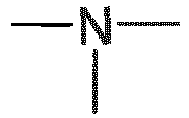

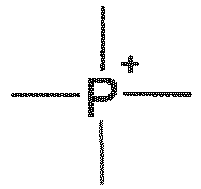


- -P(R2)2, worin R2 wie zuvor definiert ist,
- -C(O)- und
- -C(S)- enthalten können,
- Hydroxyl,
- Mercapto (-SH oder -S-),
- Isocyanato,
- Halogen (wie Chlor, Fluor),
- einem Polyetherrest mit bis zu 60 Kohlenstoffatomen, der gegebenenfalls eine oder mehrere Amino-, Mono- oder Dialkylamino, oder Arylamino-Gruppen tragen kann,
- einem Saccharid-haltigem organischen Rest,
- Bevorzugt weisen die Reste R1, R2 und R3 in den erfindungsgemäß verwendeten Polyorganosiloxanen oder Silanen, einschließlich RF und RN keine Aminogruppen auf. Ausgenommen davon sind solche Aminogruppen-haltigen Reste, die eine zwitterionische Gruppe, wie eine Betain- oder Sulfobetain-Gruppe, aufweisen, oder solche Reste, worin die Aminogruppe über das Stickstoffatom an das Siliziumatom gebunden ist.
- R2 ist bevorzugt Wasserstoff, gesättigter Kohlenwasserstoffrest mit bis zu 24 Kohlenstoffatomen, der eine oder zwei Gruppen ausgewählt aus -O-, -S-, -NH-, -C(O)- und -C(S)- enthalten kann, und der gegebenenfalls durch eine oder zwei Hydroxylgruppe substituiert sein kann.
- R3 ist bevorzugt ein zweiwertiger gesättigter aliphatischer Kohlenwasserstoffrest mit bis zu 20 Kohlenstoffatomen, der eine oder zwei Gruppen -O- enthalten kann, und gegebenenfalls durch Hydroxy substituiert sein kann und über Kohlenstoff an das Siliziumatom gebunden ist,
Die Reste RN schließen bevorzugt ein: n-, iso-, oder tert.-C1C22-Alkyl, C2-C22-Alkoxyalkyl, C5-C30-Cycloalkyl, C6-C30-Aryl, C6-C30-Aryl(C1-C6)alkyl, C6-C30-Alkylaryl, C2-C22-Alkenyl, C2-C22-Alkenyloxyalkyl, welche Reste sämtlich durch ein oder mehrere (wie ein bis fünf) Substituenten, wie Hydroxy Halogen (insbesondere Fluor) substituiert sein können und ein oder mehrere Ethergruppen aufweisen können, wie H3C-, CH3CH2-, CH3CH2CH2-, (CH3)2CH-, C8H17- and C10H21-, H2C=CH-O-(CH2)1-6, cycloaliphatische Reste, wie Cyclohexylethyl, Limonyl, Norbonenyl, Phenyl, Tolyl, Xylyl, Benzyl und 2-Phenylethyl, Halogen(C1-C10)alkyl, wie CfFfn+1CH2CH2- worin f= 1 bis 8 ist, wie CF3CH2CH2-, C4F9CH2CH2-, C6F13CH2CH2-, C2F5-O(CF2-CF2-O)1-10CF2-, F[CF(CF3)-CF2-O]1-5-(CF2)0-2-, C3F7-OCF(CF3)- und C3F7-OCF(CF3)-CF2-OCF(CF3)-. - Besonders bevorzugt sind Methyl, Vinyl, Phenyl, 3,3,3-Trifluoropropyl, am meisten bevorzugt ist RN = Methyl.
- In den erfindungsgemäß verwendeten Polyorganosiloxanen oder Silanen werden die Reste RF bevorzugt aus der Gruppe ausgewählt, die besteht aus:
- Zwitterionische Gruppen, wie Carbobetaingruppen enthaltenden Resten, ausgewählt aus:


worin R2 und R3 gleich oder verschieden sind und wie oben definiert sind, Sulfobetaingruppen enthaltenden Resten, ausgewählt aus:
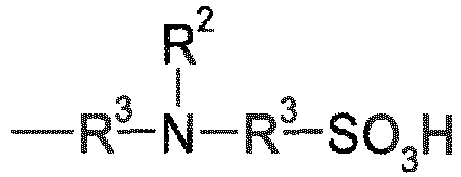
worin R2 und R3 gleich oder verschieden sind und wie oben definiert sind, - Carbonsäure-/Carboxylatgruppen enthaltenden Resten, ausgewählt aus:
-R3-COOR2, -R3-COO-
worin R2 und R3 jeweils wie oben definiert sind, - über O an Si gebundene Acyloxy-Gruppen, ausgewählt aus:

- über O an Si Alkoxy-Gruppen, ausgewählt aus:
-OR2, worin R2 wie oben definiert ist, und die Kationen, welche die anionischen funktionellen Gruppen neutralisieren, ausgewählt werden aus der Gruppe, die besteht aus:- Ammoniumgruppen (N+(R2)4, worin R2 wie oben definiert ist),
- Phosphoniumgruppen (P+(R2)4, worin R2 wie oben definiert ist), sowie ein- bis dreiwertigen Metallkationen,
- Halogenid,
- Hydroxid,
- Borat,
- Sulfat,
- Phosphat,
- Nitrat und
- Carboxylat.
- Besonders bevorzugte Gruppen RF schließen ein:
- Carbonsäure-/Carboxylatgruppen enthaltende Reste, ausgewählt aus:
-R3-COOR2
,
-R3-COO-
worin R2 und R3 jeweils wie oben definiert sind, - über O an Si gebundene Acyloxy-Gruppen, ausgewählt aus:
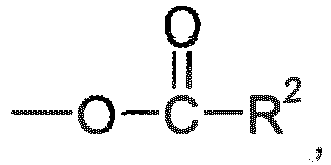
- Bevorzugte Kationen, welche die anionischen funktionellen Gruppen neutralisieren, werden ausgewählt aus der Gruppe, die besteht aus: Ammoniumgruppen (N+(R2)4, worin R2 wie oben definiert ist), Phosphoniumgruppen (P+(R2)4, worin R2 wie oben definiert ist), sowie ein- bis dreiwertigen Metallkationen, wie beispielsweise Na+, K+, Fe2+, Fe3+, Al3+, Cu2+, Zn2+ und Cr3+.
- Bevorzugte Anionen, welche die kationischen funktionellen Gruppen neutralisieren, werden ausgewählt aus der Gruppe, die besteht aus:
- Halogenid,
- Hydroxid,
- Borat,
- Sulfat,
- Phosphat,
- Nitrat und
- Carboxylat.
- Bevorzugt werden erfindungsgemäß Polyorganosiloxane, die mindestens einen Rest der Formel MF enthalten:

- In einer weiteren bevorzugten Ausführungsform werden Polyorganosiloxane verwendet, die die Formel:

- Besonders bevorzugt werden erfindungsgemäß Polyorganosiloxane, die die Formel
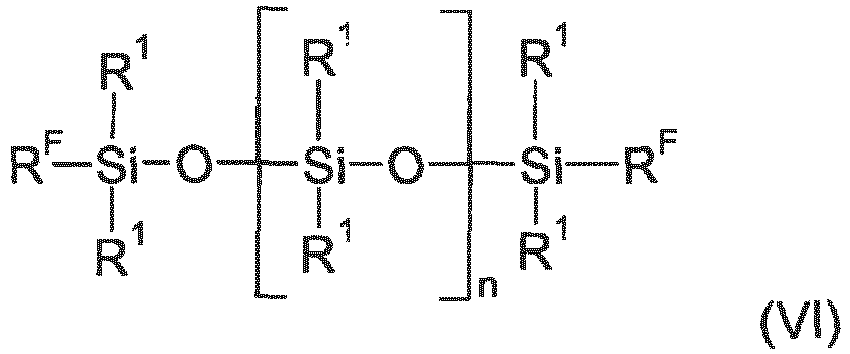
- In einer weiteren bevorzugten Ausführungsform werden Polyorganosiloxane verwendet, die die Formel:

- In einer weiteren bevorzugten Ausführungsform werden cyclische Polyorganosiloxane verwendet, die die Formel:

- Es ist weiterhin möglich, dass sich der Rest RF an einem Siliciumatom befindet, welches eine T-Einheit bildet.
- In einer weiteren bevorzugten Ausführungsform der Erfindung werden mehrere Typen der erfindungsgemäßen Verbindungen gleichzeitig eingesetzt.
- Die erfindungsgemäßen Polyorganosiloxane oder Silane können auch in Kombination mit weiteren von den erfindungsgemäßen Polyorganosiloxanen oder Silanen verschiedenen Polyorganosiloxanen oder Silanen verwendet werden. Diese von den erfindungsgemäßen Polyorganosiloxanen oder Silanen verschiedenen Polyorganosiloxane oder Silane können beispielsweise auch funktionelle Gruppen aufweisen, die von RF verschieden sind, und die zum Beispiel Amino-Gruppen (NH2, NHR1, NR1 2, worin R1 einen organischen Rest darstellt) oder Ammoniumgruppen (NH4 +, NR1H3 +, NR1 2H2 +, NR1 3H+ und NR1 4 +, worin R1 einen organischen Rest darstellt) enthalten.
- Besonders bevorzugt ist dabei eine Kombination von Polyorganosiloxanen oder Silanen mit basischen funktionellen Gruppen und Polyorganosiloxanen oder Silanen mit sauren funktionellen Gruppen. Die Bezeichnung "basisch" schließt dabei sowohl die basischen funktionellen Gruppen, wie Aminogruppen, als auch ihre Salze bzw. protonierten Formen wie Ammoniumgruppen ein. Synonym wird auch der Begriff "kationische" Polyorganosiloxane oder Silane verwendet. Die Bezeichnung "sauer" schließt dabei sowohl die sauren funktionellen Gruppen, wie Carboxylgruppen, als auch ihre Salze, wie Carboxylate ein. Synonym wird auch der Begriff "anionische" Polyorganosiloxane oder Silane verwendet. Insbesondere sind bevorzugt: Kombinationen von sogenannten kationischen Polyorganosiloxanen oder Silanen, welche zum Beispiel Aminogruppen (wie die vorstehend genannten), Ammoniumgruppen (wie die vorstehend genannten), quaternäre Ammoniumgruppen (wie die vorstehend genannten), quaternäre Phosphoniumgruppen (wie die vorstehend genannten) aufweisen, mit sogenannten anionischen Polyorganosiloxanen oder Silanen, welche zum Beispiel Carbonsäuregruppen/Carboxylatgruppen, Sulfonsäuregruppen/ Sulfonatgruppen, Schwefelsäurehalbestergruppen/Sulfatgruppen, Phosphorsäureestergruppen/Phosphatgruppen, Phosphonsäureestergruppen/ Phosphonatgruppen, Phosphorigsäureestergruppen/Phosphitgruppen, Xanthogenatgruppen/Xanthogenatestergruppen aufweisen.
- Das molare Verhältnis der kationischen zu den anionischen Gruppen in den Polyorganosiloxanen oder Silanen ist bevorzugt wie folgt zu wählen:
kationisch : anionisch = 90 : 10 bis 10 : 90, bevorzugt 70 : 30 bis 30 : 70, besonders 60 : 40 bis 40 : 60. - Dementsprechend betrifft die vorliegende Erfindung des weiteren die Verwendung einer Zusammensetzung enthaltend:
- a) mindestens ein Polysiloxan und/oder Silan wie in einem der Ansprüche 1 bis 10 definiert, die eine funktionelle Gruppe F ausgewählt aus der Gruppe der sauren funktionellen Gruppen:
- Zwitterionische Gruppe,
- Carbonsäure/Carboxylat-Gruppe,
aufweisen, sowie - b) mindestens ein Polysiloxan und/oder Silan, die eine basische funktionelle Gruppe aufweisen, ausgewählt aus Amino-Gruppen, Ammonium-Gruppen, Phosphonium-Gruppen und Phosphin-Gruppen (jeweils wie zuvor und nachstehend definiert).
- Das molare Verhältnis der kationischen Gruppen (entsprechend Komponente b)) zu den anionischen Gruppen (entsprechend Komponente a)) in den Polyorganosiloxanen oder Silanen ist dabei bevorzugt wie folgt zu wählen: kationisch : anionisch = 90 : 10 bis 10 : 90, bevorzugt 70 : 30 bis 30 : 70, besonders 60 : 40 bis 40 : 60.
- Das Anteil der kationischen Komponente b) beträgt dabei beispielweise 1-90 Gew.-%, vorzugsweise 5-80 Gew.-% bezogen auf die Gesamtmenge von Komponente a) und b).
- Es liegt weiterhin im Rahmen der Erfindung, die kationischen und /oder die anionischen Polyorganosiloxane oder Silane partiell durch kationische und/oder anionische Kohlenwasserstoffverbindungen zu ersetzen, wobei die Begriff kationisch und anionisch wie vorstehend erläutert zu verstehen sind. Beispiele sind kationische oder anionische Tenside, wie langkettige Alkyl oder ArylSulfonate, langkettige Alkylammoniumverbindungen.
- Es ist weiterhin erfindungsgemäß möglich die zwitterionischen, insbesondere betainartigen Polyorganosiloxane oder Silane mit den kationischen oder anionischen Polyorganosiloxanen oder Silanen zu kombinieren.
- In einer bevorzugten Ausführungsform haben die erfindungsgemäßen Polyorganosiloxane oder Silane ein Molekulargewicht von <2000 g/mol, bevorzugt < 1500 g/mol, besonders bevorzugt < 1000 g/mol aufweisen.
- Für die genannten Polyorganosiloxane der Formeln (III), (IV) und (VI) beträgt n1+n2 bevorzugt 0 bis 18, bevorzugter 0 bis 13, noch bevorzugter 0 bis 10, noch bevorzugter 0 bis 5, wobei mindestens eine Siloxy-Gruppe mit RF vorliegen muß.
- Die Synthese Thiosulfatgruppen enthaltender Polysiloxan- oder Silanverbindungen ist ebenfalls bekannt (Silicone, Chemie und Technologie, Vulkan Verlag Essen 1989, S. 121).
- Phosphin-Gruppen enthaltende Polysiloxan- oder Silanverbindungen sind z.B. durch Alkylierung Dialkyl- bzw. Diarylphosphinen mit von halogenalkylsubstituierten Siloxanen oder Silanen mit zugänglich (Organikum, VEB Deutscher Verlag der Wissenschaften 1988, 17.Auflage, S 203).
- Phosphonium-Gruppen enthaltende Polysiloxan- oder Silanverbindungen sind z.B. durch Alkylierung von Trialkyl- bzw. Triarylphosphinen mit halogenalkylsubstituierten Siloxanen oder Silanen oder durch Alkylierung der vorstehend erwähnten Phosphin-Gruppen enthaltenden Polysiloxan- oder Silanverbindungen zugänglich (Organikum, VEB Deutscher Verlag der Wissenschaften 1988, 17. Auflage, S 203).
- EpoxyPolyorganosiloxane oder -Silane werden vorteilhaft durch Hydrosilylierung von epoxyfunktionellen ungesättigten Verbindungen, z.B. Allylglycidether und Vinylcyclohexenoxid, mit SiH funktionellen Precursoren unter Pt Katalyse hergestellt (Silicone, Chemie und Technologie, Vulkan Verlag Essen 1989, S. 90).
- Carbonatfunktionelle Polyorganosiloxane oder Silane können einerseits durch Hydrosilylierung von carbonatfunktionellen ungesättigten Verbindungen, z.B. Allylcarbonat, mit SiH funktionellen Precursoren unter Pt Katalyse hergestellt werden (
US 5672338 ,US 5686547 ). Alternativ dazu können sie aus entsprechenden Epoxiden durch Einschub von CO2 hergestellt werden (DE 19505892 ) oder durch Reaktion von Aminoorganosiloxanen oder Silanen mit bifunktionellen Carbonatkupplern (WO 2005/058863 ). - Mit Isocyanat-Gruppen einschließlich blockierter Isocyanatgruppen modifizierte Polyorganosiloxane oder Silane sind durch Umsetzung von mit CHaciden Gruppen funktionalisierten Polyorganosiloxanen, wie Hydroxy- oder Amino-funktionellen Polyorganosiloxanen oder Silanen mit einem Überschuß von di- oder höherfunktionellen Isocyanaten, oder durch Umsetzung von Amino-funktionellen Polyorganosiloxanen oder Silanen mit COCl2, oder durch Pyrolyse von Carbamato-funktionellen Polyorganosiloxanen oder Silanen erhältlich.
- Harnstoff-Gruppen-enthaltende Polyorganosiloxane oder Silane sind beispielsweise durch die Umsetzung der vorstehend erwähnten Isocyanat-funktionellen Polyorganosiloxanen oder Silanen mit Aminen erhältlich.
- Urethan- und Harnstoffeinheiten-enthaltende Polyorganosiloxane oder Silane sind einerseits durch Reaktion von hydroxy- bzw. aminofunktionellen Precursoren mit Isocyanaten zugänglich (Organikum, VEB Deutscher Verlag der Wissenschaften 1988, 17.Auflage, S 429). Alternativ dazu können Urethane auch durch Reaktion von Aminoorganosiloxanen oder Silanen mit z.B. Cyclocarbonaten oder aber carbonatfunktionellen Siloxanen oder Silanen mit Aminen gewonnen werden (
US 5672338 ). - Amidfunktionelle Siloxane oder Silane sind beispielsweise durch Reaktion von Aminoorganosiloxanen oder Silanen mit Lactonen zugänglich (
DE 4318536 , Bsp. 22). - Schiff-Basen-, Imingruppen und Enamingruppen-enthaltende Siloxane oder Silane sind beispielsweise durch Reaktion von Aminosiloxanen oder Silanen mit Aldehyden oder Ketonen zugänglich, wie zum Beispiel in der
WO2008113820 , Beispiel 1 undDE 4318536 , Beispiel 20a demonstriert. - Halbacetal- und Acetalgruppen enthaltende Siloxane und Silane sind beispielsweise durch Reaktion von hydroxyfunktionellen (COH funktionellen) Siloxanen mit Aldehyden unter Ausbildung von Strukturen, die Halbacetal bzw. Acetalfunktionen enthalten, zugänglich (Organikum, VEB Deutscher Verlag der Wissenschaften, Berlin 1988, 17. Auflage, S. 396-400), oder wie oben beschrieben durch Umsetzung von aldehydgruppen-enthaltenden Polyorganosiloxanen oder Silanen mit ein- oder mehrwertigen (insbesondere zweiwertigen) Alkoholen.
- Aldehydgruppen-enthaltende Siloxane oder Silane sind beispielsweise durch Reaktion von Aminosiloxanen mit Dialdehyden, z.B. C2 bis C5 Dialdehyde, unter Ausbildung von Strukturen, die beispielsweise die Kombination von Schiff-Basen mit Aldehydfunktionen bzw. Enaminen und Aldehydfunktionen enthalten zugänglich. Alternativ können hydroxyfunktionelle (COH funktionelle) Siloxane mit Dialdehyden unter Ausbildung von Strukturen, die Halbacetal und Aldehyd bzw. Acetal und Aldehydfunktionen enthalten, reagieren. (Organikum, VEB Deutscher Verlag der Wissenschaften, Berlin 1988, 17.Auflage, S. 390-400). Weiterhin können hydroxyfunktionelle (COH funktionelle) Siloxane mit Epoxyaldehyden zu diesen Zielprodukten reagieren. Es ist ebenfalls möglich, hydroxyfunktionelle (COH funktionelle) Siloxane durch katalytische Dehydrierung an Cu oder Ag Katalysatoren in Aldehyde zu überführen. Eine weitere bevorzugte Gruppe von aldehydfunktionellen Siloxanen stellen Verbindungen dar, die durch Reaktion von epoxyfunktionellen Siloxanen, z.B. basierend auf der Addition von Allylglycidether oder Vinylcyclohexenoxid and SiH Vorstufen, mit Aldehydcarbonsäuren, z.B. Glyoxylsäure HC(=O)C(=O)OH, gewonnen werden können. Die Herstellung kann z.B. in Anlehnung an
US 5093518 , Beispiel 3 erfolgen. - Siloxan- oder Silanbasierte Carbobetaine sind beispielsweise durch Reaktion von tertiären Aminostrukturen mit Na-Chloracetat zugänglich (Silicone, Chemie und Technologie, Vulkan Verlag Essen 1989, S. 121). Andererseits können sie durch Reaktion von Epoxysiloxanen oder Silanen mit den Alkalisalzen von Aminosäuren gewonnen werden (
DE 10036532 , Bsp. 1). - Siloxan- oder Silanbasierte Sulfobetaine sind beispielsweise durch Reaktion von tertiären Aminostrukturen mit Sultonen (
DE 4140447 , Bsp. 1) zugänglich. Alternativ dazu können sie durch Reaktion von Epoxysiloxanen oder -Silanen mit den Alkalisalzen von Aminosulfonsäuren, z.B. Taurin, in Analogie zu den entsprechenden Carbobetainen gewonnen werden. - Siloxan- oder Silanbasierte Carbonsäuren können beispielsweise durch Reaktion von hydroxy- oder aminofunktionellen Precursoren mit Carbonsäureanhydriden, z.B. Phthalsäureanhydrid, Bernsteinsäureanhydrid und Maleinsäureanhydrid, hergestellt werden (
DE 4318539 , Bsp. 1). - Acetoxyfunktionalisierte Siloxane oder Silane z.B. mit über O an Si gebundene Acyloxy-Gruppen sind durch Reaktion von Silanolen mit Acetoxysilanen zugänglich (Silicone, Chemie und Technologie, Vulkan Verlag Essen 1989, S. 58). Alternativ dazu können beispielsweise Silanole und Alkoxysilane mit Säureanhydriden zu diesen Zielprodukten reagieren. Es ist zur Synthese derartiger Verbindungen weiterhin möglich, Siloxanbindungen in Gegenwart von Säureanhydriden und Katalysatoren zu spalten (V. Bazant, Organosilicon Compounds, Band 1, Academic Press New York, 1965, S. 61-64).
- Siloxan- oder Silan-basierte Sulfonsäurederivate können beispielsweise durch Reaktion von epoxyfunktionellen Precursoren mit Natriumhydrogensulfit hergestellt werden (Silicone, Chemie und Technologie, Vulkan Verlag Essen 1989, S. 121).
- Siloxan- oder Silanbasierte Sulfatderivate können beispielsweise durch Reaktion von hydroxyfunktionellen Precursoren mit Amidoschwefelsäure hergestellt werden (
DE 4318539 , Bsp. 3). - Die Synthese siliconbasierter Phosphatderivate oder Phosphorsäurederivate ist z.B. in
US 5859161 undUS 6175028 beschrieben. - Alkoxyfunktionelle Siloxane sind beispielsweise durch alkalische Äquilibrierung von Alkoxysilanen mit Cyclosiloxanen zugänglich (Silicone, Chemie und Technologie, Vulkan Verlag Essen 1989, S. 5).
- Phosphonsäureester/Phosphonat-Gruppen-enthaltende Polyorganosiloxane oder Silane sind beispielsweise durch die Umsetzung von Alkenyl-Polyorganosiloxanen oder -Silanen mit Phosphorigsäureestern sind erhältlich.
- Phosphorigsäureester/Phosphit-Gruppen-enthaltende enthaltende Polyorganosiloxane oder Silane sind beispielsweise durch die Umsetzung von Hydroxyalkyl-Polyorganosiloxanen oder -Silanen mit Phosphorigsäureestern bzw. Phosphiten erhältlich.
- Xanthogenat/Xanthogenatester-Gruppen-enthaltende Polyorganosiloxane oder -silane sind beispielsweise durch die Umsetzung von Alkolaten der AlkoxyPolyorganosiloxane oder -silane mit Schwefelkohlenstoff und gegebenenfalls anschließender Umsetzung mit Alkylhalogeniden zu Xanthogenatestern erhältlich.
- Über N an Si gebundenen Organoamino-Gruppen-enthaltende Polyorganosiloxane oder -Silane sind beispielsweise durch die Umsetzung von Halogen-Polyorganosiloxanen oder-Silanen mit Aminen erhältlich.
- Die Erfindung betrifft weiterhin Zusammensetzungen enthaltend mindestens ein Polyorganosiloxan und/oder Silan, wie vorstehend definiert, und mindestens ein Lösungsmittel und/oder mindestens einen bioziden Wirkstoff zur Behandlung von lignocellulosischen Werkstoffen. Die erfindungsgemäßen Zusammensetzungen enthaltend mindestens ein der erfindungsgemäß definierten funktionalisierten Polyorganosiloxane und/oder Silane können beispielsweise einen Lösungsvermittler und/oder einen Emulgator enthalten, der insbesondere zu einer Stabilitätserhöhung der erfindungsgemäßen Zusammensetzungen führt, wie beispielsweise eine wässrige Zusammensetzung, z.B. eine Emulsion, oder eine Lösung oder eine Dispersion in einem Lösungsmittel.
- Als Lösungsvermittler oder Emulgator kommen insbesondere aminomodifizierte Silikone, quartäre Fettaminalkoholate, insbesondere ein quartäres Fettaminethanolat in Frage.
- Als Lösungsmittel kommen je nach Applikationsverfahren in Frage: Kohlendioxid, Alkohol, Wasser, Ethan, Ethylen, Propan, Butan, Schwefelhexafluorid, Stickoxide, Ionische Flüssigkeiten, Chlortrifluormethan, Monofluormethan, Methanol, Ethanol, DMSO, Isopropanol, Aceton, THF, Essigsäure, Ethylenglykol, Polyethylenglykol, Essigsäureanhydrid, N,N-Dimethylanilin, Methan, Pentan, Hexan, Cyclohexan, Toluol, Heptan, Benzol, Ammoniak, Propanol, etc. und Mischungen, bevorzugter Wasser, organische Lösungsmittel, wie Polyalkohole, wie insbesondere Propylenglycol, Ethylenglycol oder Butyldiglycol, Ethanol, Propanol, Isopropanol, n-Butanol, Furfurylalkohol, THF, DMSO, Dioxan, aliphatische und/oder chlorierte Kohlenwasserstoffe etc. oder Mischungen davon.
- Eine bevorzugte Emulsion der erfindungsgemäß definierten funktionalisierten Polyorganosiloxane und/oder Silane enthält:
- a) wenigstens ein erfindungsgemäß definiertes funktionalisiertes Polyorganosiloxan und/oder Silan (gegebenenfalls in Kombination mit einem oder mehreren nicht-erfindungsgemäßen Polyorganosiloxan und/oder Silan) in einer Konzentration von 1-80 Gew.-%, vorzugsweise 5-60 Gew.-%, am meisten bevorzugt von 10-50 Gew.-% (wobei diese Menge die Gesamtmenge der erfindungsgemäß definierten funktionalisierten Polyorganosiloxane und/oder Silane und der nicht-erfindungsgemäßen Polyorganosiloxane und/oder Silane einschließt),
- b) Wasser in einer Menge von 99 bis 20 Gew.-%, vorzugsweise 95 bis 40 Gew.-%, am meisten bevorzugt 90 bis 50 Gew.-%,
- c) einen oder mehrere Emulgatoren in einer Menge von 0-20 Gew.-%, bevorzugt von 0,5-20 Gew.-%, bevorzugter von 1-15 Gew.-%, am meisten bevorzugt von 2-10 Gew.-%, vorzugsweise ausgewählt aus ionischen oder nichtionischen Emulgatoren
- d) eine oder mehrere Verbindungen, um den pH-Wert der Emulsion zu steuern, wie eine Base oder Säure, vorzugsweise eine Säure, wie Essigsäure,
- e) ein oder mehrere Lösungsmittel in einem Bereich von 0-50 Gew.-%, bevorzugt 1-50 Gew.-%, vorzugsweise 1-20 Gew.-%,
- Das Gewichtsverhältnis der Komponenten [a) + b)] zu [c) + d) + e)] beträgt dabei von 100 : 0 bis 100 : 70, bevorzugter 100 : 1 bis 100 : 30.
- Der pH-Wert einer solchen Emulsion liegt bevorzugt im Bereich von 2-12, vorzugsweise von 2-7, am meisten bevorzugt von 3 bis 5, was die Stabilität der Emulsion im Allgemeinen erhöht. Entsprechend wird gegebenenfalls die Menge der Komponente d) gewählt.
- Beispiele der in den erfindungsgemäßen Zusammensetzungen wahlweise enthaltenen bioziden Wirkstoffe schließen beispielsweise ein:
- Borverbindungen, wie beispielsweise Borax, Borat, Borsäure, Borsäureester,
- Kupferverbindungen, wie wasserlösliche Kupferverbindungen, wie beispielsweise Kupfer(II)-Salze (Kupfer(II)-oxid, Micronized Copper, Kupfer(II)-sulfat, Kupfer(II)-hydroxidcarbonat, Bis-(N-cyclohexyldiazeniumdioxy)kupfer(II),
- Mischungen von Borverbindungen und Kupferverbindungen,
- organische biozide Verbindungen, wie beispielsweise Triazole (wie Azaconazol, Cyproconazol, Propiconazol, Tebuconazol, TCMTB), Phenylsulfamide (wie Dichlorfluanid, Tolylfluanid), Carbamaten (wie IPBC, Carbendazim), aromatischen Fungizide (wie ortho-Phenylphenol, Chlorothalonil) und weitere Fungizide (wie Bethoxazin, Isothiazolon), synthetische Pyrethroide (wie Permethrin, Cypermethrin, Cyfluthrin, Deltamethrin, Silafluofen), Insektizide (wie Imidacloprid, Flufenoxuron, Chlorpyrifos, Fenoxycarb).
- Die Borverbindungen werden zweckmäßig in einer Menge von 0,1 to 300 Gew.-teile auf 100 Gew.-teile der Gesamtmenge von Polysiloxan und/oder Silan verwendet.
- Die Borverbindungen stoppen mikrobielle Zersetzung und erlauben eine Abwehr von Insekten wie Termiten. Zweckmäßige Borverbindungen schließen ein Borsäure, Borax, Borester, wie Trialkylborat, z.B. Trimethylborat, Triethylborat, Tripropylborat und Tributylborat, Borate wie Na2B8O13 x 4H2O oder Tim-bor(R) erhältlich von U.S. Borax Inc., Borax und Borate wie Tim-bor(R) sind bevorzugt. Eine Menge der Borverbindungen von mehr als 300 Gew.-teile verschlechtert die Stabilität der Emulsionen. Wenn die Borverbindungen verwendet werden, setzt man sie vorzugsweise in einer Konzentration mindestens 10 Gew.% bezogen auf die Gesamtmenge der Polyorganosiloxane und Silane ein.
- Weitere Hilfsmittel, die in den erfindungsgemäßen Zusammensetzungen verwendet werden können schließen beispielsweise ein: Emulgatoren, wie vorstehend erwähnt, Verdickungsmittel, Pigmente, Farbstoffe, antistatische Mittel, Entschäumer, Flammschutzmittel etc.
- Bevorzugte erfindungsgemäße Zusammensetzungen enthalten ≥ 5 Gew.-%, bevorzugter ≥ 10 Gew.-%, noch bevorzugter ≥ 15 Gew.-%, am meisten bevorzugt ≥ 30 Gew.-% funktionalisiertes Polysiloxan und/oder funktionalisiertes Silan, wie zuvor definiert.
- Bevorzugte erfindungsgemäße Zusammensetzungen enthalten:
- 5 bis 50, bevorzugter 15 bis 50 Gew.-Teile funktionalisiertes Polyorganosiloxan und/oder funktionalisiertes Silan, wie zuvor definiert,
- 30 bis 95, bevorzugter 40 bis 80 Gew.-Teile Lösungsmittel, wie beispielsweise die vorstehend erwähnten, wie zuvor definiert,
- 0 bis 100, bevorzugter 0 bis 80 Gew.-Teile weitere Biozide, wie beispielsweise die vorstehend erwähnten,
- 0 bis 100, bevorzugter 1 bis 80 Gew.-Teile Gew.-Teile sonstige Hilfsmittel, wie beispielsweise die vorstehend erwähnten, wie insbesondere Emulgatoren.
- Die vorliegende Anmeldung betrifft weiterhin ein Verfahren zur Behandlung lignocellulosischer Werkstoffe, umfassend die Behandlung des lignocellulosischen Werkstoffs mit mindestens einem Polysiloxan oder Silan, wie zuvor definiert, oder einer Zusammensetzung wie zuvor definiert durch Oberflächenbehandlung, Tauchbehandlung oder Vakuum- oder Druck-Imprägnierung.
- Beim erfindungsgemäßen Verfahren kann man den lignocellulosischen Werkstoffe mit allen bei der Holzbehandlung üblichen, aus der Fachliteratur bekannten Methoden zur Einbringung von wässrigen Lösungen mit dem erfindungsgemäßen Mittel beschichten oder imprägnieren, wie zum Beispiel durch Streichen, Spritzen, Tauchen, Fluten, Trogtränkung, Kesseldrucktränkung, Vakuumtränkung, Vakuumdrucktränkung, Bohrlochtränkung oder durch das Saftverdrängungsverfahren, vgl. auch "Holzlexikon von A-Z" (Bände I und II), Ulf Lohmann, DRW-Verlag, Leinfeld-Echterdingen, 2003, siehe u. a. "Einbringverfahren", Band I, Seiten 289 bis 292.
- Bevorzugt führt man beim erfindungsgemäßen Verfahren eine Kesseldruckimprägnierung oder ein Oberflächenbehandlungsverfahren, wie Streichen, Spritzen, Tauchen oder Fluten, durch. Besonders bevorzugt führt man beim erfindungsgemäßen Verfahren eine Vakuum-Druck-Imprägnierung durch. So kann man das zu imprägnierende Substrat in einem druckfesten Imprägnierreaktor über 5 Minuten bis 8 Stunden, vorzugsweise 15 Minuten bis 2 Stunden, insbesondere etwa eine halbe bis eine Stunde, zunächst einem Druck von 10 bis 500 mbar abs., vorzugsweise 50 bis 200 mbar abs., insbesondere etwa 100 mbar abs., aussetzen, diesen Druck aufrechterhalten und das Substrat dann in das Imprägniermittel eintauchen bzw. mit dem Imprägniermittel bedecken, und den Druck für 0,5 bis 4 Stunden auf 1,5 bis 20 bar abs., vorzugsweise für 1 bis 3 Stunden auf 5 bis 15 bar abs., insbesondere etwa für 2 bis 3 Stunden auf 10 bis 12 bar abs., anheben. Anschließend kann der Druck auf Umgebungsdruck abgesenkt werden. Man entnimmt das Substrat der Imprägnierlösung, lässt gegebenenfalls Nachvakuum einwirken bzw. lässt abtropfen und führt das so vakuumdruckgetränkte Substrat der Trocknung zu. Vorteilhaft führt man nach dem Imprägnierschritt ein gezieltes Trocknungsverfahren durch. So sollte beim Imprägnierschritt eine gezielte Lufttrocknung und/oder ein gezieltes technisches Trocknungsverfahren folgen, beispielsweise eine Mikrowellentrocknung, IR-Trocknung, Frisch/Ablufttrocknung, Heißlufttrocknung, Vakuumtrocknung, Gefriertrocknung oder eine Kombination der Methoden, wie sie beispielsweise aus "Holzlexikon von A-Z" (Bände I und II), Ulf Lohmann, DRW-Verlag, Leinfelden-Echterdingen, 2003, siehe u. a. "Holztrocknung", Band I, Seite 605, zu entnehmen sind.
- Die Kombination der erfindungsgemäß verwendeten Polyorganosiloxane oder Silane mit Kupfer- und/oder Borverbindungen und/oder organischen bioziden Schutzmitteln kann sowohl in einem bevorzugten einstufigen Verfahren als auch in einem weniger bevorzugten zweistufigen Verfahren eingesetzt werden. Einstufige Verfahren sind beispielsweise Streichen, Tauchen oder Imprägnieren mit Formulierungen der erfindungsgemäß verwendeten Polyorganosiloxane oder Silane in organischen Lösemitteln oder als wässrige Emulsion. Bei zweistufigen Verfahren werden vorzugsweise zuerst die Kupfer- und/oder Borverbindungen und/oder organischen bioziden Schutzmittel aufgebracht, beispielsweise durch Streichen, Tauchen oder Imprägnieren, und anschliessend die erfindungsgemäß verwendeten Polyorganosiloxane oder Silane.
- In einer bevorzugten Ausführungsform liegen die erfindungsgemäß verwendeten Polyorganosiloxane oder Silane als wässrige Emulsion vor. Zur Herstellung und/oder Stabilisierung einer solchen wässrigen Emulsion kann ein Emulgator zugesetzt werden, wobei der Emulgator auch ein aminomodifiziertes Silikon sein kann.
- Es wird angenommen, dass der Mechanismus, durch welchen die erfindungsgemäß verwendeten Polyorganosiloxane oder Silane Holz und andere lignocellulosische Werkstoffe gegen die Witterung und/oder Schwankungen im Feuchtigkeitsgehalt widerstandsfähiger macht, zumindest teilweise darin liegt, dass die Oberfläche, vorzugsweise die an die Oberfläche angrenzenden Schichten bis hin zum gesamten Volumen des Holzes oder lignocellulosischen Werkstoffs hydrophobiert werden. Für Holz wird angenommen, dass die erfindungsgemäß verwendeten Polyorganosiloxane oder Silane zu einer verringerten Aufnahme von flüssigem Wasser und zu einer verringerten Feuchtesorption (gasförmiges Wasser) führt, was wiederum zu einer geringeren Schwankung der Dimensionen bei Regen bzw. bei sich verändernder Umgebungsfeuchte führt. So führen die erfindungsgemäß verwendeten Polyorganosiloxane oder Silane deshalb zu einer besseren Dimensionsstabilität von Holz, weil sie in die Zellwand des Holzes eindringen und dort offenbar aufgrund ihrer besonderen Funktionalisierungen dauerhaft verbleiben. Dadurch befindet sich die hölzerne Zellwand auch im trocknen Zustand in einer Form, die einem vorgequollenen Zustand ähnelt und nimmt deshalb weniger Wasser auf, als unbehandeltes Holz. Das Eindringen der erfindungsgemäß verwendeten Polyorganosiloxane oder Silane wird vor allem mit sogenannten Mikroemulsionen, beispielsweise mit durchschnittlich Partikelgrössen von 10 bis 100 nm erreicht. Derartige Mikroemulsionen können in die Poren von Holzzellwänden eindringen und auch zwischen Cellulosestränge, sodass die weitere Aufnahme von Wasser dauerhaft vermindert wird. Auf diese Weise wird auch die Dimensionsveränderung, beispielsweise die Schwindung beim Trocknen von Holz vermindert, wenn sich der Feuchtigkeitsgehalt der Umgebung verringert. Im Falle von Makroemulsionen, beispielsweise mit einer Partikelgrösse von grösser als 50 bis 100 nm wird angenommen, dass die erfindungsgemäß verwendeten Polyorganosiloxane oder Silane die inneren Oberflächen von Holzzellen zumindest teilweise beschichten und in die Poren der Holzzellwand eindringen. Die erfindungsgemäß verwendeten Polyorganosiloxane oder Silane ermöglichen einerseits eine bessere Assoziation mit dem lignocellulosischen Werkstoff und verleihen andererseits eine wachstumshemmende Wirkung für Mikroorganismen. Die Behandlung wirkt insbesondere gegenüber Pilzen hemmend, sodass mit den erfindungsgemäß verwendeten Polyorganosiloxanen oder Silanen behandelte lignocellulosische Werkstoffe, wie beispielsweise Holz, weniger stark von verfärbenden, beispielsweise verblauenden Pilzen oder Schimmel, oder zerstörenden Pilzen (Weissfäule, Braunfäule) befallen werden und daher eine grössere Beständigkeit gegen mikrobiellen Abbau aufweisen. Es wird angenommen, dass die Imprägnierung mit den erfindungsgemäß verwendeten Polyorganosiloxanen oder Silanen den Feuchtegehalt im Holz unter das zum Wachstum der Pilze benötigte Niveau drückt. Mittels der erfindungsgemäßen Polyorganosiloxane oder Silane gelingt überraschend in einem einstufigen, praxistauglichen Verfahren Holz dauerhaft zu imprägnieren, und dabei die Neigung des Holzes zur Wasseraufnahme weiter zu verringern, die Dimensionsstabilität bei Änderung des Feuchtegehalts der Umgebung zu verbessern und den Abbau des Holzes durch Pilze, Bakterien und Insekten, wie holzzerstörende Insekten, beispielsweise Termiten, Hausbockkäfer, gewöhnliche Nagekäfer, Splintholzkäfer wirksam zu verringern. Gleichzeitig wird die Vergilbung und Vergrauung des Holzes durch Licht- und Wettereinwirkung unterdrückt.
- In einer weiteren besonders bevorzugten Ausführungsform der vorliegenden Erfindung werden die funktionalisierten Polyorganosiloxane oder Silane vermittels eines Verfahrens unter Verwendung vom überkritischem Kohlendioxid oder anderen vorzugsweise gasförmigen Lösungsmitteln (wie die vorstehend erwähnten) als Trägermedium in den lignocellulosischen Werkstoff eingebracht.
- Im Falle der dabei besonders bevorzugten Verwendung von Kohlendioxid umfasst dieses Verfahren eine Druckbeaufschlagung von beispielsweise etwa 10 bis 400 bar bei etwa 0 bis 180°C, speziell 50 bis 300 bar bei 32 bis 100°C, ganz speziell 70 bis 300 bar bei 32 bis 70°C. Dieses Verfahren erfordert vielfach spezielle Dekompressionsverfahren um den lignocellulosischen Werkstoff beim Dekomprimieren nicht zu beschädigen. Beim Dekomprimieren entweicht das im allgemeinen gasförmige Trägermedium, wie insbesondere Kohlendioxid, und die erfindungsgemäß verwendeten Polysiloxane oder Silane bleiben im lignocellulosischen Werkstoff zurück, wobei im allgemeinen Zellwände und Zellzwischenräume mit den erfindungsgemäß verwendeten Polysiloxane oder Silane aufgefüllt werden. Für weitere Details zu überkritischen Fluid-Behandlungen von Holzwerkstoffen kann verwiesen werden auf
DE 4202320 ,WO 2005/049170 ,EP 1128939 ,EP 1146969 ,EP 1501664 und Morrell & Levien: "Entwicklung Neuer Behandlungsverfahren zum Holzschutz" Konferenzbericht aus "Konferenz für Holzschutz in den 90er Jahren und darüber hinaus", Savannah, Goergia, USA, September 26-28,1994. - In einer weiteren besonders bevorzugten Ausführungsform der vorliegenden Erfindung werden alkoxy- und/oder acyloxy-, bevorzugt acetoxyfunktionalisierte Polysiloxane und/oder Silane vermittels eines Verfahrens unter Verwendung vom Carbonsäureanhydriden, speziell Essigsäureanhydrid, als Lösungsmittel und Reaktant in den lignocellulosischen Werkstoff eingebracht. Vorzugsweise wird hierzu das Holz in einem vakuum- und druckfesten Reaktor zunächst unter Vakuum gesetzt, anschließend wird eine Mischung enthaltend Essigsäureanhydrid und alkoxy- und/oder acetoxyfunktionalisiertes Polysiloxan oder Silan eingesaugt. Bei bevorzugt erhöhtem Druck und erhöhter Temperatur erfolgt die Holzimprägnierung über mehrere Stunden. Anschließend wird überschüssige Imprägnierflüssigkeit abgelassen. Durch Anlegen von Vakuum und ggf. Bedampfung werden flüchtige Verbindungen aus dem Holz entfernt. Es ist bevorzugt, die alkoxy- und/oder acetoxyfunktionalisierten Polysiloxane und/oder Silane in einer Menge von 0.01 bis 20 Gew.-%, bevorzugt 0.1 bis 10 %, bevorzugter 0.1 bis 5 Gew.-% bezogen auf das Holzgewicht einzusetzen. Weitere technische Details zur Imprägnierung in Gegenwart von Essigsäureanhydrid können
EP 680810 - Die bei dieser Verfahrensweise verwendeten Alkoxy- und/oder Acyloxy-, speziell Acetoxypolysiloxane können dabei auch in-situ durch Verwendung von Polyorganosiloxanolen, wie insbesondere SiOH-terminierte Polyorganosiloxane, insbesondere Hydroxy-terminierte Polydimethylsiloxanen in Anwesenheit von Di, Tri oder Tetraalkoxysilanen und/oder Acetanhydrid und/oder Di, Tri oder Tetraacetoxysilanen erzeugt werden, so dass diese mit den Polyorganosiloxanolen unter Bildung u. a. von Alkoxy- und/oder Acetoxypolysiloxanen reagieren können. Generell lassen sich Polysiloxane mit über O an Si gebundene Acyloxy-Gruppen, wie die Acetoxygruppe in-situ aus den entsprechenden Polyorganosiloxanolen, wie insbesondere SiOH-terminierte Polyorgano¬siloxane, insbesondere Hydroxy-terminierte Polydimethylsiloxanen und den entsprechenden Anhydriden auch in situ herstellen.
- Erfindungsgemäß ist es bevorzugt durch das Verfahren des Auftrags bzw. des Einbringens der erfindungsgemäß verwendeten Polyorganosiloxane oder Silane Gehalte von bis zu 20 Gew. %, bevorzugt bis zu 10 Gew.%, besonders bevorzugt bis zu 7 Gew.-%, ganz besonders 1 bis 7 Gew.%, speziell etwa 2 bis 5 Gew.-% der Polyorganosiloxane oder Silane bezogen auf die Gesamtmasse des behandelten getrockneten lignocellulosischen Werkstoff zu erzeugen.
- Mittels der erfindungsgemäß verwendeten Polyorganosiloxane oder Silane gelingt es mit einem besonders niedrigen Gehalt derselben eine maximale Schutzwirkung für den lignocellulosischen Werkstoff zu erzielen.
- Erfindungsgemäß kann der Gehalt der erfindungsgemäß verwendeten Polyorganosiloxane oder Silane in den lignocellulosischen Werkstoffen dadurch erhöht werden, dass man besonders konzentrierte wässrige Emulsionen der Polyorganosiloxane oder Silane verwendet. Bevorzugte Konzentrationen genannter wässriger Emulsionen liegen daher bei mindestens etwa 5, bevorzugt mindestens etwa 10, noch bevorzugter mindestens etwa 15 Gew.-% bezogen auf die Gesamtmenge der Emulsion. Alternativ können auch Lösungen der Polyorganosiloxane oder Silane verwendet werden, wobei die bevorzugten Konzentrationen denen der Emulsion entsprechen.
- Die Verwendung der Mikroemulsionen (durchschnittliche Tröpfchendurchmesser der Polyorganosiloxane oder Silane kleiner als 200 nm) ist besonders bevorzugt, weil die Aufnahme in den lignocellulosischen Werkstoff besonders leicht erfolgt. Erfindungsgemäß wurde gefunden, dass die Eindringtiefe und damit die Wirksamkeit der erfindungsgemäßen funktionalisierten Polyorganosiloxane oder Silane auch vom Molekulargewicht und der Benetzbarkeit des lignocellulosischen Werkstoffs mit den genannten funktionalisierten Polyorganosiloxane oder Silane abhängt. Es zeigt sich, dass besonders die erfindungsgemäßen kurzkettigen bzw. niedermolekularen Polyorganosiloxane oder Silane, die erfindungsgemäß verwendet werden hier bevorzugt sind. Die erfindungsgemäß verwendeten Polyorganosiloxane weisen beispielsweise zahlenmittlere Molekulargewichte Mn von weniger als 3000 g/mol bevorzugt weniger als 2000 g/mol, noch bevorzugter weniger als 1000 g/mol auf (jeweils bestimmt durch Gelpermeationschromatographie an Polystyrol als Standard). Die erfindungsgemäßen Silane sind per se niedermolekulare Verbindungen und weisen ein Molgewicht von im Allgemeinen weniger als 500 g/mol noch bevorzugter weniger als 400 g/mol, noch bevorzugter weniger als 300 g/mol auf.
- Prüfkörper der Größe 25*25*10 mm3 (radial*tangential*longitudinal) der Holzarten Kiefersplint (Pinus sylvestris L.) und Buche (Fagus sylvatica L.) wurden bei 103 °C bis zur Massekonstanz darrgetrocknet. Anschließend erfolgte eine Vakuumtränkung mit einer wässrigen Emulsion mit 10 Gew.-% eines analog
DE 10036532 Beispiel 1 hergestellten sarcosinfunktionalisierten Silicons der Kettenlänge D10 (10 D-Einheiten) und der Struktur
- Es erfolgte eine Darrtrocknung über 4 Tage bei steigenden Temperaturen bis zu 103 °C. Danach wurde eine Auswaschung gemäß EN 84 durchgeführt, um extrahierbare Siloxane und andere Materialien abzutrennen.
- Dabei handelt es sich um eine 14-tägige Lagerung in Wasser mit mehrfachem Wasserwechsel. Es ergab sich eine prozentuale Gewichtszunahme von durchschnittlich ca. 9 % bezogen auf das Ausgangsgewicht des jeweiligen getrockneten nicht-behandelten Holzes.
- Zur Bestimmung der Wasseraufnahme beschwerte man die Proben mit Gittern und übergoß sie mit ca. 300 ml Wasser. Aus der Gewichtszunahme nach 2, 4, 6 und 24 Stunden errechnete man die Wasseraufnahme in %. Der Wassergehalt wurde jeweils auf das Anfangsgewicht der (noch) unbehandelten Prüfkörper bezogen, um einen Einfluss der Gewichtszunahme durch die Behandlung auszuschließen.

- wnass:
- Gewicht der nassen Prüfkörper
- wtrbeh:
- Gewicht der trockenen Prüfkörper nach Behandlung
- wtrunbeh:
- Gewicht der trockenen Prüfkörper vor Behandlung
- Es zeigte sich, dass die mit dem zwitterionisch-funktionellen Siloxan behandelten Holzproben nach 24 Stunden gegenüber der jeweiligen unbehandelten Referenz eine um ca. 36 Gew-% verminderte Wasseraufnahme zeigten.
- Prüfkörper der Größe 25*25*10 mm3 (radial*tangential*longitudinal) der Holzarten Kiefersplint (Pinus sylvestris L.) und Buche (Fagus sylvatica L.) wurden bei 103 °C bis zur Massekonstanz darrgetrocknet. Anschließend erfolgte eine Vakuumtränkung mit einer Lösung von 30 Gew.-% Propyltriacetoxysilan in Essigsäure, die zusätzlich 0,07 Gew.% H2SO4 enthielt.
- Zur Vakuumtränkung wurden die Prüfkörper über 15 min in einem Vakuumgefäß einem Unterdruck von 7 mbar ausgesetzt. Anschließend wurde die Imprägnierlösung zugedüst und der Normaldruck wieder hergestellt (Tränkung gemäß EN 113).
- Die Prüfkörper wurden in der Lösung für 5 Stunden auf 120 °C mit Rückflusskühler und unter Ausschluss von Feuchtigkeit (CaCl2 Röhrchen) erhitzt. Die Prüfkörper wurden anschließend im Soxhlet-Extraktor mit Essigsäure extrahiert, um lösliches Silan bzw. Siloxan sowie mit Ethanol extrahiert, um die Essigsäure zu entfernen. Die Prüfkörper wurden dann bei 103 °C bis zur Massekonstanz getrocknet. Anschließend erfolgte eine Tauchung in Wasser wie in Beispiel 1 beschrieben. Die Prüfkörper zeigten gegenüber den unbehandelten Holzproben (Kontrolle) eine stark verlangsamte Wasseraufnahme auf. Nach 24 Stunden fiel diese gegenüber der Kontrolle um ca. 25 % geringer aus. Zusätzlich beobachtete man eine bleibende Quellung der Zellwand. Die Querschnittsfläche war um 7 % vergrößert (Bulking).
- Das Bulking konnte auch durch Auswaschung mit Wasser nicht rückgängig gemacht werden. Die durchschnittliche Gewichtszunahme im darrtrockenen Zustand betrug ca. 14 Gew.-% bezogen auf die Ausgangsgewichte der 10 Proben. Die Quell-Schwindvergütung (ASE=Anti Shrink Efficiency) wurde nach folgender Formel berechnet:

- αu = Quellungskoefizient der Kontrollen
- αt = Quellungskoefizient der behandelten Proben
-
α u - = Quellungskoeffizient der Kontrollen
-
α t - = Quellungskoeffizient der behandelten Proben.
- Wobei die Quellungskoeffizienten gemäß der folgenden Formel errechnet wurden:


- Atrocken = Querschnittsfläche trocken
- Anass= Querschnittsfläche nass
- Die erreichte Quell-Schwindvergütung (ASE) lag bei durchschnittlich etwa 50 % im Vergleich zur unbehandelten Referenz.
- Prüfkörper der Größe 25*25*10 mm3 (radial*tangential*longitudinal) der Holzarten Kiefersplint (Pinus sylvestris L.) und Buche (Fagus sylvatica L.) wurden bei 103 °C bis zur Massekonstanz darrgetrocknet. Anschließend erfolgte eine Vakuumtränkung (wie in Beispiel 2 beschrieben) mit 100 %-igem Propyltriacetoxysilan. Die in dieser Weise getränkten Prüfkörper wurden für 5 Stunden bei 90 °C in Propyltriacetoxysilan erhitzt, der Propyltriacetoxysilan -Lösung entnommen und für 24 Stunden bei Raumklima 25 °C und 50 % Luftfeuchte gelagert. Es folgte eine Darrtrocknung bei 103 °C bis zur Massekonstanz und anschließende vollständigen Tauchung in Wasser bei 25 °C. Diese wurde wie in Beispiel 1 beschrieben durchgeführt. Die Gewichtszunahme nach erneuter Darrtrocknung betrug durchschnittlich ca. 68 Gew.-% bezogen auf die Ausgangsgewichte der 10 Prüfkörper. Es zeigte sich eine gegenüber unbehandelten Holzprüfkörpern stark verringerte Wasseraufnahme; nach 24 Stunden war diese um durchschnittlich 70 Gew:-% vermindert.
- 8 Kiefernsplintproben (20*20*10mm3; radial*tangential*longitudinal) wurden bei 103 °C darrgetrocknet und anschließend gemäß EN 113 mit Essigsäureanhydrid getränkt. Die Proben wurden dann in der Chemikalie liegend auf 120 °C aufgeheizt und diese Temperatur für 5 Stunden beibehalten. Nach der Reaktionszeit wurden die Proben in deionisiertes Wasser gebracht, um die Reaktion zu beenden und das überschüssige Essigsäureanhydrid zu entfernen. Die Proben wurden für 2 Tage im Wasser gelassen, nach einem Tag wurde das Wasser gewechselt. Anschließend wurden die Proben erst bei Raumtemperatur und nachher bei 103 °C getrocknet.
- An den darrgetrockneten Proben wurde anschließend die Wasseraufnahme getestet, indem die Proben in einem Gefäß beschwert wurden und ca. 300ml Wasser zugegossen wurden. Nach 2, 4, 6 und 24 Stunden wurde das Gewicht nach kurzem Abtupfen bestimmt und die Proben zügig zurück in das Gefäß gegeben. Die relative Wasseraufnahme wurde auf Grundlage des Trockengewichts der Proben vor der Acetylierung berechnet. Dann wurde eine Wasseraufnahmeverminderung nach 24 Stunden berechnet, indem die Verminderung der Wasseraufnahme nach 24 Stunden gegenüber der Kontrolle auf den Wert der Kontrolle bezogen wurde. Diese Verminderung betrug bei der ersten Wasseraufnahme -12,8 % und erhöhte sich auf -34,9 % in der 4. Wasseraufnahme.
- 234 g Ethyltriacetoxysilan (1 Mol) werden in einem Rundkolben vorgelegt und 231 g (0,5 Mol) eines SiOH gestoppten Polydimethylsiloxans der mittleren Struktur

- mit einer Kettenlängenverteilung von 2 bis 10 und restlichen Cyclodimethylsiloxanen zugetropft. Während des Zutropfens stieg die Temperatur von 20 °C auf ca. 38 °C. Nach 5 Stunden Reaktion wurde das Produkt mittels 1H-NMR untersucht und festgestellt, dass kein freies Ethyltriacetoxysilan mehr vorliegt.
- Das Produkt hat folgende mittlere Struktur:

- Jeweils 16 Kiefernsplintproben (20*20*10 mm3; radial*tangential*longitudinal) wurden bei 103 °C darrgetrocknet und anschließend gemäß EN 113 mit Essigsäureanhydrid gemischt mit verschiedenen Mengen an acetoxyfunktionellem Polysiloxan (0 %, 1 %, 3 %, 6 %, 10 %, 20 Gew.-%) getränkt. Die Proben wurden dann in der Chemikalie liegend auf 120 °C aufgeheizt und diese Temperatur für 5 Stunden beibehalten. Nach der Reaktionszeit werden die Proben in deionisiertes Wasser gebracht, um die Reaktion zu beenden und die überschüssige Chemikalie zu entfernen. Die Proben wurden für 2 Tage im Wasser gelassen, nach einem Tag wurde das Wasser gewechselt. Anschließend wurden die Proben erst bei Raumtemperatur und nachher bei 103 °C getrocknet.
- Wie aus der Grafik ersichtlich, steigt das Weight Percent Gain (WPG), also die prozentuelle Gewichtszunahme, durch die Behandlung mit steigendem Gehalt an acetoxyfunktionellem Siloxan stark an. Das WPG wurde nach folgender Formel anhand der Trockengewichte ermittelt:

- Aber auch das Bulking, die dauerhafte Quellung im trockenen Zustand durch die Behandlung, steigt an. Bei reiner Acetylierung (0 % Siloxan) liegt es bei 7,9 % und steigt bei 20 %iger Zumischung von Siloxan auf 8,7 % signifikant an. Das Bulking wurde nach folgender Formel anhand der Trockendimensionen ermittelt:

- Kiefernsplintholzproben 20*20*10 mm3 (radial*tangential*longitudinal) wurden mit einer wässrigen Emulsion getränkt, bestehend aus 10 Gew.-% (m/m) aminofunktionellem Polysiloxan mit einer mittleren Kettenlänge von 12 Siloxy-Einheiten der Formel:

DE 4318536 durch Reaktion von epoxyfunktionellem Siloxan mit Ethylendiamin hergestellt. - Es wurde anschließend eine Bestimmung der Wasseraufnahme, analog zu der in Beispiel 6 beschriebenen, durchgeführt. Die Verminderung der Wasseraufnahme nach 24 Stunden betrug bei der ersten Wasseraufnahme lediglich -8,2 %, dies ist wahrscheinlich bedingt durch den hohen Emulgatorgehalt, der eine Wasseraufnahme begünstigte. Bei der zweiten Wasseraufnahme betrug die Verminderung -18,6 %.
- Im Pilztest, wie nachstehend beschrieben, zeigten die mit diesem Material behandelten Proben einen Masseverlust bei Inkubation mit Coniophora puteana von 9,7 % (Kiefer) und 26,9 % (Buche), sowie bei der Inkubation mit Trametes versicolor von 6,3 % (Buche). Die Werte der Kontrollen sind in nachstehender Tabelle aufgeführt.
- Kiefernsplintholzproben 20*20*10 mm3 (radial*tangential*longitudinal) wurden mit einer wässrigen Emulsion getränkt, bestehend aus 10 Gew.-% (m/m) carboxyfunktionellem Polysiloxan einer mittleren Kettenlänge 12 der Formel

- Es wurde anschließend eine Wasseraufnahme, analog zu der in Beispiel 6 beschriebenen, durchgeführt. Die Verminderung der Wasseraufnahme nach 24 Stunden betrug bei der ersten Wasseraufnahme -11,2 %, in der zweiten Wasseraufnahme kam es gegenüber der Kontrolle zu einer Erhöhung der Wasseraufnahme um +4,7 %.
- Im Pilztest, welcher nachstehend erwähnt wird, zeigten die mit diesem Material behandelten Proben einen Masseverlust bei Inkubation mit Coniophora puteana von 2,7 % (Kiefer) und 14,1 % (Buche), sowie bei Inkubation mit Trametes versicolor von 2,8 % (Buche). Die Werte der Kontrollen sind in nachstehender Tabelle aufgeführt.
- Kiefernsplintholzproben 20*20*10 mm3 (radial*tangential*longitudinal) wurden mit einer wässrigen Emulsion getränkt, bestehend aus 10 Gew.-% (m/m) einer Mischung des in Beispiel 7 beschriebenen aminofunktionellem Polysiloxan (80 Gew.-%) mit dem in Beispiel 8 beschriebenen carboxyfunktionellen Polysiloxan (20 Gew.-%), 3 % Essigsäure, 5 % Emulgatoren und 82 % Wasser.
- Es wurde anschließend eine Wasseraufnahme, analog zu der in Beispiel 6 beschriebenen, durchgeführt. Die Verminderung der Wasseraufnahme nach 24 Stunden betrug bei der ersten Wasseraufnahme -16,5 % und erhöhte sich bei der zweiten Wasseraufnahme auf -23,8 %. Durch eine Kombination der beiden funktionellen Polysiloxane ist folglich eine Verbesserung der Hydrophobierung des behandelten Holzes gegenüber beiden reinen Produkten zu erreichen. Dies ist vor allen Dingen vor dem Hintergrund interessant, dass das carboxyfunktionelle Polysiloxan eine sehr gute Wirkung gegenüber holzzerstörenden Pilzen zeigt, jedoch die Wasseraufnahme erhöht und starker Auswaschung unterliegt. Durch eine Kombination mit aminofunktionellem Polysiloxan kann die Auswaschung und die Hydrophobierung verbessert werden. Mischung von aminofunktionellem Polysiloxan zu carboxyfunktionellem Polysiloxan von 50:50 und 20:80 zeigten in der ersten Wasseraufnahme z.T. bessere Ergebnisse, in der 2. Wasseraufnahme war die Kombination 80:20 den anderen allerdings überlegen.
- Es wurde ein Pilztest gemäß EN 113 durchgeführt, bei dem abweichend von der Norm jeweils 2 behandelte, bzw. 2 unbehandelte Proben in einer Kolleschale inkubiert wurden. Die nachstehende Tabelle zeigt die Ergebnisse.
Beispiel Kontrolle 7 (Ref.) 8 9 1 Funktionalisierung - (unbehandelt) Amino Carboxy Amino/Carboxy Carbobetain Wasser-aufnahme [%] 1. -8,2 -11,2 -16,5 -36 2. -18,6 +4,7 -23,8 -21,9 Pilzresistenz (Masseverlust [%]) Coniophor a puteana auf Kiefer 45,2 9,7 2,7 5 52,4 Coniophor a puteana auf Buche 42,6 26,9 14,1 5 49,3 Trametes versicolor auf Buche 20,8 6,3 2,8 5 26,6 )5: wird nachgeliefert - Die Beispiele machen deutlich, dass die erfindungsgemäßen funktionalisierten Polysiloxane bzw. Silane die Wasseraufnahme in Holzkörpern absenken. Die verringerte Wasseraufnahme ermöglicht es, die erfindungsgemäßen funktionalisierten Polysiloxane bzw. Silane als Schutzmittel für Holz und andere lignocellulosische Werkstoffe einzusetzen, wobei Holz u.ä. gegenüber Witterungseinflüssen wie beispielsweise Veränderungen im Feuchtigkeitsgehalt der Umgebung, widerstandsfähiger gemacht werden kann.
- Es ist auch gezeigt worden, dass Holz, das mit erfindungsgemäßen funktionalisierten Polysiloxanen bzw. Silanen als Schutzmittel behandelt worden ist, einem deutlich geringeren Befall durch oberflächlichen Schimmel- und Bläuepilze unterliegt.
- Als weiteren Vorteil bieten die erfindungsgemäßen funktionalisierten Polysiloxane bzw. Silane als Schutzmittel für lignocellulosische Materialien, beispielsweise Holz, eine erhöhte Widerstandsfähigkeit gegen den Befall mit Algen und schädlichen Meeresorganismen, wie beispielsweise Bohrmuscheln. Als weiteren Vorteil bieten die erfindungsgemäßen funktionalisierten Polysiloxane bzw. Silane als Schutzmittel für Holz eine erhöhte Widerstandsfähigkeit gegen den Befall mit Algen.
- Des weiteren können die erfindungsgemäßen funktionalisierten Polysiloxane bzw. Silane die Widerstandsfähigkeit von Holz gegen holzzerstörende Insekten, beispielsweise Termiten, Hausbockkäfern, gewöhnlichen Nagekäfern, Splintholzkäfern erhöhen.
- Des Weiteren zeigen Abbauversuche, d.h. der gemessene Masseverlust an Buche und Kiefer im Kontakt mit dem Weissfäulepilz Trametes versicolor bzw. dem Braunfäulepilz Coniophora puteana, dass die erfindungsgemäßen funktionalisierten Polysiloxane bzw. Silane Holz und andere lignocellulosische Werkstoffe auch gegenüber diesen holzzerstörenden Pilzen widerstandsfähiger machen.
- Versuche zum Quellungs- und Schwindungsverhalten von Buchen- und Fichtenholzproben zeigen, dass die erfindungsgemäßen funktionalisierten Polysiloxane bzw. Silane Holz eine erhöhte Dimensionsstabilität bei Kontakt mit Wasser oder Feuchtigkeitsschwankungen der Umgebung verleihen. Dies ist eine gewünschte Eigenschaft, da Quellung und Schwindung große Nachteile bei der Anwendung von Holz bedeuten. Beispielsweise führt dies Erhöhung der Dimensionsstabilität zu einer deutlich verringerten Rissbildung, wie in Bewitterungsversuchen gezeigt werden konnte.
- Die Versuche zur Aussenbewitterung zeigten, dass Holzproben, die mit dem erfindungsgemäßen funktionalisierten Polysiloxane bzw. Silane behandelt wurden, eine erhöhte Farbstabilität aufweisen. Dieser Schutz ist darauf zurückzuführen, dass sich insbesondere der Ligninabbau in den oberen Zellwandschichten des Holzes weniger schnell als bei unbehandeltem Holz vollzieht.
- Die Auswaschversuche mit Borsäure als Cobiozid zur Bestimmung der Fixierung hydrophiler Substanzen durch die erfindungsgemäßen funktionalisierten Polysiloxane bzw. Silane in lignocellulosischen Materialien zeigen, dass die erfindungsgemäßen funktionalisierten Polysiloxane bzw. Silane eine Fixierung bzw. Zurückhaltung hydrophiler Substanzen in Holz bzw. lignocellulosischen Materialien erreichen. Die Fixierung bzw. Zurückhaltung auch lipophiler Substanzen in lignocellulosischen Werkstoffen durch die erfindungsgemäßen funktionalisierten Polysiloxane bzw. Silane gehen auf die allgemein lipophilen Eigenschaften dieser Silikonderivate zurück. Daher eignen sich die erfindungsgemäßen funktionalisierten Polysiloxane bzw. Silane auch zur Fixierung herkömmlicher Holzbehandlungsmittel, wie beispielsweise Flammschutzmitteln, Fungiziden, Insektiziden oder Farbstoffen. Dies betrifft vor allem solche herkömmlichen Verbindungen, die nur schlecht in der Matrix des lignocellulosischen Materials zurückgehalten werden und durch Wasser leicht ausgewaschen werden.
- Zum Nachweis einer Verringerung der Entflammbarkeit werden mit den erfindungsgemäßen funktionalisierten Polysiloxane bzw. Silane imprägniertes Kiefernholz mit Hilfe einer Thermo-Waage (TGA) untersucht. Dazu werden Kiefernholzproben der Größe 5 x 10 x 30 mm3 mit erfindungsgemäßen funktionalisierten Polysiloxane bzw. Silane sowie mit einem kommerziellen Flammschutzmittel für Holz (Impralit F3/66, Rütgers Organics) behandelt. Die Holzproben werden anschließend gemahlen. Mittels einer Thermo-Waage (STA 409 PC, Netzsch) wird das Holzmehl kontinuierlich unter Sauerstoff als Schutzgas mit einer Aufheizgeschwindigkeit von 20 °C/min von 0 °C auf 800 °C erhitzt und die Gewichtsveränderungen nachvollzogen. Die thermogravimetrische Analyse zeigt, dass die erfindungsgemäßen funktionalisierten Polysiloxane bzw. Silane zu einer erhöhten Flammbeständigkeit bzw. Feuerfestigkeit der damit behandelten lignocellulosischen Werkstoffe, am Beispiel von Holz nachgewiesen, führen. Dies ist insbesondere dann der Fall, wenn zusätzlich zu den erfindungsgemäßen funktionalisierten Polysiloxane bzw. Silane herkömmliche Flammschutzmittel in den lignocellulosischen Werkstoff angebracht sind, wie beispielsweise solche aus Phosphorverbindungen (Phosphate, Polyphosphate), Magnesiumverbindungen (Magnesiumhydroxid), Aluminiumverbindungen (Aluminiumhydroxid), Brom-/Chlorverbindungen (Halogenwasserstoffe) und Flammschutzsysteme mit aufblähenden Stoffen.
- Die erfindungsgemäßen funktionalisierten Polysiloxane bzw. Silane können auch zur physikalischen und/oder chemischen Bindung herkömmlicher Behandlungsmittel für Holz oder andere Werkstoffe auf Cellulosebasis dienen und so deren Beständigkeit erhöhen. Dies betrifft insbesondere die Kombination erfindungsgemässer funktionalisierten Polysiloxane bzw. Silane mit Flammschutzmitteln, Insektiziden oder Farbstoffen, vor allem solche Verbindungen, die bevorzugt in einem hydrophoben Milieu stabil sind oder dort zurückgehalten werden.
- Überdies können mit erfindungsgemäßen funktionalisierten Polysiloxane bzw. Silane behandelte Hölzer belastbarere Oberflächen aufweisen, d.h. beispielsweise härtere und/oder abriebfestere Oberflächen.
Si-(R1)4 (I)
worin die Reste R1 wie oben definiert ist, mit der Maßgabe, dass mindestens einer der Reste R1 ein Rest RF ist, der eine funktionelle Gruppe F enthält, die wie oben definiert ist, und mindestens einer der Reste R1 über ein Heteroatom an das Siliziumatom gebunden ist und mindestens einer der Reste R1 über ein Kohlenstoffatom an das Siliziumatom gebunden ist,
oder die Formel (II)
(R1)3-Si-R3-Si-(R1)3 (II)
aufweisen, worin R1 gleich oder verschieden ist und wie für Formel (I) definiert ist und R3 ein zweiwertiger, geradkettiger, verzweigter, cyclischer, aliphatischer, ungesättigter oder aromatischer Kohlenwasserstoffrest mit bis zu 30 Kohlenstoffatome ist, der eine oder mehrere Gruppen ausgewählt aus -O-, -NH-, -C(O)- und -C(S)- enthalten kann, und gegebenenfalls durch Hydroxy substituiert sein kann und über Kohlenstoff an das Siliziumatom gebunden ist,
und deren Salze.
wobei die Anbindung an Silizium über ein Kohlenstoffatom und/oder ein Heteroatom erfolgen kann. Diese Reste R1 werden wie vorstehend erwähnt ausgewählt aus der Gruppe der Reste RF und RN, wobei es sich bei den Resten RF um solche Reste R1 handelt, die die genannten funktionellen Gruppen F aufweisen und bei den Resten RN um Reste R1 handelt, die die genannten funktionellen Gruppen F nicht aufweisen.
und gegebenfalls:

Claims (15)
- Verwendung von Polyorganosiloxanen oder Silanen zur Behandlung von lignocellulosischen Werkstoffen, dadurch gekennzeichnet, dass die Polyorganosiloxane geradkettige, verzweigte oder cyclische Polyorganosiloxane sind, die im Zahlenmittel aus 2 bis 30 Siloxy-Einheiten aufgebaut sind, die aus der Gruppe ausgewählt werden, die besteht aus:
 - Zwitterionischen Gruppen,- Carbonsäure/Carboxylat-Gruppen, und- über O an Si gebundene Acyloxy-Gruppen,und dadurch gekennzeichnet, dass die Silane die Formel (I)
Si-(R1)4 (I)
worin die Reste R1 wie oben definiert ist, mit der Maßgabe, dass mindestens einer der Reste R1 ein Rest RF ist, der eine funktionelle Gruppe F enthält, die wie oben definiert ist, und mindestens einer der Reste R1 über ein Heteroatom an das Siliziumatom gebunden ist und mindestens einer der Reste R1 über ein Kohlenstoffatom an das Siliziumatom gebunden ist,
oder die Formel (II)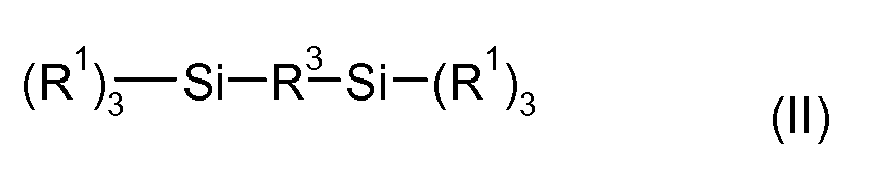
und deren Salze. - Verwendung der Polyorganosiloxane oder Silane nach Anspruch 1, dadurch gekennzeichnet, dass die Reste R1 ausgewählt werden aus der Gruppe der Reste RF und RN, wobei es sich bei den Resten RF um solche Reste R1 handelt, die die genannten funktionellen Gruppen F aufweisen und bei den Resten RN um Reste R1 handelt, die die genannten funktionellen Gruppen F nicht aufweisen.
- Verwendung der Polyorganosiloxane nach Anspruch 1 oder 2,
dadurch gekennzeichnet, dass der molare Anteil der Reste RF, die mindestens eine funktionelle Gruppe F enthalten, 3,33 bis 100 mol-% bezogen auf die Anzahl der Siloxyeinheiten beträgt. - Verwendung der Polyorganosiloxane nach einem der Ansprüche 1 bis 3, dadurch gekennzeichnet, dass der molare Anteil der verzweigenden Reste T und Q 0 bis 50 mol-% bezogen auf die Anzahl der Siloxyeinheiten beträgt.
- Verwendung der Polyorganosiloxane nach einem der Ansprüche 1 bis 4, dadurch gekennzeichnet, dass die zahlenmittlere Anzahl der Siloxyeinheiten 2 bis 20 beträgt.
- Verwendung der Polyorganosiloxane oder Silane nach einem der Ansprüche 1 bis 5, dadurch gekennzeichnet, dass die Substituenten R1 aus der Gruppe ausgewählt werden, die besteht aus:geradkettigen, cyclischen oder verzweigten, gesättigten, ungesättigten oder aromatischen Kohlenwasserstoffresten mit bis zu 100 Kohlenstoffatomen, die gegebenenfalls eine oder mehrere Gruppen, ausgewählt aus
-O-,
-S-,
-NR2-,
worin R2 Wasserstoff, einen einwertigen, geradkettigen, cyclischen oder verzweigten, gesättigten, ungesättigten oder aromatischen Kohlenwasserstoffrest mit bis zu 60 Kohlenstoffatomen darstellt, der eine oder mehrere Gruppen ausgewählt aus -O-, -S-, -NH-, -C(O)- und -C(S)- enthalten kann, und der gegebenenfalls durch eine oder mehrere Substituenten, ausgewählt aus der Gruppe, die besteht aus einer Hydroxylgruppe, einer gegebenenfalls substituierten, bevorzugt ein oder mehrere Stickstoffatome enthaltenden heterocyclischen Gruppe, Amino, Alkylamino, Dialkylamino, Ammonium, Polyetherresten und Polyetheresterresten substituiert sein kann, wobei wenn mehrere Gruppen - NR2 vorliegen, diese gleich oder verschieden sein können,


-P(R2)2, worin R2 wie zuvor definiert ist,
-C(O)- und
-C(S)- enthalten können,
und durch einen oder mehrere Reste substituiert sein kann, die ausgewählt sind aus der Gruppe, die besteht aus:- Hydroxyl,- Mercapto (-SH oder -S-),- Isocyanato,- Halogen,- einem Polyetherrest mit bis zu 60 Kohlenstoffatomen, der gegebenenfalls eine oder mehrere Amino-, Mono- oder Dialkylamino, oder Arylamino-Gruppen tragen kann,- einem Saccharid-haltigem organischen Rest,oder zwei Substituenten R1 aus verschiedenen Siloxyeinheiten bilden gemeinsam einen geradkettigen, verzweigten oder cyclischen, gegebenenfalls durch- O-, -S-, -C(O)-, -NH- unterbrochenen und gegebenenfalls durch OH substituierten Alkandiylrest mit 2 bis 20 Kohlenstoffatomen zwischen zwei Siliziumatomen,wobei die Anbindung an Silizium über ein Kohlenstoffatom und/oder ein Heteroatom erfolgen kann. - Verwendung der Polyorganosiloxane oder Silane nach einem der Ansprüche 1 bis 6, dadurch gekennzeichnet, dass die Reste RF aus der Gruppe ausgewählt werden, die besteht aus:- Zwitterionische Gruppen-enthaltenden Resten, ausgewählt aus:

 - Zwitterionische Gruppen-enthaltenden Resten, ausgewählt aus:

 - Carbonsäure-/Carboxylatgruppen enthaltenden Resten, ausgewählt aus:
-R3-COOR2
,
-R3-COO-
worin R2 und R3 jeweils wie oben definiert sind,- über O an Si gebundene Acyloxy-Gruppen, ausgewählt aus:und die Kationen, welche die anionischen funktionellen Gruppen neutralisieren, ausgewählt werden aus der Gruppe, die besteht aus: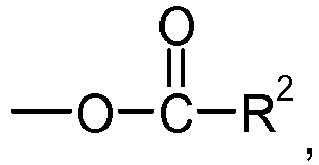 Ammoniumgruppen (N+(R2)4, worin R2 wie oben definiert ist),Phosphoniumgruppen (P+(R2)4, worin R2 wie oben definiert ist), sowie ein- bis dreiwertigen Metallkationen,und die Anionen, welche die kationischen funktionellen Gruppen neutralisieren, ausgewählt werden aus der Gruppe, die besteht aus:Halogenid,Hydroxid,Borat,Sulfat,Phosphat,Nitrat undCarboxylat.
- Verwendung der Polyorganosiloxane nach einem der Ansprüche 1 bis 7, dadurch gekennzeichnet, dass sie mindestens einen Rest der Formel MF enthalten:

- Verwendung der Polyorganosiloxane nach einem der Ansprüche 1 bis 8, dadurch gekennzeichnet, dass sie ausgewählt sind aus den Formeln:


- Verwendung der Polyorganosiloxane nach einem der Ansprüche 1 bis 8, dadurch gekennzeichnet, dass sie die Formel

- Verwendung der Zusammensetzungen enthaltend mindestens ein Polysiloxan und/oder Silan, wie in einem der Ansprüche 1 bis 10 definiert, und mindestens ein Lösungsmittel und/oder mindestens einen bioziden Wirkstoff zur Behandlung von lignocellulosischen Werkstoffen.
- Verwendung der Zusammensetzung enthaltenda) mindestens ein Polysiloxan und/oder Silan wie in einem der Ansprüche 1 bis 10 definiert, die eine funktionelle Gruppe F ausgewählt aus der Gruppe der sauren funktionellen Gruppen:- Zwitterionische Gruppe, und- Carbonsäure/Carboxylat-Gruppe,aufweisen, sowieb) mindestens ein Polysiloxan und/oder Silan, die eine basische funktionelle Gruppe aufweisen, ausgewählt aus Amino-Gruppen, Ammonium-Gruppen, Phosphonium-Gruppen und Phosphin-Gruppen.
- Verfahren zur Behandlung lignocellulosischer Werkstoffe, umfassend die Behandlung des lignocellulosischen Werkstoffs mit mindestens einem Polysiloxan oder Silan, wie in einem der Ansprüche 1 bis 10 definiert, oder einer Zusammensetzung nach Anspruch 11 oder 12 durch Oberflächenbehandlung, Tauchbehandlung oder Vakuum- oder Druck-Imprägnierung.
- Verwendung von mindestens einem Polysiloxan oder Silan, wie in einem der Ansprüche 1 bis 11 definiert, oder einer Zusammensetzung nach Anspruch 11 oder 12 zur Behandlung von lignocellulosischen Werkstoffen zur Abwehr von Termiten mit oder ohne zusätzliche Insektizide zur Termitenbekämpfung.
- Lignocellulosischer Werkstoff, enthaltend mindestens ein Polysiloxan und/oder Silan, wie in einem der Ansprüche 1 bis 10 oder eine Zusammensetzung wie in Anspruch 11 oder 12 definiert.
Priority Applications (1)
| Application Number | Priority Date | Filing Date | Title |
|---|---|---|---|
| EP12714327.9A EP2699623B1 (de) | 2011-04-18 | 2012-04-18 | Funktionalisierte polyorganosiloxane oder silane zur behandlung von lignocellulosischen werkstoffen |
Applications Claiming Priority (3)
| Application Number | Priority Date | Filing Date | Title |
|---|---|---|---|
| EP11162827 | 2011-04-18 | ||
| EP12714327.9A EP2699623B1 (de) | 2011-04-18 | 2012-04-18 | Funktionalisierte polyorganosiloxane oder silane zur behandlung von lignocellulosischen werkstoffen |
| PCT/EP2012/057042 WO2012143371A1 (de) | 2011-04-18 | 2012-04-18 | Funktionalisierte polyorganosiloxane oder silane zur behandlung von lignocellulosischen werkstoffen |
Publications (2)
| Publication Number | Publication Date |
|---|---|
| EP2699623A1 EP2699623A1 (de) | 2014-02-26 |
| EP2699623B1 true EP2699623B1 (de) | 2019-12-18 |
Family
ID=45954680
Family Applications (1)
| Application Number | Title | Priority Date | Filing Date |
|---|---|---|---|
| EP12714327.9A Active EP2699623B1 (de) | 2011-04-18 | 2012-04-18 | Funktionalisierte polyorganosiloxane oder silane zur behandlung von lignocellulosischen werkstoffen |
Country Status (5)
| Country | Link |
|---|---|
| US (2) | US9308668B2 (de) |
| EP (1) | EP2699623B1 (de) |
| CN (1) | CN103764725B (de) |
| BR (1) | BR112013026805B1 (de) |
| WO (1) | WO2012143371A1 (de) |
Families Citing this family (25)
| Publication number | Priority date | Publication date | Assignee | Title |
|---|---|---|---|---|
| US9308668B2 (en) | 2011-04-18 | 2016-04-12 | Momentive Performance Materials Gmbh | Functionalized polyorganosiloxanes or silanes for the treatment of lignocellulosic materials |
| US9200119B2 (en) * | 2012-11-09 | 2015-12-01 | Momentive Performance Materials Inc. | Silicon-containing zwitterionic linear copolymer composition |
| EP2945993A1 (de) | 2013-01-18 | 2015-11-25 | DWI an der RWTH Aachen e.V. | Behandlung von kristallinen cellulosehaltigen substraten |
| CN113977723A (zh) | 2014-05-02 | 2022-01-28 | 奥麟木材保护有限公司 | 木材防腐剂组合物 |
| BR112017006015B1 (pt) * | 2014-09-23 | 2021-09-14 | Momentive Performance Materials Gmbh | Poliorganossiloxano, método para tratar substratos à base de aminoácido, composição para tratar substratos à base de aminoácido, e kit |
| AU2017232927B2 (en) | 2016-03-18 | 2021-02-25 | Tyco Fire Products Lp | Organosiloxane compounds as active ingredients in fluorine free fire suppression foams |
| EP3429699B1 (de) * | 2016-03-18 | 2021-08-18 | Tyco Fire Products LP | Polyorganosiloxanverbindungen als wirkstoffe in fluorfreien brandschutzschäumen |
| CN106217536B (zh) * | 2016-08-04 | 2018-01-16 | 南京博俊新材料有限公司 | 一种交联型木材改性剂 |
| US11591692B2 (en) * | 2017-02-08 | 2023-02-28 | Versum Materials Us, Llc | Organoamino-polysiloxanes for deposition of silicon-containing films |
| US11179312B2 (en) | 2017-06-05 | 2021-11-23 | Momentive Performance Materials Inc. | Aqueous compositions for the treatment of hair |
| US10982051B2 (en) | 2017-06-05 | 2021-04-20 | Momentive Performance Materials Inc. | Aqueous compositions for hair treatment comprising polyorganosiloxanes with polyhydroxyaromatic moieties |
| CN107443516A (zh) * | 2017-07-28 | 2017-12-08 | 安徽宏润工艺品有限公司 | 一种减小水曲柳收缩变形的处理方法 |
| CN107910508A (zh) * | 2017-10-30 | 2018-04-13 | 汪涛 | 一种二氧化硅包覆的碳纤维材料的制备方法、产品及应用 |
| CN108084456B (zh) * | 2017-12-01 | 2020-09-08 | 泸州北方化学工业有限公司 | 一种具有憎水功能的木质纤维 |
| CN108501150A (zh) * | 2018-04-13 | 2018-09-07 | 成都八云科技有限公司 | 复合材料中植物纤维填充材料的预处理剂 |
| US11090255B2 (en) | 2018-12-04 | 2021-08-17 | Momentive Performance Materials Inc. | Use of polycarboxylic acid compounds for the treatment of fibrious amino acid based substrates, especially hair |
| CN114174437B9 (zh) * | 2019-08-07 | 2025-08-22 | 美国陶氏有机硅公司 | 聚二有机硅氧烷组合物及其在形成木塑复合材料中的使用方法 |
| CN111978548B (zh) * | 2020-08-11 | 2022-05-17 | 浙江恒业成有机硅有限公司 | 一种长链烷基及两性离子共改性硅油及其制备方法 |
| CN113773342B (zh) * | 2021-09-13 | 2024-03-19 | 山东新港化工有限公司 | 有机硅基团连接的双子表面活性剂及其制备方法和应用 |
| EP4194163A1 (de) | 2021-12-07 | 2023-06-14 | Archroma IP GmbH | Behandlung von holz mit polyorganosiloxanen |
| AU2022405648A1 (en) | 2021-12-07 | 2024-06-06 | Archroma Ip Gmbh | Treatment of wood with polyorganosiloxanes |
| WO2023196410A1 (en) | 2022-04-05 | 2023-10-12 | Momentive Performance Materials Inc. | Modified natural and green particles for cosmetic application |
| US20240043688A1 (en) * | 2022-07-22 | 2024-02-08 | Florida State University Research Foundation, Inc. | Stabilized siloxane particles and methods for making and using the same |
| CN118578480B (zh) * | 2024-06-13 | 2026-01-20 | 福建省顺昌县升升木业有限公司 | 一种长效电磁屏蔽实木板材的制备方法 |
| CN118721348B (zh) * | 2024-07-03 | 2026-04-07 | 浙江品阁新材料科技有限公司 | 一种耐腐蚀橡木板及其制备方法 |
Family Cites Families (43)
| Publication number | Priority date | Publication date | Assignee | Title |
|---|---|---|---|---|
| US3960800A (en) * | 1974-12-16 | 1976-06-01 | Dow Corning Corporation | Acetoxysiloxane adhesion promoter and primer composition |
| US4042563A (en) * | 1976-09-22 | 1977-08-16 | Dow Corning Corporation | Enhancing flame retardancy with arylorganobromosilicone compounds |
| JPS56500407A (de) * | 1979-04-24 | 1981-04-02 | ||
| US4424392A (en) * | 1982-03-24 | 1984-01-03 | Union Carbide Corporation | Aldehyde containing hydrolyzable silanes |
| DE3447636A1 (de) | 1984-12-28 | 1986-07-03 | Wacker-Chemie GmbH, 8000 München | Bei verduennen mit wasser durchsichtige gemische ergebende, polysiloxan enthaltende zusammensetzungen |
| DE3613384C1 (de) | 1986-04-21 | 1988-01-07 | Wacker Chemie Gmbh | Waessrige Emulsionen von Organopolysiloxan und Verwendung solcher Emulsionen |
| FR2643368B1 (fr) | 1989-02-23 | 1991-06-07 | Hoechst France | Nouveaux derives du glycerol, leur procede de preparation, compositions reticulantes en contenant, et leur utilisation dans l'industrie textile |
| DE4140447A1 (de) | 1991-12-04 | 1993-06-09 | Zentralinstitut Fuer Organische Chemie, O-1199 Berlin, De | Sulfobetaingruppen enthaltende siloxanderivate des dicyclopentadiens |
| DE4202320A1 (de) | 1992-01-29 | 1993-08-05 | Dierk Dr Knittel | Verfahren zum impraegnieren von substraten |
| DE4241727A1 (de) | 1992-12-10 | 1994-06-16 | Wacker Chemie Gmbh | In Wasser selbstdispergierende, Organopolysiloxan anhaltende Zusammensetzungen |
| DE4313219A1 (de) | 1993-04-22 | 1994-10-27 | Wacker Chemie Gmbh | Verfahren zum Imprägnieren von Holz |
| DE4318539A1 (de) | 1993-06-04 | 1994-12-08 | Bayer Ag | Anionische siloxanylmodifizierte polyhydroxylierte Kohlenwasserstoffe |
| DE4318536A1 (de) | 1993-06-04 | 1994-12-08 | Bayer Ag | Siloxanylmodifizierte polyhydroxylierte Kohlenwasserstoffe |
| US5859161A (en) | 1993-12-06 | 1999-01-12 | Phoenix Chemical | Silicone phosphate esters as irritation mitigants |
| DE69411887T2 (de) | 1994-05-04 | 1999-04-15 | Stichting Hout Research (Shr), Maarssen | Verfahren zur Acetylierung von Holz |
| DE4443825A1 (de) | 1994-12-09 | 1996-06-13 | Huels Chemische Werke Ag | Wasserbasierende Organopolysiloxan-haltige Zusammensetzungen, Verfahren zu deren Herstellung und deren Verwendung |
| DE4443824A1 (de) | 1994-12-09 | 1996-06-13 | Huels Chemische Werke Ag | Organopolysiloxan-haltige Zusammensetzungen auf Wasserbasis, Verfahren zu deren Herstellung sowie deren Verwendung |
| DE19505892C1 (de) | 1995-02-21 | 1996-03-14 | Goldschmidt Ag Th | Verfahren zur Herstellung von Carbonatgruppen enthaltenden Organopolysiloxanen |
| US6294608B1 (en) | 1995-05-11 | 2001-09-25 | Wacker-Chemie Gmbh | Emulsions of organosilicon compounds for imparting water repellency to building materials |
| US5686547A (en) | 1996-03-14 | 1997-11-11 | General Electric Company | Carbonate and hydroxy carbamate functionalized silicones |
| US5672338A (en) | 1996-03-14 | 1997-09-30 | General Electric Company | Cosmetic compositions made with hydroxy carbamate functionalized silicones |
| ZA978501B (en) * | 1996-10-25 | 1998-03-26 | Kimberly Clark Co | Tissue containing silicone quaternaries. |
| JPH10168089A (ja) * | 1996-12-04 | 1998-06-23 | Toray Dow Corning Silicone Co Ltd | 1−アシルオキシ−オルガノテトラシロキサンおよびその製造方法 |
| DK199801455A (da) | 1998-11-10 | 2000-05-11 | Fls Miljoe A S | Fremgangsmåde til imprægnering eller ekstrahering af et harpiksholdigt træsubstrat |
| DK199801456A (da) | 1998-11-10 | 2000-05-11 | Fls Miljoe A S | Fremgangsmåde til imprægnering eller ekstrahering af et harpiksholdigt træsubstrat |
| US6175028B1 (en) | 2000-02-28 | 2001-01-16 | O'lenick, Jr. Anthony J. | Silicone alkyl phosphate esters |
| US6432181B1 (en) | 2000-03-03 | 2002-08-13 | Resource Development, L.L.C. | Silicone compositions, methods of making and using VOC free, non-flammable creams, pastes and powders to render nonporous surfaces water, soil and stain repellent |
| DE10036532A1 (de) | 2000-07-27 | 2002-02-21 | Ge Bayer Silicones Gmbh & Co | alpha.w-aminosäurefunktionalisierte Polysiloxane |
| FR2818989B1 (fr) * | 2000-12-29 | 2004-03-19 | Rhodia Chimie Sa | Utilisation d'un polyorganosiloxane fonctionnalise epoxy et/ou carboxy, a titre de matiere active dans une composition silicone liquide d'hydrofugation de materiaux de construction |
| WO2002068558A1 (en) * | 2001-02-22 | 2002-09-06 | Shin-Etsu Chemical Co., Ltd. | Water-based water repellant for treatment of substrates |
| JP3829918B2 (ja) | 2001-05-29 | 2006-10-04 | 信越化学工業株式会社 | 防菌・防黴・防蟻性木材用水系撥水剤及びその製造方法 |
| CA2485284C (en) | 2002-05-08 | 2011-05-03 | Supertrae A/S Under Konkurs | Process for treatment of wood using a carrier fluid under high pressure without damaging the wood |
| US6962948B2 (en) * | 2003-08-07 | 2005-11-08 | Polyset Company, Inc. | Solventless, non-polluting radiation and thermal curable coatings |
| WO2005049170A1 (en) | 2003-11-19 | 2005-06-02 | Scf Technologies A/S | A method and process for controlling the temperature, pressure-and density profiles in dense fluid processes |
| EP1541568A1 (de) | 2003-12-09 | 2005-06-15 | Deutsches Wollforschungsinstitut an der Rheinisch-Westfälischen Technischen Hochschule Aachen e.V. | Reaktive cyclische Carbonate und Harnstoffe zur Modifizierung von Biomolekülen, Polymeren und Oberflächen |
| DE102004036918A1 (de) | 2004-07-29 | 2007-02-08 | Georg-August-Universität Göttingen | Schutzmittel und Vergütung für Holz |
| DE102005023404A1 (de) * | 2005-05-20 | 2006-12-21 | Wacker Chemie Ag | Verfahren zur Herstellung von Silikon-haltigen Polymerisaten |
| DE102007012909A1 (de) | 2007-03-19 | 2008-09-25 | Momentive Performance Materials Gmbh | Mit Duftstoffen modifizierte, reaktive Polyorganosiloxane |
| US20090173912A1 (en) * | 2007-12-26 | 2009-07-09 | Momentive Performance Materials Inc. | Mixtures of hydrolysis resistant organomodified trisiloxane ionic surfactants |
| JP4707729B2 (ja) * | 2008-03-31 | 2011-06-22 | 信越化学工業株式会社 | 剥離紙用低粘度紫外線硬化型シリコーン組成物 |
| EP2444448A1 (de) * | 2009-06-15 | 2012-04-25 | DSM IP Assets B.V. | Phosphorylcholin-basierte amphiphile Silikone für medizinische Anwendungen |
| JP2011201196A (ja) * | 2010-03-26 | 2011-10-13 | Dow Corning Toray Co Ltd | リグノセルロース材料用処理剤 |
| US9308668B2 (en) | 2011-04-18 | 2016-04-12 | Momentive Performance Materials Gmbh | Functionalized polyorganosiloxanes or silanes for the treatment of lignocellulosic materials |
-
2012
- 2012-04-18 US US14/112,247 patent/US9308668B2/en active Active
- 2012-04-18 WO PCT/EP2012/057042 patent/WO2012143371A1/de not_active Ceased
- 2012-04-18 EP EP12714327.9A patent/EP2699623B1/de active Active
- 2012-04-18 CN CN201280029938.5A patent/CN103764725B/zh active Active
- 2012-04-18 BR BR112013026805-0A patent/BR112013026805B1/pt active IP Right Grant
-
2016
- 2016-02-22 US US15/049,386 patent/US9931760B2/en active Active
Non-Patent Citations (1)
| Title |
|---|
| None * |
Also Published As
| Publication number | Publication date |
|---|---|
| CN103764725A (zh) | 2014-04-30 |
| NZ716105A (en) | 2018-01-26 |
| BR112013026805B1 (pt) | 2020-05-26 |
| US20170022390A1 (en) | 2017-01-26 |
| EP2699623A1 (de) | 2014-02-26 |
| US9308668B2 (en) | 2016-04-12 |
| US20140127523A1 (en) | 2014-05-08 |
| NZ617527A (en) | 2016-10-28 |
| BR112013026805A2 (pt) | 2017-01-10 |
| US9931760B2 (en) | 2018-04-03 |
| CN103764725B (zh) | 2017-03-01 |
| WO2012143371A1 (de) | 2012-10-26 |
Similar Documents
| Publication | Publication Date | Title |
|---|---|---|
| EP2699623A1 (de) | Funktionalisierte polyorganosiloxane oder silane zur behandlung von lignocellulosischen werkstoffen | |
| Šimůnková et al. | Caffeine–Perspective natural biocide for wood protection against decaying fungi and termites | |
| EP1480795A2 (de) | Nichtwässrige holzschutzmittel | |
| DE69829798T2 (de) | Verfahren zur Herstellung antibakterieller/antifungaler Holzkomposite mit anorgansichem Material | |
| CH686333A5 (de) | Fungizide Zusammensetzungen. | |
| SE466298B (sv) | Vattenhaltig vattenrepellerande komposition med fungicida egenskaper, saett att ge vattenrepellerande och fungicida egenskaper aat permeabla substrat samt enligt saettet behandlat trae | |
| WO2017031289A1 (en) | Pesticide retention coating compositions and uses thereof | |
| DE2622028B2 (de) | Holzschutzmittel und Verfahren zu seiner Verwendung | |
| Panov et al. | Durability of epoxi-oil modified and alkoxysilane treated wood in field testing | |
| WO2014111514A1 (de) | Behandlung von kristallinen cellulosehaltigen substraten | |
| JP2009506907A (ja) | 撥水性を改善するためのアルコキシ化アミンの使用 | |
| DE102012103372A1 (de) | Verwendung von aminofunktionellen Polyorganosiloxanen als Holzschutzmittel | |
| WO2002081159A2 (de) | Verfahren zur schutzbehandlung von holz und holzwerkstoffen | |
| WO2006013146A1 (de) | Schutzmittel und vergütung für holz | |
| EP0747184A2 (de) | Schutz- und Konsolidierungsmittel für nachwachsende Rohstoffe | |
| CH651779A5 (de) | Holzschutzmittelkonzentrat und daraus hergestelltes mittel zum konservieren von holz und holzwerkstoffen. | |
| Ghosh et al. | Decay resistance of treated wood with functionalised commercial silicones | |
| JP2009522299A (ja) | 木材防腐剤としてのトロポロン錯体 | |
| JP2009522298A (ja) | 木材防腐剤としてのイブプロフェン錯体 | |
| CN114786897B (zh) | 木材保护方法和用该方法生产的木材产品 | |
| Ghosh | Wood modification with functionalized polydimethylsiloxanes | |
| NZ617527B2 (en) | Functionalized polyorganosiloxanes or silanes for treating lignocellulosic materials | |
| KR20250148186A (ko) | 수계 목재 보존제 및 이의 제조 방법 | |
| RU2113984C1 (ru) | Средство для биозащиты целлюлозосодержащих материалов | |
| DE19833479A1 (de) | Holzschutzmittel |
Legal Events
| Date | Code | Title | Description |
|---|---|---|---|
| PUAI | Public reference made under article 153(3) epc to a published international application that has entered the european phase |
Free format text: ORIGINAL CODE: 0009012 |
|
| 17P | Request for examination filed |
Effective date: 20131114 |
|
| AK | Designated contracting states |
Kind code of ref document: A1 Designated state(s): AL AT BE BG CH CY CZ DE DK EE ES FI FR GB GR HR HU IE IS IT LI LT LU LV MC MK MT NL NO PL PT RO RS SE SI SK SM TR |
|
| RIN1 | Information on inventor provided before grant (corrected) |
Inventor name: HOFFMUELLER, GUNNAR Inventor name: KAESLER, KARL-HEINZ Inventor name: STACHULLA, KARL-HEINZ Inventor name: PRIES, MALTE Inventor name: DELIS, JOHANNES GERARDUS PETRUS Inventor name: SOCKEL, KARL-HEINZ Inventor name: WAGNER, ROLAND Inventor name: HERMANN, JOERG-WALTER Inventor name: MILITZ, HOLGER Inventor name: KLAASSEN, EGBERT Inventor name: MAI, CARSTEN |
|
| DAX | Request for extension of the european patent (deleted) | ||
| STAA | Information on the status of an ep patent application or granted ep patent |
Free format text: STATUS: EXAMINATION IS IN PROGRESS |
|
| 17Q | First examination report despatched |
Effective date: 20161107 |
|
| GRAP | Despatch of communication of intention to grant a patent |
Free format text: ORIGINAL CODE: EPIDOSNIGR1 |
|
| STAA | Information on the status of an ep patent application or granted ep patent |
Free format text: STATUS: GRANT OF PATENT IS INTENDED |
|
| INTG | Intention to grant announced |
Effective date: 20190627 |
|
| GRAS | Grant fee paid |
Free format text: ORIGINAL CODE: EPIDOSNIGR3 |
|
| GRAA | (expected) grant |
Free format text: ORIGINAL CODE: 0009210 |
|
| STAA | Information on the status of an ep patent application or granted ep patent |
Free format text: STATUS: THE PATENT HAS BEEN GRANTED |
|
| AK | Designated contracting states |
Kind code of ref document: B1 Designated state(s): AL AT BE BG CH CY CZ DE DK EE ES FI FR GB GR HR HU IE IS IT LI LT LU LV MC MK MT NL NO PL PT RO RS SE SI SK SM TR |
|
| REG | Reference to a national code |
Ref country code: GB Ref legal event code: FG4D Free format text: NOT ENGLISH |
|
| REG | Reference to a national code |
Ref country code: CH Ref legal event code: EP |
|
| REG | Reference to a national code |
Ref country code: DE Ref legal event code: R096 Ref document number: 502012015625 Country of ref document: DE |
|
| REG | Reference to a national code |
Ref country code: IE Ref legal event code: FG4D Free format text: LANGUAGE OF EP DOCUMENT: GERMAN |
|
| REG | Reference to a national code |
Ref country code: AT Ref legal event code: REF Ref document number: 1214534 Country of ref document: AT Kind code of ref document: T Effective date: 20200115 |
|
| REG | Reference to a national code |
Ref country code: NL Ref legal event code: MP Effective date: 20191218 |
|
| PG25 | Lapsed in a contracting state [announced via postgrant information from national office to epo] |
Ref country code: LT Free format text: LAPSE BECAUSE OF FAILURE TO SUBMIT A TRANSLATION OF THE DESCRIPTION OR TO PAY THE FEE WITHIN THE PRESCRIBED TIME-LIMIT Effective date: 20191218 Ref country code: LV Free format text: LAPSE BECAUSE OF FAILURE TO SUBMIT A TRANSLATION OF THE DESCRIPTION OR TO PAY THE FEE WITHIN THE PRESCRIBED TIME-LIMIT Effective date: 20191218 Ref country code: SE Free format text: LAPSE BECAUSE OF FAILURE TO SUBMIT A TRANSLATION OF THE DESCRIPTION OR TO PAY THE FEE WITHIN THE PRESCRIBED TIME-LIMIT Effective date: 20191218 Ref country code: GR Free format text: LAPSE BECAUSE OF FAILURE TO SUBMIT A TRANSLATION OF THE DESCRIPTION OR TO PAY THE FEE WITHIN THE PRESCRIBED TIME-LIMIT Effective date: 20200319 Ref country code: NO Free format text: LAPSE BECAUSE OF FAILURE TO SUBMIT A TRANSLATION OF THE DESCRIPTION OR TO PAY THE FEE WITHIN THE PRESCRIBED TIME-LIMIT Effective date: 20200318 Ref country code: BG Free format text: LAPSE BECAUSE OF FAILURE TO SUBMIT A TRANSLATION OF THE DESCRIPTION OR TO PAY THE FEE WITHIN THE PRESCRIBED TIME-LIMIT Effective date: 20200318 Ref country code: FI Free format text: LAPSE BECAUSE OF FAILURE TO SUBMIT A TRANSLATION OF THE DESCRIPTION OR TO PAY THE FEE WITHIN THE PRESCRIBED TIME-LIMIT Effective date: 20191218 |
|
| REG | Reference to a national code |
Ref country code: LT Ref legal event code: MG4D |
|
| PG25 | Lapsed in a contracting state [announced via postgrant information from national office to epo] |
Ref country code: RS Free format text: LAPSE BECAUSE OF FAILURE TO SUBMIT A TRANSLATION OF THE DESCRIPTION OR TO PAY THE FEE WITHIN THE PRESCRIBED TIME-LIMIT Effective date: 20191218 Ref country code: HR Free format text: LAPSE BECAUSE OF FAILURE TO SUBMIT A TRANSLATION OF THE DESCRIPTION OR TO PAY THE FEE WITHIN THE PRESCRIBED TIME-LIMIT Effective date: 20191218 |
|
| PG25 | Lapsed in a contracting state [announced via postgrant information from national office to epo] |
Ref country code: AL Free format text: LAPSE BECAUSE OF FAILURE TO SUBMIT A TRANSLATION OF THE DESCRIPTION OR TO PAY THE FEE WITHIN THE PRESCRIBED TIME-LIMIT Effective date: 20191218 |
|
| PG25 | Lapsed in a contracting state [announced via postgrant information from national office to epo] |
Ref country code: PT Free format text: LAPSE BECAUSE OF FAILURE TO SUBMIT A TRANSLATION OF THE DESCRIPTION OR TO PAY THE FEE WITHIN THE PRESCRIBED TIME-LIMIT Effective date: 20200513 Ref country code: CZ Free format text: LAPSE BECAUSE OF FAILURE TO SUBMIT A TRANSLATION OF THE DESCRIPTION OR TO PAY THE FEE WITHIN THE PRESCRIBED TIME-LIMIT Effective date: 20191218 Ref country code: EE Free format text: LAPSE BECAUSE OF FAILURE TO SUBMIT A TRANSLATION OF THE DESCRIPTION OR TO PAY THE FEE WITHIN THE PRESCRIBED TIME-LIMIT Effective date: 20191218 Ref country code: RO Free format text: LAPSE BECAUSE OF FAILURE TO SUBMIT A TRANSLATION OF THE DESCRIPTION OR TO PAY THE FEE WITHIN THE PRESCRIBED TIME-LIMIT Effective date: 20191218 Ref country code: NL Free format text: LAPSE BECAUSE OF FAILURE TO SUBMIT A TRANSLATION OF THE DESCRIPTION OR TO PAY THE FEE WITHIN THE PRESCRIBED TIME-LIMIT Effective date: 20191218 |
|
| PG25 | Lapsed in a contracting state [announced via postgrant information from national office to epo] |
Ref country code: SK Free format text: LAPSE BECAUSE OF FAILURE TO SUBMIT A TRANSLATION OF THE DESCRIPTION OR TO PAY THE FEE WITHIN THE PRESCRIBED TIME-LIMIT Effective date: 20191218 Ref country code: IS Free format text: LAPSE BECAUSE OF FAILURE TO SUBMIT A TRANSLATION OF THE DESCRIPTION OR TO PAY THE FEE WITHIN THE PRESCRIBED TIME-LIMIT Effective date: 20200418 Ref country code: SM Free format text: LAPSE BECAUSE OF FAILURE TO SUBMIT A TRANSLATION OF THE DESCRIPTION OR TO PAY THE FEE WITHIN THE PRESCRIBED TIME-LIMIT Effective date: 20191218 |
|
| REG | Reference to a national code |
Ref country code: DE Ref legal event code: R097 Ref document number: 502012015625 Country of ref document: DE |
|
| PLBE | No opposition filed within time limit |
Free format text: ORIGINAL CODE: 0009261 |
|
| STAA | Information on the status of an ep patent application or granted ep patent |
Free format text: STATUS: NO OPPOSITION FILED WITHIN TIME LIMIT |
|
| PG25 | Lapsed in a contracting state [announced via postgrant information from national office to epo] |
Ref country code: DK Free format text: LAPSE BECAUSE OF FAILURE TO SUBMIT A TRANSLATION OF THE DESCRIPTION OR TO PAY THE FEE WITHIN THE PRESCRIBED TIME-LIMIT Effective date: 20191218 Ref country code: ES Free format text: LAPSE BECAUSE OF FAILURE TO SUBMIT A TRANSLATION OF THE DESCRIPTION OR TO PAY THE FEE WITHIN THE PRESCRIBED TIME-LIMIT Effective date: 20191218 |
|
| 26N | No opposition filed |
Effective date: 20200921 |
|
| PG25 | Lapsed in a contracting state [announced via postgrant information from national office to epo] |
Ref country code: MC Free format text: LAPSE BECAUSE OF FAILURE TO SUBMIT A TRANSLATION OF THE DESCRIPTION OR TO PAY THE FEE WITHIN THE PRESCRIBED TIME-LIMIT Effective date: 20191218 Ref country code: SI Free format text: LAPSE BECAUSE OF FAILURE TO SUBMIT A TRANSLATION OF THE DESCRIPTION OR TO PAY THE FEE WITHIN THE PRESCRIBED TIME-LIMIT Effective date: 20191218 |
|
| REG | Reference to a national code |
Ref country code: CH Ref legal event code: PL |
|
| PG25 | Lapsed in a contracting state [announced via postgrant information from national office to epo] |
Ref country code: IT Free format text: LAPSE BECAUSE OF FAILURE TO SUBMIT A TRANSLATION OF THE DESCRIPTION OR TO PAY THE FEE WITHIN THE PRESCRIBED TIME-LIMIT Effective date: 20191218 Ref country code: LU Free format text: LAPSE BECAUSE OF NON-PAYMENT OF DUE FEES Effective date: 20200418 Ref country code: LI Free format text: LAPSE BECAUSE OF NON-PAYMENT OF DUE FEES Effective date: 20200430 Ref country code: CH Free format text: LAPSE BECAUSE OF NON-PAYMENT OF DUE FEES Effective date: 20200430 |
|
| REG | Reference to a national code |
Ref country code: BE Ref legal event code: MM Effective date: 20200430 |
|
| PG25 | Lapsed in a contracting state [announced via postgrant information from national office to epo] |
Ref country code: PL Free format text: LAPSE BECAUSE OF FAILURE TO SUBMIT A TRANSLATION OF THE DESCRIPTION OR TO PAY THE FEE WITHIN THE PRESCRIBED TIME-LIMIT Effective date: 20191218 Ref country code: BE Free format text: LAPSE BECAUSE OF NON-PAYMENT OF DUE FEES Effective date: 20200430 |
|
| PG25 | Lapsed in a contracting state [announced via postgrant information from national office to epo] |
Ref country code: IE Free format text: LAPSE BECAUSE OF NON-PAYMENT OF DUE FEES Effective date: 20200418 |
|
| REG | Reference to a national code |
Ref country code: AT Ref legal event code: MM01 Ref document number: 1214534 Country of ref document: AT Kind code of ref document: T Effective date: 20200418 |
|
| PG25 | Lapsed in a contracting state [announced via postgrant information from national office to epo] |
Ref country code: AT Free format text: LAPSE BECAUSE OF NON-PAYMENT OF DUE FEES Effective date: 20200418 |
|
| PG25 | Lapsed in a contracting state [announced via postgrant information from national office to epo] |
Ref country code: TR Free format text: LAPSE BECAUSE OF FAILURE TO SUBMIT A TRANSLATION OF THE DESCRIPTION OR TO PAY THE FEE WITHIN THE PRESCRIBED TIME-LIMIT Effective date: 20191218 Ref country code: MT Free format text: LAPSE BECAUSE OF FAILURE TO SUBMIT A TRANSLATION OF THE DESCRIPTION OR TO PAY THE FEE WITHIN THE PRESCRIBED TIME-LIMIT Effective date: 20191218 Ref country code: CY Free format text: LAPSE BECAUSE OF FAILURE TO SUBMIT A TRANSLATION OF THE DESCRIPTION OR TO PAY THE FEE WITHIN THE PRESCRIBED TIME-LIMIT Effective date: 20191218 |
|
| PG25 | Lapsed in a contracting state [announced via postgrant information from national office to epo] |
Ref country code: MK Free format text: LAPSE BECAUSE OF FAILURE TO SUBMIT A TRANSLATION OF THE DESCRIPTION OR TO PAY THE FEE WITHIN THE PRESCRIBED TIME-LIMIT Effective date: 20191218 |
|
| P01 | Opt-out of the competence of the unified patent court (upc) registered |
Effective date: 20230513 |
|
| PGFP | Annual fee paid to national office [announced via postgrant information from national office to epo] |
Ref country code: GB Payment date: 20260421 Year of fee payment: 15 |
|
| PGFP | Annual fee paid to national office [announced via postgrant information from national office to epo] |
Ref country code: DE Payment date: 20260421 Year of fee payment: 15 |
|
| PGFP | Annual fee paid to national office [announced via postgrant information from national office to epo] |
Ref country code: FR Payment date: 20260423 Year of fee payment: 15 |