EP2699687B1 - Construction d'expression et procédé pour améliorer le carbone, l'azote, la biomasse et le rendement de plantes - Google Patents
Construction d'expression et procédé pour améliorer le carbone, l'azote, la biomasse et le rendement de plantes Download PDFInfo
- Publication number
- EP2699687B1 EP2699687B1 EP12722538.1A EP12722538A EP2699687B1 EP 2699687 B1 EP2699687 B1 EP 2699687B1 EP 12722538 A EP12722538 A EP 12722538A EP 2699687 B1 EP2699687 B1 EP 2699687B1
- Authority
- EP
- European Patent Office
- Prior art keywords
- seq
- plants
- pepcase
- aspat
- plant
- Prior art date
- Legal status (The legal status is an assumption and is not a legal conclusion. Google has not performed a legal analysis and makes no representation as to the accuracy of the status listed.)
- Not-in-force
Links
- 230000014509 gene expression Effects 0.000 title claims description 56
- IJGRMHOSHXDMSA-UHFFFAOYSA-N Atomic nitrogen Chemical compound N#N IJGRMHOSHXDMSA-UHFFFAOYSA-N 0.000 title claims description 55
- 229910052757 nitrogen Inorganic materials 0.000 title claims description 53
- 229910052799 carbon Inorganic materials 0.000 title claims description 42
- 239000002028 Biomass Substances 0.000 title claims description 29
- OKTJSMMVPCPJKN-UHFFFAOYSA-N Carbon Chemical compound [C] OKTJSMMVPCPJKN-UHFFFAOYSA-N 0.000 title claims description 20
- 238000000034 method Methods 0.000 title claims description 19
- 230000008569 process Effects 0.000 title claims description 16
- 230000002708 enhancing effect Effects 0.000 title claims description 9
- 241000196324 Embryophyta Species 0.000 claims description 178
- 108091000041 Phosphoenolpyruvate Carboxylase Proteins 0.000 claims description 124
- 101710092506 Aspartate aminotransferase Proteins 0.000 claims description 108
- 101710101107 Probable aspartate aminotransferase Proteins 0.000 claims description 108
- 230000000694 effects Effects 0.000 claims description 42
- 108090000623 proteins and genes Proteins 0.000 claims description 37
- 239000013598 vector Substances 0.000 claims description 27
- 240000008042 Zea mays Species 0.000 claims description 24
- 241000219194 Arabidopsis Species 0.000 claims description 23
- 240000007594 Oryza sativa Species 0.000 claims description 21
- 235000016383 Zea mays subsp huehuetenangensis Nutrition 0.000 claims description 21
- 235000002017 Zea mays subsp mays Nutrition 0.000 claims description 21
- 235000009973 maize Nutrition 0.000 claims description 21
- 244000061176 Nicotiana tabacum Species 0.000 claims description 20
- 235000002637 Nicotiana tabacum Nutrition 0.000 claims description 20
- 239000013612 plasmid Substances 0.000 claims description 20
- 230000012010 growth Effects 0.000 claims description 18
- 108091026890 Coding region Proteins 0.000 claims description 17
- 244000068988 Glycine max Species 0.000 claims description 14
- 238000010367 cloning Methods 0.000 claims description 14
- 235000010469 Glycine max Nutrition 0.000 claims description 13
- 235000007164 Oryza sativa Nutrition 0.000 claims description 13
- 239000002299 complementary DNA Substances 0.000 claims description 12
- 235000009566 rice Nutrition 0.000 claims description 12
- 101150074355 GS gene Proteins 0.000 claims description 11
- 238000004519 manufacturing process Methods 0.000 claims description 10
- FWMNVWWHGCHHJJ-SKKKGAJSSA-N 4-amino-1-[(2r)-6-amino-2-[[(2r)-2-[[(2r)-2-[[(2r)-2-amino-3-phenylpropanoyl]amino]-3-phenylpropanoyl]amino]-4-methylpentanoyl]amino]hexanoyl]piperidine-4-carboxylic acid Chemical compound C([C@H](C(=O)N[C@H](CC(C)C)C(=O)N[C@H](CCCCN)C(=O)N1CCC(N)(CC1)C(O)=O)NC(=O)[C@H](N)CC=1C=CC=CC=1)C1=CC=CC=C1 FWMNVWWHGCHHJJ-SKKKGAJSSA-N 0.000 claims description 9
- 241000589158 Agrobacterium Species 0.000 claims description 8
- 241000620209 Escherichia coli DH5[alpha] Species 0.000 claims description 8
- 108091028043 Nucleic acid sequence Proteins 0.000 claims description 7
- 238000013518 transcription Methods 0.000 claims description 7
- 230000035897 transcription Effects 0.000 claims description 7
- 108700007698 Genetic Terminator Regions Proteins 0.000 claims description 6
- 230000001131 transforming effect Effects 0.000 claims description 6
- 238000012163 sequencing technique Methods 0.000 claims description 5
- 108020005345 3' Untranslated Regions Proteins 0.000 claims description 4
- 235000010582 Pisum sativum Nutrition 0.000 claims description 4
- 240000004713 Pisum sativum Species 0.000 claims description 4
- 108010003581 Ribulose-bisphosphate carboxylase Proteins 0.000 claims description 3
- 235000011684 Sorghum saccharatum Nutrition 0.000 claims description 3
- 230000002103 transcriptional effect Effects 0.000 claims description 3
- 102000007469 Actins Human genes 0.000 claims description 2
- 108010085238 Actins Proteins 0.000 claims description 2
- 244000056139 Brassica cretica Species 0.000 claims description 2
- 235000003351 Brassica cretica Nutrition 0.000 claims description 2
- 235000003343 Brassica rupestris Nutrition 0.000 claims description 2
- 235000010773 Cajanus indicus Nutrition 0.000 claims description 2
- 244000105627 Cajanus indicus Species 0.000 claims description 2
- 229920000742 Cotton Polymers 0.000 claims description 2
- 244000299507 Gossypium hirsutum Species 0.000 claims description 2
- 235000007688 Lycopersicon esculentum Nutrition 0.000 claims description 2
- 235000007201 Saccharum officinarum Nutrition 0.000 claims description 2
- 240000000111 Saccharum officinarum Species 0.000 claims description 2
- 240000003768 Solanum lycopersicum Species 0.000 claims description 2
- 244000061456 Solanum tuberosum Species 0.000 claims description 2
- 235000002595 Solanum tuberosum Nutrition 0.000 claims description 2
- 235000021307 Triticum Nutrition 0.000 claims description 2
- 244000098338 Triticum aestivum Species 0.000 claims description 2
- 102000044159 Ubiquitin Human genes 0.000 claims description 2
- 108090000848 Ubiquitin Proteins 0.000 claims description 2
- 235000010726 Vigna sinensis Nutrition 0.000 claims description 2
- 244000042314 Vigna unguiculata Species 0.000 claims description 2
- QKSKPIVNLNLAAV-UHFFFAOYSA-N bis(2-chloroethyl) sulfide Chemical compound ClCCSCCCl QKSKPIVNLNLAAV-UHFFFAOYSA-N 0.000 claims description 2
- 230000004186 co-expression Effects 0.000 claims description 2
- 235000010460 mustard Nutrition 0.000 claims description 2
- 108091033319 polynucleotide Proteins 0.000 claims description 2
- 102000040430 polynucleotide Human genes 0.000 claims description 2
- 239000002157 polynucleotide Substances 0.000 claims description 2
- 240000006394 Sorghum bicolor Species 0.000 claims 1
- 108020002326 glutamine synthetase Proteins 0.000 description 103
- 102000005396 glutamine synthetase Human genes 0.000 description 99
- 230000009261 transgenic effect Effects 0.000 description 61
- 108020004414 DNA Proteins 0.000 description 36
- 230000002018 overexpression Effects 0.000 description 22
- 230000001086 cytosolic effect Effects 0.000 description 21
- 239000000047 product Substances 0.000 description 20
- 230000003321 amplification Effects 0.000 description 18
- 238000003199 nucleic acid amplification method Methods 0.000 description 18
- 229940024606 amino acid Drugs 0.000 description 16
- 235000001014 amino acid Nutrition 0.000 description 16
- 150000001413 amino acids Chemical class 0.000 description 15
- 210000004027 cell Anatomy 0.000 description 14
- 230000002441 reversible effect Effects 0.000 description 14
- 230000029553 photosynthesis Effects 0.000 description 13
- 238000010672 photosynthesis Methods 0.000 description 13
- 108091032973 (ribonucleotides)n+m Proteins 0.000 description 12
- 238000004458 analytical method Methods 0.000 description 11
- 230000004060 metabolic process Effects 0.000 description 11
- 102000004190 Enzymes Human genes 0.000 description 10
- 108090000790 Enzymes Proteins 0.000 description 10
- WHUUTDBJXJRKMK-VKHMYHEASA-N L-glutamic acid Chemical compound OC(=O)[C@@H](N)CCC(O)=O WHUUTDBJXJRKMK-VKHMYHEASA-N 0.000 description 10
- PEDCQBHIVMGVHV-UHFFFAOYSA-N Glycerine Chemical compound OCC(O)CO PEDCQBHIVMGVHV-UHFFFAOYSA-N 0.000 description 9
- QGZKDVFQNNGYKY-UHFFFAOYSA-N Ammonia Chemical compound N QGZKDVFQNNGYKY-UHFFFAOYSA-N 0.000 description 8
- 238000000137 annealing Methods 0.000 description 8
- 230000009466 transformation Effects 0.000 description 8
- 102100034193 Aspartate aminotransferase, mitochondrial Human genes 0.000 description 7
- 101150047832 hpt gene Proteins 0.000 description 7
- QGZKDVFQNNGYKY-UHFFFAOYSA-O Ammonium Chemical compound [NH4+] QGZKDVFQNNGYKY-UHFFFAOYSA-O 0.000 description 6
- 101710201058 Aspartate aminotransferase, mitochondrial Proteins 0.000 description 6
- 241000588724 Escherichia coli Species 0.000 description 6
- 108010006785 Taq Polymerase Proteins 0.000 description 6
- DTBNBXWJWCWCIK-UHFFFAOYSA-K phosphonatoenolpyruvate Chemical compound [O-]C(=O)C(=C)OP([O-])([O-])=O DTBNBXWJWCWCIK-UHFFFAOYSA-K 0.000 description 6
- 235000018102 proteins Nutrition 0.000 description 6
- 102000004169 proteins and genes Human genes 0.000 description 6
- KPGXRSRHYNQIFN-UHFFFAOYSA-N 2-oxoglutaric acid Chemical compound OC(=O)CCC(=O)C(O)=O KPGXRSRHYNQIFN-UHFFFAOYSA-N 0.000 description 5
- 102100036608 Aspartate aminotransferase, cytoplasmic Human genes 0.000 description 5
- 101710200994 Aspartate aminotransferase, cytoplasmic Proteins 0.000 description 5
- XJLXINKUBYWONI-NNYOXOHSSA-O NADP(+) Chemical compound NC(=O)C1=CC=C[N+]([C@H]2[C@@H]([C@H](O)[C@@H](COP(O)(=O)OP(O)(=O)OC[C@@H]3[C@H]([C@@H](OP(O)(O)=O)[C@@H](O3)N3C4=NC=NC(N)=C4N=C3)O)O2)O)=C1 XJLXINKUBYWONI-NNYOXOHSSA-O 0.000 description 5
- 238000010240 RT-PCR analysis Methods 0.000 description 5
- 238000000246 agarose gel electrophoresis Methods 0.000 description 5
- 230000015572 biosynthetic process Effects 0.000 description 5
- 150000007523 nucleic acids Chemical group 0.000 description 5
- 229930029653 phosphoenolpyruvate Natural products 0.000 description 5
- 230000005097 photorespiration Effects 0.000 description 5
- 238000009331 sowing Methods 0.000 description 5
- 108010003415 Aspartate Aminotransferases Proteins 0.000 description 4
- 102000007260 Deoxyribonuclease I Human genes 0.000 description 4
- 108010008532 Deoxyribonuclease I Proteins 0.000 description 4
- YQYJSBFKSSDGFO-UHFFFAOYSA-N Epihygromycin Natural products OC1C(O)C(C(=O)C)OC1OC(C(=C1)O)=CC=C1C=C(C)C(=O)NC1C(O)C(O)C2OCOC2C1O YQYJSBFKSSDGFO-UHFFFAOYSA-N 0.000 description 4
- 102100034343 Integrase Human genes 0.000 description 4
- CKLJMWTZIZZHCS-REOHCLBHSA-N L-aspartic acid Chemical compound OC(=O)[C@@H](N)CC(O)=O CKLJMWTZIZZHCS-REOHCLBHSA-N 0.000 description 4
- TWRXJAOTZQYOKJ-UHFFFAOYSA-L Magnesium chloride Chemical compound [Mg+2].[Cl-].[Cl-] TWRXJAOTZQYOKJ-UHFFFAOYSA-L 0.000 description 4
- 108010092799 RNA-directed DNA polymerase Proteins 0.000 description 4
- ATNHDLDRLWWWCB-AENOIHSZSA-M chlorophyll a Chemical compound C1([C@@H](C(=O)OC)C(=O)C2=C3C)=C2N2C3=CC(C(CC)=C3C)=[N+]4C3=CC3=C(C=C)C(C)=C5N3[Mg-2]42[N+]2=C1[C@@H](CCC(=O)OC\C=C(/C)CCC[C@H](C)CCC[C@H](C)CCCC(C)C)[C@H](C)C2=C5 ATNHDLDRLWWWCB-AENOIHSZSA-M 0.000 description 4
- 230000007423 decrease Effects 0.000 description 4
- 230000003297 denaturating effect Effects 0.000 description 4
- 230000006870 function Effects 0.000 description 4
- 230000006872 improvement Effects 0.000 description 4
- 230000005764 inhibitory process Effects 0.000 description 4
- 239000003550 marker Substances 0.000 description 4
- 230000002503 metabolic effect Effects 0.000 description 4
- 230000004048 modification Effects 0.000 description 4
- 238000012986 modification Methods 0.000 description 4
- 108020004707 nucleic acids Proteins 0.000 description 4
- 102000039446 nucleic acids Human genes 0.000 description 4
- 239000002773 nucleotide Substances 0.000 description 4
- 125000003729 nucleotide group Chemical group 0.000 description 4
- 238000002360 preparation method Methods 0.000 description 4
- 235000019624 protein content Nutrition 0.000 description 4
- 238000012546 transfer Methods 0.000 description 4
- BJEPYKJPYRNKOW-REOHCLBHSA-N (S)-malic acid Chemical compound OC(=O)[C@@H](O)CC(O)=O BJEPYKJPYRNKOW-REOHCLBHSA-N 0.000 description 3
- 241000589155 Agrobacterium tumefaciens Species 0.000 description 3
- 241000219195 Arabidopsis thaliana Species 0.000 description 3
- LFQSCWFLJHTTHZ-UHFFFAOYSA-N Ethanol Chemical compound CCO LFQSCWFLJHTTHZ-UHFFFAOYSA-N 0.000 description 3
- GRRNUXAQVGOGFE-UHFFFAOYSA-N Hygromycin-B Natural products OC1C(NC)CC(N)C(O)C1OC1C2OC3(C(C(O)C(O)C(C(N)CO)O3)O)OC2C(O)C(CO)O1 GRRNUXAQVGOGFE-UHFFFAOYSA-N 0.000 description 3
- DCXYFEDJOCDNAF-REOHCLBHSA-N L-asparagine Chemical compound OC(=O)[C@@H](N)CC(N)=O DCXYFEDJOCDNAF-REOHCLBHSA-N 0.000 description 3
- 241000215452 Lotus corniculatus Species 0.000 description 3
- 241000209117 Panicum Species 0.000 description 3
- 235000006443 Panicum miliaceum subsp. miliaceum Nutrition 0.000 description 3
- 235000009037 Panicum miliaceum subsp. ruderale Nutrition 0.000 description 3
- 244000010815 Phlomis lychnitis Species 0.000 description 3
- 230000004075 alteration Effects 0.000 description 3
- 230000001580 bacterial effect Effects 0.000 description 3
- 108091008324 binding proteins Proteins 0.000 description 3
- 230000003115 biocidal effect Effects 0.000 description 3
- 230000033228 biological regulation Effects 0.000 description 3
- 239000000872 buffer Substances 0.000 description 3
- 235000013339 cereals Nutrition 0.000 description 3
- 238000006243 chemical reaction Methods 0.000 description 3
- 229930002868 chlorophyll a Natural products 0.000 description 3
- 229930002869 chlorophyll b Natural products 0.000 description 3
- NSMUHPMZFPKNMZ-VBYMZDBQSA-M chlorophyll b Chemical compound C1([C@@H](C(=O)OC)C(=O)C2=C3C)=C2N2C3=CC(C(CC)=C3C=O)=[N+]4C3=CC3=C(C=C)C(C)=C5N3[Mg-2]42[N+]2=C1[C@@H](CCC(=O)OC\C=C(/C)CCC[C@H](C)CCC[C@H](C)CCCC(C)C)[C@H](C)C2=C5 NSMUHPMZFPKNMZ-VBYMZDBQSA-M 0.000 description 3
- 238000004925 denaturation Methods 0.000 description 3
- 230000036425 denaturation Effects 0.000 description 3
- 230000001419 dependent effect Effects 0.000 description 3
- 239000013604 expression vector Substances 0.000 description 3
- GRRNUXAQVGOGFE-NZSRVPFOSA-N hygromycin B Chemical compound O[C@@H]1[C@@H](NC)C[C@@H](N)[C@H](O)[C@H]1O[C@H]1[C@H]2O[C@@]3([C@@H]([C@@H](O)[C@@H](O)[C@@H](C(N)CO)O3)O)O[C@H]2[C@@H](O)[C@@H](CO)O1 GRRNUXAQVGOGFE-NZSRVPFOSA-N 0.000 description 3
- 229940097277 hygromycin b Drugs 0.000 description 3
- 239000000543 intermediate Substances 0.000 description 3
- 238000005259 measurement Methods 0.000 description 3
- 239000002609 medium Substances 0.000 description 3
- 230000002438 mitochondrial effect Effects 0.000 description 3
- 229910000069 nitrogen hydride Inorganic materials 0.000 description 3
- 230000008635 plant growth Effects 0.000 description 3
- 230000037039 plant physiology Effects 0.000 description 3
- 239000002243 precursor Substances 0.000 description 3
- 239000011541 reaction mixture Substances 0.000 description 3
- 230000035945 sensitivity Effects 0.000 description 3
- 239000000243 solution Substances 0.000 description 3
- 238000003786 synthesis reaction Methods 0.000 description 3
- BVKZGUZCCUSVTD-UHFFFAOYSA-M Bicarbonate Chemical compound OC([O-])=O BVKZGUZCCUSVTD-UHFFFAOYSA-M 0.000 description 2
- 108020004635 Complementary DNA Proteins 0.000 description 2
- KCXVZYZYPLLWCC-UHFFFAOYSA-N EDTA Chemical compound OC(=O)CN(CC(O)=O)CCN(CC(O)=O)CC(O)=O KCXVZYZYPLLWCC-UHFFFAOYSA-N 0.000 description 2
- DHMQDGOQFOQNFH-UHFFFAOYSA-N Glycine Chemical compound NCC(O)=O DHMQDGOQFOQNFH-UHFFFAOYSA-N 0.000 description 2
- 102000003855 L-lactate dehydrogenase Human genes 0.000 description 2
- 108700023483 L-lactate dehydrogenases Proteins 0.000 description 2
- CSNNHWWHGAXBCP-UHFFFAOYSA-L Magnesium sulfate Chemical compound [Mg+2].[O-][S+2]([O-])([O-])[O-] CSNNHWWHGAXBCP-UHFFFAOYSA-L 0.000 description 2
- 101001074133 Oryza sativa subsp. japonica Glutamine synthetase cytosolic isozyme 1-1 Proteins 0.000 description 2
- 101001074131 Oryza sativa subsp. japonica Glutamine synthetase cytosolic isozyme 1-2 Proteins 0.000 description 2
- 240000008114 Panicum miliaceum Species 0.000 description 2
- 235000007199 Panicum miliaceum Nutrition 0.000 description 2
- 101001040419 Pisum sativum Glutamine synthetase nodule isozyme Proteins 0.000 description 2
- UIIMBOGNXHQVGW-UHFFFAOYSA-M Sodium bicarbonate Chemical compound [Na+].OC([O-])=O UIIMBOGNXHQVGW-UHFFFAOYSA-M 0.000 description 2
- 240000003829 Sorghum propinquum Species 0.000 description 2
- 229930006000 Sucrose Natural products 0.000 description 2
- CZMRCDWAGMRECN-UGDNZRGBSA-N Sucrose Chemical compound O[C@H]1[C@H](O)[C@@H](CO)O[C@@]1(CO)O[C@@H]1[C@H](O)[C@@H](O)[C@H](O)[C@@H](CO)O1 CZMRCDWAGMRECN-UGDNZRGBSA-N 0.000 description 2
- 108091023040 Transcription factor Proteins 0.000 description 2
- 102000040945 Transcription factor Human genes 0.000 description 2
- 108700019146 Transgenes Proteins 0.000 description 2
- 235000007244 Zea mays Nutrition 0.000 description 2
- BJEPYKJPYRNKOW-UHFFFAOYSA-N alpha-hydroxysuccinic acid Natural products OC(=O)C(O)CC(O)=O BJEPYKJPYRNKOW-UHFFFAOYSA-N 0.000 description 2
- 125000003277 amino group Chemical group 0.000 description 2
- 239000003242 anti bacterial agent Substances 0.000 description 2
- 230000003466 anti-cipated effect Effects 0.000 description 2
- 229940088710 antibiotic agent Drugs 0.000 description 2
- 235000009582 asparagine Nutrition 0.000 description 2
- 238000006473 carboxylation reaction Methods 0.000 description 2
- 210000003763 chloroplast Anatomy 0.000 description 2
- 238000009833 condensation Methods 0.000 description 2
- 230000005494 condensation Effects 0.000 description 2
- 230000003292 diminished effect Effects 0.000 description 2
- 230000007613 environmental effect Effects 0.000 description 2
- 238000007824 enzymatic assay Methods 0.000 description 2
- 230000001747 exhibiting effect Effects 0.000 description 2
- 238000002474 experimental method Methods 0.000 description 2
- 239000011536 extraction buffer Substances 0.000 description 2
- 230000002068 genetic effect Effects 0.000 description 2
- 108010064177 glutamine synthetase I Proteins 0.000 description 2
- 235000003642 hunger Nutrition 0.000 description 2
- 108010002685 hygromycin-B kinase Proteins 0.000 description 2
- 238000007654 immersion Methods 0.000 description 2
- 230000008595 infiltration Effects 0.000 description 2
- 238000001764 infiltration Methods 0.000 description 2
- 238000003780 insertion Methods 0.000 description 2
- 230000037431 insertion Effects 0.000 description 2
- 230000010354 integration Effects 0.000 description 2
- 229930027917 kanamycin Natural products 0.000 description 2
- 229960000318 kanamycin Drugs 0.000 description 2
- SBUJHOSQTJFQJX-NOAMYHISSA-N kanamycin Chemical compound O[C@@H]1[C@@H](O)[C@H](O)[C@@H](CN)O[C@@H]1O[C@H]1[C@H](O)[C@@H](O[C@@H]2[C@@H]([C@@H](N)[C@H](O)[C@@H](CO)O2)O)[C@H](N)C[C@@H]1N SBUJHOSQTJFQJX-NOAMYHISSA-N 0.000 description 2
- 229930182823 kanamycin A Natural products 0.000 description 2
- 238000002372 labelling Methods 0.000 description 2
- 229910001629 magnesium chloride Inorganic materials 0.000 description 2
- 235000011090 malic acid Nutrition 0.000 description 2
- 239000001630 malic acid Substances 0.000 description 2
- 230000001404 mediated effect Effects 0.000 description 2
- 239000000203 mixture Substances 0.000 description 2
- 229930027945 nicotinamide-adenine dinucleotide Natural products 0.000 description 2
- BOPGDPNILDQYTO-NNYOXOHSSA-N nicotinamide-adenine dinucleotide Chemical compound C1=CCC(C(=O)N)=CN1[C@H]1[C@H](O)[C@H](O)[C@@H](COP(O)(=O)OP(O)(=O)OC[C@@H]2[C@H]([C@@H](O)[C@@H](O2)N2C3=NC=NC(N)=C3N=C2)O)O1 BOPGDPNILDQYTO-NNYOXOHSSA-N 0.000 description 2
- 108010058731 nopaline synthase Proteins 0.000 description 2
- 239000010451 perlite Substances 0.000 description 2
- 235000019362 perlite Nutrition 0.000 description 2
- YBYRMVIVWMBXKQ-UHFFFAOYSA-N phenylmethanesulfonyl fluoride Chemical compound FS(=O)(=O)CC1=CC=CC=C1 YBYRMVIVWMBXKQ-UHFFFAOYSA-N 0.000 description 2
- 230000000243 photosynthetic effect Effects 0.000 description 2
- 230000008121 plant development Effects 0.000 description 2
- 235000013809 polyvinylpolypyrrolidone Nutrition 0.000 description 2
- 229920000523 polyvinylpolypyrrolidone Polymers 0.000 description 2
- 230000002028 premature Effects 0.000 description 2
- 230000009467 reduction Effects 0.000 description 2
- 230000002829 reductive effect Effects 0.000 description 2
- 230000029058 respiratory gaseous exchange Effects 0.000 description 2
- 230000004044 response Effects 0.000 description 2
- 239000007320 rich medium Substances 0.000 description 2
- 230000009758 senescence Effects 0.000 description 2
- 230000037351 starvation Effects 0.000 description 2
- 230000000638 stimulation Effects 0.000 description 2
- 239000005720 sucrose Substances 0.000 description 2
- 239000000725 suspension Substances 0.000 description 2
- 238000011144 upstream manufacturing Methods 0.000 description 2
- 230000017260 vegetative to reproductive phase transition of meristem Effects 0.000 description 2
- 239000010455 vermiculite Substances 0.000 description 2
- 235000019354 vermiculite Nutrition 0.000 description 2
- 229910052902 vermiculite Inorganic materials 0.000 description 2
- JKMHFZQWWAIEOD-UHFFFAOYSA-N 2-[4-(2-hydroxyethyl)piperazin-1-yl]ethanesulfonic acid Chemical compound OCC[NH+]1CCN(CCS([O-])(=O)=O)CC1 JKMHFZQWWAIEOD-UHFFFAOYSA-N 0.000 description 1
- 101150007902 ASPA gene Proteins 0.000 description 1
- 229920001817 Agar Polymers 0.000 description 1
- 108700028847 Arabidopsis NADK2 Proteins 0.000 description 1
- DCXYFEDJOCDNAF-UHFFFAOYSA-N Asparagine Natural products OC(=O)C(N)CC(N)=O DCXYFEDJOCDNAF-UHFFFAOYSA-N 0.000 description 1
- 102000004625 Aspartate Aminotransferases Human genes 0.000 description 1
- 108030002081 Aspartate transaminases Proteins 0.000 description 1
- 241000894006 Bacteria Species 0.000 description 1
- 241000701489 Cauliflower mosaic virus Species 0.000 description 1
- NBSCHQHZLSJFNQ-GASJEMHNSA-N D-Glucose 6-phosphate Chemical compound OC1O[C@H](COP(O)(O)=O)[C@@H](O)[C@H](O)[C@H]1O NBSCHQHZLSJFNQ-GASJEMHNSA-N 0.000 description 1
- FBPFZTCFMRRESA-KVTDHHQDSA-N D-Mannitol Chemical compound OC[C@@H](O)[C@@H](O)[C@H](O)[C@H](O)CO FBPFZTCFMRRESA-KVTDHHQDSA-N 0.000 description 1
- 102000053602 DNA Human genes 0.000 description 1
- 102000004163 DNA-directed RNA polymerases Human genes 0.000 description 1
- 108090000626 DNA-directed RNA polymerases Proteins 0.000 description 1
- VFRROHXSMXFLSN-UHFFFAOYSA-N Glc6P Natural products OP(=O)(O)OCC(O)C(O)C(O)C(O)C=O VFRROHXSMXFLSN-UHFFFAOYSA-N 0.000 description 1
- WQZGKKKJIJFFOK-GASJEMHNSA-N Glucose Natural products OC[C@H]1OC(O)[C@H](O)[C@@H](O)[C@@H]1O WQZGKKKJIJFFOK-GASJEMHNSA-N 0.000 description 1
- 108020000311 Glutamate Synthase Proteins 0.000 description 1
- 239000004471 Glycine Substances 0.000 description 1
- 239000007995 HEPES buffer Substances 0.000 description 1
- 101001015612 Halomonas elongata (strain ATCC 33173 / DSM 2581 / NBRC 15536 / NCIMB 2198 / 1H9) Glutamate synthase [NADPH] large chain Proteins 0.000 description 1
- 101001040070 Halomonas elongata (strain ATCC 33173 / DSM 2581 / NBRC 15536 / NCIMB 2198 / 1H9) Glutamate synthase [NADPH] small chain Proteins 0.000 description 1
- 101001112714 Homo sapiens NAD kinase Proteins 0.000 description 1
- 206010021033 Hypomenorrhoea Diseases 0.000 description 1
- 108010044467 Isoenzymes Proteins 0.000 description 1
- QNAYBMKLOCPYGJ-REOHCLBHSA-N L-alanine Chemical compound C[C@H](N)C(O)=O QNAYBMKLOCPYGJ-REOHCLBHSA-N 0.000 description 1
- AGPKZVBTJJNPAG-WHFBIAKZSA-N L-isoleucine Chemical compound CC[C@H](C)[C@H](N)C(O)=O AGPKZVBTJJNPAG-WHFBIAKZSA-N 0.000 description 1
- ROHFNLRQFUQHCH-YFKPBYRVSA-N L-leucine Chemical compound CC(C)C[C@H](N)C(O)=O ROHFNLRQFUQHCH-YFKPBYRVSA-N 0.000 description 1
- COLNVLDHVKWLRT-QMMMGPOBSA-N L-phenylalanine Chemical compound OC(=O)[C@@H](N)CC1=CC=CC=C1 COLNVLDHVKWLRT-QMMMGPOBSA-N 0.000 description 1
- OUYCCCASQSFEME-QMMMGPOBSA-N L-tyrosine Chemical compound OC(=O)[C@@H](N)CC1=CC=C(O)C=C1 OUYCCCASQSFEME-QMMMGPOBSA-N 0.000 description 1
- KZSNJWFQEVHDMF-BYPYZUCNSA-N L-valine Chemical compound CC(C)[C@H](N)C(O)=O KZSNJWFQEVHDMF-BYPYZUCNSA-N 0.000 description 1
- ROHFNLRQFUQHCH-UHFFFAOYSA-N Leucine Natural products CC(C)CC(N)C(O)=O ROHFNLRQFUQHCH-UHFFFAOYSA-N 0.000 description 1
- 241000735244 Libocedrus plumosa Species 0.000 description 1
- 229930195725 Mannitol Natural products 0.000 description 1
- 150000007945 N-acyl ureas Chemical class 0.000 description 1
- 102100023515 NAD kinase Human genes 0.000 description 1
- 241000208125 Nicotiana Species 0.000 description 1
- 241000208133 Nicotiana plumbaginifolia Species 0.000 description 1
- 108010029485 Protein Isoforms Proteins 0.000 description 1
- 102000001708 Protein Isoforms Human genes 0.000 description 1
- 101000888131 Schizosaccharomyces pombe (strain 972 / ATCC 24843) Glutamate synthase [NADH] Proteins 0.000 description 1
- 239000005708 Sodium hypochlorite Substances 0.000 description 1
- 101100273139 Thermostichus vulcanus ppc gene Proteins 0.000 description 1
- 241001453191 Thermosynechococcus vulcanus Species 0.000 description 1
- 229920004890 Triton X-100 Polymers 0.000 description 1
- 239000013504 Triton X-100 Substances 0.000 description 1
- KZSNJWFQEVHDMF-UHFFFAOYSA-N Valine Natural products CC(C)C(N)C(O)=O KZSNJWFQEVHDMF-UHFFFAOYSA-N 0.000 description 1
- 230000036579 abiotic stress Effects 0.000 description 1
- 238000009825 accumulation Methods 0.000 description 1
- 239000012190 activator Substances 0.000 description 1
- 239000008272 agar Substances 0.000 description 1
- 230000009418 agronomic effect Effects 0.000 description 1
- 235000004279 alanine Nutrition 0.000 description 1
- 125000003368 amide group Chemical group 0.000 description 1
- 150000001408 amides Chemical class 0.000 description 1
- 230000037354 amino acid metabolism Effects 0.000 description 1
- 229910021529 ammonia Inorganic materials 0.000 description 1
- 238000013459 approach Methods 0.000 description 1
- -1 aromatic amino acids Chemical class 0.000 description 1
- 229960001230 asparagine Drugs 0.000 description 1
- 150000001508 asparagines Chemical class 0.000 description 1
- 229940009098 aspartate Drugs 0.000 description 1
- 239000013584 assay control Substances 0.000 description 1
- 230000010165 autogamy Effects 0.000 description 1
- 238000010256 biochemical assay Methods 0.000 description 1
- 229940041514 candida albicans extract Drugs 0.000 description 1
- 150000001720 carbohydrates Chemical class 0.000 description 1
- 235000014633 carbohydrates Nutrition 0.000 description 1
- 230000001413 cellular effect Effects 0.000 description 1
- 239000003795 chemical substances by application Substances 0.000 description 1
- 229930002875 chlorophyll Natural products 0.000 description 1
- 235000019804 chlorophyll Nutrition 0.000 description 1
- 230000002759 chromosomal effect Effects 0.000 description 1
- 238000005859 coupling reaction Methods 0.000 description 1
- 239000000287 crude extract Substances 0.000 description 1
- 230000001351 cycling effect Effects 0.000 description 1
- 230000003247 decreasing effect Effects 0.000 description 1
- 238000011161 development Methods 0.000 description 1
- 230000018109 developmental process Effects 0.000 description 1
- 238000010586 diagram Methods 0.000 description 1
- 230000029087 digestion Effects 0.000 description 1
- PXEDJBXQKAGXNJ-QTNFYWBSSA-L disodium L-glutamate Chemical compound [Na+].[Na+].[O-]C(=O)[C@@H](N)CCC([O-])=O PXEDJBXQKAGXNJ-QTNFYWBSSA-L 0.000 description 1
- 239000012153 distilled water Substances 0.000 description 1
- 238000009826 distribution Methods 0.000 description 1
- 238000001952 enzyme assay Methods 0.000 description 1
- 238000011156 evaluation Methods 0.000 description 1
- 239000000284 extract Substances 0.000 description 1
- 230000004720 fertilization Effects 0.000 description 1
- 238000011049 filling Methods 0.000 description 1
- 230000008124 floral development Effects 0.000 description 1
- 235000021393 food security Nutrition 0.000 description 1
- 230000004345 fruit ripening Effects 0.000 description 1
- 238000010353 genetic engineering Methods 0.000 description 1
- 230000035784 germination Effects 0.000 description 1
- 239000008103 glucose Substances 0.000 description 1
- 229930195712 glutamate Natural products 0.000 description 1
- 229940049906 glutamate Drugs 0.000 description 1
- ZDXPYRJPNDTMRX-UHFFFAOYSA-N glutamine Natural products OC(=O)C(N)CCC(N)=O ZDXPYRJPNDTMRX-UHFFFAOYSA-N 0.000 description 1
- YVGZXTQJQNXIAU-VKHMYHEASA-N glutamine hydroxamate Chemical compound OC(=O)[C@@H](N)CCC(=O)NO YVGZXTQJQNXIAU-VKHMYHEASA-N 0.000 description 1
- 238000000227 grinding Methods 0.000 description 1
- 230000009036 growth inhibition Effects 0.000 description 1
- 239000001963 growth medium Substances 0.000 description 1
- 238000003306 harvesting Methods 0.000 description 1
- 208000021267 infertility disease Diseases 0.000 description 1
- 239000003112 inhibitor Substances 0.000 description 1
- 229910052816 inorganic phosphate Inorganic materials 0.000 description 1
- 230000003993 interaction Effects 0.000 description 1
- 230000003834 intracellular effect Effects 0.000 description 1
- 238000011835 investigation Methods 0.000 description 1
- AGPKZVBTJJNPAG-UHFFFAOYSA-N isoleucine Natural products CCC(C)C(N)C(O)=O AGPKZVBTJJNPAG-UHFFFAOYSA-N 0.000 description 1
- 229960000310 isoleucine Drugs 0.000 description 1
- 230000009916 joint effect Effects 0.000 description 1
- 230000000670 limiting effect Effects 0.000 description 1
- 239000007788 liquid Substances 0.000 description 1
- 229910052943 magnesium sulfate Inorganic materials 0.000 description 1
- 238000012423 maintenance Methods 0.000 description 1
- 239000000594 mannitol Substances 0.000 description 1
- 235000010355 mannitol Nutrition 0.000 description 1
- 230000013011 mating Effects 0.000 description 1
- 238000012269 metabolic engineering Methods 0.000 description 1
- 230000006609 metabolic stress Effects 0.000 description 1
- 239000002207 metabolite Substances 0.000 description 1
- 238000007884 metabolite profiling Methods 0.000 description 1
- 235000013923 monosodium glutamate Nutrition 0.000 description 1
- 239000004570 mortar (masonry) Substances 0.000 description 1
- 239000006870 ms-medium Substances 0.000 description 1
- 235000015097 nutrients Nutrition 0.000 description 1
- 230000003287 optical effect Effects 0.000 description 1
- 210000000056 organ Anatomy 0.000 description 1
- 150000007524 organic acids Chemical class 0.000 description 1
- 238000012261 overproduction Methods 0.000 description 1
- KHPXUQMNIQBQEV-UHFFFAOYSA-N oxaloacetic acid Chemical compound OC(=O)CC(=O)C(O)=O KHPXUQMNIQBQEV-UHFFFAOYSA-N 0.000 description 1
- 230000036961 partial effect Effects 0.000 description 1
- 230000037361 pathway Effects 0.000 description 1
- 239000003415 peat Substances 0.000 description 1
- COLNVLDHVKWLRT-UHFFFAOYSA-N phenylalanine Natural products OC(=O)C(N)CC1=CC=CC=C1 COLNVLDHVKWLRT-UHFFFAOYSA-N 0.000 description 1
- 229930015704 phenylpropanoid Natural products 0.000 description 1
- 125000001474 phenylpropanoid group Chemical group 0.000 description 1
- 238000007747 plating Methods 0.000 description 1
- 230000004983 pleiotropic effect Effects 0.000 description 1
- 230000008488 polyadenylation Effects 0.000 description 1
- 229920001184 polypeptide Polymers 0.000 description 1
- 239000013641 positive control Substances 0.000 description 1
- 102000004196 processed proteins & peptides Human genes 0.000 description 1
- 108090000765 processed proteins & peptides Proteins 0.000 description 1
- 230000001737 promoting effect Effects 0.000 description 1
- 230000000644 propagated effect Effects 0.000 description 1
- 230000009822 protein phosphorylation Effects 0.000 description 1
- 235000021251 pulses Nutrition 0.000 description 1
- 238000004064 recycling Methods 0.000 description 1
- 230000001105 regulatory effect Effects 0.000 description 1
- 230000003362 replicative effect Effects 0.000 description 1
- 238000011160 research Methods 0.000 description 1
- JQXXHWHPUNPDRT-WLSIYKJHSA-N rifampicin Chemical compound O([C@](C1=O)(C)O/C=C/[C@@H]([C@H]([C@@H](OC(C)=O)[C@H](C)[C@H](O)[C@H](C)[C@@H](O)[C@@H](C)\C=C\C=C(C)/C(=O)NC=2C(O)=C3C([O-])=C4C)C)OC)C4=C1C3=C(O)C=2\C=N\N1CC[NH+](C)CC1 JQXXHWHPUNPDRT-WLSIYKJHSA-N 0.000 description 1
- 229960001225 rifampicin Drugs 0.000 description 1
- 229920002477 rna polymer Polymers 0.000 description 1
- 238000012216 screening Methods 0.000 description 1
- 230000005562 seed maturation Effects 0.000 description 1
- 238000005204 segregation Methods 0.000 description 1
- JXOHGGNKMLTUBP-HSUXUTPPSA-N shikimic acid Chemical compound O[C@@H]1CC(C(O)=O)=C[C@@H](O)[C@H]1O JXOHGGNKMLTUBP-HSUXUTPPSA-N 0.000 description 1
- JXOHGGNKMLTUBP-JKUQZMGJSA-N shikimic acid Natural products O[C@@H]1CC(C(O)=O)=C[C@H](O)[C@@H]1O JXOHGGNKMLTUBP-JKUQZMGJSA-N 0.000 description 1
- 229910000030 sodium bicarbonate Inorganic materials 0.000 description 1
- 229940073490 sodium glutamate Drugs 0.000 description 1
- SUKJFIGYRHOWBL-UHFFFAOYSA-N sodium hypochlorite Chemical compound [Na+].Cl[O-] SUKJFIGYRHOWBL-UHFFFAOYSA-N 0.000 description 1
- 239000002689 soil Substances 0.000 description 1
- 230000004936 stimulating effect Effects 0.000 description 1
- 238000013517 stratification Methods 0.000 description 1
- FDDDEECHVMSUSB-UHFFFAOYSA-N sulfanilamide Chemical compound NC1=CC=C(S(N)(=O)=O)C=C1 FDDDEECHVMSUSB-UHFFFAOYSA-N 0.000 description 1
- 229940124530 sulfonamide Drugs 0.000 description 1
- 239000006228 supernatant Substances 0.000 description 1
- 210000001519 tissue Anatomy 0.000 description 1
- 231100000331 toxic Toxicity 0.000 description 1
- 230000002588 toxic effect Effects 0.000 description 1
- 230000005945 translocation Effects 0.000 description 1
- 230000004102 tricarboxylic acid cycle Effects 0.000 description 1
- OUYCCCASQSFEME-UHFFFAOYSA-N tyrosine Natural products OC(=O)C(N)CC1=CC=C(O)C=C1 OUYCCCASQSFEME-UHFFFAOYSA-N 0.000 description 1
- 230000003827 upregulation Effects 0.000 description 1
- 239000004474 valine Substances 0.000 description 1
- 235000013311 vegetables Nutrition 0.000 description 1
- XLYOFNOQVPJJNP-UHFFFAOYSA-N water Chemical compound O XLYOFNOQVPJJNP-UHFFFAOYSA-N 0.000 description 1
- 239000012138 yeast extract Substances 0.000 description 1
Images




Classifications
-
- C—CHEMISTRY; METALLURGY
- C12—BIOCHEMISTRY; BEER; SPIRITS; WINE; VINEGAR; MICROBIOLOGY; ENZYMOLOGY; MUTATION OR GENETIC ENGINEERING
- C12N—MICROORGANISMS OR ENZYMES; COMPOSITIONS THEREOF; PROPAGATING, PRESERVING, OR MAINTAINING MICROORGANISMS; MUTATION OR GENETIC ENGINEERING; CULTURE MEDIA
- C12N15/00—Mutation or genetic engineering; DNA or RNA concerning genetic engineering, vectors, e.g. plasmids, or their isolation, preparation or purification; Use of hosts therefor
- C12N15/09—Recombinant DNA-technology
- C12N15/63—Introduction of foreign genetic material using vectors; Vectors; Use of hosts therefor; Regulation of expression
- C12N15/79—Vectors or expression systems specially adapted for eukaryotic hosts
- C12N15/82—Vectors or expression systems specially adapted for eukaryotic hosts for plant cells, e.g. plant artificial chromosomes (PACs)
- C12N15/8241—Phenotypically and genetically modified plants via recombinant DNA technology
- C12N15/8242—Phenotypically and genetically modified plants via recombinant DNA technology with non-agronomic quality (output) traits, e.g. for industrial processing; Value added, non-agronomic traits
- C12N15/8243—Phenotypically and genetically modified plants via recombinant DNA technology with non-agronomic quality (output) traits, e.g. for industrial processing; Value added, non-agronomic traits involving biosynthetic or metabolic pathways, i.e. metabolic engineering, e.g. nicotine, caffeine
-
- C—CHEMISTRY; METALLURGY
- C12—BIOCHEMISTRY; BEER; SPIRITS; WINE; VINEGAR; MICROBIOLOGY; ENZYMOLOGY; MUTATION OR GENETIC ENGINEERING
- C12N—MICROORGANISMS OR ENZYMES; COMPOSITIONS THEREOF; PROPAGATING, PRESERVING, OR MAINTAINING MICROORGANISMS; MUTATION OR GENETIC ENGINEERING; CULTURE MEDIA
- C12N15/00—Mutation or genetic engineering; DNA or RNA concerning genetic engineering, vectors, e.g. plasmids, or their isolation, preparation or purification; Use of hosts therefor
- C12N15/09—Recombinant DNA-technology
- C12N15/63—Introduction of foreign genetic material using vectors; Vectors; Use of hosts therefor; Regulation of expression
- C12N15/79—Vectors or expression systems specially adapted for eukaryotic hosts
- C12N15/82—Vectors or expression systems specially adapted for eukaryotic hosts for plant cells, e.g. plant artificial chromosomes (PACs)
- C12N15/8241—Phenotypically and genetically modified plants via recombinant DNA technology
- C12N15/8261—Phenotypically and genetically modified plants via recombinant DNA technology with agronomic (input) traits, e.g. crop yield
-
- Y—GENERAL TAGGING OF NEW TECHNOLOGICAL DEVELOPMENTS; GENERAL TAGGING OF CROSS-SECTIONAL TECHNOLOGIES SPANNING OVER SEVERAL SECTIONS OF THE IPC; TECHNICAL SUBJECTS COVERED BY FORMER USPC CROSS-REFERENCE ART COLLECTIONS [XRACs] AND DIGESTS
- Y02—TECHNOLOGIES OR APPLICATIONS FOR MITIGATION OR ADAPTATION AGAINST CLIMATE CHANGE
- Y02A—TECHNOLOGIES FOR ADAPTATION TO CLIMATE CHANGE
- Y02A40/00—Adaptation technologies in agriculture, forestry, livestock or agroalimentary production
- Y02A40/10—Adaptation technologies in agriculture, forestry, livestock or agroalimentary production in agriculture
- Y02A40/146—Genetically Modified [GMO] plants, e.g. transgenic plants
-
- Y—GENERAL TAGGING OF NEW TECHNOLOGICAL DEVELOPMENTS; GENERAL TAGGING OF CROSS-SECTIONAL TECHNOLOGIES SPANNING OVER SEVERAL SECTIONS OF THE IPC; TECHNICAL SUBJECTS COVERED BY FORMER USPC CROSS-REFERENCE ART COLLECTIONS [XRACs] AND DIGESTS
- Y02—TECHNOLOGIES OR APPLICATIONS FOR MITIGATION OR ADAPTATION AGAINST CLIMATE CHANGE
- Y02P—CLIMATE CHANGE MITIGATION TECHNOLOGIES IN THE PRODUCTION OR PROCESSING OF GOODS
- Y02P60/00—Technologies relating to agriculture, livestock or agroalimentary industries
- Y02P60/20—Reduction of greenhouse gas [GHG] emissions in agriculture, e.g. CO2
Definitions
- the present invention relates to an expression construct for enhancing the carbon (C), nitrogen (N), biomass and yield of plants.
- the present invention provides the process for enhancement of C and N levels and subsequent improvement in the biomass and yield of plant by using the aforesaid expression construct which utilizes co-overexpression of genes from enzymes phosphoenolpyruvate carboxylase (hereinafter, referred as "PEPCase” ), glutamine synthetase (hereinafter, referred as “GS” ) and aspartate aminotransferase (hereinafter, referred as "AspAT” ).
- PPCase phosphoenolpyruvate carboxylase
- GS glutamine synthetase
- AspAT aspartate aminotransferase
- the present invention is directed to transgenic plants where nucleic acid sequences encoding the said proteins are expressed in plant cells.
- the present invention relates to the transformation of a plant with genetic construct involving co-overexpression of three genes wherein one gene PEPCase encodes enzyme responsible to capture CO 2 and the other two encode for enzymes (AspAT and GS) involved in N assimilation wherein the N assimilation requires C skeleton which is met by PEPCase, under the control of constitutive promoter comprising plant Arabidopsis thaliana transformed with AspAT + GS + PEPCase gene and expression of this gene in plants, thereby enhancing the status of C and N, biomass and yield of plant.
- the present invention relates to a transformed plant with co-overexpression of three genes, viz.
- PEPCase (EC. 4.1.1.31) is a ubiquitous enzyme in plants that catalyses the ⁇ -carboxylation of phosphoenolpyruvate (hereinafter, referred as "PEP") in the presence of HCO 3 - and Mg 2 + to yield oxaloacetate (hereinafter, referred as "OAA”) and inorganic phosphate (hereinafter, referred as "Pi”), and it primarily has an anaplerotic function of replenishing the tricarboxylic acid cycle with intermediates.
- PEP phosphoenolpyruvate
- OOAA oxaloacetate
- Si inorganic phosphate
- PEPCase In higher plants, there are several isoforms of PEPCase of different organ specificities and they are involved in a variety of functions including stomata opening, fruit ripening and seed maturation.
- the leaves of C4 and CAM plants contain high levels of PEPCase, which catalyze the initial CO 2 fixation of photosynthesis.
- the much lower levels of PEPCase seen in the leaves of C3 plants contribute to an anaplerotic function and play a role in regulation of the cellular pH.
- GS catalyses the ATP-dependent condensation of ammonia (hereinafter, referred as "NH 3 ”) with glutamate (hereinafter, referred as “Glu”) to produce glutamine (hereinafter, referred as "Gln”).
- Glu glutamate synthase
- Gln glutamate synthase
- AspAT (EC 2.6.1.1) catalyzes the reversible transfer of the amino group of asparate (hereinafter, referred as "Asp") to ⁇ -ketoglutarate to form OAA and Glu.
- AspAT has been proposed to play several metabolic roles including: recycling of C skeletons during NH 3 + assimilation in roots, providing amide precursors for biosynthesis of major nitrogen transport molecules such as asparagines (hereinafter, referred as "Asn”) and ureides, recruiting Asn nitrogen during seed filling and participating in intracellular C shuttles in C4 plants providing precursors for the biosynthesis of the Asp family of amino acids.
- Plant performance in terms of biomass production, yield or harvest index depends upon number of internal and environmental factors. Among all these factors, plant C and N level is one of the important factors governing plant productivity. The emerging details of C and N assimilation suggest that a regulatory system coordinates the uptake and distribution of these nutrients in response to both metabolic and environmental cues. Plants sense changes in their C and N status and relay this information to the nucleus where changes in gene expression are brought about. Since plant growth and crop yield are largely influenced by the assimilated C and N, many attempts have been made in the past to engineer efficient C and N assimilation. However, there is no report yet which show significant improvement in the status of C, N, biomass and yield in plants.
- Table 1 illustrates the status of information available on the various strategies to improve C and/or N and biomass in different plants.
- Table 1 Functions Transformation System adopted Results Reference NAD kinase2 (NADK2) Arabidopsis NADK2 overexpressor and nadk2 mutant were studied to investigate the impact of altering NADP level on plant metabolism. NADK2 overexpressors were characterized by increase in calvin cycle intermediates and amino acid like Glu and Gin. However, there is no clear evidence on role of NADK2 influencing C and N metabolism.
- Dof1 is a transcription activator for multiple gene expressions associated with the organic acid metabolism, including PEPCase.
- GS i. A soybean cytosolic GS gene (GS15) fused with the constitutive CaMV 35S promoter in order to direct its over-expression in Lotus corniculatus L. plants. Over expression of cytosolic GS accelerated plant development, leading to early senescence and premature flowering when grown NH 4 + rich medium.
- PEPCase i) The intact maize gene encoding C4-specific PEPCase used for transformation of rice plants Transgenic plants exhibited higher PEPCase activity with reduced O 2 inhibition of photosynthesis. It was found that the reduced O 2 inhibition photosynthesis was primarily due to reduction of Pi rather than increase in the partial direct fixation of atmospheric CO 2 via the enhanced maize PEPCase. However, no report on biomass accumulation or yield as a consequence of PEPCase overexpression was reported.
- PEPCase catalyses the ⁇ -carboxylation of PEP in the presence of HCO 3 and Mg 2 + to yield OAA and Pi.
- Maize PEPCase introduced in to tobacco plants under the control maize PEPCase and tobacco chlorophyll a / b binding protein gene promoter.
- mitochondrial and cytosolic AspAT mAspAT- or cAspAT-transformed plants had about threefold or Sentoku, N., Taniguchi, M., Sugiyama, T., AspAT catalyzes the reversible transfer of the amino group of (Asp) to a-ketoglutarate to form OAA and Glu (mAspAT and cAspAT, respectively) genes were expressed in tobacco plants under CaMV 35S promoter. 3.5-fold higher AspAT activity in the leaf than non-transformed plants, respectively. Leaves of both transformed plants had increased levels of PEPCase and transformed plants with cAspAT also had increased levels of mAspAT in the leaf.
- PEPCase in transgenic rice leaves underwent activity regulation through protein phosphorylation in manner similar to endogenous rice PEPCase but contrary to that occurring in maize leaves, being downregulated in the light and upregulated in the dark.
- the level of PEP was slightly lower and the product (OAA) was slightly higher in transgenic rice, suggesting that maize PEPCase was functioning even though it remained dephosphorylated and less active in the light.
- the cytosolic GS1 transgenic plants also exhibit an increase in the CO 2 photorespiratory burst and an increase in levels of photorespiratory intermediates, suggesting changes in photorespiration.
- the effect of stimulation of photorespiration by GS overexression on plant productivity was not discussed.
- the mAspAT- or cAspAT-transformed plants had about threefold or 3.5-fold higher AspAT activity in the leaf than non-transformed plants, respectively.
- the leaves of both transformed plants had increased levels of PEPCase and transformed plants with cAspAT also had increased levels of mAspAT in the leaf.
- the OsAAT 1, OsAAT2, and EcAAT transformants showed significantly increased leaf AspAT activity and greater seed amino acid and protein contents. However no significant changes were found in leaf AspAT activity, seed amino acid content or protein content in OsAAT3 over-expressed plants.
- the main objective of the present invention is to provide an expression construct for enhancing the carbon, nitrogen, biomass and yield of plants which obviates the drawbacks of the hitherto known prior art as detailed above.
- Another objective of the present invention is to provide an expression construct for co-overexpression of AspAT (SEQ ID NO: 1), GS (SEQ ID NO: 2). and PEPcase (SEQ ID NO: 3) wherein PEPCase efficiently captures CO 2 whereas the other two genes encoding for enzymes (AspAT and GS) have role in N assimilation, using the carbon backbone provided by PEPCase mediated reaction resulting in the enhancement of C and N status with improved biomass and yield of plants.
- AspAT SEQ ID NO: 1
- GS SEQ ID NO: 2
- PEPcase SEQ ID NO: 3
- Yet another objective of the present invention is to raise transgenic plant exhibiting co-overexpression of genes AspAT, GS and PEPCase.
- Still another objective of the present invention is to evaluate the expression of AspAT, GS and PEPCase genes in transgenic plants.
- Still another objective of the present invention is to evaluate the transgenic plants for status of C and N, biomass and yield compared to wild plants.
- the present invention provides an expression construct represented by SEQ ID NO. 7 for co-expression of the genes AspAT, GS and PEPCase comprising nucleotide sequences represented by SEQ ID NO: 1, SEQ ID NO: 2 and SEQ ID NO: 3, wherein SEQ ID NO: 1 represents AspAT genes, SEQ ID NO: 2 represents GS genes and SEQ ID NO: 3 represents PEPCase genes linked to atleast one control sequence and a transcription terminator sequence, useful for enhancing the carbon, nitrogen, biomass and yield of plants as compared to wild type or untransformed plant.
- control sequence is preferably represented by SEQ ID NO: 4.
- the transcription terminator sequence is represented by SEQ ID NO: 5.
- the present invention provides an expression construct prepared from the cytosolic AspATgene from soyabean, cytosolic GS gene from tobacoo and cytosolic PEPCase gene from maize.
- the polynucleotide having SEQ ID No: 7 is overexpressed in plants.
- control sequence used is a constitutive promoter selected from the group consisting of CaMV 35S promoter, rubisco promoter, ubiquitin promoter, actin promoter.
- the terminator used is preferably selected from the group consisting of Nos terminator and CaMV 3' UTR.
- a process wherein the transformed plants display an increase of about 45-50% in PEPCase activity, atleast 55% in GS activity and 55-60% in AspAT activity as compared to wild type, resulting in increase in carbon and nitrogen levels in the plant.
- the Agrobacterium strain provided is selected from a group consisting of GV3101 with ATCC number Agrobacterium tumefaciens (GV3101 (pMP90RK) (C58 derivative) ATCC ® Number: 33970 Reference: Hayashi H, Czaja I, Lubenow H, Schell J,Walden R. 1992.
- the transformed plants are selected from the group consisting of grain crops, pulses, vegetable crops, oilseed crop and ornamentals.
- the transformed plants are selected from the group consisting of arabidopsis, tomato, potato, tobacco, maize, wheat, rice, cotton, mustard, pigeon pea, cowpea, pea, sugarcane, soyabean and sorghum.
- the transformed plants as compared to wild type display increased yield and/or biomass, indicated by increased seed yield and/or pod yield.
- the transformed plants display enhanced growth characteristics characterized by increased shoot fresh weight, shoot dry weight, root fresh and dry weight as compared to wild type or untransformed plant.
- the transformed plant shows enhanced levels of carbon, nitrogen, biomass and yield as compared to wild plants.
- the selectable marker used is hpt gene (hygromycin phosphotransferase) represented by SEQ ID NO: 6 for hygromycin resistance controlled by duplicated CaMV 35S promoter and terminated by CaMV 3'UTR (polyA signal).
- biochemical assays and RT-PCR were performed to evaluate the expression of introduced genes and the functionality of over expressed enzymes in transgenic plants.
- the transgenic plants were investigated for different growth and yield parameters and compared to wild plants cultivated under the same conditions.
- the present invention relates to genetic engineering of C and N metabolism in plants.
- the present invention relates to an expression construct for co-overexpression of AspAT, GS and PEPCase for concomitant alteration in the enzymes involved in C and N assimilation or utilization and/or their expression in order to engineer plants with increased C and N levels thereby promoting better growth and biomass production and enhanced yield.
- vector refers to a construct made up of nucleic acids wherein gene from a foreign source can be ligated and isolated when needed.
- the construct is usually a plasmid (i.e. extra chromosomal self replicating nucleic acid) and is propagated, for example bacterial cell of E.coli.
- the vector in the present invention was used to transfer the gene from one source to another.
- gene refers to the sequence of nucleic acids that can produce a polypeptide chain.
- RNA expression refers to the level/amount of RNA (i.e. sequence of ribonucleic acid) of choice transcribed (i.e. the process of synthesis of RNA by DNA) by DNA (i.e. sequence of deoxyribonucleic acid).
- RNA i.e. sequence of ribonucleic acid
- DNA i.e. sequence of deoxyribonucleic acid
- selectable marker refers to a gene, which allows a cell to survive in the presence of an otherwise toxic antibiotic
- transgenic plant refers to genetically transformed plants with stable integration of introduced gene in to its genome
- promoter refers to the specific DNA sequence, usually located upstream (5') to the DNA sequence involved in transcription, wherein the enzyme RNA polymerase binds for the process of transcription. "Constitutive promoters” direct expression of the gene in all tissues and during all periods regardless of the surrounding environment and development stage of the organism.
- the term 'expression cassettes refers to vector comprising of (a) a constitutive promoter; (b) all the three genes cloned 3' to the constitutive promoter, (c) a polyadenylation signal located 3' to the coding sequence. and capable of passing genetic information on to successive generations.
- T 0 refers to the first set of genetically transformed plants that can be identified and selected upon growth in presence of a selection agent antibiotic, for which the transgenic plant contains the corresponding resistance gene.
- T 1 refers to the generation of plants obtained after self-fertilization of the flowers of T 0 generation plants, previously selected as being transgenic.
- T 2 plants are generated from T 1 plants, and so on. The present invention will be illustrated in greater details by the following examples.
- Nucleotide sequence encoding soyabean cytosolic AspAT gene was obtained from the NCBI database of nucleotide sequences (GenBank Accession No. AF034210.1; (http://www.ncbi.nlm.nih.gov/nuccore/AF034210.1 ) RNA from soyabean plant was isolated using iRIS Plant RNA Kit ( Ghawana et al., US Patent no 0344NF2004/IN ).
- cDNA was synthesized using total RNA preparations (2 ⁇ g) in the presence of 1 ⁇ g oligo(dT) 12-18 and 400 U of reverse transcriptase Superscript II (Invitrogen) after digesting with 2 U DNase I (amplification grade, Invitrogen, USA) following the manufacturer's instructions.
- the full coding region of AspAT was then amplified from soyabean cDNA using primers AspAT Bgl II F (SEQ ID NO: 10) and AspAT Pml I R (SEQ ID NO: 11) such that restriction sites Bgl II ( AGATCT ) and Pml I ( CACGTG ) is incorporated in the coding sequence for AspAT.
- Qiagen High Fidelity Taq polymerase enzyme was used for the PCR using the following conditions: initial denaturating at 94 °C for 3 minutes, 30 cycles of 94 °C for 30 seconds, annealing at 59 °C for 30seconds, extension at 72 °C for 1 minute 20 seconds, with a final extension of 72 °C for 7 minutes.
- the amplification product was cloned in to pGEM-T easy vector (Promega, USA). Plasmid from the positive clones and pCAMBIA 1302 plasmid were digested with Bgl II and Pml I and digested products isolated from an agarose gel electrophoresis were ligated and transformed in to E.
- Plasmid from the positive colonies were sequenced to verify the in frame cloning of the AspAT coding sequence placed between CaMV 35S promoter (SEQ ID NO: 4) and Nos terminator (SEQ ID NO: 5) of pCAMBIA1302 and resulting vector was designated as AspAT::pCAMBIA1302.
- Nucleotide sequence encoding tobacco cytosolic GS gene was obtained from the NCBI database of nucleotide sequences (GenBank Accession No. X95932.1; ( http://www.ncbi.nlm.nih.gov/nuccore/X95932.1 ).
- RNA from tobacco plant was isolated using iRIS Plant RNA Kit ( Ghawana et al., US Patent no 0344NF2004/IN ).
- cDNA was synthesized using total RNA preparations (2 ⁇ g) in the presence of 1 ⁇ g oligo(dT) 12-18 and 400 U of reverse transcriptase Superscript II (Invitrogen) after digesting with 2 U DNase I (amplification grade, Invitrogen, USA) following the manufacturer's instructions.
- GS NcoI F with restriction sites NcoI ( CCATTGG ) (SEQ ID NO: 8) and GS BstEII R with restriction sites for BstEII ( GGTGACC ) (SEQ ID NO: 9).
- GS NcoI F primers was modified so as to eliminate the Bgl II site by replacement of 'A' nucleotide by 'G' at position 15.
- Qiagen High Fidelity Taq polymerase enzyme was used for the PCR using the following conditions: initial denaturating at 94 °C for 3 minutes , 30 cycles of 94 °C for 30 seconds, annealing at 59 °C for 30seconds, extension at 72 °C for 1 minute 10 seconds, with a final extension of 72 °C for 7 minutes.
- the amplification product was cloned in to pGEM-T easy vector (Promega, USA).
- Plasmids from the positive colonies and binary vector pCAMBIA 1302 were digested with Nco I and BstE II and digested product isolated from an agarose gel electrophoresis were ligated such that GS is placed downstream of CaMV 35S promoter of pCAMBIA vector.
- the ligation product was transformed in to E. coli DH5 ⁇ cells and transformants were sequenced to verify the in frame cloning of the GS coding sequence and the resulting vector was designated as GS::pCAMBIA1302.
- Nucleotide sequence encoding maize PEPCase gene was obtained from the NCBI database of nucleotide sequences (NCBI Reference Sequence: NM_001111948.1; ( http://www.ncbi.nlm.nih.gov/nuccore/NM 001111948.1 ) RNA from maize plant was isolated using iRIS Plant RNA Kit ( Ghawana et al., US Patent no 0344NF2004/IN ).
- cDNA was synthesized using total RNA preparations (2 ⁇ g) in the presence of 1 ⁇ g oligo(d7) 12-18 and 400 U of reverse transcriptase Superscript II (Invitrogen) after digesting with 2 U DNase I (amplification grade, Invitrogen, USA) following the manufacturer's instructions.
- PEPCase Bgl II F with restriction sites for Bgl II ( AGATCT )
- PEPCase Spe I R with restricition sites for Spe I ( ACTAGT ) (SEQ ID NO: 13).
- Qiagen High Fidelity Taq polymerase enzyme supplemented with Q-solution was used for PCR using the following conditions: initial denaturating at 94 °C for 3 minutes, 32 cycles of 94 °C for 30 seconds, annealing at 58 °C for 30 seconds, extension at 72 °C for 3 minute, with a final extension of 72 °C for 7 minutes.
- the amplification product was cloned in to pGEM-T easy vector (Promega, USA).
- Plasmid from the positive clones and pCAMBIA 1302 plasmids were digested with Bgl II and Spe I and digested product isolated from an agarose gel electrophoresis were ligated and then transformed in to E. coli DH5 ⁇ cells. Transformants were sequenced to verify the in frame cloning of the PEPCase coding sequence and resulting vector was designated as PEPCase::pCAMBIA 1302.
- a stepwise method for amplification and integration of expression cassettes each for AspAT, GS and PEPCase in to single plant transformation vector pCAMBIA 1302 is described as follows:
- Example 2 using primers 35S SpeI F( SEQ ID NO: 14) and NosT Asc I, BbvC I, Pml I R (SEQ ID NO: 15).
- the primers were designed to incorporate the Spe I ( ACTAGT ) in the forward primer and Asc I ( GGCGCGCC ), BbvC I ( CCTCAGC )and Pml I ( CACGTG ) in reverse primer to facilitate the subcloning of GS expression cassette in to Spe I and Pml I sites of pCAMBIA 1302 vector as well as to create the additional restriction sites ( Asc I, BbvC I ) at 3' end in the vector backbone.
- Qiagen High Fidelity Taq polymerase enzyme was used for the PCR using the following conditions: initial denaturating at 94 °C for 3 minutes , 30 cycles of 94 °C for 30 seconds, annealing at 59 °C for 30 seconds, extension at 72 °C for 2 minutes, with a final extension of 72 °C for 7 minutes.
- the amplification product was cloned in to pGEM-T easy vector (Promega, USA). Plasmids from the positive clones was digested with Spe I and Pml I, and the digested product was then isolated from an agarose gel electrophoresis and ligated in to Spe I and Pml I sites of pCAMBIA 1302 vector. The ligation product was transformed in to E. coli DH5 ⁇ cells and transformants were verified by sequencing of plasmid.
- AspAT coding sequence along with 3'Nos terminator sequence was amplified from AspAT:: pCAMBIA 1302 vector (Example 1 ) using primers AspAT Bgl II F (SEQ ID NO: 10) and NosT Spe I (SEQ ID NO: 16) with restriction sites for Bgl II ( ACLATCT ) and Spe I ( ACTAGT ) respectively.
- Qiagen High Fidelity Taq polymerase enzyme was used for the PCR using the following conditions: initial denaturation at 94 °C for 3 minutes , 30 cycles of 94 °C for 30 seconds, annealing at 59 °C for 30 seconds, extension at 72 °C for 2 minutes, with a final extension of 72 °C for 7 minutes.
- the amplification product was cloned in to pGEM-T easy vector (Promega, USA). Plasmids from the positive clones upon digestion with Bgl II and Spe I, cloned downstream of CaMV 35S promoter of destination pCAMBIA 1302 ( previously cloned with GS expression cassette). The ligation product was then transformed in to E. coli DH5 ⁇ cells and transformants were sequenced to verify the in frame cloning of the AspAT coding sequence.
- CaMV 35S promoter along with the downstream cloned PEPCase gene from PEPCase:: pCAMBIA 1302 vector (example 3) was amplified with the primers 35S Asc I F (SEQ ID NO: 17) having restriction site for Asc I ( GGCGCGCC ) and PEPCase BbVC I R (SEQ ID NO: 18) having restriction site for BbVC I ( CCTCAGC ).
- Qiagen High Fidelity Taq polymerase enzyme was used for the PCR using the following conditions: initial denaturation at 94 °C for 3 minutes , 30 cycles of 94 °C for 30 seconds, annealing at 60 °C for 30 seconds, extension at 72 °C for 4 minutes, with a final extension of 72 °C for 7 minutes.
- the amplification product was cloned in to pGEM-T easy vector (Promega, USA), plasmid from the positive clones was digested with Asc I ( GGCGCGCC ) and BbVC I ( CCTCAGC ) and digested product isolated from an agarose gel electrophoresis ligated upstream of Nos terminator sequence of destination pCAMBIA 1302 previously cloned with GS and AspAT expression cassettes. The ligation product was transformed in to E. coli DH5 ⁇ cells and transformants sequenced to verify the in frame cloning of the PEPCase coding sequence.
- Resultant plant expression vector was designated as AspAT + GS + PEPCase for co-overexpression of AspAT, GS and PEPcase.
- a hygromycin resistance gene (SEQ ID NO.6) was included as a selectable marker for screening transgenic plants.
- Schematic diagram of expression construct is shown in Figure 1 , represented by SEQ ID NO. 7 for plant transformation such that the transgenic plant produces higher amount of proteins represented by SED ID NO. 29, 30, and 31.
- the plant expression vector was constructed as follows: cDNA sequences encoding soybean AspAT gene (SEQ ID NO: 1), tobacco cytosolic GS gene (SEQ ID NO: 2) and maize PEPCase gene (SEQ ID NO: 3), were first independently cloned in to pCAMBIA 1302 vector. The elements for expression cassette for AspAT, GS and PEPCase were then amplified and assembled in to destination pCAMBIA1302 such that genes AspAT, GS and PEPCase were controlled by independent CaMV 35S promoter and Nos transcriptional terminator.
- AspAT + GS + PEPCase were transferred to Agrobacterium tumefaciens strain GV3101 with ATCC number Agrobacterium tumefaciens (GV3101 (pMP90RK) (C58 derivative) ATCC® Number: 33970 Reference: Hayashi H, Czaja I, Lubenow H, Schell J ,Walden R. 1992 using standard triparental mating method.
- E. coli DH5 ⁇ cells harboring the recombinant construct AspAT + GS + PEPCase and those harboring helper plasmid pRK2013 were cultured overnight at 37°C. Agrobaterium strain GV3101 grown at 28°C for 48hrs. All the three cultures were then pelleted, washed, and mixed, followed by plating on YEM (Yeast Extract Mannitol) plates supplemented with the antibiotics kanamycin (50ug/ml) and rifampcin (50ug/ml). Antibiotic resistant colonies were verified by colony PCR to assure the transformation of Agrobacterium with the recombinant construct AspAT + GS + PEPCase.
- Arabidopsis seeds of the Columbia ecotype were generous gift by Dr. Christine H Foyer of, IACR-Rothamsted, Harpenden, UK.
- Arabidopsis plants were transformed with Agrobacteria harboring AspAT + GS + PEPCase using vacuum infiltration method. Briefly, liquid 5-ml cultures were established from single transformed Agrobacterium colony and grown in YEM medium supplemented with 50ug/ml kanamycin, 50ug/mi rifampicin at 28°C up to the late logarithmic phase. Next, 1 ml of bacterial suspension was diluted with 100 ml of YEB culture medium supplemented with the same antibiotics. The culture was grown overnight until their optical density reached 1.2-1.8 at 600 nm.
- the bacteria were spinned for 20 min at 2000 g at room temperature and suspended in a solution for infiltration containing half strength MS (Murashige and Skoog) medium with 2% sucrose, 0.05% MES (Sigma,) and 0.01% of Silwet L-77 (Lehle Seeds, United States).
- Arabidopsis inflorescences were dipped in bacterial suspension and infiltrated under vacuum for 10 minutes. Plants were then transferred to growth chamber and grown under controlled long day conditions (16-h light at 22-23 °C and 8-h darkness at 20°C) for seed set.
- Seeds from transformed plants were surface sterilized by immersion in 70% (v/v) ethanol for 2 min, followed by immersion in 10% (v/v) sodium hypochlorite solution. Seeds were then washed four times with sterile distilled water and sown onto 1% agar containing MS medium supplemented with hygromycin B at a concentration of 20 ⁇ g ml -1 (Sigma # H3274). Seeds were then stratified for 2 days in the dark at 4°C. After stratification plates were transferred to a growth chamber with 16 h light and 8 h dark cycle for germination.
- hygromycin resistant seedlings were selected as putative primary transformants (T 0 ) and transferred to pots containing vermiculite, perlite and cocopeat mix (1:1:1) and grown to maturity under controlled condition of light, temperature and humidity for growth and seed set.
- Raising T1 and T 2 generation AspAT + GS + PEPCase transgenic plants Seeds harvested from T 0 transgenic plants were germinated on MS + hygromycin B (at a concentration of 20 ⁇ g ml -1) plates and transgenic lines exhibiting a segregation ratio of 3:1 (scored by their sensitivity to hygromycin B) were selected to raise T1 generation of transgenic plants. Homozygous transgenic plants were obtained in the T 2 generation and evaluated for different physiological and biochemical parameters in comparison to wild control plants.
- Arabidopsis plants from two independent transgenic lines transformed with AspAT + GS + PEPCase were selected to verify the insertion of transgenes in to plant genome.
- the genomic DNA was isolated using DNeasy Plant mini kit (QIAGEN Co.). PCR was carried out by using the isolated DNA as template with primers hpt F (SEQ ID NO: 19) and hpt R (SEQ ID NO: 20) annealing to the hygromycin phosphtransferaes ( hpt ) gene (SEQ ID NO: 6) (plant selection marker from pCAMBIA 1302 vector).
- PCR cycling conditions defined by initial denaturation at 94 °C for 3 minutes , 28 cycles of 94 °C for 30 seconds, annealing at 58 °C for 30 seconds, extension at 72 °C for 1 minute, with a final extension of 72 °C for 7 minutes.
- RNA analysis of transformants was done to confirm the expression of AspAT, GS and PEPCase.
- Total RNA was isolated from leaf and root of transgenic plants using iRIS Plant RNA Kit ( Ghawana et al., US Patent no 0344NF2004/IN ).
- cDNA was synthesized using total RNA preparations (2 ⁇ g) in the presence of 1 ⁇ g oligo(dT) 12-18 and 400 U of reverse transcriptase Superscript II (Invitrogen) after digesting with 2 U DNase I (amplification grade, Invitrogen, USA) following the manufacturer's instructions).
- PEPCase Exp F SEQ ID NO: 21
- PEPCase Exp R SEQ ID NO: 22
- GS Exp F SEQ ID NO: 23
- GS Exp R SEQ ID NO: 24
- AspAT Exp F SEQ ID NO: 25
- AspAT ExpR SEQ ID NO: 26
- 26S rRNA was amplified using primers 26S F (SEQ ID NO: 27) and 26S R (SEQ ID NO: 28).
- the enzyme was assayed in an MDH-coupled reaction essentially as described by Ireland and Joy (1990). Briefly the reaction mixture contained 10 mM 2-oxoglutarate, 2 mM aspartate, 0.2 mM NADH, and 50 mM HEPES buffer (pH 8.0). Reaction was started by addition of 2-oxoglutarate. Assay control was run by excluding the 2-oxoglutarate from the reaction mix.
- GS activity Measurement GS (glutamine synthetase) was extracted in the grinding medium containing 50 mM Tris-Cl buffer (pH 7.8), 1 mM EDTA, 10 mM MgSO 4 , 5 mM sodium glutamate, 10% (v/v) glycerol and insoluble PVPP (2% w/v). Enzyme assay was performed as described earlier by Lea et al. (1990) and the activity was calculated from the standard curve prepared with ⁇ -glutamylhydroxamate.
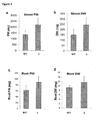
- Wild and AspAT + GS + PEPCase transgenic plants were analyzed for different growth characteristics. Shoot, root fresh and dry weight was recorded for 60-days old plants. Across different parameters evaluated, AspAT + GS + PEPCase plants showed enhanced growth characteristics. In particular, the transgenic plants have more number of leaves per rosette having larger area. Transgenic plants exhibited about 70% increase in the shoot fresh weight with 60% increase in the shoot dry weight whereas the increase of about 40% and 30 % was observed in the root fresh and dry weight respectively ( shown in Figure 3 ).
Landscapes
- Health & Medical Sciences (AREA)
- Genetics & Genomics (AREA)
- Life Sciences & Earth Sciences (AREA)
- Engineering & Computer Science (AREA)
- Biotechnology (AREA)
- Wood Science & Technology (AREA)
- Bioinformatics & Cheminformatics (AREA)
- Organic Chemistry (AREA)
- Chemical & Material Sciences (AREA)
- Biomedical Technology (AREA)
- Zoology (AREA)
- General Engineering & Computer Science (AREA)
- Molecular Biology (AREA)
- Microbiology (AREA)
- Plant Pathology (AREA)
- Biophysics (AREA)
- Physics & Mathematics (AREA)
- Biochemistry (AREA)
- General Health & Medical Sciences (AREA)
- Cell Biology (AREA)
- Nutrition Science (AREA)
- Breeding Of Plants And Reproduction By Means Of Culturing (AREA)
Claims (11)
- Construction d'expression représentée par SEQ ID NO: 7 pour la co-expression des gènes AspAT, GS et PEPCase comprenant les séquences de nucléotides représentées par SEQ ID NO: 1, SEQ ID NO: 2 et SEQ ID NO: 3, où SEQ ID NO: 1 représente le gène AspAT, SEQ ID NO: 2 représente le gène GS et SEQ ID NO: 3 représente le gène PEPCase liés à au moins une séquence de contrôle et une séquence de terminateur de la transcription, utile pour améliorer le carbone, l'azote, la biomasse et le rendement de plantes par comparaison à une plante de type sauvage ou non transformée.
- Construction d'expression selon la revendication 1, dans laquelle la séquence de contrôle est représentée par SEQ ID NO: 4 et la séquence de terminateur de la transcription est représentée par SEQ ID NO: 5.
- Construction d'expression selon la revendication 1, dans laquelle ladite séquence de contrôle est un promoteur constitutif sélectionné dans le groupe consistant en le promoteur 35S du CaMV, le promoteur de la Rubisco, le promoteur de l'ubiquitine, le promoteur de l'actine.
- Construction d'expression selon la revendication 1, dans laquelle le terminateur utilisé est de préférence sélectionné dans le groupe consistant en un terminateur Nos et l'UTR 3' du CaMV.
- Construction d'expression selon la revendication 1, dans laquelle le polynucléotide ayant la SEQ ID NO: 7 est surexprimé dans des plantes.
- Procédé pour préparer le construction d'expression selon la revendication 1, où le procédé comprend les étapes de :i) amplifier des séquences d'ADNc codant pour des gènes représentés par SEQ ID NO: 1 en utilisant des amorces représentées par SEQ ID NO: 10 et SEQ ID NO: 11, SEQ ID NO: 2 en utilisant des amorces représentées par SEQ ID NO: 8 et SEQ ID NO: 9, et SEQ ID NO: 3 en utilisant des amorces représentées par SEQ ID NO: 12 et SEQ ID NO: 13 ;ii) cloner de manière indépendante le produit amplifié de SEQ ID NO: 1, 2 et 3, tel qu'obtenu à l'étape (i), dans le vecteur pGEM-T easy ;iii) digérer de manière indépendante le plasmide issu des clones positifs tels qu'obtenus à l'étape (ii) avec pCAMBIA 1302 et en outre ligaturer les produits géniques digérés et pCAMBIA 1302 puis réaliser une transformation dans des cellules d'E. coli DH5α ;iv) séquencer le plasmide issu des colonies positives obtenues à l'étape (iii) pour confirmer le clonage dans le cadre de AspAT::pCAMBIA1302 ; GS::pCAMBIA1302 et PEPCase::pCAMBIA1302 ;v) amplifier les produits obtenus à l'étape (iv) en utilisant des amorces représentées par SEQ ID NO: 10 et SEQ ID NO: 16 ; SEQ ID NO: 14 et SEQ ID NO: 15 et SEQ ID NO: 17 et SEQ ID NO: 18 ;vi) réaliser à nouveau un clonage, une digestion, une ligature et un séquençage de manière indépendante pour la séquence codante de GS amplifiée afin de former GS+pCMABIA1302 qui a en outre été digéré et ligaturé avec les plasmides des clones positifs de la séquence codante de AspAT amplifiée afin de former la cassette d'expression AspAT+GS+pCMABIA1302 ;vii) ligaturer les plasmides digérés des clones positifs de la séquence codante de PEPCase amplifiée avec le pCAMBIA1302 de destination qui a été précédemment cloné avec la cassette d'expression AspAT+GS+ telle qu'obtenue à l'étape (vi) de sorte que les gènes AspA, GS et PEPCase soient contrôlés par un promoteur 35S du CaMV et un terminateur de la transcription Nos indépendants afin de former un seul produit de recombinaison d'expression végétal AspAT + GS + PEPCase représenté par SEQ ID NO: 7.
- Procédé pour améliorer le carbone, l'azote, la biomasse et le rendement de plantes en utilisant le produit de recombinaison d'expression selon la revendication 1, où ledit procédé comprend les étapes de :a) transformer une souche d'Agrobacterium tumefaciens avec le produit de recombinaison d'expression selon la revendication 1 ;b) transformer les explants avec la souche d'Agrobacterium tumefaciens recombinante telle qu'obtenue à l'étape (a) ;c) sélectionner les explants transformés de l'étape (b) afin d'obtenir les plantes transformées souhaitées présentant un taux de carbone, d'azote, une biomasse et un rendement des plantes améliorés par comparaison à une plante de type sauvage.
- Procédé selon la revendication 7, dans lequel les plantes transformées sont sélectionnées dans le groupe comprenant arabidopsis, la tomate, la pomme de terre, le tabac, le maïs, le blé, le riz, le coton, la moutarde, le pois cajan, le niébé, le pois, la canne à sucre, le soja et le sorgho.
- Procédé selon la revendication 7, dans lequel les plantes transformées présentent une augmentation de l'activité PEPCase d'environ 45-50 %, de l'activité GS d'au moins 55 % et de l'activité AspAT de 55-60 % par comparaison au type sauvage, en entraînant une augmentation des taux de carbone et d'azote chez la plante.
- Procédé selon la revendication 7, dans lequel les plantes transformées, par comparaison au type sauvage, présentent un rendement et/ou une biomasse accru(e), indiqué par un rendement en graines et/ou un rendement en cosses accru.
- Procédé selon la revendication 7, dans lequel les plantes transformées présentent des caractéristiques de croissance améliorées caractérisées par une augmentation du poids frais en pousses, du poids sec en pousses, du poids frais et sec en racines par comparaison à une plante de type sauvage ou non transformée.
Applications Claiming Priority (2)
| Application Number | Priority Date | Filing Date | Title |
|---|---|---|---|
| IN1143DE2011 | 2011-04-19 | ||
| PCT/IB2012/051965 WO2012143877A2 (fr) | 2011-04-19 | 2012-04-19 | Construction d'expression et procédé pour améliorer le carbone, l'azote, la biomasse et le rendement de plantes |
Publications (2)
| Publication Number | Publication Date |
|---|---|
| EP2699687A2 EP2699687A2 (fr) | 2014-02-26 |
| EP2699687B1 true EP2699687B1 (fr) | 2015-08-19 |
Family
ID=46146990
Family Applications (1)
| Application Number | Title | Priority Date | Filing Date |
|---|---|---|---|
| EP12722538.1A Not-in-force EP2699687B1 (fr) | 2011-04-19 | 2012-04-19 | Construction d'expression et procédé pour améliorer le carbone, l'azote, la biomasse et le rendement de plantes |
Country Status (9)
| Country | Link |
|---|---|
| US (1) | US10808259B2 (fr) |
| EP (1) | EP2699687B1 (fr) |
| JP (1) | JP5856283B2 (fr) |
| KR (1) | KR101590521B1 (fr) |
| CN (1) | CN103597081B (fr) |
| AU (1) | AU2012245969B2 (fr) |
| MX (1) | MX346985B (fr) |
| PH (1) | PH12013502175A1 (fr) |
| WO (1) | WO2012143877A2 (fr) |
Families Citing this family (3)
| Publication number | Priority date | Publication date | Assignee | Title |
|---|---|---|---|---|
| WO2015056130A1 (fr) * | 2013-10-14 | 2015-04-23 | Basf Plant Science Company Gmbh | Plantes présentant une biomasse et/ou une teneur en sucre accrues et leur procédé de production |
| CN110904148A (zh) * | 2019-11-19 | 2020-03-24 | 湖北大学 | 一种合成紫杉二烯的植物表达载体、菌株dzggppsts和盾叶薯蓣及其制备方法 |
| CN120536401B (zh) * | 2025-06-09 | 2025-11-14 | 中国科学院分子植物科学卓越创新中心 | 一种提高玉米蛋白含量的突变型谷氨酸草酰乙酸转氨酶蛋白 |
Family Cites Families (11)
| Publication number | Priority date | Publication date | Assignee | Title |
|---|---|---|---|---|
| US6969782B2 (en) * | 1993-10-06 | 2005-11-29 | Ajinomoto Co., Inc. | Method of producing transgenic plants having improved amino acid composition |
| ES2093578T1 (es) * | 1993-10-06 | 1997-01-01 | Univ New York | Plantas transgenicas que presentan asimilacion mejorada del nitrogeno. |
| US20060127889A1 (en) * | 2000-07-25 | 2006-06-15 | Dotson Stanton B | Method for assessing transgene expression and copy number |
| JP2001299118A (ja) * | 2001-03-19 | 2001-10-30 | Natl Inst Of Agrobiological Resources | C4植物の光合成酵素を発現するc3植物体 |
| JP4189636B2 (ja) * | 2002-02-19 | 2008-12-03 | 味の素株式会社 | アミノ酸含量の増大した植物、窒素含量が増大した植物、窒素制限下での成育抑制が解除された植物、およびそれらの作製法 |
| US20070271623A1 (en) * | 2003-11-28 | 2007-11-22 | University Of Copenhagen | Plant Disease Resistance and Sar Regulator Protein |
| EP1765857A2 (fr) * | 2004-07-02 | 2007-03-28 | Metanomics GmbH | Procede de production de produits chimiques fins |
| WO2006092449A2 (fr) * | 2005-03-02 | 2006-09-08 | Metanomics Gmbh | Procede de production de produits chimiques fins |
| CA2644273A1 (fr) | 2006-04-05 | 2008-03-27 | Metanomics Gmbh | Procede de production d'un produit chimique fin |
| EP2594646A3 (fr) * | 2007-09-21 | 2013-11-06 | BASF Plant Science GmbH | Plante ayant un rendement amélioré |
| CN102224247B (zh) * | 2008-09-24 | 2016-09-28 | 巴斯夫植物科学有限公司 | 具有改良的产量相关性状的植物和用于制备该植物的方法 |
-
2012
- 2012-04-19 EP EP12722538.1A patent/EP2699687B1/fr not_active Not-in-force
- 2012-04-19 CN CN201280027891.9A patent/CN103597081B/zh not_active Expired - Fee Related
- 2012-04-19 PH PH1/2013/502175A patent/PH12013502175A1/en unknown
- 2012-04-19 KR KR1020137030563A patent/KR101590521B1/ko not_active Expired - Fee Related
- 2012-04-19 US US14/112,681 patent/US10808259B2/en not_active Expired - Fee Related
- 2012-04-19 JP JP2014505770A patent/JP5856283B2/ja not_active Expired - Fee Related
- 2012-04-19 AU AU2012245969A patent/AU2012245969B2/en not_active Ceased
- 2012-04-19 WO PCT/IB2012/051965 patent/WO2012143877A2/fr not_active Ceased
- 2012-04-19 MX MX2013012185A patent/MX346985B/es active IP Right Grant
Also Published As
| Publication number | Publication date |
|---|---|
| CN103597081B (zh) | 2016-02-24 |
| MX346985B (es) | 2017-04-07 |
| WO2012143877A9 (fr) | 2012-12-13 |
| AU2012245969B2 (en) | 2016-04-28 |
| CN103597081A (zh) | 2014-02-19 |
| EP2699687A2 (fr) | 2014-02-26 |
| JP2014512819A (ja) | 2014-05-29 |
| PH12013502175A1 (en) | 2014-01-13 |
| WO2012143877A2 (fr) | 2012-10-26 |
| MX2013012185A (es) | 2014-03-27 |
| AU2012245969A1 (en) | 2013-11-07 |
| KR20140019438A (ko) | 2014-02-14 |
| KR101590521B1 (ko) | 2016-02-01 |
| US10808259B2 (en) | 2020-10-20 |
| US20140137297A1 (en) | 2014-05-15 |
| WO2012143877A3 (fr) | 2013-01-31 |
| JP5856283B2 (ja) | 2016-02-09 |
Similar Documents
| Publication | Publication Date | Title |
|---|---|---|
| Ameziane et al. | Expression of the bacterial gdhA gene encoding a NADPH glutamate dehydrogenase in tobacco affects plant growth and development | |
| AU697331B2 (en) | Transgenic plants that exhibit enhanced nitrogen assimilation | |
| Miyao | Molecular evolution and genetic engineering of C4 photosynthetic enzymes | |
| US7390937B2 (en) | Plants with enhanced levels of nitrogen utilization proteins in their root epidermis and uses thereof | |
| US6107547A (en) | Transgenic plants that exhibit enhanced nitrogen assimilation | |
| US20020069430A1 (en) | Transgenic plants that exhibit enhanced nitrogen assimilation | |
| Seger et al. | Impact of concurrent overexpression of cytosolic glutamine synthetase (GS1) and sucrose phosphate synthase (SPS) on growth and development in transgenic tobacco | |
| US8173865B2 (en) | Plant having increased yield of seeds | |
| EP2753698B1 (fr) | Plantes ayant une efficacité améliorée pour l'azote | |
| CN100537768C (zh) | 氮限制条件下生长得以改善的植物的制备方法 | |
| US10808259B2 (en) | Expression construct and process for enhancing the carbon, nitrogen, biomass and yield of plants | |
| CN114805510A (zh) | 调控抗铝毒转录因子stop1蛋白的基因及其应用 | |
| US9695436B2 (en) | Plants having enhanced nitrogen use efficiency and methods of producing same | |
| US20060212960A1 (en) | Manipulation of ascorbic acid levels in plants | |
| NZ716717A (en) | An expression construct and process for enhancing the carbon, nitrogen, biomass and yield of plants | |
| NZ716717B2 (en) | An expression construct and process for enhancing the carbon, nitrogen, biomass and yield of plants | |
| CN121046439A (zh) | OsMPK4基因在增强水稻苗期低温胁迫抗性中的应用 | |
| Yan et al. | Improve Photosynthic Efficiency of Rice Via Over-Expressing a Ferredoxin-Like Protein Gene from Methanothermobacter Thermautotrophicus |
Legal Events
| Date | Code | Title | Description |
|---|---|---|---|
| PUAI | Public reference made under article 153(3) epc to a published international application that has entered the european phase |
Free format text: ORIGINAL CODE: 0009012 |
|
| 17P | Request for examination filed |
Effective date: 20131112 |
|
| AK | Designated contracting states |
Kind code of ref document: A2 Designated state(s): AL AT BE BG CH CY CZ DE DK EE ES FI FR GB GR HR HU IE IS IT LI LT LU LV MC MK MT NL NO PL PT RO RS SE SI SK SM TR |
|
| DAX | Request for extension of the european patent (deleted) | ||
| GRAP | Despatch of communication of intention to grant a patent |
Free format text: ORIGINAL CODE: EPIDOSNIGR1 |
|
| INTG | Intention to grant announced |
Effective date: 20150331 |
|
| GRAS | Grant fee paid |
Free format text: ORIGINAL CODE: EPIDOSNIGR3 |
|
| GRAA | (expected) grant |
Free format text: ORIGINAL CODE: 0009210 |
|
| AK | Designated contracting states |
Kind code of ref document: B1 Designated state(s): AL AT BE BG CH CY CZ DE DK EE ES FI FR GB GR HR HU IE IS IT LI LT LU LV MC MK MT NL NO PL PT RO RS SE SI SK SM TR |
|
| REG | Reference to a national code |
Ref country code: GB Ref legal event code: FG4D |
|
| REG | Reference to a national code |
Ref country code: CH Ref legal event code: EP |
|
| REG | Reference to a national code |
Ref country code: IE Ref legal event code: FG4D |
|
| REG | Reference to a national code |
Ref country code: AT Ref legal event code: REF Ref document number: 743863 Country of ref document: AT Kind code of ref document: T Effective date: 20150915 |
|
| REG | Reference to a national code |
Ref country code: DE Ref legal event code: R096 Ref document number: 602012009783 Country of ref document: DE |
|
| REG | Reference to a national code |
Ref country code: NL Ref legal event code: FP |
|
| REG | Reference to a national code |
Ref country code: AT Ref legal event code: MK05 Ref document number: 743863 Country of ref document: AT Kind code of ref document: T Effective date: 20150819 |
|
| REG | Reference to a national code |
Ref country code: LT Ref legal event code: MG4D |
|
| PG25 | Lapsed in a contracting state [announced via postgrant information from national office to epo] |
Ref country code: LT Free format text: LAPSE BECAUSE OF FAILURE TO SUBMIT A TRANSLATION OF THE DESCRIPTION OR TO PAY THE FEE WITHIN THE PRESCRIBED TIME-LIMIT Effective date: 20150819 Ref country code: FI Free format text: LAPSE BECAUSE OF FAILURE TO SUBMIT A TRANSLATION OF THE DESCRIPTION OR TO PAY THE FEE WITHIN THE PRESCRIBED TIME-LIMIT Effective date: 20150819 Ref country code: LV Free format text: LAPSE BECAUSE OF FAILURE TO SUBMIT A TRANSLATION OF THE DESCRIPTION OR TO PAY THE FEE WITHIN THE PRESCRIBED TIME-LIMIT Effective date: 20150819 Ref country code: GR Free format text: LAPSE BECAUSE OF FAILURE TO SUBMIT A TRANSLATION OF THE DESCRIPTION OR TO PAY THE FEE WITHIN THE PRESCRIBED TIME-LIMIT Effective date: 20151120 Ref country code: NO Free format text: LAPSE BECAUSE OF FAILURE TO SUBMIT A TRANSLATION OF THE DESCRIPTION OR TO PAY THE FEE WITHIN THE PRESCRIBED TIME-LIMIT Effective date: 20151119 |
|
| PG25 | Lapsed in a contracting state [announced via postgrant information from national office to epo] |
Ref country code: PT Free format text: LAPSE BECAUSE OF FAILURE TO SUBMIT A TRANSLATION OF THE DESCRIPTION OR TO PAY THE FEE WITHIN THE PRESCRIBED TIME-LIMIT Effective date: 20151221 Ref country code: SE Free format text: LAPSE BECAUSE OF FAILURE TO SUBMIT A TRANSLATION OF THE DESCRIPTION OR TO PAY THE FEE WITHIN THE PRESCRIBED TIME-LIMIT Effective date: 20150819 Ref country code: AT Free format text: LAPSE BECAUSE OF FAILURE TO SUBMIT A TRANSLATION OF THE DESCRIPTION OR TO PAY THE FEE WITHIN THE PRESCRIBED TIME-LIMIT Effective date: 20150819 Ref country code: IS Free format text: LAPSE BECAUSE OF FAILURE TO SUBMIT A TRANSLATION OF THE DESCRIPTION OR TO PAY THE FEE WITHIN THE PRESCRIBED TIME-LIMIT Effective date: 20151219 Ref country code: RS Free format text: LAPSE BECAUSE OF FAILURE TO SUBMIT A TRANSLATION OF THE DESCRIPTION OR TO PAY THE FEE WITHIN THE PRESCRIBED TIME-LIMIT Effective date: 20150819 Ref country code: PL Free format text: LAPSE BECAUSE OF FAILURE TO SUBMIT A TRANSLATION OF THE DESCRIPTION OR TO PAY THE FEE WITHIN THE PRESCRIBED TIME-LIMIT Effective date: 20150819 Ref country code: ES Free format text: LAPSE BECAUSE OF FAILURE TO SUBMIT A TRANSLATION OF THE DESCRIPTION OR TO PAY THE FEE WITHIN THE PRESCRIBED TIME-LIMIT Effective date: 20150819 |
|
| PG25 | Lapsed in a contracting state [announced via postgrant information from national office to epo] |
Ref country code: IT Free format text: LAPSE BECAUSE OF FAILURE TO SUBMIT A TRANSLATION OF THE DESCRIPTION OR TO PAY THE FEE WITHIN THE PRESCRIBED TIME-LIMIT Effective date: 20150819 Ref country code: SK Free format text: LAPSE BECAUSE OF FAILURE TO SUBMIT A TRANSLATION OF THE DESCRIPTION OR TO PAY THE FEE WITHIN THE PRESCRIBED TIME-LIMIT Effective date: 20150819 Ref country code: DK Free format text: LAPSE BECAUSE OF FAILURE TO SUBMIT A TRANSLATION OF THE DESCRIPTION OR TO PAY THE FEE WITHIN THE PRESCRIBED TIME-LIMIT Effective date: 20150819 Ref country code: CZ Free format text: LAPSE BECAUSE OF FAILURE TO SUBMIT A TRANSLATION OF THE DESCRIPTION OR TO PAY THE FEE WITHIN THE PRESCRIBED TIME-LIMIT Effective date: 20150819 Ref country code: EE Free format text: LAPSE BECAUSE OF FAILURE TO SUBMIT A TRANSLATION OF THE DESCRIPTION OR TO PAY THE FEE WITHIN THE PRESCRIBED TIME-LIMIT Effective date: 20150819 |
|
| REG | Reference to a national code |
Ref country code: DE Ref legal event code: R097 Ref document number: 602012009783 Country of ref document: DE |
|
| PG25 | Lapsed in a contracting state [announced via postgrant information from national office to epo] |
Ref country code: RO Free format text: LAPSE BECAUSE OF FAILURE TO SUBMIT A TRANSLATION OF THE DESCRIPTION OR TO PAY THE FEE WITHIN THE PRESCRIBED TIME-LIMIT Effective date: 20150819 |
|
| PLBE | No opposition filed within time limit |
Free format text: ORIGINAL CODE: 0009261 |
|
| STAA | Information on the status of an ep patent application or granted ep patent |
Free format text: STATUS: NO OPPOSITION FILED WITHIN TIME LIMIT |
|
| 26N | No opposition filed |
Effective date: 20160520 |
|
| PG25 | Lapsed in a contracting state [announced via postgrant information from national office to epo] |
Ref country code: SI Free format text: LAPSE BECAUSE OF FAILURE TO SUBMIT A TRANSLATION OF THE DESCRIPTION OR TO PAY THE FEE WITHIN THE PRESCRIBED TIME-LIMIT Effective date: 20150819 Ref country code: BE Free format text: LAPSE BECAUSE OF NON-PAYMENT OF DUE FEES Effective date: 20160430 |
|
| REG | Reference to a national code |
Ref country code: CH Ref legal event code: PL |
|
| PG25 | Lapsed in a contracting state [announced via postgrant information from national office to epo] |
Ref country code: BE Free format text: LAPSE BECAUSE OF FAILURE TO SUBMIT A TRANSLATION OF THE DESCRIPTION OR TO PAY THE FEE WITHIN THE PRESCRIBED TIME-LIMIT Effective date: 20150819 Ref country code: LU Free format text: LAPSE BECAUSE OF FAILURE TO SUBMIT A TRANSLATION OF THE DESCRIPTION OR TO PAY THE FEE WITHIN THE PRESCRIBED TIME-LIMIT Effective date: 20160419 |
|
| REG | Reference to a national code |
Ref country code: IE Ref legal event code: MM4A |
|
| REG | Reference to a national code |
Ref country code: FR Ref legal event code: ST Effective date: 20161230 |
|
| PG25 | Lapsed in a contracting state [announced via postgrant information from national office to epo] |
Ref country code: LI Free format text: LAPSE BECAUSE OF NON-PAYMENT OF DUE FEES Effective date: 20160430 Ref country code: FR Free format text: LAPSE BECAUSE OF NON-PAYMENT OF DUE FEES Effective date: 20160502 Ref country code: CH Free format text: LAPSE BECAUSE OF NON-PAYMENT OF DUE FEES Effective date: 20160430 |
|
| PG25 | Lapsed in a contracting state [announced via postgrant information from national office to epo] |
Ref country code: IE Free format text: LAPSE BECAUSE OF NON-PAYMENT OF DUE FEES Effective date: 20160419 |
|
| PG25 | Lapsed in a contracting state [announced via postgrant information from national office to epo] |
Ref country code: CY Free format text: LAPSE BECAUSE OF FAILURE TO SUBMIT A TRANSLATION OF THE DESCRIPTION OR TO PAY THE FEE WITHIN THE PRESCRIBED TIME-LIMIT Effective date: 20150819 Ref country code: SM Free format text: LAPSE BECAUSE OF FAILURE TO SUBMIT A TRANSLATION OF THE DESCRIPTION OR TO PAY THE FEE WITHIN THE PRESCRIBED TIME-LIMIT Effective date: 20150819 Ref country code: HU Free format text: LAPSE BECAUSE OF FAILURE TO SUBMIT A TRANSLATION OF THE DESCRIPTION OR TO PAY THE FEE WITHIN THE PRESCRIBED TIME-LIMIT; INVALID AB INITIO Effective date: 20120419 |
|
| PG25 | Lapsed in a contracting state [announced via postgrant information from national office to epo] |
Ref country code: MK Free format text: LAPSE BECAUSE OF FAILURE TO SUBMIT A TRANSLATION OF THE DESCRIPTION OR TO PAY THE FEE WITHIN THE PRESCRIBED TIME-LIMIT Effective date: 20150819 Ref country code: HR Free format text: LAPSE BECAUSE OF FAILURE TO SUBMIT A TRANSLATION OF THE DESCRIPTION OR TO PAY THE FEE WITHIN THE PRESCRIBED TIME-LIMIT Effective date: 20150819 Ref country code: TR Free format text: LAPSE BECAUSE OF FAILURE TO SUBMIT A TRANSLATION OF THE DESCRIPTION OR TO PAY THE FEE WITHIN THE PRESCRIBED TIME-LIMIT Effective date: 20150819 Ref country code: MT Free format text: LAPSE BECAUSE OF NON-PAYMENT OF DUE FEES Effective date: 20160430 Ref country code: MC Free format text: LAPSE BECAUSE OF FAILURE TO SUBMIT A TRANSLATION OF THE DESCRIPTION OR TO PAY THE FEE WITHIN THE PRESCRIBED TIME-LIMIT Effective date: 20150819 |
|
| PG25 | Lapsed in a contracting state [announced via postgrant information from national office to epo] |
Ref country code: BG Free format text: LAPSE BECAUSE OF FAILURE TO SUBMIT A TRANSLATION OF THE DESCRIPTION OR TO PAY THE FEE WITHIN THE PRESCRIBED TIME-LIMIT Effective date: 20150819 |
|
| PG25 | Lapsed in a contracting state [announced via postgrant information from national office to epo] |
Ref country code: AL Free format text: LAPSE BECAUSE OF FAILURE TO SUBMIT A TRANSLATION OF THE DESCRIPTION OR TO PAY THE FEE WITHIN THE PRESCRIBED TIME-LIMIT Effective date: 20150819 |
|
| PGFP | Annual fee paid to national office [announced via postgrant information from national office to epo] |
Ref country code: DE Payment date: 20210412 Year of fee payment: 10 |
|
| PGFP | Annual fee paid to national office [announced via postgrant information from national office to epo] |
Ref country code: GB Payment date: 20210414 Year of fee payment: 10 |
|
| PGFP | Annual fee paid to national office [announced via postgrant information from national office to epo] |
Ref country code: NL Payment date: 20210420 Year of fee payment: 10 |
|
| REG | Reference to a national code |
Ref country code: DE Ref legal event code: R119 Ref document number: 602012009783 Country of ref document: DE |
|
| REG | Reference to a national code |
Ref country code: NL Ref legal event code: MM Effective date: 20220501 |
|
| GBPC | Gb: european patent ceased through non-payment of renewal fee |
Effective date: 20220419 |
|
| PG25 | Lapsed in a contracting state [announced via postgrant information from national office to epo] |
Ref country code: NL Free format text: LAPSE BECAUSE OF NON-PAYMENT OF DUE FEES Effective date: 20220501 Ref country code: GB Free format text: LAPSE BECAUSE OF NON-PAYMENT OF DUE FEES Effective date: 20220419 Ref country code: DE Free format text: LAPSE BECAUSE OF NON-PAYMENT OF DUE FEES Effective date: 20221103 |