EP2700267B1 - Vollreferenzberechnung der erfahrungsqualität von mobilen inhalten in echtzeit - Google Patents
Vollreferenzberechnung der erfahrungsqualität von mobilen inhalten in echtzeit Download PDFInfo
- Publication number
- EP2700267B1 EP2700267B1 EP11863999.6A EP11863999A EP2700267B1 EP 2700267 B1 EP2700267 B1 EP 2700267B1 EP 11863999 A EP11863999 A EP 11863999A EP 2700267 B1 EP2700267 B1 EP 2700267B1
- Authority
- EP
- European Patent Office
- Prior art keywords
- data
- user device
- portions
- service provider
- qoe
- Prior art date
- Legal status (The legal status is an assumption and is not a legal conclusion. Google has not performed a legal analysis and makes no representation as to the accuracy of the status listed.)
- Not-in-force
Links
- 230000005540 biological transmission Effects 0.000 claims description 68
- 238000000034 method Methods 0.000 claims description 58
- 238000004891 communication Methods 0.000 claims description 50
- 238000012545 processing Methods 0.000 claims description 29
- 230000004044 response Effects 0.000 claims description 11
- 230000000737 periodic effect Effects 0.000 claims description 7
- 230000002123 temporal effect Effects 0.000 claims description 7
- 238000004422 calculation algorithm Methods 0.000 claims description 6
- 238000004458 analytical method Methods 0.000 claims description 5
- 230000003247 decreasing effect Effects 0.000 claims description 4
- 238000010586 diagram Methods 0.000 description 19
- 230000008569 process Effects 0.000 description 12
- 238000004590 computer program Methods 0.000 description 10
- 230000000875 corresponding effect Effects 0.000 description 10
- 230000001413 cellular effect Effects 0.000 description 5
- 238000013459 approach Methods 0.000 description 4
- 238000005516 engineering process Methods 0.000 description 4
- 239000000835 fiber Substances 0.000 description 3
- 230000006870 function Effects 0.000 description 3
- 230000002093 peripheral effect Effects 0.000 description 3
- 238000003908 quality control method Methods 0.000 description 3
- 238000004364 calculation method Methods 0.000 description 2
- 230000002596 correlated effect Effects 0.000 description 2
- 238000013500 data storage Methods 0.000 description 2
- 230000001419 dependent effect Effects 0.000 description 2
- 230000003993 interaction Effects 0.000 description 2
- 238000005259 measurement Methods 0.000 description 2
- 230000007246 mechanism Effects 0.000 description 2
- 238000012986 modification Methods 0.000 description 2
- 230000004048 modification Effects 0.000 description 2
- 230000003287 optical effect Effects 0.000 description 2
- 238000012360 testing method Methods 0.000 description 2
- 238000003491 array Methods 0.000 description 1
- 230000015556 catabolic process Effects 0.000 description 1
- 238000010276 construction Methods 0.000 description 1
- 238000006731 degradation reaction Methods 0.000 description 1
- 238000013461 design Methods 0.000 description 1
- 230000000694 effects Effects 0.000 description 1
- 238000007667 floating Methods 0.000 description 1
- 230000001771 impaired effect Effects 0.000 description 1
- 230000006872 improvement Effects 0.000 description 1
- 238000007726 management method Methods 0.000 description 1
- 239000000463 material Substances 0.000 description 1
- 239000003607 modifier Substances 0.000 description 1
- 239000007787 solid Substances 0.000 description 1
- 230000003068 static effect Effects 0.000 description 1
- 238000012546 transfer Methods 0.000 description 1
- 230000007723 transport mechanism Effects 0.000 description 1
Images



Classifications
-
- H—ELECTRICITY
- H04—ELECTRIC COMMUNICATION TECHNIQUE
- H04W—WIRELESS COMMUNICATION NETWORKS
- H04W28/00—Network traffic management; Network resource management
- H04W28/02—Traffic management, e.g. flow control or congestion control
- H04W28/10—Flow control between communication endpoints
-
- H—ELECTRICITY
- H04—ELECTRIC COMMUNICATION TECHNIQUE
- H04N—PICTORIAL COMMUNICATION, e.g. TELEVISION
- H04N21/00—Selective content distribution, e.g. interactive television or video on demand [VOD]
- H04N21/20—Servers specifically adapted for the distribution of content, e.g. VOD servers; Operations thereof
- H04N21/23—Processing of content or additional data; Elementary server operations; Server middleware
- H04N21/24—Monitoring of processes or resources, e.g. monitoring of server load, available bandwidth, upstream requests
- H04N21/2402—Monitoring of the downstream path of the transmission network, e.g. bandwidth available
-
- H—ELECTRICITY
- H04—ELECTRIC COMMUNICATION TECHNIQUE
- H04L—TRANSMISSION OF DIGITAL INFORMATION, e.g. TELEGRAPHIC COMMUNICATION
- H04L47/00—Traffic control in data switching networks
- H04L47/10—Flow control; Congestion control
- H04L47/24—Traffic characterised by specific attributes, e.g. priority or QoS
-
- H—ELECTRICITY
- H04—ELECTRIC COMMUNICATION TECHNIQUE
- H04L—TRANSMISSION OF DIGITAL INFORMATION, e.g. TELEGRAPHIC COMMUNICATION
- H04L47/00—Traffic control in data switching networks
- H04L47/10—Flow control; Congestion control
- H04L47/25—Flow control; Congestion control with rate being modified by the source upon detecting a change of network conditions
-
- H—ELECTRICITY
- H04—ELECTRIC COMMUNICATION TECHNIQUE
- H04N—PICTORIAL COMMUNICATION, e.g. TELEVISION
- H04N21/00—Selective content distribution, e.g. interactive television or video on demand [VOD]
- H04N21/20—Servers specifically adapted for the distribution of content, e.g. VOD servers; Operations thereof
- H04N21/23—Processing of content or additional data; Elementary server operations; Server middleware
- H04N21/24—Monitoring of processes or resources, e.g. monitoring of server load, available bandwidth, upstream requests
- H04N21/2408—Monitoring of the upstream path of the transmission network, e.g. client requests
-
- H—ELECTRICITY
- H04—ELECTRIC COMMUNICATION TECHNIQUE
- H04W—WIRELESS COMMUNICATION NETWORKS
- H04W24/00—Supervisory, monitoring or testing arrangements
- H04W24/06—Testing, supervising or monitoring using simulated traffic
-
- H—ELECTRICITY
- H04—ELECTRIC COMMUNICATION TECHNIQUE
- H04W—WIRELESS COMMUNICATION NETWORKS
- H04W8/00—Network data management
- H04W8/02—Processing of mobility data, e.g. registration information at HLR [Home Location Register] or VLR [Visitor Location Register]; Transfer of mobility data, e.g. between HLR, VLR or external networks
- H04W8/04—Registration at HLR or HSS [Home Subscriber Server]
Definitions
- Wireless networks such as cellular networks are common in daily usage through mobile or stationary devices like smart phones, desktop computers, and similar ones.
- Such videos and/or audio content may be directly provided by a service provider (e.g., a cellular service provider) or from a third party content provider (e.g., a search engine, a content creator, etc.) through the wireless network service provider.
- a service provider e.g., a cellular service provider
- a third party content provider e.g., a search engine, a content creator, etc.
- QoE Quality of Experience
- service providers lack accurate QoE computations available in real-time.
- IPTV is a system where a digital television service is delivered by using IP packets over broadband network infrastructure.
- IPTV can be operated through telephone line that is installed almost in all houses.
- Transmitted video streams take bandwidth and also need priority running in queue with other services in the provider's network.
- QoS quality of service
- QoS mechanisms allow the best way to transfer for different traffics through the network. Consumers want their IPTV programs to be smooth and visually excellent. From this perspective, it is specified as user's quality of experience (QoE) that is the most important parameter for IPTV provider.
- QoE quality of experience
- network equipment must be rigorously tested that they fulfill QoE.
- we present a new approach to estimate the users' QoE which uses the full reference model. We have implemented and evaluated a trail system, and the results show the relationship between users' QoE and objective QoS.
- Document WO 2008/024564 A2 discloses that a video signal is provided to a set top box. An instruction to record a specified portion of the video signal, thereby creating a video sample, is provided to the set top box. The video sample is received from the set top box. Reference video corresponding to the video sample is obtained. A comparison of the video sample and the reference video is performed.
- the apparatus for measuring Quality of Experience (QoE) guaranteed real-time Internet Protocol (IP)-media video quality includes: a receiver receiving a transmission video provided through an IP network service platform and an original video corresponding to the transmission video, and extracting frames of the transmission video and the original video; a detector comparing the frames of the transmission video and the original video in real time to obtain a difference between the frames of the transmission video and the original video and detecting a matching segment between the transmission video and the original video; and a measurement unit calculating a QoE parameter using the frames of the transmission video and the original video which correspond to the matching segment.
- QoE Quality of Experience
- IP Internet Protocol
- This disclosure is generally drawn, inter alia, to methods, apparatus, systems, devices, and/or computer program products related to full reference quality of experience computation for transmitted content in wireless environments.
- portions of audio and/or video content transmitted to user devices may be selected by a service provider / content provider / user device and transmitted back for real-time Quality of Experience (QoE) computation. Transmission quality may be adjusted based on the real-time QoE computations.
- selected portions of the content may be stored for subsequent computation and improvement.
- Selected portions of the data may be frames marked as such and reference frames may be selected based on the marked frames.
- FIG. 1 is a diagram of an illustrative example system transmitting video content to a variety of user devices. While video transmission is used in example descriptions herein, embodiments may be implemented in systems transmitting video and/or audio content over wireless networks to mobile and stationary user devices.
- Diagram 100 shows a service provider 104 receiving content (audio / video) from one or more content providers 102.
- Content providers 102 may be part of the service provider or separate entities.
- service provider 104 may be a cellular service provider, which may generate some of the content itself.
- Other content may be received from third party content generators.
- Service provider 104 may facilitate communications between various user devices and/or transmit content to the user devices over one or more networks. The transmission may involve transmission towers, access points, and comparable transceivers (106, 108).
- transceivers 106 and 108 communicate wirelessly with user devices such as laptop computer 110, desktop computer 112, portable computer 114, smart phone 116, cellular phone 118, and wireless personal digital assistant (PDA) 120.
- user devices such as laptop computer 110, desktop computer 112, portable computer 114, smart phone 116, cellular phone 118, and wireless personal digital assistant (PDA) 120.
- PDA personal digital assistant
- User device may include other portable or stationary computing devices capable of wireless communication and playback of received content.
- a system may transmit a selected set of video frames from mobile devices to the mobile operator utilizing available uplink bandwidth to compute full-reference QoE computation in real-time, while the rest of the data may be time and location stamped and archived.
- the computing power and storage of many mobile devices is comparable to those of conventional computers to store received videos and simultaneously decode and transmit back received video frames.
- Service providers may be able to compute QoEs of multiple mobile devices using cloud computing techniques.
- QoE refers to a subjective measure of performance in a system in general.
- QoE refers to the quality of received content by a user of a wireless system. For example, quality of received video or audio that can be measured by comparing originally transmitted content to the received content to determine a measure of degradation during transmission.
- the QoE computations may be correlated with instantaneous Quality of Service (QoS), location, a mobility of the user device, a signal strength at the user device, available memory at the user device, a processing capacity of the user device, and/or load on communication network, where the QoE computations are performed at one of a service provider transmitting the data or a content provider providing the data to the service provider.
- QoS instantaneous Quality of Service
- the quiet periods may include low bandwidth demand periods.
- One approach to estimate the QoE is to compare the transmitted video with the received video.
- the transmitted data is available with the service provider and the received data is available at the mobile device.
- the QoE computation may include comparing each pixel of an unimpaired reference frame of a portion of the transmitted data with each pixel of a corresponding frame of the received portion of the transmitted data, and the method may further include performing at least one of spatial and/or temporal alignment between the unimpaired reference frame and the corresponding frame.
- a system according to embodiments provides the capability to determine real-time QoE values based on the available resources at real-time and more accurate QoE values as more resources become available.
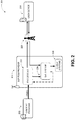
- FIG. 2 conceptually illustrates an example video transmission system with full-reference QoE computation based on received video frames from a user device, arranged in accordance with at least some embodiments described herein.
- Diagram 200 illustrates one example configuration of a system according to some embodiments, where video content is received from an external content provider 202 at a service provider 104 and QoE computations performed at the service provider 104.
- content may be generated at the service provider 104
- QoE computations may be performed at the content provider 202
- at least some of the QoE computations may be performed at user device 230.
- service provider 104 may receive video content from content provider 202, process the content at processing block 222 and transmit via transceiver 228 to user device 230.
- the processing may include selection of portions of the content for subsequent transmit-back by the user device 230 and marking of the selected portions to indicate to the user device.
- user device 230 may select the portions of the content to be transmitted back and send them via transceiver 228 to QoE system 224 of service provider 104. If the portions are selected at the user device 230, QoE system 224 may receive corresponding reference portions from the processing block 222.
- QoE system 224 may provide results of the computations to processing block 222 such that quality of service parameters can be adjusted in real-time or for future transmissions. QoE system 224 may also provide the results to other systems 226 for statistical calculations, reporting, quality control, accounting, etc.
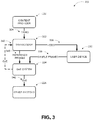
- FIG. 3 illustrates major blocks of an example video transmission system with full-reference QoE computation based on received video frames from a user device, arranged in accordance with at least some embodiments described herein.
- video content 334 may be received from content provider 202 at a transcoder 332 (service provider), which transcodes the video content and transmits (336) to its subscribers (user device 230).
- User device 230 at the subscriber's end displays the received content (video 336).
- User device 230 may select, at regular intervals or based on a predefined algorithm, a set of frames and the values of the pixels in those frames, and send the selected sample frames 338 back to the service provider (QoE system 224) using an available upload channel.
- QoE system 224 may perform QoE computations and provide results (342) to transcoder 332 for real-time adjustment of quality of service parameters.
- QoE results 342 may be provided to other systems such as a data store, where they may be stored for subsequent analysis and adjustment of QoS parameters.
- sample frames 338 may be sent back to the QoE System 224 continuously and the largest possible number of frames that can be reliably transmitted through the upload channel in real-time may be sent back to the service provider. If the upload and download traffic is shared by the same channel, on the other hand, the user device 230 may send back the sequence of frames at the time of less-interesting periods like advertisement breaks or low-usage periods like late night. At these periods, the system may release extra bandwidth for upload purposes by downgrading the quality of transmissions.
- the reference frames can be selected by the service provider (or content provider) according to some embodiments and marked as such.
- User device 230 may send those frames back to the service provider reducing the processing required at the device side.
- user device 230 may select the frames to be sent back based on the availability of uplink bandwidth, the processing power of the device, or similar parameters, and send the selected frames back to the operator identifying them as such (e.g., specifying frame numbers).
- the measurement system at the service provider may select the reference frames based on the received frame numbers.
- embodiments have been discussed above using specific examples, components, scenarios, and configurations in FIG. 1 through FIG. 3 , they are intended to provide a general guideline to be used for QoE computations in mobile content transmission environments. These examples do not constitute a limitation on the embodiments, which may be implemented using other components, frame selection schemes, and configurations using the principles described herein. Furthermore, embodiments may be implemented for content received at stationary or vehicle mount devices, and applicable to audio, video, or comparable content.
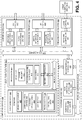
- FIG. 4 illustrates a general purpose computing device, which may be used to implement full-reference computation of QoE in video transmission systems, arranged in accordance with at least some embodiments described herein.
- computing device 400 typically includes one or more processors 404 and a system memory 406.
- a memory bus 408 may be used for communicating between processor 404 and system memory 406.
- processor 404 may be of any type including but not limited to a microprocessor ( ⁇ P), a microcontroller ( ⁇ C), a digital signal processor (DSP), or any combination thereof.
- Processor 404 may include one more levels of caching, such as a level cache memory 412, a processor core 414, and registers 414.
- Example processor core 414 may include an arithmetic logic unit (ALU), a floating point unit (FPU), a digital signal processing core (DSP Core), or any combination thereof.
- An example memory controller 418 may also be used with processor 404, or in some implementations memory controller 415 may be an internal part of processor 404.
- system memory 406 may be of any type including but not limited to volatile memory (such as RAM), non-volatile memory (such as ROM, flash memory, etc.) or any combination thereof.
- System memory 406 may include an operating system 420, a communication service 422, one or more content applications 426, and QoE module 427.
- System memory 406 may further include program data 424 and frame / QoE data 428.
- Communication service 422 may provide audio / video content to users among other things.
- Content application(s) 426 may each be associated with a particular type of content to be provided to users.
- QoE module 427 may perform QoE computations based on portions of transmitted content received from user devices and adjust transmission parameters in real-time or subsequently.
- Frame / QoE 428 data may be stored in local or remote data stores for subsequent use. This described basic configuration 402 is illustrated in FIG. 4 by those components within the inner dashed line.
- Computing device 400 may have additional features or functionality, and additional interfaces to facilitate communications between basic configuration 402 and any required devices and interfaces.
- a bus/interface controller 430 may be used to facilitate communications between basic configuration 402 and one or more data storage devices 432 via a storage interface bus 434.
- Data storage devices 432 may be removable storage devices 434, non-removable storage devices 438, or a combination thereof. Examples of removable storage and non-removable storage devices include magnetic disk devices such as flexible disk drives and harddisk drives (HDD), optical disk drives such as compact disk (CD) drives or digital versatile disk (DVD) drives, solid state drives (SSD), and tape drives to name a few.
- Example computer storage media may include volatile and nonvolatile, removable and non-removable media implemented in any method or technology for storage of information, such as computer readable instructions, data structures, program modules, or other data.
- Computer storage media includes, but is not limited to, RAM, ROM, EEPROM, flash memory or other memory technology, CD-ROM, digital versatile disks (DVD) or other optical storage, magnetic cassettes, magnetic tape, magnetic disk storage or other magnetic storage devices, or any other medium which may be used to store the desired information and which may be accessed by computing device 400. Any such computer storage media may be part of computing device 400.
- Computing device 400 may also include an interface bus 440 for facilitating communication from various interface devices (e.g., output devices 442, peripheral interfaces 444, and communication devices 666 to basic configuration 402 via bus/interface controller 430.
- Example output devices 442 include a graphics processing unit 448 and an audio processing unit 450, which may be configured to communicate to various external devices such as a display or speakers via one or more A/V ports 452.
- Example peripheral interfaces 444 include a serial interface controller 454 or a parallel interface controller 456, which may be configured to communicate with external devices such as input devices (e.g., keyboard, mouse, pen, voice input device, touch input device, etc.) or other peripheral devices (e.g., printer, scanner, etc.) via one or more I/O ports 458.
- An example communication device 466 includes a network controller 460, which may be arranged to facilitate communications with one or more other computing devices 462 over a network communication link via one or more communication ports 464.
- the network communication link may be one example of a communication media.
- Communication media may typically be embodied by computer readable instructions, data structures, program modules, or other data in a modulated data signal, such as a carrier wave or other transport mechanism, and may include any information delivery media.
- a "modulated data signal" may be a signal that has one or more of its characteristics set or changed in such a manner as to encode information in the signal.
- communication media may include wired media such as a wired network or direct-wired connection, and wireless media such as acoustic, radio frequency (RF), microwave, infrared (IR) and other wireless media.
- RF radio frequency
- IR infrared
- the term computer readable media as used herein may include both storage media and communication media.
- Computing device 400 may be implemented as a portion of a physical server, virtual server, a computing cloud, or a hybrid device that include any of the above functions.
- Computing device 400 may also be implemented as a personal computer including both laptop computer and non-laptop computer configurations.
- computing device 400 may be implemented as a networked system or as part of a general purpose or specialized server.
- Networks for a networked system including computing device 600 may comprise any topology of servers, clients, switches, routers, modems, Internet service providers, and any appropriate communication media (e.g., wired or wireless communications).
- a system according to embodiments may have a static or dynamic network topology.
- the networks may include a secure network such as an enterprise network (e.g., a LAN, WAN, or WLAN), an unsecure network such as a wireless open network (e.g., IEEE 802.11 wireless networks), or a world-wide network such (e.g., the Internet).
- the networks may also comprise a plurality of distinct networks that are adapted to operate together. Such networks are configured to provide communication between the nodes described herein.
- these networks may include wireless media such as acoustic, RF, infrared and other wireless media.
- the networks may be portions of the same network or separate networks.
- FIG. 5 illustrates a special purpose processor, which may be used to implement full-reference computation of QoE at a service provider for wireless video transmission, arranged in accordance with at least some embodiments described herein.
- Processor 590 in diagram 500 may be part of a computing device (e.g., a server at a service provider or content provider) that is communicatively coupled to transceiver 550, which may facilitate communication with wireless receiver devices 580 through network(s) 510-2.
- Processor 590 may also communicate with video content source 570 storing content data via network(s) 510-1.
- Processor 590 may include a number of processing modules such as video transmission module 596 and QoE module 598.
- Video content data 592 retrieved from video content source 570 via network(s) 510-1 may be provided to video transmission module 596 for transmission to receiver devices 580.
- QoE module 598 may perform QoE computations based on received portions of the transmitted data (e.g., by comparing selected frames with reference frames) and store quality control data 594 in memory 591 for adjustment of transmission parameters (to enhance transmitted video quality).
- Video content data 592 and quality control data 594 may be stored during processing in memory 591, which may be a cache memory of the processor 590 or in an external memory (e.g., memory external to processor 590).
- Processor 590 may also be communicatively coupled to data stores 560, where at least some of the data may be stored.
- FIG. 6 illustrates a special purpose processor, which may be used in a user device for enabling full-reference computation of QoE at a service provider for wireless video transmission, arranged in accordance with at least some embodiments described herein.
- Processor 690 in diagram 600 may be part of a computing device (e.g., a mobile user device) that is communicatively coupled to service provider 604 through network(s) 610-2 and receive video content from service provider 604.
- Processor 690 may also control display 680 presenting received video content to a user.
- Processor 690 may include a number of processing modules such as video processing module 696.
- Video content data 692 received from service provider 604 via network(s) 610-2 may be provided to video processing module 696 for transmission to display 680.
- Video processing module 696 may also select frames for QoE computations, which may be transmitted to service provider 604 by processor 690.
- Video content data 692 and frame selection data 694 may be stored during processing in memory 691, which may be a cache memory of the processor 690 or in an external memory (e.g., memory external to processor 690).
- processor 590 and 690 may be shared among processors of servers for service providers and/or content providers, and processors of user devices in various combinations.
- Example embodiments may also include methods. These methods can be implemented in any number of ways, including the structures described herein. One such way is by machine operations, of devices of the type described in the present disclosure. Another optional way is for one or more of the individual operations of the methods to be performed in conjunction with one or more human operators performing some of the operations while other operations are performed by machines. These human operators need not be collocated with each other, but each can be only with a machine that performs a portion of the program. In other examples, the human interaction can be automated such as by pre-selected criteria that are machine automated.
- FIG. 7 is a flow diagram illustrating an example method for employing full-reference computation of QoE at a service provider for wireless video transmission that may be performed by a computing device such as device 400 in FIG. 4 or a special purpose processor such as processor 590 of FIG. 5 , arranged in accordance with at least some embodiments described herein.
- controller device 710 may be processor 590 of FIG. 5 or computing device 400 of FIG. 4 .
- Computer-readable medium 720 may store instructions associated with the example method to be executed by the controller device 710.
- An example process according to embodiments may begin with operation 722, "RECEIVE VIDEO CONTENT", where a service provider may receive video content from a content provider for transmission to user devices.
- Operation 722 may be followed by optional operation 724, "DETERMINE REFERENCE FRAMES”, where service provider may select reference frames (unimpaired) at periodic intervals or based on a predefined algorithm.
- Optional operation 724 may be followed by operation 726, "TRANSMIT VIDEO CONTENT TO USER DEVICES", where the service provider may transmit the received video content to user devices over one or more wireless networks.
- Operation 726 may be followed by optional operation 728, "TRANSMIT FRAME SELECTION INFORMATION", where the service provider may also transmit selected frame information to the user devices, for example, by marking the frames.
- operation 730 "RECEIVE SELECTED FRAMES FROM USER DEVICE(S)”
- the service provider may receive the selected frames from the user device(s) as received by the user device(s) (impaired).
- operation 732 "PERFORM QoE COMPUTATION"
- the service provider may perform QoE computations based on the received frames and optionally adjust transmission parameters to enhance transmitted video quality.
- FIG. 8 is a flow diagram illustrating an example method for enabling full-reference computation of QoE at a service provider for wireless video transmission that may be performed by a user computing device incorporating a special purpose processor such as processor 690 of FIG. 6 , arranged in accordance with at least some embodiments described herein.
- controller device 810 may be processor 690 executing instructions stored on computer-readable medium 820 for receiving and displaying video content.
- An example process may begin with operation 822, "RECEIVE VIDEO DATA", where the user device may receive video data from a service provider through a wireless network. Operation 822 may be followed by optional operation 824, "RECEIVE FRAME SELECTION DATA", where the user device may also receive indication of selected frames for transmitting back to the service provider for QoE computations. Optional operation 824 may be followed by operation 826, "CAPTURE SELECTED FRAMES", where the user device may capture the selected frames for transmission to the service provider. According to some embodiments, the user device may select and capture the frames without input from the service provider.
- Operation 826 may be followed by operation 828, "TRANSMIT CAPTURED FRAMES TO SERVICE PROVIDER FOR QoE COMPUTATION", where the user device may transmit the captured frames to the service provider such that QoE computations can be performed based on the selected frames and transmission parameters optionally adjusted to enhance transmitted video quality.
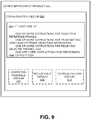
- FIG. 9 illustrates a block diagram of an example computer program product to be used by a server of a wireless video transmission service, arranged in accordance with at least some embodiments described herein.
- computer program product 900 may include a signal bearing medium 902 that may also include machine readable instructions 904 that, when executed by, for example, a processor, may provide the functionality described above with respect to FIG 1 through FIG. 3 .
- processor 590 one or more of the tasks shown in FIG. 9 may be undertaken in response to instructions 904 conveyed to the processor 590 by medium 902 to perform actions associated with computation of mobile content quality of experience in real-time as described herein.
- Some of those instructions may include selecting reference frames, transmitting video and/or frame selection information, receiving selected frames, and performing QoE computation as described previously.
- signal bearing medium 902 depicted in FIG. 9 may encompass a computer-readable medium 906, such as, but not limited to, a hard disk drive, a Compact Disc (CD), a Digital Versatile Disk (DVD), a digital tape, memory, etc.
- signal bearing medium 902 may encompass a recordable medium 908, such as, but not limited to, memory, read/write (R/W) CDs, R/W DVDs, etc.
- signal bearing medium 902 may encompass a communications medium 910, such as, but not limited to, a digital and/or an analog communication medium (e.g., a fiber optic cable, a waveguide, a wired communications link, a wireless communication link, etc.).
- computer program product 900 may be conveyed to the processor 904 by an RF signal bearing medium 902, where the signal bearing medium 902 is conveyed by a wireless communications medium 910 (e.g., a wireless communications medium conforming with the IEEE 802.11 standard).
- a wireless communications medium 910 e.g., a wireless communications medium conforming with the IEEE 802.11 standard.
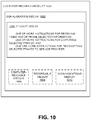
- FIG. 10 illustrates a block diagram of an example computer program product to be used by a user device of a wireless video transmission service, arranged in accordance with at least some embodiments described herein.
- computer program product 1000 may include a signal bearing medium 1002 that may also include machine readable instructions 1004 that, when executed by, for example, a processor, may provide the functionality described above with respect to FIG 1 through FIG. 3 .
- processor 690 one or more of the tasks shown in FIG. 10 may be undertaken in response to instructions 1004 conveyed to the processor 690 by medium 1002 to perform actions associated with mobile content QoE computation in real-time as described herein.
- Some of those instructions may include receiving video and/or frame selection information, capturing selected frames, and transmitting selected frames to service provider as described previously.
- signal bearing medium 1002 depicted in FIG. 10 may encompass a computer-readable medium 1006, such as, but not limited to, a hard disk drive, a Compact Disc (CD), a Digital Versatile Disk (DVD), a digital tape, memory, etc.
- signal bearing medium 1002 may encompass a recordable medium 1008, such as, but not limited to, memory, read/write (R/W) CDs, R/W DVDs, etc.
- signal bearing medium 1002 may encompass a communications medium 1010, such as, but not limited to, a digital and/or an analog communication medium (e.g., a fiber optic cable, a waveguide, a wired communications link, a wireless communication link, etc.).
- computer program product 1000 may be conveyed to the processor 1004 by an RF signal bearing medium 1002, where the signal bearing medium 1002 is conveyed by a wireless communications medium 1010 (e.g., a wireless communications medium conforming with the IEEE 802.11 standard).
- a wireless communications medium 1010 e.g., a wireless communications medium conforming with the IEEE 802.11 standard.
- FIG. 9 and 10 are described using video content as example for QoE computation, the principles described herein apply to audio and similar content as well. Moreover, tasks performed in response to the instructions may be shared among service providers, content providers, and user devices in various combinations.
- the present disclosure describes a method for quiet period management in secondary networks.
- the method may include determining quality of experience (QoE).
- QoE quality of experience
- the method may include transmitting data to be played back at one or more user devices, receiving one or more selected portions of the transmitted data from a user device, and performing QoE computation using the received portions of the transmitted data.
- the data may be video data and/or audio data.
- the method may also include determining which portions of the transmitted data are to be selected, transmitting information associated with the portions of the transmitted data to be selected to the one or more user devices, and/or using the portions of the transmitted data to be selected as reference data portions to perform the QoE computation by comparing the reference portions with the received portions of the transmitted data.
- the selected portions and the reference portions of the transmitted data may be video frames, and transmitting information associated with the portions of the transmitted data to be selected may include marking the video frames to be selected by the user device.
- the method may further include receiving the selected portions of the transmitted data through an upload channel and adjusting one or more quality of service (QoS) parameters based on the QoE computation in real time.
- QoS quality of service
- the method may also include increasing an available bandwidth for the upload channel at one or more periods of non-peak data transmission by decreasing an available bandwidth for a download channel, where periods of non-peak data transmission include one or more of an advertisement break and a program break.
- the method may also include adjusting one or more future quality of service (QoS) parameters based on the QoE computation, receiving the selected portions of the transmitted data during one or more quiet periods, and storing the received portions of the transmitted data for subsequent QoE computation.
- the quiet periods may include low bandwidth demand periods.
- the QoE computation may include comparing each pixel of an unimpaired reference frame of a portion of the transmitted data with each pixel of a corresponding frame of the received portion of the transmitted data, and the method may further include performing at least one of spatial and/or temporal alignment between the unimpaired reference frame and the corresponding frame.
- Results of the QoE computation may be correlated with one or more of instantaneous QoS parameters, a location of the user device, a mobility of the user device, a signal strength at the user device, available memory at the user device, a processing capacity of the user device, and/or load on communication network, where the QoE computations are performed at one of a service provider transmitting the data or a content provider providing the data to the service provider.
- the present disclosure describes another method for enabling computation of quality of experience (QoE) in a wireless system.
- the other method may include receiving data to be played back, determining a portion of the received data to be transmitted to one of a service provider or content provider for QoE computation, capturing the portion of the data to be transmitted to one of the service provider or content provider, and transmitting the portion of the data to one of the service provider or content provider.
- the data according to the other method may also include video data and/or audio data.
- the other method may further include receiving information associated with which portions of the received data to be selected from one of the service provider or content provider, where the selected portions of the received data are video frames and the information associated with the portions of the received data to be selected includes video frames marked by one of the service provider or content provider.
- the selected portions of the received data are video frames and the video frames of the received data to be transmitted to one of the service provider or content provider may be selected at a user device.
- the other method may include transmitting identifiers of the selected video frames to one of the service provider or content provider such that reference frames for QoE computation are determined at one of the service provider or content provider, where the video frames are selected based on one or more of an upload channel availability, a location of the user device, a mobility of the user device, a signal strength at the user device, available memory at the user device, and/or a processing capacity of the user device. If sufficient bandwidth is available to transmit the selected video frames through the upload channel, a largest possible number of video frames that can be reliably transmitted may be transmitted for real time QoE computation at one of the service provider or content provider. If sufficient bandwidth is not available to transmit the selected video frames, the selected video frames may be transmitted during one of a quiet period or a non-peak period for subsequent QoE computation at one of the service provider or content provider.
- the other method may also include selecting the video frames at periodic intervals, transmitting the selected portions of the received data through one of a dedicated upload channel and a shared channel, performing QoE computation by comparing the portion of the received data and test data, and/or transmitting QoE computation results to one of the service provider or content provider.
- the portion of the received data to be used for QoE computation may include one or more video frames, and the method may further include transmitting identifiers of the one or more video frames to one of the service provider or content provider, and receiving corresponding test video frames.
- the QoE computations may be performed at one of one of the service provider or content provider or a content provider providing the data to one of the service provider or content provider.
- the present disclosure describes a server providing an audio/video transmission service with quality of experience (QoE) computation over a wireless network.
- the server may include a communication module adapted to communicate wirelessly with one or more user devices, a memory adapted to store instructions, and a processor coupled to the communication module and the memory.
- the processor may be adapted to transmit data to be played back at one or more user devices, receive one or more selected portions of the transmitted data from a user device and perform QoE computation based on the received portions of the transmitted data.
- the data may be video data and/or audio data.
- the processor of the server may determine which portions of the transmitted data are to be selected, transmit information associated with the portions of the transmitted data to be selected to the one or more user devices, and/or use the portions of the transmitted data to be selected as reference data portions to perform the QoE computation by comparing the reference portions with the received portions of the transmitted data.
- the selected portions and the reference portions of the transmitted data may be video frames, and the processor may transmit information associated with the portions of the transmitted data to be selected by marking the video frames to be selected by the user device.
- the processor of the server may receive the selected portions of the transmitted data through an upload channel, adjust one or more quality of service (QoS) parameters based on the QoE computation in real time, increase an available bandwidth for the upload channel at one or more periods of non-peak video data transmission by decreasing an available bandwidth for a download channel, receive the selected portions of the transmitted data during one or more quiet periods, and/or store the received portions of the transmitted data for subsequent QoE computation.
- QoS quality of service
- the processor of the server may also adjust one or more quality of service (QoS) parameters based on the subsequent QoE computation, where the quiet periods include low bandwidth demand periods.
- QoS quality of service
- the processor may further compare each pixel of an unimpaired reference frame of a portion of the transmitted data with each pixel of a corresponding frame of the received portion of the transmitted data.
- the server may be part of one of a service provider transmitting the data or a content provider providing the data to the service provider.
- the processor may also correlate results of the QoE computation with one or more of instantaneous QoS parameters, a location of the user device, a mobility of the user device, a signal strength at the user device, available memory at the user device, a processing capacity of the user device, and/or load on communication network.
- the present disclosure describes a computing device for receiving an audio/video transmission service with quality of experience (QoE) computation over a wireless network.
- the computing device may include a memory adapted to store instructions; and a processor coupled to the communication module and the memory.
- the processor may be adapted to receive data to be played back, determine a portion of the received data to be transmitted to the service provider for QoE computation, capture the portion of the data to be transmitted to the service provider, and transmit the portion of the data to the service provider.
- the data may be video data and/or audio data.
- the processor of the computing device may receive information associated with which portions of the received data to be selected from the service provider, where the selected portions of the received data are video frames and the information associated with the portions of the received data to be selected includes video frames marked by the service provider.
- the selected portions of the received data are video frames and the video frames of the received data to be transmitted to the service provider may also be selected at the computing device.
- the processor of the computing device may further be adapted to transmit identifiers of the selected video frames to the service provider such that reference frames for QoE computation are determined at the service provider, where the video frames are selected based on one or more of an upload channel availability, a location of the computing device, a mobility of the computing device, a signal strength at the computing device, available memory at the computing device, and/or a processing capacity of the user device.
- the processor may also select the video frames at periodic intervals.
- the computing device may be one of a desktop computer, a handheld computer, a vehicle-mount computer, a smart phone, or a portable television.
- the implementer may opt for a mainly hardware and/or firmware vehicle; if flexibility is paramount, the implementer may opt for a mainly software implementation; or, yet again alternatively, the implementer may opt for some combination of hardware, software, and/or firmware.
- Examples of a signal bearing medium include, but are not limited to, the following: a recordable type medium such as a floppy disk, a hard disk drive, a Compact Disc (CD), a Digital Versatile Disk (DVD), a digital tape, a computer memory, etc.; and a transmission type medium such as a digital and/or an analog communication medium (e.g., a fiber optic cable, a waveguide, a wired communications link, a wireless communication link, etc.).
- a typical data processing system generally includes one or more of a system unit housing, a video display device, a memory such as volatile and non-volatile memory, processors such as microprocessors and digital signal processors, computational entities such as operating systems, drivers, graphical user interfaces, and applications programs, one or more interaction devices, such as a touch pad or screen, and/or control systems including feedback loops.
- a typical data processing system may be implemented utilizing any suitable commercially available components, such as those typically found in data computing/communication and/or network computing/communication systems.
- the herein described subject matter sometimes illustrates different components contained within, or connected with, different other components. It is to be understood that such depicted architectures are merely exemplary, and that in fact many other architectures may be implemented which achieve the same functionality. In a conceptual sense, any arrangement of components to achieve the same functionality is effectively “associated” such that the desired functionality is achieved. Hence, any two components herein combined to achieve a particular functionality may be seen as "associated with” each other such that the desired functionality is achieved, irrespective of architectures or intermediate components.
- any two components so associated may also be viewed as being “operably connected”, or “operably coupled”, to each other to achieve the desired functionality, and any two components capable of being so associated may also be viewed as being “operably couplable”, to each other to achieve the desired functionality.
- operably couplable include but are not limited to physically connectable and/or physically interacting components and/or wirelessly interactable and/or wirelessly interacting components and/or logically interacting and/or logically interactable components.
- a range includes each individual member.
- a group having 1-3 cells refers to groups having 1, 2, or 3 cells.
- a group having 1-5 cells refers to groups having 1, 2, 3, 4, or 5 cells, and so forth.
Landscapes
- Engineering & Computer Science (AREA)
- Signal Processing (AREA)
- Computer Networks & Wireless Communication (AREA)
- Multimedia (AREA)
- Two-Way Televisions, Distribution Of Moving Picture Or The Like (AREA)
- Mobile Radio Communication Systems (AREA)
Claims (15)
- Verfahren zum Bestimmen der Erlebnisqualität, QoE, in einem drahtlosen System, wobei das Verfahren folgende Schritte umfasst:Senden durch einen von einem Dienstanbieter (104) oder einem Inhaltsanbieter (202) von Daten an eine Benutzervorrichtung (230), wobei die gesendeten Daten auf der Benutzervorrichtung (230) wiedergegeben werden;
als Reaktion auf eine Bestimmung, dass eine ausreichende Bandbreite verfügbar ist, um einen oder mehrere ausgewählte Teile der gesendeten Daten von der Benutzervorrichtung (230) über einen Upload-Kanal zu empfangen, Empfangen des einen oder der mehreren ausgewählten Teile der gesendeten Daten, der bzw. die für eine Echtzeit-QoE-Berechnung von der Benutzervorrichtung (230) bei einem von dem Dienstanbieter (104) oder dem Inhaltsanbieter (202) zuverlässig empfangen werden kann bzw. können, wobei der eine oder die mehreren ausgewählten Teile in periodischen Intervallen oder basierend auf einem vordefinierten Algorithmus auf der Benutzervorrichtung (230) ausgewählt wird bzw. werden;
als Reaktion auf eine Bestimmung, dass der Daten-Upload und der Daten-Download über den gleichen Kanal geteilt werden, Empfangen des einen oder der mehreren ausgewählten Teile der gesendeten Daten von der Benutzervorrichtung (230) in einer Datensendeperiode ohne Hochbetrieb für die Echtzeit-QoE-Berechnung bei einem von dem Dienstanbieter (104) oder dem Inhaltsanbieter (202), so dass zusätzliche Bandbreite für Upload-Zwecke durch Herabstufen der Qualität der Download-Sendungen über den geteilten Kanal freigegeben wird;Ausführen durch einen von dem Dienstanbieter (104) oder dem Inhaltsanbieter (202) der QoE-Berechnung unter Verwendung des einen oder der mehreren ausgewählten Teile der gesendeten Daten; undAusführen durch einen von dem Dienstanbieter (104) oder dem Inhaltsanbieter (202) mindestens eines von einem räumlichen und/oder zeitlichen Abgleich zwischen einem unbeeinträchtigten Referenzeinzelbild des einen oder der mehreren ausgewählten Teile der gesendeten Daten und einem entsprechenden Einzelbild von empfangenen Teilen der gesendeten Daten, und Senden durch einen von dem Dienstanbieter (104) oder dem Inhaltsanbieter (202) von QoE-Berechnungsergebnissen an einen Datenverband, um anschließend die QoE-Berechnungsergebnisse zu analysieren und einen oder mehrere Dienstqualitäts-, QoS, Parameter basierend auf der anschließenden Analyse der QoE-Berechnungsergebnisse anzupassen. - Verfahren nach Anspruch 1, ferner umfassend einen oder mehrere der folgenden Schritte:Bestimmen, welche Teile der gesendeten Daten auszuwählen sind;Senden von Informationen, die mit den Teilen der auszuwählenden gesendeten Daten verknüpft sind, an die Benutzervorrichtung (230);Verwenden der Teile der auszuwählenden gesendeten Daten als Referenzdatenteile, um die QoE-Berechnung durch Vergleichen der Referenzteile mit den empfangenen Teilen der gesendeten Daten vorzunehmen, wobei die Daten mindestens eines von Videodaten und/oder Audiodaten umfassen.
- Verfahren nach Anspruch 2, wobei die ausgewählten Teile und die Referenzteile der gesendeten Daten Videoeinzelbilder sind, und das Senden von Informationen, die mit den Teilen der auszuwählenden gesendeten Daten verknüpft sind, das Markieren der Videoeinzelbilder, die von der Benutzervorrichtung (230) auszuwählen sind, umfasst.
- Verfahren nach Anspruch 2, ferner umfassend folgende Schritte:Anpassen eines oder mehrerer Dienstqualitäts-, QoS, Parameter basierend auf der QoE-Berechnung in Echtzeit; undErhöhen einer verfügbaren Bandbreite für den Upload-Kanal in einer oder mehreren Datensendeperioden ohne Hochbetrieb durch Verringern einer verfügbaren Bandbreite für einen Download-Kanal, wobei die Datensendeperioden ohne Hochbetrieb eine oder mehrere von einer Werbeunterbrechung und einer Programmunterbrechung umfassen, oder wobei das Verfahren ferner Folgendes umfasst:Anpassen einer oder mehrerer Dienstqualitäts-, QoS, Parameter basierend auf der QoE-Berechnung für zukünftige Sendungen.
- Verfahren nach Anspruch 2, ferner umfassend folgende Schritte:Empfangen der ausgewählten Teile der gesendeten Daten während einer oder mehrerer ruhiger Perioden; undSpeichern der empfangenen Teile der gesendeten Daten für eine anschließende QoE-Berechnung, wobei die ruhigen Perioden Perioden mit geringem Bandbreitenbedarf umfassen, oderwobei das Verfahren ferner Folgendes umfasst:Ausführen mindestens eines von einem räumlichen und/oder zeitlichen Abgleich zwischen dem unbeeinträchtigten Referenzeinzelbild und einem entsprechenden Einzelbild, wobei die QoE-Berechnung das Vergleichen jedes Pixels eines unbeeinträchtigten Referenzeinzelbildes eines Teils der gesendeten Daten mit jedem Pixel des entsprechenden Einzelbildes des empfangenen Teils der gesendeten Daten umfasst, oderwobei das Verfahren ferner Folgendes umfasst:Korrelieren der Ergebnisse der QoE-Berechnung mit einem oder mehreren von augenblicklichen QoS-Parametern, einem Standort der Benutzervorrichtung (230), einer Mobilität der Benutzervorrichtung (230), einer Signalstärke an der Benutzervorrichtung (230), einem verfügbaren Speicher an der Benutzervorrichtung (230), einer Verarbeitungskapazität der Benutzervorrichtung (230) und/oder einer Belastung des Kommunikationsnetzwerks.
- Verfahren zum Ermöglichen der Berechnung einer Erlebnisqualität, QoE, in einem drahtlosen System, wobei das Verfahren folgende Schritte umfasst:Empfangen von Daten von einem von einem Dienstanbieter (104) und einem Inhaltsanbieter (202), die auf einer Benutzervorrichtung (230) wiederzugeben sind;Bestimmen durch die Benutzervorrichtung (230) eines oder mehrerer ausgewählter Teile der empfangenen Daten, der bzw. die an einen von dem Dienstanbieter (104) oder dem Inhaltsanbieter (202) für die QoE-Berechnung zu senden ist bzw. sind;Aufnehmen durch die Benutzervorrichtung (230) des einen oder der mehreren ausgewählten Teile der Daten, der bzw. die an einen von dem Dienstanbieter (104) oder dem Inhaltsanbieter (202) zu senden ist bzw. sind;
als Reaktion auf eine Bestimmung, dass eine ausreichende Bandbreite verfügbar ist, um den einen oder die mehreren ausgewählten Teile der empfangenen Daten, die mindestens eines von Videodaten und/oder Audiodaten umfassen, über einen Upload-Kanal zu senden, Senden durch die Benutzervorrichtung (230) eines größtmöglichen Teils der empfangenen Daten an den Dienstanbieter (104), der für eine Echtzeit-QoE-Berechnung bei einem von dem Dienstanbieter (104) oder dem Inhaltsanbieter (202) zuverlässig gesendet werden kann, wobei der eine oder die mehreren ausgewählten Teile in periodischen Intervallen oder basierend auf einem vordefinierten Algorithmus auf der Benutzervorrichtung (230) ausgewählt wird bzw. werden; und
als Reaktion auf eine Bestimmung, dass der Daten-Upload und der Daten-Download über den gleichen Kanal geteilt werden, Senden durch die Benutzervorrichtung (230) des einen oder der mehreren ausgewählten Teile der empfangenen Daten in einer Datensendeperiode ohne Hochbetrieb für die Echtzeit-QoE-Berechnung an einen von dem Dienstanbieter (104) oder dem Inhaltsanbieter (202), so dass zusätzliche Bandbreite für Upload-Zwecke durch Herabstufen der Qualität von Upload-Sendungen über den geteilten Kanal freigegeben wird, wobei einer von dem Dienstanbieter (104) oder dem Inhaltsanbieter (202) konfiguriert ist zum:Ausführen mindestens eines von einem räumlichen und/oder zeitlichen Abgleich zwischen einem unbeeinträchtigten Referenzeinzelbild des einen oder der mehreren ausgewählten Teile der empfangenen Daten, der bzw. die von einem von dem Dienstanbieter (104) und dem Inhaltsanbieter (202) an der Benutzervorrichtung (230) empfangen wird bzw. werden, und einem entsprechenden Einzelbild des einen oder der mehreren ausgewählten Teile der empfangenen Daten, der bzw. die von der Benutzervorrichtung (230) an einen von dem Dienstanbieter (104) oder dem Inhaltsanbieter (202) gesendet wird bzw. werden; undSenden der QoE-Berechnungsergebnisse an einen Datenverband, um anschließend die QoE-Berechnungsergebnisse zu analysieren und einen oder mehrere Dienstqualitäts-, QoS, Parameter basierend auf der anschließenden Analyse der QoE-Berechnungsergebnisse anzupassen. - Verfahren nach Anspruch 6, ferner umfassend folgenden Schritt:Empfangen von Informationen, die mit Teilen der auszuwählenden empfangenen Daten verknüpft sind, von einem von dem Dienstanbieter (104) oder dem Inhaltsanbieter (202), wobei die ausgewählten Teile der empfangenen Daten Videoeinzelbilder sind, und die Informationen, die mit den Teilen der auszuwählenden empfangenen Daten verknüpft sind, Videoeinzelbilder umfassen, die durch einen von dem Dienstanbieter (104) oder dem Inhaltsanbieter (202) markiert werden.
- Verfahren nach Anspruch 6, wobei die ausgewählten Teile der empfangenen Daten Videoeinzelbilder sind und die Videoeinzelbilder der empfangenen Daten, die an einen von dem Dienstanbieter (104) oder dem Inhaltsanbieter (202) zu senden sind, an einer Benutzervorrichtung (230) ausgewählt werden.
- Verfahren nach Anspruch 8, ferner umfassend folgende Schritte:Senden von Kennungen der ausgewählten Videoeinzelbilder an einen von dem Dienstanbieter (104) oder dem Inhaltsanbieter (202), so dass Referenzeinzelbilder für die QoE-Berechnung bei einem von dem Dienstanbieter (104) oder dem Inhaltsanbieter (202) bestimmt werden, wobei die Videoeinzelbilder basierend auf einem oder mehreren von einer Upload-Kanal-Verfügbarkeit, einem Standort der Benutzervorrichtung (230), einer Mobilität der Benutzervorrichtung (230), einer Signalstärke an der Benutzervorrichtung (230), einem verfügbaren Speicher an der Benutzervorrichtung (230) und/oder einer Verarbeitungskapazität der Benutzervorrichtung (230) ausgewählt werden;falls keine ausreichende Bandbreite verfügbar ist, um die ausgewählten Videoeinzelbilder zu senden, Senden der ausgewählten Videoeinzelbilder während einer von einer ruhigen Periode oder einer Periode ohne Hochbetrieb für eine anschließende QoE-Berechnung bei einem von dem Dienstanbieter (104) oder dem Inhaltsanbieter (202).
- Server, der einen Audio-/Video-Sendedienst mit Erlebnisqualitäts-, QoE, Berechnung über ein drahtloses Netzwerk bereitstellt, wobei der Server Folgendes umfasst:ein Kommunikationsmodul, das geeignet ist, um drahtlos mit einer Benutzervorrichtung (230) zu kommunizieren;einen Speicher, der geeignet ist, um Anweisungen zu speichern; undeinen Prozessor, der mit dem Kommunikationsmodul und dem Speicher gekoppelt ist, wobei der Prozessor geeignet ist zum:Senden von Daten an die Benutzervorrichtung (230), wobei die gesendeten Daten an der Benutzervorrichtung (230) wiedergegeben werden;
als Reaktion auf eine Bestimmung, dass eine ausreichende Bandbreite verfügbar ist, um einen oder mehrere ausgewählte Teile der gesendeten Daten von der Benutzervorrichtung (230) zu empfangen, Empfangen einer größten Menge eines oder mehrerer ausgewählter Teile der gesendeten Daten, der bzw. die für eine Echtzeit-QoE-Berechnung bei einem von dem Dienstanbieter (104) oder dem Inhaltsanbieter (202) zuverlässig empfangen werden kann bzw. können, wobei der eine oder die mehreren ausgewählten Teile in periodischen Intervallen oder basierend auf einem vordefinierten Algorithmus an der Benutzervorrichtung (230) ausgewählt wird bzw. werden;
als Reaktion auf eine Bestimmung, dass der Daten-Upload und der Daten-Download über den gleichen Kanal geteilt werden, Empfangen des einen oder der mehreren ausgewählten Teile der gesendeten Daten von der Benutzervorrichtung (230) in einer Datensendeperiode ohne Hochbetrieb für die Echtzeit-QoE-Berechnung bei einem von dem Dienstanbieter (104) oder dem Inhaltsanbieter (202), so dass zusätzliche Bandbreite für Upload-Zwecke durch Herabstufen der Qualität von Upload-Sendungen über den geteilten Kanal freigegeben wird;Ausführen der QoE-Berechnung basierend auf dem einen oder den mehreren ausgewählten Teilen der gesendeten Daten bei einem von dem Dienstanbieter (104) oder dem Inhaltsanbieter (202), wobei die gesendeten Daten mindestens eines von Videodaten und/oder Audiodaten umfassen;Ausführen mindestens eines von einem räumlichen und/oder zeitlichen Abgleich zwischen einem unbeeinträchtigten Referenzeinzelbild des einen oder der mehreren ausgewählten Teile der gesendeten Daten und einem entsprechenden Einzelbild von empfangenen Teilen der gesendeten Daten bei einem oder mehreren von dem Dienstanbieter (104) oder dem Inhaltsanbieter (202); undSenden, durch einen von dem Dienstanbieter (104) oder dem Inhaltsanbieter (202), von QoE-Berechnungsergebnissen an einen Datenverband, um anschließend die QoE-Berechnungsergebnisse zu analysieren und einen oder mehrere Dienstqualitäts-, QoS, Parameter basierend auf der anschließenden Analyse der QoE-Berechnungsergebnisse anzupassen. - Server nach Anspruch 10, wobei der Prozessor ferner geeignet ist für einen oder mehrere der folgenden Schritte:Bestimmen, welche Teile der gesendeten Daten auszuwählen sind;Senden von Informationen, die mit den Teilen der auszuwählenden gesendeten Daten verknüpft sind, an die eine oder die mehreren Benutzervorrichtungen (230);Verwenden der Teile der auszuwählenden gesendeten Daten als Referenzdatenteile, um die QoE-Berechnung durch Vergleichen der Referenzteile mit den empfangenen Teilen der gesendeten Daten vorzunehmen;Senden von Informationen, die mit den Teilen der auszuwählenden gesendeten Daten verknüpft sind, durch Markieren von Videoeinzelbildern, die durch die Benutzervorrichtung (230) auszuwählen sind, wobei die ausgewählten Teile und die Referenzteile der gesendeten Daten Videoeinzelbilder sind;Empfangen der ausgewählten Teile der gesendeten Daten über einen Upload-Kanal; undAnpassen eines oder mehrerer Dienstqualitäts-, QoS, Parameter basierend auf der QoE-Berechnung in Echtzeit.
- Server nach Anspruch 11, wobei der Prozessor ferner geeignet ist für einen oder mehrere der folgenden Schritte:Erhöhen einer verfügbaren Bandbreite für den Upload-Kanal in einer oder mehreren Perioden einer Videodatensendung ohne Hochbetrieb durch Verringern einer verfügbaren Bandbreite für einen Download-Kanal;Empfangen der ausgewählten Teile der gesendeten Daten während einer oder mehrerer ruhiger Perioden;Speichern der empfangenen Teile der gesendeten Daten für eine anschließende QoE-Berechnung; undAnpassen eines oder mehrerer Dienstqualitäts-, QoS, Parameter basierend auf der anschließenden QoE-Berechnung für zukünftige Sendungen.
- Server nach Anspruch 10, wobei der Prozessor ferner geeignet ist, um jedes Pixel eines unbeeinträchtigten Referenzeinzelbildes eines Teils der gesendeten Daten mit jedem Pixel eines entsprechenden Einzelbildes des empfangenen Teils der gesendeten Daten zu vergleichen, oder wobei der Prozessor ferner geeignet ist zum:Korrelieren der Ergebnisse der QoE-Berechnung mit einem oder mehreren von augenblicklichen QoS-Parametern, einem Standort der Benutzervorrichtung (230), einer Mobilität der Benutzervorrichtung (230), einer Signalstärke an der Benutzervorrichtung (230), einem verfügbaren Speicher an der Benutzervorrichtung (230), einer Verarbeitungskapazität der Benutzervorrichtung (230) und/oder einer Belastung des Kommunikationsnetzwerks.
- Computervorrichtung zum Empfangen eines Audio-/Video-Sendedienstes mit Erlebnisqualitäts-, QoE, Berechnung über ein drahtloses Netzwerk, wobei die Computervorrichtung Folgendes umfasst:ein Kommunikationsmodul, das geeignet ist, um drahtlos mit einem Dienstanbieter (104) zu kommunizieren;einen Speicher, der geeignet ist, um Anweisungen zu speichern;einen Prozessor, der mit dem Kommunikationsmodul und dem Speicher gekoppelt ist, wobei der Prozessor geeignet ist zum:Empfangen von Daten von dem Dienstanbieter (104), die auf einer Benutzervorrichtung (230) wiederzugeben sind;Bestimmen eines oder mehrerer ausgewählter Teile der empfangenen Daten, der bzw. die von der Benutzervorrichtung (230) an den Dienstanbieter (104) zur QoE-Berechnung zu senden ist bzw. sind;Aufnehmen des einen oder der mehreren Teile der empfangenen Daten, der bzw. die an den Dienstanbieter (104) zu senden ist bzw. sind, an der Benutzervorrichtung (230);
als Reaktion auf eine Bestimmung, dass eine ausreichende Bandbreite verfügbar ist, um den einen oder die mehreren ausgewählten Teile der von der Benutzervorrichtung (230) umfassen, über einen Upload-Kanal zu senden, Senden eines größtmöglichen Teils der empfangenen Daten von der Benutzervorrichtung (230) an den Dienstanbieter (104), der für die QoE-Berechnung bei einem von dem Dienstanbieter (104) oder einem Inhaltsanbieter (202) zuverlässig gesendet werden kann, wobei der eine oder die mehreren ausgewählten Teile in periodischen Intervallen oder basierend auf einem vordefinierten Algorithmus ausgewählt wird bzw. werden;
als Reaktion auf eine Bestimmung, dass der Daten-Upload und der Daten-Download über den gleichen Kanal geteilt werden, Senden des einen oder der mehreren ausgewählten Teile der empfangenen Daten von der Benutzervorrichtung (230) an den Dienstanbieter (104) in einer Datensendeperiode ohne Hochbetrieb für die QoE-Berechnung bei einem von dem Dienstanbieter (104) oder dem Inhaltsanbieter (202), so dass zusätzliche Bandbreite für Upload-Zwecke durch Herabstufen der Qualität von Upload-Sendungen auf dem geteilten Kanal freigegeben wird, wobei einer von dem Dienstanbieter (104) oder dem Inhaltsanbieter (202) konfiguriert ist zum:Ausführen mindestens eines von einem räumlichen und/oder zeitlichen Abgleich zwischen einem unbeeinträchtigten Referenzeinzelbild des einen oder der mehreren ausgewählten Teile der empfangenen Daten, der bzw. die von einem von dem Dienstanbieter (104) und dem Inhaltsanbieter (202) an der Benutzervorrichtung (230) empfangen wird bzw. werden, und einem entsprechenden Einzelbild des einen oder der mehreren ausgewählten Teile der empfangenen Daten, der bzw. die von der Benutzervorrichtung (230) an einen von dem Dienstanbieter (104) oder dem Inhaltsanbieter (202) gesendet wird bzw. werden; undSenden von QoE-Berechnungsergebnissen an einen Datenverband, um anschließend die QoE-Berechnungsergebnisse zu analysieren und einen oder mehrere Dienstqualitäts-, QoS, Parameter basierend auf der anschließenden Analyse der QoE-Berechnungsergebnisse anzupassen. - Computervorrichtung nach Anspruch 14, wobei der Prozessor ferner geeignet ist zum:Empfangen von Informationen, die mit den Teilen der empfangenen Daten verknüpft sind, die von dem Dienstanbieter (104) auszuwählen sind, wobei die ausgewählten Teile der empfangenen Daten Videoeinzelbilder sind, und die Informationen, die mit den Teilen der auszuwählenden empfangenen Daten verknüpft sind, Videoeinzelbilder umfassen, die von dem Dienstanbieter (104) markiert werden, oderwobei der Prozessor ferner geeignet ist zum:Senden von Kennungen der ausgewählten Videoeinzelbilder an den Dienstanbieter (104), so dass Referenzeinzelbilder für die QoE-Berechnung bei dem Dienstanbieter (104) bestimmt werden, und wobei die Videoeinzelbilder basierend auf einer oder mehreren von einer Upload-Kanal-Verfügbarkeit, einem Standort der Computervorrichtung, einer Mobilität der Computervorrichtung, einer Signalstärke an der Computervorrichtung, einem verfügbaren Speicher an der Computervorrichtung und/oder einer Verarbeitungskapazität der Benutzervorrichtung (230) ausgewählt werden.
Applications Claiming Priority (2)
| Application Number | Priority Date | Filing Date | Title |
|---|---|---|---|
| IN1369CH2011 | 2011-04-20 | ||
| PCT/IB2011/052687 WO2012143764A1 (en) | 2011-04-20 | 2011-06-20 | Full-reference computation of mobile content quality of experience in real-time |
Publications (3)
| Publication Number | Publication Date |
|---|---|
| EP2700267A1 EP2700267A1 (de) | 2014-02-26 |
| EP2700267A4 EP2700267A4 (de) | 2015-01-07 |
| EP2700267B1 true EP2700267B1 (de) | 2017-02-22 |
Family
ID=47041101
Family Applications (1)
| Application Number | Title | Priority Date | Filing Date |
|---|---|---|---|
| EP11863999.6A Not-in-force EP2700267B1 (de) | 2011-04-20 | 2011-06-20 | Vollreferenzberechnung der erfahrungsqualität von mobilen inhalten in echtzeit |
Country Status (5)
| Country | Link |
|---|---|
| US (1) | US9060191B2 (de) |
| EP (1) | EP2700267B1 (de) |
| JP (1) | JP5883500B2 (de) |
| CN (1) | CN103621145B (de) |
| WO (1) | WO2012143764A1 (de) |
Families Citing this family (30)
| Publication number | Priority date | Publication date | Assignee | Title |
|---|---|---|---|---|
| US7978062B2 (en) * | 2007-08-31 | 2011-07-12 | Cardiac Pacemakers, Inc. | Medical data transport over wireless life critical network |
| US9848058B2 (en) | 2007-08-31 | 2017-12-19 | Cardiac Pacemakers, Inc. | Medical data transport over wireless life critical network employing dynamic communication link mapping |
| US8812841B2 (en) | 2009-03-04 | 2014-08-19 | Cardiac Pacemakers, Inc. | Communications hub for use in life critical network |
| US8319631B2 (en) | 2009-03-04 | 2012-11-27 | Cardiac Pacemakers, Inc. | Modular patient portable communicator for use in life critical network |
| JP5673538B2 (ja) * | 2009-08-10 | 2015-02-18 | 日本電気株式会社 | 配信システム |
| WO2012143764A1 (en) * | 2011-04-20 | 2012-10-26 | Empire Technology Development Llc | Full-reference computation of mobile content quality of experience in real-time |
| JP6025821B2 (ja) | 2011-08-29 | 2016-11-16 | エンパイア テクノロジー ディベロップメント エルエルシー | 推定されたQoEをアプリケーションごとに端末上に出力する方法 |
| US20140181266A1 (en) * | 2011-09-29 | 2014-06-26 | Avvasi Inc. | System, streaming media optimizer and methods for use therewith |
| US20150082345A1 (en) * | 2011-09-29 | 2015-03-19 | Avvasi Inc. | System for generating enhanced advertizements and methods for use therewith |
| US20130304934A1 (en) * | 2011-09-29 | 2013-11-14 | Avvasi Inc. | Methods and systems for controlling quality of a media session |
| US20130301415A1 (en) * | 2011-09-29 | 2013-11-14 | Avvasi Inc. | Methods and systems for managing media traffic based on network conditions |
| WO2013095480A1 (en) | 2011-12-22 | 2013-06-27 | Empire Technology Development Llc | Apparatus, mobile terminal, and method to estimate quality of experience of application |
| CN104144311A (zh) * | 2013-05-07 | 2014-11-12 | 中兴通讯股份有限公司 | 一种自适应调节视频的方法及系统 |
| DE102013211571B4 (de) * | 2013-06-19 | 2016-02-11 | Opticom Dipl.-Ing. Michael Keyhl Gmbh | Konzept zur bestimmung der qualität eines mediadatenstroms mit variierender qualität-zu-bitrate |
| US9674515B2 (en) * | 2013-07-11 | 2017-06-06 | Cisco Technology, Inc. | Endpoint information for network VQM |
| US9300991B2 (en) * | 2013-11-13 | 2016-03-29 | International Business Machines Corporation | Use of simultaneously received videos by a system to generate a quality of experience value |
| CN103763633B (zh) * | 2014-02-20 | 2017-05-03 | 中国科学院声学研究所 | 基于OpenFlow的3D视频传输方法 |
| KR102656605B1 (ko) * | 2014-11-05 | 2024-04-12 | 삼성전자주식회사 | 복수의 단말기들 간의 화면 공유를 제어하는 방법, 장치 및 기록 매체 |
| US9756112B2 (en) | 2015-02-11 | 2017-09-05 | At&T Intellectual Property I, L.P. | Method and system for managing service quality according to network status predictions |
| US10021462B2 (en) * | 2016-03-16 | 2018-07-10 | Time Warner Cable Enterprises Llc | Content distribution and encoder testing techniques |
| FR3067897B1 (fr) * | 2017-06-14 | 2020-09-11 | Bouygues Telecom Sa | Procede d'evaluation de l'experience utilisateur lors de la lecture d'un contenu video sur un terminal mobile |
| US10693575B2 (en) | 2018-08-31 | 2020-06-23 | At&T Intellectual Property I, L.P. | System and method for throughput prediction for cellular networks |
| US10880616B2 (en) | 2018-09-28 | 2020-12-29 | Viasat, Inc. | Systems and methods for quality-of-experience driven in-transport communications |
| US10735742B2 (en) | 2018-11-28 | 2020-08-04 | At&T Intellectual Property I, L.P. | Adaptive bitrate video testing |
| US10868726B2 (en) | 2018-12-07 | 2020-12-15 | At&T Intellectual Property I, L.P. | Apparatus and method for selecting a bandwidth prediction source |
| US11490149B2 (en) | 2019-03-15 | 2022-11-01 | At&T Intellectual Property I, L.P. | Cap-based client-network interaction for improved streaming experience |
| CN111770309B (zh) * | 2020-06-24 | 2022-03-18 | 浙江大华技术股份有限公司 | 一种视频上传方法、装置、电子设备及存储介质 |
| WO2022201225A1 (ja) * | 2021-03-22 | 2022-09-29 | 日本電信電話株式会社 | 制御装置、制御方法及びプログラム |
| CN114071063A (zh) * | 2021-11-15 | 2022-02-18 | 深圳市健成云视科技有限公司 | 基于双向选择权的信息分享方法、装置、设备及介质 |
| US12407903B2 (en) * | 2023-01-23 | 2025-09-02 | T-Mobile Usa, Inc. | Reference video quality measurement feedback |
Family Cites Families (36)
| Publication number | Priority date | Publication date | Assignee | Title |
|---|---|---|---|---|
| US5635982A (en) | 1994-06-27 | 1997-06-03 | Zhang; Hong J. | System for automatic video segmentation and key frame extraction for video sequences having both sharp and gradual transitions |
| JP3687293B2 (ja) * | 1997-08-11 | 2005-08-24 | 横河電機株式会社 | 動画通信管理装置 |
| US6453315B1 (en) | 1999-09-22 | 2002-09-17 | Applied Semantics, Inc. | Meaning-based information organization and retrieval |
| US7149223B2 (en) * | 2000-03-06 | 2006-12-12 | Juniper Networks, Inc. | Enhanced fiber nodes with CMTS capability |
| JP2002344913A (ja) * | 2001-05-16 | 2002-11-29 | Nec Yonezawa Ltd | ネットワークにおける映像データの変換処理装置及び変換処理方法並びに変換処理サービス |
| US6865374B2 (en) * | 2001-09-18 | 2005-03-08 | Koninklijke Philips Electronics N.V. | Video recovery system and method |
| US7328345B2 (en) * | 2002-01-29 | 2008-02-05 | Widevine Technologies, Inc. | Method and system for end to end securing of content for video on demand |
| BRPI0413812A (pt) * | 2003-08-21 | 2006-10-17 | Vidiator Entpr Inc | dispositivo e método de qualidade de experiência (qoe) para rede de comunicação celular |
| CA2457969A1 (en) * | 2004-01-14 | 2005-07-14 | Yaron Mayer | System and method for improving the balance between download and upload traffic on the internet and/or other networks |
| BRPI0418522A (pt) | 2004-02-13 | 2007-05-15 | Nokia Corp | método para retroalimentação de qualidade em um serviço de transmissão em fluxo, produto de programa de computação, sistema para retroalimentação de qualidade em um serviço de trasnmissão em fluxo, cliente e servidor em um serviço de transmissão em fluxo, cliente e servidor em um serviço de transmissão em fluxo, e, protocolo para ser usado em um serviço de transmissão em fluxo |
| US20080098446A1 (en) | 2004-08-11 | 2008-04-24 | Vidiator Enterprises Inc, | Multicast and Broadcast Streaming Method and System |
| JP4817246B2 (ja) * | 2006-07-31 | 2011-11-16 | Kddi株式会社 | 映像品質の客観評価装置 |
| US8424049B2 (en) | 2006-08-25 | 2013-04-16 | Verizon Laboratories Inc. | Measurement of video quality at customer premises |
| US20080049755A1 (en) | 2006-08-25 | 2008-02-28 | Motorola, Inc. | Method and system for optimizing resource allocations based on quality of service needs of one or more applications |
| US7729381B2 (en) * | 2006-09-15 | 2010-06-01 | At&T Intellectual Property I, L.P. | In-band media performance monitoring |
| US7945166B2 (en) * | 2006-12-20 | 2011-05-17 | Hoya Corporation Usa | Independent upstream/downstream bandwidth allocations in a common hybrid telecommunications network |
| US8081609B2 (en) * | 2007-02-14 | 2011-12-20 | Alcatel Lucent | Proxy-based signaling architecture for streaming media services in a wireless communication system |
| US20090025052A1 (en) * | 2007-07-18 | 2009-01-22 | General Instrument Corporation | Method and Apparatus for Controlling the Bandwidth of SDV Programming Supplied to an Edge Device in a n SDV System |
| KR100922898B1 (ko) | 2007-12-17 | 2009-10-20 | 한국전자통신연구원 | IP 미디어의 QoE 보장형 영상품질 측정장치 및측정방법 |
| JP5099697B2 (ja) * | 2008-03-31 | 2012-12-19 | 国立大学法人 名古屋工業大学 | 音声・ビデオ出力方式、音声・ビデオ出力方式実現プログラム及び音声・ビデオ出力装置 |
| US8964828B2 (en) * | 2008-08-19 | 2015-02-24 | Qualcomm Incorporated | Power and computational load management techniques in video processing |
| US8347344B2 (en) * | 2008-12-18 | 2013-01-01 | Vmware, Inc. | Measuring remote video playback performance with embedded encoded pixels |
| US8745677B2 (en) * | 2009-06-12 | 2014-06-03 | Cygnus Broadband, Inc. | Systems and methods for prioritization of data for intelligent discard in a communication network |
| US20130298170A1 (en) * | 2009-06-12 | 2013-11-07 | Cygnus Broadband, Inc. | Video streaming quality of experience recovery using a video quality metric |
| US20110255589A1 (en) * | 2009-08-03 | 2011-10-20 | Droplet Technology, Inc. | Methods of compressing data and methods of assessing the same |
| US8516137B2 (en) | 2009-11-16 | 2013-08-20 | Microsoft Corporation | Managing virtual hard drives as blobs |
| US8345569B2 (en) * | 2009-11-23 | 2013-01-01 | Dialogic Corporation | Multiple watermarks for fidelity assessment |
| US8495250B2 (en) | 2009-12-16 | 2013-07-23 | International Business Machines Corporation | Asynchronous file operations in a scalable multi-node file system cache for a remote cluster file system |
| US20110271307A1 (en) * | 2009-12-18 | 2011-11-03 | Tektronix International Sales Gmbh | Video data stream evaluation systems and methods |
| US8385221B2 (en) * | 2010-02-28 | 2013-02-26 | International Business Machines Corporation | System and method for monitoring of user quality-of-experience on a wireless network |
| US9965771B2 (en) * | 2010-07-02 | 2018-05-08 | Dialogic Corporation | System and method of tracking video advertisements |
| US8781447B2 (en) * | 2010-09-24 | 2014-07-15 | Intel Corporation | Techniques to wirelessly transmit data |
| WO2012143764A1 (en) * | 2011-04-20 | 2012-10-26 | Empire Technology Development Llc | Full-reference computation of mobile content quality of experience in real-time |
| WO2013006168A1 (en) * | 2011-07-06 | 2013-01-10 | Empire Technology Development, Llc | Transcoding detection and adjustment of content for optimal display |
| US9154610B2 (en) * | 2012-05-14 | 2015-10-06 | International Business Machines Corporation | Inferring quality in UT calls based on real-time bi-directional exploitation of a full reference algorithm |
| US20140033242A1 (en) * | 2012-07-24 | 2014-01-30 | Srinivasa Rao | Video service assurance systems and methods in wireless networks |
-
2011
- 2011-06-20 WO PCT/IB2011/052687 patent/WO2012143764A1/en not_active Ceased
- 2011-06-20 EP EP11863999.6A patent/EP2700267B1/de not_active Not-in-force
- 2011-06-20 JP JP2014505732A patent/JP5883500B2/ja not_active Expired - Fee Related
- 2011-06-20 US US13/378,993 patent/US9060191B2/en not_active Expired - Fee Related
- 2011-06-20 CN CN201180071732.4A patent/CN103621145B/zh not_active Expired - Fee Related
Non-Patent Citations (1)
| Title |
|---|
| None * |
Also Published As
| Publication number | Publication date |
|---|---|
| EP2700267A1 (de) | 2014-02-26 |
| CN103621145B (zh) | 2017-03-29 |
| JP5883500B2 (ja) | 2016-03-15 |
| US9060191B2 (en) | 2015-06-16 |
| JP2014518029A (ja) | 2014-07-24 |
| EP2700267A4 (de) | 2015-01-07 |
| WO2012143764A1 (en) | 2012-10-26 |
| US20130133011A1 (en) | 2013-05-23 |
| CN103621145A (zh) | 2014-03-05 |
Similar Documents
| Publication | Publication Date | Title |
|---|---|---|
| EP2700267B1 (de) | Vollreferenzberechnung der erfahrungsqualität von mobilen inhalten in echtzeit | |
| Lee et al. | PERCEIVE: Deep learning-based cellular uplink prediction using real-time scheduling patterns | |
| US8385221B2 (en) | System and method for monitoring of user quality-of-experience on a wireless network | |
| US10911506B2 (en) | Methods for quality-aware adaptive streaming over hypertext transfer protocol and reporting quality of experience | |
| Han et al. | AMVS-NDN: Adaptive mobile video streaming and sharing in wireless named data networking | |
| Taha et al. | Smart algorithm in wireless networks for video streaming based on adaptive quantization | |
| CN105264907B (zh) | 移动视频业务的体验质量预测方法及基站 | |
| US20110222669A1 (en) | Method for estimating the quality of experience of a user in respect of audio and/or video contents distributed through telecommunications networks | |
| CN104488231A (zh) | 利用按照需求的装置的实时网络监视和订户标识 | |
| Gómez et al. | YouTube QoE evaluation tool for Android wireless terminals | |
| Schwind et al. | Dissecting the performance of YouTube video streaming in mobile networks | |
| Ge et al. | Real-time QoE estimation of DASH-based mobile video applications through edge computing | |
| JP2023130418A (ja) | クライアント、サーバ、受信方法及び送信方法 | |
| Chmieliauskas et al. | Evaluation of uplink video streaming qoe in 4g and 5g cellular networks using real-world measurements | |
| EP3622684B1 (de) | Vorrichtung und verfahren zur verkehrsprofilierung von mobilem videostreaming | |
| He et al. | A measurement-derived functional model for the interaction between congestion control and QoE in video conferencing | |
| Deng et al. | QoE-oriented rate allocation for multipath high-definition video streaming over heterogeneous wireless access networks | |
| Loh et al. | Qos and qoe study of the european 5g mobile networks for next generation of applications | |
| Cui et al. | MM-ABR: An enhanced ABR algorithm with multi-metric information for QUIC-based video streaming | |
| Bernardo et al. | An IEEE 802.11 energy efficient mechanism for continuous media applications | |
| Yang et al. | A Deep Reinforcement Learning-Based Optimal Transmission Control Method for Streaming Videos | |
| Bernardo et al. | Evaluation of video transmission energy consumption and quality | |
| Tamizhselvi et al. | Adaptive video streaming in mobile cloud computing | |
| Loh et al. | Monitoring the Quality of Streaming and Applications in the Internet of Things | |
| Chmieliauskas | Quality of experience evaluation and enhancement of video streaming services in cellular networks |
Legal Events
| Date | Code | Title | Description |
|---|---|---|---|
| PUAI | Public reference made under article 153(3) epc to a published international application that has entered the european phase |
Free format text: ORIGINAL CODE: 0009012 |
|
| 17P | Request for examination filed |
Effective date: 20131031 |
|
| AK | Designated contracting states |
Kind code of ref document: A1 Designated state(s): AL AT BE BG CH CY CZ DE DK EE ES FI FR GB GR HR HU IE IS IT LI LT LU LV MC MK MT NL NO PL PT RO RS SE SI SK SM TR |
|
| DAX | Request for extension of the european patent (deleted) | ||
| A4 | Supplementary search report drawn up and despatched |
Effective date: 20141204 |
|
| RIC1 | Information provided on ipc code assigned before grant |
Ipc: H04W 72/08 20090101ALI20141128BHEP Ipc: H04W 40/12 20090101AFI20141128BHEP |
|
| 17Q | First examination report despatched |
Effective date: 20160127 |
|
| GRAP | Despatch of communication of intention to grant a patent |
Free format text: ORIGINAL CODE: EPIDOSNIGR1 |
|
| INTG | Intention to grant announced |
Effective date: 20160608 |
|
| GRAJ | Information related to disapproval of communication of intention to grant by the applicant or resumption of examination proceedings by the epo deleted |
Free format text: ORIGINAL CODE: EPIDOSDIGR1 |
|
| GRAP | Despatch of communication of intention to grant a patent |
Free format text: ORIGINAL CODE: EPIDOSNIGR1 |
|
| INTC | Intention to grant announced (deleted) | ||
| INTG | Intention to grant announced |
Effective date: 20160912 |
|
| GRAS | Grant fee paid |
Free format text: ORIGINAL CODE: EPIDOSNIGR3 |
|
| GRAA | (expected) grant |
Free format text: ORIGINAL CODE: 0009210 |
|
| AK | Designated contracting states |
Kind code of ref document: B1 Designated state(s): AL AT BE BG CH CY CZ DE DK EE ES FI FR GB GR HR HU IE IS IT LI LT LU LV MC MK MT NL NO PL PT RO RS SE SI SK SM TR |
|
| REG | Reference to a national code |
Ref country code: GB Ref legal event code: FG4D |
|
| REG | Reference to a national code |
Ref country code: CH Ref legal event code: EP |
|
| REG | Reference to a national code |
Ref country code: AT Ref legal event code: REF Ref document number: 870145 Country of ref document: AT Kind code of ref document: T Effective date: 20170315 |
|
| REG | Reference to a national code |
Ref country code: IE Ref legal event code: FG4D |
|
| REG | Reference to a national code |
Ref country code: DE Ref legal event code: R096 Ref document number: 602011035320 Country of ref document: DE |
|
| REG | Reference to a national code |
Ref country code: FR Ref legal event code: PLFP Year of fee payment: 7 |
|
| REG | Reference to a national code |
Ref country code: LT Ref legal event code: MG4D |
|
| REG | Reference to a national code |
Ref country code: NL Ref legal event code: MP Effective date: 20170222 |
|
| REG | Reference to a national code |
Ref country code: AT Ref legal event code: MK05 Ref document number: 870145 Country of ref document: AT Kind code of ref document: T Effective date: 20170222 |
|
| PG25 | Lapsed in a contracting state [announced via postgrant information from national office to epo] |
Ref country code: LT Free format text: LAPSE BECAUSE OF FAILURE TO SUBMIT A TRANSLATION OF THE DESCRIPTION OR TO PAY THE FEE WITHIN THE PRESCRIBED TIME-LIMIT Effective date: 20170222 Ref country code: GR Free format text: LAPSE BECAUSE OF FAILURE TO SUBMIT A TRANSLATION OF THE DESCRIPTION OR TO PAY THE FEE WITHIN THE PRESCRIBED TIME-LIMIT Effective date: 20170523 Ref country code: NO Free format text: LAPSE BECAUSE OF FAILURE TO SUBMIT A TRANSLATION OF THE DESCRIPTION OR TO PAY THE FEE WITHIN THE PRESCRIBED TIME-LIMIT Effective date: 20170522 Ref country code: FI Free format text: LAPSE BECAUSE OF FAILURE TO SUBMIT A TRANSLATION OF THE DESCRIPTION OR TO PAY THE FEE WITHIN THE PRESCRIBED TIME-LIMIT Effective date: 20170222 Ref country code: HR Free format text: LAPSE BECAUSE OF FAILURE TO SUBMIT A TRANSLATION OF THE DESCRIPTION OR TO PAY THE FEE WITHIN THE PRESCRIBED TIME-LIMIT Effective date: 20170222 |
|
| PG25 | Lapsed in a contracting state [announced via postgrant information from national office to epo] |
Ref country code: BG Free format text: LAPSE BECAUSE OF FAILURE TO SUBMIT A TRANSLATION OF THE DESCRIPTION OR TO PAY THE FEE WITHIN THE PRESCRIBED TIME-LIMIT Effective date: 20170522 Ref country code: NL Free format text: LAPSE BECAUSE OF FAILURE TO SUBMIT A TRANSLATION OF THE DESCRIPTION OR TO PAY THE FEE WITHIN THE PRESCRIBED TIME-LIMIT Effective date: 20170222 Ref country code: AT Free format text: LAPSE BECAUSE OF FAILURE TO SUBMIT A TRANSLATION OF THE DESCRIPTION OR TO PAY THE FEE WITHIN THE PRESCRIBED TIME-LIMIT Effective date: 20170222 Ref country code: LV Free format text: LAPSE BECAUSE OF FAILURE TO SUBMIT A TRANSLATION OF THE DESCRIPTION OR TO PAY THE FEE WITHIN THE PRESCRIBED TIME-LIMIT Effective date: 20170222 Ref country code: ES Free format text: LAPSE BECAUSE OF FAILURE TO SUBMIT A TRANSLATION OF THE DESCRIPTION OR TO PAY THE FEE WITHIN THE PRESCRIBED TIME-LIMIT Effective date: 20170222 Ref country code: SE Free format text: LAPSE BECAUSE OF FAILURE TO SUBMIT A TRANSLATION OF THE DESCRIPTION OR TO PAY THE FEE WITHIN THE PRESCRIBED TIME-LIMIT Effective date: 20170222 Ref country code: PT Free format text: LAPSE BECAUSE OF FAILURE TO SUBMIT A TRANSLATION OF THE DESCRIPTION OR TO PAY THE FEE WITHIN THE PRESCRIBED TIME-LIMIT Effective date: 20170622 Ref country code: RS Free format text: LAPSE BECAUSE OF FAILURE TO SUBMIT A TRANSLATION OF THE DESCRIPTION OR TO PAY THE FEE WITHIN THE PRESCRIBED TIME-LIMIT Effective date: 20170222 |
|
| PG25 | Lapsed in a contracting state [announced via postgrant information from national office to epo] |
Ref country code: CZ Free format text: LAPSE BECAUSE OF FAILURE TO SUBMIT A TRANSLATION OF THE DESCRIPTION OR TO PAY THE FEE WITHIN THE PRESCRIBED TIME-LIMIT Effective date: 20170222 Ref country code: RO Free format text: LAPSE BECAUSE OF FAILURE TO SUBMIT A TRANSLATION OF THE DESCRIPTION OR TO PAY THE FEE WITHIN THE PRESCRIBED TIME-LIMIT Effective date: 20170222 Ref country code: IT Free format text: LAPSE BECAUSE OF FAILURE TO SUBMIT A TRANSLATION OF THE DESCRIPTION OR TO PAY THE FEE WITHIN THE PRESCRIBED TIME-LIMIT Effective date: 20170222 Ref country code: EE Free format text: LAPSE BECAUSE OF FAILURE TO SUBMIT A TRANSLATION OF THE DESCRIPTION OR TO PAY THE FEE WITHIN THE PRESCRIBED TIME-LIMIT Effective date: 20170222 Ref country code: SK Free format text: LAPSE BECAUSE OF FAILURE TO SUBMIT A TRANSLATION OF THE DESCRIPTION OR TO PAY THE FEE WITHIN THE PRESCRIBED TIME-LIMIT Effective date: 20170222 |
|
| REG | Reference to a national code |
Ref country code: DE Ref legal event code: R097 Ref document number: 602011035320 Country of ref document: DE |
|
| PG25 | Lapsed in a contracting state [announced via postgrant information from national office to epo] |
Ref country code: DK Free format text: LAPSE BECAUSE OF FAILURE TO SUBMIT A TRANSLATION OF THE DESCRIPTION OR TO PAY THE FEE WITHIN THE PRESCRIBED TIME-LIMIT Effective date: 20170222 Ref country code: PL Free format text: LAPSE BECAUSE OF FAILURE TO SUBMIT A TRANSLATION OF THE DESCRIPTION OR TO PAY THE FEE WITHIN THE PRESCRIBED TIME-LIMIT Effective date: 20170222 Ref country code: SM Free format text: LAPSE BECAUSE OF FAILURE TO SUBMIT A TRANSLATION OF THE DESCRIPTION OR TO PAY THE FEE WITHIN THE PRESCRIBED TIME-LIMIT Effective date: 20170222 |
|
| PLBE | No opposition filed within time limit |
Free format text: ORIGINAL CODE: 0009261 |
|
| STAA | Information on the status of an ep patent application or granted ep patent |
Free format text: STATUS: NO OPPOSITION FILED WITHIN TIME LIMIT |
|
| 26N | No opposition filed |
Effective date: 20171123 |
|
| PG25 | Lapsed in a contracting state [announced via postgrant information from national office to epo] |
Ref country code: MC Free format text: LAPSE BECAUSE OF FAILURE TO SUBMIT A TRANSLATION OF THE DESCRIPTION OR TO PAY THE FEE WITHIN THE PRESCRIBED TIME-LIMIT Effective date: 20170222 |
|
| REG | Reference to a national code |
Ref country code: CH Ref legal event code: PL |
|
| PG25 | Lapsed in a contracting state [announced via postgrant information from national office to epo] |
Ref country code: SI Free format text: LAPSE BECAUSE OF FAILURE TO SUBMIT A TRANSLATION OF THE DESCRIPTION OR TO PAY THE FEE WITHIN THE PRESCRIBED TIME-LIMIT Effective date: 20170222 |
|
| REG | Reference to a national code |
Ref country code: IE Ref legal event code: MM4A |
|
| PG25 | Lapsed in a contracting state [announced via postgrant information from national office to epo] |
Ref country code: LI Free format text: LAPSE BECAUSE OF NON-PAYMENT OF DUE FEES Effective date: 20170630 Ref country code: IE Free format text: LAPSE BECAUSE OF NON-PAYMENT OF DUE FEES Effective date: 20170620 Ref country code: CH Free format text: LAPSE BECAUSE OF NON-PAYMENT OF DUE FEES Effective date: 20170630 Ref country code: LU Free format text: LAPSE BECAUSE OF NON-PAYMENT OF DUE FEES Effective date: 20170620 |
|
| REG | Reference to a national code |
Ref country code: FR Ref legal event code: PLFP Year of fee payment: 8 |
|
| REG | Reference to a national code |
Ref country code: BE Ref legal event code: MM Effective date: 20170630 |
|
| PGFP | Annual fee paid to national office [announced via postgrant information from national office to epo] |
Ref country code: DE Payment date: 20180608 Year of fee payment: 8 |
|
| PG25 | Lapsed in a contracting state [announced via postgrant information from national office to epo] |
Ref country code: BE Free format text: LAPSE BECAUSE OF NON-PAYMENT OF DUE FEES Effective date: 20170630 |
|
| PGFP | Annual fee paid to national office [announced via postgrant information from national office to epo] |
Ref country code: FR Payment date: 20180516 Year of fee payment: 8 |
|
| PG25 | Lapsed in a contracting state [announced via postgrant information from national office to epo] |
Ref country code: MT Free format text: LAPSE BECAUSE OF NON-PAYMENT OF DUE FEES Effective date: 20170620 |
|
| PGFP | Annual fee paid to national office [announced via postgrant information from national office to epo] |
Ref country code: GB Payment date: 20180403 Year of fee payment: 8 |
|
| PG25 | Lapsed in a contracting state [announced via postgrant information from national office to epo] |
Ref country code: HU Free format text: LAPSE BECAUSE OF FAILURE TO SUBMIT A TRANSLATION OF THE DESCRIPTION OR TO PAY THE FEE WITHIN THE PRESCRIBED TIME-LIMIT; INVALID AB INITIO Effective date: 20110620 |
|
| PG25 | Lapsed in a contracting state [announced via postgrant information from national office to epo] |
Ref country code: CY Free format text: LAPSE BECAUSE OF NON-PAYMENT OF DUE FEES Effective date: 20170222 |
|
| PG25 | Lapsed in a contracting state [announced via postgrant information from national office to epo] |
Ref country code: MK Free format text: LAPSE BECAUSE OF FAILURE TO SUBMIT A TRANSLATION OF THE DESCRIPTION OR TO PAY THE FEE WITHIN THE PRESCRIBED TIME-LIMIT Effective date: 20170222 |
|
| REG | Reference to a national code |
Ref country code: DE Ref legal event code: R119 Ref document number: 602011035320 Country of ref document: DE |
|
| GBPC | Gb: european patent ceased through non-payment of renewal fee |
Effective date: 20190620 |
|
| PG25 | Lapsed in a contracting state [announced via postgrant information from national office to epo] |
Ref country code: TR Free format text: LAPSE BECAUSE OF FAILURE TO SUBMIT A TRANSLATION OF THE DESCRIPTION OR TO PAY THE FEE WITHIN THE PRESCRIBED TIME-LIMIT Effective date: 20170222 |
|
| PG25 | Lapsed in a contracting state [announced via postgrant information from national office to epo] |
Ref country code: GB Free format text: LAPSE BECAUSE OF NON-PAYMENT OF DUE FEES Effective date: 20190620 Ref country code: DE Free format text: LAPSE BECAUSE OF NON-PAYMENT OF DUE FEES Effective date: 20200101 |
|
| PG25 | Lapsed in a contracting state [announced via postgrant information from national office to epo] |
Ref country code: FR Free format text: LAPSE BECAUSE OF NON-PAYMENT OF DUE FEES Effective date: 20190630 |
|
| PG25 | Lapsed in a contracting state [announced via postgrant information from national office to epo] |
Ref country code: AL Free format text: LAPSE BECAUSE OF FAILURE TO SUBMIT A TRANSLATION OF THE DESCRIPTION OR TO PAY THE FEE WITHIN THE PRESCRIBED TIME-LIMIT Effective date: 20170222 Ref country code: IS Free format text: LAPSE BECAUSE OF FAILURE TO SUBMIT A TRANSLATION OF THE DESCRIPTION OR TO PAY THE FEE WITHIN THE PRESCRIBED TIME-LIMIT Effective date: 20170622 |