EP2700275B1 - Procédés et appareil d'élimination d'interférences provenant de signaux de découverte d'un homologue dans un réseau étendu sans fil (wwan) - Google Patents
Procédés et appareil d'élimination d'interférences provenant de signaux de découverte d'un homologue dans un réseau étendu sans fil (wwan) Download PDFInfo
- Publication number
- EP2700275B1 EP2700275B1 EP12718018.0A EP12718018A EP2700275B1 EP 2700275 B1 EP2700275 B1 EP 2700275B1 EP 12718018 A EP12718018 A EP 12718018A EP 2700275 B1 EP2700275 B1 EP 2700275B1
- Authority
- EP
- European Patent Office
- Prior art keywords
- peer
- path loss
- base station
- transmit power
- duty cycle
- Prior art date
- Legal status (The legal status is an assumption and is not a legal conclusion. Google has not performed a legal analysis and makes no representation as to the accuracy of the status listed.)
- Active
Links
Images






Classifications
-
- H—ELECTRICITY
- H04—ELECTRIC COMMUNICATION TECHNIQUE
- H04W—WIRELESS COMMUNICATION NETWORKS
- H04W52/00—Power management, e.g. Transmission Power Control [TPC] or power classes
- H04W52/04—Transmission power control [TPC]
- H04W52/38—TPC being performed in particular situations
-
- H—ELECTRICITY
- H04—ELECTRIC COMMUNICATION TECHNIQUE
- H04W—WIRELESS COMMUNICATION NETWORKS
- H04W52/00—Power management, e.g. Transmission Power Control [TPC] or power classes
- H04W52/04—Transmission power control [TPC]
- H04W52/38—TPC being performed in particular situations
- H04W52/383—TPC being performed in particular situations power control in peer-to-peer links
-
- H—ELECTRICITY
- H04—ELECTRIC COMMUNICATION TECHNIQUE
- H04W—WIRELESS COMMUNICATION NETWORKS
- H04W52/00—Power management, e.g. Transmission Power Control [TPC] or power classes
- H04W52/04—Transmission power control [TPC]
- H04W52/18—TPC being performed according to specific parameters
- H04W52/24—TPC being performed according to specific parameters using SIR [Signal to Interference Ratio] or other wireless path parameters
-
- H—ELECTRICITY
- H04—ELECTRIC COMMUNICATION TECHNIQUE
- H04W—WIRELESS COMMUNICATION NETWORKS
- H04W52/00—Power management, e.g. Transmission Power Control [TPC] or power classes
- H04W52/04—Transmission power control [TPC]
- H04W52/18—TPC being performed according to specific parameters
- H04W52/24—TPC being performed according to specific parameters using SIR [Signal to Interference Ratio] or other wireless path parameters
- H04W52/242—TPC being performed according to specific parameters using SIR [Signal to Interference Ratio] or other wireless path parameters taking into account path loss
Definitions
- the present disclosure relates generally to communication systems, and more particularly, to controlling interference from peer discovery in wireless wide area networks (WWAN).
- WWAN wireless wide area networks
- a WWAN In a WWAN, all communication between wireless devices and a serving base station are through the uplink/downlink channels between the wireless devices and the serving base station. If two communicating wireless devices are in the vicinity of each other, the two wireless devices can communicate directly without going through the base station. Such direct peer-to-peer communication can enable new types of services and/or reduce the traffic load on the base station.
- wireless devices in the vicinity of each other may periodically transmit peer discovery signals.
- the peer discovery signals When the peer discovery signals are transmitted at the same time and on the same resources as WWAN communication in a neighboring cell, the peer discovery signals can interfere with the WWAN communication in the neighboring cell. As such, a method of controlling interference from peer discovery in a WWAN is needed.
- WO 2011/011637 A2 discloses techniques for mitigating interference due to peer-to-peer (P2P) communication.
- a P2P UE may measure the signal strength of downlink signals from base stations and may set its transmit power based on (e.g., proportional to) the measured signal strength in order to mitigate interference to WWAN UEs communicating with base stations.
- the P2P UE may measure the signal strength of uplink signals from WWAN UEs and may set its transmit power based on (e.g., inversely proportional to) the measured signal strength in order to mitigate interference to the WWAN UEs.
- the P2P UE may measure the signal strength of an uplink signal from a WWAN UE, estimate the pathloss between the two UEs based on the measured signal strength, and determine its transmit power based on the estimated pathloss.
- a terminal A may estimate pathloss to another terminal B, e.g., based on a peer discovery signal received from terminal B.
- Terminal A may then determine a transmit power level for a peer-to-peer (PTP) signal (e.g., a paging signal) based on the estimated pathloss, a receiver gain setting at terminal B, and a target received power level for the PTP signal.
- PTP peer-to-peer
- Terminal A may send the PTP signal at the determined transmit power level to terminal B.
- terminal B may use different receiver gain settings in different time intervals to receive PTP signals from other terminals. Terminal A may then select a suitable time interval to send the PTP signal based on the pathloss and the different receiver gain settings used by terminal B.
- US 2006/0268924 A1 discloses a method and apparatus for dynamically adjusting deferred transmission level and a transmission power level in a wireless communication system implementing carrier sense multiple access/collision avoidance (CSMA/CA) mechanism.
- a plurality of transmission power levels and associated metrics are defined for an access point (AP) and a wireless transmit/receive unit (WTRU). If a packet originated from a neighboring basic service set (BSS) is received, the metric is updated for each of the transmission power levels. The metric is increased if it is determined that transmission at a particular transmission power level associated to the metric would cause a partial defer to a sender and a receiver of the packet.
- the AP and the WTRU selects a transmission power level having a smallest metric.
- the AP and WTRU may also adjust the deferred transmission level in accordance with measurement results.
- US 2005/0153702 A1 discloses a method for radio resource management (RRM) in a wireless local area network (WLAN) having an access point and a station which begins by obtaining a first group of parameters from a current traffic channel. Measurements from all available channels are taken for a second group of parameters.
- the radio resources of the WLAN are autonomously managed by selectively invoking at least one RRM algorithm that uses at least one parameter.
- a RRM algorithm may be invoked based upon results produced by a previously executed RRM algorithm, whereby RRM algorithms may be continuously invoked such that the radio resources are autonomously managed.
- a method, an apparatus, and a computer program product are provided in which at least one of a peer-to-peer transmit power or a peer-to-peer duty cycle is adjusted based on at least one of a path loss to a serving base station or a path loss to at least one neighboring base station.
- a peer-to-peer signal is sent with the peer-to-peer transmit power or the peer-to-peer duty cycle.
- processors include microprocessors, microcontrollers, digital signal processors (DSPs), field programmable gate arrays (FPGAs), programmable logic devices (PLDs), state machines, gated logic, discrete hardware circuits, and other suitable hardware configured to perform the various functionality described throughout this disclosure.
- DSPs digital signal processors
- FPGAs field programmable gate arrays
- PLDs programmable logic devices
- state machines gated logic, discrete hardware circuits, and other suitable hardware configured to perform the various functionality described throughout this disclosure.
- One or more processors in the processing system may execute software.
- Software shall be construed broadly to mean instructions, instruction sets, code, code segments, program code, programs, subprograms, software modules, applications, software applications, software packages, routines, subroutines, objects, executables, threads of execution, procedures, functions, etc., whether referred to as software, firmware, middleware, microcode, hardware description language, or otherwise.
- the software may reside on a computer-readable medium.
- the computer-readable medium may be a non-transitory computer-readable medium.
- a non-transitory computer-readable medium include, by way of example, a magnetic storage device (e.g., hard disk, floppy disk, magnetic strip), an optical disk (e.g., compact disk (CD), digital versatile disk (DVD)), a smart card, a flash memory device (e.g., card, stick, key drive), random access memory (RAM), read only memory (ROM), programmable ROM (PROM), erasable PROM (EPROM), electrically erasable PROM (EEPROM), a register, a removable disk, and any other suitable medium for storing software and/or instructions that may be accessed and read by a computer.
- the computer-readable medium may be resident in the processing system, external to the processing system, or distributed across multiple entities including the processing system.
- the computer-readable medium may be embodied in a computer-program product.
- a computer-program product may include a computer-readable medium in packaging materials.
- the functions described may be implemented in hardware, software, firmware, or any combination thereof. If implemented in software, the functions may be stored on or encoded as one or more instructions or code on a computer-readable medium.
- Computer-readable media includes computer storage media. Storage media may be any available media that can be accessed by a computer.
- such computer-readable media can comprise RAM, ROM, EEPROM, CD-ROM or other optical disk storage, magnetic disk storage or other magnetic storage devices, or any other medium that can be used to carry or store desired program code in the form of instructions or data structures and that can be accessed by a computer.
- Disk and disc includes compact disc (CD), laser disc, optical disc, digital versatile disc (DVD), floppy disk and Blu-ray disc where disks usually reproduce data magnetically, while discs reproduce data optically with lasers. Combinations of the above should also be included within the scope of computer-readable media. Those skilled in the art will recognize how best to implement the described functionality presented throughout this disclosure depending on the particular application and the overall design constraints imposed on the overall system.
- FIG. 1 is a conceptual diagram illustrating an example of a hardware implementation for an apparatus 100 employing a processing system 114.
- the processing system 114 may be implemented with a bus architecture, represented generally by the bus 102.
- the bus 102 may include any number of interconnecting buses and bridges depending on the specific application of the processing system 114 and the overall design constraints.
- the bus 102 links together various circuits including one or more processors and/or hardware modules, represented generally by the processor 104, and computer-readable media, represented generally by the computer-readable medium 106.
- the bus 102 may also link various other circuits such as timing sources, peripherals, voltage regulators, and power management circuits, which are well known in the art, and therefore, will not be described any further.
- a bus interface 108 provides an interface between the bus 102 and a transceiver 110.
- the transceiver 110 provides a means for communicating with various other apparatuses over a transmission medium.
- the processor 104 is responsible for managing the bus 102 and general processing, including the execution of software stored on the computer-readable medium 106.
- the software when executed by the processor 104, causes the processing system 114 to perform the various functions described infra for any particular apparatus.
- the computer-readable medium 106 may also be used for storing data that is manipulated by the processor 104 when executing software.
- FIG. 2 is a drawing of an exemplary peer-to-peer communications system 200.
- the peer-to-peer communications system 200 includes a plurality of wireless devices 206, 208, 210, 212.
- the peer-to-peer communications system 200 may overlap with a cellular communications system, such as for example, a wireless wide area network (WWAN).
- WWAN wireless wide area network
- Some of the wireless devices 206, 208, 210, 212 may communicate together in peer-to-peer communication, some may communicate with the base station 204, and some may do both.
- the wireless devices 206, 208 are in peer-to-peer communication and the wireless devices 210, 212 are in peer-to-peer communication.
- the wireless device 212 is also communicating with the base station 204.
- the wireless device may alternatively be referred to by those skilled in the art as user equipment, a mobile station, a subscriber station, a mobile unit, a subscriber unit, a wireless unit, a wireless node, a remote unit, a mobile device, a wireless communication device, a remote device, a mobile subscriber station, an access terminal, a mobile terminal, a wireless terminal, a remote terminal, a handset, a user agent, a mobile client, a client, or some other suitable terminology.
- the base station may alternatively be referred to by those skilled in the art as an access point, a base transceiver station, a radio base station, a radio transceiver, a transceiver function, a basic service set (BSS), an extended service set (ESS), a Node B, an evolved Node B, or some other suitable terminology.
- a base transceiver station may alternatively be referred to by those skilled in the art as an access point, a base transceiver station, a radio base station, a radio transceiver, a transceiver function, a basic service set (BSS), an extended service set (ESS), a Node B, an evolved Node B, or some other suitable terminology.
- BSS basic service set
- ESS extended service set
- Node B an evolved Node B
- the exemplary methods and apparatuses discussed infra are applicable to any of a variety of wireless peer-to-peer communications systems, such as for example, a wireless peer-to-peer communication system based on FlashLinQ, WiMedia, Bluetooth, ZigBee, or Wi-Fi based on the IEEE 802.11 standard. To simplify the discussion, the exemplary methods and apparatus are discussed within the context of FlashLinQ. However, one of ordinary skill in the art would understand that the exemplary methods and apparatuses are applicable more generally to a variety of other wireless peer-to-peer communication systems.
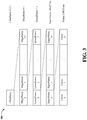
- FIG. 3 is a diagram 300 illustrating an exemplary time structure for peer-to-peer communication between the wireless devices 100.
- An ultraframe is 512 seconds and includes 64 megaframes.
- Each megaframe is 8 seconds and includes 8 grandframes.
- Each grandframe is 1 second and includes 15 superframes.
- Each superframe is approximately 66.67 ms and includes 32 frames.
- Each frame is 2.0833 ms.
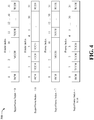
- FIG. 4 is a diagram 310 illustrating the channels in each frame of superframes in one grandframe.
- frame 0 is a reserved channel (RCH)
- frames 1-10 are each a miscellaneous channel (MCCH)
- frames 11-31 are each a traffic channel (TCCH).
- frame 0 is a RCH
- frames 1-31 are each a TCCH.
- frame 0 is a RCH
- frames 1-10 are each a MCCH
- frames 11-31 are each a TCCH.
- frame 0 is a RCH and frames 1-31 are each a TCCH.
- the MCCH of superframe index 0 includes a secondary timing synchronization channel, a peer discovery channel, a peer page channel, and a reserved slot.
- the MCCH of superframe index 7 includes a peer page channel and reserved slots.
- the TCCH includes connection scheduling, a pilot, channel quality indicator (CQI) feedback, a data segment, and an acknowledgement (ACK).
- CQI channel quality indicator
- ACK acknowledgement
- FIG. 5 is a diagram 320 illustrating an operation timeline of the MCCH and an exemplary structure of a peer discovery channel.
- the MCCH of superframe index 0 includes a secondary timing synchronization channel, a peer discovery channel, a peer paging channel, and a reserved slot.
- the peer discovery channel may be divided into subchannels.
- the peer discovery channel may be divided into a long range peer discovery channel, a medium range peer discovery channel, a short range peer discovery channel, and other channels.
- Each of the subchannels may include a plurality of blocks/resources for communicating peer discovery information.
- Each block may include a plurality of orthogonal frequency divisional multiplexing (OFDM) symbols at the same subcarrier.
- OFDM orthogonal frequency divisional multiplexing
- a subchannel e.g., short range peer discovery channel
- blocks in one megaframe which includes the MCCH superframe index 0 of grandframes 0 through 7.
- Different sets of blocks correspond to different peer discovery resource identifiers (PDRIDs).
- PDRIDs peer discovery resource identifiers
- one PDRID may correspond to one of the blocks in the MCCH superframe index 0 of one grandframe in the megaframe.
- a period of time e.g., two megaframes
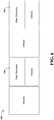
- FIG. 6 is a diagram 400 illustrating a partitioning between WWAN and peer-to-peer resources.
- a WWAN base station can set aside time frequency resources 410 for wireless devices to transmit peer discovery signals.
- the peer discovery time frequency resources 410 may be concurrent with downlink and/or uplink WWAN communication.
- wireless devices In order to maximize the range of peer discovery, wireless devices ideally should transmit their peer discovery signals at maximum power. However, transmission of peer discovery signals at maximum power can cause interference to WWAN (or other non peer discovery) communication in neighboring cells which are scheduled on the same time/frequency resource.
- a neighboring base station partitions WWAN resources that overlap with the peer discovery resources 410 or if WWAN resources of the neighboring base station overlap with the peer discovery resources 410 (e.g., due to lack of synchronization), transmission of peer discovery signals in the peer discovery resources 410 may cause interference to the neighboring base station.
- FIG. 7 is a diagram 500 for illustrating an exemplary method for controlling/reducing interference caused by peer-to-peer signaling to WWAN communication in neighboring cells.
- the wireless devices 504, 506 control the interference caused by their peer-to-peer signals by adjusting a peer-to-peer transmit power and/or a peer-to-peer duty cycle based on a path loss to the serving base station 502 or a path loss to the neighboring base station 508.
- Neighboring base stations are defined herein as base stations to which a wireless device can cause interference through the transmission of peer-to-peer signals. According to the definition, the neighboring base station 508 may not necessarily be adjacent to the serving base station 502. As discussed supra, the peer-to-peer signal may be a peer discovery signal.
- the wireless device 504 has a relatively low path loss to the serving base station 502 and a relatively high path loss to the neighboring base station 508.
- the wireless device 506 has a relatively high path loss to the serving base station 502 and a relatively low path loss to the neighboring base station 508.
- a peer discovery signal transmitted from the wireless device 506 will have a greater likelihood of causing interference to WWAN communication of the neighboring base station 508 than a peer discovery signal transmitted from the wireless device 504.
- the wireless device 506 transmits its peer discovery signal at a reduced transmit power and/or duty cycle as compared to the wireless device 504.
- the wireless devices 504, 506 may receive information from the serving base station 502 indicating the peer-to-peer transmit power and/or the peer-to-peer duty cycle to which to adjust. Alternatively, the wireless devices 504, 506 may determine the peer-to-peer transmit power and/or peer-to-peer duty cycle to which to adjust as a function of their distance to the serving base station 502 and/or the neighboring base station 508. Wireless devices at the cell edge 510, such as the wireless device 506, are likely to cause more interference to WWAN communication of neighboring base stations, such as the neighboring base station 508, than wireless devices closer to the serving base station 502, such as the wireless device 504.
- the wireless device 506 closer to the cell edge 510 may transmit at a low power and/or duty cycle while the wireless device 504 close to the serving base station 502 may transmit at a high power and/or duty cycle.
- the position of the wireless device within the cell 510 can be determined from the path loss of signals transmitted by nearby base stations (such as the serving base station 502 and the neighboring base station 508), can be communicated to the wireless device by the serving base station 502, can be determined from the timing advance suggested by the serving base station 502, or by other suitable means.
- the assignment of the peer discovery transmit power and/or peer discovery duty cycle can be made by the serving base station 502 or determined independently by the wireless devices 504, 506.
- the serving base station 502 can select the transmit power and/or duty cycle based on maintaining a total interference budget of the cell as if all wireless devices are transmitting WWAN uplink signals.
- a typical uplink scheduling protocol enforces the following: ⁇ i ⁇ b ⁇ c i H i , b H i , c i P i ⁇ Q , where P i is the received power from the i th wireless device, H is the channel gain, H i,c(i) is the channel gain for the serving base station, H i,b for b ⁇ c(i) are the channel matrices for neighboring base stations, ⁇ b ⁇ c i H i , b H i , c i is a path loss ratio, and Q is the interference budget of the cell.
- the base station 502 can determine the transmit power and/or the duty cycle of the peer discovery transmissions such that ⁇ i ⁇ P 2 P ⁇ b ⁇ c i H i , b H i , c i P max ⁇ i + ⁇ i ⁇ W W AN ⁇ b ⁇ c i H i , b H i , c i P i ⁇ Q , where ⁇ i is a scaling factor for the duty cycle or the maximum power P max for the i th wireless device, where ⁇ i ⁇ 1.
- the base station 502 may determine the transmit power and/or the duty cycle of the peer discovery transmissions such that H 504,508 H 504,502 P max ⁇ 504 + H 506,508 H 506,502 P max ⁇ 506 ⁇ Q ⁇ Q W W AN , where H 504, 508 is the channel gain between the wireless device 504 and the base station 508 (1/ H 504, 508 is the path loss between the wireless device 504 and the base station 508), H 504, 502 is the channel gain between the wireless device 504 and the base station 502 (1/ H 504, 502 is the path loss between the wireless device 504 and the base station 502), H 505, 508 is the channel gain between the wireless device 506 and the base station 508 (1/ H 506, 508 is the path loss between the wireless device 506 and the base station 508), H 506, 502 is the channel gain between the wireless device 506 and the base station 502 (1/ H 506, 502 is the path loss between the wireless device 506
- the path loss ratio H 504, 508 / H 504, 502 (i.e., the path loss of the serving base station 502 divided by the path loss to the neighboring base station 508) is very small and therefore the scaling factor ⁇ 504 for the transmit power and/or duty cycle may be close to 1.
- the path loss ratio H 506, 508 / H 506, 502 (i.e., the path loss of the serving base station 502 divided by the path loss to the neighboring base station 508) is relatively large and therefore the scaling factor ⁇ 506 for the transmit power and/or duty cycle should be smaller so as to maintain the specific interference budget of the cell less than or equal to Q-Q WWAN .
- the transmit power may be adjusted by the wireless device by transmitting at the adjusted transmit power for each OFDM symbol within its assigned block in each of the megaframes.
- the duty cycle may be adjusted by the wireless device by transmitting in an assigned block of a subset of the megaframes within an ultraframe. For example, rather than transmit in each megaframe, the wireless device 506 on the cell edge 510 may reduce its duty cycle by transmitting in assigned blocks in x megaframes of an ultraframe, where x ⁇ 64 (e.g., x /64 ⁇ ⁇ ).
- a wireless device may adjust its duty cycle and transmit power concurrently.
- FIG. 8 is a flow chart 700 of a method of wireless communication.
- the method is performed by a wireless device, such as the wireless device 506.
- the wireless device 506 may receive information from the serving base station 502 indicating at least one of a peer-to-peer transmit power or a peer-to-peer duty cycle to which to adjust (702).
- the wireless device 506 may independently determine at least one of a path loss to the serving base station 502 or a path loss to at least one neighboring base station, such as the neighboring base station 508 (704).
- the wireless device 506 adjusts at least one of a peer-to-peer transmit power or a peer-to-peer duty cycle based on at least one of a path loss to a serving base station 502 or a path loss to at least one neighboring base station (706).
- the wireless device 506 then sends a peer-to-peer signal with the peer-to-peer transmit power or the peer-to-peer duty cycle (708).
- the peer-to-peer signal may be a peer discovery signal
- the peer-to-peer transmit power may be a peer discovery transmit power for transmitting the peer discovery signal
- the peer-to-peer duty cycle may be a peer discovery duty cycle for transmitting the peer discovery signal.
- FIG. 9 is a flow chart 800 of another method of wireless communication.
- the wireless device 506 may adjust its transmit power and/or duty cycle by increasing the at least one of the peer-to-peer transmit power or the peer-to-peer duty cycle when the path loss to the serving base station 502 decreases or the path loss to the at least one neighboring base station 508 increases (802).
- the wireless device 506 may adjust its transmit power and/or duty cycle by decreasing the at least one of the peer-to-peer transmit power or the peer-to-peer duty cycle when the path loss to the serving base station 502 increases or the path loss to the at least one neighboring base station 508 decreases (804).
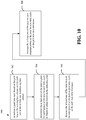
- FIG. 10 is a flow chart 900 of an exemplary method.
- the wireless device 506 may determine a path loss ratio based on the path loss to the serving base station 502 and the path loss to the at least one neighboring base station 508 (902). For example, the wireless device 506 may determine the path loss ratio equal to H 506, 508 / H 506, 502 . The wireless device then determines the at least one of the peer-to-peer transmit power or the peer-to-peer duty cycle to which to adjust based on the path loss ratio (904).
- the path loss ratio may be a sum of the path loss to the serving base station divided by the path loss to each of the at least one neighboring base station.
- the wireless device 506 may adjust the transmit power and/or duty cycle by decreasing the at least one of the peer-to-peer transmit power or the peer-to-peer duty cycle as the path loss ratio increases (906) and by increasing the at least one of the peer-to-peer transmit power or the peer-to-peer duty cycle as the path loss ratio decreases (908).
- FIG. 11 is a conceptual block diagram 1000 illustrating the functionality of an exemplary apparatus 100.
- the apparatus 100 includes a module 1002 that adjusts at least one of a peer-to-peer transmit power or a peer-to-peer duty cycle based on at least one of a path loss to a serving base station or a path loss to at least one neighboring base station.
- the apparatus 100 further includes a module 1004 that sends a peer-to-peer signal with the peer-to-peer transmit power or the peer-to-peer duty cycle.
- the apparatus 100 may include additional modules that perform each of the steps in the aforementioned flow charts. As such, each step in the aforementioned flow charts may be performed by a module and the apparatus 100 may include one or more of those modules.
- the apparatus 100 for wireless communication includes means for adjusting at least one of a peer-to-peer transmit power or a peer-to-peer duty cycle based on at least one of a path loss to a serving base station or a path loss to at least one neighboring base station, and means for sending a peer-to-peer signal with the peer-to-peer transmit power or the peer-to-peer duty cycle.
- the apparatus 100 may further include means for receiving information from the serving base station indicating at least one of the peer-to-peer transmit power or the peer-to-peer duty cycle to which to adjust.
- the means for adjusting may include at least one of means for increasing the at least one of the peer-to-peer transmit power or the peer-to-peer duty cycle when the path loss to the serving base station decreases or the path loss to the at least one neighboring base station increases, and means for decreasing the at least one of the peer-to-peer transmit power or the peer-to-peer duty cycle when the path loss to the serving base station increases or the path loss to the at least one neighboring base station decreases.
- the apparatus 100 may further include means for determining a path loss ratio based on the path loss to the serving base station and the path loss to the at least one neighboring base station, and means for determining the at least one of the peer-to-peer transmit power or the peer-to-peer duty cycle to which to adjust based on the path loss ratio.
- the means for adjusting may include means for decreasing the at least one of the peer-to-peer transmit power or the peer-to-peer duty cycle as the path loss ratio increases, and means for increasing the at least one of the peer-to-peer transmit power or the peer-to-peer duty cycle as the path loss ratio decreases.
- the aforementioned means is the processing system 114 configured to perform the functions recited by the aforementioned means.
Landscapes
- Engineering & Computer Science (AREA)
- Computer Networks & Wireless Communication (AREA)
- Signal Processing (AREA)
- Mobile Radio Communication Systems (AREA)
Claims (13)
- Procédé (700 ; 800 ; 900) de communication sans fil par un dispositif sans fil dans un réseau étendu sans fil, WWAN, prenant en charge des communications d'homologue à homologue, le procédé comprenant :l'ajustement (706) d'au moins un parmi une puissance d'émission d'homologue à homologue ou un coefficient d'utilisation d'homologue à homologue sur la base d'une atténuation de trajet entre le dispositif sans fil et une station de base de desserte du dispositif sans fil et d'une atténuation de trajet entre le dispositif sans fil et au moins une station de base voisine ; etl'envoi (708) d'un signal d'homologue à homologue avec la puissance d'émission d'homologue à homologue ou avec le coefficient d'utilisation d'homologue à homologue ;comprenant en outre :la détermination (902) d'un taux d'atténuation de trajet sur la base de l'atténuation de trajet entre le dispositif sans fil et la station de base de desserte du dispositif sans fil et de l'atténuation de trajet entre le dispositif sans fil et l'au moins une station de base voisine ; etla détermination (904) de l'au moins un parmi la puissance d'émission d'homologue à homologue ou le coefficient d'utilisation d'homologue à homologue auquel il faut réaliser l'ajustement sur la base du taux d'atténuation de trajet ;dans lequel l'ajustement comprend la diminution (906) de l'au moins un parmi la puissance d'émission d'homologue à homologue ou le coefficient d'utilisation d'homologue à homologue lorsque le taux d'atténuation de trajet augmente et l'augmentation (908) de l'au moins un parmi la puissance d'émission d'homologue à homologue ou le coefficient d'utilisation d'homologue à homologue lorsque le taux d'atténuation de trajet diminue.
- Procédé selon la revendication 1, dans lequel le signal d'homologue à homologue est un signal de découverte d'homologues, la puissance d'émission d'homologue à homologue est une puissance d'émission de découverte d'homologue pour transmettre le signal de découverte d'homologues, et le coefficient d'utilisation d'homologue à homologue est un coefficient d'utilisation de découverte d'homologue pour transmettre le signal de découverte d'homologues.
- Procédé selon la revendication 1, comprenant en outre la réception d'informations depuis la station de base de desserte indiquant au moins un parmi la puissance d'émission d'homologue à homologue ou le coefficient d'utilisation d'homologue à homologue auquel il faut réaliser l'ajustement.
- Procédé selon la revendication 1, dans lequel l'ajustement comprend au moins un parmi :l'augmentation de l'au moins un parmi la puissance d'émission d'homologue à homologue ou le coefficient d'utilisation d'homologue à homologue lorsque l'atténuation de trajet entre le dispositif sans fil et la station de base de desserte du dispositif sans fil diminue et l'atténuation de trajet entre le dispositif sans fil et l'au moins une station de base voisine augmente ; etla diminution de l'au moins un parmi la puissance d'émission d'homologue à homologue ou le coefficient d'utilisation d'homologue à homologue lorsque l'atténuation de trajet entre le dispositif sans fil et la station de base de desserte augmente et l'atténuation de trajet entre le dispositif sans fil et l'au moins une station de base voisine diminue.
- Procédé selon la revendication 1, dans lequel le taux d'atténuation de trajet est une somme de l'atténuation de trajet entre le dispositif sans fil et la station de base de desserte du dispositif sans fil divisée par l'atténuation de trajet entre le dispositif sans fil et chacune de l'au moins une station de base voisine.
- Procédé selon la revendication 5, dans lequel l'ajustement comprend :la diminution de l'au moins un parmi la puissance d'émission d'homologue à homologue ou le coefficient d'utilisation d'homologue à homologue lorsque le taux d'atténuation de trajet augmente ; etl'augmentation de l'au moins un parmi la puissance d'émission d'homologue à homologue ou le coefficient d'utilisation d'homologue à homologue lorsque le taux d'atténuation de trajet diminue.
- Appareil (1000) pour des communications sans fil dans un réseau étendu sans fil, WWAN, prenant en charge des communications d'homologue à homologue, l'appareil comprenant :un moyen (1002) pour ajuster au moins un parmi une puissance d'émission d'homologue à homologue ou un coefficient d'utilisation d'homologue à homologue sur la base d'une atténuation de trajet entre l'appareil et une station de base de desserte du dispositif sans fil et d'une atténuation de trajet entre l'appareil et au moins une station de base voisine ; etun moyen (1004) pour envoyer un signal d'homologue à homologue avec la puissance d'émission d'homologue à homologue ou le coefficient d'utilisation d'homologue à homologue ; comprenant en outre :un moyen pour déterminer un taux d'atténuation de trajet sur la base de l'atténuation de trajet entre l'appareil et de la station de base de desserte de l'appareil et l'atténuation de trajet entre l'appareil et l'au moins une station de base voisine ; etun moyen pour déterminer l'au moins un parmi la puissance d'émission d'homologue à homologue ou le coefficient d'utilisation d'homologue à homologue auquel il faut réaliser l'ajustement sur la base du taux d'atténuation de trajet ;dans lequel le moyen d'ajustement comprend un moyen pour diminuer l'au moins un parmi la puissance d'émission d'homologue à homologue ou le coefficient d'utilisation d'homologue à homologue lorsque le taux d'atténuation de trajet augmente et un moyen pour augmenter l'au moins un parmi la puissance d'émission d'homologue à homologue ou le coefficient d'utilisation d'homologue à homologue lorsque le taux d'atténuation de trajet diminue.
- Appareil selon la revendication 7, dans lequel le signal d'homologue à homologue est un signal de découverte d'homologues, la puissance d'émission d'homologue à homologue est une puissance d'émission de découverte d'homologue pour transmettre le signal de découverte d'homologues, et le coefficient d'utilisation d'homologue à homologue est un coefficient d'utilisation de découverte d'homologue pour transmettre le signal de découverte d'homologues.
- Appareil selon la revendication 7, comprenant en outre un moyen pour recevoir des informations depuis la station de base de desserte indiquant au moins un parmi la puissance d'émission d'homologue à homologue ou le coefficient d'utilisation d'homologue à homologue auquel il faut réaliser l'ajustement.
- Appareil selon la revendication 7, dans lequel le moyen d'ajustement comprend au moins un parmi :un moyen pour augmenter l'au moins un parmi la puissance d'émission d'homologue à homologue ou le coefficient d'utilisation d'homologue à homologue quand l'atténuation de trajet entre l'appareil et la station de base de desserte de l'appareil diminue et l'atténuation de trajet entre l'appareil et l'au moins une station de base voisine augmente ; etun moyen pour diminuer l'au moins un parmi la puissance d'émission d'homologue à homologue ou le coefficient d'utilisation d'homologue à homologue quand l'atténuation de trajet entre l'appareil et la station de base de desserte de l'appareil augmente et l'atténuation de trajet entre l'appareil et l'au moins une station de base voisine diminue.
- Appareil selon la revendication 7, dans lequel le taux d'atténuation de trajet est une somme de l'atténuation de trajet entre l'appareil et la station de base de desserte de l'appareil divisée par l'atténuation de trajet entre l'appareil et chacune de l'au moins une station de base voisine.
- Appareil selon la revendication 11, dans lequel le moyen d'ajustement comprend :un moyen pour diminuer l'au moins un parmi la puissance d'émission d'homologue à homologue ou le coefficient d'utilisation d'homologue à homologue lorsque le taux d'atténuation de trajet augmente ; etun moyen pour augmenter l'au moins un parmi la puissance d'émission d'homologue à homologue ou le coefficient d'utilisation d'homologue à homologue lorsque le taux d'atténuation de trajet diminue.
- Produit-programme d'ordinateur, comprenant :
un support lisible par ordinateur comprenant un code pour exécuter un procédé selon l'une quelconque des revendications 1 à 6 lorsqu'il se déroule sur un ordinateur.
Applications Claiming Priority (2)
| Application Number | Priority Date | Filing Date | Title |
|---|---|---|---|
| US13/092,775 US9288773B2 (en) | 2011-04-22 | 2011-04-22 | Methods and apparatus for controlling interference from peer discovery in WWAN |
| PCT/US2012/034587 WO2012145724A1 (fr) | 2011-04-22 | 2012-04-20 | Procédés et appareil d'élimination d'interférences provenant de signaux de découverte d'un homologue dans un réseau étendu sans fil (wwan) |
Publications (2)
| Publication Number | Publication Date |
|---|---|
| EP2700275A1 EP2700275A1 (fr) | 2014-02-26 |
| EP2700275B1 true EP2700275B1 (fr) | 2019-01-09 |
Family
ID=46022722
Family Applications (1)
| Application Number | Title | Priority Date | Filing Date |
|---|---|---|---|
| EP12718018.0A Active EP2700275B1 (fr) | 2011-04-22 | 2012-04-20 | Procédés et appareil d'élimination d'interférences provenant de signaux de découverte d'un homologue dans un réseau étendu sans fil (wwan) |
Country Status (6)
| Country | Link |
|---|---|
| US (1) | US9288773B2 (fr) |
| EP (1) | EP2700275B1 (fr) |
| JP (1) | JP5755799B2 (fr) |
| KR (1) | KR101579819B1 (fr) |
| CN (1) | CN103493553B (fr) |
| WO (1) | WO2012145724A1 (fr) |
Families Citing this family (35)
| Publication number | Priority date | Publication date | Assignee | Title |
|---|---|---|---|---|
| US20120191966A1 (en) * | 2011-01-25 | 2012-07-26 | Qualcomm Incorporated | Methods and apparatus for changing the duty cycle of mobile device discovery based on environmental information |
| US9998945B2 (en) * | 2011-11-30 | 2018-06-12 | Shailesh Patil | Methods and apparatus to change peer discovery transmission frequency based on congestion in peer-to-peer networks |
| JP2013219507A (ja) * | 2012-04-06 | 2013-10-24 | Ntt Docomo Inc | 無線通信方法、ローカルエリア基地局装置、移動端末装置及び無線通信システム |
| EP2856812A2 (fr) * | 2012-05-31 | 2015-04-08 | Interdigital Patent Holdings, Inc. | Régulation de puissance d'interconnexion de dispositif à dispositif (d2d) |
| WO2014034573A1 (fr) | 2012-08-28 | 2014-03-06 | 京セラ株式会社 | Station de base, terminal utilisateur et processeur |
| EP2892258A4 (fr) | 2012-08-29 | 2016-04-20 | Kyocera Corp | Système de communication mobile, station de base, terminal utilisateur et processeur |
| US10531269B2 (en) | 2012-11-01 | 2020-01-07 | Intel Corporation | Network assisted device-to-device discovery for peer-to-peer applications |
| US9338808B2 (en) * | 2012-11-09 | 2016-05-10 | Electronics And Telecommunications Research Institute | Method of direct communication by terminal |
| KR102047960B1 (ko) * | 2012-11-09 | 2019-12-02 | 한국전자통신연구원 | 단말의 직접 통신 방법 |
| EP2925067B1 (fr) * | 2012-12-31 | 2018-02-28 | Huawei Technologies Co., Ltd. | Procédé, appareil et système de communication entre des dispositifs |
| CN104854773B (zh) * | 2013-01-14 | 2018-05-11 | 英特尔Ip公司 | 无线网络中的能量采集设备 |
| US9807710B2 (en) | 2013-01-24 | 2017-10-31 | Lg Electronics Inc. | Method for controlling transmission power of discovery signal for device-to-device communication in wireless communication system and device for same |
| JP6294002B2 (ja) * | 2013-02-08 | 2018-03-14 | 株式会社Nttドコモ | 距離推定方法、及びユーザ装置 |
| CN105191451B (zh) * | 2013-02-12 | 2017-05-17 | 英特尔Ip公司 | 用于同步设备和相邻区域网络化(nan)配置的方法、无线通信站和系统 |
| EP2768262B1 (fr) | 2013-02-15 | 2018-07-25 | Samsung Electronics Co., Ltd. | Méthode et appareil pour commande de puissance et pour multiplexage pour communication appareil à appareil dans un système de communication cellulaire |
| KR102213461B1 (ko) * | 2013-02-15 | 2021-02-08 | 삼성전자 주식회사 | 무선 셀룰라 통신 시스템에서 단말 대 단말 통신 수행을 위한 전력 제어 및 다중화 방법 및 장치 |
| JP6166343B2 (ja) | 2013-02-19 | 2017-07-19 | 京セラ株式会社 | 通信制御方法、基地局及びユーザ端末 |
| US9622064B2 (en) * | 2013-03-14 | 2017-04-11 | Fujitsu Limited | Power control of neighbor discovery signals |
| KR102009745B1 (ko) * | 2013-04-05 | 2019-08-13 | 삼성전자주식회사 | 무선 네트워크에서의 디바이스간 직접 통신장치 및 방법 |
| JP6180786B2 (ja) * | 2013-05-17 | 2017-08-16 | 株式会社Nttドコモ | ユーザ装置、基地局、発見信号間隔調整方法、及びユーザ装置制御方法 |
| US9907081B2 (en) * | 2013-06-27 | 2018-02-27 | Telefonaktiebolaget L M Ericsson (Publ) | Managing resources for device-to-device D2D discovery in an ad-hoc radio communication network |
| CN105284166B (zh) | 2013-06-28 | 2021-03-23 | 苹果公司 | 针对对等应用的网络辅助的设备对设备发现 |
| US10932205B2 (en) | 2013-08-02 | 2021-02-23 | Blackberry Limited | Uplink power sharing control |
| KR102059135B1 (ko) * | 2013-08-14 | 2019-12-24 | 삼성전자주식회사 | 무선 통신 시스템에서 장치 간 통신을 위한 송신 제어 장치 및 방법 |
| KR102087010B1 (ko) | 2013-08-16 | 2020-03-10 | 삼성전자 주식회사 | 무선 통신에 기반한 데이터 송수신 방법 및 장치 |
| KR102236020B1 (ko) | 2013-10-08 | 2021-04-05 | 삼성전자 주식회사 | 무선 통신 시스템의 전송 신호 전력 제어 및 발견 신호 자원 다중화 방법 및 장치 |
| JP6419719B2 (ja) * | 2013-11-26 | 2018-11-07 | 京セラ株式会社 | 通信制御方法、ユーザ端末及びプロセッサ |
| JP6425049B2 (ja) | 2014-01-27 | 2018-11-21 | サン パテント トラスト | 無線装置および電力制御方法 |
| JP6398375B2 (ja) * | 2014-06-30 | 2018-10-03 | カシオ計算機株式会社 | 通信装置、および通信方法、ならびにプログラム |
| CN104113832A (zh) * | 2014-07-30 | 2014-10-22 | 宇龙计算机通信科技(深圳)有限公司 | 用于终端直连通信的功率控制方法、控制系统和基站 |
| KR102258052B1 (ko) * | 2014-09-25 | 2021-05-28 | 삼성전자주식회사 | 전자 장치에서 다른 전자 장치와 컨텐츠를 공유하기 위한 장치 및 방법 |
| US20160128027A1 (en) * | 2014-11-03 | 2016-05-05 | Qualcomm Incorporated | Adjacent channel co-existence for d2d |
| US10034322B2 (en) | 2015-02-06 | 2018-07-24 | Samsung Electronics Co., Ltd. | Method and apparatus for transmitting and receiving signal in communication system supporting device to device scheme |
| KR102366259B1 (ko) * | 2015-02-06 | 2022-02-23 | 삼성전자주식회사 | 단말간 통신을 위한 탐색 신호 송수신 방법 및 장치 |
| JP6842379B2 (ja) * | 2017-07-19 | 2021-03-17 | 株式会社Nttドコモ | ユーザ装置、及び間隔調整方法 |
Citations (2)
| Publication number | Priority date | Publication date | Assignee | Title |
|---|---|---|---|---|
| US20050153702A1 (en) * | 2004-01-08 | 2005-07-14 | Interdigital Technology Corporation | Radio resource management in wireless local area networks |
| US20060268924A1 (en) * | 2005-04-01 | 2006-11-30 | Interdigital Technology Corporation | Method and apparatus for dynamically adjusting a deferred transmission level and a transmission power level in a wireless communication system |
Family Cites Families (17)
| Publication number | Priority date | Publication date | Assignee | Title |
|---|---|---|---|---|
| US7356347B1 (en) | 2000-09-28 | 2008-04-08 | Palmsource, Inc. | Efficient discovery of devices in a bluetooth environment |
| US7342896B2 (en) * | 2003-03-03 | 2008-03-11 | Sharp Laboratories Of America, Inc. | Centralized network organization and topology discover in Ad-Hoc network with central controller |
| CN1735256A (zh) * | 2004-08-10 | 2006-02-15 | 皇家飞利浦电子股份有限公司 | 一种动态频率重用方法及装置 |
| US7613156B2 (en) | 2006-06-08 | 2009-11-03 | Motorola, Inc. | Method for energy efficient prospective peer discovery in an ad hoc network |
| US8369800B2 (en) * | 2006-09-15 | 2013-02-05 | Qualcomm Incorporated | Methods and apparatus related to power control and/or interference management in a mixed wireless communications system |
| CN103974399B (zh) | 2007-03-07 | 2019-01-29 | 交互数字技术公司 | 用于控制wtru的传输功率的方法及wtru |
| KR101498968B1 (ko) | 2007-07-05 | 2015-03-12 | 삼성전자주식회사 | 통신시스템에서 피어 투 피어 통신을 위한 자원 결정 방법및 장치 |
| US8259743B2 (en) * | 2007-07-09 | 2012-09-04 | Qualcomm Incorporated | Methods for sending small packets in a peer-to-peer (P2P) network |
| US8520704B2 (en) * | 2007-07-10 | 2013-08-27 | Qualcomm Incorporated | Coding methods of communicating identifiers in peer discovery in a peer-to-peer network |
| US8583137B2 (en) | 2008-05-16 | 2013-11-12 | Qualcomm Incorporated | Dynamic coverage adjustment in a multi-carrier communication system |
| US8521893B2 (en) * | 2008-06-27 | 2013-08-27 | Qualcomm Incorporated | Multi-rate proximity based peer discovery methods and apparatus |
| US9014104B2 (en) | 2008-11-04 | 2015-04-21 | Qualcomm Incorporated | Transmit power control based on receiver gain setting in a wireless communication network |
| US8886113B2 (en) | 2008-12-30 | 2014-11-11 | Qualcomm Incorporated | Centralized control of relay operation |
| US8406206B2 (en) * | 2009-02-23 | 2013-03-26 | Empire Technology Development Llc | Mobile peer-to-peer content sharing method and system |
| US8605625B2 (en) | 2009-04-02 | 2013-12-10 | Qualcomm Incorporated | Methods and apparatus for peer discovery in a communications system |
| US8817702B2 (en) | 2009-07-22 | 2014-08-26 | Qualcomm Incorporated | Mitigation of interference due to peer-to-peer communication |
| KR101785712B1 (ko) | 2009-10-23 | 2017-10-17 | 한국전자통신연구원 | 무선랜 시스템에서 송신 출력 제어 방법 및 장치 |
-
2011
- 2011-04-22 US US13/092,775 patent/US9288773B2/en active Active
-
2012
- 2012-04-20 JP JP2014506606A patent/JP5755799B2/ja active Active
- 2012-04-20 CN CN201280019781.8A patent/CN103493553B/zh active Active
- 2012-04-20 WO PCT/US2012/034587 patent/WO2012145724A1/fr not_active Ceased
- 2012-04-20 EP EP12718018.0A patent/EP2700275B1/fr active Active
- 2012-04-20 KR KR1020137030800A patent/KR101579819B1/ko active Active
Patent Citations (2)
| Publication number | Priority date | Publication date | Assignee | Title |
|---|---|---|---|---|
| US20050153702A1 (en) * | 2004-01-08 | 2005-07-14 | Interdigital Technology Corporation | Radio resource management in wireless local area networks |
| US20060268924A1 (en) * | 2005-04-01 | 2006-11-30 | Interdigital Technology Corporation | Method and apparatus for dynamically adjusting a deferred transmission level and a transmission power level in a wireless communication system |
Also Published As
| Publication number | Publication date |
|---|---|
| EP2700275A1 (fr) | 2014-02-26 |
| CN103493553B (zh) | 2017-05-17 |
| JP5755799B2 (ja) | 2015-07-29 |
| US9288773B2 (en) | 2016-03-15 |
| KR101579819B1 (ko) | 2015-12-24 |
| US20120269072A1 (en) | 2012-10-25 |
| KR20140002067A (ko) | 2014-01-07 |
| WO2012145724A1 (fr) | 2012-10-26 |
| WO2012145724A8 (fr) | 2013-09-26 |
| JP2014514866A (ja) | 2014-06-19 |
| CN103493553A (zh) | 2014-01-01 |
Similar Documents
| Publication | Publication Date | Title |
|---|---|---|
| US9288773B2 (en) | Methods and apparatus for controlling interference from peer discovery in WWAN | |
| US9723621B2 (en) | Priority assignment in FlashLinQ distributed scheduling algorithm to fine-tune performance | |
| US8743751B2 (en) | Peer discovery in a wireless wide area network system | |
| EP2786605B1 (fr) | Procédés et appareils pour changer le coefficient d'utilisation d'une transmission de découverte d'homologues en fonction de la congestion dans des réseaux d'homologues | |
| EP2756692B1 (fr) | Procédés et appareil pour une gestion de brouillage lors de la recherche de dispositifs pairs dans un réseau sans fil étendu | |
| EP2756717B1 (fr) | Procédés et appareil pour une programmation conjointe basée sur une interférence, de liaisons de pair à pair avec un wwan | |
| EP2625912B1 (fr) | Procédés et appareil destinés à l'attribution de ressources pour des données poste à poste dans des ressources non poste à poste | |
| EP2625917B1 (fr) | Procédés et appareil pour une programmation commune de liaisons d'homologue à homologue et de liaisons de réseau étendu sans fil dans des réseaux cellulaires | |
| US20130308524A1 (en) | Distributed interference management algorithm | |
| US9237553B2 (en) | Coexistence of priority broadcast and unicast in peer-to-peer networks | |
| EP2594102B1 (fr) | Procédés et appareil de commande de puissance d'émission en présence d'interférences | |
| WO2021250574A1 (fr) | Évitement de collision de ressources en liaison latérale pour réception discontinue (drx) | |
| EP2777354B1 (fr) | Procédé et appareil pour la détermination de priorité d'émission sur une liaison | |
| US9883488B2 (en) | Coexistence of priority broadcast and unicast in peer-to-peer networks |
Legal Events
| Date | Code | Title | Description |
|---|---|---|---|
| PUAI | Public reference made under article 153(3) epc to a published international application that has entered the european phase |
Free format text: ORIGINAL CODE: 0009012 |
|
| 17P | Request for examination filed |
Effective date: 20131024 |
|
| AK | Designated contracting states |
Kind code of ref document: A1 Designated state(s): AL AT BE BG CH CY CZ DE DK EE ES FI FR GB GR HR HU IE IS IT LI LT LU LV MC MK MT NL NO PL PT RO RS SE SI SK SM TR |
|
| DAX | Request for extension of the european patent (deleted) | ||
| 17Q | First examination report despatched |
Effective date: 20160302 |
|
| STAA | Information on the status of an ep patent application or granted ep patent |
Free format text: STATUS: EXAMINATION IS IN PROGRESS |
|
| GRAP | Despatch of communication of intention to grant a patent |
Free format text: ORIGINAL CODE: EPIDOSNIGR1 |
|
| STAA | Information on the status of an ep patent application or granted ep patent |
Free format text: STATUS: GRANT OF PATENT IS INTENDED |
|
| INTG | Intention to grant announced |
Effective date: 20180717 |
|
| GRAS | Grant fee paid |
Free format text: ORIGINAL CODE: EPIDOSNIGR3 |
|
| GRAA | (expected) grant |
Free format text: ORIGINAL CODE: 0009210 |
|
| STAA | Information on the status of an ep patent application or granted ep patent |
Free format text: STATUS: THE PATENT HAS BEEN GRANTED |
|
| AK | Designated contracting states |
Kind code of ref document: B1 Designated state(s): AL AT BE BG CH CY CZ DE DK EE ES FI FR GB GR HR HU IE IS IT LI LT LU LV MC MK MT NL NO PL PT RO RS SE SI SK SM TR |
|
| REG | Reference to a national code |
Ref country code: GB Ref legal event code: FG4D |
|
| REG | Reference to a national code |
Ref country code: CH Ref legal event code: EP Ref country code: AT Ref legal event code: REF Ref document number: 1088898 Country of ref document: AT Kind code of ref document: T Effective date: 20190115 |
|
| REG | Reference to a national code |
Ref country code: DE Ref legal event code: R096 Ref document number: 602012055676 Country of ref document: DE |
|
| REG | Reference to a national code |
Ref country code: IE Ref legal event code: FG4D |
|
| REG | Reference to a national code |
Ref country code: NL Ref legal event code: MP Effective date: 20190109 |
|
| REG | Reference to a national code |
Ref country code: LT Ref legal event code: MG4D |
|
| PG25 | Lapsed in a contracting state [announced via postgrant information from national office to epo] |
Ref country code: NL Free format text: LAPSE BECAUSE OF FAILURE TO SUBMIT A TRANSLATION OF THE DESCRIPTION OR TO PAY THE FEE WITHIN THE PRESCRIBED TIME-LIMIT Effective date: 20190109 |
|
| REG | Reference to a national code |
Ref country code: AT Ref legal event code: MK05 Ref document number: 1088898 Country of ref document: AT Kind code of ref document: T Effective date: 20190109 |
|
| PG25 | Lapsed in a contracting state [announced via postgrant information from national office to epo] |
Ref country code: PL Free format text: LAPSE BECAUSE OF FAILURE TO SUBMIT A TRANSLATION OF THE DESCRIPTION OR TO PAY THE FEE WITHIN THE PRESCRIBED TIME-LIMIT Effective date: 20190109 Ref country code: LT Free format text: LAPSE BECAUSE OF FAILURE TO SUBMIT A TRANSLATION OF THE DESCRIPTION OR TO PAY THE FEE WITHIN THE PRESCRIBED TIME-LIMIT Effective date: 20190109 Ref country code: SE Free format text: LAPSE BECAUSE OF FAILURE TO SUBMIT A TRANSLATION OF THE DESCRIPTION OR TO PAY THE FEE WITHIN THE PRESCRIBED TIME-LIMIT Effective date: 20190109 Ref country code: NO Free format text: LAPSE BECAUSE OF FAILURE TO SUBMIT A TRANSLATION OF THE DESCRIPTION OR TO PAY THE FEE WITHIN THE PRESCRIBED TIME-LIMIT Effective date: 20190409 Ref country code: ES Free format text: LAPSE BECAUSE OF FAILURE TO SUBMIT A TRANSLATION OF THE DESCRIPTION OR TO PAY THE FEE WITHIN THE PRESCRIBED TIME-LIMIT Effective date: 20190109 Ref country code: PT Free format text: LAPSE BECAUSE OF FAILURE TO SUBMIT A TRANSLATION OF THE DESCRIPTION OR TO PAY THE FEE WITHIN THE PRESCRIBED TIME-LIMIT Effective date: 20190509 Ref country code: FI Free format text: LAPSE BECAUSE OF FAILURE TO SUBMIT A TRANSLATION OF THE DESCRIPTION OR TO PAY THE FEE WITHIN THE PRESCRIBED TIME-LIMIT Effective date: 20190109 |
|
| PG25 | Lapsed in a contracting state [announced via postgrant information from national office to epo] |
Ref country code: IS Free format text: LAPSE BECAUSE OF FAILURE TO SUBMIT A TRANSLATION OF THE DESCRIPTION OR TO PAY THE FEE WITHIN THE PRESCRIBED TIME-LIMIT Effective date: 20190509 Ref country code: BG Free format text: LAPSE BECAUSE OF FAILURE TO SUBMIT A TRANSLATION OF THE DESCRIPTION OR TO PAY THE FEE WITHIN THE PRESCRIBED TIME-LIMIT Effective date: 20190409 Ref country code: GR Free format text: LAPSE BECAUSE OF FAILURE TO SUBMIT A TRANSLATION OF THE DESCRIPTION OR TO PAY THE FEE WITHIN THE PRESCRIBED TIME-LIMIT Effective date: 20190410 Ref country code: HR Free format text: LAPSE BECAUSE OF FAILURE TO SUBMIT A TRANSLATION OF THE DESCRIPTION OR TO PAY THE FEE WITHIN THE PRESCRIBED TIME-LIMIT Effective date: 20190109 Ref country code: RS Free format text: LAPSE BECAUSE OF FAILURE TO SUBMIT A TRANSLATION OF THE DESCRIPTION OR TO PAY THE FEE WITHIN THE PRESCRIBED TIME-LIMIT Effective date: 20190109 Ref country code: LV Free format text: LAPSE BECAUSE OF FAILURE TO SUBMIT A TRANSLATION OF THE DESCRIPTION OR TO PAY THE FEE WITHIN THE PRESCRIBED TIME-LIMIT Effective date: 20190109 |
|
| REG | Reference to a national code |
Ref country code: DE Ref legal event code: R097 Ref document number: 602012055676 Country of ref document: DE |
|
| PG25 | Lapsed in a contracting state [announced via postgrant information from national office to epo] |
Ref country code: AL Free format text: LAPSE BECAUSE OF FAILURE TO SUBMIT A TRANSLATION OF THE DESCRIPTION OR TO PAY THE FEE WITHIN THE PRESCRIBED TIME-LIMIT Effective date: 20190109 Ref country code: DK Free format text: LAPSE BECAUSE OF FAILURE TO SUBMIT A TRANSLATION OF THE DESCRIPTION OR TO PAY THE FEE WITHIN THE PRESCRIBED TIME-LIMIT Effective date: 20190109 Ref country code: SK Free format text: LAPSE BECAUSE OF FAILURE TO SUBMIT A TRANSLATION OF THE DESCRIPTION OR TO PAY THE FEE WITHIN THE PRESCRIBED TIME-LIMIT Effective date: 20190109 Ref country code: EE Free format text: LAPSE BECAUSE OF FAILURE TO SUBMIT A TRANSLATION OF THE DESCRIPTION OR TO PAY THE FEE WITHIN THE PRESCRIBED TIME-LIMIT Effective date: 20190109 Ref country code: IT Free format text: LAPSE BECAUSE OF FAILURE TO SUBMIT A TRANSLATION OF THE DESCRIPTION OR TO PAY THE FEE WITHIN THE PRESCRIBED TIME-LIMIT Effective date: 20190109 Ref country code: AT Free format text: LAPSE BECAUSE OF FAILURE TO SUBMIT A TRANSLATION OF THE DESCRIPTION OR TO PAY THE FEE WITHIN THE PRESCRIBED TIME-LIMIT Effective date: 20190109 Ref country code: CZ Free format text: LAPSE BECAUSE OF FAILURE TO SUBMIT A TRANSLATION OF THE DESCRIPTION OR TO PAY THE FEE WITHIN THE PRESCRIBED TIME-LIMIT Effective date: 20190109 Ref country code: RO Free format text: LAPSE BECAUSE OF FAILURE TO SUBMIT A TRANSLATION OF THE DESCRIPTION OR TO PAY THE FEE WITHIN THE PRESCRIBED TIME-LIMIT Effective date: 20190109 |
|
| PLBE | No opposition filed within time limit |
Free format text: ORIGINAL CODE: 0009261 |
|
| STAA | Information on the status of an ep patent application or granted ep patent |
Free format text: STATUS: NO OPPOSITION FILED WITHIN TIME LIMIT |
|
| PG25 | Lapsed in a contracting state [announced via postgrant information from national office to epo] |
Ref country code: SM Free format text: LAPSE BECAUSE OF FAILURE TO SUBMIT A TRANSLATION OF THE DESCRIPTION OR TO PAY THE FEE WITHIN THE PRESCRIBED TIME-LIMIT Effective date: 20190109 |
|
| REG | Reference to a national code |
Ref country code: CH Ref legal event code: PL |
|
| 26N | No opposition filed |
Effective date: 20191010 |
|
| REG | Reference to a national code |
Ref country code: BE Ref legal event code: MM Effective date: 20190430 |
|
| PG25 | Lapsed in a contracting state [announced via postgrant information from national office to epo] |
Ref country code: LU Free format text: LAPSE BECAUSE OF NON-PAYMENT OF DUE FEES Effective date: 20190420 Ref country code: MC Free format text: LAPSE BECAUSE OF FAILURE TO SUBMIT A TRANSLATION OF THE DESCRIPTION OR TO PAY THE FEE WITHIN THE PRESCRIBED TIME-LIMIT Effective date: 20190109 |
|
| PG25 | Lapsed in a contracting state [announced via postgrant information from national office to epo] |
Ref country code: LI Free format text: LAPSE BECAUSE OF NON-PAYMENT OF DUE FEES Effective date: 20190430 Ref country code: CH Free format text: LAPSE BECAUSE OF NON-PAYMENT OF DUE FEES Effective date: 20190430 |
|
| PG25 | Lapsed in a contracting state [announced via postgrant information from national office to epo] |
Ref country code: SI Free format text: LAPSE BECAUSE OF FAILURE TO SUBMIT A TRANSLATION OF THE DESCRIPTION OR TO PAY THE FEE WITHIN THE PRESCRIBED TIME-LIMIT Effective date: 20190109 Ref country code: BE Free format text: LAPSE BECAUSE OF NON-PAYMENT OF DUE FEES Effective date: 20190430 |
|
| PG25 | Lapsed in a contracting state [announced via postgrant information from national office to epo] |
Ref country code: TR Free format text: LAPSE BECAUSE OF FAILURE TO SUBMIT A TRANSLATION OF THE DESCRIPTION OR TO PAY THE FEE WITHIN THE PRESCRIBED TIME-LIMIT Effective date: 20190109 |
|
| PG25 | Lapsed in a contracting state [announced via postgrant information from national office to epo] |
Ref country code: IE Free format text: LAPSE BECAUSE OF NON-PAYMENT OF DUE FEES Effective date: 20190420 |
|
| PG25 | Lapsed in a contracting state [announced via postgrant information from national office to epo] |
Ref country code: CY Free format text: LAPSE BECAUSE OF FAILURE TO SUBMIT A TRANSLATION OF THE DESCRIPTION OR TO PAY THE FEE WITHIN THE PRESCRIBED TIME-LIMIT Effective date: 20190109 |
|
| PG25 | Lapsed in a contracting state [announced via postgrant information from national office to epo] |
Ref country code: MT Free format text: LAPSE BECAUSE OF FAILURE TO SUBMIT A TRANSLATION OF THE DESCRIPTION OR TO PAY THE FEE WITHIN THE PRESCRIBED TIME-LIMIT Effective date: 20190109 Ref country code: HU Free format text: LAPSE BECAUSE OF FAILURE TO SUBMIT A TRANSLATION OF THE DESCRIPTION OR TO PAY THE FEE WITHIN THE PRESCRIBED TIME-LIMIT; INVALID AB INITIO Effective date: 20120420 |
|
| PG25 | Lapsed in a contracting state [announced via postgrant information from national office to epo] |
Ref country code: MK Free format text: LAPSE BECAUSE OF FAILURE TO SUBMIT A TRANSLATION OF THE DESCRIPTION OR TO PAY THE FEE WITHIN THE PRESCRIBED TIME-LIMIT Effective date: 20190109 |
|
| PGFP | Annual fee paid to national office [announced via postgrant information from national office to epo] |
Ref country code: DE Payment date: 20250317 Year of fee payment: 14 |
|
| PGFP | Annual fee paid to national office [announced via postgrant information from national office to epo] |
Ref country code: GB Payment date: 20260320 Year of fee payment: 15 |
|
| PGFP | Annual fee paid to national office [announced via postgrant information from national office to epo] |
Ref country code: FR Payment date: 20260317 Year of fee payment: 15 |