EP2701037B1 - Système de confirmation haptique dépendant du contexte - Google Patents
Système de confirmation haptique dépendant du contexte Download PDFInfo
- Publication number
- EP2701037B1 EP2701037B1 EP13177696.5A EP13177696A EP2701037B1 EP 2701037 B1 EP2701037 B1 EP 2701037B1 EP 13177696 A EP13177696 A EP 13177696A EP 2701037 B1 EP2701037 B1 EP 2701037B1
- Authority
- EP
- European Patent Office
- Prior art keywords
- haptic
- confirmation
- user interface
- user
- interface element
- Prior art date
- Legal status (The legal status is an assumption and is not a legal conclusion. Google has not performed a legal analysis and makes no representation as to the accuracy of the status listed.)
- Active
Links
Images

Classifications
-
- G—PHYSICS
- G06—COMPUTING OR CALCULATING; COUNTING
- G06F—ELECTRIC DIGITAL DATA PROCESSING
- G06F3/00—Input arrangements for transferring data to be processed into a form capable of being handled by the computer; Output arrangements for transferring data from processing unit to output unit, e.g. interface arrangements
- G06F3/01—Input arrangements or combined input and output arrangements for interaction between user and computer
- G06F3/016—Input arrangements with force or tactile feedback as computer generated output to the user
-
- G—PHYSICS
- G06—COMPUTING OR CALCULATING; COUNTING
- G06F—ELECTRIC DIGITAL DATA PROCESSING
- G06F3/00—Input arrangements for transferring data to be processed into a form capable of being handled by the computer; Output arrangements for transferring data from processing unit to output unit, e.g. interface arrangements
- G06F3/01—Input arrangements or combined input and output arrangements for interaction between user and computer
- G06F3/02—Input arrangements using manually operated switches, e.g. using keyboards or dials
-
- G—PHYSICS
- G06—COMPUTING OR CALCULATING; COUNTING
- G06F—ELECTRIC DIGITAL DATA PROCESSING
- G06F3/00—Input arrangements for transferring data to be processed into a form capable of being handled by the computer; Output arrangements for transferring data from processing unit to output unit, e.g. interface arrangements
- G06F3/01—Input arrangements or combined input and output arrangements for interaction between user and computer
- G06F3/03—Arrangements for converting the position or the displacement of a member into a coded form
- G06F3/041—Digitisers, e.g. for touch screens or touch pads, characterised by the transducing means
- G06F3/0412—Digitisers structurally integrated in a display
-
- G—PHYSICS
- G06—COMPUTING OR CALCULATING; COUNTING
- G06F—ELECTRIC DIGITAL DATA PROCESSING
- G06F2203/00—Indexing scheme relating to G06F3/00 - G06F3/048
- G06F2203/01—Indexing scheme relating to G06F3/01
- G06F2203/014—Force feedback applied to GUI
Definitions
- One embodiment is directed generally to a device, and more particularly, to a device that produces haptic effects.
- Haptics is a tactile and force feedback technology that takes advantage of a user's sense of touch by applying haptic feedback effects (i.e., "haptic effects”), such as forces, vibrations, and motions, to the user.
- a device such as a mobile device, touchscreen device, and personal computer, can be configured to generate confirmation haptic effects in response to a user's interaction with the device, as a confirmation that the user has successfully interacted with the device. For example, when a user interacts with the device using, for example, a button, touchscreen, lever, joystick, wheel, or some other control, a haptic signal can be generated, where the haptic signal causes the device to produce an appropriate confirmation haptic effect.
- US 2009/0167508 A1 describes an electronic device for providing tactile feedback in response to detecting a particular status of the device.
- US 2009 / 0231271 A1 and US 2009 / 0231271 A1 describe a device that has a user interface that generates a haptic effect in response to user inputs or gestures.
- One embodiment is a haptic confirmation system that produces a confirmation haptic effect.
- the system receives context metadata associated with a user interaction of a user interface element.
- the context metadata comprises sensor input data.
- the system further maps the received context metadata to one or more haptic parameters.
- the system further generates a haptic signal based at least in part on the one or more haptic parameters.
- the system further sends the haptic signal to an actuator to generate the confirmation haptic effect.
- the invention also refers to a respective computer-implemented method, a haptic confirmation system, and a computer-readable medium according to the independent claims.
- One embodiment is a haptic confirmation system that can produce a confirmation haptic effect in response to an interaction with a user interface element of a device, such as a button displayed within a touchscreen or a keyboard, where the confirmation haptic effect can be customized based on context metadata, or some other metadata, associated with the interaction of the user interface element.
- context metadata can include data indicating one or more physical properties of the user interface element, such as the size or shape of the user interface element.
- Context metadata can also include data indicating functionality of the user interface element.
- context metadata can include data indicating whether the user interface element initiates the creation of an email message or a text message.
- Context metadata can also include data indicating a history of interaction with the user interface element.
- context metadata can include data indicating a speed at which a user either types on the user interface element (where the user interface element is a physical element, such as a keyboard), or touches the user interface element (where the user interface element is a virtual element that can be displayed within a touchscreen of the device, such as a button).
- Context metadata can also include sensor input data, such as a detected force produced by a touch applied to the user interface element by the user.
- the customization of the confirmation haptic effect can be a modification of one or more haptic parameters, such as, but not limited to, magnitude, duration, frequency, and waveform.
- the haptic confirmation system can generate multiple possible confirmation haptic events for a single user interface element, where each confirmation haptic event is individually customized based on context metadata.
- Fig. 1 illustrates a block diagram of a haptic confirmation system 10 in accordance with one embodiment of the invention.
- system 10 is part of a device, and system 10 provides a haptic confirmation functionality for the device.
- System 10 includes a bus 12 or other communication mechanism for communicating information, and a processor 22 coupled to bus 12 for processing information.
- Processor 22 may be any type of general or specific purpose processor.
- System 10 further includes a memory 14 for storing information and instructions to be executed by processor 22.
- Memory 14 can be comprised of any combination of random access memory (“RAM”), read only memory (“ROM”), static storage such as a magnetic or optical disk, or any other type of computer-readable medium.
- RAM random access memory
- ROM read only memory
- static storage such as a magnetic or optical disk, or any other type of computer-readable medium.
- a computer-readable medium may be any available medium that can be accessed by processor 22 and may include both a volatile and nonvolatile medium, a removable and non-removable medium, a communication medium, and a storage medium.
- a communication medium may include computer readable instructions, data structures, program modules or other data in a modulated data signal such as a carrier wave or other transport mechanism, and may include any other form of an information delivery medium known in the art.
- a storage medium may include RAM, flash memory, ROM, erasable programmable read-only memory (“EPROM”), electrically erasable programmable read-only memory (“EEPROM”), registers, hard disk, a removable disk, a compact disk read-only memory (“CD-ROM”), or any other form of a storage medium known in the art.
- memory 14 stores software modules that provide functionality when executed by processor 22.
- the modules include an operating system 15 that provides operating system functionality for system 10, as well as the rest of a mobile device in one embodiment.
- the modules further include a haptic confirmation module 16 that produces a confirmation haptic effect, as disclosed in more detail below.
- haptic confirmation module 16 can comprise a plurality of modules, where each individual module provides specific individual functionality for producing a confirmation haptic effect.
- System 10 will typically include one or more additional application modules 18 to include additional functionality, such as the Integrator Haptic Development Platform by Immersion Corporation.
- System 10 in embodiments that transmit and/or receive data from remote sources, further includes a communication device 20, such as a network interface card, to provide mobile wireless network communication, such as infrared, radio, Wi-Fi, or cellular network communication.
- communication device 20 provides a wired network connection, such as an Ethernet connection or a modem.
- Processor 22 is further coupled via bus 12 to a display 24, such as a Liquid Crystal Display (“LCD”), for displaying a graphical representation or user interface to a user.
- the display 24 may be a touch-sensitive input device, such as a touchscreen, configured to send and receive signals from processor 22, and may be a multi-touch touchscreen.
- Processor 22 may be further coupled to a keyboard or cursor control 28 that allows a user to interact with system 10, such as a mouse or a stylus.
- System 10 further includes an actuator 26.
- Processor 22 may transmit a haptic signal associated with a generated haptic effect to actuator 26, which in turn outputs haptic effects such as vibrotactile haptic effects.
- Actuator 26 includes an actuator drive circuit.
- Actuator 26 may be, for example, an electric motor, an electro-magnetic actuator, a voice coil, a shape memory alloy, an electro-active polymer, a solenoid, an eccentric rotating mass motor (“ERM”), a linear resonant actuator (“LRA”), a piezoelectric actuator, a high bandwidth actuator, an electroactive polymer (“EAP”) actuator, an electrostatic friction display, or an ultrasonic vibration generator.
- system 10 can include one or more additional actuators, in addition to actuator 26 (not illustrated in Fig. 1 ).
- a separate device from system 10 includes an actuator that generates the haptic effects, and system 10 sends generated haptic effect signals to that device through communication device 20.
- System 10 further includes a sensor 30.
- Sensor 30 can be configured to detect a form of energy, or other physical property, such as, but not limited to, acceleration, bio signals, distance, flow, force/pressure/strain/bend, humidity, linear position, orientation/inclination, radio frequency, rotary position, rotary velocity, manipulation of a switch, temperature, vibration, and visible light intensity.
- Sensor 30 can further be configured to convert the detected energy, or other physical property, into an electrical signal, or any signal that represents virtual sensor information.
- Sensor 30 can be any device, such as, but not limited to, an accelerometer, an electrocardiogram, an electroencephalogram, an electromyograph, an electrooculogram, an electropalatograph, a galvanic skin response sensor, a capacitive sensor, a hall effect sensor, an infrared sensor, an ultrasonic sensor, a pressure sensor, a fiber optic sensor, a flexion sensor (or bend sensor), a force-sensitive resistor, a load cell, a LuSense CPS 2 155, a miniature pressure transducer, a piezo sensor, a strain gage, a hygrometer, a linear position touch sensor, a linear potentiometer (or slider), a linear variable differential transformer, an accelerometer, a compass, an inclinometer, a magnetic tag (or radio frequency identification tag), a rotary encoder, a rotary potentiometer, a gyroscope, an on-off switch, a temperature sensor (such as a thermocouple, resistance temperature detector,
- a device can include a user interface element, where a user interface element can be a physical or virtual element of the device that the user can interact with.
- a physical user interface element is a keyboard, or cursor control, such as a mouse.
- An example of a virtual user interface element is an icon displayed within a touchscreen, such as a button, slider, scroller, switch, check box, and radio box.
- a user can interact with the user interface element, where an interaction with the user interface element can include a physical manipulation of the user interface element.
- An example of a physical manipulation of the user interface element is touching the user interface element (such as touching a keyboard or touching a touchscreen where a button, or some other type of user interface element, is displayed).
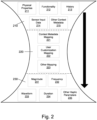
- the interaction with the user interface element can involve the creation of one or more types of context metadata (illustrated in Fig. 2 as context metadata 210), where context metadata can be any data associated with a context of the interaction with the user interface element.
- context metadata can be used to generate a confirmation haptic effect in response to the interaction with the user interface element.
- a confirmation haptic effect can be a haptic feedback effect, such as a force, vibration, and motion, which can be generated in response to a user interaction with a user interface element, in order to confirm the interaction with the user interface element.
- An example of context metadata is data indicating one or more physical properties of the user interface element (illustrated in Fig. 2 as physical properties 211).
- the one or more physical properties can include a size or shape of the user interface element, where the size of the user interface element can comprise one or more size parameters, and the shape of the user interface element can comprise one or more shape parameters.
- the one or more physical properties can include the size of a button displayed within a touchscreen of a device (i.e., one or more size parameters of the button).
- a confirmation haptic effect can be generated based on the one or more size parameters of the button.
- a small button can feel different (e.g., "lighter") to a user than a big button.
- the one or more physical properties can include the shape of the button (i.e., one or more shape parameters of the button).
- the one or more physical properties can include both the size and shape of the button (i.e., one or more size parameters of the button and one or more shape parameters of the button).
- both a size and shape of a button (or other user interface element) that a user interfaces with can be used to determine a confirmation haptic effect that is generated.
- context metadata is data indicating functionality of the user interface element (illustrated in Fig. 2 as functionality 212).
- the functionality can be functionality associated with either the user interface element or the interaction with the user interface element.
- the functionality can be the inputting of a character, or a word, within the user interface element.
- the functionality can be the creation of a text message, or email message, that can be initiated by the user interface element upon interaction with the user interface element.
- the functionality of the user interface element can be used to determine a confirmation haptic effect that is generated.
- the inputting of a character within a field displayed within a touchscreen can generate a confirmation haptic effect that is different from a confirmation haptic effect that is generated when a word is input within the field.
- the pressing of a button displayed within a touchscreen in order to create a text message can cause a confirmation haptic effect to be generated.
- the same pressing of the button displayed within the touchscreen to create an email message can cause a different confirmation haptic effect to be generated.
- context metadata is data indicating history of the user interface element (illustrated in Fig. 2 as history 213).
- the history can be history associated with one or more previous interactions with the user interface element.
- the history of a user interface element (such as a keyboard or a button displayed within a touchscreen) can be a typing speed (i.e., a speed at which a user either types on a keyboard or touches a button displayed within the touchscreen).
- a confirmation haptic effect that feels desirable at a slow typing speed may feel undesirable at a fast typing speed.
- the typing speed can be used to automatically scale a magnitude, duration, or other parameter of a confirmation haptic effect to avoid having a plurality of confirmation haptic effects blend into each other or cause other undesirable results.
- the typing speed can be determined after a plurality of interactions with the user interface element.
- the modification of the confirmation haptic effect can occur as soon as soon as a change in typing speed is identified (i.e., after the plurality of interactions).
- a sensor can produce sensor input data associated with an interaction with the user interface element.
- a sensor can generate sensor input data associated with a pressure produced by a user touching a user interface element (such as a keyboard or a button displayed within a touchscreen). Based on the pressure, a corresponding confirmation haptic effect can be generated. For example, as the pressure is increased (i.e., the user touches the user interface element harder), the magnitude of the confirmation haptic effect can increase (or decrease).
- a sensor can generate input data associated with an acceleration of a device that can indicate that the user is engaging is a physical activity, such as walking or running.
- a sensor can generate input data associated with sound produced by a user's environment. Based on the sound, it can be determined that the user's environment is noisy, and that the magnitude (or amplitude or intensity) of the confirmation haptic effect should be increased.
- a sensor can generate input data which is represented by information or signals that are created from processing data such as still images, video, or sounds. For example, a user interface element that is a virtual racing car that is displayed within a user interface can cause the confirmation haptic effect to be modified based on the car's virtual velocity, how close the car is to the camera viewing angle, or the size of the car.
- Context metadata can also be any other kind of context metadata (illustrated in Fig. 2 as other context metadata 215). This can be any kind of data that is associated with an interaction with a user interface element.
- software stored in memory or another computer-readable or tangible medium, and executed by a processor can generate one or more of the aforementioned types of context metadata.
- software stored in memory or another computer-readable or tangible medium, and executed by a processor can receive and interpret the context metadata.
- Such software can map the context metadata (in addition, in certain embodiments, to other received input data) to one or more haptic parameters (where the mapping is illustrated in Fig. 2 as mapping 220). Such mapping is further described below in greater detail.
- a confirmation haptic effect is a haptic feedback effect, such as a force, vibration, and motion, which can be generated in response to a user interaction with a user interface element, in order to confirm the interaction with the user interface element.
- a confirmation haptic effect is a static haptic effect.
- the confirmation haptic effect can be stored in, and selected from, a library of haptic effects.
- the library of haptic effects can be stored in a memory.
- a haptic parameter is a quantity of a haptic effect quality, such as magnitude, frequency, duration, amplitude (i.e., strength), waveform, or any other kind of quantifiable haptic parameter.
- a confirmation haptic effect can be defined, at least in part, by the one or more haptic parameters, where the one or more haptic parameters can define characteristics of the confirmation haptic effect. The one or more haptic parameters are further described below in greater detail.
- input data can be mapped to the one or more haptic parameters. More specifically, the one or more haptic parameters can be generated based on, at least in part, the input data.
- the context metadata can be mapped to the one or more haptic parameters (identified in Fig. 2 as context metadata mapping 221). More specifically, the one or more haptic parameters can each include a value that can be based, at least in part, on the context metadata. For example, if the context metadata (such as a size of a user interface element) is of a particular value, the one or more haptic parameters can be generated with a particular value as well.
- the context metadata can define, at least in part, the one or more haptic parameters.
- context metadata mapping is the only mapping that is performed before a confirmation haptic effect is generated.
- context metadata mapping can be combined with other mappings.
- a user in addition to context metadata mapping, can perform a customized mapping (identified in Fig. 2 as user customization mapping 222).
- the one or more haptic parameters can be modified based on one or more multipliers defined by the user. More specifically, a value for the one or more haptic parameters can be modified based on the one or more multipliers defined by the user.
- the one or more multipliers defined by the user can be based on one or more sliders that are part of a slider user interface. A slider user interface is described below in greater detail, with respect to Fig.
- the confirmation haptic effect can be modified based on the one or more multipliers.
- the one or more multipliers can be globally defined for all user interface elements. In other embodiments, the one or more multipliers can be locally defined for a specific user interface element, or a specific plurality of user interface elements.
- the user customization mapping is performed after the context metadata mapping. In alternate embodiments, the user customization mapping is performed before the context metadata mapping. In certain embodiments, the one or more multipliers are consistently applied to all user interface elements. In alternate embodiments, the one or more multipliers are applied to the user interface elements based on the context metadata associated with each user interface element.
- a multiplier is a low value, a difference in a haptic parameter (such as magnitude) between a small button and a large button can be reduced.
- a multiplier is a high value, a difference in the haptic parameter between the small button and the large button can be increased.
- one or more other mappings are performed (identified in Fig. 2 as other mapping 223).
- theme mapping can be performed, where theme mapping includes modifying one or more haptic parameters based on a defined theme, where a theme is an installable package that includes one or more haptic effects, and a mapping of one or more haptic parameters to one or more user interface elements in order to generate the one or more haptic effects.
- dynamic mapping can be performed, where data (such as context metadata) from a plurality of user interface element interactions can be mapped to one or more haptic parameters.
- the one or more other mappings can also be any other type of mapping, where data is mapped to one or more haptic parameters.
- one or more haptic parameters can be produced (where the one or more haptic parameters are illustrated in Fig. 2 as haptic parameters 230), based on the one or more mappings.
- a haptic parameter is a quantity of a haptic effect quality.
- a haptic parameter can have a value associated with the haptic parameter.
- An example of a haptic parameter is a magnitude haptic parameter (identified in Fig. 2 as magnitude 231), where a magnitude haptic parameter defines a magnitude value of a confirmation haptic effect.
- Another example of a haptic parameter is a frequency haptic parameter (identified in Fig.
- a frequency haptic parameter defines a frequency value of the confirmation haptic effect.
- a haptic parameter is a duration haptic parameter (identified in Fig. 2 as duration 233), where a duration haptic parameter defines a duration value of the confirmation haptic effect.
- a haptic parameter is a waveform haptic parameter (identified in Fig. 2 as waveform 234), where a waveform duration haptic parameter defines a waveform value of the confirmation haptic effect.
- Other examples of haptic parameters include any other types of quantifiable haptic parameter that define quantifiable values of the confirmation haptic effect.
- software stored in memory or another computer-readable or tangible medium, and executed by a processor can interpret the one or more haptic parameters and generate one or more haptic signals based, at least in part, on the one or more haptic parameters.
- the one or more haptic parameters define one or more characteristics of the haptic signal.
- a magnitude haptic parameter can define a magnitude of the haptic signal.
- a frequency haptic parameter can define a frequency of the haptic signal.
- a waveform haptic parameter can define a waveform of the haptic signal.
- a duration haptic parameter can define a duration of the haptic signal.
- software stored in memory or another computer-readable or tangible medium, and executed by a processor can send the one or more haptic signals to one or more actuators.
- the actuator can receive at least one haptic signal of the one or more haptic signals and output one or more confirmation haptic effects based on the at least one haptic signal.
- the at least one haptic signal can define one or more characteristics of the one or more confirmation haptic effects.
- the actuators can load share the one or more haptic signals.
- some of the one or more haptic signals that are associated with a first set of user interface elements can be sent to a first actuator, and the other haptic signals of the one or more haptic signals that are associated with a second set of user interface elements can be sent to a second actuator.
- some actuators are mechanical actuators, and other actuators are non-mechanical actuators.
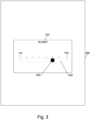
- Fig. 3 illustrates a haptic parameter slider user interface, according to an embodiment of the invention. More specifically, Fig. 3 illustrates a device 300 that displays a haptic parameter slider user interface 310.
- device 300 includes a touchscreen, where haptic parameter slider user interface 310 is displayed within the touchscreen.
- a user can perform a customized mapping.
- one or more haptic parameters can be modified based on one or more multipliers defined by the user.
- the one or more multipliers can be defined by one or more sliders of slider user interface 310.
- slider user interface 310 can control one or more multipliers used to modify one or more haptic parameters.
- slider user interface 310 includes a single slider, slider 320.
- Slider 320 can be associated with a multiplier used to modify a haptic parameter.
- Slider 320 can be associated with a magnitude multiplier used to modify a magnitude haptic parameter.
- slider 320 can be associated with a frequency multiplier used to modify a frequency haptic parameter.
- slider 320 can be associated with a waveform multiplier used to modify a waveform haptic parameter.
- slider 320 can be associated with a duration multiplier used to modify a duration haptic parameter.
- each slider can be associated with a specific multiplier used to modify a specific haptic parameter.
- slider 320 can control a multiplier used to modify a haptic parameter.
- slider 320 includes slider control 330.
- Slider control 330 is an exposed user interface element that allows a user to control the multiplier associated with slider 320.
- the user can control the multiplier associated with slider 320, and thus, control the haptic parameter associated with slider 320.
- the user can increase or decrease the value of the magnitude haptic parameter, and thus, increase or decrease a confirmation haptic effect associated with a user interface element, by moving slider control 330.
- slider 320 can globally control a multiplier used to modify a haptic parameter all user interface elements. In other embodiments, slider 320 can locally control a multiplier used to modify a haptic parameter for a specific user interface element, or a specific plurality of user interface elements. In certain embodiments, slider 320 consistently applies the multiplier to all user interface elements. In alternate embodiments, slider 320 applies the multiplier to the user interface elements based on the context metadata associated with each user interface element. For example, if slider control 330 is set to a low value, a difference in a haptic parameter (such as magnitude) between a small user interface element and a large user interface element can be reduced.
- a haptic parameter such as magnitude
- slider control 330 is set to a high value, a difference in the haptic parameter between the small user interface element and the large user interface element can be increased.
- the functionality of slider 320 can be replicated in user interface elements other than sliders, including but not limited to, dials, wheels, spinners, buttons, radio buttons, scrollers, switches, or checkboxes.
- the functionality of slider 320 may also be replicated with hardware user interface elements including but not limited to physical buttons, rocker switches, physical sliders, and "softkeys" (regions on a hardware surface that, when touched, activate some software functionality).
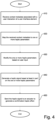
- Fig. 4 illustrates a flow diagram of the functionality of a haptic confirmation module (such as haptic confirmation module 16 of Fig. 1 ), according to one embodiment of the invention.
- the functionality of Fig. 4 is implemented by software stored in memory or another computer-readable or tangible medium, and executed by a processor.
- the functionality may be performed by hardware (e.g., through the use of an application specific integrated circuit ("ASIC"), a programmable gate array (“PGA”), a field programmable gate array (“FPGA”), etc.), or any combination of hardware and software.
- ASIC application specific integrated circuit
- PGA programmable gate array
- FPGA field programmable gate array
- the functionality may be performed by hardware using analog components.
- a user interface element can be a physical or virtual element of a device that the user can interact with.
- An example of a physical user interface element is a keyboard, or cursor control, such as a mouse.
- An example of a virtual user interface element is an icon displayed within a touchscreen, such as a button, slider, scroller, switch, check box, and radio box.
- An interaction with the user interface element can include a physical manipulation of the user interface element.
- An example of a physical manipulation of the user interface element is touching the user interface element (such as touching a keyboard or touching a touchscreen where a button, or some other type of user interface element, is displayed).
- Context metadata can be any data associated with a context of the interaction with the user interface element.
- Context metadata can include data indicating one or more physical properties of the user interface element.
- the one or more physical properties can include a size the user interface element, where the size of the user interface element can comprise one or more size parameters.
- the one or more physical properties can include a shape of the user interface element, where the shape of the user interface element can comprise one or more shape parameters.
- Context metadata can alternately include data indicating functionality of the user interface element.
- the functionality can include functionality associated with either the user interface element or the interaction with the user interface element.
- Context metadata can alternately include data indicating history of the user interface element.
- the history can include history associated with one or more previous interactions with the user interface element.
- Context metadata can alternately include sensor input data.
- the sensor input data can include sensor input data associated with an interaction with the user interface element.
- Context metadata can alternatively include other types of context metadata. The flow proceeds to 420.
- a haptic parameter can be a quantity of a haptic effect quality.
- Examples of a haptic parameter can include a magnitude haptic parameter, a frequency haptic parameter, a duration haptic parameter, an amplitude (i.e., strength) haptic parameter, and a waveform haptic parameter.
- the one or more haptic parameters can define, at least in part, a confirmation haptic effect.
- a confirmation haptic effect can be a haptic feedback effect, such as a force, vibration, and motion, which can be generated in response to a user interaction with a user interface element, in order to confirm the interaction with the user interface element.
- the one or more haptic parameters can each include a value, based at least in part on the received context metadata.
- the one or more haptic parameters are modified based on user input.
- the user input can include one or more multipliers defined by the user. Each value included for each of the one or more haptic parameters can be based on the one or more multipliers defined by the user.
- the confirmation haptic effect can be modified based on the one or more multipliers.
- the one or more multipliers can be globally defined for all user interface elements. In other embodiments, the one or more multipliers can be locally defined for a specific user interface element, or a specific plurality of user interface elements.
- the user customization mapping is performed after the context metadata mapping. In alternate embodiments, the user customization mapping is performed before the context metadata mapping.
- the one or more multipliers defined by the user can be based on one or more sliders that are part of a slider user interface. In other embodiments, the one or more multipliers defined by the user can be based on user interface elements other than sliders, including but not limited to, dials, wheels, spinners, buttons, radio buttons, scrollers, switches, or checkboxes. In other embodiments, the one or more multipliers defined by the user can be based on hardware user interface elements including but not limited to physical buttons, rocker switches, physical sliders, and "softkeys.” In certain embodiments, the modification of the one or more haptic parameters performed at 430 is omitted. The flow proceeds to 440.
- a haptic signal is generated based at least in part on the one or more haptic parameters.
- the one or more haptic parameters define one or more characteristics of the haptic signal. The flow proceeds to 450.
- the haptic signal is sent to an actuator to generate a confirmation haptic effect.
- a confirmation haptic effect can be a haptic feedback effect which can be generated in response to a user interaction with a user interface element, in order to confirm the interaction with the user interface element.
- the actuator can receive the haptic signal and output the confirmation haptic effect based on the haptic signal.
- the haptic signal defines one or more characteristics of the confirmation haptic effect. The flow then ends.
- additional (i.e., "other") context metadata associated with the subsequent user interaction with the user interface element can be received.
- the other context metadata can be mapped to a new set of (i.e., "other") one or more haptic parameters.
- Another haptic signal can be generated based, at least in part, on the other one or more haptic parameters.
- the another haptic signal can be sent to the actuator to generate another confirmation haptic effect, where the another confirmation haptic effect is different from the previously confirmation haptic effect generated by the actuator.
- a haptic confirmation system that generates one or more confirmation haptic effects based on context metadata associated with a user interaction with a user interface element.
- confirmation haptic effects for user interface elements are generally one confirmation type per element
- embodiments of the invention can provide for multiple possible confirmation haptic events for a single user interface element, based on context metadata.
Landscapes
- Engineering & Computer Science (AREA)
- General Engineering & Computer Science (AREA)
- Theoretical Computer Science (AREA)
- Human Computer Interaction (AREA)
- Physics & Mathematics (AREA)
- General Physics & Mathematics (AREA)
- User Interface Of Digital Computer (AREA)
- Position Input By Displaying (AREA)
Claims (14)
- Procédé de mise en oeuvre par ordinateur pour générer un effet haptique de confirmation, le procédé de mise en oeuvre par ordinateur comportant:la réception des métadonnées de contexte (210) associées à une interaction de l'utilisateur avec un élément d'interface utilisateur;le mappage des métadonnées de contexte (210) à un ou plusieurs paramètre(s) haptique(s) (230);la génération d'un signal haptique sur la base au moins en partie de l'un ou plusieurs paramètre(s) haptique(s) (230); etl'envoi du signal haptique à un actionneur pour générer l'effet haptique de confirmation,dans lequell'effet haptique de confirmation est généré en réponse à l'interaction de l'utilisateur avec l'élément de l'utilisateur et est personnalisé sur la base des métadonnées de contexte, etles métadonnées de contexte (210) comportent des données d'entrée de capteur, caractérisé en ce que les données d'entrée de capteur comportentdes données sonores environnementales, dans lequel, sur la base du son, il est déterminé que l'environnement de l'utilisateur est bruyant, et la magnitude, l'amplitude ou l'intensité de l'effet haptique de confirmation est augmentée.
- Procédé de mise en oeuvre par ordinateur selon la revendication 1, comportant en outre la modification de l'un ou plusieurs paramètre(s) haptique(s) (230) sur la base de l'entrée par l'utilisateur,dans lequel l'entrée par l'utilisateur comporte un ou plusieurs multiplicateur(s) défini(s) par l'utilisateur; etdans lequel chaque valeur comprise pour chacun de l'un ou plusieurs paramètre(s) haptique(s) (230) est basé(s) sur l'un ou plusieurs multiplicateur(s).
- Procédé de mise en oeuvre par ordinateur selon la revendication 2, dans lequel l'un ou plusieurs multiplicateur(s) est (sont) défini(s) globalement pour tous les éléments d'interface utilisateur.
- Procédé de mise en oeuvre par ordinateur selon la revendication 2, dans lequel l'un ou plusieurs multiplicateur(s) est (sont) défini(s) localement pour un élément spécifique d'interface utilisateur ou une pluralité spécifique des éléments d'interface utilisateur.
- Procédé de mise en oeuvre par ordinateur selon la revendication 1, dans lequel les métadonnées de contexte (210) comportent en outre des données indiquant une ou plusieurs propriété(s) physique(s) de l'élément d'interface utilisateur.
- Procédé de mise en oeuvre par ordinateur selon la revendication 1, dans lequel l'un ou plusieurs paramètres haptiques (230) comporte(nt) au moins un parmi: un paramètre haptique de magnitude, un paramètre haptique de fréquence, un paramètre haptique de durée, un paramètre haptique d'amplitude ou un paramètre haptique de forme d'onde.
- Procédé de mise en oeuvre par ordinateur selon la revendication 1, comportant en outre:
la réception d'autres métadonnées de contexte comportant d'autres données d'entrée de capteur associées à une interaction ultérieure de l'utilisateur avec l'élément d'interface utilisateur;le mappage d'autre métadonnées de contexte à un ou plusieurs paramètre(s) haptique(s);la génération d'un autre signal haptique sur la base au moins en partie de l'un ou plusieurs paramètre(s) haptique(s); etl'envoi de l'autre signal haptique à l'actionneur pour générer un autre effet haptique de confirmation, dans lequel l'autre effet haptique de confirmation est différent de l'effet haptique de confirmation. - Procédé de mise en oeuvre par ordinateur selon la revendication 1, dans lequel les données d'entrée de capteur comprennent des données de pression associées à la pression exercée sur l'élément d'interface utilisateur et l'effet haptique de confirmation est généré au moins en partie sur la base des données de pression.
- Procédé de mise en oeuvre par ordinateur selon la revendication 1, dans lequel les données d'entrée de capteur comprennent des données d'accélération et l'effet haptique de confirmation est généré au moins en partie sur la base des données d'accélération.
- Procédé de mise en oeuvre par ordinateur selon la revendication 1, dans lequel les données d'entrée de capteur comprennent des données d'entrée générés par le traitement d'au moins une parmi: des données d'image, de vidéo et du son et l'effet haptique de confirmation est généré au moins en partie sur la base des données d'entrée.
- Système de confirmation haptique (10) comportant:une mémoire (14) configurée pour stocker un module de confirmation haptique (16);un processeur (22) configuré pour exécuter le module de confirmation haptique (16) stocké dans le mémoire (14); etun actionneur (26) configuré pour sortir un ou plusieurs effet(s) haptique(s) de confirmation;dans lequel le module de confirmation haptique (16) est configuré pour recevoir des métadonnées de contexte (210) associées à une interaction de l'utilisateur avec un élément d'interface utilisateur;dans lequel le module de confirmation haptique (16) est configuré en outre pour mapper les métadonnées de contexte (210) à un ou plusieurs paramètre(s) haptique(s);dans lequel le module de confirmation haptique est configuré en outre pour générer un signal haptique sur la base au moins en partie de l'un ou plusieurs paramètre(s) haptique(s) (230); etdans lequel le module de confirmation haptique (16) est configuré en outre pour envoyer le signal haptique à l'actionneur (26) pour générer l'effet haptique de confirmation,dans lequel
l'effet haptique de confirmation est généré en réponse à l'interaction de l'utilisateur avec l'élément de l'utilisateur et est personnalisé sur la base des métadonnées de contexte, etles métadonnées de contexte (210) comportent des données d'entrée de capteur, caractérisé en ce que les données d'entrée de capteur comportentdes données sonores environnementales, dans lequel, sur la base du son, il est déterminé que l'environnement de l'utilisateur est bruyant, et la magnitude, l'amplitude ou l'intensité de l'effet haptique de confirmation est augmentée. - Système de conversion haptique selon la revendication 11, dans lequel le module de confirmation haptique (16) est configuré en outre pour modifier l'un ou plusieurs paramètre(s) haptique(s) (230) sur la base de l'entrée par l'utilisateur.
- Système de conversion haptique selon la revendication 11, dans lequel les métadonnées de contexte (210) comportent en outre des données indiquant une ou plusieurs propriété(s) physique(s) de l'élément d'interface utilisateur.
- Support lisible par ordinateur sur lequel sont stockées des instructions qui, lorsqu'elles sont exécutées par un processeur, amènent le processeur à mettre en oeuvre un procédé selon l'une quelconque des revendications 1 à 10.
Applications Claiming Priority (1)
| Application Number | Priority Date | Filing Date | Title |
|---|---|---|---|
| US13/593,626 US8896524B2 (en) | 2012-08-24 | 2012-08-24 | Context-dependent haptic confirmation system |
Publications (3)
| Publication Number | Publication Date |
|---|---|
| EP2701037A2 EP2701037A2 (fr) | 2014-02-26 |
| EP2701037A3 EP2701037A3 (fr) | 2016-04-13 |
| EP2701037B1 true EP2701037B1 (fr) | 2023-11-01 |
Family
ID=48900765
Family Applications (1)
| Application Number | Title | Priority Date | Filing Date |
|---|---|---|---|
| EP13177696.5A Active EP2701037B1 (fr) | 2012-08-24 | 2013-07-23 | Système de confirmation haptique dépendant du contexte |
Country Status (5)
| Country | Link |
|---|---|
| US (1) | US8896524B2 (fr) |
| EP (1) | EP2701037B1 (fr) |
| JP (2) | JP6317082B2 (fr) |
| KR (1) | KR102255100B1 (fr) |
| CN (2) | CN110187775A (fr) |
Families Citing this family (51)
| Publication number | Priority date | Publication date | Assignee | Title |
|---|---|---|---|---|
| GB2495486A (en) * | 2011-10-07 | 2013-04-17 | Hiwave Technologies Uk Ltd | Contextual haptic feedback in response to touch input |
| US9063570B2 (en) * | 2012-06-27 | 2015-06-23 | Immersion Corporation | Haptic feedback control system |
| US9116546B2 (en) * | 2012-08-29 | 2015-08-25 | Immersion Corporation | System for haptically representing sensor input |
| CN103777797B (zh) * | 2012-10-23 | 2017-06-27 | 联想(北京)有限公司 | 一种信息处理的方法及电子设备 |
| USD759704S1 (en) * | 2012-12-05 | 2016-06-21 | Ivoclar Vivadent Ag | Display screen or a portion thereof having an animated graphical user interface |
| US9202352B2 (en) | 2013-03-11 | 2015-12-01 | Immersion Corporation | Automatic haptic effect adjustment system |
| US9202351B2 (en) | 2013-03-11 | 2015-12-01 | Immersion Corporation | Systems and methods for haptics in vibrating environments and devices |
| US20140267076A1 (en) * | 2013-03-15 | 2014-09-18 | Immersion Corporation | Systems and Methods for Parameter Modification of Haptic Effects |
| US9939900B2 (en) | 2013-04-26 | 2018-04-10 | Immersion Corporation | System and method for a haptically-enabled deformable surface |
| US9711014B2 (en) | 2013-09-06 | 2017-07-18 | Immersion Corporation | Systems and methods for generating haptic effects associated with transitions in audio signals |
| US9576445B2 (en) | 2013-09-06 | 2017-02-21 | Immersion Corp. | Systems and methods for generating haptic effects associated with an envelope in audio signals |
| US9619980B2 (en) | 2013-09-06 | 2017-04-11 | Immersion Corporation | Systems and methods for generating haptic effects associated with audio signals |
| US9652945B2 (en) | 2013-09-06 | 2017-05-16 | Immersion Corporation | Method and system for providing haptic effects based on information complementary to multimedia content |
| WO2015169351A1 (fr) * | 2014-05-07 | 2015-11-12 | Kone Corporation | Système de rétroaction haptique et procédé respectif pour ascenseurs |
| US11023655B2 (en) * | 2014-06-11 | 2021-06-01 | Microsoft Technology Licensing, Llc | Accessibility detection of content properties through tactile interactions |
| US9690381B2 (en) | 2014-08-21 | 2017-06-27 | Immersion Corporation | Systems and methods for shape input and output for a haptically-enabled deformable surface |
| CN118567766A (zh) * | 2014-09-02 | 2024-08-30 | 苹果公司 | 用于可变触觉输出的语义框架 |
| US10185396B2 (en) * | 2014-11-12 | 2019-01-22 | Immersion Corporation | Haptic trigger modification system |
| US9535550B2 (en) | 2014-11-25 | 2017-01-03 | Immersion Corporation | Systems and methods for deformation-based haptic effects |
| US10372212B2 (en) * | 2015-05-29 | 2019-08-06 | Google Llc | Techniques for simulated physical interaction between users via their mobile computing devices |
| US10282052B2 (en) | 2015-10-15 | 2019-05-07 | At&T Intellectual Property I, L.P. | Apparatus and method for presenting information associated with icons on a display screen |
| EP3173905B1 (fr) * | 2015-11-24 | 2019-06-19 | Polar Electro Oy | Amélioration d'une commande de sortie haptique |
| US10200332B2 (en) | 2015-12-14 | 2019-02-05 | Immersion Corporation | Delivery of haptics to select recipients of a message |
| US10102722B2 (en) | 2015-12-18 | 2018-10-16 | Immersion Corporation | Wearable article having an actuator that performs non-haptic and haptic operations |
| US9990815B2 (en) * | 2016-02-18 | 2018-06-05 | Immersion Corporation | Wearable haptic effects with permissions settings |
| CN107305432B (zh) * | 2016-04-25 | 2021-06-29 | 西安中兴新软件有限责任公司 | 一种终端及在终端上实现触觉反馈的方法、装置 |
| CN107463246A (zh) * | 2016-06-03 | 2017-12-12 | 联想(北京)有限公司 | 一种信息处理方法及电子设备 |
| JP2018022438A (ja) * | 2016-08-05 | 2018-02-08 | ソニー株式会社 | 情報処理装置、情報処理方法、およびプログラム |
| US10650621B1 (en) | 2016-09-13 | 2020-05-12 | Iocurrents, Inc. | Interfacing with a vehicular controller area network |
| US10296091B2 (en) * | 2016-10-13 | 2019-05-21 | Immersion Corporation | Contextual pressure sensing haptic responses |
| EP3316076A1 (fr) * | 2016-10-25 | 2018-05-02 | Thomson Licensing | Interface haptique à compensation d'activité |
| US10744053B2 (en) | 2016-12-07 | 2020-08-18 | Stryker Corporation | Haptic systems and methods for a user interface of a patient support apparatus |
| US10449101B2 (en) | 2016-12-29 | 2019-10-22 | Stryker Corporation | Patient support apparatus and methods for supplying feedback to a user |
| US10075251B2 (en) | 2017-02-08 | 2018-09-11 | Immersion Corporation | Haptic broadcast with select haptic metadata based on haptic playback capability |
| US11810667B2 (en) | 2017-06-27 | 2023-11-07 | Stryker Corporation | Patient support systems and methods for assisting caregivers with patient care |
| US11382812B2 (en) | 2017-06-27 | 2022-07-12 | Stryker Corporation | Patient support systems and methods for assisting caregivers with patient care |
| US11096850B2 (en) | 2017-06-27 | 2021-08-24 | Stryker Corporation | Patient support apparatus control systems |
| US11337872B2 (en) | 2017-06-27 | 2022-05-24 | Stryker Corporation | Patient support systems and methods for assisting caregivers with patient care |
| US11484451B1 (en) | 2017-06-27 | 2022-11-01 | Stryker Corporation | Patient support apparatus user interfaces |
| US10811136B2 (en) | 2017-06-27 | 2020-10-20 | Stryker Corporation | Access systems for use with patient support apparatuses |
| US11202729B2 (en) | 2017-06-27 | 2021-12-21 | Stryker Corporation | Patient support apparatus user interfaces |
| US10980687B2 (en) * | 2017-07-19 | 2021-04-20 | Stryker Corporation | Techniques for generating auditory and haptic output with a vibrational panel of a patient support apparatus |
| US10503261B2 (en) * | 2017-12-15 | 2019-12-10 | Google Llc | Multi-point feedback control for touchpads |
| JP2019159781A (ja) * | 2018-03-13 | 2019-09-19 | 株式会社デンソー | 触覚呈示制御装置 |
| GB2578454A (en) | 2018-10-28 | 2020-05-13 | Cambridge Mechatronics Ltd | Haptic feedback generation |
| US11086431B2 (en) * | 2019-01-30 | 2021-08-10 | Samsung Display Co., Ltd. | Display device and method for providing haptic feedback by display device |
| JP7612143B2 (ja) | 2021-02-25 | 2025-01-14 | 株式会社村田製作所 | 信号生成装置、信号生成方法及びプログラム |
| WO2022242300A1 (fr) * | 2021-05-20 | 2022-11-24 | 荣耀终端有限公司 | Procédé et dispositif de réglage de forme d'onde de vibration d'un moteur linéaire |
| US11645871B1 (en) | 2021-11-18 | 2023-05-09 | International Business Machines Corporation | Engagement based contextual feedback for devices |
| US12105881B2 (en) * | 2022-12-29 | 2024-10-01 | Qualcomm Incorporated | On-screen keyboard user interface with context-aware haptic feedback |
| WO2025151907A1 (fr) * | 2024-01-11 | 2025-07-17 | Datafeel Inc. | Appareil, kits, supports, procédés et systèmes pour composer des pistes haptiques et des prescriptions d'énergie pour un ou plusieurs utilisateurs |
Citations (1)
| Publication number | Priority date | Publication date | Assignee | Title |
|---|---|---|---|---|
| US20090231271A1 (en) * | 2008-03-12 | 2009-09-17 | Immersion Corporation | Haptically Enabled User Interface |
Family Cites Families (25)
| Publication number | Priority date | Publication date | Assignee | Title |
|---|---|---|---|---|
| EP0727065B1 (fr) * | 1994-09-07 | 2002-02-06 | Koninklijke Philips Electronics N.V. | Espace de travail virtuel avec retroaction tactile programmable par l'utilisateur |
| JP3879355B2 (ja) * | 2000-02-24 | 2007-02-14 | 株式会社デンソー | 携帯型無線電話装置 |
| JP3949912B2 (ja) * | 2000-08-08 | 2007-07-25 | 株式会社エヌ・ティ・ティ・ドコモ | 携帯型電子機器、電子機器、振動発生器、振動による報知方法および報知制御方法 |
| US7127679B2 (en) * | 2001-06-29 | 2006-10-24 | Softrek, Inc. | Method for generating and navigating a plurality of menus using a database and a menu template |
| US7791588B2 (en) * | 2003-12-22 | 2010-09-07 | Immersion Corporation | System and method for mapping instructions associated with haptic feedback |
| JP2005332063A (ja) * | 2004-05-18 | 2005-12-02 | Sony Corp | 触覚機能付き入力装置、情報入力方法及び電子機器 |
| US20080188272A1 (en) * | 2004-06-22 | 2008-08-07 | Matsushita Electric Industrial Co., Ltd. | Information Terminal |
| DE102006029506B4 (de) | 2005-10-28 | 2018-10-11 | Volkswagen Ag | Eingabevorrichtung |
| CN101331443A (zh) * | 2005-12-09 | 2008-12-24 | 索尼爱立信移动通讯股份有限公司 | 用于控制电子内容的触觉输入设备 |
| CN101042794A (zh) * | 2006-03-20 | 2007-09-26 | 深圳迈瑞生物医疗电子股份有限公司 | 按键识别/响应系统及其按键识别/响应方法 |
| US7952498B2 (en) | 2007-06-29 | 2011-05-31 | Verizon Patent And Licensing Inc. | Haptic computer interface |
| US20090079690A1 (en) * | 2007-09-21 | 2009-03-26 | Sony Computer Entertainment America Inc. | Method and apparatus for enhancing entertainment software through haptic insertion |
| US8373549B2 (en) * | 2007-12-31 | 2013-02-12 | Apple Inc. | Tactile feedback in an electronic device |
| US20100033426A1 (en) | 2008-08-11 | 2010-02-11 | Immersion Corporation, A Delaware Corporation | Haptic Enabled Gaming Peripheral for a Musical Game |
| US8749495B2 (en) | 2008-09-24 | 2014-06-10 | Immersion Corporation | Multiple actuation handheld device |
| JP2011090575A (ja) * | 2009-10-23 | 2011-05-06 | Ricoh Co Ltd | 情報表示装置、情報表示方法、プログラム |
| US8279052B2 (en) | 2009-11-04 | 2012-10-02 | Immersion Corporation | Systems and methods for haptic confirmation of commands |
| WO2011077687A1 (fr) * | 2009-12-21 | 2011-06-30 | 京セラ株式会社 | Dispositif de rappel de force et procédé de commande d'un dispositif de rappel de force |
| JP5635274B2 (ja) * | 2010-01-27 | 2014-12-03 | 京セラ株式会社 | 触感呈示装置および触感呈示方法 |
| JP5513974B2 (ja) * | 2010-05-11 | 2014-06-04 | 日本放送協会 | 仮想力覚提示装置及び仮想力覚提示プログラム |
| US8836643B2 (en) * | 2010-06-10 | 2014-09-16 | Qualcomm Incorporated | Auto-morphing adaptive user interface device and methods |
| US8576171B2 (en) | 2010-08-13 | 2013-11-05 | Immersion Corporation | Systems and methods for providing haptic feedback to touch-sensitive input devices |
| JP5452418B2 (ja) * | 2010-08-23 | 2014-03-26 | 京セラ株式会社 | 触感呈示装置 |
| US20120113008A1 (en) | 2010-11-08 | 2012-05-10 | Ville Makinen | On-screen keyboard with haptic effects |
| JP5496337B2 (ja) * | 2011-02-04 | 2014-05-21 | パナソニック株式会社 | 電子機器 |
-
2012
- 2012-08-24 US US13/593,626 patent/US8896524B2/en active Active
-
2013
- 2013-07-23 EP EP13177696.5A patent/EP2701037B1/fr active Active
- 2013-08-13 KR KR1020130095845A patent/KR102255100B1/ko not_active Expired - Fee Related
- 2013-08-16 CN CN201910498823.4A patent/CN110187775A/zh active Pending
- 2013-08-16 CN CN201310357204.6A patent/CN103631373B/zh not_active Expired - Fee Related
- 2013-08-23 JP JP2013173785A patent/JP6317082B2/ja not_active Expired - Fee Related
-
2018
- 2018-03-29 JP JP2018063974A patent/JP6598915B2/ja not_active Expired - Fee Related
Patent Citations (1)
| Publication number | Priority date | Publication date | Assignee | Title |
|---|---|---|---|---|
| US20090231271A1 (en) * | 2008-03-12 | 2009-09-17 | Immersion Corporation | Haptically Enabled User Interface |
Also Published As
| Publication number | Publication date |
|---|---|
| CN110187775A (zh) | 2019-08-30 |
| KR20140026261A (ko) | 2014-03-05 |
| US20140055358A1 (en) | 2014-02-27 |
| EP2701037A2 (fr) | 2014-02-26 |
| JP2014044722A (ja) | 2014-03-13 |
| JP2018125021A (ja) | 2018-08-09 |
| JP6317082B2 (ja) | 2018-04-25 |
| KR102255100B1 (ko) | 2021-05-24 |
| JP6598915B2 (ja) | 2019-10-30 |
| CN103631373A (zh) | 2014-03-12 |
| US8896524B2 (en) | 2014-11-25 |
| EP2701037A3 (fr) | 2016-04-13 |
| CN103631373B (zh) | 2019-06-28 |
Similar Documents
| Publication | Publication Date | Title |
|---|---|---|
| EP2701037B1 (fr) | Système de confirmation haptique dépendant du contexte | |
| EP2846230B1 (fr) | Systèmes et procédés pour effectuer une conversion haptique | |
| CN104881175B (zh) | 具有动态触觉效应的多触摸装置 | |
| WO2018152778A1 (fr) | Toucher affectif virtuel | |
| TWI591518B (zh) | 前後關係觸覺反饋 | |
| US9983676B2 (en) | Simulation of tangible user interface interactions and gestures using array of haptic cells | |
| US9958944B2 (en) | Encoding dynamic haptic effects | |
| EP2778848B1 (fr) | Système, procédé et dispositif électronique pour fournir un effet haptique à un utilisateur | |
| EP3379385A2 (fr) | Détection automatique à distance et système de conversion haptique | |
| KR20170118864A (ko) | 곡면형 디스플레이와의 사용자 상호작용을 위한 시스템들 및 방법들 |
Legal Events
| Date | Code | Title | Description |
|---|---|---|---|
| PUAI | Public reference made under article 153(3) epc to a published international application that has entered the european phase |
Free format text: ORIGINAL CODE: 0009012 |
|
| AK | Designated contracting states |
Kind code of ref document: A2 Designated state(s): AL AT BE BG CH CY CZ DE DK EE ES FI FR GB GR HR HU IE IS IT LI LT LU LV MC MK MT NL NO PL PT RO RS SE SI SK SM TR |
|
| AX | Request for extension of the european patent |
Extension state: BA ME |
|
| RAP1 | Party data changed (applicant data changed or rights of an application transferred) |
Owner name: IMMERSION CORPORATION |
|
| PUAL | Search report despatched |
Free format text: ORIGINAL CODE: 0009013 |
|
| AK | Designated contracting states |
Kind code of ref document: A3 Designated state(s): AL AT BE BG CH CY CZ DE DK EE ES FI FR GB GR HR HU IE IS IT LI LT LU LV MC MK MT NL NO PL PT RO RS SE SI SK SM TR |
|
| AX | Request for extension of the european patent |
Extension state: BA ME |
|
| RIC1 | Information provided on ipc code assigned before grant |
Ipc: G06F 3/01 20060101AFI20160309BHEP |
|
| 17P | Request for examination filed |
Effective date: 20161011 |
|
| RBV | Designated contracting states (corrected) |
Designated state(s): AL AT BE BG CH CY CZ DE DK EE ES FI FR GB GR HR HU IE IS IT LI LT LU LV MC MK MT NL NO PL PT RO RS SE SI SK SM TR |
|
| R17P | Request for examination filed (corrected) |
Effective date: 20161011 |
|
| STAA | Information on the status of an ep patent application or granted ep patent |
Free format text: STATUS: EXAMINATION IS IN PROGRESS |
|
| 17Q | First examination report despatched |
Effective date: 20180531 |
|
| GRAP | Despatch of communication of intention to grant a patent |
Free format text: ORIGINAL CODE: EPIDOSNIGR1 |
|
| STAA | Information on the status of an ep patent application or granted ep patent |
Free format text: STATUS: GRANT OF PATENT IS INTENDED |
|
| INTG | Intention to grant announced |
Effective date: 20230525 |
|
| P01 | Opt-out of the competence of the unified patent court (upc) registered |
Effective date: 20230530 |
|
| GRAS | Grant fee paid |
Free format text: ORIGINAL CODE: EPIDOSNIGR3 |
|
| GRAA | (expected) grant |
Free format text: ORIGINAL CODE: 0009210 |
|
| STAA | Information on the status of an ep patent application or granted ep patent |
Free format text: STATUS: THE PATENT HAS BEEN GRANTED |
|
| AK | Designated contracting states |
Kind code of ref document: B1 Designated state(s): AL AT BE BG CH CY CZ DE DK EE ES FI FR GB GR HR HU IE IS IT LI LT LU LV MC MK MT NL NO PL PT RO RS SE SI SK SM TR |
|
| REG | Reference to a national code |
Ref country code: GB Ref legal event code: FG4D |
|
| REG | Reference to a national code |
Ref country code: CH Ref legal event code: EP |
|
| REG | Reference to a national code |
Ref country code: DE Ref legal event code: R096 Ref document number: 602013084872 Country of ref document: DE |
|
| REG | Reference to a national code |
Ref country code: IE Ref legal event code: FG4D |
|
| REG | Reference to a national code |
Ref country code: LT Ref legal event code: MG9D |
|
| REG | Reference to a national code |
Ref country code: NL Ref legal event code: MP Effective date: 20231101 |
|
| PG25 | Lapsed in a contracting state [announced via postgrant information from national office to epo] |
Ref country code: GR Free format text: LAPSE BECAUSE OF FAILURE TO SUBMIT A TRANSLATION OF THE DESCRIPTION OR TO PAY THE FEE WITHIN THE PRESCRIBED TIME-LIMIT Effective date: 20240202 |
|
| PG25 | Lapsed in a contracting state [announced via postgrant information from national office to epo] |
Ref country code: IS Free format text: LAPSE BECAUSE OF FAILURE TO SUBMIT A TRANSLATION OF THE DESCRIPTION OR TO PAY THE FEE WITHIN THE PRESCRIBED TIME-LIMIT Effective date: 20240301 |
|
| PG25 | Lapsed in a contracting state [announced via postgrant information from national office to epo] |
Ref country code: LT Free format text: LAPSE BECAUSE OF FAILURE TO SUBMIT A TRANSLATION OF THE DESCRIPTION OR TO PAY THE FEE WITHIN THE PRESCRIBED TIME-LIMIT Effective date: 20231101 |
|
| REG | Reference to a national code |
Ref country code: AT Ref legal event code: MK05 Ref document number: 1627944 Country of ref document: AT Kind code of ref document: T Effective date: 20231101 |
|
| PG25 | Lapsed in a contracting state [announced via postgrant information from national office to epo] |
Ref country code: NL Free format text: LAPSE BECAUSE OF FAILURE TO SUBMIT A TRANSLATION OF THE DESCRIPTION OR TO PAY THE FEE WITHIN THE PRESCRIBED TIME-LIMIT Effective date: 20231101 |
|
| PG25 | Lapsed in a contracting state [announced via postgrant information from national office to epo] |
Ref country code: AT Free format text: LAPSE BECAUSE OF FAILURE TO SUBMIT A TRANSLATION OF THE DESCRIPTION OR TO PAY THE FEE WITHIN THE PRESCRIBED TIME-LIMIT Effective date: 20231101 |
|
| PG25 | Lapsed in a contracting state [announced via postgrant information from national office to epo] |
Ref country code: ES Free format text: LAPSE BECAUSE OF FAILURE TO SUBMIT A TRANSLATION OF THE DESCRIPTION OR TO PAY THE FEE WITHIN THE PRESCRIBED TIME-LIMIT Effective date: 20231101 |
|
| PG25 | Lapsed in a contracting state [announced via postgrant information from national office to epo] |
Ref country code: NL Free format text: LAPSE BECAUSE OF FAILURE TO SUBMIT A TRANSLATION OF THE DESCRIPTION OR TO PAY THE FEE WITHIN THE PRESCRIBED TIME-LIMIT Effective date: 20231101 Ref country code: LT Free format text: LAPSE BECAUSE OF FAILURE TO SUBMIT A TRANSLATION OF THE DESCRIPTION OR TO PAY THE FEE WITHIN THE PRESCRIBED TIME-LIMIT Effective date: 20231101 Ref country code: IS Free format text: LAPSE BECAUSE OF FAILURE TO SUBMIT A TRANSLATION OF THE DESCRIPTION OR TO PAY THE FEE WITHIN THE PRESCRIBED TIME-LIMIT Effective date: 20240301 Ref country code: GR Free format text: LAPSE BECAUSE OF FAILURE TO SUBMIT A TRANSLATION OF THE DESCRIPTION OR TO PAY THE FEE WITHIN THE PRESCRIBED TIME-LIMIT Effective date: 20240202 Ref country code: ES Free format text: LAPSE BECAUSE OF FAILURE TO SUBMIT A TRANSLATION OF THE DESCRIPTION OR TO PAY THE FEE WITHIN THE PRESCRIBED TIME-LIMIT Effective date: 20231101 Ref country code: BG Free format text: LAPSE BECAUSE OF FAILURE TO SUBMIT A TRANSLATION OF THE DESCRIPTION OR TO PAY THE FEE WITHIN THE PRESCRIBED TIME-LIMIT Effective date: 20240201 Ref country code: AT Free format text: LAPSE BECAUSE OF FAILURE TO SUBMIT A TRANSLATION OF THE DESCRIPTION OR TO PAY THE FEE WITHIN THE PRESCRIBED TIME-LIMIT Effective date: 20231101 Ref country code: PT Free format text: LAPSE BECAUSE OF FAILURE TO SUBMIT A TRANSLATION OF THE DESCRIPTION OR TO PAY THE FEE WITHIN THE PRESCRIBED TIME-LIMIT Effective date: 20240301 |
|
| PG25 | Lapsed in a contracting state [announced via postgrant information from national office to epo] |
Ref country code: SE Free format text: LAPSE BECAUSE OF FAILURE TO SUBMIT A TRANSLATION OF THE DESCRIPTION OR TO PAY THE FEE WITHIN THE PRESCRIBED TIME-LIMIT Effective date: 20231101 Ref country code: RS Free format text: LAPSE BECAUSE OF FAILURE TO SUBMIT A TRANSLATION OF THE DESCRIPTION OR TO PAY THE FEE WITHIN THE PRESCRIBED TIME-LIMIT Effective date: 20231101 Ref country code: PL Free format text: LAPSE BECAUSE OF FAILURE TO SUBMIT A TRANSLATION OF THE DESCRIPTION OR TO PAY THE FEE WITHIN THE PRESCRIBED TIME-LIMIT Effective date: 20231101 Ref country code: NO Free format text: LAPSE BECAUSE OF FAILURE TO SUBMIT A TRANSLATION OF THE DESCRIPTION OR TO PAY THE FEE WITHIN THE PRESCRIBED TIME-LIMIT Effective date: 20240201 Ref country code: LV Free format text: LAPSE BECAUSE OF FAILURE TO SUBMIT A TRANSLATION OF THE DESCRIPTION OR TO PAY THE FEE WITHIN THE PRESCRIBED TIME-LIMIT Effective date: 20231101 Ref country code: HR Free format text: LAPSE BECAUSE OF FAILURE TO SUBMIT A TRANSLATION OF THE DESCRIPTION OR TO PAY THE FEE WITHIN THE PRESCRIBED TIME-LIMIT Effective date: 20231101 |
|
| PG25 | Lapsed in a contracting state [announced via postgrant information from national office to epo] |
Ref country code: DK Free format text: LAPSE BECAUSE OF FAILURE TO SUBMIT A TRANSLATION OF THE DESCRIPTION OR TO PAY THE FEE WITHIN THE PRESCRIBED TIME-LIMIT Effective date: 20231101 |
|
| PG25 | Lapsed in a contracting state [announced via postgrant information from national office to epo] |
Ref country code: CZ Free format text: LAPSE BECAUSE OF FAILURE TO SUBMIT A TRANSLATION OF THE DESCRIPTION OR TO PAY THE FEE WITHIN THE PRESCRIBED TIME-LIMIT Effective date: 20231101 |
|
| PG25 | Lapsed in a contracting state [announced via postgrant information from national office to epo] |
Ref country code: SK Free format text: LAPSE BECAUSE OF FAILURE TO SUBMIT A TRANSLATION OF THE DESCRIPTION OR TO PAY THE FEE WITHIN THE PRESCRIBED TIME-LIMIT Effective date: 20231101 |
|
| PG25 | Lapsed in a contracting state [announced via postgrant information from national office to epo] |
Ref country code: SM Free format text: LAPSE BECAUSE OF FAILURE TO SUBMIT A TRANSLATION OF THE DESCRIPTION OR TO PAY THE FEE WITHIN THE PRESCRIBED TIME-LIMIT Effective date: 20231101 Ref country code: SK Free format text: LAPSE BECAUSE OF FAILURE TO SUBMIT A TRANSLATION OF THE DESCRIPTION OR TO PAY THE FEE WITHIN THE PRESCRIBED TIME-LIMIT Effective date: 20231101 Ref country code: RO Free format text: LAPSE BECAUSE OF FAILURE TO SUBMIT A TRANSLATION OF THE DESCRIPTION OR TO PAY THE FEE WITHIN THE PRESCRIBED TIME-LIMIT Effective date: 20231101 Ref country code: IT Free format text: LAPSE BECAUSE OF FAILURE TO SUBMIT A TRANSLATION OF THE DESCRIPTION OR TO PAY THE FEE WITHIN THE PRESCRIBED TIME-LIMIT Effective date: 20231101 Ref country code: EE Free format text: LAPSE BECAUSE OF FAILURE TO SUBMIT A TRANSLATION OF THE DESCRIPTION OR TO PAY THE FEE WITHIN THE PRESCRIBED TIME-LIMIT Effective date: 20231101 Ref country code: DK Free format text: LAPSE BECAUSE OF FAILURE TO SUBMIT A TRANSLATION OF THE DESCRIPTION OR TO PAY THE FEE WITHIN THE PRESCRIBED TIME-LIMIT Effective date: 20231101 Ref country code: CZ Free format text: LAPSE BECAUSE OF FAILURE TO SUBMIT A TRANSLATION OF THE DESCRIPTION OR TO PAY THE FEE WITHIN THE PRESCRIBED TIME-LIMIT Effective date: 20231101 |
|
| REG | Reference to a national code |
Ref country code: DE Ref legal event code: R097 Ref document number: 602013084872 Country of ref document: DE |
|
| PLBE | No opposition filed within time limit |
Free format text: ORIGINAL CODE: 0009261 |
|
| STAA | Information on the status of an ep patent application or granted ep patent |
Free format text: STATUS: NO OPPOSITION FILED WITHIN TIME LIMIT |
|
| 26N | No opposition filed |
Effective date: 20240802 |
|
| PGFP | Annual fee paid to national office [announced via postgrant information from national office to epo] |
Ref country code: DE Payment date: 20240729 Year of fee payment: 12 |
|
| PGFP | Annual fee paid to national office [announced via postgrant information from national office to epo] |
Ref country code: FR Payment date: 20240725 Year of fee payment: 12 |
|
| PG25 | Lapsed in a contracting state [announced via postgrant information from national office to epo] |
Ref country code: SI Free format text: LAPSE BECAUSE OF FAILURE TO SUBMIT A TRANSLATION OF THE DESCRIPTION OR TO PAY THE FEE WITHIN THE PRESCRIBED TIME-LIMIT Effective date: 20231101 |
|
| PG25 | Lapsed in a contracting state [announced via postgrant information from national office to epo] |
Ref country code: SI Free format text: LAPSE BECAUSE OF FAILURE TO SUBMIT A TRANSLATION OF THE DESCRIPTION OR TO PAY THE FEE WITHIN THE PRESCRIBED TIME-LIMIT Effective date: 20231101 |
|
| PG25 | Lapsed in a contracting state [announced via postgrant information from national office to epo] |
Ref country code: MC Free format text: LAPSE BECAUSE OF FAILURE TO SUBMIT A TRANSLATION OF THE DESCRIPTION OR TO PAY THE FEE WITHIN THE PRESCRIBED TIME-LIMIT Effective date: 20231101 |
|
| REG | Reference to a national code |
Ref country code: CH Ref legal event code: PL |
|
| PG25 | Lapsed in a contracting state [announced via postgrant information from national office to epo] |
Ref country code: LU Free format text: LAPSE BECAUSE OF NON-PAYMENT OF DUE FEES Effective date: 20240723 |
|
| GBPC | Gb: european patent ceased through non-payment of renewal fee |
Effective date: 20240723 |
|
| PG25 | Lapsed in a contracting state [announced via postgrant information from national office to epo] |
Ref country code: LU Free format text: LAPSE BECAUSE OF NON-PAYMENT OF DUE FEES Effective date: 20240723 |
|
| PG25 | Lapsed in a contracting state [announced via postgrant information from national office to epo] |
Ref country code: CH Free format text: LAPSE BECAUSE OF NON-PAYMENT OF DUE FEES Effective date: 20240731 Ref country code: BE Free format text: LAPSE BECAUSE OF NON-PAYMENT OF DUE FEES Effective date: 20240731 |
|
| PG25 | Lapsed in a contracting state [announced via postgrant information from national office to epo] |
Ref country code: GB Free format text: LAPSE BECAUSE OF NON-PAYMENT OF DUE FEES Effective date: 20240723 |
|
| REG | Reference to a national code |
Ref country code: BE Ref legal event code: MM Effective date: 20240731 |
|
| PG25 | Lapsed in a contracting state [announced via postgrant information from national office to epo] |
Ref country code: IE Free format text: LAPSE BECAUSE OF NON-PAYMENT OF DUE FEES Effective date: 20240723 |
|
| PG25 | Lapsed in a contracting state [announced via postgrant information from national office to epo] |
Ref country code: FI Free format text: LAPSE BECAUSE OF FAILURE TO SUBMIT A TRANSLATION OF THE DESCRIPTION OR TO PAY THE FEE WITHIN THE PRESCRIBED TIME-LIMIT Effective date: 20231101 |
|
| PG25 | Lapsed in a contracting state [announced via postgrant information from national office to epo] |
Ref country code: CY Free format text: LAPSE BECAUSE OF FAILURE TO SUBMIT A TRANSLATION OF THE DESCRIPTION OR TO PAY THE FEE WITHIN THE PRESCRIBED TIME-LIMIT; INVALID AB INITIO Effective date: 20130723 |
|
| REG | Reference to a national code |
Ref country code: DE Ref legal event code: R119 Ref document number: 602013084872 Country of ref document: DE |
|
| PG25 | Lapsed in a contracting state [announced via postgrant information from national office to epo] |
Ref country code: HU Free format text: LAPSE BECAUSE OF FAILURE TO SUBMIT A TRANSLATION OF THE DESCRIPTION OR TO PAY THE FEE WITHIN THE PRESCRIBED TIME-LIMIT; INVALID AB INITIO Effective date: 20130723 |
|
| PG25 | Lapsed in a contracting state [announced via postgrant information from national office to epo] |
Ref country code: DE Free format text: LAPSE BECAUSE OF NON-PAYMENT OF DUE FEES Effective date: 20260203 |
|
| PG25 | Lapsed in a contracting state [announced via postgrant information from national office to epo] |
Ref country code: FR Free format text: LAPSE BECAUSE OF NON-PAYMENT OF DUE FEES Effective date: 20250731 |