EP2701065A1 - Procédé de fonctionnement d'un système d'automatisation redondant - Google Patents
Procédé de fonctionnement d'un système d'automatisation redondant Download PDFInfo
- Publication number
- EP2701065A1 EP2701065A1 EP12181713.4A EP12181713A EP2701065A1 EP 2701065 A1 EP2701065 A1 EP 2701065A1 EP 12181713 A EP12181713 A EP 12181713A EP 2701065 A1 EP2701065 A1 EP 2701065A1
- Authority
- EP
- European Patent Office
- Prior art keywords
- message
- slave
- task
- master
- nhs
- Prior art date
- Legal status (The legal status is an assumption and is not a legal conclusion. Google has not performed a legal analysis and makes no representation as to the accuracy of the status listed.)
- Granted
Links
Images
Classifications
-
- G—PHYSICS
- G05—CONTROLLING; REGULATING
- G05B—CONTROL OR REGULATING SYSTEMS IN GENERAL; FUNCTIONAL ELEMENTS OF SUCH SYSTEMS; MONITORING OR TESTING ARRANGEMENTS FOR SUCH SYSTEMS OR ELEMENTS
- G05B15/00—Systems controlled by a computer
- G05B15/02—Systems controlled by a computer electric
-
- G—PHYSICS
- G06—COMPUTING OR CALCULATING; COUNTING
- G06F—ELECTRIC DIGITAL DATA PROCESSING
- G06F11/00—Error detection; Error correction; Monitoring
- G06F11/07—Responding to the occurrence of a fault, e.g. fault tolerance
- G06F11/16—Error detection or correction of the data by redundancy in hardware
- G06F11/1675—Temporal synchronisation or re-synchronisation of redundant processing components
- G06F11/1687—Temporal synchronisation or re-synchronisation of redundant processing components at event level, e.g. by interrupt or result of polling
-
- G—PHYSICS
- G06—COMPUTING OR CALCULATING; COUNTING
- G06F—ELECTRIC DIGITAL DATA PROCESSING
- G06F9/00—Arrangements for program control, e.g. control units
- G06F9/06—Arrangements for program control, e.g. control units using stored programs, i.e. using an internal store of processing equipment to receive or retain programs
- G06F9/46—Multiprogramming arrangements
- G06F9/54—Interprogram communication
- G06F9/546—Message passing systems or structures, e.g. queues
-
- G—PHYSICS
- G06—COMPUTING OR CALCULATING; COUNTING
- G06F—ELECTRIC DIGITAL DATA PROCESSING
- G06F11/00—Error detection; Error correction; Monitoring
- G06F11/07—Responding to the occurrence of a fault, e.g. fault tolerance
- G06F11/16—Error detection or correction of the data by redundancy in hardware
- G06F11/20—Error detection or correction of the data by redundancy in hardware using active fault-masking, e.g. by switching out faulty elements or by switching in spare elements
- G06F11/202—Error detection or correction of the data by redundancy in hardware using active fault-masking, e.g. by switching out faulty elements or by switching in spare elements where processing functionality is redundant
- G06F11/2023—Failover techniques
- G06F11/2033—Failover techniques switching over of hardware resources
-
- G—PHYSICS
- G06—COMPUTING OR CALCULATING; COUNTING
- G06F—ELECTRIC DIGITAL DATA PROCESSING
- G06F11/00—Error detection; Error correction; Monitoring
- G06F11/07—Responding to the occurrence of a fault, e.g. fault tolerance
- G06F11/16—Error detection or correction of the data by redundancy in hardware
- G06F11/20—Error detection or correction of the data by redundancy in hardware using active fault-masking, e.g. by switching out faulty elements or by switching in spare elements
- G06F11/202—Error detection or correction of the data by redundancy in hardware using active fault-masking, e.g. by switching out faulty elements or by switching in spare elements where processing functionality is redundant
- G06F11/2038—Error detection or correction of the data by redundancy in hardware using active fault-masking, e.g. by switching out faulty elements or by switching in spare elements where processing functionality is redundant with a single idle spare processing component
-
- G—PHYSICS
- G06—COMPUTING OR CALCULATING; COUNTING
- G06F—ELECTRIC DIGITAL DATA PROCESSING
- G06F11/00—Error detection; Error correction; Monitoring
- G06F11/07—Responding to the occurrence of a fault, e.g. fault tolerance
- G06F11/16—Error detection or correction of the data by redundancy in hardware
- G06F11/20—Error detection or correction of the data by redundancy in hardware using active fault-masking, e.g. by switching out faulty elements or by switching in spare elements
- G06F11/2097—Error detection or correction of the data by redundancy in hardware using active fault-masking, e.g. by switching out faulty elements or by switching in spare elements maintaining the standby controller/processing unit updated
Definitions
- the invention relates to a method for operating a redundant, provided with a first and a second subsystem automation system, wherein one of the subsystems is operated as a master and the other subsystem as a slave and wherein the subsystems provided for sending and receiving messages with send and receive tasks are. Moreover, the invention relates to a redundant automation system which is suitable for carrying out the method.
- Such a method which has mechanisms of intertask communication, as well as such a redundant automation system for carrying out this method are known per se in automation technology.
- H systems highly available solutions
- the development of such highly available solutions is very costly, with an H-system usually used in the automation environment being characterized in that two or more subsystems in the form of automation devices or computer systems are coupled to one another via a synchronization connection.
- both subsystems can read and / or write access to the peripheral units connected to this H system.
- One of the two subsystems is leading the periphery connected to the system.
- a H-system requires a bumpless "failover" if one of the subsystems fails and needs to be switched to the other subsystem. This means that despite this unplanned changeover or this unplanned change from one to the other subsystem, this changeover or change does not interfere with the technical process to be controlled. It is permissible for a (short) dead time to occur at the outputs of the connected I / O during which the outputs remain at their last valid process output values. However, a jump (burst) of the values at these outputs due to switching is not desired and should therefore be avoided. Bumpless is therefore also the continuity of the curve of the process output values to understand. To achieve this, the two subsystems must have the same system state at the time of failure.
- both subsystems process the input information (inputs) of the process, then both systems are in the same system state if they - with the same process input data or process input information - their respective "thread global" data (common data of programs, especially programs of different priorities ) change in the same way.
- the synchronization process ensures that the individual threads of the two subsystems are interrupted or processed in the same way. This results in an identical "thread mountains”.
- the processing power of the master is decoupled from the communication bandwidth available for event synchronization, which is particularly important in view of the increasing imbalance between the increase in the processing power of the processors on the one hand and the increase in communication performance on the other hand; because the communication performance usually can not keep up with the increasing processing power.
- the synchronization of the two subsystems after the occurrence of an event takes place in such a way that both the master and the slave undergo the same program paths (path-synchronously) as a result of this event, the sequences being temporally asynchronous.
- a "run-on” is understood to mean the time difference between the start of the processing of the processing sections by the master and the beginning of the processing of the processing sections by the slave, which corresponds to the time of occurrence of the enable signal.
- sending and receiving messages by means of send and receive tasks in a suitable manner. For example, in the event that a communication task of the respective subsystem sends messages to the receiving task of the respective subsystem, must be ensured be that the transmission and reception order on the slave corresponds to that on the master.
- the slave's message processing would be analogous to that of the master, a different processing order of the messages could result in the master and in the slave due to the time-asynchronous passage of the program paths, which leads to disruptions of a technical process could come to proper control.
- the invention is therefore based on the object to provide a method of the type mentioned, which avoids such disadvantages.
- a redundant automation system is to be created, which is suitable for carrying out the method.
- a message exchange is accomplished programmpfadsynchron also in the context of a time-asynchronous passage of a program path on the master and the slave.
- the method can also be used in an automation system which realizes a temporally synchronous processing of the program paths.
- second messages can be transmitted by means of a send task of the master or the slave both to a receive task of the master as well as to a receive task of the slave.
- a send task of the master must send these process input values to the processor for further processing Provide message of both a separate receive task and a receive task of the slave. This means that in this case the send task only runs on the master, but the receive task on both the master and the slave.
- the send task of the slave must transmit this message representing the process input values to the respective receive tasks of the master and the slave.
- a send task - either on the master or the slave - as well as two receive tasks - one each on the master and the slave - is active.
- the process input information is processed in time asynchronously and program path synchronously in the same order both in the master and in the slave, whereby a trouble-free redundant operation of the automation system is made possible.
- a third message is to be transmitted to a third receive task of this subsystem by means of a third send task of one of the subsystems
- the third message is transmitted by the message handler of that subsystem to the receive task of that subsystem ,
- This message is z. B. passed in a so-called layer stack of the master or the slave from one level to the next level.
- this message from the message handler of the respective subsystem to the Receive task of the respective subsystem is forwarded, if this message handler detects that this subsystem is the recipient of this message. For example, it may happen that an operating and monitoring device is connected only to the master and that this operating and monitoring device is to transmit a telegram.
- the message handler of the master recognizes that the operating and monitoring device is connected to the master and therefore forwards the message representing the message to the receiving task of the master. From this received message generated z. B.
- a control program of the master a telegram, which the master transmits the operating and monitoring device.
- the message handler of the slave recognizes, however, that no HMI device is connected to the slave and therefore discards the message, which means that this message is not forwarded to the receive task of the slave.
- a send or receive task is also understood to mean a send or receive thread or another suitable send or receive module or suitable program code for realizing a communication within a subsystem or between the subsystems.
- a first, a second, a third and a fourth message are only different messages; it is understood no temporal order in terms of sending or receiving these messages, third messages can, for. B. sent or received before first or second messages.
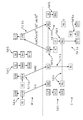
- FIG. 1 shows a simplified representation of processes of information exchange between transmitting and receiving task of a redundant automation system.
- This first message N1 which is to be processed by both a master M and a slave S, transmits a first transmission task of the master M to a message handler NhM of this master M and a first transmission task of the slave S to a message handler NhS of this slave S.
- the message handler NhM of the master M forwards this message N1 via a master system kernel or a master operating system of a first receive task Et1M and also transmits to the message handler NhS of the slave S a message reference N1r which is assigned to the slave S indicates that the master M has transmitted this message N1 to its receive task Et1M.
- this message handler NhS of the slave S does not first forward the message N1 via a slave system kernel or a slave operating system to a first reception task Et1S of the slave S, but stores the message reference N1r in a queue Ws of the slave S ; because due to the time lag of the slave S, this first message N1 can only be forwarded to the slave receive task Et1S when the two-channel tasks of the slave S have reached the same processing progress as the two-channel tasks of the master M at the time at which the message N1 on the master M has been forwarded to the receive task Et1M.
- Both message references and - as will be shown below - messages can be stored in this queue Ws, the time sequence of the deposit representing the order of the message transmission or the transmission sequence of messages transmitted by means of the master M.
- a second message N2 following the first message N1 is sent from a single-channel send to the two-channel receive task Et1M, Et1S is to be transmitted (case B), but the first message N1 has not yet been transmitted by the message handler NhS of the slave S of the first slave receive task Et1S due to the slave tracking.
- this second message N2 is transmitted by a second transmission task of the master M (case Ba).
- the message handler NhM of the master M forwards the second message N2 of the first receive task Et1M and transmits to the message handler NhS of the slave S a copy KoN2 of this message N2 which stores this copy KoN2 in the queue Ws.
- the message reference N1r and the copy KoN2 of the second message N2 are therefore stored in the queue Ws in accordance with the master transmission order, the slave S processing the content of the queue Ws according to the time order of the deposit in order to program-program-synchronous processing in the master M. and slave S of the redundant programmable controller. Due to the fact that the message reference N1r of the first message N1 has been stored before the copy KoN2 of the second message N2 in the queue Ws, this message reference N1r becomes before the copy KoN2 of the second message N2 by means of the message handler NhS of the slave S, whereby this message handler NhS transmits the first message N1 associated with this message reference N1r to the first receiving task Et1S of the slave S.
- this message handler NhS - in the event that the slave S has reached the same processing progress - reads the copy in a following step of the second message KoN2 from the queue WS and forwards this to its first receive task Et1S.
- a message copy transmitted from the master M to the slave S would be forwarded directly to a slave receive task by means of the message handler NhS of the slave S, the message copy would then So not be deposited in the queue WS.
- a send task of the slave S transmits the second message N2 * to the message handler NhS, which - because the master M times ahead of the slave S - does not feed this message N2 * directly to its receive task Et1S but stores it and the copy KoN2 * the message N2 * the message handler NhM the master M.
- This message handler NhM forwards the copy KoN2 * of the message N2 * of its receive task Et1M and additionally transmits to the message handler NhS of the slave S another message reference N2 * r.
- the message handler NhS of the slave S In response to the first slave receive task Et1S, the message handler NhS of the slave S supplies the second message N2 * associated with the message reference N2r directly to its first receive task Et1S. Otherwise (queue "not empty") the message handler NhS deposits the second message N2 * in the queue Ws (indicated by an "X" in the figure). In the latter case, the second message N2 * would then be transmitted to the receive task Et1S only after the message handler NhS has processed the messages and message references stored before this message N2 * and finally reads the message N2 * from the queue Ws.
- the message handler NhS of the slave S may be designed not to store the second message N2 * but directly to the message handler Supply NhM of the master M, in which case the message handler NhM is designed to forward this message N2 * to the first receive task Et1M of the master M and subsequently to transmit this message N2 * back to the message handler NhS of the slave S or "replaying".
- the message handler NhS transmits this message N2 * of the first slave receive task Et1S in the event that the queue Ws is empty, which is the case in the present example, as explained.
- a third message is transmitted to the receive task of this subsystem by means of the send task of one of the subsystems (single-channel send task and one-channel receive task, single-channel tasks do not run path-synchronously).
- Such a third message N3 or N3 * of a send task of the master M or of the slave S is transmitted by the respective message handler NhM, NhS a third receive task Et3M, Et3S of the master M or the slave S.
- a HMI device (B & B) is connected only to the master M.
- the message handler NhM of the master M recognizes that this HMI device is connected to the master M, and transmits a fourth message N4 of the master transmission task representing a B & B telegram to a fourth reception task Et4M of the master M (case D. ).
- the message handler NhS of the slave S recognizes that the operating and monitoring device is not connected to the slave S and therefore discards the fourth message N4 of a slave send task, which means that this message N4 does not respond to a fourth receive task of the slave S is forwarded.
Landscapes
- Engineering & Computer Science (AREA)
- Theoretical Computer Science (AREA)
- Physics & Mathematics (AREA)
- General Engineering & Computer Science (AREA)
- General Physics & Mathematics (AREA)
- Software Systems (AREA)
- Quality & Reliability (AREA)
- Automation & Control Theory (AREA)
- Hardware Redundancy (AREA)
Priority Applications (3)
| Application Number | Priority Date | Filing Date | Title |
|---|---|---|---|
| EP12181713.4A EP2701065B1 (fr) | 2012-08-24 | 2012-08-24 | Procédé de fonctionnement d'un système d'automatisation redondant |
| US13/972,576 US10365618B2 (en) | 2012-08-24 | 2013-08-21 | Method for operating a redundant automation system |
| CN201310373397.4A CN103631683B (zh) | 2012-08-24 | 2013-08-23 | 用于运行冗余的自动化系统的方法 |
Applications Claiming Priority (1)
| Application Number | Priority Date | Filing Date | Title |
|---|---|---|---|
| EP12181713.4A EP2701065B1 (fr) | 2012-08-24 | 2012-08-24 | Procédé de fonctionnement d'un système d'automatisation redondant |
Publications (2)
| Publication Number | Publication Date |
|---|---|
| EP2701065A1 true EP2701065A1 (fr) | 2014-02-26 |
| EP2701065B1 EP2701065B1 (fr) | 2015-02-25 |
Family
ID=47115226
Family Applications (1)
| Application Number | Title | Priority Date | Filing Date |
|---|---|---|---|
| EP12181713.4A Active EP2701065B1 (fr) | 2012-08-24 | 2012-08-24 | Procédé de fonctionnement d'un système d'automatisation redondant |
Country Status (3)
| Country | Link |
|---|---|
| US (1) | US10365618B2 (fr) |
| EP (1) | EP2701065B1 (fr) |
| CN (1) | CN103631683B (fr) |
Cited By (1)
| Publication number | Priority date | Publication date | Assignee | Title |
|---|---|---|---|---|
| CN111880949A (zh) * | 2020-07-28 | 2020-11-03 | 北京奇艺世纪科技有限公司 | 一种业务信息的处理方法、系统、装置、服务器及终端 |
Families Citing this family (2)
| Publication number | Priority date | Publication date | Assignee | Title |
|---|---|---|---|---|
| EP3647888B1 (fr) * | 2018-10-31 | 2021-07-14 | Siemens Aktiengesellschaft | Ensemble de commande et procédé de fonctionnement de l'ensemble de commande |
| DE102020127804B4 (de) * | 2020-10-22 | 2022-05-05 | Beckhoff Automation Gmbh | Automatisierungssystem mit einer Master-Slave-Struktur und Verfahren zur Telegrammübertragung |
Citations (5)
| Publication number | Priority date | Publication date | Assignee | Title |
|---|---|---|---|---|
| FR2700401A1 (fr) * | 1993-01-08 | 1994-07-13 | Cegelec | Système de synchronisation de tâches répondantes. |
| EP1216600A2 (fr) | 1999-10-01 | 2002-06-26 | Freitag, Jürgen | Haut-parleur multiple |
| EP1291744A2 (fr) * | 2001-09-06 | 2003-03-12 | Siemens Aktiengesellschaft | Procédé et dispositif de synchronisation |
| US20050021751A1 (en) * | 2003-07-24 | 2005-01-27 | International Business Machines Corporation | Cluster data port services for clustered computer system |
| WO2012003862A1 (fr) * | 2010-07-06 | 2012-01-12 | Siemens Aktiengesellschaft | Dispositif pour la synchronisation de deux processus d'un système de commande redondant d'un dispositif industriel d'automatisation |
Family Cites Families (6)
| Publication number | Priority date | Publication date | Assignee | Title |
|---|---|---|---|---|
| US5157663A (en) * | 1990-09-24 | 1992-10-20 | Novell, Inc. | Fault tolerant computer system |
| US5398331A (en) * | 1992-07-08 | 1995-03-14 | International Business Machines Corporation | Shared storage controller for dual copy shared data |
| US5764903A (en) * | 1994-09-26 | 1998-06-09 | Acer America Corporation | High availability network disk mirroring system |
| US7093043B2 (en) * | 2001-12-27 | 2006-08-15 | Hewlett-Packard Development Company, L.P. | Data array having redundancy messaging between array controllers over the host bus |
| US7801851B2 (en) * | 2003-06-30 | 2010-09-21 | Gravic, Inc. | Method for ensuring referential integrity in multi-threaded replication engines |
| US8301700B1 (en) * | 2010-08-06 | 2012-10-30 | Open Invention Network Llc | System and method for event-driven live migration of multi-process applications |
-
2012
- 2012-08-24 EP EP12181713.4A patent/EP2701065B1/fr active Active
-
2013
- 2013-08-21 US US13/972,576 patent/US10365618B2/en active Active
- 2013-08-23 CN CN201310373397.4A patent/CN103631683B/zh active Active
Patent Citations (5)
| Publication number | Priority date | Publication date | Assignee | Title |
|---|---|---|---|---|
| FR2700401A1 (fr) * | 1993-01-08 | 1994-07-13 | Cegelec | Système de synchronisation de tâches répondantes. |
| EP1216600A2 (fr) | 1999-10-01 | 2002-06-26 | Freitag, Jürgen | Haut-parleur multiple |
| EP1291744A2 (fr) * | 2001-09-06 | 2003-03-12 | Siemens Aktiengesellschaft | Procédé et dispositif de synchronisation |
| US20050021751A1 (en) * | 2003-07-24 | 2005-01-27 | International Business Machines Corporation | Cluster data port services for clustered computer system |
| WO2012003862A1 (fr) * | 2010-07-06 | 2012-01-12 | Siemens Aktiengesellschaft | Dispositif pour la synchronisation de deux processus d'un système de commande redondant d'un dispositif industriel d'automatisation |
Cited By (2)
| Publication number | Priority date | Publication date | Assignee | Title |
|---|---|---|---|---|
| CN111880949A (zh) * | 2020-07-28 | 2020-11-03 | 北京奇艺世纪科技有限公司 | 一种业务信息的处理方法、系统、装置、服务器及终端 |
| CN111880949B (zh) * | 2020-07-28 | 2024-03-08 | 北京奇艺世纪科技有限公司 | 一种业务信息的处理方法、系统、装置、服务器及终端 |
Also Published As
| Publication number | Publication date |
|---|---|
| US10365618B2 (en) | 2019-07-30 |
| CN103631683A (zh) | 2014-03-12 |
| US20140058533A1 (en) | 2014-02-27 |
| EP2701065B1 (fr) | 2015-02-25 |
| CN103631683B (zh) | 2016-03-30 |
Similar Documents
| Publication | Publication Date | Title |
|---|---|---|
| EP2657797B1 (fr) | Procédé de fonctionnement d'un système d'automatisation redondant | |
| EP2667269B1 (fr) | Procédé de fonctionnement d'un système d'automatisation redondant | |
| DE3486257T2 (de) | Synchrones dezentralisiertes Verarbeitungssystem. | |
| DE3301628A1 (de) | Schaltungsanordnung fuer den datenaustausch zwischen zwei rechnern | |
| DE4215380A1 (de) | Verfahren zum Synchronisieren von lokalen Zeitgebern eines Automatisierungssystems | |
| EP2110995B1 (fr) | Dispositif de transmission des données | |
| EP2701065B1 (fr) | Procédé de fonctionnement d'un système d'automatisation redondant | |
| DE69330812T2 (de) | Steuerungsgerät für Duplex-Kommunikation | |
| DE10337699A1 (de) | Verfahren und Vorrichtung zur Übertragung von Daten über ein Busnetz unter Verwendung des Broadcast-Prinzip | |
| AT404656B (de) | Leitungsredundantes feldbussystem, vorzugsweise mit ringtopologie | |
| EP1043867A2 (fr) | Procédé et dispositif de communication sérielle de data | |
| EP2860598B1 (fr) | Procédé d'operation d' un système d'automatisation redondant, dans lequel l' esclave exécute de fonctions diagnostiques | |
| EP4226217B1 (fr) | Procédé de fonctionnement d'un système d'automatisation doté d'une redondance de commande et système d'automatisation | |
| EP2418580B1 (fr) | Procédé destiné au fonctionnement d'un réseau et réseau | |
| DE10133652A1 (de) | Zentraleinheit für ein redundantes Automatisierungssystem | |
| EP1619849B1 (fr) | Procédé de synchronisation d'un système distribué | |
| EP2615511A1 (fr) | Procédé de développement synchronisé de programmes dans un système d'automatisation redondant | |
| EP3104558B1 (fr) | Interface réseau, réseau et procédé de transmission de données dans le réseau | |
| EP4476593A1 (fr) | Procédé de fonctionnement et commande d'installation | |
| EP2765464A1 (fr) | Procédé de fonctionnement d'un système d'automatisation redondant | |
| AT12998U1 (de) | Redundantes steuerungssystem sowie steuerrechner und peripherieeinheit | |
| EP3654121B1 (fr) | Système d'automatisation redondant pourvu d'une pluralité d'unités de processeur par unité matérielle | |
| DE69612076T2 (de) | Verfahren für die Ablauffolgeplanung von aufeinanderfolgenden Nachrichten aus einer Merhrzahl von Quellen, und System zur Ausführung dieses Verfahrens | |
| EP4068014A1 (fr) | Solution d'automatisation en nuage hautement disponible à temps de transmission optimisés | |
| EP2706474B1 (fr) | Procédé de synchronisation de données dans un réseau informatique |
Legal Events
| Date | Code | Title | Description |
|---|---|---|---|
| PUAI | Public reference made under article 153(3) epc to a published international application that has entered the european phase |
Free format text: ORIGINAL CODE: 0009012 |
|
| AK | Designated contracting states |
Kind code of ref document: A1 Designated state(s): AL AT BE BG CH CY CZ DE DK EE ES FI FR GB GR HR HU IE IS IT LI LT LU LV MC MK MT NL NO PL PT RO RS SE SI SK SM TR |
|
| AX | Request for extension of the european patent |
Extension state: BA ME |
|
| 17P | Request for examination filed |
Effective date: 20140331 |
|
| RBV | Designated contracting states (corrected) |
Designated state(s): AL AT BE BG CH CY CZ DE DK EE ES FI FR GB GR HR HU IE IS IT LI LT LU LV MC MK MT NL NO PL PT RO RS SE SI SK SM TR |
|
| RIC1 | Information provided on ipc code assigned before grant |
Ipc: G06F 11/20 20060101AFI20140630BHEP Ipc: G06F 11/16 20060101ALI20140630BHEP Ipc: G05B 19/02 20060101ALI20140630BHEP |
|
| GRAP | Despatch of communication of intention to grant a patent |
Free format text: ORIGINAL CODE: EPIDOSNIGR1 |
|
| INTG | Intention to grant announced |
Effective date: 20140912 |
|
| GRAS | Grant fee paid |
Free format text: ORIGINAL CODE: EPIDOSNIGR3 |
|
| GRAA | (expected) grant |
Free format text: ORIGINAL CODE: 0009210 |
|
| AK | Designated contracting states |
Kind code of ref document: B1 Designated state(s): AL AT BE BG CH CY CZ DE DK EE ES FI FR GB GR HR HU IE IS IT LI LT LU LV MC MK MT NL NO PL PT RO RS SE SI SK SM TR |
|
| REG | Reference to a national code |
Ref country code: GB Ref legal event code: FG4D Free format text: NOT ENGLISH |
|
| REG | Reference to a national code |
Ref country code: CH Ref legal event code: EP |
|
| REG | Reference to a national code |
Ref country code: IE Ref legal event code: FG4D Free format text: LANGUAGE OF EP DOCUMENT: GERMAN |
|
| REG | Reference to a national code |
Ref country code: DE Ref legal event code: R096 Ref document number: 502012002335 Country of ref document: DE Effective date: 20150409 |
|
| REG | Reference to a national code |
Ref country code: AT Ref legal event code: REF Ref document number: 712506 Country of ref document: AT Kind code of ref document: T Effective date: 20150415 |
|
| REG | Reference to a national code |
Ref country code: NL Ref legal event code: VDEP Effective date: 20150225 |
|
| REG | Reference to a national code |
Ref country code: LT Ref legal event code: MG4D |
|
| PG25 | Lapsed in a contracting state [announced via postgrant information from national office to epo] |
Ref country code: NO Free format text: LAPSE BECAUSE OF FAILURE TO SUBMIT A TRANSLATION OF THE DESCRIPTION OR TO PAY THE FEE WITHIN THE PRESCRIBED TIME-LIMIT Effective date: 20150525 Ref country code: SE Free format text: LAPSE BECAUSE OF FAILURE TO SUBMIT A TRANSLATION OF THE DESCRIPTION OR TO PAY THE FEE WITHIN THE PRESCRIBED TIME-LIMIT Effective date: 20150225 Ref country code: HR Free format text: LAPSE BECAUSE OF FAILURE TO SUBMIT A TRANSLATION OF THE DESCRIPTION OR TO PAY THE FEE WITHIN THE PRESCRIBED TIME-LIMIT Effective date: 20150225 Ref country code: FI Free format text: LAPSE BECAUSE OF FAILURE TO SUBMIT A TRANSLATION OF THE DESCRIPTION OR TO PAY THE FEE WITHIN THE PRESCRIBED TIME-LIMIT Effective date: 20150225 Ref country code: ES Free format text: LAPSE BECAUSE OF FAILURE TO SUBMIT A TRANSLATION OF THE DESCRIPTION OR TO PAY THE FEE WITHIN THE PRESCRIBED TIME-LIMIT Effective date: 20150225 Ref country code: LT Free format text: LAPSE BECAUSE OF FAILURE TO SUBMIT A TRANSLATION OF THE DESCRIPTION OR TO PAY THE FEE WITHIN THE PRESCRIBED TIME-LIMIT Effective date: 20150225 |
|
| PG25 | Lapsed in a contracting state [announced via postgrant information from national office to epo] |
Ref country code: IS Free format text: LAPSE BECAUSE OF FAILURE TO SUBMIT A TRANSLATION OF THE DESCRIPTION OR TO PAY THE FEE WITHIN THE PRESCRIBED TIME-LIMIT Effective date: 20150625 Ref country code: RS Free format text: LAPSE BECAUSE OF FAILURE TO SUBMIT A TRANSLATION OF THE DESCRIPTION OR TO PAY THE FEE WITHIN THE PRESCRIBED TIME-LIMIT Effective date: 20150225 Ref country code: LV Free format text: LAPSE BECAUSE OF FAILURE TO SUBMIT A TRANSLATION OF THE DESCRIPTION OR TO PAY THE FEE WITHIN THE PRESCRIBED TIME-LIMIT Effective date: 20150225 Ref country code: GR Free format text: LAPSE BECAUSE OF FAILURE TO SUBMIT A TRANSLATION OF THE DESCRIPTION OR TO PAY THE FEE WITHIN THE PRESCRIBED TIME-LIMIT Effective date: 20150526 |
|
| PG25 | Lapsed in a contracting state [announced via postgrant information from national office to epo] |
Ref country code: NL Free format text: LAPSE BECAUSE OF FAILURE TO SUBMIT A TRANSLATION OF THE DESCRIPTION OR TO PAY THE FEE WITHIN THE PRESCRIBED TIME-LIMIT Effective date: 20150225 |
|
| PG25 | Lapsed in a contracting state [announced via postgrant information from national office to epo] |
Ref country code: SK Free format text: LAPSE BECAUSE OF FAILURE TO SUBMIT A TRANSLATION OF THE DESCRIPTION OR TO PAY THE FEE WITHIN THE PRESCRIBED TIME-LIMIT Effective date: 20150225 Ref country code: CZ Free format text: LAPSE BECAUSE OF FAILURE TO SUBMIT A TRANSLATION OF THE DESCRIPTION OR TO PAY THE FEE WITHIN THE PRESCRIBED TIME-LIMIT Effective date: 20150225 Ref country code: RO Free format text: LAPSE BECAUSE OF FAILURE TO SUBMIT A TRANSLATION OF THE DESCRIPTION OR TO PAY THE FEE WITHIN THE PRESCRIBED TIME-LIMIT Effective date: 20150225 Ref country code: DK Free format text: LAPSE BECAUSE OF FAILURE TO SUBMIT A TRANSLATION OF THE DESCRIPTION OR TO PAY THE FEE WITHIN THE PRESCRIBED TIME-LIMIT Effective date: 20150225 Ref country code: EE Free format text: LAPSE BECAUSE OF FAILURE TO SUBMIT A TRANSLATION OF THE DESCRIPTION OR TO PAY THE FEE WITHIN THE PRESCRIBED TIME-LIMIT Effective date: 20150225 |
|
| REG | Reference to a national code |
Ref country code: DE Ref legal event code: R097 Ref document number: 502012002335 Country of ref document: DE |
|
| PG25 | Lapsed in a contracting state [announced via postgrant information from national office to epo] |
Ref country code: PL Free format text: LAPSE BECAUSE OF FAILURE TO SUBMIT A TRANSLATION OF THE DESCRIPTION OR TO PAY THE FEE WITHIN THE PRESCRIBED TIME-LIMIT Effective date: 20150225 |
|
| PLBE | No opposition filed within time limit |
Free format text: ORIGINAL CODE: 0009261 |
|
| STAA | Information on the status of an ep patent application or granted ep patent |
Free format text: STATUS: NO OPPOSITION FILED WITHIN TIME LIMIT |
|
| 26N | No opposition filed |
Effective date: 20151126 |
|
| PG25 | Lapsed in a contracting state [announced via postgrant information from national office to epo] |
Ref country code: SI Free format text: LAPSE BECAUSE OF FAILURE TO SUBMIT A TRANSLATION OF THE DESCRIPTION OR TO PAY THE FEE WITHIN THE PRESCRIBED TIME-LIMIT Effective date: 20150225 |
|
| PG25 | Lapsed in a contracting state [announced via postgrant information from national office to epo] |
Ref country code: LU Free format text: LAPSE BECAUSE OF FAILURE TO SUBMIT A TRANSLATION OF THE DESCRIPTION OR TO PAY THE FEE WITHIN THE PRESCRIBED TIME-LIMIT Effective date: 20150824 Ref country code: MC Free format text: LAPSE BECAUSE OF FAILURE TO SUBMIT A TRANSLATION OF THE DESCRIPTION OR TO PAY THE FEE WITHIN THE PRESCRIBED TIME-LIMIT Effective date: 20150225 |
|
| REG | Reference to a national code |
Ref country code: CH Ref legal event code: PL |
|
| PG25 | Lapsed in a contracting state [announced via postgrant information from national office to epo] |
Ref country code: LI Free format text: LAPSE BECAUSE OF NON-PAYMENT OF DUE FEES Effective date: 20150831 Ref country code: CH Free format text: LAPSE BECAUSE OF NON-PAYMENT OF DUE FEES Effective date: 20150831 |
|
| REG | Reference to a national code |
Ref country code: IE Ref legal event code: MM4A |
|
| PG25 | Lapsed in a contracting state [announced via postgrant information from national office to epo] |
Ref country code: IE Free format text: LAPSE BECAUSE OF NON-PAYMENT OF DUE FEES Effective date: 20150824 |
|
| REG | Reference to a national code |
Ref country code: FR Ref legal event code: PLFP Year of fee payment: 5 |
|
| PG25 | Lapsed in a contracting state [announced via postgrant information from national office to epo] |
Ref country code: MT Free format text: LAPSE BECAUSE OF FAILURE TO SUBMIT A TRANSLATION OF THE DESCRIPTION OR TO PAY THE FEE WITHIN THE PRESCRIBED TIME-LIMIT Effective date: 20150225 |
|
| GBPC | Gb: european patent ceased through non-payment of renewal fee |
Effective date: 20160824 |
|
| PG25 | Lapsed in a contracting state [announced via postgrant information from national office to epo] |
Ref country code: HU Free format text: LAPSE BECAUSE OF FAILURE TO SUBMIT A TRANSLATION OF THE DESCRIPTION OR TO PAY THE FEE WITHIN THE PRESCRIBED TIME-LIMIT; INVALID AB INITIO Effective date: 20120824 Ref country code: SM Free format text: LAPSE BECAUSE OF FAILURE TO SUBMIT A TRANSLATION OF THE DESCRIPTION OR TO PAY THE FEE WITHIN THE PRESCRIBED TIME-LIMIT Effective date: 20150225 Ref country code: BG Free format text: LAPSE BECAUSE OF FAILURE TO SUBMIT A TRANSLATION OF THE DESCRIPTION OR TO PAY THE FEE WITHIN THE PRESCRIBED TIME-LIMIT Effective date: 20150225 |
|
| PG25 | Lapsed in a contracting state [announced via postgrant information from national office to epo] |
Ref country code: CY Free format text: LAPSE BECAUSE OF FAILURE TO SUBMIT A TRANSLATION OF THE DESCRIPTION OR TO PAY THE FEE WITHIN THE PRESCRIBED TIME-LIMIT Effective date: 20150225 |
|
| PG25 | Lapsed in a contracting state [announced via postgrant information from national office to epo] |
Ref country code: BE Free format text: LAPSE BECAUSE OF NON-PAYMENT OF DUE FEES Effective date: 20150831 Ref country code: GB Free format text: LAPSE BECAUSE OF NON-PAYMENT OF DUE FEES Effective date: 20160824 |
|
| REG | Reference to a national code |
Ref country code: FR Ref legal event code: PLFP Year of fee payment: 6 |
|
| PG25 | Lapsed in a contracting state [announced via postgrant information from national office to epo] |
Ref country code: PT Free format text: LAPSE BECAUSE OF FAILURE TO SUBMIT A TRANSLATION OF THE DESCRIPTION OR TO PAY THE FEE WITHIN THE PRESCRIBED TIME-LIMIT Effective date: 20150225 Ref country code: TR Free format text: LAPSE BECAUSE OF FAILURE TO SUBMIT A TRANSLATION OF THE DESCRIPTION OR TO PAY THE FEE WITHIN THE PRESCRIBED TIME-LIMIT Effective date: 20150225 Ref country code: MK Free format text: LAPSE BECAUSE OF FAILURE TO SUBMIT A TRANSLATION OF THE DESCRIPTION OR TO PAY THE FEE WITHIN THE PRESCRIBED TIME-LIMIT Effective date: 20150225 |
|
| REG | Reference to a national code |
Ref country code: FR Ref legal event code: PLFP Year of fee payment: 7 |
|
| REG | Reference to a national code |
Ref country code: AT Ref legal event code: MM01 Ref document number: 712506 Country of ref document: AT Kind code of ref document: T Effective date: 20170824 |
|
| PG25 | Lapsed in a contracting state [announced via postgrant information from national office to epo] |
Ref country code: AL Free format text: LAPSE BECAUSE OF FAILURE TO SUBMIT A TRANSLATION OF THE DESCRIPTION OR TO PAY THE FEE WITHIN THE PRESCRIBED TIME-LIMIT Effective date: 20150225 |
|
| PG25 | Lapsed in a contracting state [announced via postgrant information from national office to epo] |
Ref country code: AT Free format text: LAPSE BECAUSE OF NON-PAYMENT OF DUE FEES Effective date: 20170824 |
|
| PGFP | Annual fee paid to national office [announced via postgrant information from national office to epo] |
Ref country code: IT Payment date: 20231010 Year of fee payment: 14 |
|
| PGFP | Annual fee paid to national office [announced via postgrant information from national office to epo] |
Ref country code: FR Payment date: 20250827 Year of fee payment: 14 |
|
| PGFP | Annual fee paid to national office [announced via postgrant information from national office to epo] |
Ref country code: DE Payment date: 20251020 Year of fee payment: 14 |