EP2702005B1 - Nanorubans de graphène, leurs procédés de fabrication et leurs utilisations - Google Patents
Nanorubans de graphène, leurs procédés de fabrication et leurs utilisations Download PDFInfo
- Publication number
- EP2702005B1 EP2702005B1 EP12777426.3A EP12777426A EP2702005B1 EP 2702005 B1 EP2702005 B1 EP 2702005B1 EP 12777426 A EP12777426 A EP 12777426A EP 2702005 B1 EP2702005 B1 EP 2702005B1
- Authority
- EP
- European Patent Office
- Prior art keywords
- polymer
- gnr
- ppe
- gnrs
- group
- Prior art date
- Legal status (The legal status is an assumption and is not a legal conclusion. Google has not performed a legal analysis and makes no representation as to the accuracy of the status listed.)
- Not-in-force
Links
- IVKPEQAIHJWGGT-UHFFFAOYSA-N Brc(c(I)c1)cc(I)c1Br Chemical compound Brc(c(I)c1)cc(I)c1Br IVKPEQAIHJWGGT-UHFFFAOYSA-N 0.000 description 1
- TUMMIWKEWMEYTF-UHFFFAOYSA-N C[Si](C)(C)C#Cc(cc(c(C#C[Si](C)(C)C)c1)Br)c1Br Chemical compound C[Si](C)(C)C#Cc(cc(c(C#C[Si](C)(C)C)c1)Br)c1Br TUMMIWKEWMEYTF-UHFFFAOYSA-N 0.000 description 1
Images




Classifications
-
- C—CHEMISTRY; METALLURGY
- C07—ORGANIC CHEMISTRY
- C07C—ACYCLIC OR CARBOCYCLIC COMPOUNDS
- C07C2/00—Preparation of hydrocarbons from hydrocarbons containing a smaller number of carbon atoms
- C07C2/76—Preparation of hydrocarbons from hydrocarbons containing a smaller number of carbon atoms by condensation of hydrocarbons with partial elimination of hydrogen
- C07C2/82—Preparation of hydrocarbons from hydrocarbons containing a smaller number of carbon atoms by condensation of hydrocarbons with partial elimination of hydrogen oxidative coupling
- C07C2/84—Preparation of hydrocarbons from hydrocarbons containing a smaller number of carbon atoms by condensation of hydrocarbons with partial elimination of hydrogen oxidative coupling catalytic
-
- B—PERFORMING OPERATIONS; TRANSPORTING
- B82—NANOTECHNOLOGY
- B82Y—SPECIFIC USES OR APPLICATIONS OF NANOSTRUCTURES; MEASUREMENT OR ANALYSIS OF NANOSTRUCTURES; MANUFACTURE OR TREATMENT OF NANOSTRUCTURES
- B82Y10/00—Nanotechnology for information processing, storage or transmission, e.g. quantum computing or single electron logic
-
- B—PERFORMING OPERATIONS; TRANSPORTING
- B82—NANOTECHNOLOGY
- B82Y—SPECIFIC USES OR APPLICATIONS OF NANOSTRUCTURES; MEASUREMENT OR ANALYSIS OF NANOSTRUCTURES; MANUFACTURE OR TREATMENT OF NANOSTRUCTURES
- B82Y30/00—Nanotechnology for materials or surface science, e.g. nanocomposites
-
- B—PERFORMING OPERATIONS; TRANSPORTING
- B82—NANOTECHNOLOGY
- B82Y—SPECIFIC USES OR APPLICATIONS OF NANOSTRUCTURES; MEASUREMENT OR ANALYSIS OF NANOSTRUCTURES; MANUFACTURE OR TREATMENT OF NANOSTRUCTURES
- B82Y40/00—Manufacture or treatment of nanostructures
-
- C—CHEMISTRY; METALLURGY
- C01—INORGANIC CHEMISTRY
- C01B—NON-METALLIC ELEMENTS; COMPOUNDS THEREOF; METALLOIDS OR COMPOUNDS THEREOF NOT COVERED BY SUBCLASS C01C
- C01B32/00—Carbon; Compounds thereof
- C01B32/15—Nano-sized carbon materials
- C01B32/182—Graphene
- C01B32/184—Preparation
-
- C—CHEMISTRY; METALLURGY
- C07—ORGANIC CHEMISTRY
- C07C—ACYCLIC OR CARBOCYCLIC COMPOUNDS
- C07C15/00—Cyclic hydrocarbons containing only six-membered aromatic rings as cyclic parts
- C07C15/20—Polycyclic condensed hydrocarbons
-
- C—CHEMISTRY; METALLURGY
- C08—ORGANIC MACROMOLECULAR COMPOUNDS; THEIR PREPARATION OR CHEMICAL WORKING-UP; COMPOSITIONS BASED THEREON
- C08G—MACROMOLECULAR COMPOUNDS OBTAINED OTHERWISE THAN BY REACTIONS ONLY INVOLVING UNSATURATED CARBON-TO-CARBON BONDS
- C08G61/00—Macromolecular compounds obtained by reactions forming a carbon-to-carbon link in the main chain of the macromolecule
- C08G61/02—Macromolecular compounds containing only carbon atoms in the main chain of the macromolecule, e.g. polyxylylenes
-
- C—CHEMISTRY; METALLURGY
- C08—ORGANIC MACROMOLECULAR COMPOUNDS; THEIR PREPARATION OR CHEMICAL WORKING-UP; COMPOSITIONS BASED THEREON
- C08G—MACROMOLECULAR COMPOUNDS OBTAINED OTHERWISE THAN BY REACTIONS ONLY INVOLVING UNSATURATED CARBON-TO-CARBON BONDS
- C08G61/00—Macromolecular compounds obtained by reactions forming a carbon-to-carbon link in the main chain of the macromolecule
- C08G61/02—Macromolecular compounds containing only carbon atoms in the main chain of the macromolecule, e.g. polyxylylenes
- C08G61/10—Macromolecular compounds containing only carbon atoms in the main chain of the macromolecule, e.g. polyxylylenes only aromatic carbon atoms, e.g. polyphenylenes
-
- H—ELECTRICITY
- H01—ELECTRIC ELEMENTS
- H01B—CABLES; CONDUCTORS; INSULATORS; SELECTION OF MATERIALS FOR THEIR CONDUCTIVE, INSULATING OR DIELECTRIC PROPERTIES
- H01B1/00—Conductors or conductive bodies characterised by the conductive materials; Selection of materials as conductors
- H01B1/04—Conductors or conductive bodies characterised by the conductive materials; Selection of materials as conductors mainly consisting of carbon-silicon compounds, carbon or silicon
-
- H—ELECTRICITY
- H10—SEMICONDUCTOR DEVICES; ELECTRIC SOLID-STATE DEVICES NOT OTHERWISE PROVIDED FOR
- H10F—INORGANIC SEMICONDUCTOR DEVICES SENSITIVE TO INFRARED RADIATION, LIGHT, ELECTROMAGNETIC RADIATION OF SHORTER WAVELENGTH OR CORPUSCULAR RADIATION
- H10F71/00—Manufacture or treatment of devices covered by this subclass
- H10F71/138—Manufacture of transparent electrodes, e.g. transparent conductive oxides [TCO] or indium tin oxide [ITO] electrodes
-
- H—ELECTRICITY
- H10—SEMICONDUCTOR DEVICES; ELECTRIC SOLID-STATE DEVICES NOT OTHERWISE PROVIDED FOR
- H10K—ORGANIC ELECTRIC SOLID-STATE DEVICES
- H10K85/00—Organic materials used in the body or electrodes of devices covered by this subclass
- H10K85/20—Carbon compounds, e.g. carbon nanotubes or fullerenes
-
- C—CHEMISTRY; METALLURGY
- C01—INORGANIC CHEMISTRY
- C01B—NON-METALLIC ELEMENTS; COMPOUNDS THEREOF; METALLOIDS OR COMPOUNDS THEREOF NOT COVERED BY SUBCLASS C01C
- C01B2204/00—Structure or properties of graphene
- C01B2204/06—Graphene nanoribbons
-
- C—CHEMISTRY; METALLURGY
- C01—INORGANIC CHEMISTRY
- C01B—NON-METALLIC ELEMENTS; COMPOUNDS THEREOF; METALLOIDS OR COMPOUNDS THEREOF NOT COVERED BY SUBCLASS C01C
- C01B2204/00—Structure or properties of graphene
- C01B2204/06—Graphene nanoribbons
- C01B2204/065—Graphene nanoribbons characterized by their width or by their aspect ratio
-
- C—CHEMISTRY; METALLURGY
- C08—ORGANIC MACROMOLECULAR COMPOUNDS; THEIR PREPARATION OR CHEMICAL WORKING-UP; COMPOSITIONS BASED THEREON
- C08G—MACROMOLECULAR COMPOUNDS OBTAINED OTHERWISE THAN BY REACTIONS ONLY INVOLVING UNSATURATED CARBON-TO-CARBON BONDS
- C08G2261/00—Macromolecular compounds obtained by reactions forming a carbon-to-carbon link in the main chain of the macromolecule
- C08G2261/10—Definition of the polymer structure
- C08G2261/14—Side-groups
- C08G2261/148—Side-chains having aromatic units
-
- C—CHEMISTRY; METALLURGY
- C08—ORGANIC MACROMOLECULAR COMPOUNDS; THEIR PREPARATION OR CHEMICAL WORKING-UP; COMPOSITIONS BASED THEREON
- C08G—MACROMOLECULAR COMPOUNDS OBTAINED OTHERWISE THAN BY REACTIONS ONLY INVOLVING UNSATURATED CARBON-TO-CARBON BONDS
- C08G2261/00—Macromolecular compounds obtained by reactions forming a carbon-to-carbon link in the main chain of the macromolecule
- C08G2261/30—Monomer units or repeat units incorporating structural elements in the main chain
- C08G2261/34—Monomer units or repeat units incorporating structural elements in the main chain incorporating partially-aromatic structural elements in the main chain
- C08G2261/342—Monomer units or repeat units incorporating structural elements in the main chain incorporating partially-aromatic structural elements in the main chain containing only carbon atoms
- C08G2261/3422—Monomer units or repeat units incorporating structural elements in the main chain incorporating partially-aromatic structural elements in the main chain containing only carbon atoms conjugated, e.g. PPV-type
-
- C—CHEMISTRY; METALLURGY
- C08—ORGANIC MACROMOLECULAR COMPOUNDS; THEIR PREPARATION OR CHEMICAL WORKING-UP; COMPOSITIONS BASED THEREON
- C08G—MACROMOLECULAR COMPOUNDS OBTAINED OTHERWISE THAN BY REACTIONS ONLY INVOLVING UNSATURATED CARBON-TO-CARBON BONDS
- C08G2261/00—Macromolecular compounds obtained by reactions forming a carbon-to-carbon link in the main chain of the macromolecule
- C08G2261/70—Post-treatment
- C08G2261/72—Derivatisation
-
- C—CHEMISTRY; METALLURGY
- C08—ORGANIC MACROMOLECULAR COMPOUNDS; THEIR PREPARATION OR CHEMICAL WORKING-UP; COMPOSITIONS BASED THEREON
- C08G—MACROMOLECULAR COMPOUNDS OBTAINED OTHERWISE THAN BY REACTIONS ONLY INVOLVING UNSATURATED CARBON-TO-CARBON BONDS
- C08G2261/00—Macromolecular compounds obtained by reactions forming a carbon-to-carbon link in the main chain of the macromolecule
- C08G2261/90—Applications
- C08G2261/91—Photovoltaic applications
-
- C—CHEMISTRY; METALLURGY
- C08—ORGANIC MACROMOLECULAR COMPOUNDS; THEIR PREPARATION OR CHEMICAL WORKING-UP; COMPOSITIONS BASED THEREON
- C08G—MACROMOLECULAR COMPOUNDS OBTAINED OTHERWISE THAN BY REACTIONS ONLY INVOLVING UNSATURATED CARBON-TO-CARBON BONDS
- C08G2261/00—Macromolecular compounds obtained by reactions forming a carbon-to-carbon link in the main chain of the macromolecule
- C08G2261/90—Applications
- C08G2261/92—TFT applications
-
- C—CHEMISTRY; METALLURGY
- C08—ORGANIC MACROMOLECULAR COMPOUNDS; THEIR PREPARATION OR CHEMICAL WORKING-UP; COMPOSITIONS BASED THEREON
- C08G—MACROMOLECULAR COMPOUNDS OBTAINED OTHERWISE THAN BY REACTIONS ONLY INVOLVING UNSATURATED CARBON-TO-CARBON BONDS
- C08G2261/00—Macromolecular compounds obtained by reactions forming a carbon-to-carbon link in the main chain of the macromolecule
- C08G2261/90—Applications
- C08G2261/95—Use in organic luminescent diodes
-
- H—ELECTRICITY
- H10—SEMICONDUCTOR DEVICES; ELECTRIC SOLID-STATE DEVICES NOT OTHERWISE PROVIDED FOR
- H10D—INORGANIC ELECTRIC SEMICONDUCTOR DEVICES
- H10D62/00—Semiconductor bodies, or regions thereof, of devices having potential barriers
- H10D62/80—Semiconductor bodies, or regions thereof, of devices having potential barriers characterised by the materials
- H10D62/881—Semiconductor bodies, or regions thereof, of devices having potential barriers characterised by the materials being a two-dimensional material
- H10D62/882—Graphene
-
- H—ELECTRICITY
- H10—SEMICONDUCTOR DEVICES; ELECTRIC SOLID-STATE DEVICES NOT OTHERWISE PROVIDED FOR
- H10P—GENERIC PROCESSES OR APPARATUS FOR THE MANUFACTURE OR TREATMENT OF DEVICES COVERED BY CLASS H10
- H10P14/00—Formation of materials, e.g. in the shape of layers or pillars
- H10P14/20—Formation of materials, e.g. in the shape of layers or pillars of semiconductor materials
- H10P14/24—Formation of materials, e.g. in the shape of layers or pillars of semiconductor materials using chemical vapour deposition [CVD]
-
- H—ELECTRICITY
- H10—SEMICONDUCTOR DEVICES; ELECTRIC SOLID-STATE DEVICES NOT OTHERWISE PROVIDED FOR
- H10P—GENERIC PROCESSES OR APPARATUS FOR THE MANUFACTURE OR TREATMENT OF DEVICES COVERED BY CLASS H10
- H10P14/00—Formation of materials, e.g. in the shape of layers or pillars
- H10P14/20—Formation of materials, e.g. in the shape of layers or pillars of semiconductor materials
- H10P14/34—Deposited materials, e.g. layers
- H10P14/3402—Deposited materials, e.g. layers characterised by the chemical composition
- H10P14/3404—Deposited materials, e.g. layers characterised by the chemical composition being Group IVA materials
- H10P14/3406—Carbon, e.g. diamond-like carbon
-
- Y—GENERAL TAGGING OF NEW TECHNOLOGICAL DEVELOPMENTS; GENERAL TAGGING OF CROSS-SECTIONAL TECHNOLOGIES SPANNING OVER SEVERAL SECTIONS OF THE IPC; TECHNICAL SUBJECTS COVERED BY FORMER USPC CROSS-REFERENCE ART COLLECTIONS [XRACs] AND DIGESTS
- Y02—TECHNOLOGIES OR APPLICATIONS FOR MITIGATION OR ADAPTATION AGAINST CLIMATE CHANGE
- Y02E—REDUCTION OF GREENHOUSE GAS [GHG] EMISSIONS, RELATED TO ENERGY GENERATION, TRANSMISSION OR DISTRIBUTION
- Y02E10/00—Energy generation through renewable energy sources
- Y02E10/50—Photovoltaic [PV] energy
-
- Y—GENERAL TAGGING OF NEW TECHNOLOGICAL DEVELOPMENTS; GENERAL TAGGING OF CROSS-SECTIONAL TECHNOLOGIES SPANNING OVER SEVERAL SECTIONS OF THE IPC; TECHNICAL SUBJECTS COVERED BY FORMER USPC CROSS-REFERENCE ART COLLECTIONS [XRACs] AND DIGESTS
- Y02—TECHNOLOGIES OR APPLICATIONS FOR MITIGATION OR ADAPTATION AGAINST CLIMATE CHANGE
- Y02E—REDUCTION OF GREENHOUSE GAS [GHG] EMISSIONS, RELATED TO ENERGY GENERATION, TRANSMISSION OR DISTRIBUTION
- Y02E10/00—Energy generation through renewable energy sources
- Y02E10/50—Photovoltaic [PV] energy
- Y02E10/549—Organic PV cells
-
- Y—GENERAL TAGGING OF NEW TECHNOLOGICAL DEVELOPMENTS; GENERAL TAGGING OF CROSS-SECTIONAL TECHNOLOGIES SPANNING OVER SEVERAL SECTIONS OF THE IPC; TECHNICAL SUBJECTS COVERED BY FORMER USPC CROSS-REFERENCE ART COLLECTIONS [XRACs] AND DIGESTS
- Y10—TECHNICAL SUBJECTS COVERED BY FORMER USPC
- Y10S—TECHNICAL SUBJECTS COVERED BY FORMER USPC CROSS-REFERENCE ART COLLECTIONS [XRACs] AND DIGESTS
- Y10S977/00—Nanotechnology
- Y10S977/70—Nanostructure
- Y10S977/734—Fullerenes, i.e. graphene-based structures, such as nanohorns, nanococoons, nanoscrolls or fullerene-like structures, e.g. WS2 or MoS2 chalcogenide nanotubes, planar C3N4, etc.
-
- Y—GENERAL TAGGING OF NEW TECHNOLOGICAL DEVELOPMENTS; GENERAL TAGGING OF CROSS-SECTIONAL TECHNOLOGIES SPANNING OVER SEVERAL SECTIONS OF THE IPC; TECHNICAL SUBJECTS COVERED BY FORMER USPC CROSS-REFERENCE ART COLLECTIONS [XRACs] AND DIGESTS
- Y10—TECHNICAL SUBJECTS COVERED BY FORMER USPC
- Y10S—TECHNICAL SUBJECTS COVERED BY FORMER USPC CROSS-REFERENCE ART COLLECTIONS [XRACs] AND DIGESTS
- Y10S977/00—Nanotechnology
- Y10S977/84—Manufacture, treatment, or detection of nanostructure
- Y10S977/842—Manufacture, treatment, or detection of nanostructure for carbon nanotubes or fullerenes
-
- Y—GENERAL TAGGING OF NEW TECHNOLOGICAL DEVELOPMENTS; GENERAL TAGGING OF CROSS-SECTIONAL TECHNOLOGIES SPANNING OVER SEVERAL SECTIONS OF THE IPC; TECHNICAL SUBJECTS COVERED BY FORMER USPC CROSS-REFERENCE ART COLLECTIONS [XRACs] AND DIGESTS
- Y10—TECHNICAL SUBJECTS COVERED BY FORMER USPC
- Y10S—TECHNICAL SUBJECTS COVERED BY FORMER USPC CROSS-REFERENCE ART COLLECTIONS [XRACs] AND DIGESTS
- Y10S977/00—Nanotechnology
- Y10S977/902—Specified use of nanostructure
- Y10S977/932—Specified use of nanostructure for electronic or optoelectronic application
-
- Y—GENERAL TAGGING OF NEW TECHNOLOGICAL DEVELOPMENTS; GENERAL TAGGING OF CROSS-SECTIONAL TECHNOLOGIES SPANNING OVER SEVERAL SECTIONS OF THE IPC; TECHNICAL SUBJECTS COVERED BY FORMER USPC CROSS-REFERENCE ART COLLECTIONS [XRACs] AND DIGESTS
- Y10—TECHNICAL SUBJECTS COVERED BY FORMER USPC
- Y10T—TECHNICAL SUBJECTS COVERED BY FORMER US CLASSIFICATION
- Y10T428/00—Stock material or miscellaneous articles
- Y10T428/29—Coated or structually defined flake, particle, cell, strand, strand portion, rod, filament, macroscopic fiber or mass thereof
- Y10T428/2982—Particulate matter [e.g., sphere, flake, etc.]
Definitions
- the present invention generally relates to graphene nanoribbons (GNRs) and methods of making GNRs. More particularly, the present invention relates to methods of making GNRs using a metal-catalyzed cycloaddition reaction to arylannulate the carbon-carbon triple bonds of a poly(phenylene ethylene) polymer.
- Graphene nanoribbons which are narrow strips of single-layer graphene, are one of the most promising alternatives to silicon in MOSFETs.
- 2D graphene is a semimetal with no inherent bandgap. Opening a bandgap in graphene in a practical way is one of the most important milestones for the future of nanoelectronics.
- One approach to do so involves narrowing large-area graphene to create nanoribbons (GNRs) of width ⁇ 10 nm, which provides band gaps in the range of 1 eV.
- the ribbons are 2.7 nm wide (including alkyl groups) but are only an average of 9.2 nm long.
- the inability to obtain higher molecular weight polymers combined with the difficulty of elaborating the polymer structure severely limit the utility of this approach.
- the present invention provides GNRs having a range of sizes.
- the GNRs have a well-defined edge structure.
- the GNRs can have a variety of functional groups as end groups.
- the GNRs can have desirable physical and electrical properties.
- the present invention also provides methods of making GNRs.
- the methods can provide GNRs having controlled lengths, widths, and edge compositions. For example, by using selected precursors and appropriate reaction conditions GNRs having a desired length, width, and edge composition can be formed.
- the methods of the present invention can provide predictable control over GNR parameters (e.g., length, width, and edge composition) at the onset of synthesis, ultimately allowing for rationally designing aspects of the GNR structure.
- the methods of the present invention also can provide macroscopic quantities of structurally precise materials.
- the methods employ a cycloaddition reaction at carbon-carbon triple bonds of an appropriately substituted poly(phenylene ethynylene) (PPE).
- PPE poly(phenylene ethynylene)
- the methods provide a means to synthesize high value-added GNR materials from simple petrochemicals.
- the method for making GNRs comprises the steps of contacting a poly(phenylene ethynylene) polymer, an annulating compound, and a catalyst system, such that the PPE polymer or random copolymer is arylannulated, and oxidizing the arylannulated PPE polymer, such that a graphene nanoribbon is formed.
- the annulation reaction can provide a arylannulated PPE polymer where all of the carbon-carbon triple bonds have been annulated.
- GNRs are targets of interest to the semiconductor industry and have applications in nanoelectronic devices and chemical and biological sensors.
- the GNRs can be used in devices used in these applications.
- the present invention provides graphene nanoribbons and methods of making graphene nanoribbons. Also, uses of the graphene nanoribbons (e.g., uses in devices) are provided.
- the methods of the present invention can provide control over GNR parameters (e.g., length, width, and edge composition) at the onset of synthesis, ultimately allowing for rationally designing aspects of the GNR structure.
- GNR parameters e.g., length, width, and edge composition
- structurally precise GNRs with pre-specified properties are directly and precisely synthesized by the methods disclosed herein.
- the methods of the present invention can provide macroscopic quantities of structurally precise materials.
- the methods disclosed herein are scalable and versatile (e.g., in terms of size and edge functionality control) approaches to prepare GNRs from easily synthesized conjugated polymers. These methods employ an cycloaddition reaction at carbon-carbon triple bonds of an appropriately substituted poly(phenylene ethynylene) (PPE). The resulting polyphenylene is subsequently planarized to the corresponding GNR using oxidative carbon-carbon bond forming chemistry. The methods provide a means to synthesize high value-added GNR materials from simple petrochemicals.
- the present invention provides GNRs.
- the GNRs can have a range of sizes.
- the GNRs can have a length of from 5 to 600 nm, including all values to the nm and ranges therebetween.
- the GNRs have a length of at least 15 nm, at least 20 nm, at least 25 nm, at least 50 nm, or least 100 nm.
- the GNRs can have a width of 1.2 to 2.0 nm (not including any edge functional groups), including all values to the nm and ranges therebetween.
- the GNRs have a well-defined edge structure.
- the GNRs have end groups that are predictably substituted on the graphene structure (based on the starting materials).
- the GNRs can have a variety of functional groups as end groups.
- the end groups are substituents on peripheral (e.g., terminal) aryl rings of the GNRs.
- the end groups can be hydrogen, alkyl, aryl, ether (e.g., poly(ethylene glycol) groups), thioether, ester, carboxylic acid, amide, halide, azide, or other functional groups.
- the edge functional groups can controlled by appropriate choice of a 4-subtituted benzeneboronic acid for the preparation of the 4,4'-disubstitued 2',5'-diethynyl-1,1':4', 1"-terphenyl compound (e.g., S4) that is used to make a PPE.
- the GNRs can be terminated by the same functional groups as described above for edge functional groups.
- the GNRs have desirable physical properties.
- GNRs can be dispersible in a wide range of solvents.
- the GNRs can exhibit solubility in solvents such as water, dimethylformamide (DMF), dimethylacetamide (DMAc), N-methylpyrollidone (NMP), chlorinated solvents (e.g., dichlorobenzene, chloroform, and dichloromethane), acetone, tetrahydrofuran (THF), and carbon disulfide (CS 2 ).
- solvents such as water, dimethylformamide (DMF), dimethylacetamide (DMAc), N-methylpyrollidone (NMP), chlorinated solvents (e.g., dichlorobenzene, chloroform, and dichloromethane), acetone, tetrahydrofuran (THF), and carbon disulfide (CS 2 ).
- GNRs structures are provided in the following structures: and where R 1 , R 2 , R 3 , R 4 , n, s, and t are as defined herein.
- the present invention provides methods of making GNRs.
- the methods are based on the surprising result that a poly(phenylene ethynylene) polymer can be arylannulated (e.g., benzannulated) where defects in the resulting polyphenylene polymer (e.g., naphthyl ketone defects, unreacted alkyne groups, or phenanthracenes) are minimized or undetectable.
- the present invention provides a GNR made by a method disclosed herein.
- the methods can provide GNRs having controlled lengths, widths, and edge compositions. For example, by using selected precursors and appropriate reaction conditions (e.g., reaction time, concentration of reactants, and choice of metal catalyst) GNRs having a desired length, width, and edge composition can be formed.
- reaction conditions e.g., reaction time, concentration of reactants, and choice of metal catalyst
- the method for making a GNR comprises the steps of contacting a poly(phenylene ethynylene) (PPE) polymer, an annulating compound, and a catalyst, such that the PPE polymer is arylannulated (e.g., benzannulated), and oxidizing the arylannulated PPE polymer, such that a graphene nanoribbon is formed.
- PPE poly(phenylene ethynylene)
- the term "contacting" as used herein means combining the compounds involved in the reaction so that the desired reaction can take place.
- the compounds can be combined in a reaction vessel (e.g., a lab scale flask or industrial size reaction vessel).
- the compounds can be combined in a solvent.
- the solvent can be a mixture of solvents.
- the solvent can be incorporated in the reaction in a variety of ways. For example, the solvent can be added to the reaction vessel independently and/or one or more of the individual reactants can be dissolved in a solvent prior to combination of the reactants.
- the PPEs are desirable GNR precursors because of their structural versatility, functional group tolerance, and efficiency of their polymerizations.
- the PPE can be a homopolymer or a copolymer (e.g., a random copolymer).
- the PPEs have alternating aryl (e.g., terphenyl) and phenyl groups.
- the PPEs have at least 10 aryl and 10 phenyl groups.
- the PPE polymer can have one of the following structures: and Ar is an aryl group having from 6 carbons to 24 carbons, including all integer number of carbons and ranges therebetween, in the aryl ring(s). Ar can be substituted.
- Ar substituents include aryl, ether, thioether, ester, carboxylic acid, amide, halide, azide, and other functional groups as described herein.
- Ar is R 1 , R 2 , R 3 , and R 4 functional groups are independently selected from the group consisting of H, alkyl, aryl, ether (e.g., polyethylene glycol groups (-CH 2 -CH 2 -O-) z , where z is from 2 to 20), thioether, ester, carboxylic acid, amide, halide, azide, or other functional groups.
- the alkyl functional group (or an alkyl moiety of one of the functional groups) can have from 1 to 100 carbons, including all integer number of carbons and ranges therebetween.
- the alkyl functional group (or alkyl moiety) can be unsubstituted or substituted.
- the alkyl functional group (or alkyl moiety) can be branched or linear.
- the aryl functional group can have from 6 carbons to 24 carbons, including all integer number of carbons and ranges therebetween, in the aryl ring(s).
- the alkyl functional group (or alkyl moiety) or aryl functional group can be substituted.
- alkyl functional group or alkyl moiety
- aryl functional group substituents include aryl, ether, thioether, ester, carboxylic acid, amide, halide, azide, and other functional groups.
- the value of n (degree of polymerization) is from 10 to 500, including all integer values of n and ranges therebetween.
- the PPE polymers have a molecular weight of from 10,000 to 500,000, including all integer values of g/mol and ranges therebetween. PPE polymers can be synthesized by known methods. PPE polymers can also be synthesized by the methods disclosed herein.
- the PPE polymer can be a PPE random copolymer. These copolymers can be used to incorporate multiple edge functional groups in the GNRs.
- a PPE random copolymer can have one of the following structures: R 3 and R 4 functional groups are individually, at each occurrence in the PPE random copolymer, as described herein.
- Ar is individually, at each occurrence in the random PPE copolymer, as described above for Ar. The sum of the s and t values are from 10 to 500, including all ranges therebetween.
- the PPE random copolymers have a molecular weight of from 10,000 to 500,000, including all integer values of g/mol and ranges therebetween. PPE random copolymers can be synthesized by known methods.
- the annulating compound has at least an aryl ethynylene group, and an en-al group (i.e., an ⁇ , ⁇ -unsaturated aldehyde group) or an aryl aldehyde group.
- the aryl ethynylene group and en-al group are connected at the ethynylene terminus of the aryl ethynylene and the ⁇ -position of the en-al.
- the aryl ethynylene and aryl aldehyde are connected at the ethynylene terminus of the aryl ethynylene and at a position adjacent to the aldehyde of the aryl aldehyde.
- the annulating compound can have on of the following structures: R 5 , R 6 , and R 7 functional groups can be is H, alkyl, aryl, ether, ester, carboxylic acid, amide, halide, azide, or other functional groups.
- Ar is as described herein.
- the alkyl functional group (or an alkyl moiety of one of the functional groups) can be unsubstituted or substituted.
- the alkyl functional group (or alkyl moiety) can be branched or linear.
- the aryl functional group can have from 6 carbons to 24 carbons, including all integer number of carbons and ranges therebetween, in the aryl ring(s).
- the alkyl functional group (or alkyl moiety) can be substituted. Examples of suitable alkyl functional group (or alkyl moiety) or aryl functional group substituents include aryl, ether, thioether, ester, carboxylic acid, amide, halide, azide, and other functional
- the annulating compound can be a 2-en-4-yn-al compound.
- the ene carbons can be substituted to form a 2,3-disubstitued-2-en-4-yn-al compound such that an aryl group is formed. Taken together the carbons at the 2- and 3-positons form part of an aryl ring.
- the aryl group can be a phenyl group, naphthyl group or anthracenyl group.
- the aryl groups can be substituted as described herein.
- the annulating compound can have the following structure:
- GNRs of desired widths can be formed.
- the width of the GNRs can be increased in 4 carbon increments (up to a total of 12 carbons) by increasing the size (e.g., adding phenyl rings) of the aryl group of the annulating compound.
- the arylannulation reaction results in an intramolecular cycloaddtion reaction at carbon-carbon triple bonds in the polymer backbone providing a polyphenylene polymer.
- at least 90%, at least 95%, at least 99% of the carbon-carbon triple bonds undergo the intramolecular cycloaddition reaction.
- Carbon-carbon triple bonds can be quantified by methods known in the art. For example, the carbon-carbon triple bonds can be quantified by NMR spectroscopy (e.g., 13 C NMR) or Infrared or UV/visible spectroscopy. In an embodiment, the arylannulated product has no residual carbon-carbon triple bonds.
- the arylannulation product can have the following structure: R 1 , R 2 , R 3 , R 4 , n, s, and t are as described for the PPE polymer.
- the arylannulated PPE copolymers have a molecular weight of from 10,000 to 500,000, including all integer values of g/mol and ranges therebetween.
- PPE random copolymers can be synthesized by known methods.
- the catalyst system includes a metal salt and a Bronsted acid (i.e., a protic acid).
- the catalyst system affects arylannulation of the PPE polymer.
- the metal salt can be a copper(II) salt or a zinc(II) salt.
- suitable copper (II) salts include Cu(OTf) 2 (OTf is triflate), Cu(acetate) 2 , Cu(TFA) 2 (TFA is trifluoroacetate), Cu(halide) 2 (halides are F, Cl - , Br - , I - ), Cu(sulfate) 2 , and Cu(II) oxide.
- Suitable zinc (II) salts include Zn(OTf) 2 (OTf is triflate), Zn(acetate) 2 , Zn(TFA) 2 (TFA is trifluoroacetate), Zn(halide) 2 (halides are F - , Cl - , Br - , I - ), Zn(sulfate) 2 , and Zn oxide.
- protic acids should be used.
- the protic acid should have an acidity equivalent to or greater than that of acetic acid.
- the acid should be soluble in the solvent used in the annulation reaction.
- suitable protic acids include acetic acid, trifluoroacetic acid, difluoroacetic acid, monofluoroacetic acid, trichloroacetic acid, dichloroacetic acid, monochloroacetic acid, p -toluenesuflonic acid, and hydrogen chloride.
- the PPE polymer, annulating compound, and catalyst can be contacted in a solvent.
- Suitable solvents include chlorinated solvents (e.g., chlorinated hydrocarbons such as chloroform and methylene chloride), THF, acetonitrile, and DMF.
- Determination of conditions e.g., concentrations of PPE polymer, annulating compound, and catalyst, and reaction temperature
- concentrations of PPE polymer, annulating compound, and catalyst, and reaction temperature are within the purview of one having skill in the art.
- the polymer should be soluble in the solvent used in the annulation reaction.
- the arylannulation reaction can be run at temperatures of from 60 to 150°C, including all values to the °C and ranges therebetween.
- the reaction can be run at temperatures above the boiling point of a solvent using a sealed reaction vessel. It is desirable to run the reaction in an inert atmosphere (e.g., in a N 2 or Argon atmosphere).
- the arylannulated PPE can be isolated, and, optionally, purified, and then oxidized (e.g., in a separate reaction vessel).
- the arylannulated PPE can be isolated or purified by methods known in the art.
- the arylannulated PPE can be isolated or purified as described herein.
- Oxidation of the resulting polyphenylene polymer or copolymer forms the carbon-carbon bonds necessary to planarize the annulated PPE polymer into a graphitic ribbon (i.e., a GNR).
- the arylannulated PPE can be oxidized by methods known in the art.
- the arylannulated PPE can be oxidized by contacting the arylannulated PPE with an oxidant (e.g., under Sholl oxidation conditions).
- an oxidant e.g., under Sholl oxidation conditions.
- suitable oxidants are known in the art.
- Suitable oxidants include FeCl 3 , (2,3-Dichloro-5,6-dicyano-1,4-benzoquinone) DDQ (which is used with a protic source), and manganese dioxide).
- the arylannulated PPE and oxidant can be contacted in a solution.
- a mixture of solvents can be used.
- Suitable solvents include chlorinated solvents (e.g., methylene chloride, chloroform, dichloroethane, tetrachloroethylene, dichlorobenzene), and nitromethane.
- the oxidized product can be isolated and/or purified.
- the GNRs can be isolated or purified by methods known in the art.
- the GNRs can be isolated or purified as described herein.
- Determination of conditions e.g., concentrations of arylannulated PPE polymer and oxidant, and reaction temperature
- concentrations of arylannulated PPE polymer and oxidant, and reaction temperature are within the purview of one having skill in the art. It is desirable that the concentration of arylannulated polymer be 50 mM or less.
- the reaction can be run at a variety of temperatures. For example, the reaction can be run at room temperature (e.g., 20 to 25 °C depending on the local environment) or at temperatures lower than room temperature.
- the oxidation of the arylannulated PPE can be carried out by contacting the arylannulated PPE with FeCl 3 in a mixture of CH 2 Cl 2 and nitromethane at room temperature. It is desirable to run the reaction in an inert atmosphere (e.g., in a N 2 or Argon atmosphere).
- the GNRs are dispersible in organic solvents as described herein.
- the GNRs also exhibit vibrational signatures (e.g., Raman spectral bands) that are consistent with a graphene structure.
- the GNRs exhibit Raman spectral bands at frequencies corresponding to the D-band, G-band, 2*D-band, 2*G-band, and D-band+G-band vibrational modes.
- the present invention provides a device comprising a graphene nanoribbon (or graphene nanoribbons) of the present invention.
- Graphene nanoribbons are targets of interest to the semiconductor industry and have applications in nanoelectronic devices and chemical and biological sensors.
- GNRs can be used as conductors in, for example, transistors, solar cells, and light emitting diodes (LEDs).
- LEDs light emitting diodes
- Such devices can be fabricated by methods known in the art.
- the device can be transistors, solar cells, LEDs, and chemical and biological sensors.
- Photoemission and excitation spectra were recorded on a Horiba Jobin Yvon Fluorolog-3 fluorescence spectrophotometer equipped with a 450 W Xe lamp, double excitation and double emission monochromators, a digital photon-counting photomultiplier and a secondary InGaAs detector for the NIR range. Correction for variations in lamp intensity over time and wavelength was achieved with a solid-state silicon photodiode as the reference. The spectra were further corrected for variations in photomultiplier response over wavelength and for the path difference between the sample and the reference by multiplication with emission correction curves generated on the instrument.
- Raman spectra were recorded on a Renishaw InVia confocal raman microscope with excitation wavelength at 488 nm. Samples were drop-cast on Si wafers.
- Thermogravimetric analysis from 20-600 °C was carried out on a TA Instruments Q500 Thermogravimetric Analyzer in a N 2 atmosphere using a 10 °C/min ramp without equilibration delay.
- Mass spectra were obtained on a Waters MALDI micro MX MALDI-TOF mass spectrometer using positive ionization and a reflection detector.
- MALDI samples were prepared by depositing the analyte dissolved in a saturated dithranol solution onto a stainless steel sample plate. The plate was dried in air before loading it into the instrument.
- NMR spectra were recorded on a Varian 400 MHz or Bruker ARX 300 MHz spectrometer using a standard 1 H/X Z-PFG probe at ambient temperature with a 20 Hz sample spin rate.
- Size exclusion chromatography was performed on two 7.5- ⁇ m columns (PolyPore, Varian, Inc.) connected in series. Tetrahydrofuran was used as the mobile phase at 1.0 mL/min flow from a Shimadzu LC-20AD isocratic pump.
- the detector system consisted of a miniDawn three angle, light-scattering system, followed downstream by an Optilab Rex differential refractometer from Wyatt Technologies.
- Atomic force microscopy was performed on a Veeco Dimension 3100 in tapping mode using a silicon AFM probe (Tap190DLC, Budget Sensors). Samples were spotted on freshly cleaved highly ordered pyrolytic graphite (HOPG) surfaces.
- HOPG highly ordered pyrolytic graphite
- 1,4-dibromo-2,5-diiodobenzene S1 S1 was synthesized using known methods. Its 1 H and 13 C NMR spectra were consistent with previously reported data.
- the flask was filled with N 2 and heated to 45 °C. After 14 h at 45 °C, the solution was cooled to rt and poured into a saturated aqueous NH 4 Cl solution (100 mL). The aqueous solution was washed with CH 2 Cl 2 (3x50 mL). The combined organic layers, including some undissolved polymer were concentrated to a total volume of 3 mL and were precipitated into vigorously stirred MeOH (500 mL). The precipitate was collected by filtration and dried under vacuum to give the polymer 1 (227 mg, 99% yield) as a yellow solid.
- Polymer 1 (0.180 g) was sonicated in CHCl 3 (10 mL) until finely dispersed and was heated until the polymer dissolved. The solution was transferred into a 25 mL Schlenk tube and sparged with N 2 . Cu(OTf) 2 (11 mg, 0.030 mmol), 2-Phenylethynyl-benzaldehyde 2 (366 mg, 1.779 mmol), and CF 3 CO 2 H (0.14 mL, 1.779 mmol) were added under positive N 2 pressure. The tube was sealed and heated to 100 °C for 11 h, after which it was cooled to rt.
- 13 C-1 was synthesized under the similar conditions as PPE 1. Instead of S4, S4- 13 C 4 (0.143 g, 0.267 mmol) and 1.,4-diiodobenzene (0.089 g,0.270 mmol) were used.
- 13 C-3 was synthesized under the similar conditions as polymer 3. Instead of polymer 1, 13 C-1 (0.020 g) was used. 13 C-3 (0.015 g, 56% yield): 1 H NMR (400 MHz, CDCl 3 ) ⁇ 8.21-5.59 (m, 26H), 2.40 (brs, 4H), 1.70-0.36 (m, 34H). 13 C NMR (100 MHz, CDCl 3 ) ⁇ 141.5-135.6 (br), 130.8-125.2 (br), 32.1, 29.7. Table 1. Molecular weight Determination of Polymers 1 and 3.
- KMnO 4 (5.0 mg, 0.032 mmol) was added to the mixture and the solution was heated to 60 °C for 2 h. The turbidity of the solution decreased during this time.
- the solution was cooled to rt and 0.1 mL was added to a 0.1 M NaOH solution (1.0 mL).
- the resulting solution (pH ⁇ 1) was further diluted by a 20-fold excess of distilled H 2 O. This solution was used for the AFM experiments.
- a drop of above solution was placed on a freshly cleaved HOPG surface (SPI grade-2). After 4 hours, the drop was absorbed onto filter paper and AFM analysis was performed on the HOPG suface.
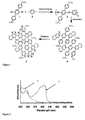
- the key transformation of the approach depicted in Figure 1 is an annulation of each alkyne of a PPE that contains alternating terphenyl and phenyl groups (3).
- the annulation converts the alkynes of 3 into ortho -linked aromatic systems, transforming the PPE into a polyphenylene 4 containing alternating ortho and para linkages along its backbone.
- poly- p -phenylenes have been studied extensively as semiconducting polymers and blue-emitting materials for OLEDs, poly- o -phenylenes are very difficult to prepare and only three oligomeric examples have been reported. Oxidation of 4 under Scholl conditions provides the final GNR 5.
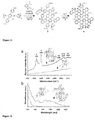
- the band edge at ⁇ 1400 nm corresponds to an optical bandgap of 0.88 eV. Dispersible GNRs of this width and length have not been reported, but the spectrum shown in Figure 4B is quite promising because it resembles that of a dispersed carbon nanotube.
- PPE 1 (0.180 g) was sonicated in CHCl 3 (10 mL) until finely dispersed. The solution was heated to just below boiling to dissolve the remaining polymer and sparged with N 2 for 20 min. Cu(OTf) 2 (11 mg, 0.030 mmol), 2 (366 mg, 1.78 mmol), CF 3 CO 2 H (0.14 mL, 1.8 mmol) were added. The reaction vessel was protected with a blast shield, sealed and heated to 100 °C for 11 h, and finally cooled to rt. The reaction mixture was poured into aqueous NaHCO 3 (saturated, 75 mL) and extracted with CH 2 Cl 2 (3x50 mL).
- the p-terphenyl-alt-phenyl PPE 1 was obtained by copolymerizing the appropriate terphenyl dialkyne monomer and 1,4-diiodobenzene under Sonogashira cross-coupling conditions. A substoichiometric amount of a monofunctional aryl iodide, 4-iodoanisole, was used to control the polymer's molecular weight and end-group identity. Nevertheless, 1 is insoluble in the reaction mixture at molecular weights approaching 100 kDa and partially precipitates during the polymerization.
- the efficiency of the benzannulation of PPE 1 was characterized using a full complement of spectroscopic measurements.
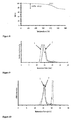
- the inability of adjacent aromatic rings in 3 to adopt coplanar conformations induces a significant blue shift in its UV/Vis absorption spectrum relative to its PPE precursor 1.
- the ⁇ max of 3 is shifted 140 nm lower than that of 1. If the benzannulation were inefficient, residual alkyne-containing subunits would cause 3 to absorb in this region or at longer wavelengths, yet 3 does not absorb within this spectral range.
- FTIR Fourier transform infrared
- Polyphenylene 3 was oxidized to the GNR 4 using FeCl 3 in a mixture of CH 3 NO 2 and CH 2 Cl 2 .
- the GNR 4 precipitated from the solution as a black solid, which was again purified by Soxhlet extraction using acetone as the liquid phase.
- n -nonyl groups are insufficient to solubilize 4 in most organic solvents, but it was possible to disperse the ribbons in CS 2 or 1,2-dichlorobenzene (DCB), enabling their spectroscopic characterization.
- the Raman spectrum (488 nm excitation) of a CS 2 solution of 4 drop-cast on a Si wafer ( Figure 20a) is indicative of a graphitic material and shows the D and G bands of an aggregated GNR at 1344 cm -1 and 1603 cm -1 , respectively.
- the higher intensity of the G relative to the D band has been noted as a sign of GNR quality in previous reports.
- the spectrum also includes the 2D feature at 2690 cm -1 , the disorder-induced combination mode (D+G) at 2949 cm -1 , and the 2D' band at 3212 cm -1 . Drop-cast films of the precursor polymer 3 exhibit none of these spectral features.
- GNR 4 also showed excellent thermal stability expected for a graphitic material. Thermogravimetric analysis of 4 indicated a 24.3% loss of mass near 378 °C, corresponding to loss of the alkyl chains, followed by no additional loss of mass to at least 600 °C.
Landscapes
- Chemical & Material Sciences (AREA)
- Engineering & Computer Science (AREA)
- Nanotechnology (AREA)
- Organic Chemistry (AREA)
- Materials Engineering (AREA)
- Physics & Mathematics (AREA)
- Crystallography & Structural Chemistry (AREA)
- Chemical Kinetics & Catalysis (AREA)
- General Physics & Mathematics (AREA)
- Polymers & Plastics (AREA)
- Condensed Matter Physics & Semiconductors (AREA)
- Health & Medical Sciences (AREA)
- Medicinal Chemistry (AREA)
- Manufacturing & Machinery (AREA)
- Mathematical Physics (AREA)
- Theoretical Computer Science (AREA)
- Composite Materials (AREA)
- Inorganic Chemistry (AREA)
- Polyoxymethylene Polymers And Polymers With Carbon-To-Carbon Bonds (AREA)
- Carbon And Carbon Compounds (AREA)
- Heterocyclic Carbon Compounds Containing A Hetero Ring Having Oxygen Or Sulfur (AREA)
Claims (12)
- Procédé de fabrication d'un nanoruban de graphène, comprenant les étapes qui consistent à :a) mettre en contact un polymère de poly(phénylène éthynylène) (PPE), un composé d'annélation et un système catalyseur comprenant un catalyseur métallique et un acide protique, de telle sorte que le polymère PPE soit arylannélé ;b) oxyder le produit polymère arylannélé de a), de telle sorte qu'un nanoruban de graphène soit formé.
- Procédé selon la revendication 1, dans lequel le polymère PPE a la structure suivante :

 dans laquelle Ar est un groupe aryle comportant de 6 atomes de carbone à 24 atomes de carbone,R1 et R2 sont sélectionnés indépendamment dans le groupe constitué d'un atome d'hydrogène et de groupes alkyle, aryle, éther, thioéther, ester, acide carboxylique, amide, halogénure et azoture, etn vaut de 10 à 500.
 - Procédé selon la revendication 1, dans lequel le composé d'annélation comprend un groupe aryléthynylène, et un groupe en-al ou un groupe arylaldéhyde.
- Procédé selon la revendication 1, dans lequel le catalyseur métallique est un sel de cuivre (II) ou un sel de zinc (II).
- Procédé selon la revendication 4, dans lequel le sel de cuivre (II) est sélectionné dans le groupe constitué de Cu(OTf)2, Cu(acétate)2, Cu(trifluoroacétate)2, Cu(halogénure)2, Cu(sulfate)2 et de l'oxyde de cuivre (II).
- Procédé selon la revendication 4, dans lequel le sel de zinc (II) est sélectionné dans le groupe constitué de Zn(OTf)2, Zn(acétate)2, Zn(trifluoroacétate)2, Zn(halogénure)2, Zn(sulfate)2 et de l'oxyde de zinc.
- Procédé selon la revendication 1, dans lequel l'étape d'oxydation est réalisée en solution et le polymère arylannélé est présent à une concentration de 50 mM ou moins.
- Nanoruban de graphène (NRG) ayant la structure suivante :
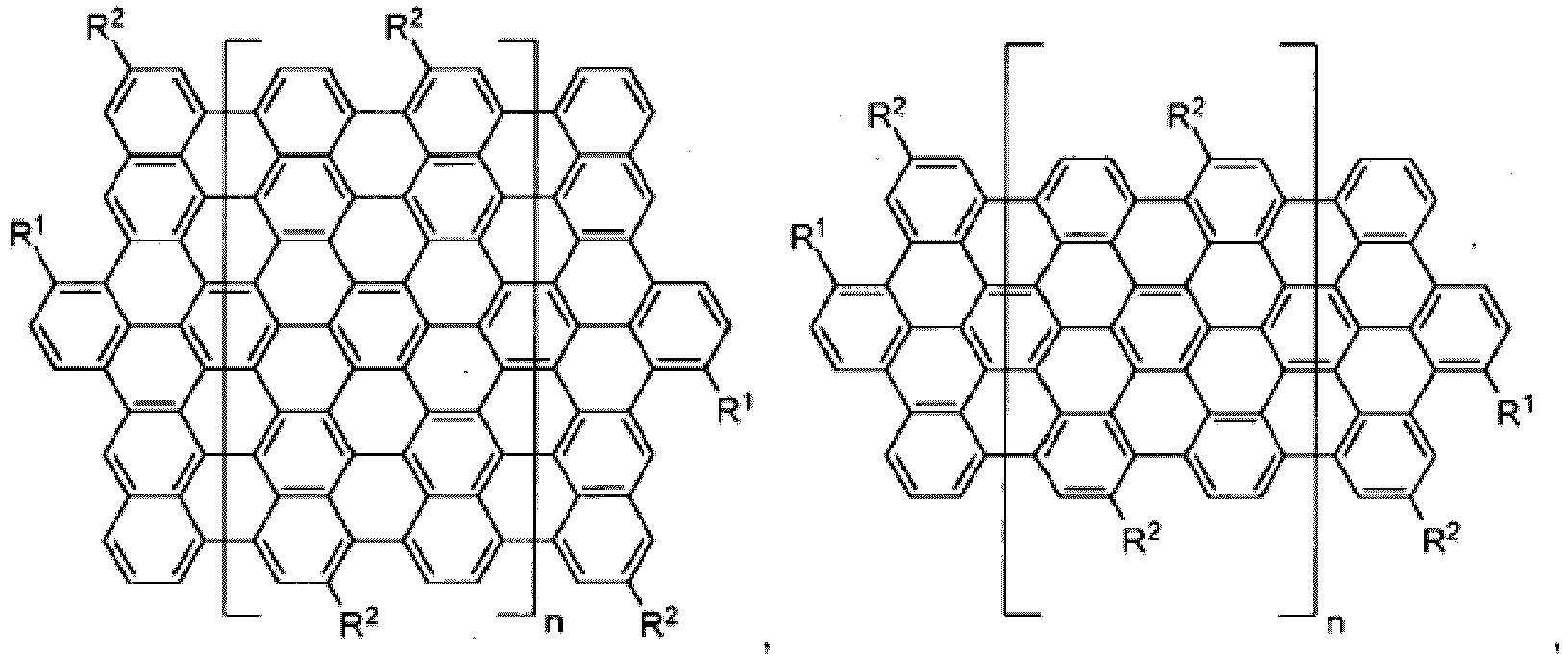

 R1, R2, R3 et R4 sont, à chaque emplacement dans le NRG, sélectionnés indépendamment dans le groupe constitué d'un atome d'hydrogène et de groupes alkyle, aryle, éther, thioéther, ester, acide carboxylique, amide, halogénure et azoture,n vaut de 10 à 500, ets + t vaut de 10 à 500.
 - NRG selon la revendication 8, le NRG ayant une longueur de 10 nm à 500 nm.
- NRG selon la revendication 8, le NRG ayant une largeur de 1,0 nm à 1,2 nm, la largeur ne comprenant pas R1, R2, R3 et R4.
- Dispositif comprenant un nanoruban de graphène selon la revendication 8.
- Dispositif selon la revendication 11, le dispositif étant sélectionné parmi un transistor, une cellule solaire et une diode photoémettrice.
Applications Claiming Priority (2)
| Application Number | Priority Date | Filing Date | Title |
|---|---|---|---|
| US201161479998P | 2011-04-28 | 2011-04-28 | |
| PCT/US2012/035368 WO2012149257A2 (fr) | 2011-04-28 | 2012-04-27 | Nanorubans de graphène, leurs procédés de fabrication et leurs utilisations |
Publications (3)
| Publication Number | Publication Date |
|---|---|
| EP2702005A2 EP2702005A2 (fr) | 2014-03-05 |
| EP2702005A4 EP2702005A4 (fr) | 2015-02-11 |
| EP2702005B1 true EP2702005B1 (fr) | 2016-04-27 |
Family
ID=47073080
Family Applications (1)
| Application Number | Title | Priority Date | Filing Date |
|---|---|---|---|
| EP12777426.3A Not-in-force EP2702005B1 (fr) | 2011-04-28 | 2012-04-27 | Nanorubans de graphène, leurs procédés de fabrication et leurs utilisations |
Country Status (5)
| Country | Link |
|---|---|
| US (1) | US9556085B2 (fr) |
| EP (1) | EP2702005B1 (fr) |
| CN (1) | CN103635423B (fr) |
| ES (1) | ES2574444T3 (fr) |
| WO (1) | WO2012149257A2 (fr) |
Families Citing this family (23)
| Publication number | Priority date | Publication date | Assignee | Title |
|---|---|---|---|---|
| US8999529B2 (en) * | 2010-12-24 | 2015-04-07 | Kabushiki Kaisha Toyota Chuo Kenkyusho | Nitrogen-containing graphene structure and phosphor dispersion |
| US9090826B2 (en) * | 2010-12-24 | 2015-07-28 | Kabushiki Kaisha Toyota Chuo Kenkyusho | Light emitting body |
| KR20150000860A (ko) * | 2011-10-26 | 2015-01-05 | 바스프 에스이 | 그라펜 나노리본 전구체 및 그의 제조에 적합한 단량체 |
| EP2771308A4 (fr) * | 2011-10-26 | 2015-06-03 | Basf Se | Monomères oligophénylène et précurseurs polymères destinés à produire des nanorubans de graphène |
| US9276213B2 (en) * | 2012-03-05 | 2016-03-01 | Honda Motor Co., Ltd. | Photoelectric conversion material, method for producing the same, and organic photovoltaic cell containing the same |
| TW201431902A (zh) * | 2012-11-16 | 2014-08-16 | 巴斯夫歐洲公司 | 用以生產石墨烯奈米帶之聚合前驅物,以及適用於製備彼等之寡伸苯基單體 |
| CN103935982B (zh) * | 2013-01-18 | 2016-01-13 | 海洋王照明科技股份有限公司 | 石墨烯纳米带的制备方法 |
| CN103935984B (zh) * | 2013-01-18 | 2015-11-25 | 海洋王照明科技股份有限公司 | 石墨烯纳米带的制备方法 |
| CN103935983B (zh) * | 2013-01-18 | 2016-01-13 | 海洋王照明科技股份有限公司 | 石墨烯纳米带的制备方法 |
| US9059013B2 (en) | 2013-03-21 | 2015-06-16 | International Business Machines Corporation | Self-formation of high-density arrays of nanostructures |
| WO2014171931A1 (fr) * | 2013-04-17 | 2014-10-23 | Empire Technology Development Llc | Nanorubans de graphène en tant que semiconducteurs |
| JP6053025B2 (ja) * | 2013-08-02 | 2016-12-27 | 本田技研工業株式会社 | 光電変換材料及びそれを用いた有機薄膜太陽電池 |
| EP2845838A1 (fr) | 2013-09-04 | 2015-03-11 | Basf Se | Procédé de purification de nanorubans de graphène |
| EP2907791A1 (fr) | 2014-02-13 | 2015-08-19 | Basf Se | Nanorubans de graphène avec régulation de bordure en zig-zag et configuration de bord de corniches |
| CN105399074B (zh) * | 2015-12-04 | 2017-06-06 | 华南理工大学 | 一种石墨烯纳米带及其合成方法与应用 |
| CN105502351B (zh) * | 2015-12-04 | 2017-10-20 | 华南理工大学 | 一种可溶性石墨烯纳米带及其合成方法与应用 |
| GB201613012D0 (en) * | 2016-07-27 | 2016-09-07 | Price Richard J | Improvements relating to graphene nanomaterials |
| US11247905B2 (en) * | 2016-11-18 | 2022-02-15 | The Regents Of The University Of California | Synthesis of graphene nanoribbons from monomeric molecular precursors bearing reactive alkyne moieties |
| CN110010460B (zh) * | 2019-03-26 | 2021-03-16 | 贵阳学院 | 一种低维材料形成方法 |
| WO2020231282A1 (fr) * | 2019-05-10 | 2020-11-19 | Qatar Foundation For Education, Science And Community Development | Synthèse de membranes de carbone graphitique poreux |
| CN110180688B (zh) * | 2019-05-17 | 2021-01-15 | 浙江海洋大学 | 一种超重力耦合制备二维纳米材料的方法 |
| CN115210245B (zh) * | 2020-03-04 | 2025-04-25 | 国立大学法人东海国立大学机构 | 萘基噻咯类的制备方法、及具有杂环式基团的萘基噻咯类及具有杂环式基团的石墨烯纳米带 |
| KR102442755B1 (ko) | 2020-09-29 | 2022-09-13 | 한화토탈에너지스 주식회사 | 태양광변환 발광 소재 및 이를 포함하는 태양전지 |
Family Cites Families (5)
| Publication number | Priority date | Publication date | Assignee | Title |
|---|---|---|---|---|
| US9991391B2 (en) | 2008-07-25 | 2018-06-05 | The Board Of Trustees Of The Leland Stanford Junior University | Pristine and functionalized graphene materials |
| TW201012749A (en) * | 2008-08-19 | 2010-04-01 | Univ Rice William M | Methods for preparation of graphene nanoribbons from carbon nanotubes and compositions, thin films and devices derived therefrom |
| KR101040967B1 (ko) * | 2008-08-22 | 2011-06-16 | 한국과학기술연구원 | 그라핀 리본의 제조 방법 |
| JP5629681B2 (ja) | 2009-05-26 | 2014-11-26 | 株式会社インキュベーション・アライアンス | 炭素材料及びその製造方法 |
| US7887888B1 (en) * | 2009-06-23 | 2011-02-15 | University Of Louisville Research Foundation, Inc. | Methods and systems for fabrication of graphene nanoribbons |
-
2012
- 2012-04-27 WO PCT/US2012/035368 patent/WO2012149257A2/fr not_active Ceased
- 2012-04-27 CN CN201280031850.7A patent/CN103635423B/zh not_active Expired - Fee Related
- 2012-04-27 ES ES12777426.3T patent/ES2574444T3/es active Active
- 2012-04-27 EP EP12777426.3A patent/EP2702005B1/fr not_active Not-in-force
- 2012-04-27 US US14/113,457 patent/US9556085B2/en active Active
Also Published As
| Publication number | Publication date |
|---|---|
| US20140212668A1 (en) | 2014-07-31 |
| US9556085B2 (en) | 2017-01-31 |
| EP2702005A4 (fr) | 2015-02-11 |
| ES2574444T3 (es) | 2016-06-17 |
| CN103635423A (zh) | 2014-03-12 |
| WO2012149257A2 (fr) | 2012-11-01 |
| WO2012149257A3 (fr) | 2013-04-04 |
| EP2702005A2 (fr) | 2014-03-05 |
| CN103635423B (zh) | 2017-07-07 |
Similar Documents
| Publication | Publication Date | Title |
|---|---|---|
| US9556085B2 (en) | Graphene nanoribbons derived from poly(phenylene ethynylene) polymer, methods of making same, and uses thereof | |
| Chen et al. | Graphene nanoribbons: on‐surface synthesis and integration into electronic devices | |
| Narita et al. | New advances in nanographene chemistry | |
| Ding et al. | Enrichment of large-diameter semiconducting SWCNTs by polyfluorene extraction for high network density thin film transistors | |
| Hou et al. | Diels–Alder polymerization: a versatile synthetic method toward functional polyphenylenes, ladder polymers and graphene nanoribbons | |
| EP2287936B1 (fr) | Composite à nanotubes de carbone, composite semi-conducteur organique, et transistor à effet de champ | |
| US9938149B1 (en) | Degradable conjugated polymers for the selective sorting of semiconducting carbon nanotubes | |
| CN104039743B (zh) | 用于制备石墨烯纳米带的低聚亚苯基单体和聚合物前体 | |
| CN104736478B (zh) | 制备石墨烯纳米带的方法 | |
| CN107636216B (zh) | 隔离半导体单壁纳米管或金属单壁纳米管及其方法 | |
| JP2015502415A (ja) | グラフェンナノリボン前駆体およびその製造に適したモノマー | |
| Xiao et al. | Bergman cyclization in polymer chemistry and material science | |
| Qiu et al. | Spiers Memorial Lecture Carbon nanostructures by macromolecular design–from branched polyphenylenes to nanographenes and graphene nanoribbons | |
| US20150299381A1 (en) | Polymeric precursors for producing graphene nanoribbons and suitable oligophenylene monomers for preparing them | |
| Sekhavati et al. | Solution-phase synthesis of graphene nanoribbons: a review on polymerization strategies | |
| JP6819814B1 (ja) | カーボンナノチューブ組成物、半導体素子および無線通信装置 | |
| JPWO2017131190A1 (ja) | ポリマー及びその製造方法 | |
| Tanaka et al. | Synthesis of highly transparent conductive films with strong absorption in near-infrared region based on tetrathiafulvalene-tethered pendant-type polymers | |
| Lanzi et al. | A new photocrosslinkable oligothiophene for organic solar cells with enhanced stability | |
| Maimaiti et al. | Low molecular weight polypyrmidine for release and size controlled process of single-walled carbon nanotubes | |
| Hagaman et al. | Block copolymer supramolecular assembly using a precursor to a novel conjugated polymer | |
| Ma et al. | Graphene Nanoribbons from Tetraphenylethene‐Based Polymeric Precursor: Chemical Synthesis and Application in Thin‐Film Field‐Effect Transistor | |
| Adronov et al. | π-Conjugated Polymers with Pendant Coumarins: Design, Synthesis, Characterization, and Interactions with Carbon Nanotubes | |
| Lopez | Synthesis and optical properties of graphene nanostructures | |
| Lavie | Synthesis and properties of graphene quantum dots and nanomeshes |
Legal Events
| Date | Code | Title | Description |
|---|---|---|---|
| PUAI | Public reference made under article 153(3) epc to a published international application that has entered the european phase |
Free format text: ORIGINAL CODE: 0009012 |
|
| 17P | Request for examination filed |
Effective date: 20131104 |
|
| AK | Designated contracting states |
Kind code of ref document: A2 Designated state(s): AL AT BE BG CH CY CZ DE DK EE ES FI FR GB GR HR HU IE IS IT LI LT LU LV MC MK MT NL NO PL PT RO RS SE SI SK SM TR |
|
| DAX | Request for extension of the european patent (deleted) | ||
| A4 | Supplementary search report drawn up and despatched |
Effective date: 20150112 |
|
| RIC1 | Information provided on ipc code assigned before grant |
Ipc: H01L 51/50 20060101ALI20150106BHEP Ipc: C08G 61/12 20060101ALI20150106BHEP Ipc: B82Y 40/00 20110101ALI20150106BHEP Ipc: C01B 31/02 20060101AFI20150106BHEP Ipc: B82B 3/00 20060101ALI20150106BHEP Ipc: H01L 31/042 20140101ALI20150106BHEP |
|
| RIC1 | Information provided on ipc code assigned before grant |
Ipc: H01L 21/02 20060101ALI20150909BHEP Ipc: H01L 31/18 20060101ALI20150909BHEP Ipc: C08G 61/02 20060101ALI20150909BHEP Ipc: B82B 3/00 20060101ALI20150909BHEP Ipc: C01B 31/02 20060101AFI20150909BHEP Ipc: C07C 15/20 20060101ALI20150909BHEP Ipc: H01L 51/50 20060101ALI20150909BHEP Ipc: H01B 1/04 20060101ALI20150909BHEP Ipc: B82Y 10/00 20110101ALI20150909BHEP Ipc: C07C 2/84 20060101ALI20150909BHEP Ipc: B82Y 30/00 20110101ALI20150909BHEP Ipc: H01L 31/042 20140101ALI20150909BHEP Ipc: B82Y 40/00 20110101ALI20150909BHEP Ipc: H01L 51/00 20060101ALI20150909BHEP Ipc: H01L 29/16 20060101ALI20150909BHEP Ipc: C08G 61/10 20060101ALI20150909BHEP Ipc: C01B 31/04 20060101ALI20150909BHEP Ipc: C08G 61/12 20060101ALI20150909BHEP |
|
| GRAP | Despatch of communication of intention to grant a patent |
Free format text: ORIGINAL CODE: EPIDOSNIGR1 |
|
| INTG | Intention to grant announced |
Effective date: 20151026 |
|
| GRAS | Grant fee paid |
Free format text: ORIGINAL CODE: EPIDOSNIGR3 |
|
| GRAA | (expected) grant |
Free format text: ORIGINAL CODE: 0009210 |
|
| AK | Designated contracting states |
Kind code of ref document: B1 Designated state(s): AL AT BE BG CH CY CZ DE DK EE ES FI FR GB GR HR HU IE IS IT LI LT LU LV MC MK MT NL NO PL PT RO RS SE SI SK SM TR |
|
| REG | Reference to a national code |
Ref country code: GB Ref legal event code: FG4D |
|
| REG | Reference to a national code |
Ref country code: CH Ref legal event code: EP |
|
| REG | Reference to a national code |
Ref country code: AT Ref legal event code: REF Ref document number: 794580 Country of ref document: AT Kind code of ref document: T Effective date: 20160515 |
|
| REG | Reference to a national code |
Ref country code: IE Ref legal event code: FG4D |
|
| REG | Reference to a national code |
Ref country code: DE Ref legal event code: R096 Ref document number: 602012017795 Country of ref document: DE |
|
| REG | Reference to a national code |
Ref country code: ES Ref legal event code: FG2A Ref document number: 2574444 Country of ref document: ES Kind code of ref document: T3 Effective date: 20160617 |
|
| REG | Reference to a national code |
Ref country code: LT Ref legal event code: MG4D |
|
| PG25 | Lapsed in a contracting state [announced via postgrant information from national office to epo] |
Ref country code: BE Free format text: LAPSE BECAUSE OF NON-PAYMENT OF DUE FEES Effective date: 20160430 |
|
| REG | Reference to a national code |
Ref country code: NL Ref legal event code: MP Effective date: 20160427 |
|
| REG | Reference to a national code |
Ref country code: AT Ref legal event code: MK05 Ref document number: 794580 Country of ref document: AT Kind code of ref document: T Effective date: 20160427 |
|
| PG25 | Lapsed in a contracting state [announced via postgrant information from national office to epo] |
Ref country code: NL Free format text: LAPSE BECAUSE OF FAILURE TO SUBMIT A TRANSLATION OF THE DESCRIPTION OR TO PAY THE FEE WITHIN THE PRESCRIBED TIME-LIMIT Effective date: 20160427 |
|
| PG25 | Lapsed in a contracting state [announced via postgrant information from national office to epo] |
Ref country code: NO Free format text: LAPSE BECAUSE OF FAILURE TO SUBMIT A TRANSLATION OF THE DESCRIPTION OR TO PAY THE FEE WITHIN THE PRESCRIBED TIME-LIMIT Effective date: 20160727 Ref country code: FI Free format text: LAPSE BECAUSE OF FAILURE TO SUBMIT A TRANSLATION OF THE DESCRIPTION OR TO PAY THE FEE WITHIN THE PRESCRIBED TIME-LIMIT Effective date: 20160427 Ref country code: LT Free format text: LAPSE BECAUSE OF FAILURE TO SUBMIT A TRANSLATION OF THE DESCRIPTION OR TO PAY THE FEE WITHIN THE PRESCRIBED TIME-LIMIT Effective date: 20160427 Ref country code: PL Free format text: LAPSE BECAUSE OF FAILURE TO SUBMIT A TRANSLATION OF THE DESCRIPTION OR TO PAY THE FEE WITHIN THE PRESCRIBED TIME-LIMIT Effective date: 20160427 |
|
| REG | Reference to a national code |
Ref country code: DE Ref legal event code: R079 Ref document number: 602012017795 Country of ref document: DE Free format text: PREVIOUS MAIN CLASS: C01B0031020000 Ipc: C01B0032050000 |
|
| PG25 | Lapsed in a contracting state [announced via postgrant information from national office to epo] |
Ref country code: HR Free format text: LAPSE BECAUSE OF FAILURE TO SUBMIT A TRANSLATION OF THE DESCRIPTION OR TO PAY THE FEE WITHIN THE PRESCRIBED TIME-LIMIT Effective date: 20160427 Ref country code: SE Free format text: LAPSE BECAUSE OF FAILURE TO SUBMIT A TRANSLATION OF THE DESCRIPTION OR TO PAY THE FEE WITHIN THE PRESCRIBED TIME-LIMIT Effective date: 20160427 Ref country code: RS Free format text: LAPSE BECAUSE OF FAILURE TO SUBMIT A TRANSLATION OF THE DESCRIPTION OR TO PAY THE FEE WITHIN THE PRESCRIBED TIME-LIMIT Effective date: 20160427 Ref country code: AT Free format text: LAPSE BECAUSE OF FAILURE TO SUBMIT A TRANSLATION OF THE DESCRIPTION OR TO PAY THE FEE WITHIN THE PRESCRIBED TIME-LIMIT Effective date: 20160427 Ref country code: LV Free format text: LAPSE BECAUSE OF FAILURE TO SUBMIT A TRANSLATION OF THE DESCRIPTION OR TO PAY THE FEE WITHIN THE PRESCRIBED TIME-LIMIT Effective date: 20160427 Ref country code: PT Free format text: LAPSE BECAUSE OF FAILURE TO SUBMIT A TRANSLATION OF THE DESCRIPTION OR TO PAY THE FEE WITHIN THE PRESCRIBED TIME-LIMIT Effective date: 20160829 Ref country code: GR Free format text: LAPSE BECAUSE OF FAILURE TO SUBMIT A TRANSLATION OF THE DESCRIPTION OR TO PAY THE FEE WITHIN THE PRESCRIBED TIME-LIMIT Effective date: 20160728 |
|
| REG | Reference to a national code |
Ref country code: CH Ref legal event code: PL |
|
| PG25 | Lapsed in a contracting state [announced via postgrant information from national office to epo] |
Ref country code: BE Free format text: LAPSE BECAUSE OF FAILURE TO SUBMIT A TRANSLATION OF THE DESCRIPTION OR TO PAY THE FEE WITHIN THE PRESCRIBED TIME-LIMIT Effective date: 20160427 Ref country code: IT Free format text: LAPSE BECAUSE OF FAILURE TO SUBMIT A TRANSLATION OF THE DESCRIPTION OR TO PAY THE FEE WITHIN THE PRESCRIBED TIME-LIMIT Effective date: 20160427 |
|
| REG | Reference to a national code |
Ref country code: IE Ref legal event code: MM4A |
|
| REG | Reference to a national code |
Ref country code: DE Ref legal event code: R097 Ref document number: 602012017795 Country of ref document: DE |
|
| PG25 | Lapsed in a contracting state [announced via postgrant information from national office to epo] |
Ref country code: LI Free format text: LAPSE BECAUSE OF NON-PAYMENT OF DUE FEES Effective date: 20160430 Ref country code: EE Free format text: LAPSE BECAUSE OF FAILURE TO SUBMIT A TRANSLATION OF THE DESCRIPTION OR TO PAY THE FEE WITHIN THE PRESCRIBED TIME-LIMIT Effective date: 20160427 Ref country code: SK Free format text: LAPSE BECAUSE OF FAILURE TO SUBMIT A TRANSLATION OF THE DESCRIPTION OR TO PAY THE FEE WITHIN THE PRESCRIBED TIME-LIMIT Effective date: 20160427 Ref country code: RO Free format text: LAPSE BECAUSE OF FAILURE TO SUBMIT A TRANSLATION OF THE DESCRIPTION OR TO PAY THE FEE WITHIN THE PRESCRIBED TIME-LIMIT Effective date: 20160427 Ref country code: CH Free format text: LAPSE BECAUSE OF NON-PAYMENT OF DUE FEES Effective date: 20160430 Ref country code: DK Free format text: LAPSE BECAUSE OF FAILURE TO SUBMIT A TRANSLATION OF THE DESCRIPTION OR TO PAY THE FEE WITHIN THE PRESCRIBED TIME-LIMIT Effective date: 20160427 Ref country code: CZ Free format text: LAPSE BECAUSE OF FAILURE TO SUBMIT A TRANSLATION OF THE DESCRIPTION OR TO PAY THE FEE WITHIN THE PRESCRIBED TIME-LIMIT Effective date: 20160427 |
|
| PG25 | Lapsed in a contracting state [announced via postgrant information from national office to epo] |
Ref country code: SM Free format text: LAPSE BECAUSE OF FAILURE TO SUBMIT A TRANSLATION OF THE DESCRIPTION OR TO PAY THE FEE WITHIN THE PRESCRIBED TIME-LIMIT Effective date: 20160427 |
|
| PLBE | No opposition filed within time limit |
Free format text: ORIGINAL CODE: 0009261 |
|
| STAA | Information on the status of an ep patent application or granted ep patent |
Free format text: STATUS: NO OPPOSITION FILED WITHIN TIME LIMIT |
|
| REG | Reference to a national code |
Ref country code: FR Ref legal event code: ST Effective date: 20170228 |
|
| 26N | No opposition filed |
Effective date: 20170130 |
|
| PG25 | Lapsed in a contracting state [announced via postgrant information from national office to epo] |
Ref country code: FR Free format text: LAPSE BECAUSE OF NON-PAYMENT OF DUE FEES Effective date: 20160627 |
|
| PG25 | Lapsed in a contracting state [announced via postgrant information from national office to epo] |
Ref country code: IE Free format text: LAPSE BECAUSE OF NON-PAYMENT OF DUE FEES Effective date: 20160427 Ref country code: SI Free format text: LAPSE BECAUSE OF FAILURE TO SUBMIT A TRANSLATION OF THE DESCRIPTION OR TO PAY THE FEE WITHIN THE PRESCRIBED TIME-LIMIT Effective date: 20160427 |
|
| PG25 | Lapsed in a contracting state [announced via postgrant information from national office to epo] |
Ref country code: MC Free format text: LAPSE BECAUSE OF FAILURE TO SUBMIT A TRANSLATION OF THE DESCRIPTION OR TO PAY THE FEE WITHIN THE PRESCRIBED TIME-LIMIT Effective date: 20160427 |
|
| PG25 | Lapsed in a contracting state [announced via postgrant information from national office to epo] |
Ref country code: CY Free format text: LAPSE BECAUSE OF FAILURE TO SUBMIT A TRANSLATION OF THE DESCRIPTION OR TO PAY THE FEE WITHIN THE PRESCRIBED TIME-LIMIT Effective date: 20160427 Ref country code: HU Free format text: LAPSE BECAUSE OF FAILURE TO SUBMIT A TRANSLATION OF THE DESCRIPTION OR TO PAY THE FEE WITHIN THE PRESCRIBED TIME-LIMIT; INVALID AB INITIO Effective date: 20120427 |
|
| PG25 | Lapsed in a contracting state [announced via postgrant information from national office to epo] |
Ref country code: MT Free format text: LAPSE BECAUSE OF NON-PAYMENT OF DUE FEES Effective date: 20160430 Ref country code: LU Free format text: LAPSE BECAUSE OF NON-PAYMENT OF DUE FEES Effective date: 20160427 Ref country code: MK Free format text: LAPSE BECAUSE OF FAILURE TO SUBMIT A TRANSLATION OF THE DESCRIPTION OR TO PAY THE FEE WITHIN THE PRESCRIBED TIME-LIMIT Effective date: 20160427 Ref country code: TR Free format text: LAPSE BECAUSE OF FAILURE TO SUBMIT A TRANSLATION OF THE DESCRIPTION OR TO PAY THE FEE WITHIN THE PRESCRIBED TIME-LIMIT Effective date: 20160427 Ref country code: IS Free format text: LAPSE BECAUSE OF FAILURE TO SUBMIT A TRANSLATION OF THE DESCRIPTION OR TO PAY THE FEE WITHIN THE PRESCRIBED TIME-LIMIT Effective date: 20160427 |
|
| PG25 | Lapsed in a contracting state [announced via postgrant information from national office to epo] |
Ref country code: BG Free format text: LAPSE BECAUSE OF FAILURE TO SUBMIT A TRANSLATION OF THE DESCRIPTION OR TO PAY THE FEE WITHIN THE PRESCRIBED TIME-LIMIT Effective date: 20160427 |
|
| PG25 | Lapsed in a contracting state [announced via postgrant information from national office to epo] |
Ref country code: AL Free format text: LAPSE BECAUSE OF FAILURE TO SUBMIT A TRANSLATION OF THE DESCRIPTION OR TO PAY THE FEE WITHIN THE PRESCRIBED TIME-LIMIT Effective date: 20160427 |
|
| P01 | Opt-out of the competence of the unified patent court (upc) registered |
Effective date: 20230519 |
|
| PGFP | Annual fee paid to national office [announced via postgrant information from national office to epo] |
Ref country code: ES Payment date: 20230503 Year of fee payment: 12 Ref country code: DE Payment date: 20230427 Year of fee payment: 12 |
|
| PGFP | Annual fee paid to national office [announced via postgrant information from national office to epo] |
Ref country code: GB Payment date: 20230427 Year of fee payment: 12 |
|
| REG | Reference to a national code |
Ref country code: DE Ref legal event code: R119 Ref document number: 602012017795 Country of ref document: DE |
|
| GBPC | Gb: european patent ceased through non-payment of renewal fee |
Effective date: 20240427 |
|
| PG25 | Lapsed in a contracting state [announced via postgrant information from national office to epo] |
Ref country code: DE Free format text: LAPSE BECAUSE OF NON-PAYMENT OF DUE FEES Effective date: 20241105 |
|
| PG25 | Lapsed in a contracting state [announced via postgrant information from national office to epo] |
Ref country code: GB Free format text: LAPSE BECAUSE OF NON-PAYMENT OF DUE FEES Effective date: 20240427 |
|
| PG25 | Lapsed in a contracting state [announced via postgrant information from national office to epo] |
Ref country code: GB Free format text: LAPSE BECAUSE OF NON-PAYMENT OF DUE FEES Effective date: 20240427 Ref country code: DE Free format text: LAPSE BECAUSE OF NON-PAYMENT OF DUE FEES Effective date: 20241105 |
|
| REG | Reference to a national code |
Ref country code: ES Ref legal event code: FD2A Effective date: 20250603 |
|
| PG25 | Lapsed in a contracting state [announced via postgrant information from national office to epo] |
Ref country code: ES Free format text: LAPSE BECAUSE OF NON-PAYMENT OF DUE FEES Effective date: 20240428 |