EP2703403A1 - Dérivé d'imidazole - Google Patents
Dérivé d'imidazole Download PDFInfo
- Publication number
- EP2703403A1 EP2703403A1 EP12776726.7A EP12776726A EP2703403A1 EP 2703403 A1 EP2703403 A1 EP 2703403A1 EP 12776726 A EP12776726 A EP 12776726A EP 2703403 A1 EP2703403 A1 EP 2703403A1
- Authority
- EP
- European Patent Office
- Prior art keywords
- aoh
- ahx
- rice
- methyl
- culture fluid
- Prior art date
- Legal status (The legal status is an assumption and is not a legal conclusion. Google has not performed a legal analysis and makes no representation as to the accuracy of the status listed.)
- Withdrawn
Links
- 150000002460 imidazoles Chemical class 0.000 title description 3
- SGERKLTVOIUKSN-UHFFFAOYSA-N 2-aza-8-oxohypoxanthine Natural products N1=NNC(=O)C2=C1NC(=O)N2 SGERKLTVOIUKSN-UHFFFAOYSA-N 0.000 claims abstract description 22
- 150000001875 compounds Chemical class 0.000 claims abstract description 17
- MDIAIDLZYMSYRS-UHFFFAOYSA-N 3-methyl-5,7-dihydroimidazo[4,5-d]triazine-4,6-dione Chemical compound O=C1N(C)N=NC2=C1NC(=O)N2 MDIAIDLZYMSYRS-UHFFFAOYSA-N 0.000 claims abstract description 5
- BTERLCQQBYXVIN-UHFFFAOYSA-N AHX Natural products O=C1NN=NC2=C1NC=N2 BTERLCQQBYXVIN-UHFFFAOYSA-N 0.000 claims description 51
- 108010093894 Xanthine oxidase Proteins 0.000 claims description 13
- 102100033220 Xanthine oxidase Human genes 0.000 claims description 13
- 238000004519 manufacturing process Methods 0.000 claims description 10
- 239000005648 plant growth regulator Substances 0.000 claims description 9
- 230000008635 plant growth Effects 0.000 abstract description 14
- 230000001105 regulatory effect Effects 0.000 abstract description 8
- 241000196324 Embryophyta Species 0.000 description 55
- 240000007594 Oryza sativa Species 0.000 description 47
- 235000007164 Oryza sativa Nutrition 0.000 description 47
- 239000012531 culture fluid Substances 0.000 description 39
- OKKJLVBELUTLKV-UHFFFAOYSA-N Methanol Chemical compound OC OKKJLVBELUTLKV-UHFFFAOYSA-N 0.000 description 36
- 235000009566 rice Nutrition 0.000 description 32
- 239000008399 tap water Substances 0.000 description 28
- 235000020679 tap water Nutrition 0.000 description 28
- 210000000056 organ Anatomy 0.000 description 15
- LFQSCWFLJHTTHZ-UHFFFAOYSA-N Ethanol Chemical compound CCO LFQSCWFLJHTTHZ-UHFFFAOYSA-N 0.000 description 12
- 241000227653 Lycopersicon Species 0.000 description 12
- 235000021329 brown rice Nutrition 0.000 description 11
- 235000007688 Lycopersicon esculentum Nutrition 0.000 description 10
- 238000004458 analytical method Methods 0.000 description 10
- 238000004885 tandem mass spectrometry Methods 0.000 description 10
- 230000015572 biosynthetic process Effects 0.000 description 9
- 238000001819 mass spectrum Methods 0.000 description 9
- 238000000034 method Methods 0.000 description 9
- 238000001228 spectrum Methods 0.000 description 9
- YMWUJEATGCHHMB-UHFFFAOYSA-N Dichloromethane Chemical compound ClCCl YMWUJEATGCHHMB-UHFFFAOYSA-N 0.000 description 8
- 239000003337 fertilizer Substances 0.000 description 8
- 239000003795 chemical substances by application Substances 0.000 description 7
- 238000001514 detection method Methods 0.000 description 7
- 230000012010 growth Effects 0.000 description 7
- 230000014759 maintenance of location Effects 0.000 description 7
- XLYOFNOQVPJJNP-UHFFFAOYSA-N water Substances O XLYOFNOQVPJJNP-UHFFFAOYSA-N 0.000 description 7
- CSCPPACGZOOCGX-UHFFFAOYSA-N Acetone Chemical compound CC(C)=O CSCPPACGZOOCGX-UHFFFAOYSA-N 0.000 description 6
- WEVYAHXRMPXWCK-UHFFFAOYSA-N Acetonitrile Chemical compound CC#N WEVYAHXRMPXWCK-UHFFFAOYSA-N 0.000 description 6
- 241000209504 Poaceae Species 0.000 description 6
- DTQVDTLACAAQTR-UHFFFAOYSA-N Trifluoroacetic acid Chemical compound OC(=O)C(F)(F)F DTQVDTLACAAQTR-UHFFFAOYSA-N 0.000 description 6
- 240000001102 Zoysia matrella Species 0.000 description 6
- 238000006243 chemical reaction Methods 0.000 description 6
- 239000013078 crystal Substances 0.000 description 6
- IAZDPXIOMUYVGZ-UHFFFAOYSA-N Dimethylsulphoxide Chemical compound CS(C)=O IAZDPXIOMUYVGZ-UHFFFAOYSA-N 0.000 description 5
- 238000004128 high performance liquid chromatography Methods 0.000 description 5
- 239000007788 liquid Substances 0.000 description 5
- 239000000203 mixture Substances 0.000 description 5
- 239000011541 reaction mixture Substances 0.000 description 5
- 239000002689 soil Substances 0.000 description 5
- TWRXJAOTZQYOKJ-UHFFFAOYSA-L Magnesium chloride Chemical compound [Mg+2].[Cl-].[Cl-] TWRXJAOTZQYOKJ-UHFFFAOYSA-L 0.000 description 4
- 241000218922 Magnoliophyta Species 0.000 description 4
- 241000209094 Oryza Species 0.000 description 4
- 241000208292 Solanaceae Species 0.000 description 4
- 238000004587 chromatography analysis Methods 0.000 description 4
- 238000001294 liquid chromatography-tandem mass spectrometry Methods 0.000 description 4
- BDAGIHXWWSANSR-UHFFFAOYSA-N methanoic acid Natural products OC=O BDAGIHXWWSANSR-UHFFFAOYSA-N 0.000 description 4
- 239000000243 solution Substances 0.000 description 4
- 238000001644 13C nuclear magnetic resonance spectroscopy Methods 0.000 description 3
- 238000005160 1H NMR spectroscopy Methods 0.000 description 3
- 241001520823 Zoysia Species 0.000 description 3
- 239000000654 additive Substances 0.000 description 3
- 239000012634 fragment Substances 0.000 description 3
- 150000002500 ions Chemical class 0.000 description 3
- 238000002955 isolation Methods 0.000 description 3
- 238000005259 measurement Methods 0.000 description 3
- 239000008363 phosphate buffer Substances 0.000 description 3
- 229930195732 phytohormone Natural products 0.000 description 3
- 239000000843 powder Substances 0.000 description 3
- 238000004007 reversed phase HPLC Methods 0.000 description 3
- 239000002904 solvent Substances 0.000 description 3
- -1 that is Chemical compound 0.000 description 3
- OSWFIVFLDKOXQC-UHFFFAOYSA-N 4-(3-methoxyphenyl)aniline Chemical compound COC1=CC=CC(C=2C=CC(N)=CC=2)=C1 OSWFIVFLDKOXQC-UHFFFAOYSA-N 0.000 description 2
- 229920001817 Agar Polymers 0.000 description 2
- 241000743339 Agrostis Species 0.000 description 2
- 241000208838 Asteraceae Species 0.000 description 2
- 241000195940 Bryophyta Species 0.000 description 2
- UXVMQQNJUSDDNG-UHFFFAOYSA-L Calcium chloride Chemical compound [Cl-].[Cl-].[Ca+2] UXVMQQNJUSDDNG-UHFFFAOYSA-L 0.000 description 2
- 241000218631 Coniferophyta Species 0.000 description 2
- 241000209219 Hordeum Species 0.000 description 2
- 241000234280 Liliaceae Species 0.000 description 2
- 241000209510 Liliopsida Species 0.000 description 2
- 235000002262 Lycopersicon Nutrition 0.000 description 2
- 229910004619 Na2MoO4 Inorganic materials 0.000 description 2
- 241000745988 Phyllostachys Species 0.000 description 2
- 235000004789 Rosa xanthina Nutrition 0.000 description 2
- 241000220222 Rosaceae Species 0.000 description 2
- 241000209051 Saccharum Species 0.000 description 2
- FAPWRFPIFSIZLT-UHFFFAOYSA-M Sodium chloride Chemical compound [Na+].[Cl-] FAPWRFPIFSIZLT-UHFFFAOYSA-M 0.000 description 2
- 240000003768 Solanum lycopersicum Species 0.000 description 2
- 235000002560 Solanum lycopersicum Nutrition 0.000 description 2
- 241001122767 Theaceae Species 0.000 description 2
- 235000021307 Triticum Nutrition 0.000 description 2
- 241000209140 Triticum Species 0.000 description 2
- 238000002835 absorbance Methods 0.000 description 2
- 239000008272 agar Substances 0.000 description 2
- 239000003905 agrochemical Substances 0.000 description 2
- KGBXLFKZBHKPEV-UHFFFAOYSA-N boric acid Chemical compound OB(O)O KGBXLFKZBHKPEV-UHFFFAOYSA-N 0.000 description 2
- 239000000872 buffer Substances 0.000 description 2
- 235000015155 buttermilk Nutrition 0.000 description 2
- 239000001110 calcium chloride Substances 0.000 description 2
- 229910001628 calcium chloride Inorganic materials 0.000 description 2
- 238000011088 calibration curve Methods 0.000 description 2
- 239000007810 chemical reaction solvent Substances 0.000 description 2
- ARUVKPQLZAKDPS-UHFFFAOYSA-L copper(II) sulfate Chemical compound [Cu+2].[O-][S+2]([O-])([O-])[O-] ARUVKPQLZAKDPS-UHFFFAOYSA-L 0.000 description 2
- 229910000366 copper(II) sulfate Inorganic materials 0.000 description 2
- 238000010586 diagram Methods 0.000 description 2
- BNIILDVGGAEEIG-UHFFFAOYSA-L disodium hydrogen phosphate Chemical compound [Na+].[Na+].OP([O-])([O-])=O BNIILDVGGAEEIG-UHFFFAOYSA-L 0.000 description 2
- 229910000397 disodium phosphate Inorganic materials 0.000 description 2
- 238000001035 drying Methods 0.000 description 2
- 230000000694 effects Effects 0.000 description 2
- 238000010828 elution Methods 0.000 description 2
- 241001233957 eudicotyledons Species 0.000 description 2
- 239000000945 filler Substances 0.000 description 2
- 230000004907 flux Effects 0.000 description 2
- 235000019253 formic acid Nutrition 0.000 description 2
- 238000009472 formulation Methods 0.000 description 2
- 238000010413 gardening Methods 0.000 description 2
- 229910001629 magnesium chloride Inorganic materials 0.000 description 2
- SQQMAOCOWKFBNP-UHFFFAOYSA-L manganese(II) sulfate Chemical compound [Mn+2].[O-]S([O-])(=O)=O SQQMAOCOWKFBNP-UHFFFAOYSA-L 0.000 description 2
- 229910000357 manganese(II) sulfate Inorganic materials 0.000 description 2
- 238000004949 mass spectrometry Methods 0.000 description 2
- OTYBMLCTZGSZBG-UHFFFAOYSA-L potassium sulfate Chemical compound [K+].[K+].[O-]S([O-])(=O)=O OTYBMLCTZGSZBG-UHFFFAOYSA-L 0.000 description 2
- 229910052939 potassium sulfate Inorganic materials 0.000 description 2
- 238000000746 purification Methods 0.000 description 2
- 230000001850 reproductive effect Effects 0.000 description 2
- 239000011369 resultant mixture Substances 0.000 description 2
- 239000011780 sodium chloride Substances 0.000 description 2
- 239000011684 sodium molybdate Substances 0.000 description 2
- TVXXNOYZHKPKGW-UHFFFAOYSA-N sodium molybdate (anhydrous) Chemical compound [Na+].[Na+].[O-][Mo]([O-])(=O)=O TVXXNOYZHKPKGW-UHFFFAOYSA-N 0.000 description 2
- 239000000126 substance Substances 0.000 description 2
- 230000000280 vitalizing effect Effects 0.000 description 2
- 238000002424 x-ray crystallography Methods 0.000 description 2
- NWONKYPBYAMBJT-UHFFFAOYSA-L zinc sulfate Chemical compound [Zn+2].[O-]S([O-])(=O)=O NWONKYPBYAMBJT-UHFFFAOYSA-L 0.000 description 2
- 229910000368 zinc sulfate Inorganic materials 0.000 description 2
- 239000011686 zinc sulphate Substances 0.000 description 2
- 240000007241 Agrostis stolonifera Species 0.000 description 1
- 235000002566 Capsicum Nutrition 0.000 description 1
- 240000008574 Capsicum frutescens Species 0.000 description 1
- 241000208296 Datura Species 0.000 description 1
- 206010053759 Growth retardation Diseases 0.000 description 1
- 241000208125 Nicotiana Species 0.000 description 1
- 240000007377 Petunia x hybrida Species 0.000 description 1
- 244000064622 Physalis edulis Species 0.000 description 1
- VYPSYNLAJGMNEJ-UHFFFAOYSA-N Silicium dioxide Chemical compound O=[Si]=O VYPSYNLAJGMNEJ-UHFFFAOYSA-N 0.000 description 1
- 235000002634 Solanum Nutrition 0.000 description 1
- 241000207763 Solanum Species 0.000 description 1
- OKJPEAGHQZHRQV-UHFFFAOYSA-N Triiodomethane Natural products IC(I)I OKJPEAGHQZHRQV-UHFFFAOYSA-N 0.000 description 1
- 238000011481 absorbance measurement Methods 0.000 description 1
- 239000012190 activator Substances 0.000 description 1
- 239000000443 aerosol Substances 0.000 description 1
- 230000000844 anti-bacterial effect Effects 0.000 description 1
- 239000003899 bactericide agent Substances 0.000 description 1
- 239000001390 capsicum minimum Substances 0.000 description 1
- 235000013339 cereals Nutrition 0.000 description 1
- 239000011248 coating agent Substances 0.000 description 1
- 230000004069 differentiation Effects 0.000 description 1
- 239000012153 distilled water Substances 0.000 description 1
- 239000003995 emulsifying agent Substances 0.000 description 1
- 239000000839 emulsion Substances 0.000 description 1
- 238000006911 enzymatic reaction Methods 0.000 description 1
- 238000000605 extraction Methods 0.000 description 1
- 238000003818 flash chromatography Methods 0.000 description 1
- 230000009969 flowable effect Effects 0.000 description 1
- 239000002316 fumigant Substances 0.000 description 1
- 239000000499 gel Substances 0.000 description 1
- 230000035784 germination Effects 0.000 description 1
- 239000008187 granular material Substances 0.000 description 1
- 239000003966 growth inhibitor Substances 0.000 description 1
- 239000007952 growth promoter Substances 0.000 description 1
- 239000003906 humectant Substances 0.000 description 1
- 238000002013 hydrophilic interaction chromatography Methods 0.000 description 1
- 230000000977 initiatory effect Effects 0.000 description 1
- 238000002347 injection Methods 0.000 description 1
- 239000007924 injection Substances 0.000 description 1
- 239000002917 insecticide Substances 0.000 description 1
- 229940079865 intestinal antiinfectives imidazole derivative Drugs 0.000 description 1
- INQOMBQAUSQDDS-UHFFFAOYSA-N iodomethane Chemical compound IC INQOMBQAUSQDDS-UHFFFAOYSA-N 0.000 description 1
- 238000005040 ion trap Methods 0.000 description 1
- 239000002207 metabolite Substances 0.000 description 1
- 230000001035 methylating effect Effects 0.000 description 1
- 239000003094 microcapsule Substances 0.000 description 1
- 239000003960 organic solvent Substances 0.000 description 1
- 239000006072 paste Substances 0.000 description 1
- 239000000546 pharmaceutical excipient Substances 0.000 description 1
- 238000012746 preparative thin layer chromatography Methods 0.000 description 1
- 230000035755 proliferation Effects 0.000 description 1
- 230000035484 reaction time Effects 0.000 description 1
- 230000033458 reproduction Effects 0.000 description 1
- 230000005070 ripening Effects 0.000 description 1
- 239000000741 silica gel Substances 0.000 description 1
- 229910002027 silica gel Inorganic materials 0.000 description 1
- 238000010898 silica gel chromatography Methods 0.000 description 1
- 238000004467 single crystal X-ray diffraction Methods 0.000 description 1
- 230000000391 smoking effect Effects 0.000 description 1
- 238000005507 spraying Methods 0.000 description 1
- 239000003826 tablet Substances 0.000 description 1
- 238000004809 thin layer chromatography Methods 0.000 description 1
Images




Classifications
-
- A—HUMAN NECESSITIES
- A01—AGRICULTURE; FORESTRY; ANIMAL HUSBANDRY; HUNTING; TRAPPING; FISHING
- A01N—PRESERVATION OF BODIES OF HUMANS OR ANIMALS OR PLANTS OR PARTS THEREOF; BIOCIDES, e.g. AS DISINFECTANTS, AS PESTICIDES OR AS HERBICIDES; PEST REPELLANTS OR ATTRACTANTS; PLANT GROWTH REGULATORS
- A01N43/00—Biocides, pest repellants or attractants, or plant growth regulators containing heterocyclic compounds
- A01N43/90—Biocides, pest repellants or attractants, or plant growth regulators containing heterocyclic compounds having two or more relevant hetero rings, condensed among themselves or with a common carbocyclic ring system
-
- C—CHEMISTRY; METALLURGY
- C07—ORGANIC CHEMISTRY
- C07D—HETEROCYCLIC COMPOUNDS
- C07D487/00—Heterocyclic compounds containing nitrogen atoms as the only ring hetero atoms in the condensed system, not provided for by groups C07D451/00 - C07D477/00
- C07D487/02—Heterocyclic compounds containing nitrogen atoms as the only ring hetero atoms in the condensed system, not provided for by groups C07D451/00 - C07D477/00 in which the condensed system contains two hetero rings
- C07D487/04—Ortho-condensed systems
-
- C—CHEMISTRY; METALLURGY
- C12—BIOCHEMISTRY; BEER; SPIRITS; WINE; VINEGAR; MICROBIOLOGY; ENZYMOLOGY; MUTATION OR GENETIC ENGINEERING
- C12P—FERMENTATION OR ENZYME-USING PROCESSES TO SYNTHESISE A DESIRED CHEMICAL COMPOUND OR COMPOSITION OR TO SEPARATE OPTICAL ISOMERS FROM A RACEMIC MIXTURE
- C12P17/00—Preparation of heterocyclic carbon compounds with only O, N, S, Se or Te as ring hetero atoms
- C12P17/18—Preparation of heterocyclic carbon compounds with only O, N, S, Se or Te as ring hetero atoms containing at least two hetero rings condensed among themselves or condensed with a common carbocyclic ring system, e.g. rifamycin
- C12P17/182—Heterocyclic compounds containing nitrogen atoms as the only ring heteroatoms in the condensed system
Definitions
- the present invention relates to an imidazole derivative.
- phytohormones are known. Phytohormones are derived from plants themselves, but phytohormones also can be synthesized as compounds and are utilized as agricultural chemicals and vitalizing agents.
- imidazole derivatives are described in Patent Literatures 1 to 4.
- Patent Literature 4 7H-imidazo[4,5-d][1,2,3]triazin-4(3H)-one (another name: 2-azahypoxanthine, hereinafter, sometimes referred to as "AHX”) is described, and it is also described that AHX exhibits growth promotion or growth suppression action on plants.
- a compound, as AHX, that can regulate plant growth as well as can be used as an agricultural chemical or vitalizing agent for agriculture and gardening is required.
- an object of the present invention is to provide a novel compound that can regulate plant growth.
- the present inventors have found an AHX metabolite, 3H-imidazo[4,5-d][1,2,3]triazin-4,6(5H,7H)-dione (another name: 2-aza-8-oxo-hypoxanthine, hereinafter, sometimes referred to as "AOH”), that has a plant growth regulating action like AHX. Additionally, the inventors synthesized 3-methyl-3H-imidazo[4,5-d] [1,2,3]triazin-4,6(5H,7H)-dione (hereinafter, sometimes referred to as "3-methyl-AOH”) from AOH and have found that 3-methyl-AOH also has a plant growth regulating action. Therefore, the present invention provides a compound selected from the group consisting of the following (A) and (B):
- the present invention also provides a plant growth regulator comprising a compound selected from the group consisting of the above described (A) and (B).
- the compound of the present invention can be used effectively as a plant growth regulator because the compound can greatly promote plant growth.
- the present invention also provides a method for producing AOH, comprising allowing xanthine oxidase to act on AHX to yield AOH. With this production method, it is possible to easily produce AOH at a high yield.
- the present invention also provides a method for producing AOH comprising steps of: extracting a plant body to prepare an extract; and isolating AOH from the extract. With this production method, AOH can be yielded without resort to enzyme reaction.
- a compound that can regulate plant growth is provided.
- AOH that is, 3H-imidazo[4,5-d][1,2,3]triazin-4,6(5H,7H)-dione.
- AOH is a compound represented by the following formula (I).
- AOH can be obtained in accordance with the reaction of the following formula (II) by allowing xanthine oxidase to act on AHX, that is, 7H-imidazo[4,5-d][1,2,3]triazin-4(3H)-one.
- Xanthine oxidase used for producing AOH from AHX is not particularly limited, and xanthine oxidase derived from, for example, butter milk can be used.
- AHX xanthine oxidase derived from, for example, butter milk
- AHX is dissolved in a reaction solvent to make a reaction mixture, and xanthine oxidase may be added to the reaction mixture.
- the amount of xanthine oxidase to be added is, but not particularly limited to, preferably 20-200 U, more preferably 50-200 U, and more preferably 100-200 U per 1 g of AHX.
- the reaction conditions are not particularly limited, and it is possible to allow xanthine oxidase to act, for example, within the range of its optimum reaction condition.
- the reaction temperature is preferably 20 to 35°C, more preferably 25 to 32°C, and still more preferably 28 to 30°C.
- the reaction time is preferably 6 to 50 hours, more preferably 24 to 50 hours, and still more preferably 48 to 50 hours.
- the reaction solvent although not particularly limited, water based solvents such as water or a buffer are preferred, and as the buffer, for example, phosphate buffer saline, phosphate buffer, and distilled water can be used. Additives such as a reaction activator may be added to the reaction mixture. It is possible to obtain AOH of the present invention from the reaction mixture by performing operations such as extraction, concentration, purification, and drying on the reaction mixture as appropriate after the completion of the reaction.
- the plants are not particularly limited as long as they produce AOH, and may be spermatophytes, pteridophytes, or bryophytes.
- the spermatophytes may be gymnosperms or angiosperms, and the angiosperms may monocotyledons or dicotyledons.
- Such plants specifically include plants of the family Poaceae, the family Solanaceae, the family Theaceae, the family Compositae, the family Rosaceae, and the family Liliaceae.
- plants of the family Poaceae or the family Solanaceae are preferable.
- the plants of the family Poaceae include the genus Phyllostachys, the genus Hordeum, the genus Triticum, the genus Oryza, the genus Agrostis, the genus Zoysia, the genus Saccharum, and the genus Zea.
- the genus Oryza is preferred, and rice (Oryza sativa) is more preferred.
- the plants of the family Solanaceae include the genus Lycopersicon, the genus Solanum, the genus Capsicum, the genus Nicotiana, the genus Datura, the genus Physalis, and the genus Petunia.
- the genus Lycopersicon is preferred, and tomato (Solanum lycopersicum) is more preferred.
- Plants applied with AHX may be used as plants for producing AOH.
- AOH is produced as an AHX metabolite. This AOH may be isolated from the plant body. If AHX is applied to plants, more AOH is produced from the plants than that usually produced by the plants.
- a method for producing AOH from a plant body a method comprising steps of extracting a plant body to prepare an extract; and isolating AOH from the extract can be used.
- the method for preparing an extract by extracting a plant body includes, but not particularly limited to, for example, a method in which a plant organ of a plant body containing AOH are harvested, the plant organ is pulverized, and the pulverized organ is extracted with an organic solvent such as ethanol or acetone to prepare an extract.
- the method for isolating AOH from the extract is not particularly limited, but, for example, it is possible to isolate AOH of the present invention by performing operations such as concentration, purification, and drying on the obtained extract as appropriate.
- the plant organ containing AOH may be, but not particularly limited to, an entire plant body, or any of roots, stems, leaves, flowers, reproductive organs, and seeds, and furthermore, may be culture cells. Among these, in the viewpoint of containing much AOH, roots are preferred.
- the present invention also provides (B) 3-methyl-AOH, that is, 3-methyl-3H-imidazo[4,5-d][1,2,3]triazin-4,6(5H,7H)-dione.
- 3-methyl-AOH is a compound represented by the following formula (III).
- 3-methyl-AOH can be synthesized by methylating AOH, and 3-methyl-AOH can be synthesized in accordance with, for example, a method described in Examples.
- the plant growth in the present invention is not particularly limited as long as it is a phenomenon involving the usual differentiation or proliferation of plant cells, and includes not only expansion and enlargement of the organs constituting plant bodies but also germination from seeds, flower initiation, and seed formation.
- AOH and 3-methyl-AOH can promote or inhibit plant growth depending on type of plants to be targeted, the concentration of AOH or 3-methyl-AOH, and the part of plants to be made contact with AOH or 3-methyl-AOH.
- a plant growth regulator comprising AOH or 3-methyl-AOH as a growth promoter or a growth inhibitor for various organs of plants depending on target plants and purposes.
- the plants to be targeted are not particularly limited, as long as they are plants subjected to a growth regulating action by AOH or 3-methyl-AOH.
- the plants to be targeted may be spermatophytes, pteridophytes, or bryophytes, the spermatophytes may be gymnosperms or angiosperms, and the angiosperms may monocotyledons or dicotyledons.
- Such plants specifically include plants of the family Poaceae, the family Solanaceae, the family Theaceae, the family Compositae, the family Rosaceae, and the family Liliaceae.
- the plants of the family Poaceae include the genus Phyllostachys, the genus Hordeum, the genus Triticum, the genus Oryza, the genus Agrostis, the genus Zoysia, the genus Saccharum, and the genus Zea.
- the genus Oryza or the genus Zoysia is preferred.
- the plant organ to be targeted may be, but not particularly limited to, any of roots, stems, leaves, flowers, reproductive organs, and seeds, and furthermore, may be culture cells.
- the growth regulating action by AOH is significant, it is preferable to be roots, stems, leaves, or seeds.
- the concentration and the contact method of AOH or 3-methyl-AOH to be applied on plants can be selected as appropriate depending on type of plants to be targeted, their organs, purposes, and the like.
- the target plant is rice (Oryza sativa)
- the target organ is the stem
- the purpose is to extend the length of the stem
- the concentration of AOH in the culture fluid is more preferably 100 to 1500 ⁇ M, and yet more preferably 500 to 1000 ⁇ M.
- the target plant is Oryza sativa
- the target organ is the root, and the purpose is to extend the length of the root
- the concentration of AOH in the culture fluid is more preferably 250 to 1500 ⁇ M, and yet more preferably 500 to 1000 ⁇ M.
- the target organ is seeds, and the purpose is to increase the size or number of seeds to increase the yield of seeds, it is preferable to cultivate the plant with a culture fluid in which AOH is dissolved to become 5 to 1000 ⁇ M in a normal culture fluid.
- Oryza sativa in the case that the purpose is to increase the yield of the seed of Oryza sativa, it is also preferable to cultivate Oryza sativa in soil with applying a culture fluid in which AOH is dissolved to become 5 to 500 ⁇ M.
- 3-methyl-AOH for example, in a case that the target plant is Oryza sativa, the target organ is the root, and the purpose is to extend the length of the root, it is preferable to cultivate the plant with a culture fluid in which 3-methyl-AOH is dissolved to become 50 to 1000 ⁇ M in a normal culture fluid.
- the concentration of 3-methyl-AOH in the culture fluid is more preferably 200 to 500 ⁇ M.
- the plant growth regulator comprising AOH or 3-methyl-AOH of the present invention may contain bactericides, anti-mold agents, insecticides, or compounds having a plant growth regulating action other than AOH or 3-methyl-AOH, in addition to AOH or 3-methyl-AOH.
- the regulator may contain known additives for formulation.
- additives for formulation it is possible to use, but not particularly limited to, for example, excipients, emulsifiers, and humectants.
- the types of the form of the plant growth regulator of the present invention can be, but not particularly limited to, for example, emulsions, wettable powders, water soluble powders, solutions, granules, powders, microcapsules, fumigants, smoking agents, aerosols, flowable agents, pastes, tablets, coating agents, ultra-low-volume spraying agents, oil agents, and complex fertilizers, and users can select as appropriate depending on type of plants to be targeted, their organs, purposes, and the like. Plant growth regulator in these forms can be produced with known methods.
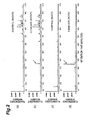
- Zoysiagrass (Agrostis stolonifera) was cultivated in a control section of a normal agar medium (100 mL) and in an AHX section of an agar medium added with 1 mM AHX (100 mL) for 30 days. Extension of shoots of the zoysiagrass in the AHX section was clearly promoted compared to that of the zoysiagrass in the control section.
- the shoots and roots of the cultivated zoysiagrass were harvested, extracted with ethanol, and the extract of shoots and the extract of the roots were subjected to reversed-phase high performance liquid chromatography (reversed-phase HPLC).
- the analysis conditions were as follows.
- Peaks of AHX and the AHX metabolite were detected from the eluate of the root extract of the AHX section ( Figure 1(d) ). It is believed that this is because, other than the AHX metabolite in the roots, the AHX in the medium is contaminated into the eluate of the root extract. Neither a peak of AHX nor a peak of the AHX metabolite was detected from the eluates of the shoot extract and the root extract of the control section ( Figure 1(a) and (c) ).
- Rice (Oryza sativa) was cultivated in a control section of a normal culture fluid and in an AHX section of a culture fluid in which AHX was added to be 0.2 mM in the normal culture fluid for 14 days. Extension of shoots of the rice in the AHX section was clearly promoted compared to that of the rice in the control section.
- the shoots and roots of the cultivated rice were harvested, extracted and analyzed with reversed-phase HPLC as in Example 1. A chromatogram obtained with chromatography is shown in Figure 2 .
- Rice (Oryza sativa) was cultivated in a control section of a normal culture fluid and in an AHX section of a culture fluid in which AHX was added to be 1 mM in the normal culture fluid for 20 days.
- Shoots (360 g) of the cultivated rice were harvested and extracted with ethanol.
- An ethanol-soluble fraction was concentrated under reduced pressure and extracted with dichloromethane.
- a dichloromethane-insoluble fraction was extracted with ethanol to yield an ethanol-soluble fraction (9.8 g).
- the fraction 3 (288 mg) was purified sequentially with HPLC (column: Develosil C30-UG-15/30 column, size: 50 x 500 mm, flow rate: 25 mL/min, mobile phase :5% methanol, detection: UV 310 nm) and HPLC (column: Develosil C30-UG-5 column, size: 20 x 250 mm, flow rate: 5 mL/minute, mobile phase: 10% methanol, detection: UV 310 nm) to finally isolate 10.5 mg of an AHX metabolite.
- X-ray crystal structure analysis was performed on the isolated AHX metabolite as follows. Single-crystal X-ray diffraction measurement was performed using SPring-8(single crystal structure analysis beamline BL02B1). The measurement conditions were as follows. Wavelength: 0.8260 (4) ⁇ , beam size: length 140 x width 159 ⁇ m 2 , Photon Flux: 1.81 x 10 8 photons/sec, and Photon Flux Density: 8.13 x 10 3 photons/sec/ ⁇ m 2 .
- Figure 3 is a diagram showing the crystal structure of the AHX metabolite obtained with X-ray crystallography.
- AOH was produced by allowing xanthine oxidase to act on AHX as follows. In 1 L of phosphate buffer saline (10 mM, pH 7.4), 137 mg of AHX was dissolved thereto, 25 mg of xanthine oxidase (derived from butter milk, 0.28 U/mg) was added, and the resultant mixture was left to stand at 30°C. To the mixture, 25 mg of the xanthine oxidase was added three times every 24 hours. After the last addition, the mixture was left to stand for further 24 hours. That is, in the total amount, 100 mg of xanthine oxidase was allowed to act on 137 mg of AHX for 96 hours.
- Sterilized seeds of rice (Nipponbare) (Oryza sativa L. cv. Nipponbare) were allowed to sprout at 28°C in three days.
- the sprouted seeds (four seeds per test tube) were cultivated in a test tube, in which a control culture fluid or a culture fluid to which AHX or AOH was added to different concentrations and was placed, at 28°C for a week.
- AOH that was produced according to the method of Example 5 was used.
- the control culture fluid comprises 0.5 mM of NH 4 NO 3 , 0.3 mM of Na 2 HPO 4 , 0.15 mM of K 2 SO 4 , 0.2 mM of MgCl 2 , 0.1 mM of CaCl 2 , 23 ⁇ M of Fe-ethylenediaminetetraacetic acid (Fe-EDTA), 25 ⁇ M of H 3 BO 3 , 4.5 ⁇ M of MnSO 4 , 0.15 ⁇ M of CuSO 4 , 0.35 ⁇ M of ZnSO 4 , and 0.05 ⁇ M of Na 2 MoO 4 .
- AHX or AOH is added to the above described control culture fluids such that the final concentration becomes 50 ⁇ M, 200 ⁇ M or 1000 ⁇ M.
- Rice (Oryza sativa) was hydroponically cultivated with a normal culture fluid for rice for two months, and roots (52 g) were harvested. After the roots were pulverized with a mixer, the pulverized roots were extracted with ethanol and acetone, and the extract was then concentrated to dryness thereby to obtain root extract (340 mg). This extract was dissolved in a solvent (95% acetonitrile and 0.05% formic acid) to adjust to a concentration of 10 mg/mL, and the resultant solution was analyzed with a liquid chromatography-tandem mass spectrometer (LC-MS/MS).
- LC-MS/MS liquid chromatography-tandem mass spectrometer
- the reference standard AOH has a peak at a retention time of 2.5 minutes with LC, a peak of a molecular weight of 152.0[M-H]- was detected from a full mass spectrum at this retention time, and a peak of a fragment ion of molecular weight of 97 was detected from an MS/MS spectrum.
- the rice root extract has a peak at a retention time of 2.5 minutes with LC, a peak of a molecular weight of 152.0[M-H]- was detected from a full mass spectrum at this retention time, and a peak of fragment ion of a molecular weight of 97 was detected from an MS/MS spectrum.
- the MS/MS spectrum (a) and the full mass spectrum (b) of the reference standard AOH are shown in Figure 5 .
- the MS/MS spectrum (a) and the full mass spectrum (b) of the rice root extract are also shown in Figure 6 .
- the LC-MS/MS analysis conditions and the apparatuses used are as follows.
- Tomato Solanum lycopersicum
- Tomato was hydroponically cultivated with a normal culture fluid for tomatoes for two months, and roots (17 g) were harvested. After the roots were pulverized with a mixer, the pulverized roots were extracted with ethanol and acetone, the extract was then concentrated to dryness, and were stripped of the dichloromethane-soluble part to obtain root extract (4.7 mg).
- This extract was dissolved in a solvent (95% acetonitrile, 0.05% formic acid) to adjust to a concentration of 10 mg/mL, and the resultant solution was analyzed with an LC-MS/MS as in Example 7.
- the analysis conditions and apparatuses used for analysis were the same as in Example 7.
- the tomato root extract similarly to the reference standard AOH, has a peak at retention time 2.5 minutes with LC, a peak of molecular weight 152.0[M-H]- was detected from a full mass spectrum at this retention time, and a peak of fragment ion of molecular weight 97 was detected from an MS/MS spectrum.
- the MS/MS spectrum (a) and the full mass spectrum (b) of the tomato root extract are shown in Figure 7 .
- the amount of AOH contained in the tomato roots which was calculated on the basis of the calibration curve and the peak area of AOH, was about 0.1 ng or less per 17 g of the tomato roots, which was lower than that in the rice.
- Brown rice and plant bodies soil-cultivated were dried at 30°C for 15 days, and brown rice weight (both of weight per plant and weight per 100 brown rice grains), panicle length, culm length, number of panicles, number of tillers, and aerial part weight were measured.
- brown rice weight both of weight per plant and weight per 100 brown rice grains
- panicle length both of weight per plant and weight per 100 brown rice grains
- culm length number of panicles
- number of tillers and aerial part weight
- Rice (Nipponbare) (Oryza sativa L. cv. Nipponbare) was used and cultivated in a field as follows. As cultivation conditions, five sections of (1) to (5) were set.
- Brown rice was dried, and total brown rice weight, hull weight, non-sieved brown rice weight and sieved brown rice, per 10 plant bodies, and thousand kernel weight were measured. The results are shown in Table 2.
- AOH The results indicate the average ⁇ standard deviation.
- Increasing rate indicates an increasing rate (%) relative to the control.
- * indicates the P value ⁇ 0.05.
- 3-methyl-AOH was produced from AOH.
- Sterilized seeds of rice (Nipponbare) (Oryza sativa L. cv. Nipponbare) were allowed to sprout at 28°C in three days.
- the sprouted seeds (four seeds per test tube) were cultivated in a test tube, in which a control culture fluid, a culture fluid to which 0.2 mM of AOH was added, or a culture fluid to which 0.2 mM of 3-methyl-AOH was added and was placed, at 28°C for a week.
- the control culture fluid comprises 0.5 mM of NH 4 NO 3 , 0.3 mM of Na 2 HPO 4 , 0.15 mM of K 2 SO 4 , 0.2 mM of MgCl 2 , 0.1 mM of CaCl 2 , 23 ⁇ M of Fe-ethylenediaminetetraacetic acid (Fe-EDTA), 25 ⁇ M of H 3 BO 3 , 4.5 ⁇ M of MnSO 4 , 0.15 ⁇ M of CuSO 4 , 0.35 ⁇ M of ZnSO 4 , and 0.05 ⁇ M of Na 2 MoO 4 .
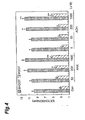
- the culture fluid was replaced with new culture fluid every other day. After cultivation, the length of shoots and roots was measured. The measured extension of the roots is shown in Figure 8 .
- AOH and 3-methyl-AOH of the present invention can be effectively used as plant growth regulators.
- Such plant growth regulators can be widely applied to agriculture and gardening.
Landscapes
- Chemical & Material Sciences (AREA)
- Organic Chemistry (AREA)
- Life Sciences & Earth Sciences (AREA)
- Zoology (AREA)
- Engineering & Computer Science (AREA)
- Wood Science & Technology (AREA)
- General Health & Medical Sciences (AREA)
- Health & Medical Sciences (AREA)
- Dentistry (AREA)
- Plant Pathology (AREA)
- Environmental Sciences (AREA)
- Pest Control & Pesticides (AREA)
- Agronomy & Crop Science (AREA)
- Microbiology (AREA)
- General Engineering & Computer Science (AREA)
- Genetics & Genomics (AREA)
- Bioinformatics & Cheminformatics (AREA)
- Biochemistry (AREA)
- General Chemical & Material Sciences (AREA)
- Chemical Kinetics & Catalysis (AREA)
- Biotechnology (AREA)
- Agricultural Chemicals And Associated Chemicals (AREA)
- Nitrogen Condensed Heterocyclic Rings (AREA)
- Preparation Of Compounds By Using Micro-Organisms (AREA)
Applications Claiming Priority (4)
| Application Number | Priority Date | Filing Date | Title |
|---|---|---|---|
| JP2011099456 | 2011-04-27 | ||
| JP2011154981 | 2011-07-13 | ||
| JP2012041711 | 2012-02-28 | ||
| PCT/JP2012/060989 WO2012147750A1 (fr) | 2011-04-27 | 2012-04-24 | Dérivé d'imidazole |
Publications (2)
| Publication Number | Publication Date |
|---|---|
| EP2703403A1 true EP2703403A1 (fr) | 2014-03-05 |
| EP2703403A4 EP2703403A4 (fr) | 2015-02-11 |
Family
ID=47072268
Family Applications (1)
| Application Number | Title | Priority Date | Filing Date |
|---|---|---|---|
| EP12776726.7A Withdrawn EP2703403A4 (fr) | 2011-04-27 | 2012-04-24 | Dérivé d'imidazole |
Country Status (8)
| Country | Link |
|---|---|
| US (1) | US8809328B2 (fr) |
| EP (1) | EP2703403A4 (fr) |
| JP (1) | JP5915982B2 (fr) |
| CN (1) | CN103649092B (fr) |
| BR (1) | BR112013027780A2 (fr) |
| CA (1) | CA2837434A1 (fr) |
| EA (1) | EA201301199A1 (fr) |
| WO (1) | WO2012147750A1 (fr) |
Cited By (1)
| Publication number | Priority date | Publication date | Assignee | Title |
|---|---|---|---|---|
| EP3960244A4 (fr) * | 2019-06-06 | 2023-01-25 | Vitamin C60 Bioresearch Corporation | Activateur cellulaire de cellule animale |
Families Citing this family (4)
| Publication number | Priority date | Publication date | Assignee | Title |
|---|---|---|---|---|
| JP2821932B2 (ja) | 1990-02-23 | 1998-11-05 | 日本真空技術株式会社 | プラズマcvd装置 |
| JP6016262B2 (ja) | 2012-07-31 | 2016-10-26 | 日本電気通信システム株式会社 | 移動端末、制御ノード、パケット転送ノード、及び輻輳制御のための方法 |
| WO2016136508A1 (fr) * | 2015-02-23 | 2016-09-01 | 国立大学法人静岡大学 | Procédé de production de 2-aza-8-oxohypoxanthine |
| JP2021073167A (ja) * | 2018-03-05 | 2021-05-13 | 国立大学法人静岡大学 | 植物病害防除剤 |
Family Cites Families (6)
| Publication number | Priority date | Publication date | Assignee | Title |
|---|---|---|---|---|
| DE3629064A1 (de) | 1986-08-27 | 1988-03-03 | Hoechst Ag | 2,3,6-substituierte phenylimidazolderivate, verfahren zu ihrer herstellung und ihre verwendung als wachstumgsregulatoren |
| GB8624879D0 (en) | 1986-10-17 | 1986-11-19 | May & Baker Ltd | Compositions of matter |
| DE3722072A1 (de) * | 1987-07-01 | 1989-01-12 | Schering Ag | 6,7-dihydro-pyrazolo(1,5-a)(1,3,5) triazin-2-sulfonsaeureamide, verfahren zu ihrer herstellung und ihre verwendung als mittel mit herbizider und pflanzenwuchsregulierender wirkung |
| JPH04210680A (ja) | 1990-12-01 | 1992-07-31 | Nissan Chem Ind Ltd | イミダゾール誘導体および植物生長調節剤 |
| JP4565018B2 (ja) * | 2007-05-22 | 2010-10-20 | 国立大学法人静岡大学 | 植物生長調節剤及び植物生長調節方法 |
| JP5660540B2 (ja) * | 2009-07-24 | 2015-01-28 | 国立大学法人静岡大学 | 主食作物生産増収方法 |
-
2012
- 2012-04-24 EA EA201301199A patent/EA201301199A1/ru unknown
- 2012-04-24 CA CA2837434A patent/CA2837434A1/fr not_active Abandoned
- 2012-04-24 US US14/113,730 patent/US8809328B2/en active Active
- 2012-04-24 CN CN201280031394.6A patent/CN103649092B/zh not_active Expired - Fee Related
- 2012-04-24 WO PCT/JP2012/060989 patent/WO2012147750A1/fr not_active Ceased
- 2012-04-24 BR BR112013027780A patent/BR112013027780A2/pt not_active Application Discontinuation
- 2012-04-24 JP JP2013512379A patent/JP5915982B2/ja active Active
- 2012-04-24 EP EP12776726.7A patent/EP2703403A4/fr not_active Withdrawn
Non-Patent Citations (3)
| Title |
|---|
| ELLIOTT SHAW ET AL: "IMIDAZO-1,2,3-TRIAZINES AS SUBSTRATES AND INHIBITORS FOR XANTHINE OXIDASE", J. BIOL. CHEM. AT EUROPEAN PATENT OFFICE ON SEPTEMBER AT EUROPEAN PATENT OFFICE ON, vol. 194, no. 8, 1 January 1952 (1952-01-01), pages 641-654, XP55138721, * |
| IVANOVICS G A ET AL: "The Synthesis of 2-Substituted Derivatives of 5-Amino-1-beta-D-ribofuranosyl-imidazole-4 -carboxamide. Ring Opening Reactions of 2-Azapurine Nucleosides", THE JOURNAL OF ORGANIC CHEMISTRY, AMERICAN CHEMICAL SOCIETY, US, vol. 39, no. 25, 1 January 1974 (1974-01-01), pages 3651-3654, XP002315091, ISSN: 0022-3263, DOI: 10.1021/JO00939A007 * |
| See also references of WO2012147750A1 * |
Cited By (2)
| Publication number | Priority date | Publication date | Assignee | Title |
|---|---|---|---|---|
| EP3960244A4 (fr) * | 2019-06-06 | 2023-01-25 | Vitamin C60 Bioresearch Corporation | Activateur cellulaire de cellule animale |
| US12527801B2 (en) | 2019-06-06 | 2026-01-20 | Vitamin C60 Bioresearch Corporation | Cell activator of animal cell |
Also Published As
| Publication number | Publication date |
|---|---|
| CN103649092B (zh) | 2016-08-17 |
| US8809328B2 (en) | 2014-08-19 |
| EA201301199A1 (ru) | 2014-04-30 |
| JP5915982B2 (ja) | 2016-05-11 |
| JPWO2012147750A1 (ja) | 2014-07-28 |
| US20140148598A1 (en) | 2014-05-29 |
| CN103649092A (zh) | 2014-03-19 |
| WO2012147750A1 (fr) | 2012-11-01 |
| BR112013027780A2 (pt) | 2016-07-26 |
| EP2703403A4 (fr) | 2015-02-11 |
| CA2837434A1 (fr) | 2012-11-01 |
Similar Documents
| Publication | Publication Date | Title |
|---|---|---|
| Parry et al. | The role of cis-carotenoids in abscisic acid biosynthesis | |
| Leul et al. | Alleviation of waterlogging damage in winter rape by application of uniconazole: effects on morphological characteristics, hormones and photosynthesis | |
| Brock et al. | Brassicaceae contain nortropane alkaloids | |
| Wong et al. | Study of cis-cinnamic acid in Arabidopsis thaliana | |
| Kim et al. | Exogenous application of plant growth regulators increased the total flavonoid content in Taraxacum officinale Wigg | |
| Nguyen et al. | Trichomes+ roots+ ROS= artemisinin: regulating artemisinin biosynthesis in Artemisia annua L. | |
| US8809328B2 (en) | Imidazole derivative | |
| US9532569B2 (en) | Strigolactone analogues and the use thereof for the treatment of plants | |
| Sharma et al. | Effect of abiotic elicitation and pathway precursors feeding over terpenoid indole alkaloids production in multiple shoot and callus cultures of Catharanthus roseus | |
| EP3342766B1 (fr) | Composé à petite molécule pour améliorer la résistance des plantes au stress | |
| Vakili et al. | Chromium-induced tropane alkaloid production and H6H gene expression in Atropa belladonna L.(Solanaceae) in vitro-propagated plantlets | |
| Alam et al. | Exploiting the epibrassinolide as a plant growth promoter for augmenting the growth, physiological activities and alkaloids production in Catharanthus roseus L | |
| US5585505A (en) | Hatching agent for the potato cyst nematode | |
| JP7090261B2 (ja) | ヤマブシタケ由来新規化合物 | |
| Mander et al. | Designer gibberellins: The quest for specific activity | |
| CN102469789B (zh) | 主食作物生产增收方法 | |
| CN106749044B (zh) | 增强植物抗逆性的aba类似物 | |
| BADAY et al. | In vitro responses of two barley varieties to Moringa extract and growth regulators under drought stress | |
| UA109939C2 (xx) | Похідні імідазолу | |
| JP7325429B2 (ja) | 植物の耐塩性向上剤 | |
| JPH0613542B2 (ja) | 新規化合物No.51262物質、その製法並びにそれを有効成分とする除草剤及び植物調節剤 | |
| Gafurov et al. | Growth-regulating activity of N-benzyl-and O-benzyl-containing compounds belonging to a new group of synthetic analogues of natural auxins | |
| WO2023084032A9 (fr) | Acides ptéridiques et leurs utilisations | |
| EP0229098A1 (fr) | Compositions et procede de regulation de la croissance vegetale | |
| JP5900877B2 (ja) | アミド化合物 |
Legal Events
| Date | Code | Title | Description |
|---|---|---|---|
| PUAI | Public reference made under article 153(3) epc to a published international application that has entered the european phase |
Free format text: ORIGINAL CODE: 0009012 |
|
| 17P | Request for examination filed |
Effective date: 20131127 |
|
| AK | Designated contracting states |
Kind code of ref document: A1 Designated state(s): AL AT BE BG CH CY CZ DE DK EE ES FI FR GB GR HR HU IE IS IT LI LT LU LV MC MK MT NL NO PL PT RO RS SE SI SK SM TR |
|
| DAX | Request for extension of the european patent (deleted) | ||
| A4 | Supplementary search report drawn up and despatched |
Effective date: 20150114 |
|
| RIC1 | Information provided on ipc code assigned before grant |
Ipc: A01P 21/00 20060101ALI20150108BHEP Ipc: A01N 43/90 20060101ALI20150108BHEP Ipc: C12P 17/12 20060101ALI20150108BHEP Ipc: C07D 487/04 20060101AFI20150108BHEP |
|
| GRAP | Despatch of communication of intention to grant a patent |
Free format text: ORIGINAL CODE: EPIDOSNIGR1 |
|
| INTG | Intention to grant announced |
Effective date: 20151125 |
|
| GRAS | Grant fee paid |
Free format text: ORIGINAL CODE: EPIDOSNIGR3 |
|
| STAA | Information on the status of an ep patent application or granted ep patent |
Free format text: STATUS: THE APPLICATION IS DEEMED TO BE WITHDRAWN |
|
| 18D | Application deemed to be withdrawn |
Effective date: 20160406 |