EP2704121B1 - Système destiné à identifier les utilisateurs dans des véhicules automobiles - Google Patents
Système destiné à identifier les utilisateurs dans des véhicules automobiles Download PDFInfo
- Publication number
- EP2704121B1 EP2704121B1 EP12182956.8A EP12182956A EP2704121B1 EP 2704121 B1 EP2704121 B1 EP 2704121B1 EP 12182956 A EP12182956 A EP 12182956A EP 2704121 B1 EP2704121 B1 EP 2704121B1
- Authority
- EP
- European Patent Office
- Prior art keywords
- vehicle
- data
- server
- users
- individual
- Prior art date
- Legal status (The legal status is an assumption and is not a legal conclusion. Google has not performed a legal analysis and makes no representation as to the accuracy of the status listed.)
- Active
Links
Images
Classifications
-
- G—PHYSICS
- G08—SIGNALLING
- G08G—TRAFFIC CONTROL SYSTEMS
- G08G1/00—Traffic control systems for road vehicles
- G08G1/01—Detecting movement of traffic to be counted or controlled
-
- G—PHYSICS
- G06—COMPUTING OR CALCULATING; COUNTING
- G06F—ELECTRIC DIGITAL DATA PROCESSING
- G06F7/00—Methods or arrangements for processing data by operating upon the order or content of the data handled
-
- G—PHYSICS
- G08—SIGNALLING
- G08G—TRAFFIC CONTROL SYSTEMS
- G08G1/00—Traffic control systems for road vehicles
- G08G1/20—Monitoring the location of vehicles belonging to a group, e.g. fleet of vehicles, countable or determined number of vehicles
Definitions
- US 5945919 discloses a system in which the positions of a plurality of vehicles are monitored and the respective next vehicle is assigned to a position of a customer, so that he can provide a service for this customer.
- the vehicles drive for a taxi company.
- the next vehicle is sent to that customer for his transportation.
- neither the identity of the customer nor the final number of passengers in this taxi is determined.
- the system is not automatically known which and how many people are in the taxi.
- An identification of drivers or vehicle occupants may, for example, via IRIS scanner, fingerprint sensors or other identification techniques, which are arranged in the vehicle, take place.
- IRIS scanner fingerprint sensors or other identification techniques, which are arranged in the vehicle.
- this requires on the one hand the installation of special sensors in the vehicle and the provision of additional unusual and very special data for personal identification.
- the effort for personal identification is greatly increased.
- the vehicle 4a may be equipped, for example, with an M2M communication module with optional Matteritennavigationsempftuler (for example, GPS).
- Christitennavigationsempftuler for example, GPS
- most vehicles are already equipped with navigation systems that allow route tracking.
- An alternative retrofitting of vehicles with navigation systems is possible with little effort.
- the other component users need for motion detection is a mobile terminal capable of communicating in a mobile network. Such mobile devices today have almost all users, so that the effort on the provision of the analysis server and a corresponding design of the data connections is limited in the system.
- system according to the invention can be used to avoid control and identification devices for identifying the driver / passengers in or on the vehicles, such as fingerprint or eye scanners or near field sensors, and at the same time at least determine with high probability whether one or more authorized Person (s) (users) are in the vehicle and how many of these people (users are in the vehicle.) The movement routes are likely to close to the actual driver.
- control and identification devices for identifying the driver / passengers in or on the vehicles, such as fingerprint or eye scanners or near field sensors, and at the same time at least determine with high probability whether one or more authorized Person (s) (users) are in the vehicle and how many of these people (users are in the vehicle.) The movement routes are likely to close to the actual driver.
- the vehicle module can be, for example, an M2M communication module with an optional satellite navigation receiver (for example GPS), a navigation device or a radio module whose position can be located in a mobile radio network using known techniques. These devices may have a unique name in a communication network, such as IMSI, MSISDN, sip adr, etc. These designations can also be used as a vehicle ID because the radio modules can be permanently installed in the vehicles.
- the vehicle modules associate the location and time data with the respective vehicle IDs prior to transmission to the system. This means that all vehicle-related location and time data can be clearly assigned to a vehicle.
- the transmission of the vehicle-related location and time data and the terminal-related location and Time data to the system can be sent to various components in the system. For example, the data can be received by receiving components provided for this purpose and forwarded to the further processing components in the system via corresponding data connections. For example, in one embodiment, the data may also be received by the analysis server or passed directly to it.
- the mobile network required in the system can be any suitable mobile radio network, for example one of the known mobile telephone networks.
- Such networks usually have a large number of servers, one of which servers is connected to the data store (s) as a network server.
- the mobile terminals may be, for example, commercially available mobile devices, provided they are suitable for communication in the mobile network.
- Such mobile terminals have an individual identifier, so that they can be uniquely assigned in the mobile radio networks and addressed for communication.
- the terminal ID of the present invention may be the individual telephone number (MSISDN, IMEI) of the mobile terminal or another individual network identifier of the respective mobile terminal in the mobile network (for example, IMSI). Network location of mobile terminals is known in the art.
- the person skilled in the art can choose the appropriate technique for obtaining terminal-related location and time data in the mobile radio network. These are then transmitted including terminal ID to the system in a suitable manner, for example via a wireless data line.
- the time data in the vehicle-related and terminal-related location and time data can be present, for example, as a time stamp.
- the location and time data can be collected and / or transmitted periodically, possibly only in a certain time interval. The period (frequency) at which the data is collected and / or transmitted may be different for different applications or modes of operation (for example, location and time data may be stored on the terminal and transmitted at the end of the journey).
- the spaces between the measured location data are linearly interpolated.
- the resulting route is then the determined travel or movement route. Since vehicles usually move on known roads, the interpolation between the measured location data can also be linked to existing map material so that the interpolated routes run along drivable paths or roads.
- the determination of the travel or movement routes may take place in the same component of the system or in separate components of the system, for example a component for determining the route and another component for determining the route of movement. In one embodiment, the determination of all routes is performed by the analysis server.
- a probability of coincidence also referred to as a degree of coincidence, is determined for the respective combinations of travel route and movement route to be tested. If the probability (degree of agreement) is above a defined value (threshold value), this is interpreted as a sufficient match in the system.
- a threshold for a sufficient match is defined in the system. The agreement is only sufficient if the determined degree of agreement is above the threshold value. The definition of the threshold may be adjusted according to the number of users and vehicles in the system.
- the temporal and spatial coincidence of start and end points of the individual travel route and the individual movement routes to be compared with a higher weighting are taken into account for the degree of agreement as points of the travel and movement routes between the start and end points. This corresponds, for example, to the principle that a user of the vehicle must sit the entire distance in the vehicle in order to be considered the driver of the vehicle.
- the analysis server associates the subject vehicle ID with the terminal ID associated with those individual travel routes and stores the link in the data store (s) together with the personal data of the vehicle Terminal IDs assigned to users. This does not require the personal data from before to be extracted from the datastore to the analytic server.
- the links could be linked to the corresponding data records, including personal data and terminal ID. An additional record of link and personal data could also be made in the data store (s).
- the system further comprises a vehicle server connected at least to the data store (s), on which at least the drivers and / or passengers admitted to the at least one vehicle are stored.
- a vehicle server connected at least to the data store (s), on which at least the drivers and / or passengers admitted to the at least one vehicle are stored.
- the vehicle module transmits the location and time data to the vehicle server, and the individual route of the at least one vehicle is determined by the vehicle server.
- the local location monitoring of the vehicles which may already have been available to some participants in the system, can continue to be operated and used in the system.
- the vehicle server can transmit the already determined travel routes, so that the analysis server only has to determine the movement routes for the comparison to be carried out.
- the vehicle server is configured to compare the users assigned to the at least one vehicle by means of the analysis server with the drivers and / or passengers authorized for this vehicle, to store the result of the comparison and, in the case of a match, to only one of the assigned users to index one of the authorized drivers and / or passengers for the vehicle to that one user as the driver of that vehicle. If several persons or users are admitted as drivers for a vehicle, these persons or users are equally either driver or passenger.
- the comparison of the routes in the analysis server can identify a unique driver. It could be too be that two authorized persons sit the entire route together in the vehicle, so that the determined from the probability comparison driver may only be the passenger. Should a clear determination of the driver be necessary, both users would have to be interviewed. If only one of the assigned users agrees with one of the authorized drivers and / or passengers for this vehicle, the system according to the invention can thus automatically and unambiguously identify a driver for a vehicle.
- the vehicle server is provided to send out a first alarm signal to the system in the event of any mismatch between associated users and authorized drivers and / or passengers, or insufficient compliance with individual movement routes for that vehicle.
- an unauthorized user person drives the vehicle.
- known persons can be identified at least in the system, which can thus be addressed by the system operators on their behavior. The system operators can use it to quickly and easily determine whether the users of the vehicles comply with the agreed rules.
- the second case could even be a vehicle theft. Since unintentional behavior is present in both cases, the system operators are automatically alerted to this behavior with the first alarm signal and can initiate corresponding further steps in a timely manner. In the case of theft, it is no longer necessary to wait for the display of the authorized driver or passenger since the information provided by the system according to the invention is directly available to the system operator without the intervention of other persons. The time gained can be used to successfully seize the thief.
- the vehicle server is provided to index the user as a driver in the case of multiple matches between associated users and authorized drivers and / or passengers for this vehicle, whose individual movement route has the greatest agreement with the individual route for the vehicle. Consequently can be documented by the indexing that at least one authorized driver has been in the vehicle.
- the mobile radio network is configured to trigger the transmission of terminal-related location and time data from the mobile terminals to the network server, for example by paging or the sending of so-called silent SMS.
- the triggering by the mobile radio network ensures that there is sufficient data volume of location and time data for determining a movement route.
- the period of the notifications may, for example, be less than a minute, between one and five minutes or between one and ten minutes in order to be able to determine an exact movement route.
- an application is installed on the mobile terminal, which triggers the transmission of terminal-related location and time data to the network server.
- the individual user can determine the time interval between the individual location measurements themselves and optionally set a shorter measurement period for a more accurate determination of the movement route.
- the location measurement is independent of the opposites in the respective mobile network.
- the triggering can also be done manually via the user, for example via an active sending of SMS or by telephone calls.
- this data can also be added to the other regularly obtained location data.
- the time data can be present as so-called timestamps.
- the vehicle module is connected to an engine controller of the vehicle and transmits the vehicle-related location and time data only during operation of the engine.
- the vehicle module is suitably connected to the car battery so that starting or stopping a ride is detected by monitoring the car battery voltage.
- starting the engine then, for example, the transmission of vehicle-related location and time data to the vehicle or analysis server begins.
- switching off the engine ends the Transmission of vehicle-related location and time data to the vehicle or analysis server. This limits on the one hand the data traffic and the amount of data to be processed and on the other hand this embodiment simplifies the analysis by the analysis server since data on movement routes in downtime of the vehicle need not be taken into account.
- driving data is obtained from the vehicle-related location and time data, and / or the vehicle is equipped with one or more driving sensors, preferably acceleration sensors, which send the driving data to the vehicle module and the vehicle module transmits these driving data together with the associated location and time data transmitted to the system.
- the driving data or a part of the driving data can also be obtained in addition to the driving data of the driving sensors from the GPS data, which are already available as vehicle-related location and time data.
- the transmitted driving data enables system operators to check, for example, whether a driver's driving style is risky, dangerous or unsafe. For example, the prescribed maximum speeds can be determined via the route and compared with the driving data. If driving too fast, too strong acceleration or deceleration, the driver can thus be made aware of his driving style.
- the transmitted driving data can also be linked with existing map material, so as to allow an even more meaningful assessment of the driving style of the driver.
- a high or increased speed at typical danger spots in traffic or, for example, in winding terrain can be considered a very risky driving style.
- Whether a speed is increased on a certain road or path section can be determined, for example, by a comparison with the speed limits stored for the road or path section concerned at the analysis or vehicle server.
- the valid for the individual roads or roads speed limits can be stored and for an assessment of the driver's driving style using and / or the Adjustment be used with the determined vehicle-related location and time data.
- for longer trips can also be determined whether a particular driver complies with desirable and / or mandatory rest periods while driving.
- the transmitted time data or the travel time and the driver identity can be compared with a maximum travel time to be specified and if exceeded by the analysis server or vehicle server warnings to predetermined users, such as the driver or other registered users of the system are transmitted.
- the analysis server and / or the vehicle server are / are configured to associate the driving data with the user identified as a driver, to accumulate the driving data for all journeys by this user, to determine a specific driving behavior for the user from the accumulated driving data, and the specific driving behavior for identifying a particular user as the driver from a group of multiple users who might be potential drivers and / or for verifying the identification of one of the users as the driver.
- the system is thus a self-learning system that independently expands and updates the database for determining user-specific driving behavior, whereby a more accurate identification of a user as the driver with multiple users as possible drivers due to similar correlations e.g. their movement routes with the route or because of their characteristic driving behavior, is made possible.
- the accumulation of the driving data, the determination of a characteristic driving behavior from the accumulated driving data and the comparison between driving behavior and individual driving data can be performed by various components of the system.
- the registering step may serve to establish the correlation between driver and passenger personal data and their terminal IDs.
- the movement routes of terminals that can not be assigned to a person are worthless for checking the persons in a vehicle.
- the indexing can be done in any suitable way.
- the record of the authorized driver or that of the corresponding user can be suitably marked by setting a flag, by adding the relevant period in which a match between route and route of movement was detected or by creating a new record in which the indexed driver for the corresponding vehicles and driving times are listed.
- the method comprises the further steps of accumulating the assigned driving data for the identified user as the driver for all journeys of this user and determining from the accumulated driving data a specific driving behavior for the identified user, the specific driving behavior for identification one of the users is used as a driver (with multiple users as possible drivers) and / or for verification of the identification of one of the users as the driver.
- these processes can be carried out in the vehicle server and / or in the analysis server.
- the above method steps can also be performed in reverse order.
- the driving data can do this For example, be obtained from the vehicle-related location and time data.
- the vehicle may also be equipped with one or more driving sensors, for example acceleration sensors, which send the driving data to the vehicle module and the vehicle module transmits these driving data together with the associated location and time data to the system.
- the analysis of the driving data may also include a check for exceeding predetermined maximum values, which are also assigned to the identified driver.
- one of the maximum values is a maximum negative acceleration, wherein the vehicle server transmits a second alarm signal to the system when this maximum negative acceleration is exceeded, the second alarm signal comprising the user assigned to this vehicle and possibly the indicated driver.
- the maximum values of negative accelerations may, for example, correspond to those for the deployment of airbags in vehicles. These negative accelerations can be interpreted as an accident situation. Thus, upon detection of a corresponding acceleration value, an accident of the vehicle can be detected. Due to the present invention, the system operator is able, as a result of the received second alarm signal, to inform appropriate emergency services or police stations for further safety and rescue measures. In addition, due to the system according to the invention the rescue services additional information, such as the number of people (corresponding to the number of associated users to this route) in the vehicle and the identity of the driver, are called for this vehicle.
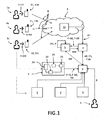
- Fig. 1 shows an embodiment of the system according to the invention.
- the system comprises a plurality of vehicles 2, of which a vehicle 2 is shown in more detail with some components.
- the vehicles 2 are assigned to the identifier in the system individual vehicle IDs.
- the vehicles 2 are equipped with a vehicle module 21 for the wireless transmission of vehicle-related location and time data F-OZ to the system.
- the transmission of the location and time data F-OZ to the vehicle server 6 takes place.
- the vehicle modules 21 here link the location and time data F-OZ before being transmitted to the vehicle server 6 with the respective vehicle IDs F-ID, by the vehicle modules 21 in the communication network to the vehicle server 6 have a unique name.
- the vehicle module can be, for example, an M2M communication module with an optional satellite navigation receiver (for example GPS), a navigation device, or a radio module whose position can be located via known techniques in a mobile radio network and optionally installed as a retrofit device in the respective vehicle.
- the M2M device has, for example, a mobile radio module, a Accelerometer and a GPS locator module.
- the vehicle-related location and time data F-OZ be detected, for example, with GPS or a cell ID of Mobilfinkozoes and then transmitted via the mobile module to the car server.
- the transmission can take place, for example, via an IP connection via GPRS, via SMS or, as with the E-Call, with an in-band modem.
- the accelerometer is not required for a vehicle-user mapping, but it can be used to identify additional data and provide clues to identify the driver.
- the vehicle module may further comprise an on-board Diagonstic (OBD) interface and be used as an M2M device, for example in an OBD diagnostic connector in the vehicle.
- OBD on-board Diagonstic
- the vehicle module may have a unique designation in a communication network, for example IMSI, MSISDN, sip adr, etc. These designations can also be used as a vehicle ID because the radio modules can be permanently installed in the vehicles.
- the vehicle modules associate the location and time data with the respective vehicle IDs prior to transmission to the system.
- the vehicle-related location and time data F-OZ can be stored in the vehicle module 21 and transmitted or transmitted to the system after the end of the journey.
- the vehicle module 21 is additionally connected to an engine control 22 of the vehicle 2, so that the vehicle-related location and time data F-OZ are transmitted to the vehicle server 6 only during operation of the engine 23.
- the vehicle module 21 may, for example, also be suitably connected to the car battery, so that starting or stopping a trip is detected by monitoring the car battery voltage.
- Other detection possibilities are also conceivable in order to determine a starting or ending of a journey, as e.g. with the help of an acceleration sensor.
- the vehicle 2 additionally has one or more Driving sensors 24, preferably acceleration sensors 24, send the driving data FD to the vehicle module 21 during operation of the vehicle and the vehicle module 21 transmits these driving data FD together with the associated location and time data F-OZ to the vehicle server 6.
- Driving sensors 24, preferably acceleration sensors 24, send the driving data FD to the vehicle module 21 during operation of the vehicle and the vehicle module 21 transmits these driving data FD together with the associated location and time data F-OZ to the vehicle server 6.
- the driving style of the driver F or possibly occurring dangerous situations can be automatically detected and appropriate measures initiated by the system operators.
- a plurality of mobile terimals 11, illustrated by way of example with three mobile terminals 11 a, 11 b, 11 c, are connected in a mobile radio network 3, inter alia, to a network server 31.
- the respective mobile terminals 11a, 11b, 11c are uniquely assigned to the users 1 a, 1 b, 1 c of these mobile terminals 11 a, 11 b, 11 c on the basis of individual terminal IDs T-ID 1, T-ID 2, T-ID 3.
- the users 1 a, 1 b, 1 c can thus be identified on the basis of the terminal IDs T-ID1, T-ID2, T-ID3.
- the localization of mobile terminals 11 in a mobile network 3 is already known technology.
- the terminal-related location and time data T-OZ can be obtained, for example, in that the mobile radio network (3) triggers the transmission K of terminal-related location and time data T-OZ from the mobile terminals 11a, 11b, 11c to the network server 31.
- an application could also be installed on the mobile terminal 11 that triggers the transmission K of terminal-related location and time data T-OZ to the network server 31.
- the mobile terminal 11 can transmit the terminal-related location and time data T-OZ, for example via IP connection, SMS dispatch or in-band modem, to the system or a component of the system, eg the vehicle server, the analysis server, the network server or submit the database.
- the terminal-related location and time data T-OZ can also be obtained from GPS data or Cell-ID data.
- the terminal-related location and time data T-OZ can also be obtained by other use of the mobile terminal. If, for example, a mobile telephone serves as a mobile terminal, the location and time data T-OZ can be transmitted during normal use of the mobile telephone, for example sending SMS, telephoning or surfing the Internet.
- the network server 31 is in this embodiment configured to transmit terminal-related location and time data T-OZ to the database 4 as the data storage in this embodiment UT.
- the database 4 stores the transmitted vehicle-related location and time data F-OZ together with the vehicle IDs F-ID, possibly for later determination ER of individual driving routes FR for the respective vehicles 2.
- the individual driving routes FR of the respective vehicles 2 can be determined by the Vehicle server 6 determined and transmitted to the analysis server 5 for further processing (dashed arrow).
- the analysis server can also carry out the determination ER of the travel routes FR itself.
- the database 4 also stores the terminal-related location and time data T-OZ together with the terminal IDs T-ID, T-ID1, T-ID2, T-ID3 and the personal data PD of the terminal IDs T-ID, T-ID. ID1, T-ID2, T-ID3 associated users 1, 1a, 1 b, 1 c for the subsequent determination ER individual personal movement routes TR, TR1, TR2, TR3 for each of the mobile terminals 1, 1 a, 1 b, 1 c.
- the individual movement routes TR could also be determined by the network server 31 and transmitted to the database 4 and / or to the analysis server 5.
- the analysis server 5 connected to the database 4 compares VG to the determined individual travel routes FR with the determined individual movement routes TR. In the case of a sufficient agreement U-FT of at least one of the individual travel routes FR with one or more of the individual movement routes TR at least in a time interval, the analysis server 5 links the relevant vehicle ID F-ID with the corresponding terminal to these individual movement routes TR IDs T-ID1, T-ID2, T-ID3 and SV4 stores this link V in the database 4 together with the personal data PD of the users 1a, 1b associated with the terminal IDs T-ID1, T-ID2, T-ID3 , 1 c from.
- the correlation between personal data PD, such as name, first name, address, ID card number, etc., and terminal IDs T-ID can be obtained from a variety of data sources.
- the system comprises a portal in which later users 1 can register R so that the system operators can assign these users as authorized drivers (F) and / or passengers (M) to individual vehicles 2.
- F authorized drivers
- M passengers
- the later User 1 in the system at least his personal data PD and the terminal ID T-ID for his mobile Terimal 11 at.
- personal data PD can be assigned to the terminal IDs T-ID transmitted by the mobile radio server.
- the system may include a portal with which the driver / passengers (users) can view their and possibly other travel and movement routes.
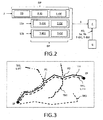
- Fig.2 11 shows an embodiment in which the vehicle-related location and time data F-OZ together with the travel data FD and the vehicle ID and the terminal-related location and time data T-OZ together with the terminal IDs T-ID1, T-ID2 for the individual Measuring points are each transmitted as a common data packet DP (or data set DP).
- the data packets DP for terminal-related location and time data T-OZ and terminal IDs T-ID1, T-ID2 are shown here for example for a first and second mobile terminal 11a, 11b of a first and second user 1a, 1b.
- the driving data FD can also be transmitted separately from the vehicle-related location and time data F-OZ, so that in this case the corresponding data packet DP would include only the vehicle-related location and time data F-OZ and the vehicle ID.
- no driving data FD is transmitted, but only the vehicle-related location and time data and / or the vehicle ID F-ID.
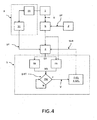
- Figure 3 shows a representation of how different movement routes for a route FR in the analysis server 5 compared VG, evaluated and possibly linked V.
- the route FR is shown here as a solid line.
- the dashed frame should indicate a map display.
- the map display has not been further detailed for reasons of clarity.
- a plurality of movement routes TR1, TR2, TR3 are shown, all of which must be compared and evaluated for the determination of the number and identity of the users 1 in the vehicle 2 with the route FR with this route FR.
- the comparison VG of the analysis server 5 includes comparing and evaluating the comparison.
- the route FR has a starting point SP.
- the identification of the starting point SP results, for example, from the start of the Motor 23 in a connected to the engine control unit 22 or the vehicle battery vehicle module 21 or a manual or automatic triggering of a start signal and thus transmitted for the first time after a time interval vehicle-related location and time data F-OZ.
- the first measuring point with its location and time data F-OZ then corresponds to the starting point SP.
- the identification of the end point EP of the route FR can be carried out analogously to the identification of the starting point SP, so for example by switching off the motor or by manual or automatic triggering of an end signal or switching off the start signal.
- the correspondence between travel route FR and one or more of the movement routes TR1 - TR3 must be distinguished from random encounters of some movement routes TR with routes FR.
- the travel and movement routes FR, TR must coincide in a not too small time interval, otherwise there is only a random encounter, without the user 1 to the corresponding movement route TR3 temporarily in the vehicle.
- the location and time data F-OZ, T-OZ can not be continuous, and only as discrete location-time point (for example, SP, ..., P1, ..., P2, ... EP) may be present , can be interpolated between the points for route determination. Since the location-time points for the travel routes FR and the movement routes BR can be measured at different times, the interpolated routes will generally not fully cover each other. Therefore, a probability of the match is determined for the respective combinations of travel route FR and movement route TR to be tested.
- threshold value SW for the degree of correspondence is defined in the system and stored for the analysis server 5 or stored directly in the analysis server 5. The match is only accepted by the analysis server 5 as being in sufficient agreement with the travel route U-FT if the degree of coincidence is above the threshold value SW.
- the temporal and spatial coincidence of start and end points SP, EP of the individual route FR and the individual movement routes TR1, TR2, TR3 to be compared with a higher weighting than, for example, the points P1, P2 of the travel and movement routes FR, TR1, TR2, TR3 between the start and end points SP, EP.
- the highest degree of coincidence with the travel route FR is detected by the analysis server 5 in comparison VG.
- travel route FR and movement route TR1 coincide between start and end points SP, EP, the movement route TR1 comprising both start point SP and end point EP, ie the location data of the movement route TR1 were the same at the time of the start point. The same applies to the endpoint EP.
- the movement route TR3 deviates completely from the travel route FR for the further route, so that a comparison VG of the match would yield a probability below the threshold SW, whereupon Analysis server 5 does not assign the movement route TR3 the route FR and, accordingly, makes no association of the vehicle ID F-ID with the terminal ID T-ID3 of the movement route TR3.
- the result would be the comparison VG for the movement group TR4, which crosses the route at the point P2, by the analysis server 5. Again, no correlation between the travel route FR and the movement route TR4 will be established by the analysis server except at point P2.
- the comparison VG in the analysis server 5 results in a sufficient match U-FT with the travel route FR for the time interval between the starting point SP and the point P1.
- a total probability for the entire movement distance TR2 would be below the threshold value SW.
- the user to be assigned to the movement route TR2 has sat at the route FR between the starting point SP and the point P1 in the vehicle, since both the location data and the time data T-OZ for TR2 are related to the vehicle-related location and time data F-OZ correlate.
- the probabilities are calculated in sections and a jump in the probability, for example, from a low to a high value or vice versa (as here) as the start or end points of a Correlation recognized and assigned the terminal ID T-ID2 this movement route TR2 at least in the time-correlating region of the route FR and correspondingly the vehicle ID with the terminal ID by the analysis server 5 linked, preferably indicating the time-correlating interval (coincidence in this time interval greater than the threshold SW).
- a minimum length of the time interval for which the calculated probability is above the threshold may be defined in the system, for example in the analysis server. Such a minimum length of the time interval may be, for example, 5 minutes or more.
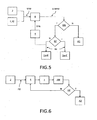
- FIG. 4 shows an embodiment of the method according to the invention.
- users R register themselves with their personal data PD and their terminal IDs T-ID for the mobile terminals 11 in the vehicle server 6, so that they can be considered as approved potential drivers F and / or passengers in the system.
- Users 1 may register as belonging to a particular group of users, for example, as belonging to a particular company, or as a family member of a particular family.
- the method according to the invention can then be applied only to the respective members of this group of users.
- UF transmits the vehicle module 21 the vehicle-related location and time data F-OZ to the vehicle server 6.
- the respective mobile terminals 11, 11a, 11b, 11c are assigned to individual terminal IDs T-ID, T-ID1, T-ID2, T-ID3, after which the users 1, 1a, 1b, 1c of these mobile terminals 11 , 11 a, 11 b, 11 c can be identified.
- Both the vehicle-related location and time data F-OZ together with the vehicle IDs F-ID for the respective vehicles 2 and the terminal-related location and time data T-OZ together with the terminal IDs T-ID, T-ID1, T ID2, T-ID3, the personal data PD of the users 1, 1a, 1b, 1c assigned to the terminal IDs T-ID, T-ID1, T-ID2, T-ID3 are assigned to each of the mobile terminals 11, 11 a, 11 b, 11 c stored in the database 4 p. From the so two separate sources obtained location and time data F-OZ and T-OZ and T-OZ individual driving routes FR and individual personal movement routes TR, TR1, TR2, TR3, TR4 are determined ER.
- the determination ER can take place, for example, in the analysis server 5, in the vehicle server 6 (dashed arrow) or in the network server 31. Here the determination ER in the analysis server 5 is shown.
- the analysis server 5 compares VG to the determined individual travel routes FR with the determined movement routes TR, TR1, TR2, TR3, TR4. If this comparison VG yields a probability of the correlation of the travel route FR with the tested movement route TR above the threshold value SW, then the analysis server 5 links the vehicle IDs F-ID with the terminal ID T-ID. If no match has been found above the threshold, the process continues with the next travel route TR, which is then compared to the same route FR.
- FIG. 5 shows a further embodiment of the identification of the driver F of a vehicle 2 in the context of the method according to the invention.
- the data of the authorized drivers F and / or passengers M for the respective vehicles 2 are stored in the vehicle server 6 SFM and these data are provided for a user / driver analysis in the system.
- the vehicle server 6 is at least connected to the database 4 for this purpose.
- the vehicle server 6 checks via a comparison V-NFM of the users 1 assigned to these vehicles 2 by means of the analysis server 5 with the drivers F and / or passengers M permitted for these vehicles 2, whether the vehicle 2 has been driven by an authorized user.
- a first alarm signal A1 is sent to the system.
- This first alarm signal A 1 can be used, on the one hand, to inform the authorized driver F of his obligation to drive the vehicle 2, or the alarm signal A1 can be used in conjunction with the result of the comparison V-NFM and the unsuccessful assignment of users 1 to the Travel FR are evaluated by the analysis server 5 as an indication of a theft of the vehicle 2.
- the system operator may then take the appropriate steps in response to the first alarm signal A1.
- the first alarm signal A1 can be emitted acoustically, optically or by a corresponding automatic electronic notification of corresponding points in the system.
- the result of the comparison V-NFM is stored in the system, for example in the vehicle server 6, SV6.
- Figure 6 shows a further embodiment of the evaluation of the driving data FD in the context of the erfindunbeen method.
- the vehicle 2 is equipped with one or more driving sensors 24, preferably acceleration sensors 24, which send driving data FD to the vehicle module 21.
- the vehicle module 21 transmits UF these driving data FD together with the associated location and time data F-OZ in parallel or in a common data packet to the system, here the vehicle server 6.
- the vehicle server 6 analyzes the vehicle server 6 (alternatively also the analysis server 5) the driving data to exceed predetermined maximum values HF, for example, by matching with the vehicle server.
- the vehicle server 6 can send out a second alarm signal A2 to the system when this maximum negative acceleration HF is exceeded, the second alarm signal A2 assigned to this vehicle 2 by the user 1, 1a , 1b, 1c and optionally the indexed IN driver F.
- the maximum values HF of negative accelerations may, for example, correspond to those for the deployment of the airbags in vehicles 2. These negative accelerations are interpreted as an accident situation.
- an accident of the vehicle 2 can be detected.
- the system operator As a result of the received second alarm signal A2, is able to inform appropriate emergency services or police stations for further safety and rescue measures.
- the rescue services additional information, such as the number of people (corresponding to the number of associated users 1 to this route FR) in the vehicle 2 and the identity of the driver F, are called for this vehicle 2.
- the second alarm signal can be emitted acoustically, visually or by a corresponding automatic electronic notification of corresponding points in the system.
- the result of the comparison V-NFM is stored in the system, for example in the vehicle server 6, SV6.
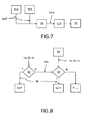
- Figure 7 shows a further embodiment of the evaluation of the driving data FD in the context of the method according to the invention.
- the driving data FD1, FD2 assigned to the user 1a as identified driving F which were detected, for example, during a first and second journey of the user 1a with one or more vehicles 2, are accumulated in the vehicle server 6 or in the analysis server 5 for this user 1a and from the accumulated Driving data FD-A determines a specific driving behavior FV for the user 1 a as the identified driver F.
- the example shown here with two sets of driving data FD1, FD2 is not limited to only two sets of driving data FD1, FD2.
- the driving behavior FV can be determined more precisely the more sets of driving data FD1, FD2,...
- the system is configured to accumulate all already existing and later newly added driving data FD1, FD2,...
- the driving data later added to an already determined driving behavior FV being used to specify or update the driving behavior FV. It is therefore a self-learning system based on the driving history of each driver's driving data.
- This user-specific driving behavior FV can be used, for example, for identifying driving risks for specific users or for other statistical evaluations such as, for example, economical driving.
- the user 1 a is identified as the driver IN when the degree of coincidence of his driving behavior FV with the driving data FD3 is greatest.
- these driving data FD3 become the already accumulated driving data FD-A is accumulated to provide updated driving behavior FV for this user 1a.
- the degree of correspondence is evaluated only if the degree of coincidence is above a driving data threshold.
- an identification IN of the driver F can be made according to other criteria, for example, as in FIG. 5 described, done.
- the previous specific driving behavior FV for a user 1 a who was identified as driver F for a further journey with a vehicle 2
- the driving data FD3 of this last journey IN of the user 1a as the driver F to verify.
- the system may determine a successful verification, for example, if the degree of correspondence between present driving behavior FV and last driving data FD3 is above a previously defined driving data threshold.
- the driving data FD3 is used for updating the driving behavior FV for the user 1a.
Landscapes
- Physics & Mathematics (AREA)
- General Physics & Mathematics (AREA)
- Engineering & Computer Science (AREA)
- Theoretical Computer Science (AREA)
- General Engineering & Computer Science (AREA)
- Traffic Control Systems (AREA)
Claims (13)
- Système destiné à constater le nombre et l'identité d'utilisateurs (1) dans un véhicule (2), comprenant :- au moins un véhicule (2) comportant un identifiant de véhicule individuel associé (F-ID) et un module de véhicule (21) pour la transmission sans fil (UF), au système, de données géographiques et temporelles relatives au véhicule (F-OZ) ;- au moins un réseau radio mobile (3) comportant un serveur de réseau (31) et plusieurs terminaux mobiles (11, 11a, 11 b, 11 c) adaptés pour la communication au moins dans le réseau radio mobile (3), des identifiants de terminaux individuels (T-ID, T-ID1, T-ID2, T-ID3) étant associés aux terminaux mobiles respectifs (11, 11 a, 11 b, 11 c) et les utilisateurs (1, 1 a, 1 b, 1 c) des terminaux mobiles (11, 11 a, 11 b, 11 c) pouvant être identifiés à l'aide de l'identifiant de terminal (T-ID, T-ID1, T-ID2, T-ID3) et le serveur de réseau (31) étant conçu pour transmettre (UT) au système des données géographiques et temporelles relatives aux terminaux (T-OZ) ;- une ou plusieurs mémoires de données (4) pour stocker (S) ensemble les données géographiques et temporelles relatives au véhicule (F-OZ) et l'identifiant de véhicule (F-ID) pour déterminer (ER) l'itinéraire routier individuel (FR) de l'au moins un véhicule (2) et pour stocker (S) ensemble les données géographiques et temporelles relatives aux terminaux (T-OZ) et les identifiants de terminaux (T-ID, T-ID1, T-I02, T-ID3) ainsi que des données personnelles (PD) des utilisateurs (1, 1a, 1b, 1c) associés aux identifiants de terminaux (T-ID, T-ID1, T-ID2, T-ID3) pour déterminer (ER) des itinéraires de déplacement personnels individuels (TR, TR1, TR2, TR3) pour chacun des terminaux mobiles (1, 1 a, 1 b, 1 c) ;- un serveur d'analyse (5) qui est conçu pour accéder à l'une ou aux plusieurs mémoires de données (4) et pour comparer (VG) l'itinéraire routier individuel déterminé (FR) avec les itinéraires de déplacement individuels déterminés (TR, TR1, TR2, TR3, TR4) et pour, en cas de coïncidence (U-FT) suffisante, au moins dans un intervalle de temps, entre l'au moins un itinéraire routier individuel (FR) et un ou plusieurs des itinéraires de déplacement individuels (TR, TR1, TR2, TR3, TR4), associer (V) l'identifiant de véhicule concerné (F-ID) aux identifiants de terminaux (T-ID, T-ID1, T-ID2, T-ID3) associés à ces itinéraires de déplacement individuels (TR, TR1, TR2, TR3, TR4) et le sauvegarder (SV4) avec les données personnelles (PD) des utilisateurs (1, 1a, 1b, 1c) associés aux identifiants de terminaux (T-ID, T-ID1, T-ID2, T-ID3) dans la ou les mémoires de données (4) et- un serveur de véhicule (6) qui est relié à la ou aux mémoires de données (4), au moins les conducteurs (F) et/ou passagers (M) autorisés pour l'au moins un véhicule (2) étant stockés (SFM) sur le serveur de véhicule (6).
- Système selon la revendication 1, caractérisé en ce que la coïncidence n'est suffisante (U-FT) que si le degré de coïncidence est supérieur à une valeur seuil définie (SW).
- Système selon la revendication 2, caractérisé en ce qu'est prise en compte, pour le degré de coïncidence, la coïncidence temporelle et géographique entre points de départ et d'arrivée (SP, EP) de l'itinéraire routier individuel (FR) et des itinéraires de déplacement individuels (TR, TR1, TR2, TR3, TR4) à comparer avec celui-ci, avec une pondération supérieure à celle prise pour des points (P1, P2, P3) des itinéraires routier et de déplacement (FR, TR) entre les points de départ et d'arrivée (SP, EP).
- Système selon l'une des revendications précédentes, caractérisé en ce que le module de véhicule (21) transmet des données géographiques et temporelles (F-OZ) au serveur de véhicule (6) et en ce que l'itinéraire routier individuel (FR) de l'au moins un véhicule (2) est déterminé par le serveur de véhicule (6).
- Système selon la revendication 4, caractérisé en ce que le serveur de véhicule (6) est conçu pour comparer (V-NFM) les utilisateurs (1, 1 a, 1 b, 1 c) associés à l'au moins un véhicule (2) au moyen du serveur d'analyse (5) avec les conducteurs (F) et/ou passagers (M) autorisés pour ce véhicule (2), pour stocker (SV6) le résultat de la comparaison (V-NFM) et pour, en cas de coïncidence (UN) entre uniquement l'un des utilisateurs associés (1 a) et l'un des conducteurs (F) et/ou passagers (M) autorisés pour le véhicule (2), désigner (IN) cet utilisateur (1a) comme conducteur (F) de ce véhicule (2).
- Système selon la revendication 5, caractérisé en ce que le serveur de véhicule (6) est prévu pour envoyer un premier signal d'alarme (A1) au système en cas de non-coïncidence (UN) entre utilisateurs associés (1, 1a, 1b, 1c) et conducteurs (F) et/ou passagers (M) autorisés ou de coïncidence insuffisante (U-FT) avec des itinéraires de déplacement individuels (TR, TR1, TR2, TR3, TR4) pour ce véhicule (2).
- Système selon l'une des revendications 5 ou 6, caractérisé en ce que le serveur de véhicule (6) est prévu pour désigner en tant que conducteur (F), en cas de plusieurs coïncidences (UN) entre utilisateurs associés (1, 1a, 1b, 1c) et conducteurs (F) et/ou passagers (M) autorisés pour ce véhicule, l'utilisateur (1 a) dont l'itinéraire de déplacement individuel (TR1) présente la plus grande coïncidence (U-FT) avec l'itinéraire routier individuel (FR) pour le véhicule (2).
- Système selon l'une des revendications précédentes, caractérisé en ce que le réseau radio mobile (3) est conçu pour déclencher la transmission (K) de données géographiques et temporelles relatives aux terminaux (T-OZ) des terminaux mobiles (11, 11 a, 11 b, 11 c) au serveur de réseau (31) ou en ce qu'est installée, sur le terminal mobile (11), une application qui déclenche la transmission (K), au serveur de réseau (31), de données géographiques et temporelles relatives aux terminaux (T-OZ).
- Système selon l'une des revendications précédentes, caractérisé en ce que des données de conduite (FD) sont acquises à partir des données géographiques et temporelles relatives au véhicule (F-OZ) et/ou en ce que le véhicule (2) est équipé d'un ou de plusieurs capteurs de marche (24), de préférence de capteurs d'accélération (24), qui envoient les données de conduite (FD) au module de véhicule (21) et en ce que le module de véhicule (21) transmet au système ces données de conduite (FD) avec les données géographiques et temporelles associées (F-OZ).
- Système selon la revendication 9, caractérisé en ce que le serveur d'analyse (5) et/ou le serveur de véhicule (6) sont conçus pour associer les données de conduite (FD1, FD2) à l'utilisateur (1a) identifié comme conducteur (F), pour accumuler (AK) les données de conduite (FD1, FD2) pour tous les trajets de cet utilisateur (1 a), pour définir, à partir des données de conduite accumulées (FD-A), un comportement de conduite spécifique (FV) pour l'utilisateur (1 a) et pour utiliser le comportement de conduite spécifique (FV) pour identifier un utilisateur déterminé (1 a, 1 b, 1 c) comme étant le conducteur (F) parmi un groupe de plusieurs utilisateurs (1 a, 1 b, 1 c) susceptibles d'être des conducteurs (F) possibles et/ou pour vérifier l'identification de l'un des utilisateurs (1 a, 1 b, 1 c) comme étant le conducteur (F).
- Procédé d'exploitation du système selon la revendication 1, comprenant au moins un véhicule (2) avec un identifiant de véhicule individuel associé (F-ID) et un module de véhicule (21), au moins un réseau radio mobile (3) avec un serveur de réseau (31) et plusieurs terminaux mobiles (11, 11 a, 11 b, 11 c) adaptés pour la communication au moins dans le réseau radio mobile (3), une ou plusieurs mémoires de données (4) et un serveur d'analyse (5), et comprenant les étapes suivantes :- enregistrement (R) de conducteurs (F) et/ou de passagers (M) autorisés dans le système avec des données personnelles (PD) et des identifiants de terminaux (T-ID) pour les terminaux mobiles (11) des conducteurs (F) et/ou des passagers (M) ;- transmission (UF) au système, par le module de véhicule (21), de données géographiques et temporelles relatives au véhicule (F-OZ) ;- transmission (UT) au système, par le serveur de réseau (31), de données géographiques et temporelles relatives aux terminaux (T-OZ), des identifiants de terminaux individuels (T-ID, T-ID1, T-ID2, T-ID3) étant associés aux terminaux mobiles respectifs (11, 11 a, 11 b, 11 c) et les utilisateurs (1, 1 a, 1 b, 1 c) des terminaux mobiles (11, 11 a, 11 b, 11 c) pouvant être identifiés à l'aide des identifiants de terminaux individuels (T-ID, T-ID1, T-ID2, T-ID3) ;- dans une ou plusieurs mémoires de données (4), stockage (S) des données géographiques et temporelles relatives au véhicule (F-OZ) avec l'identifiant de véhicule (F-ID) pour l'au moins un véhicule (2) et stockage (S) des données géographiques et temporelles relatives aux terminaux (T-OZ) avec les identifiants de terminaux (T-ID, T-ID1, T-ID2, T-ID3) ainsi que des données personnelles (PD) des utilisateurs (1, 1 a, 1 b, 1 c) associés aux identifiants de terminaux (T-ID, T-ID1, T-ID2, T-ID3) pour chacun des terminaux mobiles (11, 11a, 11b, 11c) ;- détermination (ER) de l'itinéraire routier individuel (FR) et des itinéraires de déplacement personnels individuels (TR, TR1, TR2, TR3, TR4) à partir des données géographiques et temporelles stockées relatives au véhicule (F-OZ) et des données géographiques et temporelles stockées relatives aux terminaux (T-OZ) ;- comparaison (VG) de l'itinéraire routier individuel déterminé (FR) avec les itinéraires de déplacement déterminés (TR, TR1, TR2, TR3, TR4) dans un serveur d'analyse (5),- association (V) de l'identifiant de véhicule (F-ID) de l'au moins un véhicule (2) à un ou plusieurs identifiants de terminaux (T-ID, T-ID1, T-ID2, T-ID3) en cas de coïncidence (U-FT) suffisante, au moins dans un intervalle de temps, entre l'itinéraire routier individuel (FR) associé à l'identifiant de véhicule (F-ID) et les itinéraires de déplacement individuels (TR, TR1, TR2, TR3) associés à un ou plusieurs identifiants de terminaux (T-ID, T-ID1, T-ID2, T-ID3) et- sauvegarde (SV4), dans la ou les mémoires de données (4), de l'association (V) de l'identifiant de véhicule (F-ID) aux identifiants de terminaux (T-ID, T-ID1, T-ID2, T-ID3) avec les données personnelles (PD) des utilisateurs (1, 1 a, 1 b, 1c) associés aux identifiants de terminaux (T-ID, T-ID1, T-ID2, T-ID3) ;- sauvegarde (SFM) de conducteurs (F) et/ou de passagers (M) autorisés pour l'au moins un véhicule (2) dans un serveur de véhicule (6) qui est relié au moins à la ou aux mémoires de données (4) ;- comparaison (V-NFM) des utilisateurs (1, 1 a, 1 b, 1 c) de ce véhicule (2) associés au moyen du serveur d'analyse (5) avec les conducteurs (F) et/ou passagers (M) autorisés pour ce véhicule (2) et- stockage (SV6) du résultat de la comparaison (V-NFM).
- Procédé selon la revendication 11, comprenant les étapes supplémentaires suivantes :- en cas de coïncidence (UN) entre uniquement l'un des utilisateurs associés (1a) et l'un des conducteurs (F) et/ou passagers (M) autorisés pour ce véhicule, désignation (IN) de cet utilisateur (1a) comme conducteur (F) de ce véhicule (2) par le serveur de véhicule (6) ;- en cas de non-coïncidence (UN) entre utilisateurs associés (1, 1a, 1b, 1c) et conducteurs (F) et/ou passagers (M) autorisés ou de coïncidence insuffisante (U-FT) avec des itinéraires de déplacement individuels (TR, TR1, TR2, TR3, TR4) pour ce véhicule (2), envoi d'un premier signal d'alarme (A1) au système ou- en cas de plusieurs coïncidences (UN) entre utilisateurs associés (1, 1a, 1b, 1 c) et conducteurs (F) et/ou passagers (M) autorisés pour ce véhicule (2), désignation (IN), comme conducteur (F) de ce véhicule (2), de l'utilisateur (1a) dont l'itinéraire de déplacement individuel (TR1) présente la plus grande coïncidence (U-FT) avec les itinéraires routiers individuels (FR) pour le véhicule (2).
- Procédé selon la revendication 12, comprenant les étapes supplémentaires suivantes :- analyse (AN) de données de conduite saisies (FD) dans le serveur de véhicule (6) ou le serveur d'analyse (5) et- affectation des données de conduite (FD) au conducteur (F) désigné (IN) pour ce véhicule (2),le procédé comprenant en outre, de préférence, les étapes supplémentaires consistant en ce que les données de conduite affectées (FD1, FD2) pour l'utilisateur (1a) identifié comme étant le conducteur (F) sont accumulées (AK) pour tous les trajets de cet utilisateur (1 a) et en ce qu'est déterminé, à partir des données de conduite accumulées (FD-A), un comportement de conduite spécifique (FV) pour l'utilisateur identifié (1 a), le comportement de conduite spécifique étant utilisé pour identifier l'un des utilisateurs (1 a, 1 b, 1 c) en tant que conducteur (F) et/ou pour vérifier l'identification de l'un des utilisateurs (1a) comme étant le conducteur (F).
Priority Applications (4)
| Application Number | Priority Date | Filing Date | Title |
|---|---|---|---|
| EP12182956.8A EP2704121B1 (fr) | 2012-09-04 | 2012-09-04 | Système destiné à identifier les utilisateurs dans des véhicules automobiles |
| EP14186752.3A EP2851885B1 (fr) | 2012-09-04 | 2012-09-04 | Système d'identification d'utilisateurs dans des véhicules |
| ES12182956.8T ES2546426T3 (es) | 2012-09-04 | 2012-09-04 | Sistema para la identificación de usuarios en vehículos |
| US13/974,574 US9026264B2 (en) | 2012-09-04 | 2013-08-23 | System for identification provided by users in vehicles |
Applications Claiming Priority (1)
| Application Number | Priority Date | Filing Date | Title |
|---|---|---|---|
| EP12182956.8A EP2704121B1 (fr) | 2012-09-04 | 2012-09-04 | Système destiné à identifier les utilisateurs dans des véhicules automobiles |
Related Child Applications (2)
| Application Number | Title | Priority Date | Filing Date |
|---|---|---|---|
| EP14186752.3A Division-Into EP2851885B1 (fr) | 2012-09-04 | 2012-09-04 | Système d'identification d'utilisateurs dans des véhicules |
| EP14186752.3A Division EP2851885B1 (fr) | 2012-09-04 | 2012-09-04 | Système d'identification d'utilisateurs dans des véhicules |
Publications (2)
| Publication Number | Publication Date |
|---|---|
| EP2704121A1 EP2704121A1 (fr) | 2014-03-05 |
| EP2704121B1 true EP2704121B1 (fr) | 2015-07-01 |
Family
ID=47071105
Family Applications (2)
| Application Number | Title | Priority Date | Filing Date |
|---|---|---|---|
| EP14186752.3A Active EP2851885B1 (fr) | 2012-09-04 | 2012-09-04 | Système d'identification d'utilisateurs dans des véhicules |
| EP12182956.8A Active EP2704121B1 (fr) | 2012-09-04 | 2012-09-04 | Système destiné à identifier les utilisateurs dans des véhicules automobiles |
Family Applications Before (1)
| Application Number | Title | Priority Date | Filing Date |
|---|---|---|---|
| EP14186752.3A Active EP2851885B1 (fr) | 2012-09-04 | 2012-09-04 | Système d'identification d'utilisateurs dans des véhicules |
Country Status (3)
| Country | Link |
|---|---|
| US (1) | US9026264B2 (fr) |
| EP (2) | EP2851885B1 (fr) |
| ES (1) | ES2546426T3 (fr) |
Families Citing this family (13)
| Publication number | Priority date | Publication date | Assignee | Title |
|---|---|---|---|---|
| US10467554B2 (en) | 2013-03-14 | 2019-11-05 | Lyft, Inc. | System for connecting a driver and a rider |
| US20160240081A1 (en) * | 2013-09-24 | 2016-08-18 | Data Mining Innovators B.V. | Geographic Based Location System Arranged For Providing, Via A Web-Based Portal, Management Information Of Geographic Data And Non-Geographic Data Generated By A Plurality Of Wireless Communication Devices, And A Related Method |
| US10929661B1 (en) * | 2013-12-19 | 2021-02-23 | Amazon Technologies, Inc. | System for user identification |
| TWI509549B (zh) * | 2014-09-03 | 2015-11-21 | Shih Pi Ta Technology Ltd | 身分識別系統和其方法 |
| CN106482740A (zh) * | 2015-08-31 | 2017-03-08 | 小米科技有限责任公司 | 生成导航线路的方法及装置 |
| CN105243838B (zh) * | 2015-11-09 | 2018-05-04 | 北京奇虎科技有限公司 | 车辆行驶安全监控方法和装置、系统 |
| CN106251578B (zh) * | 2016-08-19 | 2019-05-07 | 深圳奇迹智慧网络有限公司 | 基于探针的人流预警分析方法和系统 |
| CN107818103B (zh) * | 2016-09-12 | 2023-01-24 | 阿里巴巴集团控股有限公司 | 提供数据对象信息的方法及装置 |
| DE102017200193A1 (de) * | 2017-01-09 | 2018-07-12 | Ford Global Technologies, Llc | Verfahren zur Bewegungsprofilanalyse |
| US9769616B1 (en) * | 2017-04-04 | 2017-09-19 | Lyft, Inc. | Geohash-related location predictions |
| IT201800002895A1 (it) | 2018-02-21 | 2019-08-21 | Stmicroelectronics Application Gmbh | Sistema di elaborazione, relativo circuito integrato, dispositivo e procedimento |
| FR3097400B1 (fr) * | 2019-06-12 | 2021-05-28 | Continental Automotive Gmbh | Système et procédé de notification de dysfonctionnement pour véhicule |
| US10880691B1 (en) | 2019-10-31 | 2020-12-29 | Root, Inc. | Passively capturing and monitoring device behaviors |
Family Cites Families (7)
| Publication number | Priority date | Publication date | Assignee | Title |
|---|---|---|---|---|
| US5945919A (en) | 1996-05-30 | 1999-08-31 | Trimble Navigation Limited | Dispatcher free vehicle allocation system |
| DE10119244A1 (de) | 2001-04-19 | 2003-01-23 | Ferdinand Peer | Verfahren zur Vermittlung und/oder Überwachung einer Reise von Reisenden |
| DE102005048647B4 (de) * | 2005-10-11 | 2011-03-17 | Wvi Prof. Dr. Wermuth Verkehrsforschung Und Infrastrukturplanung Gmbh | Verfahren zur Ermittlung der Anzahl von Fahrgästen in öffentlichen Verkehrsmitteln |
| BRPI0621918B8 (pt) * | 2006-07-21 | 2020-09-08 | Ericsson Telefon Ab L M | método para criar uma relação entre dispositivos móveis e um veículo de uma rede de comunicações sem fio, dispositivo destinado a ser usado a bordo de um veículo, e, servidor em uma rede de comunicações sem fio |
| DE202008013951U1 (de) | 2008-10-18 | 2009-01-08 | Csb-System Ag | Anordnung für ein web-basiertes elektronisches Fahrtenbuch |
| US8145199B2 (en) * | 2009-10-31 | 2012-03-27 | BT Patent LLC | Controlling mobile device functions |
| EP2384049B1 (fr) * | 2010-04-29 | 2012-10-03 | Alcatel Lucent | Transmission d'informations de signalisation à des terminaux se déplaçant ensemble |
-
2012
- 2012-09-04 EP EP14186752.3A patent/EP2851885B1/fr active Active
- 2012-09-04 EP EP12182956.8A patent/EP2704121B1/fr active Active
- 2012-09-04 ES ES12182956.8T patent/ES2546426T3/es active Active
-
2013
- 2013-08-23 US US13/974,574 patent/US9026264B2/en active Active
Also Published As
| Publication number | Publication date |
|---|---|
| US9026264B2 (en) | 2015-05-05 |
| ES2546426T3 (es) | 2015-09-23 |
| EP2851885B1 (fr) | 2016-11-09 |
| US20140067156A1 (en) | 2014-03-06 |
| EP2704121A1 (fr) | 2014-03-05 |
| EP2851885A1 (fr) | 2015-03-25 |
Similar Documents
| Publication | Publication Date | Title |
|---|---|---|
| EP2704121B1 (fr) | Système destiné à identifier les utilisateurs dans des véhicules automobiles | |
| EP2223504B1 (fr) | Transmission d'informations d'un véhicule | |
| DE102007059475B4 (de) | Mechanismus eines konfigurierbaren Fahrzeugbus-Speicher-Cache | |
| EP2920777B1 (fr) | Procédé pour fournir des informations de trajet au moyen d'au moins un véhicule automobile | |
| DE102018130589A1 (de) | System und verfahren zur raucherkennung und -meldung in einem fahrzeug für carsharing- und fahrgemeinschaftsfahrzeuge | |
| EP2756491B1 (fr) | Procédé et dispositif de détermination d'une recommandation de conduite pour un véhicule ainsi que procédé et dispositif pour produire une recommandation de conduite pour un véhicule | |
| DE102018106548A1 (de) | Unfallerfassung unter verwendung von gnss-geschwindigkeitsmessungen und busüberwachung | |
| DE102017123687A1 (de) | Dynamisches aktualisieren der routenauswahl für halb-autonomes fahren | |
| DE102016006687B4 (de) | Assistenzsystem und Verfahren zur Übertragung von Daten bezüglich eines Unfalls oder einer Panne eines Fahrzeugs | |
| DE102008028550A1 (de) | Parkleitsystem zur Navigation eines parkplatzsuchenden Fahrzeugs zu einem freien Parkplatz | |
| WO2017025312A1 (fr) | Fourniture de moyens d'aide après un accident de la route | |
| DE19604084A1 (de) | Verfahren und Einrichtung zur Ermittlung von Dynamischen Verkehrsinformationen | |
| DE102013203909A1 (de) | Verfahren und mobiles Endgerät zur Erkennung eines Parkplatzes | |
| DE102012219631A1 (de) | Verfahren und Vorrichtung zum Detektieren von zumindest einer Fahrbahnunebenheit | |
| WO2018114577A1 (fr) | Système et procédé de protection antivol pour les roues d'un véhicule | |
| DE102020106672A1 (de) | Geobegrenzte dynamische datenerfassung für die erhebung von strassengebühren und das überwachen der strassennutzung | |
| EP2662848A2 (fr) | Procédé de fabrication dýun profil de conduite | |
| DE102017222751A1 (de) | Verfahren und System zum Warnen von Verkehrsteilnehmern vor einer Falschfahrt eines Fahrzeugs mit Nachplausibilisierung | |
| DE102017107730A1 (de) | Verfahren und Einrichtung zur Informationsbereitstellung bei einem Verkehrsereignis | |
| EP2662846A1 (fr) | Procédé de réduction d'un risque d'embouteillage | |
| DE10063588A1 (de) | Verfahren zum Übermitteln von Daten zur Verkehrslagebeurteilung und ein Endgerät in einem mobilen Detektor | |
| DE102018107858A1 (de) | Erhalten von Fahrzeugpositionen basierend auf positionellen Triggerereignissen | |
| DE102021003610A1 (de) | Verfahren zur Absicherung der Kommunikation | |
| DE102019215095A1 (de) | Gütebestimmungsverfahren, Gütebestimmungsvorrichtung, Kraftfahrzeug | |
| EP4659465A1 (fr) | Fusion de données de capteur d'un véhicule avec des données de capteur d'un dispositif de télécommunication |
Legal Events
| Date | Code | Title | Description |
|---|---|---|---|
| AK | Designated contracting states |
Kind code of ref document: A1 Designated state(s): AL AT BE BG CH CY CZ DE DK EE ES FI FR GB GR HR HU IE IS IT LI LT LU LV MC MK MT NL NO PL PT RO RS SE SI SK SM TR |
|
| AX | Request for extension of the european patent |
Extension state: BA ME |
|
| PUAI | Public reference made under article 153(3) epc to a published international application that has entered the european phase |
Free format text: ORIGINAL CODE: 0009012 |
|
| 17P | Request for examination filed |
Effective date: 20140902 |
|
| RBV | Designated contracting states (corrected) |
Designated state(s): AL AT BE BG CH CY CZ DE DK EE ES FI FR GB GR HR HU IE IS IT LI LT LU LV MC MK MT NL NO PL PT RO RS SE SI SK SM TR |
|
| GRAP | Despatch of communication of intention to grant a patent |
Free format text: ORIGINAL CODE: EPIDOSNIGR1 |
|
| INTG | Intention to grant announced |
Effective date: 20150113 |
|
| GRAS | Grant fee paid |
Free format text: ORIGINAL CODE: EPIDOSNIGR3 |
|
| GRAA | (expected) grant |
Free format text: ORIGINAL CODE: 0009210 |
|
| AK | Designated contracting states |
Kind code of ref document: B1 Designated state(s): AL AT BE BG CH CY CZ DE DK EE ES FI FR GB GR HR HU IE IS IT LI LT LU LV MC MK MT NL NO PL PT RO RS SE SI SK SM TR |
|
| REG | Reference to a national code |
Ref country code: GB Ref legal event code: FG4D Free format text: NOT ENGLISH |
|
| REG | Reference to a national code |
Ref country code: AT Ref legal event code: REF Ref document number: 734370 Country of ref document: AT Kind code of ref document: T Effective date: 20150715 Ref country code: CH Ref legal event code: EP |
|
| REG | Reference to a national code |
Ref country code: IE Ref legal event code: FG4D Free format text: LANGUAGE OF EP DOCUMENT: GERMAN |
|
| REG | Reference to a national code |
Ref country code: DE Ref legal event code: R096 Ref document number: 502012003590 Country of ref document: DE |
|
| REG | Reference to a national code |
Ref country code: NL Ref legal event code: T3 |
|
| REG | Reference to a national code |
Ref country code: ES Ref legal event code: FG2A Ref document number: 2546426 Country of ref document: ES Kind code of ref document: T3 Effective date: 20150923 |
|
| PGFP | Annual fee paid to national office [announced via postgrant information from national office to epo] |
Ref country code: ES Payment date: 20150928 Year of fee payment: 4 |
|
| REG | Reference to a national code |
Ref country code: LT Ref legal event code: MG4D |
|
| PG25 | Lapsed in a contracting state [announced via postgrant information from national office to epo] |
Ref country code: NO Free format text: LAPSE BECAUSE OF FAILURE TO SUBMIT A TRANSLATION OF THE DESCRIPTION OR TO PAY THE FEE WITHIN THE PRESCRIBED TIME-LIMIT Effective date: 20151001 Ref country code: GR Free format text: LAPSE BECAUSE OF FAILURE TO SUBMIT A TRANSLATION OF THE DESCRIPTION OR TO PAY THE FEE WITHIN THE PRESCRIBED TIME-LIMIT Effective date: 20151002 Ref country code: LV Free format text: LAPSE BECAUSE OF FAILURE TO SUBMIT A TRANSLATION OF THE DESCRIPTION OR TO PAY THE FEE WITHIN THE PRESCRIBED TIME-LIMIT Effective date: 20150701 Ref country code: FI Free format text: LAPSE BECAUSE OF FAILURE TO SUBMIT A TRANSLATION OF THE DESCRIPTION OR TO PAY THE FEE WITHIN THE PRESCRIBED TIME-LIMIT Effective date: 20150701 Ref country code: LT Free format text: LAPSE BECAUSE OF FAILURE TO SUBMIT A TRANSLATION OF THE DESCRIPTION OR TO PAY THE FEE WITHIN THE PRESCRIBED TIME-LIMIT Effective date: 20150701 |
|
| PG25 | Lapsed in a contracting state [announced via postgrant information from national office to epo] |
Ref country code: SE Free format text: LAPSE BECAUSE OF FAILURE TO SUBMIT A TRANSLATION OF THE DESCRIPTION OR TO PAY THE FEE WITHIN THE PRESCRIBED TIME-LIMIT Effective date: 20150701 Ref country code: RS Free format text: LAPSE BECAUSE OF FAILURE TO SUBMIT A TRANSLATION OF THE DESCRIPTION OR TO PAY THE FEE WITHIN THE PRESCRIBED TIME-LIMIT Effective date: 20150701 Ref country code: PT Free format text: LAPSE BECAUSE OF FAILURE TO SUBMIT A TRANSLATION OF THE DESCRIPTION OR TO PAY THE FEE WITHIN THE PRESCRIBED TIME-LIMIT Effective date: 20151102 Ref country code: PL Free format text: LAPSE BECAUSE OF FAILURE TO SUBMIT A TRANSLATION OF THE DESCRIPTION OR TO PAY THE FEE WITHIN THE PRESCRIBED TIME-LIMIT Effective date: 20150701 Ref country code: HR Free format text: LAPSE BECAUSE OF FAILURE TO SUBMIT A TRANSLATION OF THE DESCRIPTION OR TO PAY THE FEE WITHIN THE PRESCRIBED TIME-LIMIT Effective date: 20150701 Ref country code: IS Free format text: LAPSE BECAUSE OF FAILURE TO SUBMIT A TRANSLATION OF THE DESCRIPTION OR TO PAY THE FEE WITHIN THE PRESCRIBED TIME-LIMIT Effective date: 20151101 |
|
| PGFP | Annual fee paid to national office [announced via postgrant information from national office to epo] |
Ref country code: NL Payment date: 20150917 Year of fee payment: 4 |
|
| REG | Reference to a national code |
Ref country code: DE Ref legal event code: R097 Ref document number: 502012003590 Country of ref document: DE |
|
| PG25 | Lapsed in a contracting state [announced via postgrant information from national office to epo] |
Ref country code: MC Free format text: LAPSE BECAUSE OF FAILURE TO SUBMIT A TRANSLATION OF THE DESCRIPTION OR TO PAY THE FEE WITHIN THE PRESCRIBED TIME-LIMIT Effective date: 20150701 Ref country code: EE Free format text: LAPSE BECAUSE OF FAILURE TO SUBMIT A TRANSLATION OF THE DESCRIPTION OR TO PAY THE FEE WITHIN THE PRESCRIBED TIME-LIMIT Effective date: 20150701 Ref country code: CZ Free format text: LAPSE BECAUSE OF FAILURE TO SUBMIT A TRANSLATION OF THE DESCRIPTION OR TO PAY THE FEE WITHIN THE PRESCRIBED TIME-LIMIT Effective date: 20150701 Ref country code: DK Free format text: LAPSE BECAUSE OF FAILURE TO SUBMIT A TRANSLATION OF THE DESCRIPTION OR TO PAY THE FEE WITHIN THE PRESCRIBED TIME-LIMIT Effective date: 20150701 Ref country code: LU Free format text: LAPSE BECAUSE OF FAILURE TO SUBMIT A TRANSLATION OF THE DESCRIPTION OR TO PAY THE FEE WITHIN THE PRESCRIBED TIME-LIMIT Effective date: 20150904 Ref country code: SK Free format text: LAPSE BECAUSE OF FAILURE TO SUBMIT A TRANSLATION OF THE DESCRIPTION OR TO PAY THE FEE WITHIN THE PRESCRIBED TIME-LIMIT Effective date: 20150701 |
|
| REG | Reference to a national code |
Ref country code: CH Ref legal event code: PL |
|
| PLBE | No opposition filed within time limit |
Free format text: ORIGINAL CODE: 0009261 |
|
| STAA | Information on the status of an ep patent application or granted ep patent |
Free format text: STATUS: NO OPPOSITION FILED WITHIN TIME LIMIT |
|
| PG25 | Lapsed in a contracting state [announced via postgrant information from national office to epo] |
Ref country code: RO Free format text: LAPSE BECAUSE OF FAILURE TO SUBMIT A TRANSLATION OF THE DESCRIPTION OR TO PAY THE FEE WITHIN THE PRESCRIBED TIME-LIMIT Effective date: 20150701 |
|
| 26N | No opposition filed |
Effective date: 20160404 |
|
| REG | Reference to a national code |
Ref country code: IE Ref legal event code: MM4A |
|
| PG25 | Lapsed in a contracting state [announced via postgrant information from national office to epo] |
Ref country code: LI Free format text: LAPSE BECAUSE OF NON-PAYMENT OF DUE FEES Effective date: 20150930 Ref country code: IE Free format text: LAPSE BECAUSE OF NON-PAYMENT OF DUE FEES Effective date: 20150904 Ref country code: CH Free format text: LAPSE BECAUSE OF NON-PAYMENT OF DUE FEES Effective date: 20150930 |
|
| PG25 | Lapsed in a contracting state [announced via postgrant information from national office to epo] |
Ref country code: SI Free format text: LAPSE BECAUSE OF FAILURE TO SUBMIT A TRANSLATION OF THE DESCRIPTION OR TO PAY THE FEE WITHIN THE PRESCRIBED TIME-LIMIT Effective date: 20150701 |
|
| REG | Reference to a national code |
Ref country code: FR Ref legal event code: PLFP Year of fee payment: 5 |
|
| PG25 | Lapsed in a contracting state [announced via postgrant information from national office to epo] |
Ref country code: MT Free format text: LAPSE BECAUSE OF FAILURE TO SUBMIT A TRANSLATION OF THE DESCRIPTION OR TO PAY THE FEE WITHIN THE PRESCRIBED TIME-LIMIT Effective date: 20150701 |
|
| REG | Reference to a national code |
Ref country code: NL Ref legal event code: MM Effective date: 20161001 |
|
| PG25 | Lapsed in a contracting state [announced via postgrant information from national office to epo] |
Ref country code: HU Free format text: LAPSE BECAUSE OF FAILURE TO SUBMIT A TRANSLATION OF THE DESCRIPTION OR TO PAY THE FEE WITHIN THE PRESCRIBED TIME-LIMIT; INVALID AB INITIO Effective date: 20120904 Ref country code: SM Free format text: LAPSE BECAUSE OF FAILURE TO SUBMIT A TRANSLATION OF THE DESCRIPTION OR TO PAY THE FEE WITHIN THE PRESCRIBED TIME-LIMIT Effective date: 20150701 Ref country code: BG Free format text: LAPSE BECAUSE OF FAILURE TO SUBMIT A TRANSLATION OF THE DESCRIPTION OR TO PAY THE FEE WITHIN THE PRESCRIBED TIME-LIMIT Effective date: 20150701 |
|
| PG25 | Lapsed in a contracting state [announced via postgrant information from national office to epo] |
Ref country code: NL Free format text: LAPSE BECAUSE OF NON-PAYMENT OF DUE FEES Effective date: 20161001 Ref country code: CY Free format text: LAPSE BECAUSE OF FAILURE TO SUBMIT A TRANSLATION OF THE DESCRIPTION OR TO PAY THE FEE WITHIN THE PRESCRIBED TIME-LIMIT Effective date: 20150701 |
|
| PG25 | Lapsed in a contracting state [announced via postgrant information from national office to epo] |
Ref country code: BE Free format text: LAPSE BECAUSE OF NON-PAYMENT OF DUE FEES Effective date: 20150930 |
|
| REG | Reference to a national code |
Ref country code: FR Ref legal event code: PLFP Year of fee payment: 6 |
|
| PG25 | Lapsed in a contracting state [announced via postgrant information from national office to epo] |
Ref country code: ES Free format text: LAPSE BECAUSE OF FAILURE TO SUBMIT A TRANSLATION OF THE DESCRIPTION OR TO PAY THE FEE WITHIN THE PRESCRIBED TIME-LIMIT Effective date: 20150701 |
|
| REG | Reference to a national code |
Ref country code: ES Ref legal event code: FD2A Effective date: 20180626 |
|
| PG25 | Lapsed in a contracting state [announced via postgrant information from national office to epo] |
Ref country code: TR Free format text: LAPSE BECAUSE OF FAILURE TO SUBMIT A TRANSLATION OF THE DESCRIPTION OR TO PAY THE FEE WITHIN THE PRESCRIBED TIME-LIMIT Effective date: 20150701 Ref country code: MK Free format text: LAPSE BECAUSE OF FAILURE TO SUBMIT A TRANSLATION OF THE DESCRIPTION OR TO PAY THE FEE WITHIN THE PRESCRIBED TIME-LIMIT Effective date: 20150701 |
|
| PG25 | Lapsed in a contracting state [announced via postgrant information from national office to epo] |
Ref country code: ES Free format text: LAPSE BECAUSE OF FAILURE TO SUBMIT A TRANSLATION OF THE DESCRIPTION OR TO PAY THE FEE WITHIN THE PRESCRIBED TIME-LIMIT Effective date: 20160905 |
|
| REG | Reference to a national code |
Ref country code: FR Ref legal event code: PLFP Year of fee payment: 7 |
|
| PG25 | Lapsed in a contracting state [announced via postgrant information from national office to epo] |
Ref country code: AL Free format text: LAPSE BECAUSE OF FAILURE TO SUBMIT A TRANSLATION OF THE DESCRIPTION OR TO PAY THE FEE WITHIN THE PRESCRIBED TIME-LIMIT Effective date: 20150701 |
|
| REG | Reference to a national code |
Ref country code: AT Ref legal event code: MM01 Ref document number: 734370 Country of ref document: AT Kind code of ref document: T Effective date: 20170904 |
|
| PG25 | Lapsed in a contracting state [announced via postgrant information from national office to epo] |
Ref country code: AT Free format text: LAPSE BECAUSE OF NON-PAYMENT OF DUE FEES Effective date: 20170904 |
|
| P01 | Opt-out of the competence of the unified patent court (upc) registered |
Effective date: 20230726 |
|
| PGFP | Annual fee paid to national office [announced via postgrant information from national office to epo] |
Ref country code: DE Payment date: 20250919 Year of fee payment: 14 |
|
| PGFP | Annual fee paid to national office [announced via postgrant information from national office to epo] |
Ref country code: IT Payment date: 20250923 Year of fee payment: 14 |
|
| PGFP | Annual fee paid to national office [announced via postgrant information from national office to epo] |
Ref country code: GB Payment date: 20250918 Year of fee payment: 14 |
|
| PGFP | Annual fee paid to national office [announced via postgrant information from national office to epo] |
Ref country code: FR Payment date: 20250922 Year of fee payment: 14 |