EP2704355A1 - Verfahren, vorrichtung und system zur herstellung eines mehrfach verschachtelten kanals - Google Patents
Verfahren, vorrichtung und system zur herstellung eines mehrfach verschachtelten kanals Download PDFInfo
- Publication number
- EP2704355A1 EP2704355A1 EP12868024.6A EP12868024A EP2704355A1 EP 2704355 A1 EP2704355 A1 EP 2704355A1 EP 12868024 A EP12868024 A EP 12868024A EP 2704355 A1 EP2704355 A1 EP 2704355A1
- Authority
- EP
- European Patent Office
- Prior art keywords
- site
- identifier
- code stream
- identified
- cascade channel
- Prior art date
- Legal status (The legal status is an assumption and is not a legal conclusion. Google has not performed a legal analysis and makes no representation as to the accuracy of the status listed.)
- Granted
Links
Images


Classifications
-
- H—ELECTRICITY
- H04—ELECTRIC COMMUNICATION TECHNIQUE
- H04N—PICTORIAL COMMUNICATION, e.g. TELEVISION
- H04N7/00—Television systems
- H04N7/14—Systems for two-way working
- H04N7/15—Conference systems
- H04N7/152—Multipoint control units therefor
-
- H—ELECTRICITY
- H04—ELECTRIC COMMUNICATION TECHNIQUE
- H04L—TRANSMISSION OF DIGITAL INFORMATION, e.g. TELEGRAPHIC COMMUNICATION
- H04L12/00—Data switching networks
- H04L12/02—Details
- H04L12/16—Arrangements for providing special services to substations
- H04L12/18—Arrangements for providing special services to substations for broadcast or conference, e.g. multicast
-
- H—ELECTRICITY
- H04—ELECTRIC COMMUNICATION TECHNIQUE
- H04L—TRANSMISSION OF DIGITAL INFORMATION, e.g. TELEGRAPHIC COMMUNICATION
- H04L12/00—Data switching networks
- H04L12/02—Details
- H04L12/16—Arrangements for providing special services to substations
- H04L12/18—Arrangements for providing special services to substations for broadcast or conference, e.g. multicast
- H04L12/1813—Arrangements for providing special services to substations for broadcast or conference, e.g. multicast for computer conferences, e.g. chat rooms
- H04L12/1818—Conference organisation arrangements, e.g. handling schedules, setting up parameters needed by nodes to attend a conference, booking network resources, notifying involved parties
-
- H—ELECTRICITY
- H04—ELECTRIC COMMUNICATION TECHNIQUE
- H04L—TRANSMISSION OF DIGITAL INFORMATION, e.g. TELEGRAPHIC COMMUNICATION
- H04L65/00—Network arrangements, protocols or services for supporting real-time applications in data packet communication
-
- H—ELECTRICITY
- H04—ELECTRIC COMMUNICATION TECHNIQUE
- H04L—TRANSMISSION OF DIGITAL INFORMATION, e.g. TELEGRAPHIC COMMUNICATION
- H04L65/00—Network arrangements, protocols or services for supporting real-time applications in data packet communication
- H04L65/1066—Session management
- H04L65/1069—Session establishment or de-establishment
-
- H—ELECTRICITY
- H04—ELECTRIC COMMUNICATION TECHNIQUE
- H04L—TRANSMISSION OF DIGITAL INFORMATION, e.g. TELEGRAPHIC COMMUNICATION
- H04L65/00—Network arrangements, protocols or services for supporting real-time applications in data packet communication
- H04L65/40—Support for services or applications
- H04L65/403—Arrangements for multi-party communication, e.g. for conferences
- H04L65/4038—Arrangements for multi-party communication, e.g. for conferences with floor control
-
- H—ELECTRICITY
- H04—ELECTRIC COMMUNICATION TECHNIQUE
- H04M—TELEPHONIC COMMUNICATION
- H04M3/00—Automatic or semi-automatic exchanges
- H04M3/42—Systems providing special services or facilities to subscribers
- H04M3/56—Arrangements for connecting several subscribers to a common circuit, i.e. affording conference facilities
- H04M3/567—Multimedia conference systems
-
- H—ELECTRICITY
- H04—ELECTRIC COMMUNICATION TECHNIQUE
- H04L—TRANSMISSION OF DIGITAL INFORMATION, e.g. TELEGRAPHIC COMMUNICATION
- H04L12/00—Data switching networks
- H04L12/02—Details
- H04L12/16—Arrangements for providing special services to substations
- H04L12/18—Arrangements for providing special services to substations for broadcast or conference, e.g. multicast
- H04L12/1854—Arrangements for providing special services to substations for broadcast or conference, e.g. multicast with non-centralised forwarding system, e.g. chaincast
Definitions
- the present invention relates to the field of communications technologies, and in particular, to a method, an apparatus and a system for establishing a multi-cascade channel.
- a video and/or audio multipoint conference is a more and more important communication manner.
- MCU Multipoint Control Unit, multipoint control unit
- cascading is a quite convenient and practical networking mode.
- a cascaded conference refers to a conference networking mode of a large conference formed among multiple MCUs through calls, which is in a tree structure.
- An MCU at an upper layer is referred to as an upper level MCU, and an MCU at a lower layer is referred to as a lower level MCU.
- Upper levels and lower levels are relative.
- a call may be initiated between upper and lower level MCUs, and a channel may be established to transmit a code stream of a site.
- a call can at most only negotiate two channels used for transmitting a site image (video) (separately used for receiving an image code stream and sending an image code stream), and/or two channels used for transmitting site audio, and/or two channels used for transmitting site data (all these channels are referred to as cascade channels), so a lower level MCU can at most only send an image code stream of a site, and/or an audio code stream of a site, and/or a data code stream of a site to an upper level MCU at the same time. If the upper level MCU needs to obtain image code streams of multiple sites, and/or audio code streams of the multiple sites, and/or data code streams of the multiple sites of a lower level MCU at the same time, they can be obtained only in a polling manner.
- Embodiments of the present invention provide a method, an apparatus and a system for establishing a multi-cascade channel, so that a multi-cascade channel used for transmitting a code stream of a specified site can be established between upper and lower level MCUs.
- an embodiment of the present invention provides a method for establishing a multi-cascade channel, where the method includes:
- an embodiment of the present invention provides an apparatus for establishing a multi-cascade channel, where the apparatus includes:
- an embodiment of the present invention provides a system for establishing a multi-cascade channel, where the system includes a first MCU and a second MCU, where the first MCU is configured to send a site code stream obtaining request to the second MCU, the request includes at least one identifier of a site, send an address and a port that are corresponding to the identifier of a site to the second MCU, establish, according to encoding information of a code stream of a site identified by the identifier of a site, and the address and the port that are corresponding to the identifier of a site, a multi-cascade channel used for transmitting the site identified by the identifier of a site with the second MCU, receive, through the multi-cascade channel, the code stream of the site identified by the identifier of a site; and the second MCU is configured to receive the site code stream obtaining request from the first MCU, receive the address and the port that are corresponding to the identifier of a site from the first MCU
- a multi-cascade channel used for transmitting a code stream of a specified site is established, and the code stream of the specified site is transmitted, which solve the problem in the prior art that not all site code streams expected to be obtained can be obtained when the number of multi-cascade channels required for code streams expected to be obtained exceeds the specified number of multi-cascade channels that must be specified before a conference, thereby achieving the purposes of dynamically establishing a multi-cascade channel as required and obtaining all site code streams expected to be obtained.
- the embodiments of the present invention provide a solution of dynamically establishing a multi-cascade channel used for transmitting a code stream of a specified site as required and transmitting the code stream of the specified site.
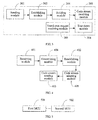
- FIG. 1 is a schematic diagram of networking of a cascaded conference.
- M1 is an upper level MCU of M2
- M2 is a lower level MCU of M1.
- M1 has two sites T1 and T2, and M2 has four sites T3, T4, T5 and T6.
- An upper level MCU may request to obtain code streams of one or multiple sites of a lower level MCU. If the code streams are image code streams, images of the multiple sites are output to different display devices, such as a device shown in FIG. 1 for displaying images of sites T3, T4 and T6. Likewise, the lower level MCU may also request to obtain code streams of multiple sites of the upper level MCU.
- MCUs there are two types of MCUs:
- FIG. 2a is a schematic flowchart of a method for establishing a multi-cascade channel according to Embodiment 1 of the present invention. As shown in FIG. 2a , this embodiment includes the following steps:
- the first MCU may be referred to as a requester.
- the site code stream obtaining request is used for requesting to obtain a code stream of a site identified by the identifier of a site, and may be specifically used for requesting for an image code stream, and/or an audio code stream, and/or a data code stream, and/or other code streams of the site identified by the identifier of a site.
- requesting for only a certain type of code stream (such as an image code stream, or an audio code stream, or a data code stream) of a site is taken as an example for detailed illustration.
- the identifier of a site is used for identifying the site, and the format may be ⁇ M T> ( ⁇ MCU Terminal>). It should be noted that the identifier of a site is allocated by a first level MCU for the site when the site is established.
- the first MCU is an upper level MCU
- the second MCU is a lower level MCU.
- the first MCU needs to further send an address and a port that are corresponding to the identifier of a site to the second MCU. That is, the first MCU is configured to receive an address and a port of a code stream of a site identified by the identifier of a site, and configured to instruct the second MCU to send a code stream to the address and the port.
- the site code stream obtaining request carries the address and the port that are corresponding to the identifier of a site, and at the same time, the first MCU starts interception on each port.
- the examples are as follows:
- the REQ (abbreviation of Request) denotes a site code stream obtaining request; the ⁇ M2 T1>, ⁇ M2 T2> and ⁇ M2 Tn> denote an identifier of a site; the ⁇ LOCAL IP1> ⁇ PORT1>, ⁇ LOCAL IP2> ⁇ PORT2> and ⁇ LOCAL IPn> ⁇ PORTn> denote addresses and ports.
- the site code stream obtaining request may be a site image code stream obtaining request or a site audio code stream obtaining request or a site data code stream obtaining request by default, for example, the REQ denotes the site image code stream obtaining request.
- the types of obtained code streams may also be distinguished through different request names, for example, videoREQ denotes a site image code stream obtaining request, audioREQ denotes a site video code stream obtaining request, and dataREQ denotes a site data code stream obtaining request.
- the types of obtained code streams may also be distinguished through other identifiers, for example, REQ video ⁇ M2 T1> ⁇ M2 T2> denotes obtaining an image code stream of sites ⁇ M2 T1> and ⁇ M2 T2>, REQ ⁇ M2 T1> video ⁇ M2 T2> video&audio denotes obtaining an image code stream of site ⁇ M2 T1> and an image code stream and an audio code stream of site ⁇ M2 T2> (in this manner, different types of code streams of different sites may be obtained through a request).
- REQ video ⁇ M2 T1> ⁇ M2 T2> denotes obtaining an image code stream of sites ⁇ M2 T1> and ⁇ M2 T2>
- REQ ⁇ M2 T1> video ⁇ M2 T2> video&audio denotes obtaining an image code stream of site ⁇ M2 T1> and an image code stream and an audio code stream of site ⁇ M2 T2> (in this manner, different types of
- the site code stream obtaining request may be carried through signaling of an extended H.245 protocol.
- the signaling of the H.245 protocol includes the request signaling RequestMessage, the response signaling ResponseMessage, and the command signaling CommandMessage.
- the signaling includes a nonstandard conference control field (NonStandard), and the nonstandard conference control field includes a data field.
- the site code stream obtaining request may be carried through the nonstandard conference control field of the request signaling, and may specifically be stored in the data field in a form of a string.
- information transmitted between the first MCU and the second MCU is carried through the signaling of the extended H.245 protocol, where the signaling that may be used mainly includes the request signaling RequestMessage, response signaling ResponseMessage, and command signaling CommandMessage.
- the information is carried through the nonstandard conference control field of corresponding signaling, and preferably, the information is stored in the data field of the nonstandard conference control field in a form of string.
- the address and the port may also not be carried through the site code stream obtaining request, for example, may be sent by the first MCU to the second MCU in the process of establishing a multi-cascade channel in step 2a02.
- Step 2a02 Establish, between the first MCU and the second MCU, a multi-cascade channel used for transmitting the code stream of the site identified by the identifier of a site.
- the second MCU establishes the multi-cascade channel according to encoding information of the code stream of the site identified by the identifier of a site, and the address and the port that are corresponding to the identifier of a site of the first MCU, where the process of establishing a connection of the multi-cascade channel may comply with a process of establishing a TCP connection by using a socket.
- the method further includes the following: the second MCU sends, to the first MCU, the encoding information of the code stream of the site identified by the identifier of a site, where the encoding information is used by the first MCU to build a decoder used for decoding the code stream of the site identified by the identifier of a site.
- the encoding information specifically includes a protocol, a format and a bandwidth.
- the method further includes the following: the second MCU sends a success response to the first MCU, and carries the encoding information in the success response.
- the examples are as follows:
- the SUCC RSP (abbreviation of Success Response) denotes a successful response; and the ⁇ M2 Tn> ⁇ PRTLn> ⁇ FORMATn> ⁇ BANDWIDTHn> denotes that encoding information of a code stream of a site whose identifier is ⁇ M2 Tn> is: the protocol being ⁇ PRTLn>, the format being ⁇ FORMATn>, and the bandwidth being ⁇ BANDWIDTHn>.
- the encoding information of the site code stream of site ⁇ 2,2> is: the protocol being H264, the format being 4CIF (Quarter Common Intermediate Format, 1/4 common intermediate format), and the bandwidth being 1024; and the encoding information of the site code stream of site ⁇ 2,3> is: the protocol being H264, the format being (Common Intermediate Format, common intermediate format), and the bandwidth being 512.
- the first MCU builds, by using the encoding information, a decoder used for decoding the code stream of the site identified by the identifier of a site.
- the success response message is carried through the nonstandard conference control field of the response signaling ResponseMessage of the H.245 protocol.
- Step 2a03 The second MCU sends the code stream of the site identified by the identifier of a site to the first MCU through the multi-cascade channel.
- the second MCU sends the code stream to the address and the port through the multi-cascade channel.
- the first MCU may use the decoder to decode the code stream after receiving the code stream.
- the first MCU outputs the decoded code stream to a corresponding device (for example, outputting an image code stream to a corresponding display device).
- the site code stream obtaining request may include an identifier of a site used for identifying a site not belonging to the second MCU, preferably, the method further includes:
- the second MCU executes the following steps:
- a multi-cascade channel used for transmitting the code stream of the site not belonging to the second MCU may further be established directly between the first MCU and the third MCU, and the code stream is transmitted through the multi-cascade channel. If this manner is adopted, it is not required to establish, between the first MCU and the second MCU, a multi-cascade channel used for transmitting the code stream of the site not belonging to the second MCU.
- the embodiment of the present invention further provides a method for tearing down a multi-cascade channel.
- Step 2a04 The second MCU sends a multi-cascade channel tear-down request to the first MCU, where the multi-cascade channel tear-down request includes the at least one identifier of a site.
- the multi-cascade channel tear-down request message is carried through the nonstandard conference control field of the request signaling RequestMessage of the H.245 protocol.
- Step 2a05 The first MCU tears down the multi-cascade channel used in the site identified by the identifier of a site.
- the method further includes the following: the first MCU returns a tear-down request permission response to the second MCU.
- the tear-down request permission response message may be carried through the nonstandard conference control field of the response signaling ResponseMessage of the H.245 protocol.
- the first MCU is allowed to tear down the multi-cascade channel of the site identified by a part of identifiers of sites in the identifiers of sites, only the multi-cascade channel of the site identified by the part of identifiers of sites are torn down.
- the part of identifiers of sites may be carried in the tear-down request permission response.
- a tear-down request rejection response may be returned.
- the tear-down request rejection response message may be carried through the nonstandard conference control field of the response signaling ResponseMessage of the H.245 protocol.
- the first MCU may further actively tear down the multi-cascade channel.
- the method further includes the following: the first MCU sends a multi-cascade channel tear-down command to the second MCU, where the multi-cascade channel tear-down command includes the at least one identifier of a site.
- the multi-cascade channel tear-down command may be carried through the nonstandard conference control field of the command signaling CommandMessage of the H.245 protocol.
- a multi-cascade channel of a specified site is established, and a specified site code stream is transmitted, which solve the problem in the prior art that not all site code streams expected to be obtained can be obtained when the number of multi-cascade channels required for code streams expected to be obtained exceeds the specified number of multi-cascade channels that must be specified before a conference.
- the embodiment of the present invention further provides a method for tearing down a specified multi-cascade channel, which solves the problem in the prior art that multi-cascade channels that are not used occupy system resources of an MCU, such as call resources, and cannot release the resources.
- FIG. 2b is a schematic flowchart of a method for establishing a multi-cascade channel according to Embodiment 2 of the present invention.
- this embodiment includes the following steps:
- Step 2b02 The second MCU determines that it is capable of sending, to the first MCU, a code stream of a site identified by each identifier of a site in a first identifier set of a site.
- the identifier of a site in the site code stream obtaining request in step 2b01 1 may be considered as a set, and for convenience of description, is collectively referred to as a request identifier set of a site subsequently.
- the first identifier set of a site is a subset of the request identifier set of a site.
- the second MCU determines that it is capable of sending, to the first MCU, code streams of sites identified by all identifiers of sites, in the site code stream obtaining request
- the first identifier set of a site is the request identifier set of a site, which includes all identifiers of sites, in the site code stream obtaining request.
- the second MCU determines, according to decoding capability information of the first MCU and the encoding information of the site identified by each identifier of a site in the request identifier set of a site, that it is capable of sending, to the first MCU, the code stream of the site identified by each identifier of a site in first identifier set of a site.
- the determining steps are mainly used for determining that the decoding capability of the first MCU can support decoding the code stream of the site identified by each identifier of a site in the first identifier set of a site simultaneously. If the decoding capability of the first MCU cannot support decoding of the received site code stream, a decoding exception may occur.
- the decoding capability information specifically includes a decoding protocol, a format and a maximum decoding bandwidth that are supported by the first MCU.
- the method further includes: sending, by the first MCU, the decoding capability information to the second MCU, and the examples are as follows:
- the DEC (abbreviation of Decode) denotes that a decoding capability information sending message.
- the ⁇ PRTL1>, ⁇ PRTL2> and ⁇ PRTLn> denote supported decoding protocols, such as the H.264; the ⁇ FORMAT1>, ⁇ FORMAT2> and ⁇ FORMAT2> denote supported formats, such as 720P30 (720 Progressive, horizontal 720 lines, interlaced scan and 30 frame per second), 4CIF (Quarter Common Intermediate Format, 1/4 common intermediate format) and CIF (Common Intermediate Format, common intermediate format); the ⁇ COUNT1>, ⁇ COUNT2> and ⁇ COUNTn>denote that the number of code streams corresponding to the protocol and format and are supported to be decoded; and the BANDWIDTH denotes the supported maximum decoding bandwidth.
- supported decoding protocols such as the H.264
- the ⁇ FORMAT1>, ⁇ FORMAT2> and ⁇ FORMAT2> denote supported formats, such as 720P30 (720 Progressive, horizontal 720 lines, interlaced scan and 30 frame per second), 4CIF (Quarter Common Intermediate Format, 1/4
- the first MCU supports decoding four code streams whose protocols are H264 and whose formats are 720P30, or supports decoding eight code streams whose protocols are H264 and whose formats are 4CIF, and the supported maximum decoding bandwidth is 12 * 1024.
- the decoding capability information sending message is carried through the nonstandard conference control field of the request signaling RequestMessage of the H.245 protocol.
- the decoding capability of the upper level MCU is:
- Coding information of sites T3, T4 and T6 is:
- the lower level MCU After receiving a request from the upper level MCU, the lower level MCU checks the encoding information of sites T3, T5 and T6 denoted by ⁇ 2,2> ⁇ 2,4> and ⁇ 2,5>, where code streams of T3, T5 and T6 are 1 M 4CIF code stream, 512 K CIF code stream and 2 M 720P30 code stream, respectively; then checks decoding information sent by the upper level MCU previously, and finds that the maximum decoding bandwidth supported by the upper level MCU is 12*1024, which is greater than the total bandwidth of code stream sites of T3, T4 and T6; and finds that the upper level MCU can decode a maximum of four 720P30 code streams.
- Resources required for decoding one 720P30 code stream are more than those required for decoding one 4CIF code stream or one CIF code stream, so the upper level MCU definitely has no problem decoding one 4CIF code stream, one CIF code stream and one 720P30 code stream.
- the lower level MCU may determine that it is capable of sending code streams of sites (T3, T5 and T6) identified by ⁇ 2,2>, ⁇ 2,4> and ⁇ 2,5> (a first identifier set of a site) to the upper level MCU.
- the first identifier set of a site may also be determined in combination with a policy.
- the policy may specifically be: determining the first identifier set of a site according to priority information of a site (for example, preferentially including an identifier of a site of a site with a high priority), and/or including identifiers of sites, as many as possible.
- the policy may also be randomly selecting an identifier of a site belonging to the first identifier set of a site.
- the request identifier set of a site includes site 1, site 2, site 3 and site 4, the lower level MCU performs determination according to the decoding capability of the upper level MCU and the encoding information of the four sites and determines that not all site code streams can be sent. It is found that code streams of at most three sites can be sent, that is, site 1, site 2, and site 3, or site 1, site 2, and site 4, where the priority of site 3 is higher than the priority of site 4.
- the first identifier set of a site is determined according to the priority information of the four sites, it may be determined that the identifiers of sites, included in the first identifier set of a site is site 1, site 2, site 3; and if the first identifier set of a site is determined according to a randomly selected policy, any one of the two groups may be selected as the first identifier set of a site.
- the policy of including identifiers of sites as many as possible, because the code stream of at most three sites can be sent, any situations in which less than three site code streams can be sent may not be considered.
- the method further includes: sending, by the first MCU, priority information of a site to the second MCU.
- the priority information may be denoted through a specific number, for example, the smaller the number is, the higher the priority is.
- the priority information is carried through the site code stream obtaining request, and the examples are as follows:
- the ⁇ PRIORITY1>, ⁇ PRIORITY2> and ⁇ PRIORITYn> respectively denote priorities of their corresponding sites ⁇ M2 T1>, ⁇ M2 T2> and ⁇ M2 Tn>, which may be denoted through specific numbers, for example, the smaller the numbers are, the higher the priorities are.
- the second MCU determines that it is incapable of sending a requested site code stream to the first MCU, return a failure response.
- the determining that it is incapable of sending a requested site code stream to the first MCU specifically is: if not all requested site code stream can be sent, it may be determined that it is incapable of sending the requested site code stream to the first MCU.
- determining that it is impossible to send a requested code stream site to the first MCU specifically is as follows: if only a part of requested site code streams can be sent, it may also be determined that it is impossible to send the requested site code stream to the first MCU, that is, no code streams of sites identified by any identifier of a site in the request identifier set of a site are sent.
- the manner is mainly used in the following occasions: either obtaining all requested site code stream, or obtaining no requested site code stream.
- the failure response includes failure cause information, and an example is as follows:
- the FAIL RSP (abbreviation of FAIL Response) denotes the failure response; and the ⁇ REASON> parameter denotes the failure cause.
- the failure response message is carried through the nonstandard conference control field of the response signaling ResponseMessage of the H.245 protocol.
- the second MCU may send an identifier set of a site, which can be sent, to the first MCU for confirmation (the first MCU subsequently may request for a code streams of a site identified by each identifier of a site in the identifier set of a site); if there are more than one identifier set of a site, the second MCU may send one or more site sets to the first MCU for selection (the first MCU subsequently may request for a code stream of a site identified by each identifier of a site in the selected identifier set of a site).
- the first MCU first obtains encoding information of a site from the second MCU, determines, according to the encoding information of the site and its own decoding capability information, sites the code streams of which may be requested, or determines whether code streams of one or some sites may be requested, and after the determining, requests the second MCU for the code streams of the determined site, where the request carries the identifiers of the determined sites.
- Step 2b03 Establish, between the first MCU and the second MCU, a multi-cascade channel used for transmitting the code stream of the site identified by each identifier of a site in the first identifier set of a site.
- the second MCU establishes, according to the encoding information of the code stream of the site identified by each identifier of a site in the first identifier set of a site, and the address and the port that are corresponding to the first identifier set of a site of the first MCU, a multi-cascade channel used for transmitting the code stream of the site identified by each identifier of a site in the first identifier set of a site.
- Step 2b04 The second MCU sends, through the multi-cascade channel, the code stream of the site identified by each identifier of a site in the first identifier set of a site to the first MCU.
- Step 2b05 is the same as step 2a04.
- Step 2b06 is the same as step 2a05.
- a second MCU determines that it is capable of sending, to a first MCU, a code stream of a site identified by each identifier of a site in a first identifier set of a site, after the determining, establishes a multi-cascade channel used for transmitting the code stream of the site identified by each identifier of a site in the first identifier set of a site with the first MCU, and sends, through the multi-cascade channel, the code stream of the site identified by each identifier of a site in the first identifier set of a site.
- FIG. 2c is a schematic flowchart of a method for establishing a multi-cascade channel according to Embodiment 3 of the present invention. As shown in FIG. 2c , this embodiment includes the following steps:
- Step 2c02 The second MCU determines, after adapting a code stream of a site identified by each identifier of a site in a second identifier set of a site, that it is capable of sending, to the first MCU, a code stream of a site identified by each identifier of a site in a first identifier set of a site.
- the first identifier set of a site is a subset of identifiers of sites, in the site code stream obtaining request.
- the second identifier set of a site is a subset of the first identifier set of a site.
- the second MCU determines, according to decoding capability information of the first MCU, the second identifier set of a site and a format of an adaptive code stream of the site identified by each identifier of a site in the second identifier set of a site.
- the adaptive code stream refers to a code stream obtained after adapting the site code stream.
- the example is as follows (taking an image code stream of a site as an example):
- the decoding capability of the upper level MCU is:
- Coding information of sites T3, T4 and T6 is:
- the lower level MCU After receiving a request from the upper level MCU, the lower level MCU checks encoding information of sites T3, T5 and T6 denoted by ⁇ 2,2>, ⁇ 2,4> and ⁇ 2,5>, where code streams sent by T3, T5 and T6 to the lower level MCU are 1 M 4CIF code streams, 512 K CIF code streams and 2 M 720P30 code streams, respectively; and then checks decoding information sent by the upper level MCU previously.
- the upper level MCU can only decode a maximum of one 720P30 code stream, so it is determined that the upper level MCU cannot decode one 4CIF code stream, one CIF code stream and one 720P30 code stream at the same time.
- the upper level MCU can decode a maximum of three 4CIF code streams, and resources required for decoding one 4CIF code stream are more than those required for decoding one CIF code stream, so if 720P30 code streams of site T6 are adapted as 4CIF code streams, the upper level MCU may decode the three site code streams at the same time (the adapted code streams are equivalent to two 4CIF code streams and one CIF code stream).
- the lower level MCU can determine, after adapting a code stream of a site (T6) identified by ⁇ 2,2> (a second identifier set of a site) (adapting a 720P30 code stream as a 4CIF code stream), that it is capable of establishing a multi-cascade channel used for transmitting code streams of sites (T3, T5 and T6) identified by ⁇ 2,2>, ⁇ 2,4> and ⁇ 2,5> (a first identifier set of a site) with the upper level MCU.
- a second identifier set of a site is sent to a requester so that the requester may determine which site code streams are adapted.
- the second identifier set of a site may be carried through a success response.
- the second identifier set of a site and the format of the adaptive code stream of the second identifier set of a site may further be determined according to the decoding capability information and a policy of the first MCU.
- the policy may specifically be: making the first identifier set of a site as large as possible, and/or preferentially adapting a code stream of a site with a low priority, and/or making the second identifier set of a site as small as possible, and/or making the adaptive code stream as clear as possible.
- the request identifier set of a site includes site 1, site 2, site 3 and site 4, where the priority of site 3 is higher than the priority of site 4.
- all site code streams may be sent, and if the code streams are adapted according to the policy of preferentially adapting a code stream of a site with a low priority, it may be determined that the element of the second identifier set of a site is site 4.
- all site code streams may be sent, if the code streams are adapted according to the policy of making the second identifier set of a site as small as possible and the policy of preferentially adapting a code stream of a site with a low priority, it may be determined that the element of the second identifier set of a site is site 4, and the format of the adaptive code stream is CIF; and if the code streams are adapted according to the policy of making the adaptive code stream as clear as possible, it may be determined that the element of the second identifier set of a site is site 3 and site 4, and the format of the adaptive code stream is 4CIF.
- Step 2c03 Establish a multi-cascade channel used for transmitting the code stream of the site identified by each identifier of a site in the first identifier set of a site with the requester.
- the establishing a multi-cascade channel used for transmitting a code stream of a site identified by each identifier of a site in the first identifier set of a site with the requester specifically includes: establishing a multi-cascade channel used for transmitting an adaptive code stream of a site identified by each identifier of a site in the second identifier set of a site according to encoding information of the code stream of the site identified by each identifier of a site in the second identifier set of a site, and the address and the port that are corresponding to the second identifier set of a site of the first MCU.
- Step 2c04 Adapt the code stream of the site corresponding to each identifier of a site in the second identifier set of a site.
- step 2c02 it is determined, after adapting a code stream of a site (T6) identified by ⁇ 2,2> (a second identifier set of a site) (adapting a 720P30 code stream as a 4CIF code stream), that it is capable of establishing a multi-cascade channel used for transmitting code streams of sites (T3, T5 and T6) identified by ⁇ 2,2>, ⁇ 2,4> and ⁇ 2,5> (a first identifier set of a site) with the upper level MCU (the requester), so in this step, the code stream of site T6 is adapted from 720P30 to 4CIF.
- the adapting specifically is: after decoding a code stream, performing coding according to a format to be adapted, for example, first decoding the 720P30 code stream, and then performing coding according to the 4CIF format.
- Step 2c05 Send, through the multi-cascade channel, the code stream of the site identified by each identifier of a site in the first identifier set of a site.
- the sending, through the multi-cascade channel, the code stream of the site identified by each identifier of a site in the first identifier set of a site specifically includes: sending an adaptive code stream of the site identified by each identifier of a site in the second identifier set of a site through the multi-cascade channel used for transmitting the adaptive code stream of the site identified by each identifier of a site in the second identifier set of a site.
- Step 2c06 is the same as step 2b05 (2a04).
- Step 2c07 is the same as step 2b06 (2a05).
- Step 2c08 Determine the adaption and update the multi-cascade channel.
- the second MCU determines whether site code streams transmitted by multi-cascade channels that are not torn down include adapted code streams, if including, determines a new second identifier set of a site, if an identifier of a site of a site corresponding to the adapted code stream does not belong to the new second identifier set of a site, that is, the code stream of the site identified by the identifier of a site no longer needs to be adapted, the second MCU updates the multi-cascade channel used for transmitting the site code stream so as to transmit an original code stream of the site, which specifically is: establishing a multi-cascade channel used for transmitting the original code stream of the site and tearing down a multi-cascade channel used for transmitting an adaptive code stream of the site, or updating the multi-cascade channel used for transmitting the adaptive code stream of the site directly as a multi-cascade channel used for transmitting the original
- the second MCU may transmit the part or all of sent site code streams after adapting the site code streams.
- the second identifier set of a site it is determined that which site code streams need to be adapted (the second identifier set of a site), and it is determined that which site code stream (first identifier set of a site) may be transmitted after the site code streams are adapted, so that the first MCU can obtain the site code streams as many as possible.
- site code streams that need to be transmitted but need not to be adapted are determined, a corresponding multi-cascade channel is updated, and an original code stream of the site is transmitted, so that the first MCU can obtain the site code streams as clear as possible.
- FIG. 3 is a schematic structural diagram of an apparatus for establishing a multi-cascade channel according to Embodiment 4 of the present invention. As shown in FIG. 3 , this embodiment includes the following modules:
- the apparatus further includes: a building module 304, configured to build, according to encoding information of the code stream of the site identified by the identifier of a site, a decoder configured to decode the code stream of the site identified by the identifier of a site, and preferably, the encoding information specifically includes a protocol, a format and a bandwidth.
- a building module 304 configured to build, according to encoding information of the code stream of the site identified by the identifier of a site
- a decoder configured to decode the code stream of the site identified by the identifier of a site
- the encoding information specifically includes a protocol, a format and a bandwidth.
- the apparatus further includes the following modules:
- FIG. 4 is a schematic structural diagram of an apparatus for establishing a multi-cascade channel according to Embodiment 5 of the present invention. As shown in FIG. 4 , this embodiment includes the following modules:
- the apparatus further includes: a determining module 404, configured to determine that it is capable of sending, to the requester, a code stream of a site identified by each identifier of a site in a first identifier set of a site, where the first identifier set of a site is a subset of the request identifier set of a site; and the establishing module is specifically configured to establish, according to encoding information of the code stream of the site identified by each identifier of a site in the first identifier set of a site and an address and a port of the first identifier set of a site, a multi-cascade channel used for transmitting the code stream of the site identified by each identifier of a site in the first identifier set of a site.
- a determining module 404 configured to determine that it is capable of sending, to the requester, a code stream of a site identified by each identifier of a site in a first identifier set of a site, where the first identifier set of
- the determining module is specifically configured to determine, according to the decoding capability of the requester and the encoding information of the site identified by the identifier of a site, that it is capable of sending, to the requester, the code stream of the site identified by each identifier of a site in the first identifier set of a site.
- the determining module is specifically configured to determine, after adapting a code stream of a site corresponding to each identifier of a site in a second identifier set of a site, that it is capable of sending, to the requester, the code stream of the site identified by each identifier of a site in the first identifier set of a site, where the second identifier set of a site is a subset of the first identifier set of a site.
- the apparatus further includes: an adapting module 405, configured to adapt the code stream of the site identified by each identifier of a site in the second identifier set of a site.
- the apparatus for establishing a multi-cascade channel according to Embodiment 4 or 5 of the present invention can be implemented through electronic hardware, or a combination of computer software and electronic hardware. If it is implemented through a combination of computer software and electronic hardware, specifically, it may be implemented by running a computer program on a computer, and running the computer program on a computer may implement the method according to Embodiment 1, 2 or 3 of the present invention.
- the computer includes but is not limited to a PC machine, a server, a PAD or a notebook portable computer.
- the computer system includes a processor and a memory.
- the memory is configured to store a computer program, and the computer program includes a computer operating instruction.
- the computer operating instruction includes a computer operating instruction used for implementing functions of units of an apparatus for establishing a multi-cascade channel provided by Embodiment 4 or 5 of the present invention.
- the memory is specifically a volatile memory.
- the main processor is configured to execute a computer program stored in a memory, and is specifically configured to execute the computer operating instruction included in the computer program, so as to implement the functions of units of the apparatus for establishing a multi-cascade channel provided by Embodiment 4 or 5 of the present invention.
- the main processor which is a central processing unit (CPU, central processing unit), is a computer core unit.
- FIG. 5 is a schematic structural diagram of a system for establishing a multi-cascade channel according to Embodiment 6 of the present invention. As shown in FIG. 5 , the system includes:
- a multi-cascade channel for a specified site is established, and a code stream of the specify site is transmitted, which solve the problem in the prior art that not all site code streams expected to be obtained can be obtained when the number of multi-cascade channels required for code streams expected to be obtained exceeds the specified number of multi-cascade channels that must be specified before a conference.
- a specified multi-cascade channel may be torn down, which solves the problem in the prior art that multi-cascade channels that are not used occupy system resources of an MCU, such as call resources, and cannot release the resources.
- modules and algorithm steps may be implemented by electronic hardware, computer software, or a combination thereof.
- the foregoing has generally described compositions and steps of each example according to functions. Whether the functions are performed by hardware or software depends on particular applications and design constraint conditions of the technical solutions.
- a person skilled in the art may use different methods to implement the described functions for each particular application, but it should not be considered that the implementation goes beyond the scope of the present invention.
- the steps of a method or algorithm described in connection with the embodiments disclosed herein may be embodied directly in hardware, in a software module executed by a processor, or in a combination of the two.
- the software module may be located in a Random Access Memory (RAM), a computer memory, a Read Only Memory (ROM), an Electrically Programmable Read Only Memory (EPROM), an Electrically Erasable Programmable Read Only Memory (EEPROM), a register, a hard disk, a removable disk, a Compact Disk-Read Only Memory (CD-ROM), or any other storage media well-known in the art.
- RAM Random Access Memory
- ROM Read Only Memory
- EPROM Electrically Programmable Read Only Memory
- EEPROM Electrically Erasable Programmable Read Only Memory
- register a hard disk, a removable disk, a Compact Disk-Read Only Memory (CD-ROM), or any other storage media well-known in the art.
Landscapes
- Engineering & Computer Science (AREA)
- Multimedia (AREA)
- Signal Processing (AREA)
- Computer Networks & Wireless Communication (AREA)
- General Engineering & Computer Science (AREA)
- Business, Economics & Management (AREA)
- General Business, Economics & Management (AREA)
- Telephonic Communication Services (AREA)
- Two-Way Televisions, Distribution Of Moving Picture Or The Like (AREA)
- Data Exchanges In Wide-Area Networks (AREA)
Applications Claiming Priority (2)
| Application Number | Priority Date | Filing Date | Title |
|---|---|---|---|
| CN201210025368.4A CN102611562B (zh) | 2012-02-06 | 2012-02-06 | 一种建立多级联通道的方法及装置 |
| PCT/CN2012/080370 WO2013117086A1 (zh) | 2012-02-06 | 2012-08-20 | 一种建立多级联通道的方法、装置和系统 |
Publications (3)
| Publication Number | Publication Date |
|---|---|
| EP2704355A1 true EP2704355A1 (de) | 2014-03-05 |
| EP2704355A4 EP2704355A4 (de) | 2015-07-29 |
| EP2704355B1 EP2704355B1 (de) | 2020-02-26 |
Family
ID=46528734
Family Applications (1)
| Application Number | Title | Priority Date | Filing Date |
|---|---|---|---|
| EP12868024.6A Active EP2704355B1 (de) | 2012-02-06 | 2012-08-20 | Verfahren, vorrichtung und system zur herstellung eines mehrfach verschachtelten kanals |
Country Status (4)
| Country | Link |
|---|---|
| US (1) | US8872886B2 (de) |
| EP (1) | EP2704355B1 (de) |
| CN (1) | CN102611562B (de) |
| WO (1) | WO2013117086A1 (de) |
Families Citing this family (9)
| Publication number | Priority date | Publication date | Assignee | Title |
|---|---|---|---|---|
| CN102611562B (zh) * | 2012-02-06 | 2015-06-03 | 华为技术有限公司 | 一种建立多级联通道的方法及装置 |
| CN106302363A (zh) * | 2015-06-10 | 2017-01-04 | 中兴通讯股份有限公司 | 媒体级联的管理方法及装置 |
| CN106341646A (zh) * | 2015-07-09 | 2017-01-18 | 三亚中兴软件有限责任公司 | 会议级联方法及装置 |
| CN110336974B (zh) * | 2019-06-05 | 2021-05-04 | 浙江华创视讯科技有限公司 | 视频会议处理方法、装置、计算机设备和存储介质 |
| CN110913165A (zh) * | 2019-10-21 | 2020-03-24 | 福建星网智慧科技股份有限公司 | 基于级联框架的视频会议系统的视频流轮播方法和装置 |
| CN114125361A (zh) * | 2021-11-24 | 2022-03-01 | 北京融讯科创技术有限公司 | 一种数据处理方法、装置、设备以及存储介质 |
| CN115086707B (zh) * | 2022-05-10 | 2024-02-06 | 北京千方科技股份有限公司 | 视频流的传输方法、装置、电子设备及存储介质 |
| CN115150579B (zh) * | 2022-06-30 | 2026-01-16 | 上海领世通信技术发展有限公司 | 视频会议系统及接入转发服务模块、中转转发服务模块 |
| CN115297241B (zh) * | 2022-08-02 | 2024-02-13 | 白犀牛智达(北京)科技有限公司 | 一种图像采集系统 |
Family Cites Families (16)
| Publication number | Priority date | Publication date | Assignee | Title |
|---|---|---|---|---|
| CN1279759C (zh) | 2003-01-03 | 2006-10-11 | 华为技术有限公司 | 实现线路动态级联的系统和方法 |
| CN101471804B (zh) * | 2007-12-28 | 2011-08-10 | 华为技术有限公司 | 一种音频处理方法、系统和控制服务器 |
| US8340271B2 (en) * | 2008-05-14 | 2012-12-25 | Polycom, Inc. | Method and system for transferring a conference between a mobile communication device and a conferencing terminal |
| CN101316351B (zh) * | 2008-06-20 | 2010-08-04 | 华为终端有限公司 | 多点控制单元级联系统及其通信方法、装置 |
| US8319820B2 (en) | 2008-06-23 | 2012-11-27 | Radvision, Ltd. | Systems, methods, and media for providing cascaded multi-point video conferencing units |
| CN101345844A (zh) * | 2008-08-28 | 2009-01-14 | 杭州华三通信技术有限公司 | 一种多媒体码流传输方法和一种多点控制单元 |
| CN101540872B (zh) * | 2009-02-23 | 2012-07-04 | 华为终端有限公司 | 媒体控制服务器多通道级联的控制方法、装置和系统 |
| CN101588253B (zh) * | 2009-06-22 | 2012-06-27 | 杭州华三通信技术有限公司 | 一种会议级联的方法、系统和设备 |
| CN101998105B (zh) * | 2009-08-31 | 2013-06-12 | 华为终端有限公司 | 媒体控制服务器级联系统及控制多媒体码流的方法和装置 |
| CN102082944B (zh) | 2009-11-30 | 2016-03-09 | 华为终端有限公司 | 一种包含远程呈现会场的会议控制方法、装置及系统 |
| CN101753329B (zh) * | 2009-12-25 | 2013-08-07 | 华为终端有限公司 | 呼叫建立的方法、装置和系统 |
| KR101688835B1 (ko) | 2010-06-25 | 2016-12-23 | 삼성전자주식회사 | 광대역 무선 접속 시스템에서 트래픽 오프로드를 위한 장치 및 방법 |
| CN102316301B (zh) * | 2010-06-29 | 2014-05-07 | 华为终端有限公司 | 会议切换的方法、系统及设备 |
| CN102006451A (zh) * | 2010-11-18 | 2011-04-06 | 中兴通讯股份有限公司 | 在级联会议中实现多画面的方法、系统及mcu |
| CN102611562B (zh) * | 2012-02-06 | 2015-06-03 | 华为技术有限公司 | 一种建立多级联通道的方法及装置 |
| US8941712B2 (en) * | 2012-06-14 | 2015-01-27 | Logitech Europe S.A. | Call movement in a conferencing system |
-
2012
- 2012-02-06 CN CN201210025368.4A patent/CN102611562B/zh active Active
- 2012-08-20 EP EP12868024.6A patent/EP2704355B1/de active Active
- 2012-08-20 WO PCT/CN2012/080370 patent/WO2013117086A1/zh not_active Ceased
-
2013
- 2013-12-10 US US14/102,267 patent/US8872886B2/en active Active
Also Published As
| Publication number | Publication date |
|---|---|
| CN102611562A (zh) | 2012-07-25 |
| EP2704355A4 (de) | 2015-07-29 |
| CN102611562B (zh) | 2015-06-03 |
| US8872886B2 (en) | 2014-10-28 |
| EP2704355B1 (de) | 2020-02-26 |
| US20140098181A1 (en) | 2014-04-10 |
| WO2013117086A1 (zh) | 2013-08-15 |
Similar Documents
| Publication | Publication Date | Title |
|---|---|---|
| US8872886B2 (en) | Method, apparatus, and system for establishing multi-cascade channel | |
| US9537667B2 (en) | Duplicating digital streams for digital conferencing using switching technologies | |
| US20050132412A1 (en) | Videoconference system architecture | |
| US9521366B2 (en) | Method and apparatus for playing conference signal, video conference terminal, and mobile device | |
| EP3070935B1 (de) | Vorrichtung, system und verfahren zur steuerung der ausgabe von inhaltsdaten und trägermedien | |
| EP3059945A1 (de) | Verfahren und system zur videoüberwachung einer inhaltsanpassung sowie zentralserver und vorrichtung | |
| US20150326824A1 (en) | Method and a device for optimizing large scaled video conferences | |
| CN103843323A (zh) | 一种多媒体会议实现方法、相关设备及系统 | |
| EP2637404B1 (de) | Verfahren und vorrichtung zur steuerung mehrerer unterstützungs-streams und netzwerksystem | |
| CN101557497B (zh) | 一种实现旁听会议的方法、终端及系统 | |
| EP3734967A1 (de) | Videokonferenzübertragungsverfahren und -vorrichtung und mcu | |
| CN110830752B (zh) | 一种视频会议主机 | |
| JP5700700B2 (ja) | 会議サーバ装置、およびプログラム | |
| CN116320262B (zh) | 一种共享摄像头控制方法、系统、会议终端及可读介质 | |
| CN116886977A (zh) | 一种投屏方法、介质、装置和计算设备 | |
| WO2015000303A1 (zh) | 一种呼叫处理方法及网关 | |
| CN113992637B (zh) | 音视频数据接收方法、装置、设备、系统和存储介质 | |
| CN119520889A (zh) | 一种pc端实现投屏的系统及方法 | |
| CN110855879A (zh) | 一种控制视联网云台终端的方法及装置 | |
| CN111092859A (zh) | 一种请求数据处理方法、装置及存储介质 | |
| JP2009147429A (ja) | データ共有機能を持つ画像音声コミュニケーションシステム、方法、プログラム、記憶媒体 |
Legal Events
| Date | Code | Title | Description |
|---|---|---|---|
| PUAI | Public reference made under article 153(3) epc to a published international application that has entered the european phase |
Free format text: ORIGINAL CODE: 0009012 |
|
| 17P | Request for examination filed |
Effective date: 20131127 |
|
| AK | Designated contracting states |
Kind code of ref document: A1 Designated state(s): AL AT BE BG CH CY CZ DE DK EE ES FI FR GB GR HR HU IE IS IT LI LT LU LV MC MK MT NL NO PL PT RO RS SE SI SK SM TR |
|
| DAX | Request for extension of the european patent (deleted) | ||
| RA4 | Supplementary search report drawn up and despatched (corrected) |
Effective date: 20150626 |
|
| RIC1 | Information provided on ipc code assigned before grant |
Ipc: H04N 7/15 20060101ALI20150622BHEP Ipc: H04M 3/56 20060101ALI20150622BHEP Ipc: H04L 29/06 20060101ALI20150622BHEP Ipc: H04L 12/18 20060101AFI20150622BHEP |
|
| STAA | Information on the status of an ep patent application or granted ep patent |
Free format text: STATUS: EXAMINATION IS IN PROGRESS |
|
| 17Q | First examination report despatched |
Effective date: 20170622 |
|
| GRAP | Despatch of communication of intention to grant a patent |
Free format text: ORIGINAL CODE: EPIDOSNIGR1 |
|
| STAA | Information on the status of an ep patent application or granted ep patent |
Free format text: STATUS: GRANT OF PATENT IS INTENDED |
|
| INTG | Intention to grant announced |
Effective date: 20191007 |
|
| GRAS | Grant fee paid |
Free format text: ORIGINAL CODE: EPIDOSNIGR3 |
|
| GRAA | (expected) grant |
Free format text: ORIGINAL CODE: 0009210 |
|
| STAA | Information on the status of an ep patent application or granted ep patent |
Free format text: STATUS: THE PATENT HAS BEEN GRANTED |
|
| AK | Designated contracting states |
Kind code of ref document: B1 Designated state(s): AL AT BE BG CH CY CZ DE DK EE ES FI FR GB GR HR HU IE IS IT LI LT LU LV MC MK MT NL NO PL PT RO RS SE SI SK SM TR |
|
| REG | Reference to a national code |
Ref country code: GB Ref legal event code: FG4D |
|
| REG | Reference to a national code |
Ref country code: CH Ref legal event code: EP |
|
| REG | Reference to a national code |
Ref country code: AT Ref legal event code: REF Ref document number: 1238979 Country of ref document: AT Kind code of ref document: T Effective date: 20200315 |
|
| REG | Reference to a national code |
Ref country code: IE Ref legal event code: FG4D |
|
| REG | Reference to a national code |
Ref country code: DE Ref legal event code: R096 Ref document number: 602012068148 Country of ref document: DE |
|
| PG25 | Lapsed in a contracting state [announced via postgrant information from national office to epo] |
Ref country code: NO Free format text: LAPSE BECAUSE OF FAILURE TO SUBMIT A TRANSLATION OF THE DESCRIPTION OR TO PAY THE FEE WITHIN THE PRESCRIBED TIME-LIMIT Effective date: 20200526 Ref country code: RS Free format text: LAPSE BECAUSE OF FAILURE TO SUBMIT A TRANSLATION OF THE DESCRIPTION OR TO PAY THE FEE WITHIN THE PRESCRIBED TIME-LIMIT Effective date: 20200226 Ref country code: FI Free format text: LAPSE BECAUSE OF FAILURE TO SUBMIT A TRANSLATION OF THE DESCRIPTION OR TO PAY THE FEE WITHIN THE PRESCRIBED TIME-LIMIT Effective date: 20200226 |
|
| REG | Reference to a national code |
Ref country code: NL Ref legal event code: MP Effective date: 20200226 |
|
| REG | Reference to a national code |
Ref country code: LT Ref legal event code: MG4D |
|
| PG25 | Lapsed in a contracting state [announced via postgrant information from national office to epo] |
Ref country code: HR Free format text: LAPSE BECAUSE OF FAILURE TO SUBMIT A TRANSLATION OF THE DESCRIPTION OR TO PAY THE FEE WITHIN THE PRESCRIBED TIME-LIMIT Effective date: 20200226 Ref country code: GR Free format text: LAPSE BECAUSE OF FAILURE TO SUBMIT A TRANSLATION OF THE DESCRIPTION OR TO PAY THE FEE WITHIN THE PRESCRIBED TIME-LIMIT Effective date: 20200527 Ref country code: BG Free format text: LAPSE BECAUSE OF FAILURE TO SUBMIT A TRANSLATION OF THE DESCRIPTION OR TO PAY THE FEE WITHIN THE PRESCRIBED TIME-LIMIT Effective date: 20200526 Ref country code: LV Free format text: LAPSE BECAUSE OF FAILURE TO SUBMIT A TRANSLATION OF THE DESCRIPTION OR TO PAY THE FEE WITHIN THE PRESCRIBED TIME-LIMIT Effective date: 20200226 Ref country code: SE Free format text: LAPSE BECAUSE OF FAILURE TO SUBMIT A TRANSLATION OF THE DESCRIPTION OR TO PAY THE FEE WITHIN THE PRESCRIBED TIME-LIMIT Effective date: 20200226 Ref country code: IS Free format text: LAPSE BECAUSE OF FAILURE TO SUBMIT A TRANSLATION OF THE DESCRIPTION OR TO PAY THE FEE WITHIN THE PRESCRIBED TIME-LIMIT Effective date: 20200626 |
|
| PG25 | Lapsed in a contracting state [announced via postgrant information from national office to epo] |
Ref country code: NL Free format text: LAPSE BECAUSE OF FAILURE TO SUBMIT A TRANSLATION OF THE DESCRIPTION OR TO PAY THE FEE WITHIN THE PRESCRIBED TIME-LIMIT Effective date: 20200226 |
|
| PG25 | Lapsed in a contracting state [announced via postgrant information from national office to epo] |
Ref country code: CZ Free format text: LAPSE BECAUSE OF FAILURE TO SUBMIT A TRANSLATION OF THE DESCRIPTION OR TO PAY THE FEE WITHIN THE PRESCRIBED TIME-LIMIT Effective date: 20200226 Ref country code: SK Free format text: LAPSE BECAUSE OF FAILURE TO SUBMIT A TRANSLATION OF THE DESCRIPTION OR TO PAY THE FEE WITHIN THE PRESCRIBED TIME-LIMIT Effective date: 20200226 Ref country code: DK Free format text: LAPSE BECAUSE OF FAILURE TO SUBMIT A TRANSLATION OF THE DESCRIPTION OR TO PAY THE FEE WITHIN THE PRESCRIBED TIME-LIMIT Effective date: 20200226 Ref country code: PT Free format text: LAPSE BECAUSE OF FAILURE TO SUBMIT A TRANSLATION OF THE DESCRIPTION OR TO PAY THE FEE WITHIN THE PRESCRIBED TIME-LIMIT Effective date: 20200719 Ref country code: LT Free format text: LAPSE BECAUSE OF FAILURE TO SUBMIT A TRANSLATION OF THE DESCRIPTION OR TO PAY THE FEE WITHIN THE PRESCRIBED TIME-LIMIT Effective date: 20200226 Ref country code: ES Free format text: LAPSE BECAUSE OF FAILURE TO SUBMIT A TRANSLATION OF THE DESCRIPTION OR TO PAY THE FEE WITHIN THE PRESCRIBED TIME-LIMIT Effective date: 20200226 Ref country code: SM Free format text: LAPSE BECAUSE OF FAILURE TO SUBMIT A TRANSLATION OF THE DESCRIPTION OR TO PAY THE FEE WITHIN THE PRESCRIBED TIME-LIMIT Effective date: 20200226 Ref country code: RO Free format text: LAPSE BECAUSE OF FAILURE TO SUBMIT A TRANSLATION OF THE DESCRIPTION OR TO PAY THE FEE WITHIN THE PRESCRIBED TIME-LIMIT Effective date: 20200226 Ref country code: EE Free format text: LAPSE BECAUSE OF FAILURE TO SUBMIT A TRANSLATION OF THE DESCRIPTION OR TO PAY THE FEE WITHIN THE PRESCRIBED TIME-LIMIT Effective date: 20200226 |
|
| REG | Reference to a national code |
Ref country code: AT Ref legal event code: MK05 Ref document number: 1238979 Country of ref document: AT Kind code of ref document: T Effective date: 20200226 |
|
| REG | Reference to a national code |
Ref country code: DE Ref legal event code: R097 Ref document number: 602012068148 Country of ref document: DE |
|
| PLBE | No opposition filed within time limit |
Free format text: ORIGINAL CODE: 0009261 |
|
| STAA | Information on the status of an ep patent application or granted ep patent |
Free format text: STATUS: NO OPPOSITION FILED WITHIN TIME LIMIT |
|
| PG25 | Lapsed in a contracting state [announced via postgrant information from national office to epo] |
Ref country code: AT Free format text: LAPSE BECAUSE OF FAILURE TO SUBMIT A TRANSLATION OF THE DESCRIPTION OR TO PAY THE FEE WITHIN THE PRESCRIBED TIME-LIMIT Effective date: 20200226 Ref country code: IT Free format text: LAPSE BECAUSE OF FAILURE TO SUBMIT A TRANSLATION OF THE DESCRIPTION OR TO PAY THE FEE WITHIN THE PRESCRIBED TIME-LIMIT Effective date: 20200226 |
|
| 26N | No opposition filed |
Effective date: 20201127 |
|
| PG25 | Lapsed in a contracting state [announced via postgrant information from national office to epo] |
Ref country code: PL Free format text: LAPSE BECAUSE OF FAILURE TO SUBMIT A TRANSLATION OF THE DESCRIPTION OR TO PAY THE FEE WITHIN THE PRESCRIBED TIME-LIMIT Effective date: 20200226 Ref country code: SI Free format text: LAPSE BECAUSE OF FAILURE TO SUBMIT A TRANSLATION OF THE DESCRIPTION OR TO PAY THE FEE WITHIN THE PRESCRIBED TIME-LIMIT Effective date: 20200226 |
|
| PG25 | Lapsed in a contracting state [announced via postgrant information from national office to epo] |
Ref country code: MC Free format text: LAPSE BECAUSE OF FAILURE TO SUBMIT A TRANSLATION OF THE DESCRIPTION OR TO PAY THE FEE WITHIN THE PRESCRIBED TIME-LIMIT Effective date: 20200226 |
|
| REG | Reference to a national code |
Ref country code: CH Ref legal event code: PL |
|
| GBPC | Gb: european patent ceased through non-payment of renewal fee |
Effective date: 20200820 |
|
| PG25 | Lapsed in a contracting state [announced via postgrant information from national office to epo] |
Ref country code: CH Free format text: LAPSE BECAUSE OF NON-PAYMENT OF DUE FEES Effective date: 20200831 Ref country code: LI Free format text: LAPSE BECAUSE OF NON-PAYMENT OF DUE FEES Effective date: 20200831 Ref country code: LU Free format text: LAPSE BECAUSE OF NON-PAYMENT OF DUE FEES Effective date: 20200820 |
|
| REG | Reference to a national code |
Ref country code: BE Ref legal event code: MM Effective date: 20200831 |
|
| PG25 | Lapsed in a contracting state [announced via postgrant information from national office to epo] |
Ref country code: FR Free format text: LAPSE BECAUSE OF NON-PAYMENT OF DUE FEES Effective date: 20200831 |
|
| PG25 | Lapsed in a contracting state [announced via postgrant information from national office to epo] |
Ref country code: BE Free format text: LAPSE BECAUSE OF NON-PAYMENT OF DUE FEES Effective date: 20200831 Ref country code: GB Free format text: LAPSE BECAUSE OF NON-PAYMENT OF DUE FEES Effective date: 20200820 Ref country code: IE Free format text: LAPSE BECAUSE OF NON-PAYMENT OF DUE FEES Effective date: 20200820 |
|
| PG25 | Lapsed in a contracting state [announced via postgrant information from national office to epo] |
Ref country code: TR Free format text: LAPSE BECAUSE OF FAILURE TO SUBMIT A TRANSLATION OF THE DESCRIPTION OR TO PAY THE FEE WITHIN THE PRESCRIBED TIME-LIMIT Effective date: 20200226 Ref country code: MT Free format text: LAPSE BECAUSE OF FAILURE TO SUBMIT A TRANSLATION OF THE DESCRIPTION OR TO PAY THE FEE WITHIN THE PRESCRIBED TIME-LIMIT Effective date: 20200226 Ref country code: CY Free format text: LAPSE BECAUSE OF FAILURE TO SUBMIT A TRANSLATION OF THE DESCRIPTION OR TO PAY THE FEE WITHIN THE PRESCRIBED TIME-LIMIT Effective date: 20200226 |
|
| PG25 | Lapsed in a contracting state [announced via postgrant information from national office to epo] |
Ref country code: MK Free format text: LAPSE BECAUSE OF FAILURE TO SUBMIT A TRANSLATION OF THE DESCRIPTION OR TO PAY THE FEE WITHIN THE PRESCRIBED TIME-LIMIT Effective date: 20200226 Ref country code: AL Free format text: LAPSE BECAUSE OF FAILURE TO SUBMIT A TRANSLATION OF THE DESCRIPTION OR TO PAY THE FEE WITHIN THE PRESCRIBED TIME-LIMIT Effective date: 20200226 |
|
| PGFP | Annual fee paid to national office [announced via postgrant information from national office to epo] |
Ref country code: DE Payment date: 20250702 Year of fee payment: 14 |