EP2705140B1 - Nouvelles bactéries d'acide lactique et compositions les contenant - Google Patents
Nouvelles bactéries d'acide lactique et compositions les contenant Download PDFInfo
- Publication number
- EP2705140B1 EP2705140B1 EP12730781.7A EP12730781A EP2705140B1 EP 2705140 B1 EP2705140 B1 EP 2705140B1 EP 12730781 A EP12730781 A EP 12730781A EP 2705140 B1 EP2705140 B1 EP 2705140B1
- Authority
- EP
- European Patent Office
- Prior art keywords
- skin
- dsm
- lactic acid
- composition
- lactobacillus
- Prior art date
- Legal status (The legal status is an assumption and is not a legal conclusion. Google has not performed a legal analysis and makes no representation as to the accuracy of the status listed.)
- Active
Links
Images






Classifications
-
- A—HUMAN NECESSITIES
- A61—MEDICAL OR VETERINARY SCIENCE; HYGIENE
- A61K—PREPARATIONS FOR MEDICAL, DENTAL OR TOILETRY PURPOSES
- A61K35/00—Medicinal preparations containing materials or reaction products thereof with undetermined constitution
- A61K35/66—Microorganisms or materials therefrom
- A61K35/74—Bacteria
- A61K35/741—Probiotics
- A61K35/744—Lactic acid bacteria, e.g. enterococci, pediococci, lactococci, streptococci or leuconostocs
- A61K35/747—Lactobacilli, e.g. L. acidophilus or L. brevis
-
- A—HUMAN NECESSITIES
- A23—FOODS OR FOODSTUFFS; TREATMENT THEREOF, NOT COVERED BY OTHER CLASSES
- A23L—FOODS, FOODSTUFFS OR NON-ALCOHOLIC BEVERAGES, NOT OTHERWISE PROVIDED FOR; PREPARATION OR TREATMENT THEREOF
- A23L33/00—Modifying nutritive qualities of foods; Dietetic products; Preparation or treatment thereof
- A23L33/10—Modifying nutritive qualities of foods; Dietetic products; Preparation or treatment thereof using additives
- A23L33/135—Bacteria or derivatives thereof, e.g. probiotics
-
- A—HUMAN NECESSITIES
- A61—MEDICAL OR VETERINARY SCIENCE; HYGIENE
- A61K—PREPARATIONS FOR MEDICAL, DENTAL OR TOILETRY PURPOSES
- A61K35/00—Medicinal preparations containing materials or reaction products thereof with undetermined constitution
- A61K35/66—Microorganisms or materials therefrom
- A61K35/74—Bacteria
-
- A—HUMAN NECESSITIES
- A61—MEDICAL OR VETERINARY SCIENCE; HYGIENE
- A61K—PREPARATIONS FOR MEDICAL, DENTAL OR TOILETRY PURPOSES
- A61K35/00—Medicinal preparations containing materials or reaction products thereof with undetermined constitution
- A61K35/66—Microorganisms or materials therefrom
- A61K35/74—Bacteria
- A61K35/741—Probiotics
- A61K35/744—Lactic acid bacteria, e.g. enterococci, pediococci, lactococci, streptococci or leuconostocs
-
- A—HUMAN NECESSITIES
- A61—MEDICAL OR VETERINARY SCIENCE; HYGIENE
- A61K—PREPARATIONS FOR MEDICAL, DENTAL OR TOILETRY PURPOSES
- A61K8/00—Cosmetics or similar toiletry preparations
- A61K8/18—Cosmetics or similar toiletry preparations characterised by the composition
- A61K8/96—Cosmetics or similar toiletry preparations characterised by the composition containing materials, or derivatives thereof of undetermined constitution
- A61K8/97—Cosmetics or similar toiletry preparations characterised by the composition containing materials, or derivatives thereof of undetermined constitution from algae, fungi, lichens or plants; from derivatives thereof
- A61K8/9728—Fungi, e.g. yeasts
-
- A—HUMAN NECESSITIES
- A61—MEDICAL OR VETERINARY SCIENCE; HYGIENE
- A61K—PREPARATIONS FOR MEDICAL, DENTAL OR TOILETRY PURPOSES
- A61K8/00—Cosmetics or similar toiletry preparations
- A61K8/18—Cosmetics or similar toiletry preparations characterised by the composition
- A61K8/96—Cosmetics or similar toiletry preparations characterised by the composition containing materials, or derivatives thereof of undetermined constitution
- A61K8/99—Cosmetics or similar toiletry preparations characterised by the composition containing materials, or derivatives thereof of undetermined constitution from microorganisms other than algae or fungi, e.g. protozoa or bacteria
-
- A—HUMAN NECESSITIES
- A61—MEDICAL OR VETERINARY SCIENCE; HYGIENE
- A61P—SPECIFIC THERAPEUTIC ACTIVITY OF CHEMICAL COMPOUNDS OR MEDICINAL PREPARATIONS
- A61P17/00—Drugs for dermatological disorders
-
- A—HUMAN NECESSITIES
- A61—MEDICAL OR VETERINARY SCIENCE; HYGIENE
- A61P—SPECIFIC THERAPEUTIC ACTIVITY OF CHEMICAL COMPOUNDS OR MEDICINAL PREPARATIONS
- A61P17/00—Drugs for dermatological disorders
- A61P17/02—Drugs for dermatological disorders for treating wounds, ulcers, burns, scars, keloids, or the like
-
- A—HUMAN NECESSITIES
- A61—MEDICAL OR VETERINARY SCIENCE; HYGIENE
- A61P—SPECIFIC THERAPEUTIC ACTIVITY OF CHEMICAL COMPOUNDS OR MEDICINAL PREPARATIONS
- A61P17/00—Drugs for dermatological disorders
- A61P17/04—Antipruritics
-
- A—HUMAN NECESSITIES
- A61—MEDICAL OR VETERINARY SCIENCE; HYGIENE
- A61P—SPECIFIC THERAPEUTIC ACTIVITY OF CHEMICAL COMPOUNDS OR MEDICINAL PREPARATIONS
- A61P17/00—Drugs for dermatological disorders
- A61P17/06—Antipsoriatics
-
- A—HUMAN NECESSITIES
- A61—MEDICAL OR VETERINARY SCIENCE; HYGIENE
- A61P—SPECIFIC THERAPEUTIC ACTIVITY OF CHEMICAL COMPOUNDS OR MEDICINAL PREPARATIONS
- A61P17/00—Drugs for dermatological disorders
- A61P17/08—Antiseborrheics
-
- A—HUMAN NECESSITIES
- A61—MEDICAL OR VETERINARY SCIENCE; HYGIENE
- A61P—SPECIFIC THERAPEUTIC ACTIVITY OF CHEMICAL COMPOUNDS OR MEDICINAL PREPARATIONS
- A61P17/00—Drugs for dermatological disorders
- A61P17/16—Emollients or protectives, e.g. against radiation
-
- A—HUMAN NECESSITIES
- A61—MEDICAL OR VETERINARY SCIENCE; HYGIENE
- A61Q—SPECIFIC USE OF COSMETICS OR SIMILAR TOILETRY PREPARATIONS
- A61Q17/00—Barrier preparations; Preparations brought into direct contact with the skin for affording protection against external influences, e.g. sunlight, X-rays or other harmful rays, corrosive materials, bacteria or insect stings
- A61Q17/005—Antimicrobial preparations
-
- A—HUMAN NECESSITIES
- A61—MEDICAL OR VETERINARY SCIENCE; HYGIENE
- A61Q—SPECIFIC USE OF COSMETICS OR SIMILAR TOILETRY PREPARATIONS
- A61Q19/00—Preparations for care of the skin
- A61Q19/10—Washing or bathing preparations
-
- C—CHEMISTRY; METALLURGY
- C11—ANIMAL OR VEGETABLE OILS, FATS, FATTY SUBSTANCES OR WAXES; FATTY ACIDS THEREFROM; DETERGENTS; CANDLES
- C11D—DETERGENT COMPOSITIONS; USE OF SINGLE SUBSTANCES AS DETERGENTS; SOAP OR SOAP-MAKING; RESIN SOAPS; RECOVERY OF GLYCEROL
- C11D3/00—Other compounding ingredients of detergent compositions covered in group C11D1/00
- C11D3/16—Organic compounds
- C11D3/38—Products with no well-defined composition, e.g. natural products
- C11D3/381—Microorganisms
-
- C—CHEMISTRY; METALLURGY
- C12—BIOCHEMISTRY; BEER; SPIRITS; WINE; VINEGAR; MICROBIOLOGY; ENZYMOLOGY; MUTATION OR GENETIC ENGINEERING
- C12N—MICROORGANISMS OR ENZYMES; COMPOSITIONS THEREOF; PROPAGATING, PRESERVING, OR MAINTAINING MICROORGANISMS; MUTATION OR GENETIC ENGINEERING; CULTURE MEDIA
- C12N1/00—Microorganisms; Compositions thereof; Processes of propagating, maintaining or preserving microorganisms or compositions thereof; Processes of preparing or isolating a composition containing a microorganism; Culture media therefor
- C12N1/20—Bacteria; Culture media therefor
-
- C—CHEMISTRY; METALLURGY
- C12—BIOCHEMISTRY; BEER; SPIRITS; WINE; VINEGAR; MICROBIOLOGY; ENZYMOLOGY; MUTATION OR GENETIC ENGINEERING
- C12N—MICROORGANISMS OR ENZYMES; COMPOSITIONS THEREOF; PROPAGATING, PRESERVING, OR MAINTAINING MICROORGANISMS; MUTATION OR GENETIC ENGINEERING; CULTURE MEDIA
- C12N1/00—Microorganisms; Compositions thereof; Processes of propagating, maintaining or preserving microorganisms or compositions thereof; Processes of preparing or isolating a composition containing a microorganism; Culture media therefor
- C12N1/20—Bacteria; Culture media therefor
- C12N1/205—Bacterial isolates
-
- C—CHEMISTRY; METALLURGY
- C12—BIOCHEMISTRY; BEER; SPIRITS; WINE; VINEGAR; MICROBIOLOGY; ENZYMOLOGY; MUTATION OR GENETIC ENGINEERING
- C12Q—MEASURING OR TESTING PROCESSES INVOLVING ENZYMES, NUCLEIC ACIDS OR MICROORGANISMS; COMPOSITIONS OR TEST PAPERS THEREFOR; PROCESSES OF PREPARING SUCH COMPOSITIONS; CONDITION-RESPONSIVE CONTROL IN MICROBIOLOGICAL OR ENZYMOLOGICAL PROCESSES
- C12Q1/00—Measuring or testing processes involving enzymes, nucleic acids or microorganisms; Compositions therefor; Processes of preparing such compositions
- C12Q1/02—Measuring or testing processes involving enzymes, nucleic acids or microorganisms; Compositions therefor; Processes of preparing such compositions involving viable microorganisms
- C12Q1/04—Determining presence or kind of microorganism; Use of selective media for testing antibiotics or bacteriocides; Compositions containing a chemical indicator therefor
-
- A—HUMAN NECESSITIES
- A23—FOODS OR FOODSTUFFS; TREATMENT THEREOF, NOT COVERED BY OTHER CLASSES
- A23V—INDEXING SCHEME RELATING TO FOODS, FOODSTUFFS OR NON-ALCOHOLIC BEVERAGES AND LACTIC OR PROPIONIC ACID BACTERIA USED IN FOODSTUFFS OR FOOD PREPARATION
- A23V2002/00—Food compositions, function of food ingredients or processes for food or foodstuffs
-
- A—HUMAN NECESSITIES
- A61—MEDICAL OR VETERINARY SCIENCE; HYGIENE
- A61K—PREPARATIONS FOR MEDICAL, DENTAL OR TOILETRY PURPOSES
- A61K2800/00—Properties of cosmetic compositions or active ingredients thereof or formulation aids used therein and process related aspects
- A61K2800/80—Process related aspects concerning the preparation of the cosmetic composition or the storage or application thereof
-
- C—CHEMISTRY; METALLURGY
- C12—BIOCHEMISTRY; BEER; SPIRITS; WINE; VINEGAR; MICROBIOLOGY; ENZYMOLOGY; MUTATION OR GENETIC ENGINEERING
- C12R—INDEXING SCHEME ASSOCIATED WITH SUBCLASSES C12C - C12Q, RELATING TO MICROORGANISMS
- C12R2001/00—Microorganisms ; Processes using microorganisms
- C12R2001/01—Bacteria or Actinomycetales ; using bacteria or Actinomycetales
- C12R2001/225—Lactobacillus
Definitions
- the present invention relates to novel lactic acid bacteria, or cell lysate, derivative, mutant or combination thereof, as well as compositions containing them, in particular for use as a probiotic and / or in personal hygiene and therapy.
- the present invention relates to the use of the novel lactic acid bacteria or of the compositions containing them for the treatment and / or prophylaxis of all diseases which can be caused by Staphylococcus aureus or Pseudomonas aeruginosa .
- the development described here represents an innovative biological product in the form of GRAS microorganisms, lactic acid bacteria, which can be used as a specific antimicrobial additive for the local treatment of skin infections and to accelerate the healing of chronic wounds.
- the present invention relates to the use of the microorganism according to the invention, or cell lysate, derivative, mutant or combination thereof in compositions or pharmaceutical products or cosmetic products or medical products, as well as skin or surface disinfectants.
- the main function of the skin is to protect the underlying tissue from the external environment. Among other things, it prevents the penetration of pathogenic microorganisms into the body.
- skin and mucous membranes are colonized by a variety of microorganisms, which often live on the surface as commensals in a relatively stable composition and support the protective function of the skin.
- bacteria with a positive health effect dominate over equally occurring, harmful germs. By unbalancing this system, negative health and well-being effects are inevitable.
- Pathogenic microorganisms have the ability to attach specifically to the structures of the epidermis through binding proteins. For example, the presence of adhesins with which the organism can attach to fibronectin structures is known for the pathogenic strain Staphylococcus aureus (Bingham RJ et al., 2008, O'Neill E. et al., 2008). Pathogenic microorganisms usually have a higher potential to attach to the host, which explains the increased virulence. The presence of minute lesions or other damage to the uppermost skin layers increases the risk of colonization with pathogenic microorganisms.
- biofilms are not only resistant to the host's defense system but also planktonic cells or microcolonies (Fux et al., 2005, Sheldon 2005). Due to the impaired immune system, the biofilm maintains the healing process of the wound in the inflammatory phase, with the result that increased concentrations of matrix metalloproteinases, e.g. Elastase, plasmin and thrombin, which in turn degrade growth factors and their receptors that are essential for healing (Mast and Schultz, 1996).
- matrix metalloproteinases e.g. Elastase, plasmin and thrombin
- the prior art describes therapeutic agents capable of eliminating the biofilm and thus combating the causes of chronic or poorly healing wounds.
- the skin pathogen S. aureus is a pathogen that can survive even without food for up to seven months. He survives on laundry or door handles, light switches, on the floor or on the edge of the bed (Julia Bidder 2010). In healthy people, it causes no discomfort. Is the immune system weakened, as in a wound infection, the germ multiplies and causes poorly healing inflammation, skin ulcers, boils, pneumonia, urinary tract infections and life-threatening blood poisoning, eye infections, middle ear infections. The inflammations can virtually skip over to any organ.
- Staphylococcus aureus may promote infection with Staphylococcus aureus , such as weakened immune system, diabetes mellitus, existing skin damage (psoriasis or atopic dermatitis), skin injuries (eg from accidents, surgery, catheters), old people with bedsores and bedridden people, overweight people People whose own skin provides moist reservoirs for the germinal development.
- MRSA methicillin-resistant - S. aureus - strains
- Pseudomonas aeruginosa Another skin pathogen is Pseudomonas aeruginosa . Also, this strain is often found as a hospital germ and has through its metabolism and its cell membrane structure multiple resistance to antibiotics. With approximately 10% of all hospital infections, P. aeruginosa is one of the most common hospital germs in Germany. The range of diseases caused by these bacteria is extensive. The causes for this are, on the one hand, the ability to hemolysis and, on the other, pathogenicity factors such as exotoxin A (ADP-ribosyltransferase) as well as the cytotoxins exoenzyme S and exoenzyme U, which produces the bacterium.
- exotoxin A ADP-ribosyltransferase
- cystic fibrosis which is particularly severe in immunosuppressed and AIDS patients.
- Urinary tract infections, enterocolitis, meningitis, otitis externa ("swimmer's ear"), infections of burn wounds or keratitis in contact lens wearers can also be triggered.
- Lactic acid bacteria are generally used as probiotic bacteria for protection against gastrointestinal diseases caused by pathogens, since they often produce anti-bacterial substances in addition to lactic acid.
- the lactic acid bacteria (lactobacillales, lactobacilli or sour milk bacteria) form an order of Gram-positive, always anaerobic but mostly aerotolerant bacteria, which are characterized by the fact that they degrade sugar to lactic acid (lactic acid fermentation).
- the order of lactobacillales includes the families Lactobacillaceae, Aerococcaceae, Carnobacteriaceae, Enterococcaceae, Leuconostocaceae and Streptococcaceae.
- Lactobacilli Lactobacillus bifidum
- lactobacilli Lactobacillus bifidum
- it is phylogenetically according to the current state of the order in no closer connection.
- the metabolism however, it will continue to be treated as a lactic acid bacterium.
- Lactic acid bacteria are also of high importance to the food industry since they are used for the production of dairy products but can also occur as pests (eg in the brewery).
- the lactic acid bacteria are called apathogenic.
- WO 2010/130563 is the use of probiotic bacteria for dishwashing, thereby reducing the negative consequences of hand dishwashing for the skin. In addition, it creates a nourishing effect on the skin.
- compositions and uses of lactic acid bacteria which inhibit the growth of pathogenic microorganisms, in particular Staphylococcus aureus, on the skin WO 2008/064893 A1 .
- An oral dosage form of probiotic bacteria is sometimes in the WO 2005/117921 disclosed.
- the dosage form on at least one genus of probiotic microorganisms wherein the dosage form and / or the bacteria is provided with a cellulose ether contained coating.
- the object of the invention is to provide an agent or composition for the acute and prophylactic treatment of wound infections and skin diseases -l. to provide irritation that does not have the disadvantages or deficiencies of the prior art.
- the invention sometimes relates to a microorganism of order lactic acid bacteria, the microorganism being selected from the group comprising the following deposited with the German Collection of Microorganisms and Cell Cultures as DSM 25906, DSM 25907, DSM 25908, DSM 25909, DSM 25910, DSM 25911 , DSM 25912, DSM 25913, DSM 25914 and DSMZ 25915 numbered microorganisms or a derivative, mutant, cell lysate or combination thereof, wherein the microorganism, or cell lysate, derivative, mutant or combination thereof can coaggregate with at least one pathogenic microorganism, wherein the pathogenic microorganism is selected from the group comprising Staphylococcus aureus or Pseudomonas aeruginosa.
- lactic acid bacteria can be provided which in particular aggregate infectious bacterial strains, in particular coaggregate and thus reduce the local concentration of the germs, inhibit their growth or even kill them and / or prevent biofilm formation.
- the production of specific lactic acid bacteria is a cheaper alternative compared to antibiotic production and subsequent treatment costs.
- the treatment with lactic acid bacteria which is specifically directed against these germs and does not induce further resistance of the germs, is a unique approach in the fight against the pathogenic germs.
- coaggregation particularly describes adhesion or binding of genetically different types of bacteria to one another, while in the case of cohesion one speaks in particular of the adhesion or binding of genetically identical bacterial species.
- lactic acid bacteria can bind to the pathogenic bacteria, whereby a coaggregation is produced by the particular specific binding.
- the invention relates to a previously mentioned microorganism or cell lysate, derivative, mutant or combination thereof, wherein the ability to coaggregate the at least one pathogenic microorganism also exists after a biological, chemical or physical treatment.
- the ability to coaggregate the at least one pathogenic microorganism preferably also at a pH of between about 3 to about 8.
- the microorganism or Cell lysate, derivative, mutant or combination thereof in particular the ability to inhibit the formation of a biofilm of the at least one pathogenic microorganism.
- the invention in another aspect, relates to a composition
- a composition comprising at least one of said microorganisms or their cell lysate, derivative, mutant or combination.
- the term composition can be used in the context of the invention synonymous with the term formulation.
- the preferred composition may further comprise a carrier or excipient selected from the group comprising cosmetically acceptable carriers or excipients, pharmaceutically acceptable carriers or excipients, or dermatologically acceptable carriers or excipients.
- the composition may preferably be present as a powder, in stick form, as an aerosol spray, pump spray, cream, dispersion, emulsion, foam, ointment, spray, aerosol, powder, stick, cloth, lotion, suspension, solution, gel or on a substrate.
- the composition is present as skin cream, skin wash lotion or skin ointment.
- the composition may be in solid, liquid, viscous or aerosol form.
- the preferred skin cream, skin wash lotion or skin ointment can be present in solid, liquid, viscous form or as an aerosol.
- the preferred composition may also preferably comprise probiotics, antiseptics or other antibacterially active substances, with a preferred composition is a pharmaceutical, veterinary, cosmetic or food composition.
- the composition preferably further comprises builder substances, surface-active surfactants, enzymes, organic and / or inorganic peroxygen compounds, peroxygen activators, water-miscible organic solvents, sequestering agents, electrolytes, pH regulators, thickeners, soil release agents, optical brighteners, Grayness inhibitors, color transfer inhibitors, foam regulators and / or dyes.
- the microorganism be inactivated, live or non-live in the composition.
- the microorganism may preferably be present in encapsulated, spray-dried and / or lyophilized form in the composition. It is also preferred that the microorganism is present in particular in the form of a cell lysate in the composition.
- the microorganism is present in the composition especially in an amount of from 0.001% to 10%, preferably to 0.005% to 5%, more preferably 0.01% to 3%, by weight.
- the invention relates to the use of the composition preferably for the manufacture of a medicament, medical device or cosmetic for the treatment or prophylaxis of skin diseases, in particular Staphylococcal scalded skin syndrome, impetigo contagiosa, superficial folliculitis, impetiginization, cutaneous abscesses, boils, carbuncles, pus, phlegmon , dry skin, itchy skin, reddened skin, irritated skin, oily skin, acne, diabetic foot, decubitus, neurodermatitis, acute lymphadenitis, pilonidal cysts, pilonidal fistula, pilonidal sinus, coccyx fistula, coccyx cyst, local skin and subcutaneous infections, pyoderma, dermatitis purulenta, dermatitis septica, dermatitis suppurativa, dermatitis and eczema, atopic ec
- the composition can be used in a preferred embodiment for the preparation of a detergent or disinfectant for the treatment of surfaces. Furthermore, the composition can be advantageously used to prepare a product used in the field of personal hygiene, medical devices and prophylaxis.
- the composition is used to prepare a lotion, shake mixture, powder, hydrogel, cream, cres, ointment, ointment or paste for application to a skin area.
- the composition can be preferably used for the preparation of a specific antimicrobial additive for the local treatment of skin infections and the acceleration of the healing of chronic wounds.
- the use of the composition may preferably be prophylactic or curative.
- the composition can preferably be applied topically.
- the invention relates to a sanitary treatment kit comprising microorganisms or the composition and body hygiene devices or devices, rinses and / or pastes.
- the invention can be used as a spray or washing solution for animals, in particular for dogs, horses, cats and rodents (rabbits, rabbits, hamsters, guinea pigs) and livestock, such as chicken, pork and beef as antimicrobial Additive used to significantly reduce the germ load of skin, fur and feathers.
- animals in particular for dogs, horses, cats and rodents (rabbits, rabbits, hamsters, guinea pigs) and livestock, such as chicken, pork and beef as antimicrobial Additive used to significantly reduce the germ load of skin, fur and feathers.
- the present invention preferably relates to novel lactic acid bacteria, cell lysate mutants or derivatives thereof, and compositions containing them, in particular for use in the treatment or prophylaxis of infants, infants, children, healthy humans, the elderly, immunosuppressed humans, people with pathological lesions (in particular Staphylococcal scalded skin syndrome, impetigo contagiosa, superficial folliculitis, impetiginization, cutaneous abscesses, furuncles (furunculosis), carbuncles, phlegmons, dry skin, itchy skin, reddened skin, irritated skin, oily skin, acne, diabetic foot, bedsores, Atopic dermatitis, acute lymphadenitis, pilonidal cysts (including pilonidal fistula, pilonidal sinus, coccyx fistula, coccyx cyst), other local skin and subcutaneous infections (eg pyoderma, purulenta
- Folliculitis decalvans as well as other diseases of the skin and subcutaneous tissue (eg ulcus cruris), persons with existing skin damage (eg dry skin), skin injuries (eg abrasions, wounds, even after accidents or operations) or can be used by livestock and pets.
- the preferred microorganisms namely the microorganisms selected for the order of the lactic acid bacteria from the group comprising the strains DSM 25906, DSM 25907, DSM 25908, DSM 25909, DSM 25910, DSM 25911, DSM 25912, DSM 25913, DSM 25914 and DSMZ 25915, or cell lysates, derivatives or mutants thereof, in particular have the ability to coaggregate, preferably specific binding of at least one pathogenic microorganism which is selected from the group Staphylococcus aureus and / or Pseudomonas aeruginosa.
- the preferred lactic acid bacteria do not coaggregate or bind the commensal skin bacteria or microorganisms such as Corynebacterium jeikeium, Micrococcus luteus, Propionibacterium acnes or especially Staphylococcus epidermidis .
- Staphylococcus epidermidis represents a largely inconspicuous commensal of the skin flora.
- it is present in the healthy skin flora of many mammals, and is - at least in healthy skin - with these in microbial balance. Therefore, influencing this bacterium, for example by aggregation and thereby influencing other microorganisms which are intended to be used specifically in personal hygiene, is not preferred in the context of the present invention.
- the preferred lactic acid bacteria specifically coaggregate with the pathogenic bacteria Staphylococcus aureus and / or Pseudomonas aeruginosa. None like this is apparent from the state of the art. In the prior art, only lactic acid bacteria are described which also show binding to commensal microorganisms, so that they can not be produced without side effects. In contrast, the preferred lactic acid bacteria show no binding or coaggregation of commensal skin bacteria or other non-pathogenic microorganisms that colonize the skin flora. According to a further preferred embodiment, the lactic acid bacteria according to the invention do not have the ability to bind to commensal skin germs,
- microorganisms such as bacteria and fungi, as commensals or mutuals.
- the microorganisms are a natural component of the skin surface and are summarized in particular as skin flora.
- the microorganisms which are to be subsumed under the term of the skin flora, are an important prerequisite to protect the skin itself and the organism as a whole from pathogenic germs and are part of the microbiome.
- the preferred lactic acid bacteria do not bring the skin flora out of balance, but only bind to the pathogenic bacteria Staphylococcus aureus and / or Pseudomonas aeruginosa , or coaggregate.
- the microorganisms exhibit specific adhesive properties and form coaggregates with the pathogenic microorganisms Staphylococcus aureus and / or Pseudomonas aeruginosa.
- the lactic acid bacteria specifically coaggregate or at least interact with other pathogenic species of the microorganisms Staphylococcus or Pseudomonas .
- the microorganisms according to the invention exhibit biofilm-preventing properties.
- the preferred lactic acid bacteria coaggregate the pathogenic bacteria or exhibit adhesive properties to them, the pathogenic microorganisms can be masked, which leads to the concealment of many pathogenicity factors and thus to a reduction in bacterial load and / or inhibition of biofilm formation, eg by masking or setting of the corresponding surface adhesins of the pathogenic bacteria.
- the claimed microorganisms have a common property or effect.
- the sum of the structural or functional similarities leads to the functional connection of the coaggregation of Staphylococcus aureus and / or Pseudomonas aeruginosa, the non-binding of commensal microorganisms of the skin and the prevention of biofilm formation or destruction of established biofilms by Staphylococcus aureus and / or Pseudomonas aeruginosa.
- the common features are therefore not an arbitrary sum of features, but are, so to speak, the common fingerprint of the claimed microorganisms, which advantageously allows and characterizes the fitness of the microorganisms for the purpose.
- the preferred lactic acid bacteria selected from the group comprising the strains DSM 25906, DSM 25907, DSM 25908, DSM 25909, DSM 25910, DSM 25911, DSM 25912, DSM 25913, DSM 25914 and DSMZ 25915 or derivatives, cell lysates or mutants thereof are functionalized Linked together in a single inventive idea that they have properties or effects in common, namely that they specifically coaggregate the pathogenic bacteria Staphylococcus aureus and / or Pseudomonas aeruginosa , do not bind commensal microorganisms of the skin and also biofilm formation by Staphylococcus aureus and / or prevent Pseudomonas aeruginosa , or destroy the biofilms.
- lactic acid bacteria could be identified that had identical beneficial properties.
- no bacteria, in particular lactic acid bacteria are described, which combine all properties and are also non-pathogenic and do not lead to damage or influence on the natural skin flora.
- an application of the lactic acid bacteria according to the invention either as a composition or otherwise, accelerates the regeneration of a damaged by Staphylococcus aureus and / or Pseudomonas aeruginosa skin flora. The cause of this is unknown until now but should be identified by further experiments.
- lactic acid bacteria can also be used prophylactically. That is, the with lactic acid bacteria, or a composition comprising these can be prophylactically applied to an endangered skin regions or in vulnerable groups of persons or animals, without causing any damage to the skin or the skin flora. It is Z. For example, it is known that open wounds occur in persons who need to be stored lying for an extended period of time to form pressure points. Initial tests have shown that prophylactic treatment of these regions avoids the formation of open wounds or at least protects them from further infections by Staphylococcus aureus and / or Pseudomonas aeruginosa .
- a skin area within the meaning of the invention includes components of the epidermis, dermis or subcutis.
- the epidermis according to the invention consists of the following layers: stratum corneum, luminescent layer, stratum granulosum, stratum spinosum and / or basal stratum. Any modification of cells in this area is a cell modification in a dermal area within the meaning of the invention.
- the dermis (dermis, corium), which may also be a component of the skin areas according to the invention, consists predominantly of connective tissue fibers and serves for nutrition and anchoring of the epidermis.
- the capillarized blood vessel system in the border zone to the epidermis belongs to the skin area according to the invention as well as the sebaceous and sweat glands.
- the dermis according to the invention can be divided into a stratum papillare and a stratum reticulare.
- a tissue barrier that separates an organ from the surrounding structures may be a skin according to the invention.
- the term of the skin area according to the invention also includes skin appendages, such as hair, sebaceous glands, hair follicles, nails, horns and sweat glands, in particular the eccrine and the apocrine sweat glands, but also the mammary glands.
- skin appendages such as hair, sebaceous glands, hair follicles, nails, horns and sweat glands, in particular the eccrine and the apocrine sweat glands, but also the mammary glands.
- Any cell modification in particular a non-normal cell growth, can be treated with the agents according to the invention, preferably without being restricted to the external skin areas.
- the skin areas within the meaning of the invention may also relate to the groin skin, as they occur on the fingers or on the sole of the foot, or else the field skin and the skin appendages associated therewith.
- the compatibility of the lactic acid bacteria of the skin is a prerequisite for the successful treatment of skin infections and bacterial inflammation in wounds or other diseases or disorders in which microorganisms from the group of staphylococci or pseudomonas occur.
- the preferred composition may in particular be contained in a soap, a lotion, a powder, a syndet, a foam, a stick, an emulsion, a spray, a cream, a gel, a shampoo, a liquid soap or a deodorant.
- the composition in particular as a probiotic, as a washing, rinsing, cleaning or disinfecting agents (for example soaps, powders, pastes, solutions, emulsions, lotions), cleaning and / or disinfecting wipes, shampoos , Rinses or applications for the skin, hair and / or scalp, creams, ointments, cleansing and / or skin lotions, in solutions (eg as drops, sprays, rinses) for use in or on the eyes, ears, mouth, nasal, Throat space can be added and / or introduced into bandages or wound dressings in order to prevent the formation of pathogenic organisms, to bind them, to remove them as an aggregate and / or to inhibit or kill them and thus to reduce them.
- cleaning or disinfecting agents for example soaps, powders, pastes, solutions, emulsions, lotions
- cleaning and / or disinfecting wipes for example soaps, powders, pastes, solutions, emulsions, lotions
- cleaning and / or disinfecting wipes for
- compositions according to the invention can be improved once more by introducing it into the said galenic forms.
- inventive composition z. B. in vehicles known as.
- emulsions, or other products for dermal application such.
- semi-solid forms, which are anhydrous or hydrous can be used, again a division into single-phase systems and multi-phase systems in the hydrous semi-solid forms is possible.
- solid forms which are lipophilic or hydrophilic can preferably be used. Examples of such forms are in addition to the mentioned z.
- carrier substances can be distinguished on the one hand from the skin feel in rich / valuable and fresh and light and on the other hand with regard to the viscosity in low-viscosity and high-viscosity.
- Nanoemulsions or oils or oleogels tend to have a low viscosity, whereas hydrogels or hydro-creams or O / W emulsions or W / O emulsions have a high viscosity.
- liquid application forms are used, these can - as stated above - be divided into anhydrous and hydrous systems.
- Non-polar systems, polar systems without emulsifiers and polar systems with emulsifiers are particularly preferred in the anhydrous systems.
- aqueous systems are single-phase systems such as solutions and microemulsions preferably, in the multiphase systems, multiple emulsions, W / O emulsions or O / W emulsions are preferred.
- the solid / liquid systems preferred forms are the suspensions or the liquid / solid / liquid systems such as suspension / emulsion systems. The person skilled in various ways are known to provide such carriers.
- preferred galenic lead substances are O / W emulsifiers, W / O emulsifiers, liquid hydrophilic ingredients, and liquid lipophilic ingredients.
- Preferred W / O emulsions in the W / O emulsions are W / O emulsifiers, O / W emulsifiers, liquid and semisolid lipophilic constituents, gelling agents, liquid hydrophilic constituents and / or salts.
- anhydrous systems such as hydrous systems are preferred for different applications.
- Anhydrous systems may consist of apolar systems or of polar systems without emulsifiers such as lipogels, oleogels or polyethylene glycol gels or of apolar systems with emulsifiers based on O / W absorption bases or W / O absorption bases.
- the aqueous systems may preferably consist of single-phase systems such as hydrogels or microemulsion gels or multiphase systems such as O / W creams, W / O creams or amphiphilic systems.
- the preferred semi-solid preparations are spreadable preparations in the temperature range between room temperature and skin temperature for use on the skin or on mucous membranes, which exert a local action, transport active substances or exert a softening or protective effect on the skin.
- Preferred preparations are ointments in the strict sense, creams, gels and / or pastes.
- oleogels can also be used as semi-solid, transparent single-phase systems. The skilled person are for example from the U.S. Patent 6,187,323 or Aiache et al.
- anhydrous compounds for formulating semi-solid systems such as the compound of an oleogel and a hydrogel, which according to the invention can be referred to as bi-gel.
- hydrodispersion gels or various lipids can be used to provide carrier substances according to the invention.
- organosilicon compounds as well as carbon organic compounds can be used to provide lipid phases in disperse systems, whereby carbon organic compounds can be provided by, for example, non-hydrolyzable lipids or hydrolyzable lipids (glycerines), wax esters.
- Advantages of such systems are the improved suppleness of the skin and the increase of its elasticity as well as its ability to influence release and penetration depending on the composition of the lipids.
- Further preferred carrier substances are, for example, hydrodispersion gels or microcapsules, microspherules or pellets (Macrobeads).
- the mentioned carriers serve to increase the stability and ensure a minimum application time on the skin.
- the preferred semi-solid, single-phase systems can be provided by the following galenic lead substances: liquid hydrophilic ingredients, especially water and (poly) alcohols, hydrophilic gelling agents, salt formers and W / O emulsifiers, O / W emulsifiers, liquid, semi-solid and solid lipophilic ingredients as well as lipophilic gel or scaffold formers.
- galenic lead substances liquid hydrophilic ingredients, especially water and (poly) alcohols, hydrophilic gelling agents, salt formers and W / O emulsifiers, O / W emulsifiers, liquid, semi-solid and solid lipophilic ingredients as well as lipophilic gel or scaffold formers.
- the person skilled in the art knows how to combine these substances in order to achieve a
- Preferred products according to the invention are, for example, lipophilic or hydrophilic solutions, lipophilic or hydrophilic emulsions, lipophilic or hydrophilic suspensions, special liquid preparations, hydrophobic or hydrophilic ointments, water-emulsifying ointments, lipophilic, hydrophilic or amphiphilic creams, hydrogels, hydrophobic or hydrophilic pastes and / or powders.
- the preferred lactic acid bacteria in particular Lactobacillus cells, form coaggregates on contact with Staphylococcus aureus or Pseudomonas aeruginosa cells.
- the formation of co-aggregates prevents Staphylococcus aureus or Pseudomonas aeruginosa , in particular, from penetrating into the skin wounds or settling on the skin, establishing adhesion and forming biofilms.
- the Staphylococcus aureus or Pseudomonas aeruginosa cells are masked by the lactic acid bacteria, in particular Lactobacillus cells, so that the Staphylococcus aureus or Pseudomonas aeruginosa cells are preferably no longer able to bind to the skin epithelial cells. Due to the prevented binding of Staphylococcus aureus or Pseudomonas aeruginosa to the skin epithelial cells, inflammatory reactions or skin irritations are reduced or bypassed.
- Staphylococcus aureus or Pseudomonas aeruginosa cells in particular their Cell surface are bound by the lactic acid bacteria, especially Lactobacillus cells.
- probiotic microorganisms include cells which show beneficial effects on human and / or animal bodies.
- a preferred composition is used as a probiotic composition and contains lactic acid bacteria which have a beneficial effect on human and / or animal bodies.
- Advantageous effects may exist in particular in the improvement of the skin flora.
- undesirable microorganisms such as Staphylococcus aureus and / or Pseudomonas aeruginosa may be inhibited in the skin flora by direct interactions with the probiotic micro-organisms and the undesirable microorganisms, and in particular by indirect interactions due to inhibition of the metabolism of the undesired microorganism by expression products of the probiotic microorganism.
- mutants or derivatives of the described lactic acid bacteria which are produced in particular by biological, chemical or physical treatment of the lactic acid bacteria, surprisingly show the advantageous properties even after the treatment.
- the lactic acid bacteria, derivatives, mutants, or combinations thereof possess the beneficial properties even after physical, chemical and / or biological inactivation.
- the preferred strains, DSM 25906, DSM 25907, DSM 25908, DSMZ 25909, DSM 25910, DSM 25911, DSM 25912, DSM 25913, DSM 25914 and DSMZ 25915, were also heat-treated at 70 ° C for 20 minutes or treatment with Ultrasound cause a coaggregation of the pathogenic germs, prevent biofilm formation and also show no binding of commensal microorganisms.
- the lactic acid bacteria,, derivatives, Advantageously, mutants or combinations thereof are also present inactive, in particular non-live, in a preferred embodiment of the composition.
- the durability and usability of the composition can be considerably extended.
- the composition can be used in other applications that do not allow the use of living microorganisms. It was completely surprising that the lactic acid bacteria are inactivated in the composition, live or non-live and nonetheless specifically bind or coaggregate the pathogenic microorganisms.
- the composition can be advantageously used as a food, food additive, pharmaceutical, medical device, cosmetic, detergent additive and pet food or beverage.
- a composition which comprises the lactic acid bacteria or cell lysates, mutants or derivatives thereof according to the invention which have the ability to coaggregate at least one pathogenic microorganism selected from the group consisting of Staphylococcus aureus and / or Pseudomonas aeruginosa, the body hygiene composition , therapy and / or prophylaxis.
- the preferred microorganisms are members of the genus or order of lactic acid bacteria, hence Gram-positive bacteria that produce lactic acid by fermentation of glucose.
- the microorganisms according to the invention are distinguished by their ability to specifically coaggregate at least one pathogenic microorganism which is selected from the group Staphylococcus aureus or Pseudomonas aeruginosa. This binding leads to the formation of aggregates of the microorganisms according to the invention and the specifically bound, pathogenic microorganisms. By Koaggregat formation the latter, ie the pathogenic microorganisms can be mechanically, for example. By rinsing, targeted and easily removed, which was not possible by previously known measures.
- Cell coaggregates consisting of Lactobacillus cells and / or Staphylococcus aureus and / or Pseudomonas aeruginosa cells can be removed more easily and efficiently and effectively from skin, wounds and surfaces in general (hide, feathers, steel, plastic, metal surfaces) (washed off) compared to single or small aggregated Staphylococcus aureus or Pseudomonas aeruginosa cells.
- telomere binding or "coaggregation” is meant for the purposes of the invention and usually in the field of microbiology and hygiene, in particular human microbiology and personal hygiene, the mutual recognition and adhesion of cells belonging to genetically different types of cells.
- Bacteria on their cell surface express receptors and structures for adhesins on other cell types used for attachment between cells. This adherence plays a prominent role in the colonization of both pathogenic and commensal microorganisms, so that adherence to adherence can lead to far-reaching consequences.
- the microorganisms according to the invention have the capacity for specific binding, in particular coaggregation with at least one microorganism of the group Staphylococcus aureus or Pseudomonas aeruginosa , aggregates can form from the microorganisms according to the invention and the pathogenic microorganisms.
- the resulting coagulum can be easily, for example. By rinsing, surfaces, skin, tissues and / or any other location or - be removed reservoir, so that the number of pathogenic microorganisms is significantly reduced.
- specific binding of at least one pathogenic microorganism is understood to mean, in particular, the property of the microorganisms according to the invention of specifically binding at least one bacterium from the group comprising Staphylococcus aureus and / or Pseudomonas aeruginosa .
- microorganisms are further distinguished by the fact that the ability to specifically bind to at least one pathogenic microorganism also after a biological, chemical or physical treatment, for. B. a heat treatment at min. 70 ° C consists. That is, the preferred lactic acid bacteria may preferably be inactive in a preferred composition because the ability to specifically interact or bind with pathogenic bacteria, particularly Staphylococcus aureus and / or Pseudomonas aeruginosa , is unaffected and thus a binding or interaction can be made.
- pathogenic bacteria particularly Staphylococcus aureus and / or Pseudomonas aeruginosa
- Inactivated or Non-Living Lactic Acid Bacteria Cells may be particularly advantageous because no metabolic activity can emanate from the lactic acid bacteria cells.
- the microorganisms according to the invention may therefore also be characterized by heat stability and a treatment at high temperatures, preferably at least about 60 ° C, more preferably at least 65 ° C and more preferably at least 70 ° C a period of at least 20 minutes, preferably 25 minutes and more preferably at least about 30 minutes, and remain unchanged in their ability to coaggregate at least one of said pathogenic microorganisms.
- lactic acid bacteria which are inactivated, live or non-live, or parts and fragments, e.g. enzymatic or mechanical cleavage products (e.g., French Press, etc.) or metabolites thereof, as long as they still have the capacity for coaggregation and / or biofilm prevention. It is also preferred that the lactic acid bacteria be used in encapsulated, spray dried and / or lyophilized form, i. H. in encapsulated, spray dried and / or lyophilized form in a preferred composition. In addition, it may be advantageous if the lactic acid bacteria are used in the form of a cell disruption.
- the ability of the lactic acid bacteria according to the invention for specific binding to the pathogenic microorganisms also exists at a pH of between about 3 to 8. That is, the lactic acid bacteria may be in a medium having a pH of 3 to 8 and still have their ability to bind Staphylococcus aureus and / or Pseudomonas aeruginosa .
- the skin has a slightly acidic pH. In this regard, it is particularly advantageous that the preferred lactic acid bacteria have their ability to coaggregate Staphylococcus aureus and / or Pseudomonas aeruginosa also in a broad pH range.
- the pH of the skin can be z.
- the preferred lactic acid bacteria can advantageously be used in a wide pH range, or show the preferred properties in the preferred range.
- the preferred lactic acid bacteria can thus be used universally in different parts of the body.
- the described invention is a composition, in particular an innovative probiotic which also has coaggregate properties after protease treatment, eg trypsin, trypsin TPCK treated, lysozyme, proteinase K, pronase, thrombin, PNGase, pepsin, chymotrypsin, papain).
- the lactic acid bacteria according to the invention in a wide temperature range of about 25 ° C - 42 ° C Koaggregatonseigenschaften especially with Staphylococcus aureus and / or Pseudomonas aeruginosa.
- the binding of the lactic acid bacteria according to the invention to the listed pathogenic microorganisms preferably leads to an inhibition of the growth of these pathogenic microorganisms.
- the preferred lactic acid bacteria mutants, derivatives or combinations thereof preferably have at least one of the following characteristics: a) heat stability or stable after biological, chemical and / or physical treatment or b) ability to inhibit biofilm formation by Staphylococcus aureus or Pseudomonas aeruginosa , It was completely surprising that the lactic acid bacteria according to the invention also have their abilities, after biological, chemical and / or physical treatment, to specifically bind Staphylococcus aureus and / or Pseudomonas aeruginosa .
- lactic acid bacteria of the present invention Another property of the lactic acid bacteria of the present invention is the ability to inhibit biofilm formation by Staphylococcus aureus and / or Pseudomonas aeruginosa. These bacteria form extremely tough biofilms that are resistant to ultrasound, detergents, Proteases or heat resistant, and have already proven to be resistant to antimicrobial substances.
- the microorganism according to the invention has the property of inhibiting biofilm formation by Staphylococcus aureus and / or Pseudomonas aeruginosa ; due to the inhibition of biofilm formation, these pathogenic bacteria can no longer colonize biological as well as inorganic surfaces and, consequently, can not cause any diseases.
- inhibittion of biofilm formation by Staphylococcus aureus and Pseudomonas aeruginosa means any property of the lactic acid bacteria according to the invention to interact with Staphylococcus aureus and Pseudomonas aeruginosa , ie to bind to them or otherwise influence them that they can no longer form a biofilm.
- the microorganism according to the invention may have at least one of the listed properties of resistance to biological, chemical and / or physical treatment, ability to specifically coaggregate at least one pathogenic microorganism and / or ability to inhibit biofilm formation by Staphylococcus aureus or Pseudomonas aeruginosa , Preferred combination of properties are z. B.
- the term "microorganism belonging to the genus or order of the lactic acid bacteria” also encompasses derivatives or mutants thereof which still possess the characteristics or properties of the microorganisms according to the invention described herein.
- the lactic acid bacteria according to the invention are bacteria of the species Lactobacillus gasseri , Lactobacillus crispatus and Lactobacillus ingluviei.
- a mutant or derivative of the aforementioned microorganisms belonging to the genus or order of the lactic acid bacteria in particular a mutant or a derivative of the Lactobacilli sp. and the same characteristics as claimed herein for the claimed lactic acid bacteria, and in particular the same as the deposited strains; this would be at least the ability to specifically coaggregate at least one pathogenic microorganism selected from the group Staphylococcus aureus or Pseudomonas aeruginosa.
- at least one of the following features is preferred: (i) resistance of the specific binding ability to a biological, chemical and / or physical treatment, in particular a heat treatment at more than 70 ° C.
- Preferred derivatives can be prepared, for example, by genetic engineering.
- the term "genetically engineered” in the sense of the invention in particular includes all methods known to those skilled in the art of genetic engineering to modify nucleic acids in vitro and in vivo such that genetic modifications are effected by recombinant DNA technologies and genes are altered can.
- microorganisms according to the invention are preferably present in isolated or purified form, the term "isolated” meaning in particular that the lactic acid bacteria are taken from their culture medium / medium, including, for example, their natural one.
- isolated meaning in particular that the lactic acid bacteria are taken from their culture medium / medium, including, for example, their natural one.
- purified is not limited to absolute purity.
- inactive forms of the microorganisms according to the invention are also included within the scope of the present invention.
- active form means inactivated or dead cells, which in particular are no longer capable of colony formation on cultivation plates. Suitable methods for inactivation (eg biological, chemical or physical inactivation methods) are well known to the person skilled in the art.
- the microorganisms can also be used in lyophilized form. Lyophilized cells can be made to grow again after suitable culture in liquid or solid medium.
- inactivated forms or “inactive form” and “derivatives” or “mutants” in the present case also include cell or fermentation supernatants, lysates, fractions or extracts of the microorganisms according to the invention, these cell or fermentation supernatants, lysates, fractions or extracts preferably possess the properties of lactic acid bacteria.
- lysate as well as the term “extract” - in particular a solution or suspension in an aqueous medium of the cells of the microorganism of the invention and includes, for example. Macromolecules, such as DNA, RNA, proteins, peptides, lipids, carbohydrates and. ⁇ ., And in particular cell debris.
- the lysate also includes cell wall or cell wall components.
- Process for the preparation of lysates are well known to those skilled in the art and include, for example, the use of a "French Press” or enzymatic lysis, ball mill with glass beads or iron balls.
- the disruption of cells can be enzymatic, physical or chemical.
- Examples of enzymatic cell lysis may be single enzymes as well as enzyme cocktails, such as proteases, proteinase K, lipases, glycosidases; Chemical lyses can be effected by ionophores, detergents such as SDS, acids or bases; Physical methods can be caused by high pressures, such as French press, osmolarities, temperatures or changes between heat and cold.
- chemical, physical and enzymatic methods can be combined.
- Inactivated forms” or “inactive form” and “derivatives” or “mutants” of the microorganisms according to the invention preferably have the same properties as the named strains.
- a metabolic activity in the "inactivated form” or “inactive form” and “derivatives” is preferably no longer present.
- Mutants or genetically modified variants or derivatives are genetically modified, for example by recombinant DNA technologies (cloning, sequencing, transforming recombinant nucleic acids), as well as physical mutagenesis, for example by ultraviolet radiation, but also by chemical agents, such as ethyl methanesulfonate (EMS).
- EMS ethyl methanesulfonate
- changes in the positive properties can be selected either deliberately or by evaluation of a large number of mutants that have arisen.
- Genetically altered mutants include cells of the microorganisms of the invention and harbor recombinant nucleic acids in their bacterial chromosome and / or plasmids. Modifications by point mutations may also affect expression / transcription / translation, as well as spontaneous mutations without direct genetic manipulation.
- Cells after lyophilization may still be viable. These cells can be inactivated by special storage processes at different temperatures. Inactivated cells may have, for example, intact or disrupted cell membranes, but no metabolic activity. Methods for obtaining inactivated Cells can be, for example, by a treatment with glass beads, wherein the effects of the shear forces between cells and glass beads leads to the breaking of the cell. Other physical methods, such as French press, high-pressure homogenization, ball mill or freeze-thaw processes and autoclaving lead to inactivation, as well as fragments of the microorganisms of the invention, as well as UV irradiation, autolysis or special storage processes at different temperatures.
- lactobacillus cells in the context of the invention may also be referred to as lactic acid bacteria or lactobacilli and includes those microorganisms which require carbohydrates, in particular glucose and lactose, for lactic acid fermentation and in most cases use the Embden-Meyerhof biosynthesis pathway.
- the Lactobacillus cells are taxonomically grouped in the family Lactobacteriaceae. They are gram-positive, non-spore-forming and generally immobile.
- the Lactobacillus cells live anaerobically but are aerotolerant, although they do not contain any haemines (cytochrome, catalase) ( Schleifer et al., System. Appl.
- Lactobacillus cells or species can be determined on the basis of the carbohydrate utilization pattern, in particular by means of the API test (biomerieux company) or also via 16sRNA sequencing. Specifically included according to the invention are those species which are suitable for homofermentative lactic acid fermentation or heterofermentative lactic acid fermentation.
- the mentioned DSMZ deposits were made in accordance with the Budapest Treaty on the International Recognition of the Deposit of Microorganisms for the Purpose of Patent Deposit.
- the present invention also relates to compositions containing preferably viable microorganisms or a cell lysate mutant or derivative thereof, and preferably at least one carrier or excipient selected from at least one of the following: a cosmetically acceptable carrier or excipient, a pharmaceutical acceptable carrier or excipients or a dermatologically acceptable carrier or excipient.
- composition is understood in particular to mean any composition which comprises at least one microorganism according to the invention, or a derivative cell lysate or a mutant thereof, and optionally further ingredients such as carriers or excipients, or optionally further active ingredients and salts.
- pharmaceutically or dermatologically acceptable excipients, carriers or excipients is understood here any substance or substance that is usually used in each case in the cosmetic, pharmaceutical or dental field to an active ingredient of the composition, in the present case the at least one microorganism cell lysate or derivative or mutant thereof, in each case cosmetically or pharmaceutically use, administer and bring to effect.
- composition can comprise not only one of the microorganisms or cell lysate, mutant or derivative thereof of the invention, but also a mixture of microorganisms of the invention or a mixture of cell lysates, derivatives or mutants or a mixture of the microorganisms of the invention and the cell lysates , Derivatives or mutants.
- the composition may preferably be in solid or liquid or viscous form or as an aerosol, and may be used, inter alia, in the form of powders, tablets, solutions, granules, suspensions, emulsions, capsules, pastes, gels, sprays, etc., in each case Mold suitable for administration.
- the composition comprises other probiotics, antiseptics or other antibacterial substances, and preferably also optionally saccharides and preservatives, flavorings, sweeteners, vitamins, minerals, etc.
- the document EP 2 133 414 A1 lists a number of ingredients that can be used for such compositions; This publication is explicitly referred to, so that it is expected to the disclosure of the present application.
- fillers, flow agents, rheology modifiers, plasticizers, stabilizers, initiators or reactive crosslinking monomers such as methacrylates or the like. be present in the compositions.
- composition according to the invention is used in particular for use in personal hygiene, therapy and prophylaxis, and has at least one microorganism according to the invention or derivatives, mutants or cell lysates thereof.
- composition or the microorganism can also be used as a disinfectant, for example as a surface disinfectant, in particular as a cleaning solution for contact lenses.
- the dosage and the administration per se, with which the composition according to the invention is used will depend on the particular application and on the respective patient - in particular on his age, weight, general condition, etc. - and is within the ability and the estimation of the person skilled in the art. who uses the composition.
- the composition of the invention may be cosmetic, be present as a medical device or be pharmaceutical.
- the composition comprises the lactic acid bacteria in an amount of from 0.001% to 10% by weight, more preferably from 0.005% to 5%, by weight preferably 0.01 weight percent to 3 weight percent is present. It was completely surprising that the use of a mass fraction of 0.001% by weight to 10% by weight resulted in particular in the composition being usable for a longer time, ie being stable.
- lactic acid bacteria when used in an amount of 0.005% to 5% by weight, this had a positive effect on the rheological properties of the composition, and these were e.g. B. has a lower viscosity and thus is better distributed on the skin.
- use of the lactic acid bacteria in an amount of from 0.01% to 3% by weight has resulted in better bonding of the components of the composition and in a reduced working time to provide a homogeneous composition, which in turn reduces manufacturing costs leads. It is understood, however, that for specific applications, other amounts other than those specified herein may be used.
- the composition or the microorganism may be used in the field of personal hygiene in order to aggregate said pathogenic microorganisms, i. to bind. These coaggregates can then be easily removed, for example, in the case of a suspension, in particular, flushed out, whereby advantageously a reduction of the pathogenic germs is achieved.
- the lactic acid bacteria or a composition containing them can be used differently for this purpose. For example. They can be used in shower gels, shower lotions, body lotions, liquid soaps, soaps, shower oils as well as in disinfectant solutions, filter systems in respirators, nasal sprays, cleaning solution for contact lenses, towels or cleaning cloths.
- the present invention also relates to all products which are used in the field of personal hygiene and medical devices and prophylaxis and containing the lactic acid bacteria according to the invention.
- Embodiments described above apply mutatis mutandis to the field of treatment, therapy and prophylaxis in mammals.
- the microorganisms or a composition containing them can be used differently for this purpose.
- composition according to the invention and / or the microorganism according to the invention for the preparation of a medicament, for the treatment or prophylaxis of diabetes mellitus, skin diseases, skin injuries, Toxic-Shock syndrome, the Staphylococcal Scaled Skin Syndrome, as well as the Toxi infection by enterotoxins , Boils, carbuncle, sinusitis, osteomyelitis, as sepsis and in the wake of a Meningitis and / or myocardial and pericarditis (myo- and pericarditis) caused by Staphylococcus aureus and pneumonia in cystic fibrosis, urinary tract infections, enterocolitis, meningitis, otitis externa, infection on burns caused by Pseudomonas aeruginosa .
- microorganisms By means of the microorganisms according to the invention and the composition containing them, agents are provided with which these diseases can be treated advantageously or avoided.
- the microorganisms or the compositions containing them can in both human and in veterinary medicine, in particular, as already mentioned, in dogs, monkeys, cats, horses and rodents (rabbits, rabbits, hamsters, guinea pigs) and farm animals, such as Chicken, pork and beef, sheep, goat, etc. Domestic and farm animals are used.
- composition according to the invention or the microorganisms or cell lysates derivatives or mutants thereof can be used in particular as a food additive, as a hygiene product or as a hygiene product containing the microorganisms, or as a pharmaceutical preparation.
- hygiene products may, for example, also be kits which, in addition to body hygiene devices or appliances, rinses, pastes and the like. also contain the microorganisms according to the invention or the compositions containing them.
- the advantageous embodiments of the invention have at least one or more of the advantages mentioned.
- various strains from a Lactobacillus database were examined by a four-stage screening, with screening first for binding ability to pathogenic skin germs (hereinafter also “target germs") (binding assay), and then the In the first step, strains identified in a co-aggregation assay were tested on a microtiter plate scale, wherein the co-aggregation with the respective target germ qualitatively binocular stereomicroscope was detected. Further, the degree of co-aggregation and stability of binding with the target germ, as well as the ability to prevent biofilm, were investigated, eventually leading to the identified exemplary microorganisms of the invention ( Lactobacillus) .
- a binding assay was established which allowed the quantitative detection of the binding of Lactobacillus strains to skin pathogenic microorganisms in a 96-well plate.
- the binding activity of Lactobacillus cells with the skin pathogenic bacteria correlates with the co-aggregation activity or co-aggregation ability. This was checked experimentally.
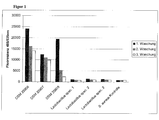
- Fig. 2 exemplary binding of the Lactobacillus DSM 25909, DSM 25910, DSM 25911 and Pseudomonas aeruginosa DSM 22644, and Fig. 1 Lactobacillus DSM 25906, DSM 25907, DSM 25908 and Staphylococcus aureus DSM 22644.
- the measuring method is based on the specific binding of the strains according to the invention to target strains bound in a biofilm.
- defined amounts of the strains according to the invention are labeled with a fluorescent dye (CFDA solution, Invitrogen) and mixed with a defined amount of target germs bound in a biofilm.
- CFDA solution fluorescent dye
- the whereabouts of the strains of the invention bound to the target strain is measured after repeated washing by means of fluorescence photometer.
- the target bacteria Pseudomonas aeruginosa (DSMZ 22644) and Staphylococcus aureus (DSMZ 18587) were cultured according to standard protocols.
- TSB Teudomonas aeruginosa
- TSY Terypticase Soy Yeast Extract Medium Staphylococcus aureus .
- Lactobacillus strains were cultured anaerobically at 37 ° C in MRS medium (de Man et al. , 1960).
- the cells were harvested in each case after reaching the beginning stationary growth phase, washed 3 times with phosphate-buffered saline (PBS, pH 7.4) and taken up in PBS. Then, 100 ⁇ l of the suspension per well were placed in a 96-well microtiter plate.
- PBS phosphate-buffered saline
- a biofilm is formed by the target strains. After incubation, unbound cells are removed by washing 3 times with phosphate-buffered saline (PBS, pH 7.4).
- PBS phosphate-buffered saline
- Lactobacillus strains were harvested after 24 hours of culture, washed 3 times with PBS, taken up in PBS and fluorescently labeled by adding the CFDA solution (Invitrogen).
- the increase in fluorescence (Em 485 nm / Ex 535 nm) in the batch with Lactobacillus strains in comparison with the control without Lactobacillus cells correlated with the amount of biofilm-bound Lactobacillus cells.
- the measured fluorescence after binding of the Lactobacillus cells corresponded to that bond strength. The larger this value, the better the labeled Lactobacillus cells bound to the target strains bound in the biofilm. And the stronger the binding activity of the examined Lactobacillus cells.
- FIG. 2 the results of the binding assay for Lactobacillus DSM 25909, DSM 25910 and DSM 25911 with Pseudomonas aeruginosa and DSM 25906, DSM 25907 and DSM 25908 with Staphylococcus aureus in FIG. 1 shown.
- FIG. 1 and 2 the data non-inventive Lactobacillus strains shown (Lactobacillus spec. 1 and 2), which are not capable of specific binding to the target germs.
- DSMZ 22644 the target bacteria Pseudomonas aeruginosa
- DSMZ 18587 Staphylococcus aureus
- TSB Teudomonas aeruginosa
- TSY Terypticase Soy Yeast Extract Medium
- Lactobacillus strains were cultured anaerobically at 37 ° C in MRS medium (de Man et al. , 1960).
- PBS phosphate-buffered saline
- the resulting co-aggregates were separated by centrifugation (10 sec, 300xg). Subsequently, 100 ⁇ l of the supernatant were transferred to a 96-well plate with flat bottom and the optical density was measured at 600 nm in the plate photometer.
- % aggregation O D T bad separately + O D Lactobacillus separately - O D Co - aggregation O D T bad separately + O D Lactobacillus separately ⁇ 100
- optical density of the target nucleus as well as those of the Lactobacillus strains and those of the co-aggregation approach were used for the calculation of the percentage co-aggregation activity.
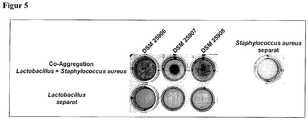
- the experiments show that the selected Lactobacillus strains for the target germ / target strain Staphylococcus aureus or Pseudomonas aeruginosa in the co-aggregation, resulting in clumps (aggregates) in the mixture, which are macroscopically visible through dark areas in the well.
- the wells containing the target strains or separately contains the Lactobacillus strains according to the invention there is no Aggreagat Struktur. This is visible by no formation of dark areas in the well.
- the macroscopic results in the co-aggregation approach are for the selected Lactobacillus strains for the target germ / target strain Staphylococcus aureus in FIG.
- Lactobacillus strains according to the invention and the target germs were processed as described in Example 2.
- Lactobacillus strains according to the invention were protease-treated, described here using the example of the protease, trypsin. After processing the Lactobacillus strains, treatment with trypsin (12.4 units / mg, Sigma) was treated at 37 ° C for 60 min. Subsequently, cells were again washed twice with PBS and the aggregation properties quantitated as described in Example 2.
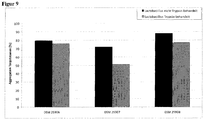
- Exemplary of the microorganisms according to the invention are in FIG. 9 presented the results of the co-aggregation assay for Lactobacillus DSM 25906, DSM 25907 and DSM 25908 with and without trypsin treatment with Staphylococcus aureus .
- DSMZ 22644 Pseudomonas aeruginosa
- DSMZ 18587 Staphylococcus epidermides
- DSM 20044 Staphylococcus epidermides
- DSM 7171 Corynebacterium jeikeium
- DSM 20030 Micrococcus luteus
- TSB Terypticase Soy Broth
- TSY Terypticase Soy Yeast Extract Medium
- DSMZ Staphylococcus aureus
- DSM 20044 Staphylococcus epidermides
- DSM 7171 Corynebacterium jeikeium
- DSM 20030 Micrococcus luteus
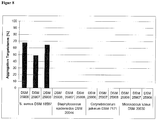
- FIG. 8 Exemplary of the microorganisms according to the invention are in FIG. 8 the results of the co-aggregation assay for Lactobacillus DSM 25906, DSM 25907 and DSM 25908 with Staphylococcus aureus and in FIG. 7 for Lactobacillus DSM 25909, DSM 25910 and DSM 25911 with Pseudomonas aeruginosa .
- Staphylococcus aureus was selected to show its aggregation properties on the target germs.
- Lactobacillus strains according to the invention and the target germs were cultured and worked up as described in Example 2.
- Staphylococcus aureus (DSMZ 18587) and Staphylococcus aureus (DSMZ 20232), were cultivated according to standard protocols.
- TSY Te Soy Yeast Extract Medium
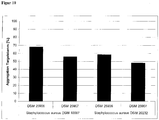
- FIG. 10 Exemplary of the microorganisms according to the invention are in FIG. 10 the results of Co-aggregation assays for Lactobacillus DSM 25906 and DSM 25907 with Staphylococcus aureus DSMZ 18587 and DSMZ 20232.
- the target strains as described above, cultivated according to standard protocol, and the Lactobacillus strains cultured in MRS medium anaerobically.
- Lactobacillus strains were washed 2 times with PBS after culturing and taken up in PBS.
- Lactobacillus strains after PBS washing were heat-inactivated by pasteurization at 70 ° C for 30 min.
- part of the heat-inactivated Lactobacillus strains after PBS washing was used to recover the supernatants. This was done by centrifuging the suspension and then using the supernatants.
- the Lactobacillus strains were added directly to the target germ at the beginning of biofilm formation and incubated for 6 h, anaerobically, at 37 ° C. Parallel controls were performed without addition of the Lactobacillus suspension.
- the bound cells of the respective mixtures were removed by crystal violet dyeing by means of acetic acid and placed in suspension and measured at an optical density of 590 nm.
- FIG. 11 Exemplary of the microorganisms according to the invention is in FIG. 11 the result of the biofilm inhibition of Staphylococcus aureus by Lactobacillus DSM 25914 and DSM 25915 and by Pseudomonas aeruginosa by DSM 25912 and DSM 25913 in Fig. 12 shown.
Landscapes
- Health & Medical Sciences (AREA)
- Life Sciences & Earth Sciences (AREA)
- Chemical & Material Sciences (AREA)
- Engineering & Computer Science (AREA)
- General Health & Medical Sciences (AREA)
- Organic Chemistry (AREA)
- Microbiology (AREA)
- Public Health (AREA)
- Veterinary Medicine (AREA)
- Animal Behavior & Ethology (AREA)
- Wood Science & Technology (AREA)
- Bioinformatics & Cheminformatics (AREA)
- Medicinal Chemistry (AREA)
- Zoology (AREA)
- Biotechnology (AREA)
- Mycology (AREA)
- Genetics & Genomics (AREA)
- Pharmacology & Pharmacy (AREA)
- Molecular Biology (AREA)
- Epidemiology (AREA)
- Dermatology (AREA)
- Biochemistry (AREA)
- General Engineering & Computer Science (AREA)
- Tropical Medicine & Parasitology (AREA)
- Chemical Kinetics & Catalysis (AREA)
- Proteomics, Peptides & Aminoacids (AREA)
- Biomedical Technology (AREA)
- Virology (AREA)
- General Chemical & Material Sciences (AREA)
- Nuclear Medicine, Radiotherapy & Molecular Imaging (AREA)
- Toxicology (AREA)
- Polymers & Plastics (AREA)
- Birds (AREA)
- Analytical Chemistry (AREA)
- Biophysics (AREA)
- Nutrition Science (AREA)
- Food Science & Technology (AREA)
- Immunology (AREA)
- Physics & Mathematics (AREA)
- Oil, Petroleum & Natural Gas (AREA)
Claims (14)
- Bactérie d'acide lactique ou lysat cellulaire, dérivé, mutants ou leur combinaison, dans laquelle le micro-organisme ou le lysat cellulaire, dérivé, mutants ou leur combinaison peuvent être co-agrégés avec au moins un micro-organisme pathogène, dans laquelle le micro-organisme pathogène est choisi dans le groupe comprenant Staphylococcus aureus ou Pseudomonas aeruginosa et dans laquelle la bactérie d'acide lactique est choisie dans le groupe comprenant les micro-organismes enregistrés dans la Deutschen Sammlung für Mikroorganismen und Zellkulturen (collection allemande de micro-organismes et cultures cellulaires) sous les numéros : DSM 25906, DSM 25907, DSM 25908, DSM 25909, DSM 25910, DSM 25911, DSM 25912, DSM 25913, DSM 25914 et DSMZ 25915.
- Bactérie d'acide lactique ou lysat cellulaire, dérivé, mutants ou leur combinaison selon la revendication 1 ou 2, dans laquelle la capacité de co-agrégation de l'au moins un micro-organisme pathogène existe également après un traitement biologique, chimique ou physique, et/ou
dans laquelle la capacité de co-agrégation de l'au moins un micro-organisme pathogène existe à un pH entre environ 3 à environ 8. - Bactérie d'acide lactique ou lysat cellulaire, dérivé, mutants ou leur combinaison selon une ou plusieurs des revendications précédentes, dans laquelle la bactérie d'acide lactique ou lysat cellulaire, dérivé, mutants ou leur combinaison possèdent la capacité d'inhiber une formation d'un biofilm de l'au moins un micro-organisme pathogène.
- Composition comprenant au moins une bactérie d'acide lactique ou lysat cellulaire, dérivé, mutants ou leur combinaison selon une ou plusieurs des revendications précédentes, dans laquelle la composition comprend un véhicule ou des excipients, choisis dans le groupe comprenant des véhicules ou excipients acceptables d'un point de vue cosmétique, des véhicules ou excipients pharmaceutiquement acceptables ou des véhicules ou excipients dermatologiquement acceptables et/ou dans laquelle la composition se présente sous forme de poudre, de bâton, d'aérosol, de vaporisateur, de crème, de dispersion, d'émulsion, de mousse, de pommade, de spray, d'aérosol, de poudre, de bâton, de lingette, de lotion, de suspension, de solution, de gel ou d'un substrat et/ou dans laquelle la composition se présente sous forme solide, fluide, visqueuse ou en aérosol et/ou sous forme de crème pour la peau, lotion de toilette ou pommade pour la peau et/ou dans laquelle la composition comprend des probiotiques, des antiseptiques ou autres substances actives comme antibactérien.
- Composition selon la revendication précédente, dans laquelle il s'agit d'une composition pharmaceutique, de médecine vétérinaire, cosmétique ou alimentaire.
- Composition selon la revendication 4 ou 5, comprenant en outre au moins une substance choisie parmi les groupes dea. principes actifs qui exercent une action positive sur l'état de la peau, notamment des principes actifs destinés à agir de façon positive sur la peau âgée, notamment en combinaison avec des bioquinones, notamment l'ubiquinone Q10, la créatine, la créatinine, la carnitine, la biotine, l'isoflavone, la cardiolipine, l'acide lipoïque, les protéines anti-gel, l'arctiine, des extraits de houblon et de malt,b. des agents favorisation la restructuration du tissu conjonctif, notamment des isoflavonoïdes,c. des principes actifs pour soutenir les fonctions cutanées en cas de sécheresse cutanée, notamment la vitamine C, la biotine, la carnitine, la créatine, l'acide propionique, des extraits de thé vert, l'huile d'eucalyptus, l'urée et des sels minéraux, notamment NaCl, des minéraux marins ainsi que des osmolytes,d. des principes actifs pour calmer et/ou exercer un effet positif sur les états cutanés irrités, notamment les séricosides, différents extraits de réglisse, les licochalcones, notamment les licochalcones A, la silymarine, le silyphos et/ou le dexpanthénol.
- Composition selon une ou plusieurs des revendications 4 à 6, dans laquelle la bactérie d'acide lactique se présente inactivée, vivante ou non vivante dans la composition et/ou dans laquelle la bactérie d'acide lactique se présente sous forme encapsulée, séchée par pulvérisation et/ou lyophilisée, et/ou
dans laquelle la bactérie d'acide lactique se présente sous la forme d'un lysat cellulaire et/ou
dans laquelle la bactérie d'acide lactique se présente en une quantité présentant un rapport massique de 0,001 % en poids à 10 % en poids, de préférence jusqu'à 0,005 % en poids à 5 % en poids, de manière particulièrement préférée, de 0,01 % en poids à 3 % en poids. - Utilisation de la bactérie d'acide lactique selon une ou plusieurs des revendications 1 à 3 ou de la composition selon une ou plusieurs des revendications 4 à 7, pour la production d'un médicament, d'un produit médicamenteux ou d'un cosmétique pour le traitement ou la prophylaxie des maladies de peau, notamment du syndrome de peau squameuse à staphylocoques, l'impétigo, la folliculite superficielle, l'impétiginisation, les abcès cutanés, les furoncles, les anthrax, les pustules, les phlegmons, la sécheresse cutanée, les démangeaisons cutanées, les rougeurs cutanées, les irritations cutanées, les peaux très grasses, l'acné, le pied diabétique, les escarres de décubitus, la neurodermite, la lymphadénite aiguë, les kystes pilonidaux, les fistules pilonidales, le sinus pilonidal, les fistules coccygiennes, les kystes coccygiens, les infections locales de la peau et des tissus sous-cutanés, la pyodermie, la dermatite purulente, la dermatite septique, la dermatite suppurative, la dermatite et l'eczéma, l'eczéma atopique, l'eczéma séborrhéique, l'érythème fessier, la dermatite de contact allergique, la dermatite séborrhéique, la dermatite exfoliative, la dermatite de contact toxique, le lichen simplex chronique, le prurigo, le prurit et autres dermatites, les maladies cutanées papulosquameuses, le psoriasis, le parapsoriasis, les maladies des annexes cutanées, l'alopécie cicatricielle, la folliculite décalvante, ainsi que d'autres maladies de la peau et des tissus sous-cutanés, l'ulcère crural, des lésions cutanées, des abrasions, des plaies, également consécutives à des accidents ou opérations.
- Utilisation de la bactérie d'acide lactique selon une ou plusieurs des revendications 1 à 3 ou de la composition selon une ou plusieurs des revendications 4 à 7 pour la production d'un agent nettoyant ou d'un agent désinfectant pour le traitement des surfaces.
- Utilisation de la bactérie d'acide lactique selon une ou plusieurs des revendications 1 à 3 ou de la composition selon une ou plusieurs des revendications 4 à 7 pour la production d'un produit qui est utilisé dans le domaine de l'hygiène corporelle, des produits médicaux et de la prophylaxie.
- Utilisation de la bactérie d'acide lactique selon une ou plusieurs des revendications 1 à 3 ou de la composition selon une ou plusieurs des revendications 4 à 7 pour la production d'un additif antimicrobien à action spécifique pour le traitement local des infections cutanées et l'accélération de la cicatrisation des plaies chroniques.
- Utilisation selon une ou plusieurs des revendications précédentes, dans laquelle la composition est utilisée sur le plan prophylactique ou curatif.
- Utilisation selon une ou plusieurs des revendications précédentes, dans laquelle la composition est appliquée par voie topique.
- Kit de traitement hygiénique, comprenant des bactéries d'acide lactique selon la revendication 1 à 3 ou la composition selon les revendications 4 à 7 et des dispositifs ou appareils d'hygiène corporelle, des rinçages et/ou des pâtes.
Applications Claiming Priority (2)
| Application Number | Priority Date | Filing Date | Title |
|---|---|---|---|
| DE102011101134 | 2011-05-06 | ||
| PCT/DE2012/100129 WO2012152270A1 (fr) | 2011-05-06 | 2012-05-07 | Nouvelles bactéries d'acide lactique et compositions les contenant |
Publications (3)
| Publication Number | Publication Date |
|---|---|
| EP2705140A1 EP2705140A1 (fr) | 2014-03-12 |
| EP2705140B1 true EP2705140B1 (fr) | 2018-03-21 |
| EP2705140B8 EP2705140B8 (fr) | 2018-04-25 |
Family
ID=46419845
Family Applications (1)
| Application Number | Title | Priority Date | Filing Date |
|---|---|---|---|
| EP12730781.7A Active EP2705140B8 (fr) | 2011-05-06 | 2012-05-07 | Nouvelles bactéries d'acide lactique et compositions les contenant |
Country Status (9)
| Country | Link |
|---|---|
| US (1) | US9585922B2 (fr) |
| EP (1) | EP2705140B8 (fr) |
| JP (1) | JP6267633B2 (fr) |
| KR (1) | KR101885403B1 (fr) |
| CN (1) | CN103502434B (fr) |
| CA (1) | CA2831345C (fr) |
| ES (1) | ES2674328T3 (fr) |
| RU (1) | RU2683225C2 (fr) |
| WO (1) | WO2012152270A1 (fr) |
Families Citing this family (54)
| Publication number | Priority date | Publication date | Assignee | Title |
|---|---|---|---|---|
| JP5548121B2 (ja) | 2007-05-14 | 2014-07-16 | リサーチ ファウンデーション オブ ステイト ユニバーシティ オブ ニューヨーク | バイオフィルム中の細菌細胞における生理学的分散応答の誘導 |
| ITMI20110793A1 (it) | 2011-05-09 | 2012-11-10 | Probiotical Spa | Ceppi di batteri probiotici e composizione sinbiotica contenente gli stessi destinata alla alimentazione dei neonati. |
| GB201206599D0 (en) | 2012-04-13 | 2012-05-30 | Univ Manchester | Probiotic bacteria |
| FR2999601B1 (fr) * | 2012-12-17 | 2015-01-30 | Urgo Lab | Methode pour prevenir et/ou traiter les infections, colonisations ou maladies liees a staphylococcus aureus, pseudomonas aeruginosa, streptococcus pyogenes, enterococcus faecium, enterobacter cloacae, proteus mirabilis et/ou bacteroides fragilis |
| FR3004349B1 (fr) * | 2013-04-15 | 2015-11-27 | Greentech | Applications cosmetiques et pharmaceutiques de lactobacillus pentosus |
| NZ630117A (en) * | 2013-04-23 | 2017-09-29 | Terragen Holdings Ltd | Bacterial strains having antimicrobial activity and biocontrol compositions comprising the same |
| CN106573023A (zh) * | 2014-08-13 | 2017-04-19 | 雀巢产品技术援助有限公司 | 植物乳杆菌cncm i‑4026制备物及其皮肤健康益处 |
| DE102015102020A1 (de) * | 2015-02-12 | 2016-08-18 | Renate Wilmanowicz | Immunologisch aktives Phyto-Gemisch und seine Anwendung bei der Prävention und in einem Verfahren zur Behandlung von Effloreszenzen |
| US9980491B2 (en) * | 2015-07-25 | 2018-05-29 | Siobhan Reilly | Probiotic compositions and methods of use |
| CN105105145B (zh) * | 2015-09-14 | 2022-04-22 | 吉林省命之元生物科技有限公司 | 一株植物乳杆菌及其在制备降血糖血脂的功能性食品中的应用 |
| GB201519087D0 (en) * | 2015-10-28 | 2015-12-09 | Metabogen Ab | Method for adaption |
| CN105362296A (zh) * | 2015-11-27 | 2016-03-02 | 成都吉氧屋科技有限公司 | 乳酸菌洗鼻液 |
| ITUA20162013A1 (it) | 2016-03-24 | 2017-09-24 | Probiotical Spa | Composizione a base di batteri lattici per il trattamento contemporaneo di infezioni vaginali di origine micotica e batterica. |
| CN105997840A (zh) * | 2016-03-29 | 2016-10-12 | 云南白药清逸堂实业有限公司 | 灭活益生菌在护理用品中的应用、混悬液和益生菌无纺布 |
| AU2017240064B8 (en) | 2016-03-31 | 2021-11-11 | Gojo Industries, Inc. | Antimicrobial peptide stimulating sanitizing composition |
| EP3436041B1 (fr) | 2016-03-31 | 2023-05-24 | Gojo Industries, Inc. | Composition de désinfectant contenant un probiotique/prébiotique en tant que principe actif |
| WO2017173240A1 (fr) | 2016-03-31 | 2017-10-05 | Gojo Industries, Inc. | Composition nettoyante stimulant les peptides antimicrobiens |
| ES2935858T3 (es) * | 2016-05-09 | 2023-03-13 | Adm Denmark As | Composición probiótica y usos de la misma |
| BE1024425B9 (nl) * | 2016-06-21 | 2018-03-26 | Yun NV | Dermatologische preparaten voor het onderhouden en/of herstellen van een gezonde huidmicrobiota |
| WO2018015380A1 (fr) | 2016-07-18 | 2018-01-25 | Philippe Ulsemer | Micro-organismes naturels qui sont naturellement capables de se lier à des toxines et/ou des récepteurs de toxine |
| IT201600081420A1 (it) * | 2016-08-03 | 2018-02-03 | Probiotical Spa | Batteri lattici e loro uso per il trattamento preventivo, inibitorio,riduttivo della formazione del biofilm batterico |
| US11382939B2 (en) | 2016-09-15 | 2022-07-12 | Kirin Holdings Kabushiki Kaisha | Composition which contains lactic acid bacterium as effective component and which is for preventing or ameliorating skin condition deterioration caused by abnormal proliferation of specific bacterium in skin |
| BE1024189B1 (nl) * | 2016-10-28 | 2017-12-05 | Yun NV | Spuitbus met bacteriële species |
| JP2020500860A (ja) | 2016-11-23 | 2020-01-16 | ゴジョ・インダストリーズ・インコーポレイテッド | プロバイオティック/プレバイオティックな有効成分を含む消毒薬組成物 |
| JP6766253B2 (ja) * | 2017-03-28 | 2020-10-07 | 森永乳業株式会社 | 新規ビフィドバクテリウム属細菌 |
| KR101801764B1 (ko) * | 2017-06-01 | 2017-11-27 | 한국식품연구원 | 양모 촉진 활성을 갖는 락토바실러스 커베투스 wikim55 및 이를 포함하는 조성물 |
| BE1025316B1 (nl) | 2017-06-16 | 2019-01-28 | Avecom Nv | Microbieel consortium voor het onderdrukken van niet-gras micro-organismen op een oppervlak |
| EP3415595A1 (fr) | 2017-06-16 | 2018-12-19 | The Procter & Gamble Company | Composition de traitement de surface comprenant un consortium microbien pour la suppression de micro-organismes non-gras sur une surface |
| CN109207389B (zh) * | 2017-07-07 | 2023-06-06 | 西北民族大学 | 一种消栓降脂益生复合菌中药口服液及其制备方法 |
| CN108048342B (zh) * | 2017-10-26 | 2021-06-04 | 中国农业大学 | 一种耐压益生菌及其食品和制备方法 |
| TWI731209B (zh) * | 2018-01-09 | 2021-06-21 | 柯順議 | 益生菌組合物及其用途 |
| US11007137B2 (en) * | 2018-02-12 | 2021-05-18 | Genmont Biotech Incorporation | Use of lactobacillus plantarum GMNL-6 composition for skin care |
| SG11202008791UA (en) * | 2018-04-19 | 2020-11-27 | Nutri Co Ltd | Agent for prevention and/or treatment of pseudomonas aeruginosa infection |
| KR102138834B1 (ko) | 2018-05-23 | 2020-07-29 | 주식회사 고바이오랩 | 락토바실러스 가세리 kbl697 균주 및 그 용도 |
| CN110680836B (zh) * | 2018-06-19 | 2021-04-02 | 景岳生物科技(中国)有限公司 | 副干酪乳杆菌菌株gmnl-653用于制备改善狐臭组合物的用途 |
| WO2020001747A1 (fr) | 2018-06-26 | 2020-01-02 | Symrise Ag | Lactobacillus plantarum pour soins de la peau |
| TWI707688B (zh) * | 2018-07-06 | 2020-10-21 | 景岳生物科技股份有限公司 | 副乾酪乳桿菌菌株gmnl-653用於製備改善狐臭醫藥組合物之用途 |
| CN109172613B (zh) * | 2018-08-14 | 2022-04-22 | 景岳生物科技(中国)有限公司 | 含乳杆菌死菌培养物的皮肤外用组合物及其于促进伤口愈合及降低疤痕产生的用途 |
| EP3849574A1 (fr) | 2018-09-10 | 2021-07-21 | Lactobio A/S | Procédé de réduction du transfert de micro-organismes pathogènes |
| KR102047459B1 (ko) * | 2018-12-24 | 2019-11-21 | 한국식품연구원 | 락토바실러스 플랜타룸 WiKim0088 |
| AU2019379234B2 (en) | 2019-01-04 | 2026-04-09 | L'ORéAL S.A. | Strains, composition and method of use |
| MX2021012552A (es) * | 2019-04-16 | 2021-11-12 | Locus Ip Co Llc | Aditivos alimentarios emulsionantes basados en microbios. |
| CN110066749A (zh) * | 2019-04-25 | 2019-07-30 | 杭州师范大学 | 一种微生物复合菌制剂及其应用 |
| WO2020234382A1 (fr) * | 2019-05-20 | 2020-11-26 | Lactobio Aps | Composition pour le traitement, l'amélioration ou la prophylaxie de l'acné |
| DE102019007505A1 (de) * | 2019-10-28 | 2021-04-29 | Beiersdorf Ag | Zusammensetzung mit probiotischen Bakterien und Licochalcon A |
| CN111617025B (zh) * | 2020-06-12 | 2021-01-29 | 广州市千邦化妆品有限公司 | 美白祛斑抗糖化的发酵产物化妆品 |
| CN112094784B (zh) * | 2020-09-30 | 2022-04-15 | 江南大学 | 一株能够抑制HaCaT细胞异常增殖的副干酪乳杆菌 |
| DE102021104840B4 (de) | 2021-03-01 | 2024-06-20 | FB Vermögensverwaltung UG (haftungsbeschränkt) | Pumpspendersystem |
| CN114058547B (zh) * | 2021-11-29 | 2023-12-05 | 广州集妍化妆品科技有限公司 | 一种发酵乳杆菌、发酵乳杆菌的发酵液及其应用 |
| CN114767922B (zh) * | 2022-03-15 | 2023-09-12 | 青岛大学 | 搭载益生菌的透明质酸水凝胶及其制备方法和应用 |
| KR102551065B1 (ko) * | 2022-05-12 | 2023-07-03 | 중앙대학교 산학협력단 | 김치로부터 유래된 LAB(lactic acid bacteria)을 유효성분으로 포함하는 항-바이오필름 조성물 |
| WO2025032807A1 (fr) * | 2023-08-10 | 2025-02-13 | 株式会社Moyu | Produit de nettoyage d'animal et procédé de nettoyage |
| EP4538357A1 (fr) | 2023-10-15 | 2025-04-16 | Tim Bast | Composition de nettoyage avec indication de dosage |
| KR102815719B1 (ko) * | 2024-11-18 | 2025-06-04 | 제이에스바이오컴퍼니 주식회사 | 반려동물의 아토피 및 피부염 개선 기능을 갖는 기능성 유산균, 그 배양방법, 이를 이용한 기능성 펫푸드, 및 기능성 펫푸드의 제조 방법 |
Family Cites Families (12)
| Publication number | Priority date | Publication date | Assignee | Title |
|---|---|---|---|---|
| JPH09183730A (ja) * | 1995-05-10 | 1997-07-15 | Meiji Seika Kaisha Ltd | ホスホマイシン鏡像異性体を含んでなる医薬 |
| KR19990077318A (ko) | 1996-01-16 | 1999-10-25 | 에드워드 제이. 존스 | 세제 및 소독제 제조물 |
| FR2779438B1 (fr) | 1998-06-03 | 2004-12-24 | Jean Marc Aiache | Gel stable, son procede de preparation, et compositions pharmaceutiques le comprenant |
| EP1110555A1 (fr) * | 1999-12-22 | 2001-06-27 | Societe Des Produits Nestle S.A. | Agent anti-adhesion de la flore pathogene de la peau |
| ATE350010T1 (de) | 2001-02-23 | 2007-01-15 | Richter Chem Lab | Zusammensetzung zur topischen anwendung |
| DE102004026706A1 (de) | 2004-05-28 | 2005-12-15 | Merck Patent Gmbh | Orale Darreichungsform enthaltend probiotische Bakterien |
| EP1634948A1 (fr) | 2004-09-10 | 2006-03-15 | Basf Aktiengesellschaft | Méthodes et moyens à prévenir et/ou traiter des caries |
| DE102005062731A1 (de) | 2005-12-22 | 2007-06-28 | Organobalance Gmbh | Neue Lactobacillus Stämme und deren Verwendung |
| RU2009125184A (ru) * | 2006-12-01 | 2011-01-10 | Органобэлэнс Гмбх (De) | Композиции, наборы и их применения для защиты кожи от патогенных микроорганизмов |
| RU2401116C2 (ru) * | 2008-04-23 | 2010-10-10 | Общество с ограниченной ответственностью "Пробиотикфарминвест" | Ранозаживляющий пробиотический препарат |
| EP2133414A1 (fr) | 2008-06-11 | 2009-12-16 | Basf Se | Utilisations et procédés pour prévenir et/ou traiter la mauvaise haleine |
| DE102009003026A1 (de) | 2009-05-12 | 2010-11-18 | Henkel Ag & Co. Kgaa | Probiotisches Handgeschirrspülmittel |
-
2012
- 2012-05-07 CA CA2831345A patent/CA2831345C/fr active Active
- 2012-05-07 KR KR1020137032063A patent/KR101885403B1/ko active Active
- 2012-05-07 JP JP2014508683A patent/JP6267633B2/ja active Active
- 2012-05-07 EP EP12730781.7A patent/EP2705140B8/fr active Active
- 2012-05-07 RU RU2013150690A patent/RU2683225C2/ru not_active Application Discontinuation
- 2012-05-07 ES ES12730781.7T patent/ES2674328T3/es active Active
- 2012-05-07 US US14/115,671 patent/US9585922B2/en active Active
- 2012-05-07 CN CN201280022133.8A patent/CN103502434B/zh active Active
- 2012-05-07 WO PCT/DE2012/100129 patent/WO2012152270A1/fr not_active Ceased
Non-Patent Citations (1)
| Title |
|---|
| None * |
Also Published As
| Publication number | Publication date |
|---|---|
| KR20140032413A (ko) | 2014-03-14 |
| EP2705140B8 (fr) | 2018-04-25 |
| US20140186409A1 (en) | 2014-07-03 |
| RU2013150690A (ru) | 2015-06-20 |
| JP6267633B2 (ja) | 2018-01-24 |
| CN103502434A (zh) | 2014-01-08 |
| CA2831345C (fr) | 2022-05-03 |
| EP2705140A1 (fr) | 2014-03-12 |
| CA2831345A1 (fr) | 2012-11-15 |
| ES2674328T3 (es) | 2018-06-28 |
| RU2683225C2 (ru) | 2019-03-26 |
| JP2014513106A (ja) | 2014-05-29 |
| KR101885403B1 (ko) | 2018-08-03 |
| WO2012152270A1 (fr) | 2012-11-15 |
| CN103502434B (zh) | 2016-08-17 |
| US9585922B2 (en) | 2017-03-07 |
Similar Documents
| Publication | Publication Date | Title |
|---|---|---|
| EP2705140B1 (fr) | Nouvelles bactéries d'acide lactique et compositions les contenant | |
| EP2710115B1 (fr) | Nouvelles bactéries d'acide lactique et composition les contenant contre des infections bactérienne | |
| DE60012026T2 (de) | Verwendung von emu-öl als träger für fungizide, antibakterielle und antivirale arzneien | |
| DE60023919T2 (de) | Verbesserte topische zusammensetzungen mit extrazellulären produkten von probiotischen bakterien und verwendungen davon | |
| US7510734B2 (en) | Skin treatment method with Lactobacillus extract | |
| KR101398347B1 (ko) | 병원성 미생물에 대해 피부를 보호하기 위한 방법 및 수단 | |
| KR20170003478A (ko) | 피부 개선용 균주 및 이를 포함하는 피부 개선용 키트 | |
| CN108697743A (zh) | 用于治疗由痤疮丙酸杆菌引起的感染尤其是痤疮的乳酸菌的组合物 | |
| JP2021533809A (ja) | 新規なキューティバクテリウムグラニュローサム菌株、該菌株またはその培養物を含むにきび予防または治療用組成物 | |
| JP7624072B2 (ja) | 皮膚障害の微生物治療のための方法及び組成物 | |
| KR102270709B1 (ko) | 복합 세라마이드 및 천연 추출물을 포함하는 피부개선용 화장료 조성물 | |
| US20250170050A1 (en) | Use of Nordic plant-based ingredients for supporting a healthy skin microbiome | |
| US20240277782A1 (en) | Compositions and methods for microbial treatment of skin disorders | |
| KR20250061733A (ko) | 여드름 치료를 위한 푸소박테리움 뉴클레아툼 | |
| EP4062901A1 (fr) | Utilisation cosmétique d'ingrédients de baies nordiques pour soutenir un microbiome de peau sain | |
| CN116635003A (zh) | 用于皮肤障碍的微生物治疗的方法和组合物 | |
| El-Shal et al. | Investigation of multifunctional potential of Lactobacillus acidophilus-DSM20079 in wound infection model | |
| WO2024121383A1 (fr) | Nouvelles compositions | |
| HK1254897B (en) | Composition of lactic bacteria for use in the treatment of infections due to propionibacterium acnes and in particular for acne |
Legal Events
| Date | Code | Title | Description |
|---|---|---|---|
| PUAI | Public reference made under article 153(3) epc to a published international application that has entered the european phase |
Free format text: ORIGINAL CODE: 0009012 |
|
| 17P | Request for examination filed |
Effective date: 20131025 |
|
| AK | Designated contracting states |
Kind code of ref document: A1 Designated state(s): AL AT BE BG CH CY CZ DE DK EE ES FI FR GB GR HR HU IE IS IT LI LT LU LV MC MK MT NL NO PL PT RO RS SE SI SK SM TR |
|
| DAX | Request for extension of the european patent (deleted) | ||
| 17Q | First examination report despatched |
Effective date: 20150721 |
|
| STAA | Information on the status of an ep patent application or granted ep patent |
Free format text: STATUS: EXAMINATION IS IN PROGRESS |
|
| GRAP | Despatch of communication of intention to grant a patent |
Free format text: ORIGINAL CODE: EPIDOSNIGR1 |
|
| STAA | Information on the status of an ep patent application or granted ep patent |
Free format text: STATUS: GRANT OF PATENT IS INTENDED |
|
| RIC1 | Information provided on ipc code assigned before grant |
Ipc: A61K 35/74 20150101ALI20171102BHEP Ipc: C12N 1/20 20060101AFI20171102BHEP Ipc: A61K 8/99 20170101ALI20171102BHEP Ipc: A61K 35/744 20150101ALI20171102BHEP Ipc: C11D 3/38 20060101ALI20171102BHEP Ipc: C12R 1/225 20060101ALI20171102BHEP Ipc: C12Q 1/04 20060101ALI20171102BHEP Ipc: A23L 33/135 20160101ALI20171102BHEP Ipc: A61K 35/747 20150101ALI20171102BHEP Ipc: A61Q 17/00 20060101ALI20171102BHEP Ipc: A61Q 19/10 20060101ALI20171102BHEP |
|
| INTG | Intention to grant announced |
Effective date: 20171206 |
|
| GRAS | Grant fee paid |
Free format text: ORIGINAL CODE: EPIDOSNIGR3 |
|
| GRAA | (expected) grant |
Free format text: ORIGINAL CODE: 0009210 |
|
| STAA | Information on the status of an ep patent application or granted ep patent |
Free format text: STATUS: THE PATENT HAS BEEN GRANTED |
|
| GRAT | Correction requested after decision to grant or after decision to maintain patent in amended form |
Free format text: ORIGINAL CODE: EPIDOSNCDEC |
|
| RAP1 | Party data changed (applicant data changed or rights of an application transferred) |
Owner name: BELANO MEDICAL AG |
|
| AK | Designated contracting states |
Kind code of ref document: B1 Designated state(s): AL AT BE BG CH CY CZ DE DK EE ES FI FR GB GR HR HU IE IS IT LI LT LU LV MC MK MT NL NO PL PT RO RS SE SI SK SM TR |
|
| REG | Reference to a national code |
Ref country code: GB Ref legal event code: FG4D Free format text: NOT ENGLISH |
|
| RAP2 | Party data changed (patent owner data changed or rights of a patent transferred) |
Owner name: BELANO MEDICAL AG |
|
| REG | Reference to a national code |
Ref country code: CH Ref legal event code: EP |
|
| REG | Reference to a national code |
Ref country code: AT Ref legal event code: REF Ref document number: 981104 Country of ref document: AT Kind code of ref document: T Effective date: 20180415 |
|
| REG | Reference to a national code |
Ref country code: IE Ref legal event code: FG4D Free format text: LANGUAGE OF EP DOCUMENT: GERMAN |
|
| REG | Reference to a national code |
Ref country code: DE Ref legal event code: R096 Ref document number: 502012012382 Country of ref document: DE |
|
| REG | Reference to a national code |
Ref country code: NL Ref legal event code: FP |
|
| REG | Reference to a national code |
Ref country code: CH Ref legal event code: NV Representative=s name: COSMOVICI INTELLECTUAL PROPERTY SARL, CH |
|
| REG | Reference to a national code |
Ref country code: FR Ref legal event code: PLFP Year of fee payment: 7 |
|
| REG | Reference to a national code |
Ref country code: SE Ref legal event code: TRGR |
|
| REG | Reference to a national code |
Ref country code: ES Ref legal event code: FG2A Ref document number: 2674328 Country of ref document: ES Kind code of ref document: T3 Effective date: 20180628 |
|
| PG25 | Lapsed in a contracting state [announced via postgrant information from national office to epo] |
Ref country code: NO Free format text: LAPSE BECAUSE OF FAILURE TO SUBMIT A TRANSLATION OF THE DESCRIPTION OR TO PAY THE FEE WITHIN THE PRESCRIBED TIME-LIMIT Effective date: 20180621 Ref country code: FI Free format text: LAPSE BECAUSE OF FAILURE TO SUBMIT A TRANSLATION OF THE DESCRIPTION OR TO PAY THE FEE WITHIN THE PRESCRIBED TIME-LIMIT Effective date: 20180321 Ref country code: LT Free format text: LAPSE BECAUSE OF FAILURE TO SUBMIT A TRANSLATION OF THE DESCRIPTION OR TO PAY THE FEE WITHIN THE PRESCRIBED TIME-LIMIT Effective date: 20180321 Ref country code: CY Free format text: LAPSE BECAUSE OF FAILURE TO SUBMIT A TRANSLATION OF THE DESCRIPTION OR TO PAY THE FEE WITHIN THE PRESCRIBED TIME-LIMIT Effective date: 20180321 Ref country code: HR Free format text: LAPSE BECAUSE OF FAILURE TO SUBMIT A TRANSLATION OF THE DESCRIPTION OR TO PAY THE FEE WITHIN THE PRESCRIBED TIME-LIMIT Effective date: 20180321 |
|
| REG | Reference to a national code |
Ref country code: LT Ref legal event code: MG4D |
|
| PG25 | Lapsed in a contracting state [announced via postgrant information from national office to epo] |
Ref country code: RS Free format text: LAPSE BECAUSE OF FAILURE TO SUBMIT A TRANSLATION OF THE DESCRIPTION OR TO PAY THE FEE WITHIN THE PRESCRIBED TIME-LIMIT Effective date: 20180321 Ref country code: BG Free format text: LAPSE BECAUSE OF FAILURE TO SUBMIT A TRANSLATION OF THE DESCRIPTION OR TO PAY THE FEE WITHIN THE PRESCRIBED TIME-LIMIT Effective date: 20180621 Ref country code: LV Free format text: LAPSE BECAUSE OF FAILURE TO SUBMIT A TRANSLATION OF THE DESCRIPTION OR TO PAY THE FEE WITHIN THE PRESCRIBED TIME-LIMIT Effective date: 20180321 Ref country code: GR Free format text: LAPSE BECAUSE OF FAILURE TO SUBMIT A TRANSLATION OF THE DESCRIPTION OR TO PAY THE FEE WITHIN THE PRESCRIBED TIME-LIMIT Effective date: 20180622 |
|
| PG25 | Lapsed in a contracting state [announced via postgrant information from national office to epo] |
Ref country code: MT Free format text: LAPSE BECAUSE OF FAILURE TO SUBMIT A TRANSLATION OF THE DESCRIPTION OR TO PAY THE FEE WITHIN THE PRESCRIBED TIME-LIMIT Effective date: 20180321 |
|
| PG25 | Lapsed in a contracting state [announced via postgrant information from national office to epo] |
Ref country code: PL Free format text: LAPSE BECAUSE OF FAILURE TO SUBMIT A TRANSLATION OF THE DESCRIPTION OR TO PAY THE FEE WITHIN THE PRESCRIBED TIME-LIMIT Effective date: 20180321 Ref country code: RO Free format text: LAPSE BECAUSE OF FAILURE TO SUBMIT A TRANSLATION OF THE DESCRIPTION OR TO PAY THE FEE WITHIN THE PRESCRIBED TIME-LIMIT Effective date: 20180321 Ref country code: EE Free format text: LAPSE BECAUSE OF FAILURE TO SUBMIT A TRANSLATION OF THE DESCRIPTION OR TO PAY THE FEE WITHIN THE PRESCRIBED TIME-LIMIT Effective date: 20180321 Ref country code: AL Free format text: LAPSE BECAUSE OF FAILURE TO SUBMIT A TRANSLATION OF THE DESCRIPTION OR TO PAY THE FEE WITHIN THE PRESCRIBED TIME-LIMIT Effective date: 20180321 |
|
| PG25 | Lapsed in a contracting state [announced via postgrant information from national office to epo] |
Ref country code: CZ Free format text: LAPSE BECAUSE OF FAILURE TO SUBMIT A TRANSLATION OF THE DESCRIPTION OR TO PAY THE FEE WITHIN THE PRESCRIBED TIME-LIMIT Effective date: 20180321 Ref country code: SK Free format text: LAPSE BECAUSE OF FAILURE TO SUBMIT A TRANSLATION OF THE DESCRIPTION OR TO PAY THE FEE WITHIN THE PRESCRIBED TIME-LIMIT Effective date: 20180321 Ref country code: SM Free format text: LAPSE BECAUSE OF FAILURE TO SUBMIT A TRANSLATION OF THE DESCRIPTION OR TO PAY THE FEE WITHIN THE PRESCRIBED TIME-LIMIT Effective date: 20180321 |
|
| REG | Reference to a national code |
Ref country code: CH Ref legal event code: PK Free format text: BERICHTIGUNGEN |
|
| PG25 | Lapsed in a contracting state [announced via postgrant information from national office to epo] |
Ref country code: PT Free format text: LAPSE BECAUSE OF FAILURE TO SUBMIT A TRANSLATION OF THE DESCRIPTION OR TO PAY THE FEE WITHIN THE PRESCRIBED TIME-LIMIT Effective date: 20180723 |
|
| REG | Reference to a national code |
Ref country code: DE Ref legal event code: R097 Ref document number: 502012012382 Country of ref document: DE |
|
| RIC2 | Information provided on ipc code assigned after grant |
Ipc: A61K 35/747 20150101ALI20171102BHEP Ipc: C12R 1/225 20060101ALI20171102BHEP Ipc: A61Q 17/00 20060101ALI20171102BHEP Ipc: C12Q 1/04 20060101ALI20171102BHEP Ipc: A61Q 19/10 20060101ALI20171102BHEP Ipc: A61K 35/744 20150101ALI20171102BHEP Ipc: A61K 8/99 20170101ALI20171102BHEP Ipc: C11D 3/38 20060101ALI20171102BHEP Ipc: C12N 1/20 20060101AFI20171102BHEP Ipc: A61K 35/74 20150101ALI20171102BHEP Ipc: A23L 33/135 20160101ALI20171102BHEP |
|
| PLBE | No opposition filed within time limit |
Free format text: ORIGINAL CODE: 0009261 |
|
| STAA | Information on the status of an ep patent application or granted ep patent |
Free format text: STATUS: NO OPPOSITION FILED WITHIN TIME LIMIT |
|
| REG | Reference to a national code |
Ref country code: BE Ref legal event code: MM Effective date: 20180531 |
|
| PG25 | Lapsed in a contracting state [announced via postgrant information from national office to epo] |
Ref country code: MC Free format text: LAPSE BECAUSE OF FAILURE TO SUBMIT A TRANSLATION OF THE DESCRIPTION OR TO PAY THE FEE WITHIN THE PRESCRIBED TIME-LIMIT Effective date: 20180321 Ref country code: DK Free format text: LAPSE BECAUSE OF FAILURE TO SUBMIT A TRANSLATION OF THE DESCRIPTION OR TO PAY THE FEE WITHIN THE PRESCRIBED TIME-LIMIT Effective date: 20180321 |
|
| REG | Reference to a national code |
Ref country code: CH Ref legal event code: PK Free format text: BERICHTIGUNGEN |
|
| RIC2 | Information provided on ipc code assigned after grant |
Ipc: A23L 33/135 20160101ALI20171102BHEP Ipc: A61K 35/747 20150101ALI20171102BHEP Ipc: C12N 1/20 20060101AFI20171102BHEP Ipc: A61K 35/74 20150101ALI20171102BHEP Ipc: C12Q 1/04 20060101ALI20171102BHEP Ipc: A61Q 17/00 20060101ALI20171102BHEP Ipc: A61K 35/744 20150101ALI20171102BHEP Ipc: C12R 1/225 20060101ALI20171102BHEP Ipc: A61K 8/99 20170101ALI20171102BHEP Ipc: A61Q 19/10 20060101ALI20171102BHEP Ipc: C11D 3/38 20060101ALI20171102BHEP |
|
| REG | Reference to a national code |
Ref country code: IE Ref legal event code: MM4A |
|
| 26N | No opposition filed |
Effective date: 20190102 |
|
| PG25 | Lapsed in a contracting state [announced via postgrant information from national office to epo] |
Ref country code: LU Free format text: LAPSE BECAUSE OF NON-PAYMENT OF DUE FEES Effective date: 20180507 |
|
| PG25 | Lapsed in a contracting state [announced via postgrant information from national office to epo] |
Ref country code: IE Free format text: LAPSE BECAUSE OF NON-PAYMENT OF DUE FEES Effective date: 20180507 |
|
| PG25 | Lapsed in a contracting state [announced via postgrant information from national office to epo] |
Ref country code: BE Free format text: LAPSE BECAUSE OF NON-PAYMENT OF DUE FEES Effective date: 20180531 Ref country code: SI Free format text: LAPSE BECAUSE OF FAILURE TO SUBMIT A TRANSLATION OF THE DESCRIPTION OR TO PAY THE FEE WITHIN THE PRESCRIBED TIME-LIMIT Effective date: 20180321 |
|
| PG25 | Lapsed in a contracting state [announced via postgrant information from national office to epo] |
Ref country code: TR Free format text: LAPSE BECAUSE OF FAILURE TO SUBMIT A TRANSLATION OF THE DESCRIPTION OR TO PAY THE FEE WITHIN THE PRESCRIBED TIME-LIMIT Effective date: 20180321 |
|
| PG25 | Lapsed in a contracting state [announced via postgrant information from national office to epo] |
Ref country code: HU Free format text: LAPSE BECAUSE OF FAILURE TO SUBMIT A TRANSLATION OF THE DESCRIPTION OR TO PAY THE FEE WITHIN THE PRESCRIBED TIME-LIMIT; INVALID AB INITIO Effective date: 20120507 |
|
| PG25 | Lapsed in a contracting state [announced via postgrant information from national office to epo] |
Ref country code: MK Free format text: LAPSE BECAUSE OF NON-PAYMENT OF DUE FEES Effective date: 20180321 |
|
| PG25 | Lapsed in a contracting state [announced via postgrant information from national office to epo] |
Ref country code: IS Free format text: LAPSE BECAUSE OF FAILURE TO SUBMIT A TRANSLATION OF THE DESCRIPTION OR TO PAY THE FEE WITHIN THE PRESCRIBED TIME-LIMIT Effective date: 20180721 |
|
| P01 | Opt-out of the competence of the unified patent court (upc) registered |
Effective date: 20230508 |
|
| REG | Reference to a national code |
Ref country code: DE Ref legal event code: R082 Ref document number: 502012012382 Country of ref document: DE Representative=s name: BEYER, CARSTEN, DIPL.-ING. DR.-ING. LL.M., DE |
|
| PGFP | Annual fee paid to national office [announced via postgrant information from national office to epo] |
Ref country code: NL Payment date: 20250522 Year of fee payment: 14 |
|
| PGFP | Annual fee paid to national office [announced via postgrant information from national office to epo] |
Ref country code: DE Payment date: 20250531 Year of fee payment: 14 |
|
| PGFP | Annual fee paid to national office [announced via postgrant information from national office to epo] |
Ref country code: GB Payment date: 20250522 Year of fee payment: 14 Ref country code: ES Payment date: 20250616 Year of fee payment: 14 |
|
| PGFP | Annual fee paid to national office [announced via postgrant information from national office to epo] |
Ref country code: IT Payment date: 20250530 Year of fee payment: 14 |
|
| PGFP | Annual fee paid to national office [announced via postgrant information from national office to epo] |
Ref country code: FR Payment date: 20250523 Year of fee payment: 14 |
|
| PGFP | Annual fee paid to national office [announced via postgrant information from national office to epo] |
Ref country code: CH Payment date: 20250601 Year of fee payment: 14 |
|
| PGFP | Annual fee paid to national office [announced via postgrant information from national office to epo] |
Ref country code: AT Payment date: 20250519 Year of fee payment: 14 |
|
| PGFP | Annual fee paid to national office [announced via postgrant information from national office to epo] |
Ref country code: SE Payment date: 20250522 Year of fee payment: 14 |