EP2706123A1 - In-vitro-Verfahren zur Bestimmung der genotoxischen und nicht genotoxischen Karzinogenizität einer Verbindung - Google Patents
In-vitro-Verfahren zur Bestimmung der genotoxischen und nicht genotoxischen Karzinogenizität einer Verbindung Download PDFInfo
- Publication number
- EP2706123A1 EP2706123A1 EP12183211.7A EP12183211A EP2706123A1 EP 2706123 A1 EP2706123 A1 EP 2706123A1 EP 12183211 A EP12183211 A EP 12183211A EP 2706123 A1 EP2706123 A1 EP 2706123A1
- Authority
- EP
- European Patent Office
- Prior art keywords
- compound
- expression level
- genotoxic
- reference value
- column
- Prior art date
- Legal status (The legal status is an assumption and is not a legal conclusion. Google has not performed a legal analysis and makes no representation as to the accuracy of the status listed.)
- Withdrawn
Links
Images




Classifications
-
- C—CHEMISTRY; METALLURGY
- C12—BIOCHEMISTRY; BEER; SPIRITS; WINE; VINEGAR; MICROBIOLOGY; ENZYMOLOGY; MUTATION OR GENETIC ENGINEERING
- C12Q—MEASURING OR TESTING PROCESSES INVOLVING ENZYMES, NUCLEIC ACIDS OR MICROORGANISMS; COMPOSITIONS OR TEST PAPERS THEREFOR; PROCESSES OF PREPARING SUCH COMPOSITIONS; CONDITION-RESPONSIVE CONTROL IN MICROBIOLOGICAL OR ENZYMOLOGICAL PROCESSES
- C12Q1/00—Measuring or testing processes involving enzymes, nucleic acids or microorganisms; Compositions therefor; Processes of preparing such compositions
- C12Q1/68—Measuring or testing processes involving enzymes, nucleic acids or microorganisms; Compositions therefor; Processes of preparing such compositions involving nucleic acids
- C12Q1/6876—Nucleic acid products used in the analysis of nucleic acids, e.g. primers or probes
- C12Q1/6883—Nucleic acid products used in the analysis of nucleic acids, e.g. primers or probes for diseases caused by alterations of genetic material
-
- C—CHEMISTRY; METALLURGY
- C12—BIOCHEMISTRY; BEER; SPIRITS; WINE; VINEGAR; MICROBIOLOGY; ENZYMOLOGY; MUTATION OR GENETIC ENGINEERING
- C12Q—MEASURING OR TESTING PROCESSES INVOLVING ENZYMES, NUCLEIC ACIDS OR MICROORGANISMS; COMPOSITIONS OR TEST PAPERS THEREFOR; PROCESSES OF PREPARING SUCH COMPOSITIONS; CONDITION-RESPONSIVE CONTROL IN MICROBIOLOGICAL OR ENZYMOLOGICAL PROCESSES
- C12Q1/00—Measuring or testing processes involving enzymes, nucleic acids or microorganisms; Compositions therefor; Processes of preparing such compositions
- C12Q1/68—Measuring or testing processes involving enzymes, nucleic acids or microorganisms; Compositions therefor; Processes of preparing such compositions involving nucleic acids
- C12Q1/6897—Measuring or testing processes involving enzymes, nucleic acids or microorganisms; Compositions therefor; Processes of preparing such compositions involving nucleic acids involving reporter genes operably linked to promoters
Definitions
- the invention is in the field of molecular diagnostics. More in particular it provides marker genes for determining the genotoxicity and carcinogenicity of compounds.
- a method according to the invention employs samples obtained from animals exposed to a potentially genotoxic and/or carcinogenic compound and determines expression levels of a number of marker genes in order to distinguish between carcinogenic compounds and non-carcinogenic compounds and between genotoxic and non-genotoxic carcinogenic compounds.
- GTXC genotoxic carcinogenic
- NGTXC non-genotoxic carcinogenic
- NC non-carcinogenic
- carcinogenic compounds may be distinguished from non-carcinogenic compounds by first distinguishing GTXC compounds from NGTXC plus NC compounds and then in a second step distinguishing the NGTXC compounds from the NC compounds.
- the invention relates to an in vitro method for determining whether it is likely or unlikely that a compound is a genotoxic carcinogen (GTXC) wherein the expression level of at least one marker gene is determined in a sample obtained from a rodent previously exposed to the compound, wherein the at least one marker gene is selected from the group consisting of LOC75771, Nup62, Zbtb16 and Anks4b, and wherein it is concluded that the compound is likely a genotoxic carcinogen if the expression level of LOC75771 or Anks4b is above a predetermined reference value or if the expression level of Nup62 or Zbtb16 is below a predetermined reference value or concluding that the compound is unlikely a genotoxic carcinogen if the expression level of LOC75771 or Anks4b is at or below a predetermined reference value or if the expression level of Nup62 or Zbtb16 is at or above a predetermined reference value.
- GTXC genotoxic
- the invention also relates to a method for determining whether it is likely or unlikely that a compound is a carcinogen by first performing a method as described above and concluding that a compound is unlikely to be a genotoxic carcinogen, followed by a step wherein the expression level of at least one second marker gene is determined in a sample obtained from a rodent previously exposed to the compound, wherein the at least one second marker gene is selected from the group consisting of 9030619P08Rik and Cyp17a1, and wherein it is concluded that the compound is likely a non-carcinogenic compound if the expression level of 9030619P08Rik and/or Cyp17a1 is below a predetermined reference value or wherein it is concluded that the compound is likely a non-genotoxic carcinogenic compound if the expression level of 9030619P08Rik and/or Cyp17a1 is at or above a predetermined reference value.
- the invention relates to in vitro methods for distinguishing between three groups of compounds.
- GTXC genotoxic carcinogenic
- NGTXC non-genotoxic carcinogenic
- NC non-carcinogenic
- the invention relates to an in vitro method for determining whether it is likely or unlikely that a compound is a genotoxic carcinogen (GTXC) wherein the expression level of at least one marker gene is determined in a sample obtained from a rodent previously exposed to the compound, wherein the at least one marker gene is selected from the group consisting of LOC75771, Nup62, Zbtb16 and Anks4b, and wherein it is concluded that the compound is likely to be a genotoxic carcinogen if the expression level of LOC75771 or Anks4b is above a predetermined reference value or if the expression level of Nup62 or Zbtb16 is below a predetermined reference value or concluding that the compound is unlikely to be a genotoxic carcinogen if the expression level of LOC75771 or Anks4b is at or
- the method according to the invention may be performed with any kind of rodent, for practical purposes mice or rats are preferred.
- Laboratory mouse strains such as inbred strains are most suitable for the purpose in view of costs and reproducibility.
- C57BL/6J mice C57 Black mice, in particular C57BLC6 mice are equally suited.
- a method according to the invention may be performed after exposing the rodent to the compound for a very short period of time. Exposure times of one day, 3 days and 7 days were found to be feasible. In the experimental section, examples are shown wherein the animals were exposed to the compounds for one week. Thereby the exposure time of the animal to the compound is reduced from 2 years to only one week which is a giant leap forward in costs, efforts and animal welfare. Longer exposure times are envisaged when other organs than the liver are used for determining the expression levels. It may be necessary in that case to expose the animal to the compound for 2 weeks or more, such as 3, 4, 5, 6, 7, 8, 9, 10 weeks or more such as 15 or 20 weeks. It may also be feasible to shorten the period of time depending on the choice of the particular marker gene and the sensitivity and reproducibility of the assay used for the detection of the expression levels.
- Gene expression levels may be determined with every method known in the art for detecting nucleic acid expression levels. Methods such as quantitative PCR, quantitative NASBA, gene sequencing such as next-generation sequencing, RNA sequencing, reporter gene assays or micro-array analysis are particularly preferred. Gene expression levels may also be determined by examining protein expressed by the marker genes disclosed herein, for instance by ELISA techniques.
- control expression value is defined herein as the expression value for a particular gene obtained with a control exposed animal instead of an animal exposed to a carcinogenic or non-carcinogenic compounds.
- a skilled person is fully aware of ways to determine a control expression value for a particular gene. This may be done using control animals exposed to identical conditions as the test animals with the exception that the control animal is not exposed to the compound to be tested for carcinogenicity and/or genotoxicity.
- Control expression values may also be obtained using a standard gene expression in a quantitative PCR assay. Such a standard gene is then advantageously a household gene.
- control expression value is used to calculate the Ratio of the gene expression as detailed herein.
- control animals used for determining the control expression value is at least one but advantageously multiple control animals are used to determine a control expression value.
- the reliability of the method according to the invention improves when multiple control animals are used to determine the control expression value.
- a GTXC compound may be distinguished from a NGTXC or a NC compound on the basis of the Fold Change of expression of marker gene Anks4b.
- 4 out of 5 GTXC compounds were found positive in the method according to the invention whereas all NGTXC and NC compounds were negative. This results in a sensitivity of 80% and 100% specificity.
- the expression level of each individual gene tested may be used in the evaluation of the genotoxicity and or carcinogenicity of the compound.
- a method according to the invention employing all four marker genes as described above could be described as an in vitro method for determining whether it is likely or unlikely that a compound is a genotoxic carcinogen wherein the expression level of marker genes LOC75771, Nup62, Zbtb16 and Anks4b is determined in a sample obtained from a rodent previously exposed to the compound, wherein it is concluded that the compound is likely to be a genotoxic carcinogen if the expression level of LOC75771 or Anks4b is above a predetermined reference value or if the expression level of Nup62 or Zbtb16 is below a predetermined reference value or concluding that the compound is unlikely a genotoxic carcinogen if the expression level of LOC75771 or Anks4b is at or below a
- the method according to the invention may also be performed by determining the expression level of more than two of the marker genes as described above and concluding that the compound is likely to be a genotoxic carcinogen if any combination of 2 or more (such as 3 or 4) marker genes are over- or underexpressed. Conversely, the method may also be performed by determining the expression level of more than two of the marker genes as described above and concluding that the compound is unlikely to be a genotoxic carcinogen if 2 or less (such as 1 or 0) as marker genes are over- or underexpressed.
- the skilled person will know how to combine the marker genes disclosed herein in a method suited for the purpose. For example, if it is important to avoid as many risk as possible (such as for instance in the development of a medicament) then sensitivity of the method is of utmost importance. The method may then be designed in that all four marker genes are tested and the compound is discarded as a genotoxic carcinogen if at least one of the marker genes is positive, i.e. below or above the predetermined reference value.
- the invention also relates to a method for determining whether it is likely or unlikely that a compound is a carcinogen by first performing a method as described above wherein it is concluded that a compound is unlikely to be a genotoxic carcinogen, followed by a step wherein the expression level of at least one second marker gene is determined in a sample obtained from a rodent previously exposed to the compound, wherein the at least one second marker gene is selected from the group consisting of 9030619P08Rik and Cyp17a1, and wherein it is concluded that the compound is likely to be a non-carcinogenic compound if the expression level of 9030619P08Rik and/or Cyp17a1 is below a predetermined reference value or wherein it is concluded that the compound is likely a non-
- NGTXC compound may be distinguished from a NC compound on the basis of the Fold Change of expression of marker gene Cyp17a1.
- the method was performed in 3 - 4-fold, it is most advantageous to select a predetermined reference value of 2.
- 5 out of 5 NGTXC compounds were found positive in the method according to the invention whereas 4 out of 5 NC compounds were negative. This results in a sensitivity of 100% and a specificity of 80%.
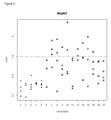
- Figure 5 shows that from the 26 individual animals exposed to 7 different NGTXC compounds, the method employing marker gene Cyp17a1 would have predicted the NGTXC compound right in 20/26 cases, i.e. a false negative rate of 6/26 or 23%. The NC compounds would have been predicted right in 15 out of 20 cases or a false positive rate of 20%.
- NGTXC compound may be distinguished from a NC compound on the basis of the Fold Change of expression of marker gene 9030619P08Rik.
- the method was performed in 3-4-fold, it was most advantageous to select a predetermined reference value of 2. Under those conditions, 5 out of 5 NGTXC compounds were found positive in the method according to the invention whereas also 5 out of 5 NC compounds were negative. This results in a sensitivity of 100% and a specificity of 100%.
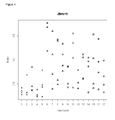
- Figure 6 shows that from the 26 individual animals exposed to 7 different NGTXC compounds, the method employing marker gene 9030619P08Rik would have predicted the NGTXC compound right in 25/26 cases, i.e. a false negative rate of 1/26 or 4%. The NC compounds would have been predicted right in 15 out of 20 cases or a false positive rate of 25%.
- marker genes 9030619P08Rik and Cyp17a1 are suitable for distinguishing NGTXC compounds from GTXC and NC (tables 5, 6 and 7 and figures 5 and 6 ). This however can only be performed with an acceptable specificity when high reference values are employed, such as 5 or 6 or above, resulting in a rather poor sensitivity of the method. However, when a high specificity is required, such a method may deliver advantageous results.
- a method according to the invention may be performed with each single marker gene as disclosed herein and that the reliability of the method increases when both marker genes are employed. This may be combined with a method for determining the genotoxic carcinogenicity of a compound as described above wherein 1, 2, 3 or all 4 marker genes are employed selected from the group consisting of LOC75771, Nup62, Zbtb16 and Anks4b.
- results presented herein may be used in many different ways in order to discriminate between carcinogenic and non-carcinogenic compounds. It will also be apparent to the skilled person that the results presented herein may be used in many different ways in order to discriminate between genotoxic and non-genotoxic compounds.
- a method according to the invention is equally suited to discriminate between NGTXC, GTXC and NC compounds, in either a one-step assay of a two step assay, depending on the desired outcome and reliability of the method.
- methods according to the invention may employ other and additional marker genes so that the robustness, reliability, sensitivity and/or specificity of the method may be even further improved.
- mice Eight-week-old male WT mice (C57BL/6J) were acclimated for 2 weeks prior to the experiment and subsequently treated for 7 days with a compound known to be genotoxic, non-genotoxic or non-carcinogen in vivo. Animals were exposed to the compound through feed, gavage or intraperitoneal (i.p.) injection. The health status of the mice was monitored daily, beginning at the day of weaning. During acclimatization and the duration of the experiment, animals were kept in the same stringently controlled (specific pathogen-free, spf) environment, fed ad libitum, kept under a normal day/night rhythm and weighed weekly. After 7 days of exposure mice were sacrificed at a fixed time of the day. During autopsy liver, blood, spleen, kidney, bladder, bone marrow, lung, stomach and thymus were isolated and stored according to protocol using RNAlater (Qiagen, Valencia, CA, USA).
- RNAlater Qiagen, Valencia,
- Example 3 RNA isolation and mRNA expression profiling.
- RNA from mouse liver was isolated using the microRNeasy kit (Qiagen, Valencia, CA, USA) and the QIAcube (Qiagen, Valencia, CA, USA) according to the manufacturer's instructions. RNA quality was tested using capillary gel electrophoresis (Bioanalyzer 2100; Agilent Technologies, Amstelveen, the Netherlands). Transcriptomic analysis was performed by microarray analysis (Affymetrix). Individual expression levels of each marker gene in each animal are shown in table 9. Table 8 Full overview of compounds used and their details. Chemical Abbreviation Class CAS No.
Landscapes
- Chemical & Material Sciences (AREA)
- Life Sciences & Earth Sciences (AREA)
- Health & Medical Sciences (AREA)
- Organic Chemistry (AREA)
- Proteomics, Peptides & Aminoacids (AREA)
- Engineering & Computer Science (AREA)
- Genetics & Genomics (AREA)
- Zoology (AREA)
- Wood Science & Technology (AREA)
- Analytical Chemistry (AREA)
- Biotechnology (AREA)
- Immunology (AREA)
- Microbiology (AREA)
- Molecular Biology (AREA)
- Biophysics (AREA)
- Physics & Mathematics (AREA)
- Biochemistry (AREA)
- Bioinformatics & Cheminformatics (AREA)
- General Engineering & Computer Science (AREA)
- General Health & Medical Sciences (AREA)
- Pathology (AREA)
- Measuring Or Testing Involving Enzymes Or Micro-Organisms (AREA)
Priority Applications (1)
| Application Number | Priority Date | Filing Date | Title |
|---|---|---|---|
| EP12183211.7A EP2706123A1 (de) | 2012-09-05 | 2012-09-05 | In-vitro-Verfahren zur Bestimmung der genotoxischen und nicht genotoxischen Karzinogenizität einer Verbindung |
Applications Claiming Priority (1)
| Application Number | Priority Date | Filing Date | Title |
|---|---|---|---|
| EP12183211.7A EP2706123A1 (de) | 2012-09-05 | 2012-09-05 | In-vitro-Verfahren zur Bestimmung der genotoxischen und nicht genotoxischen Karzinogenizität einer Verbindung |
Publications (1)
| Publication Number | Publication Date |
|---|---|
| EP2706123A1 true EP2706123A1 (de) | 2014-03-12 |
Family
ID=46799148
Family Applications (1)
| Application Number | Title | Priority Date | Filing Date |
|---|---|---|---|
| EP12183211.7A Withdrawn EP2706123A1 (de) | 2012-09-05 | 2012-09-05 | In-vitro-Verfahren zur Bestimmung der genotoxischen und nicht genotoxischen Karzinogenizität einer Verbindung |
Country Status (1)
| Country | Link |
|---|---|
| EP (1) | EP2706123A1 (de) |
Cited By (2)
| Publication number | Priority date | Publication date | Assignee | Title |
|---|---|---|---|---|
| CN109295156A (zh) * | 2018-09-17 | 2019-02-01 | 国家食品安全风险评估中心 | 化学物诱发人食管癌的体外检测模型的建立方法 |
| US20210355532A1 (en) * | 2018-02-13 | 2021-11-18 | Twinstrand Biosciences, Inc. | Methods and reagents for detecting and assessing genotoxicity |
Citations (1)
| Publication number | Priority date | Publication date | Assignee | Title |
|---|---|---|---|---|
| EP2281904A1 (de) * | 2009-07-28 | 2011-02-09 | Universiteit Maastricht | In vitro Verfahren zur Vorhersage der Genotoxizität einer Substanz in vivo |
-
2012
- 2012-09-05 EP EP12183211.7A patent/EP2706123A1/de not_active Withdrawn
Patent Citations (1)
| Publication number | Priority date | Publication date | Assignee | Title |
|---|---|---|---|---|
| EP2281904A1 (de) * | 2009-07-28 | 2011-02-09 | Universiteit Maastricht | In vitro Verfahren zur Vorhersage der Genotoxizität einer Substanz in vivo |
Non-Patent Citations (3)
| Title |
|---|
| KINOSHITA YAYOI ET AL: "Alterations in Nuclear Pore Architecture Allow Cancer Cell Entry into or Exit from Drug-Resistant Dormancy", AMERICAN JOURNAL OF PATHOLOGY, vol. 180, no. 1, January 2012 (2012-01-01), pages 375 - 389, XP002686450 * |
| MAGKOUFOPOULOU C ET AL: "A transcriptomics-based in vitro assay for predicting chemical genotoxicity in vivo", CARCINOGENESIS (OXFORD), vol. 33, no. 7, July 2012 (2012-07-01), pages 1421 - 1429, XP002686448 * |
| SATO YOSHIFUMI ET AL: "Anks4b, a Novel Target of HNF4 alpha Protein, Interacts with GRP78 Protein and Regulates Endoplasmic Reticulum Stress-induced Apoptosis in Pancreatic beta-Cells", JOURNAL OF BIOLOGICAL CHEMISTRY, vol. 287, no. 27, June 2012 (2012-06-01), pages 23236 - 23245, XP002686449 * |
Cited By (3)
| Publication number | Priority date | Publication date | Assignee | Title |
|---|---|---|---|---|
| US20210355532A1 (en) * | 2018-02-13 | 2021-11-18 | Twinstrand Biosciences, Inc. | Methods and reagents for detecting and assessing genotoxicity |
| JP2024038208A (ja) * | 2018-02-13 | 2024-03-19 | ツインストランド・バイオサイエンシズ・インコーポレイテッド | 遺伝毒性を検出し、評価するための方法および試薬 |
| CN109295156A (zh) * | 2018-09-17 | 2019-02-01 | 国家食品安全风险评估中心 | 化学物诱发人食管癌的体外检测模型的建立方法 |
Similar Documents
| Publication | Publication Date | Title |
|---|---|---|
| Northcott et al. | Enhancer hijacking activates GFI1 family oncogenes in medulloblastoma | |
| Shiihashi et al. | Mislocated FUS is sufficient for gain-of-toxic-function amyotrophic lateral sclerosis phenotypes in mice | |
| Dieterich et al. | Gene expression analysis reveals new possible mechanisms of vancomycin-induced nephrotoxicity and identifies gene markers candidates | |
| ES2394529T3 (es) | Nuevos polimorfismos en ABCB1 asociados con una falta de respuesta clínica a medicamentos | |
| US10449202B2 (en) | Rationale-based design of a targeted therapy for cancer | |
| ES2788952T3 (es) | Método y kits para identificación de inhibidores CDK9 para el tratamiento de cáncer | |
| Alam et al. | Significant association of the dupA gene of Helicobacter pylori with duodenal ulcer development in a South-east Indian population | |
| Delvallée et al. | A BBS1 SVA F retrotransposon insertion is a frequent cause of Bardet‐Biedl syndrome | |
| CN104508149A (zh) | 对jak/stat抑制剂治疗响应的预测 | |
| KR101933692B1 (ko) | 폴리염화바이페닐77 노출 진단용 바이오 마커를 포함하는 진단 키트 | |
| Mömke et al. | Transcription factor binding site polymorphism in the motilin gene associated with left-sided displacement of the abomasum in German Holstein cattle | |
| Yassin et al. | Cytoglobin affects tumorigenesis and the expression of ulcerative colitis-associated genes under chemically induced colitis in mice | |
| Toomey et al. | Investigation of pathology, expression and proteomic profiles in human TREM2 variant postmortem brains with and without Alzheimer’s disease | |
| Clough et al. | C57BL/6 and 129 inbred mouse strains differ in Gbp2 and Gbp2b expression in response to inflammatory stimuli in vivo | |
| EP2706123A1 (de) | In-vitro-Verfahren zur Bestimmung der genotoxischen und nicht genotoxischen Karzinogenizität einer Verbindung | |
| van Engen-van Grunsven et al. | Whole-genome copy-number analysis identifies new leads for chromosomal aberrations involved in the oncogenesis and metastastic behavior of uveal melanomas | |
| Raghav et al. | Co-administration of nalbuphine attenuates the morphine-induced anxiety and dopaminergic alterations in morphine-withdrawn rats | |
| Seo et al. | Development of a novel complex inflammatory bowel disease mouse model: reproducing human inflammatory bowel disease etiologies in mice | |
| AlQot et al. | A novel transgenic mouse model expressing primate-specific nuclear choline acetyltransferase: insights into potential cholinergic vulnerability | |
| McCullough et al. | 3p− syndrome defines a hearing loss locus in 3p25. 3 | |
| Ji et al. | Distinguishing between cancer driver and passenger gene alteration candidates via cross-species comparison: a pilot study | |
| Adams et al. | Mutated Pkhd1 alone is sufficient to cause autoimmune biliary disease on the nonobese diabetic (NOD) genetic background | |
| WO2010014905A2 (en) | Polymorphisms associated with inflammatory bowel disease | |
| Nedic Erjavec et al. | Genetic markers in psychiatry | |
| Catron et al. | Gene expression disruptions of organism versus organ in Drosophila species hybrids |
Legal Events
| Date | Code | Title | Description |
|---|---|---|---|
| PUAI | Public reference made under article 153(3) epc to a published international application that has entered the european phase |
Free format text: ORIGINAL CODE: 0009012 |
|
| AK | Designated contracting states |
Kind code of ref document: A1 Designated state(s): AL AT BE BG CH CY CZ DE DK EE ES FI FR GB GR HR HU IE IS IT LI LT LU LV MC MK MT NL NO PL PT RO RS SE SI SK SM TR |
|
| AX | Request for extension of the european patent |
Extension state: BA ME |
|
| RIN1 | Information on inventor provided before grant (corrected) |
Inventor name: VAN STEEG, HARMEN Inventor name: MULLENDERS, LEONARDUS HELENA FREDERICUS Inventor name: PRONK, THERESIA ELIZABETH Inventor name: LUIJTEN, MIRJAM Inventor name: MELIS, JOOST PETRUS MARIA |
|
| STAA | Information on the status of an ep patent application or granted ep patent |
Free format text: STATUS: THE APPLICATION IS DEEMED TO BE WITHDRAWN |
|
| 18D | Application deemed to be withdrawn |
Effective date: 20140913 |