EP2706467A1 - Verfahren für den Zugriff auf ein Datenelement in einem Cloud-Storage-System und entsprechende Cloud-Broker, Cloud-Cache-Agent und Client-Anwendung - Google Patents
Verfahren für den Zugriff auf ein Datenelement in einem Cloud-Storage-System und entsprechende Cloud-Broker, Cloud-Cache-Agent und Client-Anwendung Download PDFInfo
- Publication number
- EP2706467A1 EP2706467A1 EP12183153.1A EP12183153A EP2706467A1 EP 2706467 A1 EP2706467 A1 EP 2706467A1 EP 12183153 A EP12183153 A EP 12183153A EP 2706467 A1 EP2706467 A1 EP 2706467A1
- Authority
- EP
- European Patent Office
- Prior art keywords
- cloud
- content item
- html
- request
- version
- Prior art date
- Legal status (The legal status is an assumption and is not a legal conclusion. Google has not performed a legal analysis and makes no representation as to the accuracy of the status listed.)
- Withdrawn
Links
Images


Classifications
-
- H—ELECTRICITY
- H04—ELECTRIC COMMUNICATION TECHNIQUE
- H04L—TRANSMISSION OF DIGITAL INFORMATION, e.g. TELEGRAPHIC COMMUNICATION
- H04L67/00—Network arrangements or protocols for supporting network services or applications
- H04L67/50—Network services
- H04L67/56—Provisioning of proxy services
- H04L67/568—Storing data temporarily at an intermediate stage, e.g. caching
-
- G—PHYSICS
- G06—COMPUTING OR CALCULATING; COUNTING
- G06F—ELECTRIC DIGITAL DATA PROCESSING
- G06F16/00—Information retrieval; Database structures therefor; File system structures therefor
- G06F16/90—Details of database functions independent of the retrieved data types
- G06F16/95—Retrieval from the web
- G06F16/957—Browsing optimisation, e.g. caching or content distillation
- G06F16/9574—Browsing optimisation, e.g. caching or content distillation of access to content, e.g. by caching
-
- G—PHYSICS
- G06—COMPUTING OR CALCULATING; COUNTING
- G06F—ELECTRIC DIGITAL DATA PROCESSING
- G06F16/00—Information retrieval; Database structures therefor; File system structures therefor
- G06F16/90—Details of database functions independent of the retrieved data types
- G06F16/95—Retrieval from the web
- G06F16/958—Organisation or management of web site content, e.g. publishing, maintaining pages or automatic linking
- G06F16/972—Access to data in other repository systems, e.g. legacy data or dynamic Web page generation
Definitions
- the present invention generally relates to storage of content items, e.g. user data files, in a cloud storage system, typically a networked pool of web servers located in one or several data centres, operated and hosted by a third party different from the user.
- the invention in particular aims at reducing the time needed to access content items stored in a cloud storage system when the content item is accessed for viewing purposes only.
- a document stored in a cloud storage system can for instance be accessed from a desktop computer in the office, from a laptop computer at home, from a tablet PC in a meeting with a client, from a smartphone in a train, etc.
- the user shall request access to a content item from his desktop computer or laptop computer in order to edit or change the content item. If however a content item is accessed from a smartphone, TV set or tablet PC, the user usually consults the document for browsing its content in a read-only or view-only mode.
- the content item Since a content item can be accessed from a variety of devices, the content item typically must be rendered and its format must be suited to the display size, resolution, etc. of the device used to access the content item.
- the above mentioned objectives are realized by the method of claim 1 for accessing a content item in a cloud storage system wherein an editable version of each content item is stored in a cloud data store and one or more HTML versions of content items are stored in a cloud cache store, the method comprising:
- the invention foresees in a cloud cache store for caching content items in HTML format for viewing purposes.
- Each request for a content item shall be submitted with a cloud broker and specify if the content item is accessed for "view" purposes or "edit” purposes.
- the cloud broker shall tunnel the request towards a cloud application that retrieves the editable version of the content item from the cloud data store and delivers it to the client application.
- the cloud broker shall request a cloud cache agent, responsible for generating the HTML versions of the content item, to deliver the appropriate HTML version to the client application.
- the cloud cache agent shall retrieve a URL to the appropriate HTML version from the cloud cache store.
- the cloud cache agent may generate and store the appropriate HTML version in case it is not yet existing as will be further explained below.
- the content item will be delivered in a format suitable for the device with minimal delay and minimal impact on network resource usage.
- user experience when content is accessed for viewing purposes only from e.g. a tablet PC or smartphone, will increase substantially.
- Dropbox it is already known for instance from Dropbox to cache files stored in a cloud storage system and having the same MD5 checksum. This way, storage space can be reduced if multiple users store the same file in the Dropbox cloud storage system. Dropbox however does not suggest or teach to cache HTML versions of cloud content items that will be delivered to client devices/applications that access a content item for read-only purposes.
- the cloud cache agent in case no HTML version of the content item is available when executing step D1, the cloud cache agent generates an HTML version, stores the HTML version in the cloud cache store and obtains a URL to the HTML version generated and stored in the cloud cache store.
- the cloud cache agent generates the appropriate HTML version of a content item when a view request is received and the HTML version is not available in the cloud cache store.
- the cloud cache agent could return the URL to a less optimal HTML version of the content item that is available in the cloud cache store, or the cloud cache agent could tunnel the request to a cloud application that renders the editable version in case no HTML version is available in the cloud cache store.
- the cloud cache store is regularly updated.
- the cloud cache store contains HTML versions of the most popular content items. This way, the efficiency in terms of reducing delays, round trip times and network resource usage will be optimal.
- regularly updating the cloud cache store may comprise eviction of HTML versions of content items whose view count during a recent time interval is below a predetermined threshold.
- the cloud cache store may implement an eviction policy based on view count.
- the eviction policy shall typically depend on the storage allocation per user.
- the cloud cache agent may for instance implement an eviction policy that keeps 20 % of the cache store free. Old cached HTML versions which have not or few times be consulted recently will be removed from the cloud cache store.
- regularly updating the cloud cache store may comprise eviction of HTML versions of content items whose last view date and time is older than a predetermined threshold.
- the cloud cache store can also implement an eviction policy based on the last view date/time.
- an HTML version When an HTML version has not been consulted for a certain time, it will be removed from the cloud cache store, again to free space for more popular content items.
- the cloud cache agent preferably uses information about the device type(s) of the user(s) of a content item in order to generate the optimal HTML version(s) of the content item for this/these device(s).
- the cloud cache agent can store information about the device(s) available per user and generate HTML versions only in formats that are suitable for representation on this/these device(s). The formats may consider parameters like a different image size, different encoding schemes for video, different HTML layouts, etc.
- the HTTP agent Upon receipt of a "view" request from a client application, that contains the device type in its header in case of an HTTP request), the HTTP agent shall forward the request to the cloud cache agent which will return an URL to the most suitable HTML version for that device.
- the cloud cache storage may comprise individual users cache space for storage of one or more HTML versions of content items that are used by a single user and common cache space for storage of one or more HTML versions of content items that are used by plural users.
- the cloud cache agent may therefore decide to move the content item from the individual users' cache spaces to a common cloud cache space.
- the eviction policy must be updated to track all users that share a same file before eviction takes place.
- the present invention also relates to a corresponding cloud broker as defined by claim 8, the cloud broker being adapted for use in a cloud storage system wherein an editable version of each content item is stored in a cloud data store and one or more HTML versions of content items are stored in a cloud cache store, the cloud broker comprising:
- the present invention further also relates to a corresponding cloud cache agent as defined by claim 9, the cloud cache agent being adapted for use in a cloud storage system wherein an editable version of each content item is stored in a cloud data store and one or more HTML versions of content items are stored in a cloud cache store, the cloud cache agent comprising:
- the present invention relates to a client application as defined by claim 10, the client application being adapted for use in a cloud storage system wherein an editable version of each content item is stored in a cloud data store and one or more HTML versions of content items are stored in a cloud cache store, the client application comprising:
- Fig. 1 is a block diagram showing a cloud storage system wherein an embodiment of the method for accessing a content item according to the present invention is implemented;
- Fig. 2 illustrates the message flow for accessing a content item in view mode in an embodiment of the present invention
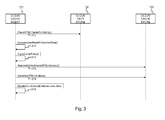
- Fig. 3 illustrates a cloud cache eviction scheme as implemented by an embodiment of the cloud cache agent according to the present invention.
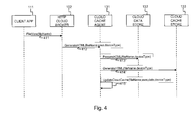
- Fig. 4 illustrates a cloud cache update scheme as implemented by an embodiment of the cloud cache agent according to the present invention.
- Fig. 1 shows a block diagram with a client device 101 whereon a client application, 111 or CLIENT APP, is running that connects with a backend cloud storage system 103 via an HTTP cloud broker 102.
- the cloud storage system 103 comprises a cloud data store 132, i.e. memory space on one or plural servers to store user data, a cloud cache store 133, i.e. limited memory space that is faster accessible than the cloud data store 132 for caching popular user data, and a cloud cache agent 131.
- the cloud cache store 133 more precisely represents storage space that is used to store HTML presentations of popular cloud content.
- the client application 111 on client device 101 connects to the cloud storage system 103 using the HTTP cloud broker 102. This is indicated by request 141 in Fig. 1 .
- the client application 111 indicates which content item it desires to access and the client application 111 also indicates if the content item is consulted for "edit” or "view” purposes. Based on the user action as specified in request 141, i.e.
- the HTTP cloud broker 144 will either contact the cloud cache agent and request in message 144 an URL to an HTML representation of the content item for "view” purposes, or the HTTP could broker 102 will tunnel the client's "edit” request via message 142 to the appropriate application in the cloud storage system 103 in order to obtain the editable content item as stored in the cloud data store 132.
- the cloud data store 132 delivers the editable version of the content item to the client application 111.
- the delivery of the editable content item may be direct or via the cloud broker 102.
- the cloud cache agent 131 In the case where the cloud cache agent 131 was consulted, the cloud cache agent shall return in message 145 the URL to the appropriate HTML version of the content item, and the cloud broker 102 shall return this URL to the HTML version in message 146 to the client application 111 that issued the request.
- the HTTP cloud broker 102 will instruct the cloud cache agent 131 to prepare the appropriate HTML version of the content item, and once this HTML version is available, send the URL which points to this HTML version in the cloud cache store 133 back to the client application 111.
- the client application 111 thereafter uses the URL to retrieve the HTML version suited for view on client device 101 from the cloud cache store 133.
- the client application 111 thereto contacts the cloud cache store 133 is illustrated by 147 in Fig. 1 , and the cloud cache agent 133 returns the HTML version in message 148. Retrieving the HTML version from cloud cache store 133 shall typically run over a separate, dedicated HTTP proxy server.
- the cloud cache agent 131 is an application that resides in the cloud storage system 103, that periodically checks the content of the cloud data store 132 and that creates one or more HTML presentations of certain content items for temporary storage in the cloud cache store 133. In order to select the cloud content items that will be cached in HTML format and/or to deduct whether certain content items should be removed from the cloud cache store 133, the cloud cache agent 131 uses information about the user cache space size in the cloud cache store 133, the view count per cloud content item, the time expired since the last view/access time, and the MD5 checksum of the original cloud content item vs. the one that is cached.
- Fig. 2 again shows the client application 111, HTTP cloud broker 102, cloud cache agent 131, cloud data store 132 and cloud cache store 133 from Fig. 1 .
- Fig. 2 in addition shows the HTTP proxy server 201 used for retrieving HTML content. It is further assumed in Fig. 2 that the client application 111 requests access to a user file for view purposes only at a point in time where the cloud cache store 133 does not yet contain an HTML representation of that file.
- Fig. 2 illustrates the sequence of messages between the different blocks.
- the client application 111 sends a request, 211 or FileView, to the HTTP cloud broker 102, specifying the name of the file to be viewed, i.e. filename.
- HTTP cloud broker 102 upon receipt of the request for a file in view mode, will send a request to the cloud cache agent 131 to provide a link or URL to the HTML presentation of that file.
- This request is named GenerateHTML or 212 in Fig. 2 and contains as parameters the name of the file, filename, and an identification of the user requesting the file in view mode.
- the cloud cache agent 131 upon receipt of request 212 checks whether an appropriate HTML presentation of the file already exists for the user's device, e.g. the cloud cache agent checks availability in the cloud cache store 133 of an HTML presentation of the file with a given resolution suitable for the user's device. The cloud cache agent 131 also verifies whether the cached file still represents a valid HTML representation of the original data file stored in the cloud data store 132. In case that the original data file has changed since the last HTML generation, the HTML presentation of the file must be updated. If the appropriate HTML version of the file is cached and still valid, the cloud cache agent 131 will send an URL to the HTML version of the file back to the HTTP cloud broker 102. Otherwise, as assumed in Fig.
- the cloud cache agent 131 will retrieve the original file from the cloud data store 132 and prepare an HTML presentation suited for the user's device. This is indicated by the message PrepareHTML(filename) or 213 in Fig. 2 . Thereafter, the cloud cache agent 131 shall push the prepared HTML representation into the cloud cache storage 133, as is indicated by message GenerateHTML(filename) or 214 in Fig. 2 . The cloud cache agent 131 shall update its cache register through the method UpdateCloudCache in order to memorize the file name, fileName, the user for whom the HTML version was created and the date/time of creation of the HTML version.
- the cloud cache agent 131 sends an URL to the created HTML file stored in cloud cache store 133 back to the HTTP cloud broker 102, and the latter returns this URL to the client application 111 via SendURL message 217.
- the client application 111 can then access the HTML file using the received URL.
- HTML content will be residing behind an HTTP proxy server 201, requiring the client application 111 to issue a request message named GetHTMLContent to the HTML proxy server 201, containing the URL.
- the HTTP proxy server 201 retrieves the HTML file from the cloud cache store 133 as is indicated by message ReadHTMLContent(URL) or 219, and returns the HTML file to the client application 111 in message ResponseHTMLContent(URL) or 220.
- Fig. 3 also shows the cloud cache agent 131, cloud data store 132 and cloud cache store 133 from Fig. 1 .
- Fig. 3 further illustrates the process applied by the cloud cache agent 131 for cache eviction.
- many variant policies are conceivable as will be understood by a person skilled in the art, and the present invention is not restricted to application of a particular cache eviction policy.
- the cloud cache agent 131 must regularly check whether a cached HTML presentation is still valid for a given user, and eventually remove a cached HTML representation when it is no longer valid. In order to achieve this, the cloud cache agent 131 must keep the MD5 checksum of the original content item together with the cached HTML presentation of the original content item. In case that some clients have changed the original content item in the cloud data store 132 and the cloud cache agent 131 was not informed, the cloud cache agent 131 must generate a new HTML presentation and update the cloud cache store 133.
- Another reason for cache eviction i.e. removal of the HTML version of a file from the cloud cache store 133, may be the time expired since the last view date exceeds a certain threshold or the view count of a file drops below a certain threshold.
- the cloud cache agent 131 thereto can track the number of times a given file or content item was viewed by the clients for a given period of time and use this information in its eviction policy. In case that a content item has not been updated or viewed within a recent period of predetermined length, the cloud cache agent 131 can decide to remove the cached HTML file from the cloud cache store 133.
- the eviction policy may for instance depend on the storage space allocation per user. As an example, the cloud cache agent 131 might decide that 20 percent of the cache space must always be free.
- the cloud cache agent 131 regularly checks the validity of an HTML file stored in the cloud cache store 133. Thereto the cloud cache agent 131 requests the original file to the cloud data store 132 via message CheckHTMLCacheForValidity() or 311. The received original file is compared with the cached file through method CompareUserDataWithCachedData() or 312. This method may compare MD5 checksums of the original and cached files. In the next step, the cloud cache agent 131 applies the applicable cache policy, as is indicated by method ApplyCachePolicy() or 313 in Fig. 3 .
- Fig. 4 shows the client application 111, HTTP cloud broker 102, cloud cache agent 131, cloud data store 132 and cloud cache store 133 of Fig. 1 and the message flow between these blocks in order to update the HTML cache.
- the cloud cache agent 131 can use the information about the device type in order to prepare the best HTML presentation for a given device. This may take into account parameters like the image size, the image resolution, the encoding scheme for videos, the HTML layout, etc.
- a view request from the client application 111 - such view request is represented by the message FileView(filename) in Fig. 4 and shall specify the device type in the HTTP request header - the HTTP cloud broke 102 shall issue a request, GenerateHTML or 412, to the cloud cache agent 131 wherein the name of the file, filename, the user, and the type of device, deviceType, are specified.
- the cloud cache agent 131 may decide to prepare a new HTML presentation of the file that is appropriate for the device type.
- the cloud cache agent hence uses the original file stored in the cloud data store 132 and prepares a new HTML version of the file, as is indicated by the method PrepareHTML(fileName,deviceType) or 413.
- the newly generated HTML version is forwarded to the cloud cache store 133 via GenerateHTML(fileName,deviceType) or 414 to be stored therein, and the cloud cache agent 131 updates its register with the file name, fileName, the user identification, the date and the type of device, deviceType, as is indicated by method UpdateCloudCache or 415 in Fig. 4 .
- the cloud cache agent 131 thus can use this information to store available device types for a given user, and generate later HTML presentations only in format(s) that is/are suitable for device(s) that this user has.
- the cloud cache agent 131 can decide to move the HTML presentation of a file with the same MD5 checksum for different users from the individual user's cache space to a common cloud cache space for efficiency reasons. In such case, the cloud cache agent 131 shall keep track of all users that share the same file, and use this information when any eviction policy is applied.
- top, bottom, over, under, and the like are introduced for descriptive purposes and not necessarily to denote relative positions. It is to be understood that the terms so used are interchangeable under appropriate circumstances and embodiments of the invention are capable of operating according to the present invention in other sequences, or in orientations different from the one(s) described or illustrated above.
Landscapes
- Engineering & Computer Science (AREA)
- Databases & Information Systems (AREA)
- Theoretical Computer Science (AREA)
- Data Mining & Analysis (AREA)
- Physics & Mathematics (AREA)
- General Engineering & Computer Science (AREA)
- General Physics & Mathematics (AREA)
- Computer Networks & Wireless Communication (AREA)
- Signal Processing (AREA)
- Information Retrieval, Db Structures And Fs Structures Therefor (AREA)
- Information Transfer Between Computers (AREA)
Priority Applications (2)
| Application Number | Priority Date | Filing Date | Title |
|---|---|---|---|
| EP12183153.1A EP2706467A1 (de) | 2012-09-05 | 2012-09-05 | Verfahren für den Zugriff auf ein Datenelement in einem Cloud-Storage-System und entsprechende Cloud-Broker, Cloud-Cache-Agent und Client-Anwendung |
| US14/018,846 US20140067990A1 (en) | 2012-09-05 | 2013-09-05 | Method for accessing a content item in a cloud storage system, and a corresponding cloud broker, cloud cache agent and client application |
Applications Claiming Priority (1)
| Application Number | Priority Date | Filing Date | Title |
|---|---|---|---|
| EP12183153.1A EP2706467A1 (de) | 2012-09-05 | 2012-09-05 | Verfahren für den Zugriff auf ein Datenelement in einem Cloud-Storage-System und entsprechende Cloud-Broker, Cloud-Cache-Agent und Client-Anwendung |
Publications (1)
| Publication Number | Publication Date |
|---|---|
| EP2706467A1 true EP2706467A1 (de) | 2014-03-12 |
Family
ID=46785312
Family Applications (1)
| Application Number | Title | Priority Date | Filing Date |
|---|---|---|---|
| EP12183153.1A Withdrawn EP2706467A1 (de) | 2012-09-05 | 2012-09-05 | Verfahren für den Zugriff auf ein Datenelement in einem Cloud-Storage-System und entsprechende Cloud-Broker, Cloud-Cache-Agent und Client-Anwendung |
Country Status (2)
| Country | Link |
|---|---|
| US (1) | US20140067990A1 (de) |
| EP (1) | EP2706467A1 (de) |
Cited By (1)
| Publication number | Priority date | Publication date | Assignee | Title |
|---|---|---|---|---|
| EP3206358A1 (de) * | 2016-02-09 | 2017-08-16 | Awingu Nv | Vermittler zur bereitstellung von sichtbarkeit auf den inhalt eines speicherdienstes für eine anwendungsserversitzung |
Families Citing this family (15)
| Publication number | Priority date | Publication date | Assignee | Title |
|---|---|---|---|---|
| US20140244618A1 (en) * | 2013-02-26 | 2014-08-28 | Dropbox, Inc. | Search interface for an online content management system |
| US9503541B2 (en) * | 2013-08-21 | 2016-11-22 | International Business Machines Corporation | Fast mobile web applications using cloud caching |
| US9565250B2 (en) | 2014-05-30 | 2017-02-07 | Microsoft Technology Licensing, Llc | Data transfer service |
| US9501419B2 (en) * | 2014-10-08 | 2016-11-22 | HGST Netherlands B.V. | Apparatus, systems, and methods for providing a memory efficient cache |
| WO2016123112A1 (en) | 2015-01-26 | 2016-08-04 | Mobile Iron, Inc. | Secure access to cloud-based services |
| US10785282B2 (en) * | 2015-12-17 | 2020-09-22 | Dropbox, Inc. | Link file sharing and synchronization |
| EP3484125B1 (de) * | 2016-07-08 | 2022-09-07 | Tencent Technology (Shenzhen) Company Limited | Verfahren und vorrichtung zur planung der schnittstelle einer hybriden cloud |
| US10782880B2 (en) | 2017-08-30 | 2020-09-22 | Electronics And Telecommunications Research Institute | Apparatus and method for providing storage for providing cloud services |
| US12189648B2 (en) | 2017-10-23 | 2025-01-07 | Electronics And Telecommunications Research Institute | Apparatus and method for managing integrated storage |
| EP3794802A4 (de) * | 2018-06-06 | 2021-05-19 | Huawei Technologies Co., Ltd. | System und verfahren zur steuerung von verwaltungsoperationen und gemeinsam genutztem speicherplatz für einen mandantenfähigen cachedienst in cloud-computing |
| US10467518B1 (en) * | 2018-11-28 | 2019-11-05 | Walgreen Co. | System and method for generating digital content within an augmented reality environment |
| WO2020251987A1 (en) * | 2019-06-10 | 2020-12-17 | Greeneden U.S. Holdings Ii, Llc. | System and method for adding content to contact center interactions |
| US11290531B2 (en) * | 2019-12-04 | 2022-03-29 | Dropbox, Inc. | Immediate cloud content item creation from local file system interface |
| US12136065B2 (en) | 2020-07-31 | 2024-11-05 | Box, Inc. | Methods and systems for making file requests in a collaboration environment |
| US11836196B2 (en) * | 2020-07-31 | 2023-12-05 | Box, Inc. | Methods and systems for making file requests in a collaboration environment |
Citations (1)
| Publication number | Priority date | Publication date | Assignee | Title |
|---|---|---|---|---|
| US20090235161A1 (en) * | 2008-03-15 | 2009-09-17 | Microsoft Corporation | Lossless Web-Based Editor For Complex Documents |
Family Cites Families (5)
| Publication number | Priority date | Publication date | Assignee | Title |
|---|---|---|---|---|
| WO2009136828A1 (en) * | 2008-05-07 | 2009-11-12 | Telefonaktiebolaget L M Ericsson (Publ) | System for delivery of content to be played autonomously |
| KR101626117B1 (ko) * | 2009-06-22 | 2016-05-31 | 삼성전자주식회사 | 클라우드 스토리지를 제공하는 클라이언트, 중개 서버 및 방법 |
| US8595319B2 (en) * | 2010-10-13 | 2013-11-26 | Verizon Patent And Licensing Inc. | Home network video peer-to-peer for mobile devices |
| US9444904B2 (en) * | 2012-03-16 | 2016-09-13 | Thomson Reuters Global Resources | Content distribution management system |
| WO2014015168A2 (en) * | 2012-07-18 | 2014-01-23 | Skyfire Labs, Inc. | Just-in-time distributed video cache |
-
2012
- 2012-09-05 EP EP12183153.1A patent/EP2706467A1/de not_active Withdrawn
-
2013
- 2013-09-05 US US14/018,846 patent/US20140067990A1/en not_active Abandoned
Patent Citations (1)
| Publication number | Priority date | Publication date | Assignee | Title |
|---|---|---|---|---|
| US20090235161A1 (en) * | 2008-03-15 | 2009-09-17 | Microsoft Corporation | Lossless Web-Based Editor For Complex Documents |
Non-Patent Citations (2)
| Title |
|---|
| DAN R. HERRICK: "Google this! Using Google Apps for Collaboration and Productivity", PROCEEDINGS OF THE ACM SIGUCCS FALL CONFERENCE ON USER SERVICES CONFERENCE, SIGUCCS '09, 1 January 2009 (2009-01-01), New York, New York, USA, pages 55, XP055010132, ISBN: 978-1-60-558477-5, DOI: 10.1145/1629501.1629513 * |
| MICROSOFT: "Understanding Office Web Apps (Installed on SharePoint 2010 Products)", 12 May 2010 (2010-05-12), INTERNET, pages 1 - 6, XP002686755, Retrieved from the Internet <URL:http://web.archive.org/web/20100717211512/http://technet.microsoft.com/en-us/library/ff431685.aspx> [retrieved on 20121107] * |
Cited By (3)
| Publication number | Priority date | Publication date | Assignee | Title |
|---|---|---|---|---|
| EP3206358A1 (de) * | 2016-02-09 | 2017-08-16 | Awingu Nv | Vermittler zur bereitstellung von sichtbarkeit auf den inhalt eines speicherdienstes für eine anwendungsserversitzung |
| WO2017137450A1 (en) | 2016-02-09 | 2017-08-17 | Awingu Nv | A broker for providing visibility on content of storage services to an application server session |
| US11089080B2 (en) | 2016-02-09 | 2021-08-10 | Awingu Nv | Broker for providing visibility on content of storage services to an application server session |
Also Published As
| Publication number | Publication date |
|---|---|
| US20140067990A1 (en) | 2014-03-06 |
Similar Documents
| Publication | Publication Date | Title |
|---|---|---|
| EP2706467A1 (de) | Verfahren für den Zugriff auf ein Datenelement in einem Cloud-Storage-System und entsprechende Cloud-Broker, Cloud-Cache-Agent und Client-Anwendung | |
| US10848556B2 (en) | Systems and methods for adding digital content to content management service accounts | |
| US9501582B2 (en) | Providing text content embedded with protected multimedia content | |
| US7492365B2 (en) | Method and system for font building | |
| US8327013B2 (en) | Dynamic index file creation for media streaming | |
| US7979509B1 (en) | Clustered network acceleration devices having shared cache | |
| KR101280753B1 (ko) | 클라우드 서비스 액세스 장치, 클라우드 서비스 액세스 방법 및 클라우드 서비스 액세스 시스템 | |
| US9195773B2 (en) | Structure-based adaptive document caching | |
| AU2010202740B1 (en) | Dynamic indexing for ad insertion in media streaming | |
| WO2016026384A1 (zh) | 一种客户端页面显示方法、装置及系统 | |
| US8994748B2 (en) | Anchors for displaying image sprites, sub-regions and 3D images | |
| US20160182673A1 (en) | Dynamic cache injector | |
| US20170161235A1 (en) | Device, method and system for displaying pages of a digital edition by efficient download of assets | |
| KR101565353B1 (ko) | 컨텐츠 요청 기록과 요청 순위를 이용한 컨텐츠 캐싱 방법 및 이를 이용한 http 캐시 서버 | |
| CN106022161B (zh) | 一种数据处理方法及装置 | |
| US11463745B2 (en) | System control apparatus, system control method and program | |
| JP5013789B2 (ja) | ウェブページ生成システム、ウェブページ生成装置、およびウェブページ生成方法 | |
| US9483575B2 (en) | Reproducing a graphical user interface display | |
| US20140149499A1 (en) | Remote request fulfillment and delivery | |
| JP6035803B2 (ja) | ポータルサーバ、クライアント装置、ポータルシステム、情報処理方法、および、コンピュータ・プログラム | |
| CN100558102C (zh) | 一种页面访问的实现方法 | |
| JP2005100005A (ja) | コンテンツ管理システムおよびコンテンツ管理方法ならびにそのためのプログラム | |
| JP2007219619A (ja) | 情報管理プログラムおよび装置並びに方法 | |
| JP2009146226A (ja) | 情報処理システム及びサーバ装置と、その制御方法 | |
| Bhandarkar et al. | Collaborative caching for efficient dissemination of personalized video streams in resource constrained environments |
Legal Events
| Date | Code | Title | Description |
|---|---|---|---|
| PUAI | Public reference made under article 153(3) epc to a published international application that has entered the european phase |
Free format text: ORIGINAL CODE: 0009012 |
|
| AK | Designated contracting states |
Kind code of ref document: A1 Designated state(s): AL AT BE BG CH CY CZ DE DK EE ES FI FR GB GR HR HU IE IS IT LI LT LU LV MC MK MT NL NO PL PT RO RS SE SI SK SM TR |
|
| AX | Request for extension of the european patent |
Extension state: BA ME |
|
| RAX | Requested extension states of the european patent have changed |
Extension state: ME Payment date: 20140506 Extension state: BA Payment date: 20140506 |
|
| RBV | Designated contracting states (corrected) |
Designated state(s): AL AT BE BG CH CY CZ DE DK EE ES FI FR GB GR HR HU IE IS IT LI LT LU LV MC MK MT NL NO PL PT RO RS SE SI SK SM TR |
|
| STAA | Information on the status of an ep patent application or granted ep patent |
Free format text: STATUS: THE APPLICATION IS DEEMED TO BE WITHDRAWN |
|
| 18D | Application deemed to be withdrawn |
Effective date: 20140913 |