EP2711862A1 - Stockage de données dans une mémoire de dispositif électronique - Google Patents
Stockage de données dans une mémoire de dispositif électronique Download PDFInfo
- Publication number
- EP2711862A1 EP2711862A1 EP12184976.4A EP12184976A EP2711862A1 EP 2711862 A1 EP2711862 A1 EP 2711862A1 EP 12184976 A EP12184976 A EP 12184976A EP 2711862 A1 EP2711862 A1 EP 2711862A1
- Authority
- EP
- European Patent Office
- Prior art keywords
- data
- data files
- files
- execution environment
- secure execution
- Prior art date
- Legal status (The legal status is an assumption and is not a legal conclusion. Google has not performed a legal analysis and makes no representation as to the accuracy of the status listed.)
- Withdrawn
Links
Images



Classifications
-
- G—PHYSICS
- G06—COMPUTING OR CALCULATING; COUNTING
- G06F—ELECTRIC DIGITAL DATA PROCESSING
- G06F12/00—Accessing, addressing or allocating within memory systems or architectures
- G06F12/14—Protection against unauthorised use of memory or access to memory
- G06F12/1458—Protection against unauthorised use of memory or access to memory by checking the subject access rights
- G06F12/1466—Key-lock mechanism
-
- G—PHYSICS
- G06—COMPUTING OR CALCULATING; COUNTING
- G06F—ELECTRIC DIGITAL DATA PROCESSING
- G06F21/00—Security arrangements for protecting computers, components thereof, programs or data against unauthorised activity
- G06F21/70—Protecting specific internal or peripheral components, in which the protection of a component leads to protection of the entire computer
- G06F21/71—Protecting specific internal or peripheral components, in which the protection of a component leads to protection of the entire computer to assure secure computing or processing of information
- G06F21/72—Protecting specific internal or peripheral components, in which the protection of a component leads to protection of the entire computer to assure secure computing or processing of information in cryptographic circuits
-
- G—PHYSICS
- G06—COMPUTING OR CALCULATING; COUNTING
- G06F—ELECTRIC DIGITAL DATA PROCESSING
- G06F21/00—Security arrangements for protecting computers, components thereof, programs or data against unauthorised activity
- G06F21/70—Protecting specific internal or peripheral components, in which the protection of a component leads to protection of the entire computer
- G06F21/71—Protecting specific internal or peripheral components, in which the protection of a component leads to protection of the entire computer to assure secure computing or processing of information
- G06F21/74—Protecting specific internal or peripheral components, in which the protection of a component leads to protection of the entire computer to assure secure computing or processing of information operating in dual or compartmented mode, i.e. at least one secure mode
-
- G—PHYSICS
- G06—COMPUTING OR CALCULATING; COUNTING
- G06F—ELECTRIC DIGITAL DATA PROCESSING
- G06F7/00—Methods or arrangements for processing data by operating upon the order or content of the data handled
- G06F7/58—Random or pseudo-random number generators
- G06F7/582—Pseudo-random number generators
-
- G—PHYSICS
- G06—COMPUTING OR CALCULATING; COUNTING
- G06F—ELECTRIC DIGITAL DATA PROCESSING
- G06F2212/00—Indexing scheme relating to accessing, addressing or allocation within memory systems or architectures
- G06F2212/10—Providing a specific technical effect
- G06F2212/1052—Security improvement
Definitions
- the invention relates to storing data in a memory of an electronic device, such as SIM Lock settings in a mobile phone.
- data need to be stored securely on a medium or in a memory of the device. Thus replay attacks on previous versions of such data should be prevented or mitigated.
- data could be software versions, system settings, usage restriction data, etc.
- SIM Subscriber Identity Module
- USB Universal Subscriber Identity Module
- SIMLock is defined in the 3GPP TS 22.022 specification, Personalization of Mobile Equipment (ME); Mobile functionality specification.
- One way to protect the SIMLock settings (and state) is to also store a chip-unique Message Authentication Code (MAC) of the file contents along with the file when storing it on persistent storage. Every time the file is accessed a MAC of the file is calculated and compared to the stored MAC, and if they are not equal the data is considered tampered and the appropriate action is taken. If the MAC comparison succeeds, the data is used when validating the currently inserted SIM/USIM.
- MAC Chip-unique Message Authentication Code
- the SIMLock setting stored in the mobile phone may change over time and may be re-programmed numerous times during the lifetime of the device.
- the mobile phone typically stores these SIMLock settings (and state) on persistent storage utilizing flash memories.
- SIMLock settings and state
- flash memories which suffer from wearing issues
- a countermeasure is to perform wear-levelling on the memory. This technique attempts to evenly spread the writing of data to the memory so that no erase block is written more often than any other one which could cause premature failure for that particular erase block with respect to the number of erase cycles of the flash memory.
- an anti-rollback solution using OTP could be used. Every time the SIMLock settings (or state) are updated, a counter is updated in the OTP and the result is included with the SIMLock settings (and state) and protected by a chip-unique MAC.
- the mobile phone that should store the SIMLock settings (or state) lacks an OTP that can be programmed after production, the mobile phone is prone to replay attacks of old copies of the SIMLock settings (or state). Furthermore, since OTP is one-time writable, there are a finite number of times that the counter could be updated until it is exhausted. When such a state has been reached, there is no way to further increment the counter, and the mobile phone will be stuck with that specific version.
- RPMB Replay Protected Memory Block
- Certain eMMC flash memories contains a RPMB partition that allows writing data to it (with a special key) and the data cannot be altered without the knowledge of that key. The data is also protected against replay attacks; hence an old SIMLock setting (or state) would not be possible to replay if attempted.
- eMMC memories with RPMB support are more expensive than traditional NAND (or NOR) memories and are not always available when manufacturing low cost devices (USB-dongle modems for instance).
- the object is achieved in a method of storing data in a memory of an electronic device, comprising the steps of determining a new version of said data; reading a number of previously stored data files in said memory, each of said previously stored data files comprising random data of random length; transferring said previously stored data files and said determined version of said data to a secure execution environment; performing in said secure execution environment the following steps: generating a number of further data files comprising random data of random length; deriving a random seed; creating from said derived random seed in a pseudo-random number generator a series for selecting some of said previously stored data files and some of said generated further data files; calculating a checksum over the selected data files; updating said version of said data by storing said derived random seed as a part of the data; and calculating an authentication code of the updated version of said data using said calculated checksum; returning from said secure execution environment said updated version of said data and said generated further data files; renaming said generated further data files and letting them replace a corresponding number of
- the data to be stored in the memory and protected from replay attacks can be considered as information data or utility data, such as software versions, system settings, usage restriction data, etc., while the random data of the previously stored data files and the further data files are generated during the process of storing the information data.
- the secure execution environment is an execution environment that has a higher degree of security than the rest of the system.
- the secure execution environment may be realized with TrustZone technology, a dedicated CPU, or some other means.
- the checksum may be calculated e.g. as a cryptographically secure hash or a MAC.
- the solution is independent of the storage facility utilized, hence can be used when manufacturing products utilizing cheap NOR/NAND memories or even hard drives.
- a flashless based modem which uses an external host for storage
- protection by SATA or eMMC with RBMP cannot be used as there is no way to connect the modem to the storage facility on the external host (as how RBMP is designed). So, even if the host contains an eMMC flash with RBMP it cannot be utilized for deterring replay attacks of the SIMLock settings. As a consequence the modem can only utilize the proposed solution to protect the SIMLock settings against replay attacks.
- the method further comprises the steps of storing, when said updated version of said data and said generated further data files has been returned from said secure execution environment, at least said generated further data files in said memory; transferring said previously stored data files, said generated further data files and said updated version of said data to the secure execution environment; performing in said secure execution environment the following steps: retrieving the random seed; recreating from the random seed the series for selecting some of said previously stored data files and some of said generated further data files; re-calculating the checksum over the selected data files; re-calculating the authentication code of the updated version of said data using said calculated checksum; and verifying by comparing the re-calculated authentication code with the previously calculated authentication code the authenticity of the updated version of said data; and returning, if the authenticity is verified, from said secure execution environment a list of how to rename and replace data files in said memory.
- the steps performed in said secure execution environment may be performed in a trusted application of the application performing the other steps.
- the steps performed in the secure execution environment may be performed in a hardware block.
- a trusted application is a trusted application that can be executed in the secure execution environment.
- the method further comprises the step of repeating, when a new version of said usage restriction data has been determined, the steps performed in said secure execution environment a number of times. In this way the possibilities of replaying an old version of the data is further reduced.
- the number of random data files previously stored in said memory is 20 and the number of generated further random data files is 10.
- the data to be stored may be usage restriction data, such as SIM Lock settings in a mobile phone.
- Some embodiments of the invention also relate to an electronic device comprising a secure execution environment and a memory for storing data, the device being configured to determine a new version of said data; read a number of previously stored data files in said memory, each of said previously stored data files comprising random data of random length; transfer said previously stored data files and said determined version of said data to the secure execution environment; perform in said secure execution environment the following steps: generating a number of further data files comprising random data of random length; deriving a random seed; creating from said derived random seed in a pseudo-random number generator a series for selecting some of said previously stored data files and some of said generated further data files; calculating a checksum over the selected data files; updating said version of said data by storing said derived random seed as a part of the data; calculating an authentication code of the updated version of said data using said calculated checksum; and returning from said secure execution environment said updated version of said data and said generated further data files; rename said generated further data files and let them replace a corresponding number of said previously stored
- Embodiments corresponding to those mentioned above for the method also apply for the electronic device.
- Some embodiments of the invention relate to a computer program and a computer readable medium with program code means for performing the method described above.
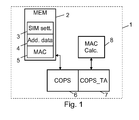
- FIG. 1 shows a block diagram of an electronic device 1 in which some embodiments of the invention may be implemented.
- the electronic device 1 is a telecommunications device, such as a mobile terminal for use in a cellular network.
- the mobile terminal 1 has or is connected to a (not shown) Subscriber Identity Module (SIM) or Universal Subscriber Identity Module (USIM) card, i.e. an integrated circuit that securely stores an International Mobile Subscriber Identity (IMSI) and a related key used to identify and authenticate subscribers on mobile telephony devices.
- SIM Subscriber Identity Module
- USB Universal Subscriber Identity Module
- the mobile terminal may be locked by a procedure denoted SIM Lock to one or more SIM/USIM cards.
- SIM Lock is a capability built into the mobile phone by the phone manufacturer allowing network or service providers to restrict the use of the phone to specific countries and/or network providers.
- the phone may be locked to e.g. one specific SIM/USIM card or to a group of SIM/USIM cards approved by the operator.
- SIMLock settings in a mobile terminal only represents one embodiment of the invention.
- the electronic device may be any other type of electronic device, and the data to be stored can represent e.g. software versions, system settings or other types of usage restriction data.
- the mobile terminal 1 comprises a memory 2, i.e. a storage in which data bases, lists, etc. may be stored.
- the memory 2 is typically a non-volatile or persistent memory.
- SIMLock settings (or state) 3 Stored in the memory 2 are SIMLock settings (or state) 3 that define the SIM/USIM cards that the mobile terminal 1 is locked to.
- SIMLock settings is intended to mean SIMLock settings or state.
- SIMLock settings may be protected by also storing a chip-unique Message Authentication Code (MAC) 5, of the file contents along with the file when storing it on persistent storage. Every time the file is accessed, a MAC of the file is calculated and compared to the stored MAC, and if they are not equal the data is considered tampered and an appropriate action is taken. If the MAC comparison succeeds, the data is used when validating the currently inserted SIM/USIM card.
- a control unit or process 6 here denoted COPS) in the mobile terminal 1 is responsible for verifying the SIMLock settings towards the currently inserted SIM/USIM card.
- the SIMLock settings 5 stored in the mobile phone may change over time and may be re-programmed numerous times during the lifetime of the device. As mentioned above, there is a risk that deleted or modified files, i.e. previous versions of the SIMLock settings 5 including the stored MAC, could still be recovered. When a MAC is then calculated for such recovered (old) SIMLock settings, it would be equal to the (old) stored MAC, and the SIMLock settings would be accepted. A method that reduces this risk is described below. The idea is not to make it impossible to replay an old SIMLock setting, rather to render brute force attempts pointless.
- the additional data needs to be retrieved such that the checksum of the additional data matches the checksum stored along with the SIMLock settings.
- the problem for the adversary is that it is extremely hard to know in which way to calculate the checksum of the additional data, and to try every possible combination becomes too costly in terms of time.
- the additional data might not even exist after some time thus rendering it impossible to replay the old SIMLock settings.
- the calculation of the checksum is performed by the SIMLock responsible application 6 (COPS), but not in the normal world where Linux (or whatever operating system) is running, but in a parallel world, denoted the "Secure World", also denoted as a secure execution environment or trusted application (COPS_TA) 7.
- the secure execution environment is an execution environment that has a higher degree of security than the rest of the system.
- the secure execution environment may be realized with TrustZone technology, a dedicated CPU, or some other means.
- a trusted application is a trusted application that can be executed in the secure execution environment. In this world code is explicitly trusted and cannot be manipulated from the normal world. If the device lacks secure world support, it could use some hardware block to perform the same steps (or an (U)SIM). As a last resort it could perform the calculations in a separate function (potentially obfuscated) within the same application but this would not be equally secure.
- the proposed solution utilizes a concept of additional data, and a checksum (hash) of the same, to accompany the SIMLock settings in order to harden the adversary's possibility to replay an old copy of the SIMLock settings.
- the additional data is in reality a set of files, configurable or hardcoded that contain random data of random length (content is unimportant).
- the additional data 4 are also stored in the memory 2.
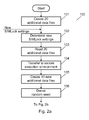
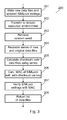
- Figures 2a and 2b show a flow chart 100 illustrating the method.
- the security-responsible process for verifying the SIMLock settings (COPS) 6 creates a set of files upon the first invocation in step 101. These files are created [randomly/according to some formula (could be configurable), let's assume 20]. As this is the first invocation, COPS has not written any SIMLock settings to persistent storage yet, hence only the 20 additional data files exist. Thus this step is only performed once, i.e. before the first SIMLock settings are determined.
- COPS 6 Upon the first call to write the SIMLock settings to persistent storage 2, COPS 6 receives the new SIMLock settings in step 102, opens/reads the [randomly, according to some formula] 20 files in step 103 and passes them in step 104 to the COPS part running in the secure world (denoted COPS_TA) 7 along with the SIMLock settings.
- the secure execution environment COPS_TA 7 performs the following steps:
- step 105 COPS_TA 7 generates 10 new files of random length and data (content is unimportant), named 21 - 30.
- step 106 COPS_TA 7 derives a random seed.
- step 107 COPS_TA 7 feeds this seed (concatenated with some chip unique data) into a pseudo-random number generator and creates a series of file names of the new and the original data files. This series determines in what way COPS_TA should calculate a checksum over the additional files.
- the series includes (typically) 10 files from the original 20 passed to COPS_TA from COPS and the 10 new files generated in step 105.
- COPS_TA calculates a checksum over the additional data files using the series of file names from step 107.
- the checksum may e.g. be a hash or a MAC.
- step 109 the seed derived in step 106 is stored within the SIMLock settings for future retrieval.
- step 110 the checksum from step 108 is used as a key in a chip unique MAC calculation 8 of the provided SIMLock settings, including the seed from step 106.
- COPS_TA 7 then in step 111 returns to the normal world with the new 10 additional files and updated SIMLock settings.
- step 112 The additional files can now be renamed and replaced in step 112 as described in detail below, and in step 113 the updated SIMLock settings can be stored in the memory 2 together with the MAC calculated in step 110.
- COPS 6 writes the 10 new files (21 - 30) returned from COPS_TA 7 in step 111 to persistent storage 2 along with the SIMLock settings in step 201. There now exist 30 additional files 4 and 1 SIMLock setting 3 in the memory 2, as it is illustrated in Figure 4 .
- COPS 6 may then immediately afterwards call COPS_TA 7 again in step 202 with all the 30 files as input and the SIMLock settings too.
- COPS_TA verifies the SIMLock settings by retrieving the seed (step 203) and recreating (step 204) the series of how to calculate the checksum (step 205) of the additional data files. Once done, it feeds the checksum to the chip unique MAC calculation 8 (step 206) to verify the SIMLock settings. If verified (step 207), COPS_TA uses the series of how to rename/remove the additional files (typically 10 of the original old files and 10 of the new ones just returned) and returns this list back to COPS (step 208).
- the additional file named 30 replaces the old (from the 20 originally generated files by COPS) file named 2.
- the additional file 29 replaces the old file 1 and so forth.
- COPS 6 starts to rename the 20 files COPS_TA 7 chose according to some scheme and implicitly removes the 10 files no longer needed. When this is finished there exist 20 additional files renamed in some way and 10 deleted ones along one set of SIMLock settings, as it is illustrated in Figure 6 .
- step 101 in the procedure described above is only performed once, i.e. the first time before any SIMLock settings are received yet.
- the remaining steps are performed each time a new set of SIMLock settings should be determined and stored. As described below, these steps may also be repeated a number of times for each new set of SIMLock settings, which will further reduce the risk of retrieving a previous set of SIMLock settings.
- COPS_TA 7 will verify the SIMLock settings (if possible) and reply with a scheme how to rename the existing files and remove those not needed. COPS can easily detect that it has previously failed to rename/delete files by counting the number of additional files present on the persistent storage; if there are more than 20 files, something failed and it needs to call COPS_TA to resume the rename/removal procedure.
- Deleted/renamed files will not be included when COPS calls COPS_TA and COPS_TA figures out which files already have been replaced by examining the derived series and comparing it to list of files received from COPS. Until the rename/removal procedure is finished, COPS should not accept any incoming requests as it will not be able to verify the current SIMLock settings until all the additional files have been replaced accordingly. Once done it can resume operation as normal.
- COPS 6 When COPS 6 shall update the SIMLock settings it will call COPS_TA 7 with the 20 additional files and the soon-to-be updated SIMLock settings for instance. COPS_TA will verify the SIMLock settings, and re-perform the steps 102 - 111 described above, return to COPS which will complete the update by carrying out the rename/removal scheme too.
- the only time COPS behaves differently is the very first time it starts as it will need to create the 20 additional files needed before invoking COPS_TA to perform some action related to the SIMLock settings.
- the routine by updating SIMLock settings could [optionally / according to some formula] be repeated any number of times, further hardening the possibility to retrieve the old additional files needed to calculate the required hash.
- Figure 7 illustrates an example of the information flow between COPS 6, COPS_TA 7 and the memory 2.
- 20 additional data files are generated in step 101 and stored in the memory 2.
- the new settings are received in step 102, the 20 stored data files are read from the memory 2, and the 20 data files together with the received SIMLock settings (in Figure 7 for short denoted as SIML) are transferred to the secure execution environment COPS_TA 7.
- steps 105 to 110 are performed as described above, and the 10 new data files and the updated SIMLock settings are returned to COPS 6 and stored in the memory 2.
- COPS 6 then calls COPS_TA 7 again with all 30 data files and the SIMLock settings.
- the SIMLock settings are then verified by COPS_TA 7 in steps 203 to 207 and the list of how to rename files is returned to COPS 6 (provided that the SIMLock settings are verified).
- COPS 6 then renames and replaces data files in step 112, so that the 20 "new" data files are now stored in the memory 2. Also the updated SIMLock settings (including the calculated MAC) are stored in the memory 2.
- COPS_TA should give extra care to the operations deemed as specially "critical" and in those circumstances (potentially) create more additional files and iterate the procedure multiple times to create more additional data.
- COPS_TA should give extra care to the operations deemed as specially "critical" and in those circumstances (potentially) create more additional files and iterate the procedure multiple times to create more additional data.
- the likelihood of replaying an old SIMLock setting diminishes as more additional data files are created.
Landscapes
- Engineering & Computer Science (AREA)
- Theoretical Computer Science (AREA)
- Physics & Mathematics (AREA)
- Computer Hardware Design (AREA)
- General Physics & Mathematics (AREA)
- General Engineering & Computer Science (AREA)
- Computer Security & Cryptography (AREA)
- Software Systems (AREA)
- Mathematical Physics (AREA)
- Computational Mathematics (AREA)
- Mathematical Analysis (AREA)
- Mathematical Optimization (AREA)
- Pure & Applied Mathematics (AREA)
- Storage Device Security (AREA)
- Information Retrieval, Db Structures And Fs Structures Therefor (AREA)
Priority Applications (3)
| Application Number | Priority Date | Filing Date | Title |
|---|---|---|---|
| EP12184976.4A EP2711862A1 (fr) | 2012-09-19 | 2012-09-19 | Stockage de données dans une mémoire de dispositif électronique |
| US14/423,273 US20150242336A1 (en) | 2012-09-19 | 2013-09-16 | Storing Data in a Memory of an Electronic Device |
| PCT/EP2013/069086 WO2014044623A1 (fr) | 2012-09-19 | 2013-09-16 | Stockage de données dans une mémoire d'un dispositif électronique |
Applications Claiming Priority (1)
| Application Number | Priority Date | Filing Date | Title |
|---|---|---|---|
| EP12184976.4A EP2711862A1 (fr) | 2012-09-19 | 2012-09-19 | Stockage de données dans une mémoire de dispositif électronique |
Publications (1)
| Publication Number | Publication Date |
|---|---|
| EP2711862A1 true EP2711862A1 (fr) | 2014-03-26 |
Family
ID=47076098
Family Applications (1)
| Application Number | Title | Priority Date | Filing Date |
|---|---|---|---|
| EP12184976.4A Withdrawn EP2711862A1 (fr) | 2012-09-19 | 2012-09-19 | Stockage de données dans une mémoire de dispositif électronique |
Country Status (3)
| Country | Link |
|---|---|
| US (1) | US20150242336A1 (fr) |
| EP (1) | EP2711862A1 (fr) |
| WO (1) | WO2014044623A1 (fr) |
Families Citing this family (12)
| Publication number | Priority date | Publication date | Assignee | Title |
|---|---|---|---|---|
| US10455071B2 (en) | 2012-05-09 | 2019-10-22 | Sprint Communications Company L.P. | Self-identification of brand and branded firmware installation in a generic electronic device |
| US10506398B2 (en) | 2013-10-23 | 2019-12-10 | Sprint Communications Company Lp. | Implementation of remotely hosted branding content and customizations |
| US9743271B2 (en) | 2013-10-23 | 2017-08-22 | Sprint Communications Company L.P. | Delivery of branding content and customizations to a mobile communication device |
| US9681251B1 (en) | 2014-03-31 | 2017-06-13 | Sprint Communications Company L.P. | Customization for preloaded applications |
| US9992326B1 (en) | 2014-10-31 | 2018-06-05 | Sprint Communications Company L.P. | Out of the box experience (OOBE) country choice using Wi-Fi layer transmission |
| US9398462B1 (en) | 2015-03-04 | 2016-07-19 | Sprint Communications Company L.P. | Network access tiered based on application launcher installation |
| US9934412B2 (en) | 2015-06-23 | 2018-04-03 | Microsoft Technology Licensing, Llc | Implementing replay protected storage |
| US9913132B1 (en) | 2016-09-14 | 2018-03-06 | Sprint Communications Company L.P. | System and method of mobile phone customization based on universal manifest |
| US10021240B1 (en) | 2016-09-16 | 2018-07-10 | Sprint Communications Company L.P. | System and method of mobile phone customization based on universal manifest with feature override |
| US9942094B1 (en) * | 2016-12-28 | 2018-04-10 | T-Mobile Usa, Inc. | Trusted execution environment-based UICC update |
| US10306433B1 (en) | 2017-05-01 | 2019-05-28 | Sprint Communications Company L.P. | Mobile phone differentiated user set-up |
| JP6463435B1 (ja) * | 2017-10-04 | 2019-02-06 | 三菱電機株式会社 | 制御装置および制御方法 |
Citations (3)
| Publication number | Priority date | Publication date | Assignee | Title |
|---|---|---|---|---|
| US20080130875A1 (en) * | 2006-12-04 | 2008-06-05 | Ahlquist Brent M | Low-cost pseudo-random nonce value generation system and method |
| WO2008128875A2 (fr) * | 2007-04-20 | 2008-10-30 | Telefonaktiebolaget Lm Ericsson (Publ) | Procédé et appareil pour protéger des informations de verrouillage sim dans un dispositif électronique |
| WO2012053882A1 (fr) * | 2010-10-20 | 2012-04-26 | Mimos Bhd. | Procédé de chiffrement et de déchiffrement de données et système pour ce procédé |
Family Cites Families (2)
| Publication number | Priority date | Publication date | Assignee | Title |
|---|---|---|---|---|
| US7346160B2 (en) * | 2003-04-23 | 2008-03-18 | Michaelsen David L | Randomization-based encryption apparatus and method |
| US8726032B2 (en) * | 2009-03-25 | 2014-05-13 | Pacid Technologies, Llc | System and method for protecting secrets file |
-
2012
- 2012-09-19 EP EP12184976.4A patent/EP2711862A1/fr not_active Withdrawn
-
2013
- 2013-09-16 US US14/423,273 patent/US20150242336A1/en not_active Abandoned
- 2013-09-16 WO PCT/EP2013/069086 patent/WO2014044623A1/fr not_active Ceased
Patent Citations (3)
| Publication number | Priority date | Publication date | Assignee | Title |
|---|---|---|---|---|
| US20080130875A1 (en) * | 2006-12-04 | 2008-06-05 | Ahlquist Brent M | Low-cost pseudo-random nonce value generation system and method |
| WO2008128875A2 (fr) * | 2007-04-20 | 2008-10-30 | Telefonaktiebolaget Lm Ericsson (Publ) | Procédé et appareil pour protéger des informations de verrouillage sim dans un dispositif électronique |
| WO2012053882A1 (fr) * | 2010-10-20 | 2012-04-26 | Mimos Bhd. | Procédé de chiffrement et de déchiffrement de données et système pour ce procédé |
Also Published As
| Publication number | Publication date |
|---|---|
| US20150242336A1 (en) | 2015-08-27 |
| WO2014044623A1 (fr) | 2014-03-27 |
Similar Documents
| Publication | Publication Date | Title |
|---|---|---|
| US20150242336A1 (en) | Storing Data in a Memory of an Electronic Device | |
| EP1679573B1 (fr) | Mise à jour de données de la mémoire dans un système de traitement de données | |
| US9442833B1 (en) | Managing device identity | |
| AU2013270195B2 (en) | Mobile terminal detection method and mobile terminal | |
| US7996911B2 (en) | Memory card | |
| JP5705235B2 (ja) | データを格納するための方法及び装置 | |
| US8880904B2 (en) | System and method for securing data | |
| EP1334419B1 (fr) | Systeme et procede permettant de verifier l'integrite d'une information stockee dans un dispositif electronique | |
| TW200805978A (en) | Secure and replay protected memory storage | |
| EP2115655A1 (fr) | Programmation unique sur puce sécurisée virtuelle | |
| CN109829294A (zh) | 一种固件验证方法、系统、服务器及电子设备 | |
| US12504894B2 (en) | Methods and systems for secure data storage | |
| US20090070599A1 (en) | Memory card, application program holding method, and holding program | |
| KR20230082388A (ko) | 차량 제어기의 부트로더 검증 장치 및 그 방법 | |
| CN113486399B (zh) | 基于risc-v架构的数据存储方法及系统 | |
| US8392714B2 (en) | Secure overlay manager protection | |
| US7885647B2 (en) | Secure booting method and mobile terminal for the same | |
| CN117972731B (zh) | 一种固件加载方法、启动方法、嵌入式设备及存储介质 | |
| CN119026153A (zh) | 一种固件加密方法、装置、设备及可读存储介质 | |
| CN112905218A (zh) | 一种固件升级方法、装置及设备 | |
| CN101421738A (zh) | 易失性存储器内的电子密钥的安全存储 | |
| US20080275917A1 (en) | Itso Fvc2 Application Monitor | |
| CN116880884B (zh) | 电子设备的更新方法、更新设备以及可读存储介质 | |
| EP4679769A1 (fr) | Schéma de signature numérique | |
| CN117827229A (zh) | 一种防止设备固件版本回滚的方法 |
Legal Events
| Date | Code | Title | Description |
|---|---|---|---|
| PUAI | Public reference made under article 153(3) epc to a published international application that has entered the european phase |
Free format text: ORIGINAL CODE: 0009012 |
|
| AK | Designated contracting states |
Kind code of ref document: A1 Designated state(s): AL AT BE BG CH CY CZ DE DK EE ES FI FR GB GR HR HU IE IS IT LI LT LU LV MC MK MT NL NO PL PT RO RS SE SI SK SM TR |
|
| AX | Request for extension of the european patent |
Extension state: BA ME |
|
| 17P | Request for examination filed |
Effective date: 20140602 |
|
| RBV | Designated contracting states (corrected) |
Designated state(s): AL AT BE BG CH CY CZ DE DK EE ES FI FR GB GR HR HU IE IS IT LI LT LU LV MC MK MT NL NO PL PT RO RS SE SI SK SM TR |
|
| RAP1 | Party data changed (applicant data changed or rights of an application transferred) |
Owner name: OCT CIRCUIT TECHNOLOGIES INTERNATIONAL LIMITED |
|
| STAA | Information on the status of an ep patent application or granted ep patent |
Free format text: STATUS: THE APPLICATION IS DEEMED TO BE WITHDRAWN |
|
| 18D | Application deemed to be withdrawn |
Effective date: 20180404 |