EP2713282A2 - Eingabeverfahren für kommunikationsendgeräte und kommunikationsendgeräte - Google Patents
Eingabeverfahren für kommunikationsendgeräte und kommunikationsendgeräte Download PDFInfo
- Publication number
- EP2713282A2 EP2713282A2 EP11777290.5A EP11777290A EP2713282A2 EP 2713282 A2 EP2713282 A2 EP 2713282A2 EP 11777290 A EP11777290 A EP 11777290A EP 2713282 A2 EP2713282 A2 EP 2713282A2
- Authority
- EP
- European Patent Office
- Prior art keywords
- input
- communications terminal
- terminal configured
- keyboard
- communications
- Prior art date
- Legal status (The legal status is an assumption and is not a legal conclusion. Google has not performed a legal analysis and makes no representation as to the accuracy of the status listed.)
- Withdrawn
Links
Images


Classifications
-
- H—ELECTRICITY
- H04—ELECTRIC COMMUNICATION TECHNIQUE
- H04W—WIRELESS COMMUNICATION NETWORKS
- H04W12/00—Security arrangements; Authentication; Protecting privacy or anonymity
- H04W12/04—Key management, e.g. using generic bootstrapping architecture [GBA]
-
- H—ELECTRICITY
- H04—ELECTRIC COMMUNICATION TECHNIQUE
- H04M—TELEPHONIC COMMUNICATION
- H04M1/00—Substation equipment, e.g. for use by subscribers
- H04M1/72—Mobile telephones; Cordless telephones, i.e. devices for establishing wireless links to base stations without route selection
- H04M1/724—User interfaces specially adapted for cordless or mobile telephones
- H04M1/72403—User interfaces specially adapted for cordless or mobile telephones with means for local support of applications that increase the functionality
- H04M1/72409—User interfaces specially adapted for cordless or mobile telephones with means for local support of applications that increase the functionality by interfacing with external accessories
- H04M1/72412—User interfaces specially adapted for cordless or mobile telephones with means for local support of applications that increase the functionality by interfacing with external accessories using two-way short-range wireless interfaces
-
- G—PHYSICS
- G06—COMPUTING OR CALCULATING; COUNTING
- G06F—ELECTRIC DIGITAL DATA PROCESSING
- G06F1/00—Details not covered by groups G06F3/00 - G06F13/00 and G06F21/00
- G06F1/16—Constructional details or arrangements
- G06F1/1613—Constructional details or arrangements for portable computers
- G06F1/1633—Constructional details or arrangements of portable computers not specific to the type of enclosures covered by groups G06F1/1615 - G06F1/1626
- G06F1/1637—Details related to the display arrangement, including those related to the mounting of the display in the housing
- G06F1/1643—Details related to the display arrangement, including those related to the mounting of the display in the housing the display being associated to a digitizer, e.g. laptops that can be used as penpads
-
- G—PHYSICS
- G06—COMPUTING OR CALCULATING; COUNTING
- G06F—ELECTRIC DIGITAL DATA PROCESSING
- G06F1/00—Details not covered by groups G06F3/00 - G06F13/00 and G06F21/00
- G06F1/16—Constructional details or arrangements
- G06F1/1613—Constructional details or arrangements for portable computers
- G06F1/1633—Constructional details or arrangements of portable computers not specific to the type of enclosures covered by groups G06F1/1615 - G06F1/1626
- G06F1/1662—Details related to the integrated keyboard
-
- G—PHYSICS
- G06—COMPUTING OR CALCULATING; COUNTING
- G06F—ELECTRIC DIGITAL DATA PROCESSING
- G06F1/00—Details not covered by groups G06F3/00 - G06F13/00 and G06F21/00
- G06F1/16—Constructional details or arrangements
- G06F1/1613—Constructional details or arrangements for portable computers
- G06F1/1633—Constructional details or arrangements of portable computers not specific to the type of enclosures covered by groups G06F1/1615 - G06F1/1626
- G06F1/1684—Constructional details or arrangements related to integrated I/O peripherals not covered by groups G06F1/1635 - G06F1/1675
- G06F1/1698—Constructional details or arrangements related to integrated I/O peripherals not covered by groups G06F1/1635 - G06F1/1675 the I/O peripheral being a sending/receiving arrangement to establish a cordless communication link, e.g. radio or infrared link, integrated cellular phone
-
- G—PHYSICS
- G06—COMPUTING OR CALCULATING; COUNTING
- G06F—ELECTRIC DIGITAL DATA PROCESSING
- G06F3/00—Input arrangements for transferring data to be processed into a form capable of being handled by the computer; Output arrangements for transferring data from processing unit to output unit, e.g. interface arrangements
- G06F3/01—Input arrangements or combined input and output arrangements for interaction between user and computer
- G06F3/02—Input arrangements using manually operated switches, e.g. using keyboards or dials
- G06F3/023—Arrangements for converting discrete items of information into a coded form, e.g. arrangements for interpreting keyboard generated codes as alphanumeric codes, operand codes or instruction codes
- G06F3/0231—Cordless keyboards
-
- G—PHYSICS
- G06—COMPUTING OR CALCULATING; COUNTING
- G06F—ELECTRIC DIGITAL DATA PROCESSING
- G06F3/00—Input arrangements for transferring data to be processed into a form capable of being handled by the computer; Output arrangements for transferring data from processing unit to output unit, e.g. interface arrangements
- G06F3/01—Input arrangements or combined input and output arrangements for interaction between user and computer
- G06F3/048—Interaction techniques based on graphical user interfaces [GUI]
- G06F3/0487—Interaction techniques based on graphical user interfaces [GUI] using specific features provided by the input device, e.g. functions controlled by the rotation of a mouse with dual sensing arrangements, or of the nature of the input device, e.g. tap gestures based on pressure sensed by a digitiser
- G06F3/0488—Interaction techniques based on graphical user interfaces [GUI] using specific features provided by the input device, e.g. functions controlled by the rotation of a mouse with dual sensing arrangements, or of the nature of the input device, e.g. tap gestures based on pressure sensed by a digitiser using a touch-screen or digitiser, e.g. input of commands through traced gestures
-
- H—ELECTRICITY
- H04—ELECTRIC COMMUNICATION TECHNIQUE
- H04M—TELEPHONIC COMMUNICATION
- H04M1/00—Substation equipment, e.g. for use by subscribers
- H04M1/72—Mobile telephones; Cordless telephones, i.e. devices for establishing wireless links to base stations without route selection
- H04M1/724—User interfaces specially adapted for cordless or mobile telephones
- H04M1/72403—User interfaces specially adapted for cordless or mobile telephones with means for local support of applications that increase the functionality
- H04M1/7243—User interfaces specially adapted for cordless or mobile telephones with means for local support of applications that increase the functionality with interactive means for internal management of messages
- H04M1/72436—User interfaces specially adapted for cordless or mobile telephones with means for local support of applications that increase the functionality with interactive means for internal management of messages for text messaging, e.g. short messaging services [SMS] or e-mails
-
- H—ELECTRICITY
- H04—ELECTRIC COMMUNICATION TECHNIQUE
- H04W—WIRELESS COMMUNICATION NETWORKS
- H04W12/00—Security arrangements; Authentication; Protecting privacy or anonymity
- H04W12/50—Secure pairing of devices
-
- H—ELECTRICITY
- H04—ELECTRIC COMMUNICATION TECHNIQUE
- H04W—WIRELESS COMMUNICATION NETWORKS
- H04W76/00—Connection management
- H04W76/10—Connection setup
-
- H—ELECTRICITY
- H04—ELECTRIC COMMUNICATION TECHNIQUE
- H04M—TELEPHONIC COMMUNICATION
- H04M2250/00—Details of telephonic subscriber devices
- H04M2250/22—Details of telephonic subscriber devices including a touch pad, a touch sensor or a touch detector
-
- H—ELECTRICITY
- H04—ELECTRIC COMMUNICATION TECHNIQUE
- H04M—TELEPHONIC COMMUNICATION
- H04M2250/00—Details of telephonic subscriber devices
- H04M2250/70—Details of telephonic subscriber devices methods for entering alphabetical characters, e.g. multi-tap or dictionary disambiguation
Definitions
- the present invention relates to the field of communications technologies, and in particular, to an input method for communications terminals and communications terminals.
- a touch-screen communications terminal refers to a type of communications terminal that applies a touch screen technology to a mobile phone screen.
- Typical touch-screen communications terminals are touch-screen mobile phones, tablet computers, and PDA computers.
- features of mainstream touch-screen communications terminals include large screens and full-size touch screens.
- a full-size touch-screen communications terminal brings an excellent experience to users' operations, but also has apparent disadvantages:
- a full-size touch-screen communications terminal uses a virtual keyboard input method. Compared with a traditional keyboard input method, during language input, a touch screen is largely inferior to a mobile phone configured with a keyboard in terms of input accuracy, input speed, and input feel.
- a touch-screen communications terminal provides increasingly high performance, more and more functions, and an increasingly high processing speed, in application fields such as business mails and literature writing, where large amounts of content need to be input, an input experience of a touch-screen communications terminal is still far from users' expectations.
- touch-screen communications terminals with full keyboards are also available. Addition of a keyboard, however, brings a great pressure on a structure design and cost of a touch-screen communications terminal. Therefore, touch-screen communications terminals with full keyboards fail to be a mainstream in the touch-screen communications terminal market.
- Embodiments of the present invention disclose an input method for communications terminals and communications terminals where an input operation of a touch-screen mobile phone is shifted to a mobile phone with a keyboard to solve the problem of a poor input experience of the touch-screen communications terminal.
- An embodiment of the present invention discloses an input method for communications terminals, which is applied to a communications terminal configured with a touch screen, including:
- An embodiment of the present invention discloses an input method for communications terminals, which is applied to a communications terminal configured with a keyboard, including:
- An embodiment of the present invention discloses a communications terminal configured with a touch screen, including:
- An embodiment of the present invention discloses a communications terminal configured with a keyboard, including:
- the input operation of a touch-screen mobile phone is shifted to a mobile phone with a keyboard, and thereby a communications terminal configured with a keyboard may be used to perform input for a touch-screen communications terminal, improving the input speed and accuracy for a touch-screen mobile phone and enhancing the input experience on the touch-screen communications terminal.
- the communications terminal configured with a touch screen described in this embodiment includes but is not limited to a terminal device such as a touch-screen mobile phone, a tablet computer, or a PDA computer
- the communications terminal configured with a keyboard includes but is not limited to a terminal device such as a mobile phone, a laptop computer, or a desktop computer.
- the case where both the communications terminal configured with a touch screen and the communications terminal configured with a keyboard are mobile phones is taken as an example for description, but does not constitute restriction for the present invention.
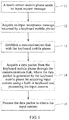
- embodiment 1 of the present invention provides an input method for communications terminals, which is applied to a mobile phone configured with a touch screen (hereinafter referred to as a touch-screen mobile phone), including the following steps:
- an input method for example, "remote input method”
- the touch-screen mobile phone goes to the input interface, for example, editing a short message, writing a mail, or adding a memo.
- the input method of the touch-screen mobile phone is switched to the "remote input method”.
- the touch-screen mobile phone automatically sends an input request message within the wireless signal range in a wireless manner, for example, Bluetooth, infrared, Wi-Fi, or the like.
- the sending an input request message within the wireless signal range may be sending in a broadcast form, or firstly searching for other communications terminals, such as a mobile phone and a laptop computer, which have wireless connection capabilities within the range in a manner such as Bluetooth, infrared, Wi-Fi, or the like, selecting a specific communications terminal, for example, a certain mobile phone configured with a keyboard (hereinafter referred to as a keyboard mobile phone) after acquiring a list of the communications terminals, and separately sending the input request message to the specific communications terminal.
- a communications terminal named "Smart Phone” needs to use a communications terminal whose mobile phone name is "Keyboard Phone" in the wireless signal range for wireless input.
- the Smart Phone first searches for communications terminals that have a Bluetooth capability in the range using Bluetooth to obtain a list of Bluetooth communications terminals, and then selects the Keyboard Phone from the list and sends an input request message. Then, Smart only sends the Keyboard Phone the input request message, thereby reducing signaling interaction and reducing electrical power consumption.
- Step 12 Acquire an input acceptance message returned by the keyboard mobile phone.
- the keyboard mobile phone accepts the input request message sent by the touch-screen mobile phone in step 11
- the keyboard mobile phone returns the input acceptance message to the touch-screen mobile phone so that the touch-screen mobile phone receives the input acceptance message.
- Step 13 Establish a communications link with the keyboard mobile phone.
- Establishment of the communications link may be implemented in a manner such as Wi-Fi, infrared ray, Bluetooth, or the like.
- Step 14 Acquire a data packet from the keyboard mobile phone through the communications link, where the data packet is generated by the keyboard mobile phone by acquiring input content using a built-in keyboard and processing the input content.
- the keyboard mobile phone may use a built-in input method, including but not limited to a pinyin, stroke, Wubi, alphabetic, English, or numeric input method, of the keyboard mobile phone to acquire the input content.
- a built-in input method including but not limited to a pinyin, stroke, Wubi, alphabetic, English, or numeric input method
- the keyboard mobile phone then processes the input content to generate a data packet. The processing includes performing encapsulation processing for the input content. Then, the touch-screen mobile phone uses the communications link that uses Key2 for encryption and is established in step 13 to acquire the data packet.
- Step 15 Process the data packet to obtain the input content.
- the touch-screen mobile phone performs decapsulation processing for the data packet acquired in step 14 to obtain the input content entered on the keyboard mobile phone to complete the process of performing input for the touch-screen mobile phone using the keyboard mobile phone.
- the touch-screen mobile phone generates an initial key, for example Key1, at random, and sends Key1 in a manner such as Bluetooth, infrared, Wi-Fi, or the like to the keyboard mobile phone.
- the keyboard mobile phone may generate a matching key Key2 at random, use the received Key1 to encrypt Key2, and send the encrypted Key2 to the touch-screen mobile phone.
- the touch-screen mobile phone uses the initial key Key1 for decryption to obtain the matching key Key2.
- a communications link that is encrypted using the matching key Key2 is established between the touch-screen mobile phone and the keyboard mobile phone.
- the aforesaid signaling interaction may be implemented in a manner such as Wi-Fi, infrared ray, Bluetooth, or the like.
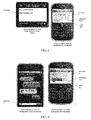
- FIG. 8 takes input of a short message in English as an example.
- the left side is an input interface of a touch-screen mobile phone
- the right side is an input interface of a keyboard mobile phone.
- input content "Shall we meet at 9?” has been entered in an input box 2 of the keyboard mobile phone.
- the same input content "Shall we meet at 9?” is displayed as in the input box 2 of the keyboard mobile phone.
- the content in the alternative box 2 of the keyboard mobile phone may not be sent and displayed in the input box 1 of the touch-screen mobile phone. If the touch-screen mobile phone displays the input content entered on the keyboard mobile phone in real time, after the keyboard mobile phone transfers the input content "In Sunday" to the input box 2, the keyboard mobile phone automatically performs encapsulation processing for updated input content "Shall we meet at 9? In Sunday" in the input box 2 to generate an updated data packet, and sends the updated data packet to the touch-screen mobile phone in real time through the communications link. The touch-screen mobile phone immediately performs decapsulation processing for the updated data packet to acquire the updated input content, and displays the input content "Shall we meet at 9? In Sunday” on the touch screen, thereby ensuring fast input.
- the keyboard mobile phone needs to, perform encapsulation processing, only after a user confirms the newly entered input content and selects a "send" key on the right side of the alternative box 2 (the "send” key is specifically set for this input method and is configured to confirm sending of updated input content), for the updated input content "Shall we meet at 9? In Sunday” in the input box 2 to generate an updated data packet, and sends the updated data packet to the touch-screen mobile phone through the communications link.
- the touch-screen mobile phone then performs decapsulation processing for the updated data packet to acquire the updated input content, and displays the input content "Shall we meet at 9? In Sunday" on the touch screen, thereby ensuring accurate input.
- FIG. 9 takes input of a short message in Chinese pinyin as an example.
- the left side is an input interface of a touch-screen mobile phone
- the right side is an input interface of a keyboard mobile phone.
- input content "In a second” has been entered in an input box 2 of the keyboard mobile phone.
- the same input content "In a second” is displayed as in the input box 2 of the keyboard mobile phone.
- pinyin alternative content "huifu" in the alternative box 2 of the keyboard mobile phone. It needs to be noted that the pinyin alternative content in the alternative box 2 of the keyboard mobile phone may not be sent and displayed in the input box 1 of the touch-screen mobile phone.
- the touch-screen mobile phone displays the input content entered on the keyboard mobile phone in real time
- the keyboard mobile phone transfers the input content "reply” in Chinese to the input box 2
- the keyboard mobile phone automatically performs encapsulation processing for updated input content "Reply in a second" in the input box 2 to generate an updated data packet, and sends the updated data packet to the touch-screen mobile phone in real time through a communications link.
- the touch-screen mobile phone immediately performs decapsulation processing for the updated data packet to acquire the updated input content, and displays the input content "Reply in a second" on the touch screen in real time, thereby ensuring fast input.
- the keyboard mobile phone needs to, perform encapsulation processing, only after a user confirms the newly entered input content and selects a "send" key on the right side of the alternative box 2 (the "send" key is specifically set for this input method and is configured to confirm sending of updated input content), for the updated input content "Reply in a second" in the input box 2 to generate an updated data packet, and sends the updated data packet to the touch-screen mobile phone through the communications link.
- the touch-screen mobile phone then performs decapsulation processing for the updated data packet to acquire the updated input content, and displays the input content "Reply in a second" on the touch screen, thereby ensuring accurate input.
- the touch-screen mobile phone sends an input request message, and then acquires an input acceptance message returned by the keyboard mobile phone.
- the touch-screen mobile phone establishes a communications link with the keyboard mobile phone, and then performs encapsulation processing for a data packet acquired from the keyboard mobile phone through the communications link and obtains the input content on the keyboard mobile phone. Then, the touch-screen mobile phone displays the input content on the touch screen.
- the touch-screen mobile phone may acquire and display the input content entered on the keyboard mobile phone in real time, or acquire and display the input content entered on the keyboard mobile phone after a user makes confirmation.
- an input operation of a touch-screen mobile phone is shifted to a mobile phone with a keyboard, the input speed and accuracy of the touch-screen mobile phone are improved, and the input experience on the touch-screen mobile phone is enhanced.
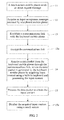
- embodiment 2 of the present invention provides an input method for communications terminals, which is applied to a communications terminal configured with a keyboard, including:
- the input request message may be directly ignored, or an input rejection message may be returned to the touch-screen mobile phone.
- Step 23 Establish a communications link with the touch-screen mobile phone.
- Establishment of the communications link may be implemented in a manner such as Wi-Fi, infrared ray, Bluetooth, or the like.
- Step 24 The keyboard mobile phone acquires input content using a built-in keyboard, and processes the input content to generate a data packet.
- the keyboard mobile phone opens an input interface to start the input process.
- the input interface may be an interface the same as that of the touch-screen mobile phone, for example, editing a short message or writing a mail, or may also be a dedicated input interface used for a "remote input method".
- the embodiments of the present invention preferably use a dedicated input interface. Entering input content on a keyboard mobile phone may use a built-in input method of the keyboard mobile phone, including but not limited to a pinyin, stroke, Wubi, alphabetic, English, or numeric input method.
- the keyboard mobile phone then processes the input content to generate a data packet.
- the processing includes performing encapsulation processing for the input content.
- Step 25 Send the data packet to the touch-screen mobile phone through the communications link, so that the touch-screen mobile phone acquires the data packet and obtains the input content after processing the data packet.
- the touch-screen mobile phone generates an initial key, for example Key1, at random, and sends Key1 in a manner such as Bluetooth, infrared, Wi-Fi, or the like to the keyboard mobile phone.
- the keyboard mobile phone After receiving Key1, the keyboard mobile phone generates a matching key Key2 at random, use the received Key1 to encrypt Key2, and send the encrypted Key2 to the touch-screen mobile phone.
- the touch-screen mobile phone After acquiring the encrypted Key2, the touch-screen mobile phone uses the initial key Key1 for decryption to obtain the matching key Key2.
- a communications link that is encrypted using the matching key Key2 is established between the keyboard mobile phone and the touch-screen mobile phone.
- the aforesaid signaling interaction may be implemented in a manner such as Wi-Fi, infrared ray, Bluetooth, or the like.
- step 25 after the touch-screen mobile phone obtains the input content by performing decapsulation processing for the data packet in step 25, the following is further included:
- step 24 and step 25 of this embodiment reference may be made to previous description for FIG. 8 and FIG. 9 .
- the keyboard mobile phone acquires an input request message from the touch-screen mobile phone, and then returns an input acceptance message to the keyboard mobile phone.
- the keyboard mobile phone establishes a communications link with the touch-screen mobile phone, then acquires input content using a built-in keyboard and a built-in input method, performs encapsulation processing for the input content to generate a data packet, and sends the data packet to the touch-screen mobile phone through the communications link so that the touch-screen mobile phone displays the input content on its touch screen after receiving the data packet and performing decapsulation processing for the data packet.
- the keyboard mobile phone may send the input content entered on the keyboard mobile phone in real time, or send the input content entered on the keyboard mobile phone after a user makes confirmation.
- an input operation of a touch-screen mobile phone is shifted to a keyboard mobile phone, the input speed and accuracy of the touch-screen mobile phone are improved, and the input experience on the touch-screen mobile phone is enhanced.
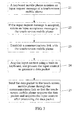
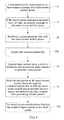
- FIG. 5 is a schematic flowchart of an input method for communications terminals according to embodiment 3 of the present invention.
- the input method for communications terminals in this embodiment may include the following steps:
- the touch-screen mobile phone establishes the communications link with the keyboard mobile phone in step 33, the following may further be included:
- the touch-screen mobile phone acquires the input content in step 37, the following may further be included:
- the touch-screen mobile phone sends an input request message to the keyboard mobile phone, the keyboard mobile phone returns an input acceptance message to the touch-screen mobile phone, and then the touch-screen mobile phone establishes a communications link with the keyboard mobile phone.
- the keyboard mobile phone after obtaining input content using a built-in keyboard, processes the input content to generate a data packet.
- the keyboard mobile phone sends the data packet to the touch-screen mobile phone through the communications link.
- the touch-screen mobile phone then processes the data packet to acquire the input content, and displays the input content in an input box.
- an input operation of a touch-screen mobile phone is shifted to a mobile phone with a keyboard, the input speed and accuracy of the touch-screen mobile phone are improved, and the input experience on the touch-screen mobile phone is enhanced.
- embodiment 4 of the present invention provides a communications terminal configured with a touch screen.
- a touch-screen mobile phone as an example, the following structure may be included:
- the first processor 41 is configured to: generate an input request message; acquire an input acceptance message from a keyboard mobile phone using the first input/output unit 42 and notify the first establisher 43 of establishing a communications link with the keyboard mobile phone; acquire a data packet from the keyboard mobile phone using the first input/output unit 42; and obtain input content by processing the data packet.
- the data packet is generated by the keyboard mobile phone by obtaining the input content using a built-in keyboard and input method and performing encapsulation processing for the input content.
- Processing, by the first processor 41, for the data packet acquired using the first input/output unit 42 includes decapsulation processing, so as to obtain the input content on the keyboard mobile phone and complete the process of performing input for the touch-screen mobile phone using the keyboard mobile phone.
- the first input/output unit 42 is configured to: acquire the input request message from the first processor 41 and send the input request message; and receive the input acceptance message returned from the keyboard mobile phone; and further receive the data packet from the keyboard mobile phone through the communications link and send the data packet to the first processor.
- Sending, by the first input/output unit 42, the input request message, receiving the input acceptance message, and receiving the data packet from the keyboard mobile phone may be performed in a manner such as Bluetooth, infrared, Wi-Fi, or the like.
- the first establisher 43 is configured to establish the communications link with the keyboard mobile phone using the first input/output unit 42.
- the first establisher 43 may further be configured to encrypt, together with the keyboard mobile phone, the communications link that is already established: the first establisher 43 generates an initial key, for example Key1, at random, and sends Key1 using the first input/output unit 42 to the keyboard mobile phone. After receiving Key1, the keyboard mobile phone may generate a matching key Key2 at random, use the received Key1 to encrypt Key2, and send the encrypted Key2 to the first establisher 42. After acquiring the encrypted Key2, the first establisher 42 uses the initial key Key1 for decryption to obtain the matching key Key2. By far, a communications link that is encrypted using the matching key Key2 is established between the touch-screen mobile phone and the keyboard mobile phone.
- the aforesaid signaling interaction may be implemented in a manner such as Wi-Fi, infrared ray, Bluetooth, or the like.
- the touch-screen mobile phone further includes:
- first processor 41 and the first establisher 43 in the embodiments of the present invention may be implemented using separate hardware modules, or may also be an integrated microprocessor, or may further be functional modules integrated in a main chip.
- the first processor 41 generates an input request message, and sends the input request message to the keyboard mobile phone using the first input/output unit 42; the first input/output unit 42 receives an input acceptance message from the keyboard mobile phone and sends the input acceptance message to the first processor 41; the first processor 41 notifies the first establisher 43 of establishing a communications link with the keyboard mobile phone and performs encryption; then the first input/output unit 42 acquires a data packet from the keyboard mobile phone through the communications link; the first processor 41 performs processing for the data packet and obtains input content; the touch screen 44 acquires the input content from the first processor 41 and displays the input content.
- an input operation of a touch-screen mobile phone is shifted to a keyboard mobile phone, the input speed and accuracy of the touch-screen mobile phone are improved, and the input experience on the touch-screen mobile phone is enhanced.
- embodiment 5 of the present invention provides a communications terminal configured with a keyboard.
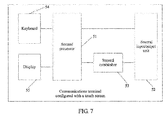
- a keyboard mobile phone as an example, the following structure may be included:
- the second processor 51 is configured to: acquire an input request message from a touch-screen mobile phone using the second input/output unit 52; if accepting the input request message, generate an input acceptance message and send the input acceptance message to the touch-screen mobile phone using the second input/output unit 52; notify the second establisher 53 to establish a communications link with the touch-screen mobile phone; then acquire an input key value signal from the keyboard 54, and convert the input key value signal into input content according to a built-in input method; generate a data packet by processing the input content; and send the data packet to the touch-screen mobile phone using the second input/output unit 52.
- the built-in input method includes but is not limited to a pinyin, stroke, Wubi, alphabetic, English, or numeric input method.
- the processing the input content includes performing encapsulation processing for the input content to generate a data packet.
- the input request message may be directly ignored, or an input rejection message may be returned to the touch-screen mobile phone using the second input/output unit 52.
- the second input/output unit 52 is configured to acquire the input request message of the touch-screen mobile phone and send the input request message to the second processor 51, acquire the input acceptance message from the second processor 51 and send the input acceptance message to the touch-screen mobile phone, and acquires the data packet from the second processor 51 and send the data packet to the touch-screen mobile phone through the communications link.
- Performing the preceding data transmission by the input/output unit 52 may be performed in a manner such as Bluetooth, infrared, Wi-Fi, or the like.
- the second establisher 53 is configured to establish the communications link with the touch-screen mobile phone using the second input/output unit 52.
- the second establisher 53 may further be configured to encrypt, together with the touch-screen mobile phone, the communications link that is already established: the touch-screen mobile phone generates an initial key, for example Key1, at random; the second establisher acquires Key1 in a manner such as Bluetooth, infrared, Wi-Fi, or the like; then the second establisher 53 generates a matching key Key2 at random, uses the received Key1 to encrypt Key2, and sends the encrypted Key2 to the touch-screen mobile phone; after acquiring the encrypted Key2, the touch-screen mobile phone uses the initial key Key1 for decryption to obtain the matching key Key2.
- a communications link that is established between the keyboard mobile phone and the touch-screen mobile phone is encrypted using the matching key Key2.
- the aforesaid signaling interaction may be performed in a manner such as Wi-Fi, infrared ray, Bluetooth, or the like.
- the keyboard 54 is configured to generate the key value signal and send the key value signal to the second processor 51.
- the communications terminal configured with a keyboard may further include:
- the second processor 51 and the second establisher 43 in the embodiments may be implemented using separate hardware modules, or may also be an integrated microprocessor, or may further be functional modules integrated in a main chip.
- the second processor 51 receives an input request message from the touch-screen mobile phone using the second input/output unit 52, generates an input acceptance message and returns the input acceptance message to the touch-screen mobile phone using the second input/output unit 52, and then notifies the second establisher 53 of establishing a communications link with the touch-screen mobile phone using the second input/output unit 52 and performs encryption; then the second processor 51 acquires an input key value signal from the keyboard 54, converts the input key value signal into input content using a built-in input method, and generates a data packet by processing the input content; the second input/output unit acquires the data packet and sends the data packet to the touch-screen mobile phone through the communications link; the display 55 acquires the input content from the second processor 51 and displays the input content.
- an input operation of a touch-screen mobile phone is shifted to a keyboard mobile phone, the input speed and accuracy of the touch-screen mobile phone are improved, and the input experience on the touch-screen mobile phone is enhanced.
- the modules or entities of the terminals in the embodiment may be distributed in the terminal in the embodiment according to the description of the embodiment, or be changed and located in one or multiple devices different from the device in the present embodiment.
- the modules or entities in the preceding embodiment may be combined into one module or entity, or further split into multiple sub modules or entities.
- the present invention can be implemented through software by combining a necessary general hardware platform, or through hardware. In most cases, however, the former is a preferred implementation manner.
- the technical solutions in the present invention may be essentially or the part that contributes to the prior art may be embodied in the form of a software product.
- This computer software product is stored in a readable storage medium, such as a floppy disk, hard disk and compact disc of a computer, and includes several instructions that are configured for a computer device (which may be a personal computer, server, or network device) to execute all or certain steps of the method provided in each of the preceding embodiments of the present invention.
Landscapes
- Engineering & Computer Science (AREA)
- Theoretical Computer Science (AREA)
- General Engineering & Computer Science (AREA)
- Computer Hardware Design (AREA)
- Human Computer Interaction (AREA)
- Computer Networks & Wireless Communication (AREA)
- Signal Processing (AREA)
- General Physics & Mathematics (AREA)
- Physics & Mathematics (AREA)
- Computer Security & Cryptography (AREA)
- Business, Economics & Management (AREA)
- General Business, Economics & Management (AREA)
- Telephone Function (AREA)
- User Interface Of Digital Computer (AREA)
- Input From Keyboards Or The Like (AREA)
Applications Claiming Priority (1)
| Application Number | Priority Date | Filing Date | Title |
|---|---|---|---|
| PCT/CN2011/077602 WO2011137871A2 (zh) | 2011-07-26 | 2011-07-26 | 一种通信终端的输入方法及通信终端 |
Publications (2)
| Publication Number | Publication Date |
|---|---|
| EP2713282A2 true EP2713282A2 (de) | 2014-04-02 |
| EP2713282A4 EP2713282A4 (de) | 2014-07-16 |
Family
ID=44904155
Family Applications (1)
| Application Number | Title | Priority Date | Filing Date |
|---|---|---|---|
| EP11777290.5A Withdrawn EP2713282A4 (de) | 2011-07-26 | 2011-07-26 | Eingabeverfahren für kommunikationsendgeräte und kommunikationsendgeräte |
Country Status (4)
| Country | Link |
|---|---|
| US (1) | US20140105398A1 (de) |
| EP (1) | EP2713282A4 (de) |
| CN (1) | CN102439952A (de) |
| WO (1) | WO2011137871A2 (de) |
Cited By (3)
| Publication number | Priority date | Publication date | Assignee | Title |
|---|---|---|---|---|
| EP3133464A1 (de) * | 2015-08-20 | 2017-02-22 | Samsung Electronics Co., Ltd. | Verfahren zur texteingabe für tragbare vorrichtungen |
| EP3232699A4 (de) * | 2014-12-09 | 2018-06-20 | JRD Communication Inc. | Synchronbetriebsverfahren und -system für kurznachrichtendaten |
| US10382927B2 (en) | 2015-08-20 | 2019-08-13 | Samsung Electronics Co., Ltd. | Method of text input for wearable devices |
Families Citing this family (5)
| Publication number | Priority date | Publication date | Assignee | Title |
|---|---|---|---|---|
| GB2499234A (en) * | 2012-02-09 | 2013-08-14 | Novalia Ltd | Interactive printed article with touch sensitive switches and wireless interface. |
| KR102265658B1 (ko) * | 2014-07-23 | 2021-06-17 | 삼성전자주식회사 | 전자장치 및 전자장치의 네트워크 검색방법 |
| US20160073257A1 (en) * | 2014-09-04 | 2016-03-10 | Wedoey, Inc. | Console Display Terminal |
| US11112961B2 (en) * | 2017-12-19 | 2021-09-07 | Sony Corporation | Information processing system, information processing method, and program for object transfer between devices |
| CN114201103B (zh) * | 2021-08-16 | 2023-11-21 | 荣耀终端有限公司 | 数据输入方法和终端设备 |
Family Cites Families (16)
| Publication number | Priority date | Publication date | Assignee | Title |
|---|---|---|---|---|
| US7356570B1 (en) * | 2000-08-29 | 2008-04-08 | Raja Tuli | Portable high speed communication device |
| JP2002157066A (ja) * | 2000-11-22 | 2002-05-31 | Nec Corp | 情報端末システム |
| CN1169401C (zh) * | 2001-01-10 | 2004-09-29 | Sk电信技术有限公司 | 对移动通信终端数据进行远程管理的方法 |
| US7313678B2 (en) * | 2003-03-05 | 2007-12-25 | Broadcom Corporation | Installation procedure for wireless human interface device |
| DE10229068B3 (de) * | 2002-06-28 | 2004-02-05 | Fujitsu Siemens Computers Gmbh | PDA (Personal Digital Assistant) mit Touch-Screen Display |
| US7623892B2 (en) * | 2003-04-02 | 2009-11-24 | Palm, Inc. | System and method for enabling a person to switch use of computing devices |
| US20070274270A1 (en) * | 2006-05-25 | 2007-11-29 | Motorola, Inc. | Network pairing of wireless communication devices through one or more intermediate devices |
| US20070300063A1 (en) * | 2006-06-23 | 2007-12-27 | Research In Motion Limited | Pairing to a Wireless Peripheral Device at the Lock-Screen |
| US7865924B2 (en) * | 2006-07-27 | 2011-01-04 | Microsoft Corporation | Providing input and output for a mobile device |
| DE202007004143U1 (de) * | 2007-03-21 | 2007-08-02 | Kroshoff, Norbert | Fernbedienung von Geräten per Mobiltelefon und Bluetoothverbindung |
| US9070282B2 (en) * | 2009-01-30 | 2015-06-30 | Altorr Corp. | Smartphone control of electrical devices |
| US20110063224A1 (en) * | 2009-07-22 | 2011-03-17 | Frederic Vexo | System and method for remote, virtual on screen input |
| CA2713787C (en) * | 2009-08-28 | 2016-06-07 | Research In Motion Limited | Protocol for protecting content protection data |
| KR101617208B1 (ko) * | 2009-12-24 | 2016-05-02 | 삼성전자주식회사 | 텍스트 입력 및 편집 작업을 수행하는 입력 디바이스와 디스플레이장치 및 그 방법들 |
| US20120127081A1 (en) * | 2010-11-24 | 2012-05-24 | Guoxiang Lin | Methods of remote text input and editing on TV screen using locally-text-editable remote control |
| WO2012149030A2 (en) * | 2011-04-27 | 2012-11-01 | Merchant Moses Akbar | Accessing and interacting with web content and services using an external device to control a communication device |
-
2011
- 2011-07-26 WO PCT/CN2011/077602 patent/WO2011137871A2/zh not_active Ceased
- 2011-07-26 EP EP11777290.5A patent/EP2713282A4/de not_active Withdrawn
- 2011-07-26 CN CN2011800013720A patent/CN102439952A/zh active Pending
-
2013
- 2013-12-20 US US14/137,125 patent/US20140105398A1/en not_active Abandoned
Cited By (3)
| Publication number | Priority date | Publication date | Assignee | Title |
|---|---|---|---|---|
| EP3232699A4 (de) * | 2014-12-09 | 2018-06-20 | JRD Communication Inc. | Synchronbetriebsverfahren und -system für kurznachrichtendaten |
| EP3133464A1 (de) * | 2015-08-20 | 2017-02-22 | Samsung Electronics Co., Ltd. | Verfahren zur texteingabe für tragbare vorrichtungen |
| US10382927B2 (en) | 2015-08-20 | 2019-08-13 | Samsung Electronics Co., Ltd. | Method of text input for wearable devices |
Also Published As
| Publication number | Publication date |
|---|---|
| CN102439952A (zh) | 2012-05-02 |
| WO2011137871A3 (zh) | 2012-06-21 |
| WO2011137871A2 (zh) | 2011-11-10 |
| EP2713282A4 (de) | 2014-07-16 |
| US20140105398A1 (en) | 2014-04-17 |
Similar Documents
| Publication | Publication Date | Title |
|---|---|---|
| US20140105398A1 (en) | Input method for communications terminals and communications terminals | |
| US10795634B2 (en) | Method, apparatus, and mobile terminal for screen mirroring | |
| US10798153B2 (en) | Terminal apparatus and server and method of controlling the same | |
| US10084729B2 (en) | Apparatuses and methods for web page sharing | |
| JP6527535B2 (ja) | 機械可読コードを使用したデバイスの認証およびペアリング | |
| WO2019227488A1 (zh) | 一种查看信息内容的方法及终端 | |
| US20160147400A1 (en) | Tab based browser content sharing | |
| US20130162523A1 (en) | Shared wireless computer user interface | |
| CN108702318A (zh) | 一种rcs通信方法及设备 | |
| US12067136B2 (en) | Display method, display device, and electronic device | |
| US20170353408A1 (en) | Method, apparatus, and client for displaying media information, and method and apparatus for displaying graphical controls | |
| CN108684206A (zh) | 一种搜索方法及装置 | |
| WO2014206037A1 (en) | Apparatuses and methods for web page sharing | |
| CN113141295B (zh) | 消息显示方法、装置和电子设备 | |
| CN107154894B (zh) | 一种即时通讯信息的处理方法、装置、系统及存储介质 | |
| WO2015007162A1 (en) | Method and apparatus for processing information | |
| CN116126447A (zh) | 一种信息处理方法、装置、电子设备、计算机可读介质 | |
| US20150142931A1 (en) | Systems and methods for content browsing, generation, and interaction | |
| CN102196090A (zh) | 短消息发送方法、系统及装置 | |
| US20250005558A1 (en) | Electronic account generation system | |
| WO2017214773A1 (zh) | 一种在不同应用程序之间转发内容的方法和装置 | |
| US20220386082A1 (en) | Sending or receiving sms by internet messaging application without using internet | |
| CN115600235A (zh) | 数据访问方法、装置、设备及存储介质 | |
| CN115113787B (zh) | 一种消息处理方法、装置、设备及介质 | |
| CN112445346A (zh) | 一种信息输入的方法、装置、设备以及存储介质 |
Legal Events
| Date | Code | Title | Description |
|---|---|---|---|
| PUAI | Public reference made under article 153(3) epc to a published international application that has entered the european phase |
Free format text: ORIGINAL CODE: 0009012 |
|
| 17P | Request for examination filed |
Effective date: 20131223 |
|
| AK | Designated contracting states |
Kind code of ref document: A2 Designated state(s): AL AT BE BG CH CY CZ DE DK EE ES FI FR GB GR HR HU IE IS IT LI LT LU LV MC MK MT NL NO PL PT RO RS SE SI SK SM TR |
|
| A4 | Supplementary search report drawn up and despatched |
Effective date: 20140613 |
|
| RIC1 | Information provided on ipc code assigned before grant |
Ipc: G06F 15/163 20060101AFI20140606BHEP Ipc: G06F 3/01 20060101ALI20140606BHEP |
|
| DAX | Request for extension of the european patent (deleted) | ||
| STAA | Information on the status of an ep patent application or granted ep patent |
Free format text: STATUS: THE APPLICATION IS DEEMED TO BE WITHDRAWN |
|
| 18D | Application deemed to be withdrawn |
Effective date: 20150113 |