EP2714929B1 - COMPOSITIONS ET MÉTHODES POUR LA DÉTECTION DE STAPHYLOCOCCUS AUREUS& xA; - Google Patents
COMPOSITIONS ET MÉTHODES POUR LA DÉTECTION DE STAPHYLOCOCCUS AUREUS& xA; Download PDFInfo
- Publication number
- EP2714929B1 EP2714929B1 EP12726357.2A EP12726357A EP2714929B1 EP 2714929 B1 EP2714929 B1 EP 2714929B1 EP 12726357 A EP12726357 A EP 12726357A EP 2714929 B1 EP2714929 B1 EP 2714929B1
- Authority
- EP
- European Patent Office
- Prior art keywords
- seq
- nos
- oligonucleotide
- complement
- group
- Prior art date
- Legal status (The legal status is an assumption and is not a legal conclusion. Google has not performed a legal analysis and makes no representation as to the accuracy of the status listed.)
- Active
Links
Images
Classifications
-
- C—CHEMISTRY; METALLURGY
- C12—BIOCHEMISTRY; BEER; SPIRITS; WINE; VINEGAR; MICROBIOLOGY; ENZYMOLOGY; MUTATION OR GENETIC ENGINEERING
- C12Q—MEASURING OR TESTING PROCESSES INVOLVING ENZYMES, NUCLEIC ACIDS OR MICROORGANISMS; COMPOSITIONS OR TEST PAPERS THEREFOR; PROCESSES OF PREPARING SUCH COMPOSITIONS; CONDITION-RESPONSIVE CONTROL IN MICROBIOLOGICAL OR ENZYMOLOGICAL PROCESSES
- C12Q1/00—Measuring or testing processes involving enzymes, nucleic acids or microorganisms; Compositions therefor; Processes of preparing such compositions
- C12Q1/68—Measuring or testing processes involving enzymes, nucleic acids or microorganisms; Compositions therefor; Processes of preparing such compositions involving nucleic acids
- C12Q1/6876—Nucleic acid products used in the analysis of nucleic acids, e.g. primers or probes
- C12Q1/6888—Nucleic acid products used in the analysis of nucleic acids, e.g. primers or probes for detection or identification of organisms
- C12Q1/689—Nucleic acid products used in the analysis of nucleic acids, e.g. primers or probes for detection or identification of organisms for bacteria
-
- C—CHEMISTRY; METALLURGY
- C12—BIOCHEMISTRY; BEER; SPIRITS; WINE; VINEGAR; MICROBIOLOGY; ENZYMOLOGY; MUTATION OR GENETIC ENGINEERING
- C12Q—MEASURING OR TESTING PROCESSES INVOLVING ENZYMES, NUCLEIC ACIDS OR MICROORGANISMS; COMPOSITIONS OR TEST PAPERS THEREFOR; PROCESSES OF PREPARING SUCH COMPOSITIONS; CONDITION-RESPONSIVE CONTROL IN MICROBIOLOGICAL OR ENZYMOLOGICAL PROCESSES
- C12Q2600/00—Oligonucleotides characterized by their use
- C12Q2600/112—Disease subtyping, staging or classification
-
- C—CHEMISTRY; METALLURGY
- C12—BIOCHEMISTRY; BEER; SPIRITS; WINE; VINEGAR; MICROBIOLOGY; ENZYMOLOGY; MUTATION OR GENETIC ENGINEERING
- C12Q—MEASURING OR TESTING PROCESSES INVOLVING ENZYMES, NUCLEIC ACIDS OR MICROORGANISMS; COMPOSITIONS OR TEST PAPERS THEREFOR; PROCESSES OF PREPARING SUCH COMPOSITIONS; CONDITION-RESPONSIVE CONTROL IN MICROBIOLOGICAL OR ENZYMOLOGICAL PROCESSES
- C12Q2600/00—Oligonucleotides characterized by their use
- C12Q2600/118—Prognosis of disease development
Definitions
- the present invention relates to the field of microbial diagnostic, and more particularly, to detection of Staphylococcus aureus.
- Staphylococcus aureus (“S. aureus” or “SA”) is a facultative anaerobic, Gram-positive bacterium, whose natural reservoir includes the human skin and nose and can also inhabit wounds. Most people who carry S . aureus show no sign of infection; however, S . aureus can become invasive and cause infection in the body if the normal barrier is breached. S . aureus can cause a number of illnesses ranging from minor skin infections such as pimples, boils, and abscesses, to major diseases such as pneumonia, meningitis, and sepsis.
- Tissues other than skin and nose can be infected when barriers are breached, e.g., skin or mucosal lining, which leads to furuncles and carbuncles.
- S. aureus infections can spread between people through skin contact with an infected person or contact with objects used by an infected person.
- MRSA Methicillin-resistant S . aureus
- RSA oxacillin-resistant S . aureus
- MSSA methicillin-sensitive S . aureus
- Diagnosis of S. aureus infection can include a physician evaluation of a patient's symptoms, which is normally not definitive because the infection may have been caused by another bacterium, such as Streptococcus pyogenes. Blood tests, urine analysis, and sometimes x-rays can be used to diagnose S. aureus infections. A definitive diagnosis may require a culture test, which can only be obtained after many hours or days, delaying the patient's treatment. Certain PCR assays have been developed that are designed for the specific detection of MRSA due to its increased clinical significance in hospital and community acquired diseases. WO 2005/108579 discloses a method of detecting S. aureus by real-time PCR using primers and probes for the femB gene. Literature indicates, however, that there is also significant clinical need to detect S .aureus whether or not it is antibiotic resistant.
- the present invention relates to methods for the rapid detection of the presence or absence of S. aureus in a biological or non-biological sample, as defined in the appended claims.
- the present invention includes methods of detection comprising performing at least one cycling step, which includes an amplifying step and a hybridizing step.
- the present invention relates to primers, probes, and kits that are designed for the detection of S . aureus, as defined in the appended claims.
- the gene targeted in the methods of the present invention for the detection of S . aureus is a Capsular Polysaccharide Enzyme (CPE) gene.
- CPE Capsular Polysaccharide Enzyme
- the CPE gene target cap5N was chosen because it was determined to be specific to S .
- the CPE gene has an unconfirmed function as a reductase enzyme in the pathway to produce S. aureus capsular polysaccharide ( O'Riordan et al., 2004, Clin. Microbiol. Rev. 17(1):218-234 ).
- oligonucleotides comprising or consisting of a sequence of nucleotides selected from SEQ ID NOs: 2-4, 6, 8-10, 12, and 14-34 or a complement thereof.
- the oligonucleotide has 100 or fewer nucleotides, more preferably 40 or fewer nucleotides.
- oligonucleotides are disclosed that include a nucleic acid having at least 80% sequence identity (e.g., at least 85%, 90% or 95%, etc.) to one of SEQ ID NOs: 2-4, 6, 8-10, 12, and 14-34, or a complement thereof, which oligonucleotide has 100 or fewer nucleotides.
- the sequence identity preferably is 90%, more preferably 95%.
- these oligonucleotides may be primer nucleic acids, probe nucleic acids, or the like. Also disclosed is, that the oligonucleotides have 40 or fewer nucleotides (e.g., 35 or fewer nucleotides, 30 or fewer nucleotides, etc.). Also disclosed is, that the oligonucleotides comprise at least one modified nucleotide, e.g., to alter nucleic acid hybridization stability relative to unmodified nucleotides. Optionally, the oligonucleotides comprise at least one label and/or at least one quencher moiety. Also disclosed is, that the oligonucleotides include at least one conservatively modified variation.
- the present invention provides a set of oligonucleotides comprising a first oligonucleotide having 40 or fewer nucleotides comprising a sequence selected from the group consisting of SEQ ID NOs: 2 and 17-20, or a complement thereof; and a second oligonucleotide having 40 or fewer nucleotides comprising a sequence selected from the group consisting SEQ ID NOs: 3, 6 and 25-26, or a complement thereof; or a first oligonucleotide having 40 or fewer nucleotides comprising a sequence selected from the group consisting of SEQ ID NOs: 8, 12 and 14-16, or a complement thereof; and a second oligonucleotide having 40 or fewer nucleotides comprising a sequence selected from the group consisting SEQ ID NOs: 9 and 21-24, or a complement thereof.
- the set of oligonucleotides further comprises a detectably labeled third oligonucleotide having 40 or fewer nucleotides comprising a sequence selected from the group consisting of SEQ ID NOs: 4, 27-29 and 32-34, or a complement thereof if said first oligonucleotide comprises a sequence selected from the group consisting of SEQ ID NOs: 2 and 17-20, or a complement thereof and said second oligonucleotide comprises a sequence selected from the group consisting SEQ ID NOs: 3, 6 and 25-26, or a complement thereof; or a sequence selected from the group consisting of SEQ ID NOs: 10, 30 and 31, or a complement thereof if said first oligonucleotide comprises a sequence selected from the group consisting of SEQ ID NOs: 8, 12 and 14-16, or a complement thereof and said second oligonucleotide comprises a sequence selected from the group consisting SEQ ID NOs: 9 and 21-24, or a complement
- the present invention provides a method for detecting SA in a sample, the method comprising performing an amplifying step comprising contacting the sample with a set of SA primers to produce an amplification product if SA is present in the sample; performing a hybridizing step comprising contacting the amplification product with one or more detectable SA probes; and detecting the presence or absence of the amplified product, wherein the presence of the amplified product is indicative of the presence of SA in the sample and wherein the absence of the amplified product is indicative of the absence of SA in the sample, wherein the set of SA primers comprises a first oligonucleotide primer having 40 or fewer nucleotides comprising a sequence selected from the group consisting of SEQ ID NOs: 2 and 17-20, or a complement thereof and a second oligonucleotide primer having 40 or fewer nucleotides comprising a sequence selected from the group consisting SEQ ID NOs: 3, 6 and 25-26, or a complement thereof and
- a hybridizing step includes contacting the amplification product with a probe that is labeled with a donor fluorescent moiety and a corresponding acceptor fluorescent moiety.
- the method further includes detecting the presence or absence of fluorescence resonance energy transfer (FRET) between the donor fluorescent moiety and the acceptor fluorescent moiety of the probe.
- FRET fluorescence resonance energy transfer
- the presence or absence of fluorescence is indicative of the presence or absence of SA in the sample.
- amplification can employ a polymerase enzyme having 5' to 3' exonuclease activity.
- the first and second fluorescent moieties may be within no more than 5 nucleotides of each other along the length of the probe.
- the SA probe includes a nucleic acid sequence that permits secondary structure formation.
- the present invention provides a kit for detecting a nucleic acid of SA.
- the kit can include a first oligonucleotide having 40 or fewer nucleotides comprising a sequence selected from the group consisting of SEQ ID NOs: 2 and 17-20, or a complement thereof; a second oligonucleotide having 40 or fewer nucleotides comprising a sequence selected from the group consisting of SEQ ID NOs: 3, 6, and 25-26, or a complement thereof; and a third detectably labeled oligonucleotide having 40 or fewer nucleotides comprising a sequence selected from the group consisting of SEQ ID NOs: 4, 27-29, and 32-34, or a complement thereof; or a first oligonucleotide having 40 or fewer nucleotides comprising a sequence selected from the group consisting of SEQ ID NOs: 8, 12, and 14-16, or a complement thereof; a second oligonucleotide having 40 or fewer nucleotides comprising a sequence selected from the group consisting of SEQ
- the kit can include probes already labeled with donor and corresponding acceptor fluorescent moieties, or can include fluorophoric moieties for labeling the probes.
- the acceptor fluorescent moiety can be a quencher.
- the kit can also include nucleoside triphosphates, nucleic acid polymerase, and/or buffers necessary for the function of the nucleic acid polymerase.
- the kit can also include a package insert and instructions for using the primers, probes, and fluorophoric moieties to detect the presence or absence of SA in a sample. Unless otherwise defined, all technical and scientific terms used herein have the same meaning as commonly understood by one of ordinary skill in the art to which this invention belongs.
- a real-time assay for detecting S . aureus in a sample is described herein.
- the present invention provides for methods of detecting S . aureus, whether or not it is methicillin resistant. Primers and probes for detecting S . aureus are provided, as are articles of manufacture or kits containing such primers and probes.
- the increased sensitivity of real-time PCR for detection of S . aureus compared to other methods, as well as the improved features of real-time PCR including sample containment and real-time detection of the amplified product make feasible the implementation of this technology for routine diagnosis of S . aureus infections in the clinical laboratory.
- the methods include performing at least one cycling step that includes amplifying a portion of a SA CPE nucleic acid molecule from a sample using a pair of CPE primers.
- CPE primers refers to oligonucleotide primers that specifically anneal to nucleic acid sequences encoding CPE, and initiate synthesis therefrom under appropriate conditions.
- Each of the CPE primers anneals to a target within or adjacent to a CPE nucleic acid molecule such that at least a portion of each amplification product contains nucleic acid sequence corresponding to CPE.
- the CPE amplification product is produced provided that CPE nucleic acid is present in the sample, thus the presence of the CPE amplification product is indicative of the presence of SA in the sample.
- the amplification product should contain the nucleic acid sequences that are complementary to one or more detectable CPE probes.
- Each cycling step includes an amplification step, a hybridization step, and a detection step, in which the sample is contacted with the one or more detectable CPE probes for detection of the presence or absence of SA in the sample.
- amplifying refers to the process of synthesizing nucleic acid molecules that are complementary to one or both strands of a template nucleic acid molecule (e.g., SA CPE nucleic acid molecules).
- Amplifying a nucleic acid molecule typically includes denaturing the template nucleic acid, annealing primers to the template nucleic acid at a temperature that is below the melting temperatures of the primers, and enzymatically elongating from the primers to generate an amplification product.
- Amplification typically requires the presence of deoxyribonucleoside triphosphates, a DNA polymerase enzyme (e.g., Platinum ® Taq) and an appropriate buffer and/or co-factors for optimal activity of the polymerase enzyme (e.g., MgCl 2 and/or KCl).
- a DNA polymerase enzyme e.g., Platinum ® Taq
- an appropriate buffer and/or co-factors for optimal activity of the polymerase enzyme e.g., MgCl 2 and/or KCl.
- oligonucleotide refers to oligomeric compounds, primarily to oligonucleotides but also to modified oligonucleotides that are able to "prime” DNA synthesis by a template-dependent DNA polymerase, i.e., the 3'-end of the, e.g., oligonucleotide provides a free 3'-OH group where to further "nucleotides” may be attached by a template-dependent DNA polymerase establishing 3' to 5' phosphodiester linkage whereby deoxynucleoside triphosphates are used and whereby pyrophosphate is released. Therefore, there is - except possibly for the intended function - no fundamental difference between a "primer", an "oligonucleotide", or a "probe” according to the invention.
- hybridizing refers to the annealing of one or more probes to an amplification product.
- Hybridization conditions typically include a temperature that is below the melting temperature of the probes but that avoids non-specific hybridization of the probes.
- 5' to 3' exonuclease activity refers to an activity of a nucleic acid polymerase, typically associated with the nucleic acid strand synthesis, whereby nucleotides are removed from the 5' end of nucleic acid strand.
- thermophilable polymerase refers to a polymerase enzyme that is heat stable, i.e., the enzyme catalyzes the formation of primer extension products complementary to a template and does not irreversibly denature when subjected to the elevated temperatures for the time necessary to effect denaturation of double-stranded template nucleic acids. Generally, the synthesis is initiated at the 3' end of each primer and proceeds in the 5' to 3' direction along the template strand. Thermostable polymerases have been isolated from Thermus fiavus, T. ruber, T. thermophilus, T. aquaticus, T. lacteus, T. rubens, Bacillus stearothermophilus, and Methanothermus fervidus.
- polymerases that are not thermostable also can be employed in PCR assays provided the enzyme is replenished.
- the term "complement thereof” refers to nucleic acid that is both the same length as, and exactly complementary to, a given nucleic acid.
- nucleic acid is optionally extended by a nucleotide incorporating biocatalyst, such as a polymerase that typically adds nucleotides at the 3' terminal end of a nucleic acid.
- a nucleotide incorporating biocatalyst such as a polymerase that typically adds nucleotides at the 3' terminal end of a nucleic acid.
- nucleic acid sequences refer to two or more sequences or subsequences that are the same or have a specified percentage of nucleotides that are the same, when compared and aligned for maximum correspondence, e.g., as measured using one of the sequence comparison algorithms available to persons of skill or by visual inspection.
- sequence comparison algorithms available to persons of skill or by visual inspection.
- Exemplary algorithms that are suitable for determining percent sequence identity and sequence similarity are the BLAST programs, which are described in, e.g., Altschul et al. (1990) "Basic local alignment search tool" J. Mol. Biol. 215:403-410 , Gish et al.
- modified nucleotide in the context of an oligonucleotide refers to an alteration in which at least one nucleotide of the oligonucleotide sequence is replaced by a different nucleotide that provides a desired property to the oligonucleotide.
- Exemplary modified nucleotides that can be substituted in the oligonucleotides described herein include, e.g., a C5-methyl-dC, a C5-ethyl-dC, a C5-methyl-dU, a C5-ethyl-dU, a 2,6-diaminopurine, a C5-propynyl-dC, a C5-propynyl-dU, a C7-propynyl-dA, a C7-propynyl-dG, a C5-propargylamino-dC, a C5-propargylamino-dU, a C7-propargylamino-dA, a C7-propargylamino-dG, a 7-deaza-2-deoxyxanthosine, a pyrazolopyrimidine analog, a pseudo-dU, a nitro pyrrole, a
- modified nucleotide substitutions modify melting temperatures (Tm) of the oligonucleotides relative to the melting temperatures of corresponding unmodified oligonucleotides.
- Tm melting temperatures
- certain modified nucleotide substitutions can reduce non-specific nucleic acid amplification (e.g., minimize primer dimer formation or the like), increase the yield of an intended target amplicon, and/or the like in some embodiments of the invention. Examples of these types of nucleic acid modifications are described in, e.g., U.S. Pat. No. 6,001,611 .
- the invention provides methods to detect SA by amplifying, for example, a portion of the SA CPE gene nucleic acid.
- Nucleic acid sequences from SA are available (see, for example, GenBank Accession No. NC_002745).
- primers and probes to amplify and detect SA CPE nucleic acid molecules are provided by the present invention.
- CPE nucleic acids other than those exemplified herein can also be used to detect SA in a sample.
- functional variants can be evaluated for specificity and/or sensitivity by those of skill in the art using routine methods.
- Representative functional variants can include, e.g., one or more deletions, insertions, and/or substitutions in the CPE nucleic acids disclosed herein.
- the oligonucleotides of the present invention each include a nucleic acid with a sequence selected from SEQ ID NOS: 2-4, 6, 8-10, 12, and 14-34, a substantially identical variant thereof in which the variant has at least, e.g., 80%, preferably 90%, or more preferably 95% sequence identity to one of SEQ ID NOS: 2-4, 6, 8-10, 12, and 14-34, or a complement of SEQ ID NOS: 2-4, 6, 8-10, 12, and 14-34 and the variant.
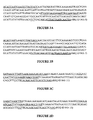
- UPSTREAM PRIMERS SEQ ID NO SEQUENCE 2 5'- ACACCAATGAACCCTACGACC -3' 8 5'- GATAAGCTTATTGAACAAGGACATCAA -3' 12 5'- AAGATAAGCTTATTGAACAAGGACATC -3' 14 5'- AGGCGTACATGGATATATCGGTAA -3' 15 5'- GCTTATTGAACAAGGACATCAA -3' 16 5'- GATAAGCTTATTGAACAAGGACATC -3' 17 5'- ACACCAATGAACCCTACGAC -3' 18 5'- ACACCAATGAACCCTACGA -3' 19 5'- ACCAATGAACCCTACGACC -3' 20 5' - ATACACAAACACCAATGAACCCTAC -3' TABLE II: DOWNSTREAM PRIMERS SEQ ID NO SEQUENCE 3 5'- TAATTGATCAATAAATGCTGTCAGA -3' 6 5'- GATCAATAAATGCTGTCAGAT
- an oligonucleotide comprising or consisting of an upstream primer according to Table I is combined with an oligonucleotide comprising or consisting of a downstream primer according to Table II to form a set of oligonucleotides capable of amplification of SA under suitable conditions.
- the complement of the oligonucleotide comprising or consisting of the upstream primer according to Table I is used, also the complement of the oligonucleotide comprising or consisting of the downstream primer according to Table II is selected to form a set of oligonucleotides capable of amplification of SA under suitable conditions.
- the set of oligonucleotides further comprises a third oligonucleotide comprising or consisting of a probe according to Table III.
- a particular set of CPE primers and probe is used in order to provide for detection of SA in a biological sample suspected of containing SA.
- the set of primers and probe may comprise at least one primer and probe specific for CPE comprising or consisting of a nucleic acid sequence selected from the group consisting of SEQ ID NOs: 2-4, 6, 8-10, 12, and 14-34 or the complements thereof.
- the at least one primer and probe specific for CPE comprises or consists of a functionally active variant of any of the primers of SEQ ID NOs: 2-4, 6, 8-10, 12, and 14-34.
- a functionally active variant of any of the primers and/or probes of SEQ ID NOs: 2-4, 6, 8-10, 12, and 14-34 may be identified by using the primers and/or probes in the method of the invention.
- a functionally active variant of a primer and/or probe of any of the SEQ ID NOs: 2-4, 6, 8-10, 12, and 14-34 pertains to a primer which provides a similar or higher specificity and sensitivity in the method or kit of the invention as compared to the respective sequence of SEQ ID NOs: 2-4, 6, 8-10, 12, and 14-34.
- the variant may, e.g., vary from the sequence of SEQ ID NOs: 2-4, 6, 8-10, 12, and 14-34 by one or more nucleotide additions, deletions or substitutions such as one or more nucleotide additions, deletions or substitutions at the 5' end and/or the 3' end of the respective sequence of SEQ ID NOs: 2-4, 6, 8-10, 12, and 14-34.
- a primer and/or probe
- a primer and/or probe may be chemically modified, i.e., a primer and/or probe may comprise a modified nucleotide or a non-nucleotide compound.
- a probe (or a primer) is then a modified oligonucleotide.
- Modified nucleotides differ from a natural "nucleotide” by some modification but still consist of a base or base-like compound, a pentofuranosyl sugar or a pentofuranosyl sugar-like compound, a phosphate portion or phosphate-like portion, or combinations thereof.
- a "label” may be attached to the base portion of a “nucleotide” whereby a "modified nucleotide” is obtained.
- a natural base in a “nucleotide” may also be replaced by, e.g., a 7-desazapurine whereby a "modified nucleotide” is obtained as well.
- modified nucleotide or “nucleotide analog” are used interchangeably in the present application.
- a “modified nucleoside” (or “nucleoside analog”) differs from a natural nucleoside by some modification in the manner as outlined above for a “modified nucleotide” (or a “nucleotide analog”).
- Constantly modified variations of a particular nucleic acid sequence refers to those nucleic acids, which encode identical or essentially identical amino acid sequences, or, where the nucleic acid does not encode an amino acid sequence, to essentially identical sequences.
- substitutions, deletions or additions which alter, add or delete a single amino acid or a small percentage of amino acids (typically less than 5%, more typically less than 4%, 2% or 1%) in an encoded sequence are "conservatively modified variations" where the alterations result in the deletion of an amino acid, addition of an amino acid, or substitution of an amino acid with a chemically similar amino acid.
- Oligonucleotides including modified oligonucleotides and oligonucleotide analogs that amplify a nucleic acid molecule encoding SA, e.g., nucleic acids encoding alternative portions of CPE, can be designed using, for example, a computer program such as OLIGO (Molecular Biology Insights Inc., Cascade, Colo.).
- OLIGO Molecular Biology Insights Inc., Cascade, Colo.
- oligonucleotides to be used as amplification primers include, but are not limited to, an appropriate size amplification product to facilitate detection (e.g., by electrophoresis), similar melting temperatures for the members of a pair of primers, and the length of each primer (i.e., the primers need to be long enough to anneal with sequence-specificity and to initiate synthesis but not so long that fidelity is reduced during oligonucleotide synthesis).
- oligonucleotide primers are 8 to 50 nucleotides in length (e.g. 8, 10, 12, 14, 16, 18, 20, 22, 24, 26, 28, 30, 32, 34, 36, 38, 40, 42, 44, 46, 48, or 50 nucleotides in length).
- the methods of the invention may use one or more probes in order to detect the presence or absence of SA.
- probe refers to synthetically or biologically produced nucleic acids (DNA or RNA), which by design or selection, contain specific nucleotide sequences that allow them to hybridize under defined predetermined stringencies specifically (i.e., preferentially) to "target nucleic acids”; in the present case to a SA CPE (target) nucleic acid.
- a “probe” can be referred to as a “detection probe” meaning that it detects the target nucleic acid.
- the CPE probe can be labeled with at least one fluorescent label.
- the CPE probe can be labeled with a donor fluorescent moiety, e.g., a fluorescent dye, and a corresponding acceptor fluorescent moiety, e.g., a quencher.
- At least one probe comprises or consists of a fluorescent moiety and a nucleic acid sequences selected from the group consisting of SEQ ID NOs: 4, 10, and 27-34 (shown without the label).
- oligonucleotides to be used as hybridization probes can be performed in a manner similar to the design of primers.
- Embodiments of the present invention may use a single probe or a pair of probes for detection of the amplification product.
- the probe(s) used may comprise at least one label and/or at least one quencher moiety.
- the probes usually have similar melting temperatures, and the length of each probe must be sufficient for sequence-specific hybridization to occur but not so long that fidelity is reduced during synthesis.
- oligonucleotide probes are 15 to 30 (e.g., 16, 18, 20, 21, 22, 23, 24, or 25) nucleotides in length.
- Constructs are disclosed including vectors containing a SA CPE nucleic acid molecule (e.g., SEQ ID NOs: 2-4, 6, 8-10, 12, and 14-34). These constructs can be used, for example, as control template nucleic acid molecules.
- Vectors suitable for use in the present invention are commercially available and/or produced by recombinant nucleic acid technology methods routine in the art.
- SA CPE nucleic acid molecules can be obtained, for example, by chemical synthesis, direct cloning from SA, or by PCR amplification.
- Constructs suitable for use in the methods of the invention typically include, in addition to SA CPE nucleic acid molecules (e.g., a nucleic acid molecule that contains one or more sequences of SEQ ID NOs: 2-4, 6, 8-10, 12, and 14-34), sequences encoding a selectable marker (e.g., an antibiotic resistance gene) for selecting desired constructs and/or transformants, and an origin of replication.
- SA CPE nucleic acid molecules e.g., a nucleic acid molecule that contains one or more sequences of SEQ ID NOs: 2-4, 6, 8-10, 12, and 14-34
- sequences encoding a selectable marker e.g., an antibiotic resistance gene
- host cell can include prokaryotes and eukaryotes such as yeast, plant and animal cells.
- Prokaryotic hosts may include E. coli, Salrnoriella typhimurium, Serratia marcescens , and Bacillus subtilis.
- Eukaryotic hosts include yeasts such as S . cerevisiae, S. pombe, Pichia pastoris, mammalian cells such as COS cells or Chinese hamster ovary (CHO) cells, insect cells, and plant cells such as Arabidopsis thaliana and Nicotiana tabacum.
- a construct can be introduced into a host cell using any of the techniques commonly known to those of ordinary skill in the art. For example, calcium phosphate precipitation, electroporation, heat shock, lipofection, microinjection, and viral-mediated nucleic acid transfer are common methods for introducing nucleic acids into host cells.
- naked DNA can be delivered directly to cells (see, e.g., U.S. Pat. Nos. 5,580,859 and 5,589,466 ).
- PCR typically employs two oligonucleotide primers that bind to a selected nucleic acid template (e.g., DNA or RNA).
- Primers useful in the present invention include oligonucleotides capable of acting as a point of initiation of nucleic acid synthesis within SA CPE nucleic acid sequences (e.g., SEQ ID NOs: 2, 3, 6, 8, 9, 12, and 14-27).
- a primer can be purified from a restriction digest by conventional methods, or it can be produced synthetically.
- the primer is preferably single-stranded for maximum efficiency in amplification, but the primer can be double-stranded.
- Double-stranded primers are first denatured, i.e., treated to separate the strands.
- One method of denaturing double stranded nucleic acids is by heating.
- Strand separation can be accomplished by any suitable denaturing method including physical, chemical or enzymatic means.
- One method of separating the nucleic acid strands involves heating the nucleic acid until it is predominately denatured (e.g., greater than 50%, 60%, 70%, 80%, 90% or 95% denatured).
- the heating conditions necessary for denaturing template nucleic acid will depend, e.g., on the buffer salt concentration and the length and nucleotide composition of the nucleic acids being denatured, but typically range from about 90°C to about 105°C for a time depending on features of the reaction such as temperature and the nucleic acid length. Denaturation is typically performed for about 30 sec to 4 min (e.g., 1 min to 2 min 30 sec, or 1.5 min).
- the reaction mixture is allowed to cool to a temperature that promotes annealing of each primer to its target sequence on the CPE nucleic acid.
- the temperature for annealing is usually from about 35°C to about 65°C (e.g., about 40°C to about 60°C; about 45°C to about 50°C).
- Annealing times can be from about 10 sec to about 1 min (e.g., about 20 sec to about 50 sec; about 30 sec to about 40 sec).
- the reaction mixture is then adjusted to a temperature at which the activity of the polymerase is promoted or optimized, i.e., a temperature sufficient for extension to occur from the annealed primer to generate products complementary to the template nucleic acid.
- the temperature should be sufficient to synthesize an extension product from each primer that is annealed to a nucleic acid template, but should not be so high as to denature an extension product from its complementary template (e.g., the temperature for extension generally ranges from about 40°C to about 80°C (e.g., about 50°C to about 70°C; about 60°C). Extension times can be from about 10 sec to about 5 min (e.g., about 30 sec to about 4 min; about 1 min to about 3 min; about 1 min 30 sec to about 2 min).
- PCR assays can employ SA nucleic acid such as RNA or DNA (cDNA).
- the template nucleic acid do not need to be purified; it may be a minor fraction of a complex mixture, such as SA nucleic acid contained in human cells.
- SA nucleic acids may be extracted from a biological sample by routine techniques such as those described in Diagnostic Molecular Microbiology: Principles and Applications (Persing et al. (eds), 1993, American Society for Microbiology, Washington D.C .). Nucleic acids can be obtained from any number of sources, such as plasmids, or natural sources including bacteria, yeast, viruses, organelles, or higher organisms such as plants or animals.
- the oligonucleotide primers are combined with PCR reagents under reaction conditions that induce primer extension.
- chain extension reactions generally include 50 mM KCl, 10 mM Tris-HCl (pH 8.3), 15 mM MgCl 2 , 0.001% (w/v) gelatin, 0.5-1.0 ⁇ g denatured template DNA, 50 pmoles of each oligonucleotide primer, 2.5 U of Taq polymerase, and 10% DMSO).
- the reactions usually contain 150 to 320 ⁇ M each of dATP, dCTP, dTTP, dGTP, or one or more analogs thereof.
- the newly synthesized strands form a double-stranded molecule that can be used in the succeeding steps of the reaction.
- the steps of strand separation, annealing, and elongation can be repeated as often as needed to produce the desired quantity of amplification products corresponding to the target CPE nucleic acid molecule.
- the limiting factors in the reaction are the amounts of primers, thermostable enzyme, and nucleoside triphosphates present in the reaction.
- the cycling steps i.e., denaturation, annealing, and extension
- the number of cycling steps will depend, e.g., on the nature of the sample. If the sample is a complex mixture of nucleic acids, more cycling steps will be required to amplify the target sequence sufficient for detection.
- the cycling steps are repeated at least about 20 times, but may be repeated as many as 40, 60, or even 100 times.
- FRET Fluorescence Resonance Energy Transfer
- FRET technology (see, for example, U.S. Pat. Nos. 4,996,143 , 5,565,322 , 5,849,489 , and 6,162,603 ) is based on a concept that when a donor fluorescent moiety and a corresponding acceptor fluorescent moiety are positioned within a certain distance of each other, energy transfer takes place between the two fluorescent moieties that can be visualized or otherwise detected and/or quantitated.
- the donor typically transfers the energy to the acceptor when the donor is excited by light radiation with a suitable wavelength.
- the acceptor typically re-emits the transferred energy in the form of light radiation with a different wavelength.
- an oligonucleotide probe can contain a donor fluorescent moiety and a corresponding quencher, which dissipates the transferred energy in a form other than light.
- energy transfer typically occurs between the two fluorescent moieties such that fluorescent emission from the donor fluorescent moiety is quenched.
- a probe bound to an amplification product is cleaved by the 5' to 3' exonuclease activity of, e.g., a Taq Polymerase such that the fluorescent emission of the donor fluorescent moiety is no longer quenched.
- Exemplary probes for this purpose are described in, e.g., U.S. Pat. Nos.
- Commonly used donor-acceptor pairs include the FAM-TAMRA pair.
- Commonly used quenchers are DABCYL and TAMRA.
- Commonly used dark quenchers include BlackHole QuenchersTM (BHQ), (Biosearch Technologies, Inc., Novato, Cal.), Iowa BlackTM, (Integrated DNA Tech., Inc., Coralville, Iowa), BlackBerryTM Quencher 650 (BBQ-650), (Berry & Assoc., Dexter, Mich.).
- two oligonucleotide probes each containing a fluorescent moiety, can hybridize to an amplification product at particular positions determined by the complementarity of the oligonucleotide probes to the CPE target nucleic acid sequence.
- a FRET signal is generated.
- Hybridization temperatures can range from about 35° C. to about 65° C. for about 10 sec to about 1 min.
- Fluorescent analysis can be carried out using, for example, a photon counting epifluorescent microscope system (containing the appropriate dichroic mirror and filters for monitoring fluorescent emission at the particular range), a photon counting photomultiplier system, or a fluorometer.
- Excitation to initiate energy transfer can be carried out with an argon ion laser, a high intensity mercury (Hg) arc lamp, a fiber optic light source, or other high intensity light source appropriately filtered for excitation in the desired range.
- Hg high intensity mercury
- corresponding refers to an acceptor fluorescent moiety having an emission spectrum that overlaps the excitation spectrum of the donor fluorescent moiety.
- the wavelength maximum of the emission spectrum of the acceptor fluorescent moiety should be at least 100 nm greater than the wavelength maximum of the excitation spectrum of the donor fluorescent moiety. Accordingly, efficient non-radiative energy transfer can be produced there between.
- Fluorescent donor and corresponding acceptor moieties are generally chosen for (a) high efficiency Forster energy transfer; (b) a large final Stokes shift (> 100 nm); (c) shift of the emission as far as possible into the red portion of the visible spectrum (>600 nm); and (d) shift of the emission to a higher wavelength than the Raman water fluorescent emission produced by excitation at the donor excitation wavelength.
- a donor fluorescent moiety can be chosen that has its excitation maximum near a laser line (for example, Helium-Cadmium 442 nm or Argon 488 nm), a high extinction coefficient, a high quantum yield, and a good overlap of its fluorescent emission with the excitation spectrum of the corresponding acceptor fluorescent moiety.
- a corresponding acceptor fluorescent moiety can be chosen that has a high extinction coefficient, a high quantum yield, a good overlap of its excitation with the emission of the donor fluorescent moiety, and emission in the red part of the visible spectrum (>600 nm).
- Representative donor fluorescent moieties that can be used with various acceptor fluorescent moieties in FRET technology include fluorescein, Lucifer Yellow, B-phycoerythrin, 9-acridineisothiocyanate, Lucifer Yellow VS, 4-acetamido-4'-isothiocyanatostilbene-2,2'-disulfonic acid, 7-diethylamino-3-(4'-isothiocyanatophenyl)-4-methylcoumarin, succinimdyl 1-pyrenebutyrate, and 4-acetamido-4'-isothioryanatostilbene-2,2'-disulfonic acid derivatives.
- acceptor fluorescent moieties depending upon the donor fluorescent moiety used, include LC Red 640, LC Red 705, Cy5, Cy5.5, Lissamine rhodamine B sulfonyl chloride, tetramethyl rhodamine isothiocyanate, rhodamine x isothiocyanate, erythrosine isothiocyanate, fluorescein, diethylenetriamine pentaacetate, or other chelates of Lanthanide ions (e.g., Europium, or Terbium).
- Donor and acceptor fluorescent moieties can be obtained, for example, from Molecular Probes (Junction City, Oreg.) or Sigma Chemical Co. (St. Louis, Mo.).
- the donor and acceptor fluorescent moieties can be attached to the appropriate probe oligonucleotide via a linker arm.
- the length of each linker arm is important, as the linker arms will affect the distance between the donor and acceptor fluorescent moieties.
- the length of a linker arm for the purpose of the present invention is the distance in Angstroms (A) from the nucleotide base to the fluorescent moiety.
- A Angstroms
- a linker arm is from about 10 ⁇ to about 25 ⁇ .
- the linker arm may be of the kind described in WO 84/03285 .
- WO 84/03285 also discloses methods for attaching linker arms to a particular nucleotide base, and also for attaching fluorescent moieties to a linker arm.
- An acceptor fluorescent moiety such as an LC Red 640-NHS-ester can be combined with C6-Phosphoramidites (available from ABI (Foster City, Calif.) or Glen Research (Sterling, Va.)) to produce, for example, LC Red 640-Phosphoramidite.
- linkers to couple a donor fluorescent moiety such as fluorescein to an oligonucleotide include thiourea linkers (FITC-derived, for example, fluorescein-CPG's from Glen Research or ChemGene (Ashland, Mass.)), amide-linkers (fluorescein-NHS-ester-derived, such as fluorescein-CPG from BioGenex (San Ramon, Calif.)), or 3'-amino-CPGs that require coupling of a fluorescein-NHS-ester after oligonucleotide synthesis.
- FITC-derived for example, fluorescein-CPG's from Glen Research or ChemGene (Ashland, Mass.)
- amide-linkers fluorescein-NHS-ester-derived, such as fluorescein-CPG from BioGenex (San Ramon, Calif.)
- 3'-amino-CPGs that require coupling of a fluoresc
- the present invention provides methods for detecting the presence or absence of SA in a biological or non-biological sample.
- Methods provided by the invention avoid problems of sample contamination, false negatives, and false positives.
- the methods include performing at least one cycling step that includes amplifying a portion of a SA CPE nucleic acid molecule from a sample using a pair of CPE primers, and a FRET detecting step. Multiple cycling steps are performed, preferably in a thermocycler. Methods of the invention can be performed using the CPE primers and probes to detect the presence of CPE, and the detection of CPE indicates the presence of a SA in the sample.
- amplification products can be detected using labeled hybridization probes that take advantage of FRET technology.
- FRET format utilizes TaqMan ® technology to detect the presence or absence of an amplification product, and hence, the presence or absence of SA.
- TaqMan® technology utilizes one single-stranded hybridization probe labeled with two fluorescent moieties. When a first fluorescent moiety is excited with light of a suitable wavelength, the absorbed energy is transferred to a second fluorescent moiety according to the principles of FRET. The second fluorescent moiety is generally a quencher molecule.
- the labeled hybridization probe binds to the target DNA (i.e., the amplification product) and is degraded by the 5' to 3' exonuclease activity of the Taq Polymerase during the subsequent elongation phase.
- the excited fluorescent moiety and the quencher moiety become spatially separated from one another.
- the fluorescence emission from the first fluorescent moiety can be detected.
- an ABI PRISM ® 7700 Sequence Detection System uses TaqMan ® technology, and is suitable for performing the methods described herein for detecting the presence or absence of SA in the sample.
- Molecular beacons in conjunction with FRET can also be used to detect the presence of an amplification product using the real-time PCR methods of the invention.
- Molecular beacon technology uses a hybridization probe labeled with a first fluorescent moiety and a second fluorescent moiety.
- the second fluorescent moiety is generally a quencher, and the fluorescent labels are typically located at each end of the probe.
- Molecular beacon technology uses a probe oligonucleotide having sequences that permit secondary structure formation (e.g., a hairpin). As a result of secondary structure formation within the probe, both fluorescent moieties are in spatial proximity when the probe is in solution.
- the secondary structure of the probe is disrupted and the fluorescent moieties become separated from one another such that after excitation with light of a suitable wavelength, the emission of the first fluorescent moiety can be detected.
- FRET fluorescein
- a donor fluorescent moiety for example, fluorescein
- fluorescein is excited at 470 nm by the light source of the LightCycler® Instrument.
- the fluorescein transfers its energy to an acceptor fluorescent moiety such as LightCycler®-Red 640 (LC Red 640) or LightCycler®-Red 705 (LC Red 705).
- the acceptor fluorescent moiety then emits light of a longer wavelength, which is detected by the optical detection system of the LightCycler® instrument.
- Efficient FRET can only take place when the fluorescent moieties are in direct local proximity and when the emission spectrum of the donor fluorescent moiety overlaps with the absorption spectrum of the acceptor fluorescent moiety.
- the intensity of the emitted signal can be correlated with the number of original target DNA molecules (e.g., the number of SA genomes). If amplification of CPE nucleic acid occurs and an amplification product is produced, the step of hybridizing results in a detectable signal based upon FRET between the members of the pair of probes.
- the presence of FRET indicates the presence of SA in the sample
- the absence of FRET indicates the absence of SA in the sample.
- Inadequate specimen collection, transportation delays, inappropriate transportation conditions, or use of certain collection swabs (calcium alginate or aluminum shaft) are all conditions that can affect the success and/or accuracy of a test result, however.
- detection of FRET within, e.g., 45 cycling steps is indicative of a SA infection.
- Representative biological samples that can be used in practicing the methods of the invention include, but are not limited to dermal swabs, nasal swabs, wound swabs, blood cultures, skin, and soft tissue infections. Collection and storage methods of biological samples are known to those of skill in the art. Biological samples can be processed (e.g., by nucleic acid extraction methods and/or kits known in the art) to release SA nucleic acid or in some cases, the biological sample can be contacted directly with the PCR reaction components and the appropriate oligonucleotides.
- Melting curve analysis is an additional step that can be included in a cycling profile. Melting curve analysis is based on the fact that DNA melts at a characteristic temperature called the melting temperature (Tm), which is defined as the temperature at which half of the DNA duplexes have separated into single strands.
- Tm melting temperature
- the melting temperature of a DNA depends primarily upon its nucleotide composition. Thus, DNA molecules rich in G and C nucleotides have a higher Tm than those having an abundance of A and T nucleotides.
- the melting temperature of probes can be determined. Similarly, by detecting the temperature at which signal is generated, the annealing temperature of probes can be determined.
- the melting temperature(s) of the CPE probes from the CPE amplification product can confirm the presence or absence of SA in the sample.
- thermocycler run control samples are cycled as well.
- Positive control samples can amplify SA nucleic acid control template (other than CPE) using, for example, control primers and control probes.
- Positive control samples can also amplify, for example, a plasmid construct containing SA CPE nucleic acid molecules.
- Such a plasmid control can be amplified internally (e.g., within the sample) or in a separate sample run side-by-side with the patients' samples.
- Each thermocycler run can also include a negative control that, for example, lacks SA template DNA.
- Such controls are indicators of the success or failure of the amplification, hybridization, and/or FRET reaction. Therefore, control reactions can readily determine, for example, the ability of primers to anneal with sequence-specificity and to initiate elongation, as well as the ability of probes to hybridize with sequence-specificity and for FRET to occur.
- the methods of the invention include steps to avoid contamination.
- an enzymatic method utilizing uracil-DNA glycosylase is described in U.S. Pat. Nos. 5,035,996 , 5,683,896 and 5,945,313 to reduce or eliminate contamination between one thermocycler run and the next.
- PCR methods in conjunction with FRET technology can be used to practice the methods of the invention.
- a LightCycler® instrument is used.
- the following patent applications describe real-time PCR as used in the LightCycler® technology: WO 97/46707 , WO 97/46714 , and WO 97/46712 .
- the LightCycler ® can be operated using a PC workstation and can utilize a Windows NT operating system. Signals from the samples are obtained as the machine positions the capillaries sequentially over the optical unit.
- the software can display the fluorescence signals in real-time immediately after each measurement. Fluorescent acquisition time is 10-100 milliseconds (msec). After each cycling step, a quantitative display of fluorescence vs. cycle number can be continually updated for all samples. The data generated can be stored for further analysis.
- an amplification product can be detected using a double-stranded DNA binding dye such as a fluorescent DNA binding dye (e.g., SYBR ® Green or SYBR ® Gold (Molecular Probes)).
- a double-stranded DNA binding dye such as a fluorescent DNA binding dye (e.g., SYBR ® Green or SYBR ® Gold (Molecular Probes)
- fluorescent DNA binding dyes Upon interaction with the double-stranded nucleic acid, such fluorescent DNA binding dyes emit a fluorescence signal after excitation with light at a suitable wavelength.
- a double-stranded DNA binding dye such as a nucleic acid intercalating dye also can be used.
- a melting curve analysis is usually performed for confirmation of the presence of the amplification product.
- the present invention further provides for articles of manufacture or kits to detect SA.
- An article of manufacture according to the present invention can include primers and probes used to detect SA, together with suitable packaging materials.
- Representative primers and probes for detection of SA are capable of hybridizing to SA CPE nucleic acid molecules.
- the kits may also include suitably packaged reagents and materials needed for DNA immobilization, hybridization, and detection, such solid supports, buffers, enzymes, and DNA standards.
- Articles of manufacture of the invention can also include one or more fluorescent moieties for labeling the probes or, alternatively, the probes supplied with the kit can be labeled.
- an article of manufacture may include a donor fluorescent moiety for labeling one of the CPE probes and an acceptor fluorescent moiety for labeling the other CPE probe, respectively. Examples of suitable FRET donor fluorescent moieties and corresponding acceptor fluorescent moieties are provided above.
- Articles of manufacture of the invention can also contain a package insert or package label having instructions thereon for using the CPE primers and probes to detect SA in a sample.
- Articles of manufacture may additionally include reagents for carrying out the methods disclosed herein (e.g., buffers, polymerase enzymes, co-factors, or agents to prevent contamination). Such reagents may be specific for one of the commercially available instruments described herein.
- the CPE gene targeted was determined to be specific to S . aureus and not present in other Staphylococcal species by BLAST sequence analysis using whole genomes publicly available for S. aureus and several other Staphylococcus species.
- Primer sites were chosen within the CPE gene that would yield amplicons less than 250 bp in length, and have either double dA or double dC nucleotides on the 3' end (if possible). Primers were also selected to have Tm's greater than 64°C, and made with a 3' t-butylbenzyl modifier to reduce primer dimer and increase specificity during PCR. After initial primer sites were chosen, they were BLAST searched to check for specificity to S. aureus, and evaluated using Oligo 6 Primer Analysis Software to check for the probability of primer dimer formation and false priming sites elsewhere in the CPE gene.
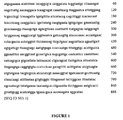
- the CPE gene cap5N within S. aureus is about 880 base pairs long, and due to its unique presence and high homology in S. aureus, it is an ideal target for specificity and exclusivity to this organism.
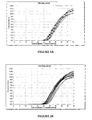
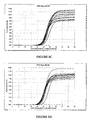
- Several potential PCR amplicons were designed and tested for optimal performance within this gene, and the following four oligo set options yielded the most products (observed by gel electrophoresis), as well as the highest fluorescence and earliest elbow values observed by TaqMan ® analysis.
- PCR conditions 25 ⁇ L of S . aureus genomic DNA diluted in 30 mM Tris, pH 8.5, plus 18 ⁇ L of master mix (154 mM Tricine, 110 mM Potassium Hydroxide, 190 mM Potassium Acetate, 19% Glycerol (v/v), 2.3% DMSO, 1.16 mM dATP, 1.16 mM dCTP, 1.16 mM dGTP, 1.16 mM dUTP, 1.0 ⁇ M upstream assay primer, 1.0 ⁇ M downstream assay primer, 0.185 ⁇ M probe, 308 U/mL ZO5 DNA polymerase, 150 U/mL UNG, 0.09% Sodium Azide (w/v), pH 8.50, plus 7 ⁇ L of activation mix (50 mM Magnesium chloride).
- evaluation of the CPE oligo sets #1-4 occurred by evaluating genomic DNA from 12 unique, cultured S. aureus organisms. Genomic DNA from each S. aureus organism was diluted to ⁇ 105c/PCR in 30 mM Tris, pH 8.5, and 25 ⁇ L of genomic DNA was added to 18 ⁇ L of pre-formulated master mix plus 7 ⁇ L of activation reagent.
- Pre-formulated master mix contained the following component concentrations: 154 mM Tricine, 110 mM Potassium Hydroxide, 190 mM Potassium Acetate, 19% Glycerol (v/v), 2.3% DMSO, 1.16 mM dATP, 1.16 mM dCTP, 1.16 mM dGTP, 1.16 mM dUTP, 1.0 ⁇ M upstream assay primer, 1.0 ⁇ M downstream assay primer, 0.185 ⁇ M probe, 308 U/mL ZO5 DNA polymerase, 150 U/mL UNG, 0.09% Sodium Azide (w/v), pH 8.50.
- Activation reagent contained 50 mM Magnesium chloride.
- CPE oligo set #4 occurred by combining 1 ⁇ L of Staph sp. genomic DNA diluted to ⁇ 10 6 c/ ⁇ L in 30 mM Tris, pH 8.5, plus 50 ⁇ L of reconstituted master mix. Reconstituted master mix consisted of genomic DNA in 25 ⁇ L of 30 mM Tris, pH 8.5 plus 18 ⁇ L of pre-formulated master mix plus 7 ⁇ L of activation reagent (50 ⁇ L total volume).
- Pre-formulated master mix contained the following component concentrations: 154 mM Tricine, 110 mM Potassium Hydroxide, 190 mM Potassium Acetate, 19% Glycerol (v/v), 2.3% DMSO, 1.16 mM dATP, 1.16 mM dCTP, 1.16 mM dGTP, 1.16 mM dUTP, 1.0 ⁇ M upstream CPE primer, 1.0 ⁇ M downstream CPE primer, 6.0uM other assay primers (not CPE targets), 0.185 ⁇ M CPE target probe, 1.0 uM other assay probes (not CPE targets), 308 U/mL ZO5 DNA polymerase, 150 U/mL UNG, 0.09% Sodium Azide (w/v), pH 8.50.
- Activation reagent contained 50 mM Magnesium chloride.
- CPE Oligo Set #4 CPE Oligo Set #4 (cont.) Organism ID Ct's Organism ID Ct's S. capitis 1194 -1 S . haemolyticus 6760 -1 S. capitis 3104 -1 S . haemolyticus 6762 -1 S. capitis 5662 -1 S . haemolyticus 10734 -1 S. capitis 10728 -1 S . haemolyticus 10735 -1 S. capitis 10729 -1 S . haemolyticus 10736 -1 S. capitis 10730 -1 S . haemolyticus 10737 -1 S.
Landscapes
- Chemical & Material Sciences (AREA)
- Life Sciences & Earth Sciences (AREA)
- Analytical Chemistry (AREA)
- Proteomics, Peptides & Aminoacids (AREA)
- Organic Chemistry (AREA)
- Zoology (AREA)
- Wood Science & Technology (AREA)
- Health & Medical Sciences (AREA)
- Engineering & Computer Science (AREA)
- Microbiology (AREA)
- Immunology (AREA)
- Molecular Biology (AREA)
- Biotechnology (AREA)
- Biophysics (AREA)
- Physics & Mathematics (AREA)
- Biochemistry (AREA)
- Bioinformatics & Cheminformatics (AREA)
- General Engineering & Computer Science (AREA)
- General Health & Medical Sciences (AREA)
- Genetics & Genomics (AREA)
- Measuring Or Testing Involving Enzymes Or Micro-Organisms (AREA)
Claims (10)
- Ensemble d'oligonucléotides, comprenant- un premier oligonucléotide présentant 40 nucléotides ou moins, comprenant une séquence choisie dans le groupe constitué par les séquences SEQ ID NO : 2 et 17-20, ou un complément de celles-ci ; et- un deuxième oligonucléotide présentant 40 nucléotides ou moins, comprenant une séquence choisie dans le groupe constitué par les séquences SEQ ID NO : 3, 6 et 25-26, ou un complément de celles-ci ; ou- un premier oligonucléotide présentant 40 nucléotides ou moins, comprenant une séquence choisie dans le groupe constitué par les séquences SEQ ID NO : 8, 12 et 14-16, ou un complément de celles-ci ; et- un deuxième oligonucléotide présentant 40 nucléotides ou moins, comprenant une séquence choisie dans le groupe constitué par les séquences SEQ ID NO : 9 et 21-24, ou un complément de celles-ci.
- Ensemble d'oligonucléotides selon la revendication 1, comprenant en outre un troisième oligonucléotide marqué de manière détectable, comprenant 40 nucléotides ou moins, comprenant- une séquence choisie dans le groupe constitué par les séquences SEQ ID NO : 4, 27-29 et 32-34, ou un complément de celles-ci, si le premier oligonucléotide comprend une séquence choisie dans le groupe constitué par les séquences SEQ ID NO : 2 et 17-20, ou un complément de celles-ci, et ledit deuxième oligonucléotide comprend une séquence choisie dans le groupe constitué par les séquences SEQ ID NO : 3, 6 et 25-26, ou un complément de celles-ci ; ou- une séquence choisie dans le groupe constitué par les séquences SEQ ID NO: 10, 30 et 31, ou un complément de celles-ci, si le premier oligonucléotide comprend une séquence choisie dans le groupe constitué par les séquences SEQ ID NO: 8, 12 et 14-16, ou un complément de celles-ci, et ledit deuxième oligonucléotide comprend une séquence choisie dans le groupe constitué par les séquences SEQ ID NO : 9 et 21-24, ou un complément de celles-ci.
- Procédé pour détecter un Staphylococcus aureus (SA) dans un échantillon, le procédé comprenant :- effectuer une étape d'amplification comprenant la mise en contact de l'échantillon avec un ensemble d'amorces de SA pour produire un produit d'amplification si le SA est présent dans l'échantillon ;- effectuer une étape d'hybridation comprenant la mise en contact du produit d'amplification avec une ou plusieurs sondes de SA détectables ; et- détecter la présence ou l'absence du produit amplifié, la présence du produit amplifié étant indicatrice de la présence de SA dans l'échantillon et l'absence du produit amplifié étant indicatrice de l'absence de SA dans l'échantillon ;l'ensemble d'amorces de SA comprenant une première amorce oligonucléotidique comprenant 40 nucléotides ou moins, comprenant une séquence choisie dans le groupe constitué par les séquences SEQ ID NO : 2 et 17-20, ou un complément de celles-ci, et une deuxième amorce oligonucléotidique comprenant 40 nucléotides ou moins, comprenant une séquence choisie dans le groupe constitué par les séquences SEQ ID NO : 3, 6 et 25-26, ou un complément de celles-ci, et ladite une ou lesdites plusieurs sondes de SA détectables, présentant 40 nucléotides ou moins, comprenant une séquence choisie dans le groupe constitué par les séquences SEQ ID NO : 4, 27-29 et 32-34, ou un complément de celles-ci ; ou
l'ensemble d'amorces de SA comprenant une première amorce oligonucléotidique comprenant 40 nucléotides ou moins, comprenant une séquence choisie dans le groupe constitué par les séquences SEQ ID NO : 8, 12 et 14-16, ou un complément de celles-ci, et une deuxième amorce oligonucléotidique comprenant 40 nucléotides ou moins, comprenant une séquence choisie dans le groupe constitué par les séquences SEQ ID NO : 9 et 21-24, ou un complément de celles-ci, et ladite une ou lesdites plusieurs sondes de SA détectables présentant 40 nucléotides ou moins, comprenant une séquence choisie dans le groupe constitué par les séquences SEQ ID NO : 10, 30 et 31, ou un complément de celles-ci. - Procédé selon la revendication 3,- l'étape d'hybridation comprenant la mise en contact du produit d'amplification avec une sonde qui est marquée par un fragment fluorescent donneur et par un fragment fluorescent accepteur correspondant ; et- l'étape de détection comprenant la détection de la présence ou de l'absence de transfert d'énergie de fluorescence par résonance (FRET) entre le fragment fluorescent donneur et le fragment fluorescent accepteur de la sonde, la présence ou l'absence de fluorescence étant indicatrice de la présence ou de l'absence de SA dans l'échantillon.
- Procédé selon l'une quelconque des revendications 3 ou 4, ladite amplification utilisant une enzyme de type polymérase présentant une activité exonucléase 5' à 3'.
- Procédé selon l'une quelconque des revendications 4 ou 5, ledit premier et ledit deuxième fragment fluorescent se situant à pas plus de 5 nucléotides l'un de l'autre sur ladite sonde.
- Procédé selon l'une quelconque des revendications 3 à 6, ladite sonde de SA comprenant une séquence d'acide nucléique qui permet une formation d'une structure secondaire, la formation d'une structure secondaire entraînant une proximité spatiale entre le premier et le deuxième fragment fluorescent.
- Kit pour détecter un acide nucléique de Staphylococcus aureus comprenant :- un premier oligonucléotide présentant 40 nucléotides ou moins, comprenant une séquence choisie dans le groupe constitué par les séquences SEQ ID NO : 2 et 17-20, ou un complément de celles-ci ;- un deuxième oligonucléotide présentant 40 nucléotides ou moins, comprenant une séquence choisie dans le groupe constitué par les séquences SEQ ID NO : 3, 6 et 25-26, ou un complément de celles-ci ; et- un troisième oligonucléotide marqué de manière détectable présentant 40 nucléotides ou moins, comprenant une séquence choisie dans le groupe constitué par les séquences SEQ ID NO : 4, 27-29 et 32-34, ou un complément de celles-ci ; ou- un premier oligonucléotide présentant 40 nucléotides ou moins, comprenant une séquence choisie dans le groupe constitué par les séquences SEQ ID NO : 8, 12 et 14-16, ou un complément de celles-ci ;- un deuxième oligonucléotide présentant 40 nucléotides ou moins, comprenant une séquence choisie dans le groupe constitué par les séquences SEQ ID NO : 9 et 21-24, ou un complément de celles-ci ; et- un troisième oligonucléotide marqué de manière détectable présentant 40 nucléotides ou moins, comprenant une séquence choisie dans le groupe constitué par les séquences SEQ ID NO : 10, 30 et 31, ou un complément de celles-ci.
- Kit selon la revendication 8, le troisième oligonucléotide marqué de manière détectable comprenant un fragment fluorescent donneur et un fragment fluorescent accepteur correspondant.
- Kit selon l'une quelconque des revendications 8 ou 9, comprenant en outre au moins un constituant supplémentaire choisi dans le groupe constitué par les nucléoside-triphosphates, une acide nucléique polymérase et des tampons nécessaires pour la fonction de l'acide nucléique polymérase.
Applications Claiming Priority (2)
| Application Number | Priority Date | Filing Date | Title |
|---|---|---|---|
| US13/116,975 US9034581B2 (en) | 2011-05-26 | 2011-05-26 | Compositions and methods for detection of Staphylococcus aureus |
| PCT/EP2012/002242 WO2012159768A1 (fr) | 2011-05-26 | 2012-05-25 | Compositions et méthodes pour la détection de staphylococcus aureus |
Publications (2)
| Publication Number | Publication Date |
|---|---|
| EP2714929A1 EP2714929A1 (fr) | 2014-04-09 |
| EP2714929B1 true EP2714929B1 (fr) | 2016-03-30 |
Family
ID=46229426
Family Applications (1)
| Application Number | Title | Priority Date | Filing Date |
|---|---|---|---|
| EP12726357.2A Active EP2714929B1 (fr) | 2011-05-26 | 2012-05-25 | COMPOSITIONS ET MÉTHODES POUR LA DÉTECTION DE STAPHYLOCOCCUS AUREUS& xA; |
Country Status (7)
| Country | Link |
|---|---|
| US (4) | US9034581B2 (fr) |
| EP (1) | EP2714929B1 (fr) |
| JP (1) | JP6117775B2 (fr) |
| CN (1) | CN103547685B (fr) |
| CA (1) | CA2831182C (fr) |
| ES (1) | ES2572930T3 (fr) |
| WO (1) | WO2012159768A1 (fr) |
Families Citing this family (5)
| Publication number | Priority date | Publication date | Assignee | Title |
|---|---|---|---|---|
| US9034581B2 (en) | 2011-05-26 | 2015-05-19 | Roche Molecular Systems, Inc. | Compositions and methods for detection of Staphylococcus aureus |
| US9920381B2 (en) * | 2014-12-02 | 2018-03-20 | Roche Molecular Systems, Inc. | Compositions and methods for detecting MECC-containing methicillin-resistant Staphylococcus aureus |
| US9970062B2 (en) * | 2015-08-06 | 2018-05-15 | Roche Molecular Systems, Inc. | Compositions and methods for detection of mycobacterium tuberculosis |
| CN105675569B (zh) * | 2016-02-02 | 2019-04-02 | 广西大学 | 一种检测金黄色葡萄菌肠毒素a的方法及检测试剂盒 |
| US20250011882A1 (en) | 2021-11-22 | 2025-01-09 | Roche Molecular Systems, Inc. | Compositions and Methods for Detecting vanA and/or vanB Genes Associated with Multidrug Resistance |
Family Cites Families (20)
| Publication number | Priority date | Publication date | Assignee | Title |
|---|---|---|---|---|
| EP0135587B2 (fr) | 1983-02-22 | 2002-12-18 | Syngene, Inc. | Oligonucleotides a brin unique et a sequence definie comprenant des groupes rapporteurs, procede pour effectuer leur synthese chimique, et nucleosides utiles dans une telle synthese |
| US4683195A (en) | 1986-01-30 | 1987-07-28 | Cetus Corporation | Process for amplifying, detecting, and/or-cloning nucleic acid sequences |
| US4965188A (en) | 1986-08-22 | 1990-10-23 | Cetus Corporation | Process for amplifying, detecting, and/or cloning nucleic acid sequences using a thermostable enzyme |
| US4683202A (en) | 1985-03-28 | 1987-07-28 | Cetus Corporation | Process for amplifying nucleic acid sequences |
| US4996143A (en) | 1985-12-23 | 1991-02-26 | Syngene, Inc. | Fluorescent stokes shift probes for polynucleotide hybridization |
| US4800159A (en) | 1986-02-07 | 1989-01-24 | Cetus Corporation | Process for amplifying, detecting, and/or cloning nucleic acid sequences |
| US5703055A (en) | 1989-03-21 | 1997-12-30 | Wisconsin Alumni Research Foundation | Generation of antibodies through lipid mediated DNA delivery |
| US5683896A (en) | 1989-06-01 | 1997-11-04 | Life Technologies, Inc. | Process for controlling contamination of nucleic acid amplification reactions |
| US5035996A (en) | 1989-06-01 | 1991-07-30 | Life Technologies, Inc. | Process for controlling contamination of nucleic acid amplification reactions |
| US5210015A (en) | 1990-08-06 | 1993-05-11 | Hoffman-La Roche Inc. | Homogeneous assay system using the nuclease activity of a nucleic acid polymerase |
| US5994056A (en) | 1991-05-02 | 1999-11-30 | Roche Molecular Systems, Inc. | Homogeneous methods for nucleic acid amplification and detection |
| EP1067134B1 (fr) | 1991-11-07 | 2004-07-28 | Nanotronics, Inc. | Hybridation de polynucleotides conjugués à des chromophores et à des fluorophores afin de générer des systèmes de transfert d'énergie de donneur à donneur |
| JP4540754B2 (ja) | 1996-06-04 | 2010-09-08 | ユニバーシティ オブ ユタ リサーチ ファウンデーション | Pcr中のハイブリダイゼーションのモニタリング |
| ES2253778T3 (es) | 1996-06-04 | 2006-06-01 | University Of Utah Research Foundation | Sistema y metodos de monitorizacion de una amplificacion de adn mediante fluorescencia. |
| EP0866071B1 (fr) | 1997-03-20 | 2004-10-20 | F. Hoffmann-La Roche Ag | Amorces modifiées |
| DE19822108A1 (de) * | 1998-05-12 | 2000-02-03 | Schering Ag | Verfahren zur Detektion von Mikroorganismen in Produkten, insbesondere in Arzneimitteln und Kosmetika |
| GB0107661D0 (en) | 2001-03-27 | 2001-05-16 | Chiron Spa | Staphylococcus aureus |
| EP1629124A2 (fr) * | 2003-06-05 | 2006-03-01 | Wyeth | Groupe d'acides nucleiques servant a detecter des souches multiples d'especes non virales |
| US20080108060A1 (en) | 2004-05-10 | 2008-05-08 | Warnex Research Inc. | Polynucleotides for the Detection of Staphylococcus Aureus |
| US9034581B2 (en) | 2011-05-26 | 2015-05-19 | Roche Molecular Systems, Inc. | Compositions and methods for detection of Staphylococcus aureus |
-
2011
- 2011-05-26 US US13/116,975 patent/US9034581B2/en active Active
-
2012
- 2012-05-25 CA CA2831182A patent/CA2831182C/fr active Active
- 2012-05-25 WO PCT/EP2012/002242 patent/WO2012159768A1/fr not_active Ceased
- 2012-05-25 JP JP2014511778A patent/JP6117775B2/ja active Active
- 2012-05-25 EP EP12726357.2A patent/EP2714929B1/fr active Active
- 2012-05-25 ES ES12726357.2T patent/ES2572930T3/es active Active
- 2012-05-25 CN CN201280024827.5A patent/CN103547685B/zh active Active
-
2015
- 2015-04-15 US US14/687,813 patent/US9816142B2/en active Active
- 2015-04-15 US US14/687,829 patent/US9816144B2/en active Active
- 2015-04-15 US US14/687,816 patent/US9816143B2/en active Active
Also Published As
| Publication number | Publication date |
|---|---|
| CN103547685A (zh) | 2014-01-29 |
| CA2831182C (fr) | 2016-02-16 |
| WO2012159768A1 (fr) | 2012-11-29 |
| CA2831182A1 (fr) | 2012-11-29 |
| US9816143B2 (en) | 2017-11-14 |
| US9816144B2 (en) | 2017-11-14 |
| US9816142B2 (en) | 2017-11-14 |
| US20150218622A1 (en) | 2015-08-06 |
| EP2714929A1 (fr) | 2014-04-09 |
| JP6117775B2 (ja) | 2017-04-19 |
| JP2014519822A (ja) | 2014-08-21 |
| ES2572930T3 (es) | 2016-06-03 |
| US20120301874A1 (en) | 2012-11-29 |
| US20150218624A1 (en) | 2015-08-06 |
| CN103547685B (zh) | 2015-11-25 |
| US20150218623A1 (en) | 2015-08-06 |
| US9034581B2 (en) | 2015-05-19 |
Similar Documents
| Publication | Publication Date | Title |
|---|---|---|
| US20230056677A1 (en) | Compositions and methods for detecting methicillin-resistant staphylococcus aureus | |
| EP3891302B1 (fr) | Compositions et méthodes pour la détection de candida auris | |
| US9816143B2 (en) | Compositions and methods for detection of Staphylococcus aureus | |
| EP4081666B1 (fr) | Compositions et méthodes de détection de staphylococcus aureus résistant à la méticilline | |
| US9816145B2 (en) | Compositions for detection of Clostridium difficile | |
| US10190178B2 (en) | Compositions and methods for detecting mecC-containing methicillin-resistant Staphylococcus aureus | |
| US20250011882A1 (en) | Compositions and Methods for Detecting vanA and/or vanB Genes Associated with Multidrug Resistance | |
| EP4638791A1 (fr) | Compositions et procédés de détection de acinetobacter calcoaceticus -baumannii résistant aux carbapénèmes (crab) |
Legal Events
| Date | Code | Title | Description |
|---|---|---|---|
| PUAI | Public reference made under article 153(3) epc to a published international application that has entered the european phase |
Free format text: ORIGINAL CODE: 0009012 |
|
| 17P | Request for examination filed |
Effective date: 20140102 |
|
| AK | Designated contracting states |
Kind code of ref document: A1 Designated state(s): AL AT BE BG CH CY CZ DE DK EE ES FI FR GB GR HR HU IE IS IT LI LT LU LV MC MK MT NL NO PL PT RO RS SE SI SK SM TR |
|
| DAX | Request for extension of the european patent (deleted) | ||
| 17Q | First examination report despatched |
Effective date: 20141009 |
|
| GRAJ | Information related to disapproval of communication of intention to grant by the applicant or resumption of examination proceedings by the epo deleted |
Free format text: ORIGINAL CODE: EPIDOSDIGR1 |
|
| GRAP | Despatch of communication of intention to grant a patent |
Free format text: ORIGINAL CODE: EPIDOSNIGR1 |
|
| INTG | Intention to grant announced |
Effective date: 20151002 |
|
| GRAS | Grant fee paid |
Free format text: ORIGINAL CODE: EPIDOSNIGR3 |
|
| GRAA | (expected) grant |
Free format text: ORIGINAL CODE: 0009210 |
|
| AK | Designated contracting states |
Kind code of ref document: B1 Designated state(s): AL AT BE BG CH CY CZ DE DK EE ES FI FR GB GR HR HU IE IS IT LI LT LU LV MC MK MT NL NO PL PT RO RS SE SI SK SM TR |
|
| REG | Reference to a national code |
Ref country code: GB Ref legal event code: FG4D |
|
| REG | Reference to a national code |
Ref country code: CH Ref legal event code: EP |
|
| REG | Reference to a national code |
Ref country code: AT Ref legal event code: REF Ref document number: 785468 Country of ref document: AT Kind code of ref document: T Effective date: 20160415 |
|
| REG | Reference to a national code |
Ref country code: IE Ref legal event code: FG4D |
|
| REG | Reference to a national code |
Ref country code: FR Ref legal event code: PLFP Year of fee payment: 5 |
|
| REG | Reference to a national code |
Ref country code: DE Ref legal event code: R096 Ref document number: 602012016284 Country of ref document: DE |
|
| REG | Reference to a national code |
Ref country code: ES Ref legal event code: FG2A Ref document number: 2572930 Country of ref document: ES Kind code of ref document: T3 Effective date: 20160603 |
|
| REG | Reference to a national code |
Ref country code: LT Ref legal event code: MG4D |
|
| PG25 | Lapsed in a contracting state [announced via postgrant information from national office to epo] |
Ref country code: HR Free format text: LAPSE BECAUSE OF FAILURE TO SUBMIT A TRANSLATION OF THE DESCRIPTION OR TO PAY THE FEE WITHIN THE PRESCRIBED TIME-LIMIT Effective date: 20160330 Ref country code: GR Free format text: LAPSE BECAUSE OF FAILURE TO SUBMIT A TRANSLATION OF THE DESCRIPTION OR TO PAY THE FEE WITHIN THE PRESCRIBED TIME-LIMIT Effective date: 20160701 Ref country code: FI Free format text: LAPSE BECAUSE OF FAILURE TO SUBMIT A TRANSLATION OF THE DESCRIPTION OR TO PAY THE FEE WITHIN THE PRESCRIBED TIME-LIMIT Effective date: 20160330 Ref country code: NO Free format text: LAPSE BECAUSE OF FAILURE TO SUBMIT A TRANSLATION OF THE DESCRIPTION OR TO PAY THE FEE WITHIN THE PRESCRIBED TIME-LIMIT Effective date: 20160630 |
|
| REG | Reference to a national code |
Ref country code: NL Ref legal event code: MP Effective date: 20160330 |
|
| REG | Reference to a national code |
Ref country code: AT Ref legal event code: MK05 Ref document number: 785468 Country of ref document: AT Kind code of ref document: T Effective date: 20160330 |
|
| PG25 | Lapsed in a contracting state [announced via postgrant information from national office to epo] |
Ref country code: SE Free format text: LAPSE BECAUSE OF FAILURE TO SUBMIT A TRANSLATION OF THE DESCRIPTION OR TO PAY THE FEE WITHIN THE PRESCRIBED TIME-LIMIT Effective date: 20160330 Ref country code: LT Free format text: LAPSE BECAUSE OF FAILURE TO SUBMIT A TRANSLATION OF THE DESCRIPTION OR TO PAY THE FEE WITHIN THE PRESCRIBED TIME-LIMIT Effective date: 20160330 Ref country code: BE Free format text: LAPSE BECAUSE OF NON-PAYMENT OF DUE FEES Effective date: 20160531 Ref country code: RS Free format text: LAPSE BECAUSE OF FAILURE TO SUBMIT A TRANSLATION OF THE DESCRIPTION OR TO PAY THE FEE WITHIN THE PRESCRIBED TIME-LIMIT Effective date: 20160330 Ref country code: LV Free format text: LAPSE BECAUSE OF FAILURE TO SUBMIT A TRANSLATION OF THE DESCRIPTION OR TO PAY THE FEE WITHIN THE PRESCRIBED TIME-LIMIT Effective date: 20160330 |
|
| PG25 | Lapsed in a contracting state [announced via postgrant information from national office to epo] |
Ref country code: NL Free format text: LAPSE BECAUSE OF FAILURE TO SUBMIT A TRANSLATION OF THE DESCRIPTION OR TO PAY THE FEE WITHIN THE PRESCRIBED TIME-LIMIT Effective date: 20160330 |
|
| PG25 | Lapsed in a contracting state [announced via postgrant information from national office to epo] |
Ref country code: IS Free format text: LAPSE BECAUSE OF FAILURE TO SUBMIT A TRANSLATION OF THE DESCRIPTION OR TO PAY THE FEE WITHIN THE PRESCRIBED TIME-LIMIT Effective date: 20160730 Ref country code: EE Free format text: LAPSE BECAUSE OF FAILURE TO SUBMIT A TRANSLATION OF THE DESCRIPTION OR TO PAY THE FEE WITHIN THE PRESCRIBED TIME-LIMIT Effective date: 20160330 Ref country code: PL Free format text: LAPSE BECAUSE OF FAILURE TO SUBMIT A TRANSLATION OF THE DESCRIPTION OR TO PAY THE FEE WITHIN THE PRESCRIBED TIME-LIMIT Effective date: 20160330 |
|
| PG25 | Lapsed in a contracting state [announced via postgrant information from national office to epo] |
Ref country code: SK Free format text: LAPSE BECAUSE OF FAILURE TO SUBMIT A TRANSLATION OF THE DESCRIPTION OR TO PAY THE FEE WITHIN THE PRESCRIBED TIME-LIMIT Effective date: 20160330 Ref country code: RO Free format text: LAPSE BECAUSE OF FAILURE TO SUBMIT A TRANSLATION OF THE DESCRIPTION OR TO PAY THE FEE WITHIN THE PRESCRIBED TIME-LIMIT Effective date: 20160330 Ref country code: PT Free format text: LAPSE BECAUSE OF FAILURE TO SUBMIT A TRANSLATION OF THE DESCRIPTION OR TO PAY THE FEE WITHIN THE PRESCRIBED TIME-LIMIT Effective date: 20160801 Ref country code: CZ Free format text: LAPSE BECAUSE OF FAILURE TO SUBMIT A TRANSLATION OF THE DESCRIPTION OR TO PAY THE FEE WITHIN THE PRESCRIBED TIME-LIMIT Effective date: 20160330 Ref country code: AT Free format text: LAPSE BECAUSE OF FAILURE TO SUBMIT A TRANSLATION OF THE DESCRIPTION OR TO PAY THE FEE WITHIN THE PRESCRIBED TIME-LIMIT Effective date: 20160330 Ref country code: SM Free format text: LAPSE BECAUSE OF FAILURE TO SUBMIT A TRANSLATION OF THE DESCRIPTION OR TO PAY THE FEE WITHIN THE PRESCRIBED TIME-LIMIT Effective date: 20160330 |
|
| PG25 | Lapsed in a contracting state [announced via postgrant information from national office to epo] |
Ref country code: LU Free format text: LAPSE BECAUSE OF FAILURE TO SUBMIT A TRANSLATION OF THE DESCRIPTION OR TO PAY THE FEE WITHIN THE PRESCRIBED TIME-LIMIT Effective date: 20160525 Ref country code: BE Free format text: LAPSE BECAUSE OF FAILURE TO SUBMIT A TRANSLATION OF THE DESCRIPTION OR TO PAY THE FEE WITHIN THE PRESCRIBED TIME-LIMIT Effective date: 20160330 |
|
| REG | Reference to a national code |
Ref country code: DE Ref legal event code: R097 Ref document number: 602012016284 Country of ref document: DE |
|
| PG25 | Lapsed in a contracting state [announced via postgrant information from national office to epo] |
Ref country code: DK Free format text: LAPSE BECAUSE OF FAILURE TO SUBMIT A TRANSLATION OF THE DESCRIPTION OR TO PAY THE FEE WITHIN THE PRESCRIBED TIME-LIMIT Effective date: 20160330 |
|
| PLBE | No opposition filed within time limit |
Free format text: ORIGINAL CODE: 0009261 |
|
| STAA | Information on the status of an ep patent application or granted ep patent |
Free format text: STATUS: NO OPPOSITION FILED WITHIN TIME LIMIT |
|
| REG | Reference to a national code |
Ref country code: IE Ref legal event code: MM4A |
|
| 26N | No opposition filed |
Effective date: 20170103 |
|
| REG | Reference to a national code |
Ref country code: FR Ref legal event code: PLFP Year of fee payment: 6 |
|
| PG25 | Lapsed in a contracting state [announced via postgrant information from national office to epo] |
Ref country code: SI Free format text: LAPSE BECAUSE OF FAILURE TO SUBMIT A TRANSLATION OF THE DESCRIPTION OR TO PAY THE FEE WITHIN THE PRESCRIBED TIME-LIMIT Effective date: 20160330 Ref country code: IE Free format text: LAPSE BECAUSE OF NON-PAYMENT OF DUE FEES Effective date: 20160525 |
|
| PG25 | Lapsed in a contracting state [announced via postgrant information from national office to epo] |
Ref country code: IT Free format text: LAPSE BECAUSE OF NON-PAYMENT OF DUE FEES Effective date: 20160525 |
|
| PG25 | Lapsed in a contracting state [announced via postgrant information from national office to epo] |
Ref country code: IT Free format text: LAPSE BECAUSE OF NON-PAYMENT OF DUE FEES Effective date: 20160525 |
|
| PGRI | Patent reinstated in contracting state [announced from national office to epo] |
Ref country code: IT Effective date: 20170710 |
|
| REG | Reference to a national code |
Ref country code: FR Ref legal event code: PLFP Year of fee payment: 7 |
|
| PG25 | Lapsed in a contracting state [announced via postgrant information from national office to epo] |
Ref country code: HU Free format text: LAPSE BECAUSE OF FAILURE TO SUBMIT A TRANSLATION OF THE DESCRIPTION OR TO PAY THE FEE WITHIN THE PRESCRIBED TIME-LIMIT; INVALID AB INITIO Effective date: 20120525 Ref country code: CY Free format text: LAPSE BECAUSE OF FAILURE TO SUBMIT A TRANSLATION OF THE DESCRIPTION OR TO PAY THE FEE WITHIN THE PRESCRIBED TIME-LIMIT Effective date: 20160330 |
|
| PG25 | Lapsed in a contracting state [announced via postgrant information from national office to epo] |
Ref country code: MK Free format text: LAPSE BECAUSE OF FAILURE TO SUBMIT A TRANSLATION OF THE DESCRIPTION OR TO PAY THE FEE WITHIN THE PRESCRIBED TIME-LIMIT Effective date: 20160330 Ref country code: MT Free format text: LAPSE BECAUSE OF NON-PAYMENT OF DUE FEES Effective date: 20160531 Ref country code: TR Free format text: LAPSE BECAUSE OF FAILURE TO SUBMIT A TRANSLATION OF THE DESCRIPTION OR TO PAY THE FEE WITHIN THE PRESCRIBED TIME-LIMIT Effective date: 20160330 Ref country code: MC Free format text: LAPSE BECAUSE OF FAILURE TO SUBMIT A TRANSLATION OF THE DESCRIPTION OR TO PAY THE FEE WITHIN THE PRESCRIBED TIME-LIMIT Effective date: 20160330 |
|
| PG25 | Lapsed in a contracting state [announced via postgrant information from national office to epo] |
Ref country code: BG Free format text: LAPSE BECAUSE OF FAILURE TO SUBMIT A TRANSLATION OF THE DESCRIPTION OR TO PAY THE FEE WITHIN THE PRESCRIBED TIME-LIMIT Effective date: 20160330 |
|
| PG25 | Lapsed in a contracting state [announced via postgrant information from national office to epo] |
Ref country code: AL Free format text: LAPSE BECAUSE OF FAILURE TO SUBMIT A TRANSLATION OF THE DESCRIPTION OR TO PAY THE FEE WITHIN THE PRESCRIBED TIME-LIMIT Effective date: 20160330 |
|
| REG | Reference to a national code |
Ref country code: FR Ref legal event code: PLFP Year of fee payment: 12 |
|
| PGFP | Annual fee paid to national office [announced via postgrant information from national office to epo] |
Ref country code: DE Payment date: 20250423 Year of fee payment: 14 |
|
| PGFP | Annual fee paid to national office [announced via postgrant information from national office to epo] |
Ref country code: ES Payment date: 20250602 Year of fee payment: 14 |
|
| PGFP | Annual fee paid to national office [announced via postgrant information from national office to epo] |
Ref country code: IT Payment date: 20250423 Year of fee payment: 14 |
|
| PGFP | Annual fee paid to national office [announced via postgrant information from national office to epo] |
Ref country code: FR Payment date: 20250423 Year of fee payment: 14 |
|
| PGFP | Annual fee paid to national office [announced via postgrant information from national office to epo] |
Ref country code: CH Payment date: 20250601 Year of fee payment: 14 |
|
| PGFP | Annual fee paid to national office [announced via postgrant information from national office to epo] |
Ref country code: GB Payment date: 20260317 Year of fee payment: 15 |